Identification
- Summary
Etodolac is an NSAID used to treat osteoarthritis and rheumatoid arthritis, as well as acute pain.
- Brand Names
- Lodine
- Generic Name
- Etodolac
- DrugBank Accession Number
- DB00749
- Background
Etodolac is a non-steroidal anti-inflammatory drug (NSAID) with anti-inflammatory, analgesic and antipyretic properties. Its therapeutic effects are due to its ability to inhibit prostaglandin synthesis. It is indicated for relief of signs and symptoms of rheumatoid arthritis and osteoarthritis.
- Type
- Small Molecule
- Groups
- Approved, Investigational, Vet approved
- Structure

Structure for Etodolac (DB00749)
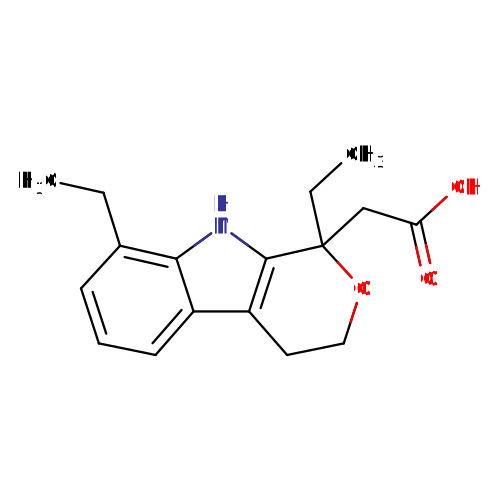
- Weight
- Average: 287.3535
Monoisotopic: 287.152143543 - Chemical Formula
- C17H21NO3
- Synonyms
- (±)-1,8-diethyl-1,3,4,9-tetrahydropyrano(3,4-b)indole-1-acetic acid
- (1,8-Diethyl-1,3,4,9-tetrahydro-pyrano[3,4-b]indol-1-yl)-acetic acid
- 1,3,4,9-tetrahydro-1,8-diethylpyrano(3,4-b)indole-1-acetic acid
- 1,8-diethyl-1,3,4,9-tetrahydropyrano(3,4-b)indole-1-acetic acid
- 1,8-diethyl-1,3,4,9-tetrahydropyrano[3,4-b]indol-1-ylacetic acid
- Etodolac
- Étodolac
- Etodolaco
- Etodolacum
- Etodolic acid
- Etodolsäure
- External IDs
- AY 24236
- AY-24-236
- AY-24,236
- AY-24236
- NIH-9918

Pharmacology
- Indication
For acute and long-term management of signs and symptoms of osteoarthritis and rheumatoid arthritis, as well as for the management of pain.
 Reduce drug development failure ratesBuild, train, & validate machine-learning modelswith evidence-based and structured datasets.Build, train, & validate predictive machine-learning models with structured datasets.
- Associated Conditions
Indication Type Indication Combined Product Details Approval Level Age Group Patient Characteristics Dose Form Management of Acute pain •••••••••••• ••••••• •••••••• ••••••• ••••••• ••••••• •••• •••••• Used in combination to manage Chronic back pain Combination Product in combination with: Famotidine (DB00927), Thiocolchicoside (DB11582) •••••••••••• •••••••••••••••• •••••••••• ••••••• •••• •••••• Used in combination to manage Chronic back pain Combination Product in combination with: Thiocolchicoside (DB11582), Famotidine (DB00927) •••••••••••• ••••••••••••••••• •••••• ••••••• •••••• ••••••• •••• •••••• Used in combination for symptomatic treatment of Extra-articular rheumatism Combination Product in combination with: Thiocolchicoside (DB11582), Famotidine (DB00927) •••••••••••• ••••••••••••••••• •••••• ••••••• •••••• ••••••• •••• •••••• Used in combination for symptomatic treatment of Extra-articular rheumatism Combination Product in combination with: Famotidine (DB00927), Thiocolchicoside (DB11582) •••••••••••• •••••••••••••••• •••••••••• ••••••• •••• •••••• - Contraindications & Blackbox Warnings
 Prevent Adverse Drug Events TodayTap into our Clinical API for life-saving information on contraindications & blackbox warnings, population restrictions, harmful risks, & more.Avoid life-threatening adverse drug events with our Clinical API
- Pharmacodynamics
Etodolac is an anti-inflammatory agent with analgesic and antipyretic properties. It is used to treat osteoarthritis, rheumatoid arthritis and control acute pain. The therapeutic effects of etodolac are achieved via inhibition of the synthesis of prostaglandins involved in fever, pain, swelling and inflammation. Etodolac is administered as a racemate. As with other NSAIDs, the S-form has been shown to be active while the R-form is inactive. Both enantiomers are stable and there is no evidence of R- to S- conversion in vivo.
- Mechanism of action
Similar to other NSAIDs, the anti-inflammatory effects of etodolac result from inhibition of the enzyme cycooxygenase (COX). This decreases the synthesis of peripheral prostaglandins involved in mediating inflammation. Etodolac binds to the upper portion of the COX enzyme active site and prevents its substrate, arachidonic acid, from entering the active site. Etodolac was previously thought to be a non-selective COX inhibitor, but it is now known to be 5 – 50 times more selective for COX-2 than COX-1. Antipyresis may occur by central action on the hypothalamus, resulting in peripheral dilation, increased cutaneous blood flow, and subsequent heat loss.
Target Actions Organism AProstaglandin G/H synthase 2 inhibitorHumans UProstaglandin G/H synthase 1 inhibitorHumans URetinoic acid receptor RXR-alpha otherHumans - Absorption
Based on mass balance studies, the systemic bioavailability of etodolac from either the tablet or capsule formulation is at least 80%.
- Volume of distribution
- 390 mL/kg
- Protein binding
> 99% bound, primarily to albumin
- Metabolism
Etodolac is extensively metabolized in the liver. Renal elimination of etodolac and its metabolites is the primary route of excretion (72%). Metabolites found in urine (with percents of the administered dose) are: unchanged etodolac (1%), etodolac glucuronide (13%), hydroxylated metabolites (6-, 7-, and 8-OH; 5%), hydroxylated metabolite glucuronides (20%), and unidentified metabolites (33%). Fecal excretion accounts for 16% of its elimination.
Hover over products below to view reaction partners
- Route of elimination
It is not known whether etodolac is excreted in human milk; however, based on its physical-chemical properties, excretion into breast milk is expected. Etodolac is extensively metabolized in the liver. The hydroxylated-etodolac metabolites undergo further glucuronidation followed by renal excretion and partial elimination in the feces (16% of dose). Approximately 1% of a etodolac dose is excreted unchanged in the urine with 72% of the dose excreted into urine as parent drug plus metabolite.
- Half-life
Terminal t1/2, 7.3 ± 4.0 hours. Distribution t1/2, 0.71 ± 0.50 hours
- Clearance
- Oral cl=49.1 mL/h/kg [Normal healthy adults]
- Oral cl=49.4 mL/h/kg [Healthy males (18-65 years)]
- Oral cl=35.7 mL/h/kg [Healthy females (27-65 years)]
- Oral cl=45.7 mL/h/kg [Eldery (>65 years)]
- Oral cl=58.3 mL/h/kg [Renal impairement (46-73 years)]
- Oral cl=42.0 mL/h/kg [Hepatic impairement (34-60 years)]
- Adverse Effects
 Improve decision support & research outcomesWith structured adverse effects data, including: blackbox warnings, adverse reactions, warning & precautions, & incidence rates. View sample adverse effects data in our new Data Library!Improve decision support & research outcomes with our structured adverse effects data.
- Toxicity
Selective COX-2 inhibitors have been associated with increased risk of serious cardiovascular events (e.g. myocardial infarction, stroke) in some patients. Current data is insufficient to assess the cardiovascular risk of etodolac. Etodolac may increase blood pressure and/or cause fluid retention and edema. Risk of GI toxicity including bleeding, ulceration and perforation. Risk of direct renal injury, including renal papillary necrosis. Anaphylactoid and serious skin reactions (e.g. exfoliative dermatitis, Stevens-Johnson syndrome, toxic epidermal necrolysis) have been reported. Common adverse events include abdominal pain, constipation, diarrhea, dyspepsia, flatulence, GI bleeding, GI perforation, nausea, peptic ulcer, vomiting, renal function abnormalities, anemia, dizziness, edema, liver function test abnormalities, headache, prolonged bleeding time, pruritus, rash, tinnitus. Symptoms of overdose include lethargy, drowsiness, nausea, vomiting, and epigastric pain.
- Pathways
Pathway Category Etodolac Action Pathway Drug action - Pharmacogenomic Effects/ADRs
- Not Available
Interactions
- Drug Interactions
- This information should not be interpreted without the help of a healthcare provider. If you believe you are experiencing an interaction, contact a healthcare provider immediately. The absence of an interaction does not necessarily mean no interactions exist.
Drug Interaction Integrate drug-drug
interactions in your softwareAbacavir Etodolac may decrease the excretion rate of Abacavir which could result in a higher serum level. Abatacept The metabolism of Etodolac can be increased when combined with Abatacept. Abciximab The risk or severity of bleeding and hemorrhage can be increased when Etodolac is combined with Abciximab. Abrocitinib The metabolism of Abrocitinib can be decreased when combined with Etodolac. Acebutolol Etodolac may decrease the antihypertensive activities of Acebutolol. - Food Interactions
- Avoid alcohol.
- Take with food. Food reduces irritation.
Products
 Drug product information from 10+ global regionsOur datasets provide approved product information including:dosage, form, labeller, route of administration, and marketing period.Access drug product information from over 10 global regions.
- Product Images
- International/Other Brands
- Bodopine (Yuan Chou) / Dolarit (Drogsan) / Dolchis (Korea United Pharm) / Doloc (Unifarma) / Dualgan (ITF) / Eccoxolac (Meda) / Edolar Fort (Pfizer) / Edopain (Incepta) / Edopain ER (Incepta) / Elac (Royal) / Elderin (Lek) / Eric (U.C. Pharma) / Esodax (Münir Sahin) / ETL (Senton) / Etodin (Nobel) / Etodin Fort (Ulkar) / Etodol (Yuhan) / Etodon (Shinlon) / Etoflam (Standard Chem) / Etol Fort (Nobel) / Etolac (Alkaloid) / Etomax (Ipca) / Etomax-ER (Ipca) / Etonox (Charoen Bhaesaj) / Etopan (Winthrop Pharmaceuticals) / Etopin (U-Liang) / Lodine XL (Wyeth)
- Brand Name Prescription Products
Name Dosage Strength Route Labeller Marketing Start Marketing End Region Image Etodolac Capsule 200 mg Oral Aa Pharma Inc 1997-08-21 Not applicable Canada 
Etodolac Capsule 200 mg Oral Apotex Corporation Not applicable Not applicable Canada Etodolac Capsule 300 mg Oral Apotex Corporation Not applicable Not applicable Canada Etodolac Capsule 300 mg Oral Aa Pharma Inc 1997-08-21 Not applicable Canada Lodine Capsule 300 mg/1 Oral Wyeth Pharmaceuticals Inc. 2006-03-30 2006-09-21 US 
- Generic Prescription Products
Name Dosage Strength Route Labeller Marketing Start Marketing End Region Image Etodolac Tablet, film coated, extended release 400 mg/1 Oral Proficient Rx LP 2014-02-15 Not applicable US Etodolac Tablet, extended release 500 mg/1 Oral REMEDYREPACK INC. 2021-06-10 Not applicable US Etodolac Tablet, film coated 400 mg/1 Oral KAISER FOUNDATION HOSPITALS 2015-01-13 2017-07-31 US Etodolac Tablet, film coated, extended release 600 mg/1 Oral Zydus Lifesciences Limited 2014-02-15 Not applicable US Etodolac Tablet, film coated 500 mg/1 Oral Preferred Pharmaceuticals Inc. 2019-01-07 Not applicable US - Mixture Products
Name Ingredients Dosage Route Labeller Marketing Start Marketing End Region Image ETOFAM 400MG/20MG FİLM KAPLI TABLET, 20 ADET Etodolac (400 mg) + Famotidine (20 mg) Tablet, film coated Oral GENSENTA İLAÇ SANAYİ VE TİC. A.Ş. 2013-04-12 Not applicable Turkey 
ETOLAX 500 MG/8 MG FİLM KAPLI TABLET, 14 ADET Etodolac (500 mg) + Thiocolchicoside (8 mg) Tablet, film coated Oral NOBEL İLAÇ SAN. VE TİC. A.Ş. 2019-07-31 Not applicable Turkey ETOPLUS 400MG/8MG/20MG FİLM KAPLI TABLET, 14 ADET Etodolac (400 mg) + Famotidine (20 mg) + Thiocolchicoside (8 mg) Tablet, film coated Oral GENSENTA İLAÇ SANAYİ VE TİC. A.Ş. 2013-05-06 Not applicable Turkey ETOTİO 400MG/8MG FİLM KAPLI TABLET, FİLM TABLET, 14 ADET Etodolac (400 mg) + Thiocolchicoside (8 mg) Tablet, film coated Oral GENSENTA İLAÇ SANAYİ VE TİC. A.Ş. 2013-01-31 Not applicable Turkey NuDroxiPAK E-400 Etodolac (400 mg/1) + Capsaicin (0.25 mg/1mL) + Menthol (60 mg/1mL) + Methyl salicylate (250 mg/1mL) Kit Oral Nucare Pharmaceuticals,inc. 2018-03-16 Not applicable US - Unapproved/Other Products
Name Ingredients Dosage Route Labeller Marketing Start Marketing End Region Image ETOTIO 400 MG/8 MG FILM TABLET, 20 ADET Etodolac (400 mg) + Thiocolchicoside (8 mg) Tablet, film coated Oral GENSENTA İLAÇ SANAYİ VE TİC. A.Ş. 2017-05-02 Not applicable Turkey


Categories
- ATC Codes
- M01AB08 — Etodolac
- Drug Categories
- Acetic Acid Derivatives and Related Substances
- Agents causing hyperkalemia
- Agents that produce hypertension
- Analgesics
- Analgesics, Non-Narcotic
- Anti-Inflammatory Agents
- Anti-Inflammatory Agents, Non-Steroidal
- Anti-Inflammatory Agents, Non-Steroidal (Non-Selective)
- Antiinflammatory and Antirheumatic Products
- Antiinflammatory and Antirheumatic Products, Non-Steroids
- Antirheumatic Agents
- COX-2 Inhibitors
- Cyclooxygenase Inhibitors
- Cytochrome P-450 CYP2C9 Substrates
- Cytochrome P-450 Substrates
- Drugs causing inadvertant photosensitivity
- Drugs that are Mainly Renally Excreted
- Enzyme Inhibitors
- Heterocyclic Compounds, Fused-Ring
- Indoleacetic Acids
- Indoles
- Musculo-Skeletal System
- Nephrotoxic agents
- OAT1/SLC22A6 inhibitors
- Other Nonsteroidal Anti-inflammatory Agents
- Peripheral Nervous System Agents
- Photosensitizing Agents
- Selective Cyclooxygenase 2 Inhibitors (NSAIDs)
- Sensory System Agents
- UGT1A3 substrates
- UGT1A9 Substrates
- UGT2B7 substrates
- Chemical TaxonomyProvided by Classyfire
- Description
- This compound belongs to the class of organic compounds known as indolyl carboxylic acids and derivatives. These are compounds containing a carboxylic acid chain (of at least 2 carbon atoms) linked to an indole ring.
- Kingdom
- Organic compounds
- Super Class
- Organoheterocyclic compounds
- Class
- Indoles and derivatives
- Sub Class
- Indolyl carboxylic acids and derivatives
- Direct Parent
- Indolyl carboxylic acids and derivatives
- Alternative Parents
- 3-alkylindoles / Benzenoids / Pyrroles / Heteroaromatic compounds / Oxacyclic compounds / Monocarboxylic acids and derivatives / Dialkyl ethers / Carboxylic acids / Azacyclic compounds / Organopnictogen compounds show 4 more
- Substituents
- 3-alkylindole / Aromatic heteropolycyclic compound / Azacycle / Benzenoid / Carbonyl group / Carboxylic acid / Carboxylic acid derivative / Dialkyl ether / Ether / Heteroaromatic compound show 12 more
- Molecular Framework
- Aromatic heteropolycyclic compounds
- External Descriptors
- monocarboxylic acid, organic heterotricyclic compound (CHEBI:4909)
- Affected organisms
- Humans and other mammals
Chemical Identifiers
- UNII
- 2M36281008
- CAS number
- 41340-25-4
- InChI Key
- NNYBQONXHNTVIJ-UHFFFAOYSA-N
- InChI
- InChI=1S/C17H21NO3/c1-3-11-6-5-7-12-13-8-9-21-17(4-2,10-14(19)20)16(13)18-15(11)12/h5-7,18H,3-4,8-10H2,1-2H3,(H,19,20)
- IUPAC Name
- 2-{1,8-diethyl-1H,3H,4H,9H-pyrano[3,4-b]indol-1-yl}acetic acid
- SMILES
- CCC1=C2NC3=C(CCOC3(CC)CC(O)=O)C2=CC=C1
References
- Synthesis Reference
Christopher A. Demerson, Leslie G. Humber, "Process for preparing 1,8-diethyl-1,3,4,9-tetrahydropyrano(3,4-b)-indole-1-acetic acid, etodolac." U.S. Patent US4585877, issued May, 1977.
US4585877- General References
- Not Available
- External Links
- Human Metabolome Database
- HMDB0014887
- KEGG Drug
- D00315
- KEGG Compound
- C06991
- PubChem Compound
- 3308
- PubChem Substance
- 46505184
- ChemSpider
- 3192
- BindingDB
- 50016799
- 24605
- ChEBI
- 4909
- ChEMBL
- CHEMBL622
- Therapeutic Targets Database
- DAP000778
- PharmGKB
- PA449550
- RxList
- RxList Drug Page
- Drugs.com
- Drugs.com Drug Page
- Wikipedia
- Etodolac
- FDA label
- Download (290 KB)
Clinical Trials
- Clinical Trials
Phase Status Purpose Conditions Count 4 Completed Prevention Acute Pain / Edema / Trismus 1 4 Completed Treatment Medicaments Substances in Therapeutic Use 1 3 Completed Treatment Acute Delayed Onset Muscle Soreness (DOMS) 1 3 Completed Treatment Ankle Sprains 1 3 Completed Treatment Back Pain Lower Back 1
Pharmacoeconomics
- Manufacturers
- Aaipharma llc
- Apotex inc
- Endo pharmaceuticals inc
- Genpharm inc
- Ivax pharmaceuticals inc sub teva pharmaceuticals usa
- Mylan pharmaceuticals inc
- Sandoz inc
- Taro pharmaceutical industries ltd
- Teva pharmaceuticals usa inc
- Watson laboratories inc
- Wyeth pharmaceuticals inc
- Point holdings inc
- Watson laboratories inc florida
- Actavis elizabeth llc
- Apotex inc etobicoke site
- Mylan laboratories inc
- Ranbaxy laboratories ltd
- Packagers
- Actavis Group
- Apotex Inc.
- Apotheca Inc.
- A-S Medication Solutions LLC
- Atlantic Biologicals Corporation
- Bristol-Myers Squibb Co.
- Bryant Ranch Prepack
- Corepharma LLC
- DHHS Program Support Center Supply Service Center
- Direct Dispensing Inc.
- Dispensing Solutions
- Diversified Healthcare Services Inc.
- Eon Labs
- H.J. Harkins Co. Inc.
- Innoviant Pharmacy Inc.
- Ivax Pharmaceuticals
- Kaiser Foundation Hospital
- Keltman Pharmaceuticals Inc.
- Lake Erie Medical and Surgical Supply
- Letco Medical Inc.
- Major Pharmaceuticals
- Murfreesboro Pharmaceutical Nursing Supply
- Mylan
- Novopharm Ltd.
- Nucare Pharmaceuticals Inc.
- Ohm Laboratories Inc.
- Palmetto Pharmaceuticals Inc.
- Par Pharmaceuticals
- Patheon Inc.
- PD-Rx Pharmaceuticals Inc.
- Physicians Total Care Inc.
- Preferred Pharmaceuticals Inc.
- Prepak Systems Inc.
- Prescript Pharmaceuticals
- Ranbaxy Laboratories
- Rebel Distributors Corp.
- Redpharm Drug
- Remedy Repack
- Resource Optimization and Innovation LLC
- Southwood Pharmaceuticals
- St Mary's Medical Park Pharmacy
- Stat Rx Usa
- Taro Pharmaceuticals USA
- Teva Pharmaceutical Industries Ltd.
- Torpharm Inc.
- Dosage Forms
Form Route Strength Tablet, film coated Oral Pill 200 MG Tablet, film coated Oral 200 mg Tablet, film coated Oral 500 mg Tablet, film coated Oral 600 mg Tablet, film coated Oral 400 mg Capsule Oral 300 mg Capsule, gelatin coated Oral 300 mg/1 Tablet Oral 400 mg/1 Tablet Oral 500 mg/1 Tablet, coated Oral 400 mg/1 Tablet, coated Oral 500 mg/1 Tablet, extended release Oral 400 mg/1 Tablet, extended release Oral 500 mg/1 Tablet, extended release Oral 600 mg/1 Tablet, film coated, extended release Oral 400 mg/1 Tablet, film coated, extended release Oral 500 mg/1 Tablet, film coated, extended release Oral 600 mg/1 Tablet, coated Oral 300 mg Tablet, extended release Oral Tablet, film coated Oral 300 mg Tablet, film coated Oral Capsule Oral 200 mg / cap Capsule Oral 300 mg / cap Tablet, extended release Oral 400 mg Capsule Oral 200 mg/1 Capsule Oral 300 mg/1 Gel Pill Tablet, coated Oral Tablet, film coated Oral 400 mg/1 Tablet, film coated Oral 500 mg/1 Capsule, coated Oral 300 mg Capsule Oral Kit Oral Tablet, coated Tablet, film coated, extended release Oral 600 mg Tablet, coated Oral 400 mg Tablet, extended release Oral 600 mg Capsule Oral 200 mg - Prices
Unit description Cost Unit Etodolac CR 600 mg 24 Hour tablet 2.76USD tablet Lodine 400 mg tablet 2.65USD tablet Lodine 500 mg tablet 1.8USD tablet Etodolac CR 500 mg 24 Hour tablet 1.6USD tablet Etodolac 500 mg tablet 1.52USD tablet Etodolac 400 mg tablet 1.5USD tablet Etodolac CR 400 mg 24 Hour tablet 1.46USD tablet Etodolac 300 mg capsule 1.31USD capsule Apo-Etodolac 200 mg Capsule 0.8USD capsule Apo-Etodolac 300 mg Capsule 0.8USD capsule DrugBank does not sell nor buy drugs. Pricing information is supplied for informational purposes only.- Patents
- Not Available
Properties
- State
- Solid
- Experimental Properties
Property Value Source melting point (°C) 146.5 °C PhysProp water solubility 16 mg/L Not Available logP 2.5 Not Available pKa 4.65 Not Available - Predicted Properties
Property Value Source Water Solubility 0.0392 mg/mL ALOGPS logP 3.39 ALOGPS logP 3.44 Chemaxon logS -3.9 ALOGPS pKa (Strongest Acidic) 4.73 Chemaxon pKa (Strongest Basic) -4.2 Chemaxon Physiological Charge -1 Chemaxon Hydrogen Acceptor Count 3 Chemaxon Hydrogen Donor Count 2 Chemaxon Polar Surface Area 62.32 Å2 Chemaxon Rotatable Bond Count 4 Chemaxon Refractivity 81.16 m3·mol-1 Chemaxon Polarizability 31.94 Å3 Chemaxon Number of Rings 3 Chemaxon Bioavailability 1 Chemaxon Rule of Five Yes Chemaxon Ghose Filter Yes Chemaxon Veber's Rule No Chemaxon MDDR-like Rule No Chemaxon - Predicted ADMET Features
Property Value Probability Human Intestinal Absorption + 0.9971 Blood Brain Barrier + 0.9065 Caco-2 permeable + 0.5726 P-glycoprotein substrate Substrate 0.7462 P-glycoprotein inhibitor I Non-inhibitor 0.9242 P-glycoprotein inhibitor II Non-inhibitor 0.8988 Renal organic cation transporter Non-inhibitor 0.8178 CYP450 2C9 substrate Non-substrate 0.8545 CYP450 2D6 substrate Non-substrate 0.7567 CYP450 3A4 substrate Non-substrate 0.5 CYP450 1A2 substrate Non-inhibitor 0.9045 CYP450 2C9 inhibitor Non-inhibitor 0.907 CYP450 2D6 inhibitor Non-inhibitor 0.9231 CYP450 2C19 inhibitor Non-inhibitor 0.9025 CYP450 3A4 inhibitor Non-inhibitor 0.8309 CYP450 inhibitory promiscuity Low CYP Inhibitory Promiscuity 0.6904 Ames test Non AMES toxic 0.9132 Carcinogenicity Non-carcinogens 0.9453 Biodegradation Not ready biodegradable 0.9835 Rat acute toxicity 3.4536 LD50, mol/kg Not applicable hERG inhibition (predictor I) Weak inhibitor 0.9808 hERG inhibition (predictor II) Non-inhibitor 0.7763
Spectra
- Mass Spec (NIST)
- Not Available
- Spectra
- Chromatographic Properties
Collision Cross Sections (CCS)
Adduct CCS Value (Å2) Source type Source [M-H]- 177.8965821 predictedDarkChem Lite v0.1.0 [M-H]- 168.41307 predictedDeepCCS 1.0 (2019) [M+H]+ 178.8799821 predictedDarkChem Lite v0.1.0 [M+H]+ 170.77107 predictedDeepCCS 1.0 (2019) [M+Na]+ 177.8695821 predictedDarkChem Lite v0.1.0 [M+Na]+ 176.86421 predictedDeepCCS 1.0 (2019)
Targets

- Kind
- Protein
- Organism
- Humans
- Pharmacological action
- Yes
- Actions
- Inhibitor
- General Function
- Prostaglandin-endoperoxide synthase activity
- Specific Function
- Converts arachidonate to prostaglandin H2 (PGH2), a committed step in prostanoid synthesis. Constitutively expressed in some tissues in physiological conditions, such as the endothelium, kidney and...
- Gene Name
- PTGS2
- Uniprot ID
- P35354
- Uniprot Name
- Prostaglandin G/H synthase 2
- Molecular Weight
- 68995.625 Da
References
- Chen WS, Liu JH, Wei SJ, Liu JM, Hong CY, Yang WK: Colon cancer cells with high invasive potential are susceptible to induction of apoptosis by a selective COX-2 inhibitor. Cancer Sci. 2003 Mar;94(3):253-8. [Article]
- Chen WS, Wei SJ, Liu JM, Hsiao M, Kou-Lin J, Yang WK: Tumor invasiveness and liver metastasis of colon cancer cells correlated with cyclooxygenase-2 (COX-2) expression and inhibited by a COX-2-selective inhibitor, etodolac. Int J Cancer. 2001 Mar 15;91(6):894-9. [Article]
- Chen X, Ji ZL, Chen YZ: TTD: Therapeutic Target Database. Nucleic Acids Res. 2002 Jan 1;30(1):412-5. [Article]
- Kusuhara H, Komatsu H, Sumichika H, Sugahara K: Reactive oxygen species are involved in the apoptosis induced by nonsteroidal anti-inflammatory drugs in cultured gastric cells. Eur J Pharmacol. 1999 Nov 3;383(3):331-7. [Article]
- Svendsen KB, Bech JN, Sorensen TB, Pedersen EB: A comparison of the effects of etodolac and ibuprofen on renal haemodynamics, tubular function, renin, vasopressin and urinary excretion of albumin and alpha-glutathione-S-transferase in healthy subjects: a placebo-controlled cross-over study. Eur J Clin Pharmacol. 2000 Aug;56(5):383-8. [Article]
- Wilson JE, Chandrasekharan NV, Westover KD, Eager KB, Simmons DL: Determination of expression of cyclooxygenase-1 and -2 isozymes in canine tissues and their differential sensitivity to nonsteroidal anti-inflammatory drugs. Am J Vet Res. 2004 Jun;65(6):810-8. [Article]
- Kind
- Protein
- Organism
- Humans
- Pharmacological action
- Unknown
- Actions
- Inhibitor
- General Function
- Prostaglandin-endoperoxide synthase activity
- Specific Function
- Converts arachidonate to prostaglandin H2 (PGH2), a committed step in prostanoid synthesis. Involved in the constitutive production of prostanoids in particular in the stomach and platelets. In gas...
- Gene Name
- PTGS1
- Uniprot ID
- P23219
- Uniprot Name
- Prostaglandin G/H synthase 1
- Molecular Weight
- 68685.82 Da
References
- Campbell NB, Jones SL, Blikslager AT: The effects of cyclo-oxygenase inhibitors on bile-injured and normal equine colon. Equine Vet J. 2002 Jul;34(5):493-8. [Article]
- Glaser K, Sung ML, O'Neill K, Belfast M, Hartman D, Carlson R, Kreft A, Kubrak D, Hsiao CL, Weichman B: Etodolac selectively inhibits human prostaglandin G/H synthase 2 (PGHS-2) versus human PGHS-1. Eur J Pharmacol. 1995 Jul 25;281(1):107-11. [Article]
- Hirate K, Uchida A, Ogawa Y, Arai T, Yoda K: Zaltoprofen, a non-steroidal anti-inflammatory drug, inhibits bradykinin-induced pain responses without blocking bradykinin receptors. Neurosci Res. 2006 Apr;54(4):288-94. Epub 2006 Feb 13. [Article]
- Riendeau D, Percival MD, Boyce S, Brideau C, Charleson S, Cromlish W, Ethier D, Evans J, Falgueyret JP, Ford-Hutchinson AW, Gordon R, Greig G, Gresser M, Guay J, Kargman S, Leger S, Mancini JA, O'Neill G, Ouellet M, Rodger IW, Therien M, Wang Z, Webb JK, Wong E, Chan CC, et al.: Biochemical and pharmacological profile of a tetrasubstituted furanone as a highly selective COX-2 inhibitor. Br J Pharmacol. 1997 May;121(1):105-17. [Article]
- Wilson JE, Chandrasekharan NV, Westover KD, Eager KB, Simmons DL: Determination of expression of cyclooxygenase-1 and -2 isozymes in canine tissues and their differential sensitivity to nonsteroidal anti-inflammatory drugs. Am J Vet Res. 2004 Jun;65(6):810-8. [Article]
- Kind
- Protein
- Organism
- Humans
- Pharmacological action
- Unknown
- Actions
- Other
- General Function
- Zinc ion binding
- Specific Function
- Receptor for retinoic acid. Retinoic acid receptors bind as heterodimers to their target response elements in response to their ligands, all-trans or 9-cis retinoic acid, and regulate gene expressi...
- Gene Name
- RXRA
- Uniprot ID
- P19793
- Uniprot Name
- Retinoic acid receptor RXR-alpha
- Molecular Weight
- 50810.835 Da
References
- Kolluri SK, Corr M, James SY, Bernasconi M, Lu D, Liu W, Cottam HB, Leoni LM, Carson DA, Zhang XK: The R-enantiomer of the nonsteroidal antiinflammatory drug etodolac binds retinoid X receptor and induces tumor-selective apoptosis. Proc Natl Acad Sci U S A. 2005 Feb 15;102(7):2525-30. Epub 2005 Feb 7. [Article]
Enzymes
- Kind
- Protein
- Organism
- Humans
- Pharmacological action
- Unknown
- Actions
- Substrate
- General Function
- Retinoic acid binding
- Specific Function
- UDPGT is of major importance in the conjugation and subsequent elimination of potentially toxic xenobiotics and endogenous compounds. Isoform 2 lacks transferase activity but acts as a negative reg...
- Gene Name
- UGT1A3
- Uniprot ID
- P35503
- Uniprot Name
- UDP-glucuronosyltransferase 1-3
- Molecular Weight
- 60337.835 Da
References
- Zhou SF, Zhou ZW, Yang LP, Cai JP: Substrates, inducers, inhibitors and structure-activity relationships of human Cytochrome P450 2C9 and implications in drug development. Curr Med Chem. 2009;16(27):3480-675. Epub 2009 Sep 1. [Article]
- Kind
- Protein
- Organism
- Humans
- Pharmacological action
- Unknown
- Actions
- Substrate
- General Function
- Protein kinase c binding
- Specific Function
- UDPGT is of major importance in the conjugation and subsequent elimination of potentially toxic xenobiotics and endogenous compounds. Isoform 2 lacks transferase activity but acts as a negative reg...
- Gene Name
- UGT1A10
- Uniprot ID
- Q9HAW8
- Uniprot Name
- UDP-glucuronosyltransferase 1-10
- Molecular Weight
- 59809.075 Da
References
- Zhou SF, Zhou ZW, Yang LP, Cai JP: Substrates, inducers, inhibitors and structure-activity relationships of human Cytochrome P450 2C9 and implications in drug development. Curr Med Chem. 2009;16(27):3480-675. Epub 2009 Sep 1. [Article]
- Kind
- Protein
- Organism
- Humans
- Pharmacological action
- Unknown
- Actions
- Substrate
- General Function
- Glucuronosyltransferase activity
- Specific Function
- UDPGT is of major importance in the conjugation and subsequent elimination of potentially toxic xenobiotics and endogenous compounds.Its unique specificity for 3,4-catechol estrogens and estriol su...
- Gene Name
- UGT2B7
- Uniprot ID
- P16662
- Uniprot Name
- UDP-glucuronosyltransferase 2B7
- Molecular Weight
- 60694.12 Da
References
- Zhou SF, Zhou ZW, Yang LP, Cai JP: Substrates, inducers, inhibitors and structure-activity relationships of human Cytochrome P450 2C9 and implications in drug development. Curr Med Chem. 2009;16(27):3480-675. Epub 2009 Sep 1. [Article]
- Kind
- Protein
- Organism
- Humans
- Pharmacological action
- Unknown
- Actions
- Substrate
- General Function
- Steroid hydroxylase activity
- Specific Function
- Cytochromes P450 are a group of heme-thiolate monooxygenases. In liver microsomes, this enzyme is involved in an NADPH-dependent electron transport pathway. It oxidizes a variety of structurally un...
- Gene Name
- CYP2C9
- Uniprot ID
- P11712
- Uniprot Name
- Cytochrome P450 2C9
- Molecular Weight
- 55627.365 Da
References
- Tougou K, Gotou H, Ohno Y, Nakamura A: Stereoselective glucuronidation and hydroxylation of etodolac by UGT1A9 and CYP2C9 in man. Xenobiotica. 2004 May;34(5):449-61. doi: 10.1080/00498250410001691280 . [Article]
- Daly AK, Rettie AE, Fowler DM, Miners JO: Pharmacogenomics of CYP2C9: Functional and Clinical Considerations. J Pers Med. 2017 Dec 28;8(1). pii: jpm8010001. doi: 10.3390/jpm8010001. [Article]
- Kind
- Protein
- Organism
- Humans
- Pharmacological action
- Unknown
- Actions
- Substrate
- General Function
- Retinoic acid binding
- Specific Function
- UDPGT is of major importance in the conjugation and subsequent elimination of potentially toxic xenobiotics and endogenous compounds. This isoform has specificity for phenols. Isoform 2 lacks trans...
- Gene Name
- UGT1A9
- Uniprot ID
- O60656
- Uniprot Name
- UDP-glucuronosyltransferase 1-9
- Molecular Weight
- 59940.495 Da
References
- Zhou SF, Zhou ZW, Yang LP, Cai JP: Substrates, inducers, inhibitors and structure-activity relationships of human Cytochrome P450 2C9 and implications in drug development. Curr Med Chem. 2009;16(27):3480-675. Epub 2009 Sep 1. [Article]
Carriers
- Kind
- Protein
- Organism
- Humans
- Pharmacological action
- Unknown
- General Function
- Toxic substance binding
- Specific Function
- Serum albumin, the main protein of plasma, has a good binding capacity for water, Ca(2+), Na(+), K(+), fatty acids, hormones, bilirubin and drugs. Its main function is the regulation of the colloid...
- Gene Name
- ALB
- Uniprot ID
- P02768
- Uniprot Name
- Serum albumin
- Molecular Weight
- 69365.94 Da
References
- Mignot I, Presle N, Lapicque F, Monot C, Dropsy R, Netter P: Albumin binding sites for etodolac enantiomers. Chirality. 1996;8(3):271-80. [Article]
- Muller N, Lapicque F, Monot C, Payan E, Dropsy R, Netter P: Stereoselective binding of etodolac to human serum albumin. Chirality. 1992;4(4):240-6. [Article]
- Smith PC, Song WQ, Rodriguez RJ: Covalent binding of etodolac acyl glucuronide to albumin in vitro. Drug Metab Dispos. 1992 Nov-Dec;20(6):962-5. [Article]
Transporters
- Kind
- Protein
- Organism
- Humans
- Pharmacological action
- Unknown
- Actions
- Inhibitor
- General Function
- Sodium-independent organic anion transmembrane transporter activity
- Specific Function
- Involved in the renal elimination of endogenous and exogenous organic anions. Functions as organic anion exchanger when the uptake of one molecule of organic anion is coupled with an efflux of one ...
- Gene Name
- SLC22A6
- Uniprot ID
- Q4U2R8
- Uniprot Name
- Solute carrier family 22 member 6
- Molecular Weight
- 61815.78 Da
References
- Mulato AS, Ho ES, Cihlar T: Nonsteroidal anti-inflammatory drugs efficiently reduce the transport and cytotoxicity of adefovir mediated by the human renal organic anion transporter 1. J Pharmacol Exp Ther. 2000 Oct;295(1):10-5. [Article]

Drug created at June 13, 2005 13:24 / Updated at April 26, 2024 00:45