Identification
- Summary
Clopidogrel is an antiplatelet agent used to prevent blood clots in peripheral vascular disease, coronary artery disease, and cerebrovascular disease.
- Brand Names
- Duoplavin, Plavix, Zyllt
- Generic Name
- Clopidogrel
- DrugBank Accession Number
- DB00758
- Background
Clopidogrel is a prodrug of a platelet inhibitor used to reduce the risk of myocardial infarction and stroke.3,9 Clopidogrel is indicated to reduce the risk of myocardial infarction for patients with non-ST elevated acute coronary syndrome (ACS), patients with ST-elevated myocardial infarction, and in recent MI, stroke, or established peripheral arterial disease,9
It has been shown to be superior to aspirin in reducing cardiovascular outcomes in patients with cardiovascular disease and provides additional benefit to patients with acute coronary syndromes already taking aspirin.8
Clopidogrel was granted FDA approval on 17 November 1997.9
- Type
- Small Molecule
- Groups
- Approved
- Structure

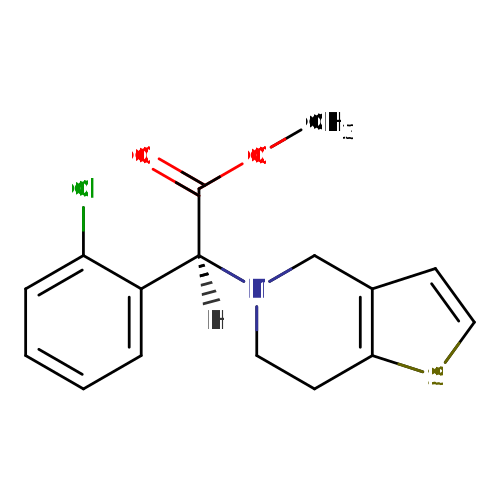
Structure for Clopidogrel (DB00758)
- Weight
- Average: 321.822
Monoisotopic: 321.059027158 - Chemical Formula
- C16H16ClNO2S
- Synonyms
- (+)-Clopidogrel
- Clopidogrel
- Clopidogrelum
- External IDs
- R 130964
- R-130964
- SR 25990
- SR-25990

Pharmacology
- Indication
Clopidogrel is indicated to reduce the risk of myocardial infarction for patients with non-ST elevated acute coronary syndrome (ACS), patients with ST-elevated myocardial infarction, and in recent MI, stroke, or established peripheral arterial disease,9
 Reduce drug development failure ratesBuild, train, & validate machine-learning modelswith evidence-based and structured datasets.Build, train, & validate predictive machine-learning models with structured datasets.
- Associated Conditions
Indication Type Indication Combined Product Details Approval Level Age Group Patient Characteristics Dose Form Used in combination to manage Acute coronary syndrome (acs) Combination Product in combination with: Acetylsalicylic acid (DB00945) •••••••••••• ••••• Used in combination to manage Acute myocardial infarction Combination Product in combination with: Acetylsalicylic acid (DB00945) •••••••••••• ••••• •••••••• ••• •••••••••••• ••••••• Prevention of Cardiovascular event •••••••••••• Prevention of Cardiovascular event •••••••••••• Prevention of Cardiovascular event •••••••••••• - Contraindications & Blackbox Warnings
 Prevent Adverse Drug Events TodayTap into our Clinical API for life-saving information on contraindications & blackbox warnings, population restrictions, harmful risks, & more.Avoid life-threatening adverse drug events with our Clinical API
- Pharmacodynamics
Clopidogrel is a prodrug of a platelet inhibitor used to reduce the risk of myocardial infarction and stroke.3,9 It has a long duration of action as it is taken once daily and a large therapeutic window as it is given in doses of 75-300mg daily.9
- Mechanism of action
Clopidogrel is activated via a 2 steps reaction to an active thiol-containing metabolite.3 This active form is a platelet inhibitor that irreversibly binds to P2Y12 ADP receptors on platelets.9 This binding prevents ADP binding to P2Y12 receptors, activation of the glycoprotein GPIIb/IIIa complex, and platelet aggregation.9
Target Actions Organism AP2Y purinoceptor 12 antagonistHumans - Absorption
A 75mg oral dose of clopidogrel is 50% absorbed from the intestine.9 Clopidogrel can be taken with or without food.9 A meal decreases the AUC of the active metabolite by 57%.9 The active metabolite of clopidogrel reaches a maximum concentration after 30-60 minutes.9 Clopidogrel reached a Cmax of 2.04±2.0ng/mL in 1.40±1.07h.5
The AUC for a 300mg oral dose of clopidogrel was 45.1±16.2ng*h/mL for poor metabolizers, 65.6±19.1ng*h/mL for intermediate metabolizers, and 104.3±57.3ng*h/mL for extensive metabolizers.6 The Cmax was 31.3±13ng/mL for poor metabolizers, 43.9±14ng/mL for intermediate metabolizers, and 60.8±34.3ng/mL for extensive metabolizers.6
- Volume of distribution
The apparent volume of distribution of clopidogrel is 39,240±33,520L.5
- Protein binding
Both the active and inactive metabolites of clopidogrel are 98% protein bound in plasma.1 Studies in cows show clopidogrel 71-85.5% bound to serum albumin.2
- Metabolism
85-90% of an oral dose undergoes first pass metabolism by carboxylesterase 1 in the liver to an inactive carboxylic acid metabolite.4 about 2% of clopidogrel is oxidized to 2-oxoclopidogrel.4 This conversion is 35.8% by CYP1A2, 19.4% by CYP2B6, and 44.9% by CYP2C194 though other studies suggest CYP3A4, CYP3A5, and CYP2C9 also contribute.3 2-oxoclopidogrel is further metabolized to the active metabolite.3,4 This conversion is 32.9% by CYP2B6, 6.79% by CYP2C9, 20.6% by CYP2C19, and 39.8% by CYP3A4.3,4
Hover over products below to view reaction partners
- Route of elimination
An oral dose of radiolabelled clopidogrel is excreted 50% in the urine and 46% in the feces over 5 days.9 The remainder of clopidogrel is irreversibly bound to platelets for their lifetime, or approximately 8-11 days.7
- Half-life
That half life of clopidogrel is approximately 6 hours following a 75mg oral dose while the half life of the active metabolite is approximately 30 minutes.9
- Clearance
The clearance of a 75mg oral dose was 18,960±15,890L/h and for a 300mg oral dose was 16,980±10,410L/h.5
- Adverse Effects
 Improve decision support & research outcomesWith structured adverse effects data, including: blackbox warnings, adverse reactions, warning & precautions, & incidence rates. View sample adverse effects data in our new Data Library!Improve decision support & research outcomes with our structured adverse effects data.
- Toxicity
A single dose of clopidogrel at 1500-2000mg/kg was lethal to mice and rats while 3000mg/kg was lethal to baboons.9 Symptoms of overdose include vomiting, breathing difficulty, gastrointestinal hemorrhage, and prostration.9 Clopidogrel is irreversibly bound to platelets for their lifetime, which is approximately 11 days.9 Overdoses of clopidogrel can be treated with platelet transfusions to restore clotting ability.9
- Pathways
Pathway Category Clopidogrel Action Pathway Drug action Clopidogrel Metabolism Pathway Drug metabolism - Pharmacogenomic Effects/ADRs
Interacting Gene/Enzyme Allele name Genotype(s) Defining Change(s) Type(s) Description Details Cytochrome P450 2C9 CYP2C9*3 (C;C) / (A;C) C Allele Effect Directly Studied Patients with this genotype have reduced metabolism of clopidogrel resulting in reduced plasma concentrations of its active metabolite. Details Cytochrome P450 2C19 CYP2C19*2 (A;A) / (A;G) G > A Effect Directly Studied Patients with this genotype have reduced metabolism of clopidogrel resulting in reduced plasma concentrations of its active metabolite. Details Cytochrome P450 2C19 CYP2C19*2 Not Available 681G>A ADR Directly Studied Patients with this polymorphism in CYP2C19 are poor metabolizers of clopidogrel and are associated with diminished platelet response and increased risk of adverse cardiovascular events in response to clopidogrel therapy. Details Cytochrome P450 2C19 CYP2C19*3 Not Available 636G>A Directly Studied Effect The presence of this polymorphism in CYP2C19 is associated with reduced or poor metabolism of clopidogrel. Details Cytochrome P450 2C19 CYP2C19*2A Not Available 681G>A ADR Inferred Poor drug metabolizer, increased risk for adverse cardiovascular events and lower efficacy. Alternative recommended. Details Cytochrome P450 2C19 CYP2C19*2B Not Available 681G>A ADR Inferred Poor drug metabolizer, increased risk for adverse cardiovascular events and lower efficacy. Alternative recommended. Details Cytochrome P450 2C19 CYP2C19*4 Not Available 1A>G ADR Inferred Poor drug metabolizer, increased risk for adverse cardiovascular events and lower efficacy. Alternative recommended. Details Cytochrome P450 2C19 CYP2C19*5 Not Available 1297C>T ADR Inferred Poor drug metabolizer, increased risk for adverse cardiovascular events and lower efficacy. Alternative recommended. Details Cytochrome P450 2C19 CYP2C19*6 Not Available 395G>A ADR Inferred Poor drug metabolizer, increased risk for adverse cardiovascular events and lower efficacy. Alternative recommended. Details Cytochrome P450 2C19 CYP2C19*7 Not Available 19294T>A ADR Inferred Poor drug metabolizer, increased risk for adverse cardiovascular events and lower efficacy. Alternative recommended. Details Cytochrome P450 2C19 CYP2C19*22 Not Available 557G>C / 991A>G ADR Inferred Poor drug metabolizer, increased risk for adverse cardiovascular events and lower efficacy. Alternative recommended. Details Cytochrome P450 2C19 CYP2C19*24 Not Available 99C>T / 991A>G … show all ADR Inferred Poor drug metabolizer, increased risk for adverse cardiovascular events and lower efficacy. Alternative recommended. Details Cytochrome P450 2C19 CYP2C19*35 Not Available 12662A>G ADR Inferred Poor drug metabolizer, increased risk for adverse cardiovascular events and lower efficacy. Alternative recommended. Details Cytochrome P450 2C9 CYP2C9*6 Not Available 818delA Effect Inferred Poor drug metabolizer, lower dose requirements, higher risk for drug-drug interactions Details Cytochrome P450 2C9 CYP2C9*15 Not Available 485C>A Effect Inferred Poor drug metabolizer, lower dose requirements, higher risk for drug-drug interactions Details Cytochrome P450 2C9 CYP2C9*25 Not Available 353_362delAGAAATGGAA Effect Inferred Poor drug metabolizer, lower dose requirements, higher risk for drug-drug interactions Details Cytochrome P450 2C9 CYP2C9*35 Not Available 374G>T / 430C>T Effect Inferred Poor drug metabolizer, lower dose requirements, higher risk for drug-drug interactions Details Cytochrome P450 2C9 CYP2C9*2 Not Available 430C>T Effect Inferred Poor drug metabolizer, lower dose requirements, higher risk for drug-drug interactions Details Cytochrome P450 2C9 CYP2C9*4 Not Available 1076T>C Effect Inferred Poor drug metabolizer, lower dose requirements, higher risk for drug-drug interactions Details Cytochrome P450 2C9 CYP2C9*5 Not Available 1080C>G Effect Inferred Poor drug metabolizer, lower dose requirements, higher risk for drug-drug interactions Details Cytochrome P450 2C9 CYP2C9*8 Not Available 449G>A Effect Inferred Poor drug metabolizer, lower dose requirements, higher risk for drug-drug interactions Details Cytochrome P450 2C9 CYP2C9*11 Not Available 1003C>T Effect Inferred Poor drug metabolizer, lower dose requirements, higher risk for drug-drug interactions Details Cytochrome P450 2C9 CYP2C9*12 Not Available 1465C>T Effect Inferred Poor drug metabolizer, lower dose requirements, higher risk for drug-drug interactions Details Cytochrome P450 2C9 CYP2C9*13 Not Available 269T>C Effect Inferred Poor drug metabolizer, lower dose requirements, higher risk for drug-drug interactions Details Cytochrome P450 2C9 CYP2C9*14 Not Available 374G>A Effect Inferred Poor drug metabolizer, lower dose requirements, higher risk for drug-drug interactions Details Cytochrome P450 2C9 CYP2C9*16 Not Available 895A>G Effect Inferred Poor drug metabolizer, lower dose requirements, higher risk for drug-drug interactions Details Cytochrome P450 2C9 CYP2C9*18 Not Available 1075A>C / 1190A>C … show all Effect Inferred Poor drug metabolizer, lower dose requirements, higher risk for drug-drug interactions Details Cytochrome P450 2C9 CYP2C9*26 Not Available 389C>G Effect Inferred Poor drug metabolizer, lower dose requirements, higher risk for drug-drug interactions Details Cytochrome P450 2C9 CYP2C9*28 Not Available 641A>T Effect Inferred Poor drug metabolizer, lower dose requirements, higher risk for drug-drug interactions Details Cytochrome P450 2C9 CYP2C9*30 Not Available 1429G>A Effect Inferred Poor drug metabolizer, lower dose requirements, higher risk for drug-drug interactions Details Cytochrome P450 2C9 CYP2C9*33 Not Available 395G>A Effect Inferred Poor drug metabolizer, lower dose requirements, higher risk for drug-drug interactions Details Cytochrome P450 2C19 CYP2C19*2A Not Available 681G>A Effect Inferred Poor drug metabolizer, lower dose requirements, higher risk for drug-drug interactions Details Cytochrome P450 2C19 CYP2C19*2B Not Available 681G>A Effect Inferred Poor drug metabolizer, lower dose requirements, higher risk for drug-drug interactions Details Cytochrome P450 2C19 CYP2C19*3 Not Available 636G>A Effect Inferred Poor drug metabolizer, lower dose requirements, higher risk for drug-drug interactions Details Cytochrome P450 2C19 CYP2C19*4 Not Available 1A>G Effect Inferred Poor drug metabolizer, lower dose requirements, higher risk for drug-drug interactions Details Cytochrome P450 2C19 CYP2C19*5 Not Available 1297C>T Effect Inferred Poor drug metabolizer, lower dose requirements, higher risk for drug-drug interactions Details Cytochrome P450 2C19 CYP2C19*6 Not Available 395G>A Effect Inferred Poor drug metabolizer, lower dose requirements, higher risk for drug-drug interactions Details Cytochrome P450 2C19 CYP2C19*7 Not Available 19294T>A Effect Inferred Poor drug metabolizer, lower dose requirements, higher risk for drug-drug interactions Details Cytochrome P450 2C19 CYP2C19*22 Not Available 557G>C / 991A>G Effect Inferred Poor drug metabolizer, lower dose requirements, higher risk for drug-drug interactions Details Cytochrome P450 2C19 CYP2C19*24 Not Available 99C>T / 991A>G … show all Effect Inferred Poor drug metabolizer, lower dose requirements, higher risk for drug-drug interactions Details Cytochrome P450 2C19 CYP2C19*35 Not Available 12662A>G Effect Inferred Poor drug metabolizer, lower dose requirements, higher risk for drug-drug interactions Details
Interactions
- Drug Interactions
- This information should not be interpreted without the help of a healthcare provider. If you believe you are experiencing an interaction, contact a healthcare provider immediately. The absence of an interaction does not necessarily mean no interactions exist.
Drug Interaction Integrate drug-drug
interactions in your softwareAbametapir The serum concentration of Clopidogrel can be increased when it is combined with Abametapir. Abatacept The metabolism of Clopidogrel can be increased when combined with Abatacept. Abciximab The risk or severity of bleeding can be increased when Clopidogrel is combined with Abciximab. Abiraterone The serum concentration of Clopidogrel can be increased when it is combined with Abiraterone. Abrocitinib The risk or severity of bleeding and thrombocytopenia can be increased when Clopidogrel is combined with Abrocitinib. - Food Interactions
- Take with or without food.
Products
 Drug product information from 10+ global regionsOur datasets provide approved product information including:dosage, form, labeller, route of administration, and marketing period.Access drug product information from over 10 global regions.
- Product Ingredients
Ingredient UNII CAS InChI Key Clopidogrel besilate BL9VGG8BHW 744256-69-7 CUZIJKLLBDXNFV-RSAXXLAASA-N Clopidogrel bisulfate 08I79HTP27 120202-66-6 FDEODCTUSIWGLK-RSAXXLAASA-N Clopidogrel hydrochloride 426O7XWS6Y 120202-65-5 XIHVAFJSGWDBGA-RSAXXLAASA-N - Product Images
- Brand Name Prescription Products
Name Dosage Strength Route Labeller Marketing Start Marketing End Region Image Act Clopidogrel Tablet 75 mg Oral TEVA Canada Limited 2011-12-07 Not applicable Canada 
Clopido Grel 1a Pharma Tablet, film coated 75 mg Oral Acino Pharma Gmb H 2016-09-08 2011-02-28 EU 
Clopidogre Ratiopharm Tablet, film coated 75 mg Oral Teva B.V. 2016-09-08 Not applicable EU Clopidogrel Tablet 75 mg Oral Sivem Pharmaceuticals Ulc 2012-06-11 Not applicable Canada Clopidogrel Tablet 75 mg Oral Sanis Health Inc 2013-02-13 Not applicable Canada - Generic Prescription Products
Name Dosage Strength Route Labeller Marketing Start Marketing End Region Image Abbott-clopidogrel Tablet 75 mg Oral Abbott 2014-03-17 2015-12-31 Canada Accel-clopidogrel Tablet 300 mg Oral Accel Pharma Inc Not applicable Not applicable Canada Accel-clopidogrel Tablet 75 mg Oral Accel Pharma Inc 2014-09-04 2015-11-09 Canada Ag-clopidogrel Tablet 75 mg Oral Angita Pharma Inc. 2022-02-10 Not applicable Canada Apo-clopidogrel Tablet 300 mg Oral Apotex Corporation 2013-01-21 Not applicable Canada - Mixture Products
Name Ingredients Dosage Route Labeller Marketing Start Marketing End Region Image CLOPIDOGREL E ACIDO ACETILSALICILICO MYLAN Clopidogrel (75 mg) + Acetylsalicylic acid (75 mg) Tablet, film coated Oral Mylan Pharmaceuticals Limited 2020-05-08 Not applicable Italy 
CLOPIDOGREL E ACIDO ACETILSALICILICO MYLAN Clopidogrel (75 mg) + Acetylsalicylic acid (100 mg) Tablet, film coated Oral Mylan Pharmaceuticals Limited 2020-05-08 Not applicable Italy CLOPIDOGREL E ACIDO ACETILSALICILICO MYLAN Clopidogrel (75 mg) + Acetylsalicylic acid (75 mg) Tablet, film coated Oral Mylan Pharmaceuticals Limited 2020-05-08 Not applicable Italy CLOPIDOGREL E ACIDO ACETILSALICILICO MYLAN Clopidogrel (75 mg) + Acetylsalicylic acid (100 mg) Tablet, film coated Oral Mylan Pharmaceuticals Limited 2020-05-08 Not applicable Italy CLOPIDOGREL E ACIDO ACETILSALICILICO MYLAN Clopidogrel (75 mg) + Acetylsalicylic acid (100 mg) Tablet, film coated Oral Mylan Pharmaceuticals Limited 2020-05-08 Not applicable Italy


Categories
- ATC Codes
- B01AC04 — Clopidogrel
- Drug Categories
- Antiplatelet agents
- Blood and Blood Forming Organs
- Cytochrome P-450 CYP1A2 Substrates
- Cytochrome P-450 CYP2B6 Inhibitors
- Cytochrome P-450 CYP2B6 Inhibitors (moderate)
- Cytochrome P-450 CYP2B6 Substrates
- Cytochrome P-450 CYP2C19 Substrates
- Cytochrome P-450 CYP2C8 Inhibitors
- Cytochrome P-450 CYP2C8 Inhibitors (strong)
- Cytochrome P-450 CYP2C9 Inhibitors
- Cytochrome P-450 CYP2C9 Inhibitors (strength unknown)
- Cytochrome P-450 CYP2C9 Substrates
- Cytochrome P-450 CYP3A Substrates
- Cytochrome P-450 CYP3A4 Substrates
- Cytochrome P-450 CYP3A5 Substrates
- Cytochrome P-450 Enzyme Inhibitors
- Cytochrome P-450 Substrates
- Decreased Platelet Aggregation
- Hematologic Agents
- Heterocyclic Compounds, Fused-Ring
- Neurotransmitter Agents
- OCT1 inhibitors
- OCT2 Inhibitors
- P-glycoprotein substrates
- P2Y12 Platelet Inhibitor
- Platelet Aggregation Inhibitors Excl. Heparin
- Purinergic Agents
- Purinergic Antagonists
- Purinergic P2 Receptor Antagonists
- Purinergic P2Y Receptor Antagonists
- Pyridines
- Sulfur Compounds
- Thienopyridines
- Thiophenes
- Chemical TaxonomyProvided by Classyfire
- Description
- This compound belongs to the class of organic compounds known as alpha amino acid esters. These are ester derivatives of alpha amino acids.
- Kingdom
- Organic compounds
- Super Class
- Organic acids and derivatives
- Class
- Carboxylic acids and derivatives
- Sub Class
- Amino acids, peptides, and analogues
- Direct Parent
- Alpha amino acid esters
- Alternative Parents
- Thienopyridines / Aralkylamines / Chlorobenzenes / Aryl chlorides / Pyridines and derivatives / Methyl esters / Heteroaromatic compounds / Thiophenes / Trialkylamines / Monocarboxylic acids and derivatives show 6 more
- Substituents
- Alpha-amino acid ester / Amine / Aralkylamine / Aromatic heteropolycyclic compound / Aryl chloride / Aryl halide / Azacycle / Benzenoid / Carbonyl group / Carboxylic acid ester show 21 more
- Molecular Framework
- Aromatic heteropolycyclic compounds
- External Descriptors
- methyl ester, monochlorobenzenes, thienopyridine (CHEBI:37941)
- Affected organisms
- Humans and other mammals
Chemical Identifiers
- UNII
- A74586SNO7
- CAS number
- 113665-84-2
- InChI Key
- GKTWGGQPFAXNFI-HNNXBMFYSA-N
- InChI
- InChI=1S/C16H16ClNO2S/c1-20-16(19)15(12-4-2-3-5-13(12)17)18-8-6-14-11(10-18)7-9-21-14/h2-5,7,9,15H,6,8,10H2,1H3/t15-/m0/s1
- IUPAC Name
- methyl (2S)-2-(2-chlorophenyl)-2-{4H,5H,6H,7H-thieno[3,2-c]pyridin-5-yl}acetate
- SMILES
- [H][C@@](N1CCC2=C(C1)C=CS2)(C(=O)OC)C1=CC=CC=C1Cl
References
- Synthesis Reference
Revital Lifshitz-Liron, "Novel crystal forms III, IV, V, and novel amorphous form of clopidogrel hydrogensulfate, processes for their preparation, processes for the preparation of form I, compositions containing the new forms and methods of administering the new forms." U.S. Patent US20030114479, issued June 19, 2003.
US20030114479- General References
- Ganesan S, Williams C, Maslen CL, Cherala G: Clopidogrel variability: role of plasma protein binding alterations. Br J Clin Pharmacol. 2013 Jun;75(6):1468-77. doi: 10.1111/bcp.12017. [Article]
- Mostafizar M, Haque P, Mazid A, Shohel M, Shazly G, Kazi M, Reza HM: CHARACTERIZATION OF BINDING SITES OF CLOPIDOGREL AND INTERFERENCE OF LINOLEIC ACID AT THE BINDING SITE ON BOVINE SERUM ALBUMIN. Acta Pol Pharm. 2017 Jan;74(1):119-125. [Article]
- Zhang YJ, Li MP, Tang J, Chen XP: Pharmacokinetic and Pharmacodynamic Responses to Clopidogrel: Evidences and Perspectives. Int J Environ Res Public Health. 2017 Mar 14;14(3). pii: ijerph14030301. doi: 10.3390/ijerph14030301. [Article]
- Jiang XL, Samant S, Lesko LJ, Schmidt S: Clinical pharmacokinetics and pharmacodynamics of clopidogrel. Clin Pharmacokinet. 2015 Feb;54(2):147-66. doi: 10.1007/s40262-014-0230-6. [Article]
- Karazniewicz-Lada M, Danielak D, Burchardt P, Kruszyna L, Komosa A, Lesiak M, Glowka F: Clinical pharmacokinetics of clopidogrel and its metabolites in patients with cardiovascular diseases. Clin Pharmacokinet. 2014 Feb;53(2):155-64. doi: 10.1007/s40262-013-0105-2. [Article]
- Umemura K, Iwaki T: The Pharmacokinetics and Pharmacodynamics of Prasugrel and Clopidogrel in Healthy Japanese Volunteers. Clin Pharmacol Drug Dev. 2016 Nov;5(6):480-487. doi: 10.1002/cpdd.259. Epub 2016 Apr 25. [Article]
- Frelinger AL 3rd, Barnard MR, Fox ML, Michelson AD: The Platelet Activity After Clopidogrel Termination (PACT) study. Circ Cardiovasc Interv. 2010 Oct;3(5):442-9. doi: 10.1161/CIRCINTERVENTIONS.110.937961. Epub 2010 Aug 24. [Article]
- Plosker GL, Lyseng-Williamson KA: Clopidogrel: a review of its use in the prevention of thrombosis. Drugs. 2007;67(4):613-46. doi: 10.2165/00003495-200767040-00013. [Article]
- FDA Approved Drug Products: Clopidogrel Oral Tablets [Link]
- External Links
- Human Metabolome Database
- HMDB0005011
- KEGG Drug
- D00769
- PubChem Compound
- 60606
- PubChem Substance
- 46507295
- ChemSpider
- 54632
- BindingDB
- 50318910
- 32968
- ChEBI
- 37941
- ChEMBL
- CHEMBL1771
- ZINC
- ZINC000034781704
- Therapeutic Targets Database
- DAP000178
- PharmGKB
- PA449053
- PDBe Ligand
- CGE
- RxList
- RxList Drug Page
- Drugs.com
- Drugs.com Drug Page
- PDRhealth
- PDRhealth Drug Page
- Wikipedia
- Clopidogrel
- PDB Entries
- 4h1n
- FDA label
- Download (402 KB)
- MSDS
- Download (57.4 KB)
Clinical Trials
- Clinical Trials
Phase Status Purpose Conditions Count 4 Active Not Recruiting Treatment Angioplasty, Transluminal, Percutaneous Coronary / Coronary Heart Disease (CHD) 1 4 Active Not Recruiting Treatment Coronary Artery Disease (CAD) / DES 1 4 Active Not Recruiting Treatment Coronary Artery Disease (CAD) / Type 2 Diabetes Mellitus 1 4 Active Not Recruiting Treatment Coronavirus Disease 2019 (COVID‑19) 1 4 Active Not Recruiting Treatment Myocardial Infarction 1
Pharmacoeconomics
- Manufacturers
- Dr reddys laboratories inc
- Sanofi aventis us llc
- Packagers
- Advanced Pharmaceutical Services Inc.
- Amerisource Health Services Corp.
- Apotex Inc.
- A-S Medication Solutions LLC
- Bristol-Myers Squibb Co.
- Cardinal Health
- Comprehensive Consultant Services Inc.
- Dept Health Central Pharmacy
- Doctor Reddys Laboratories Ltd.
- PD-Rx Pharmaceuticals Inc.
- Physician Partners Ltd.
- Physicians Total Care Inc.
- Prepak Systems Inc.
- Promex Medical Inc.
- Remedy Repack
- Sanofi-Aventis Inc.
- Southwood Pharmaceuticals
- Squibb Manufacturing Co.
- Stat Rx Usa
- Vangard Labs Inc.
- Dosage Forms
Form Route Strength Tablet Oral 97.857 mg Tablet, coated Oral Tablet, coated Oral 75 mg Tablet Oral 97.900 mg Tablet, film coated Oral 98 MG Tablet Oral 300 mg/1 Tablet, film coated Oral 300 mg/1 Tablet, coated Oral 7500000 mg Tablet Oral 7500000 mg Tablet, film coated Oral 75 MG/75MG Tablet, film coated Oral 75 MG/100MG Tablet Oral 75 mg/1 Tablet, film coated Oral 97.875 mg Tablet, film coated Oral 97875 MG Kit Oral Tablet, film coated Oral 75 mg Tablet Oral Tablet, film coated Oral Tablet, film coated Oral 100 mg Tablet Oral 97.875 mg Tablet Oral 75 mg Tablet Oral 75.00 mg Tablet Oral 97.86 mg Tablet Oral 97.854 mg Capsule Oral Tablet Oral 75.000 MG Tablet Oral 98.000 mg Tablet Oral 75. mg Tablet, film coated Oral 75.00 mg Tablet, film coated Oral Tablet Oral 300 mg Tablet, film coated Oral 75 mg/1 Tablet, film coated Oral 300 mg Tablet Oral 97.830 mg Tablet Oral - Prices
Unit description Cost Unit Plavix 300 mg tablet 24.86USD tablet Plavix 75 mg tablet 9.23USD tablet DrugBank does not sell nor buy drugs. Pricing information is supplied for informational purposes only.- Patents
Patent Number Pediatric Extension Approved Expires (estimated) Region US4847265 No 1989-07-11 2011-11-17 US 
CA2334870 No 2005-03-15 2019-06-10 Canada CA1336777 No 1995-08-22 2012-08-22 Canada US6429210 Yes 2002-08-06 2019-12-10 US US6504030 Yes 2003-01-07 2019-12-10 US
Properties
- State
- Solid
- Experimental Properties
Property Value Source melting point (°C) 158 °C http://www.chemspider.com/Chemical-Structure.54632.html?rid=9b9b483b-9db2-454c-a1be-2494307b6b23&page_num=0 - Predicted Properties
Property Value Source Water Solubility 0.0118 mg/mL ALOGPS logP 3.84 ALOGPS logP 4.03 Chemaxon logS -4.4 ALOGPS pKa (Strongest Basic) 4.77 Chemaxon Physiological Charge 0 Chemaxon Hydrogen Acceptor Count 2 Chemaxon Hydrogen Donor Count 0 Chemaxon Polar Surface Area 29.54 Å2 Chemaxon Rotatable Bond Count 4 Chemaxon Refractivity 84.93 m3·mol-1 Chemaxon Polarizability 33.19 Å3 Chemaxon Number of Rings 3 Chemaxon Bioavailability 1 Chemaxon Rule of Five Yes Chemaxon Ghose Filter Yes Chemaxon Veber's Rule Yes Chemaxon MDDR-like Rule No Chemaxon - Predicted ADMET Features
Property Value Probability Human Intestinal Absorption + 1.0 Blood Brain Barrier + 0.9847 Caco-2 permeable + 0.5777 P-glycoprotein substrate Substrate 0.6664 P-glycoprotein inhibitor I Inhibitor 0.6556 P-glycoprotein inhibitor II Inhibitor 0.5558 Renal organic cation transporter Inhibitor 0.6368 CYP450 2C9 substrate Non-substrate 0.7407 CYP450 2D6 substrate Non-substrate 0.9116 CYP450 3A4 substrate Substrate 0.6339 CYP450 1A2 substrate Inhibitor 0.724 CYP450 2C9 inhibitor Non-inhibitor 0.5223 CYP450 2D6 inhibitor Inhibitor 0.5712 CYP450 2C19 inhibitor Inhibitor 0.8071 CYP450 3A4 inhibitor Non-inhibitor 0.7389 CYP450 inhibitory promiscuity High CYP Inhibitory Promiscuity 0.9188 Ames test Non AMES toxic 0.7112 Carcinogenicity Non-carcinogens 0.9597 Biodegradation Not ready biodegradable 0.9911 Rat acute toxicity 2.4887 LD50, mol/kg Not applicable hERG inhibition (predictor I) Weak inhibitor 0.7548 hERG inhibition (predictor II) Non-inhibitor 0.6329
Spectra
- Mass Spec (NIST)
- Download (71.9 KB)
- Spectra
- Chromatographic Properties
Collision Cross Sections (CCS)
Adduct CCS Value (Å2) Source type Source [M-H]- 174.5010461 predictedDarkChem Lite v0.1.0 [M-H]- 160.82198 predictedDeepCCS 1.0 (2019) [M+H]+ 175.5254461 predictedDarkChem Lite v0.1.0 [M+H]+ 163.17998 predictedDeepCCS 1.0 (2019) [M+Na]+ 174.8746461 predictedDarkChem Lite v0.1.0 [M+Na]+ 170.03798 predictedDeepCCS 1.0 (2019)
Targets

- Kind
- Protein
- Organism
- Humans
- Pharmacological action
- Yes
- Actions
- Antagonist
- General Function
- Guanyl-nucleotide exchange factor activity
- Specific Function
- Receptor for ADP and ATP coupled to G-proteins that inhibit the adenylyl cyclase second messenger system. Not activated by UDP and UTP. Required for normal platelet aggregation and blood coagulation.
- Gene Name
- P2RY12
- Uniprot ID
- Q9H244
- Uniprot Name
- P2Y purinoceptor 12
- Molecular Weight
- 39438.355 Da
References
- Dorsam RT, Murugappan S, Ding Z, Kunapuli SP: Clopidogrel: interactions with the P2Y12 receptor and clinical relevance. Hematology. 2003 Dec;8(6):359-65. [Article]
- Herbert JM, Savi P: P2Y12, a new platelet ADP receptor, target of clopidogrel. Semin Vasc Med. 2003 May;3(2):113-22. [Article]
- Taubert D, Kastrati A, Harlfinger S, Gorchakova O, Lazar A, von Beckerath N, Schomig A, Schomig E: Pharmacokinetics of clopidogrel after administration of a high loading dose. Thromb Haemost. 2004 Aug;92(2):311-6. [Article]
- Wang L, Jacobsen SE, Bengtsson A, Erlinge D: P2 receptor mRNA expression profiles in human lymphocytes, monocytes and CD34+ stem and progenitor cells. BMC Immunol. 2004 Aug 3;5:16. [Article]
- Wihlborg AK, Wang L, Braun OO, Eyjolfsson A, Gustafsson R, Gudbjartsson T, Erlinge D: ADP receptor P2Y12 is expressed in vascular smooth muscle cells and stimulates contraction in human blood vessels. Arterioscler Thromb Vasc Biol. 2004 Oct;24(10):1810-5. Epub 2004 Aug 12. [Article]
- Gladding P, Webster M, Zeng I, Farrell H, Stewart J, Ruygrok P, Ormiston J, El-Jack S, Armstrong G, Kay P, Scott D, Gunes A, Dahl ML: The pharmacogenetics and pharmacodynamics of clopidogrel response: an analysis from the PRINC (Plavix Response in Coronary Intervention) trial. JACC Cardiovasc Interv. 2008 Dec;1(6):620-7. doi: 10.1016/j.jcin.2008.09.008. [Article]
- Savi P, Zachayus JL, Delesque-Touchard N, Labouret C, Herve C, Uzabiaga MF, Pereillo JM, Culouscou JM, Bono F, Ferrara P, Herbert JM: The active metabolite of Clopidogrel disrupts P2Y12 receptor oligomers and partitions them out of lipid rafts. Proc Natl Acad Sci U S A. 2006 Jul 18;103(29):11069-74. Epub 2006 Jul 11. [Article]
- van Gestel MA, Heemskerk JW, Slaaf DW, Heijnen VV, Reneman RS, oude Egbrink MG: In vivo blockade of platelet ADP receptor P2Y12 reduces embolus and thrombus formation but not thrombus stability. Arterioscler Thromb Vasc Biol. 2003 Mar 1;23(3):518-23. Epub 2003 Jan 23. [Article]
Enzymes
- Kind
- Protein
- Organism
- Humans
- Pharmacological action
- No
- Actions
- SubstrateInhibitor
- Curator comments
- Clopidogrel inhibited CYP2C9 at high concentrations in vitro, but showed no effects on the pharmacokinetics of warfarin (CYP2C9 substrate) when clopidogrel was administered at 75 mg a day [F1912].
- General Function
- Steroid hydroxylase activity
- Specific Function
- Cytochromes P450 are a group of heme-thiolate monooxygenases. In liver microsomes, this enzyme is involved in an NADPH-dependent electron transport pathway. It oxidizes a variety of structurally un...
- Gene Name
- CYP2C9
- Uniprot ID
- P11712
- Uniprot Name
- Cytochrome P450 2C9
- Molecular Weight
- 55627.365 Da
References
- Richter T, Murdter TE, Heinkele G, Pleiss J, Tatzel S, Schwab M, Eichelbaum M, Zanger UM: Potent mechanism-based inhibition of human CYP2B6 by clopidogrel and ticlopidine. J Pharmacol Exp Ther. 2004 Jan;308(1):189-97. doi: 10.1124/jpet.103.056127. Epub 2003 Oct 16. [Article]
- Farid NA, Payne CD, Small DS, Winters KJ, Ernest CS 2nd, Brandt JT, Darstein C, Jakubowski JA, Salazar DE: Cytochrome P450 3A inhibition by ketoconazole affects prasugrel and clopidogrel pharmacokinetics and pharmacodynamics differently. Clin Pharmacol Ther. 2007 May;81(5):735-41. doi: 10.1038/sj.clpt.6100139. Epub 2007 Mar 14. [Article]
- Clopidogrel FDA label [File]
- Kind
- Protein
- Organism
- Humans
- Pharmacological action
- No
- Actions
- Substrate
- General Function
- Oxidoreductase activity, acting on paired donors, with incorporation or reduction of molecular oxygen, reduced flavin or flavoprotein as one donor, and incorporation of one atom of oxygen
- Specific Function
- Cytochromes P450 are a group of heme-thiolate monooxygenases. In liver microsomes, this enzyme is involved in an NADPH-dependent electron transport pathway. It oxidizes a variety of structurally un...
- Gene Name
- CYP1A2
- Uniprot ID
- P05177
- Uniprot Name
- Cytochrome P450 1A2
- Molecular Weight
- 58293.76 Da
References
- Sangkuhl K, Klein TE, Altman RB: Clopidogrel pathway. Pharmacogenet Genomics. 2010 Jul;20(7):463-5. doi: 10.1097/FPC.0b013e3283385420. [Article]
- Jiang XL, Samant S, Lesko LJ, Schmidt S: Clinical pharmacokinetics and pharmacodynamics of clopidogrel. Clin Pharmacokinet. 2015 Feb;54(2):147-66. doi: 10.1007/s40262-014-0230-6. [Article]
- Polasek TM, Doogue MP, Miners JO: Metabolic activation of clopidogrel: in vitro data provide conflicting evidence for the contributions of CYP2C19 and PON1. Ther Adv Drug Saf. 2011 Dec;2(6):253-61. doi: 10.1177/2042098611422559. [Article]
- Clopidogrel FDA label [File]
- Kind
- Protein
- Organism
- Humans
- Pharmacological action
- No
- Actions
- Inhibitor
- General Function
- Steroid hydroxylase activity
- Specific Function
- Cytochromes P450 are a group of heme-thiolate monooxygenases. In liver microsomes, this enzyme is involved in an NADPH-dependent electron transport pathway. It oxidizes a variety of structurally un...
- Gene Name
- CYP2C8
- Uniprot ID
- P10632
- Uniprot Name
- Cytochrome P450 2C8
- Molecular Weight
- 55824.275 Da
References
- Itkonen MK, Tornio A, Filppula AM, Neuvonen M, Neuvonen PJ, Niemi M, Backman JT: Clopidogrel but Not Prasugrel Significantly Inhibits the CYP2C8-Mediated Metabolism of Montelukast in Humans. Clin Pharmacol Ther. 2018 Sep;104(3):495-504. doi: 10.1002/cpt.947. Epub 2017 Dec 23. [Article]
- Kind
- Protein
- Organism
- Humans
- Pharmacological action
- No
- Actions
- Substrate
- General Function
- Triglyceride lipase activity
- Specific Function
- Involved in the detoxification of xenobiotics and in the activation of ester and amide prodrugs. Hydrolyzes aromatic and aliphatic esters, but has no catalytic activity toward amides or a fatty acy...
- Gene Name
- CES1
- Uniprot ID
- P23141
- Uniprot Name
- Liver carboxylesterase 1
- Molecular Weight
- 62520.62 Da
References
- Zhu HJ, Wang X, Gawronski BE, Brinda BJ, Angiolillo DJ, Markowitz JS: Carboxylesterase 1 as a determinant of clopidogrel metabolism and activation. J Pharmacol Exp Ther. 2013 Mar;344(3):665-72. doi: 10.1124/jpet.112.201640. Epub 2012 Dec 28. [Article]
- Qiu Z, Li N, Song L, Lu Y, Jing J, Parekha HS, Gao W, Tian F, Wang X, Ren S, Chen X: Contributions of intestine and plasma to the presystemic bioconversion of vicagrel, an acetate of clopidogrel. Pharm Res. 2014 Jan;31(1):238-51. doi: 10.1007/s11095-013-1158-5. Epub 2013 Sep 14. [Article]
- Kind
- Protein
- Organism
- Humans
- Pharmacological action
- No
- Actions
- Substrate
- General Function
- Vitamin d3 25-hydroxylase activity
- Specific Function
- Cytochromes P450 are a group of heme-thiolate monooxygenases. In liver microsomes, this enzyme is involved in an NADPH-dependent electron transport pathway. It performs a variety of oxidation react...
- Gene Name
- CYP3A4
- Uniprot ID
- P08684
- Uniprot Name
- Cytochrome P450 3A4
- Molecular Weight
- 57342.67 Da
References
- Zhou SF, Zhou ZW, Yang LP, Cai JP: Substrates, inducers, inhibitors and structure-activity relationships of human Cytochrome P450 2C9 and implications in drug development. Curr Med Chem. 2009;16(27):3480-675. Epub 2009 Sep 1. [Article]
- Saw J, Steinhubl SR, Berger PB, Kereiakes DJ, Serebruany VL, Brennan D, Topol EJ: Lack of adverse clopidogrel-atorvastatin clinical interaction from secondary analysis of a randomized, placebo-controlled clopidogrel trial. Circulation. 2003 Aug 26;108(8):921-4. Epub 2003 Aug 18. [Article]
- Neubauer H, Gunesdogan B, Hanefeld C, Spiecker M, Mugge A: Lipophilic statins interfere with the inhibitory effects of clopidogrel on platelet function--a flow cytometry study. Eur Heart J. 2003 Oct;24(19):1744-9. [Article]
- Lau WC, Gurbel PA, Watkins PB, Neer CJ, Hopp AS, Carville DG, Guyer KE, Tait AR, Bates ER: Contribution of hepatic cytochrome P450 3A4 metabolic activity to the phenomenon of clopidogrel resistance. Circulation. 2004 Jan 20;109(2):166-71. Epub 2004 Jan 5. [Article]
- Mukherjee D, Kline-Rogers E, Fang J, Munir K, Eagle KA: Lack of clopidogrel-CYP3A4 statin interaction in patients with acute coronary syndrome. Heart. 2005 Jan;91(1):23-6. [Article]
- Poulsen TS, Vinholt P, Mickley H, Korsholm L, Kristensen SR, Damkier P: Existence of a clinically relevant interaction between clopidogrel and HMG-CoA reductase inhibitors? Re-evaluating the evidence. Basic Clin Pharmacol Toxicol. 2005 Feb;96(2):103-10. [Article]
- Clarke TA, Waskell LA: The metabolism of clopidogrel is catalyzed by human cytochrome P450 3A and is inhibited by atorvastatin. Drug Metab Dispos. 2003 Jan;31(1):53-9. [Article]
- Kind
- Protein
- Organism
- Humans
- Pharmacological action
- No
- Actions
- SubstrateInhibitor
- General Function
- Steroid hydroxylase activity
- Specific Function
- Cytochromes P450 are a group of heme-thiolate monooxygenases. In liver microsomes, this enzyme is involved in an NADPH-dependent electron transport pathway. It oxidizes a variety of structurally un...
- Gene Name
- CYP2B6
- Uniprot ID
- P20813
- Uniprot Name
- Cytochrome P450 2B6
- Molecular Weight
- 56277.81 Da
References
- Richter T, Murdter TE, Heinkele G, Pleiss J, Tatzel S, Schwab M, Eichelbaum M, Zanger UM: Potent mechanism-based inhibition of human CYP2B6 by clopidogrel and ticlopidine. J Pharmacol Exp Ther. 2004 Jan;308(1):189-97. doi: 10.1124/jpet.103.056127. Epub 2003 Oct 16. [Article]
- Turpeinen M, Tolonen A, Uusitalo J, Jalonen J, Pelkonen O, Laine K: Effect of clopidogrel and ticlopidine on cytochrome P450 2B6 activity as measured by bupropion hydroxylation. Clin Pharmacol Ther. 2005 Jun;77(6):553-9. doi: 10.1016/j.clpt.2005.02.010. [Article]
- Sangkuhl K, Klein TE, Altman RB: Clopidogrel pathway. Pharmacogenet Genomics. 2010 Jul;20(7):463-5. doi: 10.1097/FPC.0b013e3283385420. [Article]
- Kind
- Protein
- Organism
- Humans
- Pharmacological action
- No
- Actions
- Substrate
- General Function
- Oxygen binding
- Specific Function
- Cytochromes P450 are a group of heme-thiolate monooxygenases. In liver microsomes, this enzyme is involved in an NADPH-dependent electron transport pathway. It oxidizes a variety of structurally un...
- Gene Name
- CYP3A5
- Uniprot ID
- P20815
- Uniprot Name
- Cytochrome P450 3A5
- Molecular Weight
- 57108.065 Da
References
- Turgeon J, Pharand C, Michaud V: Understanding clopidogrel efficacy in the presence of cytochrome P450 polymorphism. CMAJ. 2006 Jun 6;174(12):1729. doi: 10.1503/cmaj.060502. [Article]
- Clarke TA, Waskell LA: The metabolism of clopidogrel is catalyzed by human cytochrome P450 3A and is inhibited by atorvastatin. Drug Metab Dispos. 2003 Jan;31(1):53-9. [Article]
- Kind
- Protein
- Organism
- Humans
- Pharmacological action
- No
- Actions
- Substrate
- General Function
- Steroid hydroxylase activity
- Specific Function
- Responsible for the metabolism of a number of therapeutic agents such as the anticonvulsant drug S-mephenytoin, omeprazole, proguanil, certain barbiturates, diazepam, propranolol, citalopram and im...
- Gene Name
- CYP2C19
- Uniprot ID
- P33261
- Uniprot Name
- Cytochrome P450 2C19
- Molecular Weight
- 55930.545 Da
References
- Ford NF: The Metabolism of Clopidogrel: CYP2C19 Is a Minor Pathway. J Clin Pharmacol. 2016 Dec;56(12):1474-1483. doi: 10.1002/jcph.769. Epub 2016 Jun 22. [Article]
- Chen K, Zhang R, Liu H, Guo X, Li P, Liu X: Impact of the CYP2C19 Gene Polymorphism on Clopidogrel Personalized Drug Regimen and the Clinical Outcomes. Clin Lab. 2016 Sep 1;62(9):1773-1780. doi: 10.7754/Clin.Lab.2016.160216. [Article]
- Flockhart Table of Drug Interactions [Link]
- Clopidogrel Therapy and CYP2C19 Genotype [Link]
Carriers
- Kind
- Protein
- Organism
- Humans
- Pharmacological action
- No
- Actions
- Binder
- General Function
- Toxic substance binding
- Specific Function
- Serum albumin, the main protein of plasma, has a good binding capacity for water, Ca(2+), Na(+), K(+), fatty acids, hormones, bilirubin and drugs. Its main function is the regulation of the colloid...
- Gene Name
- ALB
- Uniprot ID
- P02768
- Uniprot Name
- Serum albumin
- Molecular Weight
- 69365.94 Da
References
- Mostafizar M, Haque P, Mazid A, Shohel M, Shazly G, Kazi M, Reza HM: CHARACTERIZATION OF BINDING SITES OF CLOPIDOGREL AND INTERFERENCE OF LINOLEIC ACID AT THE BINDING SITE ON BOVINE SERUM ALBUMIN. Acta Pol Pharm. 2017 Jan;74(1):119-125. [Article]
Transporters
- Kind
- Protein
- Organism
- Humans
- Pharmacological action
- No
- Actions
- Substrate
- General Function
- Xenobiotic-transporting atpase activity
- Specific Function
- Energy-dependent efflux pump responsible for decreased drug accumulation in multidrug-resistant cells.
- Gene Name
- ABCB1
- Uniprot ID
- P08183
- Uniprot Name
- Multidrug resistance protein 1
- Molecular Weight
- 141477.255 Da
References
- Taubert D, von Beckerath N, Grimberg G, Lazar A, Jung N, Goeser T, Kastrati A, Schomig A, Schomig E: Impact of P-glycoprotein on clopidogrel absorption. Clin Pharmacol Ther. 2006 Nov;80(5):486-501. [Article]
- Kind
- Protein
- Organism
- Humans
- Pharmacological action
- No
- Actions
- Inhibitor
- General Function
- Secondary active organic cation transmembrane transporter activity
- Specific Function
- Translocates a broad array of organic cations with various structures and molecular weights including the model compounds 1-methyl-4-phenylpyridinium (MPP), tetraethylammonium (TEA), N-1-methylnico...
- Gene Name
- SLC22A1
- Uniprot ID
- O15245
- Uniprot Name
- Solute carrier family 22 member 1
- Molecular Weight
- 61153.345 Da
References
- Li L, Song F, Tu M, Wang K, Zhao L, Wu X, Zhou H, Xia Z, Jiang H: In vitro interaction of clopidogrel and its hydrolysate with OCT1, OCT2 and OAT1. Int J Pharm. 2014 Apr 25;465(1-2):5-10. doi: 10.1016/j.ijpharm.2014.02.003. Epub 2014 Feb 11. [Article]
- Dujic T, Zhou K, Donnelly LA, Tavendale R, Palmer CN, Pearson ER: Association of Organic Cation Transporter 1 With Intolerance to Metformin in Type 2 Diabetes: A GoDARTS Study. Diabetes. 2015 May;64(5):1786-93. doi: 10.2337/db14-1388. Epub 2014 Dec 15. [Article]
- Stage TB, Brosen K, Christensen MM: A Comprehensive Review of Drug-Drug Interactions with Metformin. Clin Pharmacokinet. 2015 Aug;54(8):811-24. doi: 10.1007/s40262-015-0270-6. [Article]
- Kind
- Protein
- Organism
- Humans
- Pharmacological action
- No
- Actions
- Inhibitor
- General Function
- Quaternary ammonium group transmembrane transporter activity
- Specific Function
- Mediates tubular uptake of organic compounds from circulation. Mediates the influx of agmatine, dopamine, noradrenaline (norepinephrine), serotonin, choline, famotidine, ranitidine, histamin, creat...
- Gene Name
- SLC22A2
- Uniprot ID
- O15244
- Uniprot Name
- Solute carrier family 22 member 2
- Molecular Weight
- 62579.99 Da
References
- Li L, Song F, Tu M, Wang K, Zhao L, Wu X, Zhou H, Xia Z, Jiang H: In vitro interaction of clopidogrel and its hydrolysate with OCT1, OCT2 and OAT1. Int J Pharm. 2014 Apr 25;465(1-2):5-10. doi: 10.1016/j.ijpharm.2014.02.003. Epub 2014 Feb 11. [Article]


Drug created at June 13, 2005 13:24 / Updated at April 27, 2024 09:44