Identification
- Summary
Phenelzine is a monoamine oxidase inhibitor used to treat atypical, nonendogenous, or neurotic depression.
- Brand Names
- Nardil
- Generic Name
- Phenelzine
- DrugBank Accession Number
- DB00780
- Background
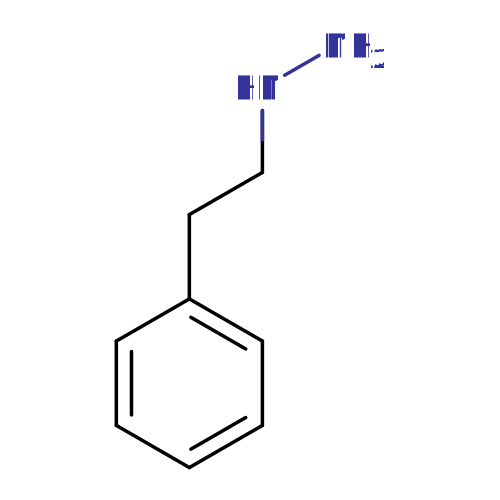
Phenelzine, with the formula β-phenylethylhydrazine, is a monoamine oxidase inhibiting antidepressant that is effective in the treatment of panic disorder and social anxiety disorder.3 It was developed by Parke Davis and originally FDA approved on June 9th, 1961. It is currently approved under prescription by the name of Nardil.
- Type
- Small Molecule
- Groups
- Approved
- Structure

Structure for Phenelzine (DB00780)
- Weight
- Average: 136.1943
Monoisotopic: 136.100048394 - Chemical Formula
- C8H12N2
- Synonyms
- Fenelzina
- Phenelzin
- Phénelzine
- Phenelzine
- Phenelzinum
- External IDs
- W 1544

Pharmacology
- Indication
Phenelzine is indicated for the treatment of nonendogenous, neurotic or atypical depression for patients that do not tolerate other forms of therapy.12
Atypical depression has a high prevalence rate, starts in early life, tends to last longer, is more likely to occur in people with bipolar disorder, has a high comorbidity with anxiety disorder and carries more risk of suicidal behavior. It is important to specify the atypical feature to predict the clinical course of depression and hence generate the best treatment and service. The featuring symptoms of the atypical feature include mood reactivity, two or more of this symptoms: 1) increased appetite, 2) increased sleep, 3) leaden paralysis and 4) interpersonal rejection sensitivity and should not have melancholic or catatonic features of depression.4
Neurotic depression is a depression of an emotionally unstable person. It is a secondary condition to major personality disorder, neuroses and drug use disorders. Likewise, a primary depression with a family history of depression spectrum disease would fit in this category.5
A nonendogenous depression is characterized by a disturbance in mood and general outlook. The physical symptoms tend to be less severe and it often occurs in response to stressful life events that keep occurring over a large period of time generating a continuous stress in the daily living.6
 Reduce drug development failure ratesBuild, train, & validate machine-learning modelswith evidence-based and structured datasets.Build, train, & validate predictive machine-learning models with structured datasets.
- Associated Conditions
Indication Type Indication Combined Product Details Approval Level Age Group Patient Characteristics Dose Form Treatment of Exogenous depression •••••••••••• Treatment of Neurotic depression •••••••••••• Treatment of Atypical depressive disorder •••••••••••• - Contraindications & Blackbox Warnings
 Prevent Adverse Drug Events TodayTap into our Clinical API for life-saving information on contraindications & blackbox warnings, population restrictions, harmful risks, & more.Avoid life-threatening adverse drug events with our Clinical API
- Pharmacodynamics
The elimination of monoamine oxidase by phenelzine results in the elevation of brain amines such as 2-phenylethylamine which is a metabolite of phenelzine. These amines have then marked effects on the uptake and release of catecholamines and serotonin in nerve endings.7 Phenelzine is shown to elevate brain levels of the gamma-aminobutyric acid (GABA) and alanine (ALA) as well as to inhibit the activity of the transaminases that normally metabolize these amino acids. In preclinical studies, it has been shown to be neuroprotective in cerebral ischemia.3
- Mechanism of action
The basic mechanism of action of phenelzine acts as an inhibitor and substrate of monoamine oxidase which subsequently causes an elevation in brain levels of catecholamines and serotonin. It also presents a similar structure to amphetamine which explains the effect on the uptake and release of dopamine, noradrenaline, and serotonin. Phenelzine has been reported to inhibit tyrosine aminotransferase, aromatic amino acid decarboxylase, and dopamine B-hydroxylase.7
Target Actions Organism AAmine oxidase [flavin-containing] A antagonistHumans AAmine oxidase [flavin-containing] B antagonistHumans UMembrane primary amine oxidase inhibitorHumans U4-aminobutyrate aminotransferase, mitochondrial inhibitorHumans UAlanine aminotransferase 1 inhibitorHumans UAlanine aminotransferase 2 inhibitorHumans UGlutamic acid decarboxylase inhibitorHumans - Absorption
Phenelzine is rapidly absorbed from the gastrointestinal tract. The decay of the drug action is not dependent on the pharmacokinetic parameters but on the rate of protein synthesis which restores the functional levels of monoamine oxidase.13 The mean Cmax is 19.8 ng/ml and it occurs after 43 minutes of dose administration.Label
- Volume of distribution
The volume of distribution of phenelzine is hard to determine as drugs from this kind penetrate the CNS very well into the tissue where their activity is desired.10
- Protein binding
Unchanged phenelzine presents a high protein binding which reduced its bioavailability.11
- Metabolism
For the metabolic studies, it is assumed that phenelzine is acetylated. Some of the metabolites of phenelzine are phenylacetic acid, 2-phenylethylamine and 4-hydroxyphenylacetic acid as major metabolites and N-acetyl-phenelzine as a minor metabolite.7
Hover over products below to view reaction partners
- Route of elimination
The elimination of the administered dose is mainly composed of the phenelzine metabolites, phenylacetic acid and parahydroxyphenylacetic acid that constitute 79% of the dose found in the urine in the first 96 hours.8
- Half-life
After administration phenelzine presents a very short half-life of 11.6 hours in humans.13
- Clearance
Not Available
- Adverse Effects
 Improve decision support & research outcomesWith structured adverse effects data, including: blackbox warnings, adverse reactions, warning & precautions, & incidence rates. View sample adverse effects data in our new Data Library!Improve decision support & research outcomes with our structured adverse effects data.
- Toxicity
Phenelzine, as must of the monoamine oxidase inhibitors, can cause transient, mild and asymptomatic aminotransferase elevations. It has also been reported to be associated with cases of liver injury after 1-3 months of treatment.9
- Pathways
- Not Available
- Pharmacogenomic Effects/ADRs
- Not Available
Interactions
- Drug Interactions
- This information should not be interpreted without the help of a healthcare provider. If you believe you are experiencing an interaction, contact a healthcare provider immediately. The absence of an interaction does not necessarily mean no interactions exist.
Drug Interaction Integrate drug-drug
interactions in your software1,2-Benzodiazepine The risk or severity of CNS depression can be increased when Phenelzine is combined with 1,2-Benzodiazepine. Abacavir Phenelzine may decrease the excretion rate of Abacavir which could result in a higher serum level. Abaloparatide Phenelzine may increase the orthostatic hypotensive activities of Abaloparatide. Abciximab The risk or severity of bleeding and hemorrhage can be increased when Phenelzine is combined with Abciximab. Acarbose Phenelzine may increase the hypoglycemic activities of Acarbose. - Food Interactions
- Avoid alcohol.
- Avoid St. John's Wort. Administering phenelzine with St. John's Wort may increase the risk of serotonin syndrome.
- Avoid tyramine-containing foods and supplements. Tyramine-containing foods and beverages can cause a sudden elevation in blood pressure or a hypertensive crisis. Foods that contain tyramine include aged cheese, ripe bananas, red wine, some alcoholic beverages (beer), cured food, pickled food, and fava beans.
- Limit caffeine intake. Excess caffeine intake can also cause a hypertensive crisis.
Products
 Drug product information from 10+ global regionsOur datasets provide approved product information including:dosage, form, labeller, route of administration, and marketing period.Access drug product information from over 10 global regions.
- Product Ingredients
Ingredient UNII CAS InChI Key Phenelzine sulfate 2681D7P965 156-51-4 RXBKMJIPNDOHFR-UHFFFAOYSA-N - International/Other Brands
- Margyl (DIM) / Nardelzine (Pfizer)
- Brand Name Prescription Products
Name Dosage Strength Route Labeller Marketing Start Marketing End Region Image Nardil Tablet, film coated 15 mg/1 Oral Parke-Davis Div of Pfizer Inc 1961-06-09 Not applicable US 
Nardil Tablet 15 mg Oral Searchlight Pharma Inc 1981-12-31 Not applicable Canada 
Nardil Phenelzine Sulfate Tablet, film coated 15 mg/1 Oral Farmea 1961-06-09 Not applicable US - Generic Prescription Products
Name Dosage Strength Route Labeller Marketing Start Marketing End Region Image Greenstone Brand Phenelzine Sulfate Tablet 15 mg/1 Oral Farmea 1961-06-09 Not applicable US Phenelzine Sulfate Tablet 15 mg/1 Oral Lupin Pharmaceuticals 2010-12-14 Not applicable US Phenelzine Sulfate Tablet 15 mg/1 Oral Novel Laboratories, Inc. 2011-02-14 Not applicable US Phenelzine Sulfate Tablet, film coated 15 mg/1 Oral Greenstone LLC 2011-03-23 Not applicable US Phenelzine Sulfate Tablet 15 mg/1 Oral Golden State Medical Supply, Inc. 2010-12-14 2015-02-28 US
Categories
- ATC Codes
- N06AF03 — Phenelzine
- Drug Categories
- Agents that produce hypertension
- Agents that reduce seizure threshold
- Antidepressive Agents
- Antidepressive Agents Indicated for Depression
- Central Nervous System Agents
- Central Nervous System Depressants
- Cytochrome P-450 CYP2C19 Inhibitors
- Cytochrome P-450 CYP2C19 inhibitors (strength unknown)
- Cytochrome P-450 CYP2C8 Inhibitors
- Cytochrome P-450 CYP2C8 Inhibitors (strength unknown)
- Cytochrome P-450 CYP2D6 Inhibitors
- Cytochrome P-450 CYP2D6 Inhibitors (strength unknown)
- Cytochrome P-450 CYP2E1 Inducers
- Cytochrome P-450 CYP2E1 Inducers (strength unknown)
- Cytochrome P-450 CYP3A Inhibitors
- Cytochrome P-450 CYP3A4 Inhibitors
- Cytochrome P-450 CYP3A4 Inhibitors (strength unknown)
- Cytochrome P-450 CYP3A5 Inhibitors
- Cytochrome P-450 CYP3A5 Inhibitors (strength unknown)
- Cytochrome P-450 CYP3A7 Inhibitors
- Cytochrome P-450 CYP3A7 Inhibitors (strength unknown)
- Cytochrome P-450 Enzyme Inducers
- Cytochrome P-450 Enzyme Inhibitors
- Drugs that are Mainly Renally Excreted
- Enzyme Inhibitors
- Hydrazines
- Hypotensive Agents
- Monoamine Oxidase A Substrates
- Monoamine Oxidase Inhibitors
- Monoamine Oxidase Inhibitors, Non-Selective
- Nervous System
- Psychoanaleptics
- Psychotropic Drugs
- Serotonergic Drugs Shown to Increase Risk of Serotonin Syndrome
- Serotonin Agents
- Serotonin Modulators
- Chemical TaxonomyProvided by Classyfire
- Description
- This compound belongs to the class of organic compounds known as benzene and substituted derivatives. These are aromatic compounds containing one monocyclic ring system consisting of benzene.
- Kingdom
- Organic compounds
- Super Class
- Benzenoids
- Class
- Benzene and substituted derivatives
- Sub Class
- Not Available
- Direct Parent
- Benzene and substituted derivatives
- Alternative Parents
- Alkylhydrazines / Organopnictogen compounds / Hydrocarbon derivatives
- Substituents
- Alkylhydrazine / Aromatic homomonocyclic compound / Hydrazine derivative / Hydrocarbon derivative / Monocyclic benzene moiety / Organic nitrogen compound / Organonitrogen compound / Organopnictogen compound
- Molecular Framework
- Aromatic homomonocyclic compounds
- External Descriptors
- primary amine (CHEBI:8060) / a small molecule (CPD-13895)
- Affected organisms
- Humans and other mammals
Chemical Identifiers
- UNII
- O408N561GF
- CAS number
- 51-71-8
- InChI Key
- RMUCZJUITONUFY-UHFFFAOYSA-N
- InChI
- InChI=1S/C8H12N2/c9-10-7-6-8-4-2-1-3-5-8/h1-5,10H,6-7,9H2
- IUPAC Name
- (2-phenylethyl)hydrazine
- SMILES
- NNCCC1=CC=CC=C1
References
- General References
- Nolen WA: [Classical monoamine oxidase inhibitor: not registered for, but still a place in the treatment of depression]. Ned Tijdschr Geneeskd. 2003 Oct 4;147(40):1940-3. [Article]
- Sowa BN, Holt A, Todd KG, Baker GB: Monoamine oxidase inhibitors, their structural analogues, and neuroprotection. Indian J Exp Biol. 2004 Sep;42(9):851-7. [Article]
- Todd KG, Baker GB: Neurochemical effects of the monoamine oxidase inhibitor phenelzine on brain GABA and alanine: A comparison with vigabatrin. J Pharm Pharm Sci. 2008 May 16;11(2):14s-21s. [Article]
- Singh T, Williams K: Atypical depression. Psychiatry (Edgmont). 2006 Apr;3(4):33-9. [Article]
- Winokur G, Black DW, Nasrallah A: Neurotic depression: a diagnosis based on preexisting characteristics. Eur Arch Psychiatry Neurol Sci. 1987;236(6):343-8. [Article]
- Benjaminsen S: Primary non-endogenous depression and features attributed to reactive depression. J Affect Disord. 1981 Sep;3(3):245-59. [Article]
- Baker GB, Coutts RT, McKenna KF, Sherry-McKenna RL: Insights into the mechanisms of action of the MAO inhibitors phenelzine and tranylcypromine: a review. J Psychiatry Neurosci. 1992 Nov;17(5):206-14. [Article]
- Robinson DS, Cooper TB, Jindal SP, Corcella J, Lutz T: Metabolism and pharmacokinetics of phenelzine: lack of evidence for acetylation pathway in humans. J Clin Psychopharmacol. 1985 Dec;5(6):333-7. [Article]
- Friedrich ME, Akimova E, Huf W, Konstantinidis A, Papageorgiou K, Winkler D, Toto S, Greil W, Grohmann R, Kasper S: Drug-Induced Liver Injury during Antidepressant Treatment: Results of AMSP, a Drug Surveillance Program. Int J Neuropsychopharmacol. 2016 Apr 20;19(4). pii: pyv126. doi: 10.1093/ijnp/pyv126. Print 2016 Apr. [Article]
- Preskon S., Feighner J., Stanga C. and Ross R. (2004). Antidepressants: Past, Present and Future. Springer-Verlag.
- Owens D. (2010). Companion to psychiatric studies (8th ed.). Elsevier.
- Nardil monograph [Link]
- New Zealand report [Link]
- External Links
- Human Metabolome Database
- HMDB0014918
- KEGG Drug
- D08349
- KEGG Compound
- C07430
- PubChem Compound
- 3675
- PubChem Substance
- 46507348
- ChemSpider
- 3547
- BindingDB
- 50105417
- 8123
- ChEBI
- 8060
- ChEMBL
- CHEMBL1089
- ZINC
- ZINC000019166991
- Therapeutic Targets Database
- DAP000578
- PharmGKB
- PA450903
- RxList
- RxList Drug Page
- Drugs.com
- Drugs.com Drug Page
- Wikipedia
- Phenelzine
- FDA label
- Download (38.9 KB)
- MSDS
- Download (25 KB)
Clinical Trials
- Clinical Trials
Phase Status Purpose Conditions Count 4 Not Yet Recruiting Treatment Panic Disorder 1 2 Completed Treatment Adenocarcinoma of Prostate / Recurrent Prostate Cancer / Stage I Prostate Cancer / Stage IIA Prostate Cancer / Stage IIB Prostate Cancer / Stage III Prostate Cancer 1 2 Terminated Treatment Adenocarcinoma of Prostate / Hormone Resistant Prostate Cancer / Metastatic Prostate Adenocarcinoma / Recurrent Prostate Carcinoma 1 1 Completed Basic Science Healthy Volunteers (HV) 1 1 Completed Treatment Healthy Volunteers (HV) 1
Pharmacoeconomics
- Manufacturers
- Parke davis div warner lambert co
- Packagers
- Farmea
- Kaiser Foundation Hospital
- Murfreesboro Pharmaceutical Nursing Supply
- Pfizer Inc.
- Professional Co.
- Warner Lambert Company LLC
- Dosage Forms
Form Route Strength Tablet, film coated Oral Tablet Oral 15 mg Tablet, film coated Oral 15 mg/1 Tablet Oral 15 mg/1 - Prices
Unit description Cost Unit Phenelzine sulfate powder 51.0USD g Nardil 15 mg tablet 0.95USD tablet Nardil 15 mg Tablet 0.39USD tablet DrugBank does not sell nor buy drugs. Pricing information is supplied for informational purposes only.- Patents
- Not Available
Properties
- State
- Liquid
- Experimental Properties
Property Value Source melting point (°C) 157-161ºC 'MSDS' for phenelzine sulfate (solid form) boiling point (°C) 74 °C at 1.00E-01 mm Hg US Environmental Protection Agency (liquid form) water solubility 29.1 g/L 'MSDS' for phenelzine sulfate (solid form) pKa 6.5-8 Zaragoza F. Lead Optimization for Medicinal Chemists. (2012) - Predicted Properties
Property Value Source Water Solubility 11.1 mg/mL ALOGPS logP 1.2 ALOGPS logP 1.2 Chemaxon logS -1.1 ALOGPS pKa (Strongest Basic) 5.55 Chemaxon Physiological Charge 0 Chemaxon Hydrogen Acceptor Count 2 Chemaxon Hydrogen Donor Count 2 Chemaxon Polar Surface Area 38.05 Å2 Chemaxon Rotatable Bond Count 3 Chemaxon Refractivity 54.26 m3·mol-1 Chemaxon Polarizability 15.8 Å3 Chemaxon Number of Rings 1 Chemaxon Bioavailability 1 Chemaxon Rule of Five Yes Chemaxon Ghose Filter No Chemaxon Veber's Rule Yes Chemaxon MDDR-like Rule No Chemaxon - Predicted ADMET Features
Property Value Probability Human Intestinal Absorption + 0.9926 Blood Brain Barrier + 0.9405 Caco-2 permeable + 0.6863 P-glycoprotein substrate Non-substrate 0.6728 P-glycoprotein inhibitor I Non-inhibitor 0.9439 P-glycoprotein inhibitor II Non-inhibitor 0.9767 Renal organic cation transporter Non-inhibitor 0.6026 CYP450 2C9 substrate Non-substrate 0.9166 CYP450 2D6 substrate Non-substrate 0.5788 CYP450 3A4 substrate Non-substrate 0.8056 CYP450 1A2 substrate Inhibitor 0.9107 CYP450 2C9 inhibitor Inhibitor 0.8945 CYP450 2D6 inhibitor Inhibitor 0.8932 CYP450 2C19 inhibitor Inhibitor 0.8995 CYP450 3A4 inhibitor Inhibitor 0.7961 CYP450 inhibitory promiscuity Low CYP Inhibitory Promiscuity 0.7748 Ames test AMES toxic 0.6836 Carcinogenicity Carcinogens 0.699 Biodegradation Not ready biodegradable 0.8301 Rat acute toxicity 2.6507 LD50, mol/kg Not applicable hERG inhibition (predictor I) Weak inhibitor 0.7405 hERG inhibition (predictor II) Non-inhibitor 0.8735
Spectra
- Mass Spec (NIST)
- Not Available
- Spectra
- Chromatographic Properties
Collision Cross Sections (CCS)
Adduct CCS Value (Å2) Source type Source [M-H]- 132.0253663 predictedDarkChem Lite v0.1.0 [M-H]- 132.1347663 predictedDarkChem Lite v0.1.0 [M-H]- 124.77582 predictedDeepCCS 1.0 (2019) [M+H]+ 132.1413663 predictedDarkChem Lite v0.1.0 [M+H]+ 132.1191663 predictedDarkChem Lite v0.1.0 [M+H]+ 127.78832 predictedDeepCCS 1.0 (2019) [M+Na]+ 132.0779663 predictedDarkChem Lite v0.1.0 [M+Na]+ 132.0092663 predictedDarkChem Lite v0.1.0 [M+Na]+ 136.51532 predictedDeepCCS 1.0 (2019)
Targets

- Kind
- Protein
- Organism
- Humans
- Pharmacological action
- Yes
- Actions
- Antagonist
- General Function
- Serotonin binding
- Specific Function
- Catalyzes the oxidative deamination of biogenic and xenobiotic amines and has important functions in the metabolism of neuroactive and vasoactive amines in the central nervous system and peripheral...
- Gene Name
- MAOA
- Uniprot ID
- P21397
- Uniprot Name
- Amine oxidase [flavin-containing] A
- Molecular Weight
- 59681.27 Da
References
- Chen X, Ji ZL, Chen YZ: TTD: Therapeutic Target Database. Nucleic Acids Res. 2002 Jan 1;30(1):412-5. [Article]
- Chiche F, Le Guillou M, Chetrite G, Lasnier F, Dugail I, Carpene C, Moldes M, Feve B: Antidepressant phenelzine alters differentiation of cultured human and mouse preadipocytes. Mol Pharmacol. 2009 May;75(5):1052-61. doi: 10.1124/mol.108.052563. Epub 2009 Feb 6. [Article]
- Chenu F, El Mansari M, Blier P: Long-term administration of monoamine oxidase inhibitors alters the firing rate and pattern of dopamine neurons in the ventral tegmental area. Int J Neuropsychopharmacol. 2009 May;12(4):475-85. doi: 10.1017/S1461145708009218. Epub 2008 Aug 13. [Article]
- Wooters TE, Bardo MT: The monoamine oxidase inhibitor phenelzine enhances the discriminative stimulus effect of nicotine in rats. Behav Pharmacol. 2007 Nov;18(7):601-8. [Article]
- Volz HP, Gleiter CH: Monoamine oxidase inhibitors. A perspective on their use in the elderly. Drugs Aging. 1998 Nov;13(5):341-55. [Article]
- Nolen WA: [Classical monoamine oxidase inhibitor: not registered for, but still a place in the treatment of depression]. Ned Tijdschr Geneeskd. 2003 Oct 4;147(40):1940-3. [Article]
- Pickar D, Murphy DL, Cohen RM, Campbell IC, Lipper S: Selective and nonselective monoamine oxidase inhibitors: behavioral disturbances during their administration to depressed patients. Arch Gen Psychiatry. 1982 May;39(5):535-40. [Article]
- MacKenzie EM, Grant SL, Baker GB, Wood PL: Phenelzine causes an increase in brain ornithine that is prevented by prior monoamine oxidase inhibition. Neurochem Res. 2008 Mar;33(3):430-6. Epub 2007 Aug 31. [Article]
- McIntyre RS, Soczynska JK, Konarski JZ, Kennedy SH: The effect of antidepressants on glucose homeostasis and insulin sensitivity: synthesis and mechanisms. Expert Opin Drug Saf. 2006 Jan;5(1):157-68. [Article]
- Kind
- Protein
- Organism
- Humans
- Pharmacological action
- Yes
- Actions
- Antagonist
- General Function
- Primary amine oxidase activity
- Specific Function
- Catalyzes the oxidative deamination of biogenic and xenobiotic amines and has important functions in the metabolism of neuroactive and vasoactive amines in the central nervous system and peripheral...
- Gene Name
- MAOB
- Uniprot ID
- P27338
- Uniprot Name
- Amine oxidase [flavin-containing] B
- Molecular Weight
- 58762.475 Da
References
- Chen X, Ji ZL, Chen YZ: TTD: Therapeutic Target Database. Nucleic Acids Res. 2002 Jan 1;30(1):412-5. [Article]
- Chiche F, Le Guillou M, Chetrite G, Lasnier F, Dugail I, Carpene C, Moldes M, Feve B: Antidepressant phenelzine alters differentiation of cultured human and mouse preadipocytes. Mol Pharmacol. 2009 May;75(5):1052-61. doi: 10.1124/mol.108.052563. Epub 2009 Feb 6. [Article]
- Chenu F, El Mansari M, Blier P: Long-term administration of monoamine oxidase inhibitors alters the firing rate and pattern of dopamine neurons in the ventral tegmental area. Int J Neuropsychopharmacol. 2009 May;12(4):475-85. doi: 10.1017/S1461145708009218. Epub 2008 Aug 13. [Article]
- Wooters TE, Bardo MT: The monoamine oxidase inhibitor phenelzine enhances the discriminative stimulus effect of nicotine in rats. Behav Pharmacol. 2007 Nov;18(7):601-8. [Article]
- Volz HP, Gleiter CH: Monoamine oxidase inhibitors. A perspective on their use in the elderly. Drugs Aging. 1998 Nov;13(5):341-55. [Article]
- Nolen WA: [Classical monoamine oxidase inhibitor: not registered for, but still a place in the treatment of depression]. Ned Tijdschr Geneeskd. 2003 Oct 4;147(40):1940-3. [Article]
- Pickar D, Murphy DL, Cohen RM, Campbell IC, Lipper S: Selective and nonselective monoamine oxidase inhibitors: behavioral disturbances during their administration to depressed patients. Arch Gen Psychiatry. 1982 May;39(5):535-40. [Article]
- McIntyre RS, Soczynska JK, Konarski JZ, Kennedy SH: The effect of antidepressants on glucose homeostasis and insulin sensitivity: synthesis and mechanisms. Expert Opin Drug Saf. 2006 Jan;5(1):157-68. [Article]
- Kind
- Protein
- Organism
- Humans
- Pharmacological action
- Unknown
- Actions
- Inhibitor
- General Function
- Tryptamine:oxygen oxidoreductase (deaminating) activity
- Specific Function
- Cell adhesion protein that participates in lymphocyte extravasation and recirculation by mediating the binding of lymphocytes to peripheral lymph node vascular endothelial cells in an L-selectin-in...
- Gene Name
- AOC3
- Uniprot ID
- Q16853
- Uniprot Name
- Membrane primary amine oxidase
- Molecular Weight
- 84621.27 Da
References
- Tipnis UR, Tao M, Boor PJ: Purification and characterization of semicarbazide-sensitive amine oxidase from porcine aorta. Cell Mol Biol (Noisy-le-grand). 1992 Aug-Sep;38(5-6):575-84. [Article]
- Kumar D, Trent MB, Boor PJ: Allylamine and beta-aminopropionitrile induced aortic medial necrosis: mechanisms of synergism. Toxicology. 1998 Feb 6;125(2-3):107-15. [Article]
- Chiche F, Le Guillou M, Chetrite G, Lasnier F, Dugail I, Carpene C, Moldes M, Feve B: Antidepressant phenelzine alters differentiation of cultured human and mouse preadipocytes. Mol Pharmacol. 2009 May;75(5):1052-61. doi: 10.1124/mol.108.052563. Epub 2009 Feb 6. [Article]
- Biasi D, Caramaschi P, Pacor ML, Carletto A, Melchiori S, Manzo T, Bambara LM: [Multiple osseous avascular necrosis in a patient with systemic lupus erythematosus with antiphospholipid antibody positivity]. Recenti Prog Med. 1995 Nov;86(11):449-50. [Article]
- MacKenzie EM, Grant SL, Baker GB, Wood PL: Phenelzine causes an increase in brain ornithine that is prevented by prior monoamine oxidase inhibition. Neurochem Res. 2008 Mar;33(3):430-6. Epub 2007 Aug 31. [Article]
- Lizcano JM, Fernandez de Arriba A, Tipton KF, Unzeta M: Inhibition of bovine lung semicarbazide-sensitive amine oxidase (SSAO) by some hydrazine derivatives. Biochem Pharmacol. 1996 Jul 26;52(2):187-95. [Article]
- Kind
- Protein
- Organism
- Humans
- Pharmacological action
- Unknown
- Actions
- Inhibitor
- General Function
- Succinate-semialdehyde dehydrogenase binding
- Specific Function
- Catalyzes the conversion of gamma-aminobutyrate and L-beta-aminoisobutyrate to succinate semialdehyde and methylmalonate semialdehyde, respectively. Can also convert delta-aminovalerate and beta-al...
- Gene Name
- ABAT
- Uniprot ID
- P80404
- Uniprot Name
- 4-aminobutyrate aminotransferase, mitochondrial
- Molecular Weight
- 56438.405 Da
References
- MacKenzie EM, Grant SL, Baker GB, Wood PL: Phenelzine causes an increase in brain ornithine that is prevented by prior monoamine oxidase inhibition. Neurochem Res. 2008 Mar;33(3):430-6. Epub 2007 Aug 31. [Article]
- Tanay VA, Parent MB, Wong JT, Paslawski T, Martin IL, Baker GB: Effects of the antidepressant/antipanic drug phenelzine on alanine and alanine transaminase in rat brain. Cell Mol Neurobiol. 2001 Aug;21(4):325-39. [Article]
- McKenna KF, McManus DJ, Baker GB, Coutts RT: Chronic administration of the antidepressant phenelzine and its N-acetyl analogue: effects on GABAergic function. J Neural Transm Suppl. 1994;41:115-22. [Article]
- McManus DJ, Baker GB, Martin IL, Greenshaw AJ, McKenna KF: Effects of the antidepressant/antipanic drug phenelzine on GABA concentrations and GABA-transaminase activity in rat brain. Biochem Pharmacol. 1992 Jun 9;43(11):2486-9. [Article]
- Todd KG, Baker GB: GABA-elevating effects of the antidepressant/antipanic drug phenelzine in brain: effects of pretreatment with tranylcypromine, (-)-deprenyl and clorgyline. J Affect Disord. 1995 Dec 13;35(3):125-9. [Article]
- Todd KG, Baker GB: Neurochemical effects of the monoamine oxidase inhibitor phenelzine on brain GABA and alanine: A comparison with vigabatrin. J Pharm Pharm Sci. 2008 May 16;11(2):14s-21s. [Article]
- McKenna KF, Baker GB, Coutts RT: N2-acetylphenelzine: effects on rat brain GABA, alanine and biogenic amines. Naunyn Schmiedebergs Arch Pharmacol. 1991 May;343(5):478-82. [Article]
- Kind
- Protein
- Organism
- Humans
- Pharmacological action
- Unknown
- Actions
- Inhibitor
- General Function
- Pyridoxal phosphate binding
- Specific Function
- Catalyzes the reversible transamination between alanine and 2-oxoglutarate to form pyruvate and glutamate. Participates in cellular nitrogen metabolism and also in liver gluconeogenesis starting wi...
- Gene Name
- GPT
- Uniprot ID
- P24298
- Uniprot Name
- Alanine aminotransferase 1
- Molecular Weight
- 54636.415 Da
References
- Todd KG, Baker GB: Neurochemical effects of the monoamine oxidase inhibitor phenelzine on brain GABA and alanine: A comparison with vigabatrin. J Pharm Pharm Sci. 2008 May 16;11(2):14s-21s. [Article]
- Tanay VA, Parent MB, Wong JT, Paslawski T, Martin IL, Baker GB: Effects of the antidepressant/antipanic drug phenelzine on alanine and alanine transaminase in rat brain. Cell Mol Neurobiol. 2001 Aug;21(4):325-39. [Article]
- McKenna KF, Baker GB, Coutts RT: N2-acetylphenelzine: effects on rat brain GABA, alanine and biogenic amines. Naunyn Schmiedebergs Arch Pharmacol. 1991 May;343(5):478-82. [Article]
- Kind
- Protein
- Organism
- Humans
- Pharmacological action
- Unknown
- Actions
- Inhibitor
- General Function
- Pyridoxal phosphate binding
- Specific Function
- Catalyzes the reversible transamination between alanine and 2-oxoglutarate to form pyruvate and glutamate.
- Gene Name
- GPT2
- Uniprot ID
- Q8TD30
- Uniprot Name
- Alanine aminotransferase 2
- Molecular Weight
- 57903.11 Da
References
- Todd KG, Baker GB: Neurochemical effects of the monoamine oxidase inhibitor phenelzine on brain GABA and alanine: A comparison with vigabatrin. J Pharm Pharm Sci. 2008 May 16;11(2):14s-21s. [Article]
- Tanay VA, Parent MB, Wong JT, Paslawski T, Martin IL, Baker GB: Effects of the antidepressant/antipanic drug phenelzine on alanine and alanine transaminase in rat brain. Cell Mol Neurobiol. 2001 Aug;21(4):325-39. [Article]
- McKenna KF, Baker GB, Coutts RT: N2-acetylphenelzine: effects on rat brain GABA, alanine and biogenic amines. Naunyn Schmiedebergs Arch Pharmacol. 1991 May;343(5):478-82. [Article]
- Kind
- Protein
- Organism
- Humans
- Pharmacological action
- Unknown
- Actions
- Inhibitor
- General Function
- Pyridoxal phosphate binding
- Specific Function
- Not Available
- Gene Name
- GAD65
- Uniprot ID
- Q9UGI5
- Uniprot Name
- Glutamic acid decarboxylase
- Molecular Weight
- 47343.69 Da
References
- McKenna KF, McManus DJ, Baker GB, Coutts RT: Chronic administration of the antidepressant phenelzine and its N-acetyl analogue: effects on GABAergic function. J Neural Transm Suppl. 1994;41:115-22. [Article]
Enzymes
- Kind
- Protein
- Organism
- Humans
- Pharmacological action
- Unknown
- Actions
- Inhibitor
- Curator comments
- Current data on this enzyme inhibition is limited to one in vitro study.
- General Function
- Steroid hydroxylase activity
- Specific Function
- Responsible for the metabolism of a number of therapeutic agents such as the anticonvulsant drug S-mephenytoin, omeprazole, proguanil, certain barbiturates, diazepam, propranolol, citalopram and im...
- Gene Name
- CYP2C19
- Uniprot ID
- P33261
- Uniprot Name
- Cytochrome P450 2C19
- Molecular Weight
- 55930.545 Da
References
- Polasek TM, Elliot DJ, Somogyi AA, Gillam EM, Lewis BC, Miners JO: An evaluation of potential mechanism-based inactivation of human drug metabolizing cytochromes P450 by monoamine oxidase inhibitors, including isoniazid. Br J Clin Pharmacol. 2006 May;61(5):570-84. doi: 10.1111/j.1365-2125.2006.02627.x. [Article]
- Kind
- Protein
- Organism
- Humans
- Pharmacological action
- Unknown
- Actions
- Inhibitor
- Curator comments
- The inhibition of CYP2C8 by phenelzine is supported by in vitro data. Clinical significance is unknown.
- General Function
- Steroid hydroxylase activity
- Specific Function
- Cytochromes P450 are a group of heme-thiolate monooxygenases. In liver microsomes, this enzyme is involved in an NADPH-dependent electron transport pathway. It oxidizes a variety of structurally un...
- Gene Name
- CYP2C8
- Uniprot ID
- P10632
- Uniprot Name
- Cytochrome P450 2C8
- Molecular Weight
- 55824.275 Da
References
- Polasek TM, Elliot DJ, Lewis BC, Miners JO: Mechanism-based inactivation of human cytochrome P4502C8 by drugs in vitro. J Pharmacol Exp Ther. 2004 Dec;311(3):996-1007. doi: 10.1124/jpet.104.071803. Epub 2004 Aug 10. [Article]
- Kind
- Protein
- Organism
- Humans
- Pharmacological action
- Unknown
- Actions
- Inhibitor
- General Function
- Vitamin d3 25-hydroxylase activity
- Specific Function
- Cytochromes P450 are a group of heme-thiolate monooxygenases. In liver microsomes, this enzyme is involved in an NADPH-dependent electron transport pathway. It performs a variety of oxidation react...
- Gene Name
- CYP3A4
- Uniprot ID
- P08684
- Uniprot Name
- Cytochrome P450 3A4
- Molecular Weight
- 57342.67 Da
References
- Gillman PK: Advances pertaining to the pharmacology and interactions of irreversible nonselective monoamine oxidase inhibitors. J Clin Psychopharmacol. 2011 Feb;31(1):66-74. doi: 10.1097/JCP.0b013e31820469ea. [Article]
- Polasek TM, Elliot DJ, Lewis BC, Miners JO: Mechanism-based inactivation of human cytochrome P4502C8 by drugs in vitro. J Pharmacol Exp Ther. 2004 Dec;311(3):996-1007. doi: 10.1124/jpet.104.071803. Epub 2004 Aug 10. [Article]
- Kind
- Protein
- Organism
- Humans
- Pharmacological action
- Unknown
- Actions
- Inhibitor
- General Function
- Oxygen binding
- Specific Function
- Cytochromes P450 are a group of heme-thiolate monooxygenases. In liver microsomes, this enzyme is involved in an NADPH-dependent electron transport pathway. It oxidizes a variety of structurally un...
- Gene Name
- CYP3A5
- Uniprot ID
- P20815
- Uniprot Name
- Cytochrome P450 3A5
- Molecular Weight
- 57108.065 Da
References
- Polasek TM, Elliot DJ, Somogyi AA, Gillam EM, Lewis BC, Miners JO: An evaluation of potential mechanism-based inactivation of human drug metabolizing cytochromes P450 by monoamine oxidase inhibitors, including isoniazid. Br J Clin Pharmacol. 2006 May;61(5):570-84. doi: 10.1111/j.1365-2125.2006.02627.x. [Article]
- Kind
- Protein
- Organism
- Humans
- Pharmacological action
- Unknown
- Actions
- Inhibitor
- General Function
- Oxygen binding
- Specific Function
- Cytochromes P450 are a group of heme-thiolate monooxygenases. In liver microsomes, this enzyme is involved in an NADPH-dependent electron transport pathway. It oxidizes a variety of structurally un...
- Gene Name
- CYP3A7
- Uniprot ID
- P24462
- Uniprot Name
- Cytochrome P450 3A7
- Molecular Weight
- 57525.03 Da
References
- Polasek TM, Elliot DJ, Somogyi AA, Gillam EM, Lewis BC, Miners JO: An evaluation of potential mechanism-based inactivation of human drug metabolizing cytochromes P450 by monoamine oxidase inhibitors, including isoniazid. Br J Clin Pharmacol. 2006 May;61(5):570-84. doi: 10.1111/j.1365-2125.2006.02627.x. [Article]
- Kind
- Protein
- Organism
- Humans
- Pharmacological action
- Unknown
- Actions
- Inhibitor
- General Function
- Steroid hydroxylase activity
- Specific Function
- Responsible for the metabolism of many drugs and environmental chemicals that it oxidizes. It is involved in the metabolism of drugs such as antiarrhythmics, adrenoceptor antagonists, and tricyclic...
- Gene Name
- CYP2D6
- Uniprot ID
- P10635
- Uniprot Name
- Cytochrome P450 2D6
- Molecular Weight
- 55768.94 Da
References
- Polasek TM, Elliot DJ, Somogyi AA, Gillam EM, Lewis BC, Miners JO: An evaluation of potential mechanism-based inactivation of human drug metabolizing cytochromes P450 by monoamine oxidase inhibitors, including isoniazid. Br J Clin Pharmacol. 2006 May;61(5):570-84. doi: 10.1111/j.1365-2125.2006.02627.x. [Article]
- Kind
- Protein group
- Organism
- Humans
- Pharmacological action
- Unknown
- Actions
- Inhibitor
- General Function
- Vitamin d3 25-hydroxylase activity
- Specific Function
- Cytochromes P450 are a group of heme-thiolate monooxygenases. In liver microsomes, this enzyme is involved in an NADPH-dependent electron transport pathway. It performs a variety of oxidation react...
Components:
| Name | UniProt ID |
|---|---|
| Cytochrome P450 3A4 | P08684 |
| Cytochrome P450 3A43 | Q9HB55 |
| Cytochrome P450 3A5 | P20815 |
| Cytochrome P450 3A7 | P24462 |
References
- Polasek TM, Elliot DJ, Somogyi AA, Gillam EM, Lewis BC, Miners JO: An evaluation of potential mechanism-based inactivation of human drug metabolizing cytochromes P450 by monoamine oxidase inhibitors, including isoniazid. Br J Clin Pharmacol. 2006 May;61(5):570-84. doi: 10.1111/j.1365-2125.2006.02627.x. [Article]
- Kind
- Protein
- Organism
- Humans
- Pharmacological action
- Unknown
- Actions
- Substrate
- General Function
- Serotonin binding
- Specific Function
- Catalyzes the oxidative deamination of biogenic and xenobiotic amines and has important functions in the metabolism of neuroactive and vasoactive amines in the central nervous system and peripheral...
- Gene Name
- MAOA
- Uniprot ID
- P21397
- Uniprot Name
- Amine oxidase [flavin-containing] A
- Molecular Weight
- 59681.27 Da
References
- MacKenzie EM, Grant SL, Baker GB, Wood PL: Phenelzine causes an increase in brain ornithine that is prevented by prior monoamine oxidase inhibition. Neurochem Res. 2008 Mar;33(3):430-6. Epub 2007 Aug 31. [Article]
- Kind
- Protein
- Organism
- Humans
- Pharmacological action
- Unknown
- Actions
- Substrate
- General Function
- Primary amine oxidase activity
- Specific Function
- Catalyzes the oxidative deamination of biogenic and xenobiotic amines and has important functions in the metabolism of neuroactive and vasoactive amines in the central nervous system and peripheral...
- Gene Name
- MAOB
- Uniprot ID
- P27338
- Uniprot Name
- Amine oxidase [flavin-containing] B
- Molecular Weight
- 58762.475 Da
References
- MacKenzie EM, Grant SL, Baker GB, Wood PL: Phenelzine causes an increase in brain ornithine that is prevented by prior monoamine oxidase inhibition. Neurochem Res. 2008 Mar;33(3):430-6. Epub 2007 Aug 31. [Article]
- Chen X, Ji ZL, Chen YZ: TTD: Therapeutic Target Database. Nucleic Acids Res. 2002 Jan 1;30(1):412-5. [Article]
- Kind
- Protein
- Organism
- Humans
- Pharmacological action
- Unknown
- Actions
- Inducer
- General Function
- Steroid hydroxylase activity
- Specific Function
- Metabolizes several precarcinogens, drugs, and solvents to reactive metabolites. Inactivates a number of drugs and xenobiotics and also bioactivates many xenobiotic substrates to their hepatotoxic ...
- Gene Name
- CYP2E1
- Uniprot ID
- P05181
- Uniprot Name
- Cytochrome P450 2E1
- Molecular Weight
- 56848.42 Da
References
- Runge-Morris M, Feng Y, Zangar RC, Novak RF: Effects of hydrazine, phenelzine, and hydralazine treatment on rat hepatic and renal drug-metabolizing enzyme expression. Drug Metab Dispos. 1996 Jul;24(7):734-7. [Article]

Drug created at June 13, 2005 13:24 / Updated at December 02, 2023 06:59