Identification
- Summary
Gentamicin is an aminoglycoside used to treat a wide variety of aerobic infections in the body.
- Brand Names
- Gentak, Pred-G, Valisone-G
- Generic Name
- Gentamicin
- DrugBank Accession Number
- DB00798
- Background
Gentamicin is a bactericidal aminoglycoside that was discovered and isolated from Micromonospora purpurea in 1963.7 It is one of the most frequently prescribed aminoglycosides due to its spectrum of activity, low cost, and availability.5,8 Gentamicin is effective against both gram-positive and gram-negative organisms but is particularly useful for the treatment of severe gram-negative infections including those caused by Pseudomonas aeruginosa.6,10,11 There is the added benefit of synergy when gentamicin is co-administered with other antibacterials such as beta-lactams.11 This synergistic activity is not only important for the treatment of complex infections, but can also contribute to dose optimization and reduced adverse effects.10,11
Although gentamicin is well-established and may be used in a variety of clinical applications, it is also associated with severe adverse effects including nephrotoxicity and ototoxicity which may limit its use.12
- Type
- Small Molecule
- Groups
- Approved, Vet approved
- Structure
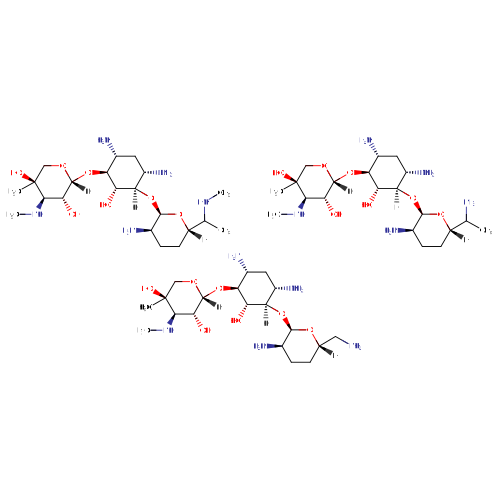
Structure for Gentamicin (DB00798)
- Weight
- Average: 1390.728
Monoisotopic: 1389.901796041 - Chemical Formula
- C60H123N15O21
- Synonyms
- Gentamicin
- Gentamicina

Pharmacology
- Indication
Not Available
 Reduce drug development failure ratesBuild, train, & validate machine-learning modelswith evidence-based and structured datasets.Build, train, & validate predictive machine-learning models with structured datasets.
- Associated Conditions
Indication Type Indication Combined Product Details Approval Level Age Group Patient Characteristics Dose Form Used in combination to treat Bacterial conjunctivitis Combination Product in combination with: Dexamethasone (DB01234) •••••••••••• •••••••• • ••••• Treatment of Bacterial infections •••••••••••• Treatment of Bacterial meningitis •••••••••••• •••••••••• ••••••••• •••••••••• ••••••••• ••••••••••• Treatment of Bacterial corneal ulcer •••••••••••• •••••••••• Treatment of Bacterial dacryocystitis •••••••••••• •••••••••• - Contraindications & Blackbox Warnings
 Prevent Adverse Drug Events TodayTap into our Clinical API for life-saving information on contraindications & blackbox warnings, population restrictions, harmful risks, & more.Avoid life-threatening adverse drug events with our Clinical API
- Pharmacodynamics
Not Available
- Mechanism of action
There are 3 key phases of aminoglycoside entry into cells.9 The first “ionic binding phase” occurs when polycationic aminoglycosides bind electrostatically to negatively charged components of bacterial cell membranes including with lipopolysaccharides and phospholipids within the outer membrane of Gram-negative bacteria and to teichoic acids and phospholipids within the cell membrane of Gram-positive bacteria. This binding results in displacement of divalent cations and increased membrane permeability, allowing for aminoglycoside entry.9,13,14,15 The second “energy-dependent phase I” of aminoglycoside entry into the cytoplasm relies on the proton-motive force and allows a limited amount of aminoglycoside access to its primary intracellular target - the bacterial 30S ribosome.9,15 This ultimately results in the mistranslation of proteins and disruption of the cytoplasmic membrane.16 Finally, in the “energy-dependent phase II” stage, concentration-dependent bacterial killing is observed. Aminoglycoside rapidly accumulates in the cell due to the damaged cytoplasmic membrane, and protein mistranslation and synthesis inhibition is amplified.9,15 The necessity of oxygen-dependent active transport explains why aminoglycosides are ineffective against anaerobic bacteria.1 Hence, aminoglycosides have both immediate bactericidal effects through membrane disruption and delayed bactericidal effects through impaired protein synthesis; observed experimental data and mathematical modeling support this two-mechanism model.9 Inhibition of protein synthesis is a key component of aminoglycoside efficacy. Structural and cell biological studies suggest that aminoglycosides bind to the 16S rRNA in helix 44 (h44), near the A site of the 30S ribosomal subunit, altering interactions between h44 and h45. This binding also displaces two important residues, A1492 and A1493, from h44, mimicking normal conformational changes that occur with successful codon-anticodon pairing in the A site.17 Overall, aminoglycoside binding has several negative effects including inhibition of translation, initiation, elongation, and ribosome recycling.9,18,19 Recent evidence suggests that the latter effect is due to a cryptic second binding site situated in h69 of the 23S rRNA of the 50S ribosomal subunit.17,19 Also, by stabilizing a conformation that mimics correct codon-anticodon pairing, aminoglycosides promote error-prone translation.20 Mistranslated proteins can incorporate into the cell membrane, inducing the damage discussed above.9
Target Actions Organism A30S ribosomal protein S12 binderEscherichia coli (strain K12) A16S ribosomal RNA binderEnteric bacteria and other eubacteria A23S ribosomal RNA inhibitorEnteric bacteria and other eubacteria ABacterial outer membrane incorporation into and destabilizationBacteria ACytoplasmic membrane incorporation into and destabilizationBacteria UNH(3)-dependent NAD(+) synthetase inhibitorBacillus subtilis (strain 168) UDihydrofolate reductase Not Available Humans - Absorption
Not Available
- Volume of distribution
Not Available
- Protein binding
Studies have determined that plasma protein binding of gentamicin is between 0-30% depending on the method of testing.21
- Metabolism
Gentamicin undergoes little to no metabolism.24
- Route of elimination
Gentamicin is excreted primarily by the kidneys. In patients with normal renal function, 70% or more of an initial gentamicin dose can be recovered in the urine within 24 hours. Excretion of gentamicin is significantly reduced in patients with renal impairment.24
- Half-life
One study assessing the pharmacokinetics of gentamicin in children and adults reported a mean half-life of 75 minutes after intravenous administration.2 The mean half-life associated with intramuscular administration was about 29 minutes longer.2 Fever and anemia may result in a shorter half-life although dose adjustments are not usually necessary.2,24 Severe burns are also associated with a shorter half-life and may result in lower gentamicin serum concentrations.24
- Clearance
The renal clearance of gentamicin is comparable to individual creatinine clearance.3,24
- Adverse Effects
 Improve decision support & research outcomesWith structured adverse effects data, including: blackbox warnings, adverse reactions, warning & precautions, & incidence rates. View sample adverse effects data in our new Data Library!Improve decision support & research outcomes with our structured adverse effects data.
- Toxicity
As with other aminoglycosides, nephrotoxicity and ototoxicity are associated with gentamicin.9 Signs of nephrotoxicity include an increase in plasma creatinine and urea, while signs of ototoxicity include issues with balance, nausea, tinnitus, and hearing loss.5 It is important to note that aminoglycoside-induced nephrotoxicity is typically reversible, while ototoxicity is more likely to be permanent.9 The risk of both toxicities increases with long-term gentamicin therapy.1 Gentamicin is considered to be more vestibulotoxic than cochleotoxic compared to other aminoglycosides.9,4 Unfortunately, gentamicin-related ototoxicity does not correlate with cumulative dosing, peak and trough levels, or dosing schedule.5 The unpredictability of ototoxicity supports close monitoring of the patient throughout treatment.5 In cases of toxicity or overdose, the medication should be discontinued immediately; hemodialysis may be initiated to lower gentamicin serum concentrations.24
- Pathways
Pathway Category Gentamicin Action Pathway Drug action - Pharmacogenomic Effects/ADRs
- Not Available
Interactions
- Drug Interactions
- This information should not be interpreted without the help of a healthcare provider. If you believe you are experiencing an interaction, contact a healthcare provider immediately. The absence of an interaction does not necessarily mean no interactions exist.
Drug Interaction Integrate drug-drug
interactions in your softwareAbacavir Abacavir may decrease the excretion rate of Gentamicin which could result in a higher serum level. Aceclofenac Aceclofenac may decrease the excretion rate of Gentamicin which could result in a higher serum level. Acemetacin Acemetacin may decrease the excretion rate of Gentamicin which could result in a higher serum level. Acenocoumarol The risk or severity of bleeding can be increased when Gentamicin is combined with Acenocoumarol. Acetaminophen Acetaminophen may decrease the excretion rate of Gentamicin which could result in a higher serum level. - Food Interactions
- No interactions found.
Products
 Drug product information from 10+ global regionsOur datasets provide approved product information including:dosage, form, labeller, route of administration, and marketing period.Access drug product information from over 10 global regions.
- Product Ingredients
Ingredient UNII CAS InChI Key Gentamicin sulfate 8X7386QRLV 1405-41-0 RDEIXVOBVLKYNT-VQBXQJRRSA-N - International/Other Brands
- Alcomicin / Bristagen / G-Mycin / Genoptic (Allergan) / Gentacidin / Gentafair / Gentamar / Jenamicin / Ocu-Mycin / Spectro-Genta / U-gencin (U-Liang)
- Brand Name Prescription Products
Name Dosage Strength Route Labeller Marketing Start Marketing End Region Image Alcomicin Oph Sol 3mg/ml Liquid 3 mg / mL Ophthalmic Alcon, Inc. 1983-12-31 2009-04-24 Canada 
Cidomycin Inj 10mg/ml Liquid 10 mg / mL Intramuscular; Intravenous Hoechst Roussel Canada Inc. 1995-12-31 2000-07-28 Canada Cidomycin Inj 40mg/ml Liquid 40 mg / mL Intramuscular; Intravenous Roussel Canada Inc. 1979-12-31 1997-08-05 Canada Cidomycin Inj 40mg/ml Liquid 40 mg / mL Intramuscular; Intravenous Hoechst Roussel Canada Inc. 1995-12-31 1999-08-20 Canada Cidomycin Inj Pediatric 10mg Liquid 10 mg / mL Intramuscular; Intravenous Roussel Canada Inc. 1972-12-31 1997-08-05 Canada - Generic Prescription Products
Name Dosage Strength Route Labeller Marketing Start Marketing End Region Image Garamycin Ointment 3 mg/1g Ophthalmic Fera Pharmaceuticals 2010-10-08 2013-06-14 US 
Garamycin Solution / drops 3 mg/1mL Ophthalmic Fera Pharmaceuticals 2011-05-15 2013-06-14 US Garamycin Gentamicin Sulfate Solution 3 mg/1mL Ophthalmic Paddock Laboratories, Inc. 2014-06-05 2016-04-01 US Gentak Ointment 3 mg/1g Ophthalmic Remedy Repack 2012-11-21 2017-02-15 US Gentak Ointment 3 mg/1g Ophthalmic Akorn 2013-03-11 Not applicable US - Over the Counter Products
Name Dosage Strength Route Labeller Marketing Start Marketing End Region Image ELTACIN 0.1% Ointment 0.1 %w/w Topical บริษัท โอลิค (ประเทศไทย) จำกัด 2008-04-01 Not applicable Thailand 
GENTAL EYE DROPS Liquid 3 mg/1ml Ophthalmic บริษัท เยนเนอร์ราลดรั๊กส์เฮ้าส์ จำกัด 1985-07-18 Not applicable Thailand MIRAMYCIN EYE/EAR DROP Liquid 3 mg/1ml Ophthalmic บริษัท โรงงานเภสัชกรรมแอตแลนติค จำกัด 1986-06-06 2020-06-11 Thailand ยาหยอดตา มาโนเจนต้า Solution 40 mg/1ml บริษัท โรงงานเภสัชกรรมแหลมทองการแพทย์ จำกัด จำกัด 2009-12-18 Not applicable Thailand สกินเฟ็กต์ ครีม Cream 0.1 %w/w Topical บริษัท บางกอกแล็ป แอนด์ คอสเมติค จำกัด จำกัด 2000-07-12 Not applicable Thailand - Mixture Products
Name Ingredients Dosage Route Labeller Marketing Start Marketing End Region Image Amolg A Gentamicin sulfate (1 mg/1g) + Betamethasone valerate (0.61 mg/1g) Cream Topical OASIS TRADING 2018-11-15 Not applicable US ANTASONE CREAM Gentamicin (1 mg) + Betamethasone (1 mg/g) Cream Topical ZYFAS PHARMA PTE LTD 1988-06-25 Not applicable Singapore 
B-MYCIN CREAM Gentamicin (1 mg/g) + Betamethasone (0.5 mg/g) Cream Topical YUNG SHIN PHARMACEUTICAL (SINGAPORE) PTE LTD 2013-07-25 Not applicable Singapore B-TASONE-G CREAM Gentamicin (0.3 % w/w) + Betamethasone (0.1 % w/w) Cream Topical BEACONS PHARMACEUTICALS PTE. LTD. 1990-02-26 Not applicable Singapore BELOGENT %0,05+%0,1 KREM, 15 G Gentamicin sulfate (0.1 %) + Betamethasone dipropionate (0.05 %) Cream Topical FARMA-TEK İLAÇ SAN. VE TİC. A.Ş. 2015-09-29 Not applicable Turkey 
- Unapproved/Other Products
Name Ingredients Dosage Route Labeller Marketing Start Marketing End Region Image Amolg A Gentamicin sulfate (1 mg/1g) + Betamethasone valerate (0.61 mg/1g) Cream Topical OASIS TRADING 2018-11-15 Not applicable US Celestone-G Gentamicin sulfate (1 mg/1g) + Betamethasone valerate (0.61 mg/1g) Ointment Topical OASIS TRADING 2018-11-15 Not applicable US Celestone-G Gentamicin sulfate (1 mg/1g) + Betamethasone valerate (0.61 mg/1g) Ointment Topical OASIS TRADING 2018-11-15 Not applicable US GENSIF 20 MG/2 ML AMPUL Gentamicin (20 mg/2ml) Injection Intramuscular; Intravenous AVİCENNA FARMA DIŞ TİC. VE PAZ. A.Ş. 2019-04-30 Not applicable Turkey GENSIF 40 MG/2 ML AMPUL Gentamicin (40 mg/2ml) Injection Intramuscular; Intravenous AVİCENNA FARMA DIŞ TİC. VE PAZ. A.Ş. 2019-04-30 Not applicable Turkey
Categories
- ATC Codes
- S01AA11 — GentamicinS02AA14 — GentamicinD06AX07 — Gentamicin
- D06AX — Other antibiotics for topical use
- D06A — ANTIBIOTICS FOR TOPICAL USE
- D06 — ANTIBIOTICS AND CHEMOTHERAPEUTICS FOR DERMATOLOGICAL USE
- D — DERMATOLOGICALS
- S03AA — Antiinfectives
- S03A — ANTIINFECTIVES
- S03 — OPHTHALMOLOGICAL AND OTOLOGICAL PREPARATIONS
- S — SENSORY ORGANS
- Drug Categories
- Agents that produce neuromuscular block (indirect)
- alpha-Galactosidase, antagonists & inhibitors
- Aminoglycoside Antibacterials
- Anti-Bacterial Agents
- Anti-Infective Agents
- Antibacterials for Systemic Use
- Antibiotics for Topical Use
- Antiinfectives for Systemic Use
- Carbohydrates
- Dermatologicals
- Drugs that are Mainly Renally Excreted
- Drugs that are Mainly Renally Excreted with a Narrow Therapeutic Index
- Enzyme Inhibitors
- Gentamicins
- Glycosides
- Narrow Therapeutic Index Drugs
- Nephrotoxic agents
- OAT1/SLC22A6 inhibitors
- OCT2 Substrates
- OCT2 Substrates with a Narrow Therapeutic Index
- Ophthalmological and Otological Preparations
- Ophthalmologicals
- Otologicals
- Protein Synthesis Inhibitors
- Sensory Organs
- Classification
- Not classified
- Affected organisms
- Enteric bacteria and other eubacteria
- Pseudomonas aeruginosa
- Yersinia pestis
- Francisella tularensis
- Serratia marcescens
- Proteus vulgaris
Chemical Identifiers
- UNII
- T6Z9V48IKG
- CAS number
- 1403-66-3
- InChI Key
- NPEFREDMMVQEPL-RWPARATISA-N
- InChI
- InChI=1S/C21H43N5O7.C20H41N5O7.C19H39N5O7/c1-9(25-3)13-6-5-10(22)19(31-13)32-16-11(23)7-12(24)17(14(16)27)33-20-15(28)18(26-4)21(2,29)8-30-20;1-8(21)12-5-4-9(22)18(30-12)31-15-10(23)6-11(24)16(13(15)26)32-19-14(27)17(25-3)20(2,28)7-29-19;1-19(27)7-28-18(13(26)16(19)24-2)31-15-11(23)5-10(22)14(12(15)25)30-17-9(21)4-3-8(6-20)29-17/h9-20,25-29H,5-8,22-24H2,1-4H3;8-19,25-28H,4-7,21-24H2,1-3H3;8-18,24-27H,3-7,20-23H2,1-2H3/t9?,10-,11+,12-,13+,14+,15-,16-,17+,18-,19-,20-,21+;8?,9-,10+,11-,12+,13+,14-,15-,16+,17-,18-,19-,20+;8-,9+,10-,11+,12-,13+,14+,15-,16+,17+,18+,19-/m110/s1
- IUPAC Name
- (2R,3R,4R,5R)-2-{[(1S,2S,3R,4S,6R)-4,6-diamino-3-{[(2R,3R,6S)-3-amino-6-(1-aminoethyl)oxan-2-yl]oxy}-2-hydroxycyclohexyl]oxy}-5-methyl-4-(methylamino)oxane-3,5-diol; (2R,3R,4R,5R)-2-{[(1S,2S,3R,4S,6R)-4,6-diamino-3-{[(2R,3R,6S)-3-amino-6-(aminomethyl)oxan-2-yl]oxy}-2-hydroxycyclohexyl]oxy}-5-methyl-4-(methylamino)oxane-3,5-diol; (2R,3R,4R,5R)-2-{[(1S,2S,3R,4S,6R)-4,6-diamino-3-{[(2R,3R,6S)-3-amino-6-[1-(methylamino)ethyl]oxan-2-yl]oxy}-2-hydroxycyclohexyl]oxy}-5-methyl-4-(methylamino)oxane-3,5-diol
- SMILES
- [H][C@@]1(CN)CC[C@@H](N)[C@@H](O[C@]2([H])[C@@H](N)C[C@@H](N)[C@H](O[C@@]3([H])OC[C@](C)(O)[C@H](NC)[C@H]3O)[C@H]2O)O1.[H][C@]1(CC[C@@H](N)[C@@H](O[C@]2([H])[C@@H](N)C[C@@H](N)[C@H](O[C@@]3([H])OC[C@](C)(O)[C@H](NC)[C@H]3O)[C@H]2O)O1)C(C)N.[H][C@]1(CC[C@@H](N)[C@@H](O[C@]2([H])[C@@H](N)C[C@@H](N)[C@H](O[C@@]3([H])OC[C@](C)(O)[C@H](NC)[C@H]3O)[C@H]2O)O1)C(C)NC
References
- Synthesis Reference
George H. Scherr, "Preparation of gentamicin sensitized particles for agglutination tests." U.S. Patent US4100268, issued August, 1975.
US4100268- General References
- Chaves BJ, Tadi P: Gentamicin . [Article]
- Siber GR, Echeverria P, Smith AL, Paisley JW, Smith DH: Pharmacokinetics of gentamicin in children and adults. J Infect Dis. 1975 Dec;132(6):637-51. doi: 10.1093/infdis/132.6.637. [Article]
- Jones TE, Peter JV, Field J: Aminoglycoside clearance is a good estimate of creatinine clearance in intensive care unit patients. Anaesth Intensive Care. 2009 Nov;37(6):944-52. doi: 10.1177/0310057X0903700611. [Article]
- Ahmed RM, Hannigan IP, MacDougall HG, Chan RC, Halmagyi GM: Gentamicin ototoxicity: a 23-year selected case series of 103 patients. Med J Aust. 2012 Jun 18;196(11):701-4. doi: 10.5694/mja11.10850. [Article]
- Black FO, Pesznecker S, Stallings V: Permanent gentamicin vestibulotoxicity. Otol Neurotol. 2004 Jul;25(4):559-69. doi: 10.1097/00129492-200407000-00025. [Article]
- Authors unspecified: Aminoglycosides . [Article]
- Authors unspecified: Gentamicin. Br Med J. 1967 Jan 21;1(5533):158-9. [Article]
- Kushner B, Allen PD, Crane BT: Frequency and Demographics of Gentamicin Use. Otol Neurotol. 2016 Feb;37(2):190-5. doi: 10.1097/MAO.0000000000000937. [Article]
- Serio AW, Keepers T, Andrews L, Krause KM: Aminoglycoside Revival: Review of a Historically Important Class of Antimicrobials Undergoing Rejuvenation. EcoSal Plus. 2018 Nov;8(1). doi: 10.1128/ecosalplus.ESP-0002-2018. [Article]
- Chen C, Chen Y, Wu P, Chen B: Update on new medicinal applications of gentamicin: evidence-based review. J Formos Med Assoc. 2014 Feb;113(2):72-82. doi: 10.1016/j.jfma.2013.10.002. Epub 2013 Nov 9. [Article]
- Krause KM, Serio AW, Kane TR, Connolly LE: Aminoglycosides: An Overview. Cold Spring Harb Perspect Med. 2016 Jun 1;6(6). pii: 6/6/a027029. doi: 10.1101/cshperspect.a027029. [Article]
- Hayward RS, Harding J, Molloy R, Land L, Longcroft-Neal K, Moore D, Ross JDC: Adverse effects of a single dose of gentamicin in adults: a systematic review. Br J Clin Pharmacol. 2018 Feb;84(2):223-238. doi: 10.1111/bcp.13439. Epub 2017 Nov 3. [Article]
- Moore RA, Bates NC, Hancock RE: Interaction of polycationic antibiotics with Pseudomonas aeruginosa lipopolysaccharide and lipid A studied by using dansyl-polymyxin. Antimicrob Agents Chemother. 1986 Mar;29(3):496-500. doi: 10.1128/aac.29.3.496. [Article]
- Hancock RE, Raffle VJ, Nicas TI: Involvement of the outer membrane in gentamicin and streptomycin uptake and killing in Pseudomonas aeruginosa. Antimicrob Agents Chemother. 1981 May;19(5):777-85. doi: 10.1128/aac.19.5.777. [Article]
- Taber HW, Mueller JP, Miller PF, Arrow AS: Bacterial uptake of aminoglycoside antibiotics. Microbiol Rev. 1987 Dec;51(4):439-57. [Article]
- Waters M, Tadi P: Streptomycin . [Article]
- Ying L, Zhu H, Shoji S, Fredrick K: Roles of specific aminoglycoside-ribosome interactions in the inhibition of translation. RNA. 2019 Feb;25(2):247-254. doi: 10.1261/rna.068460.118. Epub 2018 Nov 9. [Article]
- Wallace BJ, Tai PC, Herzog EL, Davis BD: Partial inhibition of polysomal ribosomes of Escherichia coli by streptomycin. Proc Natl Acad Sci U S A. 1973 Apr;70(4):1234-7. doi: 10.1073/pnas.70.4.1234. [Article]
- Borovinskaya MA, Pai RD, Zhang W, Schuwirth BS, Holton JM, Hirokawa G, Kaji H, Kaji A, Cate JH: Structural basis for aminoglycoside inhibition of bacterial ribosome recycling. Nat Struct Mol Biol. 2007 Aug;14(8):727-32. doi: 10.1038/nsmb1271. Epub 2007 Jul 29. [Article]
- Tai PC, Wallace BJ, Davis BD: Streptomycin causes misreading of natural messenger by interacting with ribosomes after initiation. Proc Natl Acad Sci U S A. 1978 Jan;75(1):275-9. doi: 10.1073/pnas.75.1.275. [Article]
- FDA Approved Drug Products: Gentamicin solution for injection [Link]
- FDA Approved Drug Products: PRED-G (gentamicin and prednisolone acetate) ophthalmic suspension [Link]
- FDA Approved Drug Products: PRED-G (gentamicin and prednisolone acetate) ophthalmic ointment [Link]
- DailyMed Drug Label Information: Gentamicin sulfate injection [Link]
- DailyMed Drug Label Information: Gentamicin ophthalmic solution [Link]
- DailyMed Drug Label Information: Gentamicin topical cream [Link]
- DPD Approved Drug Products: Gentamicin solution for injection [Link]
- External Links
- Human Metabolome Database
- HMDB0014936
- KEGG Compound
- C00505
- PubChem Compound
- 3467
- PubChem Substance
- 46506523
- ChemSpider
- 8074297
- BindingDB
- 50476074
- 1596450
- ChEBI
- 17833
- ChEMBL
- CHEMBL3039597
- Therapeutic Targets Database
- DAP000116
- PharmGKB
- PA449753
- Guide to Pharmacology
- GtP Drug Page
- RxList
- RxList Drug Page
- Drugs.com
- Drugs.com Drug Page
- PDRhealth
- PDRhealth Drug Page
- Wikipedia
- Gentamicin
- MSDS
- Download (59.2 KB)
Clinical Trials
- Clinical Trials
Phase Status Purpose Conditions Count 4 Active Not Recruiting Treatment Appendicitis 1 4 Completed Not Available Staphylococcus Aureus 1 4 Completed Prevention Benign Prostatic Hyperplasia (BPH) 1 4 Completed Prevention Inguinal Hernias 1 4 Completed Prevention Kidney Stones / Urinary Tract Infection 1
Pharmacoeconomics
- Manufacturers
- Schering corp sub schering plough corp
- Pharmafair inc
- Alpharma us pharmaceuticals division
- Bausch and lomb pharmaceuticals inc
- E fougera div altana inc
- Perrigo new york inc
- Pharmaderm div altana inc
- Taro pharmaceuticals usa inc
- King pharmaceuticals inc
- Bristol laboratories inc div bristol myers co
- International medication systems ltd
- Abbott laboratories pharmaceutical products div
- App pharmaceuticals llc
- Baxter healthcare corp anesthesia and critical care
- Hospira inc
- Kalapharm inc
- Pharmaceutical specialist assoc
- Solopak laboratories inc
- Teva parenteral medicines inc
- Watson laboratories inc
- Wyeth ayerst laboratories
- B braun medical inc
- Baxter healthcare corp
- Pharmacia and upjohn co
- Novartis pharmaceuticals corp
- Akorn inc
- Altana inc
- Allergan
- Alcon universal ltd
- Falcon pharmaceuticals ltd
- Paco research corp
- Packagers
- Accutome Inc.
- Advanced Pharmaceutical Services Inc.
- Akorn Inc.
- Alcon Laboratories
- APP Pharmaceuticals
- A-S Medication Solutions LLC
- B. Braun Melsungen AG
- Bausch & Lomb Inc.
- Baxter International Inc.
- Cardinal Health
- Carlisle Laboratories Inc.
- Darby Dental Supply Co. Inc.
- Dispensing Solutions
- Diversified Healthcare Services Inc.
- E. Fougera and Co.
- Falcon Pharmaceuticals Ltd.
- General Injectables and Vaccines Inc.
- H.J. Harkins Co. Inc.
- Hospira Inc.
- Innoviant Pharmacy Inc.
- Keltman Pharmaceuticals Inc.
- Major Pharmaceuticals
- Martin Surgical Supply
- Medisca Inc.
- MWI Veterinary Supply Co.
- Novartis AG
- Nycomed Inc.
- Ocusoft
- OMJ Pharmaceuticals
- Pacific Pharma Lp
- Palmetto Pharmaceuticals Inc.
- PD-Rx Pharmaceuticals Inc.
- Perrigo Co.
- Pharmedix
- Physicians Total Care Inc.
- Preferred Pharmaceuticals Inc.
- Qualitest
- Rebel Distributors Corp.
- Redpharm Drug
- Rx Veterinary Products
- Stat Rx Usa
- Stat Scripts LLC
- Taro Pharmaceuticals USA
- Taylor Pharmaceuticals
- Vedco Inc.
- Wa Butler Co.
- Dosage Forms
Form Route Strength Cream Topical Cream Topical 0.1 % Solution / drops Auricular (otic); Ophthalmic Cream Topical 0.1 % w/w Solution / drops Ophthalmic 0.3 %W/V Solution / drops Auricular (otic); Ophthalmic 0.3 %W/V Cream Topical 0.05 % w/w Ointment Cutaneous Solution / drops Ophthalmic Solution Parenteral 40 mg Ointment Topical Solution Intramuscular 80 mg Solution Intramuscular 160 mg Solution Intravenous 20 mg Liquid Intramuscular; Intravenous 40 mg / mL Liquid Intramuscular; Intravenous 10 mg / mL Gel Ointment Topical Ointment Ophthalmic 0.3 g Cream Cream Topical 0.1 % w/w Solution Ophthalmic 1 mg/ml Ointment Ophthalmic 0.3 mg/g Suspension Auricular (otic) Ointment Topical 0.1 %w/w Cream Injection Intramuscular; Intravenous Implant Topical 130 mg Ointment Conjunctival; Ophthalmic 300 mg Solution Parenteral 160 mg Solution Parenteral 80 mg Solution Parenteral 20.00 mg Cream Topical .1 % Solution Ophthalmic 3 mg/1mL Solution Intramuscular; Intravenous 10 mg / mL Solution Intramuscular; Intravenous 40 mg / mL Ointment Topical 1 mg / g Ointment Ophthalmic 0.3 % Solution / drops Auricular (otic) 3 mg / mL Injection Intramuscular; Intravenous 80 mg/2ml Solution Auricular (otic); Ophthalmic Solution / drops Ophthalmic 5 mg / mL Solution / drops Auricular (otic) 5 mg / mL Solution / drops Ophthalmic Cream Topical Solution Parenteral 80.0 mg Gel Topical Injection, solution Intramuscular; Intravenous 160 mg/2ml Injection, solution Intramuscular; Intravenous 40 mg Injection, solution Intramuscular; Intravenous 80 mg Ointment Ointment Ophthalmic Solution Parenteral 160.000 mg Solution Parenteral 40.000 mg Solution Parenteral 20.000 mg Injection Intramuscular; Intravenous 40 mg/1ml Injection Intramuscular; Intravenous 40 mg/2ml Solution / drops; suspension / drops Ophthalmic 5 mg Ointment Ophthalmic 5 mg Solution Intramuscular; Intravenous 160 g Injection Intramuscular; Intravenous 120 mg Injection Intramuscular; Intravenous 160 mg Injection Intramuscular; Intravenous 20 mg Injection Intramuscular; Intravenous 40 mg Injection Intramuscular; Intravenous 80 mg Solution / drops Auricular (otic) 5 ml Solution / drops Ophthalmic 3 mg / mL Solution Parenteral 8 g Solution / drops Auricular (otic); Ophthalmic 0.3 % Cream Topical 15 g Cream Topical 30 g Ointment Topical 15 g Ointment Topical 30 g Ointment Ophthalmic 5 g Liquid Ophthalmic 3 mg/1ml Injection, solution 10 MG/1ML Injection, solution 120 MG/1.5ML Injection, solution 160 MG/2ML Injection, solution 20 MG/2ML Ointment Topical 0.1 % Solution Parenteral 280 mg Solution / drops Auricular (otic); Ophthalmic 5 ml Injection, solution Intramuscular Injection, solution Injection, solution Intramuscular; Intravenous 10 mg/1mL Injection, solution Intramuscular; Intravenous 40 mg/1mL Solution Ophthalmic .3 % Solution Ophthalmic 0.3 % Solution Parenteral 1 MG/ML Solution Parenteral 3 MG/ML Cream Topical 0.3 % w/w Injection, solution 40 mg/1ml Kit Injection, solution Parenteral 40 MG/ML Injection, solution Parenteral 160 MG Injection, solution Parenteral 80 MG Solution Intramuscular; Intravenous 80 mg/2ml Cream Topical 1 mg/1g Injection, solution Intravenous 120 mg/50mL Injection, solution Intravenous 40 mg/100mL Injection, solution Intravenous 60 mg/100mL Injection, solution, concentrate Intramuscular; Intravenous 40 mg/1mL Injection, solution, concentrate Intravenous 10 mg/1mL Ointment Ophthalmic 3 mg/1g Ointment Topical 1 mg/1g Powder Not applicable 1 g/1g Powder Not applicable 1 kg/1kg Solution Ophthalmic 3.0 mg/1mL Solution / drops Ophthalmic 3 mg/1mL Solution Intravenous Injection, solution Intravenous 0.6 mg/1mL Injection, solution Intravenous 0.8 mg/1mL Injection, solution Intravenous 0.9 mg/1mL Injection, solution Intravenous 1 mg/1mL Injection, solution Intravenous 1.2 mg/1mL Injection, solution Intravenous 1.4 mg/1mL Injection, solution Intravenous 1.6 mg/1mL Injection, solution Intravenous 100 mg/100mL Injection, solution Intravenous 100 mg/50mL Injection, solution Intravenous 60 mg/50mL Injection, solution Intravenous 80 mg/100mL Injection, solution Intravenous 80 mg/50mL Solution Ophthalmic 3 mg/ml Solution Intravenous 1 mg / mL Solution Intravenous 1.6 mg / mL Solution Intravenous 1.2 mg / mL Cream Topical 0.1 g Solution Conjunctival; Ophthalmic 300000 mg Solution Conjunctival; Ophthalmic 0.003 g Solution Conjunctival; Ophthalmic 3 mg Solution Parenteral 126 mg Solution Intramuscular; Intravenous 120 mg Solution Parenteral 120 mg Solution Intramuscular 120 mg Solution Intramuscular; Intravenous 0.16 g Solution Intramuscular; Intravenous 160 mg Solution Intramuscular; Intravenous; Parenteral 20 mg Solution Intramuscular; Intravenous 20 mg Solution Intramuscular; Intravenous 40 mg Solution Intramuscular; Intravenous; Parenteral 40 mg Solution Intramuscular; Intravenous 80 mg Injection Parenteral 80 mg Solution Intramuscular; Intravenous; Parenteral 80 mg Solution Parenteral 20 mg Solution Intramuscular; Intravenous 16000000 mg Solution Parenteral 60 mg Injection, solution 80 MG/2ML Injection, solution Parenteral 40 MG/2ML Injection, solution Parenteral 80 MG/2ML Solution Intravenous 3 mg Solution Intravenous 80 mg Solution Ophthalmic 3.000 mg Solution / drops Ophthalmic 5 ml Solution / drops Ophthalmic 3 mg/ml Ointment Ophthalmic 5 mg/g Injection Intramuscular; Intravenous 160 mg/2ml Injection Intramuscular; Intravenous 40 mg/ml Solution / drops Ophthalmic 3 % Solution Parenteral 80.000 mg Injection, solution Intramuscular; Intravenous Ointment Ophthalmic 3 mg / g Injection, solution Intramuscular; Intravenous 120 mg/2ml Injection, solution Intramuscular; Intravenous 80 mg/2ml Solution 20 mg/2ml Injection Intramuscular; Intravenous 120 mg/2ml Solution / drops Auricular (otic); Ophthalmic 15 mg/5ml Injection Intramuscular; Intravenous 20 mg/2ml Ointment Topical 5 gr Solution Conjunctival; Ophthalmic 214.8 mg Ointment Conjunctival; Ophthalmic 0.537 g Cream Cutaneous Cream Topical 1 mg/g Cream Cutaneous 0.1 % Suspension Conjunctival; Ophthalmic Solution / drops; suspension / drops Ophthalmic 3 mg Cream Topical 1 mg Ointment 1 mg Solution Parenteral 1.6 mg Ointment 20 g Ointment 70 g Solution / drops Ophthalmic; Topical 0.3 % w/v Ointment Conjunctival; Ophthalmic 0.3 g Solution 140 mg/1ml Cream Topical 0.3 %w/w Injection Intramuscular 280 mg/2ml Injection Parenteral Cream Topical 0.5 mg/g Liquid Ophthalmic; Topical 3 mg / mL Ointment Ophthalmic; Topical 3 mg / g Ointment Ophthalmic 5 mg / g Solution Ophthalmic 5 mg / mL Solution Ophthalmic 3 mg Ointment Ophthalmic 3 mg Solution Ophthalmic 0.3 % w/v Solution / drops Ophthalmic 0.3 % W/V Solution / drops Auricular (otic) 5 mg Cream Cutaneous Cream Topical 1 mg / g Ointment Ophthalmic Suspension / drops Ophthalmic Liquid Ophthalmic 3 mg / mL Ointment Topical .1 % Injection, solution Parenteral 10 mg Solution Intramuscular; Intravenous; Subconjunctival 10 mg/2ml Injection, solution Parenteral 120 mg Solution Intramuscular; Intravenous; Subconjunctival 120 mg/2ml Injection, solution Parenteral 40 mg Solution Intramuscular; Intravenous; Subconjunctival 40 mg/ml Solution Intramuscular; Intravenous; Subconjunctival 80 mg/2ml Injection, powder, for solution Parenteral 1.25 g Cream Topical 0.64 mg/g Solution / drops Auricular (otic); Ophthalmic Solution Auricular (otic) 3 mg / mL Bead Implant Parenteral 4.5 mg Drug delivery system Topical 1.7 mg Implant; sponge Intralesional Solution Intramuscular 160.000 mg Solution / drops Ophthalmic 3 mg/5mL Injection, solution Intramuscular; Intravenous 20 mg/2ml Injection, solution Intramuscular; Intravenous 40 mg/ml Ointment Ophthalmic; Topical 0.3 g Solution 10 mg/1ml Liquid Auricular (otic); Ophthalmic Cream Topical 0.1 %w/w Solution 40 mg/1ml Ointment - Prices
Unit description Cost Unit Gentak 0.3% Ointment 3.5 gm Tube 19.99USD tube Gentamicin Sulfate 0.1% Cream 15 gm Tube 12.99USD tube Gentamicin Sulfate 0.1% Ointment 15 gm Tube 11.99USD tube Gentamicin Sulfate 0.3% Solution 5ml Bottle 11.99USD bottle Gentamicin sulfate powder 5.05USD g Gentamicin Sulfate 10 mg/ml Solution 2ml Vial 5.0USD vial Gentamicin 40 mg/ml 2.82USD ml Gentamicin ped 10 mg/ml vial 2.4USD ml Gentak 3 mg/ml eye drops 1.91USD ml Gentamicin 3 mg/ml eye drops 1.89USD ml Gentamicin 10 mg/ml vial 1.29USD ml Garamycin 0.3 % Ointment 1.2USD g Sandoz Gentamicin Sulfate 0.3 % Ointment 1.2USD g Garamycin 0.3 % Solution 0.75USD ml Sandoz Gentamicin Sulfate 0.3 % Solution 0.75USD ml Gentamicin 40 mg/ml vial 0.45USD ml Ratio-Gentamicin Sulfate 0.1 % Cream 0.43USD g Ratio-Gentamicin Sulfate 0.1 % Ointment 0.37USD g Gentamicin 0.1% cream 0.16USD g Iso gentamicin 120 mg/100 ml 0.09USD ml Gentamicin 90 mg/ns 100 ml pb 0.05USD ml Isoton gentamicin 40 mg/100 ml 0.05USD ml Gentamicin 60 mg/ns 100 ml pb 0.04USD ml Gentamicin 100 mg/ns 100 ml 0.03USD ml Gentamicin 80 mg/ns 100 ml pb 0.03USD ml DrugBank does not sell nor buy drugs. Pricing information is supplied for informational purposes only.- Patents
- Not Available
Properties
- State
- Solid
- Experimental Properties
Property Value Source melting point (°C) 105 °C PhysProp logP -3.1 Not Available - Predicted Properties
Property Value Source Water Solubility 12.6 mg/mL ALOGPS logP -1.6 ALOGPS logP -3.1 Chemaxon logS -1.6 ALOGPS pKa (Strongest Acidic) 12.55 Chemaxon pKa (Strongest Basic) 10.12 Chemaxon Physiological Charge 5 Chemaxon Hydrogen Acceptor Count 12 Chemaxon Hydrogen Donor Count 8 Chemaxon Polar Surface Area 199.73 Å2 Chemaxon Rotatable Bond Count 19 Chemaxon Refractivity 118.02 m3·mol-1 Chemaxon Polarizability 51.52 Å3 Chemaxon Number of Rings 9 Chemaxon Bioavailability 0 Chemaxon Rule of Five No Chemaxon Ghose Filter No Chemaxon Veber's Rule No Chemaxon MDDR-like Rule Yes Chemaxon - Predicted ADMET Features
Property Value Probability Human Intestinal Absorption - 0.944 Blood Brain Barrier - 0.9826 Caco-2 permeable - 0.6987 P-glycoprotein substrate Substrate 0.6882 P-glycoprotein inhibitor I Non-inhibitor 0.6808 P-glycoprotein inhibitor II Non-inhibitor 0.9586 Renal organic cation transporter Non-inhibitor 0.8738 CYP450 2C9 substrate Non-substrate 0.8001 CYP450 2D6 substrate Non-substrate 0.8314 CYP450 3A4 substrate Substrate 0.5917 CYP450 1A2 substrate Non-inhibitor 0.9034 CYP450 2C9 inhibitor Non-inhibitor 0.891 CYP450 2D6 inhibitor Non-inhibitor 0.9331 CYP450 2C19 inhibitor Non-inhibitor 0.9043 CYP450 3A4 inhibitor Non-inhibitor 0.9517 CYP450 inhibitory promiscuity Low CYP Inhibitory Promiscuity 0.9294 Ames test Non AMES toxic 0.7338 Carcinogenicity Non-carcinogens 0.9696 Biodegradation Not ready biodegradable 0.9588 Rat acute toxicity 2.0383 LD50, mol/kg Not applicable hERG inhibition (predictor I) Weak inhibitor 0.9954 hERG inhibition (predictor II) Non-inhibitor 0.8784
Spectra
- Mass Spec (NIST)
- Not Available
- Spectra
- Not Available
- Chromatographic Properties
Collision Cross Sections (CCS)
Not Available
Targets

- Kind
- Protein
- Organism
- Escherichia coli (strain K12)
- Pharmacological action
- Yes
- Actions
- Binder
- General Function
- Trna binding
- Specific Function
- With S4 and S5 plays an important role in translational accuracy.Interacts with and stabilizes bases of the 16S rRNA that are involved in tRNA selection in the A site and with the mRNA backbone. Lo...
- Gene Name
- rpsL
- Uniprot ID
- P0A7S3
- Uniprot Name
- 30S ribosomal protein S12
- Molecular Weight
- 13736.995 Da
References
- Gill AE, Amyes SG: The contribution of a novel ribosomal S12 mutation to aminoglycoside resistance of Escherichia coli mutants. J Chemother. 2004 Aug;16(4):347-9. [Article]
- Tamehiro N, Hosaka T, Xu J, Hu H, Otake N, Ochi K: Innovative approach for improvement of an antibiotic-overproducing industrial strain of Streptomyces albus. Appl Environ Microbiol. 2003 Nov;69(11):6412-7. [Article]
- Hu H, Ochi K: Novel approach for improving the productivity of antibiotic-producing strains by inducing combined resistant mutations. Appl Environ Microbiol. 2001 Apr;67(4):1885-92. [Article]
- Schroeder R, Waldsich C, Wank H: Modulation of RNA function by aminoglycoside antibiotics. EMBO J. 2000 Jan 4;19(1):1-9. [Article]
References
- Doi Y, de Oliveira Garcia D, Adams J, Paterson DL: Coproduction of novel 16S rRNA methylase RmtD and metallo-beta-lactamase SPM-1 in a panresistant Pseudomonas aeruginosa isolate from Brazil. Antimicrob Agents Chemother. 2007 Mar;51(3):852-6. Epub 2006 Dec 11. [Article]
- Bogaerts P, Galimand M, Bauraing C, Deplano A, Vanhoof R, De Mendonca R, Rodriguez-Villalobos H, Struelens M, Glupczynski Y: Emergence of ArmA and RmtB aminoglycoside resistance 16S rRNA methylases in Belgium. J Antimicrob Chemother. 2007 Mar;59(3):459-64. Epub 2007 Jan 15. [Article]
- Aslangul E, Massias L, Meulemans A, Chau F, Andremont A, Courvalin P, Fantin B, Ruimy R: Acquired gentamicin resistance by permeability impairment in Enterococcus faecalis. Antimicrob Agents Chemother. 2006 Nov;50(11):3615-21. [Article]
- Schroeder R, Waldsich C, Wank H: Modulation of RNA function by aminoglycoside antibiotics. EMBO J. 2000 Jan 4;19(1):1-9. [Article]
References
- Ying L, Zhu H, Shoji S, Fredrick K: Roles of specific aminoglycoside-ribosome interactions in the inhibition of translation. RNA. 2019 Feb;25(2):247-254. doi: 10.1261/rna.068460.118. Epub 2018 Nov 9. [Article]
- Borovinskaya MA, Pai RD, Zhang W, Schuwirth BS, Holton JM, Hirokawa G, Kaji H, Kaji A, Cate JH: Structural basis for aminoglycoside inhibition of bacterial ribosome recycling. Nat Struct Mol Biol. 2007 Aug;14(8):727-32. doi: 10.1038/nsmb1271. Epub 2007 Jul 29. [Article]
References
- Serio AW, Keepers T, Andrews L, Krause KM: Aminoglycoside Revival: Review of a Historically Important Class of Antimicrobials Undergoing Rejuvenation. EcoSal Plus. 2018 Nov;8(1). doi: 10.1128/ecosalplus.ESP-0002-2018. [Article]
- Moore RA, Bates NC, Hancock RE: Interaction of polycationic antibiotics with Pseudomonas aeruginosa lipopolysaccharide and lipid A studied by using dansyl-polymyxin. Antimicrob Agents Chemother. 1986 Mar;29(3):496-500. doi: 10.1128/aac.29.3.496. [Article]
- Hancock RE, Raffle VJ, Nicas TI: Involvement of the outer membrane in gentamicin and streptomycin uptake and killing in Pseudomonas aeruginosa. Antimicrob Agents Chemother. 1981 May;19(5):777-85. doi: 10.1128/aac.19.5.777. [Article]
- Taber HW, Mueller JP, Miller PF, Arrow AS: Bacterial uptake of aminoglycoside antibiotics. Microbiol Rev. 1987 Dec;51(4):439-57. [Article]
References
- Serio AW, Keepers T, Andrews L, Krause KM: Aminoglycoside Revival: Review of a Historically Important Class of Antimicrobials Undergoing Rejuvenation. EcoSal Plus. 2018 Nov;8(1). doi: 10.1128/ecosalplus.ESP-0002-2018. [Article]
- Taber HW, Mueller JP, Miller PF, Arrow AS: Bacterial uptake of aminoglycoside antibiotics. Microbiol Rev. 1987 Dec;51(4):439-57. [Article]
- Davis BD, Chen LL, Tai PC: Misread protein creates membrane channels: an essential step in the bactericidal action of aminoglycosides. Proc Natl Acad Sci U S A. 1986 Aug;83(16):6164-8. doi: 10.1073/pnas.83.16.6164. [Article]
- Kind
- Protein
- Organism
- Bacillus subtilis (strain 168)
- Pharmacological action
- Unknown
- Actions
- Inhibitor
- General Function
- Nad+ synthase activity
- Specific Function
- Catalyzes a key step in NAD biosynthesis, transforming deamido-NAD into NAD by a two-step reaction.
- Gene Name
- nadE
- Uniprot ID
- P08164
- Uniprot Name
- NH(3)-dependent NAD(+) synthetase
- Molecular Weight
- 30394.995 Da
References
- Velu SE, Cristofoli WA, Garcia GJ, Brouillette CG, Pierson MC, Luan CH, DeLucas LJ, Brouillette WJ: Tethered dimers as NAD synthetase inhibitors with antibacterial activity. J Med Chem. 2003 Jul 17;46(15):3371-81. [Article]
- Kind
- Protein
- Organism
- Humans
- Pharmacological action
- Unknown
- General Function
- Nadph binding
- Specific Function
- Key enzyme in folate metabolism. Contributes to the de novo mitochondrial thymidylate biosynthesis pathway. Catalyzes an essential reaction for de novo glycine and purine synthesis, and for DNA pre...
- Gene Name
- DHFR
- Uniprot ID
- P00374
- Uniprot Name
- Dihydrofolate reductase
- Molecular Weight
- 21452.61 Da
References
- Al-Omary FA, Abou-Zeid LA, Nagi MN, Habib el-SE, Abdel-Aziz AA, El-Azab AS, Abdel-Hamide SG, Al-Omar MA, Al-Obaid AM, El-Subbagh HI: Non-classical antifolates. Part 2: synthesis, biological evaluation, and molecular modeling study of some new 2,6-substituted-quinazolin-4-ones. Bioorg Med Chem. 2010 Apr 15;18(8):2849-63. doi: 10.1016/j.bmc.2010.03.019. Epub 2010 Mar 12. [Article]
Transporters
- Kind
- Protein
- Organism
- Humans
- Pharmacological action
- No
- Actions
- Substrate
- General Function
- Quaternary ammonium group transmembrane transporter activity
- Specific Function
- Mediates tubular uptake of organic compounds from circulation. Mediates the influx of agmatine, dopamine, noradrenaline (norepinephrine), serotonin, choline, famotidine, ranitidine, histamin, creat...
- Gene Name
- SLC22A2
- Uniprot ID
- O15244
- Uniprot Name
- Solute carrier family 22 member 2
- Molecular Weight
- 62579.99 Da
References
- Gai Z, Visentin M, Hiller C, Krajnc E, Li T, Zhen J, Kullak-Ublick GA: Organic Cation Transporter 2 Overexpression May Confer an Increased Risk of Gentamicin-Induced Nephrotoxicity. Antimicrob Agents Chemother. 2016 Aug 22;60(9):5573-80. doi: 10.1128/AAC.00907-16. Print 2016 Sep. [Article]
- Kind
- Protein
- Organism
- Humans
- Pharmacological action
- No
- Actions
- Substrate
- General Function
- Calcium ion binding
- Specific Function
- Acts together with cubilin to mediate HDL endocytosis (By similarity). May participate in regulation of parathyroid-hormone and para-thyroid-hormone-related protein release.
- Gene Name
- LRP2
- Uniprot ID
- P98164
- Uniprot Name
- Low-density lipoprotein receptor-related protein 2
- Molecular Weight
- 521952.77 Da
References
- Watanabe A, Nagai J, Adachi Y, Katsube T, Kitahara Y, Murakami T, Takano M: Targeted prevention of renal accumulation and toxicity of gentamicin by aminoglycoside binding receptor antagonists. J Control Release. 2004 Mar 24;95(3):423-33. [Article]
- Takamoto K, Kawada M, Ikeda D, Yoshida M: Apolipoprotein E3 (apoE3) safeguards pig proximal tubular LLC-PK1 cells against reduction in SGLT1 activity induced by gentamicin C. Biochim Biophys Acta. 2005 Apr 15;1722(3):247-53. [Article]
- Nagai J, Saito M, Adachi Y, Yumoto R, Takano M: Inhibition of gentamicin binding to rat renal brush-border membrane by megalin ligands and basic peptides. J Control Release. 2006 May 1;112(1):43-50. Epub 2006 Feb 20. [Article]
- Elsakka EGE, Elsisi AM, Mansour OAA, Elsadek BEM, Abd Elaziz AI, Salama SA, Allam S: Androgen/androgen receptor affects gentamicin-induced nephrotoxicity through regulation of megalin expression. Life Sci. 2020 Jun 15;251:117628. doi: 10.1016/j.lfs.2020.117628. Epub 2020 Apr 2. [Article]
- Dagil R, O'Shea C, Nykjaer A, Bonvin AM, Kragelund BB: Gentamicin binds to the megalin receptor as a competitive inhibitor using the common ligand binding motif of complement type repeats: insight from the nmr structure of the 10th complement type repeat domain alone and in complex with gentamicin. J Biol Chem. 2013 Feb 8;288(6):4424-35. doi: 10.1074/jbc.M112.434159. Epub 2012 Dec 27. [Article]
- Kind
- Protein
- Organism
- Humans
- Pharmacological action
- No
- Actions
- Substrate
- General Function
- Organic anion transmembrane transporter activity
- Specific Function
- Mediates hepatobiliary excretion of numerous organic anions. May function as a cellular cisplatin transporter.
- Gene Name
- ABCC2
- Uniprot ID
- Q92887
- Uniprot Name
- Canalicular multispecific organic anion transporter 1
- Molecular Weight
- 174205.64 Da
References
- Notenboom S, Wouterse AC, Peters B, Kuik LH, Heemskerk S, Russel FG, Masereeuw R: Increased apical insertion of the multidrug resistance protein 2 (MRP2/ABCC2) in renal proximal tubules following gentamicin exposure. J Pharmacol Exp Ther. 2006 Sep;318(3):1194-202. doi: 10.1124/jpet.106.104547. Epub 2006 Jun 6. [Article]

Drug created at June 13, 2005 13:24 / Updated at April 26, 2024 00:45