Identification
- Summary
Indapamide is a thiazide diuretic used to treat hypertension as well as edema due to congestive heart failure.
- Brand Names
- Coversyl
- Generic Name
- Indapamide
- DrugBank Accession Number
- DB00808
- Background
The most significant modifiable risk factor for cardiovascular disease and the most prominent contributor to all-cause mortality is hypertension.17 Characterized by an office blood pressure of ≥140/90, hypertension is pervasive and impacts an estimated 25% of adults globally.17 Treatment for hypertension should include a number of lifestyle changes (ie. reduced sodium intake) along with pharmacotherapy - it should be noted that treatment with several antihypertensive agents may be required in order to achieve blood pressure targets.17
Thiazide-like diuretics such as indapamide are a valuable tool for the treatment of hypertension and continue to grow in popularity, falling behind only ACE inhibitors in terms of prescription frequency.16 When compared to hydrochlorothiazide (another commonly prescribed diuretic), indapamide has been shown to be superior at lowering systolic blood pressure, reducing left ventricular mass index, lowering oxidative stress, inhibiting platelet aggregation, and reducing microalbuminuria associated with diabetes.16 Interestingly, unlike thiazide diuretics, several sources suggest that indapamide is not associated with glucose or lipid disturbances.16,19
Indapamide is characterized by both a methylindoline and a sulfamoyl chlorobenzamide functional group, with the former being largely responsible for the molecule’s lipid solubility.18
- Type
- Small Molecule
- Groups
- Approved
- Structure

Structure for Indapamide (DB00808)
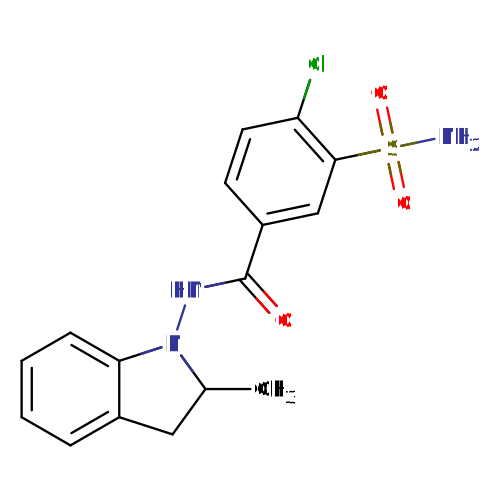
- Weight
- Average: 365.835
Monoisotopic: 365.06008979 - Chemical Formula
- C16H16ClN3O3S
- Synonyms
- Indapamid
- Indapamida
- Indapamide
- Indapamidum
- Metindamide
- External IDs
- RHC 2555
- S 1520
- SE 1520
- USV 2555

Pharmacology
- Indication
Indapamide is a diuretic indicated for use as monotherapy or in combination with other blood pressure-lowering agents to treat hypertension.23 It may also be used to treat fluid and salt retention associated with congestive heart failure.23
 Reduce drug development failure ratesBuild, train, & validate machine-learning modelswith evidence-based and structured datasets.Build, train, & validate predictive machine-learning models with structured datasets.
- Associated Conditions
Indication Type Indication Combined Product Details Approval Level Age Group Patient Characteristics Dose Form Used in combination to manage High blood pressure (hypertension) •••••••••••• •••••• Management of High blood pressure (hypertension) •••••••••••• •••••• Management of Nephrolithiasis recurrent ••• ••••• Management of Sodium and fluid retention •••••••••••• •••••• - Contraindications & Blackbox Warnings
 Prevent Adverse Drug Events TodayTap into our Clinical API for life-saving information on contraindications & blackbox warnings, population restrictions, harmful risks, & more.Avoid life-threatening adverse drug events with our Clinical API
- Pharmacodynamics
Classified as a sulfonamide diuretic, indapamide is an effective antihypertensive agent and by extension, has shown efficacy in the prevention of target organ damage.2,3 Administration of indapamide produces water and electrolyte loss, with higher doses associated with increased diuresis.2,10 Severe and clinically significant electrolyte disturbances may occur with indapamide use - for example, hypokalemia resulting from renal potassium loss may lead to QTc prolongation.2,9 Further electrolyte imbalances may occur due to renal excretion of sodium, chloride, and magnesium.2,9,10
Other indapamide induced changes include increases in plasma renin and aldosterone, and reduced calcium excretion in the urine.2,11,15 In many studies investigating the effects of indapamide in both non-diabetic and diabetic hypertensive patients, glucose tolerance was not significantly altered.2 However, additional studies are necessary to assess the long term metabolic impacts of indapamide, since thiazide related impaired glucose tolerance can take several years to develop in non-diabetic patients.2
- Mechanism of action
Indapamide acts on the nephron, specifically at the proximal segment of the distal convoluted tubule where it inhibits the Na+/Cl- cotransporter, leading to reduced sodium reabsorption.4,8 As a result, sodium and water are retained in the lumen of the nephron for urinary excretion.12 The effects that follow include reduced plasma volume, reduced venous return, lower cardiac output, and ultimately decreased blood pressure.8
Interestingly, it is likely that thiazide-like diuretics such as indapamide have additional blood pressure lowering mechanisms that are unrelated to diuresis.8 This is exemplified by the observation that the antihypertensive effects of thiazides are sustained 4-6 weeks after initiation of therapy, despite recovering plasma and extracellular fluid volumes.8
Some studies have suggested that indapamide may decrease responsiveness to pressor agents while others have suggested it can decrease peripheral resistance.2 Although it is clear that diuresis contributes to the antihypertensive effects of indapamide, further studies are needed to investigate the medication’s ability to decrease peripheral vascular resistance and relax vascular smooth muscle.2
Target Actions Organism ASolute carrier family 12 member 3 inhibitorHumans - Absorption
The bioavailability of indapamide is virtually complete after an oral dose and is unaffected by food or antacids.6,4 Indapamide is highly lipid-soluble due to its indoline moiety - a characteristic that likely explains why indapamide’s renal clearance makes up less than 10% of its total systemic clearance.2,6,4 The Tmax occurs approximately 2.3 hours after oral administration.6 The Cmax and AUC0-24 values are 263 ng/mL and 2.95 ug/hr/mL, respectively.6
- Volume of distribution
Some sources report an apparent volume of distribution of 25 L for indapamide, while others report a value of approximately 60 L.6,4,13
- Protein binding
Approximately 76-79% of indapamide is protein bound.2,6 Indapamide binds primarily to alpha 1-acid glycoprotein and less significantly to serum albumin and lipoproteins.7 In the blood, indapamide is extensively and preferentially bound to erythrocytes.6,7,23
- Metabolism
As a result of extensive metabolism in the liver, the majority of indapamide excreted is metabolized, with only 7% remaining unchanged.6 In humans, as many as 19 distinct indapamide metabolites may be produced, although not all have been identified.2,6
There are several metabolic routes through which indapamide may be metabolized, and CYP3A4 is the main enzyme involved in the corresponding hydroxylation, carboxylation, and dehydrogenation reactions.14
Indapamide can undergo dehydrogenation to form M5, then oxidation to form M4, then further hydroxylation at the indole moiety to form M2.5 These reactions are facilitated by CYP3A4.5
Another route of metabolism occurs when indapamide is first hydroxylated to M1 by CYP3A4.5 M1 then undergoes dehydrogenation to form M3 and is further oxidized to form M2.5 Hydroxylation of indapamide’s indole moiety is thought to form the major metabolite (M1), which is less pharmacologically active compared to its parent compound according to animal studies.6
Indapamide may also undergo epoxidation via CYP3A4 to form a reactive epoxide intermediate.5 The unstable epoxide intermediate may then undergo dihydroxylation via microsomal epoxide hydrolase to form M6, or glutathione conjugation to form M7.5
Hover over products below to view reaction partners
- Route of elimination
An estimated 60-70% of indapamide is eliminated in the urine, while 16-23% is eliminated in the feces.2
- Half-life
Indapamide is characterized by biphasic elimination.6 In healthy subjects, indapamide's elimination half-life can range from 13.9 to 18 hours.2,4 The long half-life is conducive to once-daily dosing.6
- Clearance
Indapamide's renal and hepatic clearance values are reported to be 1.71 mL/min and 20-23.4 mL/min, respectively.2
- Adverse Effects
 Improve decision support & research outcomesWith structured adverse effects data, including: blackbox warnings, adverse reactions, warning & precautions, & incidence rates. View sample adverse effects data in our new Data Library!Improve decision support & research outcomes with our structured adverse effects data.
- Toxicity
Indapamide overdose symptoms may include but are not limited to nausea, vomiting, gastrointestinal disorders, electrolyte disturbances and weakness.23 Other signs of overdose include respiratory depression and severe hypotension.23 In cases of overdose, supportive care interventions may be necessary to manage symptoms.23 Emesis and gastric lavage may be recommended to empty the stomach; however, patients should be monitored closely for any electrolyte or fluid imbalances.23
- Pathways
Pathway Category Indapamide Action Pathway Drug action - Pharmacogenomic Effects/ADRs
- Not Available
Interactions
- Drug Interactions
- This information should not be interpreted without the help of a healthcare provider. If you believe you are experiencing an interaction, contact a healthcare provider immediately. The absence of an interaction does not necessarily mean no interactions exist.
Drug Interaction Integrate drug-drug
interactions in your softwareAbacavir Indapamide may decrease the excretion rate of Abacavir which could result in a higher serum level. Abaloparatide The risk or severity of adverse effects can be increased when Indapamide is combined with Abaloparatide. Abametapir The serum concentration of Indapamide can be increased when it is combined with Abametapir. Acarbose The therapeutic efficacy of Acarbose can be decreased when used in combination with Indapamide. Acebutolol The therapeutic efficacy of Indapamide can be increased when used in combination with Acebutolol. - Food Interactions
- Avoid alcohol. Alcohol may potentiate orthostatic hypotension.
- Increase consumption of potassium-rich foods. Indapamide my cause potassium depletion leading to hypokalemia.
- Take with or without food.
Products
 Drug product information from 10+ global regionsOur datasets provide approved product information including:dosage, form, labeller, route of administration, and marketing period.Access drug product information from over 10 global regions.
- Product Images
- International/Other Brands
- Arifon (Servier) / Bajaten (Merck) / Fludex (Servier) / Indamol (Teofarma) / Ipamix (Visufarma) / Natrilix (Servier) / Natrix (Kyoto Yakuhin) / Noranat (Sandoz) / Tandix (Azevedos) / Tertensif (Servier) / Veroxil (Baldacci)
- Brand Name Prescription Products
Name Dosage Strength Route Labeller Marketing Start Marketing End Region Image Indapamide Tablet 1.25 mg Oral Sanis Health Inc 2015-10-14 2017-07-31 Canada 
Indapamide Tablet 2.5 mg Oral Sanis Health Inc Not applicable Not applicable Canada Indapamide Tablet 2.5 mg Oral Sanis Health Inc 2015-10-14 2017-07-31 Canada Indapamide Hemihydrate 1.25mg - Tab Tablet 1.25 mg Oral Proval Pharma Division Of Servier Canada Inc 1997-08-14 2012-02-13 Canada Indapamide Hemihydrate Tab 2.5mg Tablet 2.5 mg Oral Proval Pharma Division Of Servier Canada Inc 1995-12-31 2012-02-13 Canada - Generic Prescription Products
Name Dosage Strength Route Labeller Marketing Start Marketing End Region Image Apo-indapamide 1.25 Mg Tablets Tablet 1.25 mg Oral Apotex Corporation 2002-11-08 Not applicable Canada Apo-indapamide 2.5mg Tablets Tablet 2.5 mg Oral Apotex Corporation 1996-10-02 Not applicable Canada Dom-indapamide Tablets 1.25mg Tablet 1.25 mg Oral Dominion Pharmacal 1999-09-15 2018-10-10 Canada Dom-indapamide Tablets 2.5mg Tablet 2.5 mg Oral Dominion Pharmacal 1999-09-15 2018-10-10 Canada Indapamide Tablet, film coated 1.25 mg/1 Oral bryant ranch prepack 2017-04-24 Not applicable US 
- Mixture Products
Name Ingredients Dosage Route Labeller Marketing Start Marketing End Region Image ACEPER PLUS 2 MG/0.625 MG TABLET, 30 ADET Indapamide (0.625 mg) + Perindopril erbumine (2 mg) Tablet Oral GENVEON İLAÇ SAN. VE TİC. A.Ş. 2020-08-14 Not applicable Turkey 
ACEPER PLUS 4 MG/1,25 MG TABLET, 30 ADET Indapamide (1.25 mg) + Perindopril (4 mg) Tablet Oral GENVEON İLAÇ SAN. VE TİC. A.Ş. 2011-05-05 Not applicable Turkey Apo-perindopril-indapamide Indapamide (1.25 mg) + Perindopril erbumine (4 mg) Tablet Oral Apotex Corporation 2021-02-02 Not applicable Canada Apo-perindopril-indapamide Indapamide (2.5 mg) + Perindopril erbumine (8 mg) Tablet Oral Apotex Corporation 2021-02-02 Not applicable Canada Apo-perindopril-indapamide Indapamide (0.625 mg) + Perindopril erbumine (2 mg) Tablet Oral Apotex Corporation Not applicable Not applicable Canada


Categories
- ATC Codes
- C03BA11 — Indapamide
- C03BA — Sulfonamides, plain
- C03B — LOW-CEILING DIURETICS, EXCL. THIAZIDES
- C03 — DIURETICS
- C — CARDIOVASCULAR SYSTEM
- C09BX — ACE inhibitors, other combinations
- C09B — ACE INHIBITORS, COMBINATIONS
- C09 — AGENTS ACTING ON THE RENIN-ANGIOTENSIN SYSTEM
- C — CARDIOVASCULAR SYSTEM
- G01AE — Sulfonamides
- G01A — ANTIINFECTIVES AND ANTISEPTICS, EXCL. COMBINATIONS WITH CORTICOSTEROIDS
- G01 — GYNECOLOGICAL ANTIINFECTIVES AND ANTISEPTICS
- G — GENITO URINARY SYSTEM AND SEX HORMONES
- Drug Categories
- Amides
- Antihypertensive Agents
- Antihypertensive Agents Indicated for Hypertension
- Cardiovascular Agents
- Cytochrome P-450 CYP3A Substrates
- Cytochrome P-450 CYP3A4 Substrates
- Cytochrome P-450 Substrates
- Diuretics
- Drugs causing inadvertant photosensitivity
- Drugs that are Mainly Renally Excreted
- Genito Urinary System and Sex Hormones
- Heterocyclic Compounds, Fused-Ring
- Hyperglycemia-Associated Agents
- Hypotensive Agents
- Increased Diuresis
- Indoles
- Lipid Modifying Agents
- Low-Ceiling Diuretics, Excl. Thiazides
- Membrane Transport Modulators
- Natriuretic Agents
- Non Potassium Sparing Diuretics
- Photosensitizing Agents
- Potential QTc-Prolonging Agents
- QTc Prolonging Agents
- Sodium Chloride Symporter Inhibitors
- Sulfonamides
- Sulfones
- Sulfur Compounds
- Thiazide-like Diuretic
- Chemical TaxonomyProvided by Classyfire
- Description
- This compound belongs to the class of organic compounds known as benzenesulfonamides. These are organic compounds containing a sulfonamide group that is S-linked to a benzene ring.
- Kingdom
- Organic compounds
- Super Class
- Benzenoids
- Class
- Benzene and substituted derivatives
- Sub Class
- Benzenesulfonamides
- Direct Parent
- Benzenesulfonamides
- Alternative Parents
- 4-halobenzoic acids and derivatives / Benzenesulfonyl compounds / Indoles and derivatives / Benzoyl derivatives / Chlorobenzenes / Organosulfonamides / Aryl chlorides / Aminosulfonyl compounds / Carboxylic acid hydrazides / Azacyclic compounds show 6 more
- Substituents
- 4-halobenzoic acid or derivatives / Aminosulfonyl compound / Aromatic heteropolycyclic compound / Aryl chloride / Aryl halide / Azacycle / Benzenesulfonamide / Benzenesulfonyl group / Benzoic acid or derivatives / Benzoyl show 21 more
- Molecular Framework
- Aromatic heteropolycyclic compounds
- External Descriptors
- sulfonamide, organochlorine compound, indoles (CHEBI:5893)
- Affected organisms
- Humans and other mammals
Chemical Identifiers
- UNII
- F089I0511L
- CAS number
- 26807-65-8
- InChI Key
- NDDAHWYSQHTHNT-UHFFFAOYSA-N
- InChI
- InChI=1S/C16H16ClN3O3S/c1-10-8-11-4-2-3-5-14(11)20(10)19-16(21)12-6-7-13(17)15(9-12)24(18,22)23/h2-7,9-10H,8H2,1H3,(H,19,21)(H2,18,22,23)
- IUPAC Name
- 4-chloro-N-(2-methyl-2,3-dihydro-1H-indol-1-yl)-3-sulfamoylbenzamide
- SMILES
- CC1CC2=CC=CC=C2N1NC(=O)C1=CC(=C(Cl)C=C1)S(N)(=O)=O
References
- Synthesis Reference
Chunyi Yeh, Yi-Lung Wang, Ya-Sheng Yang, Ya-Ching Chang Chein, "Oral sustained-release pharmaceutical composition of indapamide, production and use thereof." U.S. Patent US20060182803, issued August 17, 2006.
US20060182803- General References
- Dong DL, Wang QH, Yue P, Jiao JD, Gu RM, Yang BF: Indapamide induces apoptosis of GH3 pituitary cells independently of its inhibition of voltage-dependent K+ currents. Eur J Pharmacol. 2006 Apr 24;536(1-2):78-84. Epub 2006 Mar 2. [Article]
- Chaffman M, Heel RC, Brogden RN, Speight TM, Avery GS: Indapamide. A review of its pharmacodynamic properties and therapeutic efficacy in hypertension. Drugs. 1984 Sep;28(3):189-235. doi: 10.2165/00003495-198428030-00001. [Article]
- Bataillard A, Schiavi P, Sassard J: Pharmacological properties of indapamide. Rationale for use in hypertension. Clin Pharmacokinet. 1999;37 Suppl 1:7-12. doi: 10.2165/00003088-199937001-00002. [Article]
- Thomas JR: A review of 10 years of experience with indapamide as an antihypertensive agent. Hypertension. 1985 Nov-Dec;7(6 Pt 2):II152-6. doi: 10.1161/01.hyp.7.6_pt_2.ii152. [Article]
- Sun H, Moore C, Dansette PM, Kumar S, Halpert JR, Yost GS: Dehydrogenation of the indoline-containing drug 4-chloro-N-(2-methyl-1-indolinyl)-3-sulfamoylbenzamide (indapamide) by CYP3A4: correlation with in silico predictions. Drug Metab Dispos. 2009 Mar;37(3):672-84. doi: 10.1124/dmd.108.022707. Epub 2008 Dec 12. [Article]
- Caruso FS, Szabadi RR, Vukovich RA: Pharmacokinetics and clinical pharmacology of indapamide. Am Heart J. 1983 Jul;106(1 Pt 2):212-20. doi: 10.1016/0002-8703(83)90119-9. [Article]
- Urien S, Riant P, Renouard A, Coulomb B, Rocher I, Tillement JP: Binding of indapamide to serum proteins and erythrocytes. Biochem Pharmacol. 1988 Aug 1;37(15):2963-6. doi: 10.1016/0006-2952(88)90282-1. [Article]
- Duarte JD, Cooper-DeHoff RM: Mechanisms for blood pressure lowering and metabolic effects of thiazide and thiazide-like diuretics. Expert Rev Cardiovasc Ther. 2010 Jun;8(6):793-802. doi: 10.1586/erc.10.27. [Article]
- Yong TY, Huang JE, Lau SY, Li JY: Severe hyponatremia and other electrolyte disturbances associated with indapamide. Curr Drug Saf. 2011 Jul;6(3):134-7. doi: 10.2174/157488611797579249. [Article]
- Burke TJ, Nobles EM, Wolf PS, Erickson AL: Effect of indapamide on volume-dependent hypertension, renal haemodynamics, solute excretion and proximal nephron fractional reabsorption in the dog. Curr Med Res Opin. 1983;8 Suppl 3:25-37. doi: 10.1185/03007998309109833. [Article]
- Ceylan K, Topal C, Erkoc R, Sayarlioglu H, Can S, Yilmaz Y, Dogan E, Algun E, Gonulalan H: Effect of indapamide on urinary calcium excretion in patients with and without urinary stone disease. Ann Pharmacother. 2005 Jun;39(6):1034-8. doi: 10.1345/aph.1E544. Epub 2005 Apr 19. [Article]
- Akbari P, Khorasani-Zadeh A: Thiazide Diuretics . [Article]
- Beermann B, Grind M: Clinical pharmacokinetics of some newer diuretics. Clin Pharmacokinet. 1987 Oct;13(4):254-66. doi: 10.2165/00003088-198713040-00003. [Article]
- Zisaki A, Miskovic L, Hatzimanikatis V: Antihypertensive drugs metabolism: an update to pharmacokinetic profiles and computational approaches. Curr Pharm Des. 2015;21(6):806-22. [Article]
- Danielsen H, Pedersen EB, Spencer ES: Effect of indapamide on the renin-aldosterone system, and urinary excretion of potassium and calcium in essential hypertension. Br J Clin Pharmacol. 1984 Aug;18(2):229-31. doi: 10.1111/j.1365-2125.1984.tb02458.x. [Article]
- Roush GC, Sica DA: Diuretics for Hypertension: A Review and Update. Am J Hypertens. 2016 Oct;29(10):1130-7. doi: 10.1093/ajh/hpw030. Epub 2016 Apr 5. [Article]
- Oparil S, Acelajado MC, Bakris GL, Berlowitz DR, Cifkova R, Dominiczak AF, Grassi G, Jordan J, Poulter NR, Rodgers A, Whelton PK: Hypertension. Nat Rev Dis Primers. 2018 Mar 22;4:18014. doi: 10.1038/nrdp.2018.14. [Article]
- Mroczek WJ: Indapamide: clinical pharmacology, therapeutic efficacy in hypertension, and adverse effects. Pharmacotherapy. 1983 Mar-Apr;3(2 Pt 1):61-7. [Article]
- Kuo SW, Pei-Dee, Hung YJ, Hsieh AT, Wu LY, Hsieh CH, He CT, Yang TC, Lian WC: Effect of indapamide SR in the treatment of hypertensive patients with type 2 diabetes. Am J Hypertens. 2003 Aug;16(8):623-8. doi: 10.1016/s0895-7061(03)00896-3. [Article]
- Lukasz Komsta, Monika Waksmundzka-Hajnos, Joseph Sherma (2014). Thin Layer Chromatography in Drug Analysis. Taylor & Francis.
- Thiazide Diruetics in Hypertension- European Journal of Cardiology [Link]
- Significant Drug–Drug Interactions with Antineoplastics [Link]
- FDA Approved Drug Products: Lozol (Indapamide) [Link]
- External Links
- Human Metabolome Database
- HMDB0014946
- KEGG Drug
- D00345
- PubChem Compound
- 3702
- PubChem Substance
- 46508626
- ChemSpider
- 3574
- BindingDB
- 25901
- 5764
- ChEBI
- 5893
- ChEMBL
- CHEMBL406
- Therapeutic Targets Database
- DAP000498
- PharmGKB
- PA449975
- RxList
- RxList Drug Page
- Drugs.com
- Drugs.com Drug Page
- PDRhealth
- PDRhealth Drug Page
- Wikipedia
- Indapamide
- FDA label
- Download (322 KB)
- MSDS
- Download (72.7 KB)
Clinical Trials
- Clinical Trials
Phase Status Purpose Conditions Count 4 Completed Treatment Hypertension 2 4 Completed Treatment Hypertension / Impaired Renal Function 1 4 Completed Treatment Hypertension / Type 2 Diabetes Mellitus 2 4 Not Yet Recruiting Treatment Pharmacogenomics 1 4 Recruiting Other Hypertension, Essential Hypertension 1
Pharmacoeconomics
- Manufacturers
- Actavis elizabeth llc
- Alphapharm party ltd
- Cadista pharmaceuticals inc
- Ivax pharmaceuticals inc sub teva pharmaceuticals usa
- Mylan pharmaceuticals inc
- Sandoz inc
- Teva pharmaceuticals usa inc
- Watson laboratories inc
- Sanofi aventis us llc
- Packagers
- Actavis Group
- Advanced Pharmaceutical Services Inc.
- Alphapharm Party Ltd.
- Amerisource Health Services Corp.
- Arcola Laboratories
- A-S Medication Solutions LLC
- Caremark LLC
- Dispensing Solutions
- Diversified Healthcare Services Inc.
- Heartland Repack Services LLC
- Inyx Usa Ltd.
- Ivax Pharmaceuticals
- Lake Erie Medical and Surgical Supply
- Major Pharmaceuticals
- Murfreesboro Pharmaceutical Nursing Supply
- Mylan
- Novopharm Ltd.
- Par Pharmaceuticals
- PD-Rx Pharmaceuticals Inc.
- Pharmaceutical Utilization Management Program VA Inc.
- Physicians Total Care Inc.
- Qualitest
- Sandhills Packaging Inc.
- Sanofi-Aventis Inc.
- Servier Canada Inc.
- UDL Laboratories
- Dosage Forms
Form Route Strength Tablet, coated Oral Tablet, film coated Oral 0.625 mg Tablet, film coated Oral 1.25 mg Tablet Oral 1.25 mg Tablet, film coated Oral Tablet, sugar coated Oral 2.5 mg Capsule Oral Pill Oral Tablet, coated Oral Capsule Oral 2.5 MG Tablet Oral 1.25 mg/1 Tablet Oral 2.5 mg/1 Tablet, film coated Oral 1.25 mg/1 Tablet, film coated Oral 2.5 mg/1 Tablet, film coated, extended release Oral 1.5 mg Tablet, film coated, extended release Oral Pill Oral 2.5 mg Tablet Oral 2.5 mg Tablet, film coated Oral 2.5 mg Tablet Oral Tablet, extended release Oral 1.5 mg Tablet, extended release; tablet, film coated, extended release Oral Tablet, film coated Oral 1.5 mg Tablet, extended release Oral Tablet Oral Tablet, delayed release Oral Tablet, multilayer, extended release Oral Capsule Oral Tablet, film coated, extended release Oral Tablet Oral 1.25 mg Tablet Oral 0.625 mg Tablet Oral 1.5 mg Tablet, film coated Oral Tablet, film coated Oral 5 mg Tablet, film coated Oral 10 mg Tablet, coated Oral 2.5 mg - Prices
Unit description Cost Unit Indapamide 2.5 mg tablet 0.85USD tablet Indapamide 1.25 mg tablet 0.69USD tablet Lozide 2.5 mg Tablet 0.55USD tablet Apo-Indapamide 2.5 mg Tablet 0.31USD tablet Mylan-Indapamide 2.5 mg Tablet 0.31USD tablet Novo-Indapamide 2.5 mg Tablet 0.31USD tablet Nu-Indapamide 2.5 mg Tablet 0.31USD tablet Pms-Indapamide 2.5 mg Tablet 0.31USD tablet Apo-Indapamide 1.25 mg Tablet 0.2USD tablet Mylan-Indapamide 1.25 mg Tablet 0.2USD tablet Pms-Indapamide 1.25 mg Tablet 0.2USD tablet DrugBank does not sell nor buy drugs. Pricing information is supplied for informational purposes only.- Patents
- Not Available
Properties
- State
- Solid
- Experimental Properties
Property Value Source melting point (°C) 160-162 https://www.fishersci.com/store/msds?partNumber=AAJ6384603&productDescription=INDAPAMIDE+1G&vendorId=VN00024248&countryCode=US&language=en pKa 8.8 FDA Label - Predicted Properties
Property Value Source Water Solubility 0.0342 mg/mL ALOGPS logP 2.52 ALOGPS logP 2.64 Chemaxon logS -4 ALOGPS pKa (Strongest Acidic) 8.85 Chemaxon pKa (Strongest Basic) 0.097 Chemaxon Physiological Charge 0 Chemaxon Hydrogen Acceptor Count 4 Chemaxon Hydrogen Donor Count 2 Chemaxon Polar Surface Area 92.5 Å2 Chemaxon Rotatable Bond Count 3 Chemaxon Refractivity 103.31 m3·mol-1 Chemaxon Polarizability 36.34 Å3 Chemaxon Number of Rings 3 Chemaxon Bioavailability 1 Chemaxon Rule of Five Yes Chemaxon Ghose Filter Yes Chemaxon Veber's Rule No Chemaxon MDDR-like Rule No Chemaxon - Predicted ADMET Features
Property Value Probability Human Intestinal Absorption + 1.0 Blood Brain Barrier + 0.8868 Caco-2 permeable - 0.5529 P-glycoprotein substrate Non-substrate 0.6859 P-glycoprotein inhibitor I Non-inhibitor 0.9158 P-glycoprotein inhibitor II Non-inhibitor 0.9179 Renal organic cation transporter Non-inhibitor 0.8575 CYP450 2C9 substrate Non-substrate 0.5265 CYP450 2D6 substrate Non-substrate 0.7924 CYP450 3A4 substrate Non-substrate 0.519 CYP450 1A2 substrate Inhibitor 0.582 CYP450 2C9 inhibitor Non-inhibitor 0.5775 CYP450 2D6 inhibitor Non-inhibitor 0.8151 CYP450 2C19 inhibitor Non-inhibitor 0.6572 CYP450 3A4 inhibitor Non-inhibitor 0.8309 CYP450 inhibitory promiscuity High CYP Inhibitory Promiscuity 0.7471 Ames test Non AMES toxic 0.6869 Carcinogenicity Non-carcinogens 0.7674 Biodegradation Not ready biodegradable 0.9862 Rat acute toxicity 2.0823 LD50, mol/kg Not applicable hERG inhibition (predictor I) Weak inhibitor 0.986 hERG inhibition (predictor II) Non-inhibitor 0.8804
Spectra
- Mass Spec (NIST)
- Not Available
- Spectra
- Chromatographic Properties
Collision Cross Sections (CCS)
Adduct CCS Value (Å2) Source type Source [M-H]- 191.0785226 predictedDarkChem Lite v0.1.0 [M-H]- 175.25708 predictedDeepCCS 1.0 (2019) [M+H]+ 190.9374226 predictedDarkChem Lite v0.1.0 [M+H]+ 177.61508 predictedDeepCCS 1.0 (2019) [M+Na]+ 190.4182226 predictedDarkChem Lite v0.1.0 [M+Na]+ 183.89912 predictedDeepCCS 1.0 (2019)
Targets

- Kind
- Protein
- Organism
- Humans
- Pharmacological action
- Yes
- Actions
- Inhibitor
- General Function
- Transporter activity
- Specific Function
- Key mediator of sodium and chloride reabsorption in this nephron segment, accounting for a significant fraction of renal sodium reabsorption.
- Gene Name
- SLC12A3
- Uniprot ID
- P55017
- Uniprot Name
- Solute carrier family 12 member 3
- Molecular Weight
- 113138.04 Da
References
- Ma F, Lin F, Chen C, Cheng J, Zeldin DC, Wang Y, Wang DW: Indapamide lowers blood pressure by increasing production of epoxyeicosatrienoic acids in the kidney. Mol Pharmacol. 2013 Aug;84(2):286-95. doi: 10.1124/mol.113.085878. Epub 2013 May 31. [Article]
- Tamargo J, Segura J, Ruilope LM: Diuretics in the treatment of hypertension. Part 1: thiazide and thiazide-like diuretics. Expert Opin Pharmacother. 2014 Mar;15(4):527-47. doi: 10.1517/14656566.2014.879118. Epub 2014 Jan 20. [Article]
- Duarte JD, Cooper-DeHoff RM: Mechanisms for blood pressure lowering and metabolic effects of thiazide and thiazide-like diuretics. Expert Rev Cardiovasc Ther. 2010 Jun;8(6):793-802. doi: 10.1586/erc.10.27. [Article]
Enzymes
- Kind
- Protein
- Organism
- Humans
- Pharmacological action
- Unknown
- Actions
- Substrate
- General Function
- Vitamin d3 25-hydroxylase activity
- Specific Function
- Cytochromes P450 are a group of heme-thiolate monooxygenases. In liver microsomes, this enzyme is involved in an NADPH-dependent electron transport pathway. It performs a variety of oxidation react...
- Gene Name
- CYP3A4
- Uniprot ID
- P08684
- Uniprot Name
- Cytochrome P450 3A4
- Molecular Weight
- 57342.67 Da
References
- Sun H, Moore C, Dansette PM, Kumar S, Halpert JR, Yost GS: Dehydrogenation of the indoline-containing drug 4-chloro-N-(2-methyl-1-indolinyl)-3-sulfamoylbenzamide (indapamide) by CYP3A4: correlation with in silico predictions. Drug Metab Dispos. 2009 Mar;37(3):672-84. doi: 10.1124/dmd.108.022707. Epub 2008 Dec 12. [Article]
- Zisaki A, Miskovic L, Hatzimanikatis V: Antihypertensive drugs metabolism: an update to pharmacokinetic profiles and computational approaches. Curr Pharm Des. 2015;21(6):806-22. [Article]
- Kind
- Protein
- Organism
- Humans
- Pharmacological action
- Unknown
- Actions
- Substrate
- General Function
- Biotransformation enzyme that catalyzes the hydrolysis of arene and aliphatic epoxides to less reactive and more water soluble dihydrodiols by the trans addition of water (By similarity). May play a role in the metabolism of endogenous lipids such as epoxide-containing fatty acids (PubMed:22798687).
- Specific Function
- Cis-stilbene-oxide hydrolase activity
- Gene Name
- EPHX1
- Uniprot ID
- P07099
- Uniprot Name
- Epoxide hydrolase 1
- Molecular Weight
- 52948.48 Da
References
- Zisaki A, Miskovic L, Hatzimanikatis V: Antihypertensive drugs metabolism: an update to pharmacokinetic profiles and computational approaches. Curr Pharm Des. 2015;21(6):806-22. [Article]
Carriers
- Kind
- Protein group
- Organism
- Humans
- Pharmacological action
- Unknown
- Actions
- Binder
- General Function
- Not Available
- Specific Function
- Functions as transport protein in the blood stream. Binds various ligands in the interior of its beta-barrel domain. Also binds synthetic drugs and influences their distribution and availability in...
Components:
References
- Urien S, Riant P, Renouard A, Coulomb B, Rocher I, Tillement JP: Binding of indapamide to serum proteins and erythrocytes. Biochem Pharmacol. 1988 Aug 1;37(15):2963-6. doi: 10.1016/0006-2952(88)90282-1. [Article]
- Kind
- Protein
- Organism
- Humans
- Pharmacological action
- Unknown
- Actions
- Binder
- General Function
- Toxic substance binding
- Specific Function
- Serum albumin, the main protein of plasma, has a good binding capacity for water, Ca(2+), Na(+), K(+), fatty acids, hormones, bilirubin and drugs. Its main function is the regulation of the colloid...
- Gene Name
- ALB
- Uniprot ID
- P02768
- Uniprot Name
- Serum albumin
- Molecular Weight
- 69365.94 Da
References
- Urien S, Riant P, Renouard A, Coulomb B, Rocher I, Tillement JP: Binding of indapamide to serum proteins and erythrocytes. Biochem Pharmacol. 1988 Aug 1;37(15):2963-6. doi: 10.1016/0006-2952(88)90282-1. [Article]
References
- Urien S, Riant P, Renouard A, Coulomb B, Rocher I, Tillement JP: Binding of indapamide to serum proteins and erythrocytes. Biochem Pharmacol. 1988 Aug 1;37(15):2963-6. doi: 10.1016/0006-2952(88)90282-1. [Article]

Drug created at June 13, 2005 13:24 / Updated at April 27, 2024 09:44