Identification
- Summary
Meloxicam is an NSAID used to treat osteoarthritis in adults, rheumatoid arthritis in adults, and juvenile rheumatoid arthritis in pediatrics.
- Brand Names
- Anjeso, Mobic, Qmiiz, Vivlodex, Zynrelef
- Generic Name
- Meloxicam
- DrugBank Accession Number
- DB00814
- Background
Meloxicam is a nonsteroidal anti-inflammatory drug (NSAID) used to relieve various types of pain, including pain caused by musculoskeletal conditions, osteoarthritis, and rheumatoid arthritis.1 With a longer half-life than most other NSAIDS, it is a favorable option for those who require once-daily dosing. Meloxicam is available in oral, transdermal, and intravenous formulations. It is a preferential COX-2 inhibitor, purportedly reducing the risk of adverse gastrointestinal tract effects, however, this is a topic of controversy.4,5
- Type
- Small Molecule
- Groups
- Approved, Vet approved
- Structure
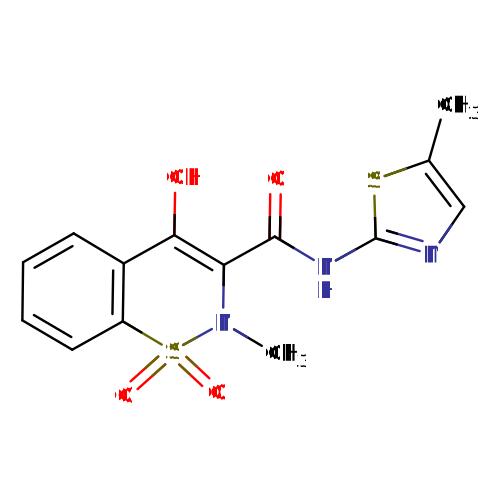
Structure for Meloxicam (DB00814)
- Weight
- Average: 351.401
Monoisotopic: 351.034747299 - Chemical Formula
- C14H13N3O4S2
- Synonyms
- Méloxicam
- Meloxicam
- Meloxicamum
- External IDs
- N-1539
- N1539
- UH-AC 62XX
- UH-AC-62 XX
- UH-AC62

Pharmacology
- Indication
Meloxicam is indicated for the symptomatic treatment of arthritis and osteoarthritis. In addition, it is indicated for the pauciarticular and polyarticular course of Juvenile Rheumatoid Arthritis (JRA) in patients aged 2 years old or above.10 Off-label uses include the treatment of dental or post-surgical pain. In addition to the above, meloxicam has also been studied in the treatment of neuropathic pain. 1
Meloxicam, in combination with bupivacaine, is indicated for postsurgical analgesia in adult patients for up to 72 hours following soft tissue surgical procedures, foot and ankle procedures, and other orthopedic procedures in which direct exposure to articular cartilage is avoided.14
 Reduce drug development failure ratesBuild, train, & validate machine-learning modelswith evidence-based and structured datasets.Build, train, & validate predictive machine-learning models with structured datasets.
- Associated Conditions
Indication Type Indication Combined Product Details Approval Level Age Group Patient Characteristics Dose Form Treatment of Dental pain ••• ••••• Symptomatic treatment of Osteoarthritis •••••••••••• Used in combination for symptomatic treatment of Pain, inflammatory Combination Product in combination with: Esomeprazole (DB00736) •••••••••••• •••• •••• •• •••••••••• •••••• •••••• •••••••••• ••••••••••• ••••••••• ••••••• •••••••• ••••••• ••••••• •••••• Used in combination for symptomatic treatment of Pain, inflammatory Combination Product in combination with: Esomeprazole (DB00736) •••••••••••• •••• •••• •• •••••••••• •••••• •••••• •••••••••• ••••••••••• ••••••••• ••••••• •••••••• ••••••• ••••••• •••••• Treatment of Pain, neuropathic ••• ••••• - Contraindications & Blackbox Warnings
 Prevent Adverse Drug Events TodayTap into our Clinical API for life-saving information on contraindications & blackbox warnings, population restrictions, harmful risks, & more.Avoid life-threatening adverse drug events with our Clinical API
- Pharmacodynamics
Meloxicam is an anti-inflammatory, analgesic analgesic with antipyretic effects in fever.1 Prostaglandins are substances that contribute to inflammation.7 This drug also exerts preferential actions against COX-23, which may reduce the possible gastrointestinal effects of this drug.
In humans, meloxicam has demonstrated the ability to decrease erythrocyte sedimentation rate(ESR) in patients with rheumatoid arthritis, and to decrease ESR, C-reactive protein (CRP), as well as aquaporin-1 expression.1 As with other NSAIDS, prolonged use of meloxicum can result in renal or cardiovascular impairment or thrombotic cardiovascular events.10
A note on gastrointestinal effects
As meloxicam preferentially inhibits COX-2, it is thought to cause less gastrointestinal irritation compared to other NSAIDS. Despite this, it still carries a risk of gastric inflammation, bleeding and ulceration.5,10 In one study, patients on meloxicam suffered from gastrointestinal symptoms at a rate of 13% compared to 19% of those on diclofenac. GI events were found to be less severe in the meloxicam-treated patients.1
- Mechanism of action
Meloxicam inhibits prostaglandin synthetase (cylooxygenase 1 and 2) enzymes leading to a decreased synthesis of prostaglandins, which normally mediate painful inflammatory symptoms.7 As prostaglandins sensitize neuronal pain receptors, inhibition of their synthesis leads to analgesic and inflammatory effects. Meloxicam preferentially inhibits COX-2, but also exerts some activity against COX-1, causing gastrointestinal irritation.1,10
Target Actions Organism AProstaglandin G/H synthase 2 inhibitorHumans UProstaglandin G/H synthase 1 inhibitorHumans - Absorption
The absolute bioavailability oral capsules after a dose was 89% in one pharmacokinetic study. Cmax was reached 5–6 hours after administration of a single dose given after the first meal of the day. The Cmax doubled when the drug was administered in the fasting state. Despite this, meloxicam can be taken without regard to food, unlike many other NSAIDS.1,10
Meloxicam formulated for instillation with bupivacaine produced varied systemic measures following a single dose of varying strength. In patients undergoing bunionectomy, 1.8 mg of meloxicam produced a Cmax of 26 ± 14 ng/mL, a median Tmax of 18 h, and an AUC∞ of 2079 ± 1631 ng*h/mL. For a 9 mg dose used in herniorrhaphy, the corresponding values were 225 ± 96 ng/mL, 54 h, and the AUC∞ was not reported. Lastly, a 12 mg dose used in total knee arthroplasty produced values of 275 ± 134 ng/mL, 36 h, and 25,673 ± 17,666 ng*h/mL.13
- Volume of distribution
The volume of distribution of meloxicam is 10-15L. Because of its high binding to albumin, it is likely to be distributed in highly perfused tissues, such as the liver and kidney.1 Meloxicam concentrations in synovial fluid, measured after an oral dose, is estimated at 40% to 50% of the concentrations measured in the plasma.10 This drug is known to cross the placenta in humans.9
- Protein binding
Meloxicam is about 99.4% protein bound, primarily to albumin.1,3,10
- Metabolism
Meloxicam is almost completely metabolized. CYP2C9 is the main enzyme responsible for the metabolism of meloxicam1,6 with minor contributions from CYP3A4.10 Meloxicam has 4 major metabolites with no activity determined. About 60% of the ingested dose is metabolized to 5'-carboxy meloxicam from hepatic cytochrome enzyme oxidation of an intermediate metabolite, 5’-hydroxymethylmeloxicam.6,8 Two other metabolites are likely produced via peroxidation.6,10
Hover over products below to view reaction partners
- Route of elimination
Meloxicam is mainly eliminated through metabolism. Its metabolites are cleared through renal and fecal elimination.3 Less than <0.25% of a dose is eliminated in the urine as unchanged drug.10 About 1.6% of the parent drug is excreted in the feces.1
- Half-life
The half-life of meloxicam is approximately 20 hours3, which is considerably longer than most other NSAIDS. It can therefore be dosed without the need for slow-release formulations.1
Meloxicam applied together with bupivacaine for postsurgical analgesia had a median half-life of 33-42 hours, depending on dose and application site.13
- Clearance
After an oral dose, the total clearance of meloxicam is 0.42–0.48 L/h.1,3 The FDA label indicates a plasma clearance from 7 to 9 mL/min. No dose changes are required in mild to moderate renal or hepatic impairment. The use of meloxicam in patients with severe renal or hepatic impairment has not been studied. FDA prescribing information advises against it.10
- Adverse Effects
 Improve decision support & research outcomesWith structured adverse effects data, including: blackbox warnings, adverse reactions, warning & precautions, & incidence rates. View sample adverse effects data in our new Data Library!Improve decision support & research outcomes with our structured adverse effects data.
- Toxicity
The oral LD50 in rats is 98 mg/kg.11 Signs and symptoms of overdose with meloxicam may include shallow breathing, seizure, decreased urine output, gastrointestinal irritation, nausea, vomiting, gastrointestinal bleeding, and black tarry stools.12 In the case of an overdose, offer supportive treatment and attempt to remove gastrointestinal contents. Cholestyramine has been shown to enhance the elimination of meloxicam.11
- Pathways
Pathway Category Meloxicam Action Pathway Drug action - Pharmacogenomic Effects/ADRs
- Not Available
Interactions
- Drug Interactions
- This information should not be interpreted without the help of a healthcare provider. If you believe you are experiencing an interaction, contact a healthcare provider immediately. The absence of an interaction does not necessarily mean no interactions exist.
Drug Interaction Integrate drug-drug
interactions in your softwareAbacavir Meloxicam may decrease the excretion rate of Abacavir which could result in a higher serum level. Abametapir The serum concentration of Meloxicam can be increased when it is combined with Abametapir. Abatacept The metabolism of Meloxicam can be increased when combined with Abatacept. Abciximab The risk or severity of bleeding and hemorrhage can be increased when Meloxicam is combined with Abciximab. Abemaciclib The risk or severity of methemoglobinemia can be increased when Abemaciclib is combined with Meloxicam. - Food Interactions
- Avoid alcohol. The risk of gastrointestinal bleeding may be increased.
- Take with or without food. The absorption is unaffected by food.
Products
 Drug product information from 10+ global regionsOur datasets provide approved product information including:dosage, form, labeller, route of administration, and marketing period.Access drug product information from over 10 global regions.
- Product Images
- International/Other Brands
- Achefree (Achefree) / Acticam (Acromax Dominicana) / Aflamid (Anchor) / Afloxx (Lusa) / Aglan (Zentiva) / Ainecox (Cheminter) / Aldoron (Ivax) / Alentum (Lafrancol) / Algiflex (Biogen) / Aliviodol (Centrum) / Anaxicam (Caferma) / Anposel (Medipharm) / Antrend (Labormed) / Aponip (Pharmatec) / Areloger (Gerard) / Aremil (Magma) / Armex (Qintar Pharma) / Arrox (Xepa-Soul Pattinson) / Arsitec (Arsmedendi) / Artex (Pharmedic) / Arthrobic (Mekophar) / Arthrox (Pharmanel) / Articam (Standpharm) / Artipro (Helix) / Artriclox (Garmisch) / Artrifilm (G&R) / Artriflam (Sherfarma) / Artrilom (Pro.Med.CS) / Artrilox (Combiphar) / Artrox (PharmaBrand) / Aspicam (Biofarm) / Atiflam (Doctor Andreu) / Atrozan (Pharmstandard) / Auroxicam (Aurora) / Axius (Hersil)
- Brand Name Prescription Products
Name Dosage Strength Route Labeller Marketing Start Marketing End Region Image Act Meloxicam Tablet 7.5 mg Oral TEVA Canada Limited 2004-08-12 2021-07-30 Canada 
Act Meloxicam Tablet 15 mg Oral TEVA Canada Limited 2004-08-12 2021-07-30 Canada Anjeso Injection 30 mg/1mL Intravenous Baudax Bio, Inc. 2020-02-24 Not applicable US 
Meloxicam Tablet 15 mg/1 Oral Ranbaxy Inc. 2007-05-23 Not applicable US Meloxicam Tablet 15 mg Oral Pro Doc Limitee 2009-06-10 2017-05-05 Canada - Generic Prescription Products
Name Dosage Strength Route Labeller Marketing Start Marketing End Region Image Apo-meloxicam Tablet 15 mg Oral Apotex Corporation 2004-02-13 Not applicable Canada Apo-meloxicam Tablet 7.5 mg Oral Apotex Corporation 2004-02-13 Not applicable Canada Auro-meloxicam Tablet 15 mg Oral Auro Pharma Inc 2012-10-18 Not applicable Canada Auro-meloxicam Tablet 7.5 mg Oral Auro Pharma Inc 2012-10-19 Not applicable Canada Ava-meloxicam Tablet 7.5 mg Oral Avanstra Inc 2011-11-08 2014-08-21 Canada - Mixture Products
Name Ingredients Dosage Route Labeller Marketing Start Marketing End Region Image NuDroxiPAK M-15 Meloxicam (15 mg/1) + Capsaicin (0.25 mg/1mL) + Menthol (60 mg/1mL) + Methyl salicylate (250 mg/1mL) Kit Oral; Topical NuCare pharmceuticals,Inc. 2007-03-07 Not applicable US OCAM PROTECT 15 MG Meloxicam (15 mg) + Esomeprazole magnesium trihydrate (20 mg) Tablet, coated Oral LABORATORIOS LA SANTÉ S.A. 2011-04-20 Not applicable Colombia 
OCAM PROTECT® 7.5 TABLETAS DE LIBERACIÓN RETARDADA Meloxicam (7.5 mg) + Esomeprazole magnesium trihydrate (20 mg) Tablet, coated Oral LABORATORIOS LA SANTÉ S.A. 2011-07-19 Not applicable Colombia RUMONAL® PRO 15 Meloxicam (15 mg) + Esomeprazole magnesium trihydrate (20 mg) Capsule, coated Oral 2011-11-08 2018-05-03 Colombia RUMONAL® PRO 7.5 Meloxicam (7.5 mg) + Esomeprazole magnesium trihydrate (20 mg) Capsule, coated Oral 2011-10-28 2020-05-18 Colombia - Unapproved/Other Products
Name Ingredients Dosage Route Labeller Marketing Start Marketing End Region Image Trepoxicam-7.5 Meloxicam (7.5 mg/1) + Histidine (50 mg/1) Kit Oral Physician Therapeutics Llc 2011-01-31 Not applicable US


Categories
- ATC Codes
- N01BB59 — Bupivacaine and meloxicamM01AC56 — Meloxicam, combinations
- M01AC — Oxicams
- M01A — ANTIINFLAMMATORY AND ANTIRHEUMATIC PRODUCTS, NON-STEROIDS
- M01 — ANTIINFLAMMATORY AND ANTIRHEUMATIC PRODUCTS
- M — MUSCULO-SKELETAL SYSTEM
- Drug Categories
- Agents causing hyperkalemia
- Agents that produce hypertension
- Amides
- Analgesics
- Analgesics, Non-Narcotic
- Anesthetics
- Anesthetics, Local
- Anti-Inflammatory Agents
- Anti-Inflammatory Agents, Non-Steroidal
- Anti-Inflammatory Agents, Non-Steroidal (Non-Selective)
- Antiinflammatory and Antirheumatic Products
- Antiinflammatory and Antirheumatic Products, Non-Steroids
- Antirheumatic Agents
- COX-2 Inhibitors
- Cyclooxygenase Inhibitors
- Cytochrome P-450 CYP2C8 Substrates
- Cytochrome P-450 CYP2C9 Substrates
- Cytochrome P-450 CYP3A Substrates
- Cytochrome P-450 CYP3A4 Substrates
- Cytochrome P-450 Substrates
- Musculo-Skeletal System
- Nephrotoxic agents
- Nervous System
- Other Nonsteroidal Anti-inflammatory Agents
- Oxicams
- Peripheral Nervous System Agents
- Selective Cyclooxygenase 2 Inhibitors (NSAIDs)
- Sensory System Agents
- Sulfur Compounds
- Thiazines
- Thiazoles
- Chemical TaxonomyProvided by Classyfire
- Description
- This compound belongs to the class of organic compounds known as benzothiazines. These are organic compounds containing a benzene fused to a thiazine ring (a six-membered ring with four carbon atoms, one nitrogen atom and one sulfur atom).
- Kingdom
- Organic compounds
- Super Class
- Organoheterocyclic compounds
- Class
- Benzothiazines
- Sub Class
- Not Available
- Direct Parent
- Benzothiazines
- Alternative Parents
- Alpha amino acids and derivatives / N-arylamides / 2,5-disubstituted thiazoles / Organosulfonamides / Benzenoids / 1,2-thiazines / Vinylogous acids / Heteroaromatic compounds / Secondary carboxylic acid amides / Azacyclic compounds show 4 more
- Substituents
- 2,5-disubstituted 1,3-thiazole / Alpha-amino acid or derivatives / Aromatic heteropolycyclic compound / Azacycle / Azole / Benzenoid / Benzothiazine / Carbonyl group / Carboxamide group / Carboxylic acid derivative show 16 more
- Molecular Framework
- Aromatic heteropolycyclic compounds
- External Descriptors
- monocarboxylic acid amide, 1,3-thiazole, benzothiazine (CHEBI:6741)
- Affected organisms
- Humans and other mammals
Chemical Identifiers
- UNII
- VG2QF83CGL
- CAS number
- 71125-38-7
- InChI Key
- ZRVUJXDFFKFLMG-UHFFFAOYSA-N
- InChI
- InChI=1S/C14H13N3O4S2/c1-8-7-15-14(22-8)16-13(19)11-12(18)9-5-3-4-6-10(9)23(20,21)17(11)2/h3-7,18H,1-2H3,(H,15,16,19)
- IUPAC Name
- 4-hydroxy-2-methyl-N-(5-methyl-1,3-thiazol-2-yl)-1,1-dioxo-2H-1lambda6,2-benzothiazine-3-carboxamide
- SMILES
- CN1C(C(=O)NC2=NC=C(C)S2)=C(O)C2=C(C=CC=C2)S1(=O)=O
References
- Synthesis Reference
Laura Coppi, "Crystalline forms of meloxicam and processes for their preparation and interconversion." U.S. Patent US20030109701, issued June 12, 2003.
US20030109701- General References
- Bekker A, Kloepping C, Collingwood S: Meloxicam in the management of post-operative pain: Narrative review. J Anaesthesiol Clin Pharmacol. 2018 Oct-Dec;34(4):450-457. doi: 10.4103/joacp.JOACP_133_18. [Article]
- Moore RA, Derry S, McQuay HJ: Single dose oral meloxicam for acute postoperative pain in adults. Cochrane Database Syst Rev. 2009 Oct 7;(4):CD007552. doi: 10.1002/14651858.CD007552.pub2. [Article]
- Turck D, Roth W, Busch U: A review of the clinical pharmacokinetics of meloxicam. Br J Rheumatol. 1996 Apr;35 Suppl 1:13-6. doi: 10.1093/rheumatology/35.suppl_1.13. [Article]
- Katz JA: COX-2 inhibition: what we learned--a controversial update on safety data. Pain Med. 2013 Dec;14 Suppl 1:S29-34. doi: 10.1111/pme.12252. [Article]
- Seddik H, Rabhi M: [Meloxicam-induced colitis revealed by acute abdominal pain]. Ann Pharm Fr. 2013 Mar;71(2):119-22. doi: 10.1016/j.pharma.2012.12.003. Epub 2013 Mar 8. [Article]
- Chesne C, Guyomard C, Guillouzo A, Schmid J, Ludwig E, Sauter T: Metabolism of Meloxicam in human liver involves cytochromes P4502C9 and 3A4. Xenobiotica. 1998 Jan;28(1):1-13. doi: 10.1080/004982598239704. [Article]
- Ricciotti E, FitzGerald GA: Prostaglandins and inflammation. Arterioscler Thromb Vasc Biol. 2011 May;31(5):986-1000. doi: 10.1161/ATVBAHA.110.207449. [Article]
- Prasad GS, Srisailam K, Sashidhar RB: Metabolic inhibition of meloxicam by specific CYP2C9 inhibitors in Cunninghamella blakesleeana NCIM 687: in silico and in vitro studies. Springerplus. 2016 Feb 24;5:166. doi: 10.1186/s40064-016-1794-4. eCollection 2016. [Article]
- Carl P. Weiner MD, MBA, FACOG, Clifford Mason PhD (2019). Drugs for Pregnant and Lactating Women (3rd ed.). Elsevier.
- FDA approved products: Mobic (meloxicam) oral tablets [Link]
- Medsafe NZ: Mobictab (meloxicam) oral tablets [Link]
- American College of Cardiology: Meloxicam [Link]
- FDA Approved Drug Products: ZYNRELEF (bupivacaine and meloxicam) extended-release solution for injection [Link]
- FDA Approved Drug Products: Zynrelef (bupivicaine and meloxicam) extended-release solution for instillation (January 2024) [Link]
- External Links
- Human Metabolome Database
- HMDB0014952
- KEGG Drug
- D00969
- KEGG Compound
- C08169
- PubChem Compound
- 54677470
- PubChem Substance
- 46506624
- ChemSpider
- 10442740
- BindingDB
- 50056998
- 41493
- ChEBI
- 6741
- ChEMBL
- CHEMBL599
- ZINC
- ZINC000013129998
- Therapeutic Targets Database
- DAP000971
- PharmGKB
- PA450353
- PDBe Ligand
- MXM
- RxList
- RxList Drug Page
- Drugs.com
- Drugs.com Drug Page
- Wikipedia
- Meloxicam
- PDB Entries
- 4m11 / 4o1z
- FDA label
- Download (45.4 KB)
- MSDS
- Download (35.7 KB)
Clinical Trials
- Clinical Trials
Phase Status Purpose Conditions Count 4 Completed Treatment Biliary Atresia, Kasai Portoenterostomy Status 1 4 Completed Treatment Healthy Volunteers (HV) 1 4 Completed Treatment Osteoarthritis (OA) 3 4 Completed Treatment Osteoarthritis (OA) / Rheumatoid Arthritis 1 4 Completed Treatment Pharyngitis 1
Pharmacoeconomics
- Manufacturers
- Boehringer ingelheim pharmaceuticals inc
- Actavis totowa llc
- Apotex inc etobicoke site
- Aurobindo pharma ltd
- Beijing double crane pharmaceutical co ltd
- Beijing yabao biopharmaceutical co ltd
- Breckenridge pharmaceutical inc
- Caraco pharmaceutical laboratories ltd
- Carlsbad technology inc
- Corepharma llc
- Dr reddys laboratories inc
- Genpharm inc
- Glenmark generics ltd
- Lupin pharmaceuticals inc
- Mutual pharmaceutical co inc
- Mylan pharmaceuticals inc
- Roxane laboratories inc
- Strides arcolab ltd
- Taro pharmaceutical industries ltd
- Teva pharmaceuticals usa
- Unichem laboratories ltd
- Watson laboratories inc
- Zydus pharmaceuticals usa inc
- Packagers
- 4uOrtho LLC
- Advanced Pharmaceutical Services Inc.
- Aidarex Pharmacuticals LLC
- Apotex Inc.
- Apotheca Inc.
- A-S Medication Solutions LLC
- Aurobindo Pharma Ltd.
- Blenheim Pharmacal
- Boehringer Ingelheim Ltd.
- Breckenridge Pharmaceuticals
- Bryant Ranch Prepack
- Cadila Healthcare Ltd.
- Cadista Pharmaceuticals Inc.
- Caraco Pharmaceutical Labs
- Carlsbad Technology Inc.
- Cipla Ltd.
- Corepharma LLC
- Dispensing Solutions
- Diversified Healthcare Services Inc.
- Doctor Reddys Laboratories Ltd.
- Dorx LLC
- Genpharm LP
- Glenmark Generics Ltd.
- H.J. Harkins Co. Inc.
- Innoviant Pharmacy Inc.
- International Laboratories Inc.
- Keltman Pharmaceuticals Inc.
- Lake Erie Medical and Surgical Supply
- Lannett Co. Inc.
- Lupin Pharmaceuticals Inc.
- Mallinckrodt Inc.
- Medisca Inc.
- Murfreesboro Pharmaceutical Nursing Supply
- Mylan
- Nucare Pharmaceuticals Inc.
- Palmetto Pharmaceuticals Inc.
- PD-Rx Pharmaceuticals Inc.
- Physicians Total Care Inc.
- Preferred Pharmaceuticals Inc.
- Prepak Systems Inc.
- Rebel Distributors Corp.
- Remedy Repack
- Resource Optimization and Innovation LLC
- Roxane Labs
- Sandoz
- Southwood Pharmaceuticals
- St Mary's Medical Park Pharmacy
- Stat Rx Usa
- Strides Arcolab Limited
- Taro Pharmaceuticals USA
- Teva Pharmaceutical Industries Ltd.
- UDL Laboratories
- Unichem Laboratories Ltd.
- Vangard Labs Inc.
- Yung Shin Pharmaceutical Industry Ltd.
- Zydus Pharmaceuticals
- Dosage Forms
Form Route Strength Injection Intravenous 30 mg/1mL Tablet Oral 7.50 mg Tablet Oral 15.000 mg Tablet Oral 15.0 mg Capsule, liquid filled Oral 7.5 mg Capsule, liquid filled Oral 15 mg Suppository Rectal Kit Oral 15 mg/1 Solution Ophthalmic 0.300 mg Capsule Oral 15.000 mg Capsule Oral Tablet Oral Capsule Oral 7.500 mg Solution Parenteral 15.000 mg Gel Cutaneous Injection Intramuscular 15 mg/1.5ml Tablet, film coated Oral Solution 15.000 mg Tablet Oral 15.00 mg Capsule, coated Oral 7.5 mg Capsule, coated Oral 15 mg Solution Parenteral 15 mg Injection, solution Intramuscular 15 mg/1.5ml Solution Intramuscular 15 mg Tablet, orally disintegrating Oral 1500000 mg Capsule Oral Injection, solution Intramuscular Injection, solution 15 mg/1.5ml Tablet Oral 15 mg Tablet Oral 1500000 mg Solution Intramuscular 1500000 mg Tablet, soluble Oral 15 mg Tablet, soluble Oral 7.5 mg Tablet Oral 7.5 mg Suspension Oral 7.5 mg/5mL Tablet Oral 15 mg/1 Tablet Oral 7.5 mg/1 Tablet, orally disintegrating Oral 15 mg Tablet Oral Injection, solution Parenteral Tablet, coated Oral 15 mg Tablet, coated Oral 7.5 mg Injection Intramuscular 15 mg Capsule Oral 15 MG Capsule Oral 7.5 mg Suppository Rectal 7.5 mg Injection Injection Parenteral 15 mg Capsule, coated Oral 750000 mg Capsule, coated Oral 1500000 mg Kit Oral; Topical Solution Parenteral 15.000 mg Tablet Oral 100.000 mg Tablet, coated Oral Gel Topical 1 g Tablet, delayed release Oral Solution Conjunctival; Ophthalmic 0.3 mg Solution Ophthalmic 0.3 mg Suppository Rectal 15 MG Capsule Oral 15.000 mg Solution Intramuscular 15.000 mg Tablet Oral 7.500 mg Tablet, orally disintegrating Oral 15 mg/1 Tablet, orally disintegrating Oral 7.5 mg/1 Tablet Oral 750000 mg Capsule, coated Oral Kit Oral Capsule Oral 10 mg/1 Capsule Oral 5 mg/1 Solution Infiltration Solution Intralesional Solution, gel forming, extended release Infiltration - Prices
Unit description Cost Unit Meloxicam 7.5 mg/5ml Suspension 100ml Bottle 86.99USD bottle Meloxicam bp powder 56.61USD g Mobic 15 mg tablet 7.37USD tablet Meloxicam 15 mg tablet 4.94USD tablet Mobic 7.5 mg tablet 4.74USD tablet Meloxicam 7.5 mg tablet 3.23USD tablet DrugBank does not sell nor buy drugs. Pricing information is supplied for informational purposes only.- Patents
Patent Number Pediatric Extension Approved Expires (estimated) Region US6184220 Yes 2001-02-06 2019-09-25 US US9649318 No 2017-05-16 2035-03-31 US US9526734 No 2016-12-27 2033-03-31 US US9808468 No 2017-11-07 2035-03-31 US US8545879 No 2013-10-01 2030-08-31 US US9974746 No 2018-05-22 2030-05-26 US US8512727 No 2013-08-20 2022-12-25 US US10471067 No 2019-11-12 2024-02-24 US US10463673 No 2019-11-05 2024-02-24 US US10709713 No 2020-07-14 2030-05-26 US US10881663 No 2021-01-05 2039-03-08 US US9592227 No 2017-03-14 2034-03-13 US US9694079 No 2017-07-04 2035-04-20 US US9801945 No 2017-10-31 2035-04-20 US US10213510 No 2019-02-26 2035-04-20 US US9913909 No 2018-03-13 2034-03-13 US US10098957 No 2018-10-16 2035-04-20 US US10632199 No 2020-04-28 2035-04-20 US US10898575 No 2021-01-26 2035-04-20 US US10980886 No 2021-04-20 2035-04-20 US US10398686 No 2019-09-03 2034-03-13 US US9744163 No 2017-08-29 2034-03-13 US US11083797 No 2021-08-10 2035-04-20 US US11083730 No 2021-08-10 2035-04-20 US US11253504 No 2014-03-13 2034-03-13 US US11253478 No 2010-05-26 2030-05-26 US US11413350 No 2015-04-20 2035-04-20 US US11458145 No 2019-03-08 2039-03-08 US US11844837 No 2016-04-21 2036-04-21 US
Properties
- State
- Solid
- Experimental Properties
Property Value Source melting point (°C) 256 http://www.guildlink.com.au/gc/ws/by/pi.cfm?product=bypmobic10517 boiling point (°C) 581.3±60.0 https://www.chemsrc.com/en/cas/71125-38-7_1083007.html water solubility 22 mg/ml https://www.chemicalbook.com/ChemicalProductProperty_US_CB2191355.aspx logP 0.1 https://www.accessdata.fda.gov/drugsatfda_docs/label/2004/20938s004lbl.pdf Caco2 permeability -4.71 ADME Research, USCD pKa 4.08 https://www.chemicalbook.com/ChemicalProductProperty_US_CB2191355.aspx - Predicted Properties
Property Value Source Water Solubility 0.154 mg/mL ALOGPS logP 2.28 ALOGPS logP 1.6 Chemaxon logS -3.4 ALOGPS pKa (Strongest Acidic) 4.47 Chemaxon pKa (Strongest Basic) 0.47 Chemaxon Physiological Charge -1 Chemaxon Hydrogen Acceptor Count 5 Chemaxon Hydrogen Donor Count 2 Chemaxon Polar Surface Area 99.6 Å2 Chemaxon Rotatable Bond Count 2 Chemaxon Refractivity 88.62 m3·mol-1 Chemaxon Polarizability 34.25 Å3 Chemaxon Number of Rings 3 Chemaxon Bioavailability 1 Chemaxon Rule of Five Yes Chemaxon Ghose Filter Yes Chemaxon Veber's Rule No Chemaxon MDDR-like Rule No Chemaxon - Predicted ADMET Features
Property Value Probability Human Intestinal Absorption + 0.9156 Blood Brain Barrier - 0.9811 Caco-2 permeable + 0.8484 P-glycoprotein substrate Substrate 0.5181 P-glycoprotein inhibitor I Non-inhibitor 0.7516 P-glycoprotein inhibitor II Non-inhibitor 0.7491 Renal organic cation transporter Non-inhibitor 0.9275 CYP450 2C9 substrate Substrate 0.5637 CYP450 2D6 substrate Non-substrate 0.9117 CYP450 3A4 substrate Non-substrate 0.6649 CYP450 1A2 substrate Non-inhibitor 0.9271 CYP450 2C9 inhibitor Inhibitor 0.5511 CYP450 2D6 inhibitor Non-inhibitor 0.9322 CYP450 2C19 inhibitor Non-inhibitor 0.8948 CYP450 3A4 inhibitor Non-inhibitor 0.8191 CYP450 inhibitory promiscuity Low CYP Inhibitory Promiscuity 0.7316 Ames test Non AMES toxic 0.8576 Carcinogenicity Non-carcinogens 0.7052 Biodegradation Not ready biodegradable 0.9312 Rat acute toxicity 3.4619 LD50, mol/kg Not applicable hERG inhibition (predictor I) Weak inhibitor 0.9579 hERG inhibition (predictor II) Non-inhibitor 0.7999
Spectra
- Mass Spec (NIST)
- Not Available
- Spectra
- Chromatographic Properties
Collision Cross Sections (CCS)
Adduct CCS Value (Å2) Source type Source [M-H]- 179.1804435 predictedDarkChem Lite v0.1.0 [M-H]- 176.2488148 predictedDarkChem Lite v0.1.0 [M-H]- 179.0166435 predictedDarkChem Lite v0.1.0 [M-H]- 172.37029 predictedDeepCCS 1.0 (2019) [M+H]+ 179.7855435 predictedDarkChem Lite v0.1.0 [M+H]+ 182.3316962 predictedDarkChem Lite v0.1.0 [M+H]+ 179.5988435 predictedDarkChem Lite v0.1.0 [M+H]+ 174.72829 predictedDeepCCS 1.0 (2019) [M+Na]+ 179.3430435 predictedDarkChem Lite v0.1.0 [M+Na]+ 177.8970435 predictedDarkChem Lite v0.1.0 [M+Na]+ 178.8203435 predictedDarkChem Lite v0.1.0 [M+Na]+ 181.1515 predictedDeepCCS 1.0 (2019)
Targets

- Kind
- Protein
- Organism
- Humans
- Pharmacological action
- Yes
- Actions
- Inhibitor
- General Function
- Prostaglandin-endoperoxide synthase activity
- Specific Function
- Converts arachidonate to prostaglandin H2 (PGH2), a committed step in prostanoid synthesis. Constitutively expressed in some tissues in physiological conditions, such as the endothelium, kidney and...
- Gene Name
- PTGS2
- Uniprot ID
- P35354
- Uniprot Name
- Prostaglandin G/H synthase 2
- Molecular Weight
- 68995.625 Da
References
- Poulsen Nautrup B, Horstermann D: [Pharmacodynamic and pharmacokinetic aspects of the non-inflammatory non-steroidal agent meloxicam in dogs]. Dtsch Tierarztl Wochenschr. 1999 Mar;106(3):94-100. [Article]
- Tegeder I, Lotsch J, Krebs S, Muth-Selbach U, Brune K, Geisslinger G: Comparison of inhibitory effects of meloxicam and diclofenac on human thromboxane biosynthesis after single doses and at steady state. Clin Pharmacol Ther. 1999 May;65(5):533-44. [Article]
- Blanco FJ, Guitian R, Moreno J, de Toro FJ, Galdo F: Effect of antiinflammatory drugs on COX-1 and COX-2 activity in human articular chondrocytes. J Rheumatol. 1999 Jun;26(6):1366-73. [Article]
- Panara MR, Renda G, Sciulli MG, Santini G, Di Giamberardino M, Rotondo MT, Tacconelli S, Seta F, Patrono C, Patrignani P: Dose-dependent inhibition of platelet cyclooxygenase-1 and monocyte cyclooxygenase-2 by meloxicam in healthy subjects. J Pharmacol Exp Ther. 1999 Jul;290(1):276-80. [Article]
- Gross JM, Dwyer JE, Knox FG: Natriuretic response to increased pressure is preserved with COX-2 inhibitors. Hypertension. 1999 Nov;34(5):1163-7. [Article]
- Bekker A, Kloepping C, Collingwood S: Meloxicam in the management of post-operative pain: Narrative review. J Anaesthesiol Clin Pharmacol. 2018 Oct-Dec;34(4):450-457. doi: 10.4103/joacp.JOACP_133_18. [Article]
- Gates BJ, Nguyen TT, Setter SM, Davies NM: Meloxicam: a reappraisal of pharmacokinetics, efficacy and safety. Expert Opin Pharmacother. 2005 Oct;6(12):2117-40. doi: 10.1517/14656566.6.12.2117. [Article]
- FDA approved products: Mobic (meloxicam) oral tablets [Link]
- Kind
- Protein
- Organism
- Humans
- Pharmacological action
- Unknown
- Actions
- Inhibitor
- General Function
- Prostaglandin-endoperoxide synthase activity
- Specific Function
- Converts arachidonate to prostaglandin H2 (PGH2), a committed step in prostanoid synthesis. Involved in the constitutive production of prostanoids in particular in the stomach and platelets. In gas...
- Gene Name
- PTGS1
- Uniprot ID
- P23219
- Uniprot Name
- Prostaglandin G/H synthase 1
- Molecular Weight
- 68685.82 Da
References
- Blanco FJ, Guitian R, Moreno J, de Toro FJ, Galdo F: Effect of antiinflammatory drugs on COX-1 and COX-2 activity in human articular chondrocytes. J Rheumatol. 1999 Jun;26(6):1366-73. [Article]
- Panara MR, Renda G, Sciulli MG, Santini G, Di Giamberardino M, Rotondo MT, Tacconelli S, Seta F, Patrono C, Patrignani P: Dose-dependent inhibition of platelet cyclooxygenase-1 and monocyte cyclooxygenase-2 by meloxicam in healthy subjects. J Pharmacol Exp Ther. 1999 Jul;290(1):276-80. [Article]
- Bekker A, Kloepping C, Collingwood S: Meloxicam in the management of post-operative pain: Narrative review. J Anaesthesiol Clin Pharmacol. 2018 Oct-Dec;34(4):450-457. doi: 10.4103/joacp.JOACP_133_18. [Article]
- Gates BJ, Nguyen TT, Setter SM, Davies NM: Meloxicam: a reappraisal of pharmacokinetics, efficacy and safety. Expert Opin Pharmacother. 2005 Oct;6(12):2117-40. doi: 10.1517/14656566.6.12.2117. [Article]
- FDA approved products: Mobic (meloxicam) oral tablets [Link]
Enzymes
- Kind
- Protein
- Organism
- Humans
- Pharmacological action
- Unknown
- Actions
- Inhibitor
- Curator comments
- Data in the literature are limited regarding this enzyme action.
- General Function
- Phosphogluconate dehydrogenase (decarboxylating) activity
- Specific Function
- Catalyzes the oxidative decarboxylation of 6-phosphogluconate to ribulose 5-phosphate and CO(2), with concomitant reduction of NADP to NADPH.
- Gene Name
- PGD
- Uniprot ID
- P52209
- Uniprot Name
- 6-phosphogluconate dehydrogenase, decarboxylating
- Molecular Weight
- 53139.56 Da
References
- Akkemik E, Budak H, Ciftci M: Effects of some drugs on human erythrocyte 6-phosphogluconate dehydrogenase: an in vitro study. J Enzyme Inhib Med Chem. 2010 Aug;25(4):476-9. doi: 10.3109/14756360903257900. [Article]
- Kind
- Protein
- Organism
- Humans
- Pharmacological action
- Unknown
- Actions
- Substrate
- Curator comments
- Pharmocogenomic studies indicate that meloxicam may be a substrate of CYP2C8 in certain patients. More research is warranted. Clinical relevance of this enzyme action is undetermined.
- General Function
- Steroid hydroxylase activity
- Specific Function
- Cytochromes P450 are a group of heme-thiolate monooxygenases. In liver microsomes, this enzyme is involved in an NADPH-dependent electron transport pathway. It oxidizes a variety of structurally un...
- Gene Name
- CYP2C8
- Uniprot ID
- P10632
- Uniprot Name
- Cytochrome P450 2C8
- Molecular Weight
- 55824.275 Da
References
- Agundez JA, Garcia-Martin E, Martinez C: Genetically based impairment in CYP2C8- and CYP2C9-dependent NSAID metabolism as a risk factor for gastrointestinal bleeding: is a combination of pharmacogenomics and metabolomics required to improve personalized medicine? Expert Opin Drug Metab Toxicol. 2009 Jun;5(6):607-20. doi: 10.1517/17425250902970998 . [Article]
- Rodrigues AD: Impact of CYP2C9 genotype on pharmacokinetics: are all cyclooxygenase inhibitors the same? Drug Metab Dispos. 2005 Nov;33(11):1567-75. Epub 2005 Aug 23. [Article]
- Jaja C, Bowman L, Wells L, Patel N, Xu H, Lyon M, Kutlar A: Preemptive Genotyping of CYP2C8 and CYP2C9 Allelic Variants Involved in NSAIDs Metabolism for Sickle Cell Disease Pain Management. Clin Transl Sci. 2015 Aug;8(4):272-80. doi: 10.1111/cts.12260. Epub 2015 Feb 2. [Article]
- Kind
- Protein
- Organism
- Humans
- Pharmacological action
- Unknown
- Actions
- Substrate
- General Function
- Steroid hydroxylase activity
- Specific Function
- Cytochromes P450 are a group of heme-thiolate monooxygenases. In liver microsomes, this enzyme is involved in an NADPH-dependent electron transport pathway. It oxidizes a variety of structurally un...
- Gene Name
- CYP2C9
- Uniprot ID
- P11712
- Uniprot Name
- Cytochrome P450 2C9
- Molecular Weight
- 55627.365 Da
References
- Chesne C, Guyomard C, Guillouzo A, Schmid J, Ludwig E, Sauter T: Metabolism of Meloxicam in human liver involves cytochromes P4502C9 and 3A4. Xenobiotica. 1998 Jan;28(1):1-13. doi: 10.1080/004982598239704. [Article]
- Ludwig E, Schmid J, Beschke K, Ebner T: Activation of human cytochrome P-450 3A4-catalyzed meloxicam 5'-methylhydroxylation by quinidine and hydroquinidine in vitro. J Pharmacol Exp Ther. 1999 Jul;290(1):1-8. [Article]
- Bekker A, Kloepping C, Collingwood S: Meloxicam in the management of post-operative pain: Narrative review. J Anaesthesiol Clin Pharmacol. 2018 Oct-Dec;34(4):450-457. doi: 10.4103/joacp.JOACP_133_18. [Article]
- Flockhart Table of Drug Interactions [Link]
- FDA approved products: Mobic (meloxicam) oral tablets [Link]
- Meloxicam FDA label [File]
- Kind
- Protein
- Organism
- Humans
- Pharmacological action
- Unknown
- Actions
- Substrate
- General Function
- Vitamin d3 25-hydroxylase activity
- Specific Function
- Cytochromes P450 are a group of heme-thiolate monooxygenases. In liver microsomes, this enzyme is involved in an NADPH-dependent electron transport pathway. It performs a variety of oxidation react...
- Gene Name
- CYP3A4
- Uniprot ID
- P08684
- Uniprot Name
- Cytochrome P450 3A4
- Molecular Weight
- 57342.67 Da
References
- Chesne C, Guyomard C, Guillouzo A, Schmid J, Ludwig E, Sauter T: Metabolism of Meloxicam in human liver involves cytochromes P4502C9 and 3A4. Xenobiotica. 1998 Jan;28(1):1-13. doi: 10.1080/004982598239704. [Article]
- Ludwig E, Schmid J, Beschke K, Ebner T: Activation of human cytochrome P-450 3A4-catalyzed meloxicam 5'-methylhydroxylation by quinidine and hydroquinidine in vitro. J Pharmacol Exp Ther. 1999 Jul;290(1):1-8. [Article]
- FDA approved products: Mobic (meloxicam) oral tablets [Link]
Carriers
- Kind
- Protein
- Organism
- Humans
- Pharmacological action
- Unknown
- General Function
- Toxic substance binding
- Specific Function
- Serum albumin, the main protein of plasma, has a good binding capacity for water, Ca(2+), Na(+), K(+), fatty acids, hormones, bilirubin and drugs. Its main function is the regulation of the colloid...
- Gene Name
- ALB
- Uniprot ID
- P02768
- Uniprot Name
- Serum albumin
- Molecular Weight
- 69365.94 Da
References
- Bekker A, Kloepping C, Collingwood S: Meloxicam in the management of post-operative pain: Narrative review. J Anaesthesiol Clin Pharmacol. 2018 Oct-Dec;34(4):450-457. doi: 10.4103/joacp.JOACP_133_18. [Article]
- Trynda-Lemiesz L, Wiglusz K: Interactions of human serum albumin with meloxicam: characterization of binding site. J Pharm Biomed Anal. 2010 Jun 5;52(2):300-4. doi: 10.1016/j.jpba.2009.12.025. Epub 2010 Jan 4. [Article]
Transporters
- Kind
- Protein
- Organism
- Humans
- Pharmacological action
- Unknown
- Actions
- Binder
- General Function
- Atpase activity, coupled to transmembrane movement of substances
- Specific Function
- May be an organic anion pump relevant to cellular detoxification.
- Gene Name
- ABCC4
- Uniprot ID
- O15439
- Uniprot Name
- Multidrug resistance-associated protein 4
- Molecular Weight
- 149525.33 Da
References
- Uchida Y, Kamiie J, Ohtsuki S, Terasaki T: Multichannel liquid chromatography-tandem mass spectrometry cocktail method for comprehensive substrate characterization of multidrug resistance-associated protein 4 transporter. Pharm Res. 2007 Dec;24(12):2281-96. Epub 2007 Oct 16. [Article]
References
- Llorente IL, Landucci E, Pellegrini-Giampietro DE, Fernandez-Lopez A: Glutamate receptor and transporter modifications in rat organotypic hippocampal slice cultures exposed to oxygen-glucose deprivation: the contribution of cyclooxygenase-2. Neuroscience. 2015 Apr 30;292:118-28. doi: 10.1016/j.neuroscience.2015.02.040. Epub 2015 Feb 28. [Article]
- Llorente IL, Perez-Rodriguez D, Burgin TC, Gonzalo-Orden JM, Martinez-Villayandre B, Fernandez-Lopez A: Age and meloxicam modify the response of the glutamate vesicular transporters (VGLUTs) after transient global cerebral ischemia in the rat brain. Brain Res Bull. 2013 May;94:90-7. doi: 10.1016/j.brainresbull.2013.02.006. Epub 2013 Feb 28. [Article]

Drug created at June 13, 2005 13:24 / Updated at April 26, 2024 00:45