Identification
- Summary
Histidine is an amino acid commonly found as a component of total parenteral nutrition.
- Brand Names
- Aminosyn II 7 %, Sulfite-free, Aminosyn-PF 7%, Clinimix 2.75/5, Clinimix E 2.75/5, Clinisol 15, Freamine 6.9, Freamine III 10, Hepatamine 8, Nephramine, Olimel, Periolimel, Plenamine, Premasol, Primene, Procalamine 3, Prosol, Travasol 10, Trophamine 10 %
- Generic Name
- Histidine
- DrugBank Accession Number
- DB00117
- Background
An essential amino acid that is required for the production of histamine.
- Type
- Small Molecule
- Groups
- Investigational, Nutraceutical
- Structure
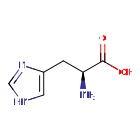
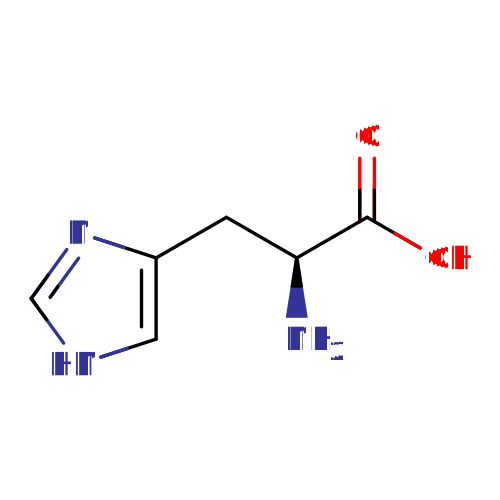
Structure for Histidine (DB00117)
- Weight
- Average: 155.1546
Monoisotopic: 155.069476547 - Chemical Formula
- C6H9N3O2
- Synonyms
- (S)-4-(2-Amino-2-carboxyethyl)imidazole
- (S)-a-Amino-1H-imidazole-4-propanoic acid
- (S)-alpha-amino-1H-Imidazole-4-propanoic acid
- (S)-alpha-Amino-1H-imidazole-4-propionic acid
- (S)-α-amino-1H-Imidazole-4-propanoic acid
- HIS
- Histidina
- Histidine
- L-(−)-histidine
- L-Histidin
- L-Histidine
- External IDs
- FEMA NO. 3694

Pharmacology
- Indication
The actions of supplemental L-histidine are entirely unclear. It may have some immunomodulatory as well as antioxidant activity. L-histidine may be indicated for use in some with rheumatoid arthritis. It is not indicated for treatment of anemia or uremia or for lowering serum cholesterol.
 Reduce drug development failure ratesBuild, train, & validate machine-learning modelswith evidence-based and structured datasets.Build, train, & validate predictive machine-learning models with structured datasets.
- Associated Therapies
- Contraindications & Blackbox Warnings
 Prevent Adverse Drug Events TodayTap into our Clinical API for life-saving information on contraindications & blackbox warnings, population restrictions, harmful risks, & more.Avoid life-threatening adverse drug events with our Clinical API
- Pharmacodynamics
Is found abundantly in hemoglobin; has been used in the treatment of rheumatoid arthritis, allergic diseases, ulcers and anemia. A deficiency can cause poor hearing.
- Mechanism of action
Since the actions of supplemental L-histidine are unclear, any postulated mechanism is entirely speculative. However, some facts are known about L-histidine and some of its metabolites, such as histamine and trans-urocanic acid, which suggest that supplemental L-histidine may one day be shown to have immunomodulatory and/or antioxidant activities. Low free histidine has been found in the serum of some rheumatoid arthritis patients. Serum concentrations of other amino acids have been found to be normal in these patients. L-histidine is an excellent chelating agent for such metals as copper, iron and zinc. Copper and iron participate in a reaction (Fenton reaction) that generates potent reactive oxygen species that could be destructive to tissues, including joints. L-histidine is the obligate precursor of histamine, which is produced via the decarboxylation of the amino acid. In experimental animals, tissue histamine levels increase as the amount of dietary L-histidine increases. It is likely that this would be the case in humans as well. Histamine is known to possess immunomodulatory and antioxidant activity. Suppressor T cells have H2 receptors, and histamine activates them. Promotion of suppressor T cell activity could be beneficial in rheumatoid arthritis. Further, histamine has been shown to down-regulate the production of reactive oxygen species in phagocytic cells, such as monocytes, by binding to the H2 receptors on these cells. Decreased reactive oxygen species production by phagocytes could play antioxidant, anti-inflammatory and immunomodulatory roles in such diseases as rheumatoid arthritis. This latter mechanism is the rationale for the use of histamine itself in several clinical trials studying histamine for the treatment of certain types of cancer and viral diseases. In these trials, down-regulation by histamine of reactive oxygen species formation appears to inhibit the suppression of natural killer (NK) cells and cytotoxic T lymphocytes, allowing these cells to be more effective in attacking cancer cells and virally infected cells.
Target Actions Organism UHistidine decarboxylase Not Available Humans UHistidine--tRNA ligase, cytoplasmic Not Available Humans USodium-coupled neutral amino acid transporter 3 Not Available Humans UHistidine ammonia-lyase Not Available Humans - Absorption
Absorbed from the small intestine via an active transport mechanism requiring the presence of sodium.
- Volume of distribution
Not Available
- Protein binding
Not Available
- Metabolism
- Not Available
- Route of elimination
Not Available
- Half-life
Not Available
- Clearance
Not Available
- Adverse Effects
 Improve decision support & research outcomesWith structured adverse effects data, including: blackbox warnings, adverse reactions, warning & precautions, & incidence rates. View sample adverse effects data in our new Data Library!Improve decision support & research outcomes with our structured adverse effects data.
- Toxicity
ORL-RAT LD50 > 15000 mg/kg, IPR-RAT LD50 > 8000 mg/kg, ORL-MUS LD50 > 15000 mg/kg, IVN-MUS LD50 > 2000 mg/kg; Mild gastrointestinal side effects.
- Pathways
- Pharmacogenomic Effects/ADRs
- Not Available
Interactions
- Drug Interactions
- This information should not be interpreted without the help of a healthcare provider. If you believe you are experiencing an interaction, contact a healthcare provider immediately. The absence of an interaction does not necessarily mean no interactions exist.Not Available
- Food Interactions
- Not Available
Products
 Drug product information from 10+ global regionsOur datasets provide approved product information including:dosage, form, labeller, route of administration, and marketing period.Access drug product information from over 10 global regions.
- Product Ingredients
Ingredient UNII CAS InChI Key Copper histidine 9078K3MO9U 13870-80-9 Not applicable Histidine monohydrochloride monohydrate X573657P6P 5934-29-2 CMXXUDSWGMGYLZ-XRIGFGBMSA-N - Over the Counter Products
Name Dosage Strength Route Labeller Marketing Start Marketing End Region Image CAREDO Treating Periodontitis Toothpastes 100g Paste, dentifrice 0.5 g/100g Dental Hong Kong Prosthodontics Medicine Limited 2018-07-03 Not applicable US 
- Mixture Products
Name Ingredients Dosage Route Labeller Marketing Start Marketing End Region Image 2.5% Travasol Amino Acid Injection With Electrolytes In 10% Dextrose Histidine (120 mg / 100 mL) + Alanine (520 mg / 100 mL) + Arginine (290 mg / 100 mL) + Dextrose, unspecified form (10 g / 100 mL) + Dipotassium phosphate (130.5 mg / 100 mL) + Glycine (260 mg / 100 mL) + Isoleucine (150 mg / 100 mL) + Leucine (182.5 mg / 100 mL) + Lysine hydrochloride (145 mg / 100 mL) + Magnesium chloride (25.5 mg / 100 mL) + Methionine (100 mg / 100 mL) + Phenylalanine (140 mg / 100 mL) + Proline (170 mg / 100 mL) + Serine (125 mg / 100 mL) + Sodium acetate (170 mg / 100 mL) + Sodium chloride (29.3 mg / 100 mL) + Threonine (105 mg / 100 mL) + Tryptophan (45 mg / 100 mL) + Tyrosine (10 mg / 100 mL) + Valine (145 mg / 100 mL) Solution Intravenous Baxter Corporation Clintec Nutrition Division 1996-12-31 2015-08-05 Canada 
2.5% Travasol Amino Acid Injection With Electrolytes In 10% Dextrose Clinimix Histidine (110 mg / 100 mL) + Alanine (520 mg / 100 mL) + Arginine (260 mg / 100 mL) + Dextrose, unspecified form (10 g / 100 mL) + Dipotassium phosphate (130.5 mg / 100 mL) + Glycine (520 mg / 100 mL) + Isoleucine (120 mg / 100 mL) + L-Leucine hydrochloride (155 mg / 100 mL) + Lysine hydrochloride (145 mg / 100 mL) + Magnesium chloride (25.5 mg / 100 mL) + Methionine (145 mg / 100 mL) + Phenylalanine hydrochloride (155 mg / 100 mL) + Proline (105 mg / 100 mL) + Sodium acetate (170 mg / 100 mL) + Sodium chloride (29.3 mg / 100 mL) + Threonine (105 mg / 100 mL) + Tryptophan (45 mg / 100 mL) + Tyrosine (10 mg / 100 mL) + Valine (115 mg / 100 mL) Solution Intravenous Baxter Corporation Clintec Nutrition Division 1993-12-31 2015-08-05 Canada 2.5% Travasol Amino Acid Injection Without Electrolytes In 10% Dextrose Quickmix Histidine (110 mg / 100 mL) + Alanine (520 mg / 100 mL) + Arginine (260 mg / 100 mL) + Dextrose, unspecified form (10 g / 100 mL) + Glycine (520 mg / 100 mL) + Isoleucine (120 mg / 100 mL) + L-Leucine hydrochloride (155 mg / 100 mL) + Lysine hydrochloride (195 mg / 100 mL) + Methionine (195 mg / 100 mL) + Phenylalanine hydrochloride (155 mg / 100 mL) + Proline (105 mg / 100 mL) + Threonine (105 mg / 100 mL) + Tryptophan (45 mg / 100 mL) + Tyrosine (10 mg / 100 mL) + Valine (115 mg / 100 mL) Solution Intravenous Baxter Corporation Clintec Nutrition Division 1995-12-31 2007-08-02 Canada 2.5%travasol Amino Acid InJ.W.eleC.W.25%dex Histidine (120 mg / 100 mL) + Alanine (520 mg / 100 mL) + Arginine (290 mg / 100 mL) + Dextrose, unspecified form (25 g / 100 mL) + Dipotassium phosphate (130.5 mg / 100 mL) + Glycine (260 mg / 100 mL) + Isoleucine (150 mg / 100 mL) + Leucine (182.5 mg / 100 mL) + Lysine hydrochloride (145 mg / 100 mL) + Magnesium chloride (25.5 mg / 100 mL) + Methionine (100 mg / 100 mL) + Phenylalanine (140 mg / 100 mL) + Proline (170 mg / 100 mL) + Serine (125 mg / 100 mL) + Sodium acetate (170 mg / 100 mL) + Sodium chloride (29.3 mg / 100 mL) + Threonine (105 mg / 100 mL) + Tryptophan (45 mg / 100 mL) + Tyrosine (10 mg / 100 mL) + Valine (145 mg / 100 mL) Liquid Intravenous Clintec Nutrition Company 1996-07-30 1998-08-13 Canada 2.75% Travas. Amino Acid InJ.W.elecw.25%dex Histidine (132 mg / 100 mL) + Alanine (570 mg / 100 mL) + Arginine (316 mg / 100 mL) + Dextrose, unspecified form (25 g / 100 mL) + Dipotassium phosphate (261 mg / 100 mL) + Glycine (283 mg / 100 mL) + Isoleucine (165 mg / 100 mL) + Leucine (201 mg / 100 mL) + Lysine hydrochloride (159.5 mg / 100 mL) + Magnesium chloride (51 mg / 100 mL) + Methionine (110 mg / 100 mL) + Phenylalanine (154 mg / 100 mL) + Proline (187 mg / 100 mL) + Serine (137.5 mg / 100 mL) + Sodium acetate (215.5 mg / 100 mL) + Sodium chloride (112 mg / 100 mL) + Threonine (115.5 mg / 100 mL) + Tryptophan (49.5 mg / 100 mL) + Tyrosine (11 mg / 100 mL) + Valine (159.5 mg / 100 mL) Liquid Intravenous Clintec Nutrition Company 1996-07-30 1998-08-13 Canada - Unapproved/Other Products
Name Ingredients Dosage Route Labeller Marketing Start Marketing End Region Image CAREDO Treating Periodontitis Toothpastes 100g Histidine (0.5 g/100g) Paste, dentifrice Dental Hong Kong Prosthodontics Medicine Limited 2018-07-03 Not applicable US Clinimix Histidine (4.08 g/2L) + Alanine (17.60 g/2L) + Arginine (9.78 g/2L) + Calcium chloride dihydrate (0.66 g/2L) + D-glucose monohydrate (300.00 g/2L) + Dipotassium phosphate (5.22 g/2L) + Glycine (8.76 g/2L) + Isoleucine (5.10 g/2L) + Leucine (6.20 g/2L) + Lysine (4.93 g/2L) + Magnesium chloride hexahydrate (1.02 g/2L) + Methionine (3.40 g/2L) + Phenylalanine (4.76 g/2L) + Proline (5.78 g/2L) + Serine (4.25 g/2L) + Sodium acetate trihydrate (5.94 g/2L) + Sodium chloride (1.54 g/2L) + Threonine (3.57 g/2L) + Tryptophan (1.53 g/2L) + Tyrosine (0.34 g/2L) + Valine (4.93 g/2L) Solution Intravenous Baxter Healthcare Corporation 2017-10-25 2019-11-30 US Clinimix Histidine (1.32 g/1L) + Alanine (5.70 g/1L) + Arginine (3.17 g/1L) + Calcium chloride dihydrate (0.33 g/1L) + D-glucose monohydrate (75.00 g/1L) + Dipotassium phosphate (2.61 g/1L) + Glycine (2.84 g/1L) + Isoleucine (1.65 g/1L) + Leucine (2.01 g/1L) + Lysine (2.00 g/1L) + Magnesium chloride hexahydrate (0.51 g/1L) + Methionine (1.10 g/1L) + Phenylalanine (1.54 g/1L) + Proline (1.87 g/1L) + Serine (1.38 g/1L) + Sodium acetate trihydrate (2.16 g/1L) + Sodium chloride (1.12 g/1L) + Threonine (1.16 g/1L) + Tryptophan (0.50 g/1L) + Tyrosine (0.11 g/1L) + Valine (1.60 g/1L) Solution Intravenous Baxter Healthcare Corporation 2017-10-25 2019-11-30 US Clinimix Histidine (1.32 g/1L) + Alanine (5.70 g/1L) + Arginine (3.17 g/1L) + Calcium chloride dihydrate (0.33 g/1L) + D-glucose monohydrate (100.00 g/1L) + Dipotassium phosphate (2.61 g/1L) + Glycine (2.84 g/1L) + Isoleucine (1.65 g/1L) + Leucine (2.01 g/1L) + Lysine (2.00 g/1L) + Magnesium chloride hexahydrate (0.51 g/1L) + Methionine (1.10 g/1L) + Phenylalanine (1.54 g/1L) + Proline (1.87 g/1L) + Serine (1.38 g/1L) + Sodium acetate trihydrate (2.16 g/1L) + Sodium chloride (1.12 g/1L) + Threonine (1.16 g/1L) + Tryptophan (0.50 g/1L) + Tyrosine (0.11 g/1L) + Valine (1.60 g/1L) Solution Intravenous Baxter Healthcare Corporation 2017-10-25 2019-11-30 US FREAMINE III %10 1000 ML(SETLI) Histidine (0.28 %) + Alanine (0.71 %) + Arginine (0.95 %) + Cysteine (0.016 %) + Glycine (1.4 %) + Isoleucine (0.69 %) + Leucine (0.91 %) + Lysine (0.73 %) + Methionine (0.53 %) + Phenylalanine (0.56 %) + Proline (1.12 %) + Serine (0.59 %) + Threonine (0.4 %) + Tryptophan (0.15 %) + Valine (0.66 %) Solution Intravenous ECZACIBAŞI-BAXTER HASTANE ÜRÜNLERİ SAN.VE TİC. A.Ş. 2013-01-29 2024-01-23 Turkey 
Categories
- Drug Categories
- Chemical TaxonomyProvided by Classyfire
- Description
- This compound belongs to the class of organic compounds known as histidine and derivatives. These are compounds containing cysteine or a derivative thereof resulting from reaction of cysteine at the amino group or the carboxy group, or from the replacement of any hydrogen of glycine by a heteroatom.
- Kingdom
- Organic compounds
- Super Class
- Organic acids and derivatives
- Class
- Carboxylic acids and derivatives
- Sub Class
- Amino acids, peptides, and analogues
- Direct Parent
- Histidine and derivatives
- Alternative Parents
- L-alpha-amino acids / Imidazolyl carboxylic acids and derivatives / Aralkylamines / Heteroaromatic compounds / Amino acids / Monocarboxylic acids and derivatives / Carboxylic acids / Azacyclic compounds / Organopnictogen compounds / Organic oxides show 3 more
- Substituents
- Alpha-amino acid / Amine / Amino acid / Aralkylamine / Aromatic heteromonocyclic compound / Azacycle / Azole / Carbonyl group / Carboxylic acid / Heteroaromatic compound show 15 more
- Molecular Framework
- Aromatic heteromonocyclic compounds
- External Descriptors
- proteinogenic amino acid, L-alpha-amino acid, histidine (CHEBI:15971) / Common amino acids (C00135)
- Affected organisms
- Humans and other mammals
Chemical Identifiers
- UNII
- 4QD397987E
- CAS number
- 71-00-1
- InChI Key
- HNDVDQJCIGZPNO-YFKPBYRVSA-N
- InChI
- InChI=1S/C6H9N3O2/c7-5(6(10)11)1-4-2-8-3-9-4/h2-3,5H,1,7H2,(H,8,9)(H,10,11)/t5-/m0/s1
- IUPAC Name
- (2S)-2-amino-3-(1H-imidazol-5-yl)propanoic acid
- SMILES
- N[C@@H](CC1=CNC=N1)C(O)=O
References
- Synthesis Reference
Kazumi Araki, Tetsuro Kuga, "Process for producing L-histidine by fermentation." U.S. Patent US4495283, issued April, 1975.
US4495283- General References
- Not Available
- External Links
- Human Metabolome Database
- HMDB0000177
- KEGG Drug
- D00032
- KEGG Compound
- C00135
- PubChem Compound
- 6274
- PubChem Substance
- 46507001
- ChemSpider
- 6038
- BindingDB
- 7953
- 5340
- ChEBI
- 57595
- ChEMBL
- CHEMBL17962
- ZINC
- ZINC000006661227
- PharmGKB
- PA449882
- Guide to Pharmacology
- GtP Drug Page
- PDBe Ligand
- HIS
- PDRhealth
- PDRhealth Drug Page
- Wikipedia
- Histidine
- MSDS
- Download (72.7 KB)
Clinical Trials
- Clinical Trials
Phase Status Purpose Conditions Count 4 Active Not Recruiting Treatment Critically Ill Patients / Starvation 1 4 Completed Treatment Diabetic Nephropathy 1 4 Not Yet Recruiting Treatment Alzheimer's Disease (AD) 1 4 Recruiting Basic Science Healthy Volunteers (HV) / Obesity / Type 2 Diabetes Mellitus 1 4 Recruiting Prevention Intestinal Obstruction / Laparotomies / Mesenteric vascular insufficiency 1
Pharmacoeconomics
- Manufacturers
- Not Available
- Packagers
- Amend
- Novo Nordisk Inc.
- Dosage Forms
Form Route Strength Solution Parenteral Tablet, coated Oral Tablet Oral Solution Intravenous 10.50 g/1000ml Injection Intravenous 0.5 g/l Injection Intravenous 0.25 g/1000ml Solution, concentrate Intravenous Injection Intravenous 0.52 g/l Injection, solution Intravenous Injection Intravenous 11.000 g/1000ml Solution Intravenous 18.5 g/L Injection Intravenous 5.5 g/1000ml Paste, dentifrice Dental 0.5 g/100g Drug delivery system Oral 0.105 g Injection, emulsion Intravenous Solution Extracorporeal Emulsion Intravenous 0.468 g Injection Intravenous 16 g/1000ml Emulsion Parenteral 20.000 g Injection Intravenous 1.6 g/l Injection Intravenous 0.37 g/l Injection, solution, concentrate Intravenous Injection, emulsion Parenteral Emulsion Intravenous 0.466 g Injection, emulsion; injection, solution Intravenous Emulsion Parenteral Emulsion Intravenous Injection, solution Injection, emulsion Intravenous 4.656 g/1000ml Injection, emulsion Intravenous 6.792 g/1000ml Solution Intraperitoneal Injection, solution Intraperitoneal Liquid Hemodialysis Solution Intraperitoneal 0.184 g/l Emulsion Intravenous 176 g/l Emulsion Intravenous 4 g Solution Extracorporeal; Intrabiliary; Intracardiac Emulsion Intravenous 3 g Solution Intravenous Tablet Oral 105.000 mg Injection Intravenous 4 g/l Injection Intravenous 0.21 g/100ml Liquid Intravenous Emulsion Intravenous 13.000 g Emulsion Parenteral 42.00 g Injection, emulsion Intravenous 14 g/1000ml Tablet Oral 67.000 mg Injection Intravenous 10.30 g/l Injection Intravenous Kit Oral Solution - Prices
Unit description Cost Unit L-histidine mhc crystals 0.32USD g DrugBank does not sell nor buy drugs. Pricing information is supplied for informational purposes only.- Patents
- Not Available
Properties
- State
- Solid
- Experimental Properties
Property Value Source melting point (°C) 287 dec °C PhysProp water solubility 4.56E+004 mg/L (at 25 °C) YALKOWSKY,SH & DANNENFELSER,RM (1992) logP -3.32 CHMELIK,J ET AL. (1991) logS -0.53 ADME Research, USCD pKa 2.76 (at 0 °C) KORTUM,G ET AL (1961) - Predicted Properties
Property Value Source Water Solubility 71.3 mg/mL ALOGPS logP -2.7 ALOGPS logP -3.6 Chemaxon logS -0.34 ALOGPS pKa (Strongest Acidic) 1.85 Chemaxon pKa (Strongest Basic) 9.44 Chemaxon Physiological Charge 0 Chemaxon Hydrogen Acceptor Count 4 Chemaxon Hydrogen Donor Count 3 Chemaxon Polar Surface Area 92 Å2 Chemaxon Rotatable Bond Count 3 Chemaxon Refractivity 38.06 m3·mol-1 Chemaxon Polarizability 14.67 Å3 Chemaxon Number of Rings 1 Chemaxon Bioavailability 1 Chemaxon Rule of Five Yes Chemaxon Ghose Filter No Chemaxon Veber's Rule No Chemaxon MDDR-like Rule No Chemaxon - Predicted ADMET Features
Property Value Probability Human Intestinal Absorption + 0.8921 Blood Brain Barrier + 0.7546 Caco-2 permeable - 0.6669 P-glycoprotein substrate Non-substrate 0.6143 P-glycoprotein inhibitor I Non-inhibitor 0.9889 P-glycoprotein inhibitor II Non-inhibitor 0.9923 Renal organic cation transporter Non-inhibitor 0.907 CYP450 2C9 substrate Non-substrate 0.8647 CYP450 2D6 substrate Non-substrate 0.8235 CYP450 3A4 substrate Non-substrate 0.8363 CYP450 1A2 substrate Non-inhibitor 0.9815 CYP450 2C9 inhibitor Non-inhibitor 0.9646 CYP450 2D6 inhibitor Non-inhibitor 0.9566 CYP450 2C19 inhibitor Non-inhibitor 0.9656 CYP450 3A4 inhibitor Non-inhibitor 0.8309 CYP450 inhibitory promiscuity Low CYP Inhibitory Promiscuity 0.9798 Ames test Non AMES toxic 0.7016 Carcinogenicity Non-carcinogens 0.9206 Biodegradation Not ready biodegradable 0.569 Rat acute toxicity 1.7719 LD50, mol/kg Not applicable hERG inhibition (predictor I) Weak inhibitor 0.9893 hERG inhibition (predictor II) Non-inhibitor 0.9551
Spectra
- Mass Spec (NIST)
- Download (7.24 KB)
- Spectra
- Chromatographic Properties
Collision Cross Sections (CCS)
Adduct CCS Value (Å2) Source type Source [M-H]- 135.5127572 predictedDarkChem Lite v0.1.0 [M-H]- 131.1519189 predictedDarkChem Standard v0.1.0 [M-H]- 135.4377572 predictedDarkChem Lite v0.1.0 [M-H]- 125.24291 predictedDeepCCS 1.0 (2019) [M+H]+ 135.9927572 predictedDarkChem Lite v0.1.0 [M+H]+ 139.9053812 predictedDarkChem Standard v0.1.0 [M+H]+ 135.9718572 predictedDarkChem Lite v0.1.0 [M+H]+ 129.07085 predictedDeepCCS 1.0 (2019) [M+Na]+ 135.7369572 predictedDarkChem Lite v0.1.0 [M+Na]+ 143.5574346 predictedDarkChem Standard v0.1.0 [M+Na]+ 135.5931572 predictedDarkChem Lite v0.1.0 [M+Na]+ 138.31227 predictedDeepCCS 1.0 (2019)
Targets

- Kind
- Protein
- Organism
- Humans
- Pharmacological action
- Unknown
- General Function
- Pyridoxal phosphate binding
- Specific Function
- Catalyzes the biosynthesis of histamine from histidine.
- Gene Name
- HDC
- Uniprot ID
- P19113
- Uniprot Name
- Histidine decarboxylase
- Molecular Weight
- 74139.825 Da
References
- Landete JM, Pardo I, Ferrer S: Histamine, histidine, and growth-phase mediated regulation of the histidine decarboxylase gene in lactic acid bacteria isolated from wine. FEMS Microbiol Lett. 2006 Jul;260(1):84-90. [Article]
- Fernandez M, del Rio B, Linares DM, Martin MC, Alvarez MA: Real-time polymerase chain reaction for quantitative detection of histamine-producing bacteria: use in cheese production. J Dairy Sci. 2006 Oct;89(10):3763-9. [Article]
- Nitta Y, Kikuzaki H, Ueno H: Food components inhibiting recombinant human histidine decarboxylase activity. J Agric Food Chem. 2007 Jan 24;55(2):299-304. [Article]
- Kitamura Y, Das AK, Murata Y, Maeyama K, Dev S, Wakayama Y, Kalubi B, Takeda N, Fukui H: Dexamethasone suppresses histamine synthesis by repressing both transcription and activity of HDC in allergic rats. Allergol Int. 2006 Sep;55(3):279-86. [Article]
- Castellani ML, Kempuraj D, Frydas S, Theoharides TC, Simeonidou I, Conti P, Vecchiet J: Inhibitory effect of quercetin on tryptase and MCP-1 chemokine release, and histidine decarboxylase mRNA transcription by human mast cell-1 cell line. Neuroimmunomodulation. 2006;13(3):179-86. Epub 2006 Dec 21. [Article]
- Kind
- Protein
- Organism
- Humans
- Pharmacological action
- Unknown
- General Function
- Histidine-trna ligase activity
- Specific Function
- Not Available
- Gene Name
- HARS
- Uniprot ID
- P12081
- Uniprot Name
- Histidine--tRNA ligase, cytoplasmic
- Molecular Weight
- 57409.97 Da
References
- Nagatoyo Y, Iwaki J, Suzuki S, Kuno A, Hasegawa T: Molecular recognition of histidine tRNA by histidyl-tRNA synthetase from hyperthermophilic archaeon, Aeropyrum pernix K1. Nucleic Acids Symp Ser (Oxf). 2005;(49):307-8. [Article]
- Rosen AE, Brooks BS, Guth E, Francklyn CS, Musier-Forsyth K: Evolutionary conservation of a functionally important backbone phosphate group critical for aminoacylation of histidine tRNAs. RNA. 2006 Jul;12(7):1315-22. Epub 2006 Jun 1. [Article]
- Kind
- Protein
- Organism
- Humans
- Pharmacological action
- Unknown
- General Function
- Symporter activity
- Specific Function
- Sodium-dependent amino acid/proton antiporter. Mediates electrogenic cotransport of glutamine and sodium ions in exchange for protons. Also recognizes histidine, asparagine and alanine. May mediate...
- Gene Name
- SLC38A3
- Uniprot ID
- Q99624
- Uniprot Name
- Sodium-coupled neutral amino acid transporter 3
- Molecular Weight
- 55772.405 Da
References
- Overington JP, Al-Lazikani B, Hopkins AL: How many drug targets are there? Nat Rev Drug Discov. 2006 Dec;5(12):993-6. [Article]
- Imming P, Sinning C, Meyer A: Drugs, their targets and the nature and number of drug targets. Nat Rev Drug Discov. 2006 Oct;5(10):821-34. [Article]
- Eppig JJ, Pendola FL, Wigglesworth K, Pendola JK: Mouse oocytes regulate metabolic cooperativity between granulosa cells and oocytes: amino acid transport. Biol Reprod. 2005 Aug;73(2):351-7. Epub 2005 Apr 20. [Article]
- Kind
- Protein
- Organism
- Humans
- Pharmacological action
- Unknown
- General Function
- Histidine ammonia-lyase activity
- Specific Function
- Not Available
- Gene Name
- HAL
- Uniprot ID
- P42357
- Uniprot Name
- Histidine ammonia-lyase
- Molecular Weight
- 72696.9 Da
References
- Viergutz S, Retey J: Kinetic analysis of the reactions catalyzed by histidine and phenylalanine ammonia lyases. Chem Biodivers. 2004 Feb;1(2):296-302. [Article]
- Lambrecht NW, Yakubov I, Sachs G: Fasting-induced changes in ECL cell gene expression. Physiol Genomics. 2007 Oct 22;31(2):183-92. Epub 2007 May 29. [Article]
- Watts KT, Mijts BN, Lee PC, Manning AJ, Schmidt-Dannert C: Discovery of a substrate selectivity switch in tyrosine ammonia-lyase, a member of the aromatic amino acid lyase family. Chem Biol. 2006 Dec;13(12):1317-26. [Article]
- Katona A, Tosa MI, Paizs C, Retey J: Inhibition of histidine ammonia lyase by heteroaryl-alanines and acrylates. Chem Biodivers. 2006 May;3(5):502-8. [Article]
Transporters
- Kind
- Protein
- Organism
- Humans
- Pharmacological action
- Unknown
- Actions
- SubstrateInhibitor
- General Function
- Transporter activity
- Specific Function
- Sodium-independent transporter that mediates the update of aromatic acid. Can function as a net efflux pathway for aromatic amino acids in the basosolateral epithelial cells (By similarity).
- Gene Name
- SLC16A10
- Uniprot ID
- Q8TF71
- Uniprot Name
- Monocarboxylate transporter 10
- Molecular Weight
- 55492.07 Da
References
- Kim DK, Kanai Y, Chairoungdua A, Matsuo H, Cha SH, Endou H: Expression cloning of a Na+-independent aromatic amino acid transporter with structural similarity to H+/monocarboxylate transporters. J Biol Chem. 2001 May 18;276(20):17221-8. Epub 2001 Feb 20. [Article]
- Kim DK, Kanai Y, Matsuo H, Kim JY, Chairoungdua A, Kobayashi Y, Enomoto A, Cha SH, Goya T, Endou H: The human T-type amino acid transporter-1: characterization, gene organization, and chromosomal location. Genomics. 2002 Jan;79(1):95-103. [Article]


Drug created at June 13, 2005 13:24 / Updated at April 09, 2024 18:11