Identification
- Summary
Perphenazine is a phenothiazine used to treat schizophrenia as well as nausea and vomiting.
- Generic Name
- Perphenazine
- DrugBank Accession Number
- DB00850
- Background
An antipsychotic phenothiazine derivative with actions and uses similar to those of chlorpromazine.
- Type
- Small Molecule
- Groups
- Approved
- Structure

Structure for Perphenazine (DB00850)
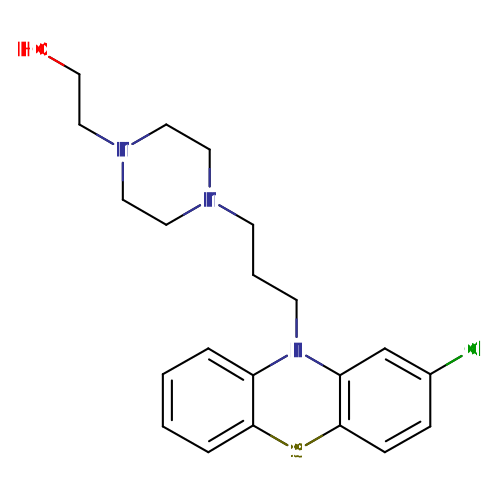
- Weight
- Average: 403.969
Monoisotopic: 403.148510866 - Chemical Formula
- C21H26ClN3OS
- Synonyms
- 2-(4-[3-(2-chloro-10H-phenothiazin-10-yl)propyl]-1-piperazinyl)ethanol
- 2-chloro-10-(3-(4-(2-hydroxyethyl)piperazin-1-yl)propyl)phenothiazine
- 4-[3-(2-chloro-10H-phenothiazin-10-yl)propyl]-1-piperazineethanol
- 4-[3-(2-chlorophenothiazin-10-yl)propyl]-1-piperazineethanol
- Chlorpiprazine
- Etaperazin
- Etaperazine
- Ethaperazine
- Perfenazina
- Perfenazine
- Perphenazin
- Perphénazine
- Perphenazine
- Perphenazinum
- γ-(4-(β-hydroxyethyl)piperazin-1-yl)propyl-2-chlorophenothiazine
- External IDs
- SC 7105
- Sch 3940

Pharmacology
- Indication
For use in the management of the manifestations of psychotic disorders and for the control of severe nausea and vomiting in adults.
 Reduce drug development failure ratesBuild, train, & validate machine-learning modelswith evidence-based and structured datasets.Build, train, & validate predictive machine-learning models with structured datasets.
- Associated Conditions
Indication Type Indication Combined Product Details Approval Level Age Group Patient Characteristics Dose Form Used in combination to treat Anxiety Combination Product in combination with: Amitriptyline (DB00321) •••••••••••• Used in combination to treat Depression Combination Product in combination with: Amitriptyline (DB00321) •••••••••••• Management of Schizophrenia •••••••••••• Used in combination to treat Moderate agitation Combination Product in combination with: Amitriptyline (DB00321) •••••••••••• Used in combination to treat Moderate anxiety Combination Product in combination with: Amitriptyline (DB00321) •••••••••••• - Contraindications & Blackbox Warnings
 Prevent Adverse Drug Events TodayTap into our Clinical API for life-saving information on contraindications & blackbox warnings, population restrictions, harmful risks, & more.Avoid life-threatening adverse drug events with our Clinical API
- Pharmacodynamics
Perphenazine is a piperazinyl phenothiazine, acts on the central nervous system, and has a greater behavioral potency than other phenothiazine derivatives whose side chains do not contain a piperazine moiety. It is a member of a class of drugs called phenothiazines, which are dopamine D1/D2 receptor antagonists. Perphenazine is 10 to 15 times as potent as chlorpromazine; that means perphenazine is a highly potent antipsychotic. In equivalent doses it has approximately the same frequency and severity of early and late extrapypramidal side-effects compared to Haloperidol.
- Mechanism of action
Binds to the dopamine D1 and dopamine D2 receptors and inhibits their activity. The mechanism of the anti-emetic effect is due predominantly to blockage of the dopamine D2 neurotransmitter receptors in the chemoreceptor trigger zone and vomiting centre. Perphenazine also binds the alpha andrenergic receptor. This receptor's action is mediated by association with G proteins that activate a phosphatidylinositol-calcium second messenger system.
Target Actions Organism ADopamine D2 receptor antagonistHumans ADopamine D1 receptor antagonistHumans UCalmodulin inhibitorHumans - Absorption
Absolute bioavailability is 40% following oral administration.
- Volume of distribution
Not Available
- Protein binding
Not Available
- Metabolism
Hepatic.
Hover over products below to view reaction partners
- Route of elimination
Perphenazine is extensively metabolized in the liver to a number of metabolites by sulfoxidation, hydroxylation, dealkylation, and glucuronidation.
- Half-life
8-12 hours, but ranges up to 20 hours.
- Clearance
Not Available
- Adverse Effects
 Improve decision support & research outcomesWith structured adverse effects data, including: blackbox warnings, adverse reactions, warning & precautions, & incidence rates. View sample adverse effects data in our new Data Library!Improve decision support & research outcomes with our structured adverse effects data.
- Toxicity
Symptoms of overdose include stupor or coma, and children may have convulsive seizures. Signs of arousal may not occur for 48 hours. Oral LD50=318 mg/kg (rat); IPR LD50=64 mg/kg (mouse)
- Pathways
- Not Available
- Pharmacogenomic Effects/ADRs
Interacting Gene/Enzyme Allele name Genotype(s) Defining Change(s) Type(s) Description Details Cytochrome P450 2D6 CYP2D6*3 Not Available C allele ADR Inferred Poor drug metabolizer, more side effects. Details Cytochrome P450 2D6 CYP2D6*4 Not Available C allele ADR Inferred Poor drug metabolizer, more side effects. Details Cytochrome P450 2D6 CYP2D6*5 Not Available Whole-gene deletion ADR Inferred Poor drug metabolizer, more side effects. Details Cytochrome P450 2D6 CYP2D6*6 Not Available 1707delT ADR Inferred Poor drug metabolizer, more side effects. Details Cytochrome P450 2D6 CYP2D6*7 Not Available 2935A>C ADR Inferred Poor drug metabolizer, more side effects. Details Cytochrome P450 2D6 CYP2D6*8 Not Available 1758G>T ADR Inferred Poor drug metabolizer, more side effects. Details Cytochrome P450 2D6 CYP2D6*11 Not Available 883G>C ADR Inferred Poor drug metabolizer, more side effects. Details Cytochrome P450 2D6 CYP2D6*12 Not Available 124G>A ADR Inferred Poor drug metabolizer, more side effects. Details Cytochrome P450 2D6 CYP2D6*13 Not Available CYP2D7/2D6 hybrid gene structure ADR Inferred Poor drug metabolizer, more side effects. Details Cytochrome P450 2D6 CYP2D6*14A Not Available 1758G>A ADR Inferred Poor drug metabolizer, more side effects. Details Cytochrome P450 2D6 CYP2D6*15 Not Available 137insT, 137_138insT ADR Inferred Poor drug metabolizer, more side effects. Details Cytochrome P450 2D6 CYP2D6*19 Not Available 2539_2542delAACT ADR Inferred Poor drug metabolizer, more side effects. Details Cytochrome P450 2D6 CYP2D6*20 Not Available 1973_1974insG ADR Inferred Poor drug metabolizer, more side effects. Details Cytochrome P450 2D6 CYP2D6*21 Not Available 2573insC ADR Inferred Poor drug metabolizer, more side effects. Details Cytochrome P450 2D6 CYP2D6*31 Not Available -1770G>A / -1584C>G … show all ADR Inferred Poor drug metabolizer, more side effects. Details Cytochrome P450 2D6 CYP2D6*36 Not Available 100C>T / -1426C>T … show all ADR Inferred Poor drug metabolizer, more side effects. Details Cytochrome P450 2D6 CYP2D6*38 Not Available 2587_2590delGACT ADR Inferred Poor drug metabolizer, more side effects. Details Cytochrome P450 2D6 CYP2D6*40 Not Available 1863_1864ins(TTT CGC CCC)2 ADR Inferred Poor drug metabolizer, more side effects. Details Cytochrome P450 2D6 CYP2D6*42 Not Available 3259_3260insGT ADR Inferred Poor drug metabolizer, more side effects. Details Cytochrome P450 2D6 CYP2D6*44 Not Available 2950G>C ADR Inferred Poor drug metabolizer, more side effects. Details Cytochrome P450 2D6 CYP2D6*47 Not Available 100C>T / -1426C>T … show all ADR Inferred Poor drug metabolizer, more side effects. Details Cytochrome P450 2D6 CYP2D6*51 Not Available -1584C>G / -1235A>G … show all ADR Inferred Poor drug metabolizer, more side effects. Details Cytochrome P450 2D6 CYP2D6*56 Not Available 3201C>T ADR Inferred Poor drug metabolizer, more side effects. Details Cytochrome P450 2D6 CYP2D6*57 Not Available 100C>T / 310G>T … show all ADR Inferred Poor drug metabolizer, more side effects. Details Cytochrome P450 2D6 CYP2D6*62 Not Available 4044C>T ADR Inferred Poor drug metabolizer, more side effects. Details Cytochrome P450 2D6 CYP2D6*68A Not Available -1426C>T / -1235A>G … show all ADR Inferred Poor drug metabolizer, more side effects. Details Cytochrome P450 2D6 CYP2D6*68B Not Available Similar but not identical switch region compared to CYP2D6*68A. Found in tandem arrangement with CYP2D6*4. ADR Inferred Poor drug metabolizer, more side effects. Details Cytochrome P450 2D6 CYP2D6*69 Not Available 2988G>A / -1426C>T … show all ADR Inferred Poor drug metabolizer, more side effects. Details Cytochrome P450 2D6 CYP2D6*92 Not Available 1995delC ADR Inferred Poor drug metabolizer, more side effects. Details Cytochrome P450 2D6 CYP2D6*100 Not Available -1426C>T / -1235A>G … show all ADR Inferred Poor drug metabolizer, more side effects. Details Cytochrome P450 2D6 CYP2D6*101 Not Available -1426C>T / -1235A>G … show all ADR Inferred Poor drug metabolizer, more side effects. Details
Interactions
- Drug Interactions
- This information should not be interpreted without the help of a healthcare provider. If you believe you are experiencing an interaction, contact a healthcare provider immediately. The absence of an interaction does not necessarily mean no interactions exist.
Drug Interaction Integrate drug-drug
interactions in your software1,2-Benzodiazepine The risk or severity of CNS depression can be increased when Perphenazine is combined with 1,2-Benzodiazepine. Abametapir The serum concentration of Perphenazine can be increased when it is combined with Abametapir. Abatacept The metabolism of Perphenazine can be increased when combined with Abatacept. Abiraterone The serum concentration of Perphenazine can be increased when it is combined with Abiraterone. Acebutolol The serum concentration of Acebutolol can be increased when it is combined with Perphenazine. - Food Interactions
- Avoid alcohol. Consuming alcohol may increase hypotension. Perphenazine may increase the effects of alcohol.
Products
 Drug product information from 10+ global regionsOur datasets provide approved product information including:dosage, form, labeller, route of administration, and marketing period.Access drug product information from over 10 global regions.
- Product Images
- International/Other Brands
- Decentan (Merck) / Emesinal / Fentazin (Mercury) / Perphenan (Taro) / PZC (Tanabe Mitsubishi Pharma) / Trilafon (Schering-Plough) / Trilifan
- Brand Name Prescription Products
Name Dosage Strength Route Labeller Marketing Start Marketing End Region Image Perphenazine Tablet 4 mg Oral Aa Pharma Inc 1976-12-31 Not applicable Canada 
Perphenazine Tablet, sugar coated 16 mg/1 Oral Vintage Pharmaceuticals, LLC 2007-09-13 2007-09-13 US 
Perphenazine Tablet, sugar coated 2 mg/1 Oral Vintage Pharmaceuticals, LLC 2007-09-13 2007-09-13 US Perphenazine Tablet 8 mg Oral Aa Pharma Inc 1976-12-31 Not applicable Canada Perphenazine Tablet, sugar coated 8 mg/1 Oral Vintage Pharmaceuticals, LLC 2007-09-13 2007-09-13 US - Generic Prescription Products
Name Dosage Strength Route Labeller Marketing Start Marketing End Region Image Perphenazine Tablet 2 mg/1 Oral Zydus Pharmaceuticals (USA) Inc. 2020-07-16 Not applicable US Perphenazine Tablet, film coated 4 mg/1 Oral Sandoz Inc 1988-12-08 2021-12-31 US 
Perphenazine Tablet, film coated 8 mg/1 Oral bryant ranch prepack 1998-12-31 Not applicable US Perphenazine Tablet, film coated 16 mg/1 Oral American Health Packaging 2014-10-08 2019-05-31 US 
Perphenazine Tablet, film coated 2 mg/1 Oral Wilshire Pharmaceuticals, Inc. 2018-02-06 Not applicable US - Mixture Products
Name Ingredients Dosage Route Labeller Marketing Start Marketing End Region Image Apo Peram Tab 2-25 Perphenazine (2 mg) + Amitriptyline hydrochloride (25 mg) Tablet Oral Apotex Corporation 1977-12-31 2011-08-05 Canada Apo Peram Tab 3-15 Perphenazine (3 mg) + Amitriptyline hydrochloride (15 mg) Tablet Oral Apotex Corporation 1977-12-31 2011-08-05 Canada Elavil Plus Tab Perphenazine (2 mg) + Amitriptyline hydrochloride (25 mg) Tablet Oral Triton Pharma Inc 1973-12-31 2003-03-08 Canada Etrafon 2 10 Perphenazine (2 mg) + Amitriptyline hydrochloride (10 mg) Tablet Oral Schering Plough 1970-12-31 2006-08-01 Canada Etrafon A Tab Perphenazine (4 mg) + Amitriptyline hydrochloride (10 mg) Tablet Oral Schering Plough 1963-12-31 2007-08-03 Canada


Categories
- ATC Codes
- N05AB03 — Perphenazine
- Drug Categories
- Antipsychotic Agents
- Antipsychotic Agents (First Generation [Typical])
- Central Nervous System Agents
- Central Nervous System Depressants
- Cytochrome P-450 CYP1A2 Substrates
- Cytochrome P-450 CYP2C18 Substrates
- Cytochrome P-450 CYP2C19 Substrates
- Cytochrome P-450 CYP2C8 Substrates
- Cytochrome P-450 CYP2C9 Substrates
- Cytochrome P-450 CYP2D6 Inhibitors
- Cytochrome P-450 CYP2D6 Inhibitors (strength unknown)
- Cytochrome P-450 CYP2D6 Substrates
- Cytochrome P-450 CYP3A Substrates
- Cytochrome P-450 CYP3A4 Substrates
- Cytochrome P-450 Enzyme Inhibitors
- Cytochrome P-450 Substrates
- Dopamine Agents
- Dopamine Antagonists
- Dopamine D2 Receptor Antagonists
- Drugs causing inadvertant photosensitivity
- Heterocyclic Compounds, Fused-Ring
- Nervous System
- Neurotoxic agents
- Neurotransmitter Agents
- Phenothiazines
- Phenothiazines With Piperazine Structure
- Photosensitizing Agents
- Psycholeptics
- Psychotropic Drugs
- Sulfur Compounds
- Tranquilizing Agents
- Chemical TaxonomyProvided by Classyfire
- Description
- This compound belongs to the class of organic compounds known as phenothiazines. These are polycyclic aromatic compounds containing a phenothiazine moiety, which is a linear tricyclic system that consists of a two benzene rings joined by a para-thiazine ring.
- Kingdom
- Organic compounds
- Super Class
- Organoheterocyclic compounds
- Class
- Benzothiazines
- Sub Class
- Phenothiazines
- Direct Parent
- Phenothiazines
- Alternative Parents
- Alkyldiarylamines / Diarylthioethers / N-alkylpiperazines / Benzenoids / Aryl chlorides / 1,4-thiazines / Trialkylamines / 1,2-aminoalcohols / Azacyclic compounds / Primary alcohols show 3 more
- Substituents
- 1,2-aminoalcohol / 1,4-diazinane / Alcohol / Alkanolamine / Alkyldiarylamine / Amine / Aromatic heteropolycyclic compound / Aryl chloride / Aryl halide / Aryl thioether show 20 more
- Molecular Framework
- Aromatic heteropolycyclic compounds
- External Descriptors
- phenothiazines, N-(2-hydroxyethyl)piperazine, organochlorine compound, N-alkylpiperazine (CHEBI:8028)
- Affected organisms
- Humans and other mammals
Chemical Identifiers
- UNII
- FTA7XXY4EZ
- CAS number
- 58-39-9
- InChI Key
- RGCVKNLCSQQDEP-UHFFFAOYSA-N
- InChI
- InChI=1S/C21H26ClN3OS/c22-17-6-7-21-19(16-17)25(18-4-1-2-5-20(18)27-21)9-3-8-23-10-12-24(13-11-23)14-15-26/h1-2,4-7,16,26H,3,8-15H2
- IUPAC Name
- 2-{4-[3-(2-chloro-10H-phenothiazin-10-yl)propyl]piperazin-1-yl}ethan-1-ol
- SMILES
- OCCN1CCN(CCCN2C3=CC=CC=C3SC3=C2C=C(Cl)C=C3)CC1
References
- Synthesis Reference
- US2860138
- General References
- Not Available
- External Links
- Human Metabolome Database
- HMDB0014988
- KEGG Drug
- D00503
- KEGG Compound
- C07427
- PubChem Compound
- 4748
- PubChem Substance
- 46507058
- ChemSpider
- 4586
- BindingDB
- 50130273
- 8076
- ChEBI
- 8028
- ChEMBL
- CHEMBL567
- ZINC
- ZINC000019228902
- Therapeutic Targets Database
- DAP000100
- PharmGKB
- PA450882
- Guide to Pharmacology
- GtP Drug Page
- RxList
- RxList Drug Page
- Drugs.com
- Drugs.com Drug Page
- PDRhealth
- PDRhealth Drug Page
- Wikipedia
- Perphenazine
- FDA label
- Download (360 KB)
- MSDS
- Download (74.9 KB)
Clinical Trials
- Clinical Trials
Phase Status Purpose Conditions Count 4 Completed Prevention Schizophrenia 1 4 Completed Treatment Psychosis 1 4 Completed Treatment Schizoaffective Disorders / Schizophrenia 1 4 Completed Treatment Schizoaffective Disorders / Schizophrenia / Schizophrenia and Disorders With Psychotic Features 1 4 Completed Treatment Schizophrenia 2
Pharmacoeconomics
- Manufacturers
- Pharmaceutical assoc inc
- Schering corp sub schering plough corp
- Ivax pharmaceuticals inc
- Sandoz inc
- Vintage pharmaceuticals inc
- Packagers
- Amerisource Health Services Corp.
- Comprehensive Consultant Services Inc.
- Coupler Enterprises Inc.
- Direct Dispensing Inc.
- Dispensing Solutions
- Goldline Laboratories Inc.
- Heartland Repack Services LLC
- Ivax Pharmaceuticals
- Kaiser Foundation Hospital
- Lake Erie Medical and Surgical Supply
- Major Pharmaceuticals
- Medvantx Inc.
- Murfreesboro Pharmaceutical Nursing Supply
- Mylan
- PD-Rx Pharmaceuticals Inc.
- Pharmacy Service Center
- Physicians Total Care Inc.
- Prepak Systems Inc.
- Prescript Pharmaceuticals
- Qualitest
- Rebel Distributors Corp.
- Remedy Repack
- Richmond Pharmacy
- Sandhills Packaging Inc.
- Sandoz
- Southwood Pharmaceuticals
- Tya Pharmaceuticals
- Vangard Labs Inc.
- Vintage Pharmaceuticals Inc.
- Warrick Pharmaceuticals Corp.
- Dosage Forms
Form Route Strength Tablet, film coated Oral 4 mg Tablet, film coated Oral 8 mg Solution Parenteral 5.000 mg Tablet Oral 4.000 mg Tablet Oral 16 mg/1 Tablet Oral 16 mg Tablet Oral 2 mg/1 Tablet Oral 2 mg Tablet Oral 4 mg/1 Tablet Oral 4 mg Tablet Oral 8 mg Tablet Oral 8 mg/1 Tablet, film coated Oral 16 mg/1 Tablet, film coated Oral 2 mg/1 Tablet, film coated Oral 4 mg/1 Tablet, film coated Oral 8 mg/1 Tablet, sugar coated Oral 16 mg/1 Tablet, sugar coated Oral 2 mg/1 Tablet, sugar coated Oral 4 mg/1 Tablet, sugar coated Oral 8 mg/1 Tablet Oral Tablet, film coated Oral Tablet Oral 16 mg / tab Tablet Oral 2 mg / tab Tablet Oral 4 mg / tab Tablet Oral 8 mg / tab Tablet Oral Liquid Oral 3.2 mg / mL Injection, solution Tablet, coated Oral Liquid Oral 16 mg / 5 mL Solution Intramuscular; Intravenous 5 mg / mL Syrup Oral 2 mg / 5 mL Tablet, coated Oral 16 mg Tablet, sugar coated Oral 8 mg Tablet, sugar coated Oral 2 mg Tablet, sugar coated Oral 4 mg Tablet, coated Oral Tablet, coated Oral 8 mg Tablet, coated Oral 2 mg Tablet, coated Oral 4 mg - Prices
Unit description Cost Unit Perphenazine 16 mg tablet 1.73USD tablet Perphenazine 8 mg tablet 1.28USD tablet Perphenazine 4 mg tablet 1.05USD tablet Perphenazine 2 mg tablet 0.77USD tablet Apo-Perphenazine 16 mg Tablet 0.13USD tablet Apo-Perphenazine 8 mg Tablet 0.09USD tablet Apo-Perphenazine 4 mg Tablet 0.08USD tablet Apo-Perphenazine 2 mg Tablet 0.07USD tablet DrugBank does not sell nor buy drugs. Pricing information is supplied for informational purposes only.- Patents
- Not Available
Properties
- State
- Solid
- Experimental Properties
Property Value Source melting point (°C) 97 °C PhysProp boiling point (°C) 278-281 °C at 1.00E+00 mm Hg PhysProp water solubility 28.3 mg/L (at 24 °C) YALKOWSKY,SH & DANNENFELSER,RM (1992) logP 4.20 HANSCH,C ET AL. (1995) logS -4.16 ADME Research, USCD pKa 7.94 SANGSTER (1994) - Predicted Properties
Property Value Source Water Solubility 0.0237 mg/mL ALOGPS logP 4.15 ALOGPS logP 3.69 Chemaxon logS -4.2 ALOGPS pKa (Strongest Acidic) 15.59 Chemaxon pKa (Strongest Basic) 7.81 Chemaxon Physiological Charge 1 Chemaxon Hydrogen Acceptor Count 4 Chemaxon Hydrogen Donor Count 1 Chemaxon Polar Surface Area 29.95 Å2 Chemaxon Rotatable Bond Count 6 Chemaxon Refractivity 116.1 m3·mol-1 Chemaxon Polarizability 44.77 Å3 Chemaxon Number of Rings 4 Chemaxon Bioavailability 1 Chemaxon Rule of Five Yes Chemaxon Ghose Filter Yes Chemaxon Veber's Rule Yes Chemaxon MDDR-like Rule Yes Chemaxon - Predicted ADMET Features
Property Value Probability Human Intestinal Absorption + 0.9476 Blood Brain Barrier + 0.9683 Caco-2 permeable - 0.5126 P-glycoprotein substrate Substrate 0.7862 P-glycoprotein inhibitor I Inhibitor 0.8563 P-glycoprotein inhibitor II Inhibitor 0.7689 Renal organic cation transporter Inhibitor 0.5807 CYP450 2C9 substrate Non-substrate 0.7442 CYP450 2D6 substrate Substrate 0.8919 CYP450 3A4 substrate Non-substrate 0.6813 CYP450 1A2 substrate Inhibitor 0.9107 CYP450 2C9 inhibitor Non-inhibitor 0.9071 CYP450 2D6 inhibitor Inhibitor 0.9278 CYP450 2C19 inhibitor Non-inhibitor 0.9026 CYP450 3A4 inhibitor Non-inhibitor 0.9089 CYP450 inhibitory promiscuity High CYP Inhibitory Promiscuity 0.7548 Ames test Non AMES toxic 0.8093 Carcinogenicity Non-carcinogens 0.8836 Biodegradation Not ready biodegradable 1.0 Rat acute toxicity 3.0725 LD50, mol/kg Not applicable hERG inhibition (predictor I) Weak inhibitor 0.7745 hERG inhibition (predictor II) Inhibitor 0.7066
Spectra
- Mass Spec (NIST)
- Download (9.95 KB)
- Spectra
- Chromatographic Properties
Collision Cross Sections (CCS)
Adduct CCS Value (Å2) Source type Source [M-H]- 203.9831509 predictedDarkChem Lite v0.1.0 [M-H]- 189.3677 predictedDeepCCS 1.0 (2019) [M+H]+ 203.9716509 predictedDarkChem Lite v0.1.0 [M+H]+ 191.72572 predictedDeepCCS 1.0 (2019) [M+Na]+ 203.5185509 predictedDarkChem Lite v0.1.0 [M+Na]+ 198.88031 predictedDeepCCS 1.0 (2019)
Targets

- Kind
- Protein
- Organism
- Humans
- Pharmacological action
- Yes
- Actions
- Antagonist
- General Function
- Potassium channel regulator activity
- Specific Function
- Dopamine receptor whose activity is mediated by G proteins which inhibit adenylyl cyclase.
- Gene Name
- DRD2
- Uniprot ID
- P14416
- Uniprot Name
- D(2) dopamine receptor
- Molecular Weight
- 50618.91 Da
References
- Seeman P: Atypical antipsychotics: mechanism of action. Can J Psychiatry. 2002 Feb;47(1):27-38. [Article]
- Hoyberg OJ, Fensbo C, Remvig J, Lingjaerde O, Sloth-Nielsen M, Salvesen I: Risperidone versus perphenazine in the treatment of chronic schizophrenic patients with acute exacerbations. Acta Psychiatr Scand. 1993 Dec;88(6):395-402. [Article]
- Qin ZH, Weiss B: Dopamine receptor blockade increases dopamine D2 receptor and glutamic acid decarboxylase mRNAs in mouse substantia nigra. Eur J Pharmacol. 1994 Sep 15;269(1):25-33. [Article]
- Chen X, Ji ZL, Chen YZ: TTD: Therapeutic Target Database. Nucleic Acids Res. 2002 Jan 1;30(1):412-5. [Article]
- Talvik M, Nordstrom AL, Larsen NE, Jucaite A, Cervenka S, Halldin C, Farde L: A cross-validation study on the relationship between central D2 receptor occupancy and serum perphenazine concentration. Psychopharmacology (Berl). 2004 Sep;175(2):148-53. Epub 2004 Mar 6. [Article]
- Farde L, Wiesel FA, Nordstrom AL, Sedvall G: D1- and D2-dopamine receptor occupancy during treatment with conventional and atypical neuroleptics. Psychopharmacology (Berl). 1989;99 Suppl:S28-31. [Article]
- Kind
- Protein
- Organism
- Humans
- Pharmacological action
- Yes
- Actions
- Antagonist
- General Function
- G-protein coupled amine receptor activity
- Specific Function
- Dopamine receptor whose activity is mediated by G proteins which activate adenylyl cyclase.
- Gene Name
- DRD1
- Uniprot ID
- P21728
- Uniprot Name
- D(1A) dopamine receptor
- Molecular Weight
- 49292.765 Da
References
- Dolzan V, Plesnicar BK, Serretti A, Mandelli L, Zalar B, Koprivsek J, Breskvar K: Polymorphisms in dopamine receptor DRD1 and DRD2 genes and psychopathological and extrapyramidal symptoms in patients on long-term antipsychotic treatment. Am J Med Genet B Neuropsychiatr Genet. 2007 Sep 5;144B(6):809-15. [Article]
- Farde L, Wiesel FA, Nordstrom AL, Sedvall G: D1- and D2-dopamine receptor occupancy during treatment with conventional and atypical neuroleptics. Psychopharmacology (Berl). 1989;99 Suppl:S28-31. [Article]
- Kind
- Protein
- Organism
- Humans
- Pharmacological action
- Unknown
- Actions
- Inhibitor
- General Function
- Titin binding
- Specific Function
- Calmodulin mediates the control of a large number of enzymes, ion channels, aquaporins and other proteins by Ca(2+). Among the enzymes to be stimulated by the calmodulin-Ca(2+) complex are a number...
- Gene Name
- CALM1
- Uniprot ID
- P0DP23
- Uniprot Name
- Calmodulin
- Molecular Weight
- 16837.47 Da
References
- Mongin AA, Cai Z, Kimelberg HK: Volume-dependent taurine release from cultured astrocytes requires permissive [Ca(2+)](i) and calmodulin. Am J Physiol. 1999 Oct;277(4 Pt 1):C823-32. [Article]
- Kawai M, Nakashima A, Ueno M, Ushimaru T, Aiba K, Doi H, Uritani M: Fission yeast tor1 functions in response to various stresses including nitrogen starvation, high osmolarity, and high temperature. Curr Genet. 2001 May;39(3):166-74. [Article]
- Edlind T, Smith L, Henry K, Katiyar S, Nickels J: Antifungal activity in Saccharomyces cerevisiae is modulated by calcium signalling. Mol Microbiol. 2002 Oct;46(1):257-68. [Article]
- Natochin YuV, Shakhmatova EI, Bakos P: Water and sodium transport: effects of calcium channel blocker and calmodulin antagonists on the apical and basolateral membranes of amphibian epithelia. Gen Physiol Biophys. 1987 Feb;6(1):35-44. [Article]
Enzymes
- Kind
- Protein
- Organism
- Humans
- Pharmacological action
- Unknown
- Actions
- Substrate
- Curator comments
- Data supporting this enzyme action are limited to in vitro studies.
- General Function
- Oxidoreductase activity, acting on paired donors, with incorporation or reduction of molecular oxygen, reduced flavin or flavoprotein as one donor, and incorporation of one atom of oxygen
- Specific Function
- Cytochromes P450 are a group of heme-thiolate monooxygenases. In liver microsomes, this enzyme is involved in an NADPH-dependent electron transport pathway. It oxidizes a variety of structurally un...
- Gene Name
- CYP1A2
- Uniprot ID
- P05177
- Uniprot Name
- Cytochrome P450 1A2
- Molecular Weight
- 58293.76 Da
References
- Olesen OV, Linnet K: Identification of the human cytochrome P450 isoforms mediating in vitro N-dealkylation of perphenazine. Br J Clin Pharmacol. 2000 Dec;50(6):563-71. doi: 10.1046/j.1365-2125.2000.00298.x. [Article]
- Jin Y, Pollock BG, Coley K, Miller D, Marder SR, Florian J, Schneider L, Lieberman J, Kirshner M, Bies RR: Population pharmacokinetics of perphenazine in schizophrenia patients from CATIE: impact of race and smoking. J Clin Pharmacol. 2010 Jan;50(1):73-80. doi: 10.1177/0091270009343694. Epub 2009 Oct 20. [Article]
- Kind
- Protein
- Organism
- Humans
- Pharmacological action
- Unknown
- Actions
- Substrate
- Curator comments
- This enzyme relationship is supported by data from 1 in vitro study.
- General Function
- Steroid hydroxylase activity
- Specific Function
- Cytochromes P450 are a group of heme-thiolate monooxygenases. In liver microsomes, this enzyme is involved in an NADPH-dependent electron transport pathway. It oxidizes a variety of structurally un...
- Gene Name
- CYP2C18
- Uniprot ID
- P33260
- Uniprot Name
- Cytochrome P450 2C18
- Molecular Weight
- 55710.075 Da
References
- Olesen OV, Linnet K: Identification of the human cytochrome P450 isoforms mediating in vitro N-dealkylation of perphenazine. Br J Clin Pharmacol. 2000 Dec;50(6):563-71. doi: 10.1046/j.1365-2125.2000.00298.x. [Article]
- Kind
- Protein
- Organism
- Humans
- Pharmacological action
- Unknown
- Actions
- Substrate
- Curator comments
- This enzyme relationship is supported by data from 1 in vitro study.
- General Function
- Steroid hydroxylase activity
- Specific Function
- Responsible for the metabolism of a number of therapeutic agents such as the anticonvulsant drug S-mephenytoin, omeprazole, proguanil, certain barbiturates, diazepam, propranolol, citalopram and im...
- Gene Name
- CYP2C19
- Uniprot ID
- P33261
- Uniprot Name
- Cytochrome P450 2C19
- Molecular Weight
- 55930.545 Da
References
- Olesen OV, Linnet K: Identification of the human cytochrome P450 isoforms mediating in vitro N-dealkylation of perphenazine. Br J Clin Pharmacol. 2000 Dec;50(6):563-71. doi: 10.1046/j.1365-2125.2000.00298.x. [Article]
- Kind
- Protein
- Organism
- Humans
- Pharmacological action
- Unknown
- Actions
- Substrate
- Curator comments
- This enzyme relationship is supported by data from 1 in vitro study.
- General Function
- Steroid hydroxylase activity
- Specific Function
- Cytochromes P450 are a group of heme-thiolate monooxygenases. In liver microsomes, this enzyme is involved in an NADPH-dependent electron transport pathway. It oxidizes a variety of structurally un...
- Gene Name
- CYP2C8
- Uniprot ID
- P10632
- Uniprot Name
- Cytochrome P450 2C8
- Molecular Weight
- 55824.275 Da
References
- Olesen OV, Linnet K: Identification of the human cytochrome P450 isoforms mediating in vitro N-dealkylation of perphenazine. Br J Clin Pharmacol. 2000 Dec;50(6):563-71. doi: 10.1046/j.1365-2125.2000.00298.x. [Article]
- Kind
- Protein
- Organism
- Humans
- Pharmacological action
- Unknown
- Actions
- Substrate
- Curator comments
- This enzyme relationship is supported by data from 1 in vitro study.
- General Function
- Steroid hydroxylase activity
- Specific Function
- Cytochromes P450 are a group of heme-thiolate monooxygenases. In liver microsomes, this enzyme is involved in an NADPH-dependent electron transport pathway. It oxidizes a variety of structurally un...
- Gene Name
- CYP2C9
- Uniprot ID
- P11712
- Uniprot Name
- Cytochrome P450 2C9
- Molecular Weight
- 55627.365 Da
References
- Olesen OV, Linnet K: Identification of the human cytochrome P450 isoforms mediating in vitro N-dealkylation of perphenazine. Br J Clin Pharmacol. 2000 Dec;50(6):563-71. doi: 10.1046/j.1365-2125.2000.00298.x. [Article]
- Kind
- Protein
- Organism
- Humans
- Pharmacological action
- Unknown
- Actions
- Substrate
- Curator comments
- This enzyme relationship is supported by data from 1 in vitro study.
- General Function
- Vitamin d3 25-hydroxylase activity
- Specific Function
- Cytochromes P450 are a group of heme-thiolate monooxygenases. In liver microsomes, this enzyme is involved in an NADPH-dependent electron transport pathway. It performs a variety of oxidation react...
- Gene Name
- CYP3A4
- Uniprot ID
- P08684
- Uniprot Name
- Cytochrome P450 3A4
- Molecular Weight
- 57342.67 Da
References
- Olesen OV, Linnet K: Identification of the human cytochrome P450 isoforms mediating in vitro N-dealkylation of perphenazine. Br J Clin Pharmacol. 2000 Dec;50(6):563-71. doi: 10.1046/j.1365-2125.2000.00298.x. [Article]
- Kind
- Protein
- Organism
- Humans
- Pharmacological action
- Unknown
- Actions
- SubstrateInhibitor
- General Function
- Steroid hydroxylase activity
- Specific Function
- Responsible for the metabolism of many drugs and environmental chemicals that it oxidizes. It is involved in the metabolism of drugs such as antiarrhythmics, adrenoceptor antagonists, and tricyclic...
- Gene Name
- CYP2D6
- Uniprot ID
- P10635
- Uniprot Name
- Cytochrome P450 2D6
- Molecular Weight
- 55768.94 Da
References
- Otani K, Aoshima T: Pharmacogenetics of classical and new antipsychotic drugs. Ther Drug Monit. 2000 Feb;22(1):118-21. [Article]
- Micallef J, Fakra E, Blin O: [Use of antidepressant drugs in schizophrenic patients with depression]. Encephale. 2006 Mar-Apr;32(2 Pt 1):263-9. [Article]
- Linnet K, Wiborg O: Steady-state serum concentrations of the neuroleptic perphenazine in relation to CYP2D6 genetic polymorphism. Clin Pharmacol Ther. 1996 Jul;60(1):41-7. [Article]
- Ozdemir V, Naranjo CA, Herrmann N, Reed K, Sellers EM, Kalow W: Paroxetine potentiates the central nervous system side effects of perphenazine: contribution of cytochrome P4502D6 inhibition in vivo. Clin Pharmacol Ther. 1997 Sep;62(3):334-47. [Article]
- Hamelin BA, Bouayad A, Drolet B, Gravel A, Turgeon J: In vitro characterization of cytochrome P450 2D6 inhibition by classic histamine H1 receptor antagonists. Drug Metab Dispos. 1998 Jun;26(6):536-9. [Article]
- Flockhart Table of Drug Interactions [Link]
Carriers
- Kind
- Protein
- Organism
- Humans
- Pharmacological action
- Unknown
- Actions
- Regulator
- General Function
- Toxic substance binding
- Specific Function
- Serum albumin, the main protein of plasma, has a good binding capacity for water, Ca(2+), Na(+), K(+), fatty acids, hormones, bilirubin and drugs. Its main function is the regulation of the colloid...
- Gene Name
- ALB
- Uniprot ID
- P02768
- Uniprot Name
- Serum albumin
- Molecular Weight
- 69365.94 Da
References
- Martinez-Gomez MA, Carril-Aviles MM, Sagrado S, Villanueva-Camanas RM, Medina-Hernandez MJ: Characterization of antihistamine-human serum protein interactions by capillary electrophoresis. J Chromatogr A. 2007 Apr 20;1147(2):261-9. doi: 10.1016/j.chroma.2007.02.054. Epub 2007 Feb 22. [Article]


Drug created at June 13, 2005 13:24 / Updated at April 26, 2024 00:45