Identification
- Summary
Sirolimus is an mTOR inhibitor immunosuppressant used to prevent organ transplant rejections, treat lymphangioleiomyomatosis, and treat adults with perivascular epithelioid cell tumors.
- Brand Names
- Fyarro, Hyftor, Rapamune
- Generic Name
- Sirolimus
- DrugBank Accession Number
- DB00877
- Background
Sirolimus, also known as rapamycin, is a macrocyclic lactone antibiotic produced by bacteria Streptomyces hygroscopicus, which was isolated from the soil of the Vai Atari region of Rapa Nui (Easter Island).5 It was first isolated and identified as an antifungal agent with potent anticandida activity; however, after its potent antitumor and immunosuppressive activities were later discovered, it was extensively investigated as an immunosuppressive and antitumour agent.3 Its primary mechanism of action is the inhibition of the mammalian target of rapamycin (mTOR), which is a serine/threonine-specific protein kinase that regulates cell growth, proliferation, and survival. mTOR is an important therapeutic target for various diseases, as it was shown to regulate longevity and maintain normal glucose homeostasis.6 Targeting mTOR received more attention especially in cancer, as mTOR signalling pathways are constitutively activated in many types of human cancer.1
Sirolimus was first approved by the FDA in 1999 for the prophylaxis of organ rejection in patients aged 13 years and older receiving renal transplants.4 In November 2000, the drug was recognized by the European Agency as an alternative to calcineurin antagonists for maintenance therapy with corticosteroids.5 In May 2015, the FDA approved sirolimus for the treatment of patients with lymphangioleiomyomatosis.10 In November 2021, albumin-bound sirolimus for intravenous injection was approved by the FDA for the treatment of adults with locally advanced unresectable or metastatic malignant perivascular epithelioid cell tumour (PEComa).9 Sirolimus was also investigated in other cancers such as skin cancer, Kaposi’s Sarcoma, cutaneous T-cell lymphomas, and tuberous sclerosis.4 The topical formulation of sirolimus, marketed as HYFTOR, was approved by the FDA in April 2022: this marks the first topical treatment approved in the US for facial angiofibroma associated with tuberous sclerosis complex.15
- Type
- Small Molecule
- Groups
- Approved, Investigational
- Structure
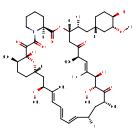
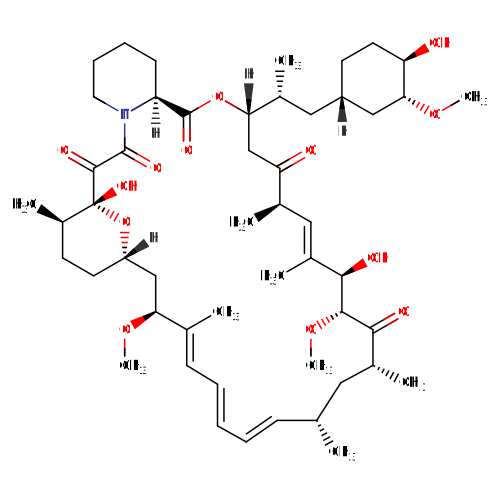
Structure for Sirolimus (DB00877)
- Weight
- Average: 914.187
Monoisotopic: 913.555141608 - Chemical Formula
- C51H79NO13
- Synonyms
- (-)-Rapamycin
- Rapamycin
- Sirolimús
- Sirolimus
- Sirolimusum
- External IDs
- AY-22989
- WY-090217

Pharmacology
- Indication
Sirolimus is indicated for the prophylaxis of organ rejection in patients aged 13 years or older receiving renal transplants. In patients at low-to moderate-immunologic risk, it is recommended that sirolimus be used initially in a regimen with cyclosporine and corticosteroids; cyclosporine should be withdrawn two to four months after transplantation. In patients at high-immunologic risk (defined as Black recipients and/or repeat renal transplant recipients who lost a previous allograft for immunologic reason and/or patients with high panel-reactive antibodies [PRA; peak PRA level > 80%]), it is recommended that sirolimus be used in combination with cyclosporine and corticosteroids for the first year following transplantation.8
It is also used to treat lymphangioleiomyomatosis.8
In the US, albumin-bound sirolimus for intravenous injection is indicated for the treatment of adult patients with locally advanced unresectable or metastatic malignant perivascular epithelioid cell tumour (PEComa).9
In Europe, it is recommended that sirolimus for the prophylaxis of organ rejection in renal transplants is used in combination with cyclosporin microemulsion and corticosteroids for two to three months. Sirolimus may be continued as maintenance therapy with corticosteroids only if cyclosporin microemulsion can be progressively discontinued.13
Topical sirolimus is indicated for the treatment of facial angiofibroma associated with tuberous sclerosis in adults and pediatric patients six years of age and older.14
 Reduce drug development failure ratesBuild, train, & validate machine-learning modelswith evidence-based and structured datasets.Build, train, & validate predictive machine-learning models with structured datasets.
- Associated Conditions
Indication Type Indication Combined Product Details Approval Level Age Group Patient Characteristics Dose Form Treatment of Chordoma ••• ••••• Management of Facial angiofibromas •••••••••••• ••••••••••• •••••• ••••••••• ••• Prevention of Graft-versus-host disease ••• ••••• Treatment of Graft-versus-host disease ••• ••••• Prevention of Heart transplant rejection ••• ••••• - Contraindications & Blackbox Warnings
 Prevent Adverse Drug Events TodayTap into our Clinical API for life-saving information on contraindications & blackbox warnings, population restrictions, harmful risks, & more.Avoid life-threatening adverse drug events with our Clinical API
- Pharmacodynamics
Sirolimus is an immunosuppressant drug with antifungal and antitumour effects.2 In animal models, sirolimus prolonged allograft survival following various organ transplants and reversed an acute rejection of heart and kidney allografts in rats. Upon oral administration of 2 mg/day and 5 mg/day, sirolimus significantly reduced the incidence of organ rejection in low- to moderate-immunologic risk renal transplant patients at six months following transplantation compared with either azathioprine or placebo. In some studies, the immunosuppressive effect of sirolimus lasted up to six months after discontinuation of therapy: this tolerization effect is alloantigen-specific.8 Sirolimus potently inhibits antigen-induced proliferation of T cells, B cells, and antibody production.3
In rodent models of autoimmune disease, sirolimus suppressed immune-mediated events associated with systemic lupus erythematosus, collagen-induced arthritis, autoimmune type I diabetes, autoimmune myocarditis, experimental allergic encephalomyelitis, graft-versus-host disease, and autoimmune uveoretinitis.8
- Mechanism of action
Sirolimus works by inhibiting T-lymphocyte activation and proliferation stimulated by antigens and cytokines such as interleukin (IL)-2, IL-4, and IL-15. In target cells, sirolimus binds to the cytoplasmic receptor FK506-binding protein-12 (FKBP12), an immunophilin, to form an immunosuppressive complex. FKBP12-sirolimus complex binds to and inhibits the activation of the mammalian target of rapamycin (mTOR),2,8 which is a serine/threonine-specific protein kinase that regulates cell growth, proliferation, survival, mobility, and angiogenesis.1,2 mTOR regulates the downstream signalling pathways involved in cell survival, such as the phosphatidylinositol-3 kinase (PI3K)/Akt signalling pathway.1 Inhibition of mTOR leads to the suppression of cytokine-driven T-cell proliferation, thus the progression from the G1 to the S phase of the cell cycle is inhibited. Sirolimus also inhibits antibody production. In vitro, sirolimus and other mTOR inhibitors inhibit the production of certain growth factors that may affect angiogenesis, fibroblast proliferation, and vascular permeability.8
Lymphangioleiomyomatosis is a disorder that primarily affects the lungs. It is characterized by lung tissue infiltration, unregulated alveolar smooth muscle proliferation, and cystic destruction of parenchyma. Although infrequent, it occurs as a symptomatic pulmonary complication in tuberous sclerosis complex (TSC), which is an inherited disorder caused by mutations in TSC genes.7 Loss of functional TSC gene leads to the aberrant activation of the mTOR signalling pathway, resulting in cellular proliferation and release of lymphangiogenic growth factors. Sirolimus inhibits the activated mTOR pathway and proliferation of alveolar smooth muscle cell proliferation.8
Target Actions Organism ASerine/threonine-protein kinase mTOR inhibitorHumans - Absorption
In adult renal transplant patients with low- to moderate-immunologic risk, oral administration of 2 mg sirolimus led to a Cmax of 14.4 ± 5.3 ng/mL for oral solution and 15.0 ± 4.9 ng/mL for oral tablets. The tmax was 2.1 ± 0.8 hours for oral solution and 3.5 ± 2.4 hours for oral tablets. In healthy subjects, the tmax is one hour. In a multi-dose study, steady-state was reached six days following repeated twice-daily administration without an initial loading dose, with the average trough concentration of sirolimus increased approximately 2- to 3-fold. It is suspected that a loading dose of three times the maintenance dose will provide near steady-state concentrations within one day in most patients.8
The systemic availability of sirolimus is approximately 14%. In healthy subjects, the mean bioavailability of sirolimus after administration of the tablet is approximately 27% higher relative to the solution. Sirolimus tablets are not bioequivalent to the solution; however, clinical equivalence has been demonstrated at the 2 mg dose level. Sirolimus concentrations, following the administration of Rapamune Oral Solution to stable renal transplant patients, are dose-proportional between 3 and 12 mg/m2.8
- Volume of distribution
The mean (± SD) blood-to-plasma ratio of sirolimus was 36 ± 18 L in stable renal allograft patients, indicating that sirolimus is extensively partitioned into formed blood elements. The mean volume of distribution (Vss/F) of sirolimus is 12 ± 8 L/kg.8
- Protein binding
Sirolimus is 92% bound to human plasma proteins, mainly serum albumin (97%), α1-acid glycoprotein, and lipoproteins.8
- Metabolism
Sirolimus undergoes extensive metabolism in the intestinal wall and liver. Sirolimus is primarily metabolized by O-demethylation and/or hydroxylation via CYP3A4 to form seven major metabolites, including hydroxy, demethyl, and hydroxydemethyl metabolites, which are pharmacologically inactive. Sirolimus also undergoes counter-transport from enterocytes of the small intestine into the gut lumen.8
Hover over products below to view reaction partners
- Route of elimination
Following oral administration of [14C] sirolimus in healthy subjects, about 91% of the radioactivity was recovered from feces and only 2.2% of the radioactivity was detected in urine. Some of the metabolites of sirolimus are also detectable in feces and urine.8
- Half-life
The mean ± SD terminal elimination half-life (t½) of sirolimus after multiple dosing in stable renal transplant patients was estimated to be about 62 ± 16 hours.8
- Clearance
In adult renal transplant patients with low- to moderate-immunologic risk, oral administration of 2 mg sirolimus led to oral clearance of 173 ± 50 mL/h/kg for oral solution and 139 ± 63 mL/h/kg for oral tablets.8
- Adverse Effects
 Improve decision support & research outcomesWith structured adverse effects data, including: blackbox warnings, adverse reactions, warning & precautions, & incidence rates. View sample adverse effects data in our new Data Library!Improve decision support & research outcomes with our structured adverse effects data.
- Toxicity
Oral LD50 of sirolimus is 800 mg/kg in rats and 2500 mg/kg in mouse.12
Sirolimus is a narrow therapeutic index drug.5 Although there are reports of overdose with sirolimus, there is limited information on overdose in the clinical setting. Symptoms of overdose are consistent with the adverse effects of sirolimus. General supportive measures are recommended in the event of an overdose. Because sirolimus has low aqueous solubility and high erythrocyte and plasma protein binding, it is not expected to be dialyzable to any significant extent.8
- Pathways
- Not Available
- Pharmacogenomic Effects/ADRs
- Not Available
Interactions
- Drug Interactions
- This information should not be interpreted without the help of a healthcare provider. If you believe you are experiencing an interaction, contact a healthcare provider immediately. The absence of an interaction does not necessarily mean no interactions exist.
Drug Interaction Integrate drug-drug
interactions in your softwareAbametapir The serum concentration of Sirolimus can be increased when it is combined with Abametapir. Abatacept The metabolism of Sirolimus can be increased when combined with Abatacept. Abciximab The risk or severity of bleeding can be increased when Abciximab is combined with Sirolimus. Abemaciclib The serum concentration of Abemaciclib can be increased when it is combined with Sirolimus. Abrocitinib The serum concentration of Sirolimus can be increased when it is combined with Abrocitinib. - Food Interactions
- Avoid grapefruit products. Grapefruit inhibits the CYP3A4 metabolism of sirolimus and increases its serum concentration.
- Exercise caution with St. John's Wort. This herb induces CYP3A4 and P-gp; thus it may reduce sirolimus serum concentrations.
- Take with or without food. Take consistently with regard to food.
Products
 Drug product information from 10+ global regionsOur datasets provide approved product information including:dosage, form, labeller, route of administration, and marketing period.Access drug product information from over 10 global regions.
- Brand Name Prescription Products
Name Dosage Strength Route Labeller Marketing Start Marketing End Region Image Fyarro Injection, powder, lyophilized, for suspension 5 mg/1mL Intravenous Aadi Bioscience 2021-12-06 Not applicable US 
Hyftor Gel 2.0 mg/1g Topical NOBELPHARMA AMERICA, LLC 2022-03-23 Not applicable US Hyftor Gel 2 mg/g Topical Plusultra Pharma Gmb H 2023-06-20 Not applicable EU 
Rapamune Tablet, coated 1 mg Oral Pfizer Europe Ma Eeig 2016-09-07 Not applicable EU Rapamune Solution 1 mg/1mL Oral Wyeth Pharmaceuticals Llc, a Subsidiary of Pfizer Inc. 1999-09-01 2025-01-31 US - Generic Prescription Products
Name Dosage Strength Route Labeller Marketing Start Marketing End Region Image Gd-sirolimus Tablet 2 mg Oral Genmed A Division Of Pfizer Canada Ulc Not applicable Not applicable Canada 
Gd-sirolimus Tablet 1.0 mg Oral Genmed A Division Of Pfizer Canada Ulc Not applicable Not applicable Canada Gd-sirolimus Tablet 5 mg Oral Genmed A Division Of Pfizer Canada Ulc Not applicable Not applicable Canada Gd-sirolimus Solution 1.0 mg / mL Oral Genmed A Division Of Pfizer Canada Ulc Not applicable Not applicable Canada Sirolimus Tablet 1 mg/1 Oral Major Pharmaceuticals 2021-03-13 Not applicable US
Categories
- ATC Codes
- L01EG04 — Sirolimus
- L01EG — Mammalian target of rapamycin (mTOR) kinase inhibitors
- L01E — PROTEIN KINASE INHIBITORS
- L01 — ANTINEOPLASTIC AGENTS
- L — ANTINEOPLASTIC AND IMMUNOMODULATING AGENTS
- S01XA — Other ophthalmologicals
- S01X — OTHER OPHTHALMOLOGICALS
- S01 — OPHTHALMOLOGICALS
- S — SENSORY ORGANS
- Drug Categories
- Agents causing angioedema
- Anti-Bacterial Agents
- Anti-Infective Agents
- Antibiotics, Antineoplastic
- Antifungal Agents
- Antineoplastic and Immunomodulating Agents
- Cytochrome P-450 CYP3A Substrates
- Cytochrome P-450 CYP3A4 Substrates
- Cytochrome P-450 CYP3A4 Substrates with a Narrow Therapeutic Index
- Cytochrome P-450 CYP3A5 Substrates
- Cytochrome P-450 CYP3A5 Substrates with a Narrow Therapeutic Index
- Cytochrome P-450 CYP3A7 Substrates
- Cytochrome P-450 CYP3A7 Substrates with a Narrow Therapeutic Index
- Cytochrome P-450 Substrates
- Decreased Immunologic Activity
- Hyperglycemia-Associated Agents
- Immunologic Factors
- Immunosuppressive Agents
- Immunotherapy
- Kinase Inhibitor
- Lactones
- Macrolides
- Mammalian target of rapamycin (mTOR) kinase inhibitors
- mTOR Inhibitor Immunosuppressant
- mTOR Inhibitors
- Myelosuppressive Agents
- Narrow Therapeutic Index Drugs
- OATP1B1/SLCO1B1 Inhibitors
- Ophthalmologicals
- P-glycoprotein inducers
- P-glycoprotein inhibitors
- P-glycoprotein substrates
- P-glycoprotein substrates with a Narrow Therapeutic Index
- Polyketides
- Protein Kinase Inhibitors
- Selective Immunosuppressants
- Sensory Organs
- Sirolimus and Prodrugs
- Chemical TaxonomyProvided by Classyfire
- Description
- This compound belongs to the class of organic compounds known as macrolide lactams. These are cyclic polyketides containing both a cyclic amide and a cyclic ester group.
- Kingdom
- Organic compounds
- Super Class
- Phenylpropanoids and polyketides
- Class
- Macrolide lactams
- Sub Class
- Not Available
- Direct Parent
- Macrolide lactams
- Alternative Parents
- Alpha amino acid esters / Macrolides and analogues / Cyclohexanols / Piperidines / Oxanes / Tertiary carboxylic acid amides / Carboxylic acid esters / Cyclic alcohols and derivatives / Cyclic ketones / Hemiacetals show 10 more
- Substituents
- Alcohol / Aliphatic heteropolycyclic compound / Alpha-amino acid ester / Alpha-amino acid or derivatives / Azacycle / Carbonyl group / Carboxamide group / Carboxylic acid derivative / Carboxylic acid ester / Cyclic alcohol show 24 more
- Molecular Framework
- Aliphatic heteropolycyclic compounds
- External Descriptors
- cyclic ketone, antibiotic antifungal drug, organic heterotricyclic compound, secondary alcohol, ether, lactam, macrolide, cyclic acetal (CHEBI:9168) / Plyenes (C07909)
- Affected organisms
- Humans and other mammals
Chemical Identifiers
- UNII
- W36ZG6FT64
- CAS number
- 53123-88-9
- InChI Key
- QFJCIRLUMZQUOT-HPLJOQBZSA-N
- InChI
- InChI=1S/C51H79NO13/c1-30-16-12-11-13-17-31(2)42(61-8)28-38-21-19-36(7)51(60,65-38)48(57)49(58)52-23-15-14-18-39(52)50(59)64-43(33(4)26-37-20-22-40(53)44(27-37)62-9)29-41(54)32(3)25-35(6)46(56)47(63-10)45(55)34(5)24-30/h11-13,16-17,25,30,32-34,36-40,42-44,46-47,53,56,60H,14-15,18-24,26-29H2,1-10H3/b13-11+,16-12+,31-17+,35-25+/t30-,32-,33-,34-,36-,37+,38+,39+,40-,42+,43+,44-,46-,47+,51-/m1/s1
- IUPAC Name
- (1R,9S,12S,15R,16E,18R,19R,21R,23S,24E,26E,28E,30S,32S,35R)-1,18-dihydroxy-12-[(2R)-1-[(1S,3R,4R)-4-hydroxy-3-methoxycyclohexyl]propan-2-yl]-19,30-dimethoxy-15,17,21,23,29,35-hexamethyl-11,36-dioxa-4-azatricyclo[30.3.1.0^{4,9}]hexatriaconta-16,24,26,28-tetraene-2,3,10,14,20-pentone
- SMILES
- [H][C@@]1(C[C@@H](C)[C@]2([H])CC(=O)[C@H](C)\C=C(C)\[C@@H](O)[C@@H](OC)C(=O)[C@H](C)C[C@H](C)\C=C\C=C\C=C(C)\[C@H](C[C@]3([H])CC[C@@H](C)[C@@](O)(O3)C(=O)C(=O)N3CCCC[C@@]3([H])C(=O)O2)OC)CC[C@@H](O)[C@@H](C1)OC
References
- Synthesis Reference
Madhup K. Dhaon, Chi-nung Hsiao, Subhash R. Patel, Peter J. Bonk, Sanjay R. Chemburkar, Yong Y. Chen, "One pot synthesis of tetrazole derivatives of sirolimus." U.S. Patent US20080167335, issued July 10, 2008.
US20080167335- General References
- Sun SY, Rosenberg LM, Wang X, Zhou Z, Yue P, Fu H, Khuri FR: Activation of Akt and eIF4E survival pathways by rapamycin-mediated mammalian target of rapamycin inhibition. Cancer Res. 2005 Aug 15;65(16):7052-8. [Article]
- Chan S: Targeting the mammalian target of rapamycin (mTOR): a new approach to treating cancer. Br J Cancer. 2004 Oct 18;91(8):1420-4. [Article]
- Sehgal SN: Sirolimus: its discovery, biological properties, and mechanism of action. Transplant Proc. 2003 May;35(3 Suppl):7S-14S. [Article]
- Peters T, Traboulsi D, Tibbles LA, Mydlarski PR: Sirolimus: a therapeutic advance for dermatologic disease. Skin Therapy Lett. 2014 Jul-Aug;19(4):1-4. [Article]
- Yakupoglu YK, Kahan BD: Sirolimus: a current perspective. Exp Clin Transplant. 2003 Jun;1(1):8-18. [Article]
- Li J, Kim SG, Blenis J: Rapamycin: one drug, many effects. Cell Metab. 2014 Mar 4;19(3):373-9. doi: 10.1016/j.cmet.2014.01.001. Epub 2014 Feb 6. [Article]
- Hancock E, Tomkins S, Sampson J, Osborne J: Lymphangioleiomyomatosis and tuberous sclerosis. Respir Med. 2002 Jan;96(1):7-13. doi: 10.1053/rmed.2001.1206. [Article]
- FDA Approved Drug Products: RAPAMUNE (sirolimus) for oral use [Link]
- FDA Approved Drug Products: FYARRO (sirolimus protein-bound particles for injectable suspension) (albumin-bound), for intravenous use [Link]
- Pfizer News: PFIZER’S RAPAMUNE® (SIROLIMUS) BECOMES FIRST FDA-APPROVED TREATMENT FOR LYMPHANGIOLEIOMYOMATOSIS (LAM), A RARE PROGRESSIVE LUNG DISEASE [Link]
- ThermoFischer Scientific: Rapamycin MSDS [Link]
- Pfizer: RAPAMUNE MSDS [Link]
- EMA Summary of Product Characteristics: Rapamune (sirolimus) Oral Solution [Link]
- FDA Approved Drug Products: HYFTOR (sirolimus topical gel) [Link]
- BioSpace News: FDA approves Nobelpharma's HYFTOR™ (sirolimus topical gel) 0.2% [Link]
- External Links
- Human Metabolome Database
- HMDB0015015
- KEGG Drug
- D00753
- KEGG Compound
- C07909
- PubChem Compound
- 5284616
- PubChem Substance
- 46505675
- ChemSpider
- 10482078
- BindingDB
- 36609
- 35302
- ChEBI
- 9168
- ChEMBL
- CHEMBL413
- ZINC
- ZINC000169289388
- Therapeutic Targets Database
- DNC001197
- PharmGKB
- PA451365
- PDBe Ligand
- RAP
- RxList
- RxList Drug Page
- Drugs.com
- Drugs.com Drug Page
- Wikipedia
- Sirolimus
- PDB Entries
- 1c9h / 1fap / 1fkb / 1fkl / 1pbk / 1z58 / 2dg3 / 2dg4 / 2dg9 / 2vcd … show 13 more
- FDA label
- Download (480 KB)
Clinical Trials
- Clinical Trials
Phase Status Purpose Conditions Count 4 Completed Not Available Graft-versus-host Disease (GVHD) / Kidney Transplantation / Renal Failure, Chronic Renal Failure 1 4 Completed Health Services Research Coronary Artery Restenosis / Coronary Heart Disease (CHD) 1 4 Completed Prevention Acute Graft Rejection / Delayed Graft Function 1 4 Completed Prevention Hepatitis C Virus (HCV) Infection 1 4 Completed Prevention Kidney Failure / Transplanted Organ Rejection 1
Pharmacoeconomics
- Manufacturers
- Wyeth pharmaceuticals inc
- Packagers
- Cardinal Health
- Hangzhou Zhongmei Huadong Pharmaceutical Co. Ltd.
- Lake Erie Medical and Surgical Supply
- Patheon Inc.
- Poli Industria Chimica SPA
- Wyeth Pharmaceuticals
- Dosage Forms
Form Route Strength Injection, powder, lyophilized, for suspension Intravenous 5 mg/1mL Gel Topical 2 mg/g Gel Topical 2.0 mg/1g Solution Oral 0.10 g Tablet Oral 1.00 mg Solution Oral 1 mg Solution Oral 1.0 mg / mL Solution Oral 2 MG/2ML Solution Oral 5 MG/5ML Tablet Oral 1.0 mg Tablet Oral 1.020 mg Tablet Oral 2 mg Tablet Oral 5 mg Tablet, coated Oral 0.5 MG Tablet, coated Oral 2 MG Tablet, sugar coated Oral 1 mg/1 Tablet, sugar coated Oral 2 mg/1 Tablet Oral Solution Oral 1 mg/mL Solution Oral 100 mg Tablet, sugar coated Oral 0.5 mg Tablet, sugar coated Oral 1 mg Tablet, coated Oral Tablet, sugar coated Oral 2 mg Tablet, coated Oral 1 mg Solution Oral 100.000 mg Solution Oral 1 mg/1mL Tablet Oral 0.5 mg/1 Tablet Oral 1 mg/1 Tablet Oral 2 mg/1 Tablet, film coated Oral 0.5 mg/1 Tablet, film coated Oral 1 mg/1 Tablet, film coated Oral 2 mg/1 Tablet, sugar coated Oral 0.5 mg/1 - Prices
Unit description Cost Unit Rapamune 2 mg tablet 20.59USD tablet Rapamune 1 mg/ml Solution 12.19USD ml Rapamune 1 mg tablet 11.95USD tablet Rapamune 0.5 mg tablet 5.86USD tablet DrugBank does not sell nor buy drugs. Pricing information is supplied for informational purposes only.- Patents
Patent Number Pediatric Extension Approved Expires (estimated) Region US5212155 No 1993-05-18 2010-05-18 US CA2293793 No 2006-07-11 2018-06-11 Canada CA2103571 No 2003-04-29 2012-02-21 Canada US5989591 Yes 1999-11-23 2018-09-11 US US10973806 No 2021-04-13 2036-06-29 US US8911786 No 2014-12-16 2029-02-14 US US10206887 No 2019-02-19 2030-04-15 US US10705070 No 2020-07-07 2036-03-05 US US11497737 No 2020-10-28 2040-10-28 US
Properties
- State
- Solid
- Experimental Properties
Property Value Source boiling point (°C) 183-185 https://www.fishersci.com/store/msds?partNumber=BP29631&productDescription=RAPAMYCIN&vendorId=VN00033897&countryCode=US&language=en logP 4.63 https://pfe-pfizercom-prod.s3.amazonaws.com/products/material_safety_data/sirolimus_tablets_21-march-2018.pdf - Predicted Properties
Property Value Source Water Solubility 0.00173 mg/mL ALOGPS logP 4.85 ALOGPS logP 7.45 Chemaxon logS -5.7 ALOGPS pKa (Strongest Acidic) 9.96 Chemaxon pKa (Strongest Basic) -3 Chemaxon Physiological Charge 0 Chemaxon Hydrogen Acceptor Count 12 Chemaxon Hydrogen Donor Count 3 Chemaxon Polar Surface Area 195.43 Å2 Chemaxon Rotatable Bond Count 6 Chemaxon Refractivity 250.66 m3·mol-1 Chemaxon Polarizability 101.74 Å3 Chemaxon Number of Rings 4 Chemaxon Bioavailability 0 Chemaxon Rule of Five No Chemaxon Ghose Filter No Chemaxon Veber's Rule No Chemaxon MDDR-like Rule Yes Chemaxon - Predicted ADMET Features
Property Value Probability Human Intestinal Absorption - 0.7841 Blood Brain Barrier - 0.9599 Caco-2 permeable - 0.6341 P-glycoprotein substrate Substrate 0.8052 P-glycoprotein inhibitor I Inhibitor 0.8564 P-glycoprotein inhibitor II Inhibitor 0.8021 Renal organic cation transporter Non-inhibitor 0.8116 CYP450 2C9 substrate Non-substrate 0.878 CYP450 2D6 substrate Non-substrate 0.9138 CYP450 3A4 substrate Substrate 0.7776 CYP450 1A2 substrate Non-inhibitor 0.9007 CYP450 2C9 inhibitor Non-inhibitor 0.9125 CYP450 2D6 inhibitor Non-inhibitor 0.9414 CYP450 2C19 inhibitor Non-inhibitor 0.9158 CYP450 3A4 inhibitor Non-inhibitor 0.9333 CYP450 inhibitory promiscuity Low CYP Inhibitory Promiscuity 0.9742 Ames test Non AMES toxic 0.6617 Carcinogenicity Non-carcinogens 0.9546 Biodegradation Not ready biodegradable 0.9593 Rat acute toxicity 2.8689 LD50, mol/kg Not applicable hERG inhibition (predictor I) Weak inhibitor 0.9831 hERG inhibition (predictor II) Non-inhibitor 0.8443
Spectra
- Mass Spec (NIST)
- Not Available
- Spectra
- Chromatographic Properties
Collision Cross Sections (CCS)
Adduct CCS Value (Å2) Source type Source [M-H]- 315.4114584 predictedDarkChem Lite v0.1.0 [M-H]- 318.2036584 predictedDarkChem Lite v0.1.0 [M-H]- 298.64835 predictedDeepCCS 1.0 (2019) [M+H]+ 317.6675584 predictedDarkChem Lite v0.1.0 [M+H]+ 300.37207 predictedDeepCCS 1.0 (2019) [M+Na]+ 317.6341584 predictedDarkChem Lite v0.1.0 [M+Na]+ 306.70102 predictedDeepCCS 1.0 (2019)
Targets

- Kind
- Protein
- Organism
- Humans
- Pharmacological action
- Yes
- Actions
- Inhibitor
- General Function
- Tfiiic-class transcription factor binding
- Specific Function
- Serine/threonine protein kinase which is a central regulator of cellular metabolism, growth and survival in response to hormones, growth factors, nutrients, energy and stress signals. MTOR directly...
- Gene Name
- MTOR
- Uniprot ID
- P42345
- Uniprot Name
- Serine/threonine-protein kinase mTOR
- Molecular Weight
- 288889.05 Da
References
- Dowling RJ, Topisirovic I, Fonseca BD, Sonenberg N: Dissecting the role of mTOR: lessons from mTOR inhibitors. Biochim Biophys Acta. 2010 Mar;1804(3):433-9. doi: 10.1016/j.bbapap.2009.12.001. Epub 2009 Dec 11. [Article]
- Shuuin T, Karashima H: [Mammalian target of rapamycin, its mode of action and clinical response in metastatic clear cell carcinoma]. Gan To Kagaku Ryoho. 2009 Jul;36(7):1076-9. [Article]
- Sehgal SN: Sirolimus: its discovery, biological properties, and mechanism of action. Transplant Proc. 2003 May;35(3 Suppl):7S-14S. [Article]
- Chen X, Ji ZL, Chen YZ: TTD: Therapeutic Target Database. Nucleic Acids Res. 2002 Jan 1;30(1):412-5. [Article]
- Chan S: Targeting the mammalian target of rapamycin (mTOR): a new approach to treating cancer. Br J Cancer. 2004 Oct 18;91(8):1420-4. [Article]
- Ozates NP, Sogutlu F, Lerminoglu F, Demir B, Gunduz C, Shademan B, Avci CB: Effects of rapamycin and AZD3463 combination on apoptosis, autophagy, and cell cycle for resistance control in breast cancer. Life Sci. 2021 Jan 1;264:118643. doi: 10.1016/j.lfs.2020.118643. Epub 2020 Oct 24. [Article]
Enzymes
- Kind
- Protein
- Organism
- Humans
- Pharmacological action
- No
- Actions
- Substrate
- General Function
- Vitamin d3 25-hydroxylase activity
- Specific Function
- Cytochromes P450 are a group of heme-thiolate monooxygenases. In liver microsomes, this enzyme is involved in an NADPH-dependent electron transport pathway. It performs a variety of oxidation react...
- Gene Name
- CYP3A4
- Uniprot ID
- P08684
- Uniprot Name
- Cytochrome P450 3A4
- Molecular Weight
- 57342.67 Da
References
- Ekins S, Bravi G, Wikel JH, Wrighton SA: Three-dimensional-quantitative structure activity relationship analysis of cytochrome P-450 3A4 substrates. J Pharmacol Exp Ther. 1999 Oct;291(1):424-33. [Article]
- Sadaba B, Campanero MA, Quetglas EG, Azanza JR: Clinical relevance of sirolimus drug interactions in transplant patients. Transplant Proc. 2004 Dec;36(10):3226-8. doi: 10.1016/j.transproceed.2004.10.056. [Article]
- Flockhart Table of Drug Interactions [Link]
- Kind
- Protein
- Organism
- Humans
- Pharmacological action
- No
- Actions
- Substrate
- General Function
- Oxygen binding
- Specific Function
- Cytochromes P450 are a group of heme-thiolate monooxygenases. In liver microsomes, this enzyme is involved in an NADPH-dependent electron transport pathway. It oxidizes a variety of structurally un...
- Gene Name
- CYP3A5
- Uniprot ID
- P20815
- Uniprot Name
- Cytochrome P450 3A5
- Molecular Weight
- 57108.065 Da
References
- Flockhart Table of Drug Interactions [Link]
- Kind
- Protein
- Organism
- Humans
- Pharmacological action
- No
- Actions
- Substrate
- General Function
- Oxygen binding
- Specific Function
- Cytochromes P450 are a group of heme-thiolate monooxygenases. In liver microsomes, this enzyme is involved in an NADPH-dependent electron transport pathway. It oxidizes a variety of structurally un...
- Gene Name
- CYP3A7
- Uniprot ID
- P24462
- Uniprot Name
- Cytochrome P450 3A7
- Molecular Weight
- 57525.03 Da
References
- Flockhart Table of Drug Interactions [Link]
Carriers
- Kind
- Protein
- Organism
- Humans
- Pharmacological action
- No
- Actions
- Binder
- General Function
- Toxic substance binding
- Specific Function
- Serum albumin, the main protein of plasma, has a good binding capacity for water, Ca(2+), Na(+), K(+), fatty acids, hormones, bilirubin and drugs. Its main function is the regulation of the colloid...
- Gene Name
- ALB
- Uniprot ID
- P02768
- Uniprot Name
- Serum albumin
- Molecular Weight
- 69365.94 Da
References
- FDA Approved Drug Products: RAPAMUNE (sirolimus) for oral use [Link]
- Kind
- Protein
- Organism
- Humans
- Pharmacological action
- No
- Actions
- Binder
- General Function
- Not Available
- Specific Function
- Functions as transport protein in the blood stream. Binds various ligands in the interior of its beta-barrel domain. Also binds synthetic drugs and influences their distribution and availability in...
- Gene Name
- ORM1
- Uniprot ID
- P02763
- Uniprot Name
- Alpha-1-acid glycoprotein 1
- Molecular Weight
- 23511.38 Da
References
- FDA Approved Drug Products: RAPAMUNE (sirolimus) for oral use [Link]
- Kind
- Protein group
- Organism
- Humans
- Pharmacological action
- No
- Actions
- Binder
- General Function
- Phospholipid transporter activity
- Specific Function
- Participates in the reverse transport of cholesterol from tissues to the liver for excretion by promoting cholesterol efflux from tissues and by acting as a cofactor for the lecithin cholesterol ac...
Components:
References
- FDA Approved Drug Products: RAPAMUNE (sirolimus) for oral use [Link]
Transporters
- Kind
- Protein
- Organism
- Humans
- Pharmacological action
- No
- Actions
- SubstrateInhibitorInducer
- General Function
- Xenobiotic-transporting atpase activity
- Specific Function
- Energy-dependent efflux pump responsible for decreased drug accumulation in multidrug-resistant cells.
- Gene Name
- ABCB1
- Uniprot ID
- P08183
- Uniprot Name
- Multidrug resistance protein 1
- Molecular Weight
- 141477.255 Da
References
- Schuetz EG, Beck WT, Schuetz JD: Modulators and substrates of P-glycoprotein and cytochrome P4503A coordinately up-regulate these proteins in human colon carcinoma cells. Mol Pharmacol. 1996 Feb;49(2):311-8. [Article]
- Wacher VJ, Silverman JA, Wong S, Tran-Tau P, Chan AO, Chai A, Yu XQ, O'Mahony D, Ramtoola Z: Sirolimus oral absorption in rats is increased by ketoconazole but is not affected by D-alpha-tocopheryl poly(ethylene glycol 1000) succinate. J Pharmacol Exp Ther. 2002 Oct;303(1):308-13. [Article]
- Arceci RJ, Stieglitz K, Bierer BE: Immunosuppressants FK506 and rapamycin function as reversal agents of the multidrug resistance phenotype. Blood. 1992 Sep 15;80(6):1528-36. [Article]
- Nagy H, Goda K, Fenyvesi F, Bacso Z, Szilasi M, Kappelmayer J, Lustyik G, Cianfriglia M, Szabo G Jr: Distinct groups of multidrug resistance modulating agents are distinguished by competition of P-glycoprotein-specific antibodies. Biochem Biophys Res Commun. 2004 Mar 19;315(4):942-9. [Article]
- FDA Approved Drug Products: RAPAMUNE (sirolimus) for oral use [Link]
- Kind
- Protein
- Organism
- Humans
- Pharmacological action
- No
- Actions
- Inhibitor
- General Function
- Sodium-independent organic anion transmembrane transporter activity
- Specific Function
- Mediates the Na(+)-independent uptake of organic anions such as pravastatin, taurocholate, methotrexate, dehydroepiandrosterone sulfate, 17-beta-glucuronosyl estradiol, estrone sulfate, prostagland...
- Gene Name
- SLCO1B1
- Uniprot ID
- Q9Y6L6
- Uniprot Name
- Solute carrier organic anion transporter family member 1B1
- Molecular Weight
- 76447.99 Da
References
- Fehrenbach T, Cui Y, Faulstich H, Keppler D: Characterization of the transport of the bicyclic peptide phalloidin by human hepatic transport proteins. Naunyn Schmiedebergs Arch Pharmacol. 2003 Nov;368(5):415-20. Epub 2003 Oct 3. [Article]
- Kind
- Protein
- Organism
- Humans
- Pharmacological action
- No
- General Function
- Monovalent cation:proton antiporter activity
- Specific Function
- Solute transporter for tetraethylammonium (TEA), 1-methyl-4-phenylpyridinium (MPP), cimetidine, N-methylnicotinamide (NMN), metformin, creatinine, guanidine, procainamide, topotecan, estrone sulfat...
- Gene Name
- SLC47A1
- Uniprot ID
- Q96FL8
- Uniprot Name
- Multidrug and toxin extrusion protein 1
- Molecular Weight
- 61921.585 Da
References
- Meyer zu Schwabedissen HE, Verstuyft C, Kroemer HK, Becquemont L, Kim RB: Human multidrug and toxin extrusion 1 (MATE1/SLC47A1) transporter: functional characterization, interaction with OCT2 (SLC22A2), and single nucleotide polymorphisms. Am J Physiol Renal Physiol. 2010 Apr;298(4):F997-F1005. doi: 10.1152/ajprenal.00431.2009. Epub 2010 Jan 6. [Article]

Drug created at June 13, 2005 13:24 / Updated at April 26, 2024 00:46