Identification
- Summary
Tipranavir is a protease inhibitor used to treat HIV-1 resistant to more than 1 protease inhibitor.
- Brand Names
- Aptivus
- Generic Name
- Tipranavir
- DrugBank Accession Number
- DB00932
- Background
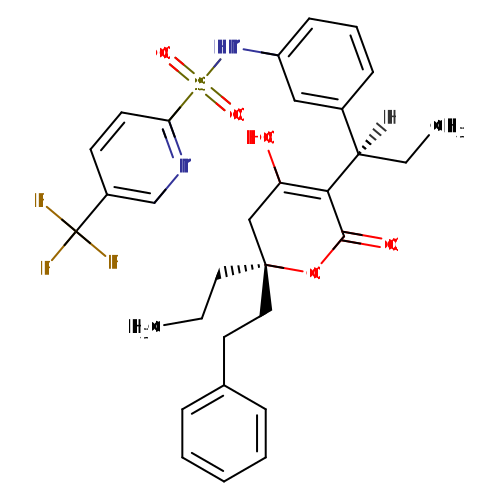
Tipranavir is a sulfonamide-containing dyhydropyrone and a nonpeptidic protease inhibitor that targets the HIV protease. Tipranavir and ritonavir are coadministered to treat HIV.
- Type
- Small Molecule
- Groups
- Approved, Investigational
- Structure

Structure for Tipranavir (DB00932)
- Weight
- Average: 602.664
Monoisotopic: 602.206227481 - Chemical Formula
- C31H33F3N2O5S
- Synonyms
- Tipranavir

Pharmacology
- Indication
For combination antiretroviral treatment of HIV-1 infected adult patients with evidence of viral replication, who are highly treatment-experienced or have HIV-1 strains resistant to multiple protease inhibitors.
 Reduce drug development failure ratesBuild, train, & validate machine-learning modelswith evidence-based and structured datasets.Build, train, & validate predictive machine-learning models with structured datasets.
- Associated Conditions
Indication Type Indication Combined Product Details Approval Level Age Group Patient Characteristics Dose Form Used in combination to treat Hiv-1 infection Regimen in combination with: Ritonavir (DB00503) •••••••••••• ••••••••••••• •••••••••••••••••••• ••••••••• ••••••••••• •••••••• •••••••• - Contraindications & Blackbox Warnings
 Prevent Adverse Drug Events TodayTap into our Clinical API for life-saving information on contraindications & blackbox warnings, population restrictions, harmful risks, & more.Avoid life-threatening adverse drug events with our Clinical API
- Pharmacodynamics
Tipranavir is a non-peptidic protease inhibitor (PI) of HIV. Protease inhibitors block the part of HIV called protease. HIV-1 protease is an enzyme required for the proteolytic cleavage of the viral polyprotein precursors into the individual functional proteins found in infectious HIV-1. Nelfinavir binds to the protease active site and inhibits the activity of the enzyme. This inhibition prevents cleavage of the viral polyproteins resulting in the formation of immature non-infectious viral particles. Protease inhibitors are almost always used in combination with at least two other anti-HIV drugs.
- Mechanism of action
Tipranavir (TPV) is a non-peptidic HIV-1 protease inhibitor that inhibits the processing of the viral Gag and Gag-Pol polyproteins in HIV-1 infected cells, thus preventing formation of mature virions. Two mechanisms are suggested in regards to the potency of tipranavir: 1. Tipravanir may bind to the active site of the protease enzyme with fewer hydrogen bonds than peptidic protease inhibitors, which results in increased flexibility, allowing it to fit into the active site of the enzyme in viruses that have become resistance to other protease inhibitors. This also enables tipranavir to adjust to amino acid substitutions at the active site. 2. Tipranavir's strong hydrogen bonding interaction with the amide backbone of the protease active site Asp30 may lead to its activity against resistant viruses.
Target Actions Organism AHuman immunodeficiency virus type 1 protease inhibitorHuman immunodeficiency virus 1 - Absorption
Absorption is limited, although no absolute quantification of absorption is available.
- Volume of distribution
Not Available
- Protein binding
Extensive (> 99.9%), to both human serum albumin and α-1-acid glycoprotein.
- Metabolism
Hepatic. In vitro metabolism studies with human liver microsomes indicated that CYP 3A4 is the predominant CYP enzyme involved in tipranavir metabolism.
- Route of elimination
Not Available
- Half-life
5-6 hours
- Clearance
Not Available
- Adverse Effects
 Improve decision support & research outcomesWith structured adverse effects data, including: blackbox warnings, adverse reactions, warning & precautions, & incidence rates. View sample adverse effects data in our new Data Library!Improve decision support & research outcomes with our structured adverse effects data.
- Toxicity
Oral LD50 in rat is over 5,000 mg/kg. Side effects include thirst and hunger, unexplained weight loss, increased urination, fatigue, and dry, itchy skin.
- Pathways
- Not Available
- Pharmacogenomic Effects/ADRs
- Not Available
Interactions
- Drug Interactions
- This information should not be interpreted without the help of a healthcare provider. If you believe you are experiencing an interaction, contact a healthcare provider immediately. The absence of an interaction does not necessarily mean no interactions exist.
Drug Interaction Integrate drug-drug
interactions in your software1,2-Benzodiazepine The metabolism of 1,2-Benzodiazepine can be decreased when combined with Tipranavir. Abacavir The metabolism of Abacavir can be increased when combined with Tipranavir. Abametapir The serum concentration of Tipranavir can be increased when it is combined with Abametapir. Abatacept The metabolism of Tipranavir can be increased when combined with Abatacept. Abciximab Tipranavir may increase the antiplatelet activities of Abciximab. - Food Interactions
- Take with or without food. However, if taken with ritonavir tablets, tipranavir should be taken with food.
Products
 Drug product information from 10+ global regionsOur datasets provide approved product information including:dosage, form, labeller, route of administration, and marketing period.Access drug product information from over 10 global regions.
- Product Ingredients
Ingredient UNII CAS InChI Key Tipranavir disodium 9BAN2XG1ZW 191150-83-1 ZBWMQTUSVWBMQE-KPHXKKTMSA-M - Brand Name Prescription Products
Name Dosage Strength Route Labeller Marketing Start Marketing End Region Image Aptivus Solution 100 mg/1mL Oral Boehringer Ingelheim Pharmaceuticals, Inc. 2008-09-01 2021-12-31 US 
Aptivus Capsule 250 mg Oral Boehringer Ingelheim 2022-05-04 Not applicable EU 
Aptivus Capsule, liquid filled 250 mg/1 Oral Boehringer Ingelheim Pharmaceuticals, Inc. 2005-07-01 Not applicable US Aptivus Capsule 250 mg Oral Boehringer Ingelheim (Canada) Ltd Ltee 2005-12-01 Not applicable Canada 
Categories
- ATC Codes
- J05AE09 — Tipranavir
- Drug Categories
- Amides
- Anti-HIV Agents
- Anti-Infective Agents
- Anti-Retroviral Agents
- Antiinfectives for Systemic Use
- Antiviral Agents
- Antivirals for Systemic Use
- BSEP/ABCB11 Inhibitors
- BSEP/ABCB11 Substrates
- Cytochrome P-450 CYP2C19 Inhibitors
- Cytochrome P-450 CYP2C19 Inhibitors (weak)
- Cytochrome P-450 CYP2C19 Substrates
- Cytochrome P-450 CYP2D6 Inhibitors
- Cytochrome P-450 CYP2D6 Inhibitors (moderate)
- Cytochrome P-450 CYP2D6 Substrates
- Cytochrome P-450 CYP3A Inhibitors
- Cytochrome P-450 CYP3A Substrates
- Cytochrome P-450 CYP3A4 Inhibitors
- Cytochrome P-450 CYP3A4 Inhibitors (strong)
- Cytochrome P-450 CYP3A4 Substrates
- Cytochrome P-450 Enzyme Inhibitors
- Cytochrome P-450 Substrates
- Direct Acting Antivirals
- Drugs causing inadvertant photosensitivity
- Enzyme Inhibitors
- Hepatotoxic Agents
- HIV Protease Inhibitors
- Hyperglycemia-Associated Agents
- OATP1B1/SLCO1B1 Inhibitors
- OATP1B3 inhibitors
- Organic Anion Transporting Polypeptide 2B1 Inhibitors
- P-glycoprotein inducers
- P-glycoprotein inhibitors
- P-glycoprotein substrates
- Photosensitizing Agents
- Protease Inhibitors
- Pyrans
- Sulfones
- Sulfur Compounds
- UGT1A1 Inducers
- Chemical TaxonomyProvided by Classyfire
- Description
- This compound belongs to the class of organic compounds known as linear diarylheptanoids. These are diarylheptanoids with an open heptane chain. The two aromatic rings are linked only by the heptane chain.
- Kingdom
- Organic compounds
- Super Class
- Phenylpropanoids and polyketides
- Class
- Diarylheptanoids
- Sub Class
- Linear diarylheptanoids
- Direct Parent
- Linear diarylheptanoids
- Alternative Parents
- Sulfanilides / Pyridinesulfonamides / Phenylpropanes / Dihydropyranones / Organosulfonamides / Aminosulfonyl compounds / Vinylogous acids / Enoate esters / Heteroaromatic compounds / Lactones show 11 more
- Substituents
- Alkyl fluoride / Alkyl halide / Alpha,beta-unsaturated carboxylic ester / Aminosulfonyl compound / Aromatic heteromonocyclic compound / Azacycle / Benzenoid / Carbonyl group / Carboxylic acid derivative / Carboxylic acid ester show 30 more
- Molecular Framework
- Aromatic heteromonocyclic compounds
- External Descriptors
- sulfonamide (CHEBI:63628)
- Affected organisms
- Human Immunodeficiency Virus
Chemical Identifiers
- UNII
- ZZT404XD09
- CAS number
- 174484-41-4
- InChI Key
- SUJUHGSWHZTSEU-FYBSXPHGSA-N
- InChI
- InChI=1S/C31H33F3N2O5S/c1-3-16-30(17-15-21-9-6-5-7-10-21)19-26(37)28(29(38)41-30)25(4-2)22-11-8-12-24(18-22)36-42(39,40)27-14-13-23(20-35-27)31(32,33)34/h5-14,18,20,25,36-37H,3-4,15-17,19H2,1-2H3/t25-,30-/m1/s1
- IUPAC Name
- N-{3-[(1R)-1-[(6R)-4-hydroxy-2-oxo-6-(2-phenylethyl)-6-propyl-5,6-dihydro-2H-pyran-3-yl]propyl]phenyl}-5-(trifluoromethyl)pyridine-2-sulfonamide
- SMILES
- [H][C@@](CC)(C1=CC(NS(=O)(=O)C2=NC=C(C=C2)C(F)(F)F)=CC=C1)C1=C(O)C[C@@](CCC)(CCC2=CC=CC=C2)OC1=O
References
- Synthesis Reference
Franz Klingler, "Enantioselective hydrogenation of intermediates in the synthesis of tipranavir." U.S. Patent US20040224990, issued November 11, 2004.
US20040224990- General References
- Doyon L, Tremblay S, Bourgon L, Wardrop E, Cordingley MG: Selection and characterization of HIV-1 showing reduced susceptibility to the non-peptidic protease inhibitor tipranavir. Antiviral Res. 2005 Oct;68(1):27-35. [Article]
- Authors unspecified: Tipranavir: PNU 140690, tipranivir. Drugs R D. 2006;7(1):55-62. [Article]
- Temesgen Z, Feinberg J: Tipranavir: a new option for the treatment of drug-resistant HIV infection. Clin Infect Dis. 2007 Sep 15;45(6):761-9. Epub 2007 Aug 7. [Article]
- Luna B, Townsend MU: Tipranavir: the first nonpeptidic protease inhibitor for the treatment of protease resistance. Clin Ther. 2007 Nov;29(11):2309-18. [Article]
- External Links
- PubChem Compound
- 54682461
- PubChem Substance
- 46506257
- ChemSpider
- 10482313
- BindingDB
- 50479982
- 190548
- ChEBI
- 63628
- ChEMBL
- CHEMBL222559
- ZINC
- ZINC000100016058
- Therapeutic Targets Database
- DAP001085
- PharmGKB
- PA163522473
- PDBe Ligand
- TPV
- RxList
- RxList Drug Page
- Drugs.com
- Drugs.com Drug Page
- Wikipedia
- Tipranavir
- PDB Entries
- 1d4s / 1d4y / 2o4l / 2o4n / 2o4p / 3spk / 4nju / 6dif / 6dil
- FDA label
- Download (388 KB)
Clinical Trials
- Clinical Trials
Phase Status Purpose Conditions Count 4 Completed Diagnostic Cardiovascular Disease (CVD) / HIV Lipodystrophy Syndrome 1 4 Completed Treatment Human Immunodeficiency Virus (HIV) Infections 1 3 Completed Treatment Human Immunodeficiency Virus (HIV) Infections 5 3 Terminated Treatment Human Immunodeficiency Virus (HIV) Infections 3 2 Completed Treatment Human Immunodeficiency Virus (HIV) Infections 6
Pharmacoeconomics
- Manufacturers
- Boehringer ingelheim pharmaceuticals inc
- Packagers
- Boehringer Ingelheim Ltd.
- Catalent Pharma Solutions
- Dosage Forms
Form Route Strength Capsule Oral 250 mg Capsule, liquid filled Oral 250 mg/1 Solution Oral 100 mg/1mL Solution Oral 100 MG/ML - Prices
Unit description Cost Unit Aptivus 120 250 mg capsule Bottle 1271.8USD bottle Aptivus 250 mg capsule 10.19USD capsule Aptivus 100 mg/ml solution 4.29USD ml DrugBank does not sell nor buy drugs. Pricing information is supplied for informational purposes only.- Patents
Patent Number Pediatric Extension Approved Expires (estimated) Region US6169181 No 2001-01-02 2014-05-06 US CA2294033 No 2007-01-09 2018-07-27 Canada CA2187523 No 2006-11-21 2015-05-04 Canada US6147095 Yes 2000-11-14 2020-04-29 US US6231887 Yes 2001-05-15 2019-01-27 US US5852195 Yes 1998-12-22 2019-12-22 US
Properties
- State
- Solid
- Experimental Properties
Property Value Source water solubility Insoluble Not Available logP 6.9 Not Available - Predicted Properties
Property Value Source Water Solubility 0.000205 mg/mL ALOGPS logP 6.29 ALOGPS logP 7.14 Chemaxon logS -6.5 ALOGPS pKa (Strongest Acidic) 5.96 Chemaxon pKa (Strongest Basic) -2.3 Chemaxon Physiological Charge -1 Chemaxon Hydrogen Acceptor Count 5 Chemaxon Hydrogen Donor Count 2 Chemaxon Polar Surface Area 105.59 Å2 Chemaxon Rotatable Bond Count 11 Chemaxon Refractivity 154.57 m3·mol-1 Chemaxon Polarizability 60.87 Å3 Chemaxon Number of Rings 4 Chemaxon Bioavailability 0 Chemaxon Rule of Five No Chemaxon Ghose Filter No Chemaxon Veber's Rule No Chemaxon MDDR-like Rule Yes Chemaxon - Predicted ADMET Features
Property Value Probability Human Intestinal Absorption + 0.9066 Blood Brain Barrier - 0.6801 Caco-2 permeable - 0.6103 P-glycoprotein substrate Substrate 0.5277 P-glycoprotein inhibitor I Non-inhibitor 0.5057 P-glycoprotein inhibitor II Non-inhibitor 0.9249 Renal organic cation transporter Non-inhibitor 0.9277 CYP450 2C9 substrate Non-substrate 0.8364 CYP450 2D6 substrate Non-substrate 0.9116 CYP450 3A4 substrate Substrate 0.5143 CYP450 1A2 substrate Non-inhibitor 0.6708 CYP450 2C9 inhibitor Non-inhibitor 0.5711 CYP450 2D6 inhibitor Non-inhibitor 0.8485 CYP450 2C19 inhibitor Non-inhibitor 0.5383 CYP450 3A4 inhibitor Non-inhibitor 0.5442 CYP450 inhibitory promiscuity High CYP Inhibitory Promiscuity 0.5317 Ames test Non AMES toxic 0.6078 Carcinogenicity Non-carcinogens 0.728 Biodegradation Not ready biodegradable 1.0 Rat acute toxicity 2.5773 LD50, mol/kg Not applicable hERG inhibition (predictor I) Weak inhibitor 0.8277 hERG inhibition (predictor II) Non-inhibitor 0.702
Spectra
- Mass Spec (NIST)
- Not Available
- Spectra
- Chromatographic Properties
Collision Cross Sections (CCS)
Adduct CCS Value (Å2) Source type Source [M-H]- 263.7557245 predictedDarkChem Lite v0.1.0 [M-H]- 230.07155 predictedDeepCCS 1.0 (2019) [M+H]+ 263.8637245 predictedDarkChem Lite v0.1.0 [M+H]+ 231.93301 predictedDeepCCS 1.0 (2019) [M+Na]+ 262.9337245 predictedDarkChem Lite v0.1.0 [M+Na]+ 237.53883 predictedDeepCCS 1.0 (2019)
Targets

- Kind
- Protein
- Organism
- Human immunodeficiency virus 1
- Pharmacological action
- Yes
- Actions
- Inhibitor
- General Function
- Aspartic-type endopeptidase activity
- Specific Function
- Not Available
- Gene Name
- pol
- Uniprot ID
- Q72874
- Uniprot Name
- Pol polyprotein
- Molecular Weight
- 10778.7 Da
References
- Koh Y, Matsumi S, Das D, Amano M, Davis DA, Li J, Leschenko S, Baldridge A, Shioda T, Yarchoan R, Ghosh AK, Mitsuya H: Potent inhibition of HIV-1 replication by novel non-peptidyl small molecule inhibitors of protease dimerization. J Biol Chem. 2007 Sep 28;282(39):28709-20. Epub 2007 Jul 17. [Article]
- Tenore SB, Ferreira PR: The Place of protease inhibitors in antiretroviral treatment. Braz J Infect Dis. 2009 Oct;13(5):371-4. doi: 10.1590/S1413-86702009000500012. [Article]
- Muzammil S, Armstrong AA, Kang LW, Jakalian A, Bonneau PR, Schmelmer V, Amzel LM, Freire E: Unique thermodynamic response of tipranavir to human immunodeficiency virus type 1 protease drug resistance mutations. J Virol. 2007 May;81(10):5144-54. Epub 2007 Mar 14. [Article]
- Hsieh SM, Chang SY, Hung CC, Sheng WH, Chen MY, Chang SC: Impact of first-line protease inhibitors on predicted resistance to tipranavir in HIV-1-infected patients with virological failure. BMC Infect Dis. 2009 Sep 14;9:154. doi: 10.1186/1471-2334-9-154. [Article]
- Temesgen Z, Feinberg J: Tipranavir: a new option for the treatment of drug-resistant HIV infection. Clin Infect Dis. 2007 Sep 15;45(6):761-9. Epub 2007 Aug 7. [Article]
- Luna B, Townsend MU: Tipranavir: the first nonpeptidic protease inhibitor for the treatment of protease resistance. Clin Ther. 2007 Nov;29(11):2309-18. [Article]
- Croom KF, Keam SJ: Tipranavir: a ritonavir-boosted protease inhibitor. Drugs. 2005;65(12):1669-77; discussion 1678-9. [Article]
- Chen X, Ji ZL, Chen YZ: TTD: Therapeutic Target Database. Nucleic Acids Res. 2002 Jan 1;30(1):412-5. [Article]
Enzymes
- Kind
- Protein
- Organism
- Humans
- Pharmacological action
- Unknown
- Actions
- SubstrateInhibitor
- General Function
- Steroid hydroxylase activity
- Specific Function
- Responsible for the metabolism of a number of therapeutic agents such as the anticonvulsant drug S-mephenytoin, omeprazole, proguanil, certain barbiturates, diazepam, propranolol, citalopram and im...
- Gene Name
- CYP2C19
- Uniprot ID
- P33261
- Uniprot Name
- Cytochrome P450 2C19
- Molecular Weight
- 55930.545 Da
References
- Li F, Wang L, Guo GL, Ma X: Metabolism-mediated drug interactions associated with ritonavir-boosted tipranavir in mice. Drug Metab Dispos. 2010 May;38(5):871-8. doi: 10.1124/dmd.109.030817. Epub 2010 Jan 26. [Article]
- Dumond JB, Vourvahis M, Rezk NL, Patterson KB, Tien HC, White N, Jennings SH, Choi SO, Li J, Wagner MJ, La-Beck NM, Drulak M, Sabo JP, Castles MA, Macgregor TR, Kashuba AD: A phenotype-genotype approach to predicting CYP450 and P-glycoprotein drug interactions with the mixed inhibitor/inducer tipranavir/ritonavir. Clin Pharmacol Ther. 2010 Jun;87(6):735-42. doi: 10.1038/clpt.2009.253. Epub 2010 Feb 10. [Article]
- Vourvahis M, Kashuba AD: Mechanisms of pharmacokinetic and pharmacodynamic drug interactions associated with ritonavir-enhanced tipranavir. Pharmacotherapy. 2007 Jun;27(6):888-909. doi: 10.1592/phco.27.6.888. [Article]
- Kind
- Protein
- Organism
- Humans
- Pharmacological action
- No
- Actions
- Inducer
- General Function
- Steroid binding
- Specific Function
- UDPGT is of major importance in the conjugation and subsequent elimination of potentially toxic xenobiotics and endogenous compounds. This isoform glucuronidates bilirubin IX-alpha to form both the...
- Gene Name
- UGT1A1
- Uniprot ID
- P22309
- Uniprot Name
- UDP-glucuronosyltransferase 1-1
- Molecular Weight
- 59590.91 Da
References
- Interactions [Link]
- Kind
- Protein
- Organism
- Humans
- Pharmacological action
- Unknown
- Actions
- SubstrateInhibitor
- General Function
- Vitamin d3 25-hydroxylase activity
- Specific Function
- Cytochromes P450 are a group of heme-thiolate monooxygenases. In liver microsomes, this enzyme is involved in an NADPH-dependent electron transport pathway. It performs a variety of oxidation react...
- Gene Name
- CYP3A4
- Uniprot ID
- P08684
- Uniprot Name
- Cytochrome P450 3A4
- Molecular Weight
- 57342.67 Da
References
- Temesgen Z, Feinberg J: Tipranavir: a new option for the treatment of drug-resistant HIV infection. Clin Infect Dis. 2007 Sep 15;45(6):761-9. Epub 2007 Aug 7. [Article]
- Luna B, Townsend MU: Tipranavir: the first nonpeptidic protease inhibitor for the treatment of protease resistance. Clin Ther. 2007 Nov;29(11):2309-18. [Article]
- Li F, Wang L, Guo GL, Ma X: Metabolism-mediated drug interactions associated with ritonavir-boosted tipranavir in mice. Drug Metab Dispos. 2010 May;38(5):871-8. doi: 10.1124/dmd.109.030817. Epub 2010 Jan 26. [Article]
- Dumond JB, Vourvahis M, Rezk NL, Patterson KB, Tien HC, White N, Jennings SH, Choi SO, Li J, Wagner MJ, La-Beck NM, Drulak M, Sabo JP, Castles MA, Macgregor TR, Kashuba AD: A phenotype-genotype approach to predicting CYP450 and P-glycoprotein drug interactions with the mixed inhibitor/inducer tipranavir/ritonavir. Clin Pharmacol Ther. 2010 Jun;87(6):735-42. doi: 10.1038/clpt.2009.253. Epub 2010 Feb 10. [Article]
- FDA Drug Development and Drug Interactions: Table of Substrates, Inhibitors and Inducers [Link]
- Kind
- Protein
- Organism
- Humans
- Pharmacological action
- Unknown
- Actions
- SubstrateInhibitor
- General Function
- Steroid hydroxylase activity
- Specific Function
- Responsible for the metabolism of many drugs and environmental chemicals that it oxidizes. It is involved in the metabolism of drugs such as antiarrhythmics, adrenoceptor antagonists, and tricyclic...
- Gene Name
- CYP2D6
- Uniprot ID
- P10635
- Uniprot Name
- Cytochrome P450 2D6
- Molecular Weight
- 55768.94 Da
References
- Li F, Wang L, Guo GL, Ma X: Metabolism-mediated drug interactions associated with ritonavir-boosted tipranavir in mice. Drug Metab Dispos. 2010 May;38(5):871-8. doi: 10.1124/dmd.109.030817. Epub 2010 Jan 26. [Article]
- Dumond JB, Vourvahis M, Rezk NL, Patterson KB, Tien HC, White N, Jennings SH, Choi SO, Li J, Wagner MJ, La-Beck NM, Drulak M, Sabo JP, Castles MA, Macgregor TR, Kashuba AD: A phenotype-genotype approach to predicting CYP450 and P-glycoprotein drug interactions with the mixed inhibitor/inducer tipranavir/ritonavir. Clin Pharmacol Ther. 2010 Jun;87(6):735-42. doi: 10.1038/clpt.2009.253. Epub 2010 Feb 10. [Article]
Transporters
- Kind
- Protein
- Organism
- Humans
- Pharmacological action
- Unknown
- Actions
- SubstrateInhibitor
- General Function
- Transporter activity
- Specific Function
- Involved in the ATP-dependent secretion of bile salts into the canaliculus of hepatocytes.
- Gene Name
- ABCB11
- Uniprot ID
- O95342
- Uniprot Name
- Bile salt export pump
- Molecular Weight
- 146405.83 Da
References
- Pedersen JM, Matsson P, Bergstrom CA, Hoogstraate J, Noren A, LeCluyse EL, Artursson P: Early identification of clinically relevant drug interactions with the human bile salt export pump (BSEP/ABCB11). Toxicol Sci. 2013 Dec;136(2):328-43. doi: 10.1093/toxsci/kft197. Epub 2013 Sep 6. [Article]
- Kind
- Protein
- Organism
- Humans
- Pharmacological action
- Unknown
- Actions
- Inhibitor
- General Function
- Sodium-independent organic anion transmembrane transporter activity
- Specific Function
- Mediates the Na(+)-independent transport of organic anions such as taurocholate, the prostaglandins PGD2, PGE1, PGE2, leukotriene C4, thromboxane B2 and iloprost.
- Gene Name
- SLCO2B1
- Uniprot ID
- O94956
- Uniprot Name
- Solute carrier organic anion transporter family member 2B1
- Molecular Weight
- 76709.98 Da
References
- Karlgren M, Vildhede A, Norinder U, Wisniewski JR, Kimoto E, Lai Y, Haglund U, Artursson P: Classification of inhibitors of hepatic organic anion transporting polypeptides (OATPs): influence of protein expression on drug-drug interactions. J Med Chem. 2012 May 24;55(10):4740-63. doi: 10.1021/jm300212s. Epub 2012 May 15. [Article]
- Kind
- Protein
- Organism
- Humans
- Pharmacological action
- Unknown
- Actions
- Inhibitor
- General Function
- Sodium-independent organic anion transmembrane transporter activity
- Specific Function
- Mediates the Na(+)-independent uptake of organic anions such as pravastatin, taurocholate, methotrexate, dehydroepiandrosterone sulfate, 17-beta-glucuronosyl estradiol, estrone sulfate, prostagland...
- Gene Name
- SLCO1B1
- Uniprot ID
- Q9Y6L6
- Uniprot Name
- Solute carrier organic anion transporter family member 1B1
- Molecular Weight
- 76447.99 Da
References
- Karlgren M, Vildhede A, Norinder U, Wisniewski JR, Kimoto E, Lai Y, Haglund U, Artursson P: Classification of inhibitors of hepatic organic anion transporting polypeptides (OATPs): influence of protein expression on drug-drug interactions. J Med Chem. 2012 May 24;55(10):4740-63. doi: 10.1021/jm300212s. Epub 2012 May 15. [Article]
- Karlgren M, Ahlin G, Bergstrom CA, Svensson R, Palm J, Artursson P: In vitro and in silico strategies to identify OATP1B1 inhibitors and predict clinical drug-drug interactions. Pharm Res. 2012 Feb;29(2):411-26. doi: 10.1007/s11095-011-0564-9. Epub 2011 Aug 23. [Article]
- Kind
- Protein
- Organism
- Humans
- Pharmacological action
- Unknown
- Actions
- Inhibitor
- General Function
- Sodium-independent organic anion transmembrane transporter activity
- Specific Function
- Mediates the Na(+)-independent uptake of organic anions such as 17-beta-glucuronosyl estradiol, taurocholate, triiodothyronine (T3), leukotriene C4, dehydroepiandrosterone sulfate (DHEAS), methotre...
- Gene Name
- SLCO1B3
- Uniprot ID
- Q9NPD5
- Uniprot Name
- Solute carrier organic anion transporter family member 1B3
- Molecular Weight
- 77402.175 Da
References
- Karlgren M, Vildhede A, Norinder U, Wisniewski JR, Kimoto E, Lai Y, Haglund U, Artursson P: Classification of inhibitors of hepatic organic anion transporting polypeptides (OATPs): influence of protein expression on drug-drug interactions. J Med Chem. 2012 May 24;55(10):4740-63. doi: 10.1021/jm300212s. Epub 2012 May 15. [Article]
- Kind
- Protein
- Organism
- Humans
- Pharmacological action
- Unknown
- Actions
- SubstrateInhibitorInducer
- Curator comments
- Tipranavir is a substrate of P-gp. Prescribing information states that it is also an inhibitor of P-gp after the first dose, and an inducer of P-gp following continuous dosing.
- General Function
- Xenobiotic-transporting atpase activity
- Specific Function
- Energy-dependent efflux pump responsible for decreased drug accumulation in multidrug-resistant cells.
- Gene Name
- ABCB1
- Uniprot ID
- P08183
- Uniprot Name
- Multidrug resistance protein 1
- Molecular Weight
- 141477.255 Da
References
- FDA Drug Development and Drug Interactions: Table of Substrates, Inhibitors and Inducers [Link]

Drug created at June 13, 2005 13:24 / Updated at April 26, 2024 00:45