Identification
- Summary
Phenprocoumon is an anticoagulant drug used for the prevention of thrombosis.
- Generic Name
- Phenprocoumon
- DrugBank Accession Number
- DB00946
- Background
Coumarin derivative that acts as a long-acting oral anticoagulant.
- Type
- Small Molecule
- Groups
- Approved, Investigational
- Structure
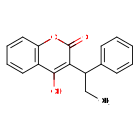
Structure for Phenprocoumon (DB00946)

- Weight
- Average: 280.3178
Monoisotopic: 280.109944378 - Chemical Formula
- C18H16O3
- Synonyms
- 3-(1-Phenylpropyl)-4-hydroxycoumarin
- 3-(1'-Phenyl-propyl)-4-oxycoumarin
- 3-(alpha-Ethylbenzyl)-4-hydroxycoumarin
- 3-(alpha-Phenylpropyl)-4-hydroxycoumarin
- 4-Hydroxy-3-(1-phenylpropyl)-2H-1-benzopyran-2-one
- 4-hydroxy-3-(1-phenylpropyl)-2H-chromen-2-one
- Fenprocumon
- Fenprocumone
- Phenprocoumarol
- Phenprocoumarole
- Phenprocoumon
- Phenprocoumone
- Phenprocoumonum
- Phenprocumone

Pharmacology
- Indication
Used for the prevention and treatment of thromboembolic disease including venous thrombosis, thromboembolism, and pulmonary embolism as well as for the prevention of ischemic stroke in patients with atrial fibrillation (AF).
 Reduce drug development failure ratesBuild, train, & validate machine-learning modelswith evidence-based and structured datasets.Build, train, & validate predictive machine-learning models with structured datasets.
- Associated Conditions
Indication Type Indication Combined Product Details Approval Level Age Group Patient Characteristics Dose Form Prevention of Embolism venous •••••••••••• •••••• Treatment of Embolism venous •••••••••••• •••••• Treatment of Myocardial infarction •••••••••••• •••••• Prevention of Thrombotic events •••••••••••• •••••• Treatment of Thrombotic events •••••••••••• •••••• - Contraindications & Blackbox Warnings
 Prevent Adverse Drug Events TodayTap into our Clinical API for life-saving information on contraindications & blackbox warnings, population restrictions, harmful risks, & more.Avoid life-threatening adverse drug events with our Clinical API
- Pharmacodynamics
Phenprocoumon, a coumarin anticoagulant, thins the blood by antagonizing vitamin K which is required for the production of clotting factors in the liver. Anticoagulants such as phenprocoumon have no direct effect on an established thrombus, nor do they reverse ischemic tissue damage (damage caused by an inadequate blood supply to an organ or part of the body). However, once a thrombus has occurred, the goal of anticoagulant treatment is to prevent further extension of the formed clot and prevent secondary thromboembolic complications which may result in serious and possibly fatal sequelae.
- Mechanism of action
Phenprocoumon inhibits vitamin K reductase, resulting in depletion of the reduced form of vitamin K (vitamin KH2). As vitamin K is a cofactor for the carboxylation of glutamate residues on the N-terminal regions of vitamin K-dependent proteins, this limits the gamma-carboxylation and subsequent activation of the vitamin K-dependent coagulant proteins. The synthesis of vitamin K-dependent coagulation factors II, VII, IX, and X and anticoagulant proteins C and S is inhibited. Depression of three of the four vitamin K-dependent coagulation factors (factors II, VII, and X) results in decreased prothrombin levels and a decrease in the amount of thrombin generated and bound to fibrin. This reduces the thrombogenicity of clots.
Target Actions Organism AVitamin K epoxide reductase complex subunit 1 inhibitorHumans - Absorption
Bioavailability is close to 100%
- Volume of distribution
Not Available
- Protein binding
99%
- Metabolism
Phenprocoumon is stereoselectively metabolized by hepatic microsomal enzymes (cytochrome P-450) to inactive hydroxylated metabolites (predominant route) and by reductases to reduced metabolites. Cytochrome P450 2C9 is the principal form of human liver P-450 responsible for metabolism.
Hover over products below to view reaction partners
- Route of elimination
Not Available
- Half-life
5-6 days
- Clearance
Not Available
- Adverse Effects
 Improve decision support & research outcomesWith structured adverse effects data, including: blackbox warnings, adverse reactions, warning & precautions, & incidence rates. View sample adverse effects data in our new Data Library!Improve decision support & research outcomes with our structured adverse effects data.
- Toxicity
50=500 mg/kg. Symptoms of overdose includes suspected or overt abnormal bleeding (e.g., appearance of blood in stools or urine, hematuria, excessive menstrual bleeding, melena, petechiae, excessive bruising or persistent oozing from superficial injuries).
- Pathways
Pathway Category Phenprocoumon Action Pathway Drug action - Pharmacogenomic Effects/ADRs
Interacting Gene/Enzyme Allele name Genotype(s) Defining Change(s) Type(s) Description Details Cytochrome P450 2C9 CYP2C9*2 (T;T) / (C;T) T Allele ADR Directly Studied The presence of this polymorphism in CYP2C9 is associated with reduction in phenprocoumon metabolism. Details Cytochrome P450 2C9 CYP2C9*3 (C;C) / (A;C) C Allele ADR Directly Studied The presence of this polymorphism in CYP2C9 is associated with reduction in phenprocoumon metabolism. Details Vitamin K epoxide reductase complex subunit 1 --- (A;A) / (A;G) G > A ADR Directly Studied The presence of this polymorphism in VKORC1 is associated with reduction in phenprocoumon metabolism. Details Cytochrome P450 2C9 CYP2C9*6 Not Available 818delA ADR Inferred Associated with delayed stabilization. If carrier of rs9934438 as well, increased risk of severe overanticoagulation. Details Cytochrome P450 2C9 CYP2C9*15 Not Available 485C>A ADR Inferred Associated with delayed stabilization. If carrier of rs9934438 as well, increased risk of severe overanticoagulation. Details Cytochrome P450 2C9 CYP2C9*25 Not Available 353_362delAGAAATGGAA ADR Inferred Associated with delayed stabilization. If carrier of rs9934438 as well, increased risk of severe overanticoagulation. Details Cytochrome P450 2C9 CYP2C9*35 Not Available 374G>T / 430C>T ADR Inferred Associated with delayed stabilization. If carrier of rs9934438 as well, increased risk of severe overanticoagulation. Details Cytochrome P450 2C9 CYP2C9*3 Not Available 1075A>C ADR Inferred Associated with delayed stabilization. If carrier of rs9934438 as well, increased risk of severe overanticoagulation. Details Cytochrome P450 2C9 CYP2C9*4 Not Available 1076T>C ADR Inferred Associated with delayed stabilization. If carrier of rs9934438 as well, increased risk of severe overanticoagulation. Details Cytochrome P450 2C9 CYP2C9*5 Not Available 1080C>G ADR Inferred Associated with delayed stabilization. If carrier of rs9934438 as well, increased risk of severe overanticoagulation. Details Cytochrome P450 2C9 CYP2C9*8 Not Available 449G>A ADR Inferred Associated with delayed stabilization. If carrier of rs9934438 as well, increased risk of severe overanticoagulation. Details Cytochrome P450 2C9 CYP2C9*11 Not Available 1003C>T ADR Inferred Associated with delayed stabilization. If carrier of rs9934438 as well, increased risk of severe overanticoagulation. Details Cytochrome P450 2C9 CYP2C9*12 Not Available 1465C>T ADR Inferred Associated with delayed stabilization. If carrier of rs9934438 as well, increased risk of severe overanticoagulation. Details Cytochrome P450 2C9 CYP2C9*13 Not Available 269T>C ADR Inferred Associated with delayed stabilization. If carrier of rs9934438 as well, increased risk of severe overanticoagulation. Details Cytochrome P450 2C9 CYP2C9*14 Not Available 374G>A ADR Inferred Associated with delayed stabilization. If carrier of rs9934438 as well, increased risk of severe overanticoagulation. Details Cytochrome P450 2C9 CYP2C9*16 Not Available 895A>G ADR Inferred Associated with delayed stabilization. If carrier of rs9934438 as well, increased risk of severe overanticoagulation. Details Cytochrome P450 2C9 CYP2C9*18 Not Available 1075A>C / 1190A>C … show all ADR Inferred Associated with delayed stabilization. If carrier of rs9934438 as well, increased risk of severe overanticoagulation. Details Cytochrome P450 2C9 CYP2C9*26 Not Available 389C>G ADR Inferred Associated with delayed stabilization. If carrier of rs9934438 as well, increased risk of severe overanticoagulation. Details Cytochrome P450 2C9 CYP2C9*28 Not Available 641A>T ADR Inferred Associated with delayed stabilization. If carrier of rs9934438 as well, increased risk of severe overanticoagulation. Details Cytochrome P450 2C9 CYP2C9*30 Not Available 1429G>A ADR Inferred Associated with delayed stabilization. If carrier of rs9934438 as well, increased risk of severe overanticoagulation. Details Cytochrome P450 2C9 CYP2C9*33 Not Available 395G>A ADR Inferred Associated with delayed stabilization. If carrier of rs9934438 as well, increased risk of severe overanticoagulation. Details
Interactions
- Drug Interactions
- This information should not be interpreted without the help of a healthcare provider. If you believe you are experiencing an interaction, contact a healthcare provider immediately. The absence of an interaction does not necessarily mean no interactions exist.
Drug Interaction Integrate drug-drug
interactions in your softwareAbametapir The serum concentration of Phenprocoumon can be increased when it is combined with Abametapir. Abatacept The metabolism of Phenprocoumon can be increased when combined with Abatacept. Abciximab The risk or severity of bleeding can be increased when Abciximab is combined with Phenprocoumon. Abiraterone The metabolism of Phenprocoumon can be decreased when combined with Abiraterone. Abrocitinib The metabolism of Abrocitinib can be decreased when combined with Phenprocoumon. - Food Interactions
- Avoid herbs and supplements with anticoagulant/antiplatelet activity. Examples include garlic, ginger, bilberry, danshen, piracetam, and ginkgo biloba.
- Ensure consistent Vitamin K intake. Changes in vitamin K intake may impact coagulation.
- Exercise caution with grapefruit products.
- Exercise caution with St. John's Wort.
Products
 Drug product information from 10+ global regionsOur datasets provide approved product information including:dosage, form, labeller, route of administration, and marketing period.Access drug product information from over 10 global regions.
- International/Other Brands
- Falithrom / Liquamar / Marcoumar / Marcumar
Categories
- ATC Codes
- B01AA04 — Phenprocoumon
- Drug Categories
- 4-Hydroxycoumarins
- Anticoagulants
- Benzopyrans
- Blood and Blood Forming Organs
- Coumarins
- Cytochrome P-450 CYP2C8 Substrates
- Cytochrome P-450 CYP2C8 Substrates with a Narrow Therapeutic Index
- Cytochrome P-450 CYP2C9 Substrates
- Cytochrome P-450 CYP2C9 Substrates with a Narrow Therapeutic Index
- Cytochrome P-450 CYP3A Substrates
- Cytochrome P-450 CYP3A4 Substrates
- Cytochrome P-450 CYP3A4 Substrates with a Narrow Therapeutic Index
- Cytochrome P-450 Substrates
- Hematologic Agents
- Heterocyclic Compounds, Fused-Ring
- Narrow Therapeutic Index Drugs
- Pyrans
- Vitamin K Antagonists
- Vitamin K Inhibitors
- Chemical TaxonomyProvided by Classyfire
- Description
- This compound belongs to the class of organic compounds known as 4-hydroxycoumarins. These are coumarins that contain one or more hydroxyl groups attached to C4-position the coumarin skeleton.
- Kingdom
- Organic compounds
- Super Class
- Phenylpropanoids and polyketides
- Class
- Coumarins and derivatives
- Sub Class
- Hydroxycoumarins
- Direct Parent
- 4-hydroxycoumarins
- Alternative Parents
- 1-benzopyrans / Phenylpropanes / Pyranones and derivatives / Vinylogous acids / Heteroaromatic compounds / Lactones / Oxacyclic compounds / Organooxygen compounds / Organic oxides / Hydrocarbon derivatives
- Substituents
- 1-benzopyran / 4-hydroxycoumarin / Aromatic heteropolycyclic compound / Benzenoid / Benzopyran / Heteroaromatic compound / Hydrocarbon derivative / Lactone / Monocyclic benzene moiety / Organic oxide
- Molecular Framework
- Aromatic heteropolycyclic compounds
- External Descriptors
- hydroxycoumarin (CHEBI:50438)
- Affected organisms
- Humans and other mammals
Chemical Identifiers
- UNII
- Q08SIO485D
- CAS number
- 435-97-2
- InChI Key
- DQDAYGNAKTZFIW-UHFFFAOYSA-N
- InChI
- InChI=1S/C18H16O3/c1-2-13(12-8-4-3-5-9-12)16-17(19)14-10-6-7-11-15(14)21-18(16)20/h3-11,13,19H,2H2,1H3
- IUPAC Name
- 4-hydroxy-3-(1-phenylpropyl)-2H-chromen-2-one
- SMILES
- CCC(C1=CC=CC=C1)C1=C(O)C2=C(OC1=O)C=CC=C2
References
- General References
- Not Available
- External Links
- Human Metabolome Database
- HMDB0015081
- KEGG Drug
- D05457
- PubChem Compound
- 54680692
- PubChem Substance
- 46506423
- ChemSpider
- 10441592
- BindingDB
- 768
- 8150
- ChEBI
- 50438
- ChEMBL
- CHEMBL1465
- Therapeutic Targets Database
- DAP000771
- PharmGKB
- PA450921
- Wikipedia
- Phenprocoumon
Clinical Trials
- Clinical Trials
Phase Status Purpose Conditions Count 4 Completed Basic Science Acute Coronary Syndrome (ACS) / Atrial Fibrillation 1 4 Completed Basic Science Atrial Fibrillation or Pulmonary Embolism / Existent Coronary or Valvular Calcification, or Both and Agatston Score > 50 in at Least One Location / Need of Long Term Oral Anticoagulation Therapy (OAT) 1 4 Completed Treatment Atrial Fibrillation 2 4 Completed Treatment Atrial Fibrillation / Hip Replacement Postoperative / Knee Replacement Postoperative / Pulmonary Embolism 1 4 Completed Treatment Cervical Artery Dissection 1
Pharmacoeconomics
- Manufacturers
- Organon usa inc
- Packagers
- Not Available
- Dosage Forms
Form Route Strength Tablet, film coated Oral 3 mg Tablet, film coated Oral 1.5 mg Tablet Oral Tablet Oral 3 MG - Prices
- Not Available
- Patents
- Not Available
Properties
- State
- Solid
- Experimental Properties
Property Value Source melting point (°C) 179.5 °C PhysProp water solubility 12.9 mg/L Not Available logP 3.62 HANSCH,C ET AL. (1995) - Predicted Properties
Property Value Source Water Solubility 0.0486 mg/mL ALOGPS logP 3.81 ALOGPS logP 3.74 Chemaxon logS -3.8 ALOGPS pKa (Strongest Acidic) 5.67 Chemaxon pKa (Strongest Basic) -6.9 Chemaxon Physiological Charge -1 Chemaxon Hydrogen Acceptor Count 2 Chemaxon Hydrogen Donor Count 1 Chemaxon Polar Surface Area 46.53 Å2 Chemaxon Rotatable Bond Count 3 Chemaxon Refractivity 81.64 m3·mol-1 Chemaxon Polarizability 29.95 Å3 Chemaxon Number of Rings 3 Chemaxon Bioavailability 1 Chemaxon Rule of Five Yes Chemaxon Ghose Filter Yes Chemaxon Veber's Rule No Chemaxon MDDR-like Rule No Chemaxon - Predicted ADMET Features
Property Value Probability Human Intestinal Absorption + 0.992 Blood Brain Barrier + 0.8992 Caco-2 permeable + 0.8924 P-glycoprotein substrate Substrate 0.5545 P-glycoprotein inhibitor I Non-inhibitor 0.8579 P-glycoprotein inhibitor II Non-inhibitor 0.8896 Renal organic cation transporter Non-inhibitor 0.8798 CYP450 2C9 substrate Non-substrate 0.6832 CYP450 2D6 substrate Non-substrate 0.9116 CYP450 3A4 substrate Non-substrate 0.687 CYP450 1A2 substrate Inhibitor 0.6462 CYP450 2C9 inhibitor Inhibitor 0.7572 CYP450 2D6 inhibitor Non-inhibitor 0.9555 CYP450 2C19 inhibitor Non-inhibitor 0.5 CYP450 3A4 inhibitor Non-inhibitor 0.9032 CYP450 inhibitory promiscuity Low CYP Inhibitory Promiscuity 0.6013 Ames test Non AMES toxic 0.8363 Carcinogenicity Non-carcinogens 0.9044 Biodegradation Not ready biodegradable 0.8477 Rat acute toxicity 3.1784 LD50, mol/kg Not applicable hERG inhibition (predictor I) Weak inhibitor 0.9105 hERG inhibition (predictor II) Non-inhibitor 0.9479
Spectra
- Mass Spec (NIST)
- Download (10.9 KB)
- Spectra
Spectrum Spectrum Type Splash Key Predicted GC-MS Spectrum - GC-MS Predicted GC-MS splash10-0gk9-1390000000-b8adf6e29e27ba0e0032 Predicted MS/MS Spectrum - 10V, Positive (Annotated) Predicted LC-MS/MS splash10-001i-2290000000-0d6599c4696e72fbdea5 Predicted MS/MS Spectrum - 10V, Negative (Annotated) Predicted LC-MS/MS splash10-004i-0190000000-012c3078c2affc17020b Predicted MS/MS Spectrum - 20V, Positive (Annotated) Predicted LC-MS/MS splash10-001l-6790000000-50fad2b50efc58d22627 Predicted MS/MS Spectrum - 20V, Negative (Annotated) Predicted LC-MS/MS splash10-01t9-0490000000-f821148c92ff29771a10 Predicted MS/MS Spectrum - 40V, Negative (Annotated) Predicted LC-MS/MS splash10-00ku-9700000000-821f2ae829f4932fa3d7 Predicted MS/MS Spectrum - 40V, Positive (Annotated) Predicted LC-MS/MS splash10-010u-6920000000-8f47a578fa0104d2e9b5 Predicted 1H NMR Spectrum 1D NMR Not Applicable Predicted 13C NMR Spectrum 1D NMR Not Applicable - Chromatographic Properties
Collision Cross Sections (CCS)
Adduct CCS Value (Å2) Source type Source [M-H]- 175.5128415 predictedDarkChem Lite v0.1.0 [M-H]- 165.07245 predictedDeepCCS 1.0 (2019) [M+H]+ 175.3638415 predictedDarkChem Lite v0.1.0 [M+H]+ 167.43045 predictedDeepCCS 1.0 (2019) [M+Na]+ 174.9700415 predictedDarkChem Lite v0.1.0 [M+Na]+ 173.5236 predictedDeepCCS 1.0 (2019)
Targets

- Kind
- Protein
- Organism
- Humans
- Pharmacological action
- Yes
- Actions
- Inhibitor
- General Function
- Vitamin-k-epoxide reductase (warfarin-sensitive) activity
- Specific Function
- Involved in vitamin K metabolism. Catalytic subunit of the vitamin K epoxide reductase (VKOR) complex which reduces inactive vitamin K 2,3-epoxide to active vitamin K. Vitamin K is required for the...
- Gene Name
- VKORC1
- Uniprot ID
- Q9BQB6
- Uniprot Name
- Vitamin K epoxide reductase complex subunit 1
- Molecular Weight
- 18234.3 Da
References
- Schalekamp T, Brasse BP, Roijers JF, van Meegen E, van der Meer FJ, van Wijk EM, Egberts AC, de Boer A: VKORC1 and CYP2C9 genotypes and phenprocoumon anticoagulation status: interaction between both genotypes affects dose requirement. Clin Pharmacol Ther. 2007 Feb;81(2):185-93. Epub 2006 Dec 27. [Article]
- Reitsma PH, van der Heijden JF, Groot AP, Rosendaal FR, Buller HR: A C1173T dimorphism in the VKORC1 gene determines coumarin sensitivity and bleeding risk. PLoS Med. 2005 Oct;2(10):e312. Epub 2005 Oct 11. [Article]
- Thijssen HH, Baars LG: Microsomal warfarin binding and vitamin K 2,3-epoxide reductase. Biochem Pharmacol. 1989 Apr 1;38(7):1115-20. [Article]
- Thijssen HH, Baars LG, Vervoort-Peters HT: Vitamin K 2,3-epoxide reductase: the basis for stereoselectivity of 4-hydroxycoumarin anticoagulant activity. Br J Pharmacol. 1988 Nov;95(3):675-82. [Article]
- Chen X, Ji ZL, Chen YZ: TTD: Therapeutic Target Database. Nucleic Acids Res. 2002 Jan 1;30(1):412-5. [Article]
Enzymes
- Kind
- Protein
- Organism
- Humans
- Pharmacological action
- Unknown
- Actions
- Substrate
- General Function
- Steroid hydroxylase activity
- Specific Function
- Cytochromes P450 are a group of heme-thiolate monooxygenases. In liver microsomes, this enzyme is involved in an NADPH-dependent electron transport pathway. It oxidizes a variety of structurally un...
- Gene Name
- CYP2C8
- Uniprot ID
- P10632
- Uniprot Name
- Cytochrome P450 2C8
- Molecular Weight
- 55824.275 Da
References
- Ufer M, Svensson JO, Krausz KW, Gelboin HV, Rane A, Tybring G: Identification of cytochromes P450 2C9 and 3A4 as the major catalysts of phenprocoumon hydroxylation in vitro. Eur J Clin Pharmacol. 2004 May;60(3):173-82. doi: 10.1007/s00228-004-0740-5. Epub 2004 Mar 31. [Article]
- Visser LE, van Schaik RH, van Vliet M, Trienekens PH, De Smet PA, Vulto AG, Hofman A, van Duijn CM, Stricker BH: The risk of bleeding complications in patients with cytochrome P450 CYP2C9*2 or CYP2C9*3 alleles on acenocoumarol or phenprocoumon. Thromb Haemost. 2004 Jul;92(1):61-6. doi: 10.1160/TH03-12-0741. [Article]
- Kind
- Protein
- Organism
- Humans
- Pharmacological action
- Unknown
- Actions
- Substrate
- General Function
- Steroid hydroxylase activity
- Specific Function
- Cytochromes P450 are a group of heme-thiolate monooxygenases. In liver microsomes, this enzyme is involved in an NADPH-dependent electron transport pathway. It oxidizes a variety of structurally un...
- Gene Name
- CYP2C9
- Uniprot ID
- P11712
- Uniprot Name
- Cytochrome P450 2C9
- Molecular Weight
- 55627.365 Da
References
- Zhou SF, Zhou ZW, Yang LP, Cai JP: Substrates, inducers, inhibitors and structure-activity relationships of human Cytochrome P450 2C9 and implications in drug development. Curr Med Chem. 2009;16(27):3480-675. Epub 2009 Sep 1. [Article]
- Schalekamp T, Brasse BP, Roijers JF, van Meegen E, van der Meer FJ, van Wijk EM, Egberts AC, de Boer A: VKORC1 and CYP2C9 genotypes and phenprocoumon anticoagulation status: interaction between both genotypes affects dose requirement. Clin Pharmacol Ther. 2007 Feb;81(2):185-93. Epub 2006 Dec 27. [Article]
- Daly AK, King BP: Contribution of CYP2C9 to variability in vitamin K antagonist metabolism. Expert Opin Drug Metab Toxicol. 2006 Feb;2(1):3-15. doi: 10.1517/17425255.2.1.3 . [Article]
- Kind
- Protein
- Organism
- Humans
- Pharmacological action
- Unknown
- Actions
- Substrate
- General Function
- Vitamin d3 25-hydroxylase activity
- Specific Function
- Cytochromes P450 are a group of heme-thiolate monooxygenases. In liver microsomes, this enzyme is involved in an NADPH-dependent electron transport pathway. It performs a variety of oxidation react...
- Gene Name
- CYP3A4
- Uniprot ID
- P08684
- Uniprot Name
- Cytochrome P450 3A4
- Molecular Weight
- 57342.67 Da
References
- Ufer M, Svensson JO, Krausz KW, Gelboin HV, Rane A, Tybring G: Identification of cytochromes P450 2C9 and 3A4 as the major catalysts of phenprocoumon hydroxylation in vitro. Eur J Clin Pharmacol. 2004 May;60(3):173-82. doi: 10.1007/s00228-004-0740-5. Epub 2004 Mar 31. [Article]
Carriers
- Kind
- Protein
- Organism
- Humans
- Pharmacological action
- No
- Actions
- BinderRegulator
- General Function
- Toxic substance binding
- Specific Function
- Serum albumin, the main protein of plasma, has a good binding capacity for water, Ca(2+), Na(+), K(+), fatty acids, hormones, bilirubin and drugs. Its main function is the regulation of the colloid...
- Gene Name
- ALB
- Uniprot ID
- P02768
- Uniprot Name
- Serum albumin
- Molecular Weight
- 69365.94 Da
References
- Niedner R, von Oettingen U, Meyer F: [The reciprocal actions of phenprocoumon (Marcumar) with human serum albumin, erythrocytes and blood]. Int J Clin Pharmacol Biopharm. 1975 Dec;12(4):446-57. [Article]
- Fitos I, Visy J, Simonyi M: Species-dependency in chiral-drug recognition of serum albumin studied by chromatographic methods. J Biochem Biophys Methods. 2002 Dec 31;54(1-3):71-84. [Article]
- Fitos I, Simonyi M: Stereoselective effect of phenprocoumon enantiomers on the binding of benzodiazepines to human serum albumin. Chirality. 1992;4(1):21-3. [Article]
- Rehse K, Fiedler B: [Determination of the protein binding of drugs by continuous ultrafiltration. 9. Comparison of the binding of nonsteroid antirheumatics to human serum albumin and their interaction with phenprocoumon]. Arch Pharm (Weinheim). 1989 Apr;322(4):241-3. [Article]
- Niedner R, von Oettingen U, Meyer F: [Binding of phenprocoumarol (Marcumar) to human albumin]. Int J Clin Pharmacol. 1973 Oct;8(2):160-6. [Article]
- Watanabe H, Yamasaki K, Kragh-Hansen U, Tanase S, Harada K, Suenaga A, Otagiri M: In vitro and in vivo properties of recombinant human serum albumin from Pichia pastoris purified by a method of short processing time. Pharm Res. 2001 Dec;18(12):1775-81. doi: 10.1023/a:1013391001141. [Article]
- Kind
- Protein
- Organism
- Humans
- Pharmacological action
- No
- General Function
- Not Available
- Specific Function
- Functions as transport protein in the blood stream. Binds various ligands in the interior of its beta-barrel domain. Also binds synthetic drugs and influences their distribution and availability in...
- Gene Name
- ORM1
- Uniprot ID
- P02763
- Uniprot Name
- Alpha-1-acid glycoprotein 1
- Molecular Weight
- 23511.38 Da
References
- Otagiri M, Maruyama T, Imai T, Imamura Y: Fluorescent investigations of binding of phenprocoumon to alpha 1-acid glycoprotein. J Pharm Sci. 1987 Aug;76(8):646-9. [Article]
- Hazai E, Visy J, Fitos I, Bikadi Z, Simonyi M: Selective binding of coumarin enantiomers to human alpha1-acid glycoprotein genetic variants. Bioorg Med Chem. 2006 Mar 15;14(6):1959-65. Epub 2005 Nov 15. [Article]


Drug created at June 13, 2005 13:24 / Updated at February 02, 2024 22:46