Identification
- Summary
Methylprednisolone is a corticosteroid used to treat inflammation or immune reactions across a variety of organ systems, endocrine conditions, and neoplastic diseases.
- Brand Names
- Depo-medrol, Depo-medrol With Lidocaine, Hybrisil, Medrol, Medroloan Suik, Readysharp-p40, Readysharp-p80
- Generic Name
- Methylprednisolone
- DrugBank Accession Number
- DB00959
- Background
Methylprednisolone is a prednisolone derivative glucocorticoid with higher potency than prednisone.9 It was first described in the literature in the late 1950s.9,10
Methylprednisolone was granted FDA approval on 24 October 1957.12 In the outbreak of COVID-19, low dose methylprednisolone-based therapy was successful in treating COVID-19-associated pneumonia in one patient with long-term immunosuppression.11 The efficacy of methylprednisolone in novel coronavirus pneumonia is being investigated further in clinical trials.15
- Type
- Small Molecule
- Groups
- Approved, Vet approved
- Structure
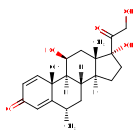
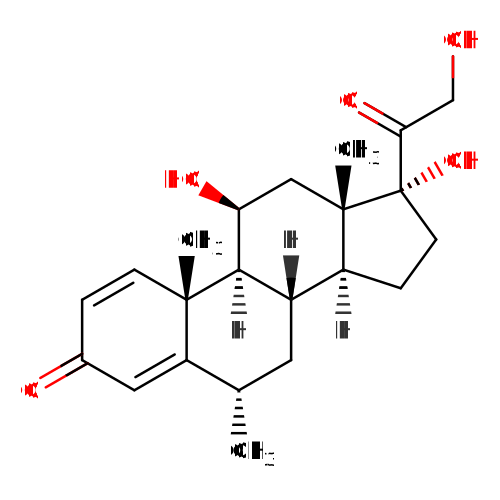
Structure for Methylprednisolone (DB00959)
- Weight
- Average: 374.4706
Monoisotopic: 374.20932407 - Chemical Formula
- C22H30O5
- Synonyms
- (6α,11β)-11,17,21-trihydroxy-6-methylpregna-1,4-diene-3,20-dione
- 1-dehydro-6α-methylhydrocortisone
- 6α-methyl-11β,17α,21-triol-1,4-pregnadiene-3,20-dione
- delta(1)-6alpha-Methylhydrocortisone
- Methylprednisolon
- Methylprednisolone
- Methylprednisolonum
- Metilprednisolona
- External IDs
- J3.872E
- NSC-19987

Pharmacology
- Indication
Oral and intramuscular methylprednisolone are indicated for a number of endocrine, rheumatic, collagen, dermatologic, allergic, ophthalmic, respiratory, hematologic, neoplastic, edematous, gastrointestinal, nervous system, and other disorders.12,13 Intra-articular and soft tissue injections are indicated for short term treatment of acute gouty arthritis, acute and subactute bursitis, acute nonspecific tenosynovitis, epicondylitis, rheumatoid arthritis, and synovitis of osteoarthritis.13 Intralesional injections are indicated for alopecia areata, discoid lupus erythematosus, keloids, lichen planus, lichen simplex chronicus and psoriatic plaques, necrobiosis lipoidica diabeticorum, and localized hypertrophic infiltrated inflammatory lesions of granuloma annulare.13
 Reduce drug development failure ratesBuild, train, & validate machine-learning modelswith evidence-based and structured datasets.Build, train, & validate predictive machine-learning models with structured datasets.
- Associated Conditions
Indication Type Indication Combined Product Details Approval Level Age Group Patient Characteristics Dose Form Adjunct therapy in management of Acute gouty arthritis •••••••••••• •••••••••• •••••• Management of Acute leukemia •••••••••••• •••••••• •••••• Used in combination to treat Acute tendonitis Combination Product in combination with: Lidocaine (DB00281) •••••••••••• •••••••••• •••••••••• Treatment of Allergic conjunctivitis (ac) •••••••••••• •••••• Treatment of Allergic corneal marginal ulcers •••••••••••• •••••• - Associated Therapies
- Contraindications & Blackbox Warnings
 Prevent Adverse Drug Events TodayTap into our Clinical API for life-saving information on contraindications & blackbox warnings, population restrictions, harmful risks, & more.Avoid life-threatening adverse drug events with our Clinical API
- Pharmacodynamics
Corticosteroids bind to the glucocorticoid receptor, inhibiting pro-inflammatory signals, and promoting anti-inflammatory signals.5 Corticosteroids have a wide therapeutic window as patients may require doses that are multiples of what the body naturally produces.5 Patients taking corticosteroids should be counselled regarding the risk of hypothalamic-pituitary-adrenal axis suppression and increased susceptibility to infections.5
- Mechanism of action
The short term effects of corticosteroids are decreased vasodilation and permeability of capillaries, as well as decreased leukocyte migration to sites of inflammation.5 Corticosteroids binding to the glucocorticoid receptor mediates changes in gene expression that lead to multiple downstream effects over hours to days.5
Glucocorticoids inhibit neutrophil apoptosis and demargination; they inhibit phospholipase A2, which decreases the formation of arachidonic acid derivatives; they inhibit NF-Kappa B and other inflammatory transcription factors; they promote anti-inflammatory genes like interleukin-10.5
Lower doses of corticosteroids provide an anti-inflammatory effect, while higher doses are immunosuppressive.5 High doses of glucocorticoids for an extended period bind to the mineralocorticoid receptor, raising sodium levels and decreasing potassium levels.5
Target Actions Organism AGlucocorticoid receptor agonistHumans UAnnexin A1 agonistHumans - Absorption
Oral methylprednisolone has 89.9% the bioavailability of oral methylprednisolone acetate, while rectal methylprednisolone has 14.2% the bioavailability.6 Intravitreal methylprednisolone has a Tmax of 2.5h.7 Approximately 1/10 of an oral or IV dose of methylprednisolone will reach the vitreous humor.7 Further data regarding the absorption of methylprednisolone are not readily available.12,13
- Volume of distribution
The average volume of distribution of methylprednisolone is 1.38L/kg.1
- Protein binding
Methylprednisolone is 76.8% protein bound in plasma and does not significantly bind to corticosteroid binding protein.1 Methylprednisolone is bound to human serum albumin in plasma.2
- Metabolism
The metabolism of methylprednisolone is thought to be mostly mediated by 11beta-hydroxysteroid dehydrogenases and 20-ketosteroid reductases.1
Hover over products below to view reaction partners
- Route of elimination
Methylprednisolone and its metabolites have been collected in urine in humans.3 A study in dogs showed 25-31% elimination in urine and 44-52% elimination in feces.4
- Half-life
- Clearance
The average plasma clearance of methylprednisolone is 336mL/h/kg.1
- Adverse Effects
 Improve decision support & research outcomesWith structured adverse effects data, including: blackbox warnings, adverse reactions, warning & precautions, & incidence rates. View sample adverse effects data in our new Data Library!Improve decision support & research outcomes with our structured adverse effects data.
- Toxicity
The oral LD50 in rats is >4g/kg.14 The intraperitoneal LD50 in mice is 2292mg/kg and in rats is 100mg/kg.14
Data regarding acute overdoses of glucocorticoids are rare.12,13 Chronic high doses of glucocorticoids can lead to the development of cataract, glaucoma, hypertension, water retention, hyperlipidemia, peptic ulcer, pancreatitis, myopathy, osteoporosis, mood changes, psychosis, dermal atrophy, allergy, acne, hypertrichosis, immune suppression, decreased resistance to infection, moon face, hyperglycemia, hypocalcemia, hypophosphatemia, metabolic acidosis, growth suppression, and secondary adrenal insufficiency.8 Treat acute overdoses with symptomatic and supportive therapy, while chronic overdoses will require temporarily reduced dosages.8,13
- Pathways
- Not Available
- Pharmacogenomic Effects/ADRs
- Not Available
Interactions
- Drug Interactions
- This information should not be interpreted without the help of a healthcare provider. If you believe you are experiencing an interaction, contact a healthcare provider immediately. The absence of an interaction does not necessarily mean no interactions exist.
Drug Interaction Integrate drug-drug
interactions in your softwareAbametapir The serum concentration of Methylprednisolone can be increased when it is combined with Abametapir. Abatacept The risk or severity of adverse effects can be increased when Methylprednisolone is combined with Abatacept. Abemaciclib The metabolism of Abemaciclib can be increased when combined with Methylprednisolone. Acalabrutinib The metabolism of Acalabrutinib can be increased when combined with Methylprednisolone. Acarbose The risk or severity of hyperglycemia can be increased when Methylprednisolone is combined with Acarbose. - Food Interactions
- Avoid alcohol.
- Take with food. Food reduces GI irritation.
Products
 Drug product information from 10+ global regionsOur datasets provide approved product information including:dosage, form, labeller, route of administration, and marketing period.Access drug product information from over 10 global regions.
- Product Ingredients
Ingredient UNII CAS InChI Key Methylprednisolone acetate 43502P7F0P 53-36-1 PLBHSZGDDKCEHR-LFYFAGGJSA-N - Product Images
- International/Other Brands
- Medrate / Medrone / Meprolone / Solomet / Urbason
- Brand Name Prescription Products
Name Dosage Strength Route Labeller Marketing Start Marketing End Region Image Depo-Medrol Injection, suspension 40 mg/1mL Intralesional; Intramuscular; Intrasynovial; Soft tissue Pharmacia & Upjohn Company LLC 1959-05-28 Not applicable US 
Depo-Medrol Injection, suspension 40 mg/1mL Intra-articular; Intralesional; Intramuscular; Soft tissue Cardinal Health 1959-05-28 2017-05-31 US Depo-Medrol Injection, suspension 40 mg/1mL Intralesional; Intramuscular; Intrasynovial; Soft tissue Remedy Repack 2015-05-07 2016-06-09 US Depo-Medrol Injection, suspension 40 mg/1mL Intra-articular; Intralesional; Intramuscular; Soft tissue Physicians Total Care, Inc. 2005-05-03 2012-06-30 US Depo-medrol Injection, suspension 40 mg/1mL Intra-articular; Intralesional; Intramuscular; Soft tissue A-S Medication Solutions 1959-05-28 Not applicable US - Generic Prescription Products
Name Dosage Strength Route Labeller Marketing Start Marketing End Region Image medPREDkit Plus Kit 4 mg/1 Oral Medarbor Llc 2018-01-24 2018-02-20 US Methylpred DP Tablet 4 mg/1 Oral Direct_Rx 2019-06-26 Not applicable US Methylprednisolone Tablet 32 mg/1 Oral Greenstone LLC 2013-03-25 Not applicable US Methylprednisolone Tablet 4 mg/1 Oral Proficient Rx LP 2016-05-26 Not applicable US Methylprednisolone Tablet 4 mg/1 Oral A-S Medication Solutions 1997-10-31 Not applicable US - Mixture Products
Name Ingredients Dosage Route Labeller Marketing Start Marketing End Region Image Depo-medrol With Lidocaine Methylprednisolone acetate (40 mg / mL) + Lidocaine hydrochloride (10 mg / mL) Suspension Intra-articular; Intrabursal; Intrasynovial; Periarticular Pfizer Canada Ulc 1973-12-31 Not applicable Canada 
Lido-mp40 Methylprednisolone acetate (40 mg/1mL) + Lidocaine hydrochloride (10 mg/1mL) Kit Infiltration Burke Therapeutics, LLC 2015-06-18 2015-09-14 US LIDODEPOMEDROL Methylprednisolone acetate (40 MG/ML) + Lidocaine hydrochloride (10 MG/ML) Injection, suspension Parenteral Pfizer Italia S.R.L. 2014-11-13 Not applicable Italy 
LIDODEPOMEDROL Methylprednisolone acetate (40 MG/ML) + Lidocaine hydrochloride (10 MG/ML) Injection, suspension Parenteral Pfizer Italia S.R.L. 2014-11-13 Not applicable Italy LIDODEPOMEDROL Methylprednisolone acetate (40 MG/ML) + Lidocaine hydrochloride (10 MG/ML) Injection, suspension Parenteral Pfizer Italia S.R.L. 2014-11-13 Not applicable Italy - Unapproved/Other Products
Name Ingredients Dosage Route Labeller Marketing Start Marketing End Region Image Dyural 40 Kit Methylprednisolone acetate (40 mg/1mL) + Bupivacaine hydrochloride (2.5 mg/1mL) + Isopropyl alcohol (70 mL/100mL) + Lidocaine hydrochloride (10 mg/1mL) + Povidone-iodine (10 mg/1mL) + Sodium chloride (9 mg/1mL) + Water (1 mL/1mL) Kit Epidural; Infiltration; Intra-articular; Intralesional; Intramuscular; Intravenous; Soft tissue; Subcutaneous; Topical Advanced Rx Pharmacy of Tennessee, LLC 2023-07-31 Not applicable US Dyural 40 Kit Methylprednisolone acetate (40 mg/1mL) + Bupivacaine hydrochloride (2.5 mg/1mL) + Isopropyl alcohol (70 mL/100mL) + Lidocaine hydrochloride (10 mg/1mL) + Povidone-iodine (10 mg/1mL) + Sodium chloride (9 mg/1mL) + Water (1 mL/1mL) Kit Intra-articular; Intralesional; Intramuscular; Soft tissue; Topical Asclemed Usa, Inc. 2014-07-25 Not applicable US Dyural 80 Kit Methylprednisolone acetate (80 mg/1mL) + Bupivacaine hydrochloride (2.5 mg/1mL) + Isopropyl alcohol (70 mL/100mL) + Lidocaine hydrochloride (10 mg/1mL) + Povidone-iodine (10 mg/1mL) + Sodium chloride (9 mg/1mL) + Water (1 mL/1mL) Kit Epidural; Infiltration; Intra-articular; Intralesional; Intramuscular; Intravenous; Soft tissue; Subcutaneous; Topical Advanced Rx Pharmacy of Tennessee, LLC 2023-07-31 Not applicable US Dyural 80 Kit Methylprednisolone acetate (80 mg/1mL) + Bupivacaine hydrochloride (2.5 mg/1mL) + Isopropyl alcohol (70 mL/100mL) + Lidocaine hydrochloride (10 mg/1mL) + Povidone-iodine (10 mg/1mL) + Sodium chloride (9 mg/1mL) + Water (1 mL/1mL) Kit Intra-articular; Intralesional; Intramuscular; Soft tissue; Topical Asclemed Usa, Inc. 2014-08-01 Not applicable US Dyural 80-LM Methylprednisolone acetate (80 mg/1mL) + Bupivacaine hydrochloride (2.5 mg/1mL) + Isopropyl alcohol (70 mL/100mL) + Lidocaine hydrochloride (10 mg/1mL) + Povidone-iodine (10 mg/1mL) Kit Epidural; Infiltration; Intra-articular; Intralesional; Intramuscular; Intravenous; Soft tissue; Subcutaneous; Topical Advanced Rx Pharmacy of Tennessee, LLC 2023-07-31 Not applicable US


Categories
- ATC Codes
- D07AA01 — Methylprednisolone
- D07AA — Corticosteroids, weak (group I)
- D07A — CORTICOSTEROIDS, PLAIN
- D07 — CORTICOSTEROIDS, DERMATOLOGICAL PREPARATIONS
- D — DERMATOLOGICALS
- D10AA — Corticosteroids, combinations for treatment of acne
- D10A — ANTI-ACNE PREPARATIONS FOR TOPICAL USE
- D10 — ANTI-ACNE PREPARATIONS
- D — DERMATOLOGICALS
- H02AB — Glucocorticoids
- H02A — CORTICOSTEROIDS FOR SYSTEMIC USE, PLAIN
- H02 — CORTICOSTEROIDS FOR SYSTEMIC USE
- H — SYSTEMIC HORMONAL PREPARATIONS, EXCL. SEX HORMONES AND INSULINS
- H02BX — Corticosteroids for systemic use, combinations
- H02B — CORTICOSTEROIDS FOR SYSTEMIC USE, COMBINATIONS
- H02 — CORTICOSTEROIDS FOR SYSTEMIC USE
- H — SYSTEMIC HORMONAL PREPARATIONS, EXCL. SEX HORMONES AND INSULINS
- D07CA — Corticosteroids, weak, combinations with antibiotics
- D07C — CORTICOSTEROIDS, COMBINATIONS WITH ANTIBIOTICS
- D07 — CORTICOSTEROIDS, DERMATOLOGICAL PREPARATIONS
- D — DERMATOLOGICALS
- S03CA — Corticosteroids and antiinfectives in combination
- S03C — CORTICOSTEROIDS AND ANTIINFECTIVES IN COMBINATION
- S03 — OPHTHALMOLOGICAL AND OTOLOGICAL PREPARATIONS
- S — SENSORY ORGANS
- Drug Categories
- Adrenal Cortex Hormones
- Adrenals
- Anti-Acne Preparations
- Anti-Acne Preparations for Topical Use
- Anti-Inflammatory Agents
- Antiemetics
- Antineoplastic Agents
- Autonomic Agents
- Central Nervous System Agents
- Compounds used in a research, industrial, or household setting
- Corticosteroid Hormone Receptor Agonists
- Corticosteroids
- Corticosteroids for Systemic Use
- Corticosteroids for Systemic Use, Plain
- Corticosteroids, Dermatological Preparations
- Corticosteroids, Weak (Group I)
- Cytochrome P-450 CYP2A6 Inducers
- Cytochrome P-450 CYP2B6 Inducers
- Cytochrome P-450 CYP2B6 Inducers (strength unknown)
- Cytochrome P-450 CYP2C19 Inducers
- Cytochrome P-450 CYP2C19 Inducers (strength unknown)
- Cytochrome P-450 CYP2C8 Inducers
- Cytochrome P-450 CYP2C8 Inducers (strength unknown)
- Cytochrome P-450 CYP2C9 Inducers
- Cytochrome P-450 CYP2C9 Inducers (strength unknown)
- Cytochrome P-450 CYP3A Inducers
- Cytochrome P-450 CYP3A Substrates
- Cytochrome P-450 CYP3A4 Inducers
- Cytochrome P-450 CYP3A4 Inducers (strength unknown)
- Cytochrome P-450 CYP3A4 Substrates
- Cytochrome P-450 Enzyme Inducers
- Cytochrome P-450 Substrates
- Dermatologicals
- Experimental Unapproved Treatments for COVID-19
- Fused-Ring Compounds
- Gastrointestinal Agents
- Hormones
- Hormones, Hormone Substitutes, and Hormone Antagonists
- Hyperglycemia-Associated Agents
- Immunosuppressive Agents
- Neuroprotective Agents
- Ophthalmological and Otological Preparations
- Ophthalmologicals
- P-glycoprotein inducers
- P-glycoprotein substrates
- Peripheral Nervous System Agents
- Pregnadienes
- Pregnadienetriols
- Pregnanes
- Protective Agents
- Sensory Organs
- Steroids
- Systemic Hormonal Preparations, Excl. Sex Hormones and Insulins
- Chemical TaxonomyProvided by Classyfire
- Description
- This compound belongs to the class of organic compounds known as 21-hydroxysteroids. These are steroids carrying a hydroxyl group at the 21-position of the steroid backbone.
- Kingdom
- Organic compounds
- Super Class
- Lipids and lipid-like molecules
- Class
- Steroids and steroid derivatives
- Sub Class
- Hydroxysteroids
- Direct Parent
- 21-hydroxysteroids
- Alternative Parents
- Gluco/mineralocorticoids, progestogins and derivatives / 20-oxosteroids / 3-oxo delta-1,4-steroids / 17-hydroxysteroids / 11-beta-hydroxysteroids / Delta-1,4-steroids / Tertiary alcohols / Alpha-hydroxy ketones / Secondary alcohols / Cyclic ketones show 4 more
- Substituents
- 11-beta-hydroxysteroid / 11-hydroxysteroid / 17-hydroxysteroid / 20-oxosteroid / 21-hydroxysteroid / 3-oxo-delta-1,4-steroid / 3-oxosteroid / Alcohol / Aliphatic homopolycyclic compound / Alpha-hydroxy ketone show 15 more
- Molecular Framework
- Aliphatic homopolycyclic compounds
- External Descriptors
- 6-methylprednisolone (CHEBI:6888) / C21 steroids (gluco/mineralocorticoids, progestogins) and derivatives (LMST02030178)
- Affected organisms
- Humans and other mammals
Chemical Identifiers
- UNII
- X4W7ZR7023
- CAS number
- 83-43-2
- InChI Key
- VHRSUDSXCMQTMA-PJHHCJLFSA-N
- InChI
- InChI=1S/C22H30O5/c1-12-8-14-15-5-7-22(27,18(26)11-23)21(15,3)10-17(25)19(14)20(2)6-4-13(24)9-16(12)20/h4,6,9,12,14-15,17,19,23,25,27H,5,7-8,10-11H2,1-3H3/t12-,14-,15-,17-,19+,20-,21-,22-/m0/s1
- IUPAC Name
- (1R,3aS,3bS,5S,9aR,9bS,10S,11aS)-1,10-dihydroxy-1-(2-hydroxyacetyl)-5,9a,11a-trimethyl-1H,2H,3H,3aH,3bH,4H,5H,7H,9aH,9bH,10H,11H,11aH-cyclopenta[a]phenanthren-7-one
- SMILES
- [H][C@@]12CC[C@](O)(C(=O)CO)[C@@]1(C)C[C@H](O)[C@@]1([H])[C@@]2([H])C[C@H](C)C2=CC(=O)C=C[C@]12C
References
- Synthesis Reference
Klaus Annen, Karl Petzoldt, Henry Laurent, Rudolf Wiechert, Helmut Hofmeister, "Novel 6.alpha.-methylprednisolone derivatives, their preparation, and their use." U.S. Patent US4587236, issued March, 1973.
US4587236- General References
- Szefler SJ, Ebling WF, Georgitis JW, Jusko WJ: Methylprednisolone versus prednisolone pharmacokinetics in relation to dose in adults. Eur J Clin Pharmacol. 1986;30(3):323-9. doi: 10.1007/bf00541537. [Article]
- Abboud R, Akil M, Charcosset C, Greige-Gerges H: Interaction of glucocorticoids and progesterone derivatives with human serum albumin. Chem Phys Lipids. 2017 Oct;207(Pt B):271-278. doi: 10.1016/j.chemphyslip.2017.04.007. Epub 2017 Apr 21. [Article]
- Matabosch X, Pozo OJ, Monfort N, Perez-Mana C, Farre M, Marcos J, Segura J, Ventura R: Urinary profile of methylprednisolone and its metabolites after oral and topical administrations. J Steroid Biochem Mol Biol. 2013 Nov;138:214-21. doi: 10.1016/j.jsbmb.2013.05.019. Epub 2013 Jun 20. [Article]
- BUHLER DR, THOMAS RC Jr, SCHLAGEL CA: ABSORPTION, METABOLISM AND EXCRETION OF 6-ALPHA-METHYL-PREDNISOLONE-3H,21-ACETATE FOLLOWING ORAL AND INTRAMUSCULAR ADMINISTRATIONS IN THE DOG. Endocrinology. 1965 May;76:852-64. doi: 10.1210/endo-76-5-852. [Article]
- Yasir M, Sonthalia S: Corticosteroid Adverse Effects . [Article]
- Garg DC, Wagner JG, Sakmar E, Weidler DJ, Albert KS: Rectal and oral absorption of methylprednisolone acetate. Clin Pharmacol Ther. 1979 Aug;26(2):232-9. doi: 10.1002/cpt1979262232. [Article]
- Behar-Cohen FF, Gauthier S, El Aouni A, Chapon P, Parel JM, Renard G, Chauvaud D: Methylprednisolone concentrations in the vitreous and the serum after pulse therapy. Retina. 2001;21(1):48-53. doi: 10.1097/00006982-200102000-00008. [Article]
- Ciriaco M, Ventrice P, Russo G, Scicchitano M, Mazzitello G, Scicchitano F, Russo E: Corticosteroid-related central nervous system side effects. J Pharmacol Pharmacother. 2013 Dec;4(Suppl 1):S94-8. doi: 10.4103/0976-500X.120975. [Article]
- FEINBERG SM, FEINBERG AR, PRUZANSKY J, FISHERMAN EW: Methylprednisolone (medrol), a potent new anti-inflammatory steroid; therapeutic results in allergic diseases. J Am Med Assoc. 1957 Nov 23;165(12):1560-2. doi: 10.1001/jama.1957.72980300006009b. [Article]
- BOLAND EW, LIDDLE GW: Metabolic and antirheumatic activities of 6-methylprednisolone (medrol). Ann Rheum Dis. 1957 Sep;16(3):297-306. doi: 10.1136/ard.16.3.297. [Article]
- Zhu L, Xu X, Ma K, Yang J, Guan H, Chen S, Chen Z, Chen G: Successful recovery of COVID-19 pneumonia in a renal transplant recipient with long-term immunosuppression. Am J Transplant. 2020 Mar 17. doi: 10.1111/ajt.15869. [Article]
- FDA Approved Drug Products: Medrol Methylprednisolone Oral Tablets [Link]
- FDA Approved Drug Products: Depo-Medrol Methylprednisolone Acetate Injection [Link]
- Cayman Chemicals: Methylprednisolone MSDS [Link]
- Efficacy and Safety of Corticosteroids in COVID-19 [Link]
- External Links
- Human Metabolome Database
- HMDB0015094
- KEGG Drug
- D00407
- PubChem Compound
- 6741
- PubChem Substance
- 46504885
- ChemSpider
- 6485
- BindingDB
- 50103616
- 6902
- ChEBI
- 6888
- ChEMBL
- CHEMBL650
- ZINC
- ZINC000003875560
- Therapeutic Targets Database
- DAP001040
- PharmGKB
- PA450466
- RxList
- RxList Drug Page
- Drugs.com
- Drugs.com Drug Page
- Wikipedia
- Methylprednisolone
- FDA label
- Download (244 KB)
- MSDS
- Download (72.6 KB)
Clinical Trials
- Clinical Trials
Phase Status Purpose Conditions Count 4 Active Not Recruiting Treatment Coronavirus Disease 2019 (COVID‑19) / Corticosteroids 1 4 Active Not Recruiting Treatment Kidney Transplantation 1 4 Active Not Recruiting Treatment Thyroid Associated Ophthalmopathy 1 4 Completed Not Available Healthy Volunteers (HV) 1 4 Completed Not Available Relapsing Remitting Multiple Sclerosis (RRMS) 1
Pharmacoeconomics
- Manufacturers
- Pharmacia and upjohn co
- Cadista pharmaceuticals inc
- Duramed pharmaceuticals inc sub barr laboratories inc
- Heather drug co inc
- Par pharmaceutical inc
- Sandoz inc
- Vintage pharmaceuticals inc
- Watson laboratories inc
- Abbott laboratories hosp products div
- Hemopharm usa corp
- Hospira inc
- Elkins sinn div ah robins co inc
- Organon usa inc
- Abraxis pharmaceutical products
- App pharmaceuticals llc
- Bedford laboratories
- International medication systems ltd
- Teva parenteral medicines inc
- Packagers
- Advanced Pharmaceutical Services Inc.
- Aidarex Pharmacuticals LLC
- Amerisource Health Services Corp.
- Apotheca Inc.
- APP Pharmaceuticals
- A-S Medication Solutions LLC
- Barr Pharmaceuticals
- Bedford Labs
- Breckenridge Pharmaceuticals
- Bryant Ranch Prepack
- C.O. Truxton Inc.
- Cadista Pharmaceuticals Inc.
- Cardinal Health
- Carlisle Laboratories Inc.
- Clint Pharmaceutical Inc.
- DAVA Pharmaceuticals
- Direct Dispensing Inc.
- Dispensing Solutions
- Diversified Healthcare Services Inc.
- DRX Pharmaceuticals
- General Injectables and Vaccines Inc.
- Greenstone LLC
- H.J. Harkins Co. Inc.
- Hemofarm AD
- Hospira Inc.
- Innoviant Pharmacy Inc.
- Keltman Pharmaceuticals Inc.
- Major Pharmaceuticals
- Mckesson Corp.
- Medisca Inc.
- Merrell Pharmaceuticals Inc.
- Neuman Distributors Inc.
- Nucare Pharmaceuticals Inc.
- Palmetto Pharmaceuticals Inc.
- Par Pharmaceuticals
- Patheon Inc.
- PD-Rx Pharmaceuticals Inc.
- Pfizer Inc.
- Pharmacia Inc.
- Pharmedix
- Physician Partners Ltd.
- Physicians Total Care Inc.
- Prasco Labs
- Preferred Pharmaceuticals Inc.
- Prescript Pharmaceuticals
- Qualitest
- Rebel Distributors Corp.
- Redpharm Drug
- San Jose Surgical Supply Inc.
- Sandhills Packaging Inc.
- Sandoz
- Schein Pharmaceutical Inc.
- Sicor Pharmaceuticals
- Southwood Pharmaceuticals
- Spectrum Pharmaceuticals
- Stat Rx Usa
- Vintage Pharmaceuticals Inc.
- Dosage Forms
Form Route Strength Cream Cream Cutaneous 0.1 % Ointment 0.1 % Solution Topical 1 % Emulsion Injection, powder, for solution Intramuscular; Intravenous Injection Intralesional; Intramuscular Injection, suspension Intra-articular 40 MG/ML Injection, suspension Intra-articular; Intramuscular 40 mg/mL Injection, suspension Intra-articular; Intralesional; Intramuscular; Soft tissue 40 mg/1mL Injection, suspension Intra-articular; Intralesional; Intramuscular; Soft tissue 80 mg/1mL Injection, suspension Intralesional; Intramuscular; Intrasynovial; Soft tissue 20 mg/1mL Injection, suspension Intralesional; Intramuscular; Intrasynovial; Soft tissue 40 mg/1mL Injection, suspension Intralesional; Intramuscular; Intrasynovial; Soft tissue 80 mg/1mL Suspension Intramuscular 40.000 mg Suspension Intra-articular; Intralesional; Intramuscular; Intrasynovial 20 mg / mL Suspension Intra-articular; Intralesional; Intramuscular; Intrasynovial 80 mg / mL Suspension Intra-articular; Intralesional; Intramuscular; Rectal 40 mg Suspension Intra-articular; Intralesional; Intramuscular; Intrasynovial 40 mg / mL Suspension 40 mg/ml Suspension Intramuscular 40 mg Injection, suspension Intra-articular; Intralesional; Intramuscular; Intrasynovial Suspension Intra-articular; Intrabursal; Intrasynovial; Periarticular Kit Intra-articular; Intralesional; Intramuscular; Soft tissue; Topical Kit Epidural; Infiltration; Intra-articular; Intralesional; Intramuscular; Intravenous; Soft tissue; Subcutaneous; Topical Kit Epidural; Infiltration; Intra-articular; Intralesional; Intramuscular; Soft tissue; Topical Solution Intramuscular 500.000 mg Pill Suspension Parenteral 40.000 mg Gel Topical 10 mg/1g Injection, powder, for solution Solution Intravenous 500.000 mg Kit Infiltration Injection, suspension Parenteral Injection, powder, for solution 120 MG/2ML Injection, powder, for solution 40 MG/2ML Injection, powder, for solution Intramuscular; Intravenous 20 MG/2ML Injection, powder, for solution Intravenous 500 MG Injection, powder, for solution; injection, powder, lyophilized, for solution 500 mg Kit Oral Kit Oral 4 mg/1 Tablet Oral 2 MG Tablet Oral 2 mg/1 Tablet Oral 32 mg/1 Cream Topical 2.5 mg / g Ointment Tablet, film coated Oral 4 MG Tablet Oral Tablet, film coated Oral Tablet Oral 32 MG Tablet Oral 16 mg/1 Tablet Oral 4 mg/1 Tablet Oral 8 mg/1 Injection, suspension Intra-arterial; Intralesional; Intramuscular; Soft tissue 80 mg/1mL Injection, suspension Intra-articular; Intralesional; Intrameningeal; Soft tissue 40 mg/1mL Injection, suspension Intra-articular; Intralesional; Intramuscular; Intrasynovial; Soft tissue 40 mg/1mL Injection, suspension Intra-articular; Intralesional; Intramuscular; Intrasynovial; Soft tissue 80 mg/1mL Injection, suspension Intra-articular; Intralesional; Intramuscular; Parenteral; Soft tissue 40 mg/1mL Injection, suspension Intra-articular; Intralesional; Intramuscular; Parenteral; Soft tissue 80 mg/1mL Injection, suspension Intrabronchial; Intralesional; Intramuscular; Parenteral; Soft tissue 80 mg/1mL Injection, suspension Intramuscular; Intrasynovial; Soft tissue 40 mg/1mL Suspension Intra-articular; Intramuscular; Intrasynovial; Soft tissue 40 mg / mL Suspension Intra-articular; Intramuscular; Intrasynovial; Soft tissue 80 mg / mL Injection, powder, lyophilized, for solution Intravenous 500 mg Powder, for solution Intramuscular; Intravenous Injection, powder, for solution Intramuscular 80 MG/1.5ML Injection, powder, lyophilized, for solution Intramuscular; Intravenous 500 mg Emulsion 1 MG/G Injection, powder, for solution Parenteral 1000 MG Injection, powder, for solution Parenteral 125 MG Injection, powder, for solution Parenteral 40 MG Injection, powder, for solution Parenteral 500 MG Tablet Oral 40 MG Kit Infiltration; Intra-articular; Intralesional; Intramuscular; Soft tissue; Topical Cream Topical Lotion Topical Lotion Topical 100 mg/ml Injection, suspension; kit; solution Intra-articular; Intralesional; Intramuscular; Soft tissue; Topical Injection, solution; injection, suspension; kit; solution Epidural; Infiltration; Intra-articular; Intracaudal; Intralesional; Intramuscular; Intravenous; Perineural; Soft tissue; Topical Kit Epidural; Infiltration; Intramuscular; Intrasynovial; Soft tissue; Topical Kit Infiltration; Soft tissue; Topical Kit Epidural; Infiltration; Intracaudal Tablet, coated Oral 16 mg Tablet, coated Oral 4 mg Solution Intramuscular 125.000 mg Injection, powder, lyophilized, for solution Intramuscular; Intravenous 20 mg Injection, powder, lyophilized, for solution Intramuscular; Intravenous 250 mg Injection, powder, lyophilized, for solution Intramuscular; Intravenous 40 mg Solution Parenteral 500.000 mg Kit Epidural; Infiltration Tablet Oral 8 MG Solution Topical Suspension 80.000 mg Solution Intravenous Tablet, extended release 4 MG Tablet, extended release 8 MG Injection Intramuscular; Intravenous 20 mg/ml Injection, powder, for solution 20 MG/ML Injection, powder, for solution 250 MG/5ML Injection, powder, for solution 40 MG/ML Injection, powder, for solution Intravenous 8 MG Injection, powder, for solution Intramuscular; Intravenous 16 mg Injection, powder, for solution Intramuscular; Intravenous 250 mg Injection, powder, for solution Intramuscular; Intravenous 31.56 mg Suspension 40 mg/1ml Tablet Oral 16 mg Tablet Oral 4 mg - Prices
Unit description Cost Unit Methylprednisolone powder 96.25USD g Methylprednisolone ac powdr 40.09USD g Methylprednisolone ss 1 gm vial 31.2USD vial Solu-medrol 1 gm vial 24.43USD vial Solu-medrol (pf) 500 mg vial 20.9USD vial MethylPREDNISolone (Pak) 21 4 mg tablet Disp Pack 16.99USD disp Methylprednisolone 500 mg vial 15.6USD vial Solu-medrol 500 mg vial 12.9USD vial Depo-medrol 80 mg/ml vial 11.67USD ml Methylprednisolone 125 mg vial 10.0USD vial Methylprednisolone 80 mg/ml vial 9.12USD ml Depo-medrol 40 mg/ml vial 6.41USD ml Solu-medrol (pf) 125 mg vial 5.83USD vial Methylprednisolone 40 mg/ml vial 5.22USD ml Medrol 32 mg tablet 5.13USD tablet Methylprednisolone 32 mg tablet 4.62USD tablet Depo-medrol 20 mg/ml vial 3.78USD ml Methylprednisolone 16 mg tablet 3.17USD tablet Methylprednisolone 40 mg vial 3.0USD vial A-methapred 40 mg vial 2.36USD vial Medrol 16 mg tablet 2.28USD tablet Medrol 8 mg tablet 2.23USD tablet Methylprednisolone 8 mg tablet 1.74USD tablet Methylprednisolone 4 mg tablet 1.68USD tablet Medrol 4 mg dosepak 1.59USD each Medrol 4 mg tablet 0.99USD tablet Medrol 2 mg tablet 0.84USD tablet DrugBank does not sell nor buy drugs. Pricing information is supplied for informational purposes only.- Patents
- Not Available
Properties
- State
- Solid
- Experimental Properties
Property Value Source melting point (°C) 232.5 °C PhysProp water solubility 120 mg/L (at 25 °C) YALKOWSKY,SH & DANNENFELSER,RM (1992) logP 1.525 ChemSpider logS -2.99 ADME Research, USCD - Predicted Properties
Property Value Source Water Solubility 0.109 mg/mL ALOGPS logP 2.06 ALOGPS logP 1.56 Chemaxon logS -3.5 ALOGPS pKa (Strongest Acidic) 12.59 Chemaxon pKa (Strongest Basic) -2.9 Chemaxon Physiological Charge 0 Chemaxon Hydrogen Acceptor Count 5 Chemaxon Hydrogen Donor Count 3 Chemaxon Polar Surface Area 94.83 Å2 Chemaxon Rotatable Bond Count 2 Chemaxon Refractivity 103.04 m3·mol-1 Chemaxon Polarizability 40.77 Å3 Chemaxon Number of Rings 4 Chemaxon Bioavailability 1 Chemaxon Rule of Five Yes Chemaxon Ghose Filter Yes Chemaxon Veber's Rule No Chemaxon MDDR-like Rule No Chemaxon - Predicted ADMET Features
Property Value Probability Human Intestinal Absorption + 0.9911 Blood Brain Barrier + 0.9484 Caco-2 permeable - 0.6404 P-glycoprotein substrate Substrate 0.7812 P-glycoprotein inhibitor I Non-inhibitor 0.7489 P-glycoprotein inhibitor II Non-inhibitor 0.604 Renal organic cation transporter Non-inhibitor 0.769 CYP450 2C9 substrate Non-substrate 0.8415 CYP450 2D6 substrate Non-substrate 0.9115 CYP450 3A4 substrate Substrate 0.7582 CYP450 1A2 substrate Non-inhibitor 0.9473 CYP450 2C9 inhibitor Non-inhibitor 0.907 CYP450 2D6 inhibitor Non-inhibitor 0.9513 CYP450 2C19 inhibitor Non-inhibitor 0.9026 CYP450 3A4 inhibitor Non-inhibitor 0.8309 CYP450 inhibitory promiscuity Low CYP Inhibitory Promiscuity 0.9167 Ames test Non AMES toxic 0.9337 Carcinogenicity Non-carcinogens 0.9529 Biodegradation Not ready biodegradable 0.9492 Rat acute toxicity 2.0025 LD50, mol/kg Not applicable hERG inhibition (predictor I) Weak inhibitor 0.9459 hERG inhibition (predictor II) Non-inhibitor 0.5985
Spectra
- Mass Spec (NIST)
- Not Available
- Spectra
- Chromatographic Properties
Collision Cross Sections (CCS)
Adduct CCS Value (Å2) Source type Source [M-H]- 196.1549557 predictedDarkChem Lite v0.1.0 [M-H]- 195.7159557 predictedDarkChem Lite v0.1.0 [M-H]- 196.1608557 predictedDarkChem Lite v0.1.0 [M-H]- 192.73662 predictedDeepCCS 1.0 (2019) [M+H]+ 196.3829557 predictedDarkChem Lite v0.1.0 [M+H]+ 197.1977557 predictedDarkChem Lite v0.1.0 [M+H]+ 197.7216557 predictedDarkChem Lite v0.1.0 [M+H]+ 194.63203 predictedDeepCCS 1.0 (2019) [M+Na]+ 196.9138557 predictedDarkChem Lite v0.1.0 [M+Na]+ 196.9147557 predictedDarkChem Lite v0.1.0 [M+Na]+ 200.84096 predictedDeepCCS 1.0 (2019)
Targets

- Kind
- Protein
- Organism
- Humans
- Pharmacological action
- Yes
- Actions
- Agonist
- General Function
- Zinc ion binding
- Specific Function
- Receptor for glucocorticoids (GC). Has a dual mode of action: as a transcription factor that binds to glucocorticoid response elements (GRE), both for nuclear and mitochondrial DNA, and as a modula...
- Gene Name
- NR3C1
- Uniprot ID
- P04150
- Uniprot Name
- Glucocorticoid receptor
- Molecular Weight
- 85658.57 Da
References
- Owen HC, Miner JN, Ahmed SF, Farquharson C: The growth plate sparing effects of the selective glucocorticoid receptor modulator, AL-438. Mol Cell Endocrinol. 2007 Jan 29;264(1-2):164-70. Epub 2006 Dec 19. [Article]
- Juruena MF, Cleare AJ, Papadopoulos AS, Poon L, Lightman S, Pariante CM: Different responses to dexamethasone and prednisolone in the same depressed patients. Psychopharmacology (Berl). 2006 Dec;189(2):225-35. Epub 2006 Oct 3. [Article]
- Boivin MA, Ye D, Kennedy JC, Al-Sadi R, Shepela C, Ma TY: Mechanism of glucocorticoid regulation of the intestinal tight junction barrier. Am J Physiol Gastrointest Liver Physiol. 2007 Feb;292(2):G590-8. Epub 2006 Oct 26. [Article]
- Quesnell RR, Han X, Schultz BD: Glucocorticoids stimulate ENaC upregulation in bovine mammary epithelium. Am J Physiol Cell Physiol. 2007 May;292(5):C1739-45. Epub 2007 Jan 24. [Article]
- Chen X, Ji ZL, Chen YZ: TTD: Therapeutic Target Database. Nucleic Acids Res. 2002 Jan 1;30(1):412-5. [Article]
- Kind
- Protein
- Organism
- Humans
- Pharmacological action
- Unknown
- Actions
- Agonist
- General Function
- Structural molecule activity
- Specific Function
- Plays important roles in the innate immune response as effector of glucocorticoid-mediated responses and regulator of the inflammatory process. Has anti-inflammatory activity (PubMed:8425544). Play...
- Gene Name
- ANXA1
- Uniprot ID
- P04083
- Uniprot Name
- Annexin A1
- Molecular Weight
- 38713.855 Da
References
- Serres M, Viac J, Comera C, Schmitt D: Expression of annexin I in freshly isolated human epidermal cells and in cultured keratinocytes. Arch Dermatol Res. 1994;286(5):268-72. [Article]
Enzymes
- Kind
- Protein group
- Organism
- Humans and other mammals
- Pharmacological action
- Unknown
- Actions
- Substrate
- General Function
- Trans-1,2-dihydrobenzene-1,2-diol dehydrogenase activity
- Specific Function
- Converts progesterone to its inactive form, 20-alpha-dihydroxyprogesterone (20-alpha-OHP). In the liver and intestine, may have a role in the transport of bile. May have a role in monitoring the in...
Components:
| Name | UniProt ID |
|---|---|
| Aldo-keto reductase family 1 member C1 | Q04828 |
| Aldo-keto reductase family 1 member C2 | P52895 |
| Aldo-keto reductase family 1 member C3 | P42330 |
| Aldo-keto reductase family 1 member C4 | P17516 |
References
- Malatkova P, Wsol V: Carbonyl reduction pathways in drug metabolism. Drug Metab Rev. 2014 Feb;46(1):96-123. doi: 10.3109/03602532.2013.853078. Epub 2013 Oct 31. [Article]
- Szefler SJ, Ebling WF, Georgitis JW, Jusko WJ: Methylprednisolone versus prednisolone pharmacokinetics in relation to dose in adults. Eur J Clin Pharmacol. 1986;30(3):323-9. doi: 10.1007/bf00541537. [Article]
- Kind
- Protein group
- Organism
- Humans and other mammals
- Pharmacological action
- Unknown
- General Function
- 11-beta-hydroxysteroid dehydrogenase [nad(p)] activity
- Specific Function
- Catalyzes reversibly the conversion of cortisol to the inactive metabolite cortisone. Catalyzes reversibly the conversion of 7-ketocholesterol to 7-beta-hydroxycholesterol. In intact cells, the rea...
Components:
| Name | UniProt ID |
|---|---|
| Corticosteroid 11-beta-dehydrogenase isozyme 1 | P28845 |
| Corticosteroid 11-beta-dehydrogenase isozyme 2 | P80365 |
References
- Szefler SJ, Ebling WF, Georgitis JW, Jusko WJ: Methylprednisolone versus prednisolone pharmacokinetics in relation to dose in adults. Eur J Clin Pharmacol. 1986;30(3):323-9. doi: 10.1007/bf00541537. [Article]
- Kind
- Protein
- Organism
- Humans
- Pharmacological action
- Unknown
- Actions
- SubstrateInducer
- General Function
- Vitamin d3 25-hydroxylase activity
- Specific Function
- Cytochromes P450 are a group of heme-thiolate monooxygenases. In liver microsomes, this enzyme is involved in an NADPH-dependent electron transport pathway. It performs a variety of oxidation react...
- Gene Name
- CYP3A4
- Uniprot ID
- P08684
- Uniprot Name
- Cytochrome P450 3A4
- Molecular Weight
- 57342.67 Da
References
- Lee SJ, Jusko WJ, Salaita CG, Calis KA, Jann MW, Spratlin VE, Goldstein JA, Hon YY: Reduced methylprednisolone clearance causing prolonged pharmacodynamics in a healthy subject was not associated with CYP3A5*3 allele or a change in diet composition. J Clin Pharmacol. 2006 May;46(5):515-26. doi: 10.1177/0091270006287588. [Article]
- Usui T, Saitoh Y, Komada F: Induction of CYP3As in HepG2 cells by several drugs. Association between induction of CYP3A4 and expression of glucocorticoid receptor. Biol Pharm Bull. 2003 Apr;26(4):510-7. doi: 10.1248/bpb.26.510. [Article]
- Pichard L, Fabre I, Daujat M, Domergue J, Joyeux H, Maurel P: Effect of corticosteroids on the expression of cytochromes P450 and on cyclosporin A oxidase activity in primary cultures of human hepatocytes. Mol Pharmacol. 1992 Jun;41(6):1047-55. [Article]
- Matoulkova P, Pavek P, Maly J, Vlcek J: Cytochrome P450 enzyme regulation by glucocorticoids and consequences in terms of drug interaction. Expert Opin Drug Metab Toxicol. 2014 Mar;10(3):425-35. doi: 10.1517/17425255.2014.878703. Epub 2014 Jan 23. [Article]
- Litt J. (2016). Litt's Drug eruption & reaction manual (22nd ed.). CRC Press LLc.
- Kind
- Protein group
- Organism
- Humans
- Pharmacological action
- Unknown
- Actions
- SubstrateInducer
- General Function
- Vitamin d3 25-hydroxylase activity
- Specific Function
- Cytochromes P450 are a group of heme-thiolate monooxygenases. In liver microsomes, this enzyme is involved in an NADPH-dependent electron transport pathway. It performs a variety of oxidation react...
Components:
| Name | UniProt ID |
|---|---|
| Cytochrome P450 3A4 | P08684 |
| Cytochrome P450 3A43 | Q9HB55 |
| Cytochrome P450 3A5 | P20815 |
| Cytochrome P450 3A7 | P24462 |
References
- Roberts JK, Moore CD, Romero EG, Ward RM, Yost GS, Reilly CA: Regulation of CYP3A genes by glucocorticoids in human lung cells. F1000Res. 2013 Aug 13;2:173. doi: 10.12688/f1000research.2-173.v2. eCollection 2013. [Article]
- Matoulkova P, Pavek P, Maly J, Vlcek J: Cytochrome P450 enzyme regulation by glucocorticoids and consequences in terms of drug interaction. Expert Opin Drug Metab Toxicol. 2014 Mar;10(3):425-35. doi: 10.1517/17425255.2014.878703. Epub 2014 Jan 23. [Article]
- Kind
- Protein
- Organism
- Humans
- Pharmacological action
- Unknown
- Actions
- Inducer
- General Function
- Steroid hydroxylase activity
- Specific Function
- Exhibits a high coumarin 7-hydroxylase activity. Can act in the hydroxylation of the anti-cancer drugs cyclophosphamide and ifosphamide. Competent in the metabolic activation of aflatoxin B1. Const...
- Gene Name
- CYP2A6
- Uniprot ID
- P11509
- Uniprot Name
- Cytochrome P450 2A6
- Molecular Weight
- 56501.005 Da
References
- Matoulkova P, Pavek P, Maly J, Vlcek J: Cytochrome P450 enzyme regulation by glucocorticoids and consequences in terms of drug interaction. Expert Opin Drug Metab Toxicol. 2014 Mar;10(3):425-35. doi: 10.1517/17425255.2014.878703. Epub 2014 Jan 23. [Article]
- Kind
- Protein
- Organism
- Humans
- Pharmacological action
- Unknown
- Actions
- Inducer
- General Function
- Oxygen binding
- Specific Function
- Cytochromes P450 are a group of heme-thiolate monooxygenases. In liver microsomes, this enzyme is involved in an NADPH-dependent electron transport pathway. It oxidizes a variety of structurally un...
- Gene Name
- CYP1B1
- Uniprot ID
- Q16678
- Uniprot Name
- Cytochrome P450 1B1
- Molecular Weight
- 60845.33 Da
References
- Matoulkova P, Pavek P, Maly J, Vlcek J: Cytochrome P450 enzyme regulation by glucocorticoids and consequences in terms of drug interaction. Expert Opin Drug Metab Toxicol. 2014 Mar;10(3):425-35. doi: 10.1517/17425255.2014.878703. Epub 2014 Jan 23. [Article]
- Kind
- Protein
- Organism
- Humans
- Pharmacological action
- Unknown
- Actions
- Inducer
- General Function
- Steroid hydroxylase activity
- Specific Function
- Cytochromes P450 are a group of heme-thiolate monooxygenases. In liver microsomes, this enzyme is involved in an NADPH-dependent electron transport pathway. It oxidizes a variety of structurally un...
- Gene Name
- CYP2B6
- Uniprot ID
- P20813
- Uniprot Name
- Cytochrome P450 2B6
- Molecular Weight
- 56277.81 Da
References
- Matoulkova P, Pavek P, Maly J, Vlcek J: Cytochrome P450 enzyme regulation by glucocorticoids and consequences in terms of drug interaction. Expert Opin Drug Metab Toxicol. 2014 Mar;10(3):425-35. doi: 10.1517/17425255.2014.878703. Epub 2014 Jan 23. [Article]
- Kind
- Protein
- Organism
- Humans
- Pharmacological action
- Unknown
- Actions
- Inducer
- General Function
- Steroid hydroxylase activity
- Specific Function
- Cytochromes P450 are a group of heme-thiolate monooxygenases. In liver microsomes, this enzyme is involved in an NADPH-dependent electron transport pathway. It oxidizes a variety of structurally un...
- Gene Name
- CYP2C8
- Uniprot ID
- P10632
- Uniprot Name
- Cytochrome P450 2C8
- Molecular Weight
- 55824.275 Da
References
- Matoulkova P, Pavek P, Maly J, Vlcek J: Cytochrome P450 enzyme regulation by glucocorticoids and consequences in terms of drug interaction. Expert Opin Drug Metab Toxicol. 2014 Mar;10(3):425-35. doi: 10.1517/17425255.2014.878703. Epub 2014 Jan 23. [Article]
- Kind
- Protein
- Organism
- Humans
- Pharmacological action
- Unknown
- Actions
- Inducer
- General Function
- Steroid hydroxylase activity
- Specific Function
- Responsible for the metabolism of a number of therapeutic agents such as the anticonvulsant drug S-mephenytoin, omeprazole, proguanil, certain barbiturates, diazepam, propranolol, citalopram and im...
- Gene Name
- CYP2C19
- Uniprot ID
- P33261
- Uniprot Name
- Cytochrome P450 2C19
- Molecular Weight
- 55930.545 Da
References
- Matoulkova P, Pavek P, Maly J, Vlcek J: Cytochrome P450 enzyme regulation by glucocorticoids and consequences in terms of drug interaction. Expert Opin Drug Metab Toxicol. 2014 Mar;10(3):425-35. doi: 10.1517/17425255.2014.878703. Epub 2014 Jan 23. [Article]
- Kind
- Protein
- Organism
- Humans
- Pharmacological action
- Unknown
- Actions
- Inducer
- General Function
- Steroid hydroxylase activity
- Specific Function
- Cytochromes P450 are a group of heme-thiolate monooxygenases. In liver microsomes, this enzyme is involved in an NADPH-dependent electron transport pathway. It oxidizes a variety of structurally un...
- Gene Name
- CYP2C9
- Uniprot ID
- P11712
- Uniprot Name
- Cytochrome P450 2C9
- Molecular Weight
- 55627.365 Da
References
- Matoulkova P, Pavek P, Maly J, Vlcek J: Cytochrome P450 enzyme regulation by glucocorticoids and consequences in terms of drug interaction. Expert Opin Drug Metab Toxicol. 2014 Mar;10(3):425-35. doi: 10.1517/17425255.2014.878703. Epub 2014 Jan 23. [Article]
Carriers
- Kind
- Protein
- Organism
- Humans
- Pharmacological action
- Unknown
- Actions
- Binder
- General Function
- Toxic substance binding
- Specific Function
- Serum albumin, the main protein of plasma, has a good binding capacity for water, Ca(2+), Na(+), K(+), fatty acids, hormones, bilirubin and drugs. Its main function is the regulation of the colloid...
- Gene Name
- ALB
- Uniprot ID
- P02768
- Uniprot Name
- Serum albumin
- Molecular Weight
- 69365.94 Da
References
- Abboud R, Akil M, Charcosset C, Greige-Gerges H: Interaction of glucocorticoids and progesterone derivatives with human serum albumin. Chem Phys Lipids. 2017 Oct;207(Pt B):271-278. doi: 10.1016/j.chemphyslip.2017.04.007. Epub 2017 Apr 21. [Article]
Transporters
- Kind
- Protein
- Organism
- Humans
- Pharmacological action
- Unknown
- Actions
- SubstrateInducer
- General Function
- Xenobiotic-transporting atpase activity
- Specific Function
- Energy-dependent efflux pump responsible for decreased drug accumulation in multidrug-resistant cells.
- Gene Name
- ABCB1
- Uniprot ID
- P08183
- Uniprot Name
- Multidrug resistance protein 1
- Molecular Weight
- 141477.255 Da
References
- Oka A, Oda M, Saitoh H, Nakayama A, Takada M, Aungst BJ: Secretory transport of methylprednisolone possibly mediated by P-glycoprotein in Caco-2 cells. Biol Pharm Bull. 2002 Mar;25(3):393-6. [Article]
- Troutman MD, Thakker DR: Novel experimental parameters to quantify the modulation of absorptive and secretory transport of compounds by P-glycoprotein in cell culture models of intestinal epithelium. Pharm Res. 2003 Aug;20(8):1210-24. [Article]
- Yates CR, Chang C, Kearbey JD, Yasuda K, Schuetz EG, Miller DD, Dalton JT, Swaan PW: Structural determinants of P-glycoprotein-mediated transport of glucocorticoids. Pharm Res. 2003 Nov;20(11):1794-803. [Article]
- Matoulkova P, Pavek P, Maly J, Vlcek J: Cytochrome P450 enzyme regulation by glucocorticoids and consequences in terms of drug interaction. Expert Opin Drug Metab Toxicol. 2014 Mar;10(3):425-35. doi: 10.1517/17425255.2014.878703. Epub 2014 Jan 23. [Article]
- Tomita M, Watanabe A, Fujinaga I, Yamakawa T, Hayashi M: Nonlinear absorption of methylprednisolone by absorptive and secretory transporters. Int J Pharm. 2010 Mar 15;387(1-2):1-6. doi: 10.1016/j.ijpharm.2009.10.042. Epub 2009 Oct 31. [Article]

Drug created at June 13, 2005 13:24 / Updated at April 26, 2024 00:45