Identification
- Summary
Lidocaine is a local anesthetic used in a wide variety of superficial and invasive procedures.
- Brand Names
- Agoneaze, Akten, Alivio, Anestacon, Anodyne Lpt, Astero, Cathejell, Curacaine, Depo-medrol With Lidocaine, Dermacinrx Lido V Pak, Dermacinrx Phn Pak, Dermacinrx Prikaan, Diphen, Emla, Fortacin, Glydo, Instillagel, Kenalog, Lido Bdk, Lido-prilo Caine Pack, Lidocan, Lidodan, Lidoderm, Lidopac, Lidopril, Lidopro, Lidosol, Lidothol, Lidotral, Lignospan, Marcaine, Max-freeze, Medi-derm With Lidocaine, Neo-bex, Octocaine, Octocaine With Epinephrine, Oraqix, P-care, P-care X, Pliaglis, Prilolid, Prizotral, Procomycin, Readysharp Anesthetics Plus Ketorolac, Readysharp-A, Readysharp-p40, Readysharp-p80, Relador, Synera, Triple Antibiotic, Venipuncture Px1, Viadur, Xylocaine, Xylocaine With Epinephrine, Xylocard, Xylonor, Zingo, Ztlido
- Generic Name
- Lidocaine
- DrugBank Accession Number
- DB00281
- Background
Ever since its discovery and availability for sale and use in the late 1940s, lidocaine has become an exceptionally commonly used medication 6. In particular, lidocaine's principal mode of action in acting as a local anesthetic that numbs the sensations of tissues means the agent is indicated for facilitating local anesthesia for a large variety of surgical procedures 10,7,8. It ultimately elicits its numbing activity by blocking sodium channels so that the neurons of local tissues that have the medication applied on are transiently incapable of signaling the brain regarding sensations 10,7,8. In doing so, however, it can block or decrease muscle contractile, resulting in effects like vasodilation, hypotension, and irregular heart rate, among others 10,7,8. As a result, lidocaine is also considered a class Ib anti-arrhythmic agent 7,8,12. Nevertheless, lidocaine's local anesthetic action sees its use in many medical situations or circumstances that may benefit from its action, including the treatment of premature ejaculation 5.
Regardless, lidocaine is currently available as a relatively non-expensive generic medication that is written for in millions of prescriptions internationally on a yearly basis. It is even included in the World Health Organization's List of Essential Medicines 9.
- Type
- Small Molecule
- Groups
- Approved, Vet approved
- Structure
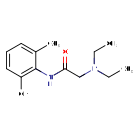
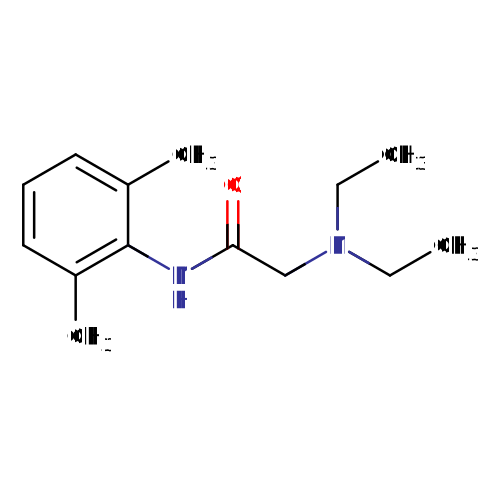
Structure for Lidocaine (DB00281)
- Weight
- Average: 234.3373
Monoisotopic: 234.173213336 - Chemical Formula
- C14H22N2O
- Synonyms
- 2-(Diethylamino)-2',6'-acetoxylidide
- 2-(Diethylamino)-N-(2,6-dimethylphenyl)acetamide
- alpha-diethylamino-2,6-dimethylacetanilide
- Lidocaína
- Lidocaina
- Lidocaine
- Lidocainum
- Lignocaine
- α-diethylamino-2,6-dimethylacetanilide
- External IDs
- ALGRX 3268
- ALGRX-3268
- LSM-3165
- NSC-40030

Pharmacology
- Indication
Lidocaine is an anesthetic of the amide group indicated for production of local or regional anesthesia by infiltration techniques such as percutaneous injection and intravenous regional anesthesia by peripheral nerve block techniques such as brachial plexus and intercostal and by central neural techniques such as lumbar and caudal epidural blocks 10,7.
 Reduce drug development failure ratesBuild, train, & validate machine-learning modelswith evidence-based and structured datasets.Build, train, & validate predictive machine-learning models with structured datasets.
- Associated Conditions
Indication Type Indication Combined Product Details Approval Level Age Group Patient Characteristics Dose Form Treatment of Acute otitis media •••••••••••• •••••••• • ••••• Used in combination for symptomatic treatment of Anal fissures Combination Product in combination with: Titanium dioxide (DB09536), Bufexamac (DB13346), Bismuth subgallate (DB13909) •••••••••••• ••••••••• ••••••••••• Used in combination for symptomatic treatment of Anorectal discomfort Combination Product in combination with: Glycerin (DB09462) ••• ••• Treatment of Arrhythmia •••••••••••• •••••••• Used in combination to treat Back pain lower back Combination Product in combination with: Salicylamide O-acetic acid (DB16000), Dexamethasone (DB01234), Kebuzone (DB08940), Cyanocobalamin (DB00115) •••••••••••• •••••••••• •••••••• - Associated Therapies
- Contraindications & Blackbox Warnings
 Prevent Adverse Drug Events TodayTap into our Clinical API for life-saving information on contraindications & blackbox warnings, population restrictions, harmful risks, & more.Avoid life-threatening adverse drug events with our Clinical API
- Pharmacodynamics
Excessive blood levels of lidocaine can cause changes in cardiac output, total peripheral resistance, and mean arterial pressure 10,7. With central neural blockade these changes may be attributable to the block of autonomic fibers, a direct depressant effect of the local anesthetic agent on various components of the cardiovascular system, and/or the beta-adrenergic receptor stimulating action of epinephrine when present 10,7. The net effect is normally a modest hypotension when the recommended dosages are not exceeded 10,7.
In particular, such cardiac effects are likely associated with the principal effect that lidocaine elicits when it binds and blocks sodium channels, inhibiting the ionic fluxes required for the initiation and conduction of electrical action potential impulses necessary to facilitate muscle contraction 10,7,8. Subsequently, in cardiac myocytes, lidocaine can potentially block or otherwise slow the rise of cardiac action potentials and their associated cardiac myocyte contractions, resulting in possible effects like hypotension, bradycardia, myocardial depression, cardiac arrhythmias, and perhaps cardiac arrest or circulatory collapse 10,7,8.
Moreover, lidocaine possesses a dissociation constant (pKa) of 7.7 and is considered a weak base 8. As a result, about 25% of lidocaine molecules will be un-ionized and available at the physiological pH of 7.4 to translocate inside nerve cells, which means lidocaine elicits an onset of action more rapidly than other local anesthetics that have higher pKa values 8. This rapid onset of action is demonstrated in about one minute following intravenous injection and fifteen minutes following intramuscular injection 7. The administered lidocaine subsequently spreads rapidly through the surrounding tissues and the anesthetic effect lasts approximately ten to twenty minutes when given intravenously and about sixty to ninety minutes after intramuscular injection 7.
Nevertheless, it appears that the efficacy of lidocaine may be minimized in the presence of inflammation 8. This effect could be due to acidosis decreasing the amount of un-ionized lidocaine molecules, a more rapid reduction in lidocaine concentration as a result of increased blood flow, or potentially also because of increased production of inflammatory mediators like peroxynitrite that elicit direct actions on sodium channels 8.
- Mechanism of action
Lidocaine is a local anesthetic of the amide type 10,7,8. It is used to provide local anesthesia by nerve blockade at various sites in the body 10,7,8. It does so by stabilizing the neuronal membrane by inhibiting the ionic fluxes required for the initiation and conduction of impulses, thereby effecting local anesthetic action 10,7,8. In particular, the lidocaine agent acts on sodium ion channels located on the internal surface of nerve cell membranes 10,7,8. At these channels, neutral uncharged lidocaine molecules diffuse through neural sheaths into the axoplasm where they are subsequently ionized by joining with hydrogen ions 10,7,8. The resultant lidocaine cations are then capable of reversibly binding the sodium channels from the inside, keeping them locked in an open state that prevents nerve depolarization 10,7,8. As a result, with sufficient blockage, the membrane of the postsynaptic neuron will ultimately not depolarize and will thus fail to transmit an action potential 10,7,8. This facilitates an anesthetic effect by not merely preventing pain signals from propagating to the brain but by aborting their generation in the first place 10,7,8.
In addition to blocking conduction in nerve axons in the peripheral nervous system, lidocaine has important effects on the central nervous system and cardiovascular system 10,7,8. After absorption, lidocaine may cause stimulation of the CNS followed by depression and in the cardiovascular system, it acts primarily on the myocardium where it may produce decreases in electrical excitability, conduction rate, and force of contraction 10,7,8.
Target Actions Organism ASodium channel protein type 10 subunit alpha inhibitorHumans ASodium channel protein type 9 subunit alpha inhibitorHumans ASodium channel protein type 5 subunit alpha inhibitorHumans UEpidermal growth factor receptor antagonistHumans USodium channel protein type 4 subunit alpha Not Available Humans UAlpha-1-acid glycoprotein 1 Not Available Humans UAlpha-1-acid glycoprotein 2 Not Available Humans - Absorption
In general, lidocaine is readily absorbed across mucous membranes and damaged skin but poorly through intact skin 12. The agent is quickly absorbed from the upper airway, tracheobronchial tree, and alveoli into the bloodstream 12. And although lidocaine is also well absorbed across the gastrointestinal tract the oral bioavailability is only about 35% as a result of a high degree of first-pass metabolism 12. After injection into tissues, lidocaine is also rapidly absorbed and the absorption rate is affected by both vascularity and the presence of tissue and fat capable of binding lidocaine in the particular tissues 12.
The concentration of lidocaine in the blood is subsequently affected by a variety of aspects, including its rate of absorption from the site of injection, the rate of tissue distribution, and the rate of metabolism and excretion 10,7,8. Subsequently, the systemic absorption of lidocaine is determined by the site of injection, the dosage given, and its pharmacological profile 10,7,8. The maximum blood concentration occurs following intercostal nerve blockade followed in order of decreasing concentration, the lumbar epidural space, brachial plexus site, and subcutaneous tissue 10,7,8. The total dose injected regardless of the site is the primary determinant of the absorption rate and blood levels achieved 10,7,8. There is a linear relationship between the amount of lidocaine injected and the resultant peak anesthetic blood levels 10,7,8.
Nevertheless, it has been observed that lidocaine hydrochloride is completely absorbed following parenteral administration, its rate of absorption depending also on lipid solubility and the presence or absence of a vasoconstrictor agent 10,7,8. Except for intravascular administration, the highest blood levels are obtained following intercostal nerve block and the lowest after subcutaneous administration 10,7,8.
Additionally, lidocaine crosses the blood-brain and placental barriers, presumably by passive diffusion 10.
- Volume of distribution
The volume of distribution determined for lidocaine is 0.7 to 1.5 L/kg 8.
In particular, lidocaine is distributed throughout the total body water 7. Its rate of disappearance from the blood can be described by a two or possibly even three-compartment model 7. There is a rapid disappearance (alpha phase) which is believed to be related to uptake by rapidly equilibrating tissues (tissues with high vascular perfusion, for example) 7. The slower phase is related to distribution to slowly equilibrating tissues (beta phase) and to its metabolism and excretion (gamma phase) 7.
Lidocaine's distribution is ultimately throughout all body tissues 7. In general, the more highly perfused organs will show higher concentrations of the agent 7. The highest percentage of this drug will be found in skeletal muscle, mainly due to the mass of muscle rather than an affinity 7.
- Protein binding
The protein binding recorded for lidocaine is about 60 to 80% and is dependent upon the plasma concentration of alpha-1-acid glycoprotein 10,8. Such percentage protein binding bestows lidocaine with a medium duration of action when placed in comparison to other local anesthetic agents 8.
- Metabolism
Lidocaine is metabolized predominantly and rapidly by the liver, and metabolites and unchanged drug are excreted by the kidneys 10,7. Biotransformation includes oxidative N-dealkylation, ring hydroxylation, cleavage of the amide linkage, and conjugation 10,7. N-dealkylation, a major pathway of biotransformation, yields the metabolites monoethylglycinexylidide and glycinexylidide 10,7. The pharmacological/toxicological actions of these metabolites are similar to, but less potent than, those of lidocaine HCl 10,7. Approximately 90% of lidocaine HCl administered is excreted in the form of various metabolites, and less than 10% is excreted unchanged 10,7. The primary metabolite in urine is a conjugate of 4-hydroxy-2,6-dimethylaniline 10,7.
Hover over products below to view reaction partners
- Route of elimination
The excretion of unchanged lidocaine and its metabolites occurs predominantly via the kidney with less than 5% in the unchanged form appearing in the urine 10,7. The renal clearance is inversely related to its protein binding affinity and the pH of the urine 7. This suggests by the latter that excretion of lidocaine occurs by non-ionic diffusion 7.
- Half-life
The elimination half-life of lidocaine hydrochloride following an intravenous bolus injection is typically 1.5 to 2.0 hours 10. Because of the rapid rate at which lidocaine hydrochloride is metabolized, any condition that affects liver function may alter lidocaine HCl kinetics 10. The half-life may be prolonged two-fold or more in patients with liver dysfunction 10.
- Clearance
The mean systemic clearance observed for intravenously administered lidocaine in a study of 15 adults was approximately 0.64 +/- 0.18 L/min 11.
- Adverse Effects
 Improve decision support & research outcomesWith structured adverse effects data, including: blackbox warnings, adverse reactions, warning & precautions, & incidence rates. View sample adverse effects data in our new Data Library!Improve decision support & research outcomes with our structured adverse effects data.
- Toxicity
Symptoms of overdose and/or acute systemic toxicity involves central nervous system toxicity that presents with symptoms of increasing severity 7. Patients may present initially with circumoral paraesthesia, numbness of the tongue, light-headedness, hyperacusis, and tinnitus 7. Visual disturbance and muscular tremors or muscle twitching are more serious and precede the onset of generalized convulsions 7. These signs must not be mistaken for neurotic behavior 7. Unconsciousness and grand mal convulsions may follow, which may last from a few seconds to several minutes 7. Hypoxia and hypercapnia occur rapidly following convulsions due to increased muscular activity, together with the interference with normal respiration and loss of the airway 7. In severe cases, apnoea may occur. Acidosis increases the toxic effects of local anesthetics 7. Effects on the cardiovascular system may be seen in severe cases 7. Hypotension, bradycardia, arrhythmia and cardiac arrest may occur as a result of high systemic concentrations, with potentially fatal outcome 7.
Pregnancy Category B has been established for the use of lidocaine in pregnancy, although there are no formal, adequate, and well-controlled studies in pregnant women 10. General consideration should be given to this fact before administering lidocaine to women of childbearing potential, especially during early pregnancy when maximum organogenesis takes place 10. Ultimately, although animal studies have revealed no evidence of harm to the fetus, lidocaine should not be administered during early pregnancy unless the benefits are considered to outweigh the risks 7. Lidocaine readily crosses the placental barrier after epidural or intravenous administration to the mother 7. The ratio of umbilical to maternal venous concentration is 0.5 to 0.6 7. The fetus appears to be capable of metabolizing lidocaine at term 7. The elimination half-life in the newborn of the drug received in utero is about three hours, compared with 100 minutes in the adult 7. Elevated lidocaine levels may persist in the newborn for at least 48 hours after delivery 7. Fetal bradycardia or tachycardia, neonatal bradycardia, hypotonia or respiratory depression may occur 7.
Local anesthetics rapidly cross the placenta and when used for epidural, paracervical, pudendal or caudal block anesthesia, can cause varying degrees of maternal, fetal and neonatal toxicity 10. The potential for toxicity depends upon the procedure performed, the type and amount of drug used, and the technique of drug administration 10. Adverse reactions in the parturient, fetus and neonate involve alterations of the central nervous system, peripheral vascular tone, and cardiac function 10.
Maternal hypotension has resulted from regional anesthesia 10. Local anesthetics produce vasodilation by blocking sympathetic nerves 10. Elevating the patient’s legs and positioning her on her left side will help prevent decreases in blood pressure 10. The fetal heart rate also should be monitored continuously, and electronic fetal monitoring is highly advisable 10.
Epidural, spinal, paracervical, or pudendal anesthesia may alter the forces of parturition through changes in uterine contractility or maternal expulsive efforts 10. In one study, paracervical block anesthesia was associated with a decrease in the mean duration of first stage labor and facilitation of cervical dilation 10. However, spinal and epidural anesthesia have also been reported to prolong the second stage of labor by removing the parturient’s reflex urge to bear down or by interfering with motor function 10. The use of obstetrical anesthesia may increase the need for forceps assistance 10.
The use of some local anesthetic drug products during labor and delivery may be followed by diminished muscle strength and tone for the first day or two of life 10. The long-term significance of these observations is unknown 10. Fetal bradycardia may occur in 20 to 30 percent of patients receiving paracervical nerve block anesthesia with the amide-type local anesthetics and may be associated with fetal acidosis 10. Fetal heart rate should always be monitored during paracervical anesthesia 10. The physician should weigh the possible advantages against risks when considering a paracervical block in prematurity, toxemia of pregnancy, and fetal distress 10. Careful adherence to the recommended dosage is of the utmost importance in obstetrical paracervical block 10. Failure to achieve adequate analgesia with recommended doses should arouse suspicion of intravascular or fetal intracranial injection 10. Cases compatible with unintended fetal intracranial injection of local anesthetic solution have been reported following intended paracervical or pudendal block or both. Babies so affected present with unexplained neonatal depression at birth, which correlates with high local anesthetic serum levels, and often manifest seizures within six hours 10. Prompt use of supportive measures combined with forced urinary excretion of the local anesthetic has been used successfully to manage this complication 10.
It is not known whether this drug is excreted in human milk 10. Because many drugs are excreted in human milk, caution should be exercised when lidocaine is administered to a nursing woman 10.
Dosages in children should be reduced, commensurate with age, body weight and physical condition 10.
The oral LD 50 of lidocaine HCl in non-fasted female rats is 459 (346-773) mg/kg (as the salt) and 214 (159-324) mg/kg (as the salt) in fasted female rats 10.
- Pathways
Pathway Category Lidocaine (Antiarrhythmic) Action Pathway Drug action Lidocaine (Local Anaesthetic) Action Pathway Drug action Lidocaine (Local Anaesthetic) Metabolism Pathway Drug metabolism - Pharmacogenomic Effects/ADRs
- Not Available
Interactions
- Drug Interactions
- This information should not be interpreted without the help of a healthcare provider. If you believe you are experiencing an interaction, contact a healthcare provider immediately. The absence of an interaction does not necessarily mean no interactions exist.
Drug Interaction Integrate drug-drug
interactions in your software1,2-Benzodiazepine The risk or severity of CNS depression can be increased when Lidocaine is combined with 1,2-Benzodiazepine. Abametapir The serum concentration of Lidocaine can be increased when it is combined with Abametapir. Abatacept The metabolism of Lidocaine can be increased when combined with Abatacept. Abemaciclib The risk or severity of methemoglobinemia can be increased when Abemaciclib is combined with Lidocaine. Abiraterone The serum concentration of Lidocaine can be increased when it is combined with Abiraterone. - Food Interactions
- No interactions found.
Products
 Drug product information from 10+ global regionsOur datasets provide approved product information including:dosage, form, labeller, route of administration, and marketing period.Access drug product information from over 10 global regions.
- Product Ingredients
Ingredient UNII CAS InChI Key Lidocaine hydrochloride V13007Z41A 6108-05-0 YECIFGHRMFEPJK-UHFFFAOYSA-N Lidocaine hydrochloride anhydrous EC2CNF7XFP 73-78-9 IYBQHJMYDGVZRY-UHFFFAOYSA-N - International/Other Brands
- After Burn Double Strength Gel / After Burn Double Strength Spray / After Burn Gel / After Burn Spray / Alphacaine / Anestacon Jelly / DermaFlex / Dilocaine / Esracaine / L-Caine / Lidoject-1 / Lidoject-2 / LidoPain SP / Norwood Sunburn Spray / Xilocaina / Xylocaine
- Brand Name Prescription Products
Name Dosage Strength Route Labeller Marketing Start Marketing End Region Image Accucaine Injection, solution 10 mg/1mL Infiltration Advanced Rx Pharmacy of Tennessee, LLC 2023-07-26 Not applicable US 
Accucaine Injection, solution 10 mg/1mL Infiltration Preferred Pharmaceuticals Inc.. 2023-03-01 Not applicable US Accucaine Injection, solution 10 mg/1mL Infiltration Asclemed Usa, Inc. 2016-02-01 Not applicable US Akten Gel 35 mg/1mL Ophthalmic Akorn 2008-10-08 Not applicable US Akten Gel 35 mg/1mL Ophthalmic Thea Pharma Inc. 2022-12-01 Not applicable US - Generic Prescription Products
Name Dosage Strength Route Labeller Marketing Start Marketing End Region Image 0.5% LIDOCAINE HCl Injection, solution 5 mg/1mL Infiltration; Intravenous HF Acquisition Co LLC, DBA HealthFirst 2022-08-01 Not applicable US 1% Lidocaine Hci Injection, solution 10 mg/1mL Infiltration; Perineural HF Acquisition Co LLC, DBA HealthFirst 2019-12-13 Not applicable US 1% Lidocaine Hci Injection, solution 10 mg/1mL Infiltration; Perineural HF Acquisition Co LLC, DBA HealthFirst 2019-12-13 Not applicable US 2% Lidocaine Hci Injection, solution 20 mg/1mL Infiltration; Perineural HF Acquisition Co LLC, DBA HealthFirst 2018-10-22 Not applicable US 2% Lidocaine Hci Injection, solution 20 mg/1mL Infiltration; Perineural HF Acquisition Co LLC, DBA HealthFirst 2019-12-13 Not applicable US - Over the Counter Products
Name Dosage Strength Route Labeller Marketing Start Marketing End Region Image 4 Lidocaine Topical Anesthetic Cream 40 mg/1g Topical RUGBY LABORATORIES 2020-04-30 Not applicable US 4019 First Aid Kit Kit 2 g/100g Topical Honeywell Safety Products USA, Inc. 2018-10-13 Not applicable US 4043 First Aid Kit Kit 2 g/100g Topical Honeywell Safety Products USA, Inc 2018-11-21 2019-10-18 US 7-Select After Sun Lidicaine HCl Pain-Relieving with Aloe Vera Gel 5 mg/1g Topical 7-11 2019-02-21 Not applicable US Absorbine jr. Lidocaine Patch 246 mg/1 Topical Clarion Brands, Llc 2017-01-01 Not applicable US - Mixture Products
Name Ingredients Dosage Route Labeller Marketing Start Marketing End Region Image % 0,4 LIDODEKS %5 DEKSTROZ İÇİNDE I.V. İNFÜZYON İÇİN ÇÖZELTİ, 250 ML SETLİ Lidocaine hydrochloride (0.4 %) + Dextrose, unspecified form (5 %) Injection, solution Intravenous POLİFARMA İLAÇ SAN. VE TİC. A.Ş. 2016-08-05 Not applicable Turkey 
% 0,4 LIDODEKS %5 DEKSTROZ İÇİNDE I.V. İNFÜZYON İÇİN ÇÖZELTİ, 250 ML SETSİZ Lidocaine hydrochloride (0.4 %) + Dextrose, unspecified form (5 %) Injection, solution Intravenous POLİFARMA İLAÇ SAN. VE TİC. A.Ş. 2016-08-05 Not applicable Turkey % 0,4 LIDODEKS %5 DEKSTROZ İÇİNDE I.V. İNFÜZYON İÇİN ÇÖZELTİ, 500 ML SETLİ Lidocaine hydrochloride (0.4 %) + Dextrose, unspecified form (5 %) Injection, solution Intravenous POLİFARMA İLAÇ SAN. VE TİC. A.Ş. 2016-08-05 Not applicable Turkey % 0,4 LIDODEKS %5 DEKSTROZ İÇİNDE I.V. İNFÜZYON İÇİN ÇÖZELTİ, 500 ML SETSİZ Lidocaine hydrochloride (0.4 %) + Dextrose, unspecified form (5 %) Injection, solution Intravenous POLİFARMA İLAÇ SAN. VE TİC. A.Ş. 2016-08-05 Not applicable Turkey % 0,8 LIDODEKS %5 DEKSTROZ İÇİNDE I.V. İNFÜZYON İÇİN ÇÖZELTİ, 250 ML SETLİ Lidocaine hydrochloride (0.8 %) + Dextrose, unspecified form (5 %) Injection, solution Intravenous POLİFARMA İLAÇ SAN. VE TİC. A.Ş. 2016-08-05 Not applicable Turkey - Unapproved/Other Products
Name Ingredients Dosage Route Labeller Marketing Start Marketing End Region Image 1st Medxpatch With Lidocaine 4%-rx Lidocaine (4 1/1) + Capsaicin (0.0375 1/1) + Menthol (5 1/1) + Methyl salicylate (20 1/1) Patch Topical Direct Rx 2020-10-14 Not applicable US 1st Medxpatch With Lidocaine 4%-rx Lidocaine (4 g/1) + Capsaicin (0.0375 g/1) + Menthol (5 g/1) + Methyl salicylate (20 g/1) Patch Topical 1ST MEDX LLC 2018-03-15 Not applicable US 4007 First Aid Kit Lidocaine hydrochloride (2 g/100mL) + Ethanol (665 mL/1L) Gel; Kit; Liquid Topical Honeywell Safety Products USA, Inc. 2018-09-12 Not applicable US 4013 First Aid Kit Lidocaine hydrochloride (2 g/100mL) + Ethanol (665 mL/1L) Gel; Kit; Liquid Topical Honeywell Safety Products USA, Inc. 2018-09-12 Not applicable US 4017 First Aid Kit Lidocaine hydrochloride (20 mg/1mL) + Lidocaine hydrochloride (0.5 g/100g) + Acetaminophen (325 mg/1) + Benzalkonium chloride (0.13 g/100g) + Benzalkonium chloride (1.3 mg/1mL) + Ethanol (0.5 mL/1mL) + Neomycin sulfate (3.5 mg/1g) + Water (98.6 mL/100mL) Cream; Kit; Liquid; Ointment; Swab; Tablet Ophthalmic; Oral; Topical Honeywell Safety Products USA, Inc 2018-10-18 Not applicable US
Categories
- ATC Codes
- S01HA07 — LidocaineD04AB01 — Lidocaine
- D04AB — Anesthetics for topical use
- D04A — ANTIPRURITICS, INCL. ANTIHISTAMINES, ANESTHETICS, ETC.
- D04 — ANTIPRURITICS, INCL. ANTIHISTAMINES, ANESTHETICS, ETC.
- D — DERMATOLOGICALS
- C01BB — Antiarrhythmics, class Ib
- C01B — ANTIARRHYTHMICS, CLASS I AND III
- C01 — CARDIAC THERAPY
- C — CARDIOVASCULAR SYSTEM
- C05AD — Local anesthetics
- C05A — AGENTS FOR TREATMENT OF HEMORRHOIDS AND ANAL FISSURES FOR TOPICAL USE
- C05 — VASOPROTECTIVES
- C — CARDIOVASCULAR SYSTEM
- Drug Categories
- Agents for Treatment of Hemorrhoids and Anal Fissures for Topical Use
- Agents that reduce seizure threshold
- Amides
- Amines
- Analgesics and Anesthetics
- Anesthetics
- Anesthetics for Topical Use
- Anesthetics, Local
- Anilides
- Aniline Compounds
- Antiarrhythmic agents
- Antiarrhythmics, Class I
- Antiarrhythmics, Class Ib
- Antipruritics and Local Anesthetics
- Antipruritics, Incl. Antihistamines, Anesthetics, Etc.
- Cardiac Therapy
- Cardiovascular Agents
- Central Nervous System Agents
- Central Nervous System Depressants
- Cytochrome P-450 CYP1A2 Inhibitors
- Cytochrome P-450 CYP1A2 Inhibitors (moderate)
- Cytochrome P-450 CYP1A2 Substrates
- Cytochrome P-450 CYP2A6 Substrates
- Cytochrome P-450 CYP2B6 Substrates
- Cytochrome P-450 CYP2C18 Substrates
- Cytochrome P-450 CYP2C8 Substrates
- Cytochrome P-450 CYP2C9 Substrates
- Cytochrome P-450 CYP2D6 Inhibitors
- Cytochrome P-450 CYP2D6 Inhibitors (strength unknown)
- Cytochrome P-450 CYP2D6 Substrates
- Cytochrome P-450 CYP3A Substrates
- Cytochrome P-450 CYP3A4 Substrates
- Cytochrome P-450 CYP3A5 Substrates
- Cytochrome P-450 CYP3A7 Substrates
- Cytochrome P-450 Enzyme Inhibitors
- Cytochrome P-450 Substrates
- Dermatologicals
- Local Anesthesia
- Local Anesthetics (Amide)
- Membrane Transport Modulators
- Methemoglobinemia Associated Agents
- Nervous System
- Neuraxial Anesthetics
- Ophthalmologicals
- Otologicals
- P-glycoprotein inhibitors
- Peripheral Nervous System Agents
- Sensory System Agents
- Sodium Channel Blockers
- Throat Preparations
- Vasoprotectives
- Voltage-Gated Sodium Channel Blockers
- Chemical TaxonomyProvided by Classyfire
- Description
- This compound belongs to the class of organic compounds known as m-xylenes. These are aromatic compounds that contain a m-xylene moiety, which is a monocyclic benzene carrying exactly two methyl groups at the 1- and 3-positions.
- Kingdom
- Organic compounds
- Super Class
- Benzenoids
- Class
- Benzene and substituted derivatives
- Sub Class
- Xylenes
- Direct Parent
- m-Xylenes
- Alternative Parents
- Trialkylamines / Propargyl-type 1,3-dipolar organic compounds / Carboximidic acids / Organopnictogen compounds / Organooxygen compounds / Hydrocarbon derivatives
- Substituents
- Amine / Aromatic homomonocyclic compound / Carboximidic acid / Carboximidic acid derivative / Hydrocarbon derivative / M-xylene / Organic 1,3-dipolar compound / Organic nitrogen compound / Organic oxygen compound / Organonitrogen compound
- Molecular Framework
- Aromatic homomonocyclic compounds
- External Descriptors
- tertiary amino compound, monocarboxylic acid amide, benzenes (CHEBI:6456)
- Affected organisms
- Humans and other mammals
Chemical Identifiers
- UNII
- 98PI200987
- CAS number
- 137-58-6
- InChI Key
- NNJVILVZKWQKPM-UHFFFAOYSA-N
- InChI
- InChI=1S/C14H22N2O/c1-5-16(6-2)10-13(17)15-14-11(3)8-7-9-12(14)4/h7-9H,5-6,10H2,1-4H3,(H,15,17)
- IUPAC Name
- 2-(diethylamino)-N-(2,6-dimethylphenyl)acetamide
- SMILES
- CCN(CC)CC(=O)NC1=C(C)C=CC=C1C
References
- Synthesis Reference
- US2441498A
- General References
- Khaliq W, Alam S, Puri N: Topical lidocaine for the treatment of postherpetic neuralgia. Cochrane Database Syst Rev. 2007 Apr 18;(2):CD004846. [Article]
- Thomson PD, Melmon KL, Richardson JA, Cohn K, Steinbrunn W, Cudihee R, Rowland M: Lidocaine pharmacokinetics in advanced heart failure, liver disease, and renal failure in humans. Ann Intern Med. 1973 Apr;78(4):499-508. [Article]
- Geha PY, Baliki MN, Chialvo DR, Harden RN, Paice JA, Apkarian AV: Brain activity for spontaneous pain of postherpetic neuralgia and its modulation by lidocaine patch therapy. Pain. 2007 Mar;128(1-2):88-100. Epub 2006 Oct 25. [Article]
- Hines R, Keaney D, Moskowitz MH, Prakken S: Use of lidocaine patch 5% for chronic low back pain: a report of four cases. Pain Med. 2002 Dec;3(4):361-5. [Article]
- Authors unspecified: Lidocaine/prilocaine spray for premature ejaculation. Drug Ther Bull. 2017 Apr;55(4):45-48. doi: 10.1136/dtb.2017.4.0469. [Article]
- Scriabine, Alexander (2017). Pharmaceutical Innovation: Revolutionizing Human Health.. Chemical Heritage Press.. [ISBN:9780941901215]
- Electronic Medicines Compendium: Lidocaine 1% w/v solution for injection Monograph [Link]
- StatPearls Internet: Lidocaine Profile [Link]
- World Health Organization Model Lists of Essential Medicines [Link]
- Xylocaine (lidocaine HCl Injection, USP) FDA Label [File]
- University of Virginia Children's Hospital: Use of Lidocaine for Analgesia in Children and Adolescents, by Marcia L. Buck, Pharm.D., FCCP, FPPAG [File]
- Cytochrome P450-mediated drug interactions affecting lidocaine by Mika Isohanni [File]
- External Links
- Human Metabolome Database
- HMDB0014426
- KEGG Drug
- D00358
- KEGG Compound
- C07073
- PubChem Compound
- 3676
- PubChem Substance
- 46505060
- ChemSpider
- 3548
- BindingDB
- 50017662
- 6387
- ChEBI
- 6456
- ChEMBL
- CHEMBL79
- ZINC
- ZINC000000020237
- Therapeutic Targets Database
- DAP000121
- PharmGKB
- PA450226
- Guide to Pharmacology
- GtP Drug Page
- PDBe Ligand
- LQZ
- RxList
- RxList Drug Page
- Drugs.com
- Drugs.com Drug Page
- Wikipedia
- Lidocaine
- PDB Entries
- 3jqz / 3ttr / 8h6n
- FDA label
- Download (548 KB)
- MSDS
- Download (74.6 KB)
Clinical Trials
- Clinical Trials
Phase Status Purpose Conditions Count 4 Active Not Recruiting Other Ehlers-Danlos Syndromes (EDS) / Local Anaesthesia therapy 1 4 Active Not Recruiting Treatment Anterior Cutaneous Nerve Entrapment Syndrome (ACNES) 1 4 Active Not Recruiting Treatment Laparoscopic Bariatric Surgery 1 4 Active Not Recruiting Treatment Pain, Radiating 1 4 Active Not Recruiting Treatment Postoperative pain 1
Pharmacoeconomics
- Manufacturers
- Astrazeneca lp
- Noven pharmaceuticals inc
- Carlisle laboratories inc
- E fougera div altana inc
- Graham chemical co
- Taro pharmaceuticals usa inc
- Teikoku pharma usa inc
- Abbott laboratories pharmaceutical products div
- Abbott laboratories hosp products div
- Abraxis pharmaceutical products
- Akorn inc
- Baxter healthcare corp anesthesia and critical care
- Bel mar laboratories inc
- Dell laboratories inc
- Elkins sinn div ah robins co inc
- Gd searle llc
- Hospira inc
- International medication systems ltd
- International medication system
- Luitpold pharmaceuticals inc
- Miles laboratories inc
- Watson laboratories inc
- Wyeth ayerst laboratories
- Baxter healthcare corp
- B braun medical inc
- App pharmaceuticals llc
- Meridian medical technologies inc
- Dentsply pharmaceutical
- Polymedica industries inc
- Teva pharmaceuticals usa
- Hi tech pharmacal co inc
- Wockhardt eu operations (swiss) ag
- Actavis mid atlantic llc
- Vintage pharmaceuticals llc
- Roxane laboratories inc
- Kendall co
- Paco research corp
- Anesiva inc
- Packagers
- 4uOrtho LLC
- A. Aarons Inc.
- Actavis Group
- Aerospace Accessory Service Inc.
- Akorn Inc.
- Amend
- American Dental Cooperative Inc.
- American Regent
- Amphastar Pharmaceuticals
- APP Pharmaceuticals
- Aristos Pharmaceuticals
- A-S Medication Solutions LLC
- AstraZeneca Inc.
- Ato Zizine Sarl
- Auriga Pharmaceuticals LLC
- Avent Inc.
- B. Braun Melsungen AG
- Baxter International Inc.
- Benco Dental Co.
- Blairex Labs
- Bradley Pharmaceuticals Inc.
- Breckenridge Pharmaceuticals
- Brookstone Pharmaceuticals
- C.O. Truxton Inc.
- Cardent International Inc.
- Cardinal Health
- Carestream Health Inc.
- Carlisle Laboratories Inc.
- Catalent Pharma Solutions
- Codman and Shurtleff Inc.
- Covidien LP
- Cypress Pharmaceutical Inc.
- Darby Dental Supply Co. Inc.
- Deltex Pharmaceuticals Inc.
- DENTSPLY International
- Dispensing Solutions
- Diversified Healthcare Services Inc.
- Doak Dermatologics
- DSC Laboratories
- E. Fougera and Co.
- Eastman Kodak Co. Dental Products
- Endo Pharmaceuticals Inc.
- Enterprises Importfab Inc.
- F Hoffmann-La Roche Ltd.
- Fresca Gourmet Inc.
- General Injectables and Vaccines Inc.
- Groupe Parima Inc.
- H Meer Dental Supply Co.
- H.J. Harkins Co. Inc.
- Henry Schein Inc.
- Hi Tech Pharmacal Co. Inc.
- Hospira Inc.
- Innoviant Pharmacy Inc.
- Keltman Pharmaceuticals Inc.
- Kent Dental
- Klosterfrau Berlin GmbH
- Kylemore Pharmaceuticals
- Laboratorios Zeyco SA De CV
- Lake Erie Medical and Surgical Supply
- Luitpold Pharmaceuticals Inc.
- Major Pharmaceuticals
- Marlop Pharmaceuticals Inc.
- Martica Enterprises Inc.
- Mckesson Corp.
- Medical Components Inc.
- Medical Techniques LLC
- Merit Pharmaceuticals
- National Pharmaceuticals
- NeLLCor Puritan Bennett Mexico SA De CV
- Nord Ost Corp.
- Noven Pharmaceuticals Inc.
- Novocol Pharmaceutical Canada
- Nycomed Inc.
- Odan Laboratories Ltd.
- Palmetto Pharmaceuticals Inc.
- Patterson Dental Supply Inc.
- Pharmaderm
- Pharmedium
- Pharmedix
- Physicians Total Care Inc.
- Preferred Pharmaceuticals Inc.
- Primedics Laboratories
- Puretek Corp.
- Qualitest
- Raz Co. Inc.
- Rebel Distributors Corp.
- Rising Pharmaceuticals
- River's Edge Pharmaceuticals
- Roxane Labs
- S&P Healthcare
- Safco Dental Supply Co.
- Sandoz
- Septodont Inc.
- Sheffield Laboratories Div Faria Limited LLC
- Smiths Medical ASD Inc.
- Sonar Products Inc.
- Southwood Pharmaceuticals
- Stat Rx Usa
- Taro Pharmaceuticals USA
- Tech Group Tempe
- Teikoku Seiyaku Co. Ltd.
- Teva Pharmaceutical Industries Ltd.
- Tri State Hospital Supply Corp.
- Veratex Corp.
- Vintage Pharmaceuticals Inc.
- Vyteris Inc.
- Wallach Surgical Devices Inc.
- Welch Allyn Inc.
- Wockhardt Ltd.
- Dosage Forms
Form Route Strength Solution Intravenous Gel; kit; liquid Topical Kit Topical 2 g/100g Inhalant; kit; liquid; ointment; spray; tablet Ophthalmic; Oral; Respiratory (inhalation); Topical Cream; kit; swab Topical Cream; kit; liquid; tablet Ophthalmic; Oral; Topical Kit; liquid; swab Ophthalmic; Topical Gel; kit; liquid; swab Topical Cream; kit; liquid Topical Kit Oral; Respiratory (inhalation); Topical Gel; inhalant; kit; liquid; ointment Ophthalmic; Respiratory (inhalation); Topical Cream; gel; kit; liquid; ointment; swab Ophthalmic; Topical Cream; kit; liquid; swab Ophthalmic; Topical Gel; kit; liquid; swab Ophthalmic; Topical Cream; kit; liquid; swab Topical Kit Ophthalmic; Oral; Respiratory (inhalation); Topical Kit Respiratory (inhalation); Topical Kit; liquid; ointment; swab Ophthalmic; Topical Cream; kit; liquid; ointment; swab; tablet Ophthalmic; Oral; Topical Cream; kit; liquid; ointment; swab Ophthalmic; Topical Kit; liquid; ointment; spray; swab; tablet Ophthalmic; Oral; Topical Kit; liquid; lozenge; ointment; spray; swab; tablet Ophthalmic; Oral; Topical Kit Ophthalmic; Respiratory (inhalation); Topical Gel; inhalant; kit; liquid; ointment; swab Ophthalmic; Respiratory (inhalation); Topical Gel; kit; liquid; ointment; swab Ophthalmic; Topical Cream; inhalant; kit; swab; tablet Oral; Respiratory (inhalation); Topical Gel; kit; swab Topical Cream; inhalant; kit; liquid Ophthalmic; Respiratory (inhalation); Topical Cream; kit; liquid; ointment; spray; tablet Ophthalmic; Oral; Topical Cream; kit; liquid; ointment; swab; tablet Oral; Topical Inhalant; kit; liquid; ointment; spray; swab; tablet Ophthalmic; Oral; Respiratory (inhalation); Topical Cream; kit; liquid; ointment; swab Topical Inhalant; kit; swab Respiratory (inhalation); Topical Gel; kit; ointment; swab Topical Cream; kit; ointment; swab Topical Gel; kit; liquid; ointment Ophthalmic; Topical Gel; kit; liquid; ointment; solution; swab Ophthalmic; Topical Gel; kit; liquid; ointment Topical Gel; kit; liquid; ointment; swab Topical Kit; liquid; ointment; swab; tablet Ophthalmic; Oral; Topical Cream; kit; liquid Ophthalmic; Topical Gel; kit; liquid Ophthalmic; Topical Cream; kit; liquid; ointment Topical Kit; liquid; ointment; swab; tablet Oral; Topical Kit; liquid; ointment; spray; tablet Ophthalmic; Oral; Topical Cream; gel; kit; liquid; ointment; spray; swab Ophthalmic; Topical Cream; kit; liquid; ointment; spray; swab Ophthalmic; Topical Gel; kit; liquid; ointment; swab; tablet Oral; Topical Cream; kit; liquid; swab; tablet Oral; Topical Kit; liquid; ointment; swab Topical Liquid Subarachnoid Solution Intravenous 1.00 g Patch Topical 246 mg/1 Injection, solution; kit Infiltration; Intramuscular; Intravenous; Perineural; Topical Injection, solution; kit Infiltration; Intramuscular; Perineural; Topical Gel Topical 70 mg/3.5g Gel Topical 25 mg/1mL Solution Topical Spray Topical 1 % w/w Gel Topical 1 % w/w Liquid; spray Topical 0.5 % Gel Topical 0.5 % Gel Topical 2.5 g/100g Gel Ophthalmic 35 mg/1mL Gel Topical 5 mg/1mL Patch Transdermal 4 g/1 Gel Topical 4 % Ointment Topical 4 g/100mL Swab Topical 4 g/100mL Gel Topical 0.5 g/100mL Gel Topical 2.5 g/1g Solution Other Patch Topical 1 g/10g Solution Parenteral 596.487 mg Liquid Infiltration; Subcutaneous 1 % / kit Cream Topical 4 mg/100g Injection Infiltration; Perineural Gel Cutaneous Gel Topical 2 g/1mL Solution / drops Oral Cream Topical 4 % w/w Injection Percutaneous Aerosol, foam Topical 4 g/100g Cream Topical 5 g/100mL Liquid Epidural 1 % / kit Solution / drops Ophthalmic Ointment Topical 0.05 g/1g Cream; kit Topical Solution Intramuscular; Intravenous 500 mg/5ml Solution Intramuscular; Intravenous; Subcutaneous 20 mg/ml Kit; liquid Intravenous Liquid Intravenous Liquid Intra-articular 1 % / kit Ointment Rectal 0.250 g Cream Topical 40 MG/G Patch Topical 411.4 mg/1 Lotion Topical 4 g/100g Patch Topical 422 mg/1 Kit Topical 4 g/100g Solution Parenteral 500.00 mg Implant Intradermal .3 % Gel Topical 4.1 mg/1mL Gel Topical 4.81 mg/1mL Gel Topical 5.05 mg/1mL Kit Oral; Topical Patch Topical; Transdermal Spray Topical 5 g/100mL Gel Topical 0.7 % Liquid Topical 2 % Kit; patch Percutaneous; Topical; Transdermal Patch Percutaneous; Topical; Transdermal 960 mg/1 Lozenge Oral 5 mg Kit Infiltration Kit Infiltration; Intra-articular; Intralesional; Intramuscular; Perineural; Topical Cream Topical 2 % Cream Topical 2 g/100g Cream Topical 2.8 g/56g Kit Epidural; Infiltration; Topical Kit Infiltration; Intra-articular; Intralesional; Intramuscular; Intrathecal; Intravascular; Intravenous; Perineural; Topical Spray Topical 5 mg/100mL Patch Topical 22 mg/1 Cream Topical 40 mg/1 Spray Topical 10 mg/1mg Oil Topical Liquid Topical 3.4 g/68mL Cream Topical 20 mg/1mL Spray Topical 20 mg/1L Cream Topical 2.25 % Gel Topical 0.02 g/1g Gel Topical 2 g/100g Jelly Topical 20 mg / g Gel Topical 2.5 g/100mL Aerosol, spray Topical 0.64 g/127g Lotion Topical 3 g/100g Cream Topical 3.9 g/100mL Cream Topical 3.9 g/100g Gel Topical 2.4123 g/482.46g Gel Topical 0.72 % Spray Topical .05 g/100g Spray Topical 0.5 g/100g Gel Topical .5 g/100mL Spray Topical 200 g/1L Spray Topical 2.4 % Gel Topical 0.025 g/1g Cream Topical 10 mg/1g Kit Electro-osmosis Cream Topical 0.04 mg/1mg Gel Topical 3.5 mg/100mL Liquid Topical 1.5 g/50mL Solution Parenteral 0.036 g Gel Topical 1.0 % Gel Topical 20 mg / g Gel 2 % Gel Transmucosal Gel Patch Topical 23 mg/1 Injection, powder, for solution Intramuscular Solution Parenteral 35.000 mg Liquid Subcutaneous Liquid; ointment Intravenous; Topical Kit; liquid; ointment Infiltration; Parenteral; Subcutaneous; Topical Solution Buccal; Oral 5.5 mg Kit Intravenous Spray Nasal Spray Nasal 50 mg/ml Solution Intravenous 500.000 mg Solution / drops Auricular (otic) Solution Intramuscular 75.000 mg Solution Parenteral 4.00 mg Liquid Epidural; Infiltration; Subcutaneous Patch Topical 560 mg/1 Patch Topical 40 mg/1g Cream Topical 4 g/100mL Aerosol, spray Topical 5 g/100g Cream Topical 40 mg/1g Cream Topical 50 mg/1g Liquid Topical Gel Topical 5 mg/1g Rinse Topical Patch Transdermal 567 mg/1 Kit Transdermal Patch Transdermal 858 mg/1 Patch Transdermal 40 mg/1 Cream; kit; tablet, film coated Oral; Topical Injection, solution; kit; solution Epidural; Infiltration; Intracaudal; Perineural; Topical Spray Topical 5 g/100g Gel Topical 0.2 g Gel Buccal Gel Oral Patch Buccal 46.1 mg/1 Suspension Intra-articular; Intrabursal; Intrasynovial; Periarticular Solution Topical 10 mg/1mL Spray Topical 50 mg/1g Cream; injection, suspension; kit Intra-articular; Intramuscular; Topical Kit Topical 50 mg/1g Cream Topical 38.8 mg/1g Solution Cutaneous Emulsion Topical Kit Cutaneous; Topical Kit Infiltration; Intramuscular; Intravenous; Topical Kit Epidural; Infiltration; Intramuscular; Intravenous; Topical Solution Intramuscular 100.000 mg Lozenge Oral 1.2 mg Injection, solution, concentrate Intramuscular Gel Buccal; Oral 2 g Solution Parenteral 100 mg Cream; kit; liquid; ointment; tablet; tablet, chewable; tablet, film coated Oral; Topical Kit Epidural; Infiltration; Intracaudal; Subcutaneous; Topical Solution Intramuscular 1.000 mg Cream Topical 5 g Solution Cream; gel; kit Topical Patch Topical 84 mg/1 Cream Topical 0.5 g/10g Cream Topical 1.2 g/30g Cream Topical 1.5 g/30g Cream Topical 5 % w/w Cream Topical 5 g/100g Solution Intramuscular 20.000 mg Liquid Topical 40 mg/1g Spray Topical 9.6 % Capsule, delayed release; cream; kit Oral; Topical Injection Retrobulbar Kit; liquid; solution; swab Oral; Topical Spray Topical 10 mg/0.08mL Gel Oral Gel Oral 20 mg/g Kit Intra-articular; Intralesional; Intramuscular; Soft tissue; Topical Kit Epidural; Infiltration; Intra-articular; Intralesional; Intramuscular; Intravenous; Soft tissue; Subcutaneous; Topical Kit Epidural; Infiltration; Intra-articular; Intralesional; Intramuscular; Soft tissue; Topical Solution / drops Topical 4 g/100mL Liquid Auricular (otic) 4 g/100mL Kit Topical 2 g/100mL Cream Topical 40 mg/1mL Injection, solution Injection, solution Intragingival Spray Oral Spray Topical 20 mg/1mL Lotion Topical 4 g/1mL Spray Topical 4.48 g/112g Soap Topical 1.92 g/48mL Cream Cutaneous Cream Occlusive dressing technique Plaster Topical Gel Topical 0.8 % Liquid Topical 4 mg/100mL Patch Topical; Transdermal 0.04 g/1g Patch Topical; Transdermal 344 mg/1 Gel Topical 8 mg/1g Tablet Vaginal Kit; ointment; solution Infiltration; Intravenous; Topical Gel Topical 40 mg/1000mg Spray Topical 40 mg/1000mg Cream Topical 50 mg/1000mg Gel Topical 50 mg/1000mg Spray Topical 50 mg/1000mg Injection Cream Topical 4 mg/1mL Kit Ophthalmic; Topical Liquid; spray Topical Spray Topical 40 mg/1mL Ointment Rectal 5.000 g Spray Topical 20 g/1000mL Ointment Topical Kit Oral Solution Auricular (otic); Topical Spray Cutaneous Injection, solution; kit Infiltration; Perineural; Topical Injection, solution; kit Perineural; Retrobulbar; Topical Solution Intramuscular 500.000 mg Gel Topical 10 mg/1g Spray Topical 10 mg/1g Kit Cutaneous; Oral Gel Topical 2 % Patch Topical 490 mg/1 Lotion Topical 3.5 g/100g Kit Intra-amniotic Patch Topical 40 mg/1mL Aerosol Topical 40 mg/1g Gel Topical 500 g/100000mg Spray Cutaneous .50 g/100g Kit Ophthalmic; Oral; Topical Suppository Vaginal Injection, solution; injection, suspension; kit Infiltration; Intra-articular; Intralesional; Intramuscular; Perineural; Topical Cream Topical 4 g/1mL Gel Topical 3402 mg/85.05g Lotion Topical 9068 mg/226.7g Gel Topical 2832 mg/70.8g Spray Topical 4 g/100g Cream Topical 5.0 % w/w Cream Topical 100 g/100g Gel Topical 0.8 g/100g Gel Topical 0.8 % w/w Patch Percutaneous; Topical; Transdermal 4 g/100g Cream Topical 45 mg/1mL Cream Topical 1.4 g/28g Gel Topical 3.4 mg Soap Topical Soap Topical 50 mg/1g Injection, solution Intra-articular Liquid; ointment Epidural; Topical Kit Epidural; Infiltration; Intra-articular; Topical Gel Topical 0.5 % w/w Injection 2 % Injection Parenteral Spray Topical .50 g/100g Lotion Topical .5 g/100mL Gel Urethral Kit Infiltration; Intra-articular; Intramuscular; Respiratory (inhalation); Topical Kit Intravenous; Topical Solution Topical 2 % w/v Injection, solution 10 % Spray 100 mg/ml Spray Topical 10 mg/10mg Inhalant; injection, solution; injection, suspension; kit; solution Epidural; Infiltration; Intra-articular; Intracaudal; Intramuscular; Perineural; Respiratory (inhalation); Topical Solution Parenteral 2 g Injection, suspension, extended release Gel; injection Kit Intra-articular; Intralesional Kit Intra-articular; Intramuscular Lotion Topical 15 mg/1mL Gel Topical 4 g/50g Ointment Topical 30 gr Spray, metered Topical 96 mg/1mL Injection Subcutaneous 1 % Injection Epidural; Intramuscular; Intraspinal; Intravenous; Parenteral Injection Subcutaneous 2 % Cream Cutaneous 4 g Cloth; cream; gel; kit; ointment; solution Ophthalmic; Topical Kit Ophthalmic Liquid Endotracheal 40 mg / mL Solution Intramuscular 200.000 mg Gel Topical 30 gr Ointment Topical 30 g Gel Topical 4 mg/100mg Gel Topical 4 g/4g Lotion Topical 30 mg/1mL Lotion Topical 30 mg/177mL Injection, solution Parenteral Spray Topical 100 mg/ml Injection Parenteral 50 mg Injection Parenteral 10 mg Solution Dental Solution Intradermal; Perineural; Subcutaneous Solution Parenteral Solution Epidural; Intravenous 400 mg Injection, solution 10 MG/ML Solution Infiltration 20 mg Solution Infiltration 36 mg Solution Parenteral 500 mg Solution Intravenous 2 g Solution Intradermal; Intravenous; Perineural; Subcutaneous 20 mg Cream Injection, solution Parenteral 10 MG/ML Injection, solution Parenteral 20 MG/ML Solution / drops Ophthalmic Solution / drops Ophthalmic 40 MG/ML Ointment Topical Cream Buccal; Topical 5 g Gel Topical 2 % w/v Gel Topical 4 g/100mL Injection, solution Subcutaneous Ointment Topical 10 1/1 Ointment Topical 2.5 g/50g Ointment Topical 35.44 g/1g Ointment Topical 4 g/1 Ointment Topical 5 g/100g Ointment Topical 50 mg/1g Patch Cutaneous 140 mg/1 Patch Cutaneous 50 mg/1 Patch Percutaneous; Topical; Transdermal 4 mg/1 Patch Topical 3.5 g/1 Patch Topical 4 g/4g Patch Topical 4 g/1g Patch Topical 50 mg/1g Suppository Rectal 50 mg/1 Ointment Topical 15 g/100g Solution Infiltration Cream Topical 0.03 g/1g Ointment Topical 30 g/100g Cream Topical 4.27 g/100g Cream Rectal; Topical 5 g/100g Patch Topical 700 mg/1 Cream Rectal; Topical 5.25 g/100g Cream Topical Cream Rectal 50 mg/1g Cream Topical 0.4 g/1g Gel Topical 20 mg/g Cream Topical 3 mg/1g Cream Topical 30 mg/1g Cream Rectal; Topical Ointment Topical 4 g/100g Injection Epidural; Infiltration; Intracaudal; Perineural Lotion Topical Liquid Epidural; Infiltration 10 mg / mL Liquid Infiltration 10 mg / mL Liquid Intravenous 20 mg / mL Solution Infiltration 10 mg / mL Gel Topical 18 mg/1g Gel Topical 30 mg/1g Injection Epidural; Infiltration; Intracaudal 10 mg/1mL Injection Infiltration; Intravenous 10 mg/1mL Injection Infiltration; Intravenous 20 mg/1mL Injection Infiltration; Intravenous 5 mg/1mL Injection Infiltration; Perineural 10 mg/1mL Injection Parenteral 20 mg/1mL Injection, solution Dental; Infiltration 20 mg/1mL Injection, solution Epidural; Infiltration 10 mg/1mL Injection, solution Epidural; Infiltration 20 mg/1mL Injection, solution Epidural; Infiltration; Intracaudal 10 mg/1mL Injection, solution Epidural; Infiltration; Intracaudal 20 mg/1mL Injection, solution Epidural; Infiltration; Intracaudal; Perineural 10 mg/1mL Injection, solution Epidural; Infiltration; Perineural 20 mg/1mL Injection, solution Infiltration 10 mg/1mL Injection, solution Infiltration 15 mg/1mL Injection, solution Infiltration 20 mg/1mL Injection, solution Infiltration 5 mg/1mL Injection, solution Infiltration; Intravenous 5 mg/1mL Injection, solution Intravenous 10 mg/1mL Injection, solution Intravenous 100 mg/1mL Injection, solution Intravenous 20 mg/1mL Injection, solution Intravenous 200 mg/1mL Injection, solution Retrobulbar; Topical 40 mg/1mL Injection, solution Retrobulbar; Topical; Transtracheal 40 mg/1mL Liquid Topical 18 g/1L Liquid Topical 20 mg/1mL Liquid Topical 200 mL/1L Lotion Topical 3 g/100mL Lotion Topical 5.31 mL/177mL Powder Not applicable 1 g/1g Solution Intravenous 10 mg/1mL Solution Intravenous 20 mg/1mL Solution Oral 20 mg/1mL Solution Oral 40 mg/1mL Solution Oral; Topical 20 mg/1mL Solution Oropharyngeal 20 mg/1mL Solution Topical 20 mg/1mL Solution Topical 40 mg/1mL Spray Laryngeal; Transtracheal 20 mg/1mL Spray Laryngeal; Transtracheal 40 mg/1mL Cream Rectal Solution Epidural; Infiltration Injection, solution Infiltration 2 % Solution Parenteral 2 % Injection Intravenous Injection Intravenous 4 mg/1mL Injection, solution Intraspinal Injection, solution Intravenous Injection, solution Intravenous 4 mg/1mL Injection, solution Intravenous 400 mg/100mL Injection, solution Intravenous 8 mg/1mL Injection, solution Intravenous 800 mg/100mL Injection, solution Dental; Infiltration Injection, solution Epidural Injection, solution Epidural; Infiltration Injection, solution Infiltration Gel Rectal Solution Epidural; Infiltration 10 mg / mL Solution Epidural; Infiltration 20 mg / mL Solution Infiltration 20 mg / mL Solution Intravenous 20 mg / mL Solution Infiltration 5 mg / mL Liquid Infiltration 2 % Solution Topical 4 % w/v Gel Oral 2 g/100mL Solution Infiltration 1 % w/v Solution Infiltration 2 % w/v Ointment Topical 5 % w/w Ointment Topical 5 g / 100 g Patch Topical 40 mg/1000mg Aerosol Topical 4 % w/w Liquid Topical 38 mg/1mL Patch Topical 344 mg/1 Patch Topical 0.4 g/1 Patch Transdermal 700 mg/1 Cream Topical 39.2 mg/1mL Patch Topical 4 g/1 Patch Topical 11 mg/1 Gel Topical 0.9 g/30g Spray Topical 4.6 g/115g Injection, solution Intravenous 2 % Cream Topical 10 g/100g Solution Topical 4 % Jelly Topical 20 mg / mL Jelly Topical 2 % Ointment Topical 5 % Solution Buccal 2 % Injection, suspension Parenteral Patch Cutaneous 50 mg/1g Patch Cutaneous 700 mg/1 Patch Cutaneous 700 mg/12h Liquid Cutaneous 700 mg/1000mg Gel Topical 3 mg/100mL Injection, solution Patch Topical 22.7 mg/0.24mg Patch Topical 25.3 mg/0.24mg Patch Topical 25.8 mg/0.24mg Patch Topical 28.1 mg/0.24mg Patch Topical 29 mg/0.24mg Patch Topical 21.5 mg/0.24mg Gel Topical 28 mg/1g Kit Epidural; Infiltration; Intracaudal; Perineural 10 mg/1mL Kit Epidural; Infiltration; Intracaudal 20 mg/1mL Cream Topical 4 g Solution Oral 10 g Injection, solution Intramuscular; Intravenous; Subcutaneous 100 mg/5ml Injection, solution Intramuscular; Intravenous; Subcutaneous 40 mg/2ml Injection, solution Intramuscular; Intravenous; Subcutaneous 500 mg/5ml Patch Transdermal Injection Intramuscular 300 mg/3mL Cream Topical 32.5 mg/1g Kit Topical 5 g/100g Patch Iontophoresis Kit; liquid; ointment Topical Patch Topical Gel Topical 38.8 mg/1g Cream Topical 37.5 mg/1g Cream Topical 39.5 mg/1g Kit Not applicable Gel Topical 40 mg/1g Injection Solution Intramuscular 20 mg Solution Intramuscular 10 mg Kit; patch Cutaneous 50 mg/1g Spray Topical 10 mg/0.1mL Solution Parenteral 100.00 mg Injection Intravenous Injection Intravenous 10 mg/ml Injection Intravenous 20 mg/ml Plaster Transdermal Plaster Topical 0.700 g/plaster Spray Oral 10 %W/V Injection, solution Submucosal Liquid Infiltration Spray Topical 10 % Solution Intramuscular; Intravenous 600 mg Solution Intramuscular; Intravenous 300 mg Capsule, coated Oral 500 mg Solution Intramuscular; Intravenous 60000000 mg Injection Intramuscular Gel Topical 2.36 g/118mL Spray, metered Topical 10 mg/100mL Insert Vaginal Gel; kit; patch Topical Injection Intravascular; Intravenous Patch Percutaneous; Topical; Transdermal 4 mg/100mg Cream 5 % Kit Epidural; Infiltration; Intra-articular; Intramuscular; Topical Gel Topical Gel Topical 5 g/100g Liquid Subcutaneous 1 % / kit Injection Parenteral 2 % W/V Injection, solution Subcutaneous 200 mg/10ml Spray, metered Topical 9.6 mg/100mL Kit Epidural; Infiltration; Intra-articular; Intralesional; Intramuscular; Topical Spray Topical 2 g/100mL Cream Topical 4 % Cream Topical 5 % Patch Topical 40 mg/1 Tablet Buccal; Oral Spray Topical 40 mg/1g Gel Topical 5 % Kit Oral 20 mg/1mL Kit Oral; Topical 20 mg/1mL Solution Oral; Topical 5 g/100g Spray Topical 20 g/1L Gel Oral; Topical Gel Submucosal 0.05 % w/w Gel Topical 0.04 g/1g Lotion Topical 40 mg/1mL Gel Topical 10 mg/1mL Solution / drops Ophthalmic; Topical Suspension / drops Auricular (otic) Kit Epidural; Infiltration; Intra-articular; Intramuscular Liquid Buccal Kit Infiltration; Intra-articular; Intralesional; Intramuscular; Soft tissue; Topical Injection, powder, for solution Intramuscular; Intravenous Injection, solution Intraocular Liquid Infiltration; Intraspinal; Subcutaneous 1 % / kit Injection, solution Retrobulbar 40 mg/1mL Liquid Topical 40 mg/1000mg Cream Topical 0.04 g/28g Liquid Topical 10 mg/1mL Solution Buccal; Oral 0.55 g Solution Buccal; Oral 5.55 mg Solution Intramuscular; Intravenous Solution Parenteral 200 mg Solution Subcutaneous 0.0180 mg Gel Topical 2 g/100mL Spray Topical 24.64 mg/1mL Cream Topical 5 mg/1g Gel Topical 1.12 g/28g Cream Topical 4 g/100g Gel Topical 50 mg/1mL Cream Topical 5 mg/30g Cream Topical 4 mg/100mL Cream Topical 5 mg/100mL Spray Topical 0.04 mg/1mg Stick Topical Patch 700 MG Gel Topical .5 g/100g Injection Dental 0.01 mg/mL Liquid Dental; Subcutaneous Ointment Rectal 50 MG/G Injection Intramuscular 75 mg/2ml Oil Topical 8 mg/1mL Injection, solution; injection, suspension; kit Infiltration; Intra-articular; Intramuscular; Perineural; Topical Gel Ophthalmic 20 MG/G Paste Submucosal 3 % w/w Lotion Oral Lotion Topical 0.5 % w/v Gel Dental Gel Periodontal Solution / drops Auricular (otic) 1 % Solution Auricular (otic) Suspension Auricular (otic) Injection, solution; kit; solution Epidural; Infiltration; Intracaudal; Intravenous; Perineural; Topical Injection, solution; injection, suspension; kit; solution Epidural; Infiltration; Intra-articular; Intracaudal; Intralesional; Intramuscular; Intravenous; Perineural; Soft tissue; Topical Injection, solution; injection, suspension; kit; solution Epidural; Infiltration; Intra-articular; Intracaudal; Intramuscular; Intravenous; Perineural; Topical Liquid; ointment Subcutaneous; Topical Spray Oral Lozenge Oral 5 mg/1mg Cream Topical 0.04 g/40g Lotion Topical 40 mg/4mL Cream Topical 50 mg/1mL Cream Topical 3.86 g/100g Liquid Topical 4 g/100mL Patch Topical 4 g/100g Patch Topical 0.04 g/1g Patch Topical 0.3 g/1 Gel Topical 7.128 mg/1mL Gel Topical 7.13 mg/1mL Cream Topical 2.5 g/50g Liquid Infiltration; Subcutaneous; Topical Gel Topical 2 mg/1g Liquid Intravenous 1 % Kit; ointment; solution Infiltration; Subcutaneous; Topical Injection Epidural; Infiltration Solution Topical 10.000 g Injection Infiltration; Perineural 2 % w/v Cream Topical 41.2 mg/1g Injection, solution Intraocular; Ophthalmic Kit Epidural; Infiltration; Intra-articular; Intracaudal; Intramuscular; Perineural; Respiratory (inhalation); Topical Cloth; injection, solution; injection, suspension; kit Infiltration; Intra-articular; Intramuscular; Topical Solution 10.00 g Solution Parenteral 35 mg Solution Parenteral 200.000 mg Solution Parenteral 1 g Liquid Epidural; Intravenous Liquid Dental 2 % Kit Infiltration; Soft tissue; Topical Kit Epidural; Infiltration; Intracaudal Cream; kit; powder, for solution; tablet, coated Oral; Rectal Spray Topical 2.6 % Spray Topical 4 % Solution Topical 40 mg / mL Gel Buccal; Dental; Topical Cream Topical 400 mg/1mg Patch Topical .005 mg/1g Ointment Topical .005 mg/1g Spray, metered Topical 9.6 g/100mL Cream; kit; patch Cutaneous; Topical Capsule; cream; kit Oral; Topical Ointment Topical 10 mg/1mL Spray Topical 10 g/100g Gel Topical 0.5 g/100g Patch Topical 240 mg/1 Liquid Topical 0.5 g/100g Injection, solution; kit; solution Infiltration; Perineural; Topical Cream Cutaneous 2.000 g Packing Dental Cream Topical 2.5 %w/w Lotion Topical 10 mg/1g Lotion Topical 2 g/100mL Plaster Transdermal Patch Topical 18 mg/116cm2 Patch Topical 4 mg/100mg Kit Intra-articular; Intralesional; Intramuscular Kit Intramuscular; Intravenous Kit Epidural; Infiltration Cream Topical 0.04 g/1g Cream Topical 0.05 g/1g Spray Topical 5.9 g/118mL Cloth Topical Cloth; cream; kit Topical Gel Topical 20 mg/1mL Gel Topical 20 mg/1g Liquid Topical 40 mg/1mL Spray Topical 4 % w/w Gel Topical 4 g/100g Gel Topical 4 % w/w Cream Topical 2.24 g/56g Solution Intramuscular Injection, solution Intramuscular Solution Parenteral 10 mg Solution Epidural; Infiltration 400 mg Solution Epidural 200 mg Solution Topical 10 g Ointment Topical 5 g Solution Parenteral 0.2 g Spray Topical 2 % Solution Topical 2 % Cream Percutaneous; Topical; Transdermal Liquid Percutaneous; Topical; Transdermal Patch Percutaneous; Topical; Transdermal 42 mg/1 Spray Topical 1.1 g/12g Patch Topical 4 g/100mL Lotion Topical 4 g/100mL Gel Topical 30 mg/1mL Gel Topical 11.9 g/234.6g Solution 2 %W/V Gel Topical 2.0 % Gel Topical 40 mg/1mL Solution Other 10.000 mg Patch Cutaneous; Topical; Transdermal 560 mg/14g Liquid Topical 125 mg/1mL Kit Topical Gel Topical 1 % Spray Topical 5 mg/1g Aerosol Topical 0.5 % Lotion Topical 0.5 % Spray Topical 4 g/100mL Gel Topical 0.057 mg/1mL Gel Topical 7.1258 mg/1mL Gel Topical 0.50 % w/w Cream Topical 0.5 g/100g Ointment Rectal Kit Infiltration; Topical Liquid Parenteral; Topical Liquid Infiltration; Subcutaneous Kit Infiltration 1 % Spray Topical 10 g/100mL Spray, metered Topical 9.6 % Spray Topical 96 mg/1mL Gel Topical Swab Topical Spray, metered Topical 9.6 % w/w Aerosol Topical 0.5 % w/w Gel Topical 5.00 mg/1g Gel Topical 2 % w/w Gel Topical 5.05 g/1g Gel Topical 1 g/100g Swab Topical 1 % Spray Topical 10 mg/1mL Jelly; kit; ointment Topical Patch Cutaneous Patch Topical Powder Intravenous 30 mg Ointment Topical 1.0 g/100g Ointment Topical 0.5 g/100g Patch Topical 4 mg/1 Liquid Intrathoracic; Subcutaneous 1 % / kit Liniment Topical Spray Topical 10 mg/100mL Gel Topical 2.36 g/59g Spray Topical 2.36 g/59g Gel Topical 5 % w/w Gel Topical 15 mg/1mL Lozenge Buccal 8 mg Lozenge Oral Solution Parenteral 100.000 mg Insert Vaginal 800.00 mg Cream; kit; solution Topical Patch Liquid Topical 50 mg/1mL Cream Suppository Rectal Spray Topical 2.5 g/100mL Gel Topical 2.5 % Ointment Topical 5.000 g Solution Parenteral 20.000 mg Solution Parenteral 0.0225 mg Solution Parenteral 36.000 mg Patch Percutaneous; Topical; Transdermal 560 mg/1 Emulsion Urethral Solution Auricular (otic) 1.00 g Kit Topical 40 mg/1mL Cream Topical Cream Topical 2 % w/w Injection Infiltration; Perineural 2 % Patch Topical 5 % Patch Topical 700.00 mg Plaster Transdermal 700 mg Patch Topical; Transdermal 0.7 g Kit Subcutaneous; Topical Solution Topical Lotion Cutaneous; Rectal; Topical; Vaginal 4 g/100g Solution Intramuscular 100.00 mg Spray Topical 100 mg/1mL Spray Topical 0.5 mg/100mg Liquid Topical 4 g/100g Spray Topical Aerosol, spray Topical 4 g/100g Cream Topical 1 % Aerosol, spray Topical 4.52 g/113g Lotion Topical 3.4 g/85g Gel Topical 3.2 g/88mL Solution Topical 2 % w/w Solution Topical 0.5 % w/w Spray Topical 0.5 % w/w Gel Rectal 2.35 g/100mL Gel Topical 4.625 g/100mL Gel Rectal 4.625 g/100mL Solution Cream Topical 2 g/1mL Spray Topical 2 mg/100mL Kit Cutaneous 50 mg/1g Injection Parenteral Injection, solution Interstitial Injection Parenteral 0.5 % Injection Parenteral 1 % Injection, solution Interstitial 2 % Injection Submucosal Kit; patch; swab Topical Spray 10 % Injection, solution Epidural; Intravenous; Subcutaneous 2 % Injection, solution 2 % Injection, solution 20 MG/ML Spray Oral 10 % Solution Parenteral 20 mg Solution Topical 100 mg Gel Injection Dental 20 mg/1mL Injection Infiltration Injection Infiltration 10 mg/1mL Injection Infiltration 15 mg/1mL Injection Infiltration 20 mg/1mL Injection Infiltration 5 mg/1mL Injection Infiltration 50 mg/1mL Injection Intravenous 20 mg/1mL Injection, solution Infiltration; Perineural Injection, solution Infiltration; Perineural 10 mg/1mL Injection, solution Infiltration; Perineural 20 mg/1mL Injection, solution Infiltration; Perineural 5 mg/1mL Jelly Topical 20 mg/1mL Spray Topical Liquid Intraspinal Liquid Infiltration 5 mg / mL Solution Epidural 15 mg / mL Liquid Infiltration 20 mg / mL Solution Epidural 20 mg / mL Injection Epidural; Perineural Injection Parenteral 2 % Solution Epidural Injection Dental 0.0125 mg/ml Liquid Subarachnoid 50 mg / mL Solution Epidural; Infiltration 17.3 mg / mL Injection Intradermal 50 mg/5ml Gel Topical 20 mg / mL Injection, solution Epidural; Infiltration; Intracaudal; Perineural Injection, solution Epidural; Infiltration; Intracaudal; Perineural 15 mg/1mL Injection, solution Epidural; Infiltration; Intracaudal; Perineural 20 mg/1mL Liquid Intraspinal; Percutaneous 1 % Liquid Percutaneous 1 % Solution Retrobulbar; Topical 40 mg/1mL Liquid Epidural Liquid Infiltration 1 % Ointment Topical 50 mg/g Aerosol Oral; Topical Spray Topical 10 mg Spray, metered Topical 10 mg / act Spray Topical 40 mg / mL Liquid Topical 50 mg / mL Solution Oral; Topical 20 mg / mL Injection Dental Liquid Epidural; Intracaudal 20 mg / mL Solution Intravenous 100 mg / 5 mL Liquid Intravenous 200 mg / mL Injection, solution Intra-articular; Intramuscular; Periarticular; Perineural; Subcutaneous; Submucosal 10 mg/ml Injection Parenteral 10 mg/ml Spray, metered Buccal Aerosol Topical Aerosol, metered Buccal Spray Topical 0.15 g/100g Spray Ointment Injection, solution Intravenous 300 mg/30ml Injection, solution Intravenous 50 mg/5ml Solution Subcutaneous Aerosol, spray Topical Spray, metered Topical Cream Topical 40 mg/1000mg Cream Topical 20 mg/1000mg Liquid Topical 2.5 % Solution Topical 4.0 % Powder Intradermal 0.5 mg/1 Ointment Rectal 50 mg Solution Topical 10.00 g Gel Topical 50 mg/1g Patch Topical 36 mg/1 Liquid Dental Solution 40 mg/1ml Plaster Transdermal 5 %w/w Solution 20 mg/1ml Solution 10 mg/1ml Lozenge Oral Liquid Auricular (otic) Suppository Topical Powder Cream Topical 10 %w/w Gel 2 %w/w Injection, solution 20 mg/1ml Injection, solution 10 mg/1ml - Prices
Unit description Cost Unit Rocephin 10 gm vial 478.32USD each Lidocaine HCl 3% Lotion 177ml Bottle 230.3USD bottle Rocephin 2 gm vial 97.5USD each Rocephin 1 gm vial 62.02USD each EMLA 2.5-2.5% Cream 30 gm Tube 58.4USD tube Lidocaine-Prilocaine 2.5-2.5% Cream 30 gm Tube 47.79USD tube Lidocaine HCl 2% Gel 10ml Syringe 17.99USD syringe Lidocaine HCl 2% Gel 30ml Tube 17.99USD tube Lidocaine HCl 4% Solution 50ml Bottle 16.99USD bottle Lidocaine Viscous 2% Solution 100ml Bottle 13.99USD bottle Lidocaine hcl 1% syringe 9.76USD ml Lidocaine HCl 4% Solution 4ml Bottle 9.42USD bottle Lidoderm 1 Box = 30 Patches 8.03USD patch Akten 3.5% drops 7.5USD ml Lidocaine 5% in d7.5w ampul 3.06USD ml Lidocaine 3% cream 2.91USD g Lidamantle 3% cream 2.03USD g Zilactin-l cold sore liquid 0.99USD ml Xylocaine 2% jelly 0.68USD ml Lidocaine hcl 10% vial 0.55USD ml Xylocaine 5% ointment 0.42USD g Xylocaine Jelly 2 % Jelly 0.41USD g Xylocaine 2% Solution 0.34USD ml Xylocaine 5 % Ointment 0.29USD g Lidocaine HCl 1% Solution 0.24USD ml Lidocaine hcl powder 0.24USD g Lidocaine base powder 0.22USD g Lidocaine hcl 4% solution 0.18USD ml Xylocaine 0.5% vial 0.18USD ml Lidodan 5 % Ointment 0.16USD g Xylocaine Viscous 2 % Liquid 0.1USD ml Lidocaine hcl 0.5% vial 0.08USD ml Solarcaine aerosol 0.06USD g Lidodan Viscous 2 % Liquid 0.06USD ml Lidocaine 2% viscous solution 0.03USD ml DrugBank does not sell nor buy drugs. Pricing information is supplied for informational purposes only.- Patents
Patent Number Pediatric Extension Approved Expires (estimated) Region US5234957 No 1993-08-10 2011-02-27 US US5827529 No 1998-10-27 2015-10-27 US US8540665 No 2013-09-24 2029-10-22 US US6881200 No 2005-04-19 2016-06-11 US US6004286 No 1999-12-21 2017-03-17 US US5899880 No 1999-05-04 2016-05-04 US US6031007 No 2000-02-29 2017-04-01 US US6629968 No 2003-10-07 2020-06-30 US US6635045 No 2003-10-21 2021-06-29 US US6546281 No 2003-04-08 2015-07-28 US US5658583 No 1997-08-19 2015-07-28 US US6465006 No 2002-10-15 2015-07-28 US US6465709 No 2002-10-15 2020-07-07 US US6780426 No 2004-08-24 2015-07-28 US US6306431 No 2001-10-23 2015-07-28 US US5919479 No 1999-07-06 2015-07-28 US US6528086 No 2003-03-04 2019-09-28 US US8759401 No 2014-06-24 2026-07-24 US US9370622 No 2016-06-21 2035-09-28 US US9358338 No 2016-06-07 2035-04-27 US US9283174 No 2016-03-15 2031-05-10 US US9925264 No 2018-03-27 2031-05-10 US US9931403 No 2018-04-03 2031-05-10 US US10350180 No 2019-07-16 2031-01-14 US US10603293 No 2020-03-31 2031-01-14 US US10765640 No 2020-09-08 2031-05-10 US US10765749 No 2020-09-08 2031-05-10 US US10751305 No 2020-08-25 2031-01-14 US US11278623 No 2011-05-10 2031-05-10 US US11786455 No 2011-05-10 2031-05-10 US US11793766 No 2011-05-10 2031-05-10 US
Properties
- State
- Solid
- Experimental Properties
Property Value Source melting point (°C) 68.5 °C PhysProp boiling point (°C) 159-160 °C at 2.00E+00 mm Hg PhysProp water solubility 4100 mg/L (at 30 °C) YALKOWSKY,SH & DANNENFELSER,RM (1992) logP 2.44 AVDEEF,A (1997) logS -1.76 ADME Research, USCD Caco2 permeability -4.21 ADME Research, USCD pKa 8.01 SANGSTER (1994) - Predicted Properties
Property Value Source Water Solubility 0.593 mg/mL ALOGPS logP 1.81 ALOGPS logP 2.84 Chemaxon logS -2.6 ALOGPS pKa (Strongest Acidic) 13.78 Chemaxon pKa (Strongest Basic) 7.75 Chemaxon Physiological Charge 1 Chemaxon Hydrogen Acceptor Count 2 Chemaxon Hydrogen Donor Count 1 Chemaxon Polar Surface Area 32.34 Å2 Chemaxon Rotatable Bond Count 5 Chemaxon Refractivity 73.93 m3·mol-1 Chemaxon Polarizability 27.77 Å3 Chemaxon Number of Rings 1 Chemaxon Bioavailability 1 Chemaxon Rule of Five Yes Chemaxon Ghose Filter Yes Chemaxon Veber's Rule Yes Chemaxon MDDR-like Rule No Chemaxon - Predicted ADMET Features
- Not Available
Spectra
- Mass Spec (NIST)
- Download (7.18 KB)
- Spectra
- Chromatographic Properties
Collision Cross Sections (CCS)
Adduct CCS Value (Å2) Source type Source [M-H]- 163.2898453 predictedDarkChem Lite v0.1.0 [M-H]- 164.1867453 predictedDarkChem Lite v0.1.0 [M-H]- 156.24376 predictedDeepCCS 1.0 (2019) [M+H]+ 164.2454453 predictedDarkChem Lite v0.1.0 [M+H]+ 165.0721453 predictedDarkChem Lite v0.1.0 [M+H]+ 158.60176 predictedDeepCCS 1.0 (2019) [M+Na]+ 163.3885453 predictedDarkChem Lite v0.1.0 [M+Na]+ 164.6412453 predictedDarkChem Lite v0.1.0 [M+Na]+ 164.76459 predictedDeepCCS 1.0 (2019)
Targets

- Kind
- Protein
- Organism
- Humans
- Pharmacological action
- Yes
- Actions
- Inhibitor
- General Function
- Voltage-gated sodium channel activity
- Specific Function
- Tetrodotoxin-resistant channel that mediates the voltage-dependent sodium ion permeability of excitable membranes. Assuming opened or closed conformations in response to the voltage difference acro...
- Gene Name
- SCN10A
- Uniprot ID
- Q9Y5Y9
- Uniprot Name
- Sodium channel protein type 10 subunit alpha
- Molecular Weight
- 220623.605 Da
References
- Ekberg J, Jayamanne A, Vaughan CW, Aslan S, Thomas L, Mould J, Drinkwater R, Baker MD, Abrahamsen B, Wood JN, Adams DJ, Christie MJ, Lewis RJ: muO-conotoxin MrVIB selectively blocks Nav1.8 sensory neuron specific sodium channels and chronic pain behavior without motor deficits. Proc Natl Acad Sci U S A. 2006 Nov 7;103(45):17030-5. Epub 2006 Oct 31. [Article]
- Muroi Y, Chanda B: Local anesthetics disrupt energetic coupling between the voltage-sensing segments of a sodium channel. J Gen Physiol. 2009 Jan;133(1):1-15. doi: 10.1085/jgp.200810103. Epub 2008 Dec 15. [Article]
- Karoly R, Lenkey N, Juhasz AO, Vizi ES, Mike A: Fast- or slow-inactivated state preference of Na+ channel inhibitors: a simulation and experimental study. PLoS Comput Biol. 2010 Jun 17;6(6):e1000818. doi: 10.1371/journal.pcbi.1000818. [Article]
- Kind
- Protein
- Organism
- Humans
- Pharmacological action
- Yes
- Actions
- Inhibitor
- General Function
- Voltage-gated sodium channel activity
- Specific Function
- Mediates the voltage-dependent sodium ion permeability of excitable membranes. Assuming opened or closed conformations in response to the voltage difference across the membrane, the protein forms a...
- Gene Name
- SCN9A
- Uniprot ID
- Q15858
- Uniprot Name
- Sodium channel protein type 9 subunit alpha
- Molecular Weight
- 226370.175 Da
References
- Sheets PL, Jackson JO 2nd, Waxman SG, Dib-Hajj SD, Cummins TR: A Nav1.7 channel mutation associated with hereditary erythromelalgia contributes to neuronal hyperexcitability and displays reduced lidocaine sensitivity. J Physiol. 2007 Jun 15;581(Pt 3):1019-31. Epub 2007 Apr 12. [Article]
- Muroi Y, Chanda B: Local anesthetics disrupt energetic coupling between the voltage-sensing segments of a sodium channel. J Gen Physiol. 2009 Jan;133(1):1-15. doi: 10.1085/jgp.200810103. Epub 2008 Dec 15. [Article]
- Karoly R, Lenkey N, Juhasz AO, Vizi ES, Mike A: Fast- or slow-inactivated state preference of Na+ channel inhibitors: a simulation and experimental study. PLoS Comput Biol. 2010 Jun 17;6(6):e1000818. doi: 10.1371/journal.pcbi.1000818. [Article]
- Kind
- Protein
- Organism
- Humans
- Pharmacological action
- Yes
- Actions
- Inhibitor
- General Function
- Voltage-gated sodium channel activity involved in sa node cell action potential
- Specific Function
- This protein mediates the voltage-dependent sodium ion permeability of excitable membranes. Assuming opened or closed conformations in response to the voltage difference across the membrane, the pr...
- Gene Name
- SCN5A
- Uniprot ID
- Q14524
- Uniprot Name
- Sodium channel protein type 5 subunit alpha
- Molecular Weight
- 226937.475 Da
References
- Itoh H, Tsuji K, Sakaguchi T, Nagaoka I, Oka Y, Nakazawa Y, Yao T, Jo H, Ashihara T, Ito M, Horie M, Imoto K: A paradoxical effect of lidocaine for the N406S mutation of SCN5A associated with Brugada syndrome. Int J Cardiol. 2007 Oct 18;121(3):239-48. Epub 2007 Apr 18. [Article]
- Fedida D, Orth PM, Hesketh JC, Ezrin AM: The role of late I and antiarrhythmic drugs in EAD formation and termination in Purkinje fibers. J Cardiovasc Electrophysiol. 2006 May;17 Suppl 1:S71-S78. [Article]
- Wallace CH, Baczko I, Jones L, Fercho M, Light PE: Inhibition of cardiac voltage-gated sodium channels by grape polyphenols. Br J Pharmacol. 2006 Nov;149(6):657-65. Epub 2006 Oct 3. [Article]
- Cerne A, Bergh C, Borg K, Ek I, Gejervall AL, Hillensjo T, Olofsson JI, Stener-Victorin E, Wood M, Westlander G: Pre-ovarian block versus paracervical block for oocyte retrieval. Hum Reprod. 2006 Nov;21(11):2916-21. Epub 2006 Jul 13. [Article]
- Muroi Y, Chanda B: Local anesthetics disrupt energetic coupling between the voltage-sensing segments of a sodium channel. J Gen Physiol. 2009 Jan;133(1):1-15. doi: 10.1085/jgp.200810103. Epub 2008 Dec 15. [Article]
- Karoly R, Lenkey N, Juhasz AO, Vizi ES, Mike A: Fast- or slow-inactivated state preference of Na+ channel inhibitors: a simulation and experimental study. PLoS Comput Biol. 2010 Jun 17;6(6):e1000818. doi: 10.1371/journal.pcbi.1000818. [Article]
- Kind
- Protein
- Organism
- Humans
- Pharmacological action
- Unknown
- Actions
- Antagonist
- General Function
- Ubiquitin protein ligase binding
- Specific Function
- Receptor tyrosine kinase binding ligands of the EGF family and activating several signaling cascades to convert extracellular cues into appropriate cellular responses. Known ligands include EGF, TG...
- Gene Name
- EGFR
- Uniprot ID
- P00533
- Uniprot Name
- Epidermal growth factor receptor
- Molecular Weight
- 134276.185 Da
References
- Sakaguchi M, Kuroda Y, Hirose M: The antiproliferative effect of lidocaine on human tongue cancer cells with inhibition of the activity of epidermal growth factor receptor. Anesth Analg. 2006 Apr;102(4):1103-7. [Article]
- Kind
- Protein
- Organism
- Humans
- Pharmacological action
- Unknown
- General Function
- Voltage-gated sodium channel activity
- Specific Function
- This protein mediates the voltage-dependent sodium ion permeability of excitable membranes. Assuming opened or closed conformations in response to the voltage difference across the membrane, the pr...
- Gene Name
- SCN4A
- Uniprot ID
- P35499
- Uniprot Name
- Sodium channel protein type 4 subunit alpha
- Molecular Weight
- 208059.175 Da
References
- Leuwer M, Haeseler G, Hecker H, Bufler J, Dengler R, Aronson JK: An improved model for the binding of lidocaine and structurally related local anaesthetics to fast-inactivated voltage-operated sodium channels, showing evidence of cooperativity. Br J Pharmacol. 2004 Jan;141(1):47-54. Epub 2003 Dec 8. [Article]
- Kind
- Protein
- Organism
- Humans
- Pharmacological action
- Unknown
- General Function
- Not Available
- Specific Function
- Functions as transport protein in the blood stream. Binds various ligands in the interior of its beta-barrel domain. Also binds synthetic drugs and influences their distribution and availability in...
- Gene Name
- ORM1
- Uniprot ID
- P02763
- Uniprot Name
- Alpha-1-acid glycoprotein 1
- Molecular Weight
- 23511.38 Da
References
- Herve F, Duche JC, d'Athis P, Marche C, Barre J, Tillement JP: Binding of disopyramide, methadone, dipyridamole, chlorpromazine, lignocaine and progesterone to the two main genetic variants of human alpha 1-acid glycoprotein: evidence for drug-binding differences between the variants and for the presence of two separate drug-binding sites on alpha 1-acid glycoprotein. Pharmacogenetics. 1996 Oct;6(5):403-15. [Article]
- Kind
- Protein
- Organism
- Humans
- Pharmacological action
- Unknown
- General Function
- Not Available
- Specific Function
- Functions as transport protein in the blood stream. Binds various hydrophobic ligands in the interior of its beta-barrel domain. Also binds synthetic drugs and influences their distribution and ava...
- Gene Name
- ORM2
- Uniprot ID
- P19652
- Uniprot Name
- Alpha-1-acid glycoprotein 2
- Molecular Weight
- 23602.43 Da
References
- Herve F, Duche JC, d'Athis P, Marche C, Barre J, Tillement JP: Binding of disopyramide, methadone, dipyridamole, chlorpromazine, lignocaine and progesterone to the two main genetic variants of human alpha 1-acid glycoprotein: evidence for drug-binding differences between the variants and for the presence of two separate drug-binding sites on alpha 1-acid glycoprotein. Pharmacogenetics. 1996 Oct;6(5):403-15. [Article]
Enzymes
- Kind
- Protein
- Organism
- Humans
- Pharmacological action
- Unknown
- Actions
- Substrate
- General Function
- Vitamin d3 25-hydroxylase activity
- Specific Function
- Cytochromes P450 are a group of heme-thiolate monooxygenases. In liver microsomes, this enzyme is involved in an NADPH-dependent electron transport pathway. It performs a variety of oxidation react...
- Gene Name
- CYP3A4
- Uniprot ID
- P08684
- Uniprot Name
- Cytochrome P450 3A4
- Molecular Weight
- 57342.67 Da
References
- Wang JS, Backman JT, Taavitsainen P, Neuvonen PJ, Kivisto KT: Involvement of CYP1A2 and CYP3A4 in lidocaine N-deethylation and 3-hydroxylation in humans. Drug Metab Dispos. 2000 Aug;28(8):959-65. [Article]
- Zhang J, Zhu J, Yao X, Duan Y, Zhou X, Yang M, Li X: Pharmacokinetics of Lidocaine Hydrochloride Metabolized by CYP3A4 in Chinese Han Volunteers Living at Low Altitude and in Native Han and Tibetan Chinese Volunteers Living at High Altitude. Pharmacology. 2016;97(3-4):107-13. doi: 10.1159/000443332. Epub 2016 Jan 6. [Article]
- Mustajoki P, Mustajoki S, Rautio A, Arvela P, Pelkonen O: Effects of heme arginate on cytochrome P450-mediated metabolism of drugs in patients with variegate porphyria and in healthy men. Clin Pharmacol Ther. 1994 Jul;56(1):9-13. doi: 10.1038/clpt.1994.94. [Article]
- Flockhart Table of Drug Interactions [Link]
- Kind
- Protein
- Organism
- Humans
- Pharmacological action
- Unknown
- Actions
- SubstrateInhibitor
- General Function
- Steroid hydroxylase activity
- Specific Function
- Responsible for the metabolism of many drugs and environmental chemicals that it oxidizes. It is involved in the metabolism of drugs such as antiarrhythmics, adrenoceptor antagonists, and tricyclic...
- Gene Name
- CYP2D6
- Uniprot ID
- P10635
- Uniprot Name
- Cytochrome P450 2D6
- Molecular Weight
- 55768.94 Da
References
- Masubuchi Y, Takahashii C, Fujio N, Horie T, Suzuki T, Imaoka S, Funae Y, Narimatsu S: Inhibition and induction of cytochrome P450 isozymes after repetitive administration of imipramine in rats. Drug Metab Dispos. 1995 Sep;23(9):999-1003. [Article]
- Wang JS, Backman JT, Taavitsainen P, Neuvonen PJ, Kivisto KT: Involvement of CYP1A2 and CYP3A4 in lidocaine N-deethylation and 3-hydroxylation in humans. Drug Metab Dispos. 2000 Aug;28(8):959-65. [Article]
- Flockhart Table of Drug Interactions [Link]
- Kind
- Protein
- Organism
- Humans
- Pharmacological action
- Unknown
- Actions
- Substrate
- General Function
- Oxygen binding
- Specific Function
- Cytochromes P450 are a group of heme-thiolate monooxygenases. In liver microsomes, this enzyme is involved in an NADPH-dependent electron transport pathway. It oxidizes a variety of structurally un...
- Gene Name
- CYP3A5
- Uniprot ID
- P20815
- Uniprot Name
- Cytochrome P450 3A5
- Molecular Weight
- 57108.065 Da
References
- Flockhart Table of Drug Interactions [Link]
- Kind
- Protein
- Organism
- Humans
- Pharmacological action
- Unknown
- Actions
- Substrate
- General Function
- Oxygen binding
- Specific Function
- Cytochromes P450 are a group of heme-thiolate monooxygenases. In liver microsomes, this enzyme is involved in an NADPH-dependent electron transport pathway. It oxidizes a variety of structurally un...
- Gene Name
- CYP3A7
- Uniprot ID
- P24462
- Uniprot Name
- Cytochrome P450 3A7
- Molecular Weight
- 57525.03 Da
References
- Flockhart Table of Drug Interactions [Link]
- Kind
- Protein
- Organism
- Humans
- Pharmacological action
- Unknown
- Actions
- SubstrateInhibitor
- General Function
- Oxidoreductase activity, acting on paired donors, with incorporation or reduction of molecular oxygen, reduced flavin or flavoprotein as one donor, and incorporation of one atom of oxygen
- Specific Function
- Cytochromes P450 are a group of heme-thiolate monooxygenases. In liver microsomes, this enzyme is involved in an NADPH-dependent electron transport pathway. It oxidizes a variety of structurally un...
- Gene Name
- CYP1A2
- Uniprot ID
- P05177
- Uniprot Name
- Cytochrome P450 1A2
- Molecular Weight
- 58293.76 Da
References
- Wang B, Zhou SF: Synthetic and natural compounds that interact with human cytochrome P450 1A2 and implications in drug development. Curr Med Chem. 2009;16(31):4066-218. [Article]
- Wang JS, Backman JT, Taavitsainen P, Neuvonen PJ, Kivisto KT: Involvement of CYP1A2 and CYP3A4 in lidocaine N-deethylation and 3-hydroxylation in humans. Drug Metab Dispos. 2000 Aug;28(8):959-65. [Article]
- Wei X, Dai R, Zhai S, Thummel KE, Friedman FK, Vestal RE: Inhibition of human liver cytochrome P-450 1A2 by the class IB antiarrhythmics mexiletine, lidocaine, and tocainide. J Pharmacol Exp Ther. 1999 May;289(2):853-8. [Article]
- Orlando R, Piccoli P, De Martin S, Padrini R, Floreani M, Palatini P: Cytochrome P450 1A2 is a major determinant of lidocaine metabolism in vivo: effects of liver function. Clin Pharmacol Ther. 2004 Jan;75(1):80-8. doi: 10.1016/j.clpt.2003.09.007. [Article]
- Kind
- Protein
- Organism
- Humans
- Pharmacological action
- Unknown
- Actions
- Substrate
- General Function
- Steroid hydroxylase activity
- Specific Function
- Cytochromes P450 are a group of heme-thiolate monooxygenases. In liver microsomes, this enzyme is involved in an NADPH-dependent electron transport pathway. It oxidizes a variety of structurally un...
- Gene Name
- CYP2C9
- Uniprot ID
- P11712
- Uniprot Name
- Cytochrome P450 2C9
- Molecular Weight
- 55627.365 Da
References
- Rendic S: Summary of information on human CYP enzymes: human P450 metabolism data. Drug Metab Rev. 2002 Feb-May;34(1-2):83-448. [Article]
- Wang JS, Backman JT, Taavitsainen P, Neuvonen PJ, Kivisto KT: Involvement of CYP1A2 and CYP3A4 in lidocaine N-deethylation and 3-hydroxylation in humans. Drug Metab Dispos. 2000 Aug;28(8):959-65. [Article]
- Kind
- Protein
- Organism
- Humans
- Pharmacological action
- Unknown
- Actions
- Substrate
- General Function
- Steroid hydroxylase activity
- Specific Function
- Cytochromes P450 are a group of heme-thiolate monooxygenases. In liver microsomes, this enzyme is involved in an NADPH-dependent electron transport pathway. It oxidizes a variety of structurally un...
- Gene Name
- CYP2C8
- Uniprot ID
- P10632
- Uniprot Name
- Cytochrome P450 2C8
- Molecular Weight
- 55824.275 Da
References
- Rendic S: Summary of information on human CYP enzymes: human P450 metabolism data. Drug Metab Rev. 2002 Feb-May;34(1-2):83-448. [Article]
- Kind
- Protein
- Organism
- Humans
- Pharmacological action
- Unknown
- Actions
- Substrate
- General Function
- Steroid hydroxylase activity
- Specific Function
- Exhibits a high coumarin 7-hydroxylase activity. Can act in the hydroxylation of the anti-cancer drugs cyclophosphamide and ifosphamide. Competent in the metabolic activation of aflatoxin B1. Const...
- Gene Name
- CYP2A6
- Uniprot ID
- P11509
- Uniprot Name
- Cytochrome P450 2A6
- Molecular Weight
- 56501.005 Da
References
- Rendic S: Summary of information on human CYP enzymes: human P450 metabolism data. Drug Metab Rev. 2002 Feb-May;34(1-2):83-448. [Article]
- Kind
- Protein
- Organism
- Humans
- Pharmacological action
- Unknown
- Actions
- Substrate
- General Function
- Steroid hydroxylase activity
- Specific Function
- Cytochromes P450 are a group of heme-thiolate monooxygenases. In liver microsomes, this enzyme is involved in an NADPH-dependent electron transport pathway. It oxidizes a variety of structurally un...
- Gene Name
- CYP2B6
- Uniprot ID
- P20813
- Uniprot Name
- Cytochrome P450 2B6
- Molecular Weight
- 56277.81 Da
References
- Hedrich WD, Hassan HE, Wang H: Insights into CYP2B6-mediated drug-drug interactions. Acta Pharm Sin B. 2016 Sep;6(5):413-425. doi: 10.1016/j.apsb.2016.07.016. Epub 2016 Aug 9. [Article]
Transporters
- Kind
- Protein
- Organism
- Humans
- Pharmacological action
- Unknown
- Actions
- Inhibitor
- General Function
- Symporter activity
- Specific Function
- Sodium-ion dependent, high affinity carnitine transporter. Involved in the active cellular uptake of carnitine. Transports one sodium ion with one molecule of carnitine. Also transports organic cat...
- Gene Name
- SLC22A5
- Uniprot ID
- O76082
- Uniprot Name
- Solute carrier family 22 member 5
- Molecular Weight
- 62751.08 Da
References
- Ohashi R, Tamai I, Nezu Ji J, Nikaido H, Hashimoto N, Oku A, Sai Y, Shimane M, Tsuji A: Molecular and physiological evidence for multifunctionality of carnitine/organic cation transporter OCTN2. Mol Pharmacol. 2001 Feb;59(2):358-66. [Article]
- Kind
- Protein
- Organism
- Humans
- Pharmacological action
- Unknown
- Actions
- Inhibitor
- General Function
- Xenobiotic-transporting atpase activity
- Specific Function
- Energy-dependent efflux pump responsible for decreased drug accumulation in multidrug-resistant cells.
- Gene Name
- ABCB1
- Uniprot ID
- P08183
- Uniprot Name
- Multidrug resistance protein 1
- Molecular Weight
- 141477.255 Da
References
- Wang E, Lew K, Barecki M, Casciano CN, Clement RP, Johnson WW: Quantitative distinctions of active site molecular recognition by P-glycoprotein and cytochrome P450 3A4. Chem Res Toxicol. 2001 Dec;14(12):1596-603. [Article]
- Nagy H, Goda K, Fenyvesi F, Bacso Z, Szilasi M, Kappelmayer J, Lustyik G, Cianfriglia M, Szabo G Jr: Distinct groups of multidrug resistance modulating agents are distinguished by competition of P-glycoprotein-specific antibodies. Biochem Biophys Res Commun. 2004 Mar 19;315(4):942-9. [Article]
- Hu Y, Qin X, Cao H, Yu S, Feng J: Reversal effects of local anesthetics on P-glycoprotein-mediated cancer multidrug resistance. Anticancer Drugs. 2017 Mar;28(3):243-249. doi: 10.1097/CAD.0000000000000455. [Article]


Drug created at June 13, 2005 13:24 / Updated at April 26, 2024 00:45