Identification
- Summary
Dipyridamole is a phosphodiesterase inhibitor used to prevent postoperative thromboembolic events.
- Brand Names
- Aggrenox, Persantine
- Generic Name
- Dipyridamole
- DrugBank Accession Number
- DB00975
- Background
A phosphodiesterase inhibitor that blocks uptake and metabolism of adenosine by erythrocytes and vascular endothelial cells. Dipyridamole also potentiates the antiaggregating action of prostacyclin. (From AMA Drug Evaluations Annual, 1994, p752)
- Type
- Small Molecule
- Groups
- Approved
- Structure
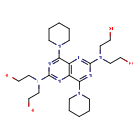
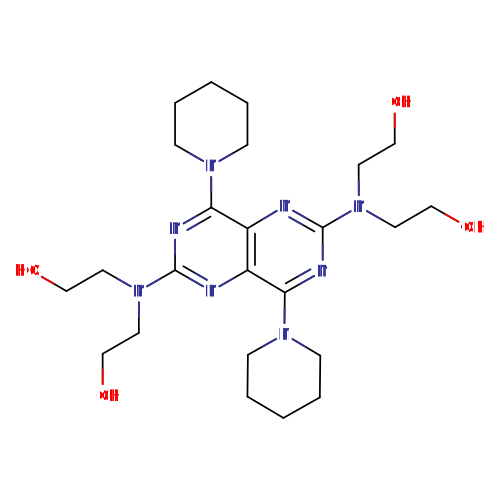
Structure for Dipyridamole (DB00975)
- Weight
- Average: 504.6256
Monoisotopic: 504.317251808 - Chemical Formula
- C24H40N8O4
- Synonyms
- Dipiridamol
- Dipyridamine
- Dipyridamole
- Dipyridamolum
- Dipyudamine
- Dypyridamol
- External IDs
- NSC-515776
- USAF GE-12

Pharmacology
- Indication
For as an adjunct to coumarin anticoagulants in the prevention of postoperative thromboembolic complications of cardiac valve replacement and also used in prevention of angina.
 Reduce drug development failure ratesBuild, train, & validate machine-learning modelswith evidence-based and structured datasets.Build, train, & validate predictive machine-learning models with structured datasets.
- Associated Conditions
Indication Type Indication Combined Product Details Approval Level Age Group Patient Characteristics Dose Form Diagnostic agent Coronary artery disease •••••••••••• •••••••••• •••••••••• •••••••• Adjunct therapy in prevention of Postoperative thromboembolism •••••••••••• Prevention of Stroke •••••••••••• •••••••• •••••• ••••••• Used in combination to prevent Stroke Regimen in combination with: Acetylsalicylic acid (DB00945) •••••••••••• •••••••• •••••• ••••••• Used in combination to prevent Stroke Combination Product in combination with: Acetylsalicylic acid (DB00945) •••••••••••• - Associated Therapies
- Contraindications & Blackbox Warnings
 Prevent Adverse Drug Events TodayTap into our Clinical API for life-saving information on contraindications & blackbox warnings, population restrictions, harmful risks, & more.Avoid life-threatening adverse drug events with our Clinical API
- Pharmacodynamics
Dipyridamole, a non-nitrate coronary vasodilator that also inhibits platelet aggregation, is combined with other anticoagulant drugs, such as warfarin, to prevent thrombosis in patients with valvular or vascular disorders. Dipyridamole is also used in myocardial perfusion imaging, as an antiplatelet agent, and in combination with aspirin for stroke prophylaxis.
- Mechanism of action
Dipyridamole likely inhibits both adenosine deaminase and phosphodiesterase, preventing the degradation of cAMP, an inhibitor of platelet function. This elevation in cAMP blocks the release of arachidonic acid from membrane phospholipids and reduces thromboxane A2 activity. Dipyridamole also directly stimulates the release of prostacyclin, which induces adenylate cyclase activity, thereby raising the intraplatelet concentration of cAMP and further inhibiting platelet aggregation.
Target Actions Organism AcAMP and cAMP-inhibited cGMP 3',5'-cyclic phosphodiesterase 10A inhibitorHumans AcGMP-specific 3',5'-cyclic phosphodiesterase inhibitorHumans AcAMP-specific 3',5'-cyclic phosphodiesterase 4A inhibitorHumans AAdenosine deaminase inhibitorHumans UCalcipressin-1 Not Available Humans UAlpha-1-acid glycoprotein 1 Not Available Humans - Absorption
70%
- Volume of distribution
- 1 to 2.5 L/kg
- Protein binding
99%
- Metabolism
hepatic
- Route of elimination
Dipyridamole is metabolized in the liver to the glucuronic acid conjugate and excreted with the bile.
- Half-life
40 minutes
- Clearance
- 2.3-3.5 mL/min/kg
- Adverse Effects
 Improve decision support & research outcomesWith structured adverse effects data, including: blackbox warnings, adverse reactions, warning & precautions, & incidence rates. View sample adverse effects data in our new Data Library!Improve decision support & research outcomes with our structured adverse effects data.
- Toxicity
Hypotension, if it occurs, is likely to be of short duration, but a vasopressor drug may be used if necessary. The oral LD50 in rats is greater than 6,000 mg/kg while in the dogs, the oral LD50 is approximately 400 mg/kg. LD50=8.4g/kg (orally in rat)
- Pathways
Pathway Category Dipyridamole (Antiplatelet) Action Pathway Drug action - Pharmacogenomic Effects/ADRs
- Not Available
Interactions
- Drug Interactions
- This information should not be interpreted without the help of a healthcare provider. If you believe you are experiencing an interaction, contact a healthcare provider immediately. The absence of an interaction does not necessarily mean no interactions exist.
Drug Interaction Integrate drug-drug
interactions in your softwareAbaloparatide The risk or severity of adverse effects can be increased when Dipyridamole is combined with Abaloparatide. Abciximab The risk or severity of bleeding can be increased when Abciximab is combined with Dipyridamole. Abrocitinib The risk or severity of bleeding and thrombocytopenia can be increased when Dipyridamole is combined with Abrocitinib. Acebutolol Dipyridamole may increase the bradycardic activities of Acebutolol. Aceclofenac The risk or severity of bleeding and hemorrhage can be increased when Aceclofenac is combined with Dipyridamole. - Food Interactions
- Avoid herbs and supplements with anticoagulant/antiplatelet activity. Examples include garlic, ginger, bilberry, danshen, piracetam, and ginkgo biloba.
- Avoid xanthines. Xanthines, found in coffee and tea, can reduce the effectiveness of this medication.
- Take with or without food. Taking dipyridamole extrended release capusels with a high-fat meal minimally reduces it's AUC and Cmax.
Products
 Drug product information from 10+ global regionsOur datasets provide approved product information including:dosage, form, labeller, route of administration, and marketing period.Access drug product information from over 10 global regions.
- Product Images
- International/Other Brands
- Agilease (lsei) / Cardoxin (Rafa) / Cleridium 150 (Millot) / Curantyl (Arzneimittelwerk) / Persantin
- Brand Name Prescription Products
Name Dosage Strength Route Labeller Marketing Start Marketing End Region Image Dipyridamole Injection, solution 5 mg/1mL Intravenous Hospira, Inc. 2006-04-07 Not applicable US 
Dipyridamole Solution 5 mg/1mL Intravenous Anazao Health Corporation 2012-05-23 Not applicable US Dipyridamole Injection, solution 5 mg/1mL Intravenous Hospira, Inc. 2006-04-07 Not applicable US Dipyridamole 25 Tab 25mg Tablet 25 mg Oral Pro Doc Limitee 1983-12-31 2002-08-02 Canada 
Dipyridamole 50 Tab 50mg Tablet 50 mg Oral Pro Doc Limitee 1983-12-31 2002-08-02 Canada - Generic Prescription Products
Name Dosage Strength Route Labeller Marketing Start Marketing End Region Image Apo-dipyridamole Tablet 75 mg Oral Apotex Corporation 1990-12-31 Not applicable Canada Apo-dipyridamole Tablet 50 mg Oral Apotex Corporation 1990-12-31 Not applicable Canada Apo-dipyridamole Tablet 25 mg Oral Apotex Corporation 1990-12-31 Not applicable Canada Apo-dipyridamole Tablet 100 mg Oral Apotex Corporation Not applicable Not applicable Canada Apo-dipyridamole-SC Tab 25mg Tablet 25 mg Oral Apotex Corporation 1982-12-31 Not applicable Canada - Mixture Products
Name Ingredients Dosage Route Labeller Marketing Start Marketing End Region Image AGGRENOX Dipyridamole (200 MG) + Acetylsalicylic acid (25 MG) Capsule Oral Boehringer Ingelheim Italia S.P.A. 2014-07-08 2021-05-07 Italy 
AGGRENOX Dipyridamole (200 MG) + Acetylsalicylic acid (25 MG) Capsule Oral Boehringer Ingelheim Italia S.P.A. 2014-07-08 2016-06-12 Italy Aggrenox Dipyridamole (200 mg/1) + Acetylsalicylic acid (25 mg/1) Capsule, extended release Oral Boehringer Ingelheim Pharmaceuticals Inc. 1999-12-19 Not applicable US 
AGGRENOX Dipyridamole (200 MG) + Acetylsalicylic acid (25 MG) Capsule Oral Boehringer Ingelheim Italia S.P.A. 2014-07-08 2021-05-07 Italy Aggrenox Dipyridamole (200 mg/1) + Acetylsalicylic acid (25 mg/1) Capsule Oral Physicians Total Care, Inc. 2004-08-24 Not applicable US 
- Unapproved/Other Products
Name Ingredients Dosage Route Labeller Marketing Start Marketing End Region Image Dipyridamole Dipyridamole (5 mg/1mL) Solution Intravenous Anazao Health Corporation 2012-05-23 Not applicable US


Categories
- ATC Codes
- B01AC07 — Dipyridamole
- Drug Categories
- Anticoagulants
- Antiplatelet agents
- Blood and Blood Forming Organs
- BSEP/ABCB11 Substrates
- Cardiovascular Agents
- Decreased Platelet Aggregation
- Enzyme Inhibitors
- Hematologic Agents
- Hypotensive Agents
- Miscellaneous Vasodilatating Agents
- OATP1B1/SLCO1B1 Inhibitors
- OATP1B3 inhibitors
- Organic Anion Transporting Polypeptide 2B1 Inhibitors
- P-glycoprotein inhibitors
- P-glycoprotein substrates
- Phosphodiesterase 5 Inhibitors
- Phosphodiesterase Inhibitors
- Platelet Aggregation Inhibitors Excl. Heparin
- Pyrimidines
- Vasodilating Agents
- Chemical TaxonomyProvided by Classyfire
- Description
- This compound belongs to the class of organic compounds known as dialkylarylamines. These are aliphatic aromatic amines in which the amino group is linked to two aliphatic chains and one aromatic group.
- Kingdom
- Organic compounds
- Super Class
- Organic nitrogen compounds
- Class
- Organonitrogen compounds
- Sub Class
- Amines
- Direct Parent
- Dialkylarylamines
- Alternative Parents
- Aminopyrimidines and derivatives / Piperidines / Imidolactams / Heteroaromatic compounds / Azacyclic compounds / Alkanolamines / Primary alcohols / Organopnictogen compounds / Hydrocarbon derivatives
- Substituents
- Alcohol / Alkanolamine / Aminopyrimidine / Aromatic heteropolycyclic compound / Azacycle / Dialkylarylamine / Heteroaromatic compound / Hydrocarbon derivative / Imidolactam / Organic oxygen compound
- Molecular Framework
- Aromatic heteropolycyclic compounds
- External Descriptors
- piperidines, tertiary amino compound, tetrol, pyrimidopyrimidine (CHEBI:4653)
- Affected organisms
- Humans and other mammals
Chemical Identifiers
- UNII
- 64ALC7F90C
- CAS number
- 58-32-2
- InChI Key
- IZEKFCXSFNUWAM-UHFFFAOYSA-N
- InChI
- InChI=1S/C24H40N8O4/c33-15-11-31(12-16-34)23-26-20-19(21(27-23)29-7-3-1-4-8-29)25-24(32(13-17-35)14-18-36)28-22(20)30-9-5-2-6-10-30/h33-36H,1-18H2
- IUPAC Name
- 2-({6-[bis(2-hydroxyethyl)amino]-4,8-bis(piperidin-1-yl)-[1,3]diazino[5,4-d]pyrimidin-2-yl}(2-hydroxyethyl)amino)ethan-1-ol
- SMILES
- OCCN(CCO)C1=NC2=C(N=C(N=C2N2CCCCC2)N(CCO)CCO)C(=N1)N1CCCCC1
References
- Synthesis Reference
Minutza Leibovici, Itamar Kanari, Michael Fox, "Dipyridamole extended-release formulations and process for preparing same." U.S. Patent US20070184110, issued August 09, 2007.
US20070184110- General References
- Diener HC, Cunha L, Forbes C, Sivenius J, Smets P, Lowenthal A: European Stroke Prevention Study. 2. Dipyridamole and acetylsalicylic acid in the secondary prevention of stroke. J Neurol Sci. 1996 Nov;143(1-2):1-13. [Article]
- External Links
- Human Metabolome Database
- HMDB0015110
- KEGG Drug
- D00302
- PubChem Compound
- 3108
- PubChem Substance
- 46506292
- ChemSpider
- 2997
- BindingDB
- 23620
- 3521
- ChEBI
- 4653
- ChEMBL
- CHEMBL932
- ZINC
- ZINC000000643046
- Therapeutic Targets Database
- DNC001625
- PharmGKB
- PA449367
- PDBe Ligand
- H9F
- RxList
- RxList Drug Page
- Drugs.com
- Drugs.com Drug Page
- Wikipedia
- Dipyridamole
- PDB Entries
- 7dmc / 8i4a / 8t6u
- FDA label
- Download (48.7 KB)
- MSDS
- Download (73.3 KB)
Clinical Trials
- Clinical Trials
Phase Status Purpose Conditions Count 4 Completed Not Available Diabetes 1 4 Completed Prevention Angioplasty, Transluminal, Percutaneous Coronary / Atherosclerosis / Coronary Heart Disease (CHD) 1 4 Completed Prevention Arteriosclerosis / Cerebral Ischemia / Transient Ischemic Attack 1 4 Completed Prevention Cardiovascular Disease (CVD) / Ischemic Heart Disease 1 4 Completed Prevention Cirrhosis of the Liver / Portal Hypertension / Status;Splenectomy / Venous Thrombosis (Disorder) 1
Pharmacoeconomics
- Manufacturers
- App pharmaceuticals llc
- Baxter healthcare corp anesthesia and critical care
- Bedford laboratories div ben venue laboratories inc
- Claris lifesciences ltd
- Hospira inc
- Teva parenteral medicines inc
- Boehringer ingelheim pharmaceuticals inc
- Actavis totowa llc
- Barr laboratories inc
- Glenmark generics inc usa
- Impax laboratories inc
- Lannett holdings inc
- Murty pharmaceuticals inc
- Purepac pharmaceutical co
- Sandoz inc
- Watson laboratories inc
- Zydus pharmaceuticals usa inc
- Boehringer Ingelheim Pharmaceuticals, Inc
- Packagers
- Amerisource Health Services Corp.
- Apotex Inc.
- APP Pharmaceuticals
- Avkare Incorporated
- Barr Pharmaceuticals
- Baxter International Inc.
- Bedford Labs
- Ben Venue Laboratories Inc.
- Boehringer Ingelheim Ltd.
- Cadila Healthcare Ltd.
- Cardinal Health
- Direct Dispensing Inc.
- Dispensing Solutions
- General Injectables and Vaccines Inc.
- Glenmark Generics Ltd.
- Global Pharmaceuticals
- Group Health Cooperative
- H and H Laboratories
- Heartland Repack Services LLC
- Hospira Inc.
- Impax Laboratories Inc.
- Kaiser Foundation Hospital
- Lake Erie Medical and Surgical Supply
- Lannett Co. Inc.
- Major Pharmaceuticals
- Mallinckrodt Inc.
- Mead Johnson and Co.
- Murfreesboro Pharmaceutical Nursing Supply
- Murty Pharmaceuticals Inc.
- Novex Pharma
- PCA LLC
- PD-Rx Pharmaceuticals Inc.
- Pharmaceutical Utilization Management Program VA Inc.
- Physicians Total Care Inc.
- Prepak Systems Inc.
- Qualitest
- Rebel Distributors Corp.
- Resource Optimization and Innovation LLC
- Rising Pharmaceuticals
- Sandhills Packaging Inc.
- Sicor Pharmaceuticals
- Southwood Pharmaceuticals
- Spectrum Pharmaceuticals
- Teva Pharmaceutical Industries Ltd.
- UDL Laboratories
- Vangard Labs Inc.
- Zydus Pharmaceuticals
- Dosage Forms
Form Route Strength Capsule Oral Capsule Oral 25.000 MG Capsule, extended release Oral Tablet Oral 50 mg Capsule, delayed release Oral Tablet Oral Tablet, coated Oral 100 mg Injection Intravenous 5 mg/1mL Injection, solution Intravenous 5 mg/1mL Solution Intravenous 5 mg/1mL Tablet Oral 25 mg/1 Tablet Oral 50 mg/1 Tablet Oral 75 mg/1 Tablet, film coated Oral 25 mg/1 Tablet, film coated Oral 50 mg/1 Tablet, film coated Oral 75 mg/1 Liquid Intravenous 5 mg / mL Solution Parenteral 5 mg Tablet, delayed release Oral Tablet Oral 100 mg Pill Tablet, sugar coated Oral 25 mg Tablet, sugar coated Oral 75 mg Capsule 200 MG Injection, solution Intravenous 10 MG/2ML Pill 75 MG Solution Parenteral 10.000 mg Tablet Oral 75.000 mg Tablet, coated Oral Solution Intravenous 10 mg Solution Intravenous; Parenteral 10 mg Tablet, delayed release Oral 75 mg Injection Intramuscular; Intravenous 10 mg/2ml Solution Intravenous 5 mg / mL Tablet, coated Oral 25 mg/1 Tablet, coated Oral 50 mg/1 Tablet, coated Oral 75 mg/1 Tablet Oral 25 mg Tablet Oral 75 mg Tablet, film coated Oral 75 mg Tablet, coated Oral 75 mg Tablet, coated Oral 25 mg - Prices
Unit description Cost Unit Dipyridamole powder 5.34USD g Aggrenox capsule sa 3.25USD capsule Aggrenox 25-200 mg 12 Hour Capsule 3.0USD capsule Dipyridamole 5 mg/ml ampul 1.5USD ml Persantine 75 mg tablet 1.46USD tablet Dipyridamole 5 mg/ml vial 1.32USD ml Dipyridamole 75 mg tablet 1.28USD tablet Persantine 50 mg tablet 1.09USD tablet Dipyridamole 50 mg tablet 0.96USD tablet Persantine 25 mg tablet 0.89USD tablet Dipyridamole 25 mg tablet 0.58USD tablet Apo-Dipyridamole (Fc) 75 mg Tablet 0.46USD tablet Apo-Dipyridamole (Fc) 50 mg Tablet 0.31USD tablet Apo-Dipyridamole (Fc) 25 mg Tablet 0.28USD tablet DrugBank does not sell nor buy drugs. Pricing information is supplied for informational purposes only.- Patents
Patent Number Pediatric Extension Approved Expires (estimated) Region US6015577 No 2000-01-18 2017-01-18 US
Properties
- State
- Solid
- Experimental Properties
Property Value Source melting point (°C) 163 °C PhysProp water solubility Slightly Not Available logP 1.5 Not Available - Predicted Properties
Property Value Source Water Solubility 0.922 mg/mL ALOGPS logP 1.52 ALOGPS logP 1.81 Chemaxon logS -2.7 ALOGPS pKa (Strongest Acidic) 14.97 Chemaxon pKa (Strongest Basic) 3.54 Chemaxon Physiological Charge 0 Chemaxon Hydrogen Acceptor Count 12 Chemaxon Hydrogen Donor Count 4 Chemaxon Polar Surface Area 145.44 Å2 Chemaxon Rotatable Bond Count 12 Chemaxon Refractivity 142.78 m3·mol-1 Chemaxon Polarizability 56.93 Å3 Chemaxon Number of Rings 4 Chemaxon Bioavailability 0 Chemaxon Rule of Five No Chemaxon Ghose Filter No Chemaxon Veber's Rule No Chemaxon MDDR-like Rule Yes Chemaxon - Predicted ADMET Features
Property Value Probability Human Intestinal Absorption + 0.9917 Blood Brain Barrier - 0.6246 Caco-2 permeable - 0.7261 P-glycoprotein substrate Substrate 0.7696 P-glycoprotein inhibitor I Non-inhibitor 0.5321 P-glycoprotein inhibitor II Non-inhibitor 0.8383 Renal organic cation transporter Non-inhibitor 0.615 CYP450 2C9 substrate Non-substrate 0.8345 CYP450 2D6 substrate Non-substrate 0.6825 CYP450 3A4 substrate Non-substrate 0.6849 CYP450 1A2 substrate Non-inhibitor 0.9045 CYP450 2C9 inhibitor Inhibitor 0.8045 CYP450 2D6 inhibitor Inhibitor 0.7201 CYP450 2C19 inhibitor Non-inhibitor 0.957 CYP450 3A4 inhibitor Inhibitor 0.6789 CYP450 inhibitory promiscuity Low CYP Inhibitory Promiscuity 0.7806 Ames test Non AMES toxic 0.7009 Carcinogenicity Non-carcinogens 0.8884 Biodegradation Not ready biodegradable 0.988 Rat acute toxicity 2.1167 LD50, mol/kg Not applicable hERG inhibition (predictor I) Strong inhibitor 0.5271 hERG inhibition (predictor II) Non-inhibitor 0.633
Spectra
- Mass Spec (NIST)
- Not Available
- Spectra
- Chromatographic Properties
Collision Cross Sections (CCS)
Adduct CCS Value (Å2) Source type Source [M-H]- 236.8521267 predictedDarkChem Lite v0.1.0 [M-H]- 236.6562267 predictedDarkChem Lite v0.1.0 [M-H]- 219.1389 predictedDeepCCS 1.0 (2019) [M+H]+ 235.7354267 predictedDarkChem Lite v0.1.0 [M+H]+ 235.8137267 predictedDarkChem Lite v0.1.0 [M+H]+ 221.4969 predictedDeepCCS 1.0 (2019) [M+Na]+ 235.6288267 predictedDarkChem Lite v0.1.0 [M+Na]+ 235.5341267 predictedDarkChem Lite v0.1.0 [M+Na]+ 227.79008 predictedDeepCCS 1.0 (2019)
Targets

- Kind
- Protein
- Organism
- Humans
- Pharmacological action
- Yes
- Actions
- Inhibitor
- General Function
- Metal ion binding
- Specific Function
- Plays a role in signal transduction by regulating the intracellular concentration of cyclic nucleotides. Can hydrolyze both cAMP and cGMP, but has higher affinity for cAMP and is more efficient wit...
- Gene Name
- PDE10A
- Uniprot ID
- Q9Y233
- Uniprot Name
- cAMP and cAMP-inhibited cGMP 3',5'-cyclic phosphodiesterase 10A
- Molecular Weight
- 88411.71 Da
References
- Overington JP, Al-Lazikani B, Hopkins AL: How many drug targets are there? Nat Rev Drug Discov. 2006 Dec;5(12):993-6. [Article]
- Imming P, Sinning C, Meyer A: Drugs, their targets and the nature and number of drug targets. Nat Rev Drug Discov. 2006 Oct;5(10):821-34. [Article]
- Fujishige K, Kotera J, Michibata H, Yuasa K, Takebayashi S, Okumura K, Omori K: Cloning and characterization of a novel human phosphodiesterase that hydrolyzes both cAMP and cGMP (PDE10A). J Biol Chem. 1999 Jun 25;274(26):18438-45. [Article]
- Kind
- Protein
- Organism
- Humans
- Pharmacological action
- Yes
- Actions
- Inhibitor
- General Function
- Metal ion binding
- Specific Function
- Plays a role in signal transduction by regulating the intracellular concentration of cyclic nucleotides. This phosphodiesterase catalyzes the specific hydrolysis of cGMP to 5'-GMP (PubMed:9714779, ...
- Gene Name
- PDE5A
- Uniprot ID
- O76074
- Uniprot Name
- cGMP-specific 3',5'-cyclic phosphodiesterase
- Molecular Weight
- 99984.14 Da
References
- Kulkarni SK, Patil CS: Phosphodiesterase 5 enzyme and its inhibitors: update on pharmacological and therapeutical aspects. Methods Find Exp Clin Pharmacol. 2004 Dec;26(10):789-99. [Article]
- Santini F, Casali G, Franchi G, Auriemma S, Lusini M, Barozzi L, Favaro A, Messina A, Mazzucco A: Hemodynamic effects of inhaled nitric oxide and phosphodiesterase inhibitor (dipyridamole) on secondary pulmonary hypertension following heart valve surgery in adults. Int J Cardiol. 2005 Aug 18;103(2):156-63. [Article]
- Kruuse C, Lassen LH, Iversen HK, Oestergaard S, Olesen J: Dipyridamole may induce migraine in patients with migraine without aura. Cephalalgia. 2006 Aug;26(8):925-33. [Article]
- Jackson EK, Ren J, Zacharia LC, Mi Z: Characterization of renal ecto-phosphodiesterase. J Pharmacol Exp Ther. 2007 May;321(2):810-5. Epub 2007 Feb 16. [Article]
- Chen X, Ji ZL, Chen YZ: TTD: Therapeutic Target Database. Nucleic Acids Res. 2002 Jan 1;30(1):412-5. [Article]
- Kind
- Protein
- Organism
- Humans
- Pharmacological action
- Yes
- Actions
- Inhibitor
- General Function
- Metal ion binding
- Specific Function
- Hydrolyzes the second messenger cAMP, which is a key regulator of many important physiological processes.
- Gene Name
- PDE4A
- Uniprot ID
- P27815
- Uniprot Name
- cAMP-specific 3',5'-cyclic phosphodiesterase 4A
- Molecular Weight
- 98142.155 Da
References
- Chen X, Ji ZL, Chen YZ: TTD: Therapeutic Target Database. Nucleic Acids Res. 2002 Jan 1;30(1):412-5. [Article]
- Kind
- Protein
- Organism
- Humans
- Pharmacological action
- Yes
- Actions
- Inhibitor
- General Function
- Zinc ion binding
- Specific Function
- Catalyzes the hydrolytic deamination of adenosine and 2-deoxyadenosine. Plays an important role in purine metabolism and in adenosine homeostasis. Modulates signaling by extracellular adenosine, an...
- Gene Name
- ADA
- Uniprot ID
- P00813
- Uniprot Name
- Adenosine deaminase
- Molecular Weight
- 40764.13 Da
References
- Chen X, Ji ZL, Chen YZ: TTD: Therapeutic Target Database. Nucleic Acids Res. 2002 Jan 1;30(1):412-5. [Article]
- Kind
- Protein
- Organism
- Humans
- Pharmacological action
- Unknown
- General Function
- Inhibits calcineurin-dependent transcriptional responses by binding to the catalytic domain of calcineurin A. Could play a role during central nervous system development.
- Specific Function
- Calcium-dependent protein serine/threonine phosphatase regulator activity
- Gene Name
- RCAN1
- Uniprot ID
- P53805
- Uniprot Name
- Calcipressin-1
- Molecular Weight
- 28078.425 Da
References
- Mulero MC, Aubareda A, Orzaez M, Messeguer J, Serrano-Candelas E, Martinez-Hoyer S, Messeguer A, Perez-Paya E, Perez-Riba M: Inhibiting the calcineurin-NFAT (nuclear factor of activated T cells) signaling pathway with a regulator of calcineurin-derived peptide without affecting general calcineurin phosphatase activity. J Biol Chem. 2009 Apr 3;284(14):9394-401. doi: 10.1074/jbc.M805889200. Epub 2009 Feb 3. [Article]
- Kind
- Protein
- Organism
- Humans
- Pharmacological action
- Unknown
- General Function
- Not Available
- Specific Function
- Functions as transport protein in the blood stream. Binds various ligands in the interior of its beta-barrel domain. Also binds synthetic drugs and influences their distribution and availability in...
- Gene Name
- ORM1
- Uniprot ID
- P02763
- Uniprot Name
- Alpha-1-acid glycoprotein 1
- Molecular Weight
- 23511.38 Da
References
- Herve F, Duche JC, d'Athis P, Marche C, Barre J, Tillement JP: Binding of disopyramide, methadone, dipyridamole, chlorpromazine, lignocaine and progesterone to the two main genetic variants of human alpha 1-acid glycoprotein: evidence for drug-binding differences between the variants and for the presence of two separate drug-binding sites on alpha 1-acid glycoprotein. Pharmacogenetics. 1996 Oct;6(5):403-15. [Article]
Transporters
- Kind
- Protein
- Organism
- Humans
- Pharmacological action
- Unknown
- Actions
- Inhibitor
- General Function
- Atpase activity, coupled to transmembrane movement of substances
- Specific Function
- May be an organic anion pump relevant to cellular detoxification.
- Gene Name
- ABCC4
- Uniprot ID
- O15439
- Uniprot Name
- Multidrug resistance-associated protein 4
- Molecular Weight
- 149525.33 Da
References
- van Aubel RA, Smeets PH, Peters JG, Bindels RJ, Russel FG: The MRP4/ABCC4 gene encodes a novel apical organic anion transporter in human kidney proximal tubules: putative efflux pump for urinary cAMP and cGMP. J Am Soc Nephrol. 2002 Mar;13(3):595-603. [Article]
- Reid G, Wielinga P, Zelcer N, De Haas M, Van Deemter L, Wijnholds J, Balzarini J, Borst P: Characterization of the transport of nucleoside analog drugs by the human multidrug resistance proteins MRP4 and MRP5. Mol Pharmacol. 2003 May;63(5):1094-103. [Article]
- Rius M, Nies AT, Hummel-Eisenbeiss J, Jedlitschky G, Keppler D: Cotransport of reduced glutathione with bile salts by MRP4 (ABCC4) localized to the basolateral hepatocyte membrane. Hepatology. 2003 Aug;38(2):374-84. [Article]
- Kind
- Protein
- Organism
- Humans
- Pharmacological action
- Unknown
- Actions
- Inhibitor
- General Function
- Organic anion transmembrane transporter activity
- Specific Function
- Acts as a multispecific organic anion pump which can transport nucleotide analogs.
- Gene Name
- ABCC5
- Uniprot ID
- O15440
- Uniprot Name
- Multidrug resistance-associated protein 5
- Molecular Weight
- 160658.8 Da
References
- Reid G, Wielinga P, Zelcer N, De Haas M, Van Deemter L, Wijnholds J, Balzarini J, Borst P: Characterization of the transport of nucleoside analog drugs by the human multidrug resistance proteins MRP4 and MRP5. Mol Pharmacol. 2003 May;63(5):1094-103. [Article]
- Kind
- Protein
- Organism
- Humans
- Pharmacological action
- Unknown
- Actions
- SubstrateInhibitor
- General Function
- Xenobiotic-transporting atpase activity
- Specific Function
- Energy-dependent efflux pump responsible for decreased drug accumulation in multidrug-resistant cells.
- Gene Name
- ABCB1
- Uniprot ID
- P08183
- Uniprot Name
- Multidrug resistance protein 1
- Molecular Weight
- 141477.255 Da
References
- Polli JW, Wring SA, Humphreys JE, Huang L, Morgan JB, Webster LO, Serabjit-Singh CS: Rational use of in vitro P-glycoprotein assays in drug discovery. J Pharmacol Exp Ther. 2001 Nov;299(2):620-8. [Article]
- Wang EJ, Casciano CN, Clement RP, Johnson WW: Active transport of fluorescent P-glycoprotein substrates: evaluation as markers and interaction with inhibitors. Biochem Biophys Res Commun. 2001 Nov 30;289(2):580-5. [Article]
- Kind
- Protein
- Organism
- Humans
- Pharmacological action
- Unknown
- Actions
- Inhibitor
- General Function
- Sodium-independent organic anion transmembrane transporter activity
- Specific Function
- Mediates the Na(+)-independent uptake of organic anions such as pravastatin, taurocholate, methotrexate, dehydroepiandrosterone sulfate, 17-beta-glucuronosyl estradiol, estrone sulfate, prostagland...
- Gene Name
- SLCO1B1
- Uniprot ID
- Q9Y6L6
- Uniprot Name
- Solute carrier organic anion transporter family member 1B1
- Molecular Weight
- 76447.99 Da
References
- Karlgren M, Vildhede A, Norinder U, Wisniewski JR, Kimoto E, Lai Y, Haglund U, Artursson P: Classification of inhibitors of hepatic organic anion transporting polypeptides (OATPs): influence of protein expression on drug-drug interactions. J Med Chem. 2012 May 24;55(10):4740-63. doi: 10.1021/jm300212s. Epub 2012 May 15. [Article]
- Kind
- Protein
- Organism
- Humans
- Pharmacological action
- Unknown
- Actions
- Inhibitor
- General Function
- Sodium-independent organic anion transmembrane transporter activity
- Specific Function
- Mediates the Na(+)-independent uptake of organic anions such as 17-beta-glucuronosyl estradiol, taurocholate, triiodothyronine (T3), leukotriene C4, dehydroepiandrosterone sulfate (DHEAS), methotre...
- Gene Name
- SLCO1B3
- Uniprot ID
- Q9NPD5
- Uniprot Name
- Solute carrier organic anion transporter family member 1B3
- Molecular Weight
- 77402.175 Da
References
- Karlgren M, Vildhede A, Norinder U, Wisniewski JR, Kimoto E, Lai Y, Haglund U, Artursson P: Classification of inhibitors of hepatic organic anion transporting polypeptides (OATPs): influence of protein expression on drug-drug interactions. J Med Chem. 2012 May 24;55(10):4740-63. doi: 10.1021/jm300212s. Epub 2012 May 15. [Article]
- Kind
- Protein
- Organism
- Humans
- Pharmacological action
- Unknown
- Actions
- Inhibitor
- General Function
- Sodium-independent organic anion transmembrane transporter activity
- Specific Function
- Mediates the Na(+)-independent transport of organic anions such as taurocholate, the prostaglandins PGD2, PGE1, PGE2, leukotriene C4, thromboxane B2 and iloprost.
- Gene Name
- SLCO2B1
- Uniprot ID
- O94956
- Uniprot Name
- Solute carrier organic anion transporter family member 2B1
- Molecular Weight
- 76709.98 Da
References
- Karlgren M, Vildhede A, Norinder U, Wisniewski JR, Kimoto E, Lai Y, Haglund U, Artursson P: Classification of inhibitors of hepatic organic anion transporting polypeptides (OATPs): influence of protein expression on drug-drug interactions. J Med Chem. 2012 May 24;55(10):4740-63. doi: 10.1021/jm300212s. Epub 2012 May 15. [Article]
- Kind
- Protein
- Organism
- Humans
- Pharmacological action
- No
- Actions
- Substrate
- General Function
- Transporter activity
- Specific Function
- Involved in the ATP-dependent secretion of bile salts into the canaliculus of hepatocytes.
- Gene Name
- ABCB11
- Uniprot ID
- O95342
- Uniprot Name
- Bile salt export pump
- Molecular Weight
- 146405.83 Da
References
- Pedersen JM, Matsson P, Bergstrom CA, Hoogstraate J, Noren A, LeCluyse EL, Artursson P: Early identification of clinically relevant drug interactions with the human bile salt export pump (BSEP/ABCB11). Toxicol Sci. 2013 Dec;136(2):328-43. doi: 10.1093/toxsci/kft197. Epub 2013 Sep 6. [Article]

Drug created at June 13, 2005 13:24 / Updated at April 27, 2024 09:44