Identification
- Summary
Topotecan is an antineoplastic agent used to treat ovarian cancer, small cell lung cancer, or cervical cancer.
- Brand Names
- Hycamtin
- Generic Name
- Topotecan
- DrugBank Accession Number
- DB01030
- Background
An antineoplastic agent used to treat ovarian cancer. It works by inhibiting DNA topoisomerases, type I.
- Type
- Small Molecule
- Groups
- Approved, Investigational
- Structure
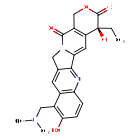
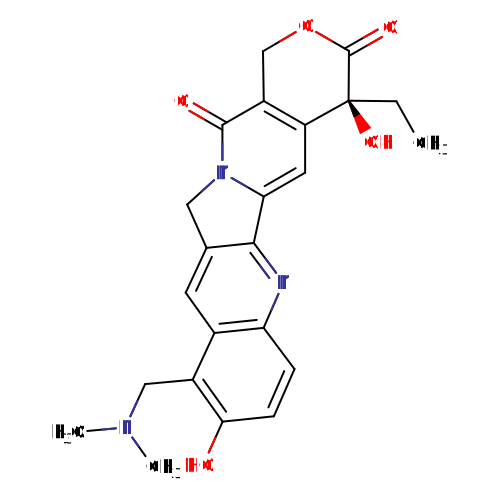
Structure for Topotecan (DB01030)
- Weight
- Average: 421.4458
Monoisotopic: 421.163770861 - Chemical Formula
- C23H23N3O5
- Synonyms
- 9-[(dimethylamino)methyl]-10-hydroxy-(4S)-camptothecin
- Topotecan
- Topotecane
- Topotecanum
- External IDs
- SK&F-104864
- SKF-104864

Pharmacology
- Indication
For the treatment of advanced ovarian cancer in patients with disease that has recurred or progressed following therapy with platinum-based regimens. Also used as a second-line therapy for treatment-sensitive small cell lung cancer, as well as in combination with cisplatin for the treatment of stage IV-B, recurrent, or persistent cervical cancer not amenable to curative treatment with surgery and/or radiation therapy.
 Reduce drug development failure ratesBuild, train, & validate machine-learning modelswith evidence-based and structured datasets.Build, train, & validate predictive machine-learning models with structured datasets.
- Associated Conditions
Indication Type Indication Combined Product Details Approval Level Age Group Patient Characteristics Dose Form Treatment of Acute myeloid leukemia ••• ••••• Treatment of Refractory neuroblastoma ••• ••••• Treatment of Sarcoma, ewing's ••• ••••• Treatment of Metastatic rhabdomyosarcoma ••• ••••• Used in combination to treat Recurrent, iv-b cervical cancer Regimen in combination with: Cisplatin (DB00515) •••••••••••• ••••••••• - Contraindications & Blackbox Warnings
 Prevent Adverse Drug Events TodayTap into our Clinical API for life-saving information on contraindications & blackbox warnings, population restrictions, harmful risks, & more.Avoid life-threatening adverse drug events with our Clinical API
- Pharmacodynamics
Topotecan, a semi-synthetic derivative of camptothecin (a plant alkaloid obtained from the Camptotheca acuminata tree), is an anti-tumor drug with topoisomerase I-inhibitory activity similar to irinotecan. DNA topoisomerases are enzymes in the cell nucleus that regulate DNA topology (3-dimensional conformation) and facilitate nuclear processes such as DNA replication, recombination, and repair. During these processes, DNA topoisomerase I creates reversible single-stranded breaks in double-stranded DNA, allowing intact single DNA strands to pass through the break and relieve the topologic constraints inherent in supercoiled DNA. The 3'-DNA terminus of the broken DNA strand binds covalently with the topoisomerase enzyme to form a catalytic intermediate called a cleavable complex. After DNA is sufficiently relaxed and the strand passage reaction is complete, DNA topoisomerase reattaches the broken DNA strands to form the unaltered topoisomers that allow transcription to proceed. Topotecan interferes with the growth of cancer cells, which are eventually destroyed. Since the growth of normal cells can be affected by the medicine, other effects may also occur. Unlike irinotecan, topotecan is found predominantly in the inactive carboxylate form at neutral pH and it is not a prodrug.
- Mechanism of action
Topotecan has the same mechanism of action as irinotecan and is believed to exert its cytotoxic effects during the S-phase of DNA synthesis. Topoisomerase I relieves torsional strain in DNA by inducing reversible single strand breaks. Topotecan binds to the topoisomerase I-DNA complex and prevents religation of these single strand breaks. This ternary complex interferes with the moving replication fork, which leads to the induction of replication arrest and lethal double-stranded breaks in DNA. As mammalian cells cannot efficiently repair these double strand breaks, the formation of this ternary complex eventually leads to apoptosis (programmed cell death).
Topotecan mimics a DNA base pair and binds at the site of DNA cleavage by intercalating between the upstream (−1) and downstream (+1) base pairs. Intercalation displaces the downstream DNA, thus preventing religation of the cleaved strand. By specifically binding to the enzyme–substrate complex, Topotecan acts as an uncompetitive inhibitor.
Target Actions Organism ADNA topoisomerase 1 inhibitorHumans ADNA intercalationHumans UDNA topoisomerase I, mitochondrial inhibitorHumans - Absorption
Not Available
- Volume of distribution
Not Available
- Protein binding
35%
- Metabolism
Topotecan undergoes a reversible pH dependent hydrolysis of its lactone moiety; it is the lactone form that is pharmacologically active.
- Route of elimination
Renal clearance is an important determinant of topotecan elimination. In a mass balance/excretion study in 4 patients with solid tumors, the overall recovery of total topotecan and its N-desmethyl metabolite in urine and feces over 9 days averaged 73.4 ± 2.3% of the administered IV dose. Fecal elimination of total topotecan accounted for 9 ± 3.6% while fecal elimination of N-desmethyl topotecan was 1.7 ± 0.6%.
- Half-life
2-3 hours
- Clearance
Not Available
- Adverse Effects
 Improve decision support & research outcomesWith structured adverse effects data, including: blackbox warnings, adverse reactions, warning & precautions, & incidence rates. View sample adverse effects data in our new Data Library!Improve decision support & research outcomes with our structured adverse effects data.
- Toxicity
The primary anticipated complication of overdosage would consist of bone marrow suppression.
- Pathways
- Not Available
- Pharmacogenomic Effects/ADRs
- Not Available
Interactions
- Drug Interactions
- This information should not be interpreted without the help of a healthcare provider. If you believe you are experiencing an interaction, contact a healthcare provider immediately. The absence of an interaction does not necessarily mean no interactions exist.
Drug Interaction Integrate drug-drug
interactions in your softwareAbacavir Topotecan may decrease the excretion rate of Abacavir which could result in a higher serum level. Abatacept The risk or severity of adverse effects can be increased when Topotecan is combined with Abatacept. Abciximab The risk or severity of bleeding can be increased when Abciximab is combined with Topotecan. Abemaciclib The excretion of Abemaciclib can be decreased when combined with Topotecan. Abrocitinib The serum concentration of Topotecan can be increased when it is combined with Abrocitinib. - Food Interactions
- Take with or without food.
Products
 Drug product information from 10+ global regionsOur datasets provide approved product information including:dosage, form, labeller, route of administration, and marketing period.Access drug product information from over 10 global regions.
- Product Ingredients
Ingredient UNII CAS InChI Key Topotecan hydrochloride 956S425ZCY 119413-54-6 DGHHQBMTXTWTJV-BQAIUKQQSA-N - Product Images


- Brand Name Prescription Products
Name Dosage Strength Route Labeller Marketing Start Marketing End Region Image Hycamtin Injection, powder, for solution 1 mg Intravenous Sandoz Pharmaceuticals D.D. 2016-09-20 Not applicable EU 
Hycamtin Capsule 1 mg/1 Oral Glaxosmithkline Inc 2008-09-16 2018-01-31 US 

Hycamtin Capsule .25 mg/1 Oral Novartis Pharmaceuticals Corporation 2017-07-07 Not applicable US Hycamtin Capsule 1 mg/1 Oral GlaxoSmithKline Manufacturing SpA 2008-09-16 2017-12-13 US Hycamtin Injection, powder, lyophilized, for solution 4 mg/4mL Intravenous GlaxoSmithKline Manufacturing SpA 1996-06-07 2017-12-14 US - Generic Prescription Products
Name Dosage Strength Route Labeller Marketing Start Marketing End Region Image Mylan-topotecan Hydrochloride for Injection Powder, for solution 4 mg / vial Intravenous Mylan Pharmaceuticals Not applicable Not applicable Canada 
PMS-topotecan Powder, for solution 4 mg / vial Intravenous Pharmascience Inc 2013-08-29 Not applicable Canada PMS-topotecan Powder, for solution 1 mg / vial Intravenous Pharmascience Inc Not applicable Not applicable Canada Teva-topotecan Powder, for solution 1 mg / vial Intravenous TEVA Canada Limited Not applicable Not applicable Canada Teva-topotecan Powder, for solution 4 mg / vial Intravenous TEVA Canada Limited 2015-11-17 Not applicable Canada


Categories
- ATC Codes
- L01CE01 — Topotecan
- Drug Categories
- Alkaloids
- Antineoplastic Agents
- Antineoplastic and Immunomodulating Agents
- BCRP/ABCG2 Substrates
- Cytochrome P-450 CYP3A Inhibitors
- Cytochrome P-450 CYP3A4 Inhibitors
- Cytochrome P-450 Enzyme Inhibitors
- Drugs that are Mainly Renally Excreted
- Enzyme Inhibitors
- Immunosuppressive Agents
- MATE 1 Inhibitors
- MATE 1 Substrates
- MATE 1 Substrates with a Narrow Therapeutic Index
- MATE 2 Substrates
- MATE 2 Substrates with a Narrow Therapeutic Index
- MATE inhibitors
- MATE substrates
- Myelosuppressive Agents
- Narrow Therapeutic Index Drugs
- P-glycoprotein substrates
- P-glycoprotein substrates with a Narrow Therapeutic Index
- Topoisomerase 1 (TOP1) inhibitors
- Topoisomerase I Inhibitors
- Topoisomerase Inhibitors
- Chemical TaxonomyProvided by Classyfire
- Description
- This compound belongs to the class of organic compounds known as camptothecins. These are heterocyclic compounds comprising a planar pentacyclic ring structure, that includes a pyrrolo[3,4-beta]-quinoline moiety (rings A, B and C), conjugated pyridone moiety (ring D) and one chiral center at position 20 within the alpha-hydroxy lactone ring with (S) configuration (the E-ring).
- Kingdom
- Organic compounds
- Super Class
- Alkaloids and derivatives
- Class
- Camptothecins
- Sub Class
- Not Available
- Direct Parent
- Camptothecins
- Alternative Parents
- Hydroxyquinolines / Pyranopyridines / Pyridinones / 1-hydroxy-2-unsubstituted benzenoids / Aralkylamines / Tertiary alcohols / Heteroaromatic compounds / Trialkylamines / Amino acids and derivatives / Lactones show 9 more
- Substituents
- 1-hydroxy-2-unsubstituted benzenoid / Alcohol / Amine / Amino acid or derivatives / Aralkylamine / Aromatic heteropolycyclic compound / Azacycle / Benzenoid / Camptothecin / Carbonyl group show 23 more
- Molecular Framework
- Aromatic heteropolycyclic compounds
- External Descriptors
- pyranoindolizinoquinoline (CHEBI:63632)
- Affected organisms
- Humans and other mammals
Chemical Identifiers
- UNII
- 7M7YKX2N15
- CAS number
- 123948-87-8
- InChI Key
- UCFGDBYHRUNTLO-QHCPKHFHSA-N
- InChI
- InChI=1S/C23H23N3O5/c1-4-23(30)16-8-18-20-12(9-26(18)21(28)15(16)11-31-22(23)29)7-13-14(10-25(2)3)19(27)6-5-17(13)24-20/h5-8,27,30H,4,9-11H2,1-3H3/t23-/m0/s1
- IUPAC Name
- (19S)-8-[(dimethylamino)methyl]-19-ethyl-7,19-dihydroxy-17-oxa-3,13-diazapentacyclo[11.8.0.0^{2,11}.0^{4,9}.0^{15,20}]henicosa-1(21),2,4(9),5,7,10,15(20)-heptaene-14,18-dione
- SMILES
- CC[C@@]1(O)C(=O)OCC2=C1C=C1N(CC3=CC4=C(C=CC(O)=C4CN(C)C)N=C13)C2=O
References
- Synthesis Reference
Venkata Raghavendra Palle, Sekhar Nariyam, Lankeshwara Matti, "PROCESS FOR PREPARING TOPOTECAN." U.S. Patent US20070149783, issued June 28, 2007.
US20070149783- General References
- Kollmannsberger C, Mross K, Jakob A, Kanz L, Bokemeyer C: Topotecan - A novel topoisomerase I inhibitor: pharmacology and clinical experience. Oncology. 1999;56(1):1-12. [Article]
- Herben VM, ten Bokkel Huinink WW, Beijnen JH: Clinical pharmacokinetics of topotecan. Clin Pharmacokinet. 1996 Aug;31(2):85-102. [Article]
- Dennis MJ, Beijnen JH, Grochow LB, van Warmerdam LJ: An overview of the clinical pharmacology of topotecan. Semin Oncol. 1997 Feb;24(1 Suppl 5):S5-12-S5-18. [Article]
- External Links
- Human Metabolome Database
- HMDB0015164
- KEGG Drug
- D08618
- KEGG Compound
- C11158
- PubChem Compound
- 60700
- PubChem Substance
- 46505204
- ChemSpider
- 54705
- BindingDB
- 50008935
- 57308
- ChEBI
- 63632
- ChEMBL
- CHEMBL84
- ZINC
- ZINC000001611274
- Therapeutic Targets Database
- DAP000648
- PharmGKB
- PA451729
- PDBe Ligand
- TTC
- RxList
- RxList Drug Page
- Drugs.com
- Drugs.com Drug Page
- Wikipedia
- Topotecan
- PDB Entries
- 1k4t / 1rr8 / 1rrj / 7nez / 7ojh / 7oji / 8bwq
- FDA label
- Download (78.6 KB)
- MSDS
- Download (29.3 KB)
Clinical Trials
- Clinical Trials
Phase Status Purpose Conditions Count 4 Completed Treatment Acute Myeloid Leukemia 1 4 Completed Treatment Extensive-stage Small Cell Lung Cancer (SCLC) 1 4 Recruiting Treatment Extensive-stage Small Cell Lung Cancer (SCLC) 1 4 Recruiting Treatment Neuroblastoma (NB) 1 3 Active Not Recruiting Treatment Cervical Carcinoma / Endometrial Carcinoma / Fallopian Tube Carcinoma / Ovarian Carcinoma / Primary Peritoneal Carcinoma 1
Pharmacoeconomics
- Manufacturers
- Not Available
- Packagers
- GlaxoSmithKline Inc.
- Pfizer Animal Health
- Dosage Forms
Form Route Strength Solution Intravenous 4.346 mg Powder Capsule Oral .25 mg/1 Capsule Oral 0.25 mg/1 Capsule Oral 1 MG Capsule Oral 1 mg/1 Powder 4 mg/1vial Capsule Oral Injection, powder, for solution Intravenous 4 mg Capsule Oral 0.25 mg Capsule Oral 1.00 mg Injection, powder, for solution Intravenous 1 mg Injection Intravenous 4 mg Powder, for solution Intravenous 4 mg / vial Powder, for solution Intravenous 1 mg / vial Injection, powder, for solution Intravenous; Parenteral 1 MG Injection, powder, for solution Intravenous; Parenteral 4 MG Injection, powder, lyophilized, for solution Intravenous 4 mg Injection, solution, concentrate Intravenous Injection Intravenous 1 mg/1mL Injection, powder, lyophilized, for solution Intravenous 4 mg/15mL Injection, solution, concentrate Intravenous 1 mg/1mL Injection, solution, concentrate Intravenous 1 mg/ml Injection, powder, for solution Intravenous Injection, solution, concentrate Intravenous; Parenteral 1 MG/ML Injection, powder, for solution Parenteral 1 mg Injection, powder, for solution Parenteral 4 mg Injection, solution, concentrate Intravenous; Parenteral 4 MG/4ML Injection, powder, for solution Intravenous 4 mg/4mL Injection, powder, lyophilized, for solution Intravenous 4 mg/1mL Injection, powder, lyophilized, for solution Intravenous 4 mg/4mL Injection, powder, for solution Solution Intravenous 1 mg / mL Injection, solution, concentrate Intravenous 4 MG/4ML Injection, solution, concentrate Parenteral 4 mg/4ml Injection, powder, lyophilized, for solution Intravenous Injection, solution Intravenous 4 mg Solution Parenteral 4.000 mg - Prices
Unit description Cost Unit Hycamtin 4 mg vial 1306.1USD vial Hycamtin 1 mg capsule 358.92USD capsule Hycamtin 0.25 mg capsule 89.73USD capsule DrugBank does not sell nor buy drugs. Pricing information is supplied for informational purposes only.- Patents
Patent Number Pediatric Extension Approved Expires (estimated) Region US5674872 No 1997-10-07 2015-04-07 US US5004758 No 1991-04-02 2010-05-28 US CA2103708 No 2004-04-27 2012-02-07 Canada CA2103707 No 2003-12-09 2012-02-07 Canada US8158645 No 2012-04-17 2024-12-10 US
Properties
- State
- Solid
- Experimental Properties
Property Value Source melting point (°C) 213-218 °C Not Available water solubility 1 mg/ml Not Available logP 0.8 Not Available - Predicted Properties
Property Value Source Water Solubility 0.861 mg/mL ALOGPS logP 1.84 ALOGPS logP -0.33 Chemaxon logS -2.7 ALOGPS pKa (Strongest Acidic) 8 Chemaxon pKa (Strongest Basic) 9.75 Chemaxon Physiological Charge 1 Chemaxon Hydrogen Acceptor Count 6 Chemaxon Hydrogen Donor Count 2 Chemaxon Polar Surface Area 103.2 Å2 Chemaxon Rotatable Bond Count 3 Chemaxon Refractivity 115.02 m3·mol-1 Chemaxon Polarizability 44.86 Å3 Chemaxon Number of Rings 5 Chemaxon Bioavailability 1 Chemaxon Rule of Five Yes Chemaxon Ghose Filter Yes Chemaxon Veber's Rule No Chemaxon MDDR-like Rule No Chemaxon - Predicted ADMET Features
Property Value Probability Human Intestinal Absorption + 0.8911 Blood Brain Barrier - 0.9659 Caco-2 permeable - 0.6966 P-glycoprotein substrate Substrate 0.7918 P-glycoprotein inhibitor I Non-inhibitor 0.6121 P-glycoprotein inhibitor II Non-inhibitor 0.9507 Renal organic cation transporter Non-inhibitor 0.9 CYP450 2C9 substrate Non-substrate 0.8844 CYP450 2D6 substrate Non-substrate 0.8168 CYP450 3A4 substrate Substrate 0.6875 CYP450 1A2 substrate Inhibitor 0.5572 CYP450 2C9 inhibitor Non-inhibitor 0.8305 CYP450 2D6 inhibitor Non-inhibitor 0.8918 CYP450 2C19 inhibitor Non-inhibitor 0.824 CYP450 3A4 inhibitor Non-inhibitor 0.6464 CYP450 inhibitory promiscuity Low CYP Inhibitory Promiscuity 0.7184 Ames test Non AMES toxic 0.6516 Carcinogenicity Non-carcinogens 0.8504 Biodegradation Not ready biodegradable 1.0 Rat acute toxicity 3.0075 LD50, mol/kg Not applicable hERG inhibition (predictor I) Weak inhibitor 0.9963 hERG inhibition (predictor II) Non-inhibitor 0.8302
Spectra
- Mass Spec (NIST)
- Not Available
- Spectra
- Chromatographic Properties
Collision Cross Sections (CCS)
Adduct CCS Value (Å2) Source type Source [M-H]- 220.1395625 predictedDarkChem Lite v0.1.0 [M-H]- 193.78555 predictedDeepCCS 1.0 (2019) [M+H]+ 221.8336625 predictedDarkChem Lite v0.1.0 [M+H]+ 196.18112 predictedDeepCCS 1.0 (2019) [M+Na]+ 221.1900625 predictedDarkChem Lite v0.1.0 [M+Na]+ 202.09364 predictedDeepCCS 1.0 (2019)
Targets

- Kind
- Protein
- Organism
- Humans
- Pharmacological action
- Yes
- Actions
- Inhibitor
- General Function
- Poly(a) rna binding
- Specific Function
- Releases the supercoiling and torsional tension of DNA introduced during the DNA replication and transcription by transiently cleaving and rejoining one strand of the DNA duplex. Introduces a singl...
- Gene Name
- TOP1
- Uniprot ID
- P11387
- Uniprot Name
- DNA topoisomerase 1
- Molecular Weight
- 90725.19 Da
References
- Schmidt F, Rieger J, Wischhusen J, Naumann U, Weller M: Glioma cell sensitivity to topotecan: the role of p53 and topotecan-induced DNA damage. Eur J Pharmacol. 2001 Jan 19;412(1):21-5. [Article]
- strel'tsov SA, Mikheikin AL, Nechipurenko IuD: [Interaction of topotecan--a DNA topoisomerase I inhibitor--with dual-stranded polydeoxyribonucleotides. II. Formation of a complex containing several DNA molecules in the presence of topotecan]. Mol Biol (Mosk). 2001 May-Jun;35(3):442-50. [Article]
- Streltsov SA: Action models for the antitumor drug camptothecin: formation of alkali-labile complex with DNA and inhibition of human DNA topoisomerase I. J Biomol Struct Dyn. 2002 Dec;20(3):447-54. [Article]
- Zhang J, Pu SP, Zhou YJ: [Preliminary study of apoptosis of human hepatocarcinoma cell line HepG2 induced by topotecan]. Ai Zheng. 2002 Dec;21(12):1305-9. [Article]
- Aisner J, Musanti R, Beers S, Smith S, Locsin S, Rubin EH: Sequencing topotecan and etoposide plus cisplatin to overcome topoisomerase I and II resistance: a pharmacodynamically based Phase I trial. Clin Cancer Res. 2003 Jul;9(7):2504-9. [Article]
- Chen X, Ji ZL, Chen YZ: TTD: Therapeutic Target Database. Nucleic Acids Res. 2002 Jan 1;30(1):412-5. [Article]
- Kollmannsberger C, Mross K, Jakob A, Kanz L, Bokemeyer C: Topotecan - A novel topoisomerase I inhibitor: pharmacology and clinical experience. Oncology. 1999;56(1):1-12. [Article]
- Herben VM, ten Bokkel Huinink WW, Beijnen JH: Clinical pharmacokinetics of topotecan. Clin Pharmacokinet. 1996 Aug;31(2):85-102. [Article]
- Dennis MJ, Beijnen JH, Grochow LB, van Warmerdam LJ: An overview of the clinical pharmacology of topotecan. Semin Oncol. 1997 Feb;24(1 Suppl 5):S5-12-S5-18. [Article]
References
- Staker BL, Hjerrild K, Feese MD, Behnke CA, Burgin AB Jr, Stewart L: The mechanism of topoisomerase I poisoning by a camptothecin analog. Proc Natl Acad Sci U S A. 2002 Nov 26;99(24):15387-92. Epub 2002 Nov 8. [Article]
- Pourquier P, Takebayashi Y, Urasaki Y, Gioffre C, Kohlhagen G, Pommier Y: Induction of topoisomerase I cleavage complexes by 1-beta -D-arabinofuranosylcytosine (ara-C) in vitro and in ara-C-treated cells. Proc Natl Acad Sci U S A. 2000 Feb 15;97(4):1885-90. [Article]
- Kind
- Protein
- Organism
- Humans
- Pharmacological action
- Unknown
- Actions
- Inhibitor
- General Function
- Dna topoisomerase type ii (atp-hydrolyzing) activity
- Specific Function
- Releases the supercoiling and torsional tension of DNA introduced during duplication of mitochondrial DNA by transiently cleaving and rejoining one strand of the DNA duplex. Introduces a single-str...
- Gene Name
- TOP1MT
- Uniprot ID
- Q969P6
- Uniprot Name
- DNA topoisomerase I, mitochondrial
- Molecular Weight
- 69871.39 Da
References
- Kosovsky MJ, Soslau G: Immunological identification of human platelet mitochondrial DNA topoisomerase I. Biochim Biophys Acta. 1993 Jun 24;1164(1):101-7. [Article]
Transporters
- Kind
- Protein
- Organism
- Humans
- Pharmacological action
- Unknown
- Actions
- Substrate
- General Function
- Xenobiotic-transporting atpase activity
- Specific Function
- High-capacity urate exporter functioning in both renal and extrarenal urate excretion. Plays a role in porphyrin homeostasis as it is able to mediates the export of protoporhyrin IX (PPIX) both fro...
- Gene Name
- ABCG2
- Uniprot ID
- Q9UNQ0
- Uniprot Name
- ATP-binding cassette sub-family G member 2
- Molecular Weight
- 72313.47 Da
References
- Houghton PJ, Germain GS, Harwood FC, Schuetz JD, Stewart CF, Buchdunger E, Traxler P: Imatinib mesylate is a potent inhibitor of the ABCG2 (BCRP) transporter and reverses resistance to topotecan and SN-38 in vitro. Cancer Res. 2004 Apr 1;64(7):2333-7. [Article]
- Maliepaard M, van Gastelen MA, Tohgo A, Hausheer FH, van Waardenburg RC, de Jong LA, Pluim D, Beijnen JH, Schellens JH: Circumvention of breast cancer resistance protein (BCRP)-mediated resistance to camptothecins in vitro using non-substrate drugs or the BCRP inhibitor GF120918. Clin Cancer Res. 2001 Apr;7(4):935-41. [Article]
- Sugimoto Y, Tsukahara S, Imai Y, Sugimoto Y, Ueda K, Tsuruo T: Reversal of breast cancer resistance protein-mediated drug resistance by estrogen antagonists and agonists. Mol Cancer Ther. 2003 Jan;2(1):105-12. [Article]
- Maliepaard M, van Gastelen MA, de Jong LA, Pluim D, van Waardenburg RC, Ruevekamp-Helmers MC, Floot BG, Schellens JH: Overexpression of the BCRP/MXR/ABCP gene in a topotecan-selected ovarian tumor cell line. Cancer Res. 1999 Sep 15;59(18):4559-63. [Article]
- Jonker JW, Smit JW, Brinkhuis RF, Maliepaard M, Beijnen JH, Schellens JH, Schinkel AH: Role of breast cancer resistance protein in the bioavailability and fetal penetration of topotecan. J Natl Cancer Inst. 2000 Oct 18;92(20):1651-6. [Article]
- Allen JD, Van Dort SC, Buitelaar M, van Tellingen O, Schinkel AH: Mouse breast cancer resistance protein (Bcrp1/Abcg2) mediates etoposide resistance and transport, but etoposide oral availability is limited primarily by P-glycoprotein. Cancer Res. 2003 Mar 15;63(6):1339-44. [Article]
- Breedveld P, Zelcer N, Pluim D, Sonmezer O, Tibben MM, Beijnen JH, Schinkel AH, van Tellingen O, Borst P, Schellens JH: Mechanism of the pharmacokinetic interaction between methotrexate and benzimidazoles: potential role for breast cancer resistance protein in clinical drug-drug interactions. Cancer Res. 2004 Aug 15;64(16):5804-11. [Article]
- Carcaboso AM, Elmeliegy MA, Shen J, Juel SJ, Zhang ZM, Calabrese C, Tracey L, Waters CM, Stewart CF: Tyrosine kinase inhibitor gefitinib enhances topotecan penetration of gliomas. Cancer Res. 2010 Jun 1;70(11):4499-508. doi: 10.1158/0008-5472.CAN-09-4264. Epub 2010 May 11. [Article]
- Shen J, Carcaboso AM, Hubbard KE, Tagen M, Wynn HG, Panetta JC, Waters CM, Elmeliegy MA, Stewart CF: Compartment-specific roles of ATP-binding cassette transporters define differential topotecan distribution in brain parenchyma and cerebrospinal fluid. Cancer Res. 2009 Jul 15;69(14):5885-92. doi: 10.1158/0008-5472.CAN-09-0700. Epub 2009 Jun 30. [Article]
- Rocchi E, Khodjakov A, Volk EL, Yang CH, Litman T, Bates SE, Schneider E: The product of the ABC half-transporter gene ABCG2 (BCRP/MXR/ABCP) is expressed in the plasma membrane. Biochem Biophys Res Commun. 2000 Apr 29;271(1):42-6. [Article]
- Ishii M, Iwahana M, Mitsui I, Minami M, Imagawa S, Tohgo A, Ejima A: Growth inhibitory effect of a new camptothecin analog, DX-8951f, on various drug-resistant sublines including BCRP-mediated camptothecin derivative-resistant variants derived from the human lung cancer cell line PC-6. Anticancer Drugs. 2000 Jun;11(5):353-62. [Article]
- Yang CH, Schneider E, Kuo ML, Volk EL, Rocchi E, Chen YC: BCRP/MXR/ABCP expression in topotecan-resistant human breast carcinoma cells. Biochem Pharmacol. 2000 Sep 15;60(6):831-7. [Article]
- Kind
- Protein
- Organism
- Humans
- Pharmacological action
- Unknown
- Actions
- Substrate
- General Function
- Xenobiotic-transporting atpase activity
- Specific Function
- Energy-dependent efflux pump responsible for decreased drug accumulation in multidrug-resistant cells.
- Gene Name
- ABCB1
- Uniprot ID
- P08183
- Uniprot Name
- Multidrug resistance protein 1
- Molecular Weight
- 141477.255 Da
References
- Collett A, Tanianis-Hughes J, Hallifax D, Warhurst G: Predicting P-glycoprotein effects on oral absorption: correlation of transport in Caco-2 with drug pharmacokinetics in wild-type and mdr1a(-/-) mice in vivo. Pharm Res. 2004 May;21(5):819-26. [Article]
- Carcaboso AM, Elmeliegy MA, Shen J, Juel SJ, Zhang ZM, Calabrese C, Tracey L, Waters CM, Stewart CF: Tyrosine kinase inhibitor gefitinib enhances topotecan penetration of gliomas. Cancer Res. 2010 Jun 1;70(11):4499-508. doi: 10.1158/0008-5472.CAN-09-4264. Epub 2010 May 11. [Article]
- Shen J, Carcaboso AM, Hubbard KE, Tagen M, Wynn HG, Panetta JC, Waters CM, Elmeliegy MA, Stewart CF: Compartment-specific roles of ATP-binding cassette transporters define differential topotecan distribution in brain parenchyma and cerebrospinal fluid. Cancer Res. 2009 Jul 15;69(14):5885-92. doi: 10.1158/0008-5472.CAN-09-0700. Epub 2009 Jun 30. [Article]
- Kind
- Protein
- Organism
- Humans
- Pharmacological action
- Unknown
- Actions
- SubstrateInhibitor
- General Function
- Monovalent cation:proton antiporter activity
- Specific Function
- Solute transporter for tetraethylammonium (TEA), 1-methyl-4-phenylpyridinium (MPP), cimetidine, N-methylnicotinamide (NMN), metformin, creatinine, guanidine, procainamide, topotecan, estrone sulfat...
- Gene Name
- SLC47A1
- Uniprot ID
- Q96FL8
- Uniprot Name
- Multidrug and toxin extrusion protein 1
- Molecular Weight
- 61921.585 Da
References
- Tanihara Y, Masuda S, Sato T, Katsura T, Ogawa O, Inui K: Substrate specificity of MATE1 and MATE2-K, human multidrug and toxin extrusions/H(+)-organic cation antiporters. Biochem Pharmacol. 2007 Jul 15;74(2):359-71. doi: 10.1016/j.bcp.2007.04.010. Epub 2007 Apr 13. [Article]
- Wittwer MB, Zur AA, Khuri N, Kido Y, Kosaka A, Zhang X, Morrissey KM, Sali A, Huang Y, Giacomini KM: Discovery of potent, selective multidrug and toxin extrusion transporter 1 (MATE1, SLC47A1) inhibitors through prescription drug profiling and computational modeling. J Med Chem. 2013 Feb 14;56(3):781-95. doi: 10.1021/jm301302s. Epub 2013 Jan 22. [Article]
- Xu Y, Liu X, Wang Y, Zhou N, Peng J, Gong L, Ren J, Luo C, Luo X, Jiang H, Chen K, Zheng M: Combinatorial Pharmacophore Modeling of Multidrug and Toxin Extrusion Transporter 1 Inhibitors: a Theoretical Perspective for Understanding Multiple Inhibitory Mechanisms. Sci Rep. 2015 Sep 2;5:13684. doi: 10.1038/srep13684. [Article]
- Kind
- Protein
- Organism
- Humans
- Pharmacological action
- Unknown
- Actions
- Substrate
- Curator comments
- Data based on in vitro studies.
- General Function
- Drug transmembrane transporter activity
- Specific Function
- Solute transporter for tetraethylammonium (TEA), 1-methyl-4-phenylpyridinium (MPP), cimetidine, N-methylnicotinamide, metformin, creatinine, guanidine, procainamide, topotecan, estrone sulfate, acy...
- Gene Name
- SLC47A2
- Uniprot ID
- Q86VL8
- Uniprot Name
- Multidrug and toxin extrusion protein 2
- Molecular Weight
- 65083.915 Da
References
- Tanihara Y, Masuda S, Sato T, Katsura T, Ogawa O, Inui K: Substrate specificity of MATE1 and MATE2-K, human multidrug and toxin extrusions/H(+)-organic cation antiporters. Biochem Pharmacol. 2007 Jul 15;74(2):359-71. doi: 10.1016/j.bcp.2007.04.010. Epub 2007 Apr 13. [Article]
- Raj GM, Mathaiyan J, Wyawahare M, Rao KS, Priyadarshini R: Genetic polymorphisms of multidrug and toxin extrusion proteins (MATE1 and MATE2) in South Indian population. Bioimpacts. 2017;7(1):25-30. doi: 10.15171/bi.2017.04. Epub 2017 Feb 8. [Article]
- Drug-transporter interaction testing in drug discovery and development [Link]

Drug created at June 13, 2005 13:24 / Updated at April 27, 2024 09:44