Identification
- Summary
Praziquantel is an anthelmintic medication used to treat parasitic worm infections such as schistosomiasis, clonorchiasis, and opisthorchiasis
- Brand Names
- Biltricide
- Generic Name
- Praziquantel
- DrugBank Accession Number
- DB01058
- Background
Praziquantel is a pyrazino-isoquinolein derivative from the thioxantonic group used as a broad anthelmintic spectrum. Specifically, it is known as a treatment of trematodes and cestodes infections such as schistosomiasis, taeniasis, and cysticercosis.5 The efficacy of praziquantel in treating parasitic flatworms infection with low cost (~US$0.20 drug cost to treat a child) makes it an integral to WHO's plan to eliminate schistosomiasis by 2030.6,7 Despite being approved since 1980, the exact mechanism of action is yet to be elucidated.7
- Type
- Small Molecule
- Groups
- Approved, Investigational, Vet approved
- Structure
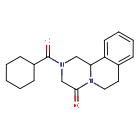
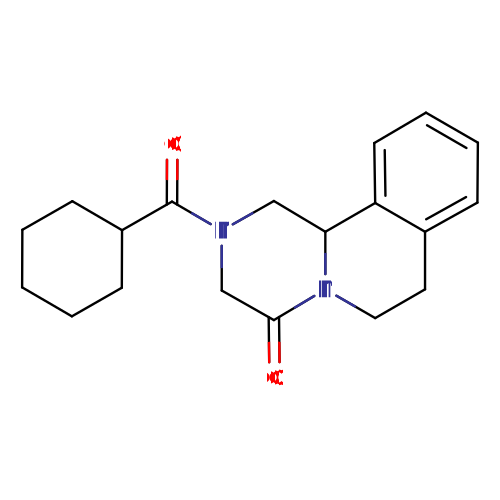
Structure for Praziquantel (DB01058)
- Weight
- Average: 312.4061
Monoisotopic: 312.183778022 - Chemical Formula
- C19H24N2O2
- Synonyms
- Praziquantel

Pharmacology
- Indication
Praziquantel is indicated in patients aged 1 year and older for the treatment of the schistosomiasis due to all species of Schistosoma (for example, Schistosoma mekongi, Schistosoma japonicum, Schistosoma mansoni and Schistosoma hematobium) and clonorchiasis and opisthorchiasis due to the liver flukes, Clonorchis sinensis/Opisthorchis viverrini (approval of this indication was based on studies in which the two species were not differentiated).10
 Reduce drug development failure ratesBuild, train, & validate machine-learning modelswith evidence-based and structured datasets.Build, train, & validate predictive machine-learning models with structured datasets.
- Associated Conditions
Indication Type Indication Combined Product Details Approval Level Age Group Patient Characteristics Dose Form Treatment of Clonorchiasis •••••••••••• •••••• Treatment of Opisthorchiasis •••••••••••• •••••• Treatment of Opisthorchiasis •••••••••••• •••••• Treatment of Schistosomiasis •••••••••••• •••••• Treatment of Schistosomiasis •••••••••••• •••••• - Contraindications & Blackbox Warnings
 Prevent Adverse Drug Events TodayTap into our Clinical API for life-saving information on contraindications & blackbox warnings, population restrictions, harmful risks, & more.Avoid life-threatening adverse drug events with our Clinical API
- Pharmacodynamics
In vitro studies on trematodes and cestodes have shown that praziquantel induces a rapid contraction of schistosomas by a specific effect on the permeability of the cell membrane. The drug further causes vacuolization and disintegration of the schistosome tegument. The effect is more marked on adult worms compared to young worms. An increased Ca2+-influx may play an important role.9
Secondary effects are inhibition of glucose uptake, lowering of glycogen levels and stimulation of lactate release. The action of praziquantel is specific to trematodes and cestodes; nematodes (including filariae) are not affected.9
Praziquantel is active against schistosoma (for example, Schistosoma mekongi, Schistosoma japonicum, Schistosoma mansoni and Schistosoma hematobium), and infections due to the liver flukes, Clonorchis sinensis/Opisthorchis viverrini. Published in vitro data have shown a potential lack of efficacy of praziquantel against migrating schistosomulae.10
An interesting quirk of praziquantel is that it is relatively ineffective against juvenile schistosomes. While initially effective, effectiveness against schistosomes decreases until it reaches a minimum at 3-4 weeks. Effectiveness then increases again until it is once again fully effective at 6-7 weeks.1
- Mechanism of action
Although the exact mechanism of action is unknown, praziquantel was hypothesized to target the β subunits of voltage-gated Ca2+ channels, particularly in Schistosoma mansoni and Schistosoma japonicum, due to the lack of two conserved serine residues in these subunits. This is supported by the finding that co-administration of calcium channel blockers like nicarpidine and nifedipine renders 50% of Schistosoma mansoni resistant to praziquantel.10,1
Increased exposure of antigens on the worm surface was also observed, but little research has been done to elucidate on the mechanism of action.1
Target Actions Organism ASchistosome calcium ion (Ca2+) channels other/unknownSchistosoma - Absorption
After oral administration of praziquantel, about 80% of the dose is absorbed. In subjects with normal hepatic function who received 40 mg/kg of praziquantel under fasting conditions, the mean ± SD Cmax and AUC were 0.83 ± 0.52 µg/mL and 3.02 ± 0.59 µg/mL x hr. The Tmax was 1.48 ± 0.74 hours.10
- Volume of distribution
Following a single oral dose of 40 mg/kg of praziquantel in healthy volunteers, the volume of distribution was estimated to be 7695 ± 2716 L.4
- Protein binding
Approximately 80% of praziquantel is bound exclusively to albumin.3
- Metabolism
Praziquantel is rapidly metabolized by the cytochrome P450 enzyme system and undergoes a first-pass effect after oral administration.10
Hover over products below to view reaction partners
- Route of elimination
Approximately 80% of an oral dose of praziquantel is excreted in the kidneys, almost exclusively (greater than 99%) in the form of praziquantel metabolites.10
- Half-life
Following oral administration, the elimination half-life of praziquantel in serum ranges between 0.8 to 1.5 hours.10
- Clearance
Following a single oral dose of 40 mg/kg of praziquantel in healthy volunteers, the clearance was estimated to be 11.4 ± 2.8 L/kg/h.4
- Adverse Effects
 Improve decision support & research outcomesWith structured adverse effects data, including: blackbox warnings, adverse reactions, warning & precautions, & incidence rates. View sample adverse effects data in our new Data Library!Improve decision support & research outcomes with our structured adverse effects data.
- Toxicity
The acute toxicity of praziquantel is relatively low, as demonstrated by oral LD50 values ranging between 200 - 2976 mg/kg in various species.9
Published studies have not identified an association between praziquantel use during pregnancy and major birth defects, miscarriage, or adverse maternal or fetal outcomes. In animal reproduction studies conducted in pregnant rats and rabbits no adverse developmental outcomes were observed with oral administration of praziquantel during organogenesis at approximately 0.65 times (rats) or 1.3 times (rabbits) the highest recommended human daily dose of 75 mg/kg/day, based on body surface area.10
Mutagenicity studies of praziquantel published in the scientific literature are inconclusive. Long-term oral carcinogenicity studies in rats and golden hamsters did not reveal any carcinogenic effect at doses up to 250 mg/kg/day (about half of the human daily dose based on body surface area). Praziquantel had no effect on fertility and general reproductive performance of male and female rats when given at oral doses ranging from 30 to 300 mg/kg body weight (up to 0.65 times the human daily dose based on body surface area).10
- Pathways
- Not Available
- Pharmacogenomic Effects/ADRs
- Not Available
Interactions
- Drug Interactions
- This information should not be interpreted without the help of a healthcare provider. If you believe you are experiencing an interaction, contact a healthcare provider immediately. The absence of an interaction does not necessarily mean no interactions exist.
Drug Interaction Integrate drug-drug
interactions in your softwareAbametapir The serum concentration of Praziquantel can be increased when it is combined with Abametapir. Abatacept The metabolism of Praziquantel can be increased when combined with Abatacept. Abiraterone The serum concentration of Praziquantel can be increased when it is combined with Abiraterone. Abrocitinib The metabolism of Abrocitinib can be decreased when combined with Praziquantel. Acalabrutinib The metabolism of Praziquantel can be decreased when combined with Acalabrutinib. - Food Interactions
- Avoid grapefruit products. Praziquantel is metabolized by CYP450 enzymes.
- Take with food. Take tablets with water during meals.
Products
 Drug product information from 10+ global regionsOur datasets provide approved product information including:dosage, form, labeller, route of administration, and marketing period.Access drug product information from over 10 global regions.
- Brand Name Prescription Products
Name Dosage Strength Route Labeller Marketing Start Marketing End Region Image Biltricide Tablet, film coated 600 mg/1 Oral Avera McKennan Hospital 2015-05-27 2017-05-24 US 
Biltricide Tablet, film coated 600 mg/1 Oral Central Texas Community Health Centers 2011-04-21 Not applicable US Biltricide Tablet, film coated 600 mg/1 Oral Bayer HealthCare Pharmaceuticals Inc. 2011-04-21 Not applicable US Biltricide Tablet, film coated 600 mg/1 Oral Schering Corporation 2010-08-16 2013-07-16 US Biltricide Tablet 600 mg Oral Bayer 1997-04-24 Not applicable Canada 
- Generic Prescription Products
Name Dosage Strength Route Labeller Marketing Start Marketing End Region Image Praziquantel Tablet, film coated 600 mg/1 Oral Par Pharmaceutical, Inc. 2017-11-27 Not applicable US
Categories
- ATC Codes
- P02BA01 — Praziquantel
- Drug Categories
- Anthelmintics
- Anti-Infective Agents
- Antihelminthic
- Antiparasitic Agents
- Antiparasitic Products, Insecticides and Repellents
- Antitrematodals
- Cytochrome P-450 CYP1A2 Substrates
- Cytochrome P-450 CYP2C19 Substrates
- Cytochrome P-450 CYP3A Substrates
- Cytochrome P-450 CYP3A4 Substrates
- Cytochrome P-450 CYP3A5 Substrates
- Cytochrome P-450 CYP3A7 Substrates
- Cytochrome P-450 Substrates
- Heterocyclic Compounds, Fused-Ring
- Isoquinolines
- Quinoline Derivatives and Related Substances
- Chemical TaxonomyProvided by Classyfire
- Description
- This compound belongs to the class of organic compounds known as tetrahydroisoquinolines. These are tetrahydrogenated isoquinoline derivatives.
- Kingdom
- Organic compounds
- Super Class
- Organoheterocyclic compounds
- Class
- Tetrahydroisoquinolines
- Sub Class
- Not Available
- Direct Parent
- Tetrahydroisoquinolines
- Alternative Parents
- Alpha amino acids and derivatives / N-alkylpiperazines / Benzenoids / Tertiary carboxylic acid amides / Lactams / Azacyclic compounds / Organopnictogen compounds / Organonitrogen compounds / Organic oxides / Hydrocarbon derivatives show 1 more
- Substituents
- 1,4-diazinane / Alpha-amino acid or derivatives / Aromatic heteropolycyclic compound / Azacycle / Benzenoid / Carbonyl group / Carboxamide group / Carboxylic acid derivative / Hydrocarbon derivative / Lactam show 10 more
- Molecular Framework
- Aromatic heteropolycyclic compounds
- External Descriptors
- Not Available
- Affected organisms
- Schistosoma
Chemical Identifiers
- UNII
- 6490C9U457
- CAS number
- 55268-74-1
- InChI Key
- FSVJFNAIGNNGKK-UHFFFAOYSA-N
- InChI
- InChI=1S/C19H24N2O2/c22-18-13-20(19(23)15-7-2-1-3-8-15)12-17-16-9-5-4-6-14(16)10-11-21(17)18/h4-6,9,15,17H,1-3,7-8,10-13H2
- IUPAC Name
- 2-cyclohexanecarbonyl-1H,2H,3H,4H,6H,7H,11bH-pyrazino[2,1-a]isoquinolin-4-one
- SMILES
- O=C(C1CCCCC1)N1CC2N(CCC3=CC=CC=C23)C(=O)C1
References
- General References
- Doenhoff MJ, Cioli D, Utzinger J: Praziquantel: mechanisms of action, resistance and new derivatives for schistosomiasis. Curr Opin Infect Dis. 2008 Dec;21(6):659-67. doi: 10.1097/QCO.0b013e328318978f. [Article]
- McManus DP, Loukas A: Current status of vaccines for schistosomiasis. Clin Microbiol Rev. 2008 Jan;21(1):225-42. doi: 10.1128/CMR.00046-07. [Article]
- Olliaro P, Delgado-Romero P, Keiser J: The little we know about the pharmacokinetics and pharmacodynamics of praziquantel (racemate and R-enantiomer). J Antimicrob Chemother. 2014 Apr;69(4):863-70. doi: 10.1093/jac/dkt491. Epub 2014 Jan 2. [Article]
- Mandour ME, el Turabi H, Homeida MM, el Sadig T, Ali HM, Bennett JL, Leahey WJ, Harron DW: Pharmacokinetics of praziquantel in healthy volunteers and patients with schistosomiasis. Trans R Soc Trop Med Hyg. 1990 May-Jun;84(3):389-93. doi: 10.1016/0035-9203(90)90333-a. [Article]
- Nogueira RA, Lira MGS, Lica ICL, Frazao GCCG, Dos Santos VAF, Filho ACCM, Rodrigues JGM, Miranda GS, Carvalho RC, Nascimento FRF: Praziquantel: An update on the mechanism of its action against schistosomiasis and new therapeutic perspectives. Mol Biochem Parasitol. 2022 Nov;252:111531. doi: 10.1016/j.molbiopara.2022.111531. Epub 2022 Nov 11. [Article]
- Park SK, Friedrich L, Yahya NA, Rohr CM, Chulkov EG, Maillard D, Rippmann F, Spangenberg T, Marchant JS: Mechanism of praziquantel action at a parasitic flatworm ion channel. Sci Transl Med. 2021 Dec 22;13(625):eabj5832. doi: 10.1126/scitranslmed.abj5832. Epub 2021 Dec 22. [Article]
- Park SK, Marchant JS: The Journey to Discovering a Flatworm Target of Praziquantel: A Long TRP. Trends Parasitol. 2020 Feb;36(2):182-194. doi: 10.1016/j.pt.2019.11.002. Epub 2019 Nov 29. [Article]
- FDA Approved Drug Products: Biltricide (praziquantel) tablets [Link]
- Health Canada Product Monograph: Biltricide (praziquantel) tablets for oral use [Link]
- FDA Approved Drug Products: BILTRICIDE (praziquantel) tablets, for oral use (Feb 2024) [Link]
- External Links
- Human Metabolome Database
- HMDB0015191
- KEGG Drug
- D00471
- KEGG Compound
- C07367
- PubChem Compound
- 4891
- PubChem Substance
- 46507082
- ChemSpider
- 4722
- BindingDB
- 74574
- 8628
- ChEBI
- 91583
- ChEMBL
- CHEMBL976
- Therapeutic Targets Database
- DAP000695
- PharmGKB
- PA164764583
- RxList
- RxList Drug Page
- Drugs.com
- Drugs.com Drug Page
- Wikipedia
- Praziquantel
- FDA label
- Download (152 KB)
- MSDS
- Download (72.4 KB)
Clinical Trials
- Clinical Trials
Phase Status Purpose Conditions Count 4 Completed Basic Science Human Immunodeficiency Virus (HIV) Infections / Schistosomiasis Mansoni 1 4 Completed Treatment Schistosomiasis Mansoni 1 4 Not Yet Recruiting Treatment Neurocysticercosis 1 4 Unknown Status Prevention Anemia / Change in Sustained Attention / Helminthiasis / Malaria / Schistosoma infection 1 4 Withdrawn Basic Science Schistosoma infection 1
Pharmacoeconomics
- Manufacturers
- Not Available
- Packagers
- Bayer Healthcare
- Gallipot
- KVP Pharma Plus Veterinaer Produkte GmbH
- Schering Corp.
- Dosage Forms
Form Route Strength Tablet, film coated Oral 600 mg/1 Tablet, film coated Oral 600 mg Paste Oral Tablet, coated Oral 600 mg Powder Not applicable 1 g/1g Tablet Oral 600 mg - Prices
Unit description Cost Unit Biltricide 600 mg tablet 14.57USD tablet Praziquantel powder 1.06USD g DrugBank does not sell nor buy drugs. Pricing information is supplied for informational purposes only.- Patents
- Not Available
Properties
- State
- Solid
- Experimental Properties
Property Value Source melting point (°C) 136-138 °C https://www.fishersci.com/store/msds?partNumber=AAJ6618806&productDescription=PRAZIQUANTEL%2C+98%25+5G&vendorId=VN00024248&countryCode=US&language=en boiling point (°C) 1377 °C https://www.fishersci.com/store/msds?partNumber=AAJ6618806&productDescription=PRAZIQUANTEL%2C+98%25+5G&vendorId=VN00024248&countryCode=US&language=en water solubility 400 mg/L MERCK INDEX (1996) - Predicted Properties
Property Value Source Water Solubility 0.381 mg/mL ALOGPS logP 2.42 ALOGPS logP 2.3 Chemaxon logS -2.9 ALOGPS pKa (Strongest Acidic) 19.38 Chemaxon pKa (Strongest Basic) -0.6 Chemaxon Physiological Charge 0 Chemaxon Hydrogen Acceptor Count 2 Chemaxon Hydrogen Donor Count 0 Chemaxon Polar Surface Area 40.62 Å2 Chemaxon Rotatable Bond Count 1 Chemaxon Refractivity 88.79 m3·mol-1 Chemaxon Polarizability 34.84 Å3 Chemaxon Number of Rings 4 Chemaxon Bioavailability 1 Chemaxon Rule of Five Yes Chemaxon Ghose Filter Yes Chemaxon Veber's Rule No Chemaxon MDDR-like Rule No Chemaxon - Predicted ADMET Features
Property Value Probability Human Intestinal Absorption + 0.974 Blood Brain Barrier + 0.9939 Caco-2 permeable + 0.5496 P-glycoprotein substrate Substrate 0.7237 P-glycoprotein inhibitor I Inhibitor 0.8052 P-glycoprotein inhibitor II Non-inhibitor 0.9113 Renal organic cation transporter Inhibitor 0.5469 CYP450 2C9 substrate Non-substrate 0.8505 CYP450 2D6 substrate Substrate 0.8918 CYP450 3A4 substrate Substrate 0.5805 CYP450 1A2 substrate Inhibitor 0.846 CYP450 2C9 inhibitor Non-inhibitor 0.9071 CYP450 2D6 inhibitor Non-inhibitor 0.9231 CYP450 2C19 inhibitor Inhibitor 0.8994 CYP450 3A4 inhibitor Non-inhibitor 0.831 CYP450 inhibitory promiscuity Low CYP Inhibitory Promiscuity 0.5401 Ames test Non AMES toxic 0.9132 Carcinogenicity Non-carcinogens 0.9637 Biodegradation Not ready biodegradable 0.9413 Rat acute toxicity 2.0726 LD50, mol/kg Not applicable hERG inhibition (predictor I) Weak inhibitor 0.8291 hERG inhibition (predictor II) Non-inhibitor 0.5813
Spectra
- Mass Spec (NIST)
- Not Available
- Spectra
- Chromatographic Properties
Collision Cross Sections (CCS)
Adduct CCS Value (Å2) Source type Source [M-H]- 184.4285741 predictedDarkChem Lite v0.1.0 [M-H]- 174.98125 predictedDeepCCS 1.0 (2019) [M+H]+ 184.4570741 predictedDarkChem Lite v0.1.0 [M+H]+ 177.33925 predictedDeepCCS 1.0 (2019) [M+Na]+ 185.7884741 predictedDarkChem Lite v0.1.0 [M+Na]+ 183.76778 predictedDeepCCS 1.0 (2019)
Targets

References
- Doenhoff MJ, Cioli D, Utzinger J: Praziquantel: mechanisms of action, resistance and new derivatives for schistosomiasis. Curr Opin Infect Dis. 2008 Dec;21(6):659-67. doi: 10.1097/QCO.0b013e328318978f. [Article]
Enzymes
- Kind
- Protein
- Organism
- Humans
- Pharmacological action
- No
- Actions
- Substrate
- Curator comments
- Data supported by in vitro studies.
- General Function
- Oxidoreductase activity, acting on paired donors, with incorporation or reduction of molecular oxygen, reduced flavin or flavoprotein as one donor, and incorporation of one atom of oxygen
- Specific Function
- Cytochromes P450 are a group of heme-thiolate monooxygenases. In liver microsomes, this enzyme is involved in an NADPH-dependent electron transport pathway. It oxidizes a variety of structurally un...
- Gene Name
- CYP1A2
- Uniprot ID
- P05177
- Uniprot Name
- Cytochrome P450 1A2
- Molecular Weight
- 58293.76 Da
References
- Li XQ, Bjorkman A, Andersson TB, Gustafsson LL, Masimirembwa CM: Identification of human cytochrome P(450)s that metabolise anti-parasitic drugs and predictions of in vivo drug hepatic clearance from in vitro data. Eur J Clin Pharmacol. 2003 Sep;59(5-6):429-42. Epub 2003 Aug 12. [Article]
- Kind
- Protein
- Organism
- Humans
- Pharmacological action
- No
- Actions
- Substrate
- General Function
- Steroid hydroxylase activity
- Specific Function
- Responsible for the metabolism of a number of therapeutic agents such as the anticonvulsant drug S-mephenytoin, omeprazole, proguanil, certain barbiturates, diazepam, propranolol, citalopram and im...
- Gene Name
- CYP2C19
- Uniprot ID
- P33261
- Uniprot Name
- Cytochrome P450 2C19
- Molecular Weight
- 55930.545 Da
References
- Li XQ, Bjorkman A, Andersson TB, Gustafsson LL, Masimirembwa CM: Identification of human cytochrome P(450)s that metabolise anti-parasitic drugs and predictions of in vivo drug hepatic clearance from in vitro data. Eur J Clin Pharmacol. 2003 Sep;59(5-6):429-42. Epub 2003 Aug 12. [Article]
- Kind
- Protein
- Organism
- Humans
- Pharmacological action
- No
- Actions
- Substrate
- General Function
- Vitamin d3 25-hydroxylase activity
- Specific Function
- Cytochromes P450 are a group of heme-thiolate monooxygenases. In liver microsomes, this enzyme is involved in an NADPH-dependent electron transport pathway. It performs a variety of oxidation react...
- Gene Name
- CYP3A4
- Uniprot ID
- P08684
- Uniprot Name
- Cytochrome P450 3A4
- Molecular Weight
- 57342.67 Da
References
- Godawska-Matysik A, Kiec-Kononowicz K: Biotransformation of praziquantel by human cytochrome p450 3A4 (CYP 3A4). Acta Pol Pharm. 2006 Sep-Oct;63(5):381-5. [Article]
- Ridtitid W, Wongnawa M, Mahatthanatrakul W, Punyo J, Sunbhanich M: Rifampin markedly decreases plasma concentrations of praziquantel in healthy volunteers. Clin Pharmacol Ther. 2002 Nov;72(5):505-13. doi: 10.1067/mcp.2002.129319. [Article]
- Li XQ, Bjorkman A, Andersson TB, Gustafsson LL, Masimirembwa CM: Identification of human cytochrome P(450)s that metabolise anti-parasitic drugs and predictions of in vivo drug hepatic clearance from in vitro data. Eur J Clin Pharmacol. 2003 Sep;59(5-6):429-42. Epub 2003 Aug 12. [Article]
- Kind
- Protein
- Organism
- Humans
- Pharmacological action
- No
- Actions
- Substrate
- General Function
- Oxygen binding
- Specific Function
- Cytochromes P450 are a group of heme-thiolate monooxygenases. In liver microsomes, this enzyme is involved in an NADPH-dependent electron transport pathway. It oxidizes a variety of structurally un...
- Gene Name
- CYP3A5
- Uniprot ID
- P20815
- Uniprot Name
- Cytochrome P450 3A5
- Molecular Weight
- 57108.065 Da
References
- Ridtitid W, Wongnawa M, Mahatthanatrakul W, Punyo J, Sunbhanich M: Rifampin markedly decreases plasma concentrations of praziquantel in healthy volunteers. Clin Pharmacol Ther. 2002 Nov;72(5):505-13. doi: 10.1067/mcp.2002.129319. [Article]
Carriers
- Kind
- Protein
- Organism
- Humans
- Pharmacological action
- No
- Actions
- Binder
- General Function
- Toxic substance binding
- Specific Function
- Serum albumin, the main protein of plasma, has a good binding capacity for water, Ca(2+), Na(+), K(+), fatty acids, hormones, bilirubin and drugs. Its main function is the regulation of the colloid...
- Gene Name
- ALB
- Uniprot ID
- P02768
- Uniprot Name
- Serum albumin
- Molecular Weight
- 69365.94 Da
References
- Olliaro P, Delgado-Romero P, Keiser J: The little we know about the pharmacokinetics and pharmacodynamics of praziquantel (racemate and R-enantiomer). J Antimicrob Chemother. 2014 Apr;69(4):863-70. doi: 10.1093/jac/dkt491. Epub 2014 Jan 2. [Article]

Drug created at June 13, 2005 13:24 / Updated at April 27, 2024 09:44