Identification
- Summary
Miconazole is an azole antifungal with broad-spectrum activity used to treat fungal infections affecting the vagina, mouth and skin, including candidiasis.
- Brand Names
- Aloe Vesta Antifungal, Baza, Critic-aid Clear, Desenex, Fungoid, Inzo, Lagicam, Lotrimin AF, Micatin, Micro-guard, Monistat, Monistat 1 Day Ovule Combination Pack, Monistat 3 Day Ovule Combination Pack, Monistat 7 Combination Pack, Oravig, Rash Relief Antifungal, Remedy Antifungal, Tetterine, Tineacide Antifungal, Ting, Vagistat, Vagistat 3 Day Combination Pack, Vusion, Zeasorb
- Generic Name
- Miconazole
- DrugBank Accession Number
- DB01110
- Background
Miconazole is a broad-spectrum azole antifungal with some activity against Gram-positive bacteria as well.3 It is widely used to treat mucosal yeast infections, including both oral and vaginal infections; although intravenous miconazole is no longer available, a wide variety of suppositories, creams, gels, and tablet-based products are available.13,14,15,16,17 Miconazole is thought to act primarily through the inhibition of fungal CYP450 14α-lanosterol demethylase activity.3,4
Miconazole was first synthesized in 1969 and first granted FDA approval on January 8, 1974, for sale by INSIGHT Pharmaceuticals as a topical cream.12,13 It is currently available as a variety of prescription and over the counter products. Despite having been in clinical use for an extended period, resistance to miconazole among susceptible organisms is relatively low.3
- Type
- Small Molecule
- Groups
- Approved, Investigational, Vet approved
- Structure
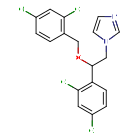
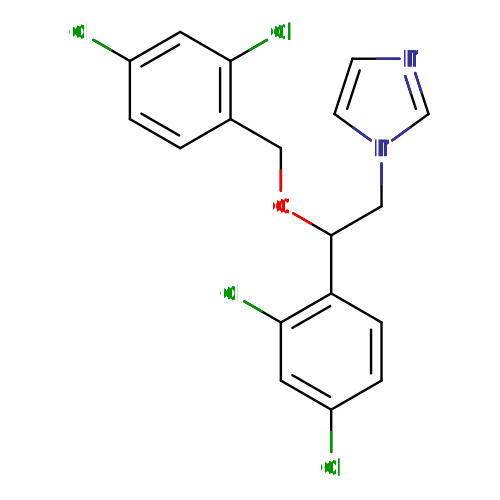
Structure for Miconazole (DB01110)
- Weight
- Average: 416.129
Monoisotopic: 413.986023908 - Chemical Formula
- C18H14Cl4N2O
- Synonyms
- 1-(2,4-Dichloro-beta-((2,4-dichlorobenzyl)oxy)phenethyl)imidazole
- 1-[2-(2,4-Dichloro-benzyloxy)-2-(2,4-dichloro-phenyl)-ethyl]-1H-imidazole
- Miconazol
- Miconazole
- Miconazolum
- External IDs
- MJR 1762
- R 18134

Pharmacology
- Indication
Miconazole is indicated for the local treatment of oropharyngeal candidiasis in adult patients and for the adjunctive treatment of diaper dermatitis complicated by candidiasis in immunocompetent patients aged four weeks and older.13,14 Miconazole is available as both a suppository and cream for the treatment of vaginal yeast infections and the relief of associated vulvar itching and irritation.15 Lastly, miconazole cream is effective in treating athlete's foot (tinea pedis), jock itch (tinea cruris), ringworm infections (tinea corporis),16 pityriasis (formerly tinea) versicolor,2 and cutaneous candidiasis.1
 Reduce drug development failure ratesBuild, train, & validate machine-learning modelswith evidence-based and structured datasets.Build, train, & validate predictive machine-learning models with structured datasets.
- Associated Conditions
Indication Type Indication Combined Product Details Approval Level Age Group Patient Characteristics Dose Form Used in combination to treat Acne vulgaris Combination Product in combination with: Benzoyl peroxide (DB09096) •••••••••••• ••••• Treatment of Dermatophytosis •••••••••••• ••••••• ••••• Treatment of Dermatophytosis of nail •••••••••••• ••••••• ••••• Treatment of Diaper dermatitis •••••••••••• ••••••••••••••••••••• •••••••• Used in combination to treat Excessive sweating and body odor Combination Product in combination with: Aluminum chlorohydrate (DB11573) •••••••••••• ••••• ••• - Contraindications & Blackbox Warnings
 Prevent Adverse Drug Events TodayTap into our Clinical API for life-saving information on contraindications & blackbox warnings, population restrictions, harmful risks, & more.Avoid life-threatening adverse drug events with our Clinical API
- Pharmacodynamics
Miconazole is an azole antifungal that functions primarily through inhibition of a specific demethylase within the CYP450 complex.3 As miconazole is typically applied topically and is minimally absorbed into the systemic circulation following application, the majority of patient reactions are limited to hypersensitivity and cases of anaphylaxis.13 Patients using intravaginal miconazole products are advised not to rely on contraceptives to prevent pregnancy and sexually transmitted infections, as well as not to use tampons concurrently.15
- Mechanism of action
Miconazole is an azole antifungal used to treat a variety of conditions, including those caused by Candida overgrowth. Unique among the azoles, miconazole is thought to act through three main mechanisms.3 The primary mechanism of action is through inhibition of the CYP450 14α-lanosterol demethylase enzyme, which results in altered ergosterol production and impaired cell membrane composition and permeability, which in turn leads to cation, phosphate, and low molecular weight protein leakage.3,4
In addition, miconazole inhibits fungal peroxidase and catalase while not affecting NADH oxidase activity, leading to increased production of reactive oxygen species (ROS).3,4,5 Increased intracellular ROS leads to downstream pleiotropic effects and eventual apoptosis.3
Lastly, likely as a result of lanosterol demethylation inhibition, miconazole causes a rise in intracellular levels of farnesol. This molecule participates in quorum sensing in Candida, preventing the transition from yeast to mycelial forms and thereby the formation of biofilms, which are more resistant to antibiotics.6,7 In addition, farnesol is an inhibitor of drug efflux ABC transporters, namely Candida CaCdr1p and CaCdr2p, which may additionally contribute to increased effectiveness of azole drugs.7
Target Actions Organism ACytochrome P450 51 inhibitorYeast UNitric oxide synthase, endothelial inhibitorHumans UNitric oxide synthase, inducible inhibitorHumans UNuclear receptor subfamily 1 group I member 2 partial agonistHumans UCalcium-activated potassium channel inhibitorHumans UVoltage-gated Potassium Channels inhibitorUInward rectifier potassium channel inhibitorHumans UVoltage gated L-type calcium channel inhibitorHumans - Absorption
Miconazole given to healthy volunteers as a single 50 mg oral tablet produced a mean Cmax of 15.1 ± 16.2 mcg/mL, a mean AUC0-24 of 55.2 ± 35.1 mcg*h/mL, and a median Tmax of 7 hours (range 2.0-24.1). In these patients measurable plasma concentrations ranged from 0.5 to 0.83 mcg/mL.13
Topical miconazole is absorbed poorly into the systemic circulation.3 In pediatric patients aged 1-21 months given multiple topical applications of miconazole ointment for seven days, the plasma miconazole concentration was less than 0.5 ng/mL in 88% of the patients, with the remaining patients having a concentration of 0.57 and 0.58 ng/mL, respectively.14 Similarly, patients. administered with a vaginal 1200 mg ovule had a mean Cmax of 10.71 ng/mL, mean Tmax of 18.4 hours, and mean AUC0-96 of 477.3 ng*h/mL.9
- Volume of distribution
A 1200 mg miconazole vaginal suppository resulted in a calculated apparent volume of distribution of 95 546 L while a 100 mg vaginal cream yielded an apparent volume of distribution of 10 911L.9
- Protein binding
In vitro data suggests that miconazole binds human serum albumin, however, the clinical significance of this observation is unclear.10,11
- Metabolism
Miconazole is metabolized in the liver and does not give rise to any active metabolites.13
- Route of elimination
Miconazole is excreted through both urine and feces; less than 1% of unchanged miconazole is recovered in urine.13
- Half-life
Miconazole has a terminal half-life of 24 hours.13
- Clearance
Not Available
- Adverse Effects
 Improve decision support & research outcomesWith structured adverse effects data, including: blackbox warnings, adverse reactions, warning & precautions, & incidence rates. View sample adverse effects data in our new Data Library!Improve decision support & research outcomes with our structured adverse effects data.
- Toxicity
Miconazole overdose has not been reported.13 Patients experiencing an overdose are at an increased risk of severe adverse effects such as headache, skin irritation, diarrhea, nausea, vomiting, abdominal pain, and dysgeusia. Symptomatic and supportive measures are recommended.
Miconazole has an oral LD50 of 500 mg/kg in rats.MSDS
- Pathways
- Not Available
- Pharmacogenomic Effects/ADRs
- Not Available
Interactions
- Drug Interactions
- This information should not be interpreted without the help of a healthcare provider. If you believe you are experiencing an interaction, contact a healthcare provider immediately. The absence of an interaction does not necessarily mean no interactions exist.
Drug Interaction Integrate drug-drug
interactions in your software1,2-Benzodiazepine The metabolism of 1,2-Benzodiazepine can be decreased when combined with Miconazole. Abemaciclib The metabolism of Abemaciclib can be decreased when combined with Miconazole. Abiraterone The metabolism of Abiraterone can be decreased when combined with Miconazole. Abrocitinib The metabolism of Abrocitinib can be decreased when combined with Miconazole. Acalabrutinib The metabolism of Acalabrutinib can be decreased when combined with Miconazole. - Food Interactions
- No interactions found.
Products
 Drug product information from 10+ global regionsOur datasets provide approved product information including:dosage, form, labeller, route of administration, and marketing period.Access drug product information from over 10 global regions.
- Product Ingredients
Ingredient UNII CAS InChI Key Miconazole nitrate VW4H1CYW1K 22832-87-7 MCCACAIVAXEFAL-UHFFFAOYSA-N - Product Images

- International/Other Brands
- Daktarin / Daktarin IV / Decocort / Femizol-M / Gyno-Daktarin / Miconazex / Monistat / Monistat IV / Zeasorb-AF / Zimycan
- Brand Name Prescription Products
Name Dosage Strength Route Labeller Marketing Start Marketing End Region Image Monistat 3 Suppository 200 mg/1 Vaginal ORTHO PHARMACEUTICAL CORPORATION 2006-12-31 Not applicable US 
Monistat-derm Cream 20 mg/1g Topical Ortho-McNeil Pharmaceutical, Inc. 2006-10-02 Not applicable US Oravig Tablet 50 mg/1 Buccal Midatech Pharma Us, Inc. 2010-04-16 Not applicable US Oravig Tablet 50 mg/1 Buccal Praelia Pharmaceuticals Inc 2012-11-01 2015-09-30 US Oravig Tablet 50 mg/1 Buccal Galt Pharmaceuticals, LLC 2021-12-31 Not applicable US - Generic Prescription Products
Name Dosage Strength Route Labeller Marketing Start Marketing End Region Image Miconazole Nitrate Suppository 200 mg/1 Vaginal Actavis Pharma, Inc. 1995-01-18 Not applicable US - Over the Counter Products
Name Dosage Strength Route Labeller Marketing Start Marketing End Region Image 3M Cavilon Antifungal Cream 2 g/1000g Topical 3M Company 2010-11-30 Not applicable US 7 Day Vaginal Cream 2 g/100g Topical Cardinal Health 2009-03-16 Not applicable US A2A Anti-Fungal Powder Powder 1.7 g/85g Topical A2A Integrated Pharmaceuticals, LLC 2021-10-01 Not applicable US Aloe Vesta Ointment 2 g/100g Topical Medline Industries, LP 2020-09-30 Not applicable US Aloe Vesta Antifungal Ointment 20 mg/1g Topical ConvaTec, Inc. 1997-10-03 Not applicable US - Mixture Products
Name Ingredients Dosage Route Labeller Marketing Start Marketing End Region Image Acne Plus - Creme Widmer Miconazole nitrate (20 mg/g) + Benzoyl peroxide (50 mg/g) Cream Cutaneous Louis Widmer Gmb H 1987-06-22 Not applicable Austria 
Antifungal Skin Care CVS Miconazole nitrate (2 g/100mL) + Benzalkonium chloride (0.12 g/100mL) Kit Topical Product Quest Mfg. 2016-04-14 2016-12-09 US Basic Care Miconazole Miconazole nitrate (1200 mg/1) + Miconazole nitrate (2 g/100g) Cream; Kit; Suppository Topical; Vaginal Amazon.com Services LLC 2021-08-20 Not applicable US Basic Care Miconazole Miconazole nitrate (1200 mg/1) + Miconazole nitrate (2 g/100g) Cream; Kit; Suppository Topical; Vaginal Amazon.com Services LLC 2021-08-20 Not applicable US Basic Care miconazole 1 Miconazole nitrate (1200 mg/1) + Miconazole nitrate (2 g/100g) Kit Topical; Vaginal L. Perrigo Company 2017-08-29 Not applicable US - Unapproved/Other Products
Name Ingredients Dosage Route Labeller Marketing Start Marketing End Region Image FungiFree Antifungal Ringworm Cream Miconazole (0.1 g/100g) + Menthol (8 g/100g) + Silver (0.1 g/100g) Cream Topical YITONGBADA (SHENZHEN) INTERNATIONAL TRADE CO., LTD 2024-02-25 Not applicable US Onycho-Med Miconazole nitrate (200 mg/10mL) + Terbinafine hydrochloride (250 mg/10mL) Kit Topical Medhart Pharmaceuticals, Inc. 2019-05-30 Not applicable US PedizolPAK Miconazole nitrate (20 mg/1mL) + Ketoconazole (20 mg/1g) Cream; Kit; Tincture Topical Nucare Pharmaceuticals,inc. 2002-12-18 Not applicable US Treatonic Nail Fungus Treatment Miconazole nitrate (2 mg/100mL) Ointment Extracorporeal Shenzhen Situya Trading Co., Ltd. 2022-05-19 Not applicable US

Categories
- ATC Codes
- A07AC01 — Miconazole
- A07AC — Imidazole derivatives
- A07A — INTESTINAL ANTIINFECTIVES
- A07 — ANTIDIARRHEALS, INTESTINAL ANTIINFLAMMATORY/ANTIINFECTIVE AGENTS
- A — ALIMENTARY TRACT AND METABOLISM
- J02AB — Imidazole derivatives
- J02A — ANTIMYCOTICS FOR SYSTEMIC USE
- J02 — ANTIMYCOTICS FOR SYSTEMIC USE
- J — ANTIINFECTIVES FOR SYSTEMIC USE
- D01AC — Imidazole and triazole derivatives
- D01A — ANTIFUNGALS FOR TOPICAL USE
- D01 — ANTIFUNGALS FOR DERMATOLOGICAL USE
- D — DERMATOLOGICALS
- G01AF — Imidazole derivatives
- G01A — ANTIINFECTIVES AND ANTISEPTICS, EXCL. COMBINATIONS WITH CORTICOSTEROIDS
- G01 — GYNECOLOGICAL ANTIINFECTIVES AND ANTISEPTICS
- G — GENITO URINARY SYSTEM AND SEX HORMONES
- A01AB — Antiinfectives and antiseptics for local oral treatment
- A01A — STOMATOLOGICAL PREPARATIONS
- A01 — STOMATOLOGICAL PREPARATIONS
- A — ALIMENTARY TRACT AND METABOLISM
- D01AC — Imidazole and triazole derivatives
- D01A — ANTIFUNGALS FOR TOPICAL USE
- D01 — ANTIFUNGALS FOR DERMATOLOGICAL USE
- D — DERMATOLOGICALS
- Drug Categories
- 14-alpha Demethylase Inhibitors
- Anti-Infective Agents
- Antifungal Agents
- Antifungal Agents (Vaginal)
- Antifungals for Dermatological Use
- Antifungals for Topical Use
- Antiinfectives and Antiseptics for Local Oral Treatment
- Azole Antifungals
- Chemically-Induced Disorders
- Cytochrome P-450 CYP2A6 Inhibitors
- Cytochrome P-450 CYP2A6 Inhibitors (strong)
- Cytochrome P-450 CYP2B6 Inhibitors
- Cytochrome P-450 CYP2B6 Inhibitors (strength unknown)
- Cytochrome P-450 CYP2C19 Inhibitors
- Cytochrome P-450 CYP2C19 inhibitors (strength unknown)
- Cytochrome P-450 CYP2C19 Inhibitors (strong)
- Cytochrome P-450 CYP2C8 Inhibitors
- Cytochrome P-450 CYP2C8 Inhibitors (strength unknown)
- Cytochrome P-450 CYP2C9 Inhibitors
- Cytochrome P-450 CYP2C9 Inhibitors (moderate)
- Cytochrome P-450 CYP2C9 Inhibitors (strong)
- Cytochrome P-450 CYP2D6 Inhibitors
- Cytochrome P-450 CYP2D6 Inhibitors (strength unknown)
- Cytochrome P-450 CYP2E1 Inhibitors
- Cytochrome P-450 CYP2E1 Inhibitors (strong)
- Cytochrome P-450 CYP3A Inhibitors
- Cytochrome P-450 CYP3A4 Inhibitors
- Cytochrome P-450 CYP3A4 Inhibitors (moderate)
- Cytochrome P-450 Enzyme Inhibitors
- Dermatologicals
- Enzyme Inhibitors
- Genito Urinary System and Sex Hormones
- Gynecological Antiinfectives and Antiseptics
- Hormone Antagonists
- Hormones, Hormone Substitutes, and Hormone Antagonists
- Imidazole and Triazole Derivatives
- Imidazole Derivatives
- Imidazoles
- Intestinal Antiinfectives
- Otologicals
- P-glycoprotein inhibitors
- Sensory Organs
- Steroid Synthesis Inhibitors
- Stomatological Preparations
- Vaginal Creams, Foams, and Jellies
- Chemical TaxonomyProvided by Classyfire
- Description
- This compound belongs to the class of organic compounds known as benzylethers. These are aromatic ethers with the general formula ROCR' (R = alkyl, aryl; R'=benzene).
- Kingdom
- Organic compounds
- Super Class
- Benzenoids
- Class
- Benzene and substituted derivatives
- Sub Class
- Benzylethers
- Direct Parent
- Benzylethers
- Alternative Parents
- Dichlorobenzenes / N-substituted imidazoles / Aryl chlorides / Heteroaromatic compounds / Dialkyl ethers / Azacyclic compounds / Organopnictogen compounds / Organonitrogen compounds / Organochlorides / Hydrocarbon derivatives
- Substituents
- 1,3-dichlorobenzene / Aromatic heteromonocyclic compound / Aryl chloride / Aryl halide / Azacycle / Azole / Benzylether / Chlorobenzene / Dialkyl ether / Ether
- Molecular Framework
- Aromatic heteromonocyclic compounds
- External Descriptors
- imidazoles, ether, dichlorobenzene (CHEBI:82892) / a small molecule (CPD-4501)
- Affected organisms
- Fungi, yeast and protozoans
Chemical Identifiers
- UNII
- 7NNO0D7S5M
- CAS number
- 22916-47-8
- InChI Key
- BYBLEWFAAKGYCD-UHFFFAOYSA-N
- InChI
- InChI=1S/C18H14Cl4N2O/c19-13-2-1-12(16(21)7-13)10-25-18(9-24-6-5-23-11-24)15-4-3-14(20)8-17(15)22/h1-8,11,18H,9-10H2
- IUPAC Name
- 1-[2-(2,4-dichlorophenyl)-2-[(2,4-dichlorophenyl)methoxy]ethyl]-1H-imidazole
- SMILES
- ClC1=CC(Cl)=C(COC(CN2C=CN=C2)C2=C(Cl)C=C(Cl)C=C2)C=C1
References
- Synthesis Reference
Godefroi EF, Heeres J, Van Cutsem J, Janssen PA: The preparation and antimycotic properties of derivatives of 1-phenethylimidazole. J Med Chem. 1969 Sep;12(5):784-91. doi: 10.1021/jm00305a014.
US3717655- General References
- Taudorf EH, Jemec GBE, Hay RJ, Saunte DML: Cutaneous candidiasis - an evidence-based review of topical and systemic treatments to inform clinical practice. J Eur Acad Dermatol Venereol. 2019 Oct;33(10):1863-1873. doi: 10.1111/jdv.15782. Epub 2019 Jul 30. [Article]
- Tanenbaum L, Anderson C, Rosenberg MJ, Akers W: 1% sulconazole cream v 2% miconazole cream in the treatment of tinea versicolor. A double-blind, multicenter study. Arch Dermatol. 1984 Feb;120(2):216-9. [Article]
- Pierard GE, Hermanns-Le T, Delvenne P, Pierard-Franchimont C: Miconazole, a pharmacological barrier to skin fungal infections. Expert Opin Pharmacother. 2012 Jun;13(8):1187-94. doi: 10.1517/14656566.2012.687047. Epub 2012 May 8. [Article]
- De Nollin S, Borgers M: An ultrastructural and cytochemical study of Candida albicans after in vitro treatment with imidazoles. Mykosen. 1976 Sep;19(9):317-28. doi: 10.1111/j.1439-0507.1976.tb01469.x. [Article]
- Kobayashi D, Kondo K, Uehara N, Otokozawa S, Tsuji N, Yagihashi A, Watanabe N: Endogenous reactive oxygen species is an important mediator of miconazole antifungal effect. Antimicrob Agents Chemother. 2002 Oct;46(10):3113-7. doi: 10.1128/aac.46.10.3113-3117.2002. [Article]
- Hornby JM, Nickerson KW: Enhanced production of farnesol by Candida albicans treated with four azoles. Antimicrob Agents Chemother. 2004 Jun;48(6):2305-7. doi: 10.1128/AAC.48.6.2305-2307.2004. [Article]
- Sharma M, Prasad R: The quorum-sensing molecule farnesol is a modulator of drug efflux mediated by ABC multidrug transporters and synergizes with drugs in Candida albicans. Antimicrob Agents Chemother. 2011 Oct;55(10):4834-43. doi: 10.1128/AAC.00344-11. Epub 2011 Jul 18. [Article]
- Thevissen K, Ayscough KR, Aerts AM, Du W, De Brucker K, Meert EM, Ausma J, Borgers M, Cammue BP, Francois IE: Miconazole induces changes in actin cytoskeleton prior to reactive oxygen species induction in yeast. J Biol Chem. 2007 Jul 27;282(30):21592-7. doi: 10.1074/jbc.M608505200. Epub 2007 Jun 6. [Article]
- Stevens RE, Konsil J, Verrill SS, Roy P, Desai PB, Upmalis DH, Cone FL: Bioavailability study of a 1200 mg miconazole nitrate vaginal ovule in healthy female adults. J Clin Pharmacol. 2002 Jan;42(1):52-60. doi: 10.1177/0091270002042001006. [Article]
- Schafer-Korting M, Korting HC, Rittler W, Obermuller W: Influence of serum protein binding on the in vitro activity of anti-fungal agents. Infection. 1995 Sep-Oct;23(5):292-7. doi: 10.1007/bf01716289. [Article]
- Hu Z, Zhang J, Cheng X: Antifungal efficiency of miconazole and econazole and the interaction with transport protein: a comparative study. Pharm Biol. 2015 Feb;53(2):251-61. doi: 10.3109/13880209.2014.914232. Epub 2014 Nov 7. [Article]
- Godefroi EF, Heeres J, Van Cutsem J, Janssen PA: The preparation and antimycotic properties of derivatives of 1-phenethylimidazole. J Med Chem. 1969 Sep;12(5):784-91. doi: 10.1021/jm00305a014. [Article]
- FDA Approved Drug Products: Oravig (miconazole) buccal tablet [Link]
- FDA Approved Drug Products: Vusion (miconazole nitrate, zinc oxide, white petrolatum) topical ointment [Link]
- FDA Approved Drug Products: miconazole nitrate suppositories and cream [Link]
- DailyMed miconazole nitrate [Link]
- FDA Approved Drug Products: Monistat (miconazole nitrate) suppositories and cream [Link]
- AIFA Product Information: Nizacol (miconazole) oral tablets [Link]
- External Links
- Human Metabolome Database
- HMDB0015242
- KEGG Drug
- D00882
- KEGG Compound
- C08070
- PubChem Compound
- 4189
- PubChem Substance
- 46506017
- ChemSpider
- 4044
- BindingDB
- 31772
- 6932
- ChEBI
- 82892
- ChEMBL
- CHEMBL91
- Therapeutic Targets Database
- DAP000154
- PharmGKB
- PA450494
- Guide to Pharmacology
- GtP Drug Page
- RxList
- RxList Drug Page
- Drugs.com
- Drugs.com Drug Page
- PDRhealth
- PDRhealth Drug Page
- Wikipedia
- Miconazole
- FDA label
- Download (650 KB)
- MSDS
- Download (73.7 KB)
Clinical Trials
- Clinical Trials
Phase Status Purpose Conditions Count 4 Completed Not Available Health / Vulvovaginal Candidiasis 1 4 Completed Treatment Diaper Rash 1 4 Completed Treatment Vulva; Candidiasis 1 4 Recruiting Treatment Oral Candidiasis 1 4 Unknown Status Treatment Melasma 1
Pharmacoeconomics
- Manufacturers
- Not Available
- Packagers
- Actavis Group
- Advanced Pharmaceutical Services Inc.
- Barr Pharmaceuticals
- CVS Pharmacy
- Dispensing Solutions
- Diversified Healthcare Services Inc.
- Draxis Specialty Pharmaceuticals Inc.
- Ivax Pharmaceuticals
- Johnson & Johnson Healthcare
- Kaiser Foundation Hospital
- Medisca Inc.
- Ortho Mcneil Janssen Pharmaceutical Inc.
- Orthopedics Advanced Care
- Par Pharmaceuticals
- Perrigo Co.
- Pharmacia Inc.
- Pharmedix
- Physicians Total Care Inc.
- Prescript Pharmaceuticals
- Schering-Plough Inc.
- Southwood Pharmaceuticals
- Dosage Forms
Form Route Strength Powder Topical 1.7 g/85g Cream Cutaneous Ointment Topical 20 mg/1g Ointment Topical 2.82 g/141g Ointment Topical 1.12 g/56g Tablet Vaginal Cream Topical 2 mg/100mL Cream Topical 2 g/1000g Cream Topical 2.0 g/100mL Spray Topical 2 g/100g Liquid Topical 2 mg/1g Tincture Topical 20 mg/1mL Cream Insert Vaginal Cream Topical 0.02 g/1g Solution Topical 20 mg/g Cream Cutaneous 2.0000 g Powder Cutaneous 2.000 g Aerosol, foam Topical Emulsion Topical Gel Oral Gel Oral 2.000 g Gel Oral 20 MG/G Gel Buccal; Oral 2 g Gel Oral 2 g Solution Topical Gel Oral 2 % Cream Topical 20 MG/G Powder Topical 20 MG/G Powder; spray Cutaneous 2 g/100g Solution Topical 2 g/100ml Gel Submucosal 2 % w/w Gel Topical Liquid Topical 20 MG/G Gel Oral 2 % w/w Cream 20 MG/G Cream Topical 0.02 g/100g Cream Topical Gel Topical Lotion Topical Shampoo Topical Aerosol, powder Topical 2 g/100g Aerosol, spray Topical 2 g/100g Cream Topical 2 g/100mL Emulsion Topical Cream; kit; suppository Topical; Vaginal Cream; insert; kit Topical; Vaginal Insert Vaginal 1200 mg Cream Topical 2.0 g/100g Ointment Topical 2.0 g/100g Cream Cutaneous 2.000 g Powder Topical 2 g/100mL Gel Topical 2 % w/w Kit Topical 20 mg/1mL Lotion Topical 20 mg/1mL Cream Topical 20 mg/1mL Capsule, liquid filled Vaginal 400 mg Cream Vaginal 20 mg Cream Vaginal 2 g Insert Vaginal 1.2 mg Insert Vaginal 100 mg Cream Vaginal Suspension Topical 2 g Aerosol, spray Topical 0.2 g/10g Cream Topical 2 g/100g Powder Topical 1.42 g/71g Tablet Buccal 50 MG Drug delivery system Topical 0.9128 g Aerosol, spray Topical 20 mg/1g Aerosol, powder Topical 20 mg/1g Spray Topical 2 % Liquid Topical 2 g/100g Spray Topical 20 mg/1g Cream Topical 2.000 g Suppository Vaginal 0.1 g Aerosol Topical 2 % Insert Vaginal Kit; liquid; powder Topical Solution Topical 20 mg/ml Lotion Topical 2 g Powder Not applicable 1 g/1g Kit Topical; Vaginal Suppository Vaginal 400 mg Cream Vaginal 100 mg/1g Cream Vaginal 2 mg/100g Cream Vaginal 20 mg/100g Suppository Vaginal 100 mg/1 Aerosol, powder Topical 2.6 g/130g Aerosol, spray Topical 1.3 g/130g Aerosol, spray Topical 2 g/150g Aerosol, spray Topical 2.6 g/130g Aerosol, spray Topical 3 g/150g Cream 2 % Cream Topical 2 mg/100mg Cream Vaginal 20 mg/1g Powder Topical 2.6 g/130g Solution Topical 20 mg/1mL Spray Topical 3 g/150g Suppository Vaginal 100 ug/1 Aerosol, spray Topical 1.3 g/131g Suppository Vaginal Capsule Vaginal Cream Topical Cream Vaginal Solution Vaginal Tablet Powder Topical 2 % Cream Topical 2 g Powder Topical 0.02 g/1g Cream Topical 0.3 g/14g Cream Vaginal 20 mg / g Capsule; cream; kit Oral; Topical Suppository Vaginal 1200 mg Suppository Vaginal 200 mg/1 Cream Vaginal 40 mg/1g Cream; kit; suppository Vaginal Kit Vaginal Cream; insert Topical; Vaginal Cream Vaginal 4 % Insert Vaginal 400 mg Cream; kit Vaginal Cream; suppository Topical; Vaginal Cream Vaginal 2 % Cream Topical 2 % Cream Topical 20 mg/1g Cream Powder Topical Powder Topical 2 g/85g Cream Topical 200 mg/1mg Liquid Topical 20 mg/1mg Cream Topical 0.6 g/28g Suppository Vaginal Cream Cutaneous 0.020 g Insert Vaginal 250.000 mg Aerosol Topical 2 g Cream Cutaneous 2 g Cream Cutaneous; Vaginal 2 g Tablet Oral 250 MG Tablet Oral 500 MG Injection, powder, for suspension Topical 2 g Solution Oral; Topical 2 g Cream Topical .02 mL/1mL Tablet Buccal 50 mg/1 Cream; kit; tincture Topical Capsule Vaginal 1200 MG Capsule Vaginal 400 MG Cream Vaginal 20 mg/g Solution Vaginal 0.2 % Cream Topical 20 g/1000g Liquid Topical Aerosol, spray Topical 0.02 g/1g Powder Topical 2 g/100g Powder Topical 20 mg/1g Ointment Topical 2 g/100g Cream Topical 1 % w/w Solution Topical 2 % w/w Powder Topical 2 % w/w Cream Topical 20 mg/100g Cream Topical 2 % w/w Cream; kit Topical; Vaginal Powder Topical 2 mg Suppository Vaginal 100 mg Kit Topical Cream Topical 2.00 % w/w Cream Topical 0.7 g/35g Aerosol, powder Topical 2.56 g/128g Ointment Extracorporeal 2 mg/100mL Paste Topical 2 g/100g Cream Vaginal 2 g/100g Kit Topical; Vaginal 200 mg/1 Liquid Topical 0.30 mg/15mL Ointment Topical Insert Vaginal 1.200 g Powder Topical 20.6 mg/1g Cream Cutaneous 5.00 g Cream Topical 2 %w/w Gel Oral 2 %w/w Tablet Vaginal - Prices
Unit description Cost Unit Vusion 0.25-15-81.35% Ointment 50 gm Tube 284.34USD tube Miconazole 3 3 200 mg Suppository Box 51.2USD box Monistat-Derm 2% Cream 28.35 gm Tube 41.99USD tube Monistat-Derm 2% Cream 15 gm Tube 32.0USD tube Monistat 1 combination pack 16.81USD each Monistat 7 combination pack 15.96USD each Miconazole Nitrate 2% Cream 28 gm Tube 12.99USD tube Miconazole powder 4.59USD g Monistat 1 6.5% ointment 3.6USD g Miconazole nitrate powder 3.55USD g Vusion ointment 3.17USD g Monistat-derm 2% cream 1.11USD g Miconazole nitrate 2% cream 0.19USD g CVS Pharmacy miconazole 7 cream 0.18USD g Miconazole 7 cream 0.15USD g Antifungal 2% cream 0.1USD g Micatin 2% aerosol spray 0.05USD g Lotrimin af 2% liquid spray 0.04USD g DrugBank does not sell nor buy drugs. Pricing information is supplied for informational purposes only.- Patents
Patent Number Pediatric Extension Approved Expires (estimated) Region US5514698 No 1996-05-07 2014-03-21 US US8147852 No 2012-04-03 2028-03-30 US US6153635 No 2000-11-28 2020-11-28 US US6916485 No 2005-07-12 2022-09-11 US US7651698 No 2010-01-26 2022-09-11 US US8518442 No 2013-08-27 2022-09-11 US
Properties
- State
- Solid
- Experimental Properties
Property Value Source melting point (°C) 170 MSDS - Predicted Properties
Property Value Source Water Solubility 0.000763 mg/mL ALOGPS logP 5.86 ALOGPS logP 5.96 Chemaxon logS -5.7 ALOGPS pKa (Strongest Basic) 6.48 Chemaxon Physiological Charge 0 Chemaxon Hydrogen Acceptor Count 2 Chemaxon Hydrogen Donor Count 0 Chemaxon Polar Surface Area 27.05 Å2 Chemaxon Rotatable Bond Count 6 Chemaxon Refractivity 103.07 m3·mol-1 Chemaxon Polarizability 39.54 Å3 Chemaxon Number of Rings 3 Chemaxon Bioavailability 1 Chemaxon Rule of Five No Chemaxon Ghose Filter No Chemaxon Veber's Rule Yes Chemaxon MDDR-like Rule Yes Chemaxon - Predicted ADMET Features
Property Value Probability Human Intestinal Absorption + 0.9735 Blood Brain Barrier + 0.9823 Caco-2 permeable + 0.6096 P-glycoprotein substrate Non-substrate 0.545 P-glycoprotein inhibitor I Non-inhibitor 0.7958 P-glycoprotein inhibitor II Inhibitor 0.8387 Renal organic cation transporter Inhibitor 0.6806 CYP450 2C9 substrate Non-substrate 0.8407 CYP450 2D6 substrate Non-substrate 0.9116 CYP450 3A4 substrate Non-substrate 0.7017 CYP450 1A2 substrate Inhibitor 0.9472 CYP450 2C9 inhibitor Inhibitor 0.939 CYP450 2D6 inhibitor Inhibitor 0.9413 CYP450 2C19 inhibitor Inhibitor 0.9591 CYP450 3A4 inhibitor Inhibitor 0.8861 CYP450 inhibitory promiscuity High CYP Inhibitory Promiscuity 0.9961 Ames test Non AMES toxic 0.9133 Carcinogenicity Non-carcinogens 0.853 Biodegradation Not ready biodegradable 0.9933 Rat acute toxicity 2.8478 LD50, mol/kg Not applicable hERG inhibition (predictor I) Weak inhibitor 0.5 hERG inhibition (predictor II) Inhibitor 0.8505
Spectra
- Mass Spec (NIST)
- Not Available
- Spectra
- Chromatographic Properties
Collision Cross Sections (CCS)
Adduct CCS Value (Å2) Source type Source [M-H]- 170.9370847 predictedDarkChem Lite v0.1.0 [M-H]- 188.24364 predictedDeepCCS 1.0 (2019) [M+H]+ 171.2532847 predictedDarkChem Lite v0.1.0 [M+H]+ 190.60164 predictedDeepCCS 1.0 (2019) [M+Na]+ 171.4185847 predictedDarkChem Lite v0.1.0 [M+Na]+ 198.52037 predictedDeepCCS 1.0 (2019)
Targets

- Kind
- Protein
- Organism
- Yeast
- Pharmacological action
- Yes
- Actions
- Inhibitor
- General Function
- Sterol 14-demethylase activity
- Specific Function
- Catalyzes C14-demethylation of lanosterol which is critical for ergosterol biosynthesis. It transforms lanosterol into 4,4'-dimethyl cholesta-8,14,24-triene-3-beta-ol.
- Gene Name
- ERG11
- Uniprot ID
- P10613
- Uniprot Name
- Lanosterol 14-alpha demethylase
- Molecular Weight
- 60674.965 Da
References
- White TC, Marr KA, Bowden RA: Clinical, cellular, and molecular factors that contribute to antifungal drug resistance. Clin Microbiol Rev. 1998 Apr;11(2):382-402. [Article]
- Ghannoum MA, Rice LB: Antifungal agents: mode of action, mechanisms of resistance, and correlation of these mechanisms with bacterial resistance. Clin Microbiol Rev. 1999 Oct;12(4):501-17. [Article]
- Edlind T, Smith L, Henry K, Katiyar S, Nickels J: Antifungal activity in Saccharomyces cerevisiae is modulated by calcium signalling. Mol Microbiol. 2002 Oct;46(1):257-68. [Article]
- Georgopapadakou NH, Walsh TJ: Antifungal agents: chemotherapeutic targets and immunologic strategies. Antimicrob Agents Chemother. 1996 Feb;40(2):279-91. [Article]
- Kind
- Protein
- Organism
- Humans
- Pharmacological action
- Unknown
- Actions
- Inhibitor
- General Function
- Tetrahydrobiopterin binding
- Specific Function
- Produces nitric oxide (NO) which is implicated in vascular smooth muscle relaxation through a cGMP-mediated signal transduction pathway. NO mediates vascular endothelial growth factor (VEGF)-induce...
- Gene Name
- NOS3
- Uniprot ID
- P29474
- Uniprot Name
- Nitric oxide synthase, endothelial
- Molecular Weight
- 133287.62 Da
References
- Wolff DJ, Datto GA, Samatovicz RA: The dual mode of inhibition of calmodulin-dependent nitric-oxide synthase by antifungal imidazole agents. J Biol Chem. 1993 May 5;268(13):9430-6. [Article]
- Bogle RG, Whitley GS, Soo SC, Johnstone AP, Vallance P: Effect of anti-fungal imidazoles on mRNA levels and enzyme activity of inducible nitric oxide synthase. Br J Pharmacol. 1994 Apr;111(4):1257-61. [Article]
- Sennequier N, Wolan D, Stuehr DJ: Antifungal imidazoles block assembly of inducible NO synthase into an active dimer. J Biol Chem. 1999 Jan 8;274(2):930-8. [Article]
- Dudek RR, Conforto A, Pinto V, Wildhirt S, Suzuki H: Inhibition of endothelial nitric oxide synthase by cytochrome P-450 reductase inhibitors. Proc Soc Exp Biol Med. 1995 May;209(1):60-4. [Article]
- Kind
- Protein
- Organism
- Humans
- Pharmacological action
- Unknown
- Actions
- Inhibitor
- General Function
- Tetrahydrobiopterin binding
- Specific Function
- Produces nitric oxide (NO) which is a messenger molecule with diverse functions throughout the body. In macrophages, NO mediates tumoricidal and bactericidal actions. Also has nitrosylase activity ...
- Gene Name
- NOS2
- Uniprot ID
- P35228
- Uniprot Name
- Nitric oxide synthase, inducible
- Molecular Weight
- 131116.3 Da
References
- Wolff DJ, Datto GA, Samatovicz RA: The dual mode of inhibition of calmodulin-dependent nitric-oxide synthase by antifungal imidazole agents. J Biol Chem. 1993 May 5;268(13):9430-6. [Article]
- Bogle RG, Whitley GS, Soo SC, Johnstone AP, Vallance P: Effect of anti-fungal imidazoles on mRNA levels and enzyme activity of inducible nitric oxide synthase. Br J Pharmacol. 1994 Apr;111(4):1257-61. [Article]
- Sennequier N, Wolan D, Stuehr DJ: Antifungal imidazoles block assembly of inducible NO synthase into an active dimer. J Biol Chem. 1999 Jan 8;274(2):930-8. [Article]
- Dudek RR, Conforto A, Pinto V, Wildhirt S, Suzuki H: Inhibition of endothelial nitric oxide synthase by cytochrome P-450 reductase inhibitors. Proc Soc Exp Biol Med. 1995 May;209(1):60-4. [Article]
- Kind
- Protein
- Organism
- Humans
- Pharmacological action
- Unknown
- Actions
- Partial agonist
- General Function
- Zinc ion binding
- Specific Function
- Nuclear receptor that binds and is activated by variety of endogenous and xenobiotic compounds. Transcription factor that activates the transcription of multiple genes involved in the metabolism an...
- Gene Name
- NR1I2
- Uniprot ID
- O75469
- Uniprot Name
- Nuclear receptor subfamily 1 group I member 2
- Molecular Weight
- 49761.245 Da
References
- Svecova L, Vrzal R, Burysek L, Anzenbacherova E, Cerveny L, Grim J, Trejtnar F, Kunes J, Pour M, Staud F, Anzenbacher P, Dvorak Z, Pavek P: Azole antimycotics differentially affect rifampicin-induced pregnane X receptor-mediated CYP3A4 gene expression. Drug Metab Dispos. 2008 Feb;36(2):339-48. Epub 2007 Nov 12. [Article]
- Kind
- Protein group
- Organism
- Humans
- Pharmacological action
- Unknown
- Actions
- Inhibitor
- General Function
- Voltage-gated potassium channel activity
- Specific Function
- Potassium channel activated by both membrane depolarization or increase in cytosolic Ca(2+) that mediates export of K(+). It is also activated by the concentration of cytosolic Mg(2+). Its activati...
Components:
References
- Hatton CJ, Peers C: Effects of cytochrome P-450 inhibitors on ionic currents in isolated rat type I carotid body cells. Am J Physiol. 1996 Jul;271(1 Pt 1):C85-92. [Article]
- Alvarez J, Montero M, Garcia-Sancho J: High affinity inhibition of Ca(2+)-dependent K+ channels by cytochrome P-450 inhibitors. J Biol Chem. 1992 Jun 15;267(17):11789-93. [Article]
- Kind
- Protein group
- Organism
- Not Available
- Pharmacological action
- Unknown
- Actions
- Inhibitor
- General Function
- Voltage-gated potassium channel activity
- Specific Function
- Voltage-gated potassium channel that mediates transmembrane potassium transport in excitable membranes, primarily in the brain and the central nervous system, but also in the kidney (PubMed:1990381...
Components:
References
- Hatton CJ, Peers C: Effects of cytochrome P-450 inhibitors on ionic currents in isolated rat type I carotid body cells. Am J Physiol. 1996 Jul;271(1 Pt 1):C85-92. [Article]
- Kikuchi K, Nagatomo T, Abe H, Kawakami K, Duff HJ, Makielski JC, January CT, Nakashima Y: Blockade of HERG cardiac K+ current by antifungal drug miconazole. Br J Pharmacol. 2005 Mar;144(6):840-8. [Article]
- Sung DJ, Kim JG, Won KJ, Kim B, Shin HC, Park JY, Bae YM: Blockade of K+ and Ca2+ channels by azole antifungal agents in neonatal rat ventricular myocytes. Biol Pharm Bull. 2012;35(9):1469-75. doi: 10.1248/bpb.b12-00002. [Article]
- Kind
- Protein group
- Organism
- Humans
- Pharmacological action
- Unknown
- Actions
- Inhibitor
- General Function
- Inward rectifier potassium channel activity
- Specific Function
- Inward rectifying potassium channel that is activated by phosphatidylinositol 4,5-bisphosphate and that probably participates in controlling the resting membrane potential in electrically excitable...
Components:
References
- Sung DJ, Kim JG, Won KJ, Kim B, Shin HC, Park JY, Bae YM: Blockade of K+ and Ca2+ channels by azole antifungal agents in neonatal rat ventricular myocytes. Biol Pharm Bull. 2012;35(9):1469-75. doi: 10.1248/bpb.b12-00002. [Article]
- Kind
- Protein group
- Organism
- Humans
- Pharmacological action
- Unknown
- Actions
- Inhibitor
- General Function
- Voltage-gated calcium channel activity
- Specific Function
- Voltage-sensitive calcium channels (VSCC) mediate the entry of calcium ions into excitable cells and are also involved in a variety of calcium-dependent processes, including muscle contraction, hor...
Components:
References
- Sung DJ, Kim JG, Won KJ, Kim B, Shin HC, Park JY, Bae YM: Blockade of K+ and Ca2+ channels by azole antifungal agents in neonatal rat ventricular myocytes. Biol Pharm Bull. 2012;35(9):1469-75. doi: 10.1248/bpb.b12-00002. [Article]
Enzymes
- Kind
- Protein
- Organism
- Humans
- Pharmacological action
- Unknown
- Actions
- Inhibitor
- General Function
- Steroid hydroxylase activity
- Specific Function
- Cytochromes P450 are a group of heme-thiolate monooxygenases. In liver microsomes, this enzyme is involved in an NADPH-dependent electron transport pathway. It oxidizes a variety of structurally un...
- Gene Name
- CYP2C9
- Uniprot ID
- P11712
- Uniprot Name
- Cytochrome P450 2C9
- Molecular Weight
- 55627.365 Da
References
- Niwa T, Shiraga T, Takagi A: Effect of antifungal drugs on cytochrome P450 (CYP) 2C9, CYP2C19, and CYP3A4 activities in human liver microsomes. Biol Pharm Bull. 2005 Sep;28(9):1805-8. [Article]
- Venkatakrishnan K, von Moltke LL, Greenblatt DJ: Effects of the antifungal agents on oxidative drug metabolism: clinical relevance. Clin Pharmacokinet. 2000 Feb;38(2):111-80. doi: 10.2165/00003088-200038020-00002. [Article]
- Niwa T, Imagawa Y, Yamazaki H: Drug interactions between nine antifungal agents and drugs metabolized by human cytochromes P450. Curr Drug Metab. 2014;15(7):651-79. [Article]
- Monostory K, Hazai E, Vereczkey L: Inhibition of cytochrome P450 enzymes participating in p-nitrophenol hydroxylation by drugs known as CYP2E1 inhibitors. Chem Biol Interact. 2004 Apr 15;147(3):331-40. doi: 10.1016/j.cbi.2004.03.003. [Article]
- Flockhart Table of Drug Interactions [Link]
- FDA Drug Development and Drug Interactions: Table of Substrates, Inhibitors and Inducers [Link]
- Kind
- Protein
- Organism
- Humans
- Pharmacological action
- Unknown
- Actions
- Inhibitor
- General Function
- Steroid hydroxylase activity
- Specific Function
- Responsible for the metabolism of a number of therapeutic agents such as the anticonvulsant drug S-mephenytoin, omeprazole, proguanil, certain barbiturates, diazepam, propranolol, citalopram and im...
- Gene Name
- CYP2C19
- Uniprot ID
- P33261
- Uniprot Name
- Cytochrome P450 2C19
- Molecular Weight
- 55930.545 Da
References
- Niwa T, Shiraga T, Takagi A: Effect of antifungal drugs on cytochrome P450 (CYP) 2C9, CYP2C19, and CYP3A4 activities in human liver microsomes. Biol Pharm Bull. 2005 Sep;28(9):1805-8. [Article]
- Zhang W, Ramamoorthy Y, Kilicarslan T, Nolte H, Tyndale RF, Sellers EM: Inhibition of cytochromes P450 by antifungal imidazole derivatives. Drug Metab Dispos. 2002 Mar;30(3):314-8. [Article]
- Monostory K, Hazai E, Vereczkey L: Inhibition of cytochrome P450 enzymes participating in p-nitrophenol hydroxylation by drugs known as CYP2E1 inhibitors. Chem Biol Interact. 2004 Apr 15;147(3):331-40. doi: 10.1016/j.cbi.2004.03.003. [Article]
- Flockhart Table of Drug Interactions [Link]
- FDA Drug Development and Drug Interactions: Table of Substrates, Inhibitors and Inducers [Link]
- Kind
- Protein
- Organism
- Humans
- Pharmacological action
- Unknown
- Actions
- Inhibitor
- General Function
- Steroid hydroxylase activity
- Specific Function
- Exhibits a high coumarin 7-hydroxylase activity. Can act in the hydroxylation of the anti-cancer drugs cyclophosphamide and ifosphamide. Competent in the metabolic activation of aflatoxin B1. Const...
- Gene Name
- CYP2A6
- Uniprot ID
- P11509
- Uniprot Name
- Cytochrome P450 2A6
- Molecular Weight
- 56501.005 Da
References
- Draper AJ, Madan A, Parkinson A: Inhibition of coumarin 7-hydroxylase activity in human liver microsomes. Arch Biochem Biophys. 1997 May 1;341(1):47-61. doi: 10.1006/abbi.1997.9964. [Article]
- Rendic S: Summary of information on human CYP enzymes: human P450 metabolism data. Drug Metab Rev. 2002 Feb-May;34(1-2):83-448. [Article]
- Venkatakrishnan K, von Moltke LL, Greenblatt DJ: Effects of the antifungal agents on oxidative drug metabolism: clinical relevance. Clin Pharmacokinet. 2000 Feb;38(2):111-80. doi: 10.2165/00003088-200038020-00002. [Article]
- Kind
- Protein
- Organism
- Humans
- Pharmacological action
- Unknown
- Actions
- Inhibitor
- General Function
- Steroid hydroxylase activity
- Specific Function
- Metabolizes several precarcinogens, drugs, and solvents to reactive metabolites. Inactivates a number of drugs and xenobiotics and also bioactivates many xenobiotic substrates to their hepatotoxic ...
- Gene Name
- CYP2E1
- Uniprot ID
- P05181
- Uniprot Name
- Cytochrome P450 2E1
- Molecular Weight
- 56848.42 Da
References
- Niwa T, Inoue-Yamamoto S, Shiraga T, Takagi A: Effect of antifungal drugs on cytochrome P450 (CYP) 1A2, CYP2D6, and CYP2E1 activities in human liver microsomes. Biol Pharm Bull. 2005 Sep;28(9):1813-6. [Article]
- Zhang W, Ramamoorthy Y, Kilicarslan T, Nolte H, Tyndale RF, Sellers EM: Inhibition of cytochromes P450 by antifungal imidazole derivatives. Drug Metab Dispos. 2002 Mar;30(3):314-8. [Article]
- Rendic S: Summary of information on human CYP enzymes: human P450 metabolism data. Drug Metab Rev. 2002 Feb-May;34(1-2):83-448. [Article]
- Tassaneeyakul W, Birkett DJ, Miners JO: Inhibition of human hepatic cytochrome P4502E1 by azole antifungals, CNS-active drugs and non-steroidal anti-inflammatory agents. Xenobiotica. 1998 Mar;28(3):293-301. doi: 10.1080/004982598239579 . [Article]
- Flockhart Table of Drug Interactions [Link]
- Kind
- Protein
- Organism
- Humans
- Pharmacological action
- Unknown
- Actions
- Inhibitor
- General Function
- Vitamin d3 25-hydroxylase activity
- Specific Function
- Cytochromes P450 are a group of heme-thiolate monooxygenases. In liver microsomes, this enzyme is involved in an NADPH-dependent electron transport pathway. It performs a variety of oxidation react...
- Gene Name
- CYP3A4
- Uniprot ID
- P08684
- Uniprot Name
- Cytochrome P450 3A4
- Molecular Weight
- 57342.67 Da
References
- Sakaeda T, Iwaki K, Kakumoto M, Nishikawa M, Niwa T, Jin JS, Nakamura T, Nishiguchi K, Okamura N, Okumura K: Effect of micafungin on cytochrome P450 3A4 and multidrug resistance protein 1 activities, and its comparison with azole antifungal drugs. J Pharm Pharmacol. 2005 Jun;57(6):759-64. [Article]
- Monostory K, Hazai E, Vereczkey L: Inhibition of cytochrome P450 enzymes participating in p-nitrophenol hydroxylation by drugs known as CYP2E1 inhibitors. Chem Biol Interact. 2004 Apr 15;147(3):331-40. doi: 10.1016/j.cbi.2004.03.003. [Article]
- Rendic S: Summary of information on human CYP enzymes: human P450 metabolism data. Drug Metab Rev. 2002 Feb-May;34(1-2):83-448. [Article]
- Zhang W, Ramamoorthy Y, Kilicarslan T, Nolte H, Tyndale RF, Sellers EM: Inhibition of cytochromes P450 by antifungal imidazole derivatives. Drug Metab Dispos. 2002 Mar;30(3):314-8. [Article]
- Niwa T, Imagawa Y, Yamazaki H: Drug interactions between nine antifungal agents and drugs metabolized by human cytochromes P450. Curr Drug Metab. 2014;15(7):651-79. [Article]
- Flockhart Table of Drug Interactions [Link]
- FDA Drug Development and Drug Interactions: Table of Substrates, Inhibitors and Inducers [Link]
- FDA Approved Drug Products: Oravig (miconazole) buccal tablet [Link]
- Kind
- Protein
- Organism
- Humans
- Pharmacological action
- Unknown
- Actions
- Inhibitor
- General Function
- Steroid hydroxylase activity
- Specific Function
- Cytochromes P450 are a group of heme-thiolate monooxygenases. In liver microsomes, this enzyme is involved in an NADPH-dependent electron transport pathway. It oxidizes a variety of structurally un...
- Gene Name
- CYP2B6
- Uniprot ID
- P20813
- Uniprot Name
- Cytochrome P450 2B6
- Molecular Weight
- 56277.81 Da
References
- Zhang W, Ramamoorthy Y, Kilicarslan T, Nolte H, Tyndale RF, Sellers EM: Inhibition of cytochromes P450 by antifungal imidazole derivatives. Drug Metab Dispos. 2002 Mar;30(3):314-8. [Article]
- Flockhart Table of Drug Interactions [Link]
- FDA Drug Development and Drug Interactions: Table of Substrates, Inhibitors and Inducers [Link]
- Potential CYP2B6 Substrates, Inhibitors, Inudcers (https://ctep.cancer.gov/protocoldevelopment/docs/cyp2b6.doc) [File]
- Kind
- Protein
- Organism
- Humans
- Pharmacological action
- Unknown
- Actions
- Inhibitor
- General Function
- Steroid hydroxylase activity
- Specific Function
- Responsible for the metabolism of many drugs and environmental chemicals that it oxidizes. It is involved in the metabolism of drugs such as antiarrhythmics, adrenoceptor antagonists, and tricyclic...
- Gene Name
- CYP2D6
- Uniprot ID
- P10635
- Uniprot Name
- Cytochrome P450 2D6
- Molecular Weight
- 55768.94 Da
References
- Niwa T, Inoue-Yamamoto S, Shiraga T, Takagi A: Effect of antifungal drugs on cytochrome P450 (CYP) 1A2, CYP2D6, and CYP2E1 activities in human liver microsomes. Biol Pharm Bull. 2005 Sep;28(9):1813-6. [Article]
- Zhang W, Ramamoorthy Y, Kilicarslan T, Nolte H, Tyndale RF, Sellers EM: Inhibition of cytochromes P450 by antifungal imidazole derivatives. Drug Metab Dispos. 2002 Mar;30(3):314-8. [Article]
- Flockhart Table of Drug Interactions [Link]
- FDA Drug Development and Drug Interactions: Table of Substrates, Inhibitors and Inducers [Link]
- Kind
- Protein
- Organism
- Humans
- Pharmacological action
- Unknown
- Actions
- Inhibitor
- General Function
- Steroid hydroxylase activity
- Specific Function
- Cytochromes P450 are a group of heme-thiolate monooxygenases. In liver microsomes, this enzyme is involved in an NADPH-dependent electron transport pathway. It oxidizes a variety of structurally un...
- Gene Name
- CYP2C8
- Uniprot ID
- P10632
- Uniprot Name
- Cytochrome P450 2C8
- Molecular Weight
- 55824.275 Da
References
- Niwa T, Imagawa Y: Substrate Specificity of Human Cytochrome P450 (CYP) 2C Subfamily and Effect of Azole Antifungal Agents on CYP2C8. J Pharm Pharm Sci. 2016 Oct - Dec;19(4):423-429. doi: 10.18433/J31S53. [Article]
- Kind
- Protein
- Organism
- Humans
- Pharmacological action
- Unknown
- Actions
- Inhibitor
- General Function
- Steroid 11-beta-monooxygenase activity
- Specific Function
- Has steroid 11-beta-hydroxylase activity. In addition to this activity, the 18 or 19-hydroxylation of steroids and the aromatization of androstendione to estrone have also been ascribed to cytochro...
- Gene Name
- CYP11B1
- Uniprot ID
- P15538
- Uniprot Name
- Cytochrome P450 11B1, mitochondrial
- Molecular Weight
- 57572.44 Da
References
- Denner K, Vogel R, Schmalix W, Doehmer J, Bernhardt R: Cloning and stable expression of the human mitochondrial cytochrome P45011B1 cDNA in V79 Chinese hamster cells and their application for testing of potential inhibitors. Pharmacogenetics. 1995 Apr;5(2):89-96. [Article]
- Rendic S: Summary of information on human CYP enzymes: human P450 metabolism data. Drug Metab Rev. 2002 Feb-May;34(1-2):83-448. [Article]
- Kind
- Protein
- Organism
- Humans
- Pharmacological action
- Unknown
- Actions
- Inhibitor
- General Function
- Sterol 14-demethylase activity
- Specific Function
- Catalyzes C14-demethylation of lanosterol; it transforms lanosterol into 4,4'-dimethyl cholesta-8,14,24-triene-3-beta-ol.
- Gene Name
- CYP51A1
- Uniprot ID
- Q16850
- Uniprot Name
- Lanosterol 14-alpha demethylase
- Molecular Weight
- 56805.26 Da
References
- Trosken ER, Scholz K, Lutz RW, Volkel W, Zarn JA, Lutz WK: Comparative assessment of the inhibition of recombinant human CYP19 (aromatase) by azoles used in agriculture and as drugs for humans. Endocr Res. 2004 Aug;30(3):387-94. [Article]
- Rendic S: Summary of information on human CYP enzymes: human P450 metabolism data. Drug Metab Rev. 2002 Feb-May;34(1-2):83-448. [Article]
- Kind
- Protein
- Organism
- Humans
- Pharmacological action
- Unknown
- Actions
- Inhibitor
- General Function
- Oxygen binding
- Specific Function
- Catalyzes the formation of aromatic C18 estrogens from C19 androgens.
- Gene Name
- CYP19A1
- Uniprot ID
- P11511
- Uniprot Name
- Aromatase
- Molecular Weight
- 57882.48 Da
References
- Trosken ER, Scholz K, Lutz RW, Volkel W, Zarn JA, Lutz WK: Comparative assessment of the inhibition of recombinant human CYP19 (aromatase) by azoles used in agriculture and as drugs for humans. Endocr Res. 2004 Aug;30(3):387-94. [Article]
Carriers
- Kind
- Protein
- Organism
- Humans
- Pharmacological action
- Unknown
- Actions
- Binder
- General Function
- Toxic substance binding
- Specific Function
- Serum albumin, the main protein of plasma, has a good binding capacity for water, Ca(2+), Na(+), K(+), fatty acids, hormones, bilirubin and drugs. Its main function is the regulation of the colloid...
- Gene Name
- ALB
- Uniprot ID
- P02768
- Uniprot Name
- Serum albumin
- Molecular Weight
- 69365.94 Da
References
- Hu Z, Zhang J, Cheng X: Antifungal efficiency of miconazole and econazole and the interaction with transport protein: a comparative study. Pharm Biol. 2015 Feb;53(2):251-61. doi: 10.3109/13880209.2014.914232. Epub 2014 Nov 7. [Article]
- Schafer-Korting M, Korting HC, Rittler W, Obermuller W: Influence of serum protein binding on the in vitro activity of anti-fungal agents. Infection. 1995 Sep-Oct;23(5):292-7. doi: 10.1007/bf01716289. [Article]
Transporters
- Kind
- Protein
- Organism
- Humans
- Pharmacological action
- Unknown
- Actions
- Inhibitor
- General Function
- Xenobiotic-transporting atpase activity
- Specific Function
- Energy-dependent efflux pump responsible for decreased drug accumulation in multidrug-resistant cells.
- Gene Name
- ABCB1
- Uniprot ID
- P08183
- Uniprot Name
- Multidrug resistance protein 1
- Molecular Weight
- 141477.255 Da
References
- Ekins S, Kim RB, Leake BF, Dantzig AH, Schuetz EG, Lan LB, Yasuda K, Shepard RL, Winter MA, Schuetz JD, Wikel JH, Wrighton SA: Three-dimensional quantitative structure-activity relationships of inhibitors of P-glycoprotein. Mol Pharmacol. 2002 May;61(5):964-73. [Article]
- Schwab D, Fischer H, Tabatabaei A, Poli S, Huwyler J: Comparison of in vitro P-glycoprotein screening assays: recommendations for their use in drug discovery. J Med Chem. 2003 Apr 24;46(9):1716-25. [Article]
- Yasuda K, Lan LB, Sanglard D, Furuya K, Schuetz JD, Schuetz EG: Interaction of cytochrome P450 3A inhibitors with P-glycoprotein. J Pharmacol Exp Ther. 2002 Oct;303(1):323-32. [Article]
- Sakaeda T, Iwaki K, Kakumoto M, Nishikawa M, Niwa T, Jin JS, Nakamura T, Nishiguchi K, Okamura N, Okumura K: Effect of micafungin on cytochrome P450 3A4 and multidrug resistance protein 1 activities, and its comparison with azole antifungal drugs. J Pharm Pharmacol. 2005 Jun;57(6):759-64. [Article]

Drug created at June 13, 2005 13:24 / Updated at April 26, 2024 00:46