Identification
- Summary
Ketoconazole is a broad spectrum antifungal used to treat seborrheic dermatitis and fungal skin infections.
- Brand Names
- Extina, Ketodan, Ketoderm, Nizoral, Xolegel
- Generic Name
- Ketoconazole
- DrugBank Accession Number
- DB01026
- Background
Ketoconazole is an imidazole antifungal agent used in the prevention and treatment of a variety of fungal infections.Label It functions by preventing the synthesis of ergosterol, the fungal equivalent of cholesterol, thereby increasing membrane fluidity and preventing growth of the fungus.5,11 Ketoconazole was first approved in an oral formulation for systemic use by the FDA in 1981.9 At this time it was considered a significant improvement over previous antifungals, miconazole and clotrimazole, due to its broad spectrum and good absorption. However, it was discovered that ketoconazole produces frequent gastrointestinal side effects and dose-related hepatitis.9,10 These effects combined with waning efficacy led to its eventual replacement by triazole agents, fluconazole, itraconazole, voriconazole, and posaconazole. Ketoconazole and its predecessor clotrimazole continue to be used in topical formulations.
- Type
- Small Molecule
- Groups
- Approved, Investigational
- Structure
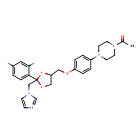
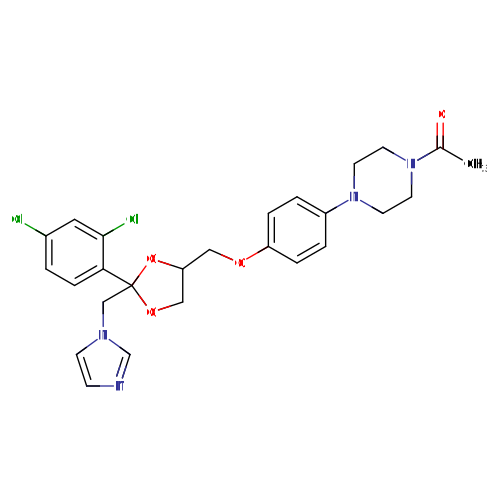
Structure for Ketoconazole (DB01026)
- Weight
- Average: 531.431
Monoisotopic: 530.148760818 - Chemical Formula
- C26H28Cl2N4O4
- Synonyms
- Ketoconazol
- Ketoconazole
- Ketoconazolum
- Ketozole
- External IDs
- KW-1414
- R 41,400
- R-41400

Pharmacology
- Indication
Ketoconazole is used in the treatment or prevention of fungal infections including blastomycosis, candidiasis, coccidioidomycosis, histoplasmosis, chromomycosis, and paracoccidioidomycosis.Label In Europe, it is also used in the treatment of endogenous Cushing's syndrome.12
 Reduce drug development failure ratesBuild, train, & validate machine-learning modelswith evidence-based and structured datasets.Build, train, & validate predictive machine-learning models with structured datasets.
- Associated Conditions
Indication Type Indication Combined Product Details Approval Level Age Group Patient Characteristics Dose Form Used in combination to treat Bacterial vaginosis (bv) Combination Product in combination with: Clindamycin (DB01190) •••••••••••• Treatment of Blastomycosis •••••••••••• Treatment of Chromomycosis •••••••••••• Treatment of Chronic mucocutaneous candidiasis (cmc) •••••••••••• Treatment of Coccidioidomycosis •••••••••••• - Contraindications & Blackbox Warnings
 Prevent Adverse Drug Events TodayTap into our Clinical API for life-saving information on contraindications & blackbox warnings, population restrictions, harmful risks, & more.Avoid life-threatening adverse drug events with our Clinical API
- Pharmacodynamics
Ketoconazole, similarly to other azole antifungals, is a fungistatic agent which causes growth arrest in fungal cells thereby preventing growth and spread of the fungus throughout the body.11
- Mechanism of action
Ketoconazole interacts with 14-α-sterol demethylase, a cytochrome P-450 enzyme necessary for the conversion of lanosterol to ergosterol.5,11 This results in inhibition of ergosterol synthesis and increased fungal cellular permeability due to reduced amounts of ergosterol present in the fungal cell membrane. This metabolic inhibition also results in accumulation of 14α-methyl-3,6-diol, a toxic metabolite. The increase in membrane fluidity is also thought to produce impairment of membrane-bound enzyme systems as components become less closely packed.
Target Actions Organism ALanosterol 14-alpha demethylase inhibitorASteroid 17-alpha-hydroxylase/17,20 lyase inhibitorHumans UAndrogen receptor binderHumans USteroid 21-hydroxylase inhibitorHumans UPotassium voltage-gated channel subfamily H member 2 inhibitorHumans UNuclear receptor subfamily 1 group I member 2 antagonistHumans UNuclear receptor subfamily 1 group I member 3 Not Available Humans - Absorption
Ketoconazole requires an acidic environment to become soluble in water.6 At pH values above 3 it becomes increasingly insoluble with about 10% entering solution in 1 h. At pH less than 3 dissolution is 85% complete in 5 min and entirely complete within 30 min. A single 200 mg oral dose produces a Cmax of 2.5-3 mcg/mL with a Tmax of 1-4 h.5,13 Administering ketoconazole with food consistently increases Cmax and delays Tmax but literature is contradictory regarding the effect on AUC, which may experience a small decrease.5,6 A bioavailablity of 76% has been reported for ketoconazole.5
- Volume of distribution
Ketoconazole has an estimated volume of distribution of 25.41 L or 0.36 L/kg.5 It distributes widely among the tissues, reaching effective concentrations in the skin, tendons, tears, and saliva.6 Distribution to vaginal tissue produces concentrations 2.4 times lower than plasma. Penetration into the CNS, bone, and seminal fluid are minimal. Ketoconazole has been found to enter the breast milk and cross the placenta in animal studies.5
- Protein binding
Ketoconazole is approximately 84% bound to plasma albumin with another 15% associated with blood cells for a total of 99% binding within the plasma.5
- Metabolism
The major metabolite of ketoconazole appears to be M2, an end product resulting from oxidation of the imidazole moiety.8 CYP3A4 is known to be the primary contributor to this reaction with some contribution from CYP2D6. Other metabolites resulting from CYP3A4 mediated oxidation of the imidazole moiety include M3, M4, and M5. Ketoconazole may also undergo N-deacetylation to M14, , alkyl oxidation to M7, N-oxidation to M13, or aromatic hydroxylation to M8, or hydroxylation to M9. M9 may further undergo oxidation of the hydroxyl to form M12, N-dealkylation to form M10 with a subsequent N-dealkylation to M15, or may form an iminium ion. No metabolites are known to be active however oxidation metabolites of M14 have been implicated in cytotoxicity.
Hover over products below to view reaction partners
- Route of elimination
Only 2-4% of the ketoconazole dose is eliminated unchanged in the urine.5 Over 95% is eliminated through hepatic metabolism.
- Half-life
Ketoconazole experiences biphasic elimination with the first phase having a half-life of 2 hours and a terminal half life of 8 hours.5
- Clearance
Ketoconazole has an estimated clearance of 8.66 L/h.5
- Adverse Effects
 Improve decision support & research outcomesWith structured adverse effects data, including: blackbox warnings, adverse reactions, warning & precautions, & incidence rates. View sample adverse effects data in our new Data Library!Improve decision support & research outcomes with our structured adverse effects data.
- Toxicity
Symptoms of overdose include acute liver injury, which may include both hepatocellular and cholestatic injury, accompanied by anorexia, fatigue, nausea, and jaundice.14,7 In case of overdose, gastric lavage with activated charcoal may be used if within one hour of ketoconazole ingestion otherwise provide supportive care.Label,12 If the patient shows signs of adrenal insufficiency, administer 100 mg hydrocortisone once together with saline and glucose infusion and monitor the patient closely. Blood pressure and fluid and electrolyte balance should be monitored over the next few days.12
- Pathways
- Not Available
- Pharmacogenomic Effects/ADRs
- Not Available
Interactions
- Drug Interactions
- This information should not be interpreted without the help of a healthcare provider. If you believe you are experiencing an interaction, contact a healthcare provider immediately. The absence of an interaction does not necessarily mean no interactions exist.
Drug Interaction Integrate drug-drug
interactions in your software1,2-Benzodiazepine The metabolism of 1,2-Benzodiazepine can be decreased when combined with Ketoconazole. Abacavir The metabolism of Abacavir can be decreased when combined with Ketoconazole. Abametapir The serum concentration of Ketoconazole can be increased when it is combined with Abametapir. Abemaciclib The metabolism of Abemaciclib can be decreased when combined with Ketoconazole. Abiraterone The metabolism of Abiraterone can be decreased when combined with Ketoconazole. - Food Interactions
- Avoid alcohol. Drinking alcohol while on ketoconazole treatment may cause liver injury.
- Avoid multivalent ions. They may decrease ketoconazole concentrations.
- Take with food. Food decreases gastrointestinal irritation caused by ketoconazole.
Products
 Drug product information from 10+ global regionsOur datasets provide approved product information including:dosage, form, labeller, route of administration, and marketing period.Access drug product information from over 10 global regions.
- Product Images
- International/Other Brands
- Fungarest (Janssen-Cilag) / Fungoral (Johnson & Johnson) / Ketoderm (Hessel) / Ketoisdin (Isdin) / Ketozole (Ranbaxy) / Nizoral Cream (Ortho-McNeil) / Nizoral Shampoo (Ortho-McNeil) / Orifungal (Janssen) / Orifungal M (Janssen) / Panfungol (Esteve)
- Brand Name Prescription Products
Name Dosage Strength Route Labeller Marketing Start Marketing End Region Image Extina Aerosol, foam 20 mg/1g Topical Prestium Pharma, Inc. 2014-01-10 2019-05-31 US 
Extina Aerosol, foam 20 mg/1g Topical Stiefel Laboratories, Inc. 2007-07-01 2014-06-30 US Extina Aerosol, foam 20 mg/1g Topical Mylan Pharmaceuticals Inc. 2019-01-04 Not applicable US Ketoconazole Tablet 200 mg Oral Apotex Corporation 1998-09-01 Not applicable Canada 
Ketoconazole Hra Tablet 200 mg Oral HRA Pharma Rare Diseases 2020-12-21 Not applicable EU 
- Generic Prescription Products
Name Dosage Strength Route Labeller Marketing Start Marketing End Region Image Apo-ketoconazole Tablet 200 mg Oral Apotex Corporation 1998-02-03 Not applicable Canada Ketaconazole Aerosol, foam 20 mg/1g Topical Mylan Pharmaceuticals Inc. 2018-12-20 Not applicable US Ketoconazole Cream 20 mg/1g Topical Unit Dose Services 2002-12-18 2016-08-05 US Ketoconazole Shampoo, suspension 20 mg/1mL Topical Padagis Israel Pharmaceuticals Ltd 2010-01-19 Not applicable US Ketoconazole Cream 20 mg/1g Topical Tiber Laboratories 2002-12-18 2012-06-30 US - Over the Counter Products
Name Dosage Strength Route Labeller Marketing Start Marketing End Region Image ANTANAZOL CREAM 2% Cream 2 % Topical ZYFAS PHARMA PTE LTD 1995-04-02 Not applicable Singapore 
BEATOCONAZOLE CREAM 2% w/w Cream 2 % w/w Topical BEACONS PHARMACEUTICALS PTE. LTD. 1999-08-16 Not applicable Singapore DEZOR CREAM Cream 2 %w/w Topical บริษัท ซิลลิค ฟาร์มา จำกัด 2018-06-28 Not applicable Thailand 
DEZOR CREAM 2 % w/w Cream 2 % w/w Topical ZUELLIG PHARMA PTE. LTD. 2001-07-07 Not applicable Singapore DEZOR SHAMPOO 2 % w/v Shampoo 2.00 % w/v Topical ZUELLIG PHARMA PTE. LTD. 2001-07-07 Not applicable Singapore - Mixture Products
Name Ingredients Dosage Route Labeller Marketing Start Marketing End Region Image BEXON DUO® CAPSULAS BLANDAS VAGINALES Ketoconazole (400 mg) + Clindamycin phosphate (100 mg) Capsule, liquid filled Vaginal CATALENT ARGENTINA. SOCIEDAD ANONIMA. INDUSTRIAL Y COMERCIAL 2008-11-28 Not applicable Colombia 
BIODERM® CREMA Ketoconazole (2 g) + Dexamethasone (0.04 g) + Gentamicin sulfate (0.1 g) Cream Topical LABORATORIOS SIEGFRIED S.A.S. 2006-11-10 Not applicable Colombia CLINDAMICINA/KETOCONAZOL 100 MG/400MG Ketoconazole (400 mg) + Clindamycin phosphate (100 mg) Insert Vaginal TECNOQUIMICAS S.A. (PLANTA JAMUNDI) 2018-05-24 Not applicable Colombia DERMATREX® CREMA Ketoconazole (2 g) + Dexamethasone (0.04 g) + Gentamicin sulfate (0.1 g) Cream Topical COASPHARMA S.A.S. (PLANTA PALOQUEMAO) 2006-11-10 Not applicable Colombia DERMOTRIZOL ® Ketoconazole (2.04 g) + Dexamethasone (0.054 g) + Fusidic acid (2.04 g) Cream Topical COLOMPACK S.A. 2018-05-02 Not applicable Colombia - Unapproved/Other Products
Name Ingredients Dosage Route Labeller Marketing Start Marketing End Region Image Dermetazole Ketoconazole (20 mg/1g) + Urea (17 g/85g) Cream; Kit Topical V2 Pharma, LLC 2022-10-12 Not applicable US Hydrocortisone 2.5% / Iodoquinol 1% / Ketoconazole 2% Ketoconazole (2 g/100g) + Diiodohydroxyquinoline (1 g/100g) + Hydrocortisone (2.5 g/100g) Cream Topical Sincerus Florida, LLC 2019-05-17 Not applicable US Hydrocortisone 2.5% / Ketoconazole 2% Ketoconazole (2 g/100g) + Hydrocortisone (2.5 g/100g) Cream Topical Sincerus Florida, LLC 2019-05-17 Not applicable US Ketoconazole 2% / Niacinamide 4% Ketoconazole (2 g/100g) + Nicotinamide (4 g/100g) Cream Topical Sincerus Florida LLC 2019-05-13 Not applicable US Ketoconazole 2% / Salicylic Acid 2% Ketoconazole (2 g/100g) + Salicylic acid (2 g/100g) Shampoo Topical Sincerus Florida, LLC 2019-05-17 Not applicable US


Categories
- ATC Codes
- G01AF11 — Ketoconazole
- G01AF — Imidazole derivatives
- G01A — ANTIINFECTIVES AND ANTISEPTICS, EXCL. COMBINATIONS WITH CORTICOSTEROIDS
- G01 — GYNECOLOGICAL ANTIINFECTIVES AND ANTISEPTICS
- G — GENITO URINARY SYSTEM AND SEX HORMONES
- G01AF — Imidazole derivatives
- G01A — ANTIINFECTIVES AND ANTISEPTICS, EXCL. COMBINATIONS WITH CORTICOSTEROIDS
- G01 — GYNECOLOGICAL ANTIINFECTIVES AND ANTISEPTICS
- G — GENITO URINARY SYSTEM AND SEX HORMONES
- J02AB — Imidazole derivatives
- J02A — ANTIMYCOTICS FOR SYSTEMIC USE
- J02 — ANTIMYCOTICS FOR SYSTEMIC USE
- J — ANTIINFECTIVES FOR SYSTEMIC USE
- H02CA — Anticorticosteroids
- H02C — ANTIADRENAL PREPARATIONS
- H02 — CORTICOSTEROIDS FOR SYSTEMIC USE
- H — SYSTEMIC HORMONAL PREPARATIONS, EXCL. SEX HORMONES AND INSULINS
- Drug Categories
- 14-alpha Demethylase Inhibitors
- Agents causing hyperkalemia
- Anti-Infective Agents
- Antiadrenal Preparations
- Anticorticosteroids
- Antifungal Agents
- Antifungals for Dermatological Use
- Antifungals for Topical Use
- Antiinfectives for Systemic Use
- Antimycotics for Systemic Use
- Azole Antifungals
- BSEP/ABCB11 Inhibitors
- BSEP/ABCB11 Substrates
- Cytochrome P-450 CYP1A2 Inhibitors
- Cytochrome P-450 CYP1A2 Inhibitors (moderate)
- Cytochrome P-450 CYP2A6 Inhibitors
- Cytochrome P-450 CYP2A6 Inhibitors (moderate)
- Cytochrome P-450 CYP2B6 Inhibitors
- Cytochrome P-450 CYP2B6 Inhibitors (moderate)
- Cytochrome P-450 CYP2C19 Inhibitors
- Cytochrome P-450 CYP2C19 inhibitors (strength unknown)
- Cytochrome P-450 CYP2C8 Inhibitors
- Cytochrome P-450 CYP2C8 Inhibitors (moderate)
- Cytochrome P-450 CYP2C8 Inhibitors (strong)
- Cytochrome P-450 CYP2C9 Inhibitors
- Cytochrome P-450 CYP2C9 Inhibitors (moderate)
- Cytochrome P-450 CYP2D6 Inhibitors
- Cytochrome P-450 CYP2D6 Inhibitors (moderate)
- Cytochrome P-450 CYP2D6 Inhibitors (strength unknown)
- Cytochrome P-450 CYP3A Inhibitors
- Cytochrome P-450 CYP3A Substrates
- Cytochrome P-450 CYP3A4 Inhibitors
- Cytochrome P-450 CYP3A4 Inhibitors (strong)
- Cytochrome P-450 CYP3A4 Substrates
- Cytochrome P-450 CYP3A5 Inhibitors
- Cytochrome P-450 CYP3A5 Inhibitors (strong)
- Cytochrome P-450 CYP3A7 Inhibitors
- Cytochrome P-450 CYP3A7 Inhibitors (strong)
- Cytochrome P-450 Enzyme Inhibitors
- Cytochrome P-450 Substrates
- Dermatologicals
- Drugs causing inadvertant photosensitivity
- Enzyme Inhibitors
- Gynecological Antiinfectives and Antiseptics
- Hepatotoxic Agents
- Imidazole and Triazole Derivatives
- Imidazole Derivatives
- OATP1B1/SLCO1B1 Inhibitors
- P-glycoprotein inhibitors
- P-glycoprotein substrates
- Photosensitizing Agents
- Piperazines
- Potential QTc-Prolonging Agents
- QTc Prolonging Agents
- Steroid Synthesis Inhibitors
- Systemic Hormonal Preparations, Excl. Sex Hormones and Insulins
- UGT1A1 Inhibitors
- UGT2B7 Inhibitors
- Chemical TaxonomyProvided by Classyfire
- Description
- This compound belongs to the class of organic compounds known as phenylpiperazines. These are compounds containing a phenylpiperazine skeleton, which consists of a piperazine bound to a phenyl group.
- Kingdom
- Organic compounds
- Super Class
- Organoheterocyclic compounds
- Class
- Diazinanes
- Sub Class
- Piperazines
- Direct Parent
- Phenylpiperazines
- Alternative Parents
- N-arylpiperazines / Aminophenyl ethers / Phenoxy compounds / Aniline and substituted anilines / Dialkylarylamines / Dichlorobenzenes / Alkyl aryl ethers / Ketals / Aryl chlorides / N-substituted imidazoles show 12 more
- Substituents
- 1,3-dichlorobenzene / Acetal / Acetamide / Alkyl aryl ether / Amine / Amino acid or derivatives / Aminophenyl ether / Aniline or substituted anilines / Aromatic heteromonocyclic compound / Aryl chloride show 34 more
- Molecular Framework
- Aromatic heteromonocyclic compounds
- External Descriptors
- N-arylpiperazine, imidazoles, ether, dioxolane, dichlorobenzene, N-carbonylpiperazine (CHEBI:48339) / a small molecule (CPD-4503)
- Affected organisms
- Not Available
Chemical Identifiers
- UNII
- R9400W927I
- CAS number
- 65277-42-1
- InChI Key
- XMAYWYJOQHXEEK-UHFFFAOYSA-N
- InChI
- InChI=1S/C26H28Cl2N4O4/c1-19(33)31-10-12-32(13-11-31)21-3-5-22(6-4-21)34-15-23-16-35-26(36-23,17-30-9-8-29-18-30)24-7-2-20(27)14-25(24)28/h2-9,14,18,23H,10-13,15-17H2,1H3
- IUPAC Name
- 1-[4-(4-{[2-(2,4-dichlorophenyl)-2-[(1H-imidazol-1-yl)methyl]-1,3-dioxolan-4-yl]methoxy}phenyl)piperazin-1-yl]ethan-1-one
- SMILES
- CC(=O)N1CCN(CC1)C1=CC=C(OCC2COC(CN3C=CN=C3)(O2)C2=CC=C(Cl)C=C2Cl)C=C1
References
- Synthesis Reference
U.S. Patent 4,144,346.
- General References
- Goeders NE, Peltier RL, Guerin GF: Ketoconazole reduces low dose cocaine self-administration in rats. Drug Alcohol Depend. 1998 Dec 1;53(1):67-77. [Article]
- Berwaerts J, Verhelst J, Mahler C, Abs R: Cushing's syndrome in pregnancy treated by ketoconazole: case report and review of the literature. Gynecol Endocrinol. 1999 Jun;13(3):175-82. [Article]
- Kazy Z, Puho E, Czeizel AE: Population-based case-control study of oral ketoconazole treatment for birth outcomes. Congenit Anom (Kyoto). 2005 Mar;45(1):5-8. [Article]
- Pierard-Franchimont C, Goffin V, Decroix J, Pierard GE: A multicenter randomized trial of ketoconazole 2% and zinc pyrithione 1% shampoos in severe dandruff and seborrheic dermatitis. Skin Pharmacol Appl Skin Physiol. 2002 Nov-Dec;15(6):434-41. [Article]
- Van Tyle JH: Ketoconazole. Mechanism of action, spectrum of activity, pharmacokinetics, drug interactions, adverse reactions and therapeutic use. Pharmacotherapy. 1984 Nov-Dec;4(6):343-73. [Article]
- Daneshmend TK, Warnock DW: Clinical pharmacokinetics of ketoconazole. Clin Pharmacokinet. 1988 Jan;14(1):13-34. doi: 10.2165/00003088-198814010-00002. [Article]
- Kim TH, Kim BH, Kim YW, Yang DM, Han YS, Dong SH, Kim HJ, Chang YW, Lee JI, Chang R: Liver cirrhosis developed after ketoconazole-induced acute hepatic injury. J Gastroenterol Hepatol. 2003 Dec;18(12):1426-9. doi: 10.1046/j.1440-1746.2003.02852.x. [Article]
- Fitch WL, Tran T, Young M, Liu L, Chen Y: Revisiting the metabolism of ketoconazole using accurate mass. Drug Metab Lett. 2009 Aug;3(3):191-8. [Article]
- Maertens JA: History of the development of azole derivatives. Clin Microbiol Infect. 2004 Mar;10 Suppl 1:1-10. doi: 10.1111/j.1470-9465.2004.00841.x. [Article]
- Gupta AK, Lyons DC: The Rise and Fall of Oral Ketoconazole. J Cutan Med Surg. 2015 Jul-Aug;19(4):352-7. doi: 10.1177/1203475415574970. Epub 2015 Mar 5. [Article]
- Brunton LL, Hilal-Dandan R, Knollmann BC. eds (2018). Goodman & Gilman's: The Pharmacological Basis of Therapeutics (13th ed.). McGraw-Hill Education. [ISBN:978-1-25-958473-2]
- EMA SmPC: Ketoconazole [Link]
- FDA Label: Ketoconazole Tablets [Link]
- HSDB: Ketoconazole [Link]
- Ketoconazole FDA Label [Link]
- CPHI Online: Front-2 Ovules (clindamycin/ketoconazole) for vaginal use [Link]
- External Links
- Human Metabolome Database
- HMDB0243587
- KEGG Drug
- D00351
- PubChem Compound
- 3823
- PubChem Substance
- 46506746
- ChemSpider
- 3691
- BindingDB
- 151585
- 6135
- ChEBI
- 48339
- ChEMBL
- CHEMBL157101
- Therapeutic Targets Database
- DAP000630
- PharmGKB
- PA450146
- PDBe Ligand
- KTN
- RxList
- RxList Drug Page
- Drugs.com
- Drugs.com Drug Page
- PDRhealth
- PDRhealth Drug Page
- Wikipedia
- Ketoconazole
- FDA label
- Download (222 KB)
- MSDS
- Download (73.3 KB)
Clinical Trials
- Clinical Trials
Phase Status Purpose Conditions Count 4 Completed Basic Science Kidney Transplantation 1 4 Completed Treatment Chronic Obstructive Pulmonary Disease (COPD) 1 4 Completed Treatment Pityriasis versicolor 1 4 Completed Treatment Pityrosporum Folliculitis 1 4 Completed Treatment Seborrheic Dermatitis 1
Pharmacoeconomics
- Manufacturers
- Not Available
- Packagers
- Advanced Pharmaceutical Services Inc.
- Apical Pharmaceutical Corporation
- Apotex Inc.
- A-S Medication Solutions LLC
- Bryant Ranch Prepack
- DAVA Pharmaceuticals
- Direct Dispensing Inc.
- Dispensing Solutions
- Diversified Healthcare Services Inc.
- DPT Laboratories Ltd.
- E. Fougera and Co.
- H.J. Harkins Co. Inc.
- Janssen-Ortho Inc.
- JSJ Pharmaceuticals Inc.
- Kaiser Foundation Hospital
- Lake Erie Medical and Surgical Supply
- McNeil Laboratories
- Medisca Inc.
- Murfreesboro Pharmaceutical Nursing Supply
- Mutual Pharmaceutical Co.
- Mylan
- Novopharm Ltd.
- Nucare Pharmaceuticals Inc.
- Nycomed Inc.
- Ortho Mcneil Janssen Pharmaceutical Inc.
- Ortho-McNeil-Janssen Pharmaceuticals Inc.
- Palmetto Pharmaceuticals Inc.
- Patheon Inc.
- Patriot Pharmaceuticals
- PCA LLC
- PD-Rx Pharmaceuticals Inc.
- Perrigo Co.
- Pharma Pac LLC
- Pharmaceutical Utilization Management Program VA Inc.
- Physicians Total Care Inc.
- Pliva Inc.
- Preferred Pharmaceuticals Inc.
- Prescript Pharmaceuticals
- Rebel Distributors Corp.
- Remedy Repack
- Sandoz
- Stiefel Labs
- Taro Pharmaceuticals USA
- Teva Pharmaceutical Industries Ltd.
- Tolmar Inc.
- Torpharm Inc.
- Tya Pharmaceuticals
- United Research Laboratories Inc.
- Dosage Forms
Form Route Strength Cream Topical 2 % w/w Capsule, liquid filled Vaginal Insert Vaginal 119.000 mg Solution Topical 2.000 g Drug delivery system Cutaneous 2.000 g Tablet Oral 200.00 mg Insert Vaginal 0.400 g Cream; kit Topical Shampoo Topical 2.00 % w/v Aerosol, foam Topical 20 mg/1g Emulsion Topical 1 g Cream Vaginal Capsule Vaginal 118.822 mg Tablet Vaginal Powder Topical 20 mg Powder Topical 1 g Solution Topical 2 % Suspension Oral 2 g Cream Topical Shampoo Topical Shampoo Topical 20 mg/ml Cream Topical 200000 g Solution Topical Kit Topical Cream Topical 2 g Aerosol, foam Topical 2 g/100g Cream Topical 20 mg/1 Cream Topical 20 mg/1g Shampoo, suspension Topical 20 mg/1mL Shampoo, suspension Topical 20.5 mg/1mL Tablet Oral Tablet Oral 200 mg/1 Cream Topical Shampoo Topical Aerosol, foam; kit Topical 20 mg/1g Cream Topical 2 % Emulsion Topical 2000 mg Tablet Oral 20000000 mg Gel Topical Suppository Vaginal 400 mg Suspension Oral 100 ml Suspension Oral 30 ml Cream 2.000 g Insert Vaginal Capsule Vaginal 119.0000 mg Cream Topical 20 mg Cream Vaginal Emulsion Topical 2 g Cream Cutaneous 2.000 g Cream Cutaneous 2.0000 g Insert Vaginal 400.000 mg Tablet Oral 0.2 g Tablet Oral 200.000 mg Tablet, film coated Oral Cream Topical 2.000 g Shampoo Topical 2 % w/v Gel Cutaneous 2.000 g Powder Topical Shampoo Topical 2 % Shampoo Topical 20 MG/G Shampoo Topical 20 mg/1mL Shampoo Topical 10 mg/1mL Cream Topical 2 %w/w Cream Topical 20 mg/g Suspension Oral 20 mg / mL Cream; kit; tincture Topical Ointment Topical 2 % w/w Powder Topical Cream Topical 0.5 g/100mL Cream Cutaneous 2.00 g Shampoo Topical 2 % w/w Solution Topical 2 g Lotion Topical Suspension Cutaneous 2.000 g Insert Vaginal Emulsion Topical 0.5 g Solution Topical 1 g Emulsion Topical 1.05 g Insert Vaginal 800.00 mg Suspension Oral 200 mg Gel Topical 2 % Gel Topical 20 mg/1g Shampoo Topical 2 %w/w Tablet, coated Oral 200 mg Tablet, film coated Oral 200 mg Tablet Oral 200 mg Capsule 200 mg - Prices
Unit description Cost Unit Extina 2% Foam 100 gm Can 375.44USD can Extina 2% Foam 50 gm Can 201.53USD can Nizoral 2% Shampoo 120ml Bottle 49.43USD bottle Ketoconazole 2% Cream 60 gm Tube 44.72USD tube Ketoconazole 2% Cream 30 gm Tube 29.43USD tube Ketoconazole 2% Shampoo 120ml Bottle 27.98USD bottle Ketoconazole 2% Cream 15 gm Tube 19.99USD tube Ketoconazole powder 15.0USD g Nizoral 200 mg tablet 4.75USD tablet Extina 2% foam 3.61USD g Ketoconazole 200 mg tablet 3.21USD tablet Kuric 2% cream 1.54USD g Apo-Ketoconazole 200 mg Tablet 1.24USD tablet Novo-Ketoconazole 200 mg Tablet 1.24USD tablet Nu-Ketocon 200 mg Tablet 1.24USD tablet Nizoral 2% cream 1.22USD g Ketoconazole 2% cream 1.1USD g Ketoderm 2 % Cream 0.35USD g Ketoconazole 2% shampoo 0.23USD ml Nizoral a-d 1% shampoo 0.07USD ml DrugBank does not sell nor buy drugs. Pricing information is supplied for informational purposes only.- Patents
Patent Number Pediatric Extension Approved Expires (estimated) Region US5456851 No 1995-10-10 2014-04-07 US US7179475 No 2007-02-20 2018-12-04 US US8232276 No 2012-07-31 2020-11-24 US US8735393 No 2014-05-27 2018-12-04 US US7553835 No 2009-06-30 2018-10-19 US US8026238 No 2011-09-27 2018-10-19 US
Properties
- State
- Solid
- Experimental Properties
Property Value Source melting point (°C) 146 U.S. Patent 4,144,346. logP 4.35 SANGSTER (1993) - Predicted Properties
Property Value Source Water Solubility 0.00931 mg/mL ALOGPS logP 4.3 ALOGPS logP 4.19 Chemaxon logS -4.8 ALOGPS pKa (Strongest Basic) 6.42 Chemaxon Physiological Charge 0 Chemaxon Hydrogen Acceptor Count 6 Chemaxon Hydrogen Donor Count 0 Chemaxon Polar Surface Area 69.06 Å2 Chemaxon Rotatable Bond Count 7 Chemaxon Refractivity 138.07 m3·mol-1 Chemaxon Polarizability 54.61 Å3 Chemaxon Number of Rings 5 Chemaxon Bioavailability 1 Chemaxon Rule of Five No Chemaxon Ghose Filter No Chemaxon Veber's Rule No Chemaxon MDDR-like Rule Yes Chemaxon - Predicted ADMET Features
Property Value Probability Human Intestinal Absorption + 0.9156 Blood Brain Barrier + 0.6704 Caco-2 permeable + 0.8866 P-glycoprotein substrate Substrate 0.7293 P-glycoprotein inhibitor I Inhibitor 0.8389 P-glycoprotein inhibitor II Inhibitor 0.8388 Renal organic cation transporter Non-inhibitor 0.5644 CYP450 2C9 substrate Non-substrate 0.7898 CYP450 2D6 substrate Non-substrate 0.9115 CYP450 3A4 substrate Substrate 0.7409 CYP450 1A2 substrate Inhibitor 0.9106 CYP450 2C9 inhibitor Inhibitor 0.8949 CYP450 2D6 inhibitor Inhibitor 0.8931 CYP450 2C19 inhibitor Inhibitor 0.8994 CYP450 3A4 inhibitor Inhibitor 0.796 CYP450 inhibitory promiscuity High CYP Inhibitory Promiscuity 0.9386 Ames test Non AMES toxic 0.7003 Carcinogenicity Non-carcinogens 0.8836 Biodegradation Not ready biodegradable 1.0 Rat acute toxicity 3.4739 LD50, mol/kg Not applicable hERG inhibition (predictor I) Weak inhibitor 0.9258 hERG inhibition (predictor II) Inhibitor 0.8403
Spectra
- Mass Spec (NIST)
- Not Available
- Spectra
- Chromatographic Properties
Collision Cross Sections (CCS)
Adduct CCS Value (Å2) Source type Source [M-H]- 212.3593 predictedDeepCCS 1.0 (2019) [M+H]+ 214.75487 predictedDeepCCS 1.0 (2019) [M+Na]+ 221.01576 predictedDeepCCS 1.0 (2019)
Targets

- Kind
- Protein
- Organism
- Not Available
- Pharmacological action
- Yes
- Actions
- Inhibitor
- General Function
- Sterol 14-demethylase activity
- Specific Function
- Catalyzes C14-demethylation of lanosterol which is critical for ergosterol biosynthesis. It transforms lanosterol into 4,4'-dimethyl cholesta-8,14,24-triene-3-beta-ol (By similarity).
- Gene Name
- ERG11
- Uniprot ID
- P50859
- Uniprot Name
- Lanosterol 14-alpha demethylase
- Molecular Weight
- 61304.95 Da
References
- Overington JP, Al-Lazikani B, Hopkins AL: How many drug targets are there? Nat Rev Drug Discov. 2006 Dec;5(12):993-6. [Article]
- Imming P, Sinning C, Meyer A: Drugs, their targets and the nature and number of drug targets. Nat Rev Drug Discov. 2006 Oct;5(10):821-34. [Article]
- Agut J, Palacin C, Sacristan A, Ortiz JA: Inhibition of ergosterol synthesis by sertaconazole in Candida albicans. Arzneimittelforschung. 1992 May;42(5A):718-20. [Article]
- Berman HM, Westbrook J, Feng Z, Gilliland G, Bhat TN, Weissig H, Shindyalov IN, Bourne PE: The Protein Data Bank. Nucleic Acids Res. 2000 Jan 1;28(1):235-42. [Article]
- Agut J, Palacin C, Salgado J, Casas E, Sacristan A, Ortiz JA: Direct membrane-damaging effect of sertaconazole on Candida albicans as a mechanism of its fungicidal activity. Arzneimittelforschung. 1992 May;42(5A):721-4. [Article]
- Croxtall JD, Plosker GL: Sertaconazole: a review of its use in the management of superficial mycoses in dermatology and gynaecology. Drugs. 2009;69(3):339-59. doi: 10.2165/00003495-200969030-00009. [Article]
- Borgers M, Degreef H, Cauwenbergh G: Fungal infections of the skin: infection process and antimycotic therapy. Curr Drug Targets. 2005 Dec;6(8):849-62. [Article]
- Warrilow AG, Martel CM, Parker JE, Melo N, Lamb DC, Nes WD, Kelly DE, Kelly SL: Azole binding properties of Candida albicans sterol 14-alpha demethylase (CaCYP51). Antimicrob Agents Chemother. 2010 Oct;54(10):4235-45. doi: 10.1128/AAC.00587-10. Epub 2010 Jul 12. [Article]
- FDA Label: Ketoconazole Tablets [Link]
- EMA SmPC: Ketoconazole [Link]
- Kind
- Protein
- Organism
- Humans
- Pharmacological action
- Yes
- Actions
- Inhibitor
- General Function
- Steroid 17-alpha-monooxygenase activity
- Specific Function
- Conversion of pregnenolone and progesterone to their 17-alpha-hydroxylated products and subsequently to dehydroepiandrosterone (DHEA) and androstenedione. Catalyzes both the 17-alpha-hydroxylation ...
- Gene Name
- CYP17A1
- Uniprot ID
- P05093
- Uniprot Name
- Steroid 17-alpha-hydroxylase/17,20 lyase
- Molecular Weight
- 57369.995 Da
References
- Kind
- Protein
- Organism
- Humans
- Pharmacological action
- Unknown
- Actions
- Binder
- General Function
- Zinc ion binding
- Specific Function
- Steroid hormone receptors are ligand-activated transcription factors that regulate eukaryotic gene expression and affect cellular proliferation and differentiation in target tissues. Transcription ...
- Gene Name
- AR
- Uniprot ID
- P10275
- Uniprot Name
- Androgen receptor
- Molecular Weight
- 98987.9 Da
References
- Eil C: Ketoconazole binds to the human androgen receptor. Horm Metab Res. 1992 Aug;24(8):367-70. [Article]
- Kind
- Protein
- Organism
- Humans
- Pharmacological action
- Unknown
- Actions
- Inhibitor
- General Function
- Steroid hydroxylase activity
- Specific Function
- Specifically catalyzes the 21-hydroxylation of steroids. Required for the adrenal synthesis of mineralocorticoids and glucocorticoids.
- Gene Name
- CYP21A2
- Uniprot ID
- P08686
- Uniprot Name
- Steroid 21-hydroxylase
- Molecular Weight
- 55886.805 Da
References
- Trachtenberg J, Zadra J: Steroid synthesis inhibition by ketoconazole: sites of action. Clin Invest Med. 1988 Feb;11(1):1-5. [Article]
- Kind
- Protein
- Organism
- Humans
- Pharmacological action
- Unknown
- Actions
- Inhibitor
- General Function
- Voltage-gated potassium channel activity involved in ventricular cardiac muscle cell action potential repolarization
- Specific Function
- Pore-forming (alpha) subunit of voltage-gated inwardly rectifying potassium channel. Channel properties are modulated by cAMP and subunit assembly. Mediates the rapidly activating component of the ...
- Gene Name
- KCNH2
- Uniprot ID
- Q12809
- Uniprot Name
- Potassium voltage-gated channel subfamily H member 2
- Molecular Weight
- 126653.52 Da
References
- Chiu PJ, Marcoe KF, Bounds SE, Lin CH, Feng JJ, Lin A, Cheng FC, Crumb WJ, Mitchell R: Validation of a [3H]astemizole binding assay in HEK293 cells expressing HERG K+ channels. J Pharmacol Sci. 2004 Jul;95(3):311-9. [Article]
- Kind
- Protein
- Organism
- Humans
- Pharmacological action
- Unknown
- Actions
- Antagonist
- General Function
- Zinc ion binding
- Specific Function
- Nuclear receptor that binds and is activated by variety of endogenous and xenobiotic compounds. Transcription factor that activates the transcription of multiple genes involved in the metabolism an...
- Gene Name
- NR1I2
- Uniprot ID
- O75469
- Uniprot Name
- Nuclear receptor subfamily 1 group I member 2
- Molecular Weight
- 49761.245 Da
References
- Svecova L, Vrzal R, Burysek L, Anzenbacherova E, Cerveny L, Grim J, Trejtnar F, Kunes J, Pour M, Staud F, Anzenbacher P, Dvorak Z, Pavek P: Azole antimycotics differentially affect rifampicin-induced pregnane X receptor-mediated CYP3A4 gene expression. Drug Metab Dispos. 2008 Feb;36(2):339-48. Epub 2007 Nov 12. [Article]
- Li H, Redinbo MR, Venkatesh M, Ekins S, Chaudhry A, Bloch N, Negassa A, Mukherjee P, Kalpana G, Mani S: Novel yeast-based strategy unveils antagonist binding regions on the nuclear xenobiotic receptor PXR. J Biol Chem. 2013 May 10;288(19):13655-68. doi: 10.1074/jbc.M113.455485. Epub 2013 Mar 22. [Article]
- Kind
- Protein
- Organism
- Humans
- Pharmacological action
- Unknown
- Curator comments
- Inverse agonist at the canonical form of the receptor. Likely an antagonist at isoform 3 of the receptor.
- General Function
- Zinc ion binding
- Specific Function
- Binds and transactivates the retinoic acid response elements that control expression of the retinoic acid receptor beta 2 and alcohol dehydrogenase 3 genes. Transactivates both the phenobarbital re...
- Gene Name
- NR1I3
- Uniprot ID
- Q14994
- Uniprot Name
- Nuclear receptor subfamily 1 group I member 3
- Molecular Weight
- 39942.145 Da
References
- Dring AM, Anderson LE, Qamar S, Stoner MA: Rational quantitative structure-activity relationship (RQSAR) screen for PXR and CAR isoform-specific nuclear receptor ligands. Chem Biol Interact. 2010 Dec 5;188(3):512-25. doi: 10.1016/j.cbi.2010.09.018. Epub 2010 Oct 20. [Article]
Enzymes
- Kind
- Protein
- Organism
- Humans
- Pharmacological action
- Unknown
- Actions
- SubstrateInhibitor
- General Function
- Vitamin d3 25-hydroxylase activity
- Specific Function
- Cytochromes P450 are a group of heme-thiolate monooxygenases. In liver microsomes, this enzyme is involved in an NADPH-dependent electron transport pathway. It performs a variety of oxidation react...
- Gene Name
- CYP3A4
- Uniprot ID
- P08684
- Uniprot Name
- Cytochrome P450 3A4
- Molecular Weight
- 57342.67 Da
References
- Sakaeda T, Iwaki K, Kakumoto M, Nishikawa M, Niwa T, Jin JS, Nakamura T, Nishiguchi K, Okamura N, Okumura K: Effect of micafungin on cytochrome P450 3A4 and multidrug resistance protein 1 activities, and its comparison with azole antifungal drugs. J Pharm Pharmacol. 2005 Jun;57(6):759-64. [Article]
- Elsherbiny ME, El-Kadi AO, Brocks DR: The metabolism of amiodarone by various CYP isoenzymes of human and rat, and the inhibitory influence of ketoconazole. J Pharm Pharm Sci. 2008;11(1):147-59. [Article]
- Flockhart Table of Drug Interactions [Link]
- FDA Drug Development and Drug Interactions: Table of Substrates, Inhibitors and Inducers [Link]
- Kind
- Protein
- Organism
- Humans
- Pharmacological action
- No
- Actions
- Inhibitor
- General Function
- Oxygen binding
- Specific Function
- Cytochromes P450 are a group of heme-thiolate monooxygenases. In liver microsomes, this enzyme is involved in an NADPH-dependent electron transport pathway. It oxidizes a variety of structurally un...
- Gene Name
- CYP3A5
- Uniprot ID
- P20815
- Uniprot Name
- Cytochrome P450 3A5
- Molecular Weight
- 57108.065 Da
References
- Allqvist A, Miura J, Bertilsson L, Mirghani RA: Inhibition of CYP3A4 and CYP3A5 catalyzed metabolism of alprazolam and quinine by ketoconazole as racemate and four different enantiomers. Eur J Clin Pharmacol. 2007 Feb;63(2):173-9. doi: 10.1007/s00228-006-0230-z. Epub 2007 Jan 3. [Article]
- Shirasaka Y, Chang SY, Grubb MF, Peng CC, Thummel KE, Isoherranen N, Rodrigues AD: Effect of CYP3A5 expression on the inhibition of CYP3A-catalyzed drug metabolism: impact on modeling CYP3A-mediated drug-drug interactions. Drug Metab Dispos. 2013 Aug;41(8):1566-74. doi: 10.1124/dmd.112.049940. Epub 2013 May 30. [Article]
- Flockhart Table of Drug Interactions [Link]
- FDA Drug Development and Drug Interactions: Table of Substrates, Inhibitors and Inducers [Link]
- Kind
- Protein
- Organism
- Humans
- Pharmacological action
- Unknown
- Actions
- Inhibitor
- General Function
- Steroid hydroxylase activity
- Specific Function
- Responsible for the metabolism of a number of therapeutic agents such as the anticonvulsant drug S-mephenytoin, omeprazole, proguanil, certain barbiturates, diazepam, propranolol, citalopram and im...
- Gene Name
- CYP2C19
- Uniprot ID
- P33261
- Uniprot Name
- Cytochrome P450 2C19
- Molecular Weight
- 55930.545 Da
References
- Emoto C, Murase S, Sawada Y, Jones BC, Iwasaki K: In vitro inhibitory effect of 1-aminobenzotriazole on drug oxidations catalyzed by human cytochrome P450 enzymes: a comparison with SKF-525A and ketoconazole. Drug Metab Pharmacokinet. 2003;18(5):287-95. [Article]
- Flockhart Table of Drug Interactions [Link]
- Kind
- Protein
- Organism
- Humans
- Pharmacological action
- Unknown
- Actions
- InhibitorInducer
- Curator comments
- Found to induce the enzyme time-dependently in murine models but does not appear to have been confirmed in humans.
- General Function
- Vitamin d 24-hydroxylase activity
- Specific Function
- Cytochromes P450 are a group of heme-thiolate monooxygenases. In liver microsomes, this enzyme is involved in an NADPH-dependent electron transport pathway. It oxidizes a variety of structurally un...
- Gene Name
- CYP1A1
- Uniprot ID
- P04798
- Uniprot Name
- Cytochrome P450 1A1
- Molecular Weight
- 58164.815 Da
References
- Stresser DM, Broudy MI, Ho T, Cargill CE, Blanchard AP, Sharma R, Dandeneau AA, Goodwin JJ, Turner SD, Erve JC, Patten CJ, Dehal SS, Crespi CL: Highly selective inhibition of human CYP3Aa in vitro by azamulin and evidence that inhibition is irreversible. Drug Metab Dispos. 2004 Jan;32(1):105-12. doi: 10.1124/dmd.32.1.105. [Article]
- Sai Y, Dai R, Yang TJ, Krausz KW, Gonzalez FJ, Gelboin HV, Shou M: Assessment of specificity of eight chemical inhibitors using cDNA-expressed cytochromes P450. Xenobiotica. 2000 Apr;30(4):327-43. [Article]
- Korashy HM, Shayeganpour A, Brocks DR, El-Kadi AO: Induction of cytochrome P450 1A1 by ketoconazole and itraconazole but not fluconazole in murine and human hepatoma cell lines. Toxicol Sci. 2007 May;97(1):32-43. Epub 2007 Feb 5. [Article]
- Kind
- Protein
- Organism
- Humans
- Pharmacological action
- Unknown
- Actions
- Inhibitor
- General Function
- Oxidoreductase activity, acting on paired donors, with incorporation or reduction of molecular oxygen, reduced flavin or flavoprotein as one donor, and incorporation of one atom of oxygen
- Specific Function
- Cytochromes P450 are a group of heme-thiolate monooxygenases. In liver microsomes, this enzyme is involved in an NADPH-dependent electron transport pathway. It oxidizes a variety of structurally un...
- Gene Name
- CYP1A2
- Uniprot ID
- P05177
- Uniprot Name
- Cytochrome P450 1A2
- Molecular Weight
- 58293.76 Da
References
- Shet MS, McPhaul M, Fisher CW, Stallings NR, Estabrook RW: Metabolism of the antiandrogenic drug (Flutamide) by human CYP1A2. Drug Metab Dispos. 1997 Nov;25(11):1298-303. [Article]
- Kind
- Protein
- Organism
- Humans
- Pharmacological action
- Unknown
- Actions
- Inhibitor
- General Function
- Steroid hydroxylase activity
- Specific Function
- Exhibits a high coumarin 7-hydroxylase activity. Can act in the hydroxylation of the anti-cancer drugs cyclophosphamide and ifosphamide. Competent in the metabolic activation of aflatoxin B1. Const...
- Gene Name
- CYP2A6
- Uniprot ID
- P11509
- Uniprot Name
- Cytochrome P450 2A6
- Molecular Weight
- 56501.005 Da
References
- Draper AJ, Madan A, Parkinson A: Inhibition of coumarin 7-hydroxylase activity in human liver microsomes. Arch Biochem Biophys. 1997 May 1;341(1):47-61. doi: 10.1006/abbi.1997.9964. [Article]
- Rendic S: Summary of information on human CYP enzymes: human P450 metabolism data. Drug Metab Rev. 2002 Feb-May;34(1-2):83-448. [Article]
- Kind
- Protein
- Organism
- Humans
- Pharmacological action
- Unknown
- Actions
- Inhibitor
- General Function
- Oxygen binding
- Specific Function
- Cytochromes P450 are a group of heme-thiolate monooxygenases. In liver microsomes, this enzyme is involved in an NADPH-dependent electron transport pathway. It oxidizes a variety of structurally un...
- Gene Name
- CYP1B1
- Uniprot ID
- Q16678
- Uniprot Name
- Cytochrome P450 1B1
- Molecular Weight
- 60845.33 Da
References
- Stresser DM, Broudy MI, Ho T, Cargill CE, Blanchard AP, Sharma R, Dandeneau AA, Goodwin JJ, Turner SD, Erve JC, Patten CJ, Dehal SS, Crespi CL: Highly selective inhibition of human CYP3Aa in vitro by azamulin and evidence that inhibition is irreversible. Drug Metab Dispos. 2004 Jan;32(1):105-12. doi: 10.1124/dmd.32.1.105. [Article]
- Kind
- Protein
- Organism
- Humans
- Pharmacological action
- Unknown
- Actions
- Inhibitor
- General Function
- Steroid hydroxylase activity
- Specific Function
- Cytochromes P450 are a group of heme-thiolate monooxygenases. In liver microsomes, this enzyme is involved in an NADPH-dependent electron transport pathway. It oxidizes a variety of structurally un...
- Gene Name
- CYP2B6
- Uniprot ID
- P20813
- Uniprot Name
- Cytochrome P450 2B6
- Molecular Weight
- 56277.81 Da
References
- Stresser DM, Broudy MI, Ho T, Cargill CE, Blanchard AP, Sharma R, Dandeneau AA, Goodwin JJ, Turner SD, Erve JC, Patten CJ, Dehal SS, Crespi CL: Highly selective inhibition of human CYP3Aa in vitro by azamulin and evidence that inhibition is irreversible. Drug Metab Dispos. 2004 Jan;32(1):105-12. doi: 10.1124/dmd.32.1.105. [Article]
- Walsky RL, Astuccio AV, Obach RS: Evaluation of 227 drugs for in vitro inhibition of cytochrome P450 2B6. J Clin Pharmacol. 2006 Dec;46(12):1426-38. [Article]
- Kind
- Protein
- Organism
- Humans
- Pharmacological action
- Unknown
- Actions
- Inhibitor
- General Function
- Steroid hydroxylase activity
- Specific Function
- Cytochromes P450 are a group of heme-thiolate monooxygenases. In liver microsomes, this enzyme is involved in an NADPH-dependent electron transport pathway. It oxidizes a variety of structurally un...
- Gene Name
- CYP2C8
- Uniprot ID
- P10632
- Uniprot Name
- Cytochrome P450 2C8
- Molecular Weight
- 55824.275 Da
References
- Walsky RL, Gaman EA, Obach RS: Examination of 209 drugs for inhibition of cytochrome P450 2C8. J Clin Pharmacol. 2005 Jan;45(1):68-78. [Article]
- Stresser DM, Broudy MI, Ho T, Cargill CE, Blanchard AP, Sharma R, Dandeneau AA, Goodwin JJ, Turner SD, Erve JC, Patten CJ, Dehal SS, Crespi CL: Highly selective inhibition of human CYP3Aa in vitro by azamulin and evidence that inhibition is irreversible. Drug Metab Dispos. 2004 Jan;32(1):105-12. doi: 10.1124/dmd.32.1.105. [Article]
- Park JY, Kim KA, Shin JG, Lee KY: Effect of ketoconazole on the pharmacokinetics of rosiglitazone in healthy subjects. Br J Clin Pharmacol. 2004 Oct;58(4):397-402. doi: 10.1111/j.1365-2125.2004.02161.x. [Article]
- Ong CE, Coulter S, Birkett DJ, Bhasker CR, Miners JO: The xenobiotic inhibitor profile of cytochrome P4502C8. Br J Clin Pharmacol. 2000 Dec;50(6):573-80. doi: 10.1046/j.1365-2125.2000.00316.x. [Article]
- Backman JT, Filppula AM, Niemi M, Neuvonen PJ: Role of Cytochrome P450 2C8 in Drug Metabolism and Interactions. Pharmacol Rev. 2016 Jan;68(1):168-241. doi: 10.1124/pr.115.011411. [Article]
- Kind
- Protein
- Organism
- Humans
- Pharmacological action
- Unknown
- Actions
- Inhibitor
- General Function
- Steroid hydroxylase activity
- Specific Function
- Cytochromes P450 are a group of heme-thiolate monooxygenases. In liver microsomes, this enzyme is involved in an NADPH-dependent electron transport pathway. It oxidizes a variety of structurally un...
- Gene Name
- CYP2C9
- Uniprot ID
- P11712
- Uniprot Name
- Cytochrome P450 2C9
- Molecular Weight
- 55627.365 Da
References
- Park JY, Kim KA, Shin JG, Lee KY: Effect of ketoconazole on the pharmacokinetics of rosiglitazone in healthy subjects. Br J Clin Pharmacol. 2004 Oct;58(4):397-402. doi: 10.1111/j.1365-2125.2004.02161.x. [Article]
- Stresser DM, Broudy MI, Ho T, Cargill CE, Blanchard AP, Sharma R, Dandeneau AA, Goodwin JJ, Turner SD, Erve JC, Patten CJ, Dehal SS, Crespi CL: Highly selective inhibition of human CYP3Aa in vitro by azamulin and evidence that inhibition is irreversible. Drug Metab Dispos. 2004 Jan;32(1):105-12. doi: 10.1124/dmd.32.1.105. [Article]
- McKillop D, Wild MJ, Butters CJ, Simcock C: Effects of propofol on human hepatic microsomal cytochrome P450 activities. Xenobiotica. 1998 Sep;28(9):845-53. doi: 10.1080/004982598239092 . [Article]
- Zhang W, Ramamoorthy Y, Kilicarslan T, Nolte H, Tyndale RF, Sellers EM: Inhibition of cytochromes P450 by antifungal imidazole derivatives. Drug Metab Dispos. 2002 Mar;30(3):314-8. [Article]
- Kind
- Protein
- Organism
- Humans
- Pharmacological action
- Unknown
- Actions
- Inhibitor
- General Function
- Steroid hydroxylase activity
- Specific Function
- Responsible for the metabolism of many drugs and environmental chemicals that it oxidizes. It is involved in the metabolism of drugs such as antiarrhythmics, adrenoceptor antagonists, and tricyclic...
- Gene Name
- CYP2D6
- Uniprot ID
- P10635
- Uniprot Name
- Cytochrome P450 2D6
- Molecular Weight
- 55768.94 Da
References
- Emoto C, Murase S, Sawada Y, Jones BC, Iwasaki K: In vitro inhibitory effect of 1-aminobenzotriazole on drug oxidations catalyzed by human cytochrome P450 enzymes: a comparison with SKF-525A and ketoconazole. Drug Metab Pharmacokinet. 2003;18(5):287-95. [Article]
- Kind
- Protein
- Organism
- Humans
- Pharmacological action
- Unknown
- Actions
- Inhibitor
- General Function
- Steroid 11-beta-monooxygenase activity
- Specific Function
- Has steroid 11-beta-hydroxylase activity. In addition to this activity, the 18 or 19-hydroxylation of steroids and the aromatization of androstendione to estrone have also been ascribed to cytochro...
- Gene Name
- CYP11B1
- Uniprot ID
- P15538
- Uniprot Name
- Cytochrome P450 11B1, mitochondrial
- Molecular Weight
- 57572.44 Da
References
- Denner K, Vogel R, Schmalix W, Doehmer J, Bernhardt R: Cloning and stable expression of the human mitochondrial cytochrome P45011B1 cDNA in V79 Chinese hamster cells and their application for testing of potential inhibitors. Pharmacogenetics. 1995 Apr;5(2):89-96. [Article]
- Kind
- Protein
- Organism
- Humans
- Pharmacological action
- Unknown
- Actions
- Inhibitor
- General Function
- Steroid binding
- Specific Function
- UDPGT is of major importance in the conjugation and subsequent elimination of potentially toxic xenobiotics and endogenous compounds. This isoform glucuronidates bilirubin IX-alpha to form both the...
- Gene Name
- UGT1A1
- Uniprot ID
- P22309
- Uniprot Name
- UDP-glucuronosyltransferase 1-1
- Molecular Weight
- 59590.91 Da
References
- Yong WP, Ramirez J, Innocenti F, Ratain MJ: Effects of ketoconazole on glucuronidation by UDP-glucuronosyltransferase enzymes. Clin Cancer Res. 2005 Sep 15;11(18):6699-704. doi: 10.1158/1078-0432.CCR-05-0703. [Article]
- Kind
- Protein
- Organism
- Humans
- Pharmacological action
- Unknown
- Actions
- Inhibitor
- General Function
- Retinoic acid binding
- Specific Function
- UDPGT is of major importance in the conjugation and subsequent elimination of potentially toxic xenobiotics and endogenous compounds. Isoform 2 lacks transferase activity but acts as a negative reg...
- Gene Name
- UGT1A7
- Uniprot ID
- Q9HAW7
- Uniprot Name
- UDP-glucuronosyltransferase 1-7
- Molecular Weight
- 59818.315 Da
References
- Yong WP, Ramirez J, Innocenti F, Ratain MJ: Effects of ketoconazole on glucuronidation by UDP-glucuronosyltransferase enzymes. Clin Cancer Res. 2005 Sep 15;11(18):6699-704. doi: 10.1158/1078-0432.CCR-05-0703. [Article]
- Kind
- Protein
- Organism
- Humans
- Pharmacological action
- Unknown
- Actions
- Inhibitor
- General Function
- Glucuronosyltransferase activity
- Specific Function
- UDPGT is of major importance in the conjugation and subsequent elimination of potentially toxic xenobiotics and endogenous compounds.Its unique specificity for 3,4-catechol estrogens and estriol su...
- Gene Name
- UGT2B7
- Uniprot ID
- P16662
- Uniprot Name
- UDP-glucuronosyltransferase 2B7
- Molecular Weight
- 60694.12 Da
References
- Yong WP, Ramirez J, Innocenti F, Ratain MJ: Effects of ketoconazole on glucuronidation by UDP-glucuronosyltransferase enzymes. Clin Cancer Res. 2005 Sep 15;11(18):6699-704. doi: 10.1158/1078-0432.CCR-05-0703. [Article]
- Kind
- Protein
- Organism
- Humans
- Pharmacological action
- Unknown
- Actions
- Inhibitor
- General Function
- Leukotriene-b4 20-monooxygenase activity
- Specific Function
- Catalyzes leukotriene B4 omega-hydroxylation and arachidonic acid omega-hydroxylation but with an activity much lower than that of CYP4F2. Catalyzes the hydroxylation of the antihistamine ebastine.
- Gene Name
- CYP4F12
- Uniprot ID
- Q9HCS2
- Uniprot Name
- Cytochrome P450 4F12
- Molecular Weight
- 60269.165 Da
References
- Stresser DM, Broudy MI, Ho T, Cargill CE, Blanchard AP, Sharma R, Dandeneau AA, Goodwin JJ, Turner SD, Erve JC, Patten CJ, Dehal SS, Crespi CL: Highly selective inhibition of human CYP3Aa in vitro by azamulin and evidence that inhibition is irreversible. Drug Metab Dispos. 2004 Jan;32(1):105-12. doi: 10.1124/dmd.32.1.105. [Article]
- Kind
- Protein
- Organism
- Humans
- Pharmacological action
- Unknown
- Actions
- Inhibitor
- General Function
- Oxygen binding
- Specific Function
- Catalyzes the formation of aromatic C18 estrogens from C19 androgens.
- Gene Name
- CYP19A1
- Uniprot ID
- P11511
- Uniprot Name
- Aromatase
- Molecular Weight
- 57882.48 Da
References
- Weber MM, Will A, Adelmann B, Engelhardt D: Effect of ketoconazole on human ovarian C17,20-desmolase and aromatase. J Steroid Biochem Mol Biol. 1991 Feb;38(2):213-8. [Article]
- Kind
- Protein
- Organism
- Humans
- Pharmacological action
- Unknown
- Actions
- Inhibitor
- General Function
- Not Available
- Specific Function
- Not Available
- Gene Name
- CYP4F2
- Uniprot ID
- P78329
- Uniprot Name
- Phylloquinone omega-hydroxylase CYP4F2
- Molecular Weight
- 59852.825 Da
References
- Stresser DM, Broudy MI, Ho T, Cargill CE, Blanchard AP, Sharma R, Dandeneau AA, Goodwin JJ, Turner SD, Erve JC, Patten CJ, Dehal SS, Crespi CL: Highly selective inhibition of human CYP3Aa in vitro by azamulin and evidence that inhibition is irreversible. Drug Metab Dispos. 2004 Jan;32(1):105-12. doi: 10.1124/dmd.32.1.105. [Article]
- Wang MZ, Saulter JY, Usuki E, Cheung YL, Hall M, Bridges AS, Loewen G, Parkinson OT, Stephens CE, Allen JL, Zeldin DC, Boykin DW, Tidwell RR, Parkinson A, Paine MF, Hall JE: CYP4F enzymes are the major enzymes in human liver microsomes that catalyze the O-demethylation of the antiparasitic prodrug DB289 [2,5-bis(4-amidinophenyl)furan-bis-O-methylamidoxime]. Drug Metab Dispos. 2006 Dec;34(12):1985-94. doi: 10.1124/dmd.106.010587. Epub 2006 Sep 22. [Article]
Carriers
- Kind
- Protein
- Organism
- Humans
- Pharmacological action
- Unknown
- Actions
- Ligand
- General Function
- Toxic substance binding
- Specific Function
- Serum albumin, the main protein of plasma, has a good binding capacity for water, Ca(2+), Na(+), K(+), fatty acids, hormones, bilirubin and drugs. Its main function is the regulation of the colloid...
- Gene Name
- ALB
- Uniprot ID
- P02768
- Uniprot Name
- Serum albumin
- Molecular Weight
- 69365.94 Da
References
- Daneshmend TK, Warnock DW: Clinical pharmacokinetics of ketoconazole. Clin Pharmacokinet. 1988 Jan;14(1):13-34. doi: 10.2165/00003088-198814010-00002. [Article]
- Kind
- Protein
- Organism
- Humans
- Pharmacological action
- Unknown
- Actions
- Ligand
- General Function
- Androgen binding
- Specific Function
- Functions as an androgen transport protein, but may also be involved in receptor mediated processes. Each dimer binds one molecule of steroid. Specific for 5-alpha-dihydrotestosterone, testosterone...
- Gene Name
- SHBG
- Uniprot ID
- P04278
- Uniprot Name
- Sex hormone-binding globulin
- Molecular Weight
- 43778.755 Da
References
- Eil C: Ketoconazole binds to the human androgen receptor. Horm Metab Res. 1992 Aug;24(8):367-70. [Article]
Transporters
- Kind
- Protein
- Organism
- Humans
- Pharmacological action
- Unknown
- Actions
- Inhibitor
- General Function
- Xenobiotic-transporting atpase activity
- Specific Function
- Energy-dependent efflux pump responsible for decreased drug accumulation in multidrug-resistant cells.
- Gene Name
- ABCB1
- Uniprot ID
- P08183
- Uniprot Name
- Multidrug resistance protein 1
- Molecular Weight
- 141477.255 Da
References
- Choo EF, Leake B, Wandel C, Imamura H, Wood AJ, Wilkinson GR, Kim RB: Pharmacological inhibition of P-glycoprotein transport enhances the distribution of HIV-1 protease inhibitors into brain and testes. Drug Metab Dispos. 2000 Jun;28(6):655-60. [Article]
- Wang EJ, Casciano CN, Clement RP, Johnson WW: Active transport of fluorescent P-glycoprotein substrates: evaluation as markers and interaction with inhibitors. Biochem Biophys Res Commun. 2001 Nov 30;289(2):580-5. [Article]
- Wang EJ, Lew K, Casciano CN, Clement RP, Johnson WW: Interaction of common azole antifungals with P glycoprotein. Antimicrob Agents Chemother. 2002 Jan;46(1):160-5. [Article]
- Ekins S, Kim RB, Leake BF, Dantzig AH, Schuetz EG, Lan LB, Yasuda K, Shepard RL, Winter MA, Schuetz JD, Wikel JH, Wrighton SA: Three-dimensional quantitative structure-activity relationships of inhibitors of P-glycoprotein. Mol Pharmacol. 2002 May;61(5):964-73. [Article]
- Schwab D, Fischer H, Tabatabaei A, Poli S, Huwyler J: Comparison of in vitro P-glycoprotein screening assays: recommendations for their use in drug discovery. J Med Chem. 2003 Apr 24;46(9):1716-25. [Article]
- Nagy H, Goda K, Fenyvesi F, Bacso Z, Szilasi M, Kappelmayer J, Lustyik G, Cianfriglia M, Szabo G Jr: Distinct groups of multidrug resistance modulating agents are distinguished by competition of P-glycoprotein-specific antibodies. Biochem Biophys Res Commun. 2004 Mar 19;315(4):942-9. [Article]
- Yasuda K, Lan LB, Sanglard D, Furuya K, Schuetz JD, Schuetz EG: Interaction of cytochrome P450 3A inhibitors with P-glycoprotein. J Pharmacol Exp Ther. 2002 Oct;303(1):323-32. [Article]
- Dahan A, Sabit H, Amidon GL: The H2 receptor antagonist nizatidine is a P-glycoprotein substrate: characterization of its intestinal epithelial cell efflux transport. AAPS J. 2009 Jun;11(2):205-13. doi: 10.1208/s12248-009-9092-5. Epub 2009 Mar 25. [Article]
- Takano M, Hasegawa R, Fukuda T, Yumoto R, Nagai J, Murakami T: Interaction with P-glycoprotein and transport of erythromycin, midazolam and ketoconazole in Caco-2 cells. Eur J Pharmacol. 1998 Oct 9;358(3):289-94. [Article]
- FDA Drug Development and Drug Interactions: Table of Substrates, Inhibitors and Inducers [Link]
- Kind
- Protein
- Organism
- Humans
- Pharmacological action
- Unknown
- Actions
- Inhibitor
- General Function
- Sodium-independent organic anion transmembrane transporter activity
- Specific Function
- Mediates the Na(+)-independent uptake of organic anions such as pravastatin, taurocholate, methotrexate, dehydroepiandrosterone sulfate, 17-beta-glucuronosyl estradiol, estrone sulfate, prostagland...
- Gene Name
- SLCO1B1
- Uniprot ID
- Q9Y6L6
- Uniprot Name
- Solute carrier organic anion transporter family member 1B1
- Molecular Weight
- 76447.99 Da
References
- Karlgren M, Ahlin G, Bergstrom CA, Svensson R, Palm J, Artursson P: In vitro and in silico strategies to identify OATP1B1 inhibitors and predict clinical drug-drug interactions. Pharm Res. 2012 Feb;29(2):411-26. doi: 10.1007/s11095-011-0564-9. Epub 2011 Aug 23. [Article]
- Kind
- Protein
- Organism
- Humans
- Pharmacological action
- Unknown
- Actions
- Inhibitor
- General Function
- Transporter activity
- Specific Function
- Involved in the ATP-dependent secretion of bile salts into the canaliculus of hepatocytes.
- Gene Name
- ABCB11
- Uniprot ID
- O95342
- Uniprot Name
- Bile salt export pump
- Molecular Weight
- 146405.83 Da
References
- Wang EJ, Casciano CN, Clement RP, Johnson WW: Fluorescent substrates of sister-P-glycoprotein (BSEP) evaluated as markers of active transport and inhibition: evidence for contingent unequal binding sites. Pharm Res. 2003 Apr;20(4):537-44. [Article]
- Pedersen JM, Matsson P, Bergstrom CA, Hoogstraate J, Noren A, LeCluyse EL, Artursson P: Early identification of clinically relevant drug interactions with the human bile salt export pump (BSEP/ABCB11). Toxicol Sci. 2013 Dec;136(2):328-43. doi: 10.1093/toxsci/kft197. Epub 2013 Sep 6. [Article]

Drug created at June 13, 2005 13:24 / Updated at April 27, 2024 09:44