Identification
- Summary
Pioglitazone is a thiazolidinedione used adjunctively with diet and exercise to normalize glycemic levels in adults with type 2 diabetes mellitus.
- Brand Names
- Actoplus Met, Actos, Duetact, Incresync, Oseni, Tandemact
- Generic Name
- Pioglitazone
- DrugBank Accession Number
- DB01132
- Background
Pioglitazone is an antihyperglycemic used as an adjunct to diet, exercise, and other antidiabetic medications to manage type 2 diabetes mellitus.4,5,6,7 It is administered as a racemic mixture, though there is no pharmacologic difference between the enantiomers and they appear to interconvert in vivo with little consequence.4 The thiazolidinedione class of medications, which also includes rosiglitazone and troglitazone, exerts its pharmacological effect primarily by promoting insulin sensitivity and the improved uptake of blood glucose4 via agonism at the peroxisome proliferator-activated receptor-gamma (PPARγ).1 PPARs are ligand-activated transcription factors that are involved in the expression of more than 100 genes and affect numerous metabolic processes, most notably lipid and glucose homeostasis.2
Thiazolidinediones, including pioglitazone, have fallen out of favor in recent years due to the presence of multiple adverse effects and warnings regarding their use (e.g. congestive heart failure, bladder cancer) and the availability of safer and more effective alternatives for patients with type 2 diabetes mellitus.9
- Type
- Small Molecule
- Groups
- Approved, Investigational
- Structure
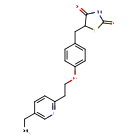
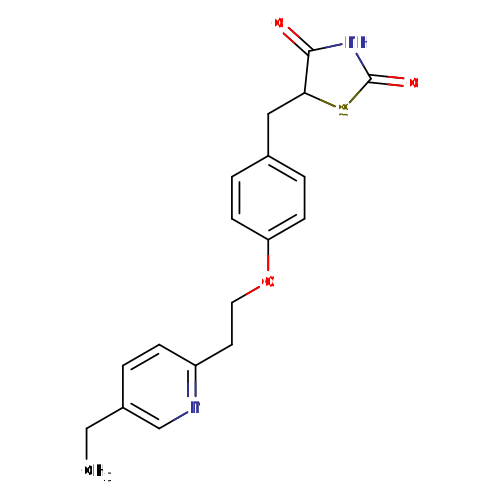
Structure for Pioglitazone (DB01132)
- Weight
- Average: 356.439
Monoisotopic: 356.119463206 - Chemical Formula
- C19H20N2O3S
- Synonyms
- (±)-5-((4-(2-(5-ethyl-2-pyridinyl)ethoxy)phenyl)methyl)-2,4-thiazolidinedione
- 5-{4-[2-(5-ethylpyridin-2-yl)ethoxy]benzyl}-1,3-thiazolidine-2,4-dione
- Pioglitazona
- Pioglitazone
- Pioglitazonum
- External IDs
- AD-4833
- U 72107A
- U-72107A
- U72107A

Pharmacology
- Indication
Pioglitazone is indicated as an adjunct to diet and exercise to improve glycemic control in adults with type 2 diabetes mellitus.4 It is also available in combination with metformin,5 glimepiride,6 or alogliptin7 for the same indication.
 Reduce drug development failure ratesBuild, train, & validate machine-learning modelswith evidence-based and structured datasets.Build, train, & validate predictive machine-learning models with structured datasets.
- Associated Conditions
Indication Type Indication Combined Product Details Approval Level Age Group Patient Characteristics Dose Form Used as adjunct in combination for symptomatic treatment of Diabetes Combination Product in combination with: Lipoic acid (DB00166) •••••••••••• Used as adjunct in combination for symptomatic treatment of Diabetic neuropathies Combination Product in combination with: Lipoic acid (DB00166) •••••••••••• Used as adjunct in combination to manage Type 2 diabetes mellitus Combination Product in combination with: Lipoic acid (DB00166), Metformin (DB00331) •••••••••••• Used as adjunct in combination to manage Type 2 diabetes mellitus Combination Product in combination with: Metformin (DB00331) •••••••••••• ••••• •••••• Used as adjunct in combination to manage Type 2 diabetes mellitus Combination Product in combination with: Alogliptin (DB06203) •••••••••••• ••••• •••••• - Contraindications & Blackbox Warnings
 Prevent Adverse Drug Events TodayTap into our Clinical API for life-saving information on contraindications & blackbox warnings, population restrictions, harmful risks, & more.Avoid life-threatening adverse drug events with our Clinical API
- Pharmacodynamics
Pioglitazone enhances cellular responsiveness to insulin, increases insulin-dependent glucose disposal, and improves impaired glucose homeostasis.1 In patients with type 2 diabetes mellitus, these effects result in lower plasma glucose concentrations, lower plasma insulin concentrations, and lower HbA1c values.1
Significant fluid retention leading to the development/exacerbation of congestive heart failure has been reported with pioglitazone - avoid its use in patients in heart failure or at risk of developing heart failure.4 There is some evidence that pioglitazone may be associated with an increased risk of developing bladder cancer. Pioglitazone should not be used in patients with active bladder cancer and should be used with caution in patients with a history of bladder cancer.4
- Mechanism of action
Pioglitazone is a selective agonist at peroxisome proliferator-activated receptor-gamma (PPARγ) in target tissues for insulin action such as adipose tissue, skeletal muscle, and liver.4,2 Activation of PPARγ increases the transcription of insulin-responsive genes involved in the control of glucose and lipid production, transport, and utilization.2 Through this mechanism, pioglitazone both enhances tissue sensitivity to insulin and reduces the hepatic production of glucose (i.e. gluconeogenesis) - insulin resistance associated with type 2 diabetes mellitus is therefore improved without an increase in insulin secretion by pancreatic beta cells.4,2
Target Actions Organism APeroxisome proliferator-activated receptor gamma agonistHumans UAmine oxidase [flavin-containing] B inhibitorHumans - Absorption
Following oral administration of pioglitazone, peak serum concentrations are observed within 2 hours (Tmax) - food slightly delays the time to peak serum concentration, increasing Tmax to approximately 3-4 hours, but does not alter the extent of absorption.4 Steady-state concentrations of both parent drug and its primary active metabolites are achieved after 7 days of once-daily administration of pioglitazone.4 Cmax and AUC increase proportionately to administered doses.4
- Volume of distribution
The average apparent volume of distribution of pioglitazone is 0.63 ± 0.41 L/kg.4
- Protein binding
Pioglitazone is >99% protein-bound in human plasma - binding is primarily to albumin, although pioglitazone has been shown to bind other serum proteins with a lower affinity.4 The M-III and M-IV metabolites of pioglitazone are >98% protein-bound (also primarily to albumin).4
- Metabolism
Pioglitazone is extensively metabolized by both hydroxylation and oxidation - the resulting metabolites are also partly converted to glucuronide or sulfate conjugates.4 The pharmacologically active M-IV and M-III metabolites are the main metabolites found in human serum and their circulating concentrations are equal to, or greater than, those of the parent drug.3 The specific CYP isoenzymes involved in the metabolism of pioglitazone are CYP2C8 and, to a lesser degree, CYP3A4. There is also some evidence to suggest a contribution by extrahepatic CYP1A1.4
Hover over products below to view reaction partners
- Route of elimination
Approximately 15-30% of orally administered pioglitazone is recovered in the urine. The bulk of its elimination, then, is presumed to be through the excretion of unchanged drug in the bile or as metabolites in the feces.4
- Half-life
The mean serum half-life of pioglitazone and its metabolites (M-III and M-IV) range from 3-7 hours and 16-24 hours, respectively.4
- Clearance
The apparent clearance of orally administered pioglitazone is 5-7 L/h.4
- Adverse Effects
 Improve decision support & research outcomesWith structured adverse effects data, including: blackbox warnings, adverse reactions, warning & precautions, & incidence rates. View sample adverse effects data in our new Data Library!Improve decision support & research outcomes with our structured adverse effects data.
- Toxicity
The oral TDLo observed in mice is 24 mg/kg for 4 days and for rats is 3 mg/kg for 6 days.8
One instance of overdose was reported during clinical trials with pioglitazone in which a patient took an oral dose of 120mg daily for four days, followed by 180mg daily for seven days4 - this patient did not report any adverse clinical symptoms during this time. In the event of overdosage, employ symptomatic and supportive measures according to the patient's clinical status.4
- Pathways
- Not Available
- Pharmacogenomic Effects/ADRs
- Not Available
Interactions
- Drug Interactions
- This information should not be interpreted without the help of a healthcare provider. If you believe you are experiencing an interaction, contact a healthcare provider immediately. The absence of an interaction does not necessarily mean no interactions exist.
Drug Interaction Integrate drug-drug
interactions in your softwareAbametapir The serum concentration of Pioglitazone can be increased when it is combined with Abametapir. Abatacept The metabolism of Pioglitazone can be increased when combined with Abatacept. Abiraterone The metabolism of Pioglitazone can be decreased when combined with Abiraterone. Acarbose The risk or severity of hypoglycemia can be increased when Acarbose is combined with Pioglitazone. Acebutolol The therapeutic efficacy of Pioglitazone can be increased when used in combination with Acebutolol. - Food Interactions
- Take with or without food. Food delays drug absorption, but not to a clinically significant extent.
Products
 Drug product information from 10+ global regionsOur datasets provide approved product information including:dosage, form, labeller, route of administration, and marketing period.Access drug product information from over 10 global regions.
- Product Ingredients
Ingredient UNII CAS InChI Key Pioglitazone hydrochloride JQT35NPK6C 112529-15-4 GHUUBYQTCDQWRA-UHFFFAOYSA-N - Product Images
- International/Other Brands
- Actost
- Brand Name Prescription Products
Name Dosage Strength Route Labeller Marketing Start Marketing End Region Image Act Pioglitazone Tablet 15 mg Oral TEVA Canada Limited 2007-12-05 Not applicable Canada 
Act Pioglitazone Tablet 45 mg Oral TEVA Canada Limited 2007-12-05 Not applicable Canada Act Pioglitazone Tablet 30 mg Oral TEVA Canada Limited 2007-12-05 Not applicable Canada Actos Tablet 45 mg/1 Oral Med Pharma Co., Ltd. 2012-01-13 2012-04-05 US 
Actos Tablet 30 mg Oral Cheplapharm Arzneimittel Gmb H 2016-09-20 Not applicable EU 
- Generic Prescription Products
Name Dosage Strength Route Labeller Marketing Start Marketing End Region Image Accel Pioglitazone Tablet 45 mg Oral Accel Pharma Inc 2009-06-02 2020-03-20 Canada Accel Pioglitazone Tablet 30 mg Oral Accel Pharma Inc 2009-06-02 2020-03-20 Canada Accel Pioglitazone Tablet 15 mg Oral Accel Pharma Inc 2009-06-02 2020-03-20 Canada Ach-pioglitazone Tablet 15 mg Oral Accord Healthcare Inc 2012-10-12 Not applicable Canada Ach-pioglitazone Tablet 45 mg Oral Accord Healthcare Inc 2010-06-11 Not applicable Canada - Mixture Products
Name Ingredients Dosage Route Labeller Marketing Start Marketing End Region Image ACORT 15/850 MG FILM TABLET, 30 ADET Pioglitazone hydrochloride (15 mg) + Metformin hydrochloride (850 mg) Tablet, film coated Oral TRIPHARMA İLAÇ SAN. VE TİC. A.Ş. 2011-10-31 2024-03-08 Turkey 
ACORT 15/850 MG FILM TABLET, 60 ADET Pioglitazone hydrochloride (15 mg) + Metformin hydrochloride (850 mg) Tablet, film coated Oral TRIPHARMA İLAÇ SAN. VE TİC. A.Ş. 2011-10-31 2024-03-08 Turkey ACORT 15/850 MG FILM TABLET, 90 ADET Pioglitazone hydrochloride (15 mg) + Metformin hydrochloride (850 mg) Tablet, film coated Oral TRIPHARMA İLAÇ SAN. VE TİC. A.Ş. 2011-10-31 2024-03-08 Turkey ACPIMET Pioglitazone (15 MG) + Metformin hydrochloride (850 MG) Tablet, film coated Oral บริษัท โนวาร์ตีส (ประเทศไทย) จำกัด 2017-02-14 2020-09-17 Thailand 
Actoplus Met Pioglitazone hydrochloride (15 mg/1) + Metformin hydrochloride (500 mg/1) Tablet, film coated Oral Physicians Total Care, Inc. 2006-01-04 Not applicable US - Unapproved/Other Products
Name Ingredients Dosage Route Labeller Marketing Start Marketing End Region Image ACTOS 15 MG TABLET, 28 ADET Pioglitazone (15 mg) Tablet TAKEDA İLAÇ SAĞLIK SAN. TİC. LTD. ŞTİ. 2016-12-13 2023-04-25 Turkey ACTOS 30 MG TABLET, 28 ADET Pioglitazone (30 mg) Tablet TAKEDA İLAÇ SAĞLIK SAN. TİC. LTD. ŞTİ. 2016-12-13 2023-04-25 Turkey PIO-MET 15/500 MG FILM TABLET, 30 ADET Pioglitazone (15 mg) + Metformin (500 mg) Tablet, coated Oral TAKEDA İLAÇ SAĞLIK SAN. TİC. LTD. ŞTİ. 2019-04-30 Not applicable Turkey


Categories
- ATC Codes
- A10BD09 — Pioglitazone and alogliptin
- A10BD — Combinations of oral blood glucose lowering drugs
- A10B — BLOOD GLUCOSE LOWERING DRUGS, EXCL. INSULINS
- A10 — DRUGS USED IN DIABETES
- A — ALIMENTARY TRACT AND METABOLISM
- A10BG — Thiazolidinediones
- A10B — BLOOD GLUCOSE LOWERING DRUGS, EXCL. INSULINS
- A10 — DRUGS USED IN DIABETES
- A — ALIMENTARY TRACT AND METABOLISM
- A10BD — Combinations of oral blood glucose lowering drugs
- A10B — BLOOD GLUCOSE LOWERING DRUGS, EXCL. INSULINS
- A10 — DRUGS USED IN DIABETES
- A — ALIMENTARY TRACT AND METABOLISM
- A10BD — Combinations of oral blood glucose lowering drugs
- A10B — BLOOD GLUCOSE LOWERING DRUGS, EXCL. INSULINS
- A10 — DRUGS USED IN DIABETES
- A — ALIMENTARY TRACT AND METABOLISM
- Drug Categories
- Alimentary Tract and Metabolism
- Blood Glucose Lowering Agents
- Cytochrome P-450 CYP2C8 Inhibitors
- Cytochrome P-450 CYP2C8 Inhibitors (moderate)
- Cytochrome P-450 CYP2C8 Substrates
- Cytochrome P-450 CYP2C9 Substrates
- Cytochrome P-450 CYP3A Inducers
- Cytochrome P-450 CYP3A Substrates
- Cytochrome P-450 CYP3A4 Inducers
- Cytochrome P-450 CYP3A4 Inducers (strength unknown)
- Cytochrome P-450 CYP3A4 Substrates
- Cytochrome P-450 Enzyme Inducers
- Cytochrome P-450 Enzyme Inhibitors
- Cytochrome P-450 Substrates
- Drugs Used in Diabetes
- Hypoglycemia-Associated Agents
- OATP1B1/SLCO1B1 Inhibitors
- OATP1B3 inhibitors
- Oral Hypoglycemics
- Peroxisome Proliferator Receptor gamma Agonist
- Peroxisome Proliferator-activated Receptor Activity
- Sulfur Compounds
- Thiazoles
- Thiazolidinediones
- Chemical TaxonomyProvided by Classyfire
- Description
- This compound belongs to the class of organic compounds known as phenol ethers. These are aromatic compounds containing an ether group substituted with a benzene ring.
- Kingdom
- Organic compounds
- Super Class
- Benzenoids
- Class
- Phenol ethers
- Sub Class
- Not Available
- Direct Parent
- Phenol ethers
- Alternative Parents
- Phenoxy compounds / Thiazolidinediones / Alkyl aryl ethers / Pyridines and derivatives / Heteroaromatic compounds / Dicarboximides / Thiocarbamic acid derivatives / Organic carbonic acids and derivatives / Azacyclic compounds / Organopnictogen compounds show 4 more
- Substituents
- Alkyl aryl ether / Aromatic heteromonocyclic compound / Azacycle / Carbonic acid derivative / Carbonyl group / Carboxylic acid derivative / Dicarboximide / Ether / Heteroaromatic compound / Hydrocarbon derivative show 14 more
- Molecular Framework
- Aromatic heteromonocyclic compounds
- External Descriptors
- aromatic ether, pyridines, thiazolidenediones (CHEBI:8228)
- Affected organisms
- Humans and other mammals
Chemical Identifiers
- UNII
- X4OV71U42S
- CAS number
- 111025-46-8
- InChI Key
- HYAFETHFCAUJAY-UHFFFAOYSA-N
- InChI
- InChI=1S/C19H20N2O3S/c1-2-13-3-6-15(20-12-13)9-10-24-16-7-4-14(5-8-16)11-17-18(22)21-19(23)25-17/h3-8,12,17H,2,9-11H2,1H3,(H,21,22,23)
- IUPAC Name
- 5-({4-[2-(5-ethylpyridin-2-yl)ethoxy]phenyl}methyl)-1,3-thiazolidine-2,4-dione
- SMILES
- CCC1=CN=C(CCOC2=CC=C(CC3SC(=O)NC3=O)C=C2)C=C1
References
- Synthesis Reference
Chandra Khanduri, Yatendra Kumar, Atulya Panda, Suchitra Chakraborty, Mukesh Sharma, "Process for the preparation of pioglitazone." U.S. Patent US20070078170, issued April 05, 2007.
US20070078170- General References
- Al-Majed A, Bakheit AH, Abdel Aziz HA, Alharbi H, Al-Jenoobi FI: Pioglitazone. Profiles Drug Subst Excip Relat Methodol. 2016;41:379-438. doi: 10.1016/bs.podrm.2015.11.002. Epub 2016 Feb 2. [Article]
- Janani C, Ranjitha Kumari BD: PPAR gamma gene--a review. Diabetes Metab Syndr. 2015 Jan-Mar;9(1):46-50. doi: 10.1016/j.dsx.2014.09.015. Epub 2014 Oct 13. [Article]
- Zhou SF, Zhou ZW, Yang LP, Cai JP: Substrates, inducers, inhibitors and structure-activity relationships of human Cytochrome P450 2C9 and implications in drug development. Curr Med Chem. 2009;16(27):3480-675. Epub 2009 Sep 1. [Article]
- FDA Approved Drug Products: Actos (pioglitazone) oral tablets [Link]
- FDA Approved Drug Products: Actoplus Met (pioglitazone/metformin) oral tablets [Link]
- FDA Approved Drug Products: Duetact (pioglitazone/glimepiride) oral tablets [Link]
- FDA Approved Drug Products: Oseni (pioglitazone/alogliptin) oral tablets [Link]
- CaymanChem: Pioglitazone MSDS [Link]
- Diabetes Canada: Clinical Practice Guidelines for Diabetes 2018 [Link]
- External Links
- Human Metabolome Database
- HMDB0015264
- KEGG Drug
- D08378
- KEGG Compound
- C07675
- PubChem Compound
- 4829
- PubChem Substance
- 46507136
- ChemSpider
- 4663
- BindingDB
- 50103521
- 33738
- ChEBI
- 8228
- ChEMBL
- CHEMBL595
- Therapeutic Targets Database
- DAP000272
- PharmGKB
- PA450970
- Guide to Pharmacology
- GtP Drug Page
- RxList
- RxList Drug Page
- Drugs.com
- Drugs.com Drug Page
- Wikipedia
- Pioglitazone
- FDA label
- Download (61.6 KB)
Clinical Trials
- Clinical Trials
Phase Status Purpose Conditions Count 4 Active Not Recruiting Treatment Chronic Hepatitis B Infection / Liver Fibrosis / Type 2 Diabetes Mellitus 1 4 Active Not Recruiting Treatment Polycystic Ovarian Syndrome (PCOS) 1 4 Active Not Recruiting Treatment Type 2 Diabetes Mellitus 1 4 Completed Not Available Type 2 Diabetes Mellitus 1 4 Completed Basic Science Diabetes 1
Pharmacoeconomics
- Manufacturers
- Not Available
- Packagers
- Advanced Pharmaceutical Services Inc.
- AQ Pharmaceuticals Inc.
- A-S Medication Solutions LLC
- Atlantic Biologicals Corporation
- Cardinal Health
- Comprehensive Consultant Services Inc.
- DispenseXpress Inc.
- Diversified Healthcare Services Inc.
- Kaiser Foundation Hospital
- Lake Erie Medical and Surgical Supply
- Murfreesboro Pharmaceutical Nursing Supply
- Nucare Pharmaceuticals Inc.
- Palmetto Pharmaceuticals Inc.
- PD-Rx Pharmaceuticals Inc.
- Pharmacy Service Center
- Physician Partners Ltd.
- Physicians Total Care Inc.
- Prepackage Specialists
- Quality Care
- Rebel Distributors Corp.
- Resource Optimization and Innovation LLC
- Southwood Pharmaceuticals
- Takeda Pharmaceutical Co. Ltd.
- Vangard Labs Inc.
- Dosage Forms
Form Route Strength Tablet, film coated Oral Tablet, film coated, extended release Oral Tablet Occlusive dressing technique 15 mg/1 Tablet Oral 15 mg/1 Tablet Oral 30 mg/1 Tablet Oral 45 mg/1 Tablet, effervescent 15 mg Tablet, effervescent 30 mg Tablet, effervescent 45 mg Tablet Oral Tablet Oral 15 MG Tablet Oral 30 MG Tablet Oral 45 MG Tablet, extended release Oral Tablet Oral 30.000 mg Tablet Oral 15.000 mg Tablet Oral 15.00 mg Tablet, film coated Oral 12.5 mg Tablet, film coated Oral 25 mg Tablet, coated Oral Tablet, film coated Oral 15 MG Tablet Oral Tablet, film coated 15 mg Tablet, film coated Tablet, film coated 30 mg Tablet, film coated 45 mg Tablet Oral 16.540 mg Tablet, effervescent Oral Tablet Tablet Oral 33.073 mg Tablet Oral 16.534 mg Tablet 15 mg Tablet 30 mg Tablet 45 mg - Prices
Unit description Cost Unit Actos 30 mg tablet 12.48USD tablet Actos 45 mg tablet 11.22USD tablet Actos 15 mg tablet 6.3USD tablet DrugBank does not sell nor buy drugs. Pricing information is supplied for informational purposes only.- Patents
Patent Number Pediatric Extension Approved Expires (estimated) Region US4687777 No 1987-08-18 2011-01-17 US CA2179584 No 2007-04-24 2016-06-20 Canada CA2531834 No 2006-12-05 2016-06-20 Canada US6150383 No 2000-11-21 2016-06-19 US US6211205 No 2001-04-03 2016-06-19 US US6303640 No 2001-10-16 2016-08-09 US US6329404 No 2001-12-11 2016-06-19 US US8071130 No 2011-12-06 2028-06-08 US US7538125 No 2009-05-26 2016-06-19 US US7700128 No 2010-04-20 2027-01-30 US US5965584 No 1999-10-12 2016-06-19 US US6166042 No 2000-12-26 2016-06-19 US US6166043 No 2000-12-26 2016-06-19 US US6172090 No 2001-01-09 2016-06-19 US US6790459 No 2004-09-14 2021-03-17 US US7919116 No 2011-04-05 2018-03-20 US US8475841 No 2013-07-02 2018-03-20 US US6099859 No 2000-08-08 2018-03-20 US US6866866 No 2005-03-15 2021-03-17 US US7785627 No 2010-08-31 2026-07-31 US US7959946 No 2011-06-14 2026-07-31 US US8470368 No 2013-06-25 2023-09-19 US US8668931 No 2014-03-11 2023-09-19 US US9060941 No 2015-06-23 2023-09-19 US US6495162 No 2002-12-17 2018-03-20 US US6150384 No 2000-11-21 2016-06-19 US US6271243 No 2001-08-07 2016-06-19 US US9101660 No 2015-08-11 2027-01-22 US US6303661 No 2001-10-16 2017-04-24 US US6890898 No 2005-05-10 2019-02-02 US US7078381 No 2006-07-18 2019-02-02 US US7459428 No 2008-12-02 2019-02-02 US US7807689 No 2010-10-05 2028-06-27 US US8173663 No 2012-05-08 2025-03-15 US US8288539 No 2012-10-16 2025-03-15 US US8637079 No 2014-01-28 2029-06-04 US US9320714 No 2016-04-26 2029-02-03 US
Properties
- State
- Solid
- Experimental Properties
Property Value Source melting point (°C) 193-194C Al-Majed, A. et. al. water solubility Practically insoluble FDA Label pKa 5.19 Al-Majed, A. et. al. - Predicted Properties
Property Value Source Water Solubility 0.00441 mg/mL ALOGPS logP 3.17 ALOGPS logP 3.33 Chemaxon logS -4.9 ALOGPS pKa (Strongest Acidic) 6.66 Chemaxon pKa (Strongest Basic) 5.6 Chemaxon Physiological Charge -1 Chemaxon Hydrogen Acceptor Count 4 Chemaxon Hydrogen Donor Count 1 Chemaxon Polar Surface Area 68.29 Å2 Chemaxon Rotatable Bond Count 7 Chemaxon Refractivity 97.39 m3·mol-1 Chemaxon Polarizability 38.24 Å3 Chemaxon Number of Rings 3 Chemaxon Bioavailability 1 Chemaxon Rule of Five Yes Chemaxon Ghose Filter Yes Chemaxon Veber's Rule No Chemaxon MDDR-like Rule Yes Chemaxon - Predicted ADMET Features
Property Value Probability Human Intestinal Absorption + 0.9952 Blood Brain Barrier + 0.8753 Caco-2 permeable - 0.5659 P-glycoprotein substrate Non-substrate 0.6358 P-glycoprotein inhibitor I Non-inhibitor 0.5708 P-glycoprotein inhibitor II Non-inhibitor 0.9673 Renal organic cation transporter Non-inhibitor 0.6018 CYP450 2C9 substrate Non-substrate 0.7898 CYP450 2D6 substrate Non-substrate 0.9116 CYP450 3A4 substrate Substrate 0.5267 CYP450 1A2 substrate Inhibitor 0.8384 CYP450 2C9 inhibitor Inhibitor 0.6353 CYP450 2D6 inhibitor Non-inhibitor 0.8085 CYP450 2C19 inhibitor Inhibitor 0.6967 CYP450 3A4 inhibitor Non-inhibitor 0.6035 CYP450 inhibitory promiscuity High CYP Inhibitory Promiscuity 0.8864 Ames test Non AMES toxic 0.7303 Carcinogenicity Non-carcinogens 0.9171 Biodegradation Not ready biodegradable 0.7884 Rat acute toxicity 2.0115 LD50, mol/kg Not applicable hERG inhibition (predictor I) Weak inhibitor 0.9341 hERG inhibition (predictor II) Non-inhibitor 0.8498
Spectra
- Mass Spec (NIST)
- Not Available
- Spectra
- Chromatographic Properties
Collision Cross Sections (CCS)
Adduct CCS Value (Å2) Source type Source [M-H]- 188.6885781 predictedDarkChem Lite v0.1.0 [M-H]- 181.2841 predictedDeepCCS 1.0 (2019) [M+H]+ 188.8529781 predictedDarkChem Lite v0.1.0 [M+H]+ 183.77391 predictedDeepCCS 1.0 (2019) [M+Na]+ 188.7188781 predictedDarkChem Lite v0.1.0 [M+Na]+ 191.98239 predictedDeepCCS 1.0 (2019)
Targets

- Kind
- Protein
- Organism
- Humans
- Pharmacological action
- Yes
- Actions
- Agonist
- General Function
- Zinc ion binding
- Specific Function
- Nuclear receptor that binds peroxisome proliferators such as hypolipidemic drugs and fatty acids. Once activated by a ligand, the nuclear receptor binds to DNA specific PPAR response elements (PPRE...
- Gene Name
- PPARG
- Uniprot ID
- P37231
- Uniprot Name
- Peroxisome proliferator-activated receptor gamma
- Molecular Weight
- 57619.58 Da
References
- Sugii S, Olson P, Sears DD, Saberi M, Atkins AR, Barish GD, Hong SH, Castro GL, Yin YQ, Nelson MC, Hsiao G, Greaves DR, Downes M, Yu RT, Olefsky JM, Evans RM: PPARgamma activation in adipocytes is sufficient for systemic insulin sensitization. Proc Natl Acad Sci U S A. 2009 Dec 29;106(52):22504-9. doi: 10.1073/pnas.0912487106. Epub 2009 Dec 16. [Article]
- Miyazaki Y, Mahankali A, Wajcberg E, Bajaj M, Mandarino LJ, DeFronzo RA: Effect of pioglitazone on circulating adipocytokine levels and insulin sensitivity in type 2 diabetic patients. J Clin Endocrinol Metab. 2004 Sep;89(9):4312-9. [Article]
- Spiegelman BM: PPAR-gamma: adipogenic regulator and thiazolidinedione receptor. Diabetes. 1998 Apr;47(4):507-14. [Article]
- Willson TM, Cobb JE, Cowan DJ, Wiethe RW, Correa ID, Prakash SR, Beck KD, Moore LB, Kliewer SA, Lehmann JM: The structure-activity relationship between peroxisome proliferator-activated receptor gamma agonism and the antihyperglycemic activity of thiazolidinediones. J Med Chem. 1996 Feb 2;39(3):665-8. [Article]
- FDA Approved Drug Products: Actos (pioglitazone) oral tablets [Link]
- Kind
- Protein
- Organism
- Humans
- Pharmacological action
- Unknown
- Actions
- Inhibitor
- General Function
- Primary amine oxidase activity
- Specific Function
- Catalyzes the oxidative deamination of biogenic and xenobiotic amines and has important functions in the metabolism of neuroactive and vasoactive amines in the central nervous system and peripheral...
- Gene Name
- MAOB
- Uniprot ID
- P27338
- Uniprot Name
- Amine oxidase [flavin-containing] B
- Molecular Weight
- 58762.475 Da
References
- Binda C, Aldeco M, Geldenhuys WJ, Tortorici M, Mattevi A, Edmondson DE: Molecular Insights into Human Monoamine Oxidase B Inhibition by the Glitazone Anti-Diabetes Drugs. ACS Med Chem Lett. 2011 Oct 15;3(1):39-42. [Article]
Enzymes
- Kind
- Protein
- Organism
- Humans
- Pharmacological action
- Unknown
- Actions
- Substrate
- General Function
- Vitamin d 24-hydroxylase activity
- Specific Function
- Cytochromes P450 are a group of heme-thiolate monooxygenases. In liver microsomes, this enzyme is involved in an NADPH-dependent electron transport pathway. It oxidizes a variety of structurally un...
- Gene Name
- CYP1A1
- Uniprot ID
- P04798
- Uniprot Name
- Cytochrome P450 1A1
- Molecular Weight
- 58164.815 Da
References
- FDA Approved Drug Products: Actos (pioglitazone) oral tablets [Link]
- Kind
- Protein
- Organism
- Humans
- Pharmacological action
- Unknown
- Actions
- SubstrateInhibitor
- General Function
- Steroid hydroxylase activity
- Specific Function
- Cytochromes P450 are a group of heme-thiolate monooxygenases. In liver microsomes, this enzyme is involved in an NADPH-dependent electron transport pathway. It oxidizes a variety of structurally un...
- Gene Name
- CYP2C8
- Uniprot ID
- P10632
- Uniprot Name
- Cytochrome P450 2C8
- Molecular Weight
- 55824.275 Da
References
- Muschler E, Lal J, Jetter A, Rattay A, Zanger U, Zadoyan G, Fuhr U, Kirchheiner J: The role of human CYP2C8 and CYP2C9 variants in pioglitazone metabolism in vitro. Basic Clin Pharmacol Toxicol. 2009 Dec;105(6):374-9. doi: 10.1111/j.1742-7843.2009.00457.x. Epub 2009 Jul 15. [Article]
- Jaakkola T, Laitila J, Neuvonen PJ, Backman JT: Pioglitazone is metabolised by CYP2C8 and CYP3A4 in vitro: potential for interactions with CYP2C8 inhibitors. Basic Clin Pharmacol Toxicol. 2006 Jul;99(1):44-51. doi: 10.1111/j.1742-7843.2006.pto_437.x. [Article]
- Sahi J, Black CB, Hamilton GA, Zheng X, Jolley S, Rose KA, Gilbert D, LeCluyse EL, Sinz MW: Comparative effects of thiazolidinediones on in vitro P450 enzyme induction and inhibition. Drug Metab Dispos. 2003 Apr;31(4):439-46. [Article]
- Zhou SF, Zhou ZW, Yang LP, Cai JP: Substrates, inducers, inhibitors and structure-activity relationships of human Cytochrome P450 2C9 and implications in drug development. Curr Med Chem. 2009;16(27):3480-675. Epub 2009 Sep 1. [Article]
- FDA Drug Development and Drug Interactions: Table of Substrates, Inhibitors and Inducers [Link]
- Kind
- Protein
- Organism
- Humans
- Pharmacological action
- Unknown
- Actions
- SubstrateInducer
- Curator comments
- One study suggests that another thiazolidinedione, troglitazone, induces CYP3A4. Pioglitazone is a member of the same drug class, and likely has the same effect.
- General Function
- Vitamin d3 25-hydroxylase activity
- Specific Function
- Cytochromes P450 are a group of heme-thiolate monooxygenases. In liver microsomes, this enzyme is involved in an NADPH-dependent electron transport pathway. It performs a variety of oxidation react...
- Gene Name
- CYP3A4
- Uniprot ID
- P08684
- Uniprot Name
- Cytochrome P450 3A4
- Molecular Weight
- 57342.67 Da
References
- Jaakkola T, Laitila J, Neuvonen PJ, Backman JT: Pioglitazone is metabolised by CYP2C8 and CYP3A4 in vitro: potential for interactions with CYP2C8 inhibitors. Basic Clin Pharmacol Toxicol. 2006 Jul;99(1):44-51. doi: 10.1111/j.1742-7843.2006.pto_437.x. [Article]
- Sahi J, Black CB, Hamilton GA, Zheng X, Jolley S, Rose KA, Gilbert D, LeCluyse EL, Sinz MW: Comparative effects of thiazolidinediones on in vitro P450 enzyme induction and inhibition. Drug Metab Dispos. 2003 Apr;31(4):439-46. [Article]
- Nowak SN, Edwards DJ, Clarke A, Anderson GD, Jaber LA: Pioglitazone: effect on CYP3A4 activity. J Clin Pharmacol. 2002 Dec;42(12):1299-302. [Article]
- Zhou SF, Zhou ZW, Yang LP, Cai JP: Substrates, inducers, inhibitors and structure-activity relationships of human Cytochrome P450 2C9 and implications in drug development. Curr Med Chem. 2009;16(27):3480-675. Epub 2009 Sep 1. [Article]
- Flockhart Table of Drug Interactions [Link]
Carriers
- Kind
- Protein
- Organism
- Humans
- Pharmacological action
- Unknown
- Actions
- Substrate
- General Function
- Toxic substance binding
- Specific Function
- Serum albumin, the main protein of plasma, has a good binding capacity for water, Ca(2+), Na(+), K(+), fatty acids, hormones, bilirubin and drugs. Its main function is the regulation of the colloid...
- Gene Name
- ALB
- Uniprot ID
- P02768
- Uniprot Name
- Serum albumin
- Molecular Weight
- 69365.94 Da
References
- FDA Approved Drug Products: Actos (pioglitazone) oral tablets [Link]
Transporters
- Kind
- Protein
- Organism
- Humans
- Pharmacological action
- Unknown
- Actions
- Inhibitor
- General Function
- Sodium-independent organic anion transmembrane transporter activity
- Specific Function
- Mediates the Na(+)-independent uptake of organic anions such as 17-beta-glucuronosyl estradiol, taurocholate, triiodothyronine (T3), leukotriene C4, dehydroepiandrosterone sulfate (DHEAS), methotre...
- Gene Name
- SLCO1B3
- Uniprot ID
- Q9NPD5
- Uniprot Name
- Solute carrier organic anion transporter family member 1B3
- Molecular Weight
- 77402.175 Da
References
- Nozawa T, Sugiura S, Nakajima M, Goto A, Yokoi T, Nezu J, Tsuji A, Tamai I: Involvement of organic anion transporting polypeptides in the transport of troglitazone sulfate: implications for understanding troglitazone hepatotoxicity. Drug Metab Dispos. 2004 Mar;32(3):291-4. [Article]
- Kind
- Protein
- Organism
- Humans
- Pharmacological action
- Unknown
- Actions
- Inhibitor
- General Function
- Sodium-independent organic anion transmembrane transporter activity
- Specific Function
- Mediates the Na(+)-independent uptake of organic anions such as pravastatin, taurocholate, methotrexate, dehydroepiandrosterone sulfate, 17-beta-glucuronosyl estradiol, estrone sulfate, prostagland...
- Gene Name
- SLCO1B1
- Uniprot ID
- Q9Y6L6
- Uniprot Name
- Solute carrier organic anion transporter family member 1B1
- Molecular Weight
- 76447.99 Da
References
- Nozawa T, Sugiura S, Nakajima M, Goto A, Yokoi T, Nezu J, Tsuji A, Tamai I: Involvement of organic anion transporting polypeptides in the transport of troglitazone sulfate: implications for understanding troglitazone hepatotoxicity. Drug Metab Dispos. 2004 Mar;32(3):291-4. [Article]

Drug created at June 13, 2005 13:24 / Updated at April 27, 2024 09:44