Identification
- Summary
Clindamycin is a lincosamide antibiotic used to treat serious infections caused by susceptible anaerobic, streptococcal, staphylococcal, and pneumococcal bacteria.
- Brand Names
- Acanya, Benzaclin, Biacna, Cabtreo, Cleocin, Cleocin-T, Clindacin, Clindagel, Clindesse, Clindoxyl, Dalacin, Dalacin C, Duac, Evoclin, Neuac, Onexton, Veltin, Xaciato, Ziana
- Generic Name
- Clindamycin
- DrugBank Accession Number
- DB01190
- Background
Clindamycin is a semi-synthetic lincosamide antibiotic used in the treatment of a variety of serious infections due to susceptible microorganisms14,13 as well as topically for acne vulgaris.12 It has a relatively narrow spectrum of activity that includes anaerobic bacteria as well as gram-positive cocci and bacilli and gram-negative bacilli.8 Interestingly, clindamycin appears to carry some activity against protozoans, and has been used off-label in the treatment of toxoplasmosis, malaria, and babesiosis.9
Clindamycin is derived from, and has largely replaced, lincomycin, a naturally occurring lincosamide and the eponymous member of this antibiotic class, due to its improved properties over the parent compound. The name lincomycin is derived from Lincoln, Nebraska, where it was first isolated from Streptomyces lincolnensis found in a soil sample.8
- Type
- Small Molecule
- Groups
- Approved, Vet approved
- Structure
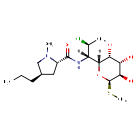
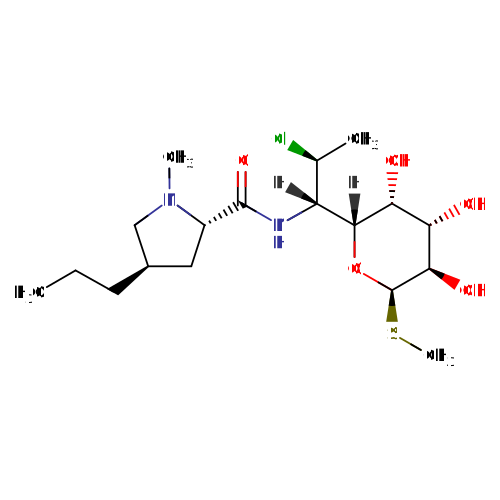
Structure for Clindamycin (DB01190)
- Weight
- Average: 424.98
Monoisotopic: 424.179871 - Chemical Formula
- C18H33ClN2O5S
- Synonyms
- 7-CDL
- 7(S)-Chloro-7-deoxylincomycin
- Clindamicina
- Clindamycin
- Clindamycine
- Clindamycinum
- Methyl 7-chloro-6,7,8-trideoxy-6-(1-methyl-trans-4-propyl-L-2-pyrrolidinecarboxamido)-1-thio-L-threo-alpha-D-galacto-octopyranoside
- External IDs
- U-21,251
- U-21251

Pharmacology
- Indication
In oral and parenteral formulations, clindamycin is indicated for the treatment of serious infections caused by susceptible anaerobic bacteria, as well as susceptible staphylococci, streptococci, and pneumococci.14,15 Used topically, it is indicated for the treatment of acne vulgaris12,18,16 and is available in combination with benzoyl peroxide10 or tretinoin11 for this purpose, or as a triple combination therapy with benzoyl peroxide and adapalene.23 Clindamycin is also indicated as a vaginal cream13, suppository17, or gel22 for the treatment of bacterial vaginosis in non-pregnant females.
Clindamycin is used for antimicrobial prophylaxis against Viridans group streptococcal infections in susceptible patients undergoing oral, dental, or upper respiratory surgery, and may be used for prophylaxis against bacterial endocarditis in penicillin-allergic patients at high risk of these infections.20
 Reduce drug development failure ratesBuild, train, & validate machine-learning modelswith evidence-based and structured datasets.Build, train, & validate predictive machine-learning models with structured datasets.
- Associated Conditions
Indication Type Indication Combined Product Details Approval Level Age Group Patient Characteristics Dose Form Treatment of Abscess, intra-abdominal caused by anaerobic bacterial infection •••••••••••• Used in combination to treat Acne vulgaris Combination Product in combination with: Adapalene (DB00210), Benzoyl peroxide (DB09096) •••••••••••• ••• Used in combination to treat Acne vulgaris Combination Product in combination with: Adapalene (DB00210) •••••••••••• Used in combination to treat Acne vulgaris Combination Product in combination with: Tretinoin (DB00755) •••••••••••• ••• Used in combination to treat Acne vulgaris Combination Product in combination with: Benzoyl peroxide (DB09096) •••••••••••• ••• - Contraindications & Blackbox Warnings
 Prevent Adverse Drug Events TodayTap into our Clinical API for life-saving information on contraindications & blackbox warnings, population restrictions, harmful risks, & more.Avoid life-threatening adverse drug events with our Clinical API
- Pharmacodynamics
Clindamycin exerts its bacteriostatic effect via inhibition of microbial protein synthesis.8 Clindamycin has a relatively short Tmax and half-life necessitating administration every six hours to ensure adequate antibiotic concentrations.20
Clostridium difficile associated diarrhea (CDAD) has been observed in patients using clindamycin, ranging in severity from mild diarrhea to fatal colitis and occasionally occurring over two months following cessation of antibiotic therapy.15 Overgrowth of C. difficile resulting from antibiotic use, along with its production of A and B toxins, contributes to morbidity and mortality in these patients. Because of the associated risks, clindamycin should be reserved for serious infections for which the use of less toxic antimicrobial agents are inappropriate.15
Clindamycin is active against a number of gram-positive aerobic bacteria, as well as both gram-positive and gram-negative anaerobes.14 Resistance to clindamycin may develop, and is generally the result of base modification within the 23S ribosomal RNA. Cross-resistance between clindamycin and lincomycin is complete, and may also occur between clindamycin and macrolide antibiotics (e.g. erythromycin) due to similarities in their binding sites.14
As antimicrobial susceptibility patterns are geographically distinct, local antibiograms should be consulted to ensure adequate coverage of relevant pathogens prior to use.
- Mechanism of action
Clindamycin inhibits bacterial protein synthesis by binding to 23S RNA of the 50S subunit of the bacterial ribosome.14 It impedes both the assembly of the ribosome and the translation process.20 The molecular mechanism through which this occurs is thought to be due to clindamycin's three-dimensional structure, which closely resembles the 3'-ends of L-Pro-Met-tRNA and deacylated-tRNA during the peptide elongation cycle - in acting as a structural analog of these tRNA molecules, clindamycin impairs peptide chain initiation and may stimulate dissociation of peptidyl-tRNA from bacterial ribosomes.8
The mechanism through which topical clindamycin treats acne vulgaris is unclear, but may be related to its activity against Propionibacterium acnes, a bacteria that has been associated with acne.12
Target Actions Organism A50S ribosomal protein L1 inhibitorStaphylococcus aureus (strain NCTC 8325) - Absorption
Oral bioavailability is nearly complete, at approximately 90%, and peak serum concentrations (Cmax) of, on average, 2.50 µg/mL are reached at 0.75 hours (Tmax).15 The AUC following an orally administered dose of 300mg was found to be approximately 11 µg•hr/mL.20 Systemic exposure from the administration of vaginal suppository formulations is 40-fold to 50-fold lower than that observed following parenteral administration17 and the Cmax observed following administration of vaginal cream formulations was 0.1% of that observed following parenteral administration.13
- Volume of distribution
Clindamycin is widely distributed in the body, including into bone, but does not distribute into cerebrospinal fluid. The volume of distribution has been variably estimated between 43-74 L.7,6
- Protein binding
Clindamycin protein binding is concentration-dependent and ranges from 60-94%. It is bound primarily to alpha-1-acid glycoprotein in the serum.20
- Metabolism
Clindamycin undergoes hepatic metabolism mediated primarily by CYP3A4 and, to a lesser extent, CYP3A5.15 Two inactive metabolites have been identified - an oxidative metabolite, clindamycin sulfoxide, and an N-demethylated metabolite, N-desmethylclindamycin.15
Hover over products below to view reaction partners
- Route of elimination
Approximately 10% of clindamycin bioactivity is excreted in the urine and 3.6% in the feces, with the remainder excreted as inactive metabolites.15
- Half-life
The elimination half-life of clindamycin is about 3 hours in adults and 2.5 hours in children.15,14 Half-life is increased to approximately 4 hours in the elderly.15,14
- Clearance
The plasma clearance of clindamycin is estimated to be 12.3-17.4 L/h, and is reduced in patients with cirrhosis and altered in those with anemia.6,7
- Adverse Effects
 Improve decision support & research outcomesWith structured adverse effects data, including: blackbox warnings, adverse reactions, warning & precautions, & incidence rates. View sample adverse effects data in our new Data Library!Improve decision support & research outcomes with our structured adverse effects data.
- Toxicity
The oral LD50 in mice and rats is 2540 mg/kg and 2190 mg/kg, respectively.19
While no cases of overdose have been reported, symptoms are expected to be consistent with the adverse effect profile of clindamycin and may therefore include abdominal pain, nausea, vomiting, and diarrhea. During clinical trials, one 3-year-old child was given a dose of 100 mg/kg daily for 5 days and showed only mild abdominal pain and diarrhea.20 Activated charcoal may be of value to remove unabsorbed drug, but hemodialysis and peritoneal dialysis are ineffective.20 General supportive measures are recommended in cases of clindamycin overdose.20
- Pathways
Pathway Category Clindamycin Action Pathway Drug action - Pharmacogenomic Effects/ADRs
- Not Available
Interactions
- Drug Interactions
- This information should not be interpreted without the help of a healthcare provider. If you believe you are experiencing an interaction, contact a healthcare provider immediately. The absence of an interaction does not necessarily mean no interactions exist.
Drug Interaction Integrate drug-drug
interactions in your softwareAbametapir The serum concentration of Clindamycin can be increased when it is combined with Abametapir. Abatacept The metabolism of Clindamycin can be increased when combined with Abatacept. Acalabrutinib The metabolism of Clindamycin can be decreased when combined with Acalabrutinib. Acenocoumarol The serum concentration of Acenocoumarol can be increased when it is combined with Clindamycin. Acetaminophen The metabolism of Clindamycin can be increased when combined with Acetaminophen. - Food Interactions
- Take with a full glass of water. Clindamycin may cause esophageal irritation if the dosage form becomes lodged.
- Take with or without food. Food does not appreciably alter the absorption of clindamycin.
Products
 Drug product information from 10+ global regionsOur datasets provide approved product information including:dosage, form, labeller, route of administration, and marketing period.Access drug product information from over 10 global regions.
- Product Ingredients
Ingredient UNII CAS InChI Key Clindamycin hydrochloride T20OQ1YN1W 21462-39-5 AUODDLQVRAJAJM-XJQDNNTCSA-N Clindamycin palmitate hydrochloride VN9A8JM7M7 25507-04-4 GTNDZRUWKHDICY-DJHAJVGHSA-N Clindamycin phosphate EH6D7113I8 24729-96-2 UFUVLHLTWXBHGZ-MGZQPHGTSA-N - Product Images
- International/Other Brands
- Clinimycin (Hayat) / Dalacin C (Pfizer) / Dalacin T Topical Solution (Pfizer) / Zindaclin (Crawford)
- Brand Name Prescription Products
Name Dosage Strength Route Labeller Marketing Start Marketing End Region Image Cleocin Suppository 100 mg/1 Vaginal Pharmacia & Upjohn Company LLC 1999-08-13 Not applicable US 
Cleocin Suppository 100 mg/1 Vaginal Physicians Total Care, Inc. 2003-12-30 2013-06-30 US Cleocin Suppository 100 mg/1 Vaginal U.S. Pharmaceuticals 1999-08-13 Not applicable US Cleocin Cream 20 mg/1g Vaginal Pharmacia & Upjohn Company LLC 1992-08-11 Not applicable US Cleocin Cream 20 mg/1g Vaginal Physicians Total Care, Inc. 1992-08-11 2010-06-30 US - Generic Prescription Products
Name Dosage Strength Route Labeller Marketing Start Marketing End Region Image Ag-clindamycin Capsule 300 mg Oral Angita Pharma Inc. 2020-01-27 Not applicable Canada 
Ag-clindamycin Capsule 150 mg Oral Angita Pharma Inc. 2020-02-27 Not applicable Canada Apo-clindamycin Capsule 300 mg Oral Apotex Corporation 2002-02-20 Not applicable Canada Apo-clindamycin Capsule 150 mg Oral Apotex Corporation 2002-02-20 Not applicable Canada Auro-clindamycin Capsule 300 mg Oral Auro Pharma Inc 2015-03-02 Not applicable Canada - Over the Counter Products
Name Dosage Strength Route Labeller Marketing Start Marketing End Region Image คลินดาลิน เจล Gel 1 %w/w Topical บริษัท สามัคคีเภสัช จำกัด จำกัด 1999-09-13 Not applicable Thailand 
คลินดาแมน เจล Gel 1 %w/w Topical บริษัท ที. แมน ฟาร์มา จำกัด 2005-12-20 Not applicable Thailand - Mixture Products
Name Ingredients Dosage Route Labeller Marketing Start Marketing End Region Image Acanya Clindamycin phosphate (10 mg/1mL) + Benzoyl peroxide (25 mg/1g) Kit Topical Dow Pharmaceuticals Sciences 2009-02-03 2014-04-30 US Acanya Clindamycin phosphate (10 mg/1g) + Benzoyl peroxide (25 mg/1g) Gel Topical Bausch Health US, LLC 2010-07-26 Not applicable US ACNATAC Clindamycin (1 %) + Tretinoin (0.025 %) Gel Topical Farmed S.R.L. 2023-12-28 Not applicable Italy 
Acnatac 10 mg/g + 0,25 mg/g Gel Clindamycin (10 mg/g) + Tretinoin (0.25 mg/g) Gel Topical Mylan österreich Gmb H 2013-03-26 Not applicable Austria 
ADAPCLIN® Clindamycin phosphate (1 g) + Adapalene (0.1 g) Gel Topical COLOMPACK S.A. 2019-03-19 Not applicable Colombia 
- Unapproved/Other Products
Name Ingredients Dosage Route Labeller Marketing Start Marketing End Region Image Adapalene 0.1% / Benzoyl Peroxide 2.5% / Clindamycin 1% Clindamycin phosphate (1 g/100g) + Adapalene (0.1 g/100g) + Benzoyl peroxide (2.5 g/100g) Gel Topical Sincerus Florida, LLC 2019-05-10 Not applicable US Adapalene 0.3% / Benzoyl Peroxide 2.5% / Clindamycin 1% Clindamycin phosphate (1 g/100g) + Adapalene (0.3 g/100g) + Benzoyl peroxide (2.5 g/100g) Gel Topical Sincerus Florida, LLC 2019-05-01 Not applicable US Benzoyl Peroxide 2.5% / Clindamycin 1% / Niacinamide 2% / Tretinoin 0.025% Clindamycin phosphate (1 g/100g) + Benzoyl peroxide (2.5 g/100g) + Nicotinamide (2 g/100g) + Tretinoin (0.025 g/100g) Gel Topical Sincerus Florida, LLC 2019-05-22 Not applicable US Benzoyl Peroxide 2.5% / Clindamycin 1% / Niacinamide 4% Clindamycin phosphate (1 g/100g) + Benzoyl peroxide (2.5 g/100g) + Nicotinamide (4 g/100g) Gel Topical Sincerus Florida, LLC 2019-05-01 Not applicable US Benzoyl Peroxide 2.5%, Clindamycin Phosphate 1%, Niacinamide 2% / Tretinoin 0.05% Clindamycin phosphate (1 g/100g) + Benzoyl peroxide (2.5 g/100g) + Nicotinamide (2 g/100g) + Tretinoin (0.05 g/100g) Gel Topical Sincerus Florida, LLC 2019-05-04 Not applicable US


Categories
- ATC Codes
- D10AF01 — Clindamycin
- D10AF — Antiinfectives for treatment of acne
- D10A — ANTI-ACNE PREPARATIONS FOR TOPICAL USE
- D10 — ANTI-ACNE PREPARATIONS
- D — DERMATOLOGICALS
- J01FF — Lincosamides
- J01F — MACROLIDES, LINCOSAMIDES AND STREPTOGRAMINS
- J01 — ANTIBACTERIALS FOR SYSTEMIC USE
- J — ANTIINFECTIVES FOR SYSTEMIC USE
- D10AF — Antiinfectives for treatment of acne
- D10A — ANTI-ACNE PREPARATIONS FOR TOPICAL USE
- D10 — ANTI-ACNE PREPARATIONS
- D — DERMATOLOGICALS
- Drug Categories
- Agents that produce neuromuscular block (indirect)
- Anti-Acne Preparations
- Anti-Acne Preparations for Topical Use
- Anti-Bacterial Agents
- Anti-Infective Agents
- Antibacterials for Systemic Use
- Antibiotics for Pneumocystis Pneumonia
- Antiinfectives for Systemic Use
- Antiinfectives for Treatment of Acne
- Cytochrome P-450 CYP3A Inhibitors
- Cytochrome P-450 CYP3A Substrates
- Cytochrome P-450 CYP3A4 Inhibitors
- Cytochrome P-450 CYP3A4 Inhibitors (moderate)
- Cytochrome P-450 CYP3A4 Substrates
- Cytochrome P-450 CYP3A5 Substrates
- Cytochrome P-450 Enzyme Inhibitors
- Cytochrome P-450 Substrates
- Decreased Sebaceous Gland Activity
- Dermatologicals
- Enzyme Inhibitors
- Genito Urinary System and Sex Hormones
- Glycosides
- Gynecological Antiinfectives and Antiseptics
- Lincomycins
- Lincosamide Antibacterial
- Lincosamides
- Macrolides
- Macrolides, Lincosamides and Streptogramins
- Neuromuscular Blockade
- Neurotoxic agents
- P-glycoprotein substrates
- Protein Synthesis Inhibitors
- Pyrrolidines
- Classification
- Not classified
- Affected organisms
- Streptococcus pyogenes
- Streptococcus pneumoniae
- Streptococcus agalactiae
- Clostridium perfringens
- Staphylococcus aureus
- Staphylococcus epidermidis
- Streptococcus mitis
- Streptococcus oralis
- Streptococcus anginosus
- Propionibacterium acnes
- Finegoldia magna
- Fusobacterium nucleatum
- Fusobacterium necrophorum
- Peptostreptococcus anaerobius
- Prevotella melaninogenica
- Actinomyces israelii
- Clostridium clostridioforme
- Eggerthella lenta
- Parvimonas micra
- Prevotella bivia
- Prevotella intermedia
Chemical Identifiers
- UNII
- 3U02EL437C
- CAS number
- 18323-44-9
- InChI Key
- KDLRVYVGXIQJDK-AWPVFWJPSA-N
- InChI
- InChI=1S/C18H33ClN2O5S/c1-5-6-10-7-11(21(3)8-10)17(25)20-12(9(2)19)16-14(23)13(22)15(24)18(26-16)27-4/h9-16,18,22-24H,5-8H2,1-4H3,(H,20,25)/t9-,10+,11-,12+,13-,14+,15+,16+,18+/m0/s1
- IUPAC Name
- (2S,4R)-N-[(1S,2S)-2-chloro-1-[(2R,3R,4S,5R,6R)-3,4,5-trihydroxy-6-(methylsulfanyl)oxan-2-yl]propyl]-1-methyl-4-propylpyrrolidine-2-carboxamide
- SMILES
- [H][C@@](NC(=O)[C@@H]1C[C@@H](CCC)CN1C)([C@H](C)Cl)[C@@]1([H])O[C@H](SC)[C@H](O)[C@@H](O)[C@H]1O
References
- Synthesis Reference
Donald E. Ayer, Carl A. Schlagel, Gordon L. Flynn, "Topical clindamycin preparations." U.S. Patent US4018918, issued January, 1971.
US4018918- General References
- Daum RS: Clinical practice. Skin and soft-tissue infections caused by methicillin-resistant Staphylococcus aureus. N Engl J Med. 2007 Jul 26;357(4):380-90. [Article]
- Klempner MS, Styrt B: Clindamycin uptake by human neutrophils. J Infect Dis. 1981 Nov;144(5):472-9. [Article]
- Lamont RF: Can antibiotics prevent preterm birth--the pro and con debate. BJOG. 2005 Mar;112 Suppl 1:67-73. [Article]
- Plaisance KI, Drusano GL, Forrest A, Townsend RJ, Standiford HC: Pharmacokinetic evaluation of two dosage regimens of clindamycin phosphate. Antimicrob Agents Chemother. 1989 May;33(5):618-20. [Article]
- Wynalda MA, Hutzler JM, Koets MD, Podoll T, Wienkers LC: In vitro metabolism of clindamycin in human liver and intestinal microsomes. Drug Metab Dispos. 2003 Jul;31(7):878-87. doi: 10.1124/dmd.31.7.878. [Article]
- Leigh DA: Antibacterial activity and pharmacokinetics of clindamycin. J Antimicrob Chemother. 1981 Jun;7 Suppl A:3-9. doi: 10.1093/jac/7.suppl_a.3. [Article]
- Bouazza N, Pestre V, Jullien V, Curis E, Urien S, Salmon D, Treluyer JM: Population pharmacokinetics of clindamycin orally and intravenously administered in patients with osteomyelitis. Br J Clin Pharmacol. 2012 Dec;74(6):971-7. doi: 10.1111/j.1365-2125.2012.04292.x. [Article]
- Spizek J, Rezanka T: Lincosamides: Chemical structure, biosynthesis, mechanism of action, resistance, and applications. Biochem Pharmacol. 2017 Jun 1;133:20-28. doi: 10.1016/j.bcp.2016.12.001. Epub 2016 Dec 7. [Article]
- Spizek J, Rezanka T: Lincomycin, clindamycin and their applications. Appl Microbiol Biotechnol. 2004 May;64(4):455-64. doi: 10.1007/s00253-003-1545-7. Epub 2004 Feb 5. [Article]
- FDA Approved Drug Products: Onexton (clindamycin phosphate/benzoyl peroxide) topical gel [Link]
- FDA Approved Drug Products: Ziana (clindamycin phosphate/tretinoin) topical gel [Link]
- FDA Approved Drug Products: Evoclin (clindamycin phosphate) topical foam [Link]
- FDA Approved Drug Products: Clindesse (clindamycin phosphate) vaginal cream [Link]
- FDA Approved Drug Products: Clindamycin in 0.9% NaCl for intravenous injection [Link]
- FDA Approved Drug Products: Cleocin (clindamycin hydrochloride) oral capsules [Link]
- FDA Approved Drug Products: Cleocin T (clindamycin phosphate) topical gel/solution/lotion [Link]
- FDA Approved Drug Products: Cleocin (clindamycin phosphate) vaginal suppositories [Link]
- Health Canada Product Monograph: Clindets (clindamycin phosphate) topical swabs [Link]
- CaymanChem: Clindamycin MSDS [Link]
- Health Canada Product Monograph: Clindamycin oral capsules [Link]
- INVIMA Product Characteristics: Tensonorm (miconazole/clindamycin) vaginal ovules [Link]
- FDA Approved Drug Products: Xaciato (clindamycin phosphate) vaginal gel [Link]
- FDA Approved Drug Products: Cabtreo (clindamycin phosphate, adapalene, and benzoyl peroxide) topical gel [Link]
- External Links
- Human Metabolome Database
- HMDB0015321
- KEGG Drug
- D00277
- KEGG Compound
- C06914
- PubChem Compound
- 446598
- PubChem Substance
- 46506073
- ChemSpider
- 393915
- 2582
- ChEBI
- 3745
- ChEMBL
- CHEMBL1753
- ZINC
- ZINC000004038341
- Therapeutic Targets Database
- DAP000409
- PharmGKB
- PA449035
- PDBe Ligand
- CLY
- RxList
- RxList Drug Page
- Drugs.com
- Drugs.com Drug Page
- Wikipedia
- Clindamycin
- PDB Entries
- 1jzx / 1yjn / 3jz0 / 4v7v / 8cgd
- FDA label
- Download (151 KB)
Clinical Trials
- Clinical Trials
Phase Status Purpose Conditions Count 4 Active Not Recruiting Treatment Acne Vulgaris 1 4 Completed Not Available Bacterial Endophthalmitis / Endophthalmitis / Prophylaxy of Post Traumatic Endophthalmitis 1 4 Completed Basic Science Burns / Surgery / Wound Infections 1 4 Completed Prevention Arrhythmia 1 4 Completed Prevention Bacterial Vaginosis (BV) / Infants, Premature / Pregnancy / Premature Births 1
Pharmacoeconomics
- Manufacturers
- Not Available
- Packagers
- Accra Pac Inc.
- Aidarex Pharmacuticals LLC
- Ameri-Pac Inc.
- Amerisource Health Services Corp.
- Apotheca Inc.
- APP Pharmaceuticals
- A-S Medication Solutions LLC
- Aurobindo Pharma Ltd.
- Baxter International Inc.
- Bedford Labs
- Ben Venue Laboratories Inc.
- Bryant Ranch Prepack
- Cardinal Health
- Catalent Pharma Solutions
- Contract Pharm
- Corepharma LLC
- Coria Laboratories
- Coupler Enterprises Inc.
- Dermik Labs
- Direct Dispensing Inc.
- Dispensing Solutions
- Diversified Healthcare Services Inc.
- Dow Pharmaceutical Sciences
- DPT Laboratories Ltd.
- E. Fougera and Co.
- Galderma Laboratories
- Gallipot
- Greenstone LLC
- H.J. Harkins Co. Inc.
- Heartland Repack Services LLC
- Hospira Inc.
- Innoviant Pharmacy Inc.
- Inyx Usa Ltd.
- Kaiser Foundation Hospital
- Keltman Pharmaceuticals Inc.
- Kleen Test Products Corp.
- KV Pharmaceutical Co.
- Lake Erie Medical and Surgical Supply
- Lannett Co. Inc.
- Liberty Pharmaceuticals
- Major Pharmaceuticals
- Mckesson Corp.
- Medisca Inc.
- Murfreesboro Pharmaceutical Nursing Supply
- Mylan
- Novopharm Ltd.
- Nucare Pharmaceuticals Inc.
- Nycomed Inc.
- Ohm Laboratories Inc.
- Paddock Labs
- Palmetto Pharmaceuticals Inc.
- Patheon Inc.
- PCA LLC
- PD-Rx Pharmaceuticals Inc.
- Perrigo Co.
- Pfizer Inc.
- Pharmaceutical Utilization Management Program VA Inc.
- Pharmacia Inc.
- Pharmaderm
- Pharmedix
- Physician Partners Ltd.
- Physicians Total Care Inc.
- Preferred Pharmaceuticals Inc.
- Prepackage Specialists
- Prepak Systems Inc.
- Quality Care
- Ranbaxy Laboratories
- Rebel Distributors Corp.
- Redpharm Drug
- Remedy Repack
- Resource Optimization and Innovation LLC
- Sandoz
- Sanofi-Aventis Inc.
- Sirius Labs
- Southwood Pharmaceuticals
- Spectrum Pharmaceuticals
- St Mary's Medical Park Pharmacy
- Stat Rx Usa
- Stiefel Labs
- Taro Pharmaceuticals USA
- Teva Pharmaceutical Industries Ltd.
- Ther-Rx Corp.
- Tya Pharmaceuticals
- UDL Laboratories
- Unimed Pharmaceuticals Inc.
- Watson Pharmaceuticals
- Wockhardt Ltd.
- Dosage Forms
Form Route Strength Kit Topical Gel Topical 0.025 % Gel 11.88 MG Aerosol, foam Cutaneous 1.000 g Capsule Oral 325.738 mg Gel Topical Injection Intramuscular; Intravenous Gel Topical 10 MG/G Solution Intravenous 300.000 mg Cream Vaginal Granule, for solution Oral 75 mg/5mL Suppository Vaginal Suppository Vaginal 100 mg/1 Granule, for suspension Oral Granule, for suspension Oral 75 mg/5ml Injection, solution Intramuscular; Intravenous 12 mg/1mL Injection, solution Intramuscular; Intravenous 18 mg/1mL Injection, solution Intramuscular; Intravenous 6 mg/1mL Lotion Topical 1 g Injection, solution Intravenous 150 mg/ml Injection, solution Solution Intramuscular; Intravenous 600 mg/4ml Solution Intramuscular 300 mg Kit Intravenous Kit Intramuscular; Intravenous 150 mg/1mL Tablet Vaginal 150 mg Tablet Vaginal 25 mg Tablet Vaginal 75 mg Capsule 300.00 mg Solution Parenteral 600.000 mg Cream Topical 2 g Tablet Vaginal 100 mg Tablet, film coated Oral 150 MG Kit; swab Topical 10 mg/1 Swab Topical 10 mg/1 Injection Parenteral Gel Topical 10 mg/1mL Tablet, film coated Oral 450 MG Tablet, film coated Oral 600 MG Suspension Topical 10 mg/1mL Solution Intravenous 600 mg Capsule, coated Oral 300 mg Capsule, coated Oral 384.62 mg Solution Intramuscular; Intravenous 150 mg Solution Intramuscular; Intravenous 15000000 mg Solution Intramuscular; Intravenous 600 mg Solution Intravenous 0.6 g Solution Parenteral 600 mg Injection, solution Parenteral 600 MG/4ML Injection Parenteral 600 mg Injection Intramuscular; Intravenous 600 mg Solution Parenteral 300 mg Solution Topical 1 g Injection Intravenous 150 mg/1mL Injection Intravenous 300 mg/50mL Injection Intravenous 600 mg/50mL Injection Intravenous 900 mg/50mL Injection, solution, concentrate Intramuscular; Intravenous 150 mg/1mL Injection, solution, concentrate Intravenous 150 mg/1mL Cream Topical Lotion Topical Solution Topical Capsule Oral 600 mg/1 Gel; kit; powder, for solution Topical Capsule Oral 150 mg/1 Capsule Oral 300 mg/1 Capsule Oral 75 mg/1 Capsule, gelatin coated Oral 150 mg/1 Capsule, gelatin coated Oral 300 mg/1 Capsule, gelatin coated Oral 75 mg/1 Injection, solution Intravenous 12 mg/1mL Injection, solution Intravenous 18 mg/1mL Injection, solution Intravenous 6 mg/1mL Solution Intravenous 300 mg / 50 mL Solution Intravenous 600 mg / 50 mL Solution Intravenous 900 mg / 50 mL Solution Intravenous 150 mg / mL Solution Intravenous 12 mg / mL Solution Intravenous 18 mg / mL Solution Intravenous 6 mg / mL Solution Oral 75 mg/5mL Powder, for solution Oral 75 mg/5mL Cream Vaginal 20 mg/1g Gel Topical 1 g/10mL Gel Topical 10 mg/1g Injection, solution Intramuscular; Intravenous 150 mg/1mL Injection, solution Intravenous 150 mg/1mL Injection, solution Intravenous 300 mg/50mL Injection, solution Intravenous 600 mg/50mL Injection, solution Intravenous 900 mg/50mL Lotion Topical 10 ug/1mL Lotion Topical 10 mg/1mL Solution Topical 10 mg/1mL Solution Topical 11.9 mg/1mL Gel; kit; solution Topical Liquid Intramuscular; Intravenous 150 mg / mL Solution Topical 10 mg/01mL Injection, solution Intramuscular; Intravenous 150 mg/ml Injection, solution Parenteral 150 mg/ml Cream Vaginal 100 mg/5g Swab Topical 1 % Cream Insert Vaginal 119.000 mg Gel Topical 1 g Gel Topical Insert Vaginal 100.00 mg Capsule Vaginal Solution Topical Lotion Topical 10 mg Cream Vaginal 20 mg/g Capsule Oral 75 MG Solution Parenteral 150.000 mg Granule, for solution Oral 75 mg / 5 mL Injection, solution Parenteral 300 MG/2ML Injection Intramuscular; Intravenous 150 mg/ml Injection, solution Intramuscular; Intravenous 900 mg/6ml Solution Intramuscular; Intravenous 150 mg / mL Solution Intramuscular; Intravenous 150 mg/1ml Solution Emulsion Topical 1 % Solution Topical 1 % Solution Topical 60 ML Swab Cutaneous 1 G/100ML Lotion Topical 1 % Solution Topical 10 mg/ml Cream Vaginal 2 % Cream Vaginal 2.000 g Insert Vaginal 100.000 mg Cream Vaginal 20 mg / g Capsule 300.000 mg Capsule Oral 300.000 mg Gel Cutaneous 1.000 g Solution Intramuscular 356.459 mg Solution Intramuscular; Intravenous 300 mg Solution Intramuscular; Intravenous 600 mg Aerosol, foam Topical 10 mg/1g Gel Cutaneous 1 g Capsule Vaginal 118.822 mg Tablet Vaginal Cream Vaginal 2 g Cream Vaginal Capsule Oral 325.737 mg Solution Intramuscular 3.565 g Capsule, liquid filled Vaginal 100 mg Capsule Vaginal 119.0000 mg Capsule Oral 150 mg Injection, solution Intramuscular; Intravenous 300 mg/2ml Injection, solution Intramuscular; Intravenous 600 mg/4ml Gel Topical 1 % Injection Intramuscular; Intravenous 300 mg/2ml Injection Intramuscular; Intravenous 300 mg Capsule Oral Tablet Oral Injection, solution 300 mg/2ml Injection, solution 600 mg/4ml Gel Topical 1.000 g Solution Topical 1.000 g Solution Intramuscular 300.000 mg Insert Vaginal 100 mg Capsule Oral 300 MG Gel Cutaneous Gel Cutaneous 1.220 g Cream Gel Topical 1 % w/w Lotion Topical Lotion Topical 1 % w/v Suppository Vaginal 100 mg Solution Topical 1 % w/v Capsule Vaginal 100.000 mg Insert Vaginal 800.00 mg Injection, powder, for solution Intramuscular 300 mg/300mg Capsule, liquid filled Vaginal Insert Vaginal Gel Vaginal 100 mg/5g Gel Vaginal 20 mg/1g Injection, solution Intramuscular; Intravenous Gel Cutaneous 1 % Injection, solution 150 mg/1ml Gel Topical 1 %w/w Solution 150 mg/1ml Tablet, film coated Oral 300 mg - Prices
Unit description Cost Unit Clindagel 1% Gel 75ml Bottle 324.48USD bottle Evoclin 1% Foam 100 gm Can 306.79USD can Clindamycin Phosphate 1% Foam 100 gm Can 286.04USD can Evoclin 1% Foam 50 gm Can 207.67USD can Clindagel 1% Gel 40ml Bottle 203.42USD bottle Clindamycin Phosphate 1% Foam 50 gm Can 186.9USD can Clindamycin Phos-Benzoyl Perox 1-5% Gel 50 gm Jar 176.42USD jar Cleocin-T 1% Gel 60 gm Tube 112.84USD tube Cleocin-T 1% Lotion 60ml Bottle 86.09USD bottle Cleocin-T 60 1% Swab Box 82.6USD box Cleocin 2% Cream 40 gm Tube 81.56USD tube Cleocin 3 100 mg Suppository Box 80.05USD box Cleocin 75 mg/5ml Solution 100ml Bottle 78.7USD bottle Clindamycin hcl crystals 74.9USD g Clindamycin Phosphate 1% Gel 60 gm Tube 71.42USD tube Cleocin-T 1% Solution 60ml Bottle 69.29USD bottle Cleocin-T 1% Gel 30 gm Tube 62.98USD tube Clindamycin Phosphate 2% Cream 40 gm Tube 54.99USD tube Clindamycin Phosphate 60 1% Swab Box 47.74USD box Clindamycin Phosphate 1% Lotion 60ml Bottle 46.92USD bottle Clindesse 2% vaginal cream 39.08USD g Clindamycin Phosphate 1% Gel 30 gm Tube 33.41USD tube Clindamycin Phosphate 1% Solution 60ml Bottle 24.07USD bottle Clindamycin phosphate powdr 21.42USD g Clindamycin Phosphate 1% Solution 30ml Bottle 14.99USD bottle Cleocin hcl 300 mg capsule 9.11USD capsule Clindamycin phos crystals 7.73USD g Evoclin 1% foam 4.9USD g Clindagel 1% gel 4.89USD ml Cleocin 150 mg capsule 4.66USD capsule Dalacin C Phosphate 150 mg/ml 4.53USD ml Clindamycin hcl 300 mg capsule 3.98USD capsule Clindamycin phosphate 1% foam 3.59USD g Clindamycin 150 mg/ml 3.48USD ml Clindamycin (60 & 120 Ml) 150 mg/ml 3.41USD ml Cleocin hcl 150 mg capsule 2.79USD capsule Cleocin hcl 75 mg capsule 2.28USD capsule Dalacin C 300 mg Capsule 2.12USD capsule Cleocin 2% vaginal cream 1.97USD g Clindamycin 150 mg/ml addvan 1.97USD ml Cleocin phos 150 mg/ml vial 1.91USD ml Cleocin t 1% gel 1.81USD g Clindamycin ph 300 mg/2 ml vial 1.74USD ml Clindamax 2% vaginal cream 1.37USD g Clindamycin 2% vaginal cream 1.27USD g Clindamycin hcl 150 mg capsule 1.21USD capsule Clindets 1% pledgets 1.1USD each Dalacin C 150 mg Capsule 1.06USD capsule Apo-Clindamycin 300 mg Capsule 1.02USD capsule Mylan-Clindamycin 300 mg Capsule 1.02USD capsule Novo-Clindamycin 300 mg Capsule 1.02USD capsule Clindamycin ph 9 g/60 ml vial 0.93USD ml Apo-Clindamycin 150 mg Capsule 0.51USD capsule Mylan-Clindamycin 150 mg Capsule 0.51USD capsule Novo-Clindamycin 150 mg Capsule 0.51USD capsule Clinda-derm 1% solution 0.4USD ml Cleocin 900 mg-d5w-galaxy 0.37USD ml Cleocin 600 mg-d5w-galaxy 0.3USD ml Dalacin C Palmitate 15 mg/ml Solution 0.14USD ml DrugBank does not sell nor buy drugs. Pricing information is supplied for informational purposes only.- Patents
Patent Number Pediatric Extension Approved Expires (estimated) Region US5266329 No 1993-11-30 2010-11-30 US US5993856 No 1999-11-30 2017-11-17 US US6387383 No 2002-05-14 2020-08-03 US US7374747 No 2008-05-20 2026-08-09 US US7141237 No 2006-11-28 2024-01-23 US US8288434 No 2012-10-16 2029-08-05 US US8663699 No 2014-03-04 2029-06-03 US US8895070 No 2014-11-25 2029-06-03 US US9078870 No 2015-07-14 2029-06-03 US US6495157 No 2002-12-17 2020-07-20 US US6899890 No 2005-05-31 2023-04-27 US US9504704 No 2016-11-29 2029-06-03 US US9561208 No 2017-02-07 2029-06-03 US US9789057 No 2017-10-17 2026-12-02 US US10137142 No 2018-11-27 2029-06-03 US US10220049 No 2019-03-05 2029-06-03 US US10624918 No 2020-04-21 2029-06-03 US US11129896 No 2021-09-28 2036-09-22 US US11389467 No 2020-12-28 2040-12-28 US
Properties
- State
- Solid
- Experimental Properties
Property Value Source melting point (°C) 141-143C Canadian labeling water solubility Water soluble Canadian labeling logP 2.16 HANSCH,C ET AL. (1995) pKa 7.6 Canadian labeling - Predicted Properties
Property Value Source Water Solubility 3.1 mg/mL ALOGPS logP 1.76 ALOGPS logP 1.04 Chemaxon logS -2.1 ALOGPS pKa (Strongest Acidic) 12.41 Chemaxon pKa (Strongest Basic) 7.55 Chemaxon Physiological Charge 1 Chemaxon Hydrogen Acceptor Count 6 Chemaxon Hydrogen Donor Count 4 Chemaxon Polar Surface Area 102.26 Å2 Chemaxon Rotatable Bond Count 7 Chemaxon Refractivity 105.72 m3·mol-1 Chemaxon Polarizability 44.82 Å3 Chemaxon Number of Rings 2 Chemaxon Bioavailability 1 Chemaxon Rule of Five Yes Chemaxon Ghose Filter Yes Chemaxon Veber's Rule No Chemaxon MDDR-like Rule No Chemaxon - Predicted ADMET Features
Property Value Probability Human Intestinal Absorption + 0.8143 Blood Brain Barrier - 0.9697 Caco-2 permeable - 0.8236 P-glycoprotein substrate Substrate 0.7653 P-glycoprotein inhibitor I Non-inhibitor 0.7311 P-glycoprotein inhibitor II Inhibitor 0.7894 Renal organic cation transporter Non-inhibitor 0.8784 CYP450 2C9 substrate Non-substrate 0.8214 CYP450 2D6 substrate Non-substrate 0.9116 CYP450 3A4 substrate Substrate 0.6762 CYP450 1A2 substrate Non-inhibitor 0.9045 CYP450 2C9 inhibitor Non-inhibitor 0.9071 CYP450 2D6 inhibitor Non-inhibitor 0.9231 CYP450 2C19 inhibitor Non-inhibitor 0.9025 CYP450 3A4 inhibitor Non-inhibitor 0.8876 CYP450 inhibitory promiscuity Low CYP Inhibitory Promiscuity 0.9107 Ames test Non AMES toxic 0.6967 Carcinogenicity Non-carcinogens 0.9172 Biodegradation Not ready biodegradable 0.994 Rat acute toxicity 2.3192 LD50, mol/kg Not applicable hERG inhibition (predictor I) Weak inhibitor 0.9887 hERG inhibition (predictor II) Non-inhibitor 0.59
Spectra
- Mass Spec (NIST)
- Not Available
- Spectra
Spectrum Spectrum Type Splash Key Predicted MS/MS Spectrum - 10V, Positive (Annotated) Predicted LC-MS/MS splash10-004i-0100900000-c3baf51ded5ab72083a9 Predicted MS/MS Spectrum - 10V, Negative (Annotated) Predicted LC-MS/MS splash10-05i0-1019700000-6f8e85f35d1f2ee4efd4 Predicted MS/MS Spectrum - 20V, Positive (Annotated) Predicted LC-MS/MS splash10-004i-0922300000-db3dec38911062b83236 Predicted MS/MS Spectrum - 20V, Negative (Annotated) Predicted LC-MS/MS splash10-00lv-8549200000-38d128039004ebcd6e24 Predicted MS/MS Spectrum - 40V, Positive (Annotated) Predicted LC-MS/MS splash10-03fr-9620000000-8bd22f30ae978a4d8d32 Predicted MS/MS Spectrum - 40V, Negative (Annotated) Predicted LC-MS/MS splash10-0002-9463100000-3eb3cc59f23129988ac6 Predicted 1H NMR Spectrum 1D NMR Not Applicable Predicted 13C NMR Spectrum 1D NMR Not Applicable - Chromatographic Properties
Collision Cross Sections (CCS)
Adduct CCS Value (Å2) Source type Source [M-H]- 175.94167 predictedDeepCCS 1.0 (2019) [M+H]+ 177.83708 predictedDeepCCS 1.0 (2019) [M+Na]+ 184.01736 predictedDeepCCS 1.0 (2019)
Targets

- Kind
- Protein
- Organism
- Staphylococcus aureus (strain NCTC 8325)
- Pharmacological action
- Yes
- Actions
- Inhibitor
- Curator comments
- Note: The above was chosen as a representative target protein in a representative bacterium, and does not encompass all proteins/bacteria affected by this agent.
- General Function
- Binds directly to 23S rRNA. The L1 stalk is quite mobile in the ribosome, and is involved in E site tRNA release.
- Specific Function
- Rna binding
- Gene Name
- rplA
- Uniprot ID
- Q2G0P0
- Uniprot Name
- 50S ribosomal protein L1
- Molecular Weight
- 24708.165 Da
References
- FDA Approved Drug Products: Cleocin (clindamycin hydrochloride) oral capsules [Link]
Enzymes
- Kind
- Protein
- Organism
- Humans
- Pharmacological action
- Unknown
- Actions
- Substrate
- General Function
- Oxygen binding
- Specific Function
- Cytochromes P450 are a group of heme-thiolate monooxygenases. In liver microsomes, this enzyme is involved in an NADPH-dependent electron transport pathway. It oxidizes a variety of structurally un...
- Gene Name
- CYP3A5
- Uniprot ID
- P20815
- Uniprot Name
- Cytochrome P450 3A5
- Molecular Weight
- 57108.065 Da
References
- Wynalda MA, Hutzler JM, Koets MD, Podoll T, Wienkers LC: In vitro metabolism of clindamycin in human liver and intestinal microsomes. Drug Metab Dispos. 2003 Jul;31(7):878-87. doi: 10.1124/dmd.31.7.878. [Article]
- Kind
- Protein
- Organism
- Humans
- Pharmacological action
- Unknown
- Actions
- SubstrateInhibitor
- General Function
- Vitamin d3 25-hydroxylase activity
- Specific Function
- Cytochromes P450 are a group of heme-thiolate monooxygenases. In liver microsomes, this enzyme is involved in an NADPH-dependent electron transport pathway. It performs a variety of oxidation react...
- Gene Name
- CYP3A4
- Uniprot ID
- P08684
- Uniprot Name
- Cytochrome P450 3A4
- Molecular Weight
- 57342.67 Da
References
- Wynalda MA, Hutzler JM, Koets MD, Podoll T, Wienkers LC: In vitro metabolism of clindamycin in human liver and intestinal microsomes. Drug Metab Dispos. 2003 Jul;31(7):878-87. doi: 10.1124/dmd.31.7.878. [Article]
Carriers
- Kind
- Protein
- Organism
- Humans
- Pharmacological action
- Unknown
- Actions
- Substrate
- General Function
- Not Available
- Specific Function
- Functions as transport protein in the blood stream. Binds various ligands in the interior of its beta-barrel domain. Also binds synthetic drugs and influences their distribution and availability in...
- Gene Name
- ORM1
- Uniprot ID
- P02763
- Uniprot Name
- Alpha-1-acid glycoprotein 1
- Molecular Weight
- 23511.38 Da
References
- Health Canada Product Monograph: Clindamycin oral capsules [Link]
Transporters
- Kind
- Protein
- Organism
- Humans
- Pharmacological action
- Unknown
- Actions
- Substrate
- Curator comments
- Clindamycin's has been demonstrated to be a substrate of chicken P-glycoprotein, but in vivo human data is lacking. It is unclear whether this relationship extends to human P-glycoprotein.
- General Function
- Xenobiotic-transporting atpase activity
- Specific Function
- Energy-dependent efflux pump responsible for decreased drug accumulation in multidrug-resistant cells.
- Gene Name
- ABCB1
- Uniprot ID
- P08183
- Uniprot Name
- Multidrug resistance protein 1
- Molecular Weight
- 141477.255 Da
References
- Zhang Y, Huang J, Liu Y, Guo T, Wang L: Using the lentiviral vector system to stably express chicken P-gp and BCRP in MDCK cells for screening the substrates and studying the interplay of both transporters. Arch Toxicol. 2018 Jun;92(6):2027-2042. doi: 10.1007/s00204-018-2209-9. Epub 2018 May 3. [Article]
- Zhang Y, Guo L, Huang J, Sun Y, He F, Zloh M, Wang L: Inhibitory Effect of Berberine on Broiler P-glycoprotein Expression and Function: In Situ and In Vitro Studies. Int J Mol Sci. 2019 Apr 22;20(8). pii: ijms20081966. doi: 10.3390/ijms20081966. [Article]

Drug created at June 13, 2005 13:24 / Updated at April 27, 2024 09:44