Identification
- Summary
Flecainide is a class Ic antiarrhythmic agent used to manage atrial fibrillation and paroxysmal supraventricular tachycardias (PSVT).
- Brand Names
- Tambocor
- Generic Name
- Flecainide
- DrugBank Accession Number
- DB01195
- Background
Flecainide is a Class I anti-arrhythmic agent like encainide and propafenone.7 Flecainide’s development began in 1966 and was first synthesized in 1972 as an attempt to generate new anesthetics.10 It is used to prevent supraventricular and ventricular arrhythmias, as well as paroxysmal atrial fibrillation and flutter.12,13
Flecainide was granted FDA approval on 31 October 1985.11
- Type
- Small Molecule
- Groups
- Approved, Withdrawn
- Structure
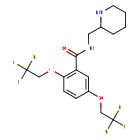
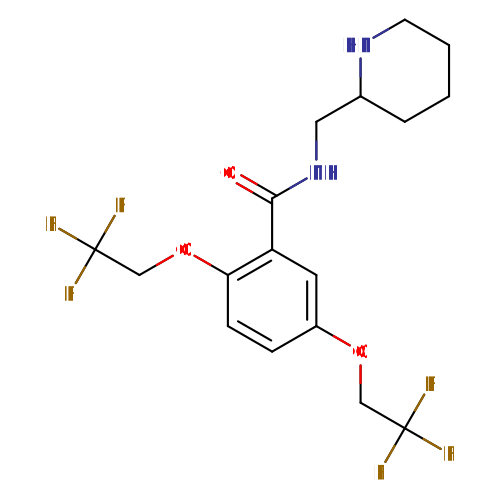
Structure for Flecainide (DB01195)
- Weight
- Average: 414.3427
Monoisotopic: 414.137811746 - Chemical Formula
- C17H20F6N2O3
- Synonyms
- (±)-flecainide
- Flecaine
- Flecainida
- Flécaïnide
- Flecainide
- Flecainidum
- N-(2-Piperidinylmethyl)-2,5-bis(2,2,2-trifluoroethoxy)benzamide
- External IDs
- CCRIS 313

Pharmacology
- Indication
In New Zealand and America, flecainide is indicated to prevent supraventricular arrhythmias and ventricular arrhythmias.12 In the United States, it is also indicated to prevent paroxysmal atrial fibrillation and flutter.9,13
 Reduce drug development failure ratesBuild, train, & validate machine-learning modelswith evidence-based and structured datasets.Build, train, & validate predictive machine-learning models with structured datasets.
- Associated Conditions
Indication Type Indication Combined Product Details Approval Level Age Group Patient Characteristics Dose Form Treatment of Atrial fibrillation ••• ••••• Prevention of Ventricular tachycardia •••••••••••• Prophylaxis of Severe atrioventricular nodal reentrant tachycardia •••••••••••• Prophylaxis of Severe paroxysmal atrial fibrillation •••••••••••• Prophylaxis of Severe paroxysmal supraventricular tachycardia •••••••••••• - Contraindications & Blackbox Warnings
 Prevent Adverse Drug Events TodayTap into our Clinical API for life-saving information on contraindications & blackbox warnings, population restrictions, harmful risks, & more.Avoid life-threatening adverse drug events with our Clinical API
- Pharmacodynamics
Flecainide inhibits the action of sodium and potassium ion channels in the heart, raising the threshold for depolarization and correcting arrhythmias.10 Flecainide has a long duration of action, allowing for once daily dosing.12 The therapeutic index is narrow.8 Patients should not take this medication if there is already structural heart disease or left ventricular systolic dysfunction.12
- Mechanism of action
Flecainide blocks fast inward sodium channels and slowly unbinds during diastole, prolonging the refractory period of the heart.10 This blockade also shortens the duration of action potentials through the Purkinjie fibers.10 Flecainide also prevents delayed rectifier potassium channels from opening, lengthening the action potential through ventricular and atrial muscle fibers.10 Finally, flecainide also blocks ryanodine receptor opening, reducing calcium release from sarcoplasmic reticulum, which reduces depolarization of cells.10
Target Actions Organism ASodium channel protein type 4 subunit alpha inhibitorHumans ASodium channel protein type 5 subunit alpha inhibitorHumans UPotassium voltage-gated channel subfamily H member 2 inhibitorHumans URyanodine receptor 2 inhibitorHumans - Absorption
Oral flecainide has a Tmax of 3-4h and a bioavialability of 90%.6,10 Taking flecainide with food or aluminum hydroxide antacids do not significantly affect the absorption of flecainide.6,12,13
- Volume of distribution
The average volume of distribution in 8 male subjects is 5.0-13.4L/kg.6
- Protein binding
Flecainide is 40% bound to protein in serum, mainly to alpha-1-acid glycoprotein and minorly to serum albumin.6,13
- Metabolism
Flecainide is mainly metabolized to meta-O-dealkylated flecainide or the meta-O-dealkylated lactam of flecainide.6 Meta-O-dealkylated flecainide has 20% the activity of flecainide.6 Both of these metabolites are generally detected as glucuronide or sulfate conjugates.6 Flecainide’s metabolism involves the action of CYP2D6 and CYP1A2.13,10
Hover over products below to view reaction partners
- Route of elimination
Approximately 86% of a single oral dose is eliminated in the urine, with 42% as unchanged flecainide and 14% as meta-O-dealkylated flecainide, a similar amount of the meta-O-dealkylated lactam of flecainide, approximately 3% as an unidentified acid metabolite, and <1% as 2 other unknown metabolites.6,12,13 5% is eliminated in the feces.6,13
- Half-life
In healthy subjects, intravenous flecainide has an average half life of 13 hours for a single dose and 16 hours for multiple oral doses.6,12,13 In patients with a ventricular premature complex, flecainide has a half life of 20 hours.6,13 The half life of meta-O-dealkylated flecainide, a major metabolite of flecainide, is 12.6h.6
- Clearance
The average clearance of intravenous flecainide is 4.6-12.1mL/min/kg in 8 male subjects.6 For oral flecainide, the clearance was 4-20mL/min/kg.6
- Adverse Effects
 Improve decision support & research outcomesWith structured adverse effects data, including: blackbox warnings, adverse reactions, warning & precautions, & incidence rates. View sample adverse effects data in our new Data Library!Improve decision support & research outcomes with our structured adverse effects data.
- Toxicity
The oral LD50 in rats is 1346mg/kg and in mice is 170mg/kg.14 The subcutaneous LD50 in rats is 215mg/kg and in mice is 188mg/kg.14 The oral TDLO in women is 20mg/kg and in men is 40mg/kg/2W.14
Patients experiencing an overdose may present with ECG abnormalities such as a lengthened PR interval, increased QRS duration, prolonged QT interval, increased amplitude of the T wave, reduced myocardial rate and contractility, hypotension, or death.12,13 Treat patients with symptomatic and supportive treatment which may involve administration of inotropic agents, assisted respiration, circulatory assistance, and acidification of the urine.12,13 Hemodialysis is not expected to be useful in the removal of flecainide from serum.6,13
- Pathways
Pathway Category Flecainide Action Pathway Drug action - Pharmacogenomic Effects/ADRs
- Not Available
Interactions
- Drug Interactions
- This information should not be interpreted without the help of a healthcare provider. If you believe you are experiencing an interaction, contact a healthcare provider immediately. The absence of an interaction does not necessarily mean no interactions exist.
Drug Interaction Integrate drug-drug
interactions in your softwareAbametapir The serum concentration of Flecainide can be increased when it is combined with Abametapir. Abatacept The metabolism of Flecainide can be increased when combined with Abatacept. Abemaciclib The excretion of Abemaciclib can be decreased when combined with Flecainide. Abiraterone The metabolism of Flecainide can be decreased when combined with Abiraterone. Abrocitinib The metabolism of Abrocitinib can be decreased when combined with Flecainide. - Food Interactions
- Take with or without food. The absorption is unaffected by food.
Products
 Drug product information from 10+ global regionsOur datasets provide approved product information including:dosage, form, labeller, route of administration, and marketing period.Access drug product information from over 10 global regions.
- Product Ingredients
Ingredient UNII CAS InChI Key Flecainide acetate M8U465Q1WQ 54143-56-5 RKXNZRPQSOPPRN-UHFFFAOYSA-N - Product Images
- International/Other Brands
- Almarytm / Apocard
- Brand Name Prescription Products
Name Dosage Strength Route Labeller Marketing Start Marketing End Region Image Flecainide Tablet 100 mg Oral Sanis Health Inc 2023-10-24 Not applicable Canada 
Flecainide Tablet 50 mg Oral Sanis Health Inc 2023-10-24 Not applicable Canada Flecainide Acetate Tablet 50 mg/1 Oral Mylan Pharmaceuticals 2011-08-02 2011-11-30 US 
Flecainide Acetate Tablet 150 mg/1 Oral Mylan Pharmaceuticals 2011-08-02 2011-11-30 US Flecainide acetate Tablet 50 mg/1 Oral County Line Pharmaceuticals, LLC 2016-11-04 2019-10-01 US - Generic Prescription Products
Name Dosage Strength Route Labeller Marketing Start Marketing End Region Image Ag-flecainide Tablet 50 mg Oral Angita Pharma Inc. 2023-06-08 Not applicable Canada Ag-flecainide Tablet 100 mg Oral Angita Pharma Inc. 2023-06-08 Not applicable Canada Apo-flecainide Tablet 100 mg Oral Apotex Corporation 2006-05-08 Not applicable Canada Apo-flecainide Tablet 50 mg Oral Apotex Corporation 2006-05-08 Not applicable Canada Auro-flecainide Tablet 50 mg Oral Auro Pharma Inc 2017-02-27 Not applicable Canada


Categories
- ATC Codes
- C01BC04 — Flecainide
- Drug Categories
- Antiarrhythmic agents
- Antiarrhythmics, Class I
- Antiarrhythmics, Class Ic
- Cardiac Therapy
- Cardiovascular Agents
- Cytochrome P-450 CYP1A2 Substrates
- Cytochrome P-450 CYP1A2 Substrates with a Narrow Therapeutic Index
- Cytochrome P-450 CYP2C9 Inhibitors
- Cytochrome P-450 CYP2C9 Inhibitors (strength unknown)
- Cytochrome P-450 CYP2D6 Inhibitors
- Cytochrome P-450 CYP2D6 Inhibitors (strength unknown)
- Cytochrome P-450 CYP2D6 Substrates
- Cytochrome P-450 CYP2D6 Substrates with a Narrow Therapeutic Index
- Cytochrome P-450 Enzyme Inhibitors
- Cytochrome P-450 Substrates
- MATE 1 Inhibitors
- MATE 1 Substrates
- MATE 1 Substrates with a Narrow Therapeutic Index
- MATE inhibitors
- MATE substrates
- Membrane Transport Modulators
- Moderate Risk QTc-Prolonging Agents
- Narrow Therapeutic Index Drugs
- Negative Inotrope
- P-glycoprotein substrates
- P-glycoprotein substrates with a Narrow Therapeutic Index
- Piperidines
- QTc Prolonging Agents
- Sodium Channel Blockers
- Voltage-Gated Sodium Channel Blockers
- Chemical TaxonomyProvided by Classyfire
- Description
- This compound belongs to the class of organic compounds known as benzamides. These are organic compounds containing a carboxamido substituent attached to a benzene ring.
- Kingdom
- Organic compounds
- Super Class
- Benzenoids
- Class
- Benzene and substituted derivatives
- Sub Class
- Benzoic acids and derivatives
- Direct Parent
- Benzamides
- Alternative Parents
- Phenoxy compounds / Phenol ethers / Benzoyl derivatives / Alkyl aryl ethers / Piperidines / Secondary carboxylic acid amides / Amino acids and derivatives / Dialkylamines / Azacyclic compounds / Organopnictogen compounds show 4 more
- Substituents
- Alkyl aryl ether / Alkyl fluoride / Alkyl halide / Amine / Amino acid or derivatives / Aromatic heteromonocyclic compound / Azacycle / Benzamide / Benzoyl / Carboxamide group show 18 more
- Molecular Framework
- Aromatic heteromonocyclic compounds
- External Descriptors
- piperidines, organofluorine compound, aromatic ether, monocarboxylic acid amide (CHEBI:75984)
- Affected organisms
- Humans and other mammals
Chemical Identifiers
- UNII
- K94FTS1806
- CAS number
- 54143-55-4
- InChI Key
- DJBNUMBKLMJRSA-UHFFFAOYSA-N
- InChI
- InChI=1S/C17H20F6N2O3/c18-16(19,20)9-27-12-4-5-14(28-10-17(21,22)23)13(7-12)15(26)25-8-11-3-1-2-6-24-11/h4-5,7,11,24H,1-3,6,8-10H2,(H,25,26)
- IUPAC Name
- N-[(piperidin-2-yl)methyl]-2,5-bis(2,2,2-trifluoroethoxy)benzamide
- SMILES
- FC(F)(F)COC1=CC(C(=O)NCC2CCCCN2)=C(OCC(F)(F)F)C=C1
References
- Synthesis Reference
Bmitt, E.H. and Brown, W.R.; U.S. Patent 3,900,481; August 19,1975; assigned to Riker Laboratories, Inc.
US3900481A- General References
- Gill JS, Mehta D, Ward DE, Camm AJ: Efficacy of flecainide, sotalol, and verapamil in the treatment of right ventricular tachycardia in patients without overt cardiac abnormality. Br Heart J. 1992 Oct;68(4):392-7. [Article]
- Sakurada H, Hiyoshi Y, Tejima T, Yanase O, Tokuyasu Y, Watanabe K, Motomiya T, Sugiura M, Hiraoka M: [Effects of oral flecainide treatment of refractory tachyarrhythmias]. Kokyu To Junkan. 1990 May;38(5):471-6. [Article]
- Echt DS, Liebson PR, Mitchell LB, Peters RW, Obias-Manno D, Barker AH, Arensberg D, Baker A, Friedman L, Greene HL, et al.: Mortality and morbidity in patients receiving encainide, flecainide, or placebo. The Cardiac Arrhythmia Suppression Trial. N Engl J Med. 1991 Mar 21;324(12):781-8. [Article]
- Greenberg HM, Dwyer EM Jr, Hochman JS, Steinberg JS, Echt DS, Peters RW: Interaction of ischaemia and encainide/flecainide treatment: a proposed mechanism for the increased mortality in CAST I. Br Heart J. 1995 Dec;74(6):631-5. [Article]
- Gasparini M, Priori SG, Mantica M, Napolitano C, Galimberti P, Ceriotti C, Simonini S: Flecainide test in Brugada syndrome: a reproducible but risky tool. Pacing Clin Electrophysiol. 2003 Jan;26(1 Pt 2):338-41. [Article]
- Conard GJ, Ober RE: Metabolism of flecainide. Am J Cardiol. 1984 Feb 27;53(5):41B-51B. doi: 10.1016/0002-9149(84)90501-0. [Article]
- Abi Samra F: The clinical use of class IC antiarrhythmic drugs. J La State Med Soc. 1989 May;141(5):27-31. [Article]
- Tamargo J, Le Heuzey JY, Mabo P: Narrow therapeutic index drugs: a clinical pharmacological consideration to flecainide. Eur J Clin Pharmacol. 2015 May;71(5):549-67. doi: 10.1007/s00228-015-1832-0. Epub 2015 Apr 15. [Article]
- Aliot E, Capucci A, Crijns HJ, Goette A, Tamargo J: Twenty-five years in the making: flecainide is safe and effective for the management of atrial fibrillation. Europace. 2011 Feb;13(2):161-73. doi: 10.1093/europace/euq382. Epub 2010 Dec 7. [Article]
- Andrikopoulos GK, Pastromas S, Tzeis S: Flecainide: Current status and perspectives in arrhythmia management. World J Cardiol. 2015 Feb 26;7(2):76-85. doi: 10.4330/wjc.v7.i2.76. [Article]
- FDA Approved Drug Products: Tambocor Flecainide Acetate Oral Tablets [Link]
- Medsafe New Zealand Approved Drug Products: Tambocor Oral Tablets and Capsules [Link]
- Flecainide Acetate [Link]
- Cayman Chemicals: Flecainide MSDS [Link]
- External Links
- Human Metabolome Database
- HMDB0015326
- KEGG Drug
- D07962
- KEGG Compound
- C07001
- PubChem Compound
- 3356
- PubChem Substance
- 46508078
- ChemSpider
- 3239
- BindingDB
- 50131434
- 4441
- ChEBI
- 75984
- ChEMBL
- CHEMBL652
- Therapeutic Targets Database
- DAP000518
- PharmGKB
- PA449646
- Guide to Pharmacology
- GtP Drug Page
- RxList
- RxList Drug Page
- Drugs.com
- Drugs.com Drug Page
- Wikipedia
- Flecainide
- MSDS
- Download (77.1 KB)
Clinical Trials
- Clinical Trials
Phase Status Purpose Conditions Count 4 Completed Not Available Paroxysmal Atrial Fibrillation (PAF) 1 4 Completed Treatment Atrial Fibrillation 3 4 Completed Treatment Atrial Fibrillation / Brugada Syndrome (BrS) / Ventricular Tachycardia (VT) 1 4 Completed Treatment Paroxysmal Atrial Fibrillation (PAF) 1 4 Not Yet Recruiting Treatment Atrial Fibrillation / Surgery 1
Pharmacoeconomics
- Manufacturers
- Not Available
- Packagers
- 3M Health Care
- Alphapharm Party Ltd.
- Amneal Pharmaceuticals
- AQ Pharmaceuticals Inc.
- Barr Pharmaceuticals
- Graceway Pharmaceuticals
- Kaiser Foundation Hospital
- Murfreesboro Pharmaceutical Nursing Supply
- Mylan
- Ohm Laboratories Inc.
- Par Pharmaceuticals
- Pharmaceutical Utilization Management Program VA Inc.
- Physicians Total Care Inc.
- Ranbaxy Laboratories
- Roxane Labs
- Southwood Pharmaceuticals
- Dosage Forms
Form Route Strength Injection, solution Intravenous; Parenteral 150 MG/15ML Capsule, extended release Oral Injection, solution Parenteral 10 mg/ml Tablet Oral 50 mg Tablet Oral 100 mg/1 Tablet Oral 150 mg/1 Tablet Oral 50 mg/1 Tablet Oral Capsule, extended release Oral 100 MG Capsule, extended release Oral 150 MG Capsule, extended release Oral 200 MG Capsule, extended release Oral 50 MG Tablet Oral 100.000 mg Tablet Oral 100000 ug/1 Tablet Oral 150000 ug/1 Tablet Oral 50000 ug/1 Tablet Oral 100 mg - Prices
Unit description Cost Unit Tambocor 150 mg tablet 5.75USD tablet Tambocor 100 mg tablet 4.27USD tablet Flecainide acetate 150 mg tablet 3.83USD tablet Flecainide acetate 100 mg tablet 2.95USD tablet Tambocor 50 mg tablet 2.72USD tablet Flecainide acetate 50 mg tablet 1.95USD tablet Tambocor 100 mg Tablet 1.19USD tablet Apo-Flecainide 100 mg Tablet 0.83USD tablet Tambocor 50 mg Tablet 0.6USD tablet Apo-Flecainide 50 mg Tablet 0.41USD tablet DrugBank does not sell nor buy drugs. Pricing information is supplied for informational purposes only.- Patents
- Not Available
Properties
- State
- Solid
- Experimental Properties
Property Value Source melting point (°C) 228-229 Bmitt, E.H. and Brown, W.R.; U.S. Patent 3,900,481; August 19,1975; assigned to Riker Laboratories, Inc. water solubility 48.4 mg/mL at 37 °C (acetate form) FDA Label logP 3.78 MANNHOLD,R ET AL. (1990) pKa 9.3 FDA Label - Predicted Properties
Property Value Source Water Solubility 0.0324 mg/mL ALOGPS logP 2.98 ALOGPS logP 3.19 Chemaxon logS -4.1 ALOGPS pKa (Strongest Acidic) 13.68 Chemaxon pKa (Strongest Basic) 9.62 Chemaxon Physiological Charge 1 Chemaxon Hydrogen Acceptor Count 4 Chemaxon Hydrogen Donor Count 2 Chemaxon Polar Surface Area 59.59 Å2 Chemaxon Rotatable Bond Count 9 Chemaxon Refractivity 88.4 m3·mol-1 Chemaxon Polarizability 35.92 Å3 Chemaxon Number of Rings 2 Chemaxon Bioavailability 1 Chemaxon Rule of Five Yes Chemaxon Ghose Filter Yes Chemaxon Veber's Rule No Chemaxon MDDR-like Rule No Chemaxon - Predicted ADMET Features
Property Value Probability Human Intestinal Absorption + 0.9856 Blood Brain Barrier + 0.8605 Caco-2 permeable + 0.8867 P-glycoprotein substrate Substrate 0.7773 P-glycoprotein inhibitor I Inhibitor 0.5307 P-glycoprotein inhibitor II Non-inhibitor 0.7716 Renal organic cation transporter Non-inhibitor 0.6687 CYP450 2C9 substrate Non-substrate 0.8921 CYP450 2D6 substrate Substrate 0.8918 CYP450 3A4 substrate Non-substrate 0.5957 CYP450 1A2 substrate Inhibitor 0.9106 CYP450 2C9 inhibitor Non-inhibitor 0.6853 CYP450 2D6 inhibitor Non-inhibitor 0.6556 CYP450 2C19 inhibitor Inhibitor 0.5307 CYP450 3A4 inhibitor Non-inhibitor 0.8309 CYP450 inhibitory promiscuity Low CYP Inhibitory Promiscuity 0.5538 Ames test Non AMES toxic 0.672 Carcinogenicity Non-carcinogens 0.8821 Biodegradation Not ready biodegradable 0.9968 Rat acute toxicity 2.5680 LD50, mol/kg Not applicable hERG inhibition (predictor I) Weak inhibitor 0.9409 hERG inhibition (predictor II) Inhibitor 0.8474
Spectra
- Mass Spec (NIST)
- Not Available
- Spectra
- Chromatographic Properties
Collision Cross Sections (CCS)
Adduct CCS Value (Å2) Source type Source [M-H]- 187.6621135 predictedDarkChem Lite v0.1.0 [M-H]- 186.56973 predictedDeepCCS 1.0 (2019) [M+H]+ 187.9683135 predictedDarkChem Lite v0.1.0 [M+H]+ 188.92775 predictedDeepCCS 1.0 (2019) [M+Na]+ 187.9401135 predictedDarkChem Lite v0.1.0 [M+Na]+ 196.076 predictedDeepCCS 1.0 (2019)
Targets

- Kind
- Protein
- Organism
- Humans
- Pharmacological action
- Yes
- Actions
- Inhibitor
- General Function
- Voltage-gated sodium channel activity
- Specific Function
- This protein mediates the voltage-dependent sodium ion permeability of excitable membranes. Assuming opened or closed conformations in response to the voltage difference across the membrane, the pr...
- Gene Name
- SCN4A
- Uniprot ID
- P35499
- Uniprot Name
- Sodium channel protein type 4 subunit alpha
- Molecular Weight
- 208059.175 Da
References
- Desaphy JF, De Luca A, Didonna MP, George AL Jr, Camerino Conte D: Different flecainide sensitivity of hNav1.4 channels and myotonic mutants explained by state-dependent block. J Physiol. 2004 Jan 15;554(Pt 2):321-34. Epub 2003 Nov 7. [Article]
- Kind
- Protein
- Organism
- Humans
- Pharmacological action
- Yes
- Actions
- Inhibitor
- General Function
- Voltage-gated sodium channel activity involved in sa node cell action potential
- Specific Function
- This protein mediates the voltage-dependent sodium ion permeability of excitable membranes. Assuming opened or closed conformations in response to the voltage difference across the membrane, the pr...
- Gene Name
- SCN5A
- Uniprot ID
- Q14524
- Uniprot Name
- Sodium channel protein type 5 subunit alpha
- Molecular Weight
- 226937.475 Da
References
- Nagatomo T, January CT, Makielski JC: Preferential block of late sodium current in the LQT3 DeltaKPQ mutant by the class I(C) antiarrhythmic flecainide. Mol Pharmacol. 2000 Jan;57(1):101-7. [Article]
- Benhorin J, Taub R, Goldmit M, Kerem B, Kass RS, Windman I, Medina A: Effects of flecainide in patients with new SCN5A mutation: mutation-specific therapy for long-QT syndrome? Circulation. 2000 Apr 11;101(14):1698-706. [Article]
- Priori SG, Napolitano C, Schwartz PJ, Bloise R, Crotti L, Ronchetti E: The elusive link between LQT3 and Brugada syndrome: the role of flecainide challenge. Circulation. 2000 Aug 29;102(9):945-7. [Article]
- Cerrone M, Crotti L, Faggiano G, De Michelis V, Napolitano C, Schwartz PJ, Priori SG: [Long QT syndrome and Brugada syndrome: 2 aspects of the same disease?]. Ital Heart J Suppl. 2001 Mar;2(3):253-7. [Article]
- Viswanathan PC, Bezzina CR, George AL Jr, Roden DM, Wilde AA, Balser JR: Gating-dependent mechanisms for flecainide action in SCN5A-linked arrhythmia syndromes. Circulation. 2001 Sep 4;104(10):1200-5. [Article]
- Ramos E, O'leary ME: State-dependent trapping of flecainide in the cardiac sodium channel. J Physiol. 2004 Oct 1;560(Pt 1):37-49. Epub 2004 Jul 22. [Article]
- Shimizu W, Antzelevitch C, Suyama K, Kurita T, Taguchi A, Aihara N, Takaki H, Sunagawa K, Kamakura S: Effect of sodium channel blockers on ST segment, QRS duration, and corrected QT interval in patients with Brugada syndrome. J Cardiovasc Electrophysiol. 2000 Dec;11(12):1320-9. [Article]
- Liu H, Atkins J, Kass RS: Common molecular determinants of flecainide and lidocaine block of heart Na+ channels: evidence from experiments with neutral and quaternary flecainide analogues. J Gen Physiol. 2003 Mar;121(3):199-214. [Article]
- Chen X, Ji ZL, Chen YZ: TTD: Therapeutic Target Database. Nucleic Acids Res. 2002 Jan 1;30(1):412-5. [Article]
- Kind
- Protein
- Organism
- Humans
- Pharmacological action
- Unknown
- Actions
- Inhibitor
- General Function
- Voltage-gated potassium channel activity involved in ventricular cardiac muscle cell action potential repolarization
- Specific Function
- Pore-forming (alpha) subunit of voltage-gated inwardly rectifying potassium channel. Channel properties are modulated by cAMP and subunit assembly. Mediates the rapidly activating component of the ...
- Gene Name
- KCNH2
- Uniprot ID
- Q12809
- Uniprot Name
- Potassium voltage-gated channel subfamily H member 2
- Molecular Weight
- 126653.52 Da
References
- Chiu PJ, Marcoe KF, Bounds SE, Lin CH, Feng JJ, Lin A, Cheng FC, Crumb WJ, Mitchell R: Validation of a [3H]astemizole binding assay in HEK293 cells expressing HERG K+ channels. J Pharmacol Sci. 2004 Jul;95(3):311-9. [Article]
- Kind
- Protein
- Organism
- Humans
- Pharmacological action
- Unknown
- Actions
- Inhibitor
- General Function
- Suramin binding
- Specific Function
- Calcium channel that mediates the release of Ca(2+) from the sarcoplasmic reticulum into the cytoplasm and thereby plays a key role in triggering cardiac muscle contraction. Aberrant channel activa...
- Gene Name
- RYR2
- Uniprot ID
- Q92736
- Uniprot Name
- Ryanodine receptor 2
- Molecular Weight
- 564562.71 Da
References
- Mehra D, Imtiaz MS, van Helden DF, Knollmann BC, Laver DR: Multiple modes of ryanodine receptor 2 inhibition by flecainide. Mol Pharmacol. 2014 Dec;86(6):696-706. doi: 10.1124/mol.114.094623. Epub 2014 Oct 1. [Article]
Enzymes
- Kind
- Protein
- Organism
- Humans
- Pharmacological action
- Unknown
- Actions
- SubstrateInhibitor
- General Function
- Steroid hydroxylase activity
- Specific Function
- Responsible for the metabolism of many drugs and environmental chemicals that it oxidizes. It is involved in the metabolism of drugs such as antiarrhythmics, adrenoceptor antagonists, and tricyclic...
- Gene Name
- CYP2D6
- Uniprot ID
- P10635
- Uniprot Name
- Cytochrome P450 2D6
- Molecular Weight
- 55768.94 Da
References
- Doki K, Homma M, Kuga K, Aonuma K, Kohda Y: Effects of CYP2D6 genotypes on age-related change of flecainide metabolism: involvement of CYP1A2-mediated metabolism. Br J Clin Pharmacol. 2009 Jul;68(1):89-96. doi: 10.1111/j.1365-2125.2009.03435.x. [Article]
- Lim KS, Jang IJ, Kim BH, Kim J, Jeon JY, Tae YM, Yi S, Eum S, Cho JY, Shin SG, Yu KS: Changes in the QTc interval after administration of flecainide acetate, with and without coadministered paroxetine, in relation to cytochrome P450 2D6 genotype: data from an open-label, two-period, single-sequence crossover study in healthy Korean male subjects. Clin Ther. 2010 Apr;32(4):659-66. doi: 10.1016/j.clinthera.2010.04.002. [Article]
- Walker DK, Alabaster CT, Congrave GS, Hargreaves MB, Hyland R, Jones BC, Reed LJ, Smith DA: Significance of metabolism in the disposition and action of the antidysrhythmic drug, dofetilide. In vitro studies and correlation with in vivo data. Drug Metab Dispos. 1996 Apr;24(4):447-55. [Article]
- Andrikopoulos GK, Pastromas S, Tzeis S: Flecainide: Current status and perspectives in arrhythmia management. World J Cardiol. 2015 Feb 26;7(2):76-85. doi: 10.4330/wjc.v7.i2.76. [Article]
- Flockhart Table of Drug Interactions [Link]
- Kind
- Protein
- Organism
- Humans
- Pharmacological action
- Unknown
- Actions
- Substrate
- General Function
- Oxidoreductase activity, acting on paired donors, with incorporation or reduction of molecular oxygen, reduced flavin or flavoprotein as one donor, and incorporation of one atom of oxygen
- Specific Function
- Cytochromes P450 are a group of heme-thiolate monooxygenases. In liver microsomes, this enzyme is involved in an NADPH-dependent electron transport pathway. It oxidizes a variety of structurally un...
- Gene Name
- CYP1A2
- Uniprot ID
- P05177
- Uniprot Name
- Cytochrome P450 1A2
- Molecular Weight
- 58293.76 Da
References
- Andrikopoulos GK, Pastromas S, Tzeis S: Flecainide: Current status and perspectives in arrhythmia management. World J Cardiol. 2015 Feb 26;7(2):76-85. doi: 10.4330/wjc.v7.i2.76. [Article]
- Kind
- Protein
- Organism
- Humans
- Pharmacological action
- Unknown
- Actions
- Inhibitor
- Curator comments
- Enzyme inhibition data based on findings of 1 in vitro study.
- General Function
- Steroid hydroxylase activity
- Specific Function
- Cytochromes P450 are a group of heme-thiolate monooxygenases. In liver microsomes, this enzyme is involved in an NADPH-dependent electron transport pathway. It oxidizes a variety of structurally un...
- Gene Name
- CYP2C9
- Uniprot ID
- P11712
- Uniprot Name
- Cytochrome P450 2C9
- Molecular Weight
- 55627.365 Da
References
- Walker DK, Alabaster CT, Congrave GS, Hargreaves MB, Hyland R, Jones BC, Reed LJ, Smith DA: Significance of metabolism in the disposition and action of the antidysrhythmic drug, dofetilide. In vitro studies and correlation with in vivo data. Drug Metab Dispos. 1996 Apr;24(4):447-55. [Article]
Carriers
- Kind
- Protein group
- Organism
- Humans
- Pharmacological action
- Unknown
- Actions
- Binder
- General Function
- Not Available
- Specific Function
- Functions as transport protein in the blood stream. Binds various ligands in the interior of its beta-barrel domain. Also binds synthetic drugs and influences their distribution and availability in...
Components:
References
- Conard GJ, Ober RE: Metabolism of flecainide. Am J Cardiol. 1984 Feb 27;53(5):41B-51B. doi: 10.1016/0002-9149(84)90501-0. [Article]
- Kind
- Protein
- Organism
- Humans
- Pharmacological action
- Unknown
- Actions
- Binder
- General Function
- Toxic substance binding
- Specific Function
- Serum albumin, the main protein of plasma, has a good binding capacity for water, Ca(2+), Na(+), K(+), fatty acids, hormones, bilirubin and drugs. Its main function is the regulation of the colloid...
- Gene Name
- ALB
- Uniprot ID
- P02768
- Uniprot Name
- Serum albumin
- Molecular Weight
- 69365.94 Da
References
- Conard GJ, Ober RE: Metabolism of flecainide. Am J Cardiol. 1984 Feb 27;53(5):41B-51B. doi: 10.1016/0002-9149(84)90501-0. [Article]
Transporters
- Kind
- Protein
- Organism
- Humans
- Pharmacological action
- Unknown
- Actions
- Substrate
- General Function
- Xenobiotic-transporting atpase activity
- Specific Function
- Energy-dependent efflux pump responsible for decreased drug accumulation in multidrug-resistant cells.
- Gene Name
- ABCB1
- Uniprot ID
- P08183
- Uniprot Name
- Multidrug resistance protein 1
- Molecular Weight
- 141477.255 Da
References
- Doki K, Apati S, Sakata T, Homma M: Involvement of Renal Efflux Transporter MATE1 in Renal Excretion of Flecainide. Biol Pharm Bull. 2019;42(7):1226-1229. doi: 10.1248/bpb.b19-00031. [Article]
- Kind
- Protein
- Organism
- Humans
- Pharmacological action
- Unknown
- Actions
- SubstrateInhibitor
- General Function
- Monovalent cation:proton antiporter activity
- Specific Function
- Solute transporter for tetraethylammonium (TEA), 1-methyl-4-phenylpyridinium (MPP), cimetidine, N-methylnicotinamide (NMN), metformin, creatinine, guanidine, procainamide, topotecan, estrone sulfat...
- Gene Name
- SLC47A1
- Uniprot ID
- Q96FL8
- Uniprot Name
- Multidrug and toxin extrusion protein 1
- Molecular Weight
- 61921.585 Da
References
- Doki K, Apati S, Sakata T, Homma M: Involvement of Renal Efflux Transporter MATE1 in Renal Excretion of Flecainide. Biol Pharm Bull. 2019;42(7):1226-1229. doi: 10.1248/bpb.b19-00031. [Article]

Drug created at June 13, 2005 13:24 / Updated at April 23, 2024 11:38