Identification
- Summary
Levetiracetam is a novel anticonvulsant agent used as an adjunct medication to manage partial onset, myoclonic, and generalized tonic-clonic seizures in patients with epilepsy.
- Brand Names
- Elepsia, Keppra, Matever, Roweepra, Spritam
- Generic Name
- Levetiracetam
- DrugBank Accession Number
- DB01202
- Background
Levetiracetam is a drug within the pyrrolidine class that is used to treat various types of seizures stemming from epileptic disorders. It was first approved for use in the United States in 1999 and is structurally and mechanistically unrelated to other anti-epileptic drugs (AEDs).11,13,15 Levetiracetam possesses a wide therapeutic index15,9 and little-to-no potential to produce, or be subject to, pharmacokinetic interactions11,13,15 - these characteristics make it a desirable choice over other AEDs, a class of drugs notorious for having generally narrow therapeutic indexes and a propensity for involvement in drug interactions.10
- Type
- Small Molecule
- Groups
- Approved
- Structure
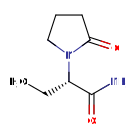
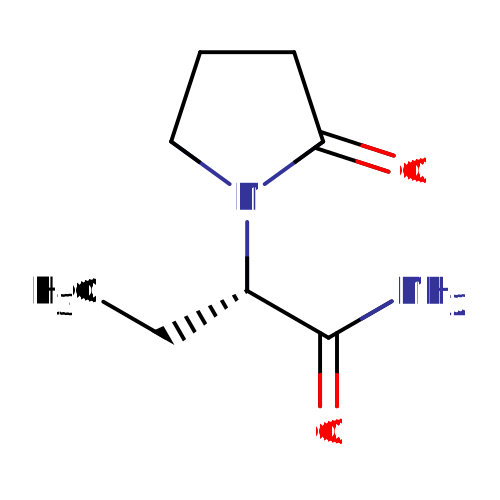
Structure for Levetiracetam (DB01202)
- Weight
- Average: 170.212
Monoisotopic: 170.105527699 - Chemical Formula
- C8H14N2O2
- Synonyms
- Levetiracetam
- Levetiracetame
- Levetiracetamum
- External IDs
- UCB 22059
- UCB L059
- UCB-22059
- UCB-L059

Pharmacology
- Indication
Levetiracetam is indicated as an adjunctive therapy in the treatment of partial onset seizures in epileptic patients who are one month of age and older. Additionally, it is indicated as an adjunct in the treatment of myoclonic seizures in patients with juvenile myoclonic epilepsy who are 12 years of age and older, and in primary generalized tonic-clonic seizures in patients with idiopathic generalized epilepsy who are 6 years of age and older.11
Levetiracetam is also available as an orally dissolvable tablet that is indicated as an adjunct in the treatment of partial onset seizures in patients with epilepsy who are 4 years of age and older and weigh more than 20kg.12
 Reduce drug development failure ratesBuild, train, & validate machine-learning modelswith evidence-based and structured datasets.Build, train, & validate predictive machine-learning models with structured datasets.
- Associated Conditions
Indication Type Indication Combined Product Details Approval Level Age Group Patient Characteristics Dose Form Adjunct therapy in management of Epilepsy •••••••••••• •••••••••• •••••••• •• •••••••••••• ••••••• •••••• Adjunct therapy in treatment of Partial-onset seizures •••••••••••• •••• •••••• ••••• ••••••• •••••• •••••••••••••• Adjunct therapy in treatment of Partial-onset seizures •••••••••••• ••••••••• •••••• Adjunct therapy in treatment of Primary generalized tonic-clonic seizures •••••••••••• ••••••••• •••••• Adjunct therapy in treatment of Myoclonic seizures •••••••••••• ••••••••• •••••• - Contraindications & Blackbox Warnings
 Prevent Adverse Drug Events TodayTap into our Clinical API for life-saving information on contraindications & blackbox warnings, population restrictions, harmful risks, & more.Avoid life-threatening adverse drug events with our Clinical API
- Pharmacodynamics
Levetiracetam appears to prevent seizure activity via the selective inhibition of hypersynchronized epileptiform burst firing without affecting normal neuronal transmission, though the exact mechanism through which this occurs is unclear.11,15 The therapeutic index of levetiracetam is wide,15,9 making it relatively unique amongst other anti-epileptic medications.
Anti-epileptic drugs, including levetiracetam, may increase the risk of suicidal ideation or behaviour - patients taking levetiracetam should be monitored for the emergence or worsening of depressive symptoms, suicidal ideation, and behavioural abnormalities.11,13,15
- Mechanism of action
The exact mechanism through which levetiracetam exerts its anti-epileptic effects is unclear, but is thought to be unique amongst other anti-epileptic medications. Current knowledge suggests that levetiracetam’s binding to synaptic vesicle protein 2A (SV2A) is a key driver of its action. SV2A is a membrane-bound protein that is found on synaptic vesicles and is ubiquitous throughout the CNS4 - it appears to play a role in vesicle exocytosis11,15 and in the modulation of synaptic transmission by increasing the available amount of secretory vesicles available for neurotransmission.7 Stimulation of pre-synaptic SV2A by levetiracetam may inhibit neurotransmitter release,6 but this action does not appear to affect normal neurotransmission. This has led to the suggestion that levetiracetam exclusively modulates the function of SV2A only under pathophysiological conditions.4 Levetiracetam and related analogues showed a correlation between affinity for SV2A and anti-epileptic potency, further suggesting that action at this site contributes to the anti-epileptic activity of the drug.11,15
Levetiracetam has also been shown to indirectly affect GABAergic neurotransmission (despite having no direct effect on GABAergic or glutamatergic receptors) and modulate ionic currents.7 Similarly, levetiracetam has been shown in vitro to inhibit N-type calcium channels.8 How, or even if, these actions are implicated in its anti-epileptic action have yet to be elucidated.
Target Actions Organism AVoltage-dependent N-type calcium channel subunit alpha-1B inhibitorHumans ASynaptic vesicle glycoprotein 2A agonistHumans - Absorption
Levetiracetam is rapidly and nearly completely absorbed following oral administration, with a reported absolute oral bioavailability of essentially 100%.15,11,13 Tmax is approximately 1.3 hours after dosing, and Cmax is 31 μg/mL following a single 1000mg dose and 43 μg/mL following repeated dosing.13,15 Co-administration of levetiracetam with food delays Tmax by approximately 1.5 hours and decreases Cmax by 20%.11,13
- Volume of distribution
The volume of distribution of levetiracetam is approximately 0.5 to 0.7 L/kg.13,15
- Protein binding
Levetiracetam and its metabolites are largely unbound to plasma proteins (<10%).15,11,13
- Metabolism
Levetiracetam is minimally metabolized within the body - the major metabolic pathway appears to be the enzymatic hydrolysis of its acetamide group which produces an inactive carboxylic acid metabolite, L057, which accounts for approximately 24% of the total administered dose.11,13 The specific enzyme(s) responsible for this reaction are unclear, but this pathway is known to be independent of hepatic CYP enzymes and has been proposed to be driven primarily by type B esterases in the blood and other tissues.1 Two minor metabolites involving modifications to the pyrrolidone ring have been identified, one involving hydroxylation of the ring (constituting 1.6% of the total dose) and the other involving opening of the ring structure (constituting 0.9% of the total dose).15,11,13
Hover over products below to view reaction partners
- Route of elimination
Approximately 66% of the administered dose of levetiracetam is excreted in the urine as unchanged drug,11,13 while only 0.3% of the total dose is excreted via the feces.15 The primary inactive metabolite of levetiracetam, L057, is also found in the urine as approximately 24% of the administered dose.15
- Half-life
The plasma half-life of levetiracetam is 6-8 hours and is not affected by dose or repeat administration. Half-life is increased in the elderly (by about 40%)15 and those with renal impairment.11,13
- Clearance
The total plasma clearance of levetiracetam is 0.96 mL/min/kg, with renal clearance comprising 0.6 mL/min/kg.11 The primary inactive metabolite of levetiracetam, L057, has a renal clearance of 4 mL/min/kg. Given the relatively high proportion of drug undergoing renal clearance, overall clearance of levetiracetam is reduced in patients with renal impairment.11,13
- Adverse Effects
 Improve decision support & research outcomesWith structured adverse effects data, including: blackbox warnings, adverse reactions, warning & precautions, & incidence rates. View sample adverse effects data in our new Data Library!Improve decision support & research outcomes with our structured adverse effects data.
- Toxicity
The oral TDLO of levetiracetam in humans is 10 mg/kg.14 Symptoms of levetiracetam overdose are consistent with its adverse effect profile and may include agitation, aggression, somnolence, decreased level of consciousness, respiratory depression, or coma.11,13 There is no antidote for levetiracetam overdose, therefore management should involve general supportive measures and symptomatic treatment. Hemodialysis results in significant clearance of plasma levetiracetam (approximately 50% within 4 hours) and should be considered in cases of overdose as indicated by the patient's status.11,13
- Pathways
- Not Available
- Pharmacogenomic Effects/ADRs
- Not Available
Interactions
- Drug Interactions
- This information should not be interpreted without the help of a healthcare provider. If you believe you are experiencing an interaction, contact a healthcare provider immediately. The absence of an interaction does not necessarily mean no interactions exist.
Drug Interaction Integrate drug-drug
interactions in your software1,2-Benzodiazepine The risk or severity of CNS depression can be increased when Levetiracetam is combined with 1,2-Benzodiazepine. Acetazolamide The risk or severity of CNS depression can be increased when Acetazolamide is combined with Levetiracetam. Acetophenazine The risk or severity of CNS depression can be increased when Acetophenazine is combined with Levetiracetam. Agomelatine The risk or severity of CNS depression can be increased when Levetiracetam is combined with Agomelatine. Alfentanil The risk or severity of CNS depression can be increased when Alfentanil is combined with Levetiracetam. - Food Interactions
- Take with or without food. Co-administration with food slightly alters pharmacokinetics, but not to a clinically significant extent.
Products
 Drug product information from 10+ global regionsOur datasets provide approved product information including:dosage, form, labeller, route of administration, and marketing period.Access drug product information from over 10 global regions.
- Product Images
- Brand Name Prescription Products
Name Dosage Strength Route Labeller Marketing Start Marketing End Region Image Elepsia XR Tablet, extended release 1500 mg/1 Oral Sun Pharma Advanced Research Company Limited 2019-05-17 Not applicable US 
Elepsia XR Tablet, extended release 1000 mg/1 Oral Sun Pharma Advanced Research Company Limited 2019-05-17 Not applicable US Elepsia XR 1000 mg Tablet, extended release 1000 mg/1 Oral TRIPOINT THERAPEUTICS, LLC 2021-02-12 Not applicable US Elepsia XR 1500 mg Tablet, extended release 1500 mg/1 Oral TRIPOINT THERAPEUTICS, LLC 2021-02-12 Not applicable US Keppra Tablet, film coated 1000 mg Oral Ucb Pharma Sa 2021-02-11 Not applicable EU 
- Generic Prescription Products
Name Dosage Strength Route Labeller Marketing Start Marketing End Region Image Abbott-levetiracetam Tablet 750 mg Oral Abbott 2014-05-30 2015-12-31 Canada 
Abbott-levetiracetam Tablet 500 mg Oral Abbott 2014-05-30 2015-12-31 Canada Abbott-levetiracetam Tablet 250 mg Oral Abbott 2014-05-30 2015-12-31 Canada Ach-levetiracetam Tablet 500 mg Oral Accord Healthcare Inc 2013-03-20 Not applicable Canada Ach-levetiracetam Tablet 250 mg Oral Accord Healthcare Inc 2013-03-20 Not applicable Canada


Categories
- ATC Codes
- N03AX14 — Levetiracetam
- Drug Categories
- Chemical TaxonomyProvided by Classyfire
- Description
- This compound belongs to the class of organic compounds known as alpha amino acids and derivatives. These are amino acids in which the amino group is attached to the carbon atom immediately adjacent to the carboxylate group (alpha carbon), or a derivative thereof.
- Kingdom
- Organic compounds
- Super Class
- Organic acids and derivatives
- Class
- Carboxylic acids and derivatives
- Sub Class
- Amino acids, peptides, and analogues
- Direct Parent
- Alpha amino acids and derivatives
- Alternative Parents
- Pyrrolidine-2-ones / N-alkylpyrrolidines / Fatty amides / Tertiary carboxylic acid amides / Primary carboxylic acid amides / Lactams / Azacyclic compounds / Organopnictogen compounds / Organonitrogen compounds / Organic oxides show 2 more
- Substituents
- 2-pyrrolidone / Aliphatic heteromonocyclic compound / Alpha-amino acid or derivatives / Azacycle / Carbonyl group / Carboxamide group / Fatty acyl / Fatty amide / Hydrocarbon derivative / Lactam show 12 more
- Molecular Framework
- Aliphatic heteromonocyclic compounds
- External Descriptors
- pyrrolidin-2-ones (CHEBI:6437)
- Affected organisms
- Humans and other mammals
Chemical Identifiers
- UNII
- 44YRR34555
- CAS number
- 102767-28-2
- InChI Key
- HPHUVLMMVZITSG-LURJTMIESA-N
- InChI
- InChI=1S/C8H14N2O2/c1-2-6(8(9)12)10-5-3-4-7(10)11/h6H,2-5H2,1H3,(H2,9,12)/t6-/m0/s1
- IUPAC Name
- (2S)-2-(2-oxopyrrolidin-1-yl)butanamide
- SMILES
- CC[C@H](N1CCCC1=O)C(N)=O
References
- Synthesis Reference
Tooru Futagawa, Jean-Pierre Canvat, Emile Cavoy, Michel Deleers, Michel Hamende, Vincent Zimmermann, "Process for the preparation of levetiracetam." U.S. Patent US6107492, issued September, 1996.
US6107492- General References
- Patsalos PN: Clinical pharmacokinetics of levetiracetam. Clin Pharmacokinet. 2004;43(11):707-24. doi: 10.2165/00003088-200443110-00002. [Article]
- Baltes S, Gastens AM, Fedrowitz M, Potschka H, Kaever V, Loscher W: Differences in the transport of the antiepileptic drugs phenytoin, levetiracetam and carbamazepine by human and mouse P-glycoprotein. Neuropharmacology. 2007 Feb;52(2):333-46. Epub 2006 Oct 10. [Article]
- Luna-Tortos C, Fedrowitz M, Loscher W: Several major antiepileptic drugs are substrates for human P-glycoprotein. Neuropharmacology. 2008 Dec;55(8):1364-75. doi: 10.1016/j.neuropharm.2008.08.032. Epub 2008 Sep 11. [Article]
- Lynch BA, Lambeng N, Nocka K, Kensel-Hammes P, Bajjalieh SM, Matagne A, Fuks B: The synaptic vesicle protein SV2A is the binding site for the antiepileptic drug levetiracetam. Proc Natl Acad Sci U S A. 2004 Jun 29;101(26):9861-6. Epub 2004 Jun 21. [Article]
- Stahl SM: Psychopharmacology of anticonvulsants: levetiracetam as a synaptic vesicle protein modulator. J Clin Psychiatry. 2004 Sep;65(9):1162-3. [Article]
- Johannessen Landmark C: Antiepileptic drugs in non-epilepsy disorders: relations between mechanisms of action and clinical efficacy. CNS Drugs. 2008;22(1):27-47. [Article]
- De Smedt T, Raedt R, Vonck K, Boon P: Levetiracetam: the profile of a novel anticonvulsant drug-part I: preclinical data. CNS Drug Rev. 2007 Spring;13(1):43-56. [Article]
- Lukyanetz EA, Shkryl VM, Kostyuk PG: Selective blockade of N-type calcium channels by levetiracetam. Epilepsia. 2002 Jan;43(1):9-18. [Article]
- Patsalos PN: Pharmacokinetic profile of levetiracetam: toward ideal characteristics. Pharmacol Ther. 2000 Feb;85(2):77-85. doi: 10.1016/s0163-7258(99)00052-2. [Article]
- Zaccara G, Perucca E: Interactions between antiepileptic drugs, and between antiepileptic drugs and other drugs. Epileptic Disord. 2014 Dec;16(4):409-31. doi: 10.1684/epd.2014.0714. [Article]
- FDA Approved Drugs: Levetiracetam Tablets [Link]
- FDA Approved Drugs: Levetiracetam ODT [Link]
- DPD Approved Drugs: Levetiracetam [Link]
- CaymenChem: Levetiracetam MSDS [Link]
- MedSafe NZ: Levetiracetam [Link]
- External Links
- KEGG Drug
- D00709
- KEGG Compound
- C07841
- PubChem Compound
- 5284583
- PubChem Substance
- 46508406
- ChemSpider
- 4447633
- BindingDB
- 50422542
- 114477
- ChEBI
- 6437
- ChEMBL
- CHEMBL1286
- ZINC
- ZINC000001547851
- Therapeutic Targets Database
- DAP000502
- PharmGKB
- PA450206
- RxList
- RxList Drug Page
- Drugs.com
- Drugs.com Drug Page
- PDRhealth
- PDRhealth Drug Page
- Wikipedia
- Levetiracetam
Clinical Trials
- Clinical Trials
Phase Status Purpose Conditions Count 4 Active Not Recruiting Treatment Partial Epilepsy 1 4 Completed Not Available Partial Epilepsy 1 4 Completed Basic Science Healthy Volunteers (HV) / Impaired Renal Function 1 4 Completed Prevention Manic State Associated With Corticosteroid Use / Memory Loss Associated With Corticosteroid Use 1 4 Completed Supportive Care Intracranial Aneurysms / Seizures 1
Pharmacoeconomics
- Manufacturers
- Not Available
- Packagers
- Actavis Group
- Amerisource Health Services Corp.
- Apotex Inc.
- Atlantic Biologicals Corporation
- Aurobindo Pharma Ltd.
- Boca Pharmacal
- Cardinal Health
- Caremark LLC
- Catalent Pharma Solutions
- Cipla Ltd.
- Cobalt Pharmaceuticals Inc.
- Cypress Pharmaceutical Inc.
- D.M. Graham Laboratories Inc.
- Dept Health Central Pharmacy
- DispenseXpress Inc.
- Doctor Reddys Laboratories Ltd.
- Fleming and Co.
- Glenmark Generics Ltd.
- Greenstone LLC
- Innoviant Pharmacy Inc.
- InvaGen Pharmaceuticals Inc.
- Kaiser Foundation Hospital
- Lake Erie Medical and Surgical Supply
- Lupin Pharmaceuticals Inc.
- Major Pharmaceuticals
- Murfreesboro Pharmaceutical Nursing Supply
- Mylan
- Nucare Pharmaceuticals Inc.
- Oso Biopharmaceuticals Manufacturing LLC
- PD-Rx Pharmaceuticals Inc.
- Pharmaceutical Association
- Pharmacy Service Center
- Physicians Total Care Inc.
- Prepak Systems Inc.
- Quality Care
- Rebel Distributors Corp.
- Remedy Repack
- Resource Optimization and Innovation LLC
- Roxane Labs
- Sandoz
- Silarx Pharmaceuticals
- Solco Healthcare US LLC
- Southwood Pharmaceuticals
- Stat Rx Usa
- Sun Pharmaceutical Industries Ltd.
- Taro Pharmaceuticals USA
- Teva Pharmaceutical Industries Ltd.
- Tolmar Inc.
- Torrent Pharmaceuticals
- UCB Pharma
- UDL Laboratories
- Vangard Labs Inc.
- Vistapharm Inc.
- Wockhardt Ltd.
- Dosage Forms
Form Route Strength Solution Oral 10000000 mg Tablet, coated Oral 1000 mg Tablet Oral 1.00 g Tablet, film coated Oral 1000.00 mg Tablet, film coated Oral 250.00 mg Tablet, film coated Oral 500.00 mg Tablet Oral 1.000 g Solution Intravenous 100.00 mg Solution Oral 10000.00 mg Solution Intravenous 500 mg Tablet, extended release Oral 1000 mg/1 Tablet, extended release Oral 1500 mg/1 Solution Oral 100.000 g Injection, solution, concentrate Parenteral Injection, solution, concentrate Parenteral 500 mg/5ml Tablet Oral 750 mg Tablet, extended release Oral 500 MG Injection, solution Parenteral 500 mg/5ml Granule, for solution Oral 1000 MG Granule, for solution Oral 1500 MG Granule, for solution Oral 250 MG Granule, for solution Oral 500 MG Granule, for solution Oral 750 MG Solution Intravenous 500.000 mg Solution Oral 10.0000 g Solution Intravenous 100.00 mg/ml Injection, solution, concentrate Intravenous 100 mg/1mL Solution Oral 10.000 g Solution Parenteral 500.000 mg Tablet Oral 250 mg Tablet Oral 500 mg Tablet Oral 500.000 mg Tablet, film coated Oral 750 mg/1 Solution Intravenous 100 mg Tablet, film coated Oral 500 mg Solution Intravenous 500 mg/vial Injection, solution Intravenous Solution Parenteral 100.000 mg Tablet, extended release Oral 750 mg Injection Parenteral 100 mg Tablet Oral Injection, solution, concentrate Intravenous Solution Oral Tablet, film coated Oral Injection Intravenous 10 mg/1mL Injection Intravenous 100 mg/1mL Injection Intravenous 15 mg/1mL Injection Intravenous 5 mg/1mL Injection Intravenous 500 mg/5mL Injection, powder, lyophilized, for solution Intravenous 100 mg/1mL Injection, solution Intravenous 10 mg/1mL Injection, solution Intravenous 100 mg/1mL Injection, solution Intravenous 1000 mg/100mL Injection, solution Intravenous 15 mg/1mL Injection, solution Intravenous 1500 mg/100mL Injection, solution Intravenous 5 mg/1mL Injection, solution Intravenous 500 mg/100mL Injection, solution Intravenous 500 mg/5mL Injection, solution, concentrate Intravenous 500 mg/5mL Solution Oral 100 mg/1mL Solution Oral 1000 mg/10mL Solution Oral 1500 mg/15mL Solution Oral 500 mg/5mL Tablet Oral 1000 mg/1 Tablet Oral 250 mg/1 Tablet Oral 500 mg/1 Tablet Oral 750 mg/1 Tablet, extended release Oral 500 mg/1 Tablet, extended release Oral 750 mg/1 Tablet, film coated Oral 1000 mg/1 Tablet, film coated Oral 250 mg/1 Tablet, film coated Oral 500 mg/1 Tablet, film coated, extended release Oral 1000 mg/1 Tablet, film coated, extended release Oral 500 mg/1 Tablet, film coated, extended release Oral 750 mg/1 Tablet, coated Oral 1 g Solution Oral 100 MG Tablet, film coated Oral 1500 MG Tablet, film coated Oral 1 G Tablet, film coated Oral 750 MG Solution Oral 100 MG/ML Solution Oral 3 ML Granule Oral 1000 mg Granule Oral 1500 mg Granule Oral 250 MG Granule Oral 500 MG Granule Oral 750 MG Solution Oral 1 ML Powder Not applicable 1 g/1g Solution Oral 1000000 g Injection, solution, concentrate Intravenous 100 MG/ML Solution Intravenous 500 mg/5mL Solution Oral 30 g Solution Intravenous 100.000 mg Tablet Oral 1000.00 mg Injection Intravenous 100.00 mg/ml Tablet, coated Oral 50000000 mg Tablet, effervescent Tablet, film coated, extended release Oral 750 mg Tablet Oral 1000.000 mg Tablet Oral 500.00 mg Solution Intravenous 100 mg / mL Solution Oral 100 mg / mL Solution Intravenous 500.00 mg Tablet Oral 1000 mg Tablet, coated Oral 750 mg Tablet, for suspension Oral 1000 mg/1 Tablet, for suspension Oral 250 mg/1 Tablet, for suspension Oral 500 mg/1 Tablet, for suspension Oral 750 mg/1 Solution Oral 10 g Tablet Oral 250.000 mg Tablet, coated Oral 250 mg Tablet, coated Oral 500 mg Tablet, film coated Oral 1000 mg Tablet, film coated Oral 250 mg Solution 500 mg/5ml - Prices
Unit description Cost Unit Keppra 500 mg/5 ml vial 9.28USD ml Keppra 1000 mg tablet 9.01USD tablet Levetiracetam 1000 mg tablet 7.18USD tablet Keppra xr 750 mg tablet 6.46USD tablet Keppra xr 500 mg tablet 6.43USD tablet Keppra 500 mg tablet 5.09USD tablet Levetiracetam 750 mg tablet 4.86USD tablet Keppra 750 mg tablet 4.74USD tablet Keppra XR 500 mg 24 Hour tablet 4.47USD tablet Keppra 250 mg tablet 3.62USD tablet Levetiracetam 500 mg tablet 3.59USD tablet Levetiracetam 250 mg tablet 2.93USD tablet Apo-Levetiracetam 750 mg Tablet 1.7USD tablet Co Levetiracetam 750 mg Tablet 1.7USD tablet Pms-Levetiracetam 750 mg Tablet 1.7USD tablet Apo-Levetiracetam 500 mg Tablet 1.23USD tablet Co Levetiracetam 500 mg Tablet 1.23USD tablet Pms-Levetiracetam 500 mg Tablet 1.23USD tablet Apo-Levetiracetam 250 mg Tablet 1.01USD tablet Co Levetiracetam 250 mg Tablet 1.01USD tablet Pms-Levetiracetam 250 mg Tablet 1.01USD tablet Keppra 100 mg/ml Solution 0.95USD ml Levetiracetam 100 mg/ml Solution 0.68USD ml DrugBank does not sell nor buy drugs. Pricing information is supplied for informational purposes only.- Patents
Patent Number Pediatric Extension Approved Expires (estimated) Region US8802142 Yes 2014-08-12 2031-12-07 US US7858122 No 2010-12-28 2028-09-17 US US6471992 No 2002-10-29 2018-02-20 US US9463160 No 2016-10-11 2018-02-20 US US9669009 No 2017-06-06 2034-03-14 US US9339489 No 2016-05-17 2034-03-14 US US8431156 No 2013-04-30 2027-10-31 US US8535717 No 2013-09-17 2026-02-22 US US8425938 No 2013-04-23 2026-02-22 US US8163306 No 2012-04-24 2027-09-03 US US8470367 No 2013-06-25 2026-02-22 US US11160786 No 2021-11-02 2034-03-14 US
Properties
- State
- Solid
- Experimental Properties
Property Value Source melting point (°C) 115-119C Canadian label water solubility 104g/100mL Canadian label logP -0.6 Not Available - Predicted Properties
Property Value Source Water Solubility 298.0 mg/mL ALOGPS logP -0.64 ALOGPS logP -0.59 Chemaxon logS 0.24 ALOGPS pKa (Strongest Acidic) 16.09 Chemaxon pKa (Strongest Basic) -1.6 Chemaxon Physiological Charge 0 Chemaxon Hydrogen Acceptor Count 2 Chemaxon Hydrogen Donor Count 1 Chemaxon Polar Surface Area 63.4 Å2 Chemaxon Rotatable Bond Count 3 Chemaxon Refractivity 44.08 m3·mol-1 Chemaxon Polarizability 17.79 Å3 Chemaxon Number of Rings 1 Chemaxon Bioavailability 1 Chemaxon Rule of Five Yes Chemaxon Ghose Filter No Chemaxon Veber's Rule No Chemaxon MDDR-like Rule No Chemaxon - Predicted ADMET Features
Property Value Probability Human Intestinal Absorption + 0.988 Blood Brain Barrier + 0.9821 Caco-2 permeable - 0.6114 P-glycoprotein substrate Substrate 0.5137 P-glycoprotein inhibitor I Non-inhibitor 0.5612 P-glycoprotein inhibitor II Non-inhibitor 0.8786 Renal organic cation transporter Non-inhibitor 0.7024 CYP450 2C9 substrate Non-substrate 0.8801 CYP450 2D6 substrate Non-substrate 0.8184 CYP450 3A4 substrate Non-substrate 0.5191 CYP450 1A2 substrate Non-inhibitor 0.9394 CYP450 2C9 inhibitor Non-inhibitor 0.7603 CYP450 2D6 inhibitor Non-inhibitor 0.9471 CYP450 2C19 inhibitor Non-inhibitor 0.8459 CYP450 3A4 inhibitor Non-inhibitor 0.9669 CYP450 inhibitory promiscuity Low CYP Inhibitory Promiscuity 0.9502 Ames test Non AMES toxic 0.8783 Carcinogenicity Non-carcinogens 0.9094 Biodegradation Not ready biodegradable 0.9305 Rat acute toxicity 2.1707 LD50, mol/kg Not applicable hERG inhibition (predictor I) Weak inhibitor 0.9206 hERG inhibition (predictor II) Non-inhibitor 0.8735
Spectra
- Mass Spec (NIST)
- Not Available
- Spectra
Spectrum Spectrum Type Splash Key Predicted GC-MS Spectrum - GC-MS Predicted GC-MS splash10-002f-9300000000-80182e2a34db55f4b391 Predicted MS/MS Spectrum - 10V, Positive (Annotated) Predicted LC-MS/MS splash10-00b9-0900000000-9fc9765dece0139213ff Predicted MS/MS Spectrum - 10V, Negative (Annotated) Predicted LC-MS/MS splash10-014i-2900000000-0f9f226f1189012f745f Predicted MS/MS Spectrum - 20V, Negative (Annotated) Predicted LC-MS/MS splash10-0006-9200000000-d171f40e406c91f54b21 Predicted MS/MS Spectrum - 20V, Positive (Annotated) Predicted LC-MS/MS splash10-00bi-9500000000-93bc580a5ab60add6a42 Predicted MS/MS Spectrum - 40V, Negative (Annotated) Predicted LC-MS/MS splash10-0006-9100000000-0bdcb85ee6eaba8984f2 Predicted MS/MS Spectrum - 40V, Positive (Annotated) Predicted LC-MS/MS splash10-00xu-9000000000-5f3fa07745b9d37b7563 Predicted 1H NMR Spectrum 1D NMR Not Applicable Predicted 13C NMR Spectrum 1D NMR Not Applicable - Chromatographic Properties
Collision Cross Sections (CCS)
Adduct CCS Value (Å2) Source type Source [M-H]- 140.3035462 predictedDarkChem Lite v0.1.0 [M-H]- 142.994 predictedDeepCCS 1.0 (2019) [M+H]+ 140.9878462 predictedDarkChem Lite v0.1.0 [M+H]+ 145.53412 predictedDeepCCS 1.0 (2019) [M+Na]+ 154.25232 predictedDeepCCS 1.0 (2019)
Targets

- Kind
- Protein
- Organism
- Humans
- Pharmacological action
- Yes
- Actions
- Inhibitor
- General Function
- Voltage-gated calcium channel activity
- Specific Function
- Voltage-sensitive calcium channels (VSCC) mediate the entry of calcium ions into excitable cells and are also involved in a variety of calcium-dependent processes, including muscle contraction, hor...
- Gene Name
- CACNA1B
- Uniprot ID
- Q00975
- Uniprot Name
- Voltage-dependent N-type calcium channel subunit alpha-1B
- Molecular Weight
- 262493.84 Da
References
- De Smedt T, Raedt R, Vonck K, Boon P: Levetiracetam: the profile of a novel anticonvulsant drug-part I: preclinical data. CNS Drug Rev. 2007 Spring;13(1):43-56. [Article]
- Lukyanetz EA, Shkryl VM, Kostyuk PG: Selective blockade of N-type calcium channels by levetiracetam. Epilepsia. 2002 Jan;43(1):9-18. [Article]
- Kind
- Protein
- Organism
- Humans
- Pharmacological action
- Yes
- Actions
- Agonist
- General Function
- Transmembrane transporter activity
- Specific Function
- Plays a role in the control of regulated secretion in neural and endocrine cells, enhancing selectively low-frequency neurotransmission. Positively regulates vesicle fusion by maintaining the readi...
- Gene Name
- SV2A
- Uniprot ID
- Q7L0J3
- Uniprot Name
- Synaptic vesicle glycoprotein 2A
- Molecular Weight
- 82694.665 Da
References
- Lynch BA, Lambeng N, Nocka K, Kensel-Hammes P, Bajjalieh SM, Matagne A, Fuks B: The synaptic vesicle protein SV2A is the binding site for the antiepileptic drug levetiracetam. Proc Natl Acad Sci U S A. 2004 Jun 29;101(26):9861-6. Epub 2004 Jun 21. [Article]
- Stahl SM: Psychopharmacology of anticonvulsants: levetiracetam as a synaptic vesicle protein modulator. J Clin Psychiatry. 2004 Sep;65(9):1162-3. [Article]
- Johannessen Landmark C: Antiepileptic drugs in non-epilepsy disorders: relations between mechanisms of action and clinical efficacy. CNS Drugs. 2008;22(1):27-47. [Article]
- De Smedt T, Raedt R, Vonck K, Boon P: Levetiracetam: the profile of a novel anticonvulsant drug-part I: preclinical data. CNS Drug Rev. 2007 Spring;13(1):43-56. [Article]
- DPD Approved Drugs: Levetiracetam [Link]
Transporters
- Kind
- Protein
- Organism
- Humans
- Pharmacological action
- Unknown
- Actions
- Substrate
- General Function
- Xenobiotic-transporting atpase activity
- Specific Function
- Energy-dependent efflux pump responsible for decreased drug accumulation in multidrug-resistant cells.
- Gene Name
- ABCB1
- Uniprot ID
- P08183
- Uniprot Name
- Multidrug resistance protein 1
- Molecular Weight
- 141477.255 Da
References
- Baltes S, Gastens AM, Fedrowitz M, Potschka H, Kaever V, Loscher W: Differences in the transport of the antiepileptic drugs phenytoin, levetiracetam and carbamazepine by human and mouse P-glycoprotein. Neuropharmacology. 2007 Feb;52(2):333-46. Epub 2006 Oct 10. [Article]
- Luna-Tortos C, Fedrowitz M, Loscher W: Several major antiepileptic drugs are substrates for human P-glycoprotein. Neuropharmacology. 2008 Dec;55(8):1364-75. doi: 10.1016/j.neuropharm.2008.08.032. Epub 2008 Sep 11. [Article]

Drug created at June 13, 2005 13:24 / Updated at April 26, 2024 00:45