Identification
- Summary
Decitabine is a chemotherapeutic pyrimidine nucleoside analogue used for the treatment of myelodysplastic syndromes (MDS) by inducing DNA hypomethylation and corresponding alterations in gene expression.
- Brand Names
- Dacogen, Inqovi 5 Tablet Pack
- Generic Name
- Decitabine
- DrugBank Accession Number
- DB01262
- Background
Myelodysplastic syndromes (MDS) are a heterogeneous group of hematopoietic neoplasms with variable underlying etiology and presentation, including neutropenia and thrombocytopenia. Further mutations leading to increased proliferation of cancerous cells can eventually lead to secondary acute myeloid leukemia, which has a poor prognosis.9,10 Among treatment options, nucleoside analogues such as decitabine and azacitidine integrate into cellular DNA and inhibit the action of DNA methyltransferases, leading to global hypomethylation and related downstream therapeutic benefits.3,4,5,8,11
Decitabine was developed by MGI Pharma/SuperGen Inc. and was approved by the FDA for the treatment of MDS on February 5, 2006. It was first marketed under the name Dacogen®.11 It is also available as an oral combination product together with the cytidine deaminase inhibitor cedazuridine.
- Type
- Small Molecule
- Groups
- Approved, Investigational
- Structure
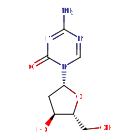
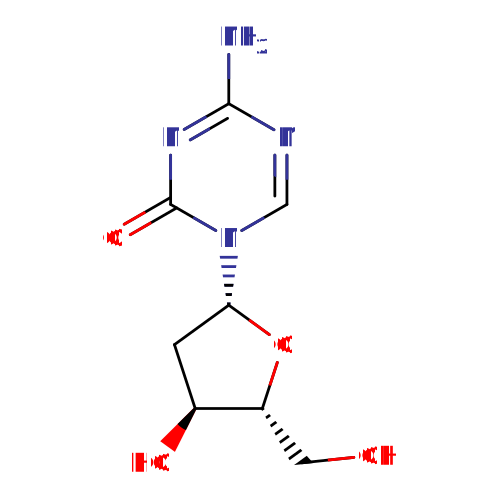
Structure for Decitabine (DB01262)
- Weight
- Average: 228.2053
Monoisotopic: 228.085854892 - Chemical Formula
- C8H12N4O4
- Synonyms
- 4-amino-1-(2-deoxy-β-D-erythro-pentofuranosyl)-s-triazin-2(1H)-one
- 5-aza-2'-deoxycytidine
- 5-azadeoxycytidine
- DAC
- Decitabina
- Decitabine
- External IDs
- NSC-127716

Pharmacology
- Indication
Decitabine is indicated for the treatment of patients with myelodysplastic syndromes (MDS) including all French-American-British subtypes (refractory anemia, refractory anemia with ringed sideroblasts, refractory anemia with excess blasts, refractory anemia with excess blasts in transformation, and chronic myelomonocytic leukemia), as well as for MDS scored as belonging to the intermediate-1, intermediate-2, or high-risk group in the International Prognostic Scoring System.11
 Reduce drug development failure ratesBuild, train, & validate machine-learning modelswith evidence-based and structured datasets.Build, train, & validate predictive machine-learning models with structured datasets.
- Associated Conditions
Indication Type Indication Combined Product Details Approval Level Age Group Patient Characteristics Dose Form Treatment of Chronic myelomonocytic leukemia •••••••••••• Treatment of Myelodysplastic syndromes (mds) •••••••••••• Treatment of Myelodysplastic syndromes (mds) •••••••••••• Treatment of Myelodysplastic syndromes (mds) •••••••••••• Treatment of Myelodysplastic syndromes (mds) •••••••••••• - Contraindications & Blackbox Warnings
 Prevent Adverse Drug Events TodayTap into our Clinical API for life-saving information on contraindications & blackbox warnings, population restrictions, harmful risks, & more.Avoid life-threatening adverse drug events with our Clinical API
- Pharmacodynamics
Decitabine is a prodrug analogue of the natural nucleotide 2’-deoxycytidine, which, upon being phosphorylated intracellularly, is incorporated into DNA and exerts numerous effects on gene expression.3,4,5,8,11 The use of decitabine is associated with neutropenia and thrombocytopenia. In addition, decitabine can cause fetal harm in pregnant women; effective contraception and avoidance of pregnancy are recommended during treatment with decitabine.11
- Mechanism of action
Myelodysplastic syndromes (MDS) are a group of hematopoietic neoplasms that manifest in peripheral cytopenias and may eventually progress to secondary acute myeloid leukemia (sAML). Included in the over 45 genes commonly mutated in MDS patients are those involved in DNA methylation and histone modification, and it is well-established that alteration of the epigenetic landscape is a feature of myeloid leukemias.9,10
Decitabine is considered a prodrug, as it requires transport into cells and subsequent phosphorylation by distinct kinases to generate the active molecule 5-aza-2'-deoxycytidine-triphosphate, which is incorporated by DNA polymerase during DNA replication.3,5,6,7,8,11 Once incorporated into DNA, decitabine is recognized as a substrate by DNA methyltransferase enzymes (DNMTs), specifically DNMT1, but due to the presence of an N5 rather than C5 atom, traps the DNMT through the irreversible formation of a covalent bond.6,7 At low concentrations, this mode of action depletes DNMTs and results in global DNA hypomethylation while at high concentrations, it additionally results in double-strand breaks and cell death.4,7,8
The general hypothesis regarding decitabine's therapeutic efficacy is that the global hypomethylation it induces results in the expression of previously silent tumour suppressor genes.1,2,3,4,5,6,7,8,11 However, there are other putative mechanisms also related to this change in DNA methylation, including indirect alteration of transcription through effects on transcription factors, indirectly altering histone modifications and chromatin structure, and activating pathways involved in DNA damage response.3,5,7,8 The overall effect of decitabine is a decrease in neoplastic cell proliferation and an increase in the expression of tumour suppressor genes.
Target Actions Organism ADNA other/unknownHumans ADNA (cytosine-5)-methyltransferase 1 inhibitorHumans UDNA (cytosine-5)-methyltransferase 3A inhibitorHumans UDNA (cytosine-5)-methyltransferase 3B inhibitorHumans UHistone deacetylase inhibitorHumans - Absorption
Decitabine administered intravenously at 15 mg/m2 for three hours every eight hours over three days resulted in a Cmax of 73.8 ng/mL (66% coefficient of variation, CV), an AUC0-∞ of 163 ng*h/mL (62% CV), and a cumulative AUC of 1332 ng*h/mL (95% CI of 1010-1730).11
Similarly, decitabine at 20 mg/m2 for one hour once daily over five days resulted in a Cmax of 147 ng/mL (49% CV), an AUC0-∞ of 115 ng*h/mL (43% CV), and a cumulative AUC of 570 ng*h/mL (95% CI of 470-700).11
- Volume of distribution
Decitabine as an apparent volume of distribution of 4.59 ± 1.42 L/kg.4
- Protein binding
Decitabine exhibits negligible (< 1%) plasma protein binding.5,11
- Metabolism
Decitabine is phosphorylated inside cells by the sequential action of deoxycytidine kinase, nucleotide monophosphate kinase, and nucleotide diphosphate kinase, prior to being incorporated into newly synthesized DNA by DNA polymerase.3,6,7,8 Decitabine not incorporated into cellular DNA undergoes deamination by cytidine deaminase followed by additional degradation prior to excretion.3,6,8
Hover over products below to view reaction partners
- Route of elimination
Less than 1% of administered decitabine is excreted in the urine.4
- Half-life
Decitabine has a half-life of 0.62 hours (49% CV) when administered intravenously at 15 mg/m2 for three hours every eight hours over three days, and a half-life of 0.54 hours (43% CV) at 20 mg/m2 for one hour once daily over five days.11
- Clearance
Decitabine has a clearance of 125 L/hr/m2 (53% CV) when administered intravenously at 15 mg/m2 for three hours every eight hours over three days, and a clearance of 210 L/hr/m2 (47% CV) at 20 mg/m2 for one hour once daily over five days.11
- Adverse Effects
 Improve decision support & research outcomesWith structured adverse effects data, including: blackbox warnings, adverse reactions, warning & precautions, & incidence rates. View sample adverse effects data in our new Data Library!Improve decision support & research outcomes with our structured adverse effects data.
- Toxicity
Decitabine has demonstrated mutagenic potential in L5178Y mouse lymphoma cells and an Escherichia coil lac-I transgene within the colonic DNA of mice. Decitabine treatment increased chromosomal rearrangements in fruit fly larvae. In mouse models, decitabine exposure in utero (approximately 7% of the recommended daily dose) resulted in decreased weight and decreased male fertility. Adult male mice administered with between 0.3 and 1% of the recommended daily dose of decitabine three times a week for seven weeks had smaller testes with abnormal histology, decreased sperm count, and decreased fertility.11
There is no known antidote for decitabine overdose. Patients experiencing an overdose are at an increased risk of severe adverse effects such as myelosuppression, including prolonged and severe neutropenia and thrombocytopenia. Symptomatic and supportive measures are recommended.11
- Pathways
- Not Available
- Pharmacogenomic Effects/ADRs
- Not Available
Interactions
- Drug Interactions
- This information should not be interpreted without the help of a healthcare provider. If you believe you are experiencing an interaction, contact a healthcare provider immediately. The absence of an interaction does not necessarily mean no interactions exist.
Drug Interaction Integrate drug-drug
interactions in your softwareAbatacept The risk or severity of adverse effects can be increased when Decitabine is combined with Abatacept. Abciximab The risk or severity of bleeding can be increased when Abciximab is combined with Decitabine. Acenocoumarol The risk or severity of bleeding can be increased when Acenocoumarol is combined with Decitabine. Acetylsalicylic acid The risk or severity of bleeding can be increased when Acetylsalicylic acid is combined with Decitabine. Adalimumab The risk or severity of adverse effects can be increased when Adalimumab is combined with Decitabine. - Food Interactions
- No interactions found.
Products
 Drug product information from 10+ global regionsOur datasets provide approved product information including:dosage, form, labeller, route of administration, and marketing period.Access drug product information from over 10 global regions.
- Brand Name Prescription Products
Name Dosage Strength Route Labeller Marketing Start Marketing End Region Image Dacogen Injection, powder, lyophilized, for solution 50 mg/20mL Intravenous Eisai Limited 1996-05-03 2018-12-31 US 
Dacogen Injection, powder, for solution 50 mg Intravenous Janssen Cilag International Nv 2016-09-08 Not applicable EU 
Dacogen Powder 50 mg / vial Intravenous Otsuka Pharmaceutical Co., Ltd. Not applicable Not applicable Canada 
Dacogen Injection, powder, lyophilized, for solution 50 mg/20mL Intravenous Otsuka America Pharmaceutical, Inc. 2006-05-02 2024-04-15 US Decitabine Injection 50 mg/10mL Intravenous Sun Pharmaceutical Industries, Inc. 2014-01-24 Not applicable US - Generic Prescription Products
Name Dosage Strength Route Labeller Marketing Start Marketing End Region Image Decitabine Injection, powder, lyophilized, for solution 50 mg/10mL Intravenous Dr. Reddy's Laboratories Inc. 2013-07-11 Not applicable US Decitabine Injection, powder, lyophilized, for solution 50 mg/20mL Intravenous Qilu Pharmaceutical Co., Ltd. 2021-04-12 Not applicable US Decitabine Injection, powder, lyophilized, for solution 50 mg/10mL Intravenous Sandoz Inc 2020-03-01 Not applicable US Decitabine Injection, powder, lyophilized, for solution 50 mg/20mL Intravenous Sandoz Inc 2014-08-28 2019-05-31 US Decitabine Injection, powder, lyophilized, for solution 50 mg/20mL Intravenous Lupin Pharmaceuticals, Inc. 2019-12-06 2040-01-01 US - Mixture Products
Name Ingredients Dosage Route Labeller Marketing Start Marketing End Region Image Inqovi Decitabine (35 mg/1) + Cedazuridine (100 mg/1) Tablet, film coated Oral Taiho Pharmaceutical Co., Ltd. 2020-07-07 Not applicable US Inqovi Decitabine (35 mg) + Cedazuridine (100 mg) Tablet Oral Otsuka Pharmaceutical Co., Ltd. 2020-11-11 Not applicable Canada
Categories
- ATC Codes
- L01BC08 — Decitabine
- Drug Categories
- Antimetabolites
- Antineoplastic Agents
- Antineoplastic and Immunomodulating Agents
- Aza Compounds
- Carbohydrates
- Cytidine Deaminase Substrates
- Enzyme Inhibitors
- Glycosides
- Immunosuppressive Agents
- Myelosuppressive Agents
- Narrow Therapeutic Index Drugs
- Noxae
- Nucleic Acid Synthesis Inhibitors
- Nucleic Acids, Nucleotides, and Nucleosides
- Nucleoside Metabolic Inhibitor
- Nucleosides
- Pyrimidine Analogues
- Pyrimidine Nucleosides
- Pyrimidines
- Ribonucleosides
- Toxic Actions
- Chemical TaxonomyProvided by Classyfire
- Description
- This compound belongs to the class of organic compounds known as triazinones. These are compounds containing a triazine ring which bears a ketone group a carbon atom.
- Kingdom
- Organic compounds
- Super Class
- Organoheterocyclic compounds
- Class
- Triazines
- Sub Class
- Triazinones
- Direct Parent
- Triazinones
- Alternative Parents
- Aminotriazines / 1,3,5-triazines / Tetrahydrofurans / Heteroaromatic compounds / Secondary alcohols / Oxacyclic compounds / Azacyclic compounds / Primary amines / Primary alcohols / Organopnictogen compounds show 2 more
- Substituents
- 1,3,5-triazine / Alcohol / Amine / Amino-1,3,5-triazine / Aminotriazine / Aromatic heteromonocyclic compound / Azacycle / Heteroaromatic compound / Hydrocarbon derivative / Organic nitrogen compound show 11 more
- Molecular Framework
- Aromatic heteromonocyclic compounds
- External Descriptors
- 2'-deoxyribonucleoside (CHEBI:50131)
- Affected organisms
- Humans and other mammals
Chemical Identifiers
- UNII
- 776B62CQ27
- CAS number
- 2353-33-5
- InChI Key
- XAUDJQYHKZQPEU-KVQBGUIXSA-N
- InChI
- InChI=1S/C8H12N4O4/c9-7-10-3-12(8(15)11-7)6-1-4(14)5(2-13)16-6/h3-6,13-14H,1-2H2,(H2,9,11,15)/t4-,5+,6+/m0/s1
- IUPAC Name
- 4-amino-1-[(2R,4S,5R)-4-hydroxy-5-(hydroxymethyl)oxolan-2-yl]-1,2-dihydro-1,3,5-triazin-2-one
- SMILES
- NC1=NC(=O)N(C=N1)[C@H]1C[C@H](O)[C@@H](CO)O1
References
- Synthesis Reference
Julian Paul Henschke, Xiaoheng Zhang, Jianbo Yu, Kun Hu, Lijun Mei, "Synthesis of Decitabine." U.S. Patent US20100087637, issued April 08, 2010.
US20100087637- General References
- Appleton K, Mackay HJ, Judson I, Plumb JA, McCormick C, Strathdee G, Lee C, Barrett S, Reade S, Jadayel D, Tang A, Bellenger K, Mackay L, Setanoians A, Schatzlein A, Twelves C, Kaye SB, Brown R: Phase I and pharmacodynamic trial of the DNA methyltransferase inhibitor decitabine and carboplatin in solid tumors. J Clin Oncol. 2007 Oct 10;25(29):4603-9. [Article]
- Wijermans PW, Ruter B, Baer MR, Slack JL, Saba HI, Lubbert M: Efficacy of decitabine in the treatment of patients with chronic myelomonocytic leukemia (CMML). Leuk Res. 2008 Apr;32(4):587-91. Epub 2007 Sep 18. [Article]
- Daskalakis M, Blagitko-Dorfs N, Hackanson B: Decitabine. Recent Results Cancer Res. 2010;184:131-57. doi: 10.1007/978-3-642-01222-8_10. [Article]
- Saba HI, Wijermans PW: Decitabine in myelodysplastic syndromes. Semin Hematol. 2005 Jul;42(3 Suppl 2):S23-31. [Article]
- Jabbour E, Issa JP, Garcia-Manero G, Kantarjian H: Evolution of decitabine development: accomplishments, ongoing investigations, and future strategies. Cancer. 2008 Jun;112(11):2341-51. doi: 10.1002/cncr.23463. [Article]
- Stresemann C, Lyko F: Modes of action of the DNA methyltransferase inhibitors azacytidine and decitabine. Int J Cancer. 2008 Jul 1;123(1):8-13. doi: 10.1002/ijc.23607. [Article]
- Oki Y, Aoki E, Issa JP: Decitabine--bedside to bench. Crit Rev Oncol Hematol. 2007 Feb;61(2):140-52. Epub 2006 Oct 4. [Article]
- Seelan RS, Mukhopadhyay P, Pisano MM, Greene RM: Effects of 5-Aza-2'-deoxycytidine (decitabine) on gene expression. Drug Metab Rev. 2018 May;50(2):193-207. doi: 10.1080/03602532.2018.1437446. Epub 2018 Feb 18. [Article]
- Kennedy JA, Ebert BL: Clinical Implications of Genetic Mutations in Myelodysplastic Syndrome. J Clin Oncol. 2017 Mar 20;35(9):968-974. doi: 10.1200/JCO.2016.71.0806. Epub 2017 Feb 13. [Article]
- Gill H, Leung AY, Kwong YL: Molecular and Cellular Mechanisms of Myelodysplastic Syndrome: Implications on Targeted Therapy. Int J Mol Sci. 2016 Mar 24;17(4):440. doi: 10.3390/ijms17040440. [Article]
- FDA Approved Drug Products: decitabine for injection [Link]
- Cayman Chemical: decitabine MSDS [Link]
- SignalChem decitabine product sheet [Link]
- External Links
- Human Metabolome Database
- HMDB0015391
- KEGG Drug
- D03665
- PubChem Compound
- 451668
- PubChem Substance
- 46505657
- ChemSpider
- 397844
- BindingDB
- 96274
- 15657
- ChEBI
- 50131
- ChEMBL
- CHEMBL1201129
- ZINC
- ZINC000016929327
- Therapeutic Targets Database
- DAP000641
- PharmGKB
- PA164749631
- Drugs.com
- Drugs.com Drug Page
- Wikipedia
- Decitabine
- FDA label
- Download (100 KB)
Clinical Trials
- Clinical Trials
Phase Status Purpose Conditions Count 4 Active Not Recruiting Prevention Acute Myeloid Leukemia 1 4 Terminated Treatment Myelodysplastic Syndrome 1 4 Unknown Status Treatment Diffuse Large B-Cell Lymphoma (DLBCL) 1 4 Unknown Status Treatment Higher Risk Myelodysplastic Syndrome (MDS) / Relapsed or Refractory Acute Myeloid Leukemia (AML) 1 4 Unknown Status Treatment Myelodysplastic Syndrome 1
Pharmacoeconomics
- Manufacturers
- Not Available
- Packagers
- Eisai Inc.
- MGI Pharma
- Pharmachemie BV
- Dosage Forms
Form Route Strength Injection, powder, for solution Intravenous 50 mg Injection, powder, for solution Intravenous; Parenteral 50 MG Injection, powder, lyophilized, for solution Intravenous Injection, powder, lyophilized, for solution Intravenous 50 mg/20mL Injection, powder, lyophilized, for solution Intravenous 50 mg Powder Intravenous 50 mg Injection Intravenous 50 mg Injection Intravenous 50 mg/10mL Injection, powder, lyophilized, for solution Intravenous 50 mg/1 Injection, powder, lyophilized, for solution Intravenous 50 mg/10mL Injection, powder, lyophilized, for solution Intravenous 50 mg/26mL Powder Intravenous 50 mg / vial Injection, powder, for solution Intravenous Injection, powder, for solution 50 mg Tablet Oral Tablet, film coated Oral Injection Intravenous Powder Intravenous 50 mg/1vial - Prices
Unit description Cost Unit Dacogen 50 mg vial 1706.4USD vial DrugBank does not sell nor buy drugs. Pricing information is supplied for informational purposes only.- Patents
Patent Number Pediatric Extension Approved Expires (estimated) Region US8618075 No 2013-12-31 2028-10-16 US US8268800 No 2012-09-18 2030-08-22 US US9567363 No 2017-02-14 2028-10-16 US
Properties
- State
- Solid
- Experimental Properties
Property Value Source melting point (°C) 193-196 SignalChem Product Sheet water solubility 11 mg/mL SignalChem Product Sheet - Predicted Properties
Property Value Source Water Solubility 5.5 mg/mL ALOGPS logP -2 ALOGPS logP -2.2 Chemaxon logS -1.6 ALOGPS pKa (Strongest Acidic) 13.89 Chemaxon pKa (Strongest Basic) 2.09 Chemaxon Physiological Charge 0 Chemaxon Hydrogen Acceptor Count 7 Chemaxon Hydrogen Donor Count 3 Chemaxon Polar Surface Area 120.74 Å2 Chemaxon Rotatable Bond Count 2 Chemaxon Refractivity 50.68 m3·mol-1 Chemaxon Polarizability 21.15 Å3 Chemaxon Number of Rings 2 Chemaxon Bioavailability 1 Chemaxon Rule of Five Yes Chemaxon Ghose Filter No Chemaxon Veber's Rule No Chemaxon MDDR-like Rule No Chemaxon - Predicted ADMET Features
Property Value Probability Human Intestinal Absorption + 0.9862 Blood Brain Barrier + 0.8787 Caco-2 permeable - 0.8362 P-glycoprotein substrate Non-substrate 0.7192 P-glycoprotein inhibitor I Non-inhibitor 0.9216 P-glycoprotein inhibitor II Non-inhibitor 0.953 Renal organic cation transporter Non-inhibitor 0.8791 CYP450 2C9 substrate Non-substrate 0.8359 CYP450 2D6 substrate Non-substrate 0.8511 CYP450 3A4 substrate Non-substrate 0.5356 CYP450 1A2 substrate Non-inhibitor 0.9276 CYP450 2C9 inhibitor Non-inhibitor 0.9265 CYP450 2D6 inhibitor Non-inhibitor 0.9446 CYP450 2C19 inhibitor Non-inhibitor 0.9379 CYP450 3A4 inhibitor Non-inhibitor 0.9635 CYP450 inhibitory promiscuity Low CYP Inhibitory Promiscuity 0.9629 Ames test Non AMES toxic 0.588 Carcinogenicity Non-carcinogens 0.8109 Biodegradation Not ready biodegradable 0.8957 Rat acute toxicity 1.9436 LD50, mol/kg Not applicable hERG inhibition (predictor I) Weak inhibitor 0.9654 hERG inhibition (predictor II) Non-inhibitor 0.8972
Spectra
- Mass Spec (NIST)
- Not Available
- Spectra
Spectrum Spectrum Type Splash Key Predicted GC-MS Spectrum - GC-MS Predicted GC-MS splash10-0006-9500000000-93e2d9110f2fded5b292 Predicted MS/MS Spectrum - 10V, Positive (Annotated) Predicted LC-MS/MS splash10-03di-0910000000-31eef3f31a4f70a2e1ee Predicted MS/MS Spectrum - 10V, Negative (Annotated) Predicted LC-MS/MS splash10-005l-4970000000-5bfe389982f2759d781c Predicted MS/MS Spectrum - 20V, Positive (Annotated) Predicted LC-MS/MS splash10-03di-3900000000-3f10586072a45a17de59 Predicted MS/MS Spectrum - 20V, Negative (Annotated) Predicted LC-MS/MS splash10-014l-9800000000-386f5e1c7cf040680c7a Predicted MS/MS Spectrum - 40V, Positive (Annotated) Predicted LC-MS/MS splash10-022d-9500000000-34396fcd264fddaf08b3 Predicted MS/MS Spectrum - 40V, Negative (Annotated) Predicted LC-MS/MS splash10-014i-9200000000-949ae2305f9b4a92524a Predicted 1H NMR Spectrum 1D NMR Not Applicable Predicted 13C NMR Spectrum 1D NMR Not Applicable - Chromatographic Properties
Collision Cross Sections (CCS)
Adduct CCS Value (Å2) Source type Source [M-H]- 157.645118 predictedDarkChem Lite v0.1.0 [M-H]- 157.616718 predictedDarkChem Lite v0.1.0 [M-H]- 147.09932 predictedDeepCCS 1.0 (2019) [M+H]+ 158.432918 predictedDarkChem Lite v0.1.0 [M+H]+ 158.241018 predictedDarkChem Lite v0.1.0 [M+H]+ 149.49493 predictedDeepCCS 1.0 (2019) [M+Na]+ 157.882018 predictedDarkChem Lite v0.1.0 [M+Na]+ 155.83946 predictedDeepCCS 1.0 (2019)
Targets

References
- Appleton K, Mackay HJ, Judson I, Plumb JA, McCormick C, Strathdee G, Lee C, Barrett S, Reade S, Jadayel D, Tang A, Bellenger K, Mackay L, Setanoians A, Schatzlein A, Twelves C, Kaye SB, Brown R: Phase I and pharmacodynamic trial of the DNA methyltransferase inhibitor decitabine and carboplatin in solid tumors. J Clin Oncol. 2007 Oct 10;25(29):4603-9. [Article]
- Atallah E, Kantarjian H, Garcia-Manero G: The role of decitabine in the treatment of myelodysplastic syndromes. Expert Opin Pharmacother. 2007 Jan;8(1):65-73. [Article]
- Jabbour E, Issa JP, Garcia-Manero G, Kantarjian H: Evolution of decitabine development: accomplishments, ongoing investigations, and future strategies. Cancer. 2008 Jun;112(11):2341-51. doi: 10.1002/cncr.23463. [Article]
- Stresemann C, Lyko F: Modes of action of the DNA methyltransferase inhibitors azacytidine and decitabine. Int J Cancer. 2008 Jul 1;123(1):8-13. doi: 10.1002/ijc.23607. [Article]
- Oki Y, Aoki E, Issa JP: Decitabine--bedside to bench. Crit Rev Oncol Hematol. 2007 Feb;61(2):140-52. Epub 2006 Oct 4. [Article]
- Daskalakis M, Blagitko-Dorfs N, Hackanson B: Decitabine. Recent Results Cancer Res. 2010;184:131-57. doi: 10.1007/978-3-642-01222-8_10. [Article]
- Seelan RS, Mukhopadhyay P, Pisano MM, Greene RM: Effects of 5-Aza-2'-deoxycytidine (decitabine) on gene expression. Drug Metab Rev. 2018 May;50(2):193-207. doi: 10.1080/03602532.2018.1437446. Epub 2018 Feb 18. [Article]
- Diesch J, Zwick A, Garz AK, Palau A, Buschbeck M, Gotze KS: A clinical-molecular update on azanucleoside-based therapy for the treatment of hematologic cancers. Clin Epigenetics. 2016 Jun 21;8:71. doi: 10.1186/s13148-016-0237-y. eCollection 2016. [Article]
- FDA Approved Drug Products: decitabine for injection [Link]
- Kind
- Protein
- Organism
- Humans
- Pharmacological action
- Yes
- Actions
- Inhibitor
- Curator comments
- DNMT1 acts to methylate newly synthesized hemimethylated DNA during cellular division and is therefore thought to be the primary target for irreversible covalent modification by decitabine incorporated into DNA.
- General Function
- Zinc ion binding
- Specific Function
- Methylates CpG residues. Preferentially methylates hemimethylated DNA. Associates with DNA replication sites in S phase maintaining the methylation pattern in the newly synthesized strand, that is ...
- Gene Name
- DNMT1
- Uniprot ID
- P26358
- Uniprot Name
- DNA (cytosine-5)-methyltransferase 1
- Molecular Weight
- 183163.635 Da
References
- Ando T, Nishimura M, Oka Y: Decitabine (5-Aza-2'-deoxycytidine) decreased DNA methylation and expression of MDR-1 gene in K562/ADM cells. Leukemia. 2000 Nov;14(11):1915-20. [Article]
- Karpf AR, Moore BC, Ririe TO, Jones DA: Activation of the p53 DNA damage response pathway after inhibition of DNA methyltransferase by 5-aza-2'-deoxycytidine. Mol Pharmacol. 2001 Apr;59(4):751-7. [Article]
- Csankovszki G, Nagy A, Jaenisch R: Synergism of Xist RNA, DNA methylation, and histone hypoacetylation in maintaining X chromosome inactivation. J Cell Biol. 2001 May 14;153(4):773-84. [Article]
- Takebayashi S, Nakao M, Fujita N, Sado T, Tanaka M, Taguchi H, Okumura K: 5-Aza-2'-deoxycytidine induces histone hyperacetylation of mouse centromeric heterochromatin by a mechanism independent of DNA demethylation. Biochem Biophys Res Commun. 2001 Nov 9;288(4):921-6. [Article]
- Saunthararajah Y, Hillery CA, Lavelle D, Molokie R, Dorn L, Bressler L, Gavazova S, Chen YH, Hoffman R, DeSimone J: Effects of 5-aza-2'-deoxycytidine on fetal hemoglobin levels, red cell adhesion, and hematopoietic differentiation in patients with sickle cell disease. Blood. 2003 Dec 1;102(12):3865-70. Epub 2003 Aug 7. [Article]
- Chen X, Ji ZL, Chen YZ: TTD: Therapeutic Target Database. Nucleic Acids Res. 2002 Jan 1;30(1):412-5. [Article]
- Daskalakis M, Blagitko-Dorfs N, Hackanson B: Decitabine. Recent Results Cancer Res. 2010;184:131-57. doi: 10.1007/978-3-642-01222-8_10. [Article]
- Saba HI, Wijermans PW: Decitabine in myelodysplastic syndromes. Semin Hematol. 2005 Jul;42(3 Suppl 2):S23-31. [Article]
- Jabbour E, Issa JP, Garcia-Manero G, Kantarjian H: Evolution of decitabine development: accomplishments, ongoing investigations, and future strategies. Cancer. 2008 Jun;112(11):2341-51. doi: 10.1002/cncr.23463. [Article]
- Stresemann C, Lyko F: Modes of action of the DNA methyltransferase inhibitors azacytidine and decitabine. Int J Cancer. 2008 Jul 1;123(1):8-13. doi: 10.1002/ijc.23607. [Article]
- Oki Y, Aoki E, Issa JP: Decitabine--bedside to bench. Crit Rev Oncol Hematol. 2007 Feb;61(2):140-52. Epub 2006 Oct 4. [Article]
- Seelan RS, Mukhopadhyay P, Pisano MM, Greene RM: Effects of 5-Aza-2'-deoxycytidine (decitabine) on gene expression. Drug Metab Rev. 2018 May;50(2):193-207. doi: 10.1080/03602532.2018.1437446. Epub 2018 Feb 18. [Article]
- Palii SS, Van Emburgh BO, Sankpal UT, Brown KD, Robertson KD: DNA methylation inhibitor 5-Aza-2'-deoxycytidine induces reversible genome-wide DNA damage that is distinctly influenced by DNA methyltransferases 1 and 3B. Mol Cell Biol. 2008 Jan;28(2):752-71. Epub 2007 Nov 8. [Article]
- Kind
- Protein
- Organism
- Humans
- Pharmacological action
- Unknown
- Actions
- Inhibitor
- Curator comments
- DNMT3A and 3B are primarily responsible for establishing the DNA methylation landscape during development. Some evidence exists to suggest that decitabine may inhibit these enzymes, though it is likely that DNMT1 is the main methylase involved in the mechanism of action of decitabine.
- General Function
- Required for genome-wide de novo methylation and is essential for the establishment of DNA methylation patterns during development. DNA methylation is coordinated with methylation of histones. It modifies DNA in a non-processive manner and also methylates non-CpG sites. May preferentially methylate DNA linker between 2 nucleosomal cores and is inhibited by histone H1. Plays a role in paternal and maternal imprinting. Required for methylation of most imprinted loci in germ cells. Acts as a transcriptional corepressor for ZBTB18. Recruited to trimethylated 'Lys-36' of histone H3 (H3K36me3) sites. Can actively repress transcription through the recruitment of HDAC activity.
- Specific Function
- Chromatin binding
- Gene Name
- DNMT3A
- Uniprot ID
- Q9Y6K1
- Uniprot Name
- DNA (cytosine-5)-methyltransferase 3A
- Molecular Weight
- 101857.595 Da
References
- Oki Y, Aoki E, Issa JP: Decitabine--bedside to bench. Crit Rev Oncol Hematol. 2007 Feb;61(2):140-52. Epub 2006 Oct 4. [Article]
- Seelan RS, Mukhopadhyay P, Pisano MM, Greene RM: Effects of 5-Aza-2'-deoxycytidine (decitabine) on gene expression. Drug Metab Rev. 2018 May;50(2):193-207. doi: 10.1080/03602532.2018.1437446. Epub 2018 Feb 18. [Article]
- Diesch J, Zwick A, Garz AK, Palau A, Buschbeck M, Gotze KS: A clinical-molecular update on azanucleoside-based therapy for the treatment of hematologic cancers. Clin Epigenetics. 2016 Jun 21;8:71. doi: 10.1186/s13148-016-0237-y. eCollection 2016. [Article]
- Kind
- Protein
- Organism
- Humans
- Pharmacological action
- Unknown
- Actions
- Inhibitor
- Curator comments
- DNMT3A and 3B are primarily responsible for establishing the DNA methylation landscape during development. Some evidence exists to suggest that decitabine may inhibit these enzymes, though it is likely that DNMT1 is the main methylase involved in the mechanism of action of decitabine.
- General Function
- Required for genome-wide de novo methylation and is essential for the establishment of DNA methylation patterns during development. DNA methylation is coordinated with methylation of histones. May preferentially methylates nucleosomal DNA within the nucleosome core region. May function as transcriptional co-repressor by associating with CBX4 and independently of DNA methylation. Seems to be involved in gene silencing (By similarity). In association with DNMT1 and via the recruitment of CTCFL/BORIS, involved in activation of BAG1 gene expression by modulating dimethylation of promoter histone H3 at H3K4 and H3K9. Isoforms 4 and 5 are probably not functional due to the deletion of two conserved methyltransferase motifs. Functions as a transcriptional corepressor by associating with ZHX1. Required for DUX4 silencing in somatic cells (PubMed:27153398).
- Specific Function
- Chromatin binding
- Gene Name
- DNMT3B
- Uniprot ID
- Q9UBC3
- Uniprot Name
- DNA (cytosine-5)-methyltransferase 3B
- Molecular Weight
- 95750.18 Da
References
- Palii SS, Van Emburgh BO, Sankpal UT, Brown KD, Robertson KD: DNA methylation inhibitor 5-Aza-2'-deoxycytidine induces reversible genome-wide DNA damage that is distinctly influenced by DNA methyltransferases 1 and 3B. Mol Cell Biol. 2008 Jan;28(2):752-71. Epub 2007 Nov 8. [Article]
- Oki Y, Aoki E, Issa JP: Decitabine--bedside to bench. Crit Rev Oncol Hematol. 2007 Feb;61(2):140-52. Epub 2006 Oct 4. [Article]
- Seelan RS, Mukhopadhyay P, Pisano MM, Greene RM: Effects of 5-Aza-2'-deoxycytidine (decitabine) on gene expression. Drug Metab Rev. 2018 May;50(2):193-207. doi: 10.1080/03602532.2018.1437446. Epub 2018 Feb 18. [Article]
- Diesch J, Zwick A, Garz AK, Palau A, Buschbeck M, Gotze KS: A clinical-molecular update on azanucleoside-based therapy for the treatment of hematologic cancers. Clin Epigenetics. 2016 Jun 21;8:71. doi: 10.1186/s13148-016-0237-y. eCollection 2016. [Article]
- Kind
- Protein group
- Organism
- Humans
- Pharmacological action
- Unknown
- Actions
- Inhibitor
- General Function
- Transcription regulatory region sequence-specific dna binding
- Specific Function
- Responsible for the deacetylation of lysine residues on the N-terminal part of the core histones (H2A, H2B, H3 and H4). Histone deacetylation gives a tag for epigenetic repression and plays an impo...
Components:
References
- Favreau AJ, McGlauflin RE, Duarte CW, Sathyanarayana P: miR-199b, a novel tumor suppressor miRNA in acute myeloid leukemia with prognostic implications. Exp Hematol Oncol. 2016 Feb 3;5:4. doi: 10.1186/s40164-016-0033-6. eCollection 2015. [Article]
Enzymes
- Kind
- Protein
- Organism
- Humans
- Pharmacological action
- Yes
- Actions
- Substrate
- Curator comments
- Decitabine is not a direct substrate of UMP-CMP kinase; rather, monophosphorylated decitabine is subsequently converted to a diphosphate through the action of this enzyme. Eventual conversion to a triphosphate is required for integration into cellular DNA and the downstream mechanism of action of decitabine.
- General Function
- Uridylate kinase activity
- Specific Function
- Catalyzes the phosphorylation of pyrimidine nucleoside monophosphates at the expense of ATP. Plays an important role in de novo pyrimidine nucleotide biosynthesis. Has preference for UMP and CMP as...
- Gene Name
- CMPK1
- Uniprot ID
- P30085
- Uniprot Name
- UMP-CMP kinase
- Molecular Weight
- 22222.175 Da
References
- Oki Y, Aoki E, Issa JP: Decitabine--bedside to bench. Crit Rev Oncol Hematol. 2007 Feb;61(2):140-52. Epub 2006 Oct 4. [Article]
- Seelan RS, Mukhopadhyay P, Pisano MM, Greene RM: Effects of 5-Aza-2'-deoxycytidine (decitabine) on gene expression. Drug Metab Rev. 2018 May;50(2):193-207. doi: 10.1080/03602532.2018.1437446. Epub 2018 Feb 18. [Article]
- Diesch J, Zwick A, Garz AK, Palau A, Buschbeck M, Gotze KS: A clinical-molecular update on azanucleoside-based therapy for the treatment of hematologic cancers. Clin Epigenetics. 2016 Jun 21;8:71. doi: 10.1186/s13148-016-0237-y. eCollection 2016. [Article]
- Kind
- Protein group
- Organism
- Humans
- Pharmacological action
- Yes
- Actions
- Substrate
- Curator comments
- Decitabine is not a direct substrate of nucleoside diphosphokinase; rather, diphosphorylated decitabine is subsequently converted to a triphosphate through the action of this enzyme. The conversion to this triphosphate form is the final step required for integration into cellular DNA and the downstream mechanism of action of decitabine.
- General Function
- Ribosomal small subunit binding
- Specific Function
- Major role in the synthesis of nucleoside triphosphates other than ATP. The ATP gamma phosphate is transferred to the NDP beta phosphate via a ping-pong mechanism, using a phosphorylated active-sit...
Components:
References
- Oki Y, Aoki E, Issa JP: Decitabine--bedside to bench. Crit Rev Oncol Hematol. 2007 Feb;61(2):140-52. Epub 2006 Oct 4. [Article]
- Seelan RS, Mukhopadhyay P, Pisano MM, Greene RM: Effects of 5-Aza-2'-deoxycytidine (decitabine) on gene expression. Drug Metab Rev. 2018 May;50(2):193-207. doi: 10.1080/03602532.2018.1437446. Epub 2018 Feb 18. [Article]
- Diesch J, Zwick A, Garz AK, Palau A, Buschbeck M, Gotze KS: A clinical-molecular update on azanucleoside-based therapy for the treatment of hematologic cancers. Clin Epigenetics. 2016 Jun 21;8:71. doi: 10.1186/s13148-016-0237-y. eCollection 2016. [Article]
- Kind
- Protein
- Organism
- Humans
- Pharmacological action
- Yes
- Actions
- Substrate
- General Function
- Protein homodimerization activity
- Specific Function
- Required for the phosphorylation of the deoxyribonucleosides deoxycytidine (dC), deoxyguanosine (dG) and deoxyadenosine (dA). Has broad substrate specificity, and does not display selectivity based...
- Gene Name
- DCK
- Uniprot ID
- P27707
- Uniprot Name
- Deoxycytidine kinase
- Molecular Weight
- 30518.315 Da
References
- Schwarzenberg J, Radu CG, Benz M, Fueger B, Tran AQ, Phelps ME, Witte ON, Satyamurthy N, Czernin J, Schiepers C: Human biodistribution and radiation dosimetry of novel PET probes targeting the deoxyribonucleoside salvage pathway. Eur J Nucl Med Mol Imaging. 2011 Apr;38(4):711-21. doi: 10.1007/s00259-010-1666-z. Epub 2010 Dec 3. [Article]
- Arner ES, Eriksson S: Mammalian deoxyribonucleoside kinases. Pharmacol Ther. 1995;67(2):155-86. [Article]
- Ueda K, Masuda A, Fukuda M, Tanaka S, Hosokawa M, Iwakawa S: Monophosphorylation by deoxycytidine kinase affects apparent cellular uptake of decitabine in HCT116 colon cancer cells. Drug Metab Pharmacokinet. 2017 Dec;32(6):301-310. doi: 10.1016/j.dmpk.2017.10.001. Epub 2017 Oct 10. [Article]
- Daskalakis M, Blagitko-Dorfs N, Hackanson B: Decitabine. Recent Results Cancer Res. 2010;184:131-57. doi: 10.1007/978-3-642-01222-8_10. [Article]
- Jabbour E, Issa JP, Garcia-Manero G, Kantarjian H: Evolution of decitabine development: accomplishments, ongoing investigations, and future strategies. Cancer. 2008 Jun;112(11):2341-51. doi: 10.1002/cncr.23463. [Article]
- Stresemann C, Lyko F: Modes of action of the DNA methyltransferase inhibitors azacytidine and decitabine. Int J Cancer. 2008 Jul 1;123(1):8-13. doi: 10.1002/ijc.23607. [Article]
- Oki Y, Aoki E, Issa JP: Decitabine--bedside to bench. Crit Rev Oncol Hematol. 2007 Feb;61(2):140-52. Epub 2006 Oct 4. [Article]
- Seelan RS, Mukhopadhyay P, Pisano MM, Greene RM: Effects of 5-Aza-2'-deoxycytidine (decitabine) on gene expression. Drug Metab Rev. 2018 May;50(2):193-207. doi: 10.1080/03602532.2018.1437446. Epub 2018 Feb 18. [Article]
- Diesch J, Zwick A, Garz AK, Palau A, Buschbeck M, Gotze KS: A clinical-molecular update on azanucleoside-based therapy for the treatment of hematologic cancers. Clin Epigenetics. 2016 Jun 21;8:71. doi: 10.1186/s13148-016-0237-y. eCollection 2016. [Article]
- Momparler RL, Derse D: Kinetics of phosphorylation of 5-aza-2'-deoxyycytidine by deoxycytidine kinase. Biochem Pharmacol. 1979 Apr 15;28(8):1443-4. doi: 10.1016/0006-2952(79)90454-4. [Article]
- Kind
- Protein
- Organism
- Humans
- Pharmacological action
- No
- Actions
- Substrate
- Curator comments
- Deamination of decitabine by cytidine deaminase and subsequent degradation is thought to be the main pathway of elimination.
- General Function
- Zinc ion binding
- Specific Function
- This enzyme scavenges exogenous and endogenous cytidine and 2'-deoxycytidine for UMP synthesis.
- Gene Name
- CDA
- Uniprot ID
- P32320
- Uniprot Name
- Cytidine deaminase
- Molecular Weight
- 16184.545 Da
References
- Daskalakis M, Blagitko-Dorfs N, Hackanson B: Decitabine. Recent Results Cancer Res. 2010;184:131-57. doi: 10.1007/978-3-642-01222-8_10. [Article]
- Jabbour E, Issa JP, Garcia-Manero G, Kantarjian H: Evolution of decitabine development: accomplishments, ongoing investigations, and future strategies. Cancer. 2008 Jun;112(11):2341-51. doi: 10.1002/cncr.23463. [Article]
- Stresemann C, Lyko F: Modes of action of the DNA methyltransferase inhibitors azacytidine and decitabine. Int J Cancer. 2008 Jul 1;123(1):8-13. doi: 10.1002/ijc.23607. [Article]
- Seelan RS, Mukhopadhyay P, Pisano MM, Greene RM: Effects of 5-Aza-2'-deoxycytidine (decitabine) on gene expression. Drug Metab Rev. 2018 May;50(2):193-207. doi: 10.1080/03602532.2018.1437446. Epub 2018 Feb 18. [Article]
- Diesch J, Zwick A, Garz AK, Palau A, Buschbeck M, Gotze KS: A clinical-molecular update on azanucleoside-based therapy for the treatment of hematologic cancers. Clin Epigenetics. 2016 Jun 21;8:71. doi: 10.1186/s13148-016-0237-y. eCollection 2016. [Article]
- Chabot GG, Bouchard J, Momparler RL: Kinetics of deamination of 5-aza-2'-deoxycytidine and cytosine arabinoside by human liver cytidine deaminase and its inhibition by 3-deazauridine, thymidine or uracil arabinoside. Biochem Pharmacol. 1983 Apr 1;32(7):1327-8. doi: 10.1016/0006-2952(83)90293-9. [Article]
- FDA Approved Drug Products: decitabine for injection [Link]
Transporters
- Kind
- Protein
- Organism
- Humans
- Pharmacological action
- Unknown
- Actions
- Substrate
- General Function
- Pyrimidine- and adenine-specific:sodium symporter activity
- Specific Function
- Sodium-dependent and pyrimidine-selective. Exhibits the transport characteristics of the nucleoside transport system cit or N2 subtype (N2/cit) (selective for pyrimidine nucleosides and adenosine)....
- Gene Name
- SLC28A1
- Uniprot ID
- O00337
- Uniprot Name
- Sodium/nucleoside cotransporter 1
- Molecular Weight
- 71583.18 Da
References
- Rius M, Stresemann C, Keller D, Brom M, Schirrmacher E, Keppler D, Lyko F: Human concentrative nucleoside transporter 1-mediated uptake of 5-azacytidine enhances DNA demethylation. Mol Cancer Ther. 2009 Jan;8(1):225-31. doi: 10.1158/1535-7163.MCT-08-0743. [Article]

Drug created at May 16, 2007 17:38 / Updated at April 23, 2024 11:38