Identification
- Summary
Fosphenytoin is an antiepileptic agent used for the management of generalized convulsive status epilepticus and prevention and treatment of seizures occurring during neurosurgery.
- Brand Names
- Cerebyx
- Generic Name
- Fosphenytoin
- DrugBank Accession Number
- DB01320
- Background
Fosphenytoin is a water-soluble phenytoin prodrug used only in hospitals for the treatment of epileptic seizures. It works by slowing down impulses in the brain that cause seizures. Its main mechanism is to block frequency-dependent, use-dependent and voltage-dependent neuronal sodium channels, and therefore limit repetitive firing of action potentials.
- Type
- Small Molecule
- Groups
- Approved, Investigational
- Structure
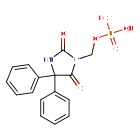
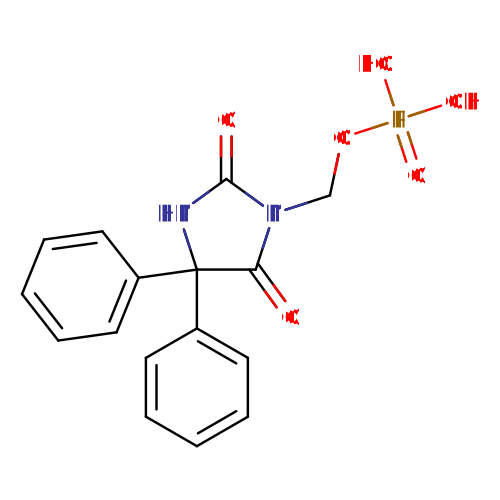
Structure for Fosphenytoin (DB01320)
- Weight
- Average: 362.2739
Monoisotopic: 362.066772734 - Chemical Formula
- C16H15N2O6P
- Synonyms
- (3-Phosphoryloxymethyl)phenytoin
- Fosfenitoina
- Fosphenytoin
- Fosphenytoine
- Fosphenytoinum

Pharmacology
- Indication
Fosphenytoin is indicated for the treatment of generalized tonic-clonic status epilepticus and for the prevention and treatment of seizures occurring during neurosurgery in adult patients. It can also be substituted, short-term, for oral phenytoin in patients aged two years and older when oral phenytoin administration is not possible.6
 Reduce drug development failure ratesBuild, train, & validate machine-learning modelswith evidence-based and structured datasets.Build, train, & validate predictive machine-learning models with structured datasets.
- Associated Conditions
Indication Type Indication Combined Product Details Approval Level Age Group Patient Characteristics Dose Form Maintenance of Oral phenytoin treatment •••••••••••• •••••••••• •••••••••• •••••••• Prophylaxis of Seizures •••••••••••• ••••• •••••••••• •••••••••• •••••••• Management of Seizures •••••••••••• ••••• •••••••••• •••••••••• •••••••• Treatment of Status epilepticus •••••••••••• ••••• •••••••••• •••••••••• •••••••• Treatment of Generalized tonic-clonic status epilepticus •••••••••••• ••••• •••••••••• •••••••••• •••••••• - Contraindications & Blackbox Warnings
 Prevent Adverse Drug Events TodayTap into our Clinical API for life-saving information on contraindications & blackbox warnings, population restrictions, harmful risks, & more.Avoid life-threatening adverse drug events with our Clinical API
- Pharmacodynamics
Fosphenytoin is a water-soluble phenytoin prodrug used for the treatment of epileptic seizures. Following parenteral administration of fosphenytoin, fosphenytoin is converted to the anticonvulsant phenytoin by endogenous phosphatases. Each 1.5 mg of fosphenytoin sodium is equivalent to 1.0mg of phenytoin sodium (PE equivalents); care should be taken to calculate the dose required in PE equivalents properly. Serious adverse effects such as Drug Reaction with Eosinophilia and Systemic Symptoms (DRESS), Stevens-Johnson Syndrome/Toxic Epidermal Necrolysis (SJS/TEN), and hematopoietic complications may occur and indicate an alternate antiepileptic should be used. Withdrawal of fosphenytoin sodium may precipitate seizures and should be done gradually.6
- Mechanism of action
Fosphenytoin is a prodrug of phenytoin and accordingly, its anticonvulsant effects are attributable to phenytoin. Phenytoin acts on sodium channels on the neuronal cell membrane, limiting the spread of seizure activity and reducing seizure propagation. By promoting sodium efflux from neurons, phenytoin tends to stabilize the threshold against hyperexcitability caused by excessive stimulation or environmental changes capable of reducing membrane sodium gradient. This includes the reduction of post-tetanic potentiation at synapses. Loss of post-tetanic potentiation prevents cortical seizure foci from detonating adjacent cortical areas.
Target Actions Organism ASodium channel protein type 5 subunit alpha inhibitorHumans - Absorption
Fosphenytoin at 15 to 20 mg PE/kg infused at 100 to 150 mg PE/min intravenously yields free plasma phenytoin concentrations similar to an equivalent dose of phenytoin sodium administered at 50 mg/min. Single intravenous administration of fosphenytoin shows a linear increase in mean maximum total phenytoin concentration while the mean maximum unbound phenytoin concentrations increase with both dose and infusion rate. Fosphenytoin is rapidly converted to phenytoin following intravenous administration with a half-life of 15 minutes; if administered intramuscularly, the peak plasma phenytoin concentration is not reached until three hours.6
- Volume of distribution
The volume of distribution of fosphenytoin increases with dose and rate, ranging between 4.3 and 10.8 L.6
- Protein binding
Fosphenytoin is extensively bound (95-99%) to human plasma proteins, primarily albumin, and displays saturable binding kinetics over a physiologically relevant range of fosphenytoin concentrations. Like fosphenytoin, phenytoin is extensively bound, again mainly to albumin, but can be displaced by fosphenytoin itself. Phenytoin is typically about 88% bound in the absence of fosphenytoin, but this drops to around 60% 0.5-1 hour following fosphenytoin infusion while fosphenytoin is being converted to phenytoin.6
- Metabolism
Fosphenytoin is metabolized, likely by phosphatases, to phenytoin, phosphate, and formaldehyde; the formaldehyde is subsequently converted into formate. The phenytoin produced is metabolized hepatically by CYP2C9 and, to a lesser extent, by CYP2C19.6
Hover over products below to view reaction partners
- Route of elimination
Phenytoin derived from fosphenytoin administration is excreted in the urine primarily as 5-(p-hydroxyphenyl)-5-phenylhydantoin and its glucuronide. There is little unchanged phenytoin (1%–5% of the administered dose), and essentially no fosphenytoin recovered in urine.6
- Half-life
Fosphenytoin has a conversion half-life of approximately 15 minutes. The resulting phenytoin has a wide range of mean total half-life values (12 to 28.9 hours), with longer half-life times at higher administered doses.6
- Clearance
Not Available
- Adverse Effects
 Improve decision support & research outcomesWith structured adverse effects data, including: blackbox warnings, adverse reactions, warning & precautions, & incidence rates. View sample adverse effects data in our new Data Library!Improve decision support & research outcomes with our structured adverse effects data.
- Toxicity
Nausea, vomiting, lethargy, tachycardia, bradycardia, asystole, cardiac arrest, hypotension, syncope, hypocalcemia, metabolic acidosis, and death have been reported in cases of overdosage with fosphenytoin. The median lethal dose of fosphenytoin given intravenously in mice and rats was 156 mg PE/kg and approximately 250 mg PE/kg, or about 0.6 and 2 times, respectively, the maximum human loading dose on a mg/m2 basis. Signs of acute toxicity in animals included ataxia, labored breathing, ptosis, and hypoactivity.
- Pathways
Pathway Category Fosphenytoin (Antiarrhythmic) Action Pathway Drug action Fosphenytoin (Antiarrhythmic) Metabolism Pathway Drug metabolism - Pharmacogenomic Effects/ADRs
- Not Available
Interactions
- Drug Interactions
- This information should not be interpreted without the help of a healthcare provider. If you believe you are experiencing an interaction, contact a healthcare provider immediately. The absence of an interaction does not necessarily mean no interactions exist.
Drug Interaction Integrate drug-drug
interactions in your software1,2-Benzodiazepine The metabolism of 1,2-Benzodiazepine can be increased when combined with Fosphenytoin. Abametapir The serum concentration of Fosphenytoin can be increased when it is combined with Abametapir. Abatacept The metabolism of Fosphenytoin can be increased when combined with Abatacept. Abemaciclib The metabolism of Abemaciclib can be increased when combined with Fosphenytoin. Abiraterone The metabolism of Abiraterone can be increased when combined with Fosphenytoin. - Food Interactions
- Avoid alcohol. Acute alcohol consumption may increase phenytoin serum concentration, but chronic alcohol use may reduce phenytoin serum concentration.
- Avoid St. John's Wort. This herb may reduce the serum concentration of phenytoin.
Products
 Drug product information from 10+ global regionsOur datasets provide approved product information including:dosage, form, labeller, route of administration, and marketing period.Access drug product information from over 10 global regions.
- Product Ingredients
Ingredient UNII CAS InChI Key Fosphenytoin sodium 7VLR55452Z 92134-98-0 GQPXYJNXTAFDLT-UHFFFAOYSA-L - Active Moieties
Name Kind UNII CAS InChI Key Phenytoin prodrug 6158TKW0C5 57-41-0 CXOFVDLJLONNDW-UHFFFAOYSA-N - International/Other Brands
- Prodilantin / Sesquient
- Brand Name Prescription Products
Name Dosage Strength Route Labeller Marketing Start Marketing End Region Image Cerebyx Injection, solution 50 mg/1mL Intramuscular; Intravenous Pfizer Laboratories Div Pfizer Inc 2013-10-28 Not applicable US 
Cerebyx Injection, solution 50 mg/1mL Intramuscular; Intravenous Parke Davis Div Of Pfizer Inc 1996-08-05 2010-01-01 US Cerebyx Injection, solution 50 mg/1mL Intramuscular; Intravenous Pfizer Laboratories Div Pfizer Inc 2013-10-28 Not applicable US Cerebyx Solution 75 mg / mL Intramuscular; Intravenous Searchlight Pharma Inc 2000-03-01 Not applicable Canada 
Cerebyx Injection, solution 50 mg/1mL Intramuscular; Intravenous Pfizer Laboratories Div Pfizer Inc 2013-10-28 Not applicable US - Generic Prescription Products
Name Dosage Strength Route Labeller Marketing Start Marketing End Region Image Fosphenytoin Injection, solution 50 mg/1mL Intramuscular; Intravenous Fresenius Kabi USA, LLC 2009-12-14 Not applicable US Fosphenytoin Sodium Injection, solution 50 mg/1mL Intramuscular; Intravenous Sun Pharma Global FZE 2009-08-14 2017-01-23 US Fosphenytoin Sodium Injection 50 mg/1mL Intramuscular; Intravenous Apotex Corp. 2007-08-06 2010-10-14 US Fosphenytoin Sodium Injection, solution 50 mg/1mL Intramuscular; Intravenous Hikma Farmaceutica 2009-12-02 2014-10-28 US Fosphenytoin Sodium Injection 50 mg/1mL Intramuscular; Intravenous Amneal Pharmaceuticals LLC 2016-08-11 Not applicable US
Categories
- ATC Codes
- N03AB05 — Fosphenytoin
- Drug Categories
- Anti-epileptic Agent
- Anticonvulsants
- Cardiovascular Agents
- Central Nervous System Agents
- Central Nervous System Depressants
- Cytochrome P-450 CYP1A2 Inducers
- Cytochrome P-450 CYP1A2 Inducers (strength unknown)
- Cytochrome P-450 CYP2B6 Inducers
- Cytochrome P-450 CYP2B6 Inducers (strong)
- Cytochrome P-450 CYP2C19 Substrates
- Cytochrome P-450 CYP2C19 Substrates with a Narrow Therapeutic Index
- Cytochrome P-450 CYP2C8 Substrates
- Cytochrome P-450 CYP2C8 Substrates with a Narrow Therapeutic Index
- Cytochrome P-450 CYP2C9 Inducers
- Cytochrome P-450 CYP2C9 Inducers (strength unknown)
- Cytochrome P-450 CYP2C9 Substrates
- Cytochrome P-450 CYP2C9 Substrates with a Narrow Therapeutic Index
- Cytochrome P-450 CYP3A Inducers
- Cytochrome P-450 CYP3A Inducers (strong)
- Cytochrome P-450 CYP3A Substrates
- Cytochrome P-450 CYP3A4 Inducers
- Cytochrome P-450 CYP3A4 Inducers (strong)
- Cytochrome P-450 CYP3A4 Substrates
- Cytochrome P-450 CYP3A4 Substrates (strength unknown)
- Cytochrome P-450 CYP3A4 Substrates with a Narrow Therapeutic Index
- Cytochrome P-450 Enzyme Inducers
- Cytochrome P-450 Substrates
- Decreased Central Nervous System Disorganized Electrical Activity
- Enzyme Inducing Antiepileptic Drugs
- Hydantoins
- Imidazoles
- Imidazolidines
- Membrane Transport Modulators
- Narrow Therapeutic Index Drugs
- Nervous System
- Phenytoin and Prodrugs
- Prodrugs
- Sodium Channel Blockers
- Thyroxine-binding globulin substrates
- UGT1A6 Inhibitors
- UGT1A9 Inhibitors
- Chemical TaxonomyProvided by Classyfire
- Description
- This compound belongs to the class of organic compounds known as diphenylmethanes. These are compounds containing a diphenylmethane moiety, which consists of a methane wherein two hydrogen atoms are replaced by two phenyl groups.
- Kingdom
- Organic compounds
- Super Class
- Benzenoids
- Class
- Benzene and substituted derivatives
- Sub Class
- Diphenylmethanes
- Direct Parent
- Diphenylmethanes
- Alternative Parents
- Alpha amino acids and derivatives / N-acyl ureas / Monoalkyl phosphates / Imidazolinones / Isoureas / Propargyl-type 1,3-dipolar organic compounds / Carboximidamides / Azacyclic compounds / Organopnictogen compounds / Organic oxides show 2 more
- Substituents
- 2-imidazoline / Alkyl phosphate / Alpha-amino acid or derivatives / Aromatic heteromonocyclic compound / Azacycle / Carbonyl group / Carboximidamide / Carboxylic acid derivative / Diphenylmethane / Hydrocarbon derivative show 16 more
- Molecular Framework
- Aromatic heteromonocyclic compounds
- External Descriptors
- imidazolidine-2,4-dione (CHEBI:5165)
- Affected organisms
- Humans and other mammals
Chemical Identifiers
- UNII
- B4SF212641
- CAS number
- 93390-81-9
- InChI Key
- XWLUWCNOOVRFPX-UHFFFAOYSA-N
- InChI
- InChI=1S/C16H15N2O6P/c19-14-16(12-7-3-1-4-8-12,13-9-5-2-6-10-13)17-15(20)18(14)11-24-25(21,22)23/h1-10H,11H2,(H,17,20)(H2,21,22,23)
- IUPAC Name
- [(2,5-dioxo-4,4-diphenylimidazolidin-1-yl)methoxy]phosphonic acid
- SMILES
- OP(O)(=O)OCN1C(=O)NC(C1=O)(C1=CC=CC=C1)C1=CC=CC=C1
References
- Synthesis Reference
Volker Kirsch, "Process for the preparation of sodium fosphenytoin." U.S. Patent US20050272706, issued December 08, 2005.
US20050272706- General References
- Johnson J, Wrenn K: Inappropriate fosphenytoin use in the ED. Am J Emerg Med. 2001 Jul;19(4):293-4. [Article]
- Applebaum J, Levine J, Belmaker RH: Intravenous fosphenytoin in acute mania. J Clin Psychiatry. 2003 Apr;64(4):408-9. [Article]
- McCleane GJ: Intravenous infusion of fosphenytoin produces prolonged pain relief: a case report. J Pain. 2002 Apr;3(2):156-8. [Article]
- Browne TR, Kugler AR, Eldon MA: Pharmacology and pharmacokinetics of fosphenytoin. Neurology. 1996 Jun;46(6 Suppl 1):S3-7. [Article]
- Luszczki JJ: Third-generation antiepileptic drugs: mechanisms of action, pharmacokinetics and interactions. Pharmacol Rep. 2009 Mar-Apr;61(2):197-216. [Article]
- FDA Approved Drug Products: SESQUIENT (fosphenytoin) injection [Link]
- External Links
- Human Metabolome Database
- HMDB0015417
- KEGG Drug
- D07993
- KEGG Compound
- C07840
- PubChem Compound
- 56339
- PubChem Substance
- 46505168
- ChemSpider
- 50839
- 72236
- ChEBI
- 5165
- ChEMBL
- CHEMBL1201336
- ZINC
- ZINC000001530922
- Therapeutic Targets Database
- DAP000520
- PharmGKB
- PA164746820
- RxList
- RxList Drug Page
- Drugs.com
- Drugs.com Drug Page
- Wikipedia
- Fosphenytoin
- FDA label
- Download (820 KB)
Clinical Trials
- Clinical Trials
Phase Status Purpose Conditions Count 4 Completed Treatment Generalized Tonic-Clonic Seizures 1 3 Completed Treatment Benzodiazepine Refractory Status Epilepticus 1 3 Completed Treatment Epilepsy 1 3 Completed Treatment Epilepsy / Status Epilepticus 1 2 Completed Treatment Nonconvulsive Seizures 1
Pharmacoeconomics
- Manufacturers
- Not Available
- Packagers
- Akorn Inc.
- Apotex Inc.
- APP Pharmaceuticals
- Baxter International Inc.
- Bedford Labs
- Ben Venue Laboratories Inc.
- Generamedix Inc.
- Hikma Pharmaceuticals
- Hospira Inc.
- Pfizer Inc.
- Pharmaforce Inc.
- Strides Arcolab Limited
- Sun Pharmaceutical Industries Ltd.
- Teva Pharmaceutical Industries Ltd.
- West-Ward Pharmaceuticals
- Wockhardt Ltd.
- Dosage Forms
Form Route Strength Solution Intramuscular; Intravenous 75 mg / mL Injection Intramuscular; Intravenous 50 mg/1mL Injection Intravenous 50 mg/1mL Injection, solution Intramuscular; Intravascular 50 mg/1mL Injection, solution Intramuscular; Intravenous 50 mg/1mL Injection, solution Intramuscular; Intravenous 75 mg/1mL Injection, solution Intravenous 100 mg/2mL Injection, solution Intravenous 500 mg/10mL Solution Intramuscular; Intravenous 75 mg/1ml - Prices
Unit description Cost Unit Cerebyx 500 mg pe/10 ml vial 8.63USD ml Fosphenytoin 500 mg pe/10 ml 0.61USD ml DrugBank does not sell nor buy drugs. Pricing information is supplied for informational purposes only.- Patents
Patent Number Pediatric Extension Approved Expires (estimated) Region US7635773 No 2009-12-22 2029-03-13 US US8410077 No 2013-04-02 2029-03-13 US US9200088 No 2015-12-01 2029-03-13 US US9493582 No 2016-11-15 2033-02-27 US US9750822 No 2017-09-05 2029-03-13 US
Properties
- State
- Solid
- Experimental Properties
- Not Available
- Predicted Properties
Property Value Source Water Solubility 0.145 mg/mL ALOGPS logP 1.08 ALOGPS logP 1.67 Chemaxon logS -3.4 ALOGPS pKa (Strongest Acidic) 1.46 Chemaxon pKa (Strongest Basic) -9.7 Chemaxon Physiological Charge -2 Chemaxon Hydrogen Acceptor Count 5 Chemaxon Hydrogen Donor Count 3 Chemaxon Polar Surface Area 116.17 Å2 Chemaxon Rotatable Bond Count 5 Chemaxon Refractivity 87.05 m3·mol-1 Chemaxon Polarizability 33.23 Å3 Chemaxon Number of Rings 3 Chemaxon Bioavailability 1 Chemaxon Rule of Five Yes Chemaxon Ghose Filter Yes Chemaxon Veber's Rule No Chemaxon MDDR-like Rule No Chemaxon - Predicted ADMET Features
Property Value Probability Human Intestinal Absorption - 0.5244 Blood Brain Barrier + 0.9215 Caco-2 permeable - 0.639 P-glycoprotein substrate Substrate 0.5 P-glycoprotein inhibitor I Non-inhibitor 0.7952 P-glycoprotein inhibitor II Non-inhibitor 0.8466 Renal organic cation transporter Non-inhibitor 0.8731 CYP450 2C9 substrate Non-substrate 0.7094 CYP450 2D6 substrate Non-substrate 0.9116 CYP450 3A4 substrate Non-substrate 0.6873 CYP450 1A2 substrate Non-inhibitor 0.8477 CYP450 2C9 inhibitor Non-inhibitor 0.7802 CYP450 2D6 inhibitor Non-inhibitor 0.8859 CYP450 2C19 inhibitor Non-inhibitor 0.7169 CYP450 3A4 inhibitor Non-inhibitor 0.7672 CYP450 inhibitory promiscuity Low CYP Inhibitory Promiscuity 0.9083 Ames test Non AMES toxic 0.614 Carcinogenicity Non-carcinogens 0.7835 Biodegradation Not ready biodegradable 0.9674 Rat acute toxicity 2.4215 LD50, mol/kg Not applicable hERG inhibition (predictor I) Weak inhibitor 0.9578 hERG inhibition (predictor II) Non-inhibitor 0.7299
Spectra
- Mass Spec (NIST)
- Not Available
- Spectra
Spectrum Spectrum Type Splash Key Predicted GC-MS Spectrum - GC-MS Predicted GC-MS splash10-00ls-4941000000-7f020f5c4237af5bfb3c Predicted MS/MS Spectrum - 10V, Positive (Annotated) Predicted LC-MS/MS splash10-03di-0049000000-938f80f51b0b80575b74 Predicted MS/MS Spectrum - 10V, Negative (Annotated) Predicted LC-MS/MS splash10-03di-1009000000-dfe901a1fa3f538f80fb Predicted MS/MS Spectrum - 20V, Positive (Annotated) Predicted LC-MS/MS splash10-014i-0091000000-1cb1661bc3bc3150fab3 Predicted MS/MS Spectrum - 20V, Negative (Annotated) Predicted LC-MS/MS splash10-03di-2129000000-7c904411cf5c76fd8abc Predicted MS/MS Spectrum - 40V, Negative (Annotated) Predicted LC-MS/MS splash10-000i-3901000000-ba2ddf868cd406d5df72 Predicted MS/MS Spectrum - 40V, Positive (Annotated) Predicted LC-MS/MS splash10-016r-5692000000-b3325120dc7c54b937e4 Predicted 1H NMR Spectrum 1D NMR Not Applicable Predicted 13C NMR Spectrum 1D NMR Not Applicable - Chromatographic Properties
Collision Cross Sections (CCS)
Adduct CCS Value (Å2) Source type Source [M-H]- 194.786207 predictedDarkChem Lite v0.1.0 [M-H]- 166.04485 predictedDeepCCS 1.0 (2019) [M+H]+ 194.685707 predictedDarkChem Lite v0.1.0 [M+H]+ 168.40283 predictedDeepCCS 1.0 (2019) [M+Na]+ 193.591907 predictedDarkChem Lite v0.1.0 [M+Na]+ 174.49599 predictedDeepCCS 1.0 (2019)
Targets

- Kind
- Protein
- Organism
- Humans
- Pharmacological action
- Yes
- Actions
- Inhibitor
- General Function
- Voltage-gated sodium channel activity involved in sa node cell action potential
- Specific Function
- This protein mediates the voltage-dependent sodium ion permeability of excitable membranes. Assuming opened or closed conformations in response to the voltage difference across the membrane, the pr...
- Gene Name
- SCN5A
- Uniprot ID
- Q14524
- Uniprot Name
- Sodium channel protein type 5 subunit alpha
- Molecular Weight
- 226937.475 Da
References
- Swadron SP, Rudis MI, Azimian K, Beringer P, Fort D, Orlinsky M: A comparison of phenytoin-loading techniques in the emergency department. Acad Emerg Med. 2004 Mar;11(3):244-52. [Article]
- Mantegazza M, Curia G, Biagini G, Ragsdale DS, Avoli M: Voltage-gated sodium channels as therapeutic targets in epilepsy and other neurological disorders. Lancet Neurol. 2010 Apr;9(4):413-24. doi: 10.1016/S1474-4422(10)70059-4. [Article]
- Lenkowski PW, Ko SH, Anderson JD, Brown ML, Patel MK: Block of human NaV1.5 sodium channels by novel alpha-hydroxyphenylamide analogues of phenytoin. Eur J Pharm Sci. 2004 Apr;21(5):635-44. [Article]
- Chen X, Ji ZL, Chen YZ: TTD: Therapeutic Target Database. Nucleic Acids Res. 2002 Jan 1;30(1):412-5. [Article]
Enzymes
- Kind
- Protein
- Organism
- Humans
- Pharmacological action
- Unknown
- Actions
- Inducer
- General Function
- Oxidoreductase activity, acting on paired donors, with incorporation or reduction of molecular oxygen, reduced flavin or flavoprotein as one donor, and incorporation of one atom of oxygen
- Specific Function
- Cytochromes P450 are a group of heme-thiolate monooxygenases. In liver microsomes, this enzyme is involved in an NADPH-dependent electron transport pathway. It oxidizes a variety of structurally un...
- Gene Name
- CYP1A2
- Uniprot ID
- P05177
- Uniprot Name
- Cytochrome P450 1A2
- Molecular Weight
- 58293.76 Da
References
- Johannessen SI, Landmark CJ: Antiepileptic drug interactions - principles and clinical implications. Curr Neuropharmacol. 2010 Sep;8(3):254-67. doi: 10.2174/157015910792246254. [Article]
- Clark SL, Leloux MR, Dierkhising RA, Cascino GD, Hocker SE: IV fosphenytoin in obese patients: Dosing strategies, safety, and efficacy. Neurol Clin Pract. 2017 Feb;7(1):45-52. doi: 10.1212/CPJ.0000000000000322. [Article]
- Fosphenytoin sodium - Drug Summary - Prescribers Digital Reference - Drug Interactions [Link]
- Kind
- Protein
- Organism
- Humans
- Pharmacological action
- No
- Actions
- Inhibitor
- General Function
- Protein homodimerization activity
- Specific Function
- UDPGT is of major importance in the conjugation and subsequent elimination of potentially toxic xenobiotics and endogenous compounds. This isoform has specificity for phenols. Isoform 3 lacks trans...
- Gene Name
- UGT1A6
- Uniprot ID
- P19224
- Uniprot Name
- UDP-glucuronosyltransferase 1-6
- Molecular Weight
- 60750.215 Da
References
- Kostrubsky SE, Sinclair JF, Strom SC, Wood S, Urda E, Stolz DB, Wen YH, Kulkarni S, Mutlib A: Phenobarbital and phenytoin increased acetaminophen hepatotoxicity due to inhibition of UDP-glucuronosyltransferases in cultured human hepatocytes. Toxicol Sci. 2005 Sep;87(1):146-55. doi: 10.1093/toxsci/kfi211. Epub 2005 Jun 2. [Article]
- Kind
- Protein
- Organism
- Humans
- Pharmacological action
- No
- Actions
- Inhibitor
- General Function
- Retinoic acid binding
- Specific Function
- UDPGT is of major importance in the conjugation and subsequent elimination of potentially toxic xenobiotics and endogenous compounds. This isoform has specificity for phenols. Isoform 2 lacks trans...
- Gene Name
- UGT1A9
- Uniprot ID
- O60656
- Uniprot Name
- UDP-glucuronosyltransferase 1-9
- Molecular Weight
- 59940.495 Da
References
- Kostrubsky SE, Sinclair JF, Strom SC, Wood S, Urda E, Stolz DB, Wen YH, Kulkarni S, Mutlib A: Phenobarbital and phenytoin increased acetaminophen hepatotoxicity due to inhibition of UDP-glucuronosyltransferases in cultured human hepatocytes. Toxicol Sci. 2005 Sep;87(1):146-55. doi: 10.1093/toxsci/kfi211. Epub 2005 Jun 2. [Article]
- Kind
- Protein
- Organism
- Humans
- Pharmacological action
- Unknown
- Actions
- Substrate
- General Function
- Steroid hydroxylase activity
- Specific Function
- Responsible for the metabolism of a number of therapeutic agents such as the anticonvulsant drug S-mephenytoin, omeprazole, proguanil, certain barbiturates, diazepam, propranolol, citalopram and im...
- Gene Name
- CYP2C19
- Uniprot ID
- P33261
- Uniprot Name
- Cytochrome P450 2C19
- Molecular Weight
- 55930.545 Da
References
- Anderson GD: Pharmacokinetic, pharmacodynamic, and pharmacogenetic targeted therapy of antiepileptic drugs. Ther Drug Monit. 2008 Apr;30(2):173-80. doi: 10.1097/FTD.0b013e318167d11b. [Article]
- Hennessy S, Leonard CE, Freeman CP, Metlay JP, Chu X, Strom BL, Bilker WB: CYP2C9, CYP2C19, and ABCB1 genotype and hospitalization for phenytoin toxicity. J Clin Pharmacol. 2009 Dec;49(12):1483-7. doi: 10.1177/0091270009343006. Epub 2009 Jul 17. [Article]
- Klotz U: The role of pharmacogenetics in the metabolism of antiepileptic drugs: pharmacokinetic and therapeutic implications. Clin Pharmacokinet. 2007;46(4):271-9. [Article]
- Rosemary J, Surendiran A, Rajan S, Shashindran CH, Adithan C: Influence of the CYP2C9 AND CYP2C19 polymorphisms on phenytoin hydroxylation in healthy individuals from south India. Indian J Med Res. 2006 May;123(5):665-70. [Article]
- Kind
- Protein
- Organism
- Humans
- Pharmacological action
- Unknown
- Actions
- Inducer
- General Function
- Steroid hydroxylase activity
- Specific Function
- Cytochromes P450 are a group of heme-thiolate monooxygenases. In liver microsomes, this enzyme is involved in an NADPH-dependent electron transport pathway. It oxidizes a variety of structurally un...
- Gene Name
- CYP2B6
- Uniprot ID
- P20813
- Uniprot Name
- Cytochrome P450 2B6
- Molecular Weight
- 56277.81 Da
References
- Wang H, Faucette S, Moore R, Sueyoshi T, Negishi M, LeCluyse E: Human constitutive androstane receptor mediates induction of CYP2B6 gene expression by phenytoin. J Biol Chem. 2004 Jul 9;279(28):29295-301. Epub 2004 Apr 28. [Article]
- Faucette SR, Wang H, Hamilton GA, Jolley SL, Gilbert D, Lindley C, Yan B, Negishi M, LeCluyse EL: Regulation of CYP2B6 in primary human hepatocytes by prototypical inducers. Drug Metab Dispos. 2004 Mar;32(3):348-58. [Article]
- Kind
- Protein
- Organism
- Humans
- Pharmacological action
- Unknown
- Actions
- SubstrateInducer
- General Function
- Steroid hydroxylase activity
- Specific Function
- Cytochromes P450 are a group of heme-thiolate monooxygenases. In liver microsomes, this enzyme is involved in an NADPH-dependent electron transport pathway. It oxidizes a variety of structurally un...
- Gene Name
- CYP2C9
- Uniprot ID
- P11712
- Uniprot Name
- Cytochrome P450 2C9
- Molecular Weight
- 55627.365 Da
References
- Sahi J, Shord SS, Lindley C, Ferguson S, LeCluyse EL: Regulation of cytochrome P450 2C9 expression in primary cultures of human hepatocytes. J Biochem Mol Toxicol. 2009 Jan-Feb;23(1):43-58. doi: 10.1002/jbt.20264. [Article]
- Zhou SF, Zhou ZW, Yang LP, Cai JP: Substrates, inducers, inhibitors and structure-activity relationships of human Cytochrome P450 2C9 and implications in drug development. Curr Med Chem. 2009;16(27):3480-675. Epub 2009 Sep 1. [Article]
- Goldstein JA: Clinical relevance of genetic polymorphisms in the human CYP2C subfamily. Br J Clin Pharmacol. 2001 Oct;52(4):349-55. [Article]
- Klotz U: The role of pharmacogenetics in the metabolism of antiepileptic drugs: pharmacokinetic and therapeutic implications. Clin Pharmacokinet. 2007;46(4):271-9. [Article]
- Kim KA, Park JY: Inhibitory effect of glyburide on human cytochrome p450 isoforms in human liver microsomes. Drug Metab Dispos. 2003 Sep;31(9):1090-2. [Article]
- FDA Drug Development and Drug Interactions: Table of Substrates, Inhibitors and Inducers [Link]
- Kind
- Protein
- Organism
- Humans
- Pharmacological action
- Unknown
- Actions
- SubstrateInducer
- General Function
- Vitamin d3 25-hydroxylase activity
- Specific Function
- Cytochromes P450 are a group of heme-thiolate monooxygenases. In liver microsomes, this enzyme is involved in an NADPH-dependent electron transport pathway. It performs a variety of oxidation react...
- Gene Name
- CYP3A4
- Uniprot ID
- P08684
- Uniprot Name
- Cytochrome P450 3A4
- Molecular Weight
- 57342.67 Da
References
- Zhou SF: Drugs behave as substrates, inhibitors and inducers of human cytochrome P450 3A4. Curr Drug Metab. 2008 May;9(4):310-22. [Article]
- Ohno Y, Hisaka A, Ueno M, Suzuki H: General framework for the prediction of oral drug interactions caused by CYP3A4 induction from in vivo information. Clin Pharmacokinet. 2008;47(10):669-80. doi: 10.2165/00003088-200847100-00004. [Article]
- McDonnell AM, Dang CH: Basic review of the cytochrome p450 system. J Adv Pract Oncol. 2013 Jul;4(4):263-8. [Article]
- Fan HC, Lee HS, Chang KP, Lee YY, Lai HC, Hung PL, Lee HF, Chi CS: The Impact of Anti-Epileptic Drugs on Growth and Bone Metabolism. Int J Mol Sci. 2016 Aug 1;17(8). pii: ijms17081242. doi: 10.3390/ijms17081242. [Article]
Carriers
- Kind
- Protein
- Organism
- Humans
- Pharmacological action
- No
- Actions
- Other/unknown
- General Function
- Toxic substance binding
- Specific Function
- Serum albumin, the main protein of plasma, has a good binding capacity for water, Ca(2+), Na(+), K(+), fatty acids, hormones, bilirubin and drugs. Its main function is the regulation of the colloid...
- Gene Name
- ALB
- Uniprot ID
- P02768
- Uniprot Name
- Serum albumin
- Molecular Weight
- 69365.94 Da
References
- Walker MC, Patsalos PN: Clinical pharmacokinetics of new antiepileptic drugs. Pharmacol Ther. 1995;67(3):351-84. [Article]
- Kind
- Protein
- Organism
- Humans
- Pharmacological action
- No
- Actions
- Substrate
- General Function
- Serine-type endopeptidase inhibitor activity
- Specific Function
- Major thyroid hormone transport protein in serum.
- Gene Name
- SERPINA7
- Uniprot ID
- P05543
- Uniprot Name
- Thyroxine-binding globulin
- Molecular Weight
- 46324.12 Da
References
- CYTOMEL (liothyronine) FDA label [File]

Drug created at June 30, 2007 17:18 / Updated at April 09, 2024 18:24