Identification
- Summary
Phenytoin is an anticonvulsant drug used in the prophylaxis and control of various types of seizures.
- Brand Names
- Dilantin, Phenytek
- Generic Name
- Phenytoin
- DrugBank Accession Number
- DB00252
- Background
Phenytoin is classified as a hydantoin derivative and despite its narrow therapeutic index, it is one of the most commonly used anticonvulsants.12,6,8 Since it's introduction about 80 years ago, phenytoin has not only been established as an effective anti-epileptic, but has also been investigated for several other indications such as bipolar disorder, retina protection, and wound healing.7,6
Clinicians are advised to initiate therapeutic drug monitoring in patients who require phenytoin since even small deviations from the recommended therapeutic range can lead to suboptimal treatment, or adverse effects.8,10 Both parenteral and oral formulations of phenytoin are available on the market.8
- Type
- Small Molecule
- Groups
- Approved, Vet approved
- Structure
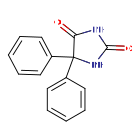
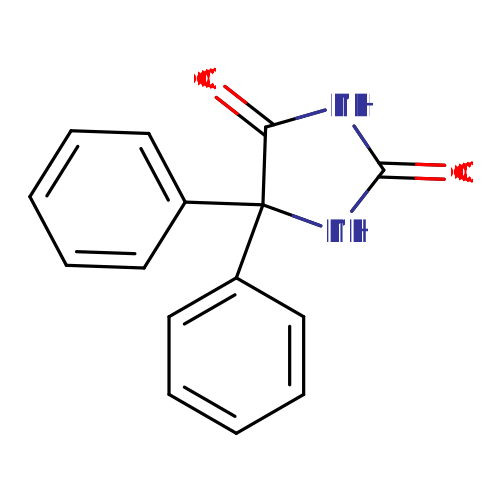
Structure for Phenytoin (DB00252)
- Weight
- Average: 252.268
Monoisotopic: 252.089877638 - Chemical Formula
- C15H12N2O2
- Synonyms
- 5,5-Diphenyl-imidazolidine-2,4-dione
- 5,5-diphenylimidazolidine-2,4-dione
- 5,5-diphenyltetrahydro-1H-2,4-imidazoledione
- 5,5-Diphenyltetrahydro-1H-2,4-imidazoledione
- Diphenylhydantoin
- Fenitoina
- Phentytoin
- Phenytoin
- Phenytoine
- Phenytoinum
- PR-122 (redox-phenytoin)
- Redox-phenytoin
- External IDs
- NSC-8722
- PR-122

Pharmacology
- Indication
Phenytoin is indicated to treat grand mal seizures, complex partial seizures, and to prevent and treat seizures during or following neurosurgery.14 Injectable phenytoin and Fosphenytoin, which is the phosphate ester prodrug formulation of phenytoin2, are indicated to treat tonic-clonic status epilepticus, and for the prevention and treatment of seizures occurring during neurosurgery.15
 Reduce drug development failure ratesBuild, train, & validate machine-learning modelswith evidence-based and structured datasets.Build, train, & validate predictive machine-learning models with structured datasets.
- Associated Conditions
Indication Type Indication Combined Product Details Approval Level Age Group Patient Characteristics Dose Form Treatment of Complex partial seizures •••••••••••• •••••••• •••••••• •••••••• •••••••••• Used in combination to treat Grand mal status epilepticus Combination Product in combination with: Phenobarbital (DB01174), Gamma-amino-beta-hydroxybutyric acid (DB15985) •••••••••••• •••••• Used in combination to treat Grand mal generalized tonic-clonic seizure Combination Product in combination with: Methylphenobarbital (DB00849) •••••••••••• •••••••••• ••••••• •••• ••••••••••• •••••• Treatment of Grand mal generalized tonic-clonic seizure •••••••••••• •••••••• •••••••• •••••••• •••••••••• Used in combination to treat Jacksonian epilepsy Combination Product in combination with: Phenobarbital (DB01174), Gamma-amino-beta-hydroxybutyric acid (DB15985) •••••••••••• •••••• - Contraindications & Blackbox Warnings
 Prevent Adverse Drug Events TodayTap into our Clinical API for life-saving information on contraindications & blackbox warnings, population restrictions, harmful risks, & more.Avoid life-threatening adverse drug events with our Clinical API
- Pharmacodynamics
Phenytoin is an anticonvulsant with a narrow therapeutic index.5 Although the recommended therapeutic range is cited to be between 10-20 mg/L, differences in albumin levels, genetics, comorbidities, and body composition can make achieving an ideal phenytoin dose challenging.5 For example, studies have confirmed that phenytoin metabolism is impacted by CYP2C9 genotype polymorphisms and possibly by CYP2C19 genotype polymorphisms (the latter has not been as extensively studied).5
It is worth nothing that although phenytoin is highly protein bound, only the fraction unbound is able to exert a pharmacological effect.17 Therefore, factors that reduce or increase the percentage of protein bound phenytoin (for example: concomitant administration of drugs that can cause displacement from protein binding sites) can have a marked impact on phenytoin therapy.4,17
- Mechanism of action
Although phenytoin first appeared in the literature in 1946, it has taken decades for the mechanism of action to be more specifically elucidated.7 Although several scientists were convinced that phenytoin altered sodium permeability, it wasn’t until the 1980’s that this phenomenon was linked to voltage-gated sodium channels.7
Phenytoin is often described as a non-specific sodium channel blocker and targets almost all voltage-gated sodium channel subtypes.7 More specifically, phenytoin prevents seizures by inhibiting the positive feedback loop that results in neuronal propagation of high frequency action potentials.5,8,9
Target Actions Organism ASodium channel protein type 5 subunit alpha inhibitorHumans ASodium channel protein type 1 subunit alpha inhibitorHumans APotassium voltage-gated channel subfamily H member 2 inhibitorHumans AVoltage-dependent L-type calcium channel inhibitorHumans ASodium channel protein type 2 subunit alpha inhibitorHumans ASodium channel protein type 8 subunit alpha inhibitorHumans UNuclear receptor subfamily 1 group I member 2 Not Available Humans USodium channel subunit beta-1 Not Available Humans USodium channel protein type 3 subunit alpha Not Available Humans UGABA(A) Receptor Not Available Humans - Absorption
Given its narrow therapeutic index, therapeutic drug monitoring is recommended to help guide dosing.8,10 Phenytoin is completely absorbed.8 Peak plasma concentration is attained approximately 1.5-3 hours, and 4-12 hours after administration of the immediate release formulation and the extended release formulation, respectively.3,8 It should be noted that absorption can be markedly prolonged in situations of acute ingestion.8
- Volume of distribution
The volume of distribution of phenytoin is reported to be approximately 0.75 L/kg.11
- Protein binding
Phenytoin is roughly 90% protein bound.4
- Metabolism
Phenytoin is extensively metabolized and is first transformed into a reactive arene oxide intermediate.12 It is thought that this reactive intermediate is responsible for many undesirable phenytoin adverse effects such as hepatotoxicity, SJS/TEN, and other idiosyncratic reactions.12 The arene oxide is metabolized to either a hydroxyphenytoin or phenytoin dihydrodiol metabolite, although the former accounts for about 90% of phenytoin metabolism.12
Interestingly, two stereoisomers of the hydroxyphenytoin metabolite are formed by CYP2C9 and CYP2C19: (R)-p-HPPH and (S)-p-HPPH.12 When CYP2C19 catalyzes the reaction, the ratio of stereoisomers is roughly 1:1, whereas when CYP2C9 catalyzes the reaction, the ratio heavily favours the "S" stereoisomer.12 Since the metabolism of phenytoin is in part influenced by genetic polymorphisms of CYP2C9 and CYP2C19, this ratio can be utilized to identify different genomic variants of the enzymes.5,6,12
EPHX1, CYP1A2, CYP2A6, CYP2C19, CYP2C8, CYP2C9, CYP2D6, CYP2E1 and CYP3A4 are responsible for producing the phenytoin dihydrodiol metabolite.12
Hydroxyphenytoin can be metabolized by CYP2C19, CYP3A5, CYP2C9, CYP3A4, CYP3A7, CYP2B6 and CYP2D6 to a phenytoin catechol metabolite or undergo glucuronidation by UGT1A6, UGT1A9, UGT1A1, and UGT1A4 to a glucuronide metabolite that can be eliminated in the urine.12 On the other hand, the phenytoin dihydrodiol entity is only transformed to the catechol metabolite.12
The catechol metabolite can undergo methylation by COMT and be subsequently eliminated in the urine, or can spontaneously oxidize to a phenytoin quinone (NQO1 can transform the quinone back to the catechol metabolite).12
Of note, although CYP2C18 is poorly expressed in the liver, the enzyme is active in the skin and is involved in the primary and secondary hydroxylation of phenytoin.12,13 This CYP2C18 mediated bioactivation may be linked to the manifestation of adverse cutaneous drug reactions associated with phenytoin.12
Hover over products below to view reaction partners
- Route of elimination
The majority of phenytoin is excreted as inactive metabolites in the bile.14,16 An estimated 1-5% of phenytoin is eliminated unchanged in the urine.8
- Half-life
Oral administration: The half-life of phenytoin ranges from 7 to 42 hours, and is 22 hours on average.11,14
Intravenous administration: The half-life of phenytoin ranges from 10-15 hours.16
- Clearance
The clearance of phenytoin is non-linear.10 At lower serum concentrations (less than 10 mg/L), elimination is characterized by first order kinetics.3 As plasma concentrations increase, the kinetics shift gradually towards zero-order, and finally reach zero-order kinetics once the system is saturated.3
- Adverse Effects
 Improve decision support & research outcomesWith structured adverse effects data, including: blackbox warnings, adverse reactions, warning & precautions, & incidence rates. View sample adverse effects data in our new Data Library!Improve decision support & research outcomes with our structured adverse effects data.
- Toxicity
The experience of phenytoin toxicity is not limited to situations of acute ingestion, but may also occur due to drug interactions or due to physiological circumstances that impact serum albumin (ie. kidney disease) or drug metabolism.3 Other changes that may result in phenytoin toxicity include pregnancy, malnutrition and malignancy.3
Phenytoin toxicity most often affects the cardiovascular and nervous systems.3 The most common presentation of toxicity depends on the route of administration.3 Cardiovascular adverse effects are most commonly linked to intravenous phenytoin administration, whereas neurological adverse effects are more common with oral phenytoin administration.3
Neurotoxicity is usually dependent on serum concentrations.3 When concentrations range from 10-20 mg/L, mild nystagmus and lateral gaze may occur, while more significant nystagmus is associated with concentrations ranging from 20-30 mg/L.3 At concentrations of 30-40 mg/L, slurred speech, tremor, nausea, vomiting and ataxia have been reported.3 In more serious cases where serum levels range from 40-50 mg/L patients are at risk of lethargy, confusion and hyperactivity, and at levels beyond 50 mg/L, coma and seizures may occur.3
Phenytoin is classified as an antiarrhythmic and can cause SA and AV nodal blocks as well as dysrhythmias due to its effect on voltage-gated sodium channels.3 Further, since phenytoin is poorly soluble, the parenteral form is administered with propylene glycol, which is a cardiac depressant.3 The infusion rate of parenteral phenytoin should not exceed 50 mg per minute due to the risk of hypotension, bradycardia, and asystole.3
Treatment for phenytoin toxicity is non-specific and centres around supportive care.3 One dose of activated charcoal may be used to prevent phenytoin absorption in cases of acute ingestion.3
Although hemodialysis is moderately effective at removing phenytoin, it is not normally recommended due to the risks associated with the procedure, and the general effectiveness of supportive care.3
- Pathways
Pathway Category Phenytoin (Antiarrhythmic) Action Pathway Drug action Fosphenytoin (Antiarrhythmic) Action Pathway Drug action Fosphenytoin (Antiarrhythmic) Metabolism Pathway Drug metabolism - Pharmacogenomic Effects/ADRs
Interacting Gene/Enzyme Allele name Genotype(s) Defining Change(s) Type(s) Description Details Cytochrome P450 2C9 CYP2C9*3 (C;C) / (A;C) C Allele Effect Directly Studied Patients with this genotype have reduced metabolism of phenytoin. Details HLA class I histocompatibility antigen, B-15 alpha chain HLA-B*15:02 Not Available HLA-B*15 ADR Directly Studied The presence of this genotype in HLA-B is associated with an increased risk of Stevens-Johnson syndrome and toxic epidermal necrolysis when treated with phenytoin. Details Cytochrome P450 2C19 CYP2C19*2A Not Available 681G>A ADR Inferred Poor drug metabolizer, risk of drug toxicity. Details Cytochrome P450 2C19 CYP2C19*2B Not Available 681G>A ADR Inferred Poor drug metabolizer, risk of drug toxicity. Details Cytochrome P450 2C19 CYP2C19*3 Not Available 636G>A ADR Inferred Poor drug metabolizer, risk of drug toxicity. Details Cytochrome P450 2C19 CYP2C19*4 Not Available 1A>G ADR Inferred Poor drug metabolizer, risk of drug toxicity. Details Cytochrome P450 2C19 CYP2C19*5 Not Available 1297C>T ADR Inferred Poor drug metabolizer, risk of drug toxicity. Details Cytochrome P450 2C19 CYP2C19*6 Not Available 395G>A ADR Inferred Poor drug metabolizer, risk of drug toxicity. Details Cytochrome P450 2C19 CYP2C19*7 Not Available 19294T>A ADR Inferred Poor drug metabolizer, risk of drug toxicity. Details Cytochrome P450 2C19 CYP2C19*22 Not Available 557G>C / 991A>G ADR Inferred Poor drug metabolizer, risk of drug toxicity. Details Cytochrome P450 2C19 CYP2C19*24 Not Available 99C>T / 991A>G … show all ADR Inferred Poor drug metabolizer, risk of drug toxicity. Details Cytochrome P450 2C19 CYP2C19*35 Not Available 12662A>G ADR Inferred Poor drug metabolizer, risk of drug toxicity. Details Cytochrome P450 2C9 CYP2C9*2 Not Available 430C>T ADR Inferred Poor drug metabolizer, risk of drug toxicity. Consider lower dose. Details Cytochrome P450 2C9 CYP2C9*3 Not Available 1075A>C ADR Inferred Poor drug metabolizer, risk of drug toxicity. Consider lower dose. Details Cytochrome P450 2C9 CYP2C9*4 Not Available 1076T>C ADR Inferred Poor drug metabolizer, risk of drug toxicity. Consider lower dose. Details Cytochrome P450 2C9 CYP2C9*5 Not Available 1080C>G ADR Inferred Poor drug metabolizer, risk of drug toxicity. Consider lower dose. Details Cytochrome P450 2C9 CYP2C9*8 Not Available 449G>A ADR Inferred Poor drug metabolizer, risk of drug toxicity. Consider lower dose. Details Cytochrome P450 2C9 CYP2C9*11 Not Available 1003C>T ADR Inferred Poor drug metabolizer, risk of drug toxicity. Consider lower dose. Details Cytochrome P450 2C9 CYP2C9*12 Not Available 1465C>T ADR Inferred Poor drug metabolizer, risk of drug toxicity. Consider lower dose. Details Cytochrome P450 2C9 CYP2C9*13 Not Available 269T>C ADR Inferred Poor drug metabolizer, risk of drug toxicity. Consider lower dose. Details Cytochrome P450 2C9 CYP2C9*14 Not Available 374G>A ADR Inferred Poor drug metabolizer, risk of drug toxicity. Consider lower dose. Details Cytochrome P450 2C9 CYP2C9*16 Not Available 895A>G ADR Inferred Poor drug metabolizer, risk of drug toxicity. Consider lower dose. Details Cytochrome P450 2C9 CYP2C9*18 Not Available 1075A>C / 1190A>C … show all ADR Inferred Poor drug metabolizer, risk of drug toxicity. Consider lower dose. Details Cytochrome P450 2C9 CYP2C9*26 Not Available 389C>G ADR Inferred Poor drug metabolizer, risk of drug toxicity. Consider lower dose. Details Cytochrome P450 2C9 CYP2C9*28 Not Available 641A>T ADR Inferred Poor drug metabolizer, risk of drug toxicity. Consider lower dose. Details Cytochrome P450 2C9 CYP2C9*30 Not Available 1429G>A ADR Inferred Poor drug metabolizer, risk of drug toxicity. Consider lower dose. Details Cytochrome P450 2C9 CYP2C9*33 Not Available 395G>A ADR Inferred Poor drug metabolizer, risk of drug toxicity. Consider lower dose. Details Cytochrome P450 2C9 CYP2C9*6 Not Available 818delA ADR Inferred Poor drug metabolizer, risk of drug toxicity. Consider lower dose. Details Cytochrome P450 2C9 CYP2C9*15 Not Available 485C>A ADR Inferred Poor drug metabolizer, risk of drug toxicity. Consider lower dose. Details Cytochrome P450 2C9 CYP2C9*25 Not Available 353_362delAGAAATGGAA ADR Inferred Poor drug metabolizer, risk of drug toxicity. Consider lower dose. Details Cytochrome P450 2C9 CYP2C9*35 Not Available 374G>T / 430C>T ADR Inferred Poor drug metabolizer, risk of drug toxicity. Consider lower dose. Details Cytochrome P450 2C9 CYP2C9*6 Not Available 818delA Effect Inferred Poor drug metabolizer, lower dose requirements Details Cytochrome P450 2C9 CYP2C9*15 Not Available 485C>A Effect Inferred Poor drug metabolizer, lower dose requirements Details Cytochrome P450 2C9 CYP2C9*25 Not Available 353_362delAGAAATGGAA Effect Inferred Poor drug metabolizer, lower dose requirements Details Cytochrome P450 2C9 CYP2C9*35 Not Available 374G>T / 430C>T Effect Inferred Poor drug metabolizer, lower dose requirements Details Cytochrome P450 2C9 CYP2C9*2 Not Available 430C>T Effect Inferred Poor drug metabolizer, lower dose requirements Details Cytochrome P450 2C9 CYP2C9*4 Not Available 1076T>C Effect Inferred Poor drug metabolizer, lower dose requirements Details Cytochrome P450 2C9 CYP2C9*5 Not Available 1080C>G Effect Inferred Poor drug metabolizer, lower dose requirements Details Cytochrome P450 2C9 CYP2C9*8 Not Available 449G>A Effect Inferred Poor drug metabolizer, lower dose requirements Details Cytochrome P450 2C9 CYP2C9*11 Not Available 1003C>T Effect Inferred Poor drug metabolizer, lower dose requirements Details Cytochrome P450 2C9 CYP2C9*12 Not Available 1465C>T Effect Inferred Poor drug metabolizer, lower dose requirements Details Cytochrome P450 2C9 CYP2C9*13 Not Available 269T>C Effect Inferred Poor drug metabolizer, lower dose requirements Details Cytochrome P450 2C9 CYP2C9*14 Not Available 374G>A Effect Inferred Poor drug metabolizer, lower dose requirements Details Cytochrome P450 2C9 CYP2C9*16 Not Available 895A>G Effect Inferred Poor drug metabolizer, lower dose requirements Details Cytochrome P450 2C9 CYP2C9*18 Not Available 1075A>C / 1190A>C … show all Effect Inferred Poor drug metabolizer, lower dose requirements Details Cytochrome P450 2C9 CYP2C9*26 Not Available 389C>G Effect Inferred Poor drug metabolizer, lower dose requirements Details Cytochrome P450 2C9 CYP2C9*28 Not Available 641A>T Effect Inferred Poor drug metabolizer, lower dose requirements Details Cytochrome P450 2C9 CYP2C9*30 Not Available 1429G>A Effect Inferred Poor drug metabolizer, lower dose requirements Details Cytochrome P450 2C9 CYP2C9*33 Not Available 395G>A Effect Inferred Poor drug metabolizer, lower dose requirements Details
Interactions
- Drug Interactions
- This information should not be interpreted without the help of a healthcare provider. If you believe you are experiencing an interaction, contact a healthcare provider immediately. The absence of an interaction does not necessarily mean no interactions exist.
Drug Interaction Integrate drug-drug
interactions in your software1,2-Benzodiazepine The metabolism of 1,2-Benzodiazepine can be increased when combined with Phenytoin. Abacavir The metabolism of Abacavir can be increased when combined with Phenytoin. Abametapir The serum concentration of Phenytoin can be increased when it is combined with Abametapir. Abatacept The metabolism of Phenytoin can be increased when combined with Abatacept. Abemaciclib The metabolism of Abemaciclib can be increased when combined with Phenytoin. - Food Interactions
- Avoid alcohol. Alcohol may increase or decrease serum levels of phenytoin.
- Take separate from antacids. Take at least 2 hours before or after antacids. Taking this medication with antacids can reduce absorption.
- Take with food. Food reduces irritation and increases bioavailability.
Products
 Drug product information from 10+ global regionsOur datasets provide approved product information including:dosage, form, labeller, route of administration, and marketing period.Access drug product information from over 10 global regions.
- Product Ingredients
Ingredient UNII CAS InChI Key Phenytoin sodium 4182431BJH 630-93-3 FJPYVLNWWICYDW-UHFFFAOYSA-M - Product Images
- International/Other Brands
- Epanutin ( Pfizer) / Eptoin
- Brand Name Prescription Products
Name Dosage Strength Route Labeller Marketing Start Marketing End Region Image Dilantin Capsule 100 mg Oral Bgp Pharma Ulc 1951-12-31 Not applicable Canada 
Dilantin Capsule 30 mg Oral Bgp Pharma Ulc 1951-12-31 Not applicable Canada Dilantin Injection 50 mg/1mL Parenteral Parke Davis Div Of Pfizer Inc 2011-12-30 2012-01-10 US 
Dilantin Injection 50 mg/1mL Parenteral Parke Davis Div Of Pfizer Inc 2011-12-30 2012-01-10 US Dilantin Infatabs Tablet, chewable 50 mg Oral Bgp Pharma Ulc 1952-12-31 Not applicable Canada - Generic Prescription Products
Name Dosage Strength Route Labeller Marketing Start Marketing End Region Image Dilantin Capsule 100 mg/1 Oral Remedy Repack 2010-03-25 2017-03-16 US 
Dilantin Capsule, extended release 100 mg/1 Oral Lake Erie Medical DBA Quality Care Products LLC 1976-08-27 2014-06-01 US Dilantin Capsule, extended release 30 mg/1 Oral Remedy Repack 2010-11-30 2010-12-01 US Dilantin Capsule, extended release 100 mg/1 Oral A S Medication Solutions 1976-08-27 Not applicable US 
Dilantin Capsule, extended release 100 mg/1 Oral Physicians Total Care, Inc. 1995-01-27 Not applicable US 
- Mixture Products
Name Ingredients Dosage Route Labeller Marketing Start Marketing End Region Image Dilantin W Phenobarbital 15mg Phenytoin sodium (100 mg / cap) + Phenobarbital (15 mg / cap) Capsule Oral Parke Davis Division, Warner Lambert Canada Inc. 1951-12-31 1999-04-08 Canada Dilantin W Phenobarbital 30mg Cap Phenytoin sodium (100 mg / cap) + Phenobarbital (30 mg / cap) Capsule Oral Parke Davis Division, Warner Lambert Canada Inc. 1969-12-31 1997-08-25 Canada


Categories
- ATC Codes
- N03AB02 — PhenytoinN03AB52 — Phenytoin, combinations
- Drug Categories
- Agents Causing Muscle Toxicity
- Anti-epileptic Agent
- Anticonvulsants
- Central Nervous System Agents
- Central Nervous System Depressants
- COMT Substrates
- Cytochrome P-450 CYP1A2 Inducers
- Cytochrome P-450 CYP1A2 Inducers (strength unknown)
- Cytochrome P-450 CYP2A6 Substrates
- Cytochrome P-450 CYP2A6 Substrates with a Narrow Therapeutic Index
- Cytochrome P-450 CYP2B6 Inducers
- Cytochrome P-450 CYP2B6 Inducers (strength unknown)
- Cytochrome P-450 CYP2B6 Inducers (strong)
- Cytochrome P-450 CYP2B6 Substrates
- Cytochrome P-450 CYP2B6 Substrates with a Narrow Therapeutic Index
- Cytochrome P-450 CYP2C18 Substrates
- Cytochrome P-450 CYP2C18 Substrates with a Narrow Therapeutic Index
- Cytochrome P-450 CYP2C19 Inducers
- Cytochrome P-450 CYP2C19 Inducers (moderate)
- Cytochrome P-450 CYP2C19 Substrates
- Cytochrome P-450 CYP2C19 Substrates with a Narrow Therapeutic Index
- Cytochrome P-450 CYP2C8 Inducers
- Cytochrome P-450 CYP2C8 Inducers (strong)
- Cytochrome P-450 CYP2C8 Substrates
- Cytochrome P-450 CYP2C8 Substrates with a Narrow Therapeutic Index
- Cytochrome P-450 CYP2C9 Inducers
- Cytochrome P-450 CYP2C9 Inducers (strength unknown)
- Cytochrome P-450 CYP2C9 Inhibitors
- Cytochrome P-450 CYP2C9 Inhibitors (strength unknown)
- Cytochrome P-450 CYP2C9 Substrates
- Cytochrome P-450 CYP2C9 Substrates with a Narrow Therapeutic Index
- Cytochrome P-450 CYP2D6 Substrates
- Cytochrome P-450 CYP2D6 Substrates with a Narrow Therapeutic Index
- Cytochrome P-450 CYP2E1 Substrates
- Cytochrome P-450 CYP2E1 Substrates with a Narrow Therapeutic Index
- Cytochrome P-450 CYP3A Inducers
- Cytochrome P-450 CYP3A Inducers (strong)
- Cytochrome P-450 CYP3A Substrates
- Cytochrome P-450 CYP3A4 Inducers
- Cytochrome P-450 CYP3A4 Inducers (strong)
- Cytochrome P-450 CYP3A4 Substrates
- Cytochrome P-450 CYP3A4 Substrates with a Narrow Therapeutic Index
- Cytochrome P-450 CYP3A5 Inducers
- Cytochrome P-450 CYP3A5 Inducers (strength unknown)
- Cytochrome P-450 CYP3A5 Substrates
- Cytochrome P-450 CYP3A5 Substrates with a Narrow Therapeutic Index
- Cytochrome P-450 CYP3A7 Inducers
- Cytochrome P-450 CYP3A7 Inducers (weak)
- Cytochrome P-450 CYP3A7 Substrates
- Cytochrome P-450 CYP3A7 Substrates with a Narrow Therapeutic Index
- Cytochrome P-450 Enzyme Inducers
- Cytochrome P-450 Enzyme Inhibitors
- Cytochrome P-450 Substrates
- Decreased Central Nervous System Disorganized Electrical Activity
- Enzyme Inducing Antiepileptic Drugs
- Hydantoins
- Hyperglycemia-Associated Agents
- Imidazoles
- Imidazolidines
- Inducers of Drug Clearance
- Membrane Transport Modulators
- Methemoglobinemia Associated Agents
- Narrow Therapeutic Index Drugs
- Nervous System
- P-glycoprotein substrates
- P-glycoprotein substrates with a Narrow Therapeutic Index
- Phenytoin and Prodrugs
- Sodium Channel Blockers
- Thyroxine-binding globulin substrates
- UGT1A1 Inducers
- UGT1A1 Substrates
- UGT1A1 Substrates with a Narrow Therapeutic Index
- UGT1A4 substrates
- UGT1A6 Inhibitors
- UGT1A6 substrate
- UGT1A6 Substrates with a Narrow Therapeutic Index
- UGT1A9 Inhibitors
- UGT1A9 Substrates
- UGT1A9 Substrates with a Narrow Therapeutic Index
- Voltage-Gated Sodium Channel Blockers
- Chemical TaxonomyProvided by Classyfire
- Description
- This compound belongs to the class of organic compounds known as phenylhydantoins. These are heterocyclic aromatic compounds containing an imiazolidinedione moiety substituted by a phenyl group.
- Kingdom
- Organic compounds
- Super Class
- Organoheterocyclic compounds
- Class
- Azolidines
- Sub Class
- Imidazolidines
- Direct Parent
- Phenylhydantoins
- Alternative Parents
- Diphenylmethanes / Phenylimidazolidines / Alpha amino acids and derivatives / 5-monosubstituted hydantoins / N-acyl ureas / Dicarboximides / Azacyclic compounds / Organopnictogen compounds / Organonitrogen compounds / Organic oxides show 2 more
- Substituents
- 5-monosubstituted hydantoin / 5-phenylhydantoin / Alpha-amino acid or derivatives / Aromatic heteromonocyclic compound / Azacycle / Benzenoid / Carbonic acid derivative / Carbonyl group / Carboxylic acid derivative / Dicarboximide show 13 more
- Molecular Framework
- Aromatic heteromonocyclic compounds
- External Descriptors
- imidazolidine-2,4-dione (CHEBI:8107)
- Affected organisms
- Humans and other mammals
Chemical Identifiers
- UNII
- 6158TKW0C5
- CAS number
- 57-41-0
- InChI Key
- CXOFVDLJLONNDW-UHFFFAOYSA-N
- InChI
- InChI=1S/C15H12N2O2/c18-13-15(17-14(19)16-13,11-7-3-1-4-8-11)12-9-5-2-6-10-12/h1-10H,(H2,16,17,18,19)
- IUPAC Name
- 5,5-diphenylimidazolidine-2,4-dione
- SMILES
- O=C1NC(=O)C(N1)(C1=CC=CC=C1)C1=CC=CC=C1
References
- Synthesis Reference
Mahdi B. Fawzi, Anne K. Taylor, "Parenteral phenytoin preparations." U.S. Patent US4642316, issued April, 1981.
US4642316- General References
- Mallet L, Spinewine A, Huang A: The challenge of managing drug interactions in elderly people. Lancet. 2007 Jul 14;370(9582):185-191. doi: 10.1016/S0140-6736(07)61092-7. [Article]
- Fischer JH, Patel TV, Fischer PA: Fosphenytoin: clinical pharmacokinetics and comparative advantages in the acute treatment of seizures. Clin Pharmacokinet. 2003;42(1):33-58. doi: 10.2165/00003088-200342010-00002. [Article]
- Iorga A, Horowitz BZ: Phenytoin Toxicity . [Article]
- Richens A: Clinical pharmacokinetics of phenytoin. Clin Pharmacokinet. 1979 May-Jun;4(3):153-69. doi: 10.2165/00003088-197904030-00001. [Article]
- Dagenais R, Wilby KJ, Elewa H, Ensom MHH: Impact of Genetic Polymorphisms on Phenytoin Pharmacokinetics and Clinical Outcomes in the Middle East and North Africa Region. Drugs R D. 2017 Sep;17(3):341-361. doi: 10.1007/s40268-017-0195-7. [Article]
- Silvado CE, Terra VC, Twardowschy CA: CYP2C9 polymorphisms in epilepsy: influence on phenytoin treatment. Pharmgenomics Pers Med. 2018 Mar 29;11:51-58. doi: 10.2147/PGPM.S108113. eCollection 2018. [Article]
- Keppel Hesselink JM: Phenytoin: a step by step insight into its multiple mechanisms of action-80 years of mechanistic studies in neuropharmacology. J Neurol. 2017 Sep;264(9):2043-2047. doi: 10.1007/s00415-017-8465-4. Epub 2017 Mar 27. [Article]
- Gupta M, Tripp J: Phenytoin . [Article]
- Abdelsayed M, Sokolov S: Voltage-gated sodium channels: pharmaceutical targets via anticonvulsants to treat epileptic syndromes. Channels (Austin). 2013 May-Jun;7(3):146-52. doi: 10.4161/chan.24380. Epub 2013 Mar 26. [Article]
- Nation RL, Evans AM, Milne RW: Pharmacokinetic drug interactions with phenytoin (Part I). Clin Pharmacokinet. 1990 Jan;18(1):37-60. [Article]
- Bergen DC: Pharmacokinetics of phenytoin: reminders and discoveries. Epilepsy Curr. 2009 Jul-Aug;9(4):102-4. doi: 10.1111/j.1535-7511.2009.01307.x. [Article]
- Thorn CF, Whirl-Carrillo M, Leeder JS, Klein TE, Altman RB: PharmGKB summary: phenytoin pathway. Pharmacogenet Genomics. 2012 Jun;22(6):466-70. doi: 10.1097/FPC.0b013e32834aeedb. [Article]
- Kinobe RT, Parkinson OT, Mitchell DJ, Gillam EM: P450 2C18 catalyzes the metabolic bioactivation of phenytoin. Chem Res Toxicol. 2005 Dec;18(12):1868-75. doi: 10.1021/tx050181o. [Article]
- FDA Approved Drugs: Dilantin [Link]
- CEREBYX® FDA Label [Link]
- Dilantin® FDA Label (injectable formulation) [Link]
- Phenytoin: A Guide to Therapeutic Drug Monitoring [Link]
- External Links
- Human Metabolome Database
- HMDB0014397
- KEGG Drug
- D00512
- KEGG Compound
- C07443
- PubChem Compound
- 1775
- PubChem Substance
- 46508847
- ChemSpider
- 1710
- BindingDB
- 50003655
- 8183
- ChEBI
- 8107
- ChEMBL
- CHEMBL16
- ZINC
- ZINC000002510358
- Therapeutic Targets Database
- DAP000130
- PharmGKB
- PA450947
- Guide to Pharmacology
- GtP Drug Page
- RxList
- RxList Drug Page
- Drugs.com
- Drugs.com Drug Page
- PDRhealth
- PDRhealth Drug Page
- Wikipedia
- Phenytoin
- MSDS
- Download (73.7 KB)
Clinical Trials
- Clinical Trials
Phase Status Purpose Conditions Count 4 Completed Other Cognitive Impairment (CI) 1 4 Completed Other Cognitive Measures / Driving Simulator Performance 1 4 Completed Treatment Bronchial Asthma 1 4 Completed Treatment Depression 1 4 Completed Treatment Epilepsy 1
Pharmacoeconomics
- Manufacturers
- Parke davis div warner lambert co
- Actavis mid atlantic llc
- Taro pharmaceutical industries ltd
- Vistapharm inc
- Wockhardt eu operations (swiss) ag
- Pfizer pharmaceuticals ltd
- Lannett co inc
- Amneal pharmaceuticals ny llc
- Barr laboratories inc
- Mylan pharmaceuticals inc
- Pliva inc
- Sun pharmaceutical industries ltd
- Wockhardt ltd
- Wockhardt usa inc
- Watson laboratories inc
- Pharmeral inc
- Ivax pharmaceuticals inc sub teva pharmaceuticals usa
- Parke davis pharmaceutical research div warner lambert co
- App pharmaceuticals llc
- Baxter healthcare corp
- Hikma farmaceutica (portugal) sa
- Hospira inc
- Marsam pharmaceuticals llc
- Pharmaforce inc
- Smith and nephew solopak div smith and nephew
- Solopak medical products inc
- Warner chilcott div warner lambert co
- Packagers
- Actavis Group
- Amerisource Health Services Corp.
- Amneal Pharmaceuticals
- Apotheca Inc.
- A-S Medication Solutions LLC
- Barr Pharmaceuticals
- Baxter International Inc.
- Bilcare Inc.
- Bryant Ranch Prepack
- C.O. Truxton Inc.
- Caraco Pharmaceutical Labs
- Cardinal Health
- Carlisle Laboratories Inc.
- Comprehensive Consultant Services Inc.
- Coupler Enterprises Inc.
- Direct Dispensing Inc.
- Dispensing Solutions
- Diversified Healthcare Services Inc.
- General Injectables and Vaccines Inc.
- Heartland Repack Services LLC
- Hikma Pharmaceuticals
- Hospira Inc.
- JHP Pharmaceuticals LLC
- Kaiser Foundation Hospital
- Lake Erie Medical and Surgical Supply
- Major Pharmaceuticals
- Medisca Inc.
- Murfreesboro Pharmaceutical Nursing Supply
- Mylan
- Neuman Distributors Inc.
- Nucare Pharmaceuticals Inc.
- Palmetto Pharmaceuticals Inc.
- PCA LLC
- PD-Rx Pharmaceuticals Inc.
- Pfizer Inc.
- Pharmaceutical Packaging Center
- Pharmedix
- Physicians Total Care Inc.
- Prasco Labs
- Precision Dose Inc.
- Preferred Pharmaceuticals Inc.
- Prepackage Specialists
- Prepak Systems Inc.
- Rebel Distributors Corp.
- Redpharm Drug
- Remedy Repack
- Resource Optimization and Innovation LLC
- Sandhills Packaging Inc.
- Southwood Pharmaceuticals
- Spectrum Pharmaceuticals
- Stat Rx Usa
- Sun Pharmaceutical Industries Ltd.
- Taro Pharmaceuticals USA
- Tya Pharmaceuticals
- UDL Laboratories
- Vangard Labs Inc.
- Vistapharm Inc.
- Warner Chilcott Co. Inc.
- Warner Lambert Company LLC
- West-Ward Pharmaceuticals
- Wockhardt Ltd.
- Xactdose Inc.
- Dosage Forms
Form Route Strength Injection, solution Parenteral 250 MG/5ML Solution Parenteral 250.000 mg Injection Intravenous 50 mg/ml Capsule Oral 30 mg/1 Capsule, extended release Oral 100.02 mg Capsule, extended release Oral 30 mg/1 Injection Parenteral 50 mg/1mL Suspension Oral 125.00 mg/5ml Tablet, chewable Oral 50 mg/1 Tablet, chewable Oral 50 mg Liquid Intramuscular; Intravenous 250 mg / 5 mL Injection, solution Intramuscular; Intravenous 250 MG/5ML Capsule Oral Suspension Oral 125 mg / 5 mL Suspension Oral 30 mg / 5 mL Tablet, coated Oral 100 MG Capsule Oral 0.1000 g Suspension Oral 0.750 g Suspension Oral 250000 g Capsule, coated Oral 0.1 g Suspension Oral 0.75 g Solution Parenteral 100 mg Suspension Oral 750 mg Solution Intramuscular; Intravenous 25000000 mg Injection Parenteral 250 mg/5ml Tablet Oral Injection, solution Intravenous Solution Intravenous 250 mg Solution Intravenous 25000000 mg Tablet Oral 100.00 mg Injection, solution Intramuscular; Intravenous 50 mg/ml Capsule, coated Oral 100 mg Solution Intramuscular; Intravenous 250 mg Injection, solution Parenteral 50 MG/ML Injection, solution Solution Intravenous 100 mg Injection Parenteral 50 mg Suspension Oral 2.5 g Solution Intramuscular 0.25 g Solution Parenteral 250.00 mg Tablet Oral Tablet Oral 100 mg Solution Intravenous 250.000 mg Injection Intravenous Capsule, extended release Oral 300 mg/1 Suspension Oral 100 mg/4mL Suspension Oral 125 mg/5mL Capsule Oral 100 mg/1 Tablet, film coated Oral 100 MG Capsule Oral Capsule, extended release Oral 100 mg/1 Capsule, extended release Oral 200 mg/1 Injection Injection Intramuscular; Intravenous 250 mg/5mL Injection Intramuscular; Intravenous 50 mg/1mL Injection Intravenous 50 mg/1mL Injection, solution Intramuscular; Intravenous 50 mg/1mL Liquid Intramuscular; Intravenous 50 mg / mL Solution Intramuscular; Intravenous 50 mg / mL Injection, solution Intramuscular; Intravenous Injection, solution 250 mg/5ml Capsule Oral 100 mg Injection, solution 50 mg/1ml Tablet Oral 50 mg Capsule, extended release Oral 100 mg Capsule Oral 30 mg Solution 50 mg/1ml - Prices
Unit description Cost Unit Dilantin 125 mg/5ml Suspension 237ml Bottle 69.28USD bottle Phenytoin Sodium 50 mg/ml 2.64USD ml Phenytek 300 mg capsule 1.47USD capsule Phenytoin sod ext 300 mg capsule 1.2USD capsule Phenytoin sodium powder 1.16USD g Phenytek 200 mg capsule 0.98USD capsule Phenytoin 50 mg/ml ampul 0.96USD ml Phenytoin sod ext 200 mg capsule 0.8USD capsule Phenytoin 50 mg/ml vial 0.67USD ml Phenytoin 100 mg/2 ml vial 0.6USD ml Dilantin Infatabs 50 mg Chew Tabs 0.6USD tab Dilantin 100 mg capsule 0.51USD capsule Phenytoin 100 mg/4 ml susp 0.48USD ml Dilantin 30 mg capsule 0.46USD capsule Phenytoin 250 mg/5 ml vial 0.45USD ml Dilantin 50 mg infatab 0.44USD each Dilantin 100 mg kapseal 0.39USD each Dilantin 30 mg kapseal 0.39USD each Phenytoin Sodium Extended 100 mg capsule 0.36USD capsule Phenytoin sod ext 100 mg capsule 0.34USD capsule Phenytoin powder 0.23USD g Phenytoin 125 mg/5ml Suspension 0.15USD ml Dilantin Infatabs 50 mg Chewable Tablet 0.08USD tablet Dilantin 100 mg Capsule 0.08USD capsule Dilantin 30 mg Capsule 0.06USD capsule Dilantin-125 25 mg/ml Suspension 0.05USD ml Dilantin-30 6 mg/ml Suspension 0.04USD ml Taro-Phenytoin 25 mg/ml Suspension 0.03USD ml DrugBank does not sell nor buy drugs. Pricing information is supplied for informational purposes only.- Patents
- Not Available
Properties
- State
- Solid
- Experimental Properties
Property Value Source melting point (°C) 295 °C MSDS water solubility Insoluble in cold water MSDS logP 2.47 HANSCH,C ET AL. (1995) Caco2 permeability -4.57 ADME Research, USCD pKa 8.33 SANGSTER (1994) - Predicted Properties
Property Value Source Water Solubility 0.0711 mg/mL ALOGPS logP 2.26 ALOGPS logP 2.15 Chemaxon logS -3.6 ALOGPS pKa (Strongest Acidic) 8.49 Chemaxon pKa (Strongest Basic) -9 Chemaxon Physiological Charge 0 Chemaxon Hydrogen Acceptor Count 2 Chemaxon Hydrogen Donor Count 2 Chemaxon Polar Surface Area 58.2 Å2 Chemaxon Rotatable Bond Count 2 Chemaxon Refractivity 70.18 m3·mol-1 Chemaxon Polarizability 25.48 Å3 Chemaxon Number of Rings 3 Chemaxon Bioavailability 1 Chemaxon Rule of Five Yes Chemaxon Ghose Filter Yes Chemaxon Veber's Rule No Chemaxon MDDR-like Rule No Chemaxon - Predicted ADMET Features
Property Value Probability Human Intestinal Absorption + 0.9909 Blood Brain Barrier + 0.976 Caco-2 permeable + 0.8867 P-glycoprotein substrate Non-substrate 0.5593 P-glycoprotein inhibitor I Non-inhibitor 0.8782 P-glycoprotein inhibitor II Non-inhibitor 0.987 Renal organic cation transporter Non-inhibitor 0.8995 CYP450 2C9 substrate Non-substrate 0.733 CYP450 2D6 substrate Substrate 0.8911 CYP450 3A4 substrate Non-substrate 0.7591 CYP450 1A2 substrate Non-inhibitor 0.9045 CYP450 2C9 inhibitor Non-inhibitor 0.8304 CYP450 2D6 inhibitor Non-inhibitor 0.935 CYP450 2C19 inhibitor Non-inhibitor 0.9026 CYP450 3A4 inhibitor Non-inhibitor 0.8309 CYP450 inhibitory promiscuity Low CYP Inhibitory Promiscuity 0.8994 Ames test Non AMES toxic 0.9132 Carcinogenicity Non-carcinogens 0.855 Biodegradation Not ready biodegradable 0.992 Rat acute toxicity 2.1567 LD50, mol/kg Not applicable hERG inhibition (predictor I) Weak inhibitor 0.9793 hERG inhibition (predictor II) Non-inhibitor 0.8916
Spectra
- Mass Spec (NIST)
- Download (9.46 KB)
- Spectra
- Chromatographic Properties
Collision Cross Sections (CCS)
Adduct CCS Value (Å2) Source type Source [M-H]- 165.6064765 predictedDarkChem Lite v0.1.0 [M-H]- 152.72073 predictedDeepCCS 1.0 (2019) [M-H]- 165.6064765 predictedDarkChem Lite v0.1.0 [M-H]- 152.72073 predictedDeepCCS 1.0 (2019) [M+H]+ 166.2300765 predictedDarkChem Lite v0.1.0 [M+H]+ 155.07874 predictedDeepCCS 1.0 (2019) [M+H]+ 166.2300765 predictedDarkChem Lite v0.1.0 [M+H]+ 155.07874 predictedDeepCCS 1.0 (2019) [M+Na]+ 166.6967765 predictedDarkChem Lite v0.1.0 [M+Na]+ 161.17189 predictedDeepCCS 1.0 (2019) [M+Na]+ 166.6967765 predictedDarkChem Lite v0.1.0 [M+Na]+ 161.17189 predictedDeepCCS 1.0 (2019)
Targets

- Kind
- Protein
- Organism
- Humans
- Pharmacological action
- Yes
- Actions
- Inhibitor
- General Function
- Voltage-gated sodium channel activity involved in sa node cell action potential
- Specific Function
- This protein mediates the voltage-dependent sodium ion permeability of excitable membranes. Assuming opened or closed conformations in response to the voltage difference across the membrane, the pr...
- Gene Name
- SCN5A
- Uniprot ID
- Q14524
- Uniprot Name
- Sodium channel protein type 5 subunit alpha
- Molecular Weight
- 226937.475 Da
References
- Mitiushin VM, Kozyreva EV: [Several types of mitochondrial ultrastructure in animal cell mitochondria and their relationship to energy production]. Tsitologiia. 1978 Apr;20(4):371-9. [Article]
- Swadron SP, Rudis MI, Azimian K, Beringer P, Fort D, Orlinsky M: A comparison of phenytoin-loading techniques in the emergency department. Acad Emerg Med. 2004 Mar;11(3):244-52. [Article]
- Yang M, Kozminski DJ, Wold LA, Modak R, Calhoun JD, Isom LL, Brackenbury WJ: Therapeutic potential for phenytoin: targeting Na(v)1.5 sodium channels to reduce migration and invasion in metastatic breast cancer. Breast Cancer Res Treat. 2012 Jul;134(2):603-15. doi: 10.1007/s10549-012-2102-9. Epub 2012 Jun 8. [Article]
- Kind
- Protein
- Organism
- Humans
- Pharmacological action
- Yes
- Actions
- Inhibitor
- General Function
- Voltage-gated sodium channel activity
- Specific Function
- Mediates the voltage-dependent sodium ion permeability of excitable membranes. Assuming opened or closed conformations in response to the voltage difference across the membrane, the protein forms a...
- Gene Name
- SCN1A
- Uniprot ID
- P35498
- Uniprot Name
- Sodium channel protein type 1 subunit alpha
- Molecular Weight
- 228969.49 Da
References
- Tate SK, Depondt C, Sisodiya SM, Cavalleri GL, Schorge S, Soranzo N, Thom M, Sen A, Shorvon SD, Sander JW, Wood NW, Goldstein DB: Genetic predictors of the maximum doses patients receive during clinical use of the anti-epileptic drugs carbamazepine and phenytoin. Proc Natl Acad Sci U S A. 2005 Apr 12;102(15):5507-12. Epub 2005 Apr 1. [Article]
- Tate SK, Singh R, Hung CC, Tai JJ, Depondt C, Cavalleri GL, Sisodiya SM, Goldstein DB, Liou HH: A common polymorphism in the SCN1A gene associates with phenytoin serum levels at maintenance dose. Pharmacogenet Genomics. 2006 Oct;16(10):721-6. [Article]
- Mantegazza M, Curia G, Biagini G, Ragsdale DS, Avoli M: Voltage-gated sodium channels as therapeutic targets in epilepsy and other neurological disorders. Lancet Neurol. 2010 Apr;9(4):413-24. doi: 10.1016/S1474-4422(10)70059-4. [Article]
- Kind
- Protein
- Organism
- Humans
- Pharmacological action
- Yes
- Actions
- Inhibitor
- General Function
- Voltage-gated potassium channel activity involved in ventricular cardiac muscle cell action potential repolarization
- Specific Function
- Pore-forming (alpha) subunit of voltage-gated inwardly rectifying potassium channel. Channel properties are modulated by cAMP and subunit assembly. Mediates the rapidly activating component of the ...
- Gene Name
- KCNH2
- Uniprot ID
- Q12809
- Uniprot Name
- Potassium voltage-gated channel subfamily H member 2
- Molecular Weight
- 126653.52 Da
References
- Yang M, Kozminski DJ, Wold LA, Modak R, Calhoun JD, Isom LL, Brackenbury WJ: Therapeutic potential for phenytoin: targeting Na(v)1.5 sodium channels to reduce migration and invasion in metastatic breast cancer. Breast Cancer Res Treat. 2012 Jul;134(2):603-15. doi: 10.1007/s10549-012-2102-9. Epub 2012 Jun 8. [Article]
- Kind
- Protein group
- Organism
- Humans
- Pharmacological action
- Yes
- Actions
- Inhibitor
- General Function
- Voltage-gated calcium channel activity
- Specific Function
- Voltage-sensitive calcium channels (VSCC) mediate the entry of calcium ions into excitable cells and are also involved in a variety of calcium-dependent processes, including muscle contraction, hor...
Components:
References
- Keppel Hesselink JM: Phenytoin: a step by step insight into its multiple mechanisms of action-80 years of mechanistic studies in neuropharmacology. J Neurol. 2017 Sep;264(9):2043-2047. doi: 10.1007/s00415-017-8465-4. Epub 2017 Mar 27. [Article]
- Kind
- Protein
- Organism
- Humans
- Pharmacological action
- Yes
- Actions
- Inhibitor
- General Function
- Voltage-gated sodium channel activity
- Specific Function
- Mediates the voltage-dependent sodium ion permeability of excitable membranes. Assuming opened or closed conformations in response to the voltage difference across the membrane, the protein forms a...
- Gene Name
- SCN2A
- Uniprot ID
- Q99250
- Uniprot Name
- Sodium channel protein type 2 subunit alpha
- Molecular Weight
- 227972.64 Da
References
- Tate SK, Depondt C, Sisodiya SM, Cavalleri GL, Schorge S, Soranzo N, Thom M, Sen A, Shorvon SD, Sander JW, Wood NW, Goldstein DB: Genetic predictors of the maximum doses patients receive during clinical use of the anti-epileptic drugs carbamazepine and phenytoin. Proc Natl Acad Sci U S A. 2005 Apr 12;102(15):5507-12. Epub 2005 Apr 1. [Article]
- Kind
- Protein
- Organism
- Humans
- Pharmacological action
- Yes
- Actions
- Inhibitor
- General Function
- Voltage-gated sodium channel activity
- Specific Function
- Mediates the voltage-dependent sodium ion permeability of excitable membranes. Assuming opened or closed conformations in response to the voltage difference across the membrane, the protein forms a...
- Gene Name
- SCN8A
- Uniprot ID
- Q9UQD0
- Uniprot Name
- Sodium channel protein type 8 subunit alpha
- Molecular Weight
- 225278.005 Da
References
- Tate SK, Depondt C, Sisodiya SM, Cavalleri GL, Schorge S, Soranzo N, Thom M, Sen A, Shorvon SD, Sander JW, Wood NW, Goldstein DB: Genetic predictors of the maximum doses patients receive during clinical use of the anti-epileptic drugs carbamazepine and phenytoin. Proc Natl Acad Sci U S A. 2005 Apr 12;102(15):5507-12. Epub 2005 Apr 1. [Article]
- Kind
- Protein
- Organism
- Humans
- Pharmacological action
- Unknown
- Curator comments
- weak activator
- General Function
- Zinc ion binding
- Specific Function
- Nuclear receptor that binds and is activated by variety of endogenous and xenobiotic compounds. Transcription factor that activates the transcription of multiple genes involved in the metabolism an...
- Gene Name
- NR1I2
- Uniprot ID
- O75469
- Uniprot Name
- Nuclear receptor subfamily 1 group I member 2
- Molecular Weight
- 49761.245 Da
References
- Faucette SR, Wang H, Hamilton GA, Jolley SL, Gilbert D, Lindley C, Yan B, Negishi M, LeCluyse EL: Regulation of CYP2B6 in primary human hepatocytes by prototypical inducers. Drug Metab Dispos. 2004 Mar;32(3):348-58. [Article]
- Kobayashi K, Yamagami S, Higuchi T, Hosokawa M, Chiba K: Key structural features of ligands for activation of human pregnane X receptor. Drug Metab Dispos. 2004 Apr;32(4):468-72. [Article]
- Kind
- Protein
- Organism
- Humans
- Pharmacological action
- Unknown
- General Function
- Voltage-gated sodium channel activity involved in purkinje myocyte action potential
- Specific Function
- Crucial in the assembly, expression, and functional modulation of the heterotrimeric complex of the sodium channel. The subunit beta-1 can modulate multiple alpha subunit isoforms from brain, skele...
- Gene Name
- SCN1B
- Uniprot ID
- Q07699
- Uniprot Name
- Sodium channel subunit beta-1
- Molecular Weight
- 24706.955 Da
References
- Lucas PT, Meadows LS, Nicholls J, Ragsdale DS: An epilepsy mutation in the beta1 subunit of the voltage-gated sodium channel results in reduced channel sensitivity to phenytoin. Epilepsy Res. 2005 May;64(3):77-84. [Article]
- Kind
- Protein
- Organism
- Humans
- Pharmacological action
- Unknown
- General Function
- Voltage-gated sodium channel activity
- Specific Function
- Mediates the voltage-dependent sodium ion permeability of excitable membranes. Assuming opened or closed conformations in response to the voltage difference across the membrane, the protein forms a...
- Gene Name
- SCN3A
- Uniprot ID
- Q9NY46
- Uniprot Name
- Sodium channel protein type 3 subunit alpha
- Molecular Weight
- 226291.905 Da
References
- Lucas PT, Meadows LS, Nicholls J, Ragsdale DS: An epilepsy mutation in the beta1 subunit of the voltage-gated sodium channel results in reduced channel sensitivity to phenytoin. Epilepsy Res. 2005 May;64(3):77-84. [Article]
- Tate SK, Depondt C, Sisodiya SM, Cavalleri GL, Schorge S, Soranzo N, Thom M, Sen A, Shorvon SD, Sander JW, Wood NW, Goldstein DB: Genetic predictors of the maximum doses patients receive during clinical use of the anti-epileptic drugs carbamazepine and phenytoin. Proc Natl Acad Sci U S A. 2005 Apr 12;102(15):5507-12. Epub 2005 Apr 1. [Article]
- Kind
- Protein group
- Organism
- Humans
- Pharmacological action
- Unknown
- General Function
- Inhibitory extracellular ligand-gated ion channel activity
- Specific Function
- Component of the heteropentameric receptor for GABA, the major inhibitory neurotransmitter in the vertebrate brain. Functions also as histamine receptor and mediates cellular responses to histamine...
Components:
References
- Keppel Hesselink JM: Phenytoin: a step by step insight into its multiple mechanisms of action-80 years of mechanistic studies in neuropharmacology. J Neurol. 2017 Sep;264(9):2043-2047. doi: 10.1007/s00415-017-8465-4. Epub 2017 Mar 27. [Article]
Enzymes
- Kind
- Protein
- Organism
- Humans
- Pharmacological action
- No
- Actions
- SubstrateInhibitorInducer
- General Function
- Steroid hydroxylase activity
- Specific Function
- Cytochromes P450 are a group of heme-thiolate monooxygenases. In liver microsomes, this enzyme is involved in an NADPH-dependent electron transport pathway. It oxidizes a variety of structurally un...
- Gene Name
- CYP2C9
- Uniprot ID
- P11712
- Uniprot Name
- Cytochrome P450 2C9
- Molecular Weight
- 55627.365 Da
References
- Levy RH: Cytochrome P450 isozymes and antiepileptic drug interactions. Epilepsia. 1995;36 Suppl 5:S8-13. [Article]
- Tate SK, Depondt C, Sisodiya SM, Cavalleri GL, Schorge S, Soranzo N, Thom M, Sen A, Shorvon SD, Sander JW, Wood NW, Goldstein DB: Genetic predictors of the maximum doses patients receive during clinical use of the anti-epileptic drugs carbamazepine and phenytoin. Proc Natl Acad Sci U S A. 2005 Apr 12;102(15):5507-12. Epub 2005 Apr 1. [Article]
- Komatsu T, Yamazaki H, Asahi S, Gillam EM, Guengerich FP, Nakajima M, Yokoi T: Formation of a dihydroxy metabolite of phenytoin in human liver microsomes/cytosol: roles of cytochromes P450 2C9, 2C19, and 3A4. Drug Metab Dispos. 2000 Nov;28(11):1361-8. [Article]
- Lynch T, Price A: The effect of cytochrome P450 metabolism on drug response, interactions, and adverse effects. Am Fam Physician. 2007 Aug 1;76(3):391-6. [Article]
- van der Weide J, Steijns LS, van Weelden MJ, de Haan K: The effect of genetic polymorphism of cytochrome P450 CYP2C9 on phenytoin dose requirement. Pharmacogenetics. 2001 Jun;11(4):287-91. [Article]
- Johannessen SI, Landmark CJ: Antiepileptic drug interactions - principles and clinical implications. Curr Neuropharmacol. 2010 Sep;8(3):254-67. doi: 10.2174/157015910792246254. [Article]
- Flockhart Table of Drug Interactions [Link]
- FDA Drug Development and Drug Interactions: Table of Substrates, Inhibitors and Inducers [Link]
- Get to Know an Enzyme: CYP2C9 [File]
- Kind
- Protein
- Organism
- Humans
- Pharmacological action
- No
- Actions
- SubstrateInducer
- General Function
- Steroid hydroxylase activity
- Specific Function
- Responsible for the metabolism of a number of therapeutic agents such as the anticonvulsant drug S-mephenytoin, omeprazole, proguanil, certain barbiturates, diazepam, propranolol, citalopram and im...
- Gene Name
- CYP2C19
- Uniprot ID
- P33261
- Uniprot Name
- Cytochrome P450 2C19
- Molecular Weight
- 55930.545 Da
References
- Levy RH: Cytochrome P450 isozymes and antiepileptic drug interactions. Epilepsia. 1995;36 Suppl 5:S8-13. [Article]
- Komatsu T, Yamazaki H, Asahi S, Gillam EM, Guengerich FP, Nakajima M, Yokoi T: Formation of a dihydroxy metabolite of phenytoin in human liver microsomes/cytosol: roles of cytochromes P450 2C9, 2C19, and 3A4. Drug Metab Dispos. 2000 Nov;28(11):1361-8. [Article]
- Giancarlo GM, Venkatakrishnan K, Granda BW, von Moltke LL, Greenblatt DJ: Relative contributions of CYP2C9 and 2C19 to phenytoin 4-hydroxylation in vitro: inhibition by sulfaphenazole, omeprazole, and ticlopidine. Eur J Clin Pharmacol. 2001 Apr;57(1):31-6. [Article]
- Flockhart Table of Drug Interactions [Link]
- Cytochrome P450 2C19 by Straight Healthcare [Link]
- FDA Drug Development and Drug Interactions: Table of Substrates, Inhibitors and Inducers [Link]
- Kind
- Protein
- Organism
- Humans
- Pharmacological action
- No
- Actions
- SubstrateInducer
- General Function
- Steroid hydroxylase activity
- Specific Function
- Cytochromes P450 are a group of heme-thiolate monooxygenases. In liver microsomes, this enzyme is involved in an NADPH-dependent electron transport pathway. It oxidizes a variety of structurally un...
- Gene Name
- CYP2C8
- Uniprot ID
- P10632
- Uniprot Name
- Cytochrome P450 2C8
- Molecular Weight
- 55824.275 Da
References
- Rendic S: Summary of information on human CYP enzymes: human P450 metabolism data. Drug Metab Rev. 2002 Feb-May;34(1-2):83-448. [Article]
- Backman JT, Filppula AM, Niemi M, Neuvonen PJ: Role of Cytochrome P450 2C8 in Drug Metabolism and Interactions. Pharmacol Rev. 2016 Jan;68(1):168-241. doi: 10.1124/pr.115.011411. [Article]
- Ferguson SS, Chen Y, LeCluyse EL, Negishi M, Goldstein JA: Human CYP2C8 is transcriptionally regulated by the nuclear receptors constitutive androstane receptor, pregnane X receptor, glucocorticoid receptor, and hepatic nuclear factor 4alpha. Mol Pharmacol. 2005 Sep;68(3):747-57. Epub 2005 Jun 2. [Article]
- Kind
- Protein
- Organism
- Humans
- Pharmacological action
- No
- Actions
- SubstrateInducer
- General Function
- Steroid hydroxylase activity
- Specific Function
- Cytochromes P450 are a group of heme-thiolate monooxygenases. In liver microsomes, this enzyme is involved in an NADPH-dependent electron transport pathway. It oxidizes a variety of structurally un...
- Gene Name
- CYP2B6
- Uniprot ID
- P20813
- Uniprot Name
- Cytochrome P450 2B6
- Molecular Weight
- 56277.81 Da
References
- Kind
- Protein
- Organism
- Humans
- Pharmacological action
- No
- Actions
- SubstrateInducer
- General Function
- Vitamin d3 25-hydroxylase activity
- Specific Function
- Cytochromes P450 are a group of heme-thiolate monooxygenases. In liver microsomes, this enzyme is involved in an NADPH-dependent electron transport pathway. It performs a variety of oxidation react...
- Gene Name
- CYP3A4
- Uniprot ID
- P08684
- Uniprot Name
- Cytochrome P450 3A4
- Molecular Weight
- 57342.67 Da
References
- Ohno Y, Hisaka A, Ueno M, Suzuki H: General framework for the prediction of oral drug interactions caused by CYP3A4 induction from in vivo information. Clin Pharmacokinet. 2008;47(10):669-80. doi: 10.2165/00003088-200847100-00004. [Article]
- Zhou SF: Drugs behave as substrates, inhibitors and inducers of human cytochrome P450 3A4. Curr Drug Metab. 2008 May;9(4):310-22. [Article]
- Purkins L, Wood N, Ghahramani P, Love ER, Eve MD, Fielding A: Coadministration of voriconazole and phenytoin: pharmacokinetic interaction, safety, and toleration. Br J Clin Pharmacol. 2003 Dec;56 Suppl 1:37-44. doi: 10.1046/j.1365-2125.2003.01997.x. [Article]
- Zhou SF, Xue CC, Yu XQ, Li C, Wang G: Clinically important drug interactions potentially involving mechanism-based inhibition of cytochrome P450 3A4 and the role of therapeutic drug monitoring. Ther Drug Monit. 2007 Dec;29(6):687-710. doi: 10.1097/FTD.0b013e31815c16f5. [Article]
- Hole K, Wollmann BM, Nguyen C, Haslemo T, Molden E: Comparison of CYP3A4-Inducing Capacity of Enzyme-Inducing Antiepileptic Drugs Using 4beta-Hydroxycholesterol as Biomarker. Ther Drug Monit. 2018 Aug;40(4):463-468. doi: 10.1097/FTD.0000000000000518. [Article]
- Johannessen SI, Landmark CJ: Antiepileptic drug interactions - principles and clinical implications. Curr Neuropharmacol. 2010 Sep;8(3):254-67. doi: 10.2174/157015910792246254. [Article]
- Flockhart Table of Drug Interactions [Link]
- FDA Drug Development and Drug Interactions: Table of Substrates, Inhibitors and Inducers [Link]
- Kind
- Protein
- Organism
- Humans
- Pharmacological action
- No
- Actions
- SubstrateInducer
- General Function
- Oxygen binding
- Specific Function
- Cytochromes P450 are a group of heme-thiolate monooxygenases. In liver microsomes, this enzyme is involved in an NADPH-dependent electron transport pathway. It oxidizes a variety of structurally un...
- Gene Name
- CYP3A5
- Uniprot ID
- P20815
- Uniprot Name
- Cytochrome P450 3A5
- Molecular Weight
- 57108.065 Da
References
- Usui T, Saitoh Y, Komada F: Induction of CYP3As in HepG2 cells by several drugs. Association between induction of CYP3A4 and expression of glucocorticoid receptor. Biol Pharm Bull. 2003 Apr;26(4):510-7. doi: 10.1248/bpb.26.510. [Article]
- Thorn CF, Whirl-Carrillo M, Leeder JS, Klein TE, Altman RB: PharmGKB summary: phenytoin pathway. Pharmacogenet Genomics. 2012 Jun;22(6):466-70. doi: 10.1097/FPC.0b013e32834aeedb. [Article]
- Kind
- Protein
- Organism
- Humans
- Pharmacological action
- No
- Actions
- SubstrateInducer
- General Function
- Oxygen binding
- Specific Function
- Cytochromes P450 are a group of heme-thiolate monooxygenases. In liver microsomes, this enzyme is involved in an NADPH-dependent electron transport pathway. It oxidizes a variety of structurally un...
- Gene Name
- CYP3A7
- Uniprot ID
- P24462
- Uniprot Name
- Cytochrome P450 3A7
- Molecular Weight
- 57525.03 Da
References
- Usui T, Saitoh Y, Komada F: Induction of CYP3As in HepG2 cells by several drugs. Association between induction of CYP3A4 and expression of glucocorticoid receptor. Biol Pharm Bull. 2003 Apr;26(4):510-7. doi: 10.1248/bpb.26.510. [Article]
- Thorn CF, Whirl-Carrillo M, Leeder JS, Klein TE, Altman RB: PharmGKB summary: phenytoin pathway. Pharmacogenet Genomics. 2012 Jun;22(6):466-70. doi: 10.1097/FPC.0b013e32834aeedb. [Article]
- Kind
- Protein
- Organism
- Humans
- Pharmacological action
- No
- Actions
- Inhibitor
- General Function
- Steroid 11-beta-monooxygenase activity
- Specific Function
- Has steroid 11-beta-hydroxylase activity. In addition to this activity, the 18 or 19-hydroxylation of steroids and the aromatization of androstendione to estrone have also been ascribed to cytochro...
- Gene Name
- CYP11B1
- Uniprot ID
- P15538
- Uniprot Name
- Cytochrome P450 11B1, mitochondrial
- Molecular Weight
- 57572.44 Da
References
- Funakoshi M: The effect of phenytoin on the corticoidogenesis in the mitochondria and the endoplasmic reticulum of bovine adrenal cortex. Shika Kiso Igakkai Zasshi. 1989 Feb;31(1):95-101. [Article]
- Kind
- Protein
- Organism
- Humans
- Pharmacological action
- No
- Actions
- SubstrateInducer
- General Function
- Steroid binding
- Specific Function
- UDPGT is of major importance in the conjugation and subsequent elimination of potentially toxic xenobiotics and endogenous compounds. This isoform glucuronidates bilirubin IX-alpha to form both the...
- Gene Name
- UGT1A1
- Uniprot ID
- P22309
- Uniprot Name
- UDP-glucuronosyltransferase 1-1
- Molecular Weight
- 59590.91 Da
References
- Thorn CF, Whirl-Carrillo M, Leeder JS, Klein TE, Altman RB: PharmGKB summary: phenytoin pathway. Pharmacogenet Genomics. 2012 Jun;22(6):466-70. doi: 10.1097/FPC.0b013e32834aeedb. [Article]
- Hirashima R, Michimae H, Takemoto H, Sasaki A, Kobayashi Y, Itoh T, Tukey RH, Fujiwara R: Induction of the UDP-Glucuronosyltransferase 1A1 during the Perinatal Period Can Cause Neurodevelopmental Toxicity. Mol Pharmacol. 2016 Sep;90(3):265-74. doi: 10.1124/mol.116.104174. Epub 2016 Jul 13. [Article]
- Interactions [Link]
- Kind
- Protein
- Organism
- Humans
- Pharmacological action
- No
- Actions
- SubstrateInhibitor
- General Function
- Protein homodimerization activity
- Specific Function
- UDPGT is of major importance in the conjugation and subsequent elimination of potentially toxic xenobiotics and endogenous compounds. This isoform has specificity for phenols. Isoform 3 lacks trans...
- Gene Name
- UGT1A6
- Uniprot ID
- P19224
- Uniprot Name
- UDP-glucuronosyltransferase 1-6
- Molecular Weight
- 60750.215 Da
References
- Kostrubsky SE, Sinclair JF, Strom SC, Wood S, Urda E, Stolz DB, Wen YH, Kulkarni S, Mutlib A: Phenobarbital and phenytoin increased acetaminophen hepatotoxicity due to inhibition of UDP-glucuronosyltransferases in cultured human hepatocytes. Toxicol Sci. 2005 Sep;87(1):146-55. doi: 10.1093/toxsci/kfi211. Epub 2005 Jun 2. [Article]
- Thorn CF, Whirl-Carrillo M, Leeder JS, Klein TE, Altman RB: PharmGKB summary: phenytoin pathway. Pharmacogenet Genomics. 2012 Jun;22(6):466-70. doi: 10.1097/FPC.0b013e32834aeedb. [Article]
- Kind
- Protein
- Organism
- Humans
- Pharmacological action
- No
- Actions
- SubstrateInhibitor
- General Function
- Retinoic acid binding
- Specific Function
- UDPGT is of major importance in the conjugation and subsequent elimination of potentially toxic xenobiotics and endogenous compounds. This isoform has specificity for phenols. Isoform 2 lacks trans...
- Gene Name
- UGT1A9
- Uniprot ID
- O60656
- Uniprot Name
- UDP-glucuronosyltransferase 1-9
- Molecular Weight
- 59940.495 Da
References
- Kostrubsky SE, Sinclair JF, Strom SC, Wood S, Urda E, Stolz DB, Wen YH, Kulkarni S, Mutlib A: Phenobarbital and phenytoin increased acetaminophen hepatotoxicity due to inhibition of UDP-glucuronosyltransferases in cultured human hepatocytes. Toxicol Sci. 2005 Sep;87(1):146-55. doi: 10.1093/toxsci/kfi211. Epub 2005 Jun 2. [Article]
- Thorn CF, Whirl-Carrillo M, Leeder JS, Klein TE, Altman RB: PharmGKB summary: phenytoin pathway. Pharmacogenet Genomics. 2012 Jun;22(6):466-70. doi: 10.1097/FPC.0b013e32834aeedb. [Article]
- Yamanaka H, Nakajima M, Hara Y, Katoh M, Tachibana O, Yamashita J, Yokoi T: Urinary excretion of phenytoin metabolites, 5-(4'-hydroxyphenyl)-5-phenylhydantoin and its O-glucuronide in humans and analysis of genetic polymorphisms of UDP-glucuronosyltransferases. Drug Metab Pharmacokinet. 2005 Apr;20(2):135-43. doi: 10.2133/dmpk.20.135. [Article]
- Kind
- Protein
- Organism
- Humans
- Pharmacological action
- No
- Actions
- Inducer
- General Function
- Oxidoreductase activity, acting on paired donors, with incorporation or reduction of molecular oxygen, reduced flavin or flavoprotein as one donor, and incorporation of one atom of oxygen
- Specific Function
- Cytochromes P450 are a group of heme-thiolate monooxygenases. In liver microsomes, this enzyme is involved in an NADPH-dependent electron transport pathway. It oxidizes a variety of structurally un...
- Gene Name
- CYP1A2
- Uniprot ID
- P05177
- Uniprot Name
- Cytochrome P450 1A2
- Molecular Weight
- 58293.76 Da
References
- Johannessen SI, Landmark CJ: Antiepileptic drug interactions - principles and clinical implications. Curr Neuropharmacol. 2010 Sep;8(3):254-67. doi: 10.2174/157015910792246254. [Article]
- Kind
- Protein
- Organism
- Humans
- Pharmacological action
- No
- Actions
- Substrate
- General Function
- Steroid hydroxylase activity
- Specific Function
- Exhibits a high coumarin 7-hydroxylase activity. Can act in the hydroxylation of the anti-cancer drugs cyclophosphamide and ifosphamide. Competent in the metabolic activation of aflatoxin B1. Const...
- Gene Name
- CYP2A6
- Uniprot ID
- P11509
- Uniprot Name
- Cytochrome P450 2A6
- Molecular Weight
- 56501.005 Da
References
- Thorn CF, Whirl-Carrillo M, Leeder JS, Klein TE, Altman RB: PharmGKB summary: phenytoin pathway. Pharmacogenet Genomics. 2012 Jun;22(6):466-70. doi: 10.1097/FPC.0b013e32834aeedb. [Article]
- Kind
- Protein
- Organism
- Humans
- Pharmacological action
- No
- Actions
- Substrate
- General Function
- Steroid hydroxylase activity
- Specific Function
- Responsible for the metabolism of many drugs and environmental chemicals that it oxidizes. It is involved in the metabolism of drugs such as antiarrhythmics, adrenoceptor antagonists, and tricyclic...
- Gene Name
- CYP2D6
- Uniprot ID
- P10635
- Uniprot Name
- Cytochrome P450 2D6
- Molecular Weight
- 55768.94 Da
References
- Thorn CF, Whirl-Carrillo M, Leeder JS, Klein TE, Altman RB: PharmGKB summary: phenytoin pathway. Pharmacogenet Genomics. 2012 Jun;22(6):466-70. doi: 10.1097/FPC.0b013e32834aeedb. [Article]
- Kind
- Protein
- Organism
- Humans
- Pharmacological action
- No
- Actions
- Substrate
- General Function
- Steroid hydroxylase activity
- Specific Function
- Metabolizes several precarcinogens, drugs, and solvents to reactive metabolites. Inactivates a number of drugs and xenobiotics and also bioactivates many xenobiotic substrates to their hepatotoxic ...
- Gene Name
- CYP2E1
- Uniprot ID
- P05181
- Uniprot Name
- Cytochrome P450 2E1
- Molecular Weight
- 56848.42 Da
References
- Thorn CF, Whirl-Carrillo M, Leeder JS, Klein TE, Altman RB: PharmGKB summary: phenytoin pathway. Pharmacogenet Genomics. 2012 Jun;22(6):466-70. doi: 10.1097/FPC.0b013e32834aeedb. [Article]
- Kind
- Protein
- Organism
- Humans
- Pharmacological action
- No
- Actions
- Substrate
- General Function
- Biotransformation enzyme that catalyzes the hydrolysis of arene and aliphatic epoxides to less reactive and more water soluble dihydrodiols by the trans addition of water (By similarity). May play a role in the metabolism of endogenous lipids such as epoxide-containing fatty acids (PubMed:22798687).
- Specific Function
- Cis-stilbene-oxide hydrolase activity
- Gene Name
- EPHX1
- Uniprot ID
- P07099
- Uniprot Name
- Epoxide hydrolase 1
- Molecular Weight
- 52948.48 Da
References
- Thorn CF, Whirl-Carrillo M, Leeder JS, Klein TE, Altman RB: PharmGKB summary: phenytoin pathway. Pharmacogenet Genomics. 2012 Jun;22(6):466-70. doi: 10.1097/FPC.0b013e32834aeedb. [Article]
- Kind
- Protein
- Organism
- Humans
- Pharmacological action
- No
- Actions
- Substrate
- General Function
- Protein homodimerization activity
- Specific Function
- UDPGT is of major importance in the conjugation and subsequent elimination of potentially toxic xenobiotics and endogenous compounds. This isoform glucuronidates bilirubin IX-alpha to form both the...
- Gene Name
- UGT1A4
- Uniprot ID
- P22310
- Uniprot Name
- UDP-glucuronosyltransferase 1-4
- Molecular Weight
- 60024.535 Da
References
- Thorn CF, Whirl-Carrillo M, Leeder JS, Klein TE, Altman RB: PharmGKB summary: phenytoin pathway. Pharmacogenet Genomics. 2012 Jun;22(6):466-70. doi: 10.1097/FPC.0b013e32834aeedb. [Article]
- Kind
- Protein
- Organism
- Humans
- Pharmacological action
- No
- Actions
- Substrate
- General Function
- O-methyltransferase activity
- Specific Function
- Catalyzes the O-methylation, and thereby the inactivation, of catecholamine neurotransmitters and catechol hormones. Also shortens the biological half-lives of certain neuroactive drugs, like L-DOP...
- Gene Name
- COMT
- Uniprot ID
- P21964
- Uniprot Name
- Catechol O-methyltransferase
- Molecular Weight
- 30036.77 Da
References
- Thorn CF, Whirl-Carrillo M, Leeder JS, Klein TE, Altman RB: PharmGKB summary: phenytoin pathway. Pharmacogenet Genomics. 2012 Jun;22(6):466-70. doi: 10.1097/FPC.0b013e32834aeedb. [Article]
- Kind
- Protein
- Organism
- Humans
- Pharmacological action
- No
- Actions
- Substrate
- General Function
- Superoxide dismutase activity
- Specific Function
- The enzyme apparently serves as a quinone reductase in connection with conjugation reactions of hydroquinons involved in detoxification pathways as well as in biosynthetic processes such as the vit...
- Gene Name
- NQO1
- Uniprot ID
- P15559
- Uniprot Name
- NAD(P)H dehydrogenase [quinone] 1
- Molecular Weight
- 30867.405 Da
References
- Thorn CF, Whirl-Carrillo M, Leeder JS, Klein TE, Altman RB: PharmGKB summary: phenytoin pathway. Pharmacogenet Genomics. 2012 Jun;22(6):466-70. doi: 10.1097/FPC.0b013e32834aeedb. [Article]
- Kind
- Protein
- Organism
- Humans
- Pharmacological action
- No
- Actions
- Substrate
- General Function
- Steroid hydroxylase activity
- Specific Function
- Cytochromes P450 are a group of heme-thiolate monooxygenases. In liver microsomes, this enzyme is involved in an NADPH-dependent electron transport pathway. It oxidizes a variety of structurally un...
- Gene Name
- CYP2C18
- Uniprot ID
- P33260
- Uniprot Name
- Cytochrome P450 2C18
- Molecular Weight
- 55710.075 Da
References
- Thorn CF, Whirl-Carrillo M, Leeder JS, Klein TE, Altman RB: PharmGKB summary: phenytoin pathway. Pharmacogenet Genomics. 2012 Jun;22(6):466-70. doi: 10.1097/FPC.0b013e32834aeedb. [Article]
Carriers
- Kind
- Protein
- Organism
- Humans
- Pharmacological action
- Unknown
- General Function
- Toxic substance binding
- Specific Function
- Serum albumin, the main protein of plasma, has a good binding capacity for water, Ca(2+), Na(+), K(+), fatty acids, hormones, bilirubin and drugs. Its main function is the regulation of the colloid...
- Gene Name
- ALB
- Uniprot ID
- P02768
- Uniprot Name
- Serum albumin
- Molecular Weight
- 69365.94 Da
References
- Chen J, Ohnmacht C, Hage DS: Studies of phenytoin binding to human serum albumin by high-performance affinity chromatography. J Chromatogr B Analyt Technol Biomed Life Sci. 2004 Sep 25;809(1):137-45. [Article]
- Ohnmacht CM, Chen S, Tong Z, Hage DS: Studies by biointeraction chromatography of binding by phenytoin metabolites to human serum albumin. J Chromatogr B Analyt Technol Biomed Life Sci. 2006 May 19;836(1-2):83-91. Epub 2006 Apr 18. [Article]
- Co M, Lo A: Effect of albumin on phenytoin concentration: are we flogging a dead horse? Can J Hosp Pharm. 2011 Jul;64(4):293. doi: 10.4212/cjhp.v64i4.1051. [Article]
- Kind
- Protein
- Organism
- Humans
- Pharmacological action
- No
- Actions
- Substrate
- General Function
- Serine-type endopeptidase inhibitor activity
- Specific Function
- Major thyroid hormone transport protein in serum.
- Gene Name
- SERPINA7
- Uniprot ID
- P05543
- Uniprot Name
- Thyroxine-binding globulin
- Molecular Weight
- 46324.12 Da
References
Transporters
- Kind
- Protein
- Organism
- Humans
- Pharmacological action
- Unknown
- Actions
- Inhibitor
- General Function
- Thyroid hormone transmembrane transporter activity
- Specific Function
- Mediates the Na(+)-independent high affinity transport of organic anions such as the thyroid hormones thyroxine (T4) and rT3. Other potential substrates, such as triiodothyronine (T3), 17-beta-gluc...
- Gene Name
- SLCO1C1
- Uniprot ID
- Q9NYB5
- Uniprot Name
- Solute carrier organic anion transporter family member 1C1
- Molecular Weight
- 78695.625 Da
References
- Westholm DE, Stenehjem DD, Rumbley JN, Drewes LR, Anderson GW: Competitive inhibition of organic anion transporting polypeptide 1c1-mediated thyroxine transport by the fenamate class of nonsteroidal antiinflammatory drugs. Endocrinology. 2009 Feb;150(2):1025-32. doi: 10.1210/en.2008-0188. Epub 2008 Oct 9. [Article]
- Berman HM, Westbrook J, Feng Z, Gilliland G, Bhat TN, Weissig H, Shindyalov IN, Bourne PE: The Protein Data Bank. Nucleic Acids Res. 2000 Jan 1;28(1):235-42. [Article]
- Kind
- Protein
- Organism
- Humans
- Pharmacological action
- Unknown
- Actions
- Substrate
- General Function
- Xenobiotic-transporting atpase activity
- Specific Function
- Energy-dependent efflux pump responsible for decreased drug accumulation in multidrug-resistant cells.
- Gene Name
- ABCB1
- Uniprot ID
- P08183
- Uniprot Name
- Multidrug resistance protein 1
- Molecular Weight
- 141477.255 Da
References
- Baltes S, Gastens AM, Fedrowitz M, Potschka H, Kaever V, Loscher W: Differences in the transport of the antiepileptic drugs phenytoin, levetiracetam and carbamazepine by human and mouse P-glycoprotein. Neuropharmacology. 2007 Feb;52(2):333-46. Epub 2006 Oct 10. [Article]
- Luna-Tortos C, Fedrowitz M, Loscher W: Several major antiepileptic drugs are substrates for human P-glycoprotein. Neuropharmacology. 2008 Dec;55(8):1364-75. doi: 10.1016/j.neuropharm.2008.08.032. Epub 2008 Sep 11. [Article]
- Thorn CF, Whirl-Carrillo M, Leeder JS, Klein TE, Altman RB: PharmGKB summary: phenytoin pathway. Pharmacogenet Genomics. 2012 Jun;22(6):466-70. doi: 10.1097/FPC.0b013e32834aeedb. [Article]
- Simon C, Stieger B, Kullak-Ublick GA, Fried M, Mueller S, Fritschy JM, Wieser HG, Pauli-Magnus C: Intestinal expression of cytochrome P450 enzymes and ABC transporters and carbamazepine and phenytoin disposition. Acta Neurol Scand. 2007 Apr;115(4):232-42. doi: 10.1111/j.1600-0404.2006.00761.x. [Article]
- Kind
- Protein
- Organism
- Humans
- Pharmacological action
- Unknown
- Actions
- Substrate
- General Function
- Organic anion transmembrane transporter activity
- Specific Function
- Mediates hepatobiliary excretion of numerous organic anions. May function as a cellular cisplatin transporter.
- Gene Name
- ABCC2
- Uniprot ID
- Q92887
- Uniprot Name
- Canalicular multispecific organic anion transporter 1
- Molecular Weight
- 174205.64 Da
References
- Baltes S, Gastens AM, Fedrowitz M, Potschka H, Kaever V, Loscher W: Differences in the transport of the antiepileptic drugs phenytoin, levetiracetam and carbamazepine by human and mouse P-glycoprotein. Neuropharmacology. 2007 Feb;52(2):333-46. Epub 2006 Oct 10. [Article]
- Potschka H, Fedrowitz M, Loscher W: Multidrug resistance protein MRP2 contributes to blood-brain barrier function and restricts antiepileptic drug activity. J Pharmacol Exp Ther. 2003 Jul;306(1):124-31. doi: 10.1124/jpet.103.049858. Epub 2003 Mar 27. [Article]
- Simon C, Stieger B, Kullak-Ublick GA, Fried M, Mueller S, Fritschy JM, Wieser HG, Pauli-Magnus C: Intestinal expression of cytochrome P450 enzymes and ABC transporters and carbamazepine and phenytoin disposition. Acta Neurol Scand. 2007 Apr;115(4):232-42. doi: 10.1111/j.1600-0404.2006.00761.x. [Article]


Drug created at June 13, 2005 13:24 / Updated at April 27, 2024 09:44