Identification
- Summary
Ephedrine is an alpha and beta-adrenergic agonist indicated to treat hypotension under anesthesia, allergic conditions, bronchial asthma, and nasal congestion.
- Brand Names
- Akovaz, Bronkaid, Corphedra, Emerphed, Primatene, Rezipres
- Generic Name
- Ephedrine
- DrugBank Accession Number
- DB01364
- Background
Ephedrine was first described in western literature in 1888, as a naturally occurring component of the ephedra plant, along with pseudoephedrine.5 Ephedrine acts as both a direct and indirect sympathomimetic. It is an alpha- and beta-adrenergic receptor agonist; however, it also causes the indirect release of norepinephrine from sympathetic neurons, inhibiting norepinephrine reuptake and displacing more norepinephrine from storage vesicles.4,8 Ephedrine is used for its vasoconstrictive, positive chronotropic, and positive inotropic effects.8 Ephedrine and phenylephrine are still used to treat hypotension, but their use in other indications has decreased due to the development of more selective adrenergic agonists.6,7,9 Ephedrine was granted a type 7 FDA Approval on 29 April 2016.9
- Type
- Small Molecule
- Groups
- Approved
- Structure
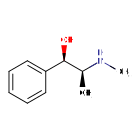
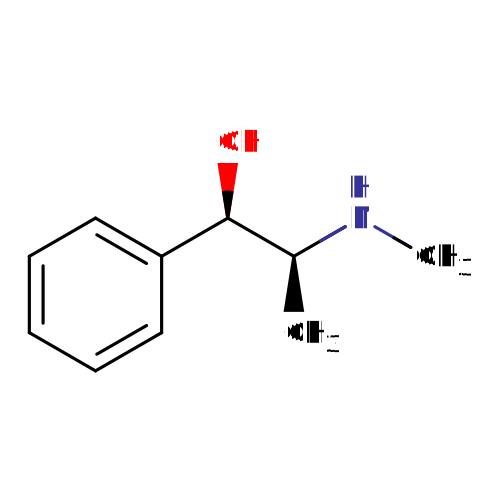
Structure for Ephedrine (DB01364)
- Weight
- Average: 165.2322
Monoisotopic: 165.115364107 - Chemical Formula
- C10H15NO
- Synonyms
- (-)-Ephedrine
- (1R,2S)-1-Phenyl-1-hydroxy-2-methylaminopropane
- Efedrina
- Ephedrine
- L-Ephedrine
- L-erythro-2-(Methylamino)-1-phenylpropan-1-ol
- L(−)-ephedrine
- External IDs
- NSC-170951
- NSC-8971

Pharmacology
- Indication
Ephedrine intravenous injections are indicated to treat hypotension under anesthesia,8,13 ephedrine injections by multiple routes are indicated to treat allergic conditions such as bronchial asthma,12 ephedrine nasal spray is and OTC medication used as a decongestant.11
 Reduce drug development failure ratesBuild, train, & validate machine-learning modelswith evidence-based and structured datasets.Build, train, & validate predictive machine-learning models with structured datasets.
- Associated Conditions
Indication Type Indication Combined Product Details Approval Level Age Group Patient Characteristics Dose Form Treatment of Allergic disorder ••• ••••• ••••••••• Treatment of Bronchial asthma ••• ••••• ••••••••• Used in combination for symptomatic treatment of Common cold Combination Product in combination with: Dextromethorphan (DB00514), Promethazine (DB01069) •••••••••••• ••••• Used in combination for symptomatic treatment of Coughing Combination Product in combination with: Promethazine (DB01069), Dextromethorphan (DB00514) •••••••••••• ••••• Used in combination for symptomatic treatment of Coughing Combination Product in combination with: Dextromethorphan (DB00514), Diphenhydramine (DB01075) •••••••••••• ••••• - Contraindications & Blackbox Warnings
 Prevent Adverse Drug Events TodayTap into our Clinical API for life-saving information on contraindications & blackbox warnings, population restrictions, harmful risks, & more.Avoid life-threatening adverse drug events with our Clinical API
- Pharmacodynamics
Ephedrine increases blood pressure by stimulating heart rate and cardiac output and variably increasing peripheral resistance.9 It causes bronchodilation due to the activation of beta-adrenergic receptors in the lungs. By stimulating alpha-adrenergic receptors in bladder smooth muscle cells, ephedrine also increases the resistance to the outflow of urine.8,9 The therapeutic window of ephedrine is wide, as patients can be given doses of 5mg up to 50mg.11 Patients should be counselled regarding the pressor effects of sympathomimetic amines and the risk of tachyphylaxis.4 Also, the use of ephedrine for hypotension prophylaxis is associated with a higher risk of hypertension, compared to when ephedrine is used to treat hypotension.9
- Mechanism of action
Ephedrine is a direct and indirect sympathomimetic amine.4 As a direct effect, ephedrine activates alpha-adrenergic and beta-adrenergic receptors. As an indirect effect, it inhibits norepinephrine reuptake and increases the release of norepinephrine from vesicles in nerve cells.4 These actions combined lead to larger quantities of norepinephrine present in the synapse for more extended periods of time, increasing stimulation of the sympathetic nervous system.4
Ephedrine acts as an agonist of alpha-1, beta-1 and beta-2-adrenergic receptors. The stimulation of alpha-1-adrenergic receptors causes the constriction of veins and a rise in blood pressure, the stimulation of beta-1-adrenergic receptors increases cardiac chronotropy and inotropy, and the stimulation of beta-2-adrenergic receptors causes vasodilation and bronchodilation.4
Target Actions Organism AAlpha-1A adrenergic receptor agonistHumans ABeta-1 adrenergic receptor agonistHumans ABeta-2 adrenergic receptor agonistHumans USodium-dependent noradrenaline transporter inverse agonistHumans - Absorption
Oral ephedrine reaches an average Cmax of 79.5ng/mL, with a Tmax of 1.81h, and a bioavailability of 88%.2
- Volume of distribution
Oral ephedrine has an average volume of distribution of 215.6L.2
- Protein binding
(-) Ephedrine is 4.9±0.3% bound to human serum albumin and (+) Ephedrine is 6.9±1.4% bound to human serum albumin.3
- Metabolism
Ephedrine is largely unmetabolized in the body.1 Ephedrine can be N-demethylated to norephedrine, or demethylated and deaminized to benzoic acid conjugates and 1,2-hydroxypropylbenzene.1
Hover over products below to view reaction partners
- Route of elimination
Ephedrine is mainly eliminated in the urine.1,8 Approximately 60% is eliminated as the unmetabolized parent compound, 13% as benzoic acid conjugates, and 1% as 1,2-dihydroxypropylbenzene.1
- Half-life
Oral ephedrine has a plasma elimination half life of approximately 6 hours, but there is a large degree of inter-patient variability.2,8,13
- Clearance
Oral ephedrine has a clearance of 23.3L/h but there is a high degree of inter-patient variability.2
- Adverse Effects
 Improve decision support & research outcomesWith structured adverse effects data, including: blackbox warnings, adverse reactions, warning & precautions, & incidence rates. View sample adverse effects data in our new Data Library!Improve decision support & research outcomes with our structured adverse effects data.
- Toxicity
Patients experiencing an overdose of ephedrine will present with rapidly increasing blood pressure.8,13 Manage overdose with blood pressure monitoring, and possibly the administration of parenteral antihypertensives.8,13 The LD50 in mice after oral administration is 785mg/kg, after intraperitoneal administration if 248mg/kg, and after subcutaneous administration is 425mg/kg.10
- Pathways
- Not Available
- Pharmacogenomic Effects/ADRs
- Not Available
Interactions
- Drug Interactions
- This information should not be interpreted without the help of a healthcare provider. If you believe you are experiencing an interaction, contact a healthcare provider immediately. The absence of an interaction does not necessarily mean no interactions exist.
Drug Interaction Integrate drug-drug
interactions in your softwareAcebutolol The therapeutic efficacy of Acebutolol can be increased when used in combination with Ephedrine. Aceclofenac The risk or severity of hypertension can be increased when Ephedrine is combined with Aceclofenac. Acemetacin The risk or severity of hypertension can be increased when Ephedrine is combined with Acemetacin. Acetazolamide The risk or severity of Cardiac Arrhythmia can be increased when Ephedrine is combined with Acetazolamide. Acetyldigitoxin The risk or severity of Cardiac Arrhythmia can be increased when Ephedrine is combined with Acetyldigitoxin. - Food Interactions
- No interactions found.
Products
 Drug product information from 10+ global regionsOur datasets provide approved product information including:dosage, form, labeller, route of administration, and marketing period.Access drug product information from over 10 global regions.
- Product Ingredients
Ingredient UNII CAS InChI Key Ephedrine hydrochloride NLJ6390P1Z 50-98-6 BALXUFOVQVENIU-GNAZCLTHSA-N Ephedrine sulfate U6X61U5ZEG 134-72-5 CAVQBDOACNULDN-KHFUBBAMSA-N Ephedrine tannate 1M92VL7U3I 1405-94-3 FGPQMDDYPJHDFD-RDVHWUOCSA-N - Product Images

- International/Other Brands
- Rezipres (Eton Pharmaceuticals, Inc.)
- Brand Name Prescription Products
Name Dosage Strength Route Labeller Marketing Start Marketing End Region Image Akovaz Injection 50 mg/1mL Intravenous BluePoint Laboratories 2017-06-30 2022-11-30 US 
Akovaz Injection 50 mg/1mL Intravenous Exela Pharma Sciences, LLC 2021-04-15 Not applicable US Akovaz Injection 50 mg/1mL Intravenous Avadel Legacy Pharmaceuticals, Llc 2016-08-01 2023-09-30 US Akovaz Injection 5 mg/1mL Intravenous Exela Pharma Sciences, LLC 2021-05-10 Not applicable US Corphedra Injection, solution 50 mg/1mL Intravenous Par Pharmaceutical, Inc. 2017-02-16 Not applicable US - Generic Prescription Products
Name Dosage Strength Route Labeller Marketing Start Marketing End Region Image Ephedrine Sulfate Injection 50 mg/1mL Intravenous Medical Purchasing Solutions, Llc 2021-06-14 Not applicable US Ephedrine Sulfate Injection 50 mg/1mL Intravenous Amneal Pharmaceuticals LLC 2019-10-23 Not applicable US Ephedrine Sulfate Injection 50 mg/1mL Intravenous Civica, Inc. 2021-08-23 Not applicable US Ephedrine Sulfate Injection 50 mg/1mL Intravenous Civica, Inc. 2021-03-29 Not applicable US Ephedrine Sulfate Injection 50 mg/1mL Intravenous Fresenius Kabi USA, LLC 2020-10-31 Not applicable US - Over the Counter Products
Name Dosage Strength Route Labeller Marketing Start Marketing End Region Image Bronkaid Max Tablet, coated 25 mg/1 Oral Foundation Consumer Healthcare LLC 2020-09-01 Not applicable US Ephedrine HCl Tablet 8 mg Oral Added Dimensions 2002-04-30 2006-09-25 Canada 
Ephedrine HCl Capsule 25 mg / cap Oral Kaizen Inc. 1997-04-22 1999-03-15 Canada Ephedrine HCl Tablet 8 mg Oral Kaizen Inc. 2004-01-01 2010-02-26 Canada Ephedrine HCl - Tab 25mg Tablet 25 mg Oral Added Dimensions 1996-07-30 2002-02-25 Canada - Mixture Products
Name Ingredients Dosage Route Labeller Marketing Start Marketing End Region Image ALCOUGH MIXTURE Ephedrine hydrochloride (6 mg/5ml) + Guaifenesin (50 mg/5ml) Solution Oral ALCARE PHARMACEUTICALS PTE LTD 1989-06-21 Not applicable Singapore 
ANTI-PHLEGM COUGH MIXTURE Ephedrine hydrochloride (4 mg/5ml) + Ammonium chloride (100 mg/5ml) + Sodium citrate (150 mg/5ml) Solution Oral LI TA SHEN MEDICAL TRADER 1989-11-05 Not applicable Singapore ANTIBEKSIN SURUP, 100 ML Ephedrine hydrochloride (5 mg/5ml) + Pheniramine maleate (15 mg/5ml) + Potassium guaiacolsulfonate (175 mg/5ml) + Sodium citrate (65 mg/5ml) Syrup Oral YAVUZ İLAÇ ECZA DEPOSU MEDİKAL ÜRÜNLER SAN.VE TİC. A.Ş. 2009-02-06 Not applicable Turkey 
ARKODIN SIROP, 125 ML Ephedrine hydrochloride (10 mg/5ml) + Codeine phosphate (12.5 mg/5ml) Syrup Oral GÜNSA GÜNEY İLAÇ VE HAMMADDELER SAN. VE TİC. A.Ş. 1972-03-16 Not applicable Turkey ARTU 100 ML SURUP Ephedrine hydrochloride (5 mg/5ml) + Sodium benzoate (5 mg/5ml) + Potassium guaiacolsulfonate (175 mg/5ml) + Promethazine hydrochloride (5 mg/5ml) Syrup Oral GÜNSA GÜNEY İLAÇ VE HAMMADDELER SAN. VE TİC. A.Ş. 1972-03-16 Not applicable Turkey - Unapproved/Other Products
Name Ingredients Dosage Route Labeller Marketing Start Marketing End Region Image Ephedrine Ephedrine sulfate (10 mg/1mL) Injection, solution Intravenous Cantrell Drug Company 2016-03-18 2017-12-06 US Ephedrine Sulfate Ephedrine sulfate (50 mg/1mL) Injection, solution Intravenous Nexus Pharmaceuticals Inc 2015-06-08 Not applicable US Ephedrine Sulfate Ephedrine sulfate (50 mg/1mL) Injection Intramuscular; Intravenous; Subcutaneous Akorn 2009-04-01 Not applicable US Ephedrine Sulfate Ephedrine sulfate (50 mg/1mL) Injection Intramuscular; Intravenous; Subcutaneous Akorn 2012-03-11 2017-06-01 US Ephedrine Sulfate Ephedrine sulfate (50 mg/1mL) Injection, solution Intramuscular; Intravenous; Subcutaneous Cardinal Health 2004-03-26 2015-02-28 US

Categories
- ATC Codes
- S01FB02 — Ephedrine
- S01FB — Sympathomimetics excl. antiglaucoma preparations
- S01F — MYDRIATICS AND CYCLOPLEGICS
- S01 — OPHTHALMOLOGICALS
- S — SENSORY ORGANS
- R01AB — Sympathomimetics, combinations excl. corticosteroids
- R01A — DECONGESTANTS AND OTHER NASAL PREPARATIONS FOR TOPICAL USE
- R01 — NASAL PREPARATIONS
- R — RESPIRATORY SYSTEM
- C01CA — Adrenergic and dopaminergic agents
- C01C — CARDIAC STIMULANTS EXCL. CARDIAC GLYCOSIDES
- C01 — CARDIAC THERAPY
- C — CARDIOVASCULAR SYSTEM
- R03CA — Alpha- and beta-adrenoreceptor agonists
- R03C — ADRENERGICS FOR SYSTEMIC USE
- R03 — DRUGS FOR OBSTRUCTIVE AIRWAY DISEASES
- R — RESPIRATORY SYSTEM
- A08AA — Centrally acting antiobesity products
- A08A — ANTIOBESITY PREPARATIONS, EXCL. DIET PRODUCTS
- A08 — ANTIOBESITY PREPARATIONS, EXCL. DIET PRODUCTS
- A — ALIMENTARY TRACT AND METABOLISM
- Drug Categories
- Adrenergic Agents
- Adrenergic Agonists
- Adrenergic alpha-Agonists
- Adrenergic and Dopaminergic Agents
- Adrenergic beta-Agonists
- Adrenergics for Systemic Use
- Agents producing tachycardia
- Agents that produce hypertension
- Alcohols
- Alimentary Tract and Metabolism
- Alpha-and Beta-adrenergic Agonists
- Amines
- Amino Alcohols
- Antiobesity Preparations, Excl. Diet Products
- Autonomic Agents
- Cardiac Stimulants Excl. Cardiac Glycosides
- Cardiac Therapy
- Cardiovascular Agents
- Central Nervous System Agents
- Central Nervous System Stimulants
- Centrally Acting Antiobesity Products
- Cholinesterase substrates
- Drugs for Obstructive Airway Diseases
- Epinephrine and similars
- Ethylamines
- Herbs and Natural Products
- Increased Norepinephrine Activity
- Mydriatics and Cycloplegics
- Nasal Preparations
- Neurotransmitter Agents
- Norepinephrine Releasing Agents
- Ophthalmologicals
- Peripheral Nervous System Agents
- Phenethylamines
- Propanolamines
- Propanols
- Sensory Organs
- Sympathomimetic (Adrenergic) Agents
- Sympathomimetics
- Sympathomimetics Excl. Antiglaucoma Preparations
- Sympathomimetics, Plain
- Vasoconstrictor Agents
- Chemical TaxonomyProvided by Classyfire
- Description
- This compound belongs to the class of organic compounds known as phenylpropanes. These are organic compounds containing a phenylpropane moiety.
- Kingdom
- Organic compounds
- Super Class
- Benzenoids
- Class
- Benzene and substituted derivatives
- Sub Class
- Phenylpropanes
- Direct Parent
- Phenylpropanes
- Alternative Parents
- Aralkylamines / Secondary alcohols / 1,2-aminoalcohols / Dialkylamines / Organopnictogen compounds / Hydrocarbon derivatives / Aromatic alcohols
- Substituents
- 1,2-aminoalcohol / Alcohol / Amine / Aralkylamine / Aromatic alcohol / Aromatic homomonocyclic compound / Hydrocarbon derivative / Organic nitrogen compound / Organic oxygen compound / Organonitrogen compound
- Molecular Framework
- Aromatic homomonocyclic compounds
- External Descriptors
- phenylethanolamines, phenethylamine alkaloid (CHEBI:15407) / Alkaloids, Phenylalanine derived alkaloids (C01575)
- Affected organisms
- Humans
Chemical Identifiers
- UNII
- GN83C131XS
- CAS number
- 299-42-3
- InChI Key
- KWGRBVOPPLSCSI-WPRPVWTQSA-N
- InChI
- InChI=1S/C10H15NO/c1-8(11-2)10(12)9-6-4-3-5-7-9/h3-8,10-12H,1-2H3/t8-,10-/m0/s1
- IUPAC Name
- (1R,2S)-2-(methylamino)-1-phenylpropan-1-ol
- SMILES
- CN[C@@H](C)[C@H](O)C1=CC=CC=C1
References
- Synthesis Reference
Thomas Moest, Uwe Loeffler, Hans Waiblinger, "Production of pellets composed of an ephedrine derivative." U.S. Patent US5453280, issued March, 1994.
US5453280- General References
- Sever PS, Dring LG, Williams RT: The metabolism of (-)-ephedrine in man. Eur J Clin Pharmacol. 1975 Dec 19;9(2-3):193-8. doi: 10.1007/bf00614017. [Article]
- Pickup ME, May CS, Ssendagire R, Paterson JW: The pharmacokinetics of ephedrine after oral dosage in asthmatics receiving acute and chronic treatment. Br J Clin Pharmacol. 1976 Feb;3(1):123-34. doi: 10.1111/j.1365-2125.1976.tb00579.x. [Article]
- Volpp M, Holzgrabe U: Determination of plasma protein binding for sympathomimetic drugs by means of ultrafiltration. Eur J Pharm Sci. 2019 Jan 15;127:175-184. doi: 10.1016/j.ejps.2018.10.027. Epub 2018 Oct 31. [Article]
- Statler AK, Maani CV, Kohli A: Ephedrine . [Article]
- Stehle RL: Ephedrine-A New (?) Sympathomimetic Drug. Can Med Assoc J. 1925 Nov;15(11):1158-60. [Article]
- Wang X, Mao M, Liu S, Xu S, Yang J: A Comparative Study of Bolus Norepinephrine, Phenylephrine, and Ephedrine for the Treatment of Maternal Hypotension in Parturients with Preeclampsia During Cesarean Delivery Under Spinal Anesthesia. Med Sci Monit. 2019 Feb 9;25:1093-1101. doi: 10.12659/MSM.914143. [Article]
- Kinsella SM, Carvalho B, Dyer RA, Fernando R, McDonnell N, Mercier FJ, Palanisamy A, Sia ATH, Van de Velde M, Vercueil A: International consensus statement on the management of hypotension with vasopressors during caesarean section under spinal anaesthesia. Anaesthesia. 2018 Jan;73(1):71-92. doi: 10.1111/anae.14080. Epub 2017 Nov 1. [Article]
- FDA Approved Drug Products: Emerphed Ephedrine Sulfate Intravenous Injection [Link]
- FDA Approved Drug Products: Akovaz Ephedrine Sulfare Intravenous Injection [Link]
- Cayman Chemical: Ephedrine MSDS [Link]
- Dailymed: Ephedrine Nasal Spray [Link]
- Dailymed: Ephedrine Intravenous, Intramuscular, and Subcutaneous Injection [Link]
- FDA Approved Drug Products: Rezipres (Ephedrine Hydrochloride) Intravenous Injection [Link]
- External Links
- Human Metabolome Database
- HMDB0015451
- KEGG Drug
- D00124
- KEGG Compound
- C01575
- PubChem Compound
- 9294
- PubChem Substance
- 46507538
- ChemSpider
- 8935
- 3966
- ChEBI
- 15407
- ChEMBL
- CHEMBL211456
- ZINC
- ZINC000000074836
- Therapeutic Targets Database
- DAP000228
- PharmGKB
- PA449466
- Guide to Pharmacology
- GtP Drug Page
- RxList
- RxList Drug Page
- Drugs.com
- Drugs.com Drug Page
- Wikipedia
- Ephedrine
Clinical Trials
- Clinical Trials
Phase Status Purpose Conditions Count 4 Completed Other Endovascular Carotid Surgery / Preoperative Hypotension 1 4 Completed Prevention Anesthesia; Adverse Effect, Spinal and Epidural / Complications; Cesarean Section / Hypotension 1 4 Completed Prevention Bradycardia 1 4 Completed Prevention Bradycardia / Dexmedetomidine / Spinal Anesthesia therapy 1 4 Completed Prevention Hypotension 1
Pharmacoeconomics
- Manufacturers
- Not Available
- Packagers
- Akorn Inc.
- Allergy Laboratories Inc.
- Ben Venue Laboratories Inc.
- C.O. Truxton Inc.
- Cardinal Health
- Claris Lifesciences Inc.
- Consolidated Midland Corp.
- Ebewe Pharma
- Hospira Inc.
- Jordan Pharmaceuticals Inc.
- Mallinckrodt Inc.
- Parenta Pharmaceuticals
- Pharmedium
- Taylor Pharmaceuticals
- West-Ward Pharmaceuticals
- Dosage Forms
Form Route Strength Capsule Solution Oral 6 mg/5ml Solution Oral Solution / drops Nasal Tablet, film coated Oral Ointment Nasal Solution Oral 100 mg/5ml Suppository Rectal Tablet, coated Oral Tablet, coated Oral 25 mg/1 Syrup Oral Injection, solution Intravenous 500 mg/10mL Injection Intramuscular; Intravenous; Subcutaneous 30 mg/ml Spray Nasal Syrup Syrup Oral 9 mg/5ml Elixir Oral Tablet Oral 50 mg Injection; solution Intramuscular; Intravenous; Subcutaneous 0.05 g/ml Injection, solution 3 MG/ML Syrup Syrup Nasal; Topical Tablet Oral Injection, solution 10 MG/ML Injection, solution 25 MG/ML Injection, solution Injection Intravenous 5 mg/1mL Liquid Oral Injection, solution Parenteral Injection, solution Parenteral 10 mg/ml Injection, solution Parenteral 50 mg/ml Injection, solution Intravenous 10 mg/1mL Capsule Oral 25 mg / cap Tablet Oral 8 mg Tablet Oral 25 mg Solution Nasal 0.5 % w/v Capsule Oral 25 mg/1 Injection Intramuscular; Intravenous; Subcutaneous 50 mg/1mL Injection Intravenous 50 mg/1mL Injection, solution Intravenous 50 mg/1mL Tablet, film coated Oral 25 mg/1 Solution Intramuscular; Intravenous; Subcutaneous 50 mg / 1 mL Solution Intramuscular; Intravenous; Subcutaneous 50 mg / mL Injection Intramuscular; Intravenous; Subcutaneous 50 mg/ml Liquid Intramuscular; Intravenous; Subcutaneous 50 mg / mL Injection, solution Intramuscular; Intravenous; Subcutaneous 50 mg/1mL Tablet Oral 15 mg / tab Tablet Oral 30 mg / tab Tablet Oral .13 mg Liquid Nasal 1.5 % Tablet Oral 5.34 mg/8g Bead Oral 4.6 mg/4g Ointment Topical Injection, solution Intravenous 30 mg/ml Jelly Nasal Injection 30 mg/ml Solution Oral 80 mg/5ml Tablet Oral 12.5 mg/1 Injection, solution Intravenous 4.7 mg/1mL Injection, solution Intravenous 47 mg/1mL Injection, solution Intravenous 47 mg/10mL Injection, solution Intravenous 9.4 mg/1mL Solution / drops Nasal 1 % Spray Nasal 5 mg/1mL Spray Topical 5 mg/1mL Tablet Oral Syrup Oral 100 mg/5ml Tablet Oral 10 mg Elixir Oral 4 mg/5ml Liquid Infiltration Liquid Infiltration; Subcutaneous Elixir Oral 9 mg/5ml Elixir Oral 10.0 mg/5ml Solution Intramuscular 50.000 mg Tablet Elixir Oral 10 mg/5ml Injection - Prices
Unit description Cost Unit Ephedrine sulfate 250 mg/5 ml 7.82USD ml Ephedrine-ns 50 mg/5 ml syr 2.91USD ml Ephedrine-ns 100 mg/10 ml syr 2.07USD ml Ephedrine su 50 mg/ml vial 1.75USD ml Ephedrine 50 mg/ml ampul 0.76USD ml Ephedrine powder 0.47USD g Ephedrine sulfate powder 0.46USD g Ephedrine su 25 mg capsule 0.3USD capsule DrugBank does not sell nor buy drugs. Pricing information is supplied for informational purposes only.- Patents
Patent Number Pediatric Extension Approved Expires (estimated) Region US10869845 No 2020-12-22 2040-01-22 US US11090278 No 2021-08-17 2040-05-16 US US11241400 No 2020-05-16 2040-05-16 US US11464752 No 2020-05-16 2040-05-16 US US11478436 No 2020-05-16 2040-05-16 US US11571398 No 2020-05-16 2040-05-16 US
Properties
- State
- Solid
- Experimental Properties
Property Value Source melting point (°C) 34 °C PhysProp boiling point (°C) 255 °C PhysProp water solubility 6.36E+004 mg/L (at 30 °C) YALKOWSKY,SH & DANNENFELSER,RM (1992) logP 1.13 AVDEEF,A (1997) pKa 10.3 (at 0 °C) PERRIN,DD (1965) - Predicted Properties
Property Value Source Water Solubility 8.26 mg/mL ALOGPS logP 1 ALOGPS logP 1.32 Chemaxon logS -1.3 ALOGPS pKa (Strongest Acidic) 13.89 Chemaxon pKa (Strongest Basic) 9.52 Chemaxon Physiological Charge 1 Chemaxon Hydrogen Acceptor Count 2 Chemaxon Hydrogen Donor Count 2 Chemaxon Polar Surface Area 32.26 Å2 Chemaxon Rotatable Bond Count 3 Chemaxon Refractivity 49.69 m3·mol-1 Chemaxon Polarizability 18.8 Å3 Chemaxon Number of Rings 1 Chemaxon Bioavailability 1 Chemaxon Rule of Five Yes Chemaxon Ghose Filter Yes Chemaxon Veber's Rule Yes Chemaxon MDDR-like Rule No Chemaxon - Predicted ADMET Features
Property Value Probability Human Intestinal Absorption + 0.9645 Blood Brain Barrier + 0.5638 Caco-2 permeable + 0.8866 P-glycoprotein substrate Non-substrate 0.7182 P-glycoprotein inhibitor I Non-inhibitor 0.9795 P-glycoprotein inhibitor II Non-inhibitor 0.984 Renal organic cation transporter Non-inhibitor 0.8965 CYP450 2C9 substrate Non-substrate 0.8001 CYP450 2D6 substrate Non-substrate 0.7839 CYP450 3A4 substrate Non-substrate 0.7235 CYP450 1A2 substrate Non-inhibitor 0.5595 CYP450 2C9 inhibitor Non-inhibitor 0.7209 CYP450 2D6 inhibitor Inhibitor 0.5846 CYP450 2C19 inhibitor Non-inhibitor 0.5737 CYP450 3A4 inhibitor Non-inhibitor 0.9431 CYP450 inhibitory promiscuity Low CYP Inhibitory Promiscuity 0.907 Ames test Non AMES toxic 0.9517 Carcinogenicity Non-carcinogens 0.7739 Biodegradation Not ready biodegradable 0.7807 Rat acute toxicity 2.3882 LD50, mol/kg Not applicable hERG inhibition (predictor I) Weak inhibitor 0.9329 hERG inhibition (predictor II) Non-inhibitor 0.9277
Spectra
- Mass Spec (NIST)
- Download (7.84 KB)
- Spectra
- Chromatographic Properties
Collision Cross Sections (CCS)
Adduct CCS Value (Å2) Source type Source [M-H]- 140.5843286 predictedDarkChem Lite v0.1.0 [M-H]- 139.9190286 predictedDarkChem Lite v0.1.0 [M-H]- 140.1475286 predictedDarkChem Lite v0.1.0 [M-H]- 139.83556 predictedDeepCCS 1.0 (2019) [M+H]+ 141.3247286 predictedDarkChem Lite v0.1.0 [M+H]+ 140.7224286 predictedDarkChem Lite v0.1.0 [M+H]+ 140.4529286 predictedDarkChem Lite v0.1.0 [M+H]+ 142.23112 predictedDeepCCS 1.0 (2019) [M+Na]+ 140.5780286 predictedDarkChem Lite v0.1.0 [M+Na]+ 140.2162286 predictedDarkChem Lite v0.1.0 [M+Na]+ 140.3267286 predictedDarkChem Lite v0.1.0 [M+Na]+ 148.14365 predictedDeepCCS 1.0 (2019)
Targets

- Kind
- Protein
- Organism
- Humans
- Pharmacological action
- Yes
- Actions
- Agonist
- General Function
- Protein heterodimerization activity
- Specific Function
- This alpha-adrenergic receptor mediates its action by association with G proteins that activate a phosphatidylinositol-calcium second messenger system. Its effect is mediated by G(q) and G(11) prot...
- Gene Name
- ADRA1A
- Uniprot ID
- P35348
- Uniprot Name
- Alpha-1A adrenergic receptor
- Molecular Weight
- 51486.005 Da
References
- Ma G, Bavadekar SA, Davis YM, Lalchandani SG, Nagmani R, Schaneberg BT, Khan IA, Feller DR: Pharmacological effects of ephedrine alkaloids on human alpha(1)- and alpha(2)-adrenergic receptor subtypes. J Pharmacol Exp Ther. 2007 Jul;322(1):214-21. Epub 2007 Apr 3. [Article]
- Wellman PJ, Miller DK, Ho DH: Noradrenergic modulation of ephedrine-induced hypophagia. Synapse. 2003 Apr;48(1):18-24. [Article]
- Berman HM, Westbrook J, Feng Z, Gilliland G, Bhat TN, Weissig H, Shindyalov IN, Bourne PE: The Protein Data Bank. Nucleic Acids Res. 2000 Jan 1;28(1):235-42. [Article]
- Statler AK, Maani CV, Kohli A: Ephedrine . [Article]
- FDA Approved Drug Products: Rezipres (Ephedrine Hydrochloride) Intravenous Injection [Link]
- Kind
- Protein
- Organism
- Humans
- Pharmacological action
- Yes
- Actions
- Agonist
- General Function
- Receptor signaling protein activity
- Specific Function
- Beta-adrenergic receptors mediate the catecholamine-induced activation of adenylate cyclase through the action of G proteins. This receptor binds epinephrine and norepinephrine with approximately e...
- Gene Name
- ADRB1
- Uniprot ID
- P08588
- Uniprot Name
- Beta-1 adrenergic receptor
- Molecular Weight
- 51322.1 Da
References
- Kind
- Protein
- Organism
- Humans
- Pharmacological action
- Yes
- Actions
- Agonist
- General Function
- Protein homodimerization activity
- Specific Function
- Beta-adrenergic receptors mediate the catecholamine-induced activation of adenylate cyclase through the action of G proteins. The beta-2-adrenergic receptor binds epinephrine with an approximately ...
- Gene Name
- ADRB2
- Uniprot ID
- P07550
- Uniprot Name
- Beta-2 adrenergic receptor
- Molecular Weight
- 46458.32 Da
References
- Kind
- Protein
- Organism
- Humans
- Pharmacological action
- Unknown
- Actions
- Inverse agonist
- General Function
- Norepinephrine:sodium symporter activity
- Specific Function
- Amine transporter. Terminates the action of noradrenaline by its high affinity sodium-dependent reuptake into presynaptic terminals.
- Gene Name
- SLC6A2
- Uniprot ID
- P23975
- Uniprot Name
- Sodium-dependent noradrenaline transporter
- Molecular Weight
- 69331.42 Da
References
- Kobayashi S, Endou M, Sakuraya F, Matsuda N, Zhang XH, Azuma M, Echigo N, Kemmotsu O, Hattori Y, Gando S: The sympathomimetic actions of l-ephedrine and d-pseudoephedrine: direct receptor activation or norepinephrine release? Anesth Analg. 2003 Nov;97(5):1239-45. [Article]
- McMahon LR, Cunningham KA: Discriminative stimulus effects of (-)-ephedrine in rats: analysis with catecholamine transporter and receptor ligands. Drug Alcohol Depend. 2003 Jun 5;70(3):255-64. [Article]
- Fleckenstein AE, Volz TJ, Riddle EL, Gibb JW, Hanson GR: New insights into the mechanism of action of amphetamines. Annu Rev Pharmacol Toxicol. 2007;47:681-98. [Article]
- Sulzer D, Sonders MS, Poulsen NW, Galli A: Mechanisms of neurotransmitter release by amphetamines: a review. Prog Neurobiol. 2005 Apr;75(6):406-33. [Article]
Enzymes
- Kind
- Protein
- Organism
- Humans
- Pharmacological action
- Unknown
- Actions
- Substrate
- General Function
- Identical protein binding
- Specific Function
- Esterase with broad substrate specificity. Contributes to the inactivation of the neurotransmitter acetylcholine. Can degrade neurotoxic organophosphate esters.
- Gene Name
- BCHE
- Uniprot ID
- P06276
- Uniprot Name
- Cholinesterase
- Molecular Weight
- 68417.575 Da
References
- Maizel' EB, Rozengart EV, Khakimov IuP, Abduvakhabov AA, Aslanov KhA: [Ephedrine, salsoline and cytisine derivatives as substrates and inhibitirs of cholinesterases]. Biokhimiia. 1978 Jul;43(7):1150-6. [Article]
- Kind
- Protein
- Organism
- Humans
- Pharmacological action
- Unknown
- Actions
- Inhibitor
- General Function
- Serine hydrolase activity
- Specific Function
- Terminates signal transduction at the neuromuscular junction by rapid hydrolysis of the acetylcholine released into the synaptic cleft. Role in neuronal apoptosis.
- Gene Name
- ACHE
- Uniprot ID
- P22303
- Uniprot Name
- Acetylcholinesterase
- Molecular Weight
- 67795.525 Da
References
- Singh AK, Spassova D: Effects of hexamethonium, phenothiazines, propranolol and ephedrine on acetylcholinesterase carbamylation by physostigmine, aldicarb and carbaryl: interaction between the active site and the functionally distinct peripheral sites in acetylcholinesterase. Comp Biochem Physiol C Pharmacol Toxicol Endocrinol. 1998 Jan;119(1):97-105. [Article]
Carriers
- Kind
- Protein
- Organism
- Humans
- Pharmacological action
- Unknown
- Actions
- Binder
- General Function
- Toxic substance binding
- Specific Function
- Serum albumin, the main protein of plasma, has a good binding capacity for water, Ca(2+), Na(+), K(+), fatty acids, hormones, bilirubin and drugs. Its main function is the regulation of the colloid...
- Gene Name
- ALB
- Uniprot ID
- P02768
- Uniprot Name
- Serum albumin
- Molecular Weight
- 69365.94 Da
References
- Volpp M, Holzgrabe U: Determination of plasma protein binding for sympathomimetic drugs by means of ultrafiltration. Eur J Pharm Sci. 2019 Jan 15;127:175-184. doi: 10.1016/j.ejps.2018.10.027. Epub 2018 Oct 31. [Article]
Transporters
- Kind
- Protein
- Organism
- Humans
- Pharmacological action
- Unknown
- Actions
- Inhibitor
- General Function
- Monoamine transmembrane transporter activity
- Specific Function
- Involved in the ATP-dependent vesicular transport of biogenic amine neurotransmitters. Pumps cytosolic monoamines including dopamine, norepinephrine, serotonin, and histamine into synaptic vesicles...
- Gene Name
- SLC18A2
- Uniprot ID
- Q05940
- Uniprot Name
- Synaptic vesicular amine transporter
- Molecular Weight
- 55712.075 Da
References
- Ellis JD, German CL, Birdsall E, Hanson JE, Crosby MA, Rowley SD, Sawada NA, West JN, Hanson GR, Fleckenstein AE: Ephedrine decreases vesicular monoamine transporter-2 function. Synapse. 2011 May;65(5):449-51. doi: 10.1002/syn.20896. [Article]
- Horton DB, Siripurapu KB, Norrholm SD, Culver JP, Hojahmat M, Beckmann JS, Harrod SB, Deaciuc AG, Bardo MT, Crooks PA, Dwoskin LP: meso-Transdiene analogs inhibit vesicular monoamine transporter-2 function and methamphetamine-evoked dopamine release. J Pharmacol Exp Ther. 2011 Mar;336(3):940-51. doi: 10.1124/jpet.110.175117. Epub 2010 Dec 21. [Article]
- Sulzer D, Sonders MS, Poulsen NW, Galli A: Mechanisms of neurotransmitter release by amphetamines: a review. Prog Neurobiol. 2005 Apr;75(6):406-33. [Article]
- Sulzer D, Chen TK, Lau YY, Kristensen H, Rayport S, Ewing A: Amphetamine redistributes dopamine from synaptic vesicles to the cytosol and promotes reverse transport. J Neurosci. 1995 May;15(5 Pt 2):4102-8. [Article]
- Yasumoto S, Tamura K, Karasawa J, Hasegawa R, Ikeda K, Yamamoto T, Yamamoto H: Inhibitory effect of selective serotonin reuptake inhibitors on the vesicular monoamine transporter 2. Neurosci Lett. 2009 May 1;454(3):229-32. doi: 10.1016/j.neulet.2009.03.049. Epub 2009 Mar 18. [Article]
- Fleckenstein AE, Volz TJ, Riddle EL, Gibb JW, Hanson GR: New insights into the mechanism of action of amphetamines. Annu Rev Pharmacol Toxicol. 2007;47:681-98. [Article]


Drug created at July 06, 2007 19:56 / Updated at April 26, 2024 00:45