Identification
- Summary
Metamfetamine is a sympathomimetic agent used in the treatment of attention deficit hyperactivity disorder (ADHD) and exogenous obesity.
- Brand Names
- Desoxyn
- Generic Name
- Metamfetamine
- DrugBank Accession Number
- DB01577
- Background
Metamfetamine (methamphetamine) is a psychostimulant and sympathomimetic drug, and a member of the amphetamine group of sympathomimetic amines. Methamphetamine can induce effects such as euphoria, increased alertness and energy, and enhanced self-esteem. It is a scheduled drug in most countries due to its high potential for addiction and abuse.
The FDA withdrew its approval for the use of all parenteral drug products containing methamphetamine hydrochloride, a metamfetamine salt.6
- Type
- Small Molecule
- Groups
- Approved, Illicit, Withdrawn
- Structure
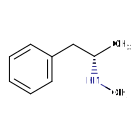
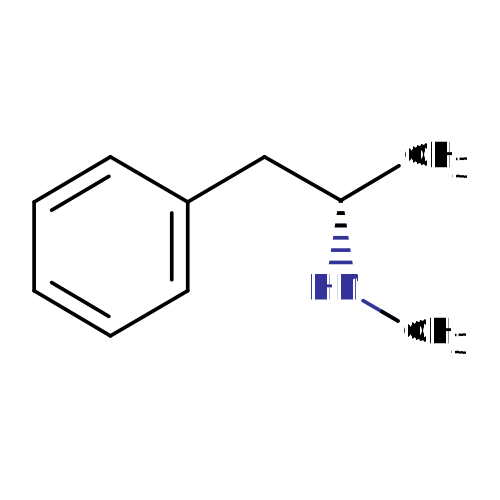
Structure for Metamfetamine (DB01577)
- Weight
- Average: 149.2328
Monoisotopic: 149.120449485 - Chemical Formula
- C10H15N
- Synonyms
- (+)-(S)-N-α-dimethylphenethylamine
- (S)-N,α-dimethylbenzeneethanamine
- (αS)-N,α-dimethylbenzeneethanamine
- d-1-phenyl-2-methylaminopropane
- d-deoxyephedrine
- d-desoxyephedrine
- d-N-methylamphetamine
- d-phenylisopropylmethylamine
- Dextromethamphetamine
- Métamfétamine
- Metamfetamine
- Metamfetaminum
- Metanfetamina
- Methamphetamine
- Methamphetaminum
- methyl-β-phenylisopropylamine
- External IDs
- J6.362B
- NSC-25115

Pharmacology
- Indication
For the treatment of Attention Deficit Disorder with Hyperactivity (ADHD) and exogenous obesity.
 Reduce drug development failure ratesBuild, train, & validate machine-learning modelswith evidence-based and structured datasets.Build, train, & validate predictive machine-learning models with structured datasets.
- Associated Conditions
Indication Type Indication Combined Product Details Approval Level Age Group Patient Characteristics Dose Form Management of Attention deficit hyperactivity disorder •••••••••••• Management of Narcolepsy ••• ••••• Management of Refractory exogenous obesity •••••••••••• - Contraindications & Blackbox Warnings
 Prevent Adverse Drug Events TodayTap into our Clinical API for life-saving information on contraindications & blackbox warnings, population restrictions, harmful risks, & more.Avoid life-threatening adverse drug events with our Clinical API
- Pharmacodynamics
Methamphetamine is a potent central nervous system stimulant which affects neurochemical mechanisms responsible for regulating heart rate, body temperature, blood pressure, appetite, attention, mood and responses associated with alertness or alarm conditions. The acute effects of the drug closely resemble the physiological and psychological effects of an epinephrine-provoked fight-or-flight response, including increased heart rate and blood pressure, vasoconstriction (constriction of the arterial walls), bronchodilation, and hyperglycemia (increased blood sugar). Users experience an increase in focus, increased mental alertness, and the elimination of fatigue, as well as a decrease in appetite.
- Mechanism of action
Methamphetamine enters the brain and triggers a cascading release of norepinephrine, dopamine and serotonin. To a lesser extent methamphetamine acts as a dopaminergic and adrenergic reuptake inhibitor and in high concentrations as a monamine oxidase inhibitor (MAOI). The mechanism of action involved in producing the beneficial behavioral changes seen in hyperkinetic children receiving methamphetamine is unknown.
Target Actions Organism ASodium-dependent dopamine transporter negative modulatorHumans ASodium-dependent serotonin transporter negative modulatorHumans ASodium-dependent noradrenaline transporter negative modulatorHumans ASynaptic vesicular amine transporter inhibitorHumans AChromaffin granule amine transporter inhibitorHumans ATrace amine-associated receptor 1 agonistHumans AAlpha-2A adrenergic receptor agonistHumans AAlpha-2B adrenergic receptor agonistHumans AAlpha-2C adrenergic receptor agonistHumans AAmine oxidase [flavin-containing] A inhibitorHumans AAmine oxidase [flavin-containing] B inhibitorHumans - Absorption
Methamphetamine is rapidly absorbed from the gastrointestinal tract with peak methamphetamine concentrations occurring in 3.13 to 6.3 hours post ingestion. Moreover, when administered intranasally or as an inhalation, methamphetamine also demonstrates a high degree of absorption. It is distributed to most parts of the body. Because methamphetamine has a high lipophilicity it is distributed across the blood brain barrier and crosses the placenta.
- Volume of distribution
Not Available
- Protein binding
Not Available
- Metabolism
Hepatic. The primary site of metabolism is in the liver by aromatic hydroxylation, N-dealkylation and deamination. At least seven metabolites have been identified in the urine, with the main metabolites being amphetamine (active) and 4-hydroxymethamphetamine. Other minor metabolites include 4-hydroxyamphetamine, norephedrine, and 4-hydroxynorephedrine.
Hover over products below to view reaction partners
- Route of elimination
Excretion occurs primarily in the urine, the rate of which is dependent on urine pH. Between 30-54% of an oral dose is excreted in urine as unchanged methamphetamine and 10-23% as unchanged amphetamine. Following an intravenous dose, 45% is excreted as unchanged parent drug and 7% amphetamine.
- Half-life
The biological half-life has been reported in the range of 4 to 5 hours.
- Clearance
Not Available
- Adverse Effects
 Improve decision support & research outcomesWith structured adverse effects data, including: blackbox warnings, adverse reactions, warning & precautions, & incidence rates. View sample adverse effects data in our new Data Library!Improve decision support & research outcomes with our structured adverse effects data.
- Toxicity
Manifestations of acute overdosage with methamphetamine include restlessness, tremor, hyperreflexia, rapid respiration, confusion, assaultiveness, hallucinations, panic states, hyperpyrexia, and rhabdomyolysis. Fatigue and depression usually follow the central stimulation. Cardiovascular effects include arrhythmias, hypertension or hypotension, and circulatory collapse. Gastrointestinal symptoms include nausea, vomiting, diarrhea, and abdominal cramps. Fatal poisoning usually terminates in convulsions and coma.
- Pathways
- Not Available
- Pharmacogenomic Effects/ADRs
Interacting Gene/Enzyme Allele name Genotype(s) Defining Change(s) Type(s) Description Details PRKCA-binding protein --- (T;T) / (A;T) / (G;G) / (G;T) T allele / G allele ADR Directly Studied The prescence of this polymorphism in PICK1 is associated with increased susceptibility to drug-related psychosis and addiction when using methamphetamine. Details
Interactions
- Drug Interactions
- This information should not be interpreted without the help of a healthcare provider. If you believe you are experiencing an interaction, contact a healthcare provider immediately. The absence of an interaction does not necessarily mean no interactions exist.
Drug Interaction Integrate drug-drug
interactions in your softwareAbacavir Abacavir may decrease the excretion rate of Metamfetamine which could result in a higher serum level. Abatacept The metabolism of Metamfetamine can be increased when combined with Abatacept. Abiraterone The metabolism of Metamfetamine can be decreased when combined with Abiraterone. Acebutolol The therapeutic efficacy of Acebutolol can be decreased when used in combination with Metamfetamine. Aceclofenac The risk or severity of hypertension can be increased when Metamfetamine is combined with Aceclofenac. - Food Interactions
- No interactions found.
Products
 Drug product information from 10+ global regionsOur datasets provide approved product information including:dosage, form, labeller, route of administration, and marketing period.Access drug product information from over 10 global regions.
- Product Ingredients
Ingredient UNII CAS InChI Key Metamfetamine hydrochloride 997F43Z9CV 51-57-0 TWXDDNPPQUTEOV-FVGYRXGTSA-N Metamfetamine tartrate 7520HJS99O 62265-33-2 SOSGXQJCXKXQCB-NDAAPVSOSA-N - Brand Name Prescription Products
Name Dosage Strength Route Labeller Marketing Start Marketing End Region Image Desoxyn Tablet 5 mg/1 Oral RECORDATI RARE DISEASES, INC. 1943-12-31 2017-08-19 US 
Desoxyn Tablet 5 mg/1 Oral Lundbeck Inc. 1943-12-31 2013-04-12 US Desoxyn Tablet 5 mg/1 Oral RECORDATI RARE DISEASES, INC. 1943-12-31 2023-01-31 US Desoxyn Tablet 5 mg/1 Oral Key Therapeutics 2022-09-01 Not applicable US - Generic Prescription Products
Name Dosage Strength Route Labeller Marketing Start Marketing End Region Image Methamphetamine Hydrochloride Tablet 5 mg/1 Oral Mylan Pharmaceuticals 2010-04-26 2018-10-31 US Methamphetamine Hydrochloride Tablet 5 mg/1 Oral Physicians Total Care, Inc. 2004-08-17 2005-12-31 US Methamphetamine Hydrochloride Tablet 5 mg/1 Oral Mayne Pharma Commercial LLC 2010-04-26 Not applicable US Methamphetamine Hydrochloride Tablet 5 mg/1 Oral Hikma Pharmaceuticals USA Inc. 2016-12-06 Not applicable US
Categories
- ATC Codes
- N06BA03 — Metamfetamine
- Drug Categories
- Adrenergic Agents
- Adrenergic Agonists
- Adrenergic alpha-2 Receptor Agonists
- Adrenergic alpha-Agonists
- Adrenergic Uptake Inhibitors
- Agents producing tachycardia
- Agents that produce hypertension
- Amines
- Amphetamine Anorectic
- Amphetamines
- Antidepressive Agents
- Appetite Suppression
- Autonomic Agents
- Central Nervous System Agents
- Central Nervous System Depressants
- Central Nervous System Stimulants
- Central Nervous System Stimulation
- Centrally Acting Sympathomimetics
- Cytochrome P-450 CYP2D6 Substrates
- Cytochrome P-450 Substrates
- Dopamine Agents
- Dopamine Uptake Inhibitors
- Drugs that are Mainly Renally Excreted
- Ethylamines
- Increased Sympathetic Activity
- Membrane Transport Modulators
- Monoamine Oxidase A Inhibitors for interaction with Monoamine Oxidase A substrates
- Nervous System
- Neurotransmitter Agents
- Neurotransmitter Uptake Inhibitors
- Peripheral Nervous System Agents
- Phenethylamines
- Psychoanaleptics
- Psychostimulants, Agents Used for ADHD and Nootropics
- Serotonergic Drugs Shown to Increase Risk of Serotonin Syndrome
- Sympathomimetics
- Chemical TaxonomyProvided by Classyfire
- Description
- This compound belongs to the class of organic compounds known as amphetamines and derivatives. These are organic compounds containing or derived from 1-phenylpropan-2-amine.
- Kingdom
- Organic compounds
- Super Class
- Benzenoids
- Class
- Benzene and substituted derivatives
- Sub Class
- Phenethylamines
- Direct Parent
- Amphetamines and derivatives
- Alternative Parents
- Phenylpropanes / Aralkylamines / Dialkylamines / Organopnictogen compounds / Hydrocarbon derivatives
- Substituents
- Amine / Amphetamine or derivatives / Aralkylamine / Aromatic homomonocyclic compound / Hydrocarbon derivative / Organic nitrogen compound / Organonitrogen compound / Organopnictogen compound / Phenylpropane / Secondary aliphatic amine
- Molecular Framework
- Aromatic homomonocyclic compounds
- External Descriptors
- amphetamines (CHEBI:6809)
- Affected organisms
- Humans and other mammals
Chemical Identifiers
- UNII
- 44RAL3456C
- CAS number
- 537-46-2
- InChI Key
- MYWUZJCMWCOHBA-VIFPVBQESA-N
- InChI
- InChI=1S/C10H15N/c1-9(11-2)8-10-6-4-3-5-7-10/h3-7,9,11H,8H2,1-2H3/t9-/m0/s1
- IUPAC Name
- methyl[(2S)-1-phenylpropan-2-yl]amine
- SMILES
- CN[C@@H](C)CC1=CC=CC=C1
References
- Synthesis Reference
Nobuyuki Shigetoh, Hiroshi Nakayama, Jinsei Miyazaki, Tadayasu Mitsumata, "Labelling colors for detecting cocaine or methamphetamine, method of preparing the same and detector for cocaine or methamphetamine." U.S. Patent US5571727, issued October, 1981.
US5571727- General References
- Schepers RJ, Oyler JM, Joseph RE Jr, Cone EJ, Moolchan ET, Huestis MA: Methamphetamine and amphetamine pharmacokinetics in oral fluid and plasma after controlled oral methamphetamine administration to human volunteers. Clin Chem. 2003 Jan;49(1):121-32. [Article]
- McGregor C, Srisurapanont M, Jittiwutikarn J, Laobhripatr S, Wongtan T, White JM: The nature, time course and severity of methamphetamine withdrawal. Addiction. 2005 Sep;100(9):1320-9. [Article]
- Bennett BA, Hollingsworth CK, Martin RS, Harp JJ: Methamphetamine-induced alterations in dopamine transporter function. Brain Res. 1998 Jan 26;782(1-2):219-27. [Article]
- Hasan AA, Ciancio S: Relationship between amphetamine ingestion and gingival enlargement. Pediatr Dent. 2004 Sep-Oct;26(5):396-400. [Article]
- Shaner JW: Caries associated with methamphetamine abuse. J Mich Dent Assoc. 2002 Sep;84(9):42-7. [Article]
- Code of Federal Regulations 216.24: Drug products withdrawn or removed from the market for reasons of safety or effectiveness. [Link]
- External Links
- Human Metabolome Database
- HMDB0015517
- KEGG Compound
- C07164
- PubChem Compound
- 10836
- PubChem Substance
- 46508541
- ChemSpider
- 10379
- BindingDB
- 50359499
- 6816
- ChEBI
- 6809
- ChEMBL
- CHEMBL1201201
- ZINC
- ZINC000006021043
- Therapeutic Targets Database
- DAP001496
- PharmGKB
- PA450403
- PDBe Ligand
- B40
- RxList
- RxList Drug Page
- Drugs.com
- Drugs.com Drug Page
- Wikipedia
- Methamphetamine
- PDB Entries
- 3gkz / 4gqp / 4xp6 / 8de4 / 8w87
- FDA label
- Download (263 KB)
Clinical Trials
- Clinical Trials
Phase Status Purpose Conditions Count 4 Completed Basic Science Human Immunodeficiency Virus Type 1 (HIV-1) Infection / Methamphetamine Dependence 1 4 Completed Diagnostic Methamphetamine Dependence 1 4 Withdrawn Basic Science Methamphetamine Metabolism, CYP2D6 Genotype 1 2 Completed Basic Science Methamphetamine Abuse / Substance Use Disorders (SUD) 1 2 Completed Health Services Research Continuous Methamphetamine Abuse 1
Pharmacoeconomics
- Manufacturers
- Not Available
- Packagers
- Abbott Laboratories Ltd.
- Chattem Chemicals Inc.
- Lundbeck Inc.
- Mylan
- Physicians Total Care Inc.
- Dosage Forms
Form Route Strength Tablet Oral 5 mg/1 - Prices
Unit description Cost Unit Desoxyn 5 mg tablet 5.1USD tablet Methamphetamine 5 mg tablet 3.6USD tablet DrugBank does not sell nor buy drugs. Pricing information is supplied for informational purposes only.- Patents
- Not Available
Properties
- State
- Solid
- Experimental Properties
Property Value Source logP 2.07 HANSCH,C ET AL. (1995) pKa 9.87 (at 25 °C) PERRIN,DD (1965) - Predicted Properties
Property Value Source Water Solubility 0.928 mg/mL ALOGPS logP 2.23 ALOGPS logP 2.24 Chemaxon logS -2.2 ALOGPS pKa (Strongest Basic) 10.21 Chemaxon Physiological Charge 1 Chemaxon Hydrogen Acceptor Count 1 Chemaxon Hydrogen Donor Count 1 Chemaxon Polar Surface Area 12.03 Å2 Chemaxon Rotatable Bond Count 3 Chemaxon Refractivity 48.48 m3·mol-1 Chemaxon Polarizability 18.04 Å3 Chemaxon Number of Rings 1 Chemaxon Bioavailability 1 Chemaxon Rule of Five Yes Chemaxon Ghose Filter No Chemaxon Veber's Rule Yes Chemaxon MDDR-like Rule No Chemaxon - Predicted ADMET Features
Property Value Probability Human Intestinal Absorption + 0.993 Blood Brain Barrier + 0.9695 Caco-2 permeable + 0.8675 P-glycoprotein substrate Non-substrate 0.6682 P-glycoprotein inhibitor I Non-inhibitor 0.9338 P-glycoprotein inhibitor II Non-inhibitor 0.9816 Renal organic cation transporter Non-inhibitor 0.736 CYP450 2C9 substrate Non-substrate 0.7898 CYP450 2D6 substrate Substrate 0.8919 CYP450 3A4 substrate Non-substrate 0.7 CYP450 1A2 substrate Non-inhibitor 0.6771 CYP450 2C9 inhibitor Non-inhibitor 0.957 CYP450 2D6 inhibitor Inhibitor 0.8695 CYP450 2C19 inhibitor Non-inhibitor 0.7754 CYP450 3A4 inhibitor Non-inhibitor 0.9536 CYP450 inhibitory promiscuity Low CYP Inhibitory Promiscuity 0.9095 Ames test Non AMES toxic 0.9306 Carcinogenicity Non-carcinogens 0.8161 Biodegradation Not ready biodegradable 0.7508 Rat acute toxicity 3.1862 LD50, mol/kg Not applicable hERG inhibition (predictor I) Weak inhibitor 0.9443 hERG inhibition (predictor II) Non-inhibitor 0.9118
Spectra
- Mass Spec (NIST)
- Download (2.96 KB)
- Spectra
- Chromatographic Properties
Collision Cross Sections (CCS)
Adduct CCS Value (Å2) Source type Source [M-H]- 137.3861095 predictedDarkChem Lite v0.1.0 [M-H]- 135.9454095 predictedDarkChem Lite v0.1.0 [M-H]- 132.16156 predictedDeepCCS 1.0 (2019) [M-H]- 137.3861095 predictedDarkChem Lite v0.1.0 [M-H]- 135.9454095 predictedDarkChem Lite v0.1.0 [M-H]- 132.16156 predictedDeepCCS 1.0 (2019) [M+H]+ 138.0876095 predictedDarkChem Lite v0.1.0 [M+H]+ 137.1402095 predictedDarkChem Lite v0.1.0 [M+H]+ 135.08656 predictedDeepCCS 1.0 (2019) [M+H]+ 138.0876095 predictedDarkChem Lite v0.1.0 [M+H]+ 137.1402095 predictedDarkChem Lite v0.1.0 [M+H]+ 135.08656 predictedDeepCCS 1.0 (2019) [M+Na]+ 137.3730095 predictedDarkChem Lite v0.1.0 [M+Na]+ 144.10706 predictedDeepCCS 1.0 (2019) [M+Na]+ 137.3730095 predictedDarkChem Lite v0.1.0 [M+Na]+ 144.10706 predictedDeepCCS 1.0 (2019)
Targets

- Kind
- Protein
- Organism
- Humans
- Pharmacological action
- Yes
- Actions
- Negative modulator
- General Function
- Monoamine transmembrane transporter activity
- Specific Function
- Amine transporter. Terminates the action of dopamine by its high affinity sodium-dependent reuptake into presynaptic terminals.
- Gene Name
- SLC6A3
- Uniprot ID
- Q01959
- Uniprot Name
- Sodium-dependent dopamine transporter
- Molecular Weight
- 68494.255 Da
References
- Escubedo E, Camarasa J, Chipana C, Garcia-Rates S, Pubill D: Involvement of nicotinic receptors in methamphetamine- and MDMA-induced neurotoxicity: pharmacological implications. Int Rev Neurobiol. 2009;88:121-66. doi: 10.1016/S0074-7742(09)88006-9. [Article]
- Lott DC, Kim SJ, Cook EH Jr, de Wit H: Dopamine transporter gene associated with diminished subjective response to amphetamine. Neuropsychopharmacology. 2005 Mar;30(3):602-9. [Article]
- Fone KC, Nutt DJ: Stimulants: use and abuse in the treatment of attention deficit hyperactivity disorder. Curr Opin Pharmacol. 2005 Feb;5(1):87-93. [Article]
- Miller GM, Verrico CD, Jassen A, Konar M, Yang H, Panas H, Bahn M, Johnson R, Madras BK: Primate trace amine receptor 1 modulation by the dopamine transporter. J Pharmacol Exp Ther. 2005 Jun;313(3):983-94. Epub 2005 Mar 11. [Article]
- Garcia BG, Wei Y, Moron JA, Lin RZ, Javitch JA, Galli A: Akt is essential for insulin modulation of amphetamine-induced human dopamine transporter cell-surface redistribution. Mol Pharmacol. 2005 Jul;68(1):102-9. Epub 2005 Mar 28. [Article]
- Madras BK, Miller GM, Fischman AJ: The dopamine transporter and attention-deficit/hyperactivity disorder. Biol Psychiatry. 2005 Jun 1;57(11):1397-409. Epub 2005 Jan 5. [Article]
- Kahlig KM, Binda F, Khoshbouei H, Blakely RD, McMahon DG, Javitch JA, Galli A: Amphetamine induces dopamine efflux through a dopamine transporter channel. Proc Natl Acad Sci U S A. 2005 Mar 1;102(9):3495-500. Epub 2005 Feb 22. [Article]
- Fleckenstein AE, Volz TJ, Riddle EL, Gibb JW, Hanson GR: New insights into the mechanism of action of amphetamines. Annu Rev Pharmacol Toxicol. 2007;47:681-98. [Article]
- Kind
- Protein
- Organism
- Humans
- Pharmacological action
- Yes
- Actions
- Negative modulator
- General Function
- Serotonin:sodium symporter activity
- Specific Function
- Serotonin transporter whose primary function in the central nervous system involves the regulation of serotonergic signaling via transport of serotonin molecules from the synaptic cleft back into t...
- Gene Name
- SLC6A4
- Uniprot ID
- P31645
- Uniprot Name
- Sodium-dependent serotonin transporter
- Molecular Weight
- 70324.165 Da
References
- Numachi Y, Ohara A, Yamashita M, Fukushima S, Kobayashi H, Hata H, Watanabe H, Hall FS, Lesch KP, Murphy DL, Uhl GR, Sora I: Methamphetamine-induced hyperthermia and lethal toxicity: role of the dopamine and serotonin transporters. Eur J Pharmacol. 2007 Oct 31;572(2-3):120-8. Epub 2007 Jun 27. [Article]
- Tellez R, Rocha L, Castillo C, Meneses A: Autoradiographic study of serotonin transporter during memory formation. Behav Brain Res. 2010 Sep 1;212(1):12-26. doi: 10.1016/j.bbr.2010.03.015. Epub 2010 Mar 11. [Article]
- Sora I, Li B, Fumushima S, Fukui A, Arime Y, Kasahara Y, Tomita H, Ikeda K: Monoamine transporter as a target molecule for psychostimulants. Int Rev Neurobiol. 2009;85:29-33. doi: 10.1016/S0074-7742(09)85003-4. [Article]
- Kind
- Protein
- Organism
- Humans
- Pharmacological action
- Yes
- Actions
- Negative modulator
- General Function
- Norepinephrine:sodium symporter activity
- Specific Function
- Amine transporter. Terminates the action of noradrenaline by its high affinity sodium-dependent reuptake into presynaptic terminals.
- Gene Name
- SLC6A2
- Uniprot ID
- P23975
- Uniprot Name
- Sodium-dependent noradrenaline transporter
- Molecular Weight
- 69331.42 Da
References
- Fleckenstein AE, Volz TJ, Riddle EL, Gibb JW, Hanson GR: New insights into the mechanism of action of amphetamines. Annu Rev Pharmacol Toxicol. 2007;47:681-98. [Article]
- Sulzer D, Sonders MS, Poulsen NW, Galli A: Mechanisms of neurotransmitter release by amphetamines: a review. Prog Neurobiol. 2005 Apr;75(6):406-33. [Article]
- Kind
- Protein
- Organism
- Humans
- Pharmacological action
- Yes
- Actions
- Inhibitor
- General Function
- Monoamine transmembrane transporter activity
- Specific Function
- Involved in the ATP-dependent vesicular transport of biogenic amine neurotransmitters. Pumps cytosolic monoamines including dopamine, norepinephrine, serotonin, and histamine into synaptic vesicles...
- Gene Name
- SLC18A2
- Uniprot ID
- Q05940
- Uniprot Name
- Synaptic vesicular amine transporter
- Molecular Weight
- 55712.075 Da
References
- Horton DB, Siripurapu KB, Norrholm SD, Culver JP, Hojahmat M, Beckmann JS, Harrod SB, Deaciuc AG, Bardo MT, Crooks PA, Dwoskin LP: meso-Transdiene analogs inhibit vesicular monoamine transporter-2 function and methamphetamine-evoked dopamine release. J Pharmacol Exp Ther. 2011 Mar;336(3):940-51. doi: 10.1124/jpet.110.175117. Epub 2010 Dec 21. [Article]
- Sulzer D, Sonders MS, Poulsen NW, Galli A: Mechanisms of neurotransmitter release by amphetamines: a review. Prog Neurobiol. 2005 Apr;75(6):406-33. [Article]
- Sulzer D, Chen TK, Lau YY, Kristensen H, Rayport S, Ewing A: Amphetamine redistributes dopamine from synaptic vesicles to the cytosol and promotes reverse transport. J Neurosci. 1995 May;15(5 Pt 2):4102-8. [Article]
- Yasumoto S, Tamura K, Karasawa J, Hasegawa R, Ikeda K, Yamamoto T, Yamamoto H: Inhibitory effect of selective serotonin reuptake inhibitors on the vesicular monoamine transporter 2. Neurosci Lett. 2009 May 1;454(3):229-32. doi: 10.1016/j.neulet.2009.03.049. Epub 2009 Mar 18. [Article]
- Fleckenstein AE, Volz TJ, Riddle EL, Gibb JW, Hanson GR: New insights into the mechanism of action of amphetamines. Annu Rev Pharmacol Toxicol. 2007;47:681-98. [Article]
- Kind
- Protein
- Organism
- Humans
- Pharmacological action
- Yes
- Actions
- Inhibitor
- General Function
- Serotonin transmembrane transporter activity
- Specific Function
- Involved in the transport of biogenic monoamines, such as serotonin, from the cytoplasm into the secretory vesicles of neuroendocrine and endocrine cells.
- Gene Name
- SLC18A1
- Uniprot ID
- P54219
- Uniprot Name
- Chromaffin granule amine transporter
- Molecular Weight
- 56256.71 Da
References
- Sulzer D, Sonders MS, Poulsen NW, Galli A: Mechanisms of neurotransmitter release by amphetamines: a review. Prog Neurobiol. 2005 Apr;75(6):406-33. [Article]
- Henry JP, Sagne C, Bedet C, Gasnier B: The vesicular monoamine transporter: from chromaffin granule to brain. Neurochem Int. 1998 Mar;32(3):227-46. [Article]
- Fleckenstein AE, Volz TJ, Riddle EL, Gibb JW, Hanson GR: New insights into the mechanism of action of amphetamines. Annu Rev Pharmacol Toxicol. 2007;47:681-98. [Article]
- Kind
- Protein
- Organism
- Humans
- Pharmacological action
- Yes
- Actions
- Agonist
- General Function
- Trace-amine receptor activity
- Specific Function
- Receptor for trace amines, including beta-phenylethylamine (b-PEA), p-tyramine (p-TYR), octopamine and tryptamine, with highest affinity for b-PEA and p-TYR. Unresponsive to classical biogenic amin...
- Gene Name
- TAAR1
- Uniprot ID
- Q96RJ0
- Uniprot Name
- Trace amine-associated receptor 1
- Molecular Weight
- 39091.34 Da
References
- Grandy DK: Trace amine-associated receptor 1-Family archetype or iconoclast? Pharmacol Ther. 2007 Dec;116(3):355-90. Epub 2007 Jul 17. [Article]
- Borowsky B, Adham N, Jones KA, Raddatz R, Artymyshyn R, Ogozalek KL, Durkin MM, Lakhlani PP, Bonini JA, Pathirana S, Boyle N, Pu X, Kouranova E, Lichtblau H, Ochoa FY, Branchek TA, Gerald C: Trace amines: identification of a family of mammalian G protein-coupled receptors. Proc Natl Acad Sci U S A. 2001 Jul 31;98(16):8966-71. Epub 2001 Jul 17. [Article]
- Reese EA, Bunzow JR, Arttamangkul S, Sonders MS, Grandy DK: Trace amine-associated receptor 1 displays species-dependent stereoselectivity for isomers of methamphetamine, amphetamine, and para-hydroxyamphetamine. J Pharmacol Exp Ther. 2007 Apr;321(1):178-86. Epub 2007 Jan 11. [Article]
- Xie Z, Westmoreland SV, Bahn ME, Chen GL, Yang H, Vallender EJ, Yao WD, Madras BK, Miller GM: Rhesus monkey trace amine-associated receptor 1 signaling: enhancement by monoamine transporters and attenuation by the D2 autoreceptor in vitro. J Pharmacol Exp Ther. 2007 Apr;321(1):116-27. Epub 2007 Jan 18. [Article]
- Wolinsky TD, Swanson CJ, Smith KE, Zhong H, Borowsky B, Seeman P, Branchek T, Gerald CP: The Trace Amine 1 receptor knockout mouse: an animal model with relevance to schizophrenia. Genes Brain Behav. 2007 Oct;6(7):628-39. Epub 2006 Dec 21. [Article]
- Xie Z, Miller GM: Trace amine-associated receptor 1 is a modulator of the dopamine transporter. J Pharmacol Exp Ther. 2007 Apr;321(1):128-36. Epub 2007 Jan 18. [Article]
- Miller GM, Verrico CD, Jassen A, Konar M, Yang H, Panas H, Bahn M, Johnson R, Madras BK: Primate trace amine receptor 1 modulation by the dopamine transporter. J Pharmacol Exp Ther. 2005 Jun;313(3):983-94. Epub 2005 Mar 11. [Article]
- Kind
- Protein
- Organism
- Humans
- Pharmacological action
- Yes
- Actions
- Agonist
- General Function
- Thioesterase binding
- Specific Function
- Alpha-2 adrenergic receptors mediate the catecholamine-induced inhibition of adenylate cyclase through the action of G proteins. The rank order of potency for agonists of this receptor is oxymetazo...
- Gene Name
- ADRA2A
- Uniprot ID
- P08913
- Uniprot Name
- Alpha-2A adrenergic receptor
- Molecular Weight
- 48956.275 Da
References
- Jeng CH, Wang Y: Methamphetamine modulates GABA-induced electrophysiological depression by alternating noradrenergic actions in cerebellar Purkinje neurons. Psychopharmacology (Berl). 1998 Mar;136(2):132-8. [Article]
- Sulzer D, Sonders MS, Poulsen NW, Galli A: Mechanisms of neurotransmitter release by amphetamines: a review. Prog Neurobiol. 2005 Apr;75(6):406-33. [Article]
- Nishio M, Kanda Y, Mizuno K, Watanabe Y: Methamphetamine increases the hippocampal alpha(2A)-adrenergic receptor and Galpha(o) in mice. Neurosci Lett. 2002 Dec 16;334(3):145-8. [Article]
- Kind
- Protein
- Organism
- Humans
- Pharmacological action
- Yes
- Actions
- Agonist
- General Function
- Epinephrine binding
- Specific Function
- Alpha-2 adrenergic receptors mediate the catecholamine-induced inhibition of adenylate cyclase through the action of G proteins. The rank order of potency for agonists of this receptor is clonidine...
- Gene Name
- ADRA2B
- Uniprot ID
- P18089
- Uniprot Name
- Alpha-2B adrenergic receptor
- Molecular Weight
- 49565.8 Da
References
- Jeng CH, Wang Y: Methamphetamine modulates GABA-induced electrophysiological depression by alternating noradrenergic actions in cerebellar Purkinje neurons. Psychopharmacology (Berl). 1998 Mar;136(2):132-8. [Article]
- Sulzer D, Sonders MS, Poulsen NW, Galli A: Mechanisms of neurotransmitter release by amphetamines: a review. Prog Neurobiol. 2005 Apr;75(6):406-33. [Article]
- Kind
- Protein
- Organism
- Humans
- Pharmacological action
- Yes
- Actions
- Agonist
- General Function
- Protein homodimerization activity
- Specific Function
- Alpha-2 adrenergic receptors mediate the catecholamine-induced inhibition of adenylate cyclase through the action of G proteins.
- Gene Name
- ADRA2C
- Uniprot ID
- P18825
- Uniprot Name
- Alpha-2C adrenergic receptor
- Molecular Weight
- 49521.585 Da
References
- Jeng CH, Wang Y: Methamphetamine modulates GABA-induced electrophysiological depression by alternating noradrenergic actions in cerebellar Purkinje neurons. Psychopharmacology (Berl). 1998 Mar;136(2):132-8. [Article]
- Sulzer D, Sonders MS, Poulsen NW, Galli A: Mechanisms of neurotransmitter release by amphetamines: a review. Prog Neurobiol. 2005 Apr;75(6):406-33. [Article]
- Kind
- Protein
- Organism
- Humans
- Pharmacological action
- Yes
- Actions
- Inhibitor
- General Function
- Serotonin binding
- Specific Function
- Catalyzes the oxidative deamination of biogenic and xenobiotic amines and has important functions in the metabolism of neuroactive and vasoactive amines in the central nervous system and peripheral...
- Gene Name
- MAOA
- Uniprot ID
- P21397
- Uniprot Name
- Amine oxidase [flavin-containing] A
- Molecular Weight
- 59681.27 Da
References
- Sulzer D, Sonders MS, Poulsen NW, Galli A: Mechanisms of neurotransmitter release by amphetamines: a review. Prog Neurobiol. 2005 Apr;75(6):406-33. [Article]
- Ulus IH, Maher TJ, Wurtman RJ: Characterization of phentermine and related compounds as monoamine oxidase (MAO) inhibitors. Biochem Pharmacol. 2000 Jun 15;59(12):1611-21. [Article]
- Kind
- Protein
- Organism
- Humans
- Pharmacological action
- Yes
- Actions
- Inhibitor
- General Function
- Primary amine oxidase activity
- Specific Function
- Catalyzes the oxidative deamination of biogenic and xenobiotic amines and has important functions in the metabolism of neuroactive and vasoactive amines in the central nervous system and peripheral...
- Gene Name
- MAOB
- Uniprot ID
- P27338
- Uniprot Name
- Amine oxidase [flavin-containing] B
- Molecular Weight
- 58762.475 Da
References
- Sulzer D, Sonders MS, Poulsen NW, Galli A: Mechanisms of neurotransmitter release by amphetamines: a review. Prog Neurobiol. 2005 Apr;75(6):406-33. [Article]
- Ulus IH, Maher TJ, Wurtman RJ: Characterization of phentermine and related compounds as monoamine oxidase (MAO) inhibitors. Biochem Pharmacol. 2000 Jun 15;59(12):1611-21. [Article]
Enzymes
- Kind
- Protein
- Organism
- Humans
- Pharmacological action
- Unknown
- Actions
- Substrate
- General Function
- Steroid hydroxylase activity
- Specific Function
- Responsible for the metabolism of many drugs and environmental chemicals that it oxidizes. It is involved in the metabolism of drugs such as antiarrhythmics, adrenoceptor antagonists, and tricyclic...
- Gene Name
- CYP2D6
- Uniprot ID
- P10635
- Uniprot Name
- Cytochrome P450 2D6
- Molecular Weight
- 55768.94 Da
References
- Ramamoorthy Y, Tyndale RF, Sellers EM: Cytochrome P450 2D6.1 and cytochrome P450 2D6.10 differ in catalytic activity for multiple substrates. Pharmacogenetics. 2001 Aug;11(6):477-87. [Article]
- Lin LY, Di Stefano EW, Schmitz DA, Hsu L, Ellis SW, Lennard MS, Tucker GT, Cho AK: Oxidation of methamphetamine and methylenedioxymethamphetamine by CYP2D6. Drug Metab Dispos. 1997 Sep;25(9):1059-64. [Article]
Transporters
- Kind
- Protein
- Organism
- Humans
- Pharmacological action
- Unknown
- Actions
- Inhibitor
- General Function
- Toxin transporter activity
- Specific Function
- Mediates potential-dependent transport of a variety of organic cations. May play a significant role in the disposition of cationic neurotoxins and neurotransmitters in the brain.
- Gene Name
- SLC22A3
- Uniprot ID
- O75751
- Uniprot Name
- Solute carrier family 22 member 3
- Molecular Weight
- 61279.485 Da
References
- Wu X, Kekuda R, Huang W, Fei YJ, Leibach FH, Chen J, Conway SJ, Ganapathy V: Identity of the organic cation transporter OCT3 as the extraneuronal monoamine transporter (uptake2) and evidence for the expression of the transporter in the brain. J Biol Chem. 1998 Dec 4;273(49):32776-86. [Article]
- Kind
- Protein
- Organism
- Humans
- Pharmacological action
- Unknown
- Actions
- Inhibitor
- General Function
- Symporter activity
- Specific Function
- Sodium-ion dependent, high affinity carnitine transporter. Involved in the active cellular uptake of carnitine. Transports one sodium ion with one molecule of carnitine. Also transports organic cat...
- Gene Name
- SLC22A5
- Uniprot ID
- O76082
- Uniprot Name
- Solute carrier family 22 member 5
- Molecular Weight
- 62751.08 Da
References
- Wu X, Prasad PD, Leibach FH, Ganapathy V: cDNA sequence, transport function, and genomic organization of human OCTN2, a new member of the organic cation transporter family. Biochem Biophys Res Commun. 1998 May 29;246(3):589-95. [Article]
- Wu X, Huang W, Prasad PD, Seth P, Rajan DP, Leibach FH, Chen J, Conway SJ, Ganapathy V: Functional characteristics and tissue distribution pattern of organic cation transporter 2 (OCTN2), an organic cation/carnitine transporter. J Pharmacol Exp Ther. 1999 Sep;290(3):1482-92. [Article]


Drug created at August 29, 2007 14:51 / Updated at March 03, 2024 02:33