Identification
- Summary
Vildagliptin is a once-daily dipeptidyl peptidase 4 (DPP-4) inhibitor used in the management of type 2 diabetes mellitus.
- Brand Names
- Galvus, Jalra, Xiliarx
- Generic Name
- Vildagliptin
- DrugBank Accession Number
- DB04876
- Background
Vildagliptin (LAF237) is an orally active antihyperglycemic agent that selectively inhibits the dipeptidyl peptidase-4 (DPP-4) enzyme. It is used to manage type II diabetes mellitus, where GLP-1 secretion and insulinotropic effects are impaired.2 By inhibiting DPP-4, vildagliptin prevents the degradation of glucagon-like peptide 1 (GLP-1) and glucose-dependent insulinotropic polypeptide (GIP), which are incretin hormones that promote insulin secretion and regulate blood glucose levels. Elevated levels of GLP-1 and GIP consequently results in improved glycemic control.6 In clinical trials, vildagliptin has a relatively low risk of hypoglycemia.2
Oral vildagliptin was approved by the European Medicines Agency in 2008 for the treatment of type II diabetes mellitus in adults as monotherapy or in combination with metformin, a sulfonylurea, or a thiazolidinedione in patients with inadequate glycemic control following monotherapy. It is marketed as Galvus.6 Vildagliptin is also available as Eucreas, a fixed-dose formulation with metformin for adults in who do not adequately glycemic control from monotherapy.8 Vildagliptin is currently under investigation in the US.
- Type
- Small Molecule
- Groups
- Approved, Investigational
- Structure
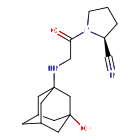
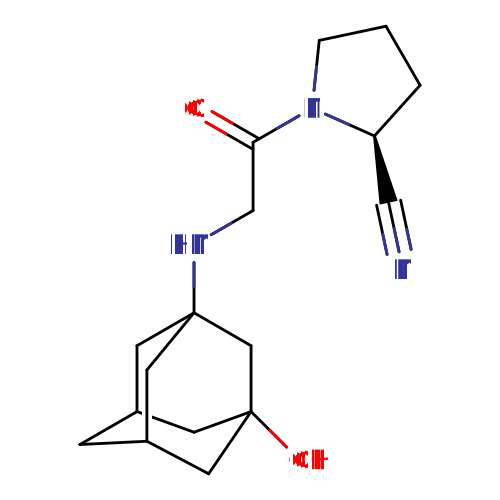
Structure for Vildagliptin (DB04876)
- Weight
- Average: 303.3993
Monoisotopic: 303.194677059 - Chemical Formula
- C17H25N3O2
- Synonyms
- Vildagliptin
- Vildagliptina
- External IDs
- LAF 237
- LAF-237
- LAF237
- NVP-LAF 237
- NVP-LAF-237
- NVP-LAF237

Pharmacology
- Indication
Vildagliptin is indicated in the treatment of type II diabetes mellitus in adults. As monotherapy, vildagliptin is indicated in adults inadequately controlled by diet and exercise alone and for whom metformin is inappropriate due to contraindications or intolerance.6 It is also indicated as dual therapy in combination with metformin, a sulphonylurea, or a thiazolidinedione in adults patients with insufficient glycemic control despite maximal tolerated dose of monotherapy.6
Vildagliptin is also marketed in a combination product with metformin for the treatment of adults with type II diabetes mellitus who inadequately respond to either monotherapy of vildagliptin or metformin. This fixed-dose formulation can be used in combination with a sulphonylurea or insulin (i.e., triple therapy) as an adjunct to diet and exercise in adults who do not achieve adequate glycemic control with monotherapy or dual therapy.8
 Reduce drug development failure ratesBuild, train, & validate machine-learning modelswith evidence-based and structured datasets.Build, train, & validate predictive machine-learning models with structured datasets.
- Associated Conditions
Indication Type Indication Combined Product Details Approval Level Age Group Patient Characteristics Dose Form Used as adjunct in combination to manage Type 2 diabetes mellitus Combination Product in combination with: Metformin (DB00331) •••••••••••• ••••• •••••••••• ••••••• •••• •••••• •••••••••• •••••••• •• ••••••••• •••••• Used in combination to manage Type 2 diabetes mellitus Combination Product in combination with: Metformin (DB00331) •••••••••••• ••••• •••••••••• •••••••• •• •••••••••• •••••••••• ••••••• •••• ••••• •••••• Used as adjunct in combination to manage Type 2 diabetes mellitus Combination Product in combination with: Metformin (DB00331) •••••••••••• ••••• •••••••••• •••••••• •• •••••••••• •••••••••• •••••••• •• ••••••••••• ••••• ••••••• •••••• Used as adjunct in combination to manage Type 2 diabetes mellitus Combination Product in combination with: Metformin (DB00331) •••••••••••• ••••• •••••••••• •••••••• •• ••••••••••••• •••••••••• •••••••• •• ••••••••• •••••• Used as adjunct in combination to manage Type 2 diabetes mellitus •••••••••••• ••••• •••••••••• •••••••• •• ••••••••••• ••••• •••••••• •••••••••• •••••••• •• ••••••••• •••••• - Contraindications & Blackbox Warnings
 Prevent Adverse Drug Events TodayTap into our Clinical API for life-saving information on contraindications & blackbox warnings, population restrictions, harmful risks, & more.Avoid life-threatening adverse drug events with our Clinical API
- Pharmacodynamics
Vildagliptin works to improve glycemic control in type II diabetes mellitus by enhancing the glucose sensitivity of beta-cells (β-cells) in pancreatic islets and promoting glucose-dependent insulin secretion. Increased GLP-1 levels leads to enhanced sensitivity of alpha cells to glucose, promoting glucagon secretion. Vildagliptin causes an increase in the insulin to glucagon ratio by increasing incretin hormone levels: this results in a decrease in fasting and postprandial hepatic glucose production. Vildagliptin does not affect gastric emptying. It also has no effects on insulin secretion or blood glucose levels in individuals with normal glycemic control.6
In clinical trials, treatment with vildagliptin 50-100 mg daily in patients with type 2 diabetes significantly improved markers of beta-cells, proinsulin to insulin ratio, and measures of beta-cell responsiveness from the frequently-sampled meal tolerance test. 6 Vildagliptin has improves glycated hemoglobin (HbA1c) and fasting plasma glucose (FPG) levels.2
- Mechanism of action
Glucagon-like peptide-1 (GLP-1) and glucose-dependent insulinotropic peptide (GIP) are incretin hormones that regulate blood glucose levels and maintain glucose homeostasis. It is estimated that the activity of GLP-1 and GIP contribute more than 70% to the insulin response to an oral glucose challenge. They stimulate insulin secretion in a glucose-dependent manner via G-protein-coupled GIP and GLP-1 receptor signalling. In addition to their effects on insulin secretion, GLP-1 is also involved in promoting islet neogenesis and differentiation, as well as attenuating pancreatic beta-cell apoptosis. Incretin hormones also exert extra-pancreatic effects, such as lipogenesis and myocardial function.3 In type II diabetes mellitus, GLP-1 secretion is impaired, and the insulinotropic effect of GIP is significantly diminished.2
Vildagliptin exerts its blood glucose-lowering effects by selectively inhibiting dipeptidyl peptidase-4 (DPP-4), an enzyme that rapidly truncates and inactivates GLP-1 and GIP upon their release from the intestinal cells. DPP-4 cleaves oligopeptides after the second amino acid from the N-terminal end. Inhibition of DPP-4 substantially prolongs the half-life of GLP-1 and GIP, increasing the levels of active circulating incretin hormones.3 The duration of DPP-4 inhibition by vildagliptin is dose-dependent.5 Vildagliptin reduces fasting and prandial glucose and HbA1c. It enhances the glucose sensitivity of alpha- and beta-cells and augments glucose-dependent insulin secretion. Fasting and postprandial glucose levels are decreased, and postprandial lipid and lipoprotein metabolism are also improved.2,4
Target Actions Organism ADipeptidyl peptidase 4 inhibitorHumans - Absorption
In a fasting state, vildagliptin is rapidly absorbed following oral administration. Peak plasma concentrations are observed at 1.7 hours following administration.6 Plasma concentrations of vildagliptin increase in an approximately dose-proportional manner.2
Food delays Tmax to 2.5 hours and decreases Cmax by 19%, but has no effects on the overall exposure to the drug (AUC). Absolute bioavailability of vildagliptin is 85%.6
- Volume of distribution
The mean volume of distribution of vildagliptin at steady-state after intravenous administration is 71 L, suggesting extravascular distribution.6
- Protein binding
The plasma protein binding of vildagliptin is 9.3%. Vildagliptin distributes equally between plasma and red blood cells.6
- Metabolism
About 69% of orally administered vildagpliptin is eliminated via metabolism not mediated by cytochrome P450 enzymes. Based on the findings of a rat study, DPP-4 contributes partially to the hydrolysis of vildagliptin.6 Vildagliptin is metabolized to pharmacologically inactive cyano (57%) and amide (4%) hydrolysis products in the kidney.2 LAY 151 (M20.7) is a major inactive metabolite and a carboxylic acid that is formed via hydrolysis of the cyano moiety: it accounts for 57% of the dose.6 Other circulating metabolites reported are an N-glucuronide (M20.2), an N-amide hydrolysis product (M15.3), two oxidation products, M21.6 and M20.9.9
Hover over products below to view reaction partners
- Route of elimination
Vildagliptin is eliminated via metabolism. Following oral administration, approximately 85% of the radiolabelled vildagliptin dose was excreted in urine and about 15% of the dose was recovered in feces. Of the recovered dose in urine, about 23% accounted for the unchanged parent compound.6
- Half-life
The mean elimination half-life following intravenous administration is approximately two hours. The elimination half-life after oral administration is approximately three hours.6
- Clearance
After intravenous administration to healthy subjects, the total plasma and renal clearance of vildagliptin were 41 and 13 L/h, respectively.6
- Adverse Effects
 Improve decision support & research outcomesWith structured adverse effects data, including: blackbox warnings, adverse reactions, warning & precautions, & incidence rates. View sample adverse effects data in our new Data Library!Improve decision support & research outcomes with our structured adverse effects data.
- Toxicity
The oral Lowest published toxic dose (TDLO) is 0.3 mg/kg in rats and 1 mg/kg in mice.7
There is limited information regarding overdose with vildagliptin. In one study, patients experienced muscle pain, mild and transient paresthesia, fever, edema, and a transient increase in lipase levels at a dose of 400 mg. At 600 mg, one subject experienced edema of the feet and hands and increases in creatine phosphokinase (CPK), aspartate aminotransferase (AST), C-reactive protein (CRP) and myoglobin levels. Supportive management is recommended in case of an overdose. There is no known antidote, and vildagliptin and its major metabolite cannot be removed via hemodialysis.6
- Pathways
- Not Available
- Pharmacogenomic Effects/ADRs
- Not Available
Interactions
- Drug Interactions
- This information should not be interpreted without the help of a healthcare provider. If you believe you are experiencing an interaction, contact a healthcare provider immediately. The absence of an interaction does not necessarily mean no interactions exist.
Drug Interaction Integrate drug-drug
interactions in your softwareAcarbose The risk or severity of hypoglycemia can be increased when Acarbose is combined with Vildagliptin. Acebutolol The therapeutic efficacy of Vildagliptin can be increased when used in combination with Acebutolol. Acetazolamide The therapeutic efficacy of Vildagliptin can be increased when used in combination with Acetazolamide. Acetohexamide Vildagliptin may increase the hypoglycemic activities of Acetohexamide. Acetyl sulfisoxazole The therapeutic efficacy of Vildagliptin can be increased when used in combination with Acetyl sulfisoxazole. - Food Interactions
- Take with or without food. Food reduces Cmax and delays Tmax, but not in a clinically significant way.
Products
 Drug product information from 10+ global regionsOur datasets provide approved product information including:dosage, form, labeller, route of administration, and marketing period.Access drug product information from over 10 global regions.
- International/Other Brands
- EQUA
- Brand Name Prescription Products
Name Dosage Strength Route Labeller Marketing Start Marketing End Region Image Galvus Tablet 50 mg Oral Novartis Europharm Limited 2016-09-08 Not applicable EU 
Galvus Tablet 50 mg Oral Novartis Europharm Limited 2016-09-08 Not applicable EU Galvus Tablet 50 mg Oral Novartis Europharm Limited 2016-09-08 Not applicable EU Galvus Tablet 50 mg Oral Novartis Europharm Limited 2016-09-08 Not applicable EU Galvus Tablet 50 mg Oral Novartis Europharm Limited 2016-09-08 Not applicable EU - Mixture Products
Name Ingredients Dosage Route Labeller Marketing Start Marketing End Region Image EUCREAS Vildagliptin (50 MG) + Metformin hydrochloride (850 MG) Tablet, film coated Oral Novartis Europharm Limited 2021-01-14 Not applicable Italy 
Eucreas Vildagliptin (50 mg) + Metformin hydrochloride (780 mg) Tablet, film coated Oral Novartis Europharm Limited 2020-12-16 Not applicable EU Eucreas Vildagliptin (50 mg) + Metformin hydrochloride (660 mg) Tablet, film coated Oral Novartis Europharm Limited 2016-09-08 Not applicable EU EUCREAS Vildagliptin (50 MG) + Metformin hydrochloride (1000 MG) Tablet, film coated Oral Novartis Europharm Limited 2014-07-08 Not applicable Italy Eucreas Vildagliptin (50 mg) + Metformin hydrochloride (660 mg) Tablet, film coated Oral Novartis Europharm Limited 2016-09-08 Not applicable EU
Categories
- ATC Codes
- A10BH02 — Vildagliptin
- A10BH — Dipeptidyl peptidase 4 (DPP-4) inhibitors
- A10B — BLOOD GLUCOSE LOWERING DRUGS, EXCL. INSULINS
- A10 — DRUGS USED IN DIABETES
- A — ALIMENTARY TRACT AND METABOLISM
- Drug Categories
- Chemical TaxonomyProvided by Classyfire
- Description
- This compound belongs to the class of organic compounds known as alpha amino acid amides. These are amide derivatives of alpha amino acids.
- Kingdom
- Organic compounds
- Super Class
- Organic acids and derivatives
- Class
- Carboxylic acids and derivatives
- Sub Class
- Amino acids, peptides, and analogues
- Direct Parent
- Alpha amino acid amides
- Alternative Parents
- N-acylpyrrolidines / Tertiary carboxylic acid amides / Tertiary alcohols / Cyclic alcohols and derivatives / Nitriles / Dialkylamines / Azacyclic compounds / Organopnictogen compounds / Organic oxides / Hydrocarbon derivatives show 1 more
- Substituents
- Alcohol / Aliphatic heteropolycyclic compound / Alpha-amino acid amide / Amine / Azacycle / Carbonitrile / Carbonyl group / Carboxamide group / Cyclic alcohol / Hydrocarbon derivative show 14 more
- Molecular Framework
- Aliphatic heteropolycyclic compounds
- External Descriptors
- Not Available
- Affected organisms
- Humans and other mammals
Chemical Identifiers
- UNII
- I6B4B2U96P
- CAS number
- 274901-16-5
- InChI Key
- SYOKIDBDQMKNDQ-XWTIBIIYSA-N
- InChI
- InChI=1S/C17H25N3O2/c18-9-14-2-1-3-20(14)15(21)10-19-16-5-12-4-13(6-16)8-17(22,7-12)11-16/h12-14,19,22H,1-8,10-11H2/t12?,13?,14-,16?,17?/m0/s1
- IUPAC Name
- (2S)-1-{2-[(3-hydroxyadamantan-1-yl)amino]acetyl}pyrrolidine-2-carbonitrile
- SMILES
- OC12CC3CC(C1)CC(C3)(C2)NCC(=O)N1CCC[C@H]1C#N
References
- Synthesis Reference
Stephen Winter, Jordi Bosch, Jordi Puig Serrano, Jose Javier Soto, "PROCESS FOR PREPARING VILDAGLIPTIN." U.S. Patent US20080167479, issued July 10, 2008.
US20080167479- General References
- Balas B, Baig MR, Watson C, Dunning BE, Ligueros-Saylan M, Wang Y, He YL, Darland C, Holst JJ, Deacon CF, Cusi K, Mari A, Foley JE, DeFronzo RA: The dipeptidyl peptidase IV inhibitor vildagliptin suppresses endogenous glucose production and enhances islet function after single-dose administration in type 2 diabetic patients. J Clin Endocrinol Metab. 2007 Apr;92(4):1249-55. Epub 2007 Jan 23. [Article]
- Croxtall JD, Keam SJ: Vildagliptin: a review of its use in the management of type 2 diabetes mellitus. Drugs. 2008;68(16):2387-409. doi: 10.2165/0003495-200868160-00009. [Article]
- Ahren B: DPP-4 inhibitors. Best Pract Res Clin Endocrinol Metab. 2007 Dec;21(4):517-33. doi: 10.1016/j.beem.2007.07.005. [Article]
- Mathieu C, Degrande E: Vildagliptin: a new oral treatment for type 2 diabetes mellitus. Vasc Health Risk Manag. 2008;4(6):1349-60. doi: 10.2147/vhrm.s3005. [Article]
- He YL: Clinical pharmacokinetics and pharmacodynamics of vildagliptin. Clin Pharmacokinet. 2012 Mar 1;51(3):147-62. doi: 10.2165/11598080-000000000-00000. [Article]
- Summary of Product Characteristics: Galvus (vildagliptin) oral tablets [Link]
- Cayman Chemical: Vildagliptin Safety Data Sheet [Link]
- Summary of Product Characteristics: Eucreas (vildagliptin and metformin) oral tablets [Link]
- Australian Public Assessment Report: Vildagliptin [Link]
- External Links
- Human Metabolome Database
- HMDB0015596
- PubChem Compound
- 6918537
- PubChem Substance
- 99443227
- ChemSpider
- 5293734
- BindingDB
- 11695
- 596554
- ChEBI
- 135285
- ChEMBL
- CHEMBL142703
- PharmGKB
- PA165958346
- Wikipedia
- Vildagliptin
Clinical Trials
- Clinical Trials
Phase Status Purpose Conditions Count 4 Completed Basic Science Diabetes 1 4 Completed Basic Science Diabetes / Hypoglycemia 1 4 Completed Basic Science Type 2 Diabetes Mellitus 3 4 Completed Treatment 1- Microvascular Function / 2-oxidative Stress / 3-inflammation / Microvascular Function 1 4 Completed Treatment Congestive Heart Failure (CHF) / Type 2 Diabetes Mellitus 1
Pharmacoeconomics
- Manufacturers
- Not Available
- Packagers
- Not Available
- Dosage Forms
Form Route Strength Tablet Oral Tablet Oral 50 MG Tablet Oral 50.000 mg Tablet, film coated Oral 50 mg Tablet Oral Tablet, coated Oral Tablet, film coated Oral Capsule Tablet, film coated Oral Capsule 50 MG - Prices
- Not Available
- Patents
- Not Available
Properties
- State
- Solid
- Experimental Properties
- Not Available
- Predicted Properties
Property Value Source Water Solubility 1.75 mg/mL ALOGPS logP 1.12 ALOGPS logP -0.22 Chemaxon logS -2.2 ALOGPS pKa (Strongest Acidic) 14.71 Chemaxon pKa (Strongest Basic) 9.03 Chemaxon Physiological Charge 1 Chemaxon Hydrogen Acceptor Count 4 Chemaxon Hydrogen Donor Count 2 Chemaxon Polar Surface Area 76.36 Å2 Chemaxon Rotatable Bond Count 3 Chemaxon Refractivity 82 m3·mol-1 Chemaxon Polarizability 33.17 Å3 Chemaxon Number of Rings 4 Chemaxon Bioavailability 1 Chemaxon Rule of Five Yes Chemaxon Ghose Filter Yes Chemaxon Veber's Rule No Chemaxon MDDR-like Rule No Chemaxon - Predicted ADMET Features
Property Value Probability Human Intestinal Absorption + 0.9313 Blood Brain Barrier + 0.7886 Caco-2 permeable - 0.6768 P-glycoprotein substrate Substrate 0.6301 P-glycoprotein inhibitor I Inhibitor 0.5624 P-glycoprotein inhibitor II Inhibitor 0.9723 Renal organic cation transporter Non-inhibitor 0.6373 CYP450 2C9 substrate Non-substrate 0.7472 CYP450 2D6 substrate Non-substrate 0.6984 CYP450 3A4 substrate Substrate 0.5965 CYP450 1A2 substrate Non-inhibitor 0.8627 CYP450 2C9 inhibitor Non-inhibitor 0.6428 CYP450 2D6 inhibitor Non-inhibitor 0.7168 CYP450 2C19 inhibitor Non-inhibitor 0.6922 CYP450 3A4 inhibitor Non-inhibitor 0.866 CYP450 inhibitory promiscuity High CYP Inhibitory Promiscuity 0.5 Ames test Non AMES toxic 0.7053 Carcinogenicity Non-carcinogens 0.8895 Biodegradation Not ready biodegradable 0.9959 Rat acute toxicity 2.4274 LD50, mol/kg Not applicable hERG inhibition (predictor I) Weak inhibitor 0.853 hERG inhibition (predictor II) Inhibitor 0.6939
Spectra
- Mass Spec (NIST)
- Not Available
- Spectra
- Chromatographic Properties
Collision Cross Sections (CCS)
Adduct CCS Value (Å2) Source type Source [M-H]- 187.2196689 predictedDarkChem Lite v0.1.0 [M-H]- 171.53468 predictedDeepCCS 1.0 (2019) [M+H]+ 187.3487689 predictedDarkChem Lite v0.1.0 [M+H]+ 173.89268 predictedDeepCCS 1.0 (2019) [M+Na]+ 187.2196689 predictedDarkChem Lite v0.1.0 [M+Na]+ 180.19075 predictedDeepCCS 1.0 (2019)
Targets

- Kind
- Protein
- Organism
- Humans
- Pharmacological action
- Yes
- Actions
- Inhibitor
- General Function
- Virus receptor activity
- Specific Function
- Cell surface glycoprotein receptor involved in the costimulatory signal essential for T-cell receptor (TCR)-mediated T-cell activation. Acts as a positive regulator of T-cell coactivation, by bindi...
- Gene Name
- DPP4
- Uniprot ID
- P27487
- Uniprot Name
- Dipeptidyl peptidase 4
- Molecular Weight
- 88277.935 Da
References
- Ahren B, Gomis R, Standl E, Mills D, Schweizer A: Twelve- and 52-week efficacy of the dipeptidyl peptidase IV inhibitor LAF237 in metformin-treated patients with type 2 diabetes. Diabetes Care. 2004 Dec;27(12):2874-80. [Article]
- Mentlein R, Gallwitz B, Schmidt WE: Dipeptidyl-peptidase IV hydrolyses gastric inhibitory polypeptide, glucagon-like peptide-1(7-36)amide, peptide histidine methionine and is responsible for their degradation in human serum. Eur J Biochem. 1993 Jun 15;214(3):829-35. [Article]
- Gupta R, Walunj SS, Tokala RK, Parsa KV, Singh SK, Pal M: Emerging drug candidates of dipeptidyl peptidase IV (DPP IV) inhibitor class for the treatment of Type 2 Diabetes. Curr Drug Targets. 2009 Jan;10(1):71-87. [Article]
- Nadkarni P, Chepurny OG, Holz GG: Regulation of glucose homeostasis by GLP-1. Prog Mol Biol Transl Sci. 2014;121:23-65. doi: 10.1016/B978-0-12-800101-1.00002-8. [Article]
- Gallwitz B: Novel Therapeutic Approaches in Diabetes. Endocr Dev. 2016;31:43-56. doi: 10.1159/000439372. Epub 2016 Jan 19. [Article]
Transporters
- Kind
- Protein
- Organism
- Humans
- Pharmacological action
- No
- Actions
- Substrate
- Curator comments
- Transport of vildagliptin was decreased in the presence of the P-glycoprotein inhibitors verapamil and terfenadine indicating in vivo vildagliptin efflux due to P-glycoprotein.
- General Function
- Xenobiotic-transporting atpase activity
- Specific Function
- Energy-dependent efflux pump responsible for decreased drug accumulation in multidrug-resistant cells.
- Gene Name
- ABCB1
- Uniprot ID
- P08183
- Uniprot Name
- Multidrug resistance protein 1
- Molecular Weight
- 141477.255 Da
References
- Australian Public Assessment Report: Vildagliptin [Link]

Drug created at October 20, 2007 11:50 / Updated at October 01, 2021 23:55