Identification
- Summary
Disulfiram is a carbamate derivative used to treat alcohol addiction.
- Brand Names
- Antabuse
- Generic Name
- Disulfiram
- DrugBank Accession Number
- DB00822
- Background
A carbamate derivative used as an alcohol deterrent. It is a relatively nontoxic substance when administered alone, but markedly alters the intermediary metabolism of alcohol. When alcohol is ingested after administration of disulfiram, blood acetaldehyde concentrations are increased, followed by flushing, systemic vasodilation, respiratory difficulties, nausea, hypotension, and other symptoms (acetaldehyde syndrome). It acts by inhibiting aldehyde dehydrogenase.
- Type
- Small Molecule
- Groups
- Approved
- Structure
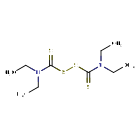
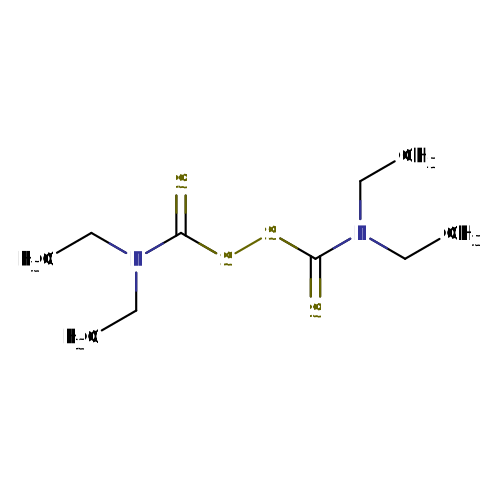
Structure for Disulfiram (DB00822)
- Weight
- Average: 296.539
Monoisotopic: 296.05093141 - Chemical Formula
- C10H20N2S4
- Synonyms
- 1,1'-dithiobis(N,N-diethylthioformamide)
- bis(diethylthiocarbamoyl) disulfide
- Disulfiram
- N,N,N',N'-tetraethylthiuram disulfide
- Tetraethylthioperoxydicarbonic diamide
- Tetraethylthiuram disulfide
- Tetraethylthiuram disulphide
- External IDs
- Dupon 4472
- Dupont Fungicide 4472
- ORA-102
- ORA102
- USAF B-33

Pharmacology
- Indication
For the treatment and management of chronic alcoholism
 Reduce drug development failure ratesBuild, train, & validate machine-learning modelswith evidence-based and structured datasets.Build, train, & validate predictive machine-learning models with structured datasets.
- Associated Conditions
Indication Type Indication Combined Product Details Approval Level Age Group Patient Characteristics Dose Form Management of Chronic alcoholism •••••••••••• - Contraindications & Blackbox Warnings
 Prevent Adverse Drug Events TodayTap into our Clinical API for life-saving information on contraindications & blackbox warnings, population restrictions, harmful risks, & more.Avoid life-threatening adverse drug events with our Clinical API
- Pharmacodynamics
Disulfiram produces a sensitivity to alcohol which results in a highly unpleasant reaction when the patient under treatment ingests even small amounts of alcohol. Disulfiram blocks the oxidation of alcohol at the acetaldehyde stage during alcohol metabolism following disulfiram intake, the concentration of acetaldehyde occurring in the blood may be 5 to 10 times higher than that found during metabolism of the same amount of alcohol alone. Accumulation of acetaldehyde in the blood produces a complex of highly unpleasant symptoms referred to hereinafter as the disulfiram-alcohol reaction. This reaction, which is proportional to the dosage of both disulfiram and alcohol, will persist as long as alcohol is being metabolized. Disulfiram does not appear to influence the rate of alcohol elimination from the body. Prolonged administration of disulfiram does not produce tolerance; the longer a patient remains on therapy, the more exquisitely sensitive he becomes to alcohol.
- Mechanism of action
Disulfiram blocks the oxidation of alcohol at the acetaldehyde stage during alcohol metabolism following disulfiram intake causing an accumulation of acetaldehyde in the blood producing highly unpleasant symptoms. Disulfiram blocks the oxidation of alcohol through its irreversible inactivation of aldehyde dehydrogenase, which acts in the second step of ethanol utilization. In addition, disulfiram competitively binds and inhibits the peripheral benzodiazepine receptor, which may indicate some value in the treatment of the symptoms of alcohol withdrawal, however this activity has not been extensively studied.
Target Actions Organism ADopamine beta-hydroxylase inhibitorHumans AAldehyde dehydrogenase, mitochondrial inhibitorHumans - Absorption
Disulfiram is absorbed slowly from the gastrointestinal tract (80 to 90% of oral dose).
- Volume of distribution
Not Available
- Protein binding
Not Available
- Metabolism
Hepatic.
- Route of elimination
Not Available
- Half-life
Not Available
- Clearance
Not Available
- Adverse Effects
 Improve decision support & research outcomesWith structured adverse effects data, including: blackbox warnings, adverse reactions, warning & precautions, & incidence rates. View sample adverse effects data in our new Data Library!Improve decision support & research outcomes with our structured adverse effects data.
- Toxicity
LD50=8.6g/kg (orally in rats). Symptoms of overdose include irritation, slight drowsiness, unpleasant taste, mild GI disturbances, and orthostatic hypotension.
- Pathways
Pathway Category Disulfiram Action Pathway Drug action - Pharmacogenomic Effects/ADRs
- Not Available
Interactions
- Drug Interactions
- This information should not be interpreted without the help of a healthcare provider. If you believe you are experiencing an interaction, contact a healthcare provider immediately. The absence of an interaction does not necessarily mean no interactions exist.
Drug Interaction Integrate drug-drug
interactions in your softwareAbametapir The serum concentration of Disulfiram can be increased when it is combined with Abametapir. Abatacept The metabolism of Disulfiram can be increased when combined with Abatacept. Acalabrutinib The metabolism of Disulfiram can be decreased when combined with Acalabrutinib. Acenocoumarol Disulfiram may increase the anticoagulant activities of Acenocoumarol. Acetaminophen Disulfiram may increase the hepatotoxic activities of Acetaminophen. - Food Interactions
- Avoid alcohol. Avoid alcohol for up to 14 days after discontinuation.
- Take with or without food. The absorption is unaffected by food.
Products
 Drug product information from 10+ global regionsOur datasets provide approved product information including:dosage, form, labeller, route of administration, and marketing period.Access drug product information from over 10 global regions.
- Product Images
- International/Other Brands
- Antabus (Actavis) / Antaethyl (Sanofi) / Antalcol (Sintofarm) / Anticol (Polfa Warszawa) / Antietanol (Sanofi) / Chronol (Charoon Bhesaj) / Esperal (Sanofi)
- Brand Name Prescription Products
Name Dosage Strength Route Labeller Marketing Start Marketing End Region Image Antabuse Tab 0.25gm Tablet 250 mg / tab Oral Ayerst Laboratories 1966-12-31 1996-09-10 Canada 
Antabuse Tab 250mg Tablet 250 mg / tab Oral Wyeth Ayerst Canada Inc. 1994-12-31 2001-05-07 Canada Antabuse Tab 500mg Tablet 500 mg / tab Oral Wyeth Ayerst Canada Inc. 1994-12-31 2001-05-07 Canada - Generic Prescription Products
Name Dosage Strength Route Labeller Marketing Start Marketing End Region Image Antabuse Tablet 500 mg/1 Oral Teva Women's Health, Inc. 2006-02-01 2021-09-30 US 

Antabuse Tablet 250 mg/1 Oral Physicians Total Care, Inc. 2004-03-30 Not applicable US 
Antabuse Tablet 250 mg/1 Oral Teva Women's Health, Inc. 2000-12-01 2021-11-30 US 
Disulfiram Tablet 250 mg/1 Oral Par Pharmaceutical 1983-08-30 1989-07-31 US Disulfiram Tablet 250 mg/1 Oral Hikma Pharmaceuticals USA Inc. 2014-11-04 2023-06-30 US - Mixture Products
Name Ingredients Dosage Route Labeller Marketing Start Marketing End Region Image T.R.U.E. Test Thin-Layer Rapid Use Patch Test Disulfiram (5.5 ug/48h) + 2,2'-Dibenzothiazyl disulfide (20 ug/48h) + 2-mercaptobenzothiazole (61 ug/48h) + 4-(Isopropylamino)diphenylamine (10 ug/48h) + Bacitracin (486 ug/48h) + Balsam of Peru (648 ug/48h) + Benzocaine (378 ug/48h) + Benzylparaben (162 ug/48h) + Bisphenol A diglycidyl ether (32 ug/48h) + Bromothalonil (4 ug/48h) + Bronopol (203 ug/48h) + Budesonide (0.8 ug/48h) + Butylparaben (162 ug/48h) + Chlorquinaldol (77 ug/48h) + Cinchocaine hydrochloride (66 ug/48h) + Cinnamaldehyde (41 ug/48h) + Cinnamyl alcohol (63 ug/48h) + Clioquinol (77 ug/48h) + Cobalt chloride hexahydrate (4 ug/48h) + Diazolidinylurea (446 ug/48h) + Potassium dichromate (15.7 ug/48h) + Dipentamethylenethiuram disulfide (5.5 ug/48h) + Diphenylguanidine (68 ug/48h) + Disperse Blue 106 (41 ug/48h) + Ditiocarb zinc (68 ug/48h) + Ethyl hydroxybenzoate (162 ug/48h) + Ethylenediamine (18 ug/48h) + Eugenol (41 ug/48h) + Evernia prunastri (81 ug/48h) + Formaldehyde (146 ug/48h) + Geraniol (81 ug/48h) + Hydrocortisone butyrate (16 ug/48h) + Hydroxycitronellal (63 ug/48h) + Imidurea (486 ug/48h) + Isoeugenol (17 ug/48h) + Lanolin alcohols (810 ug/48h) + Methylchloroisothiazolinone (3 ug/48h) + Methylparaben (162 ug/48h) + Morpholinylmercaptobenzothiazole (20 ug/48h) + N,N'-diphenyl-1,4-phenylenediamine (25 ug/48h) + N-Cyclohexyl-N'-phenyl-1,4-phenylenediamine (25 ug/48h) + Neomycin sulfate (486 ug/48h) + Nickel sulfate hexahydrate (36 ug/48h) + Parthenolide (2 ug/48h) + Propylparaben (162 ug/48h) + Quaternium-15 (81 ug/48h) + Rosin (972 ug/48h) + Sodium aurotiosulfate (23 ug/48h) + Tetracaine hydrochloride (66 ug/48h) + Tetramethylthiuram monosulfide (5.5 ug/48h) + Thimerosal (6 ug/48h) + Thiohexam (20 ug/48h) + Thiram (5.5 ug/48h) + Tixocortol pivalate (2 ug/48h) + Zinc dibutyldithiocarbamate (68 ug/48h) + alpha-Amyl cinnamaldehyde (17 ug/48h) + p-Phenylenediamine (65 ug/48h) + p-tert-Butylphenol-formaldehyde resin (low molecular weight) (36 ug/48h) Kit Cutaneous SmartPractice Denmark ApS 2012-03-01 Not applicable US


Categories
- ATC Codes
- P03AA04 — Disulfiram
- P03AA — Sulfur containing products
- P03A — ECTOPARASITICIDES, INCL. SCABICIDES
- P03 — ECTOPARASITICIDES, INCL. SCABICIDES, INSECTICIDES AND REPELLENTS
- P — ANTIPARASITIC PRODUCTS, INSECTICIDES AND REPELLENTS
- P03AA — Sulfur containing products
- P03A — ECTOPARASITICIDES, INCL. SCABICIDES
- P03 — ECTOPARASITICIDES, INCL. SCABICIDES, INSECTICIDES AND REPELLENTS
- P — ANTIPARASITIC PRODUCTS, INSECTICIDES AND REPELLENTS
- Drug Categories
- Acetyl Aldehyde Dehydrogenase Inhibitors
- Acids, Acyclic
- Agents that reduce seizure threshold
- Alcohol Deterrents
- Aldehyde Dehydrogenase Inhibitor
- Antiparasitic Products, Insecticides and Repellents
- BSEP/ABCB11 Substrates
- Carbamates
- Central Nervous System Agents
- Cytochrome P-450 CYP2E1 Inhibitors
- Cytochrome P-450 CYP2E1 Inhibitors (strength unknown)
- Cytochrome P-450 CYP3A Substrates
- Cytochrome P-450 CYP3A4 Substrates
- Cytochrome P-450 CYP3A5 Substrates
- Cytochrome P-450 Enzyme Inhibitors
- Cytochrome P-450 Substrates
- Disulfides
- Drugs Used in Addictive Disorders
- Drugs Used in Alcohol Dependence
- Ectoparasiticides, Incl. Scabicides
- Ectoparasiticides, Incl. Scabicides, Insecticides and Repellents
- Enzyme Inhibitors
- Nervous System
- Potential QTc-Prolonging Agents
- QTc Prolonging Agents
- Sulfides
- Sulfur Compounds
- Sulfur Containing Products
- Thiocarbamates
- Chemical TaxonomyProvided by Classyfire
- Description
- This compound belongs to the class of organic compounds known as thiuram disulfides. These are organic disulfides that have the general structural formula RN(R')C(=S)SSC(=S)N(R\")R\"', where R-R\"'=alkyl groups.
- Kingdom
- Organic compounds
- Super Class
- Organic nitrogen compounds
- Class
- Organonitrogen compounds
- Sub Class
- Amines
- Direct Parent
- Thiuram disulfides
- Alternative Parents
- Organic disulfides / Sulfenyl compounds / Organopnictogen compounds / Hydrocarbon derivatives
- Substituents
- Aliphatic acyclic compound / Hydrocarbon derivative / Organic disulfide / Organopnictogen compound / Organosulfur compound / Sulfenyl compound / Thiuram disulfide
- Molecular Framework
- Aliphatic acyclic compounds
- External Descriptors
- tertiary amino compound, organic disulfide (CHEBI:4659) / a small molecule (DISULFIRAM)
- Affected organisms
- Humans and other mammals
Chemical Identifiers
- UNII
- TR3MLJ1UAI
- CAS number
- 97-77-8
- InChI Key
- AUZONCFQVSMFAP-UHFFFAOYSA-N
- InChI
- InChI=1S/C10H20N2S4/c1-5-11(6-2)9(13)15-16-10(14)12(7-3)8-4/h5-8H2,1-4H3
- IUPAC Name
- N,N-diethyl[(diethylcarbamothioyl)disulfanyl]carbothioamide
- SMILES
- CCN(CC)C(=S)SSC(=S)N(CC)CC
References
- Synthesis Reference
Adams, H.S. and Meuser, L.; US.Patent 1,782,111; November 18,1930; assigned to The Naugatuck Chemical Company. Bailey, G.C.; U.S.Patent 1,796,977; March 17,1931; assigned to The Roessler & Hasslacher Chemical Company.
- General References
- Nash T, Rice WG: Efficacies of zinc-finger-active drugs against Giardia lamblia. Antimicrob Agents Chemother. 1998 Jun;42(6):1488-92. [Article]
- Bouma MJ, Snowdon D, Fairlamb AH, Ackers JP: Activity of disulfiram (bis(diethylthiocarbamoyl)disulphide) and ditiocarb (diethyldithiocarbamate) against metronidazole-sensitive and -resistant Trichomonas vaginalis and Tritrichomonas foetus. J Antimicrob Chemother. 1998 Dec;42(6):817-20. [Article]
- Gaval-Cruz M, Weinshenker D: mechanisms of disulfiram-induced cocaine abstinence: antabuse and cocaine relapse. Mol Interv. 2009 Aug;9(4):175-87. doi: 10.1124/mi.9.4.6. [Article]
- DailyMed: disulfiram tablets [Link]
- External Links
- Human Metabolome Database
- HMDB0014960
- KEGG Drug
- D00131
- KEGG Compound
- C01692
- PubChem Compound
- 3117
- PubChem Substance
- 46506008
- ChemSpider
- 3005
- BindingDB
- 50058655
- 3554
- ChEBI
- 4659
- ChEMBL
- CHEMBL964
- ZINC
- ZINC000001529266
- Therapeutic Targets Database
- DAP000012
- PharmGKB
- PA449376
- RxList
- RxList Drug Page
- Drugs.com
- Drugs.com Drug Page
- Wikipedia
- Disulfiram
- MSDS
- Download (50.6 KB)
Clinical Trials
- Clinical Trials
Phase Status Purpose Conditions Count 4 Completed Basic Science Alcohol Use Disorders (AUD) 1 4 Completed Treatment Alcohol Dependency 1 4 Completed Treatment Alcohol Dependency / Anxiety Disorders 1 4 Unknown Status Treatment Alcohol Dependency 1 4 Withdrawn Treatment Dependence, Cocaine 1
Pharmacoeconomics
- Manufacturers
- Odyssey pharmaceuticals inc
- Par pharmaceutical inc
- Watson laboratories inc
- Packagers
- Dispensing Solutions
- Duramed
- Major Pharmaceuticals
- Murfreesboro Pharmaceutical Nursing Supply
- Pharmaceutical Utilization Management Program VA Inc.
- Pharmacy Service Center
- Physicians Total Care Inc.
- Pliva Inc.
- Qualitest
- Spectrum Pharmaceuticals
- Dosage Forms
Form Route Strength Tablet, soluble Oral Tablet Oral 250 mg/1 Tablet Oral 400 MG Tablet, effervescent Oral 400 MG Tablet Oral 250 mg / tab Tablet Oral 500 mg / tab Tablet Oral 500 mg/1 Tablet Oral 250.000 mg Tablet Oral 200 MG Kit Cutaneous Tablet Oral 500 mg - Prices
Unit description Cost Unit Antabuse 500 mg tablet 6.65USD tablet Antabuse 250 mg tablet 4.24USD tablet Disulfiram powder 1.92USD g DrugBank does not sell nor buy drugs. Pricing information is supplied for informational purposes only.- Patents
- Not Available
Properties
- State
- Solid
- Experimental Properties
Property Value Source melting point (°C) 71.5 °C PhysProp boiling point (°C) 117 °C at 1.70E+01 mm Hg PhysProp water solubility 4.09 mg/L (at 25 °C) YALKOWSKY,SH & HE,Y (2003) logP 3.88 HANSCH,C ET AL. (1995) logS -4.86 ADME Research, USCD - Predicted Properties
Property Value Source Water Solubility 0.0126 mg/mL ALOGPS logP 3.88 ALOGPS logP 4.16 Chemaxon logS -4.4 ALOGPS Physiological Charge 0 Chemaxon Hydrogen Acceptor Count 0 Chemaxon Hydrogen Donor Count 0 Chemaxon Polar Surface Area 6.48 Å2 Chemaxon Rotatable Bond Count 7 Chemaxon Refractivity 88.24 m3·mol-1 Chemaxon Polarizability 31.6 Å3 Chemaxon Number of Rings 0 Chemaxon Bioavailability 1 Chemaxon Rule of Five Yes Chemaxon Ghose Filter Yes Chemaxon Veber's Rule Yes Chemaxon MDDR-like Rule No Chemaxon - Predicted ADMET Features
Property Value Probability Human Intestinal Absorption + 0.9808 Blood Brain Barrier + 0.9668 Caco-2 permeable + 0.548 P-glycoprotein substrate Non-substrate 0.71 P-glycoprotein inhibitor I Non-inhibitor 0.8236 P-glycoprotein inhibitor II Non-inhibitor 0.9884 Renal organic cation transporter Non-inhibitor 0.8379 CYP450 2C9 substrate Non-substrate 0.8497 CYP450 2D6 substrate Non-substrate 0.9116 CYP450 3A4 substrate Non-substrate 0.7558 CYP450 1A2 substrate Inhibitor 0.9106 CYP450 2C9 inhibitor Inhibitor 0.8948 CYP450 2D6 inhibitor Non-inhibitor 0.9231 CYP450 2C19 inhibitor Inhibitor 0.8994 CYP450 3A4 inhibitor Inhibitor 0.796 CYP450 inhibitory promiscuity High CYP Inhibitory Promiscuity 0.5397 Ames test Non AMES toxic 0.9132 Carcinogenicity Carcinogens 0.6989 Biodegradation Not ready biodegradable 0.9767 Rat acute toxicity 2.7419 LD50, mol/kg Not applicable hERG inhibition (predictor I) Weak inhibitor 0.8617 hERG inhibition (predictor II) Non-inhibitor 0.8823
Spectra
- Mass Spec (NIST)
- Download (8.65 KB)
- Spectra
- Chromatographic Properties
Collision Cross Sections (CCS)
Adduct CCS Value (Å2) Source type Source [M-H]- 179.5888404 predictedDarkChem Lite v0.1.0 [M-H]- 179.7245404 predictedDarkChem Lite v0.1.0 [M-H]- 179.5314404 predictedDarkChem Lite v0.1.0 [M-H]- 179.3324404 predictedDarkChem Lite v0.1.0 [M-H]- 157.55748 predictedDeepCCS 1.0 (2019) [M+H]+ 159.9155 predictedDeepCCS 1.0 (2019) [M+Na]+ 166.51343 predictedDeepCCS 1.0 (2019)
Targets

- Kind
- Protein
- Organism
- Humans
- Pharmacological action
- Yes
- Actions
- Inhibitor
- General Function
- L-ascorbic acid binding
- Specific Function
- Conversion of dopamine to noradrenaline.
- Gene Name
- DBH
- Uniprot ID
- P09172
- Uniprot Name
- Dopamine beta-hydroxylase
- Molecular Weight
- 69064.45 Da
References
- Gaval-Cruz M, Weinshenker D: mechanisms of disulfiram-induced cocaine abstinence: antabuse and cocaine relapse. Mol Interv. 2009 Aug;9(4):175-87. doi: 10.1124/mi.9.4.6. [Article]
- Kind
- Protein
- Organism
- Humans
- Pharmacological action
- Yes
- Actions
- Inhibitor
- General Function
- Electron carrier activity
- Specific Function
- Not Available
- Gene Name
- ALDH2
- Uniprot ID
- P05091
- Uniprot Name
- Aldehyde dehydrogenase, mitochondrial
- Molecular Weight
- 56380.93 Da
References
- Mackenzie IS, Maki-Petaja KM, McEniery CM, Bao YP, Wallace SM, Cheriyan J, Monteith S, Brown MJ, Wilkinson IB: Aldehyde dehydrogenase 2 plays a role in the bioactivation of nitroglycerin in humans. Arterioscler Thromb Vasc Biol. 2005 Sep;25(9):1891-5. Epub 2005 Jul 28. [Article]
- Ho MP, Yo CH, Liu CM, Chen CL, Lee CC: Refractive hypotension in a patient with disulfiram-ethanol reaction. Am J Med Sci. 2007 Jan;333(1):53-5. [Article]
Enzymes
- Kind
- Protein
- Organism
- Humans
- Pharmacological action
- Unknown
- Actions
- Substrate
- General Function
- Vitamin d3 25-hydroxylase activity
- Specific Function
- Cytochromes P450 are a group of heme-thiolate monooxygenases. In liver microsomes, this enzyme is involved in an NADPH-dependent electron transport pathway. It performs a variety of oxidation react...
- Gene Name
- CYP3A4
- Uniprot ID
- P08684
- Uniprot Name
- Cytochrome P450 3A4
- Molecular Weight
- 57342.67 Da
References
- McCance-Katz EF, Gruber VA, Beatty G, Lum P, Ma Q, DiFrancesco R, Hochreiter J, Wallace PK, Faiman MD, Morse GD: Interaction of disulfiram with antiretroviral medications: efavirenz increases while atazanavir decreases disulfiram effect on enzymes of alcohol metabolism. Am J Addict. 2014 Mar-Apr;23(2):137-44. doi: 10.1111/j.1521-0391.2013.12081.x. Epub 2013 Oct 11. [Article]
- Madan A, Parkinson A, Faiman MD: Identification of the human P-450 enzymes responsible for the sulfoxidation and thiono-oxidation of diethyldithiocarbamate methyl ester: role of P-450 enzymes in disulfiram bioactivation. Alcohol Clin Exp Res. 1998 Sep;22(6):1212-9. [Article]
- Madan A, Parkinson A, Faiman MD: Identification of the human and rat P450 enzymes responsible for the sulfoxidation of S-methyl N,N-diethylthiolcarbamate (DETC-ME). The terminal step in the bioactivation of disulfiram. Drug Metab Dispos. 1995 Oct;23(10):1153-62. [Article]
- Kind
- Protein
- Organism
- Humans
- Pharmacological action
- Unknown
- Actions
- Substrate
- General Function
- Oxygen binding
- Specific Function
- Cytochromes P450 are a group of heme-thiolate monooxygenases. In liver microsomes, this enzyme is involved in an NADPH-dependent electron transport pathway. It oxidizes a variety of structurally un...
- Gene Name
- CYP3A5
- Uniprot ID
- P20815
- Uniprot Name
- Cytochrome P450 3A5
- Molecular Weight
- 57108.065 Da
References
- Madan A, Parkinson A, Faiman MD: Identification of the human P-450 enzymes responsible for the sulfoxidation and thiono-oxidation of diethyldithiocarbamate methyl ester: role of P-450 enzymes in disulfiram bioactivation. Alcohol Clin Exp Res. 1998 Sep;22(6):1212-9. [Article]
- Madan A, Parkinson A, Faiman MD: Identification of the human and rat P450 enzymes responsible for the sulfoxidation of S-methyl N,N-diethylthiolcarbamate (DETC-ME). The terminal step in the bioactivation of disulfiram. Drug Metab Dispos. 1995 Oct;23(10):1153-62. [Article]
- Kind
- Protein
- Organism
- Humans
- Pharmacological action
- Unknown
- Actions
- Inhibitor
- General Function
- Steroid hydroxylase activity
- Specific Function
- Metabolizes several precarcinogens, drugs, and solvents to reactive metabolites. Inactivates a number of drugs and xenobiotics and also bioactivates many xenobiotic substrates to their hepatotoxic ...
- Gene Name
- CYP2E1
- Uniprot ID
- P05181
- Uniprot Name
- Cytochrome P450 2E1
- Molecular Weight
- 56848.42 Da
References
- Kharasch ED, Thummel KE, Mhyre J, Lillibridge JH: Single-dose disulfiram inhibition of chlorzoxazone metabolism: a clinical probe for P450 2E1. Clin Pharmacol Ther. 1993 Jun;53(6):643-50. doi: 10.1038/clpt.1993.85. [Article]
- Emery MG, Jubert C, Thummel KE, Kharasch ED: Duration of cytochrome P-450 2E1 (CYP2E1) inhibition and estimation of functional CYP2E1 enzyme half-life after single-dose disulfiram administration in humans. J Pharmacol Exp Ther. 1999 Oct;291(1):213-9. [Article]
- Flockhart Table of Drug Interactions [Link]
Transporters
- Kind
- Protein
- Organism
- Humans
- Pharmacological action
- No
- Actions
- Substrate
- General Function
- Transporter activity
- Specific Function
- Involved in the ATP-dependent secretion of bile salts into the canaliculus of hepatocytes.
- Gene Name
- ABCB11
- Uniprot ID
- O95342
- Uniprot Name
- Bile salt export pump
- Molecular Weight
- 146405.83 Da
References
- Pedersen JM, Matsson P, Bergstrom CA, Hoogstraate J, Noren A, LeCluyse EL, Artursson P: Early identification of clinically relevant drug interactions with the human bile salt export pump (BSEP/ABCB11). Toxicol Sci. 2013 Dec;136(2):328-43. doi: 10.1093/toxsci/kft197. Epub 2013 Sep 6. [Article]


Drug created at June 13, 2005 13:24 / Updated at February 02, 2024 22:44