Identification
- Summary
Disopyramide is a class 1A antiarrhythmic agent used to treat life-threatening ventricular arrhythmias.
- Brand Names
- Norpace, Rythmodan
- Generic Name
- Disopyramide
- DrugBank Accession Number
- DB00280
- Background
A class I anti-arrhythmic agent (one that interferes directly with the depolarization of the cardiac membrane and thus serves as a membrane-stabilizing agent) with a depressant action on the heart similar to that of guanidine. It also possesses some anticholinergic and local anesthetic properties.
- Type
- Small Molecule
- Groups
- Approved
- Structure
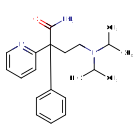
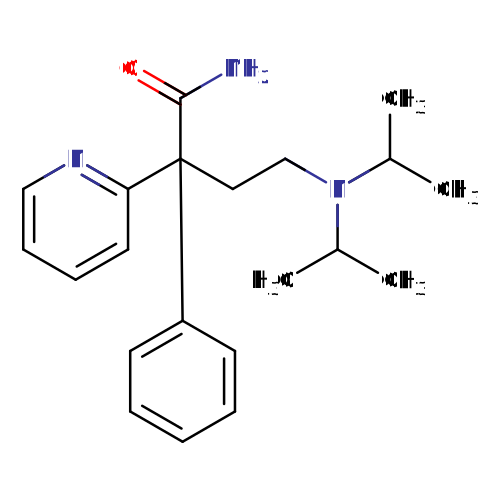
Structure for Disopyramide (DB00280)
- Weight
- Average: 339.4745
Monoisotopic: 339.231062565 - Chemical Formula
- C21H29N3O
- Synonyms
- Disopiramida
- Disopyramide
- Disopyramidum

Pharmacology
- Indication
For the treatment of documented ventricular arrhythmias, such as sustained ventricular tachycardia, ventricular pre-excitation and cardiac dysrhythmias. It is a Class Ia antiarrhythmic drug.
 Reduce drug development failure ratesBuild, train, & validate machine-learning modelswith evidence-based and structured datasets.Build, train, & validate predictive machine-learning models with structured datasets.
- Associated Conditions
Indication Type Indication Combined Product Details Approval Level Age Group Patient Characteristics Dose Form Management of Ventricular arrhythmias •••••••••••• - Contraindications & Blackbox Warnings
 Prevent Adverse Drug Events TodayTap into our Clinical API for life-saving information on contraindications & blackbox warnings, population restrictions, harmful risks, & more.Avoid life-threatening adverse drug events with our Clinical API
- Pharmacodynamics
Disopyramide is an anti-arrhythmic drug indicated for the treatment of documented ventricular arrhythmias, such as sustained ventricular tachycardia that are life-threatening. At therapeutic plasma levels, disopyramide shortens the sinus node recovery time, lengthens the effective refractory period of the atrium, and has a minimal effect on the effective refractory period of the AV node. Little effect has been shown on AV-nodal and His-Purkinje conduction times or QRS duration. However, prolongation of conduction in accessory pathways occurs.
- Mechanism of action
Disopyramide is a Type 1A antiarrhythmic drug (ie, similar to procainamide and quinidine). It inhibits the fast sodium channels. In animal studies Disopyramide decreases the rate of diastolic depolarization (phase 4) in cells with augmented automaticity, decreases the upstroke velocity (phase 0) and increases the action potential duration of normal cardiac cells, decreases the disparity in refractoriness between infarcted and adjacent normally perfused myocardium, and has no effect on alpha- or beta-adrenergic receptors.
Target Actions Organism ASodium channel protein type 5 subunit alpha inhibitorHumans UMuscarinic acetylcholine receptor M1 antagonistHumans UMuscarinic acetylcholine receptor M2 antagonistHumans UMuscarinic acetylcholine receptor M3 antagonistHumans UPotassium voltage-gated channel subfamily D member 2 inhibitorHumans UPotassium voltage-gated channel subfamily D member 3 inhibitorHumans UPotassium voltage-gated channel subfamily H member 2 inhibitorHumans UAlpha-1-acid glycoprotein 2 Not Available Humans - Absorption
Nearly complete
- Volume of distribution
Not Available
- Protein binding
50%-65%
- Metabolism
Hepatic
Hover over products below to view reaction partners
- Route of elimination
In healthy men, about 50% of a given dose of disopyramide is excreted in the urine as the unchanged drug, about 20% as the mono-N-dealkylated metabolite and 10% as the other metabolites.
- Half-life
6.7 hours (range 4-10 hours)
- Clearance
Not Available
- Adverse Effects
 Improve decision support & research outcomesWith structured adverse effects data, including: blackbox warnings, adverse reactions, warning & precautions, & incidence rates. View sample adverse effects data in our new Data Library!Improve decision support & research outcomes with our structured adverse effects data.
- Toxicity
LD50=580 mg/kg in rats
- Pathways
Pathway Category Disopyramide Action Pathway Drug action - Pharmacogenomic Effects/ADRs
- Not Available
Interactions
- Drug Interactions
- This information should not be interpreted without the help of a healthcare provider. If you believe you are experiencing an interaction, contact a healthcare provider immediately. The absence of an interaction does not necessarily mean no interactions exist.
Drug Interaction Integrate drug-drug
interactions in your softwareAbacavir Disopyramide may decrease the excretion rate of Abacavir which could result in a higher serum level. Abametapir The serum concentration of Disopyramide can be increased when it is combined with Abametapir. Abatacept The metabolism of Disopyramide can be increased when combined with Abatacept. Abiraterone The serum concentration of Disopyramide can be increased when it is combined with Abiraterone. Acarbose The risk or severity of hypoglycemia can be increased when Disopyramide is combined with Acarbose. - Food Interactions
- Avoid alcohol.
- Take with or without food. The absorption is unaffected by food.
Products
 Drug product information from 10+ global regionsOur datasets provide approved product information including:dosage, form, labeller, route of administration, and marketing period.Access drug product information from over 10 global regions.
- Product Ingredients
Ingredient UNII CAS InChI Key Disopyramide phosphate N6BOM1935W 22059-60-5 CGDDQFMPGMYYQP-UHFFFAOYSA-N - Product Images


- International/Other Brands
- Dicorantil (Sanofi) / Isorythm (SERP) / Lispine (Sawai Seiyaku) / Ritmodan (Sanofi)
- Brand Name Prescription Products
Name Dosage Strength Route Labeller Marketing Start Marketing End Region Image Disopyramide Phosphate ER Capsule, extended release 150 mg/1 Oral ETHEX 2007-02-23 Not applicable US 
Norpace Capsule, gelatin coated 100 mg/1 Oral Pfizer Laboratories Div Pfizer Inc 1977-09-01 Not applicable US Norpace Capsule, gelatin coated 100 mg/1 Oral Carilion Materials Management 1982-07-20 Not applicable US Norpace Capsule, gelatin coated 150 mg/1 Oral Physicians Total Care, Inc. 1982-07-20 2012-06-30 US Norpace Capsule, gelatin coated 150 mg/1 Oral Pfizer Laboratories Div Pfizer Inc 1977-09-01 Not applicable US - Generic Prescription Products
Name Dosage Strength Route Labeller Marketing Start Marketing End Region Image Disopyramide Phosphate Capsule 100 mg/1 Oral Carilion Materials Management 1990-09-30 Not applicable US 
Disopyramide Phosphate Capsule 150 mg/1 Oral Med Pharma Co., Ltd. 2011-07-05 2012-07-18 US Disopyramide Phosphate Capsule 150 mg/1 Oral Actavis Pharma, Inc. 1985-05-31 2017-11-30 US Disopyramide Phosphate Capsule 100 mg/1 Oral Golden State Medical Supply, Inc. 1985-05-31 Not applicable US Disopyramide Phosphate Capsule, gelatin coated 100 mg/1 Oral Greenstone LLC 2019-04-23 Not applicable US


Categories
- ATC Codes
- C01BA03 — Disopyramide
- Drug Categories
- Agents producing tachycardia
- Antiarrhythmic agents
- Antiarrhythmics, Class I
- Antiarrhythmics, Class Ia
- Anticholinergic Agents
- Blood Glucose Lowering Agents
- Cardiac Therapy
- Cardiovascular Agents
- Cytochrome P-450 CYP1A2 Substrates
- Cytochrome P-450 CYP3A Substrates
- Cytochrome P-450 CYP3A4 Substrates
- Cytochrome P-450 Substrates
- Drugs that are Mainly Renally Excreted
- Highest Risk QTc-Prolonging Agents
- Hypoglycemia-Associated Agents
- Membrane Transport Modulators
- Muscarinic Antagonists
- Negative Inotrope
- OCT1 inhibitors
- OCT2 Inhibitors
- Pyridines
- QTc Prolonging Agents
- Sodium Channel Blockers
- Voltage-Gated Sodium Channel Blockers
- Chemical TaxonomyProvided by Classyfire
- Description
- This compound belongs to the class of organic compounds known as pheniramines. These are compounds containing a pheniramine moiety, which is structurally characterized by the presence of a 2-benzylpyridine linked to an dimethyl(propyl)amine to form a dimethyl[3-phenyl-3-(pyridin-2-yl)propyl]amine skeleton.
- Kingdom
- Organic compounds
- Super Class
- Organoheterocyclic compounds
- Class
- Pyridines and derivatives
- Sub Class
- Pheniramines
- Direct Parent
- Pheniramines
- Alternative Parents
- Aralkylamines / Benzene and substituted derivatives / Heteroaromatic compounds / Trialkylamines / Carboximidic acids / Azacyclic compounds / Organopnictogen compounds / Organooxygen compounds / Hydrocarbon derivatives
- Substituents
- Amine / Aralkylamine / Aromatic heteromonocyclic compound / Azacycle / Benzenoid / Carboximidic acid / Carboximidic acid derivative / Heteroaromatic compound / Hydrocarbon derivative / Monocyclic benzene moiety
- Molecular Framework
- Aromatic heteromonocyclic compounds
- External Descriptors
- tertiary amino compound, monocarboxylic acid amide, pyridines (CHEBI:4657)
- Affected organisms
- Humans and other mammals
Chemical Identifiers
- UNII
- GFO928U8MQ
- CAS number
- 3737-09-5
- InChI Key
- UVTNFZQICZKOEM-UHFFFAOYSA-N
- InChI
- InChI=1S/C21H29N3O/c1-16(2)24(17(3)4)15-13-21(20(22)25,18-10-6-5-7-11-18)19-12-8-9-14-23-19/h5-12,14,16-17H,13,15H2,1-4H3,(H2,22,25)
- IUPAC Name
- 4-[bis(propan-2-yl)amino]-2-phenyl-2-(pyridin-2-yl)butanamide
- SMILES
- CC(C)N(CCC(C(N)=O)(C1=CC=CC=C1)C1=NC=CC=C1)C(C)C
References
- Synthesis Reference
Cusic, J.W. and Sause, H.W.; U.S. Patent 3,225,054; December 21,1965; assigned to G.D. Searle & Co.
US3225054- General References
- Not Available
- External Links
- Human Metabolome Database
- HMDB0014425
- KEGG Drug
- D00303
- KEGG Compound
- C06965
- PubChem Compound
- 3114
- PubChem Substance
- 46508226
- ChemSpider
- 3002
- BindingDB
- 50028893
- 3541
- ChEBI
- 4657
- ChEMBL
- CHEMBL517
- Therapeutic Targets Database
- DAP000504
- PharmGKB
- PA449373
- RxList
- RxList Drug Page
- Drugs.com
- Drugs.com Drug Page
- Wikipedia
- Disopyramide
Clinical Trials
- Clinical Trials
Phase Status Purpose Conditions Count 3 Completed Treatment Arrhythmia / Atrial Fibrillation / Cardiovascular Disease (CVD) 1 3 Terminated Treatment Atrial Fibrillation / Heart Failure 1 Not Available Unknown Status Treatment Atrial Fibrillation / Quality of Life (QOL) 1
Pharmacoeconomics
- Manufacturers
- Kv pharmaceutical co
- Gd searle llc
- Interpharm inc
- Ivax pharmaceuticals inc sub teva pharmaceuticals usa
- Mutual pharmaceutical co inc
- Mylan pharmaceuticals inc
- Sandoz inc
- Superpharm corp
- Teva pharmaceuticals usa inc
- Watson laboratories inc
- Packagers
- Amerisource Health Services Corp.
- Ethex Corp.
- GD Searle LLC
- Kaiser Foundation Hospital
- KV Pharmaceutical Co.
- Murfreesboro Pharmaceutical Nursing Supply
- Pharmaceutical Utilization Management Program VA Inc.
- Pharmacia Inc.
- Physicians Total Care Inc.
- Sandhills Packaging Inc.
- Teva Pharmaceutical Industries Ltd.
- Watson Pharmaceuticals
- Dosage Forms
Form Route Strength Capsule, coated Oral 100 mg Capsule Oral 100.000 mg Tablet Oral 250.000 mg Capsule Oral 100 mg/1 Capsule Oral 150 mg/1 Capsule, extended release Oral 150 mg/1 Capsule, gelatin coated Oral 100 mg/1 Capsule, gelatin coated Oral 150 mg/1 Capsule, extended release Oral 100 mg/1 Tablet, extended release Oral 150 mg Tablet Oral 250 MG Capsule Oral 100 mg Capsule Oral 150 mg Tablet, extended release Oral 250 mg Tablet, extended release Oral 250 mg / srt - Prices
Unit description Cost Unit Norpace CR 150 mg 12 Hour Capsule 2.35USD capsule Norpace cr 150 mg capsule 2.26USD capsule Norpace CR 100 mg 12 Hour Capsule 1.98USD capsule Norpace 150 mg capsule 1.94USD capsule Norpace cr 100 mg capsule 1.91USD capsule Norpace 100 mg capsule 1.62USD capsule Disopyramide Phosphate 150 mg capsule 0.96USD capsule Disopyramide 150 mg capsule 0.82USD capsule Disopyramide Phosphate 100 mg capsule 0.72USD capsule Disopyramide 100 mg capsule 0.69USD capsule Rythmodan 150 mg Capsule 0.43USD capsule Rythmodan 100 mg Capsule 0.3USD capsule DrugBank does not sell nor buy drugs. Pricing information is supplied for informational purposes only.- Patents
- Not Available
Properties
- State
- Solid
- Experimental Properties
Property Value Source melting point (°C) 94.5-95 °C Cusic, J.W. and Sause, H.W.; U.S. Patent 3,225,054; December 21,1965; assigned to G.D. Searle & Co. water solubility 44.9 mg/L Not Available logP 2.58 MANNHOLD,R ET AL. (1993) - Predicted Properties
Property Value Source Water Solubility 0.0493 mg/mL ALOGPS logP 3.21 ALOGPS logP 3.47 Chemaxon logS -3.8 ALOGPS pKa (Strongest Acidic) 16.19 Chemaxon pKa (Strongest Basic) 10.42 Chemaxon Physiological Charge 1 Chemaxon Hydrogen Acceptor Count 3 Chemaxon Hydrogen Donor Count 1 Chemaxon Polar Surface Area 59.22 Å2 Chemaxon Rotatable Bond Count 8 Chemaxon Refractivity 102.3 m3·mol-1 Chemaxon Polarizability 38.82 Å3 Chemaxon Number of Rings 2 Chemaxon Bioavailability 1 Chemaxon Rule of Five Yes Chemaxon Ghose Filter Yes Chemaxon Veber's Rule No Chemaxon MDDR-like Rule No Chemaxon - Predicted ADMET Features
Property Value Probability Human Intestinal Absorption + 0.9529 Blood Brain Barrier + 0.9508 Caco-2 permeable + 0.557 P-glycoprotein substrate Substrate 0.5492 P-glycoprotein inhibitor I Non-inhibitor 0.8677 P-glycoprotein inhibitor II Non-inhibitor 0.8535 Renal organic cation transporter Inhibitor 0.5702 CYP450 2C9 substrate Non-substrate 0.7975 CYP450 2D6 substrate Non-substrate 0.9116 CYP450 3A4 substrate Substrate 0.6906 CYP450 1A2 substrate Non-inhibitor 0.9045 CYP450 2C9 inhibitor Non-inhibitor 0.9071 CYP450 2D6 inhibitor Non-inhibitor 0.9231 CYP450 2C19 inhibitor Non-inhibitor 0.9026 CYP450 3A4 inhibitor Non-inhibitor 0.8236 CYP450 inhibitory promiscuity Low CYP Inhibitory Promiscuity 0.8626 Ames test Non AMES toxic 0.8258 Carcinogenicity Non-carcinogens 0.8873 Biodegradation Not ready biodegradable 1.0 Rat acute toxicity 2.9764 LD50, mol/kg Not applicable hERG inhibition (predictor I) Weak inhibitor 0.996 hERG inhibition (predictor II) Inhibitor 0.6168
Spectra
- Mass Spec (NIST)
- Not Available
- Spectra
- Chromatographic Properties
Collision Cross Sections (CCS)
Adduct CCS Value (Å2) Source type Source [M-H]- 194.1952717 predictedDarkChem Lite v0.1.0 [M-H]- 180.42598 predictedDeepCCS 1.0 (2019) [M+H]+ 194.7155717 predictedDarkChem Lite v0.1.0 [M+H]+ 182.78398 predictedDeepCCS 1.0 (2019) [M+Na]+ 193.9767717 predictedDarkChem Lite v0.1.0 [M+Na]+ 189.6569 predictedDeepCCS 1.0 (2019)
Targets

- Kind
- Protein
- Organism
- Humans
- Pharmacological action
- Yes
- Actions
- Inhibitor
- General Function
- Voltage-gated sodium channel activity involved in sa node cell action potential
- Specific Function
- This protein mediates the voltage-dependent sodium ion permeability of excitable membranes. Assuming opened or closed conformations in response to the voltage difference across the membrane, the pr...
- Gene Name
- SCN5A
- Uniprot ID
- Q14524
- Uniprot Name
- Sodium channel protein type 5 subunit alpha
- Molecular Weight
- 226937.475 Da
References
- Sugao M, Fujiki A, Nishida K, Sakabe M, Tsuneda T, Iwamoto J, Mizumaki K, Inoue H: Repolarization dynamics in patients with idiopathic ventricular fibrillation: pharmacological therapy with bepridil and disopyramide. J Cardiovasc Pharmacol. 2005 Jun;45(6):545-9. [Article]
- Fujiki A, Sugao M, Nishida K, Sakabe M, Tsuneda T, Mizumaki K, Inoue H: Repolarization abnormality in idiopathic ventricular fibrillation: assessment using 24-hour QT-RR and QaT-RR relationships. J Cardiovasc Electrophysiol. 2004 Jan;15(1):59-63. [Article]
- Shimizu W, Antzelevitch C, Suyama K, Kurita T, Taguchi A, Aihara N, Takaki H, Sunagawa K, Kamakura S: Effect of sodium channel blockers on ST segment, QRS duration, and corrected QT interval in patients with Brugada syndrome. J Cardiovasc Electrophysiol. 2000 Dec;11(12):1320-9. [Article]
- Chen X, Ji ZL, Chen YZ: TTD: Therapeutic Target Database. Nucleic Acids Res. 2002 Jan 1;30(1):412-5. [Article]
- Kind
- Protein
- Organism
- Humans
- Pharmacological action
- Unknown
- Actions
- Antagonist
- General Function
- Phosphatidylinositol phospholipase c activity
- Specific Function
- The muscarinic acetylcholine receptor mediates various cellular responses, including inhibition of adenylate cyclase, breakdown of phosphoinositides and modulation of potassium channels through the...
- Gene Name
- CHRM1
- Uniprot ID
- P11229
- Uniprot Name
- Muscarinic acetylcholine receptor M1
- Molecular Weight
- 51420.375 Da
References
- Yamamoto N, Ozaki T, Keida Y, Ohtsuka M, Goto T: A comparison of the binding characteristics of class I antiarrhythmic agents for human muscarinic m1-m3 receptors. J Cardiovasc Pharmacol. 1999 Jul;34(1):53-9. [Article]
- Ishida Y, Mizukami M, Taniguchi T, Satake N, Fujiwara M, Shibata S: Anticholinergic action of disopyramide in intestinal smooth muscle of the guinea pig: inhibition of muscarinic receptors (M1 and M2). Jpn J Pharmacol. 1990 Feb;52(2):363-70. [Article]
- Kind
- Protein
- Organism
- Humans
- Pharmacological action
- Unknown
- Actions
- Antagonist
- General Function
- G-protein coupled acetylcholine receptor activity
- Specific Function
- The muscarinic acetylcholine receptor mediates various cellular responses, including inhibition of adenylate cyclase, breakdown of phosphoinositides and modulation of potassium channels through the...
- Gene Name
- CHRM2
- Uniprot ID
- P08172
- Uniprot Name
- Muscarinic acetylcholine receptor M2
- Molecular Weight
- 51714.605 Da
References
- Yamamoto N, Ozaki T, Keida Y, Ohtsuka M, Goto T: A comparison of the binding characteristics of class I antiarrhythmic agents for human muscarinic m1-m3 receptors. J Cardiovasc Pharmacol. 1999 Jul;34(1):53-9. [Article]
- Ishida Y, Mizukami M, Taniguchi T, Satake N, Fujiwara M, Shibata S: Anticholinergic action of disopyramide in intestinal smooth muscle of the guinea pig: inhibition of muscarinic receptors (M1 and M2). Jpn J Pharmacol. 1990 Feb;52(2):363-70. [Article]
- Kind
- Protein
- Organism
- Humans
- Pharmacological action
- Unknown
- Actions
- Antagonist
- General Function
- Receptor activity
- Specific Function
- The muscarinic acetylcholine receptor mediates various cellular responses, including inhibition of adenylate cyclase, breakdown of phosphoinositides and modulation of potassium channels through the...
- Gene Name
- CHRM3
- Uniprot ID
- P20309
- Uniprot Name
- Muscarinic acetylcholine receptor M3
- Molecular Weight
- 66127.445 Da
References
- Yamamoto N, Ozaki T, Keida Y, Ohtsuka M, Goto T: A comparison of the binding characteristics of class I antiarrhythmic agents for human muscarinic m1-m3 receptors. J Cardiovasc Pharmacol. 1999 Jul;34(1):53-9. [Article]
- Kind
- Protein
- Organism
- Humans
- Pharmacological action
- Unknown
- Actions
- Inhibitor
- General Function
- Voltage-gated potassium channel activity
- Specific Function
- Voltage-gated potassium channel that mediates transmembrane potassium transport in excitable membranes, primarily in the brain. Mediates the major part of the dendritic A-type current I(SA) in brai...
- Gene Name
- KCND2
- Uniprot ID
- Q9NZV8
- Uniprot Name
- Potassium voltage-gated channel subfamily D member 2
- Molecular Weight
- 70535.825 Da
References
- Casis O, Sanchez-Chapula JA: Disopyramide, imipramine, and amitriptyline bind to a common site on the transient outward K+ channel. J Cardiovasc Pharmacol. 1998 Oct;32(4):521-6. [Article]
- Kind
- Protein
- Organism
- Humans
- Pharmacological action
- Unknown
- Actions
- Inhibitor
- General Function
- Metal ion binding
- Specific Function
- Pore-forming (alpha) subunit of voltage-gated rapidly inactivating A-type potassium channels. May contribute to I(To) current in heart and I(Sa) current in neurons. Channel properties are modulated...
- Gene Name
- KCND3
- Uniprot ID
- Q9UK17
- Uniprot Name
- Potassium voltage-gated channel subfamily D member 3
- Molecular Weight
- 73450.53 Da
References
- Casis O, Sanchez-Chapula JA: Disopyramide, imipramine, and amitriptyline bind to a common site on the transient outward K+ channel. J Cardiovasc Pharmacol. 1998 Oct;32(4):521-6. [Article]
- Kind
- Protein
- Organism
- Humans
- Pharmacological action
- Unknown
- Actions
- Inhibitor
- General Function
- Voltage-gated potassium channel activity involved in ventricular cardiac muscle cell action potential repolarization
- Specific Function
- Pore-forming (alpha) subunit of voltage-gated inwardly rectifying potassium channel. Channel properties are modulated by cAMP and subunit assembly. Mediates the rapidly activating component of the ...
- Gene Name
- KCNH2
- Uniprot ID
- Q12809
- Uniprot Name
- Potassium voltage-gated channel subfamily H member 2
- Molecular Weight
- 126653.52 Da
References
- Chiu PJ, Marcoe KF, Bounds SE, Lin CH, Feng JJ, Lin A, Cheng FC, Crumb WJ, Mitchell R: Validation of a [3H]astemizole binding assay in HEK293 cells expressing HERG K+ channels. J Pharmacol Sci. 2004 Jul;95(3):311-9. [Article]
- Kind
- Protein
- Organism
- Humans
- Pharmacological action
- Unknown
- General Function
- Not Available
- Specific Function
- Functions as transport protein in the blood stream. Binds various hydrophobic ligands in the interior of its beta-barrel domain. Also binds synthetic drugs and influences their distribution and ava...
- Gene Name
- ORM2
- Uniprot ID
- P19652
- Uniprot Name
- Alpha-1-acid glycoprotein 2
- Molecular Weight
- 23602.43 Da
References
- Herve F, Duche JC, d'Athis P, Marche C, Barre J, Tillement JP: Binding of disopyramide, methadone, dipyridamole, chlorpromazine, lignocaine and progesterone to the two main genetic variants of human alpha 1-acid glycoprotein: evidence for drug-binding differences between the variants and for the presence of two separate drug-binding sites on alpha 1-acid glycoprotein. Pharmacogenetics. 1996 Oct;6(5):403-15. [Article]
Enzymes
- Kind
- Protein
- Organism
- Humans
- Pharmacological action
- Unknown
- Actions
- Substrate
- General Function
- Oxidoreductase activity, acting on paired donors, with incorporation or reduction of molecular oxygen, reduced flavin or flavoprotein as one donor, and incorporation of one atom of oxygen
- Specific Function
- Cytochromes P450 are a group of heme-thiolate monooxygenases. In liver microsomes, this enzyme is involved in an NADPH-dependent electron transport pathway. It oxidizes a variety of structurally un...
- Gene Name
- CYP1A2
- Uniprot ID
- P05177
- Uniprot Name
- Cytochrome P450 1A2
- Molecular Weight
- 58293.76 Da
References
- Zhang L, Fitzloff JF, Engel LC, Cook CS: Species difference in stereoselective involvement of CYP3A in the mono-N-dealkylation of disopyramide. Xenobiotica. 2001 Feb;31(2):73-83. [Article]
- Kind
- Protein
- Organism
- Humans
- Pharmacological action
- Unknown
- Actions
- Substrate
- General Function
- Vitamin d3 25-hydroxylase activity
- Specific Function
- Cytochromes P450 are a group of heme-thiolate monooxygenases. In liver microsomes, this enzyme is involved in an NADPH-dependent electron transport pathway. It performs a variety of oxidation react...
- Gene Name
- CYP3A4
- Uniprot ID
- P08684
- Uniprot Name
- Cytochrome P450 3A4
- Molecular Weight
- 57342.67 Da
References
- Echizen H, Tanizaki M, Tatsuno J, Chiba K, Berwick T, Tani M, Gonzalez FJ, Ishizaki T: Identification of CYP3A4 as the enzyme involved in the mono-N-dealkylation of disopyramide enantiomers in humans. Drug Metab Dispos. 2000 Aug;28(8):937-44. [Article]
- Zhang L, Fitzloff JF, Engel LC, Cook CS: Species difference in stereoselective involvement of CYP3A in the mono-N-dealkylation of disopyramide. Xenobiotica. 2001 Feb;31(2):73-83. [Article]
Carriers
- Kind
- Protein
- Organism
- Humans
- Pharmacological action
- No
- Actions
- Other/unknown
- General Function
- Not Available
- Specific Function
- Functions as transport protein in the blood stream. Binds various ligands in the interior of its beta-barrel domain. Also binds synthetic drugs and influences their distribution and availability in...
- Gene Name
- ORM1
- Uniprot ID
- P02763
- Uniprot Name
- Alpha-1-acid glycoprotein 1
- Molecular Weight
- 23511.38 Da
References
- Chu JS, Kishion S, Nomura A, Miyazaki K: Serum alpha 1-acid glycoprotein, sialic acid, and protein binding of disopyramide in normal subjects and cardiac patients. Zhongguo Yao Li Xue Bao. 1997 Sep;18(5):408-10. [Article]
- Hanada K, Ohta T, Hirai M, Arai M, Ogata H: Enantioselective binding of propranolol, disopyramide, and verapamil to human alpha(1)-acid glycoprotein. J Pharm Sci. 2000 Jun;89(6):751-7. [Article]
- Nakagawa T, Kishino S, Itoh S, Sugawara M, Miyazaki K: Differential binding of disopyramide and warfarin enantiomers to human alpha(1)-acid glycoprotein variants. Br J Clin Pharmacol. 2003 Dec;56(6):664-9. [Article]
- Haughey DB, Steinberg I, Lee MH: Protein binding of disopyramide--displacement by mono-N-dealkyldisopyramide and variation with source of alpha-1-acid glycoprotein. J Pharm Pharmacol. 1985 Apr;37(4):285-8. [Article]
- Brunner F, Muller WE: Prazosin binding to human alpha 1-acid glycoprotein (orosomucoid), human serum albumin, and human serum. Further characterization of the 'single drug binding site' of orosomucoid. J Pharm Pharmacol. 1985 May;37(5):305-9. [Article]
Transporters
- Kind
- Protein
- Organism
- Humans
- Pharmacological action
- Unknown
- Actions
- Inhibitor
- General Function
- Secondary active organic cation transmembrane transporter activity
- Specific Function
- Translocates a broad array of organic cations with various structures and molecular weights including the model compounds 1-methyl-4-phenylpyridinium (MPP), tetraethylammonium (TEA), N-1-methylnico...
- Gene Name
- SLC22A1
- Uniprot ID
- O15245
- Uniprot Name
- Solute carrier family 22 member 1
- Molecular Weight
- 61153.345 Da
References
- Zhang L, Schaner ME, Giacomini KM: Functional characterization of an organic cation transporter (hOCT1) in a transiently transfected human cell line (HeLa). J Pharmacol Exp Ther. 1998 Jul;286(1):354-61. [Article]
- Urakami Y, Okuda M, Masuda S, Akazawa M, Saito H, Inui K: Distinct characteristics of organic cation transporters, OCT1 and OCT2, in the basolateral membrane of renal tubules. Pharm Res. 2001 Nov;18(11):1528-34. [Article]
- Zhang S, Lovejoy KS, Shima JE, Lagpacan LL, Shu Y, Lapuk A, Chen Y, Komori T, Gray JW, Chen X, Lippard SJ, Giacomini KM: Organic cation transporters are determinants of oxaliplatin cytotoxicity. Cancer Res. 2006 Sep 1;66(17):8847-57. doi: 10.1158/0008-5472.CAN-06-0769. [Article]
- Li S, Chen Y, Zhang S, More SS, Huang X, Giacomini KM: Role of organic cation transporter 1, OCT1 in the pharmacokinetics and toxicity of cis-diammine(pyridine)chloroplatinum(II) and oxaliplatin in mice. Pharm Res. 2011 Mar;28(3):610-25. doi: 10.1007/s11095-010-0312-6. Epub 2010 Nov 23. [Article]
- Kind
- Protein
- Organism
- Humans
- Pharmacological action
- Unknown
- Actions
- Inhibitor
- General Function
- Quaternary ammonium group transmembrane transporter activity
- Specific Function
- Mediates tubular uptake of organic compounds from circulation. Mediates the influx of agmatine, dopamine, noradrenaline (norepinephrine), serotonin, choline, famotidine, ranitidine, histamin, creat...
- Gene Name
- SLC22A2
- Uniprot ID
- O15244
- Uniprot Name
- Solute carrier family 22 member 2
- Molecular Weight
- 62579.99 Da
References
- Urakami Y, Okuda M, Masuda S, Akazawa M, Saito H, Inui K: Distinct characteristics of organic cation transporters, OCT1 and OCT2, in the basolateral membrane of renal tubules. Pharm Res. 2001 Nov;18(11):1528-34. [Article]

Drug created at June 13, 2005 13:24 / Updated at April 26, 2024 00:45