Identification
- Summary
Vitamin B12 is a vitamin available in many formulations to correct vitamin B12 deficiency.
- Brand Names
- Animi-3 With Vitamin D, B-12, Cobex, Concept Ob, Dodex, Ferralet 90, Folbic, Foltabs, Fortaplex, Hematogen, Infuvite, Infuvite Pediatric, Irospan 24/6 Kit, Mvc-fluoride, Mvi Pediatric, Nascobal, Natafort, Pregvit, Tandem Plus, Vitafol-one
- Generic Name
- Cyanocobalamin
Commonly known or available as Vitamin B12 - DrugBank Accession Number
- DB00115
- Background
Cyanocobalamin (commonly known as Vitamin B12) is a highly complex, essential vitamin, owing its name to the fact that it contains the mineral, cobalt. This vitamin is produced naturally by bacteria 16, and is necessary for DNA synthesis and cellular energy production. Vitamin B12 has many forms, including the cyano-, methyl-, deoxyadenosyl- and hydroxy-cobalamin forms. The cyano form, is the most widely used form in supplements and prescription drugs 10, Label. Several pharmaceutical forms of cyanocobalamin have been developed, including the tablet, injection, and nasal spray forms Label, 19, 20. This drug was initially approved by the FDA in 1942 Label.
- Type
- Small Molecule
- Groups
- Approved, Nutraceutical
- Structure
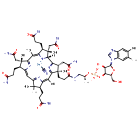
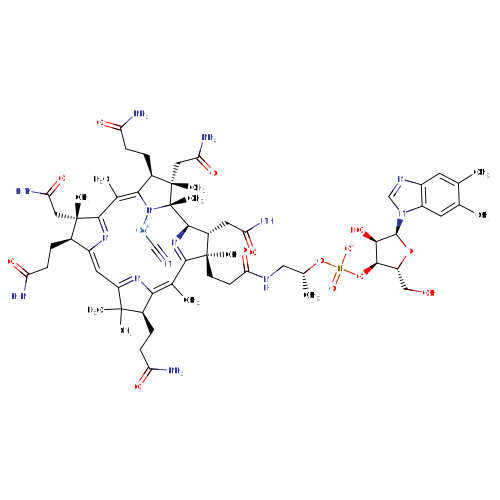
Structure for Cyanocobalamin (DB00115)
- Weight
- Average: 1355.3652
Monoisotopic: 1354.5674053 - Chemical Formula
- C63H88CoN14O14P
- Synonyms
- Cianocobalamina
- Cyanocob(III)alamin
- Cyanocobalamin
- Cyanocobalamine
- Cyanocobalaminum
- Vitamin B12
- Vitamin B12 complex
- Vitamin B12 NOS

Pharmacology
- Indication
Nasal spray
The cyanocobalamin nasal spray is indicated for the maintenance of vitamin B12 concentrations after normalization with intramuscular vitamin B12 therapy in patients with deficiency of this vitamin who have no nervous system involvement Label.
Note: CaloMist Label, the nasal spray form, has not been evaluated for the treatment of newly diagnosed vitamin B12 deficiency.
Injection forms (subcutaneous, intramuscular)
These forms are indicated for vitamin B12 deficiencies due to various causes, with or without neurologic manifestations 26. Vitamin B12 deficiency is frequently caused by malabsorption, which is often associated with the following conditions 20:
Addisonian (pernicious) anemia
Gastrointestinal pathology, dysfunction, or surgery, including gluten enteropathy or sprue, small bowel bacterial overgrowth, total or partial gastrectomy
Fish tapeworm infestation
Malignancy of the pancreas or bowel
Folic acid deficiency
Oral forms
Vitamin B12 supplements are widely available and indicated in patients who require supplementation for various reasons. Dose requirements for vitamin B12 which are higher than normal (caused by pregnancy, thyrotoxicosis, hemolytic anemia, hemorrhage, malignancy, hepatic and renal disease) can usually be achieved with oral supplementation 20. Oral products of vitamin B12 are not recommended in patients with malabsorption, as these forms are primarily absorbed in the gastrointestinal tract 27.
 Reduce drug development failure ratesBuild, train, & validate machine-learning modelswith evidence-based and structured datasets.Build, train, & validate predictive machine-learning models with structured datasets.
- Associated Conditions
Indication Type Indication Combined Product Details Approval Level Age Group Patient Characteristics Dose Form Used in combination to treat Anemia Combination Product in combination with: Ferrous fumarate (DB14491) ••• ••• •••••• Used in combination to treat Anemia, pernicious Combination Product in combination with: Ferrous fumarate (DB14491) ••• ••• •••••• Used in combination to treat Combined vitamin b1 and b12 deficiency Combination Product in combination with: Lipoic acid (DB00166), Thiamine (DB00152) •••••••••••• •••••• Used in combination for therapy Convalescence Combination Product in combination with: Arginine PCA (DB16025) •••••••••••• •••••••• Used in combination to treat Diabetic neuropathies Combination Product in combination with: Thiamine (DB00152), Lipoic acid (DB00166) •••••••••••• •••••• - Associated Therapies
- Contraindications & Blackbox Warnings
 Prevent Adverse Drug Events TodayTap into our Clinical API for life-saving information on contraindications & blackbox warnings, population restrictions, harmful risks, & more.Avoid life-threatening adverse drug events with our Clinical API
- Pharmacodynamics
General effects
Cyanocobalamin corrects vitamin B12 deficiency and improves the symptoms and laboratory abnormalities associated with pernicious anemia (megaloblastic indices, gastrointestinal lesions, and neurologic damage). This drug aids in growth, cell reproduction, hematopoiesis, nucleoprotein, and myelin synthesis. It also plays an important role in fat metabolism, carbohydrate metabolism, as well as protein synthesis. Cells that undergo rapid division (for example, epithelial cells, bone marrow, and myeloid cells) have a high demand for vitamin B12 10.
Parenteral cyanocobalamin effects
The parenteral administration of vitamin B12 rapidly and completely reverses the megaloblastic anemia and gastrointestinal symptoms of vitamin B12 deficiency. Rapid parenteral administration of vitamin B12 in deficiency related neurological damage prevents the progression of this condition 20.
Nasal spray effects
In 24 vitamin B12 deficient patients who were already stabilized on intramuscular (IM) vitamin B12 therapy, single daily doses of intranasal cyanocobalamin for 8 weeks lead to serum vitamin B12 concentrations that were within the target therapeutic range (>200 ng/L) Label.
- Mechanism of action
Vitamin B12 serves as a cofactor for methionine synthase and L-methylmalonyl-CoA mutase enzymes. Methionine synthase is essential for the synthesis of purines and pyrimidines that form DNA. L-methylmalonyl-CoA mutase converts L-methylmalonyl-CoA to succinyl-CoA in the degradation of propionate 24, an important reaction required for both fat and protein metabolism. It is a lack of vitamin B12 cofactor in the above reaction and the resulting accumulation of methylmalonyl CoA that is believed to be responsible for the neurological manifestations of B12 deficiency 10. Succinyl-CoA is also necessary for the synthesis of hemoglobin 24.
In tissues, vitamin B12 is required for the synthesis of methionine from homocysteine. Methionine is required for the formation of S-adenosylmethionine, a methyl donor for nearly 100 substrates, comprised of DNA, RNA, hormones, proteins, as well as lipids 24. Without vitamin B12, tetrahydrofolate cannot be regenerated from 5-methyltetrahydrofolate, and this can lead to functional folate deficiency 22, Label. This reaction is dependent on methylcobalamin (vitamin B12) as a co-factor and is also dependent on folate, in which the methyl group of methyltetrahydrofolate is transferred to homocysteine to form methionine and tetrahydrofolate. Vitamin B12 incorporates into circulating folic acid into growing red blood cells; retaining the folate in these cells 23. A deficiency of vitamin B12 and the interruption of this reaction leads to the development of megaloblastic anemia.
Target Actions Organism AMethionine synthase cofactorHumans AMethylmalonyl-CoA mutase, mitochondrial cofactorHumans UMethionine synthase reductase cofactorHumans UMethylmalonic aciduria type A protein, mitochondrial binderHumans UMethylmalonic aciduria and homocystinuria type C protein cofactorHumans UMethylenetetrahydrofolate reductase cofactorHumans - Absorption
Vitamin B12 is quickly absorbed from intramuscular (IM) and subcutaneous (SC) sites of injection; with peak plasma concentrations achieved about 1 hour after IM injection 26.
Orally administered vitamin B12 binds to intrinsic factor (IF) during its transport through the stomach. The separation of Vitamin B12 and IF occurs in the terminal ileum when calcium is present, and vitamin B12 is then absorbed into the gastrointestinal mucosal cells. It is then transported by transcobalamin binding proteins 20. Passive diffusion through the intestinal wall can occur, however, high doses of vitamin B12 are required in this case (i.e. >1 mg). After the administration of oral doses less than 3 mcg, peak plasma concentrations are not reached for 8 to 12 hours, because the vitamin is temporarily retained in the wall of the lower ileum 26.
- Volume of distribution
Cobalamin is distributed to tissues and stored mainly in the liver and bone marrow Label.
- Protein binding
Very high (to specific plasma proteins called transcobalamins); binding of hydroxocobalamin is slightly higher than cyanocobalamin [FDA label.
- Metabolism
Vitamin B12 or cyanocobalamin obtained from food is initially bound by haptocorrin, a protein found in the saliva with high affinity for B12. This forms a haptocorrin-B12 complex. Cyanocobalamin passes through the stomach and is protected from acid degradation due to its binding to haptocorrin. In the duodenum, pancreatic proteases release cobalamin from the haptocorrin-B12 complex and from other proteins containing protein-bound B12 that have been ingested. Following this, the binding of cobalamin to a second glycoprotein, intrinsic factor, promotes its uptake by terminal ileum mucosal cells by a process called cubilin/AMN receptor-mediated endocytosis. After absorption into enterocytes, intrinsic factor is broken down in the lysosome, and cobalamin is then released into the bloodstream. The transporter ABCC1, found in the basolateral membrane of intestinal epithelial and other cells, exports cobalamin bound to transcobalamin out of the cell 15. Cyanocobalamin then passes through the portal vein in the liver, and then reaches the systemic circulation. The active forms of cyanocobalamin are methylcobalamin and adenosylcobalamin 15, 24.
Hover over products below to view reaction partners
- Route of elimination
This drug is partially excreted in the urine 27. According to a clinical study, approximately 3-8 mcg of vitamin B12 is secreted into the gastrointestinal tract daily via the bile. In patients with adequate levels of intrinsic factor, all except approximately 1 mcg is reabsorbed. When vitamin B12 is administered in higher doses that saturate the binding capacity of plasma proteins and the liver, the unbound vitamin B12 is eliminated rapidly in the urine. The body storage of vitamin B12 is dose-dependent Label.
- Half-life
Approximately 6 days (400 days in the liver) 27.
- Clearance
During vitamin loading, the kidney accumulates large amounts of unbound vitamin B12. This drug is cleared partially by the kidney, however, multiligand receptor megalin promotes the reuptake and reabsorption of vitamin B12 into the body 13, 14.
- Adverse Effects
 Improve decision support & research outcomesWith structured adverse effects data, including: blackbox warnings, adverse reactions, warning & precautions, & incidence rates. View sample adverse effects data in our new Data Library!Improve decision support & research outcomes with our structured adverse effects data.
- Toxicity
LD50 Oral (mouse): > 5,000 mg/kg 25.
General toxicity
Vitamin B12 is generally non-toxic, even at higher doses. Mild, transient diarrhea, polycythemia vera, peripheral vascular thrombosis, itching, transitory exanthema, a feeling of swelling of entire body, pulmonary edema and congestive heart failure in early treatment stages, anaphylactic shock and death have been observed after vitamin B12 administration 26.
Carcinogenesis and mutagenesis
Long term studies in animals examining the carcinogenic potential of any of the vitamin B12 formulations have not completed to date. There is no evidence from long-term use in patients with pernicious anemia that vitamin B12 has carcinogenic potential. Pernicious anemia is known to be associated with an increased incidence of stomach carcinoma, however, this malignancy has been attributed to the underlying cause of pernicious anemia and has not been found to be related to treatment with vitamin B12 Label.
Use in pregnancy
No adverse effects have been reported with ingestion of normal daily requirements during pregnancy 26.
A note on the use of the nasal spray in pregnancy
Although vitamin B12 is an essential vitamin and requirements are increased during pregnancy, it is currently unknown whether the nasal spray form can cause fetal harm when administered to a pregnant woman or can affect reproduction capacity. The nasal spray form should be given to a pregnant woman only if clearly needed, as it is considered a pregnancy category C drug in this form. Sufficient well-controlled studies have not been done to this date in pregnant women Label.
Use in lactation
Vitamin B12 has been found distributed into the milk of nursing women in concentrations similar to the maternal blood vitamin B12 concentrations. No adverse effects have been reported to date with intake of normal required doses during lactation 26.
- Pathways
- Not Available
- Pharmacogenomic Effects/ADRs
- Not Available
Interactions
- Drug Interactions
- This information should not be interpreted without the help of a healthcare provider. If you believe you are experiencing an interaction, contact a healthcare provider immediately. The absence of an interaction does not necessarily mean no interactions exist.
Drug Interaction Integrate drug-drug
interactions in your softwareAbacavir Cyanocobalamin may decrease the excretion rate of Abacavir which could result in a higher serum level. Aceclofenac Aceclofenac may decrease the excretion rate of Cyanocobalamin which could result in a higher serum level. Acemetacin Acemetacin may decrease the excretion rate of Cyanocobalamin which could result in a higher serum level. Acetazolamide Acetazolamide may increase the excretion rate of Cyanocobalamin which could result in a lower serum level and potentially a reduction in efficacy. Acetylsalicylic acid Acetylsalicylic acid may decrease the excretion rate of Cyanocobalamin which could result in a higher serum level. - Food Interactions
- Take with or without food. Recommendations vary from product to product - consult individual product monographs for additional information.
Products
 Drug product information from 10+ global regionsOur datasets provide approved product information including:dosage, form, labeller, route of administration, and marketing period.Access drug product information from over 10 global regions.
- Product Images
- International/Other Brands
- Bedodeka (Teva) / Bedoz / Berubigen (Upjohn) / Betalin (Lilly) / Cobione (MSD) / Cobolin-M / Crystamine / Cyanoject / Cyomin / Cytakon (GlaxoSmithKline) / Cytamen (GlaxoSmithKline) / Dicopac / Neuroforte-R / Primabalt / Vitabee 12
- Brand Name Prescription Products
Name Dosage Strength Route Labeller Marketing Start Marketing End Region Image B-12 1000 Inj 1000mcg/ml Solution 1 mg / mL Intramuscular; Subcutaneous Omega Laboratories Ltd 1985-12-31 Not applicable Canada 
Bedoz 1000inj Liquid 1 mg / mL Intramuscular Lab Nadeau LtÉe, Division Of Technilab Inc. 1951-12-31 2005-08-05 Canada CaloMist Spray, metered 25 ug/0.1mL Nasal Fleming & Company, Pharmaceuticals 2007-10-01 2010-01-26 US 
Cobex Inj 1000mcg/ml Solution 1 mg / mL Intramuscular; Subcutaneous Kripps Pharmacy Ltd. 1979-12-31 Not applicable Canada Crystalline Vitamin B12-liq Im Sc 1000mcg/ml Liquid 1 mg / mL Intramuscular; Subcutaneous Germiphene Corporation 1996-12-31 1999-06-28 Canada - Generic Prescription Products
Name Dosage Strength Route Labeller Marketing Start Marketing End Region Image Aj-cyanocobalamin Solution 1000 mcg / mL Intramuscular; Subcutaneous Agila Jamp Canada Inc Not applicable Not applicable Canada B12 Inject Kit Kit 1000 ug/1mL Intramuscular; Subcutaneous Oaklock, Llc 2015-07-08 2019-04-09 US B12 Inject Kit Kit 1000 ug/1mL Intramuscular; Subcutaneous Oaklock, Llc 2015-06-19 2019-03-21 US Cyanocobalamin Injection 1000 ug/1mL Intramuscular; Subcutaneous Gland Pharma Limited 2022-10-14 Not applicable US Cyanocobalamin Injection, solution 1000 ug/1mL Intramuscular Ubi Pharma Inc. 2019-01-02 Not applicable US - Over the Counter Products
Name Dosage Strength Route Labeller Marketing Start Marketing End Region Image B-12 1000mcg Continuous Released Tab Tablet, extended release 1 mg / tab Oral Gahler Enterprises Ltd. 1981-12-31 2000-10-03 Canada B-plex Tablet 50 mcg / tab Oral Beverly International Nutrition 1986-12-31 1998-08-01 Canada B12 1000mcg Tablet 1000 mcg / tab Oral Natural Factors Nutritional Products Ltd. 2000-09-01 2007-08-07 Canada B12 250mcg Cyanocobalamin Tablet 250 mcg Oral Wn Pharmaceuticals Ltd. 2001-10-01 2009-09-28 Canada Coco12 Lotion 0.05 g/0.05g Topical SSG Ventures Inc 2019-09-26 Not applicable US - Mixture Products
Name Ingredients Dosage Route Labeller Marketing Start Marketing End Region Image 24 Multivitamins + Minerals Cyanocobalamin (25 mcg) + Ascorbic acid (150 mg) + Beta carotene (10000 unit) + Biotin (25 mcg) + Calcium (130 mg) + Cholecalciferol (400 unit) + Choline bitartrate (25 mg) + Chromium (20 mcg) + Copper (1 mg) + Ferrous fumarate (15 mg) + Folic acid (.8 mg) + Inositol (25 mg) + Magnesium (65 mg) + Manganese (2 mg) + Molybdenum (20 mcg) + Niacin (25 mg) + Calcium pantothenate (25 mg) + Potassium (15 mg) + Potassium Iodide (.1 mg) + Pyridoxine hydrochloride (25 mg) + Racemethionine (25 mg) + Riboflavin (25 mg) + Selenium (20 mcg) + Thiamine hydrochloride (25 mg) + Vanadium (20 mcg) + Vitamin A palmitate (5000 unit) + Vitamin E (50 unit) + Zinc (10 mg) Tablet Oral Stanley Pharmaceuticals, A Division Of Vita Health Products Inc. 1997-04-30 2002-07-31 Canada 50 Plus Cyanocobalamin (20 mcg) + Ascorbic acid (200 mg) + Biotin (20 mcg) + Choline bitartrate (20 mg) + Folic acid (.2 mg) + Inositol (20 mg) + Niacin (20 mg) + Calcium pantothenate (20 mg) + Pyridoxine hydrochloride (20 mg) + Racemethionine (20 mg) + Riboflavin (20 mg) + Thiamine hydrochloride (20 mg) + Vitamin A palmitate (10000 unit) + Vitamin D (400 unit) + Vitamin E (20 unit) Tablet Oral Quest Vitamins A Div Of Purity Life Health Products 1998-08-04 2001-07-06 Canada 50 Plus Multiple Vitamins & Minerals Cyanocobalamin (25 mcg) + Ascorbic acid (90 mg) + Biotin (45 mcg) + Calcium (200 mg) + Cholecalciferol (400 unit) + Chromium (10 mcg) + Copper (2 mg) + Folic acid (0.4 mg) + Magnesium (100 mg) + Manganese (5 mg) + Molybdenum (25 mcg) + Nicotinamide (40 mg) + Pantothenic acid (10 mg) + Potassium Iodide (0.15 mg) + Pyridoxine hydrochloride (3 mg) + Riboflavin (3.2 mg) + Selenium (25 mcg) + Thiamine mononitrate (2.25 mg) + Vanadium (10 mcg) + Vitamin A palmitate (6000 unit) + Zinc (15 mg) Tablet Oral Gfr Pharma Ltd. 2002-10-20 2004-06-15 Canada Adeks - Dps Cyanocobalamin (4 mcg / mL) + Ascorbic acid (45 mg / mL) + Beta carotene (1 mg / mL) + Biotin (15 mcg / mL) + Nicotinamide (6 mg / mL) + Panthenol (3 mg / mL) + Phylloquinone (0.1 mg / mL) + Pyridoxine hydrochloride (0.6 mg / mL) + Riboflavin (0.6 mg / mL) + Thiamine (0.5 mg / mL) + Vitamin A palmitate (1500 unit / mL) + Vitamin D (400 unit / mL) + Vitamin E (40 unit / mL) + Zinc sulfate (5 mg / mL) Solution / drops Oral Axcan Pharma 1995-12-31 2007-10-01 Canada Adeks Tablets Cyanocobalamin (12 mcg) + Ascorbic acid (60 mg) + Beta carotene (3 mg) + Biotin (50 mcg) + Cholecalciferol (400 unit) + Folic acid (0.2 mg) + Niacin (10 mg) + Calcium pantothenate (10 mg) + Phylloquinone (0.15 mg) + Pyridoxine (1.5 mg) + Riboflavin (1.3 mg) + Thiamine (1.2 mg) + Vitamin A palmitate (4000 unit) + Vitamin E (150 unit) + Zinc gluconate (7.5 mg) Tablet Oral Axcan Pharma 1998-01-20 2011-04-20 Canada - Unapproved/Other Products
Name Ingredients Dosage Route Labeller Marketing Start Marketing End Region Image Active FE Cyanocobalamin (30 ug/1) + Ascorbic acid (160 mg/1) + Beta carotene (2100 [iU]/1) + Cholecalciferol (400 [iU]/1) + Cupric oxide (1 mg/1) + DL-alpha tocopheryl acetate (40 [iU]/1) + Folic acid (1250 ug/1) + Iron (75 mg/1) + Magnesium oxide (30 mg/1) + Nicotinamide (20 mg/1) + Pyridoxine hydrochloride (20 mg/1) + Riboflavin (4 mg/1) + Thiamine hydrochloride (4 mg/1) + Zinc oxide (20 mg/1) Tablet Oral Gm Pharmaceuticals 2013-11-11 Not applicable US Active OB Cyanocobalamin (30 ug/1) + Ascorbic acid (100 mg/1) + Cholecalciferol (400 [iU]/1) + Cupric sulfate pentahydrate (2 mg/1) + D-alpha-Tocopherol acetate (30 [iU]/1) + Doconexent (320 mg/1) + Folic acid (1 mg/1) + Iron (20 mg/1) + Pyridoxine hydrochloride (20 mg/1) + Riboflavin (4 mg/1) + Thiamine mononitrate (2 mg/1) + Zinc oxide (30 mg/1) Capsule, liquid filled Oral Gm Pharmaceuticals 2013-10-28 2017-03-31 US Animi-3 Cyanocobalamin (500 ug/1) + Cholecalciferol (1000 [iU]/1) + Doconexent (250 mg/1) + Folic acid (1 mg/1) + Icosapent (35 mg/1) + Omega-3 fatty acids (500 mg/1) + Pyridoxine hydrochloride (12.5 mg/1) + Soy sterol (200 mg/1) Capsule Oral Pbm Pharmaceuticals Inc. 2011-06-01 Not applicable US Animi-3 with Vitamin D Cyanocobalamin (500 ug/1) + Cholecalciferol (1000 [iU]/1) + Doconexent (250 mg/1) + Folic acid (1 mg/1) + Icosapent (35 mg/1) + Omega-3 fatty acids (500 mg/1) + Pyridoxine hydrochloride (12.5 mg/1) + Soy sterol (200 mg/1) Capsule Oral Pbm Pharmaceuticals Inc. 2011-06-01 Not applicable US Av-VITE FB Cyanocobalamin (1 mg/1) + Folic acid (2.5 mg/1) + Pyridoxine hydrochloride (25 mg/1) Tablet Oral Av Kare, Inc. 2015-11-05 2016-01-13 US


Categories
- ATC Codes
- B03BA01 — Cyanocobalamin
- B03BA — Vitamin B12 (cyanocobalamin and analogues)
- B03B — VITAMIN B12 AND FOLIC ACID
- B03 — ANTIANEMIC PREPARATIONS
- B — BLOOD AND BLOOD FORMING ORGANS
- B03AE — Iron in other combinations
- B03A — IRON PREPARATIONS
- B03 — ANTIANEMIC PREPARATIONS
- B — BLOOD AND BLOOD FORMING ORGANS
- Drug Categories
- Chemical TaxonomyProvided by Classyfire
- Description
- This compound belongs to the class of organic compounds known as cobalamin derivatives. These are organic compounds containing a corrin ring, a cobalt atom, an a nucleotide moiety. Cobalamin Derivatives are actually derived from vitamin B12.
- Kingdom
- Organic compounds
- Super Class
- Organoheterocyclic compounds
- Class
- Tetrapyrroles and derivatives
- Sub Class
- Corrinoids
- Direct Parent
- Cobalamin derivatives
- Alternative Parents
- Metallotetrapyrroles / Benzimidazole ribonucleosides and ribonucleotides / Pentose phosphates / Glycosylamines / Monosaccharide phosphates / Benzimidazoles / Phosphoethanolamines / Dialkyl phosphates / Benzenoids / Fatty amides show 21 more
- Substituents
- 1-ribofuranosylbenzimidazole / Alcohol / Alkyl phosphate / Aromatic heteropolycyclic compound / Azacycle / Azole / Benzenoid / Benzimidazole / Carbonyl group / Carboxamide group show 45 more
- Molecular Framework
- Aromatic heteropolycyclic compounds
- External Descriptors
- cob(III)alamins (CHEBI:17439)
- Affected organisms
- Humans and other mammals
Chemical Identifiers
- UNII
- P6YC3EG204
- CAS number
- 68-19-9
- InChI Key
- RMRCNWBMXRMIRW-WZHZPDAFSA-L
- InChI
- InChI=1S/C62H90N13O14P.CN.Co/c1-29-20-39-40(21-30(29)2)75(28-70-39)57-52(84)53(41(27-76)87-57)89-90(85,86)88-31(3)26-69-49(83)18-19-59(8)37(22-46(66)80)56-62(11)61(10,25-48(68)82)36(14-17-45(65)79)51(74-62)33(5)55-60(9,24-47(67)81)34(12-15-43(63)77)38(71-55)23-42-58(6,7)35(13-16-44(64)78)50(72-42)32(4)54(59)73-56;1-2;/h20-21,23,28,31,34-37,41,52-53,56-57,76,84H,12-19,22,24-27H2,1-11H3,(H15,63,64,65,66,67,68,69,71,72,73,74,77,78,79,80,81,82,83,85,86);;/q;;+2/p-2/t31-,34-,35-,36-,37+,41-,52-,53-,56-,57+,59-,60+,61+,62+;;/m1../s1
- IUPAC Name
- cyano[(1R,2R,3R,4R,6Z,8S,11Z,13S,14S,16Z,18S,19S)-8,13,18-tris(2-carbamoylethyl)-3,14,19-tris(carbamoylmethyl)-4-(2-{[(2R)-2-{[(2R,3S,4R,5S)-5-(5,6-dimethyl-1H-1,3-benzodiazol-1-yl)-4-hydroxy-2-(hydroxymethyl)oxolan-3-yl phosphonato]oxy}propyl]carbamoyl}ethyl)-1,4,6,9,9,14,16,19-octamethyl-20,21,22,23-tetraazapentacyclo[15.2.1.1^{2,5}.1^{7,10}.1^{12,15}]tricosa-5(23),6,10(22),11,15(21),16-hexaen-20-yl]cobaltylium
- SMILES
- C[C@H](CNC(=O)CC[C@]1(C)[C@@H](CC(N)=O)[C@H]2N=C1\C(C)=C1/N=C(/C=C3\N=C(\C(\C)=C4\[C@@H](CCC(N)=O)[C@](C)(CC(N)=O)[C@@]2(C)N4[Co+]C#N)[C@@](C)(CC(N)=O)[C@@H]3CCC(N)=O)C(C)(C)[C@@H]1CCC(N)=O)OP([O-])(=O)O[C@@H]1[C@@H](CO)O[C@@H]([C@@H]1O)N1C=NC2=C1C=C(C)C(C)=C2
References
- Synthesis Reference
Robert H. Allen, "Preparation of samples for vitamin B12 and/or folate assay and assay." U.S. Patent US4451571, issued October, 1982.
US4451571- General References
- Wickramasinghe SN: Morphology, biology and biochemistry of cobalamin- and folate-deficient bone marrow cells. Baillieres Clin Haematol. 1995 Sep;8(3):441-59. [Article]
- Sharabi A, Cohen E, Sulkes J, Garty M: Replacement therapy for vitamin B12 deficiency: comparison between the sublingual and oral route. Br J Clin Pharmacol. 2003 Dec;56(6):635-8. [Article]
- Hall AH, Rumack BH: Hydroxycobalamin/sodium thiosulfate as a cyanide antidote. J Emerg Med. 1987;5(2):115-21. [Article]
- Andres E, Noel E, Goichot B: Metformin-associated vitamin B12 deficiency. Arch Intern Med. 2002 Oct 28;162(19):2251-2. [Article]
- Gilligan MA: Metformin and vitamin B12 deficiency. Arch Intern Med. 2002 Feb 25;162(4):484-5. [Article]
- Bonaa KH, Njolstad I, Ueland PM, Schirmer H, Tverdal A, Steigen T, Wang H, Nordrehaug JE, Arnesen E, Rasmussen K: Homocysteine lowering and cardiovascular events after acute myocardial infarction. N Engl J Med. 2006 Apr 13;354(15):1578-88. doi: 10.1056/NEJMoa055227. Epub 2006 Mar 12. [Article]
- Lonn E, Yusuf S, Arnold MJ, Sheridan P, Pogue J, Micks M, McQueen MJ, Probstfield J, Fodor G, Held C, Genest J Jr: Homocysteine lowering with folic acid and B vitamins in vascular disease. N Engl J Med. 2006 Apr 13;354(15):1567-77. doi: 10.1056/NEJMoa060900. Epub 2006 Mar 12. [Article]
- Russell-Jones GJ, Alpers DH: Vitamin B12 transporters. Pharm Biotechnol. 1999;12:493-520. [Article]
- Seetharam B: Receptor-mediated endocytosis of cobalamin (vitamin B12). Annu Rev Nutr. 1999;19:173-95. doi: 10.1146/annurev.nutr.19.1.173. [Article]
- O'Leary F, Samman S: Vitamin B12 in health and disease. Nutrients. 2010 Mar;2(3):299-316. doi: 10.3390/nu2030299. Epub 2010 Mar 5. [Article]
- Scott JM: Folate and vitamin B12. Proc Nutr Soc. 1999 May;58(2):441-8. [Article]
- Zhang M, Han W, Hu S, Xu H: Methylcobalamin: a potential vitamin of pain killer. Neural Plast. 2013;2013:424651. doi: 10.1155/2013/424651. Epub 2013 Dec 26. [Article]
- Birn H: The kidney in vitamin B12 and folate homeostasis: characterization of receptors for tubular uptake of vitamins and carrier proteins. Am J Physiol Renal Physiol. 2006 Jul;291(1):F22-36. doi: 10.1152/ajprenal.00385.2005. [Article]
- Moestrup SK, Birn H, Fischer PB, Petersen CM, Verroust PJ, Sim RB, Christensen EI, Nexo E: Megalin-mediated endocytosis of transcobalamin-vitamin-B12 complexes suggests a role of the receptor in vitamin-B12 homeostasis. Proc Natl Acad Sci U S A. 1996 Aug 6;93(16):8612-7. [Article]
- Gherasim C, Lofgren M, Banerjee R: Navigating the B(12) road: assimilation, delivery, and disorders of cobalamin. J Biol Chem. 2013 May 10;288(19):13186-93. doi: 10.1074/jbc.R113.458810. Epub 2013 Mar 28. [Article]
- Fang H, Kang J, Zhang D: Microbial production of vitamin B12: a review and future perspectives. Microb Cell Fact. 2017 Jan 30;16(1):15. doi: 10.1186/s12934-017-0631-y. [Article]
- Amidon, Gordon L., Sadée, Wolfgang (2002). Vitamin B12 Transporters (12th ed.). Springer, Boston MA.
- Methylcobalamin vs cyanocobalamin [Link]
- B12, cyanocobalamin tablets, DailyMed [Link]
- Cyanocobalamin injection, DailyMed [Link]
- Vitamin B12 [Link]
- The metabolic processes of folic acid and Vitamin B12 deficiency [Link]
- University of Virginia: Megaloblastic anemia [Link]
- Vitamin B 12 Health Professional Fact Sheet [Link]
- Cyanocobalamin VitB12, MSDS [File]
- Cyanocobalamin injection, monograph [File]
- Cyanocobalamin label [File]
- External Links
- KEGG Drug
- D00166
- KEGG Compound
- C02823
- PubChem Compound
- 70678590
- PubChem Substance
- 46509031
- ChemSpider
- 21864832
- 11248
- ChEBI
- 17439
- ChEMBL
- CHEMBL2110563
- PharmGKB
- PA451892
- PDBe Ligand
- CNC
- RxList
- RxList Drug Page
- Drugs.com
- Drugs.com Drug Page
- PDRhealth
- PDRhealth Drug Page
- Wikipedia
- Cyanocobalamin
- FDA label
- Download (208 KB)
- MSDS
- Download (37.1 KB)
Clinical Trials
- Clinical Trials
Phase Status Purpose Conditions Count 4 Active Not Recruiting Basic Science Adiposity / Decreased carbohydrate and glucose tolerance / Effect of Drugs / Overweight and Obesity 1 4 Completed Prevention Dyslipidemia / Homocystinaemia / Menopause 1 4 Completed Prevention Vincristine Induced Peripheral Neuropathy (VIPN) 1 4 Completed Treatment Anemia, Pernicious / Megaloblastic anemia 1 4 Completed Treatment Anemia / Iron Deficiency (ID) 1
Pharmacoeconomics
- Manufacturers
- Par pharmaceutical inc
- Pharmacia and upjohn co
- Eli lilly and co
- Watson laboratories inc
- Abraxis pharmaceutical products
- Akorn inc
- App pharmaceuticals llc
- Baxter healthcare corp anesthesia and critical care
- Bioniche pharma usa llc
- Dell laboratories inc
- Luitpold pharmaceuticals inc
- Sanofi aventis us llc
- Solopak medical products inc
- Warner chilcott inc
- Wyeth ayerst laboratories
- Merck and co inc
- Bel mar laboratories inc
- Bristol myers squibb co
- Savage laboratories inc div altana inc
- Bayer healthcare pharmaceuticals inc
- West ward pharmaceutical corp
- Bracco diagnostics inc
- Packagers
- American Regent
- APP Pharmaceuticals
- Baxter International Inc.
- Bayer Healthcare
- C.O. Truxton Inc.
- Cardinal Health
- Carlisle Laboratories Inc.
- Central Pharmaceuticals
- Chain Drug
- Choice Rx Ltd.
- Clint Pharmaceutical Inc.
- CVS Pharmacy
- Darby Dental Supply Co. Inc.
- General Injectables and Vaccines Inc.
- Gonberetica
- Gyn Nutriment Pharmacology
- H and H Laboratories
- International Ethical Labs Inc.
- Ivax Pharmaceuticals
- Keene Pharmaceuticals Inc.
- Luitpold Pharmaceuticals Inc.
- Major Pharmaceuticals
- Martica Enterprises Inc.
- Martin Surgical Supply
- Mason Distributors
- Mckesson Corp.
- MDRNA Inc.
- Merck & Co.
- Merit Pharmaceuticals
- National Pharmaceuticals
- National Vitamin Company
- Neuman Distributors Inc.
- Par Pharmaceuticals
- Physicians Total Care Inc.
- Preferred Pharmaceuticals Inc.
- Primedics Laboratories
- Rite Aid Corp.
- Rugby Laboratories
- Spectrum Pharmaceuticals
- Sunmark
- Torrance Co.
- Vitaline Corp.
- Walgreen Co.
- Dosage Forms
Form Route Strength Powder, for solution Intramuscular Capsule; liquid Oral Tablet, coated Oral 1 mg Solution Intramuscular Solution Intravenous 1.914 mg Tablet Oral 1000 ug/1 Injection, solution; kit Intramuscular; Topical Kit Topical Tablet Oral 50 mcg / tab Patch Transdermal Tablet Oral 1000 mcg / tab Injection, solution Parenteral 1000 UG Injection, solution Parenteral 1 mg/mL Kit Intramuscular; Subcutaneous 1000 ug/1mL Injection, solution Parenteral 500 µg/mL Tablet, delayed release Oral Liquid Intramuscular 1 mg / mL Tablet, delayed release Tablet, coated Injection Intramuscular 1 mg/ml Spray, metered Nasal 25 ug/0.1mL Tablet Oral 6 mcg / tab Injection, powder, for solution Parenteral Injection, powder, for solution Intravenous Solution Intramuscular 1 mg Solution Intramuscular; Parenteral 0.1 mg Injection, solution Parenteral Injection, solution Intramuscular 1000 mcg/ml Injection, solution Solution Intramuscular; Subcutaneous 1 mg / mL Lotion Topical 0.05 g/0.05g Solution Intramuscular 100.000 mg Solution Parenteral 4.00 mg Liquid Intramuscular; Subcutaneous 1 mg / mL Injection Intramuscular 1 mg/1mL Injection Intramuscular; Subcutaneous 1000 ug/1mL Injection, solution Intramuscular; Subcutaneous 1000 ug/1mL Injection, solution Subcutaneous 1000 ug/1mL Spray, metered Nasal 500 ug/1 Tablet, film coated Syrup Oral Capsule Capsule Cutaneous; Oral Solution Intramuscular 75.000 mg Tablet Oral 50 mg Injection Intramuscular; Subcutaneous 20 mcg/ml Injection, solution 1000 MICROGRAMMI/ML Injection, solution 500 MICROGRAMMI/ML Injection, solution Intramuscular 5000 MICROGRAMMI/2ML Solution / drops Oral 20 MICROGRAMMI/ML Solution Intramuscular 1.000 mg Tablet Oral 0.250 mg Tablet Oral 1.000 mg Tablet Oral 1.00 mg Tablet Oral 50.000 mg Liquid Oral Injection, solution Intramuscular; Intravenous Injection, powder, for solution Intramuscular; Intravenous Lozenge Oral Capsule, liquid filled; kit; tablet Oral Tablet Oral 3 mcg Liquid Intramuscular; Intravenous Tablet Oral 50.0000 mg Tablet Oral 100.000 mg Tablet, sugar coated Oral 75 mcg Gel Oral Capsule, delayed release Oral Tablet, extended release Oral Tablet Oral 24 mcg / tab Solution Intravenous Tablet, coated Oral 150 mcg Solution Intramuscular 100 mg Tablet, coated Oral Kit; tablet; tablet, film coated Oral Injection, solution Parenteral 3 mg Injection, solution, concentrate; kit Intravenous Injection, powder, lyophilized, for solution Intravenous Kit Intravenous Injection, powder, for solution Intramuscular Solution Intramuscular 1000 μg Elixir Oral Solution Oral Tablet Oral Tablet, chewable Oral Liquid Intravenous Spray Nasal 500 ug/1 Powder, for solution Oral Tablet, orally disintegrating Oral Capsule, gelatin coated; kit; tablet Oral Solution Parenteral Injection, solution Intramuscular Injection Injection Intramuscular Tablet, sugar coated Oral 100 mcg Tablet, film coated Oral 1000 mcg Tablet; tablet, film coated Oral Tablet, film coated Oral 200 mcg Injection, solution Intramuscular Tablet, sugar coated Oral Tablet, sugar coated Oral 250 mcg Gum, chewing Oral Injection, solution Parenteral 1 MG Solution Parenteral 15.000 mg Tablet, film coated Oral 100 mcg Capsule, liquid filled; kit; tablet, film coated Oral Powder Injection, solution; kit Intravenous Injection, solution Intravenous Injection 1000 mcg/ml Kit Intramuscular; Subcutaneous; Topical Injection Parenteral Solution / drops Oral Capsule, liquid filled; kit; tablet, coated Oral Tablet, film coated Oral Tablet Oral 1 mcg / tab Capsule, gelatin coated Oral Wafer Oral Tablet, effervescent Oral Liquid Intramuscular; Intravenous; Subcutaneous 1 mg / mL Injection, solution Intramuscular 1000 ug/1mL Liquid Intramuscular; Subcutaneous 1000 mcg / mL Powder, for solution Intravenous Injection, powder, for solution Intravenous 100 mg Injection Intramuscular Liquid; tablet Oral Capsule, extended release Oral Powder, for solution Intramuscular; Intravenous Solution Intramuscular 5.0000 mg Solution Parenteral 10.000 mg Solution Parenteral 75.000 mg Injection, solution Capsule Oral Injection, powder, lyophilized, for solution Parenteral Capsule; kit; tablet, film coated Oral Capsule, coated Oral Capsule Oral 0.50 mg Capsule; kit; tablet Oral Injection, powder, lyophilized, for solution Intramuscular; Intravenous Tablet, extended release Oral 1.2 mg / tab Tablet Oral 500 mcg / tab Strip Oral Capsule, liquid filled; kit Oral Capsule, liquid filled Oral Capsule; kit; tablet, coated Oral Tablet Oral .025 mg Capsule Oral 1000 mcg / cap Injection Liquid Intramuscular; Subcutaneous 100 mcg / mL Solution Intramuscular; Subcutaneous 1000 mcg / mL Tablet Oral Tablet Oral 1 mg / tab Capsule Oral 1000 mcg Capsule Oral 500 mcg Tablet Oral 500 mcg Tablet, coated Oral 1000 Mikrogramm Capsule Oral 500 mcg / cap Injection, solution Parenteral 3000 mcg/2mL Solution Intramuscular; Subcutaneous 100 mcg / mL Injection Intramuscular; Subcutaneous 1000 mcg/ml Injection, solution Parenteral 100 UG Injection, solution Parenteral 1000 mcg/2mL Injection, solution Parenteral 1000 UG/ML Injection, solution Parenteral 100 mcg/mL Tablet, extended release Oral 1 mg / tab Tablet Oral 100 mcg / tab Tablet Oral 250 mcg Tablet Oral 25 mcg Tablet Oral 5 mcg / tab Tablet Oral 250 mcg / tab Injection, solution Parenteral 121000 UG Injection Intramuscular 1 mg Solution Parenteral 1000 cg Solution Intramuscular; Subcutaneous 1 mg Solution Parenteral 1 mg Solution Intramuscular; Subcutaneous 0.01 g Tablet Oral 100 mcg Tablet Oral 25 mcg / tab Tablet Oral 3 mcg / tab Kit Oral Suspension Oral Solution Intramuscular 100.00 mg Solution Intramuscular 15.000 mg Powder Oral Granule Oral Tablet Oral 1000 mcg Solution Tablet, sugar coated Oral 100 mcg Tablet Oral 50 mcg Tablet Tablet, coated Oral 25 mcg Solution 1000 mcg/1ml Tablet, coated Oral 100 mcg Tablet, sugar coated Oral 25 mcg Suspension Solution 10 mcg/1ml Tablet, coated Oral 50 mcg Tablet, sugar coated Oral 50 mcg Solution 2000 mcg/1ml - Prices
Unit description Cost Unit Nascobal 500 mcg/0.1ml Solution 2.3ml Bottle 277.97USD bottle Cyanocobalamin crystals 161.18USD g Infuvite pediatric vial 2.58USD ml Cyanocobalamin 1000 mcg/ml vial 1.44USD vial Cyanocobalamin 1000 mcg/ml 1.2USD ml Cyanocobalamin 1000 mcg/ml Solution 1.03USD ml Rubesol-1000 mcg/ml vial 0.48USD ml Vitamin B-12 1000 mcg/ml 0.47USD ml Vitamin b-12 2.5 mg tablet sl 0.17USD tablet Cyanocobalamin 1000 mcg tablet 0.16USD tablet Cyanocobalamin 100 mcg tablet 0.14USD tablet Vitamin b-12 1000 mcg tablet sl 0.08USD tablet B12 2500 mcg tablet sl 0.07USD tablet Sm vitamin b-12 500 mcg tablet 0.06USD tablet Vitamin b-12 1000 mcg tablet 0.06USD tablet Vitabee with vit c caplet 0.05USD caplet Vitamin b-12 500 mcg tablet 0.05USD tablet CVS Pharmacy vitamin b-12 1000 mcg tablet 0.04USD tablet CVS Pharmacy vitamin b-12 500 mcg tablet 0.04USD tablet Vitamin b-12 50 mcg tablet 0.04USD tablet CVS Pharmacy vitamin b12 100 mcg tablet 0.03USD tablet Pv vit b-12 1000 mcg tablet sl 0.03USD tablet Ra vitamin b-12 50 mcg tablet 0.03USD tablet Vitamin b-12 250 mcg tablet 0.03USD tablet Pv b-12 250 mcg tablet 0.02USD tablet Vitamin b-12 100 mcg tablet 0.02USD tablet DrugBank does not sell nor buy drugs. Pricing information is supplied for informational purposes only.- Patents
Patent Number Pediatric Extension Approved Expires (estimated) Region US7229636 No 2007-06-12 2024-08-01 US US7879349 No 2011-02-01 2024-08-01 US US8003353 No 2011-08-23 2024-08-01 US US8940714 No 2015-01-27 2024-02-26 US US7404489 No 2008-07-29 2024-03-12 US US9415007 No 2016-08-16 2024-07-28 US
Properties
- State
- Solid
- Experimental Properties
Property Value Source melting point (°C) > 300 https://www.lookchem.com/Cyanocobalamin/ boiling point (°C) > 300 http://dept.harpercollege.edu/chemistry/msds/Cyanocobalamin%20Vit%20B12.pdf water solubility 12.5 mg/mL http://www.hmdb.ca/metabolites/HMDB00607 logP 1.897 http://www.hmdb.ca/metabolites/HMDB00607 logS -4.5 http://www.hmdb.ca/metabolites/HMDB00607 pKa 1.84, 8.77 http://foodb.ca/compounds/FDB013264 - Predicted Properties
Property Value Source Water Solubility 0.0202 mg/mL ALOGPS logP 2.66 ALOGPS logP -3.2 Chemaxon logS -4.8 ALOGPS pKa (Strongest Acidic) 1.82 Chemaxon pKa (Strongest Basic) 8.68 Chemaxon Physiological Charge 3 Chemaxon Hydrogen Acceptor Count 18 Chemaxon Hydrogen Donor Count 9 Chemaxon Polar Surface Area 477.85 Å2 Chemaxon Rotatable Bond Count 27 Chemaxon Refractivity 337.48 m3·mol-1 Chemaxon Polarizability 138.79 Å3 Chemaxon Number of Rings 8 Chemaxon Bioavailability 0 Chemaxon Rule of Five No Chemaxon Ghose Filter No Chemaxon Veber's Rule No Chemaxon MDDR-like Rule Yes Chemaxon - Predicted ADMET Features
Property Value Probability Human Intestinal Absorption + 0.9574 Blood Brain Barrier - 0.7447 Caco-2 permeable - 0.6455 P-glycoprotein substrate Substrate 0.8341 P-glycoprotein inhibitor I Non-inhibitor 0.5082 P-glycoprotein inhibitor II Inhibitor 0.6369 Renal organic cation transporter Non-inhibitor 0.898 CYP450 2C9 substrate Non-substrate 0.8104 CYP450 2D6 substrate Non-substrate 0.8085 CYP450 3A4 substrate Substrate 0.65 CYP450 1A2 substrate Non-inhibitor 0.8775 CYP450 2C9 inhibitor Non-inhibitor 0.8775 CYP450 2D6 inhibitor Non-inhibitor 0.8737 CYP450 2C19 inhibitor Non-inhibitor 0.7076 CYP450 3A4 inhibitor Inhibitor 0.7118 CYP450 inhibitory promiscuity Low CYP Inhibitory Promiscuity 0.8125 Ames test Non AMES toxic 0.5707 Carcinogenicity Non-carcinogens 0.7782 Biodegradation Not ready biodegradable 0.9972 Rat acute toxicity 2.6731 LD50, mol/kg Not applicable hERG inhibition (predictor I) Weak inhibitor 0.8988 hERG inhibition (predictor II) Non-inhibitor 0.682
Spectra
- Mass Spec (NIST)
- Not Available
- Spectra
- Not Available
- Chromatographic Properties
Collision Cross Sections (CCS)
Not Available
Targets

- Kind
- Protein
- Organism
- Humans
- Pharmacological action
- Yes
- Actions
- Cofactor
- General Function
- Zinc ion binding
- Specific Function
- Catalyzes the transfer of a methyl group from methyl-cobalamin to homocysteine, yielding enzyme-bound cob(I)alamin and methionine. Subsequently, remethylates the cofactor using methyltetrahydrofola...
- Gene Name
- MTR
- Uniprot ID
- Q99707
- Uniprot Name
- Methionine synthase
- Molecular Weight
- 140525.91 Da
References
- Stover PJ: Vitamin B12 and older adults. Curr Opin Clin Nutr Metab Care. 2010 Jan;13(1):24-7. doi: 10.1097/MCO.0b013e328333d157. [Article]
- Allen LH: Causes of vitamin B12 and folate deficiency. Food Nutr Bull. 2008 Jun;29(2 Suppl):S20-34; discussion S35-7. [Article]
- O'Leary F, Samman S: Vitamin B12 in health and disease. Nutrients. 2010 Mar;2(3):299-316. doi: 10.3390/nu2030299. Epub 2010 Mar 5. [Article]
- Kind
- Protein
- Organism
- Humans
- Pharmacological action
- Yes
- Actions
- Cofactor
- General Function
- Modified amino acid binding
- Specific Function
- Involved in the degradation of several amino acids, odd-chain fatty acids and cholesterol via propionyl-CoA to the tricarboxylic acid cycle. MCM has different functions in other species.
- Gene Name
- MUT
- Uniprot ID
- P22033
- Uniprot Name
- Methylmalonyl-CoA mutase, mitochondrial
- Molecular Weight
- 83133.755 Da
References
- Worgan LC, Niles K, Tirone JC, Hofmann A, Verner A, Sammak A, Kucic T, Lepage P, Rosenblatt DS: Spectrum of mutations in mut methylmalonic acidemia and identification of a common Hispanic mutation and haplotype. Hum Mutat. 2006 Jan;27(1):31-43. [Article]
- Brooks AJ, Vlasie M, Banerjee R, Brunold TC: Co-C bond activation in methylmalonyl-CoA mutase by stabilization of the post-homolysis product Co2+ cobalamin. J Am Chem Soc. 2005 Nov 30;127(47):16522-8. [Article]
- Kozlowski PM, Andruniow T, Jarzecki AA, Zgierski MZ, Spiro TG: DFT analysis of co-alkyl and co-adenosyl vibrational modes in B12-cofactors. Inorg Chem. 2006 Jul 10;45(14):5585-90. [Article]
- Moras E, Hosack A, Watkins D, Rosenblatt DS: Mitochondrial vitamin B12-binding proteins in patients with inborn errors of cobalamin metabolism. Mol Genet Metab. 2007 Feb;90(2):140-7. Epub 2006 Sep 29. [Article]
- Stover PJ: Vitamin B12 and older adults. Curr Opin Clin Nutr Metab Care. 2010 Jan;13(1):24-7. doi: 10.1097/MCO.0b013e328333d157. [Article]
- O'Leary F, Samman S: Vitamin B12 in health and disease. Nutrients. 2010 Mar;2(3):299-316. doi: 10.3390/nu2030299. Epub 2010 Mar 5. [Article]
- Kind
- Protein
- Organism
- Humans
- Pharmacological action
- Unknown
- Actions
- Cofactor
- General Function
- Oxidoreductase activity, oxidizing metal ions, nad or nadp as acceptor
- Specific Function
- Involved in the reductive regeneration of cob(I)alamin (vitamin B12) cofactor required for the maintenance of methionine synthase in a functional state. Necessary for utilization of methylgroups fr...
- Gene Name
- MTRR
- Uniprot ID
- Q9UBK8
- Uniprot Name
- Methionine synthase reductase
- Molecular Weight
- 80409.22 Da
References
- O'Leary VB, Mills JL, Pangilinan F, Kirke PN, Cox C, Conley M, Weiler A, Peng K, Shane B, Scott JM, Parle-McDermott A, Molloy AM, Brody LC: Analysis of methionine synthase reductase polymorphisms for neural tube defects risk association. Mol Genet Metab. 2005 Jul;85(3):220-7. Epub 2005 Mar 17. [Article]
- Miriuka SG, Langman LJ, Evrovski J, Miner SE, D'Mello N, Delgado DH, Wong BY, Ross HJ, Cole DE: Genetic polymorphisms predisposing to hyperhomocysteinemia in cardiac transplant patients. Transpl Int. 2005 Jan;18(1):29-35. [Article]
- Berkun Y, Abou Atta I, Rubinow A, Orbach H, Levartovsky D, Aamar S, Arbel O, Dresner-Pollak R, Friedman G, Ben-Yehuda A: 2756GG genotype of methionine synthase reductase gene is more prevalent in rheumatoid arthritis patients treated with methotrexate and is associated with methotrexate-induced nodulosis. J Rheumatol. 2007 Aug;34(8):1664-9. Epub 2007 Jul 1. [Article]
- Kind
- Protein
- Organism
- Humans
- Pharmacological action
- Unknown
- Actions
- Binder
- General Function
- Hydrolase activity
- Specific Function
- Probable GTPase. May function as chaperone. May be involved in the transport of cobalamin (Cbl) into mitochondria for the final steps of adenosylcobalamin (AdoCbl) synthesis.
- Gene Name
- MMAA
- Uniprot ID
- Q8IVH4
- Uniprot Name
- Methylmalonic aciduria type A protein, mitochondrial
- Molecular Weight
- 46537.865 Da
References
- Lerner-Ellis JP, Dobson CM, Wai T, Watkins D, Tirone JC, Leclerc D, Dore C, Lepage P, Gravel RA, Rosenblatt DS: Mutations in the MMAA gene in patients with the cblA disorder of vitamin B12 metabolism. Hum Mutat. 2004 Dec;24(6):509-16. [Article]
- Dobson CM, Gradinger A, Longo N, Wu X, Leclerc D, Lerner-Ellis J, Lemieux M, Belair C, Watkins D, Rosenblatt DS, Gravel RA: Homozygous nonsense mutation in the MCEE gene and siRNA suppression of methylmalonyl-CoA epimerase expression: a novel cause of mild methylmalonic aciduria. Mol Genet Metab. 2006 Aug;88(4):327-33. Epub 2006 May 11. [Article]
- Zhou X, Cui Y, Han J: Methylmalonic acidemia: Current status and research priorities. Intractable Rare Dis Res. 2018 May;7(2):73-78. doi: 10.5582/irdr.2018.01026. [Article]
- Froese DS, Zhang J, Healy S, Gravel RA: Mechanism of vitamin B12-responsiveness in cblC methylmalonic aciduria with homocystinuria. Mol Genet Metab. 2009 Dec;98(4):338-43. doi: 10.1016/j.ymgme.2009.07.014. Epub 2009 Aug 3. [Article]
- Kind
- Protein
- Organism
- Humans
- Pharmacological action
- Unknown
- Actions
- Cofactor
- General Function
- Cobalamin binding
- Specific Function
- May be involved in the binding and intracellular trafficking of cobalamin (vitamin B12).
- Gene Name
- MMACHC
- Uniprot ID
- Q9Y4U1
- Uniprot Name
- Methylmalonic aciduria and homocystinuria type C protein
- Molecular Weight
- 31728.095 Da
References
- Chandler RJ, Aswani V, Tsai MS, Falk M, Wehrli N, Stabler S, Allen R, Sedensky M, Kazazian HH, Venditti CP: Propionyl-CoA and adenosylcobalamin metabolism in Caenorhabditis elegans: evidence for a role of methylmalonyl-CoA epimerase in intermediary metabolism. Mol Genet Metab. 2006 Sep-Oct;89(1-2):64-73. Epub 2006 Jul 14. [Article]
- Ben-Omran TI, Wong H, Blaser S, Feigenbaum A: Late-onset cobalamin-C disorder: a challenging diagnosis. Am J Med Genet A. 2007 May 1;143A(9):979-84. [Article]
- Morel CF, Lerner-Ellis JP, Rosenblatt DS: Combined methylmalonic aciduria and homocystinuria (cblC): phenotype-genotype correlations and ethnic-specific observations. Mol Genet Metab. 2006 Aug;88(4):315-21. Epub 2006 May 22. [Article]
- Lerner-Ellis JP, Tirone JC, Pawelek PD, Dore C, Atkinson JL, Watkins D, Morel CF, Fujiwara TM, Moras E, Hosack AR, Dunbar GV, Antonicka H, Forgetta V, Dobson CM, Leclerc D, Gravel RA, Shoubridge EA, Coulton JW, Lepage P, Rommens JM, Morgan K, Rosenblatt DS: Identification of the gene responsible for methylmalonic aciduria and homocystinuria, cblC type. Nat Genet. 2006 Jan;38(1):93-100. Epub 2005 Nov 27. [Article]
- Obeid R, Fedosov SN, Nexo E: Cobalamin coenzyme forms are not likely to be superior to cyano- and hydroxyl-cobalamin in prevention or treatment of cobalamin deficiency. Mol Nutr Food Res. 2015 Jul;59(7):1364-72. doi: 10.1002/mnfr.201500019. Epub 2015 May 12. [Article]
- Kind
- Protein
- Organism
- Humans
- Pharmacological action
- Unknown
- Actions
- Cofactor
- General Function
- Protein complex binding
- Specific Function
- Catalyzes the conversion of 5,10-methylenetetrahydrofolate to 5-methyltetrahydrofolate, a co-substrate for homocysteine remethylation to methionine.
- Gene Name
- MTHFR
- Uniprot ID
- P42898
- Uniprot Name
- Methylenetetrahydrofolate reductase
- Molecular Weight
- 74595.895 Da
References
- Nakamura T, Saionji K, Hiejima Y, Hirayama H, Tago K, Takano H, Tajiri M, Hayashi K, Kawabata M, Funamizu M, Makita Y, Hata A: Methylenetetrahydrofolate reductase genotype, vitamin B12, and folate influence plasma homocysteine in hemodialysis patients. Am J Kidney Dis. 2002 May;39(5):1032-9. [Article]
- Erdogan MO, Yildiz SH, Solak M, Eser O, Cosar E, Eser B, Koken R, Buyukbas S: C677T polymorphism of the methylenetetrahydrofolate reductase gene does not affect folic acid, vitamin B12, and homocysteine serum levels in Turkish children with neural tube defects. Genet Mol Res. 2010 Jun 22;9(2):1197-203. doi: 10.4238/vol9-2gmr816. [Article]
Enzymes
- Kind
- Protein
- Organism
- Humans
- Pharmacological action
- Unknown
- Actions
- Substrate
- General Function
- Cob(i)yrinic acid a,c-diamide adenosyltransferase activity
- Specific Function
- Not Available
- Gene Name
- MMAB
- Uniprot ID
- Q96EY8
- Uniprot Name
- Cob(I)yrinic acid a,c-diamide adenosyltransferase, mitochondrial
- Molecular Weight
- 27387.975 Da
References
- Zhang J, Dobson CM, Wu X, Lerner-Ellis J, Rosenblatt DS, Gravel RA: Impact of cblB mutations on the function of ATP:cob(I)alamin adenosyltransferase in disorders of vitamin B12 metabolism. Mol Genet Metab. 2006 Apr;87(4):315-22. Epub 2006 Jan 24. [Article]
- Lerner-Ellis JP, Gradinger AB, Watkins D, Tirone JC, Villeneuve A, Dobson CM, Montpetit A, Lepage P, Gravel RA, Rosenblatt DS: Mutation and biochemical analysis of patients belonging to the cblB complementation class of vitamin B12-dependent methylmalonic aciduria. Mol Genet Metab. 2006 Mar;87(3):219-25. Epub 2006 Jan 10. [Article]
- Kind
- Protein
- Organism
- Salmonella typhimurium (strain LT2 / SGSC1412 / ATCC 700720)
- Pharmacological action
- Unknown
- Actions
- Product of
- General Function
- Gtp binding
- Specific Function
- Catalyzes ATP-dependent phosphorylation of adenosylcobinamide and addition of GMP to adenosylcobinamide phosphate.
- Gene Name
- cobU
- Uniprot ID
- Q05599
- Uniprot Name
- Bifunctional adenosylcobalamin biosynthesis protein CobU
- Molecular Weight
- 19901.7 Da
References
- Fang H, Li D, Kang J, Jiang P, Sun J, Zhang D: Metabolic engineering of Escherichia coli for de novo biosynthesis of vitamin B12. Nat Commun. 2018 Nov 21;9(1):4917. doi: 10.1038/s41467-018-07412-6. [Article]
- Warren MJ, Raux E, Schubert HL, Escalante-Semerena JC: The biosynthesis of adenosylcobalamin (vitamin B12). Nat Prod Rep. 2002 Aug;19(4):390-412. [Article]
References
- Gherasim C, Lofgren M, Banerjee R: Navigating the B(12) road: assimilation, delivery, and disorders of cobalamin. J Biol Chem. 2013 May 10;288(19):13186-93. doi: 10.1074/jbc.R113.458810. Epub 2013 Mar 28. [Article]
Transporters
- Kind
- Protein
- Organism
- Humans
- Pharmacological action
- Unknown
- Actions
- Substrate
- General Function
- Receptor binding
- Specific Function
- Necessary for efficient absorption of vitamin B12. May direct the production of trunk mesoderm during development by modulating a bone morphogenetic protein (BMP) signaling pathway in the underlyin...
- Gene Name
- AMN
- Uniprot ID
- Q9BXJ7
- Uniprot Name
- Protein amnionless
- Molecular Weight
- 47753.91 Da
References
- Al-Alami JR, Tanner SM, Tayeh MK, de la Chapelle A, El-Shanti H: Homozygous AMN mutation in hereditary selective intestinal malabsorption of vitamin B12 in Jordan. Saudi Med J. 2005 Jul;26(7):1061-4. [Article]
- Alpers DH: Absorption and blood/cellular transport of folate and cobalamin: Pharmacokinetic and physiological considerations. Biochimie. 2016 Jul;126:52-6. doi: 10.1016/j.biochi.2015.11.006. Epub 2015 Nov 14. [Article]
- O'Leary F, Samman S: Vitamin B12 in health and disease. Nutrients. 2010 Mar;2(3):299-316. doi: 10.3390/nu2030299. Epub 2010 Mar 5. [Article]
- He Q, Madsen M, Kilkenney A, Gregory B, Christensen EI, Vorum H, Hojrup P, Schaffer AA, Kirkness EF, Tanner SM, de la Chapelle A, Giger U, Moestrup SK, Fyfe JC: Amnionless function is required for cubilin brush-border expression and intrinsic factor-cobalamin (vitamin B12) absorption in vivo. Blood. 2005 Aug 15;106(4):1447-53. Epub 2005 Apr 21. [Article]
- Kind
- Protein
- Organism
- Humans
- Pharmacological action
- Unknown
- Actions
- Substrate
- General Function
- Cobalamin binding
- Specific Function
- Binds vitamin B12 with femtomolar affinity and protects it from the acidic environment of the stomach.
- Gene Name
- TCN1
- Uniprot ID
- P20061
- Uniprot Name
- Transcobalamin-1
- Molecular Weight
- 48206.32 Da
References
- Carmel R: Haptocorrin (transcobalamin I) and cobalamin deficiencies. Clin Chem. 2007 Feb;53(2):367-8; author reply 368-9. [Article]
- Al-Alami JR, Tanner SM, Tayeh MK, de la Chapelle A, El-Shanti H: Homozygous AMN mutation in hereditary selective intestinal malabsorption of vitamin B12 in Jordan. Saudi Med J. 2005 Jul;26(7):1061-4. [Article]
- Russell-Jones GJ, Alpers DH: Vitamin B12 transporters. Pharm Biotechnol. 1999;12:493-520. [Article]
- Kind
- Protein
- Organism
- Humans
- Pharmacological action
- Unknown
- Actions
- Substrate
- General Function
- Metal ion binding
- Specific Function
- Primary vitamin B12-binding and transport protein. Delivers cobalamin to cells.
- Gene Name
- TCN2
- Uniprot ID
- P20062
- Uniprot Name
- Transcobalamin-2
- Molecular Weight
- 47534.54 Da
References
- Chen X, Remacha AF, Sarda MP, Carmel R: Influence of cobalamin deficiency compared with that of cobalamin absorption on serum holo-transcobalamin II. Am J Clin Nutr. 2005 Jan;81(1):110-4. [Article]
- Alessio AC, Hoehr NF, Siqueira LH, Bydlowski SP, Annichino-Bizzacchi JM: Polymorphism C776G in the transcobalamin II gene and homocysteine, folate and vitamin B12 concentrations. Association with MTHFR C677T and A1298C and MTRR A66G polymorphisms in healthy children. Thromb Res. 2007;119(5):571-7. Epub 2006 Jul 3. [Article]
- Bowen RA, Drake SK, Vanjani R, Huey ED, Grafman J, Horne MK 3rd: Markedly increased vitamin B12 concentrations attributable to IgG-IgM-vitamin B12 immune complexes. Clin Chem. 2006 Nov;52(11):2107-14. [Article]
- Bosco P, Gueant-Rodriguez RM, Anello G, Spada R, Romano A, Fajardo A, Caraci F, Ferri R, Gueant JL: Association of homocysteine (but not of MTHFR 677 C>T, MTR 2756 A>G, MTRR 66 A>G and TCN2 776 C>G) with ischaemic cerebrovascular disease in Sicily. Thromb Haemost. 2006 Aug;96(2):154-9. [Article]
- Al-Alami JR, Tanner SM, Tayeh MK, de la Chapelle A, El-Shanti H: Homozygous AMN mutation in hereditary selective intestinal malabsorption of vitamin B12 in Jordan. Saudi Med J. 2005 Jul;26(7):1061-4. [Article]
- Kind
- Protein
- Organism
- Humans
- Pharmacological action
- Unknown
- Actions
- Substrate
- General Function
- Cobalamin binding
- Specific Function
- Promotes absorption of the essential vitamin cobalamin (Cbl) in the ileum. After interaction with CUBN, the GIF-cobalamin complex is internalized via receptor-mediated endocytosis.
- Gene Name
- GIF
- Uniprot ID
- P27352
- Uniprot Name
- Gastric intrinsic factor
- Molecular Weight
- 45415.67 Da
References
- Fedosov SN, Fedosova NU, Berglund L, Moestrup SK, Nexo E, Petersen TE: Composite organization of the cobalamin binding and cubilin recognition sites of intrinsic factor. Biochemistry. 2005 Mar 8;44(9):3604-14. [Article]
- He Q, Madsen M, Kilkenney A, Gregory B, Christensen EI, Vorum H, Hojrup P, Schaffer AA, Kirkness EF, Tanner SM, de la Chapelle A, Giger U, Moestrup SK, Fyfe JC: Amnionless function is required for cubilin brush-border expression and intrinsic factor-cobalamin (vitamin B12) absorption in vivo. Blood. 2005 Aug 15;106(4):1447-53. Epub 2005 Apr 21. [Article]
- Moestrup SK: New insights into carrier binding and epithelial uptake of the erythropoietic nutrients cobalamin and folate. Curr Opin Hematol. 2006 May;13(3):119-23. [Article]
- Seetharam B: Receptor-mediated endocytosis of cobalamin (vitamin B12). Annu Rev Nutr. 1999;19:173-95. doi: 10.1146/annurev.nutr.19.1.173. [Article]
- O'Leary F, Samman S: Vitamin B12 in health and disease. Nutrients. 2010 Mar;2(3):299-316. doi: 10.3390/nu2030299. Epub 2010 Mar 5. [Article]
- Kind
- Protein
- Organism
- Humans
- Pharmacological action
- Unknown
- Actions
- Substrate
- General Function
- Transporter activity
- Specific Function
- Cotransporter which plays a role in lipoprotein, vitamin and iron metabolism, by facilitating their uptake. Binds to ALB, MB, Kappa and lambda-light chains, TF, hemoglobin, GC, SCGB1A1, APOA1, high...
- Gene Name
- CUBN
- Uniprot ID
- O60494
- Uniprot Name
- Cubilin
- Molecular Weight
- 398732.93 Da
References
- Fedosov SN, Fedosova NU, Berglund L, Moestrup SK, Nexo E, Petersen TE: Composite organization of the cobalamin binding and cubilin recognition sites of intrinsic factor. Biochemistry. 2005 Mar 8;44(9):3604-14. [Article]
- He Q, Madsen M, Kilkenney A, Gregory B, Christensen EI, Vorum H, Hojrup P, Schaffer AA, Kirkness EF, Tanner SM, de la Chapelle A, Giger U, Moestrup SK, Fyfe JC: Amnionless function is required for cubilin brush-border expression and intrinsic factor-cobalamin (vitamin B12) absorption in vivo. Blood. 2005 Aug 15;106(4):1447-53. Epub 2005 Apr 21. [Article]
- Gherasim C, Lofgren M, Banerjee R: Navigating the B(12) road: assimilation, delivery, and disorders of cobalamin. J Biol Chem. 2013 May 10;288(19):13186-93. doi: 10.1074/jbc.R113.458810. Epub 2013 Mar 28. [Article]
- Kind
- Protein
- Organism
- Humans
- Pharmacological action
- Unknown
- General Function
- Calcium ion binding
- Specific Function
- Acts together with cubilin to mediate HDL endocytosis (By similarity). May participate in regulation of parathyroid-hormone and para-thyroid-hormone-related protein release.
- Gene Name
- LRP2
- Uniprot ID
- P98164
- Uniprot Name
- Low-density lipoprotein receptor-related protein 2
- Molecular Weight
- 521952.77 Da
References
- Moestrup SK, Birn H, Fischer PB, Petersen CM, Verroust PJ, Sim RB, Christensen EI, Nexo E: Megalin-mediated endocytosis of transcobalamin-vitamin-B12 complexes suggests a role of the receptor in vitamin-B12 homeostasis. Proc Natl Acad Sci U S A. 1996 Aug 6;93(16):8612-7. [Article]
- Kind
- Protein
- Organism
- Humans
- Pharmacological action
- Unknown
- General Function
- Transporter activity
- Specific Function
- Mediates export of organic anions and drugs from the cytoplasm. Mediates ATP-dependent transport of glutathione and glutathione conjugates, leukotriene C4, estradiol-17-beta-o-glucuronide, methotre...
- Gene Name
- ABCC1
- Uniprot ID
- P33527
- Uniprot Name
- Multidrug resistance-associated protein 1
- Molecular Weight
- 171589.5 Da
References
- Gherasim C, Lofgren M, Banerjee R: Navigating the B(12) road: assimilation, delivery, and disorders of cobalamin. J Biol Chem. 2013 May 10;288(19):13186-93. doi: 10.1074/jbc.R113.458810. Epub 2013 Mar 28. [Article]
- Quadros EV, Sequeira JM: Cellular uptake of cobalamin: transcobalamin and the TCblR/CD320 receptor. Biochimie. 2013 May;95(5):1008-18. doi: 10.1016/j.biochi.2013.02.004. Epub 2013 Feb 14. [Article]

Drug created at June 13, 2005 13:24 / Updated at April 27, 2024 09:44