Identification
- Summary
Ipratropium is an anticholinergic drug used in the control of symptoms related to bronchospasm in chronic obstructive pulmonary disease (COPD).
- Brand Names
- Atrovent, Combivent, Ipravent
- Generic Name
- Ipratropium
- DrugBank Accession Number
- DB00332
- Background
Ipratropium is a quaternary ammonium derivative of atropine4 that acts as an anticholinergic agent.1 It is commonly administered through inhalation which allows producing a local effect without presenting a significant systemic absorption.4
Ipratropium as a therapeutic agent was developed by Boehringer Ingelheim and its first monotherapy product was FDA approved in 1986, while the combination product of ipratropium and albuterol was approved in 1996.12,11
- Type
- Small Molecule
- Groups
- Approved, Experimental
- Structure
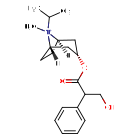
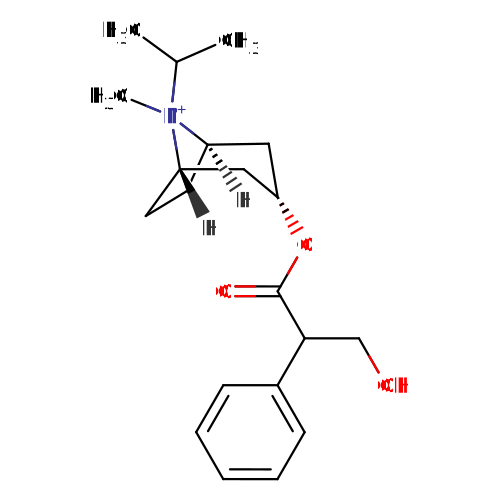
Structure for Ipratropium (DB00332)
- Weight
- Average: 332.463
Monoisotopic: 332.22202025 - Chemical Formula
- C20H30NO3
- Synonyms
- bromuro de ipratropio
- Ipratropium cation
- Ipratropium ion

Pharmacology
- Indication
Inhaled ipratropium is indicated in combination with inhaled beta-agonist systemic corticosteroids for the management of severe exacerbations of asthma flares requiring treatment.1
Asthma exacerbations are characterized by a progressive increase in one or more of asthma symptoms accompanied by a decrease in expiratory flow.13
As a single agent, ipratropium was indicated for the symptomatic relief of rhinorrhea associated with the common cold or seasonal allergic rhinitis for patients 5 years or older. It does not alleviate nasal congestion nor sneezing.Label
Rhinorrhea refers to recurrent or chronic watery nasal discharge. This condition is debilitating and its pathogenesis and etiology is complex and not very well understood presenting very substantial cost burden.14
Additionally, ipratropium is indicated as a bronchodilator for maintenance treatment of bronchospasm associated with chronic obstructive pulmonary disease including chronic bronchitis and emphysema.Label
The chronic obstructive pulmonary disease includes a large number of conditions characterized by breathlessness. As this includes several conditions, the etiology, symptoms, and treatments are diverse.15
Ipratropium has also been studied to be used for the treatment of sialorrhea.2
Sialorrhea is a common symptom that accompanies different neurologic conditions and it is characterized by drooling or excessive salivation.5
 Reduce drug development failure ratesBuild, train, & validate machine-learning modelswith evidence-based and structured datasets.Build, train, & validate predictive machine-learning models with structured datasets.
- Associated Conditions
Indication Type Indication Combined Product Details Approval Level Age Group Patient Characteristics Dose Form Used in combination to manage Asthma Combination Product in combination with: Albuterol (DB01001) ••• ••••• •••••••• •••••••• ••••••••• •••••••• Used in combination to treat Bronchospasm Combination Product in combination with: Levosalbutamol (DB13139) •••••••••••• ••••••••••• •••••• ••••••••• •••••••••• Used in combination to prevent Bronchospasm Combination Product in combination with: Levosalbutamol (DB13139) •••••••••••• ••••••••••• •••••• ••••••••• •••••••••• Treatment of Bronchospasm •••••••••••• •••••••• ••••••••• ••••••••••• •••••••••••• •••••••••• ••• ••• •••••••••••• •• ••••• •••• •••••••••••• Used in combination to manage Copd Combination Product in combination with: Albuterol (DB01001) •••••••••••• •••••••• •••••••• ••••••••• •••••••• - Contraindications & Blackbox Warnings
 Prevent Adverse Drug Events TodayTap into our Clinical API for life-saving information on contraindications & blackbox warnings, population restrictions, harmful risks, & more.Avoid life-threatening adverse drug events with our Clinical API
- Pharmacodynamics
Ipratropium is a short-acting agent that inhibits the parasympathetic nervous system at the level of the airway which then produces bronchodilatation. The effect of this agent starts after 1-2 hours and it is known to last only from 4 to 6 hours.3 As part of the effect, ipratropium relaxes the bronchial airways which reverse the narrowing that accounts for wheezy breathing, chest tightness, cough and abnormal gas exchange.6
In clinical trials where ipratropium was used in the initial management of status asthmaticus, it was demonstrated a clear benefit in pulmonary function in children and adults. However, the continuous use of ipratropium after an acute asthmatic attack is not proven to be significantly advantageous1 nor the prophylactic administration of this agent.8
- Mechanism of action
Ipratropium acts as an antagonist of the muscarinic acetylcholine receptor.1 This effect produces the inhibition of the parasympathetic nervous system in the airways and hence, inhibit their function. The function of the parasympathetic system in the airway is to generate bronchial secretions and constriction and hence, the inhibition of this action can lead to bronchodilation and fewer secretions.3
At the cellular level, the diameter of the airways is controlled by the release of acetylcholine into the muscle cells causing them to contract and producing a narrow airway. Thus administration of ipratropium stops the activity of acetylcholine in the smooth muscle preventing the contraction and producing relaxed airways.6
Target Actions Organism AMuscarinic acetylcholine receptor M3 antagonistHumans AMuscarinic acetylcholine receptor M1 antagonistHumans AMuscarinic acetylcholine receptor M2 antagonistHumans - Absorption
Ipratropium is a topically active but poorly absorbed agent.7 The lack of absorption potential in the mucosal surfaces is associated with the presence of a charge in the 5-valent nitrogen. The molecule itself presents very large topic effectiveness however, it does not produce detectable blood levels nor systemic effects.8
Serum levels of ipratropium after oral or inhaled administration are very low, corresponding to only 1-2% of the administered dose. These low levels peak after 1-2 hours and it presents a low bioavailability of 2%.8
- Volume of distribution
Ipratropium has a volume of distributions of 4.6 L/kg and hence, it is known to be highly distributed in the tissues.16
- Protein binding
The protein binding of ipratropium is very low as the level of circulating ipratropium is very minimal. The bound state represents only from 0-9% of the administered dose.10
- Metabolism
Ipratropium is metabolized in the gastrointestinal tract by the activity of the cytochrome P-450 isoenzymes.3 From the orally administered dose, about 90% of the dose is excreted unchanged. The absorbed portion is partially metabolized by ester hydrolysis to inactive metabolites, tropic acid and tropane.9
Hover over products below to view reaction partners
- Route of elimination
About 80-100% of the administered dose of ipratropium is excreted in the urine leaving less than 20% of the dose to be eliminated through the feces.3 From the urine eliminated portion, almost all the drug is found unchanged.8
However, when ipratropium is orally administered, due to its low absorption, most of the dose is recovered in the feces with a very minimal amount found in the urine.8
- Half-life
Ipratropium presents a short half-life of about 1.6 hours.3
- Clearance
The average clearance rate of ipratropium is of 2.3 L/min with a renal clearance of 0.9 L/min.16
- Adverse Effects
 Improve decision support & research outcomesWith structured adverse effects data, including: blackbox warnings, adverse reactions, warning & precautions, & incidence rates. View sample adverse effects data in our new Data Library!Improve decision support & research outcomes with our structured adverse effects data.
- Toxicity
The reported LD50 in mice after oral administration of ipratropium is 1500 mg/kg.MSDS However, overdosage is not very likely due to the poor absorption of ipratropium.Label
Ipratropium was not shown to present carcinogenesis, teratogenesis not mutagenesis potential and it did not present effects on fertility. The only effect after high administration of ipratropium was a reduction in the conception rate.Label
- Pathways
- Not Available
- Pharmacogenomic Effects/ADRs
- Not Available
Interactions
- Drug Interactions
- This information should not be interpreted without the help of a healthcare provider. If you believe you are experiencing an interaction, contact a healthcare provider immediately. The absence of an interaction does not necessarily mean no interactions exist.
Drug Interaction Integrate drug-drug
interactions in your softwareAclidinium The risk or severity of adverse effects can be increased when Ipratropium is combined with Aclidinium. Adenosine The risk or severity of Tachycardia can be increased when Ipratropium is combined with Adenosine. Alfentanil The risk or severity of adverse effects can be increased when Ipratropium is combined with Alfentanil. Alloin The therapeutic efficacy of Alloin can be decreased when used in combination with Ipratropium. Amantadine The risk or severity of adverse effects can be increased when Ipratropium is combined with Amantadine. - Food Interactions
- No interactions found.
Products
 Drug product information from 10+ global regionsOur datasets provide approved product information including:dosage, form, labeller, route of administration, and marketing period.Access drug product information from over 10 global regions.
- Product Ingredients
Ingredient UNII CAS InChI Key Ipratropium bromide anhydrous VJV4X1P2Z1 22254-24-6 LHLMOSXCXGLMMN-WDTICOSOSA-M Ipratropium bromide monohydrate J697UZ2A9J 66985-17-9 KEWHKYJURDBRMN-XSAPEOHZSA-M Ipratropium chloride Not Available Not Available MQIPRYDNKGFOGV-WDTICOSOSA-M - International/Other Brands
- Aerovent (Teva) / Apovent (Apotex Inc.) / Atronase (Boehringer Ingelheim) / Ipraxa (Ivax) / Ipvent (Cipla Medpro) / Rhinovent (Boehringer Ingelheim) / Rinatec (Boehringer Ingelheim) / Rinovagos (Valeas)
- Brand Name Prescription Products
Name Dosage Strength Route Labeller Marketing Start Marketing End Region Image Atrovent Spray, metered 21 ug/1 Nasal Boehringer Ingelheim Pharmaceuticals, Inc. 1996-01-01 2018-12-01 US 
Atrovent Aerosol, metered 18 ug/1 Respiratory (inhalation) Boehringer Ingelheim 1986-12-19 2006-06-02 US Atrovent Solution 250 mcg / mL Respiratory (inhalation) Boehringer Ingelheim (Canada) Ltd Ltee 1988-12-31 2007-10-11 Canada 
Atrovent Spray, metered 42 ug/1 Nasal Physicians Total Care, Inc. 2003-05-23 2011-06-30 US Atrovent Spray, metered 42 ug/1 Nasal Boehringer Ingelheim Pharmaceuticals, Inc. 1996-01-01 2018-12-01 US - Generic Prescription Products
Name Dosage Strength Route Labeller Marketing Start Marketing End Region Image Aa-ipravent Solution 250 mcg / mL Respiratory (inhalation) Aa Pharma Inc 1994-12-31 Not applicable Canada Apo-ipravent Sterules Solution 125 mcg / mL Respiratory (inhalation) Apotex Corporation 2001-08-28 Not applicable Canada Apo-ipravent Sterules Solution 250 mcg / mL Respiratory (inhalation) Apotex Corporation 1998-07-09 Not applicable Canada Dom-ipratropium Solution 21 mcg / act Nasal Dominion Pharmacal 1999-09-15 Not applicable Canada Dom-ipratropium 125 Mcg/ml Liquid 125 mcg / mL Respiratory (inhalation) Dominion Pharmacal Not applicable Not applicable Canada - Mixture Products
Name Ingredients Dosage Route Labeller Marketing Start Marketing End Region Image ALMEIDA Ipratropium bromide anhydrous (0.375 MG/0.5ML) + Albuterol (1.875 MG/0.5ML) Spray Oral; Respiratory (inhalation) I.B.N. Savio S.R.L 2014-07-08 Not applicable Italy 
ALMEIDA Ipratropium bromide anhydrous (0.075 %) + Albuterol (0.375 %) Spray Oral; Respiratory (inhalation) I.B.N. Savio S.R.L 2014-07-08 Not applicable Italy Apo-salvent-ipravent Sterules Ipratropium bromide monohydrate (0.5 mg / 2.5 mL) + Albuterol sulfate (2.5 mg / 2.5 mL) Solution Respiratory (inhalation) Apotex Corporation 2006-08-25 Not applicable Canada Berodual - Dosieraerosol Ipratropium bromide monohydrate (0.02 mg) + Fenoterol hydrobromide (0.05 mg) Aerosol, metered Respiratory (inhalation) Boehringer Ingelheim Rcv Gmb H & Co Kg 1981-09-15 Not applicable Austria 
BERODUAL N METERED DOSE INHALER Ipratropium bromide anhydrous (20 mcg/dose) + Fenoterol hydrobromide (50 mcg/dose) Aerosol, spray Respiratory (inhalation) BOEHRINGER INGELHEIM SINGAPORE PTE. LTD. 2001-11-30 Not applicable Singapore 
- Unapproved/Other Products
Name Ingredients Dosage Route Labeller Marketing Start Marketing End Region Image Ipratropium Bromide Ipratropium bromide monohydrate (0.5 mg/1mL) Solution Respiratory (inhalation) Cantrell Drug Company 2012-10-12 2015-01-14 US
Categories
- ATC Codes
- R03BB01 — Ipratropium bromide
- R03BB — Anticholinergics
- R03B — OTHER DRUGS FOR OBSTRUCTIVE AIRWAY DISEASES, INHALANTS
- R03 — DRUGS FOR OBSTRUCTIVE AIRWAY DISEASES
- R — RESPIRATORY SYSTEM
- R01AX — Other nasal preparations
- R01A — DECONGESTANTS AND OTHER NASAL PREPARATIONS FOR TOPICAL USE
- R01 — NASAL PREPARATIONS
- R — RESPIRATORY SYSTEM
- R03AL — Adrenergics in combination with anticholinergics incl. triple combinations with corticosteroids
- R03A — ADRENERGICS, INHALANTS
- R03 — DRUGS FOR OBSTRUCTIVE AIRWAY DISEASES
- R — RESPIRATORY SYSTEM
- Drug Categories
- Adrenergics, Inhalants
- Agents producing tachycardia
- Agents to Treat Airway Disease
- Alkaloids
- Anti-Asthmatic Agents
- Anticholinergic Agents
- Antimuscarinics Antispasmodics
- Atropine Derivatives
- Autonomic Agents
- Aza Compounds
- Azabicyclo Compounds
- Belladonna Alkaloids
- Bronchodilator Agents
- Cholinergic Agents
- Drugs for Obstructive Airway Diseases
- Muscarinic Antagonists
- Nasal Preparations
- Neurotransmitter Agents
- Peripheral Nervous System Agents
- Respiratory System Agents
- Solanaceous Alkaloids
- Tropanes
- Chemical TaxonomyProvided by Classyfire
- Description
- This compound belongs to the class of organic compounds known as tropane alkaloids. These are organic compounds containing the nitrogenous bicyclic alkaloid parent N-Methyl-8-azabicyclo[3.2.1]octane.
- Kingdom
- Organic compounds
- Super Class
- Alkaloids and derivatives
- Class
- Tropane alkaloids
- Sub Class
- Not Available
- Direct Parent
- Tropane alkaloids
- Alternative Parents
- Beta hydroxy acids and derivatives / Piperidines / N-alkylpyrrolidines / Benzene and substituted derivatives / Tetraalkylammonium salts / Carboxylic acid esters / Monocarboxylic acids and derivatives / Azacyclic compounds / Primary alcohols / Organic oxides show 4 more
- Substituents
- Alcohol / Amine / Aromatic heteropolycyclic compound / Azacycle / Benzenoid / Beta-hydroxy acid / Carbonyl group / Carboxylic acid derivative / Carboxylic acid ester / Hydrocarbon derivative show 17 more
- Molecular Framework
- Aromatic heteropolycyclic compounds
- External Descriptors
- Not Available
- Affected organisms
- Humans and other mammals
Chemical Identifiers
- UNII
- GR88G0I6UL
- CAS number
- 60205-81-4
- InChI Key
- OEXHQOGQTVQTAT-BHIXFJMTSA-N
- InChI
- InChI=1S/C20H30NO3/c1-14(2)21(3)16-9-10-17(21)12-18(11-16)24-20(23)19(13-22)15-7-5-4-6-8-15/h4-8,14,16-19,22H,9-13H2,1-3H3/q+1/t16-,17+,18+,19?,21?
- IUPAC Name
- (1R,3R,5S)-3-[(3-hydroxy-2-phenylpropanoyl)oxy]-8-methyl-8-(propan-2-yl)-8-azabicyclo[3.2.1]octan-8-ium
- SMILES
- [H][C@]12CC[C@]([H])(C[C@@H](C1)OC(=O)C(CO)C1=CC=CC=C1)[N+]2(C)C(C)C
References
- General References
- Rehder KJ: Adjunct Therapies for Refractory Status Asthmaticus in Children. Respir Care. 2017 Jun;62(6):849-865. doi: 10.4187/respcare.05174. [Article]
- Seppi K, Weintraub D, Coelho M, Perez-Lloret S, Fox SH, Katzenschlager R, Hametner EM, Poewe W, Rascol O, Goetz CG, Sampaio C: The Movement Disorder Society Evidence-Based Medicine Review Update: Treatments for the non-motor symptoms of Parkinson's disease. Mov Disord. 2011 Oct;26 Suppl 3:S42-80. doi: 10.1002/mds.23884. [Article]
- Almadhoun K, Sharma S: Bronchodilators . [Article]
- Osmond MH, Klassen TP: Efficacy of ipratropium bromide in acute childhood asthma: a meta-analysis. Acad Emerg Med. 1995 Jul;2(7):651-6. [Article]
- Hockstein NG, Samadi DS, Gendron K, Handler SD: Sialorrhea: a management challenge. Am Fam Physician. 2004 Jun 1;69(11):2628-34. [Article]
- Upfal J. (2007). The Australian Drug Guide (7th ed.). National Library of Australia.
- George R., Light R., Matthay M. and Matthay R. (2005). Chest Medicine. Essentials of pulmonary and critical care medicine. (5th ed.). Lippincott Williams & Wilkins. [ISBN:978-0-7817-5273-2]
- Barnes P., Drazen J., Rennard S. and Thomson N. (2002). Asthma and COPD. Elsevier Science Ltd. [ISBN:0-12-079028-9]
- Woo T.M. and Robinson M. (2016). Pharmacotherapeutics for advanced practice nurse prescribers (4th ed.). Davis Company.
- Hale T. and Rowe H. (2017). MEdications & mothers' milk (17th ed.). Springer publishing company. [ISBN:978-0-8261-2858-4]
- FDA approvals [Link]
- FDA approvals [Link]
- Journal of Investigational Allergology and Clinical Immunology [Link]
- The differential diagnosis of rhinorrhea [Link]
- COPD Foundation [Link]
- EMC [Link]
- External Links
- Human Metabolome Database
- HMDB0014476
- KEGG Compound
- C07052
- PubChem Compound
- 657308
- PubChem Substance
- 46506138
- ChemSpider
- 19962157
- 7213
- ChEBI
- 46659
- ChEMBL
- CHEMBL1621597
- Therapeutic Targets Database
- DNC000806
- PharmGKB
- PA450082
- Guide to Pharmacology
- GtP Drug Page
- RxList
- RxList Drug Page
- Drugs.com
- Drugs.com Drug Page
- Wikipedia
- Ipratropium_bromide
- FDA label
- Download (88.1 KB)
- MSDS
- Download (39.9 KB)
Clinical Trials
- Clinical Trials
Phase Status Purpose Conditions Count 4 Completed Not Available Severe Chronic Obstructive Pulmonary Disease 1 4 Completed Diagnostic Asthma 1 4 Completed Supportive Care Chronic Obstructive Pulmonary Disease (COPD) / Sepsis / Shock 1 4 Completed Treatment Acute Bronchial Obstruction, Asthma 1 4 Completed Treatment Acute Tracheobronchitis 1
Pharmacoeconomics
- Manufacturers
- Boehringer ingelheim pharmaceuticals inc
- Actavis mid atlantic llc
- Bausch and lomb pharmaceuticals inc
- Cobalt laboratories inc
- Dey lp
- Holopack international corp
- Landela pharmaceutical
- Nephron corp
- Novex pharma
- Pharmascience inc
- Roxane laboratories inc
- Teva parenteral medicines inc
- Bausch and lomb inc
- Packagers
- 3M Health Care
- Apotex Inc.
- A-S Medication Solutions LLC
- Automatic Liquid Packaging Inc.
- Bausch & Lomb Inc.
- Boehringer Ingelheim Ltd.
- Cardinal Health
- Catalent Pharma Solutions
- Cipla Ltd.
- Cobalt Pharmaceuticals Inc.
- Dey Pharma LP
- Dispensing Solutions
- Diversified Healthcare Services Inc.
- Eon Labs
- Holopack International Corp.
- Ivax Pharmaceuticals
- Medisca Inc.
- Mylan
- Nephron Pharmaceuticals Corp.
- Novex Pharma
- Pharmedix
- Physicians Total Care Inc.
- Redpharm Drug
- Roxane Labs
- Rx Elite
- Sifavitor Srl
- Teva Pharmaceutical Industries Ltd.
- Watson Pharmaceuticals
- Dosage Forms
Form Route Strength Aerosol Buccal 0.374 mg Solution Respiratory (inhalation) 250 mcg / mL Aerosol Respiratory (inhalation) 0.4 mg Solution Respiratory (inhalation) 0.4 mg Aerosol; suspension Respiratory (inhalation) 20 MCG Solution Respiratory (inhalation) 0.5 MG/2ML Spray Nasal 0.022 % Spray Respiratory (inhalation) 0.025 % Aerosol Aerosol, metered Respiratory (inhalation) 18 ug/1 Solution Respiratory (inhalation) 25 mg Spray Nasal 0.6 MG/ML Spray, metered Nasal 21 ug/1 Aerosol, metered Respiratory (inhalation) 0.02 mg Solution Respiratory (inhalation) 0.02 mg Solution Respiratory (inhalation) 0.25 mg Aerosol, metered Respiratory (inhalation) 20 mcg / act Aerosol, spray Respiratory (inhalation) 20 mcg Aerosol Nasal; Respiratory (inhalation) 20 mcg / act Solution Nasal 21 mcg / act Solution Nasal 42 mcg / act Solution Respiratory (inhalation) 0.25 mg/ml Suspension Respiratory (inhalation) 0.0286 g Aerosol, metered Respiratory (inhalation) 17 ug/1 Aerosol Buccal Aerosol, spray Respiratory (inhalation) 50 mcg/dose Solution Respiratory (inhalation) 0.5 mg/ml Aerosol Respiratory (inhalation) 0.04 g Solution Intrasinal; Nasal 0.0626 g Aerosol Buccal 20.00000 mcg Suspension Respiratory (inhalation) 0.02255 % w/w Aerosol Respiratory (inhalation) 20 mcg Suspension Respiratory (inhalation) 20 mcg Aerosol Respiratory (inhalation) 22.9 mg Spray Respiratory (inhalation) Solution Respiratory (inhalation) 250 cg Aerosol, metered Respiratory (inhalation) Spray, metered Respiratory (inhalation) Solution Nasal 0.5 mg/2.5ml Aerosol; solution Respiratory (inhalation) Liquid Respiratory (inhalation) 125 mcg / mL Liquid Respiratory (inhalation) 250 mcg / mL Solution Nasal 1.25 mg/4ml Solution Respiratory (inhalation) 25.000 mg Injection Spray Oral; Respiratory (inhalation) Aerosol, metered Respiratory (inhalation) Solution Respiratory (inhalation) 500 mcg/2ml Aerosol Respiratory (inhalation) 40 mcg/1dose Aerosol Buccal 0.23 mg Solution Respiratory (inhalation) Aerosol Respiratory (inhalation) 0.021 mg Suspension Respiratory (inhalation) 20 cg Solution Respiratory (inhalation) 0.02 % Liquid Respiratory (inhalation) 0.30 mg / mL Aerosol Respiratory (inhalation) Solution Respiratory (inhalation) 0.5 mg/1mL Solution Respiratory (inhalation) 0.5 mg/2.5mL Solution Respiratory (inhalation) 500 ug/2.5mL Spray Nasal 21 ug/1 Spray Nasal 42 ug/1 Spray Respiratory (inhalation) 21 ug/1 Spray Respiratory (inhalation) 42 ug/1 Spray, metered Nasal 42 ug/1 Inhalant Respiratory (inhalation) Solution Respiratory (inhalation) Solution Respiratory (inhalation) 250 MCG/1ML Solution Respiratory (inhalation) 500 MCG/1ML Aerosol, metered Respiratory (inhalation) 20 mcg Aerosol Respiratory (inhalation) Spray Nasal 0.3 mg/ml Solution Nasal; Topical Solution Respiratory (inhalation) .25 mg / mL Spray Nasal Liquid Respiratory (inhalation) 0.25 mg / mL Solution Respiratory (inhalation) 20 mcg Solution Respiratory (inhalation) 0.5 mg Solution Respiratory (inhalation) 250 mcg Solution; spray, metered Respiratory (inhalation) Aerosol Buccal 0.312 mg Spray, metered Nasal 21 mcg / act Solution Nasal; Respiratory (inhalation) 250 mcg / mL Solution Respiratory (inhalation) 125 mcg / mL Aerosol; solution Respiratory (inhalation) Spray, metered Nasal Suspension Respiratory (inhalation) Solution Oral; Respiratory (inhalation) Solution Nasal 250 mcg/ml Solution Respiratory (inhalation) 250 mcg/2ml - Prices
Unit description Cost Unit Atrovent HFA 17 mcg/act Aerosol 12.9 gm Inhaler 143.59USD inhaler Ipratropium bromide powder 100.06USD g Atrovent 0.03% Solution 30ml Nasal Spray 96.95USD bottle Atrovent 0.06% Solution 15ml Nasal Spray 84.68USD bottle Ipratropium Bromide 0.03% Solution 30ml Bottle 53.82USD bottle Ipratropium Bromide 0.06% Solution 15ml Bottle 46.14USD bottle Ipratropium Bromide 0.02% Solution Each Box Contains Twenty-Five 2.5ml Vials 45.86USD box Atrovent hfa inhaler 11.89USD g Atrovent 0.06% spray 5.33USD ml Atrovent 0.03% spray 3.11USD ml Ipratropium 0.06% spray 2.96USD ml Ipratropium 0.03% spray 1.73USD ml Atrovent 0.03 % Spray 1.04USD ml Apo-Ipravent 250 mcg/ml Solution 0.58USD ml Mylan-Ipratropium 250 mcg/ml Solution 0.58USD ml Novo-Ipramide 250 mcg/ml Solution 0.58USD ml Pms-Ipratropium 0.03 % Spray 0.58USD ml Pms-Ipratropium 250 mcg/ml Solution 0.58USD ml Atrovent Hfa 20 mcg/dose Metered Dose Aerosol 0.1USD metered dose aerosol DrugBank does not sell nor buy drugs. Pricing information is supplied for informational purposes only.- Patents
Patent Number Pediatric Extension Approved Expires (estimated) Region US5766573 No 1998-06-16 2009-11-28 US CA2151383 No 2005-02-08 2013-12-06 Canada US6632842 No 2003-10-14 2021-12-28 US US8474447 No 2013-07-02 2030-01-17 US US6739333 No 2004-05-25 2020-05-26 US US6983743 No 2006-01-10 2020-05-26 US US6453795 Yes 2002-09-24 2017-06-05 US US8733341 Yes 2014-05-27 2031-04-16 US US9027967 Yes 2015-05-12 2027-10-01 US US7104470 Yes 2006-09-12 2017-04-04 US US7246615 Yes 2007-07-24 2016-12-01 US US7896264 Yes 2011-03-01 2025-11-26 US US7988001 Yes 2011-08-02 2022-02-04 US US7802568 Yes 2010-09-28 2019-08-26 US US6149054 Yes 2000-11-21 2017-06-16 US US6726124 Yes 2004-04-27 2017-04-04 US US7396341 Yes 2008-07-08 2027-04-10 US US6846413 Yes 2005-01-25 2019-02-28 US US6176442 Yes 2001-01-23 2016-12-01 US US7837235 Yes 2010-11-23 2028-09-13 US US5964416 Yes 1999-10-12 2017-04-04 US US7284474 Yes 2007-10-23 2025-02-26 US US6977042 Yes 2005-12-20 2019-02-28 US US6988496 Yes 2006-01-24 2020-08-23 US
Properties
- State
- Solid
- Experimental Properties
Property Value Source melting point (°C) 230 ºC Decomposes (bromide) Brittain H. 2003. Profiles of Drug Substances. boiling point (°C) Decomposes at 230 ºC Brittain H. 2003. Profiles of Drug Substances. water solubility Freely soluble Brittain H. 2003. Profiles of Drug Substances. logP 0.038 Wood C. et al. 1995. J Allergy Clin Immunol. - Predicted Properties
Property Value Source Water Solubility 0.00122 mg/mL ALOGPS logP 0.89 ALOGPS logP -1.8 Chemaxon logS -5.5 ALOGPS pKa (Strongest Acidic) 15.15 Chemaxon pKa (Strongest Basic) -2.7 Chemaxon Physiological Charge 1 Chemaxon Hydrogen Acceptor Count 2 Chemaxon Hydrogen Donor Count 1 Chemaxon Polar Surface Area 46.53 Å2 Chemaxon Rotatable Bond Count 6 Chemaxon Refractivity 105.9 m3·mol-1 Chemaxon Polarizability 37.57 Å3 Chemaxon Number of Rings 3 Chemaxon Bioavailability 1 Chemaxon Rule of Five Yes Chemaxon Ghose Filter No Chemaxon Veber's Rule No Chemaxon MDDR-like Rule Yes Chemaxon - Predicted ADMET Features
Property Value Probability Human Intestinal Absorption - 0.9425 Blood Brain Barrier + 0.8883 Caco-2 permeable + 0.6619 P-glycoprotein substrate Substrate 0.5085 P-glycoprotein inhibitor I Non-inhibitor 0.8489 P-glycoprotein inhibitor II Non-inhibitor 0.5964 Renal organic cation transporter Inhibitor 0.6651 CYP450 2C9 substrate Non-substrate 0.7214 CYP450 2D6 substrate Non-substrate 0.7637 CYP450 3A4 substrate Substrate 0.6657 CYP450 1A2 substrate Non-inhibitor 0.8412 CYP450 2C9 inhibitor Non-inhibitor 0.9118 CYP450 2D6 inhibitor Non-inhibitor 0.8915 CYP450 2C19 inhibitor Non-inhibitor 0.8783 CYP450 3A4 inhibitor Non-inhibitor 0.9396 CYP450 inhibitory promiscuity Low CYP Inhibitory Promiscuity 0.9528 Ames test Non AMES toxic 0.7112 Carcinogenicity Non-carcinogens 0.8979 Biodegradation Ready biodegradable 0.5154 Rat acute toxicity 2.7983 LD50, mol/kg Not applicable hERG inhibition (predictor I) Weak inhibitor 0.9596 hERG inhibition (predictor II) Inhibitor 0.5879
Spectra
- Mass Spec (NIST)
- Not Available
- Spectra
Spectrum Spectrum Type Splash Key Predicted 1H NMR Spectrum 1D NMR Not Applicable Predicted 13C NMR Spectrum 1D NMR Not Applicable - Chromatographic Properties
Collision Cross Sections (CCS)
Not Available
Targets

- Kind
- Protein
- Organism
- Humans
- Pharmacological action
- Yes
- Actions
- Antagonist
- General Function
- Receptor activity
- Specific Function
- The muscarinic acetylcholine receptor mediates various cellular responses, including inhibition of adenylate cyclase, breakdown of phosphoinositides and modulation of potassium channels through the...
- Gene Name
- CHRM3
- Uniprot ID
- P20309
- Uniprot Name
- Muscarinic acetylcholine receptor M3
- Molecular Weight
- 66127.445 Da
References
- Wellington K: Ipratropium bromide HFA. Treat Respir Med. 2005;4(3):215-20; discussion 221-2. [Article]
- Rehder KJ: Adjunct Therapies for Refractory Status Asthmaticus in Children. Respir Care. 2017 Jun;62(6):849-865. doi: 10.4187/respcare.05174. [Article]
- Almadhoun K, Sharma S: Bronchodilators . [Article]
- Kind
- Protein
- Organism
- Humans
- Pharmacological action
- Yes
- Actions
- Antagonist
- General Function
- Phosphatidylinositol phospholipase c activity
- Specific Function
- The muscarinic acetylcholine receptor mediates various cellular responses, including inhibition of adenylate cyclase, breakdown of phosphoinositides and modulation of potassium channels through the...
- Gene Name
- CHRM1
- Uniprot ID
- P11229
- Uniprot Name
- Muscarinic acetylcholine receptor M1
- Molecular Weight
- 51420.375 Da
References
- Wellington K: Ipratropium bromide HFA. Treat Respir Med. 2005;4(3):215-20; discussion 221-2. [Article]
- Rehder KJ: Adjunct Therapies for Refractory Status Asthmaticus in Children. Respir Care. 2017 Jun;62(6):849-865. doi: 10.4187/respcare.05174. [Article]
- Almadhoun K, Sharma S: Bronchodilators . [Article]
- Kind
- Protein
- Organism
- Humans
- Pharmacological action
- Yes
- Actions
- Antagonist
- General Function
- G-protein coupled acetylcholine receptor activity
- Specific Function
- The muscarinic acetylcholine receptor mediates various cellular responses, including inhibition of adenylate cyclase, breakdown of phosphoinositides and modulation of potassium channels through the...
- Gene Name
- CHRM2
- Uniprot ID
- P08172
- Uniprot Name
- Muscarinic acetylcholine receptor M2
- Molecular Weight
- 51714.605 Da
References
- Wellington K: Ipratropium bromide HFA. Treat Respir Med. 2005;4(3):215-20; discussion 221-2. [Article]
- Rehder KJ: Adjunct Therapies for Refractory Status Asthmaticus in Children. Respir Care. 2017 Jun;62(6):849-865. doi: 10.4187/respcare.05174. [Article]
- Almadhoun K, Sharma S: Bronchodilators . [Article]
Carriers
- Kind
- Protein
- Organism
- Humans
- Pharmacological action
- No
- Actions
- Binder
- General Function
- Toxic substance binding
- Specific Function
- Serum albumin, the main protein of plasma, has a good binding capacity for water, Ca(2+), Na(+), K(+), fatty acids, hormones, bilirubin and drugs. Its main function is the regulation of the colloid...
- Gene Name
- ALB
- Uniprot ID
- P02768
- Uniprot Name
- Serum albumin
- Molecular Weight
- 69365.94 Da
- Kind
- Protein group
- Organism
- Humans
- Pharmacological action
- No
- Actions
- Binder
- General Function
- Not Available
- Specific Function
- Functions as transport protein in the blood stream. Binds various ligands in the interior of its beta-barrel domain. Also binds synthetic drugs and influences their distribution and availability in...
Components:
Transporters
- Kind
- Protein
- Organism
- Humans
- Pharmacological action
- Unknown
- Actions
- Substrate
- General Function
- Symporter activity
- Specific Function
- Sodium-ion dependent, high affinity carnitine transporter. Involved in the active cellular uptake of carnitine. Transports one sodium ion with one molecule of carnitine. Also transports organic cat...
- Gene Name
- SLC22A5
- Uniprot ID
- O76082
- Uniprot Name
- Solute carrier family 22 member 5
- Molecular Weight
- 62751.08 Da
References
- Nakamura T, Nakanishi T, Haruta T, Shirasaka Y, Keogh JP, Tamai I: Transport of ipratropium, an anti-chronic obstructive pulmonary disease drug, is mediated by organic cation/carnitine transporters in human bronchial epithelial cells: implications for carrier-mediated pulmonary absorption. Mol Pharm. 2010 Feb 1;7(1):187-95. doi: 10.1021/mp900206j. [Article]
- Kind
- Protein
- Organism
- Humans
- Pharmacological action
- Unknown
- Actions
- Substrate
- General Function
- Symporter activity
- Specific Function
- Sodium-ion dependent, low affinity carnitine transporter. Probably transports one sodium ion with one molecule of carnitine. Also transports organic cations such as tetraethylammonium (TEA) without...
- Gene Name
- SLC22A4
- Uniprot ID
- Q9H015
- Uniprot Name
- Solute carrier family 22 member 4
- Molecular Weight
- 62154.48 Da
References
- Nakamura T, Nakanishi T, Haruta T, Shirasaka Y, Keogh JP, Tamai I: Transport of ipratropium, an anti-chronic obstructive pulmonary disease drug, is mediated by organic cation/carnitine transporters in human bronchial epithelial cells: implications for carrier-mediated pulmonary absorption. Mol Pharm. 2010 Feb 1;7(1):187-95. doi: 10.1021/mp900206j. [Article]

Drug created at June 13, 2005 13:24 / Updated at April 26, 2024 00:45