Identification
- Summary
Amantadine is a medication used to treat dyskinesia in Parkinson's patients receiving levodopa, as well as extrapyramidal side effects of medications.
- Brand Names
- Gocovri, Osmolex
- Generic Name
- Amantadine
- DrugBank Accession Number
- DB00915
- Background
An antiviral that is used in the prophylactic or symptomatic treatment of influenza A. It is also used as an antiparkinsonian agent, to treat extrapyramidal reactions, and for postherpetic neuralgia. The mechanisms of its effects in movement disorders are not well understood but probably reflect an increase in synthesis and release of dopamine, with perhaps some inhibition of dopamine uptake.
- Type
- Small Molecule
- Groups
- Approved
- Structure
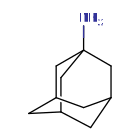
Structure for Amantadine (DB00915)

- Weight
- Average: 151.2487
Monoisotopic: 151.136099549 - Chemical Formula
- C10H17N
- Synonyms
- 1-adamantanamine
- 1-adamantylamine
- 1-aminoadamantane
- Amantadina
- Amantadine
- Amantadinum
- Amantidine
- Aminoadamantane

Pharmacology
- Indication
For the chemoprophylaxis, prophylaxis, and treatment of signs and symptoms of infection caused by various strains of influenza A virus. Also for the treatment of parkinsonism and drug-induced extrapyramidal reactions.
 Reduce drug development failure ratesBuild, train, & validate machine-learning modelswith evidence-based and structured datasets.Build, train, & validate predictive machine-learning models with structured datasets.
- Associated Conditions
Indication Type Indication Combined Product Details Approval Level Age Group Patient Characteristics Dose Form Management of Drug-induced extrapyramidal side effects •••••••••••• Treatment of Drug-induced extrapyramidal side effects •••••••••••• Adjunct therapy in management of Dyskinesia •••••••••••• •••••••• •••••••• ••••••• Adjunct therapy in management of Dyskinesia •••••••••••• •••••••• •••••••• ••••••• Prophylaxis of Influenza a virus infection •••••••••••• - Contraindications & Blackbox Warnings
 Prevent Adverse Drug Events TodayTap into our Clinical API for life-saving information on contraindications & blackbox warnings, population restrictions, harmful risks, & more.Avoid life-threatening adverse drug events with our Clinical API
- Pharmacodynamics
Amantadine is an antiviral drug which also acts as an antiparkinson agent, for which it is usually combined with L-DOPA when L-DOPA responses decline (probably due to tolerance). It is a derivate of adamantane, like a similar drug rimantadine. The mechanism of action of amantadine in the treatment of Parkinson's disease and drug-induced extrapyramidal reactions is not known. It has been shown to cause an increase in dopamine release in the animal brain, and does not possess anticholinergic activity.
- Mechanism of action
The mechanism of its antiparkinsonic effect is not fully understood, but it appears to be releasing dopamine from the nerve endings of the brain cells, together with stimulation of norepinephrine response. It also has NMDA receptor antagonistic effects. The antiviral mechanism seems to be unrelated. The drug interferes with a viral protein, M2 (an ion channel), which is needed for the viral particle to become "uncoated" once it is taken inside the cell by endocytosis.
Target Actions Organism AMatrix protein 2 inhibitorInfluenza A virus (strain A/Ann Arbor/6/1960 H2N2) AGlutamate receptor ionotropic, NMDA 3A antagonistHumans ADopamine D2 receptor agonistHumans UNeuronal acetylcholine receptor subunit alpha-7 antagonistHumans UNeuronal acetylcholine receptor subunit alpha-4 antagonistHumans UNeuronal acetylcholine receptor subunit alpha-3 antagonistHumans - Absorption
Amantadine is well absorbed orally from the gastrointestinal tract.
- Volume of distribution
- 3 to 8 L/kg [healthy subjects]
- Protein binding
Approximately 67% bound to plasma proteins over a concentration range of 0.1 to 2.0 µg/mL.
- Metabolism
No appreciable metabolism, although negligible amounts of an acetyl metabolite have been identified.
- Route of elimination
It is primarily excreted unchanged in the urine by glomerular filtration and tubular secretion.
- Half-life
Mean half-lives ranged from 10 to 14 hours, however renal function impairment causes a severe increase in half life to 7 to 10 days.
- Clearance
- 0.2 - 0.3 L/hr/kg
- 0.10 +/- 0.04 L/hr/kg [healthy, elderly male]
- Adverse Effects
 Improve decision support & research outcomesWith structured adverse effects data, including: blackbox warnings, adverse reactions, warning & precautions, & incidence rates. View sample adverse effects data in our new Data Library!Improve decision support & research outcomes with our structured adverse effects data.
- Toxicity
Deaths have been reported from overdose with amantadine. The lowest reported acute lethal dose was 2 grams. Drug overdose has resulted in cardiac, respiratory, renal or central nervous system toxicity. Cardiac dysfunction includes arrhythmia, tachycardia and hypertension. Pulmonary edema and respiratory distress (including ARDS) have been reported. Renal dysfunction including increased BUN, decreased creatinine clearance and renal insufficiency can occur. Central nervous system effects that have been reported include insomnia, anxiety, aggressive behavior, hypertonia, hyperkinesia, tremor, confusion, disorientation, depersonalization, fear, delirium, hallucination, psychotic reactions, lethargy, somnolence and coma. Seizures may be exacerbated in patients with prior history of seizure disorders. Hyperthermia has also been observed in cases where a drug overdose has occurred.
- Pathways
- Not Available
- Pharmacogenomic Effects/ADRs
- Not Available
Interactions
- Drug Interactions
- This information should not be interpreted without the help of a healthcare provider. If you believe you are experiencing an interaction, contact a healthcare provider immediately. The absence of an interaction does not necessarily mean no interactions exist.
Drug Interaction Integrate drug-drug
interactions in your softwareAbacavir Amantadine may decrease the excretion rate of Abacavir which could result in a higher serum level. Aceclofenac Aceclofenac may decrease the excretion rate of Amantadine which could result in a higher serum level. Acemetacin Acemetacin may decrease the excretion rate of Amantadine which could result in a higher serum level. Acetazolamide Acetazolamide may increase the excretion rate of Amantadine which could result in a lower serum level and potentially a reduction in efficacy. Acetylcholine The risk or severity of adverse effects can be increased when Amantadine is combined with Acetylcholine. - Food Interactions
- Avoid alcohol.
- Take with or without food. The absorption is unaffected by food.
Products
 Drug product information from 10+ global regionsOur datasets provide approved product information including:dosage, form, labeller, route of administration, and marketing period.Access drug product information from over 10 global regions.
- Product Ingredients
Ingredient UNII CAS InChI Key Amantadine hydrochloride M6Q1EO9TD0 665-66-7 WOLHOYHSEKDWQH-UHFFFAOYSA-N Amantadine sulfate 9921T5P019 31377-23-8 MYWTWSQFJLXGGQ-UHFFFAOYSA-N - Product Images


- International/Other Brands
- PK-Merz / Symadine / Viregyt / Virosol
- Brand Name Prescription Products
Name Dosage Strength Route Labeller Marketing Start Marketing End Region Image Amantadine Hydrochloride Syrup 50 mg/5mL Oral Vintage Pharmaceuticals, LLC 2007-05-31 2007-05-31 US 
Amantadine Hydrochloride Solution 100 mg/10mL Oral Pharmaceutical Associates, Inc. 2006-10-07 2007-05-31 US Endantadine Capsule 100 mg Oral Bristol Myers Squibb 1993-12-31 2008-04-25 Canada 
Endantadine Cap 100mg Capsule 100 mg / cap Oral Dupont Merck Pharma Inc. 1993-12-31 1999-07-20 Canada Gocovri Capsule, coated pellets 137 mg/1 Oral Adamas Pharma, Llc 2017-08-24 Not applicable US - Generic Prescription Products
Name Dosage Strength Route Labeller Marketing Start Marketing End Region Image Amantadine Capsule 100 mg/1 Oral Alembic Pharmaceuticals Limited 2017-06-22 Not applicable US Amantadine Tablet 100 mg/1 Oral Alembic Pharmaceuticals Limited 2020-10-20 Not applicable US Amantadine Tablet 100 mg/1 Oral Alembic Pharmaceuticals Inc. 2020-10-20 Not applicable US Amantadine Capsule 100 mg/1 Oral American Health Packaging 2019-05-01 Not applicable US Amantadine Capsule 100 mg/1 Oral Alembic Pharmaceuticals Inc. 2017-06-22 Not applicable US - Mixture Products
Name Ingredients Dosage Route Labeller Marketing Start Marketing End Region Image Osmolex ER Amantadine (129 mg/1) + Amantadine (193 mg/1) Kit; Tablet, extended release Oral Vertical Pharmaceuticals, LLC 2018-06-01 2023-03-31 US Osmolex ER Amantadine (129 mg/1) + Amantadine (193 mg/1) Kit; Tablet, extended release Oral Vertical Pharmaceuticals, LLC 2018-06-01 2023-03-31 US - Unapproved/Other Products
Name Ingredients Dosage Route Labeller Marketing Start Marketing End Region Image Gapeam Budibac Amantadine hydrochloride (1 g/1g) + Baclofen (1 g/1g) + Bupivacaine hydrochloride anhydrous (1 g/1g) + Cyclobenzaprine hydrochloride (1 g/1g) + Diclofenac sodium (1 g/1g) + Gabapentin (1 g/1g) + Pentoxifylline (1 g/1g) Kit Topical Alvix Laboratories 2014-12-05 2018-03-08 US Innoprax-5 Amantadine hydrochloride (8 g/8g) + Baclofen (3 g/3g) + Diclofenac sodium (3 g/3g) + Gabapentin (6 g/6g) + Lidocaine hydrochloride (5 g/5g) Kit Topical Accumix Pharmaceuticals 2014-12-15 2015-07-17 US


Categories
- ATC Codes
- N04BB01 — Amantadine
- Drug Categories
- Adamantane Derivatives
- Adamantanes
- Analgesics
- Analgesics, Non-Narcotic
- Anti-Dyskinesia Agents
- Anti-Infective Agents
- Anti-Parkinson Drugs
- Anticholinergic Agents
- Antiviral Agents
- Bridged-Ring Compounds
- Central Nervous System Agents
- Dopamine Agents
- Drugs that are Mainly Renally Excreted
- Influenza A M2 Protein Inhibitor
- M2 Protein Inhibitors
- Nervous System
- Neurotransmitter Agents
- Nicotinic Antagonists
- NMDA Receptor Antagonists
- OCT1 inhibitors
- OCT1 substrates
- OCT2 Inhibitors
- OCT2 Substrates
- Peripheral Nervous System Agents
- Potential QTc-Prolonging Agents
- QTc Prolonging Agents
- Sensory System Agents
- Serotonergic Drugs Shown to Increase Risk of Serotonin Syndrome
- Chemical TaxonomyProvided by Classyfire
- Description
- This compound belongs to the class of organic compounds known as monoalkylamines. These are organic compounds containing an primary aliphatic amine group.
- Kingdom
- Organic compounds
- Super Class
- Organic nitrogen compounds
- Class
- Organonitrogen compounds
- Sub Class
- Amines
- Direct Parent
- Monoalkylamines
- Alternative Parents
- Organopnictogen compounds / Hydrocarbon derivatives
- Substituents
- Aliphatic homopolycyclic compound / Hydrocarbon derivative / Organopnictogen compound / Primary aliphatic amine
- Molecular Framework
- Aliphatic homopolycyclic compounds
- External Descriptors
- adamantanes, primary aliphatic amine (CHEBI:2618)
- Affected organisms
- Humans and other mammals
- Various viruses
Chemical Identifiers
- UNII
- BF4C9Z1J53
- CAS number
- 768-94-5
- InChI Key
- DKNWSYNQZKUICI-UHFFFAOYSA-N
- InChI
- InChI=1S/C10H17N/c11-10-4-7-1-8(5-10)3-9(2-7)6-10/h7-9H,1-6,11H2
- IUPAC Name
- adamantan-1-amine
- SMILES
- NC12CC3CC(CC(C3)C1)C2
References
- Synthesis Reference
Haaf, W.; U.S. Patent 3,152,180; October 6, 1964; assigned to Studiengesellschaft Kohle mbH, Germany.
- General References
- Not Available
- External Links
- Human Metabolome Database
- HMDB0015051
- KEGG Compound
- C06818
- PubChem Compound
- 2130
- PubChem Substance
- 46507081
- ChemSpider
- 2045
- BindingDB
- 50033369
- 620
- ChEBI
- 2618
- ChEMBL
- CHEMBL660
- ZINC
- ZINC000000968256
- Therapeutic Targets Database
- DAP000781
- PharmGKB
- PA448360
- RxList
- RxList Drug Page
- Drugs.com
- Drugs.com Drug Page
- Wikipedia
- Amantadine
- FDA label
- Download (197 KB)
- MSDS
- Download (73.9 KB)
Clinical Trials
- Clinical Trials
Phase Status Purpose Conditions Count 4 Completed Other Parkinson's Disease (PD) 1 4 Completed Treatment Ataxia / Chorea / Dystonia / Fatigue / Parkinsonism 1 4 Completed Treatment Delirium / Posttraumatic Confusional State / Traumatic Brain Injury (TBI) 1 4 Completed Treatment Parkinson's Disease (PD) 2 4 Completed Treatment Traumas, Brain 1
Pharmacoeconomics
- Manufacturers
- Actavis totowa llc
- Banner pharmacaps inc
- Sandoz inc
- Usl pharma inc
- Watson laboratories inc
- Solvay pharmaceuticals
- Endo pharmaceuticals inc
- Actavis mid atlantic llc
- Carolina medical products co
- Hi tech pharmacal co inc
- Mikart inc
- Pharmaceutical assoc inc div beach products
- Silarx pharmaceuticals inc
- Teva pharmaceuticals usa
- Vintage pharmaceuticals llc
- Wockhardt eu operations (swiss) ag
- Packagers
- Anip Acquisition Co.
- A-S Medication Solutions LLC
- Banner Pharmacaps Inc.
- Bristol-Myers Squibb Co.
- Carolina Medical Products Co.
- Direct Dispensing Inc.
- Dispensing Solutions
- Diversified Healthcare Services Inc.
- Endo Pharmaceuticals Inc.
- H.J. Harkins Co. Inc.
- Heartland Repack Services LLC
- Hi Tech Pharmacal Co. Inc.
- Lake Erie Medical and Surgical Supply
- Lannett Co. Inc.
- Major Pharmaceuticals
- Mikart Inc.
- Murfreesboro Pharmaceutical Nursing Supply
- Nucare Pharmaceuticals Inc.
- Palmetto Pharmaceuticals Inc.
- Patient First Corp.
- PD-Rx Pharmaceuticals Inc.
- Pharmaceutical Association
- Pharmedix
- Physicians Total Care Inc.
- Preferred Pharmaceuticals Inc.
- Prepackage Specialists
- Qualitest
- Rebel Distributors Corp.
- Redpharm Drug
- Remedy Repack
- Sandoz
- Southwood Pharmaceuticals
- Spectrum Pharmaceuticals
- Tya Pharmaceuticals
- UDL Laboratories
- United Research Laboratories Inc.
- Upsher Smith Laboratories
- USL Pharma Inc.
- Vangard Labs Inc.
- Vintage Pharmaceuticals Inc.
- Wockhardt Ltd.
- Dosage Forms
Form Route Strength Tablet, film coated Oral 100 MG Solution Oral Tablet, film coated Oral 200 MG Tablet Oral 100 MG Solution Oral 10 MG/ML Capsule, liquid filled Oral 100 mg/1 Capsule Oral 100 mg/1 Capsule, gelatin coated Oral 100 mg/1 Solution Oral 100 mg/10mL Solution Oral 50 mg/5mL Tablet Oral 100 1/1 Tablet, film coated Oral 100 mg/1 Solution Parenteral 200 mg Syrup Oral Solution Oral 500.000 mg Tablet Oral Capsule Oral 100 mg / cap Solution Oral 2.500 g Syrup Oral 0.500 g Solution Oral 55.000 mg Capsule Oral Capsule, coated pellets Oral 137 mg/1 Capsule, coated pellets Oral 68.5 mg/1 Kit Topical Tablet Oral 100.000 mg Tablet Oral Kit; tablet, extended release Oral Tablet, extended release Oral 129 mg/1 Tablet, extended release Oral 161 mg/1 Tablet, extended release Oral 193 mg/1 Tablet, extended release Oral 258 mg/1 Syrup Oral 50 mg / 5 mL Solution Parenteral 0.4 mg/ml Tablet, film coated Oral 150 MG Solution Intravenous 40.000 mg Solution Intravenous 1000 ml Capsule Oral 100 mg Solution Oral Syrup Oral 50 mg/5mL Tablet Oral 100 mg/1 Syrup Oral 10 mg / mL Tablet Oral 200 MG Capsule, coated Oral 100 mg - Prices
Unit description Cost Unit Symmetrel 50 mg/5ml Syrup 480ml Bottle 151.46USD bottle Amantadine hcl powder 6.7USD g Symmetrel 100 mg tablet 1.45USD tablet Amantadine HCl 100 mg tablet 1.37USD tablet Amantadine 100 mg tablet 1.32USD tablet Amantadine HCl 100 mg capsule 0.78USD capsule Mylan-Amantadine 100 mg Capsule 0.54USD capsule Pms-Amantadine Hydrochloride 100 mg Capsule 0.54USD capsule Amantadine HCl 50 mg/5ml Syrup 0.16USD ml Pms-Amantadine Hydrochloride 10 mg/ml Syrup 0.09USD ml DrugBank does not sell nor buy drugs. Pricing information is supplied for informational purposes only.- Patents
Patent Number Pediatric Extension Approved Expires (estimated) Region USRE39069 No 2006-04-18 2018-05-29 US US8895616 No 2014-11-25 2025-11-23 US US8895617 No 2014-11-25 2025-11-23 US US8741343 No 2014-06-03 2030-12-02 US US8895615 No 2014-11-25 2025-11-23 US US8796337 No 2014-08-05 2025-11-23 US US8389578 No 2013-03-05 2028-01-22 US US8895618 No 2014-11-25 2025-11-23 US US8895614 No 2014-11-25 2025-11-23 US US8889740 No 2014-11-18 2025-11-23 US US9867792 No 2018-01-16 2030-12-02 US US9867793 No 2018-01-16 2030-12-02 US US9867791 No 2018-01-16 2030-12-02 US US9877933 No 2018-01-30 2030-12-02 US US8574626 No 2013-11-05 2025-11-28 US US8252331 No 2012-08-28 2030-03-13 US US10154971 No 2018-12-18 2034-12-04 US US10213393 No 2019-02-26 2038-02-15 US US10213394 No 2019-02-26 2038-02-15 US US10500171 No 2019-12-10 2038-02-15 US US10500172 No 2019-12-10 2038-02-15 US US10500170 No 2019-12-10 2038-02-15 US US10512617 No 2019-12-24 2038-02-15 US US10646456 No 2020-05-12 2034-06-17 US US9072697 No 2015-07-07 2025-11-23 US US8987333 No 2015-03-24 2025-11-23 US US11077073 No 2021-08-03 2038-08-23 US US11065213 No 2021-07-20 2038-08-23 US US11197835 No 2021-12-14 2030-12-02 US US11890261 No 2018-02-15 2038-02-15 US
Properties
- State
- Solid
- Experimental Properties
Property Value Source melting point (°C) 180-192 Haaf, W.; U.S. Patent 3,152,180; October 6, 1964; assigned to Studiengesellschaft Kohle mbH, Germany. water solubility 6290 mg/L (freely soluble) Not Available logP 2.44 HANSCH,C ET AL. (1995) - Predicted Properties
Property Value Source Water Solubility 0.0846 mg/mL ALOGPS logP 2.53 ALOGPS logP 1.47 Chemaxon logS -3.2 ALOGPS pKa (Strongest Basic) 10.71 Chemaxon Physiological Charge 1 Chemaxon Hydrogen Acceptor Count 1 Chemaxon Hydrogen Donor Count 1 Chemaxon Polar Surface Area 26.02 Å2 Chemaxon Rotatable Bond Count 0 Chemaxon Refractivity 45.54 m3·mol-1 Chemaxon Polarizability 17.92 Å3 Chemaxon Number of Rings 3 Chemaxon Bioavailability 1 Chemaxon Rule of Five Yes Chemaxon Ghose Filter No Chemaxon Veber's Rule Yes Chemaxon MDDR-like Rule No Chemaxon - Predicted ADMET Features
Property Value Probability Human Intestinal Absorption + 0.9903 Blood Brain Barrier + 0.9769 Caco-2 permeable + 0.6248 P-glycoprotein substrate Non-substrate 0.7275 P-glycoprotein inhibitor I Non-inhibitor 0.9277 P-glycoprotein inhibitor II Non-inhibitor 0.8549 Renal organic cation transporter Non-inhibitor 0.7474 CYP450 2C9 substrate Non-substrate 0.8306 CYP450 2D6 substrate Non-substrate 0.7092 CYP450 3A4 substrate Non-substrate 0.6561 CYP450 1A2 substrate Non-inhibitor 0.9046 CYP450 2C9 inhibitor Non-inhibitor 0.9071 CYP450 2D6 inhibitor Non-inhibitor 0.9231 CYP450 2C19 inhibitor Non-inhibitor 0.9025 CYP450 3A4 inhibitor Non-inhibitor 0.831 CYP450 inhibitory promiscuity Low CYP Inhibitory Promiscuity 0.5886 Ames test Non AMES toxic 0.7836 Carcinogenicity Non-carcinogens 0.7647 Biodegradation Not ready biodegradable 0.9456 Rat acute toxicity 2.2564 LD50, mol/kg Not applicable hERG inhibition (predictor I) Weak inhibitor 0.9779 hERG inhibition (predictor II) Non-inhibitor 0.8695
Spectra
- Mass Spec (NIST)
- Download (7.71 KB)
- Spectra
- Chromatographic Properties
Collision Cross Sections (CCS)
Adduct CCS Value (Å2) Source type Source [M-H]- 128.8406874 predictedDarkChem Lite v0.1.0 [M-H]- 128.7937874 predictedDarkChem Lite v0.1.0 [M-H]- 137.47629 predictedDeepCCS 1.0 (2019) [M+H]+ 129.5415874 predictedDarkChem Lite v0.1.0 [M+H]+ 129.5081874 predictedDarkChem Lite v0.1.0 [M+H]+ 139.87221 predictedDeepCCS 1.0 (2019) [M+Na]+ 128.9830874 predictedDarkChem Lite v0.1.0 [M+Na]+ 148.8043 predictedDeepCCS 1.0 (2019)
Targets

- Kind
- Protein
- Organism
- Influenza A virus (strain A/Ann Arbor/6/1960 H2N2)
- Pharmacological action
- Yes
- Actions
- Inhibitor
- General Function
- Ion channel activity
- Specific Function
- Forms a proton-selective ion channel that is necessary for the efficient release of the viral genome during virus entry. After attaching to the cell surface, the virion enters the cell by endocytos...
- Gene Name
- M
- Uniprot ID
- P21430
- Uniprot Name
- Matrix protein 2
- Molecular Weight
- 11165.62 Da
References
- Wang C, Takeuchi K, Pinto LH, Lamb RA: Ion channel activity of influenza A virus M2 protein: characterization of the amantadine block. J Virol. 1993 Sep;67(9):5585-94. [Article]
- Jing X, Ma C, Ohigashi Y, Oliveira FA, Jardetzky TS, Pinto LH, Lamb RA: Functional studies indicate amantadine binds to the pore of the influenza A virus M2 proton-selective ion channel. Proc Natl Acad Sci U S A. 2008 Aug 5;105(31):10967-72. doi: 10.1073/pnas.0804958105. Epub 2008 Jul 31. [Article]
- Wang J, Cady SD, Balannik V, Pinto LH, DeGrado WF, Hong M: Discovery of spiro-piperidine inhibitors and their modulation of the dynamics of the M2 proton channel from influenza A virus. J Am Chem Soc. 2009 Jun 17;131(23):8066-76. doi: 10.1021/ja900063s. [Article]
- Beigel J, Bray M: Current and future antiviral therapy of severe seasonal and avian influenza. Antiviral Res. 2008 Apr;78(1):91-102. doi: 10.1016/j.antiviral.2008.01.003. Epub 2008 Feb 4. [Article]
- Lear JD: Proton conduction through the M2 protein of the influenza A virus; a quantitative, mechanistic analysis of experimental data. FEBS Lett. 2003 Sep 18;552(1):17-22. [Article]
- Salom D, Hill BR, Lear JD, DeGrado WF: pH-dependent tetramerization and amantadine binding of the transmembrane helix of M2 from the influenza A virus. Biochemistry. 2000 Nov 21;39(46):14160-70. [Article]
- Kind
- Protein
- Organism
- Humans
- Pharmacological action
- Yes
- Actions
- Antagonist
- General Function
- Protein phosphatase 2a binding
- Specific Function
- NMDA receptor subtype of glutamate-gated ion channels with reduced single-channel conductance, low calcium permeability and low voltage-dependent sensitivity to magnesium. Mediated by glycine. May ...
- Gene Name
- GRIN3A
- Uniprot ID
- Q8TCU5
- Uniprot Name
- Glutamate receptor ionotropic, NMDA 3A
- Molecular Weight
- 125464.07 Da
References
- Blanpied TA, Clarke RJ, Johnson JW: Amantadine inhibits NMDA receptors by accelerating channel closure during channel block. J Neurosci. 2005 Mar 30;25(13):3312-22. [Article]
- Hesselink MB, De Boer AG, Breimer DD, Danysz W: Adaptations of NMDA and dopamine D2, but not of muscarinic receptors following 14 days administration of uncompetitive NMDA receptor antagonists. J Neural Transm (Vienna). 1999;106(5-6):409-21. [Article]
- Kind
- Protein
- Organism
- Humans
- Pharmacological action
- Yes
- Actions
- Agonist
- General Function
- Potassium channel regulator activity
- Specific Function
- Dopamine receptor whose activity is mediated by G proteins which inhibit adenylyl cyclase.
- Gene Name
- DRD2
- Uniprot ID
- P14416
- Uniprot Name
- D(2) dopamine receptor
- Molecular Weight
- 50618.91 Da
References
- Tomitaka S, Hashimoto K, Narita N, Minabe Y, Tamura A: Amantadine induces c-fos in rat striatum: reversal with dopamine D1 and NMDA receptor antagonists. Eur J Pharmacol. 1995 Oct 16;285(2):207-11. [Article]
- Ameri A: Effects of the Aconitum alkaloid songorine on synaptic transmission and paired-pulse facilitation of CA1 pyramidal cells in rat hippocampal slices. Br J Pharmacol. 1998 Oct;125(3):461-8. [Article]
- Hesselink MB, De Boer AG, Breimer DD, Danysz W: Adaptations of NMDA and dopamine D2, but not of muscarinic receptors following 14 days administration of uncompetitive NMDA receptor antagonists. J Neural Transm (Vienna). 1999;106(5-6):409-21. [Article]
- Cousins MS, Carriero DL, Salamone JD: Tremulous jaw movements induced by the acetylcholinesterase inhibitor tacrine: effects of antiparkinsonian drugs. Eur J Pharmacol. 1997 Mar 19;322(2-3):137-45. [Article]
- doi:10.1007/s00415-006-3004-8 [Link]
- Kind
- Protein
- Organism
- Humans
- Pharmacological action
- Unknown
- Actions
- Antagonist
- General Function
- Toxic substance binding
- Specific Function
- After binding acetylcholine, the AChR responds by an extensive change in conformation that affects all subunits and leads to opening of an ion-conducting channel across the plasma membrane. The cha...
- Gene Name
- CHRNA7
- Uniprot ID
- P36544
- Uniprot Name
- Neuronal acetylcholine receptor subunit alpha-7
- Molecular Weight
- 56448.925 Da
References
- Matsubayashi H, Swanson KL, Albuquerque EX: Amantadine inhibits nicotinic acetylcholine receptor function in hippocampal neurons. J Pharmacol Exp Ther. 1997 May;281(2):834-44. [Article]
- Kind
- Protein
- Organism
- Humans
- Pharmacological action
- Unknown
- Actions
- Antagonist
- General Function
- Ligand-gated ion channel activity
- Specific Function
- After binding acetylcholine, the AChR responds by an extensive change in conformation that affects all subunits and leads to opening of an ion-conducting channel across the plasma membrane permeabl...
- Gene Name
- CHRNA4
- Uniprot ID
- P43681
- Uniprot Name
- Neuronal acetylcholine receptor subunit alpha-4
- Molecular Weight
- 69956.47 Da
References
- Matsubayashi H, Swanson KL, Albuquerque EX: Amantadine inhibits nicotinic acetylcholine receptor function in hippocampal neurons. J Pharmacol Exp Ther. 1997 May;281(2):834-44. [Article]
- Kind
- Protein
- Organism
- Humans
- Pharmacological action
- Unknown
- Actions
- Antagonist
- General Function
- Ligand-gated ion channel activity
- Specific Function
- After binding acetylcholine, the AChR responds by an extensive change in conformation that affects all subunits and leads to opening of an ion-conducting channel across the plasma membrane.
- Gene Name
- CHRNA3
- Uniprot ID
- P32297
- Uniprot Name
- Neuronal acetylcholine receptor subunit alpha-3
- Molecular Weight
- 57479.54 Da
References
- Matsubayashi H, Swanson KL, Albuquerque EX: Amantadine inhibits nicotinic acetylcholine receptor function in hippocampal neurons. J Pharmacol Exp Ther. 1997 May;281(2):834-44. [Article]
Enzymes
- Kind
- Protein
- Organism
- Humans
- Pharmacological action
- Unknown
- Actions
- Inducer
- General Function
- Pyridoxal phosphate binding
- Specific Function
- Catalyzes the decarboxylation of L-3,4-dihydroxyphenylalanine (DOPA) to dopamine, L-5-hydroxytryptophan to serotonin and L-tryptophan to tryptamine.
- Gene Name
- DDC
- Uniprot ID
- P20711
- Uniprot Name
- Aromatic-L-amino-acid decarboxylase
- Molecular Weight
- 53925.815 Da
References
- Li XM, Juorio AV, Qi J, Boulton AA: Amantadine increases aromatic L-amino acid decarboxylase mRNA in PC12 cells. J Neurosci Res. 1998 Aug 15;53(4):490-3. [Article]
- Fisher A, Biggs CS, Starr MS: Effects of glutamate antagonists on the activity of aromatic L-amino acid decarboxylase. Amino Acids. 1998;14(1-3):43-9. [Article]
- Kind
- Protein
- Organism
- Humans
- Pharmacological action
- Unknown
- Actions
- Inhibitor
- General Function
- Primary amine oxidase activity
- Specific Function
- Catalyzes the oxidative deamination of biogenic and xenobiotic amines and has important functions in the metabolism of neuroactive and vasoactive amines in the central nervous system and peripheral...
- Gene Name
- MAOB
- Uniprot ID
- P27338
- Uniprot Name
- Amine oxidase [flavin-containing] B
- Molecular Weight
- 58762.475 Da
References
- Wesemann W, Ekenna O: Effect of 1-aminoadamantanes on the MAO activity in brain, liver, and kidney of the rat. Arzneimittelforschung. 1982;32(10):1241-3. [Article]
Transporters
- Kind
- Protein
- Organism
- Humans
- Pharmacological action
- Unknown
- Actions
- SubstrateInhibitor
- General Function
- Quaternary ammonium group transmembrane transporter activity
- Specific Function
- Mediates tubular uptake of organic compounds from circulation. Mediates the influx of agmatine, dopamine, noradrenaline (norepinephrine), serotonin, choline, famotidine, ranitidine, histamin, creat...
- Gene Name
- SLC22A2
- Uniprot ID
- O15244
- Uniprot Name
- Solute carrier family 22 member 2
- Molecular Weight
- 62579.99 Da
References
- Urakami Y, Akazawa M, Saito H, Okuda M, Inui K: cDNA cloning, functional characterization, and tissue distribution of an alternatively spliced variant of organic cation transporter hOCT2 predominantly expressed in the human kidney. J Am Soc Nephrol. 2002 Jul;13(7):1703-10. [Article]
- Busch AE, Karbach U, Miska D, Gorboulev V, Akhoundova A, Volk C, Arndt P, Ulzheimer JC, Sonders MS, Baumann C, Waldegger S, Lang F, Koepsell H: Human neurons express the polyspecific cation transporter hOCT2, which translocates monoamine neurotransmitters, amantadine, and memantine. Mol Pharmacol. 1998 Aug;54(2):342-52. [Article]
- Goralski KB, Lou G, Prowse MT, Gorboulev V, Volk C, Koepsell H, Sitar DS: The cation transporters rOCT1 and rOCT2 interact with bicarbonate but play only a minor role for amantadine uptake into rat renal proximal tubules. J Pharmacol Exp Ther. 2002 Dec;303(3):959-68. [Article]
- Ishiguro N, Saito A, Yokoyama K, Morikawa M, Igarashi T, Tamai I: Transport of the dopamine D2 agonist pramipexole by rat organic cation transporters OCT1 and OCT2 in kidney. Drug Metab Dispos. 2005 Apr;33(4):495-9. Epub 2005 Jan 7. [Article]
- BACTRIM (sulfamethoxazole and trimethoprim) FDA Label [Link]
- Kind
- Protein
- Organism
- Humans
- Pharmacological action
- Unknown
- Actions
- SubstrateInhibitor
- General Function
- Secondary active organic cation transmembrane transporter activity
- Specific Function
- Translocates a broad array of organic cations with various structures and molecular weights including the model compounds 1-methyl-4-phenylpyridinium (MPP), tetraethylammonium (TEA), N-1-methylnico...
- Gene Name
- SLC22A1
- Uniprot ID
- O15245
- Uniprot Name
- Solute carrier family 22 member 1
- Molecular Weight
- 61153.345 Da
References
- Li L, Song F, Tu M, Wang K, Zhao L, Wu X, Zhou H, Xia Z, Jiang H: In vitro interaction of clopidogrel and its hydrolysate with OCT1, OCT2 and OAT1. Int J Pharm. 2014 Apr 25;465(1-2):5-10. doi: 10.1016/j.ijpharm.2014.02.003. Epub 2014 Feb 11. [Article]
- Harrach S, Schmidt-Lauber C, Pap T, Pavenstadt H, Schlatter E, Schmidt E, Berdel WE, Schulze U, Edemir B, Jeromin S, Haferlach T, Ciarimboli G, Bertrand J: MATE1 regulates cellular uptake and sensitivity to imatinib in CML patients. Blood Cancer J. 2016 Sep 16;6:e470. doi: 10.1038/bcj.2016.79. [Article]
- Goralski KB, Lou G, Prowse MT, Gorboulev V, Volk C, Koepsell H, Sitar DS: The cation transporters rOCT1 and rOCT2 interact with bicarbonate but play only a minor role for amantadine uptake into rat renal proximal tubules. J Pharmacol Exp Ther. 2002 Dec;303(3):959-68. [Article]


Drug created at June 13, 2005 13:24 / Updated at April 27, 2024 09:44