Identification
- Summary
Albuterol is a beta-2 adrenergic receptor agonist used to treat asthma, bronchitis, COPD, as well as prevent exercise induced bronchospasms.
- Brand Names
- Airomir, Airsupra, Combivent, Proair, Proventil, Ventolin
- Generic Name
- Albuterol
- DrugBank Accession Number
- DB01001
- Background
Salbutamol (Albuterol [USAN]) is a short-acting, selective beta2-adrenergic receptor agonist used in the treatment of asthma and COPD. It is 29 times more selective for beta2 receptors than beta1 receptors giving it higher specificity for pulmonary beta receptors versus beta1-adrenergic receptors located in the heart. Salbutamol is formulated as a racemic mixture of the R- and S-isomers. The R-isomer has 150 times greater affinity for the beta2-receptor than the S-isomer and the S-isomer has been associated with toxicity. This lead to the development of levalbuterol, the single R-isomer of salbutamol. However, the high cost of levalbuterol compared to salbutamol has deterred wide-spread use of this enantiomerically pure version of the drug. Salbutamol is generally used for acute episodes of bronchospasm caused by bronchial asthma, chronic bronchitis and other chronic bronchopulmonary disorders such as chronic obstructive pulmonary disorder (COPD). It is also used prophylactically for exercise-induced asthma.Label,1,2
- Type
- Small Molecule
- Groups
- Approved, Vet approved
- Structure
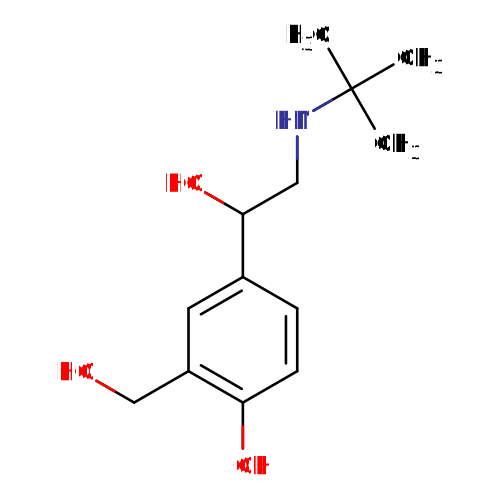
Structure for Albuterol (DB01001)
- Weight
- Average: 239.3107
Monoisotopic: 239.152143543 - Chemical Formula
- C13H21NO3
- Synonyms
- Albuterol
- Salbutamol
- Salbutamolum

Pharmacology
- Indication
Salbutamol is indicated for (i) the symptomatic relief and prevention of bronchospasm due to bronchial asthma, chronic bronchitis, reversible obstructive airway disease, and other chronic bronchopulmonary disorders in which bronchospasm is a complicating factor, and/or (ii) the acute prophylaxis against exercise-induced bronchospasm and other stimuli known to induce bronchospasm.Label,4,5
 Reduce drug development failure ratesBuild, train, & validate machine-learning modelswith evidence-based and structured datasets.Build, train, & validate predictive machine-learning models with structured datasets.
- Associated Conditions
Indication Type Indication Combined Product Details Approval Level Age Group Patient Characteristics Dose Form Used in combination to treat Asthma Combination Product in combination with: Theophylline (DB00277) •••••••••••• •••••• Used in combination for symptomatic treatment of Asthma Combination Product in combination with: Guaifenesin (DB00874) •••••••••••• •••••• Used in combination to treat Asthmatic bronchitis Combination Product in combination with: Flunisolide (DB00180) •••••••••••• Used in combination to treat Bronchial asthma Combination Product in combination with: Flunisolide (DB00180) •••••••••••• Used in combination to prevent Bronchoconstriction Combination Product in combination with: Budesonide (DB01222) •••••••••••• •••••• ••••••• - Associated Therapies
- Contraindications & Blackbox Warnings
 Prevent Adverse Drug Events TodayTap into our Clinical API for life-saving information on contraindications & blackbox warnings, population restrictions, harmful risks, & more.Avoid life-threatening adverse drug events with our Clinical API
- Pharmacodynamics
Salbutamol (INN) or albuterol (USAN), a moderately selective beta(2)-receptor agonist similar in structure to terbutaline, is widely used as a bronchodilator to manage asthma and other chronic obstructive airway diseases.Label,4,5 The R-isomer, levalbuterol, is responsible for bronchodilation while the S-isomer increases bronchial reactivity.2 The R-enantiomer is available and sold in its pure form as levalbuterol and subsequently may produce fewer side-effects with only the R-enantiomer present - although this has not been formally demonstrated.2
After oral and parenteral administration, stimulation of the beta receptors in the body, both beta-1 and beta-2, occurs because (a) beta-2 selectivity is not absolute, and (b) higher concentrations of salbutamol occur in the regions of these receptors with these modes of administration.Label,4,5 This results in the beta-1 effect of cardiac stimulation, though not so much as with isoprenaline, and beta-2 effects of peripheral vasodilatation and hypotension, skeletal muscle tremor, and uterine muscle relaxation.Label,4,5
Metabolic effects such as hyperinsulinemia and hyperglycemia also may occur, although it is not known whether these effects are mediated by beta-1 or beta-2 receptors.Label,4,5 The serum potassium levels have a tendency to fall.4
- Mechanism of action
In vitro studies and in vivo pharmacologic studies have shown that salbutamol has a preferential effect on beta2-adrenergic receptors compared with isoproterenol.Label,4,5 Although beta2 adrenoceptors are the predominant adrenergic receptors in bronchial smooth muscle and beta1 adrenoceptors are the predominant receptors in the heart, there are also beta2-adrenoceptors in the human heart comprising 10% to 50% of the total beta-adrenoceptors.Label,4,5 The precise function of these receptors has not been established, but their presence raises the possibility that even selective beta2-agonists may have cardiac effects.Label,4,5
Activation of beta2-adrenergic receptors on airway smooth muscle leads to the activation of adenyl cyclase and to an increase in the intracellular concentration of cyclic-3′,5′-adenosine monophosphate (cyclic AMP).Label,4,5 This increase of cyclic AMP leads to the activation of protein kinase A, which inhibits the phosphorylation of myosin and lowers intracellular ionic calcium concentrations, resulting in relaxation.Label,4,5 Salbutamol relaxes the smooth muscles of all airways, from the trachea to the terminal bronchioles.Label,4,5 Salbutamol acts as a functional antagonist to relax the airway irrespective of the spasmogen involved, thus protecting against all bronchoconstrictor challenges.Label,4,5 Increased cyclic AMP concentrations are also associated with the inhibition of release of mediators from mast cells in the airway.Label,4,5
Salbutamol has been shown in most controlled clinical trials to have more effect on the respiratory tract, in the form of bronchial smooth muscle relaxation, than isoproterenol at comparable doses while producing fewer cardiovascular effects.Label,4,5 Controlled clinical studies and other clinical experience have shown that inhaled albuterol, like other beta-adrenergic agonist drugs, can produce a significant cardiovascular effect in some patients, as measured by pulse rate, blood pressure, symptoms, and/or electrocardiographic changes.Label,4,5
A measurable decrease in airway resistance is typically observed within 5 to 15 minutes after inhalation of salbutamol.Label,4,5 The maximum improvement in pulmonary function usually occurs 60 to 90 minutes after salbutamol treatment, and significant bronchodilator activity has been observed to persist for 3 to 6 hours.Label,4,5
Target Actions Organism ABeta-2 adrenergic receptor agonistHumans UBeta-1 adrenergic receptor agonistHumans UBeta-3 adrenergic receptor Not Available Humans - Absorption
Following inhalation, salbutamol acts topically on bronchial smooth muscle and the drug is initially undetectable in the blood.4 After 2 to 3 hours low concentrations are seen, due presumably to the portion of the dose which is swallowed and absorbed in the gut.4
In particular, the systemic levels of salbutamol are low after inhalation of recommended doses.Label A trial conducted in 12 healthy male and female subjects using a higher dose (1,080 mcg of albuterol base) showed that mean peak plasma concentrations of approximately 3 ng/mL occurred after dosing when salbutamol was delivered using propellant HFA-134a.Label The mean time to peak concentrations (Tmax) was delayed after administration of VENTOLIN (salbutamol) HFA (Tmax = 0.42 hours) as compared with CFC-propelled salbutamol inhaler (Tmax = 0.17 hours).Label
- Volume of distribution
The volume of distribution recorded for intravenously administered salbutamol has been recorded as 156 +/- 38 L.1
- Protein binding
Salbutamol is only weakly bound to plasma proteins.5
- Metabolism
Salbutamol is not metabolized in the lung but is converted in the liver to the 4'-o-sulphate (salbutamol 4'-O-sulfate) ester, which has negligible pharmacologic activity.4,5 It may also be metabolized by oxidative deamination and/or conjugation with glucuronide.4,5 Salbutamol is ultimately excreted in the urine as free drug and as the metabolite.4,5
Hover over products below to view reaction partners
- Route of elimination
After oral administration, 58-78% of the dose is excreted in the urine in 24 hours, approximately 60% as metabolites.4,5 A small fraction is excreted in the feces.4,5
- Half-life
The elimination half-life of inhaled or oral salbutamol has been recorded as being between 2.7 and 5 hours while the apparent terminal plasma half-life of albuterol has been documented as being approximately 4.6 hours.4,Label
- Clearance
The renal clearance of salbutamol has been documented as 272 +/- 38 ml/min after oral administration and 291 +/- 70 ml/min after intravenous administration.1 Furthermore, the renal clearance of the predominant sulfate conjugate metabolite was recorded as 98.5 +/- 23.5 ml/min following oral administration.1
- Adverse Effects
 Improve decision support & research outcomesWith structured adverse effects data, including: blackbox warnings, adverse reactions, warning & precautions, & incidence rates. View sample adverse effects data in our new Data Library!Improve decision support & research outcomes with our structured adverse effects data.
- Toxicity
The expected signs and symptoms with overdosage of albuterol are those of excessive beta-adrenergic stimulation and/or occurrence or exaggeration of any of the signs and symptoms of beta-adrenergic stimulation (e.g., seizures, angina, hypertension or hypotension, tachycardia with rates up to 200 beats/min, arrhythmias, nervousness, headache, tremor, muscle cramps, dry mouth, palpitation, nausea, dizziness, fatigue, malaise, insomnia, hyperglycemia, hypokalemia, metabolic acidosis).Label In particular, the signs of salbutamol overdosage are significant tachycardia and/or significant muscle tremor.4,5
Hypokalaemia may occur following overdosage with salbutamol.4 Serum potassium levels should be monitored.4
Lactic acidosis has been reported in association with high therapeutic doses as well as overdoses of short-acting beta-agonist therapy, therefore monitoring for elevated serum lactate and consequent metabolic acidosis (particularly if there is persistence or worsening of tachypnea despite resolution of other signs of bronchospasm such as wheezing) may be indicated in the setting of overdose.4,5
Salbutamol is categorized as Pregnancy Category C.Label There are no adequate and well-controlled trials with salbutamolc or albuterol sulfate in pregnant women.Label During worldwide marketing experience, various congenital anomalies, including cleft palate and limb defects, have been reported in the offspring of patients being treated with salbutamol.Label Some of the mothers were taking multiple medications during their pregnancies.Label No consistent pattern of defects can be discerned, and a relationship between salbutamol use and congenital anomalies has not been established.Label Animal reproduction studies in mice and rabbits revealed evidence of teratogenicity.Label Salbutamol should be used during pregnancy only if the potential benefit justifies the potential risk to the fetusLabel]. Women should be advised to contact their physicians if they become pregnant while taking salbutamol.Label
Since there exists a potential for beta-agonist interference with uterine contractility, the use of salbutamol during labour should be restricted to those patients in whom the benefits clearly outweigh the risk.Label
Plasma levels of albuterol sulfate and HFA-134a after inhaled therapeutic doses are very low in humans, but it is not known whether the components of salbutamol are excreted in human milk.Label Because of the potential for tumorigenicity shown for albuterol in animal studies and lack of experience with the use of salbutamol by nursing mothers, a decision should be made whether to discontinue nursing or to discontinue the drug, taking into account the importance of the drug to the mother.Label Caution should be exercised when salbutamol is administered to a nursing woman.Label
The safety and effectiveness of salbutamol in children younger than 4 years of age has not yet been established.Label
Clinical trials of VENTOLIN HFA did not include sufficient numbers of subjects aged 65 years and older to determine whether older subjects respond differently than younger subjects.Label Other reported clinical experience has not identified differences in responses between the elderly and younger patients.Label In general, dose selection for an elderly patient should be cautious, usually starting at the low end of the dosing range, reflecting the greater frequency of decreased hepatic, renal, or cardiac function, and of concomitant disease or other drug therapy.Label
The LD50 value was determined to be 1100 mg/kg (orally in mice).
- Pathways
- Not Available
- Pharmacogenomic Effects/ADRs
- Not Available
Interactions
- Drug Interactions
- This information should not be interpreted without the help of a healthcare provider. If you believe you are experiencing an interaction, contact a healthcare provider immediately. The absence of an interaction does not necessarily mean no interactions exist.
Drug Interaction Integrate drug-drug
interactions in your softwareAbacavir Salbutamol may decrease the excretion rate of Abacavir which could result in a higher serum level. Acarbose The therapeutic efficacy of Acarbose can be decreased when used in combination with Albuterol. Acebutolol The therapeutic efficacy of Salbutamol can be decreased when used in combination with Acebutolol. Aceclofenac The risk or severity of hypertension can be increased when Salbutamol is combined with Aceclofenac. Acemetacin The risk or severity of hypertension can be increased when Salbutamol is combined with Acemetacin. - Food Interactions
- No interactions found.
Products
 Drug product information from 10+ global regionsOur datasets provide approved product information including:dosage, form, labeller, route of administration, and marketing period.Access drug product information from over 10 global regions.
- Product Ingredients
Ingredient UNII CAS InChI Key Albuterol sulfate 021SEF3731 51022-70-9 BNPSSFBOAGDEEL-UHFFFAOYSA-N - Active Moieties
Name Kind UNII CAS InChI Key Levosalbutamol unknown EDN2NBH5SS 34391-04-3 NDAUXUAQIAJITI-LBPRGKRZSA-N - Product Images
- International/Other Brands
- Aerolin / Asmol / Asthalin / Asthavent / ProAir (Teva) / PROAIRHFA / Salamol / Ventilan (GlaxoSmithKline) / Ventoline (GlaxoSmithKline) / VENTOLINHFA / Ventorlin (GlaxoSmithKline) / VoSpire
- Brand Name Prescription Products
Name Dosage Strength Route Labeller Marketing Start Marketing End Region Image AccuNeb Solution 1.25 mg/3mL Respiratory (inhalation) Mylan Specialty 2011-02-10 2013-08-31 US 
AccuNeb Solution 0.63 mg/3mL Respiratory (inhalation) Mylan Specialty 2011-02-10 2013-08-31 US Airomir Aerosol, metered 100 mcg / act Respiratory (inhalation) Bausch Health, Canada Inc. 1998-08-13 Not applicable Canada 
Albuterol Aerosol, metered 90 ug/1 Oral Armstrong Pharmaceuticals, Inc. 2007-11-27 Not applicable US Albuterol Aerosol, spray 90 ug/1 Oral Warrick Pharmaceuticals Corporation 2006-12-07 Not applicable US - Generic Prescription Products
Name Dosage Strength Route Labeller Marketing Start Marketing End Region Image Albuterol Tablet 4 mg/1 Oral PD-Rx Pharmaceuticals, Inc. 1991-01-17 2023-02-28 US Albuterol Tablet 4 mg/1 Oral Novitium Pharma Llc 2018-10-30 Not applicable US Albuterol Tablet 4 mg/1 Oral Nivagen Pharmaceuticals Inc 2021-01-21 Not applicable US Albuterol Tablet 2 mg/1 Oral Dash Pharmaceutical LLC 2019-03-15 2021-02-24 US Albuterol Tablet 4 mg/1 Oral Mylan Pharmaceuticals Inc. 1991-01-17 2023-02-28 US - Over the Counter Products
Name Dosage Strength Route Labeller Marketing Start Marketing End Region Image APO-SALVENT TABLET 2 mg Tablet 2 mg Oral PHARMAFORTE SINGAPORE PTE LTD 1995-10-02 Not applicable Singapore 
APO-SALVENT TABLET 4 mg Tablet 4 mg Oral PHARMAFORTE SINGAPORE PTE LTD 1996-02-05 Not applicable Singapore ASMOL 2 TABLET 2 mg Tablet 2 mg Oral SUNWARD PHARMACEUTICAL PRIVATE LIMITED 1991-10-06 Not applicable Singapore ASMOL SYRUP 2 mg/5 ml Syrup 2 mg/5ml Oral SUNWARD PHARMACEUTICAL PRIVATE LIMITED 1989-02-27 Not applicable Singapore ASMOL TABLET 4 mg Tablet 4 mg Oral SUNWARD PHARMACEUTICAL PRIVATE LIMITED 1989-05-22 Not applicable Singapore - Mixture Products
Name Ingredients Dosage Route Labeller Marketing Start Marketing End Region Image Airsupra Albuterol sulfate (90 ug/1) + Budesonide (80 ug/1) Aerosol, metered Respiratory (inhalation) AstraZeneca Pharmaceuticals LP 2023-10-02 Not applicable US ALMEIDA Albuterol (1.875 MG/0.5ML) + Ipratropium bromide anhydrous (0.375 MG/0.5ML) Spray Oral; Respiratory (inhalation) I.B.N. Savio S.R.L 2014-07-08 Not applicable Italy 
ALMEIDA Albuterol (0.375 %) + Ipratropium bromide anhydrous (0.075 %) Spray Oral; Respiratory (inhalation) I.B.N. Savio S.R.L 2014-07-08 Not applicable Italy Apo-salvent-ipravent Sterules Albuterol sulfate (2.5 mg / 2.5 mL) + Ipratropium bromide monohydrate (0.5 mg / 2.5 mL) Solution Respiratory (inhalation) Apotex Corporation 2006-08-25 Not applicable Canada BECLOSAL HFA INHALER Albuterol (120 MCG/1DOSE) + Beclomethasone dipropionate (50 MCG/1DOSE) Aerosol, metered Respiratory (inhalation) บริษัท ฐิติรัตน์สานนท์ จำกัด จำกัด 2020-02-25 Not applicable Thailand 
- Unapproved/Other Products
Name Ingredients Dosage Route Labeller Marketing Start Marketing End Region Image Basic Dental Emergency Kit Albuterol sulfate (108 ug/1) + Acetylsalicylic acid (325 mg/1) + D-glucose (4000 mg/1) + Diphenhydramine hydrochloride (50 mg/1mL) + Epinephrine (0.3 mg/0.3mL) + Nitroglycerin (0.4 mg/1) Aerosol, metered; Injection; Kit; Tablet; Tablet, chewable Intramuscular; Intravenous; Oral; Respiratory (inhalation); Subcutaneous; Sublingual Best Dental Kit LLC 2023-01-30 Not applicable US Deluxe Dental Emergency Kit Albuterol sulfate (108 ug/1) + Acetylsalicylic acid (325 mg/1) + D-glucose (4000 mg/1) + Diphenhydramine hydrochloride (50 mg/1mL) + Diphenhydramine hydrochloride (12.5 mg/5mL) + Epinephrine (0.3 mg/0.3mL) + Epinephrine (0.15 mg/0.15mL) + Nitroglycerin (0.4 mg/1) Aerosol, metered; Injection; Kit; Solution; Tablet; Tablet, chewable Intramuscular; Intravenous; Oral; Respiratory (inhalation); Subcutaneous; Sublingual Best Dental Kit LLC 2023-01-30 Not applicable US


Categories
- ATC Codes
- R03AK04 — Salbutamol and sodium cromoglicate
- R03AK — Adrenergics in combination with corticosteroids or other drugs, excl. anticholinergics
- R03A — ADRENERGICS, INHALANTS
- R03 — DRUGS FOR OBSTRUCTIVE AIRWAY DISEASES
- R — RESPIRATORY SYSTEM
- R03AC — Selective beta-2-adrenoreceptor agonists
- R03A — ADRENERGICS, INHALANTS
- R03 — DRUGS FOR OBSTRUCTIVE AIRWAY DISEASES
- R — RESPIRATORY SYSTEM
- R03CC — Selective beta-2-adrenoreceptor agonists
- R03C — ADRENERGICS FOR SYSTEMIC USE
- R03 — DRUGS FOR OBSTRUCTIVE AIRWAY DISEASES
- R — RESPIRATORY SYSTEM
- R03AK — Adrenergics in combination with corticosteroids or other drugs, excl. anticholinergics
- R03A — ADRENERGICS, INHALANTS
- R03 — DRUGS FOR OBSTRUCTIVE AIRWAY DISEASES
- R — RESPIRATORY SYSTEM
- Drug Categories
- Adrenergic Agents
- Adrenergic Agonists
- Adrenergic beta-2 Receptor Agonists
- Adrenergic beta-Agonists
- Adrenergics, Inhalants
- Agents producing tachycardia
- Agents that produce hypertension
- Agents to Treat Airway Disease
- Alcohols
- Amines
- Amino Alcohols
- Anti-Asthmatic Agents
- Autonomic Agents
- Bronchodilator Agents
- Cytochrome P-450 CYP3A Inhibitors
- Cytochrome P-450 CYP3A4 Inhibitors
- Cytochrome P-450 CYP3A4 Inhibitors (strength unknown)
- Cytochrome P-450 Enzyme Inhibitors
- Drugs for Obstructive Airway Diseases
- Drugs that are Mainly Renally Excreted
- Ethanolamines
- Peripheral Nervous System Agents
- Phenethylamines
- Potential QTc-Prolonging Agents
- QTc Prolonging Agents
- Reproductive Control Agents
- Respiratory System Agents
- Selective Beta 2-adrenergic Agonists
- Sympathomimetic (Adrenergic) Agents
- Tocolytic Agents
- Chemical TaxonomyProvided by Classyfire
- Description
- This compound belongs to the class of organic compounds known as benzyl alcohols. These are organic compounds containing the phenylmethanol substructure.
- Kingdom
- Organic compounds
- Super Class
- Benzenoids
- Class
- Benzene and substituted derivatives
- Sub Class
- Benzyl alcohols
- Direct Parent
- Benzyl alcohols
- Alternative Parents
- Aralkylamines / 1-hydroxy-2-unsubstituted benzenoids / Secondary alcohols / 1,2-aminoalcohols / Dialkylamines / Primary alcohols / Organopnictogen compounds / Hydrocarbon derivatives / Aromatic alcohols
- Substituents
- 1,2-aminoalcohol / 1-hydroxy-2-unsubstituted benzenoid / Alcohol / Amine / Aralkylamine / Aromatic alcohol / Aromatic homomonocyclic compound / Benzyl alcohol / Hydrocarbon derivative / Organic nitrogen compound
- Molecular Framework
- Aromatic homomonocyclic compounds
- External Descriptors
- phenylethanolamines, phenols, secondary amino compound (CHEBI:2549)
- Affected organisms
- Humans and other mammals
Chemical Identifiers
- UNII
- QF8SVZ843E
- CAS number
- 18559-94-9
- InChI Key
- NDAUXUAQIAJITI-UHFFFAOYSA-N
- InChI
- InChI=1S/C13H21NO3/c1-13(2,3)14-7-12(17)9-4-5-11(16)10(6-9)8-15/h4-6,12,14-17H,7-8H2,1-3H3
- IUPAC Name
- 4-[2-(tert-butylamino)-1-hydroxyethyl]-2-(hydroxymethyl)phenol
- SMILES
- CC(C)(C)NCC(O)C1=CC(CO)=C(O)C=C1
References
- Synthesis Reference
Toshikuni Kawazi, Masahiro Ono, Nobuko Inoue, "Salbutamol-containing plaster and method of producing same." U.S. Patent US5068103, issued February, 1984.
US5068103- General References
- Morgan DJ, Paull JD, Richmond BH, Wilson-Evered E, Ziccone SP: Pharmacokinetics of intravenous and oral salbutamol and its sulphate conjugate. Br J Clin Pharmacol. 1986 Nov;22(5):587-93. [Article]
- Jacobson GA, Raidal S, Robson K, Narkowicz CK, Nichols DS, Haydn Walters E: Bronchopulmonary pharmacokinetics of (R)-salbutamol and (S)-salbutamol enantiomers in pulmonary epithelial lining fluid and lung tissue of horses. Br J Clin Pharmacol. 2017 Jul;83(7):1436-1445. doi: 10.1111/bcp.13228. Epub 2017 Feb 8. [Article]
- FDA Approved Drug Products: AIRSUPRA (albuterol and budesonide) inhalation aerosol, for oral inhalation use [Link]
- Salbutamol Australian Product Information [File]
- Salbutamol Canadian Product Information [File]
- External Links
- Human Metabolome Database
- HMDB0001937
- KEGG Drug
- D02147
- PubChem Compound
- 2083
- PubChem Substance
- 46505312
- ChemSpider
- 1999
- BindingDB
- 25769
- 435
- ChEBI
- 2549
- ChEMBL
- CHEMBL714
- Therapeutic Targets Database
- DNC000873
- PharmGKB
- PA448068
- Guide to Pharmacology
- GtP Drug Page
- RxList
- RxList Drug Page
- Wikipedia
- Salbutamol
- FDA label
- Download (693 KB)
- MSDS
- Download (52.5 KB)
Clinical Trials
- Clinical Trials
Phase Status Purpose Conditions Count 4 Active Not Recruiting Health Services Research Asthma 1 4 Active Not Recruiting Treatment Air Trapping / Airway Obstruction / Hyperinflation / Obstructive Lung Diseases / Secondhand Smoke / Tobacco 1 4 Active Not Recruiting Treatment Respiratory Muscle Weakness / Spinal Cord Injuries 1 4 Completed Not Available Asthma 2 4 Completed Not Available Severe Chronic Obstructive Pulmonary Disease 1
Pharmacoeconomics
- Manufacturers
- Armstrong pharmaceuticals inc
- Genpharm inc
- Ivax pharmaceuticals inc sub teva pharmaceuticals usa
- Pliva inc
- Schering corp sub schering plough corp
- Glaxosmithkline
- Teva global respiratory research llc
- 3m pharmaceuticals inc
- Dey lp
- Actavis mid atlantic llc
- Apotex inc richmond hill
- Apotex inc
- Bausch and lomb inc
- Cobalt laboratories inc
- Copley pharmaceutical inc
- Hi tech pharmacal co inc
- Holopack international
- Landela pharmaceutical
- Nephron pharmaceuticals corp
- Nephron corp
- Novex pharma
- Roxane laboratories inc
- Teva parenteral medicines inc
- Watson laboratories inc
- Wockhardt eu operations (swiss) ag
- Amneal pharmaceuticals
- Mova pharmaceuticals corp
- Teva pharmaceuticals usa inc
- Vintage pharmaceuticals llc
- Vistapharm inc
- Mylan pharmaceuticals inc
- Muro pharmaceutical inc
- Dava pharmaceuticals inc
- American therapeutics inc
- Mutual pharmaceutical co inc
- Sandoz inc
- Ucb inc
- Warner chilcott div warner lambert co
- Breath ltd
- Sepracor inc
- Teva Pharmaceuticals
- Packagers
- 3M Health Care
- Actavis Group
- Advanced Pharmaceutical Services Inc.
- Amerisource Health Services Corp.
- Apotheca Inc.
- Apothecon
- Armstrong Pharmaceuticals Inc.
- A-S Medication Solutions LLC
- Aslung Pharmaceutical Lp
- Atlantic Biologicals Corporation
- Automatic Liquid Packaging Inc.
- Bausch & Lomb Inc.
- Bryant Ranch Prepack
- Cardinal Health
- Catalent Pharma Solutions
- Charter Laboratories Inc.
- Cipla Ltd.
- Cobalt Pharmaceuticals Inc.
- DAVA Pharmaceuticals
- Dey Pharma LP
- Direct Dispensing Inc.
- DispenseXpress Inc.
- Dispensing Solutions
- Diversified Healthcare Services Inc.
- GlaxoSmithKline Inc.
- H.J. Harkins Co. Inc.
- Heartland Repack Services LLC
- Hi Tech Pharmacal Co. Inc.
- Holopack International Corp.
- Ivax Pharmaceuticals
- Kaiser Foundation Hospital
- Lake Erie Medical and Surgical Supply
- Major Pharmaceuticals
- Murfreesboro Pharmaceutical Nursing Supply
- Mutual Pharmaceutical Co.
- Mylan
- Nephron Pharmaceuticals Corp.
- Novopharm Ltd.
- Nucare Pharmaceuticals Inc.
- Odyssey Pharmaceuticals Inc.
- Palmetto Pharmaceuticals Inc.
- Patient First Corp.
- PD-Rx Pharmaceuticals Inc.
- Pharmedix
- Physician Partners Ltd.
- Physicians Total Care Inc.
- Pliva Inc.
- Prasco Labs
- Preferred Pharmaceuticals Inc.
- Qualitest
- Quality Care
- Rebel Distributors Corp.
- Redpharm Drug
- Rx Elite
- Sandhills Packaging Inc.
- Schering Corp.
- Sepracor Pharmaceuticals Inc.
- Southwood Pharmaceuticals
- Stratus Pharmaceuticals Inc.
- Teva Pharmaceutical Industries Ltd.
- UDL Laboratories
- United Research Laboratories Inc.
- Vintage Pharmaceuticals Inc.
- Vistapharm Inc.
- Warrick Pharmaceuticals Corp.
- Watson Pharmaceuticals
- Dosage Forms
Form Route Strength Solution Respiratory (inhalation) 0.63 mg/3mL Solution Respiratory (inhalation) 1.25 mg/3mL Aerosol Respiratory (inhalation) 2 mg Aerosol, metered Intrabronchial 90 ug/1 Aerosol, metered Oral 90 ug/1 Aerosol, spray Oral 90 ug/1 Tablet Oral 4 mg/1 Inhalant Nasal 0.63 mg/3mL Inhalant Nasal 1.50 mg/3mL Inhalant Nasal 2.5 mg/3mL Inhalant Oral 2.5 mg/3mL Solution Intrabronchial 0.63 mg/3mL Solution Intrabronchial 1.25 mg/3mL Solution Intrabronchial 2.5 mg/3mL Solution Nasal 5 mg/1mL Solution Oral 2 mg/5mL Solution Respiratory (inhalation) 0.83 mg/1mL Solution Respiratory (inhalation) 1.5 mg/3mL Solution Respiratory (inhalation) 2.5 mg/0.5mL Solution Respiratory (inhalation) 2.5 mg/3mL Solution Respiratory (inhalation) 5 mg/1mL Syrup Occlusive dressing technique 2 mg/5mL Syrup Oral 2 mg/5mL Tablet Oral 2 mg/1 Tablet Oral 2.4 mg/1 Tablet Oral 4.8 mg/1 Tablet, film coated, extended release Oral 4 mg/1 Tablet, film coated, extended release Oral 8 mg/1 Tablet, extended release Oral 4 mg/1 Tablet, extended release Oral 8 mg/1 Aerosol, metered Respiratory (inhalation) 90 ug/1g Suspension Respiratory (inhalation) 0.24 % Suspension Buccal 20.00 mg Aerosol, metered Respiratory (inhalation) 100 mcg/actuation Powder Respiratory (inhalation) 97 mcg / act Aerosol, metered; injection; kit; tablet; tablet, chewable Intramuscular; Intravenous; Oral; Respiratory (inhalation); Subcutaneous; Sublingual Suspension Respiratory (inhalation) 0.2 g Suspension Respiratory (inhalation) 100 cg Aerosol Oral 24.100 mg Gas Respiratory (inhalation) 0.1 mg/1 Aerosol, spray Respiratory (inhalation) 500 mcg Spray Respiratory (inhalation) 0.5 % Syrup Respiratory (inhalation) 2 MG/5ML Capsule, coated Oral 4 mg Syrup Oral 0.0483 g Solution Oral 48.20 mg Tablet, extended release Oral Aerosol, metered Respiratory (inhalation) 100 mcg/1dose Aerosol Respiratory (inhalation) 0.1429 g Powder, metered Respiratory (inhalation) 100 mcg/dose Powder Respiratory (inhalation) 100 mcg/1dose Powder, metered Respiratory (inhalation) 200 mcg/dose Powder Respiratory (inhalation) 200 mcg/1dose Powder Respiratory (inhalation) Spray, suspension Respiratory (inhalation) Aerosol, metered Respiratory (inhalation) Spray, metered Respiratory (inhalation) Solution Nasal 0.5 mg/2.5ml Capsule Respiratory (inhalation) 0.2 mg/1 Capsule Respiratory (inhalation) 0.4 mg/1 Aerosol, metered; injection; kit; solution; tablet; tablet, chewable Intramuscular; Intravenous; Oral; Respiratory (inhalation); Subcutaneous; Sublingual Tablet Oral 2.4 MG Aerosol; solution Respiratory (inhalation) Capsule, extended release 4 mg Syrup Oral 40.000 mg Injection Aerosol Buccal 1.480 mg Solution Respiratory (inhalation) 1 mg/mL Powder, for solution Oral Suspension Oral 2 mg/5ml Spray Oral; Respiratory (inhalation) Tablet Oral 4.82 MG Inhalant Respiratory (inhalation) Solution Respiratory (inhalation) Suspension Buccal 0.11475 g Suspension Respiratory (inhalation) 200 mg Injection Capsule Respiratory (inhalation) Aerosol Respiratory (inhalation) Solution Respiratory (inhalation) 6.025 mg Suspension Respiratory (inhalation) 0.1 mg Aerosol, metered Oral 100 mcg / act Powder Respiratory (inhalation) 100 Mikrogramm Solution 5.000 mg Solution Respiratory (inhalation) 1.25 mg Liquid Oral Solution Oral 0.4 mg / mL Aerosol; suspension Respiratory (inhalation) Spray Respiratory (inhalation) Solution; spray, metered Respiratory (inhalation) Inhalant Respiratory (inhalation) 90 ug/1 Powder, metered Respiratory (inhalation) 90 ug/1 Spray Oral 90 ug/1 Aerosol, metered Respiratory (inhalation) 100 mcg / act Solution Respiratory (inhalation) 0.5 mg / mL Solution Respiratory (inhalation) 5 mg / mL Aerosol, metered Respiratory (inhalation) 100 mcg / dose Aerosol; solution Respiratory (inhalation) Elixir Oral 2 MG/5ML Aerosol, spray Respiratory (inhalation) Aerosol Respiratory (inhalation) 0.159 % w/w Syrup Oral Aerosol, powder Respiratory (inhalation) 0.1 MG Aerosol, powder Respiratory (inhalation) 0.2 MG Solution Respiratory (inhalation) 1.25 mg/2.5ml Gas Respiratory (inhalation) 100 µg Powder Respiratory (inhalation) 250 mg Suspension Respiratory (inhalation) 0.215 % w/w Solution Respiratory (inhalation) 5 mg Syrup Oral 0.040 g Capsule Respiratory (inhalation) 4 mg Capsule Respiratory (inhalation) 8 mg Aerosol Respiratory (inhalation) 0.12745 g Suspension Respiratory (inhalation) 0.2145 % w/w Aerosol Respiratory (inhalation) 0.2145 % w/w Aerosol Respiratory (inhalation) 100 mcg Suspension Respiratory (inhalation) 100 mcg Gas Respiratory (inhalation) 0.1 MG Solution Oral 40 mg Powder Respiratory (inhalation) 0.2 g Suspension Respiratory (inhalation) 0.1166 g Solution Nasal; Respiratory (inhalation) 0.2 g Aerosol Respiratory (inhalation) 0.2 mg Suspension Respiratory (inhalation) 0.2 % Liquid Respiratory (inhalation) 1 mg / mL Syrup Oral 0.04 g Syrup Oral 40 mg Syrup Oral 48.207 mg Liquid Respiratory (inhalation) 0.05 % Liquid Respiratory (inhalation) 0.1 % Liquid Respiratory (inhalation) 0.2 % Spray, suspension Respiratory (inhalation) 100 mcg Aerosol, metered Respiratory (inhalation) 100 mcg Solution Respiratory (inhalation) 5 MG/ML Aerosol Respiratory (inhalation) Aerosol Respiratory (inhalation) 30130 Mg Syrup Oral Tablet Oral Tablet Oral 2.41 MG Capsule, extended release Oral Aerosol; suspension Respiratory (inhalation) 100 mcg Spray Respiratory (inhalation) Suspension Respiratory (inhalation) 0.01 g Powder Respiratory (inhalation) 0.1 mg Syrup 100 ml Aerosol Respiratory (inhalation) 120 MCG Tablet Oral 4 MG Injection Intravenous 0.5 mg/ml Solution Oral Capsule, coated pellets Suspension Respiratory (inhalation) Solution Respiratory (inhalation) 100 mcg Solution Respiratory (inhalation) 5 mg/2.5ml Solution Respiratory (inhalation) 5.0000 mg Suspension Respiratory (inhalation) 31.68 mg Solution Oral; Respiratory (inhalation) Injection, solution Intramuscular; Intravenous; Subcutaneous 0.5 mg Aerosol, metered Respiratory (inhalation) 0.1 mg Aerosol, spray Respiratory (inhalation) 5 mg Powder Respiratory (inhalation) 0.2 mg Aerosol Respiratory (inhalation) 1.21 MG Aerosol; powder Respiratory (inhalation) Tablet Oral 2.418 MG Tablet Solution Respiratory (inhalation) 1 mg / mL Solution Respiratory (inhalation) 2 mg / mL Aerosol Respiratory (inhalation) 3 MG Aerosol, powder Respiratory (inhalation) 100 mcg Powder, metered Respiratory (inhalation) 200 MICROGRAMMI Spray Respiratory (inhalation) 2.5 MG/2ML Spray Respiratory (inhalation) 5 MG/2ML Syrup 0.048 % Aerosol, metered Respiratory (inhalation) Powder Respiratory (inhalation) 200 mcg / blister Powder Respiratory (inhalation) 400 mcg / blister Aerosol Buccal 0.1328 g Aerosol, metered Respiratory (inhalation) 100 MICROGRAMMI Aerosol, metered Respiratory (inhalation) 90 ug/1 Capsule Respiratory (inhalation) 6 MG Injection, solution Intravenous 100 MICROGRAMMI/5ML Injection, solution Intravenous 500 MICROGRAMMI/1ML Powder, metered Respiratory (inhalation) Powder, metered Respiratory (inhalation) 200 MCG Solution Intramuscular 500 μg/ml Solution Intravenous 100 μg/5ml Solution Respiratory (inhalation) 2.5000 mg Syrup 2 MG/10ML Tablet, effervescent Oral 2 MG Solution Respiratory (inhalation) 200 doz Tablet Oral 2 mg Powder, metered Respiratory (inhalation) 200 mcg/inhalation Powder Respiratory (inhalation) 200 mcg / act Aerosol, spray Respiratory (inhalation) 100 mcg Solution Intramuscular 0.5 mg / mL Solution Intravenous 0.25 mg / 5 mL Solution Intravenous 1 mg / mL Liquid Intramuscular .5 mg / mL Liquid Intravenous 1 mg / mL Liquid Intravenous .25 mg / 5 mL Solution Respiratory (inhalation) Solution Respiratory (inhalation) 2.5 MG Solution Respiratory (inhalation) 2.5 mg / 2.5 mL Solution Respiratory (inhalation) 5 mg / 2.5 mL Liquid Respiratory (inhalation) 1.25 mg / 2.5 mL Liquid Respiratory (inhalation) 2.5 mg / 2.5 mL Solution Respiratory (inhalation) 1.25 mg / 2.5 mL Liquid Respiratory (inhalation) 5 mg / 2.5 mL Liquid Oral 0.4 mg / mL Liquid Oral .4 mg / mL Solution Respiratory (inhalation) 0.5 % w/v Powder Respiratory (inhalation) Powder Respiratory (inhalation) 200 mcg Powder Respiratory (inhalation) 400 mcg Capsule Respiratory (inhalation) 200 mcg / cap Capsule Respiratory (inhalation) 400 mcg / cap Injection Intravenous 5 mg/5ml Injection, solution Intravenous Tablet Oral 4 mg / tab Aerosol, metered Respiratory (inhalation) 108 ug/1 Solution Respiratory (inhalation) 5.000 mg Tablet, extended release Oral 8 MG Injection Intramuscular Aerosol Respiratory (inhalation) 2.5 mg/2.5ml Solution Respiratory (inhalation) 2.5 mg/2.5ml Tablet Respiratory (inhalation) Aerosol Respiratory (inhalation) 5 mg/1ml Liquid Nasal 5 mg/1ml Aerosol Respiratory (inhalation) 100 mcg/1dose Syrup 2 mg/5ml - Prices
Unit description Cost Unit Xopenex 0.63 mg/3 ml solution 64.2USD ml Proventil HFA 108 (90 Base)mcg/act Aerosol 6.7 gm Inhaler 55.09USD inhaler Xopenex HFA 45 mcg/act Aerosol 15 gm Inhaler 53.84USD inhaler AccuNeb 0.63 mg/3ml Neb. Solution 1 Box= 25 Vials 53.14USD plastic AccuNeb 1.25 mg/3ml Neb. Solution 1 Box= 25 Vials 53.14USD plastic ProAir HFA 108 (90 Base)mcg/act Aerosol 8.5 gm Inhaler 45.99USD inhaler Ventolin HFA 108 (90 Base)mcg/act Aerosol 18 gm Inhaler 39.99USD inhaler Proair hfa 90 mcg inhaler 12.62USD g Proventil hfa 90 mcg inhaler 8.07USD g Xopenex hfa 45 mcg inhaler 6.12USD g Xopenex 0.31 mg/3ml (1 Box = 24, 3ml Vials) 4.87USD plastic Xopenex 1.25 mg/3ml (1 Box = 24, 3ml Vials) 4.87USD plastic Xopenex 0.63 mg/3ml (1 Box = 24, 3ml Vials) 4.71USD plastic Xopenex 1.25 mg/3 ml solution 2.96USD ml Ventolin hfa 90 mcg inhaler 2.01USD g Xopenex 0.31 mg/3 ml solution 1.56USD ml Ventolin 5 mg/ml Solution 1.13USD ml Ventolin Nebules P.F. 2 mg/ml Unit Dose Solution 0.88USD ml Accuneb 0.63 mg/3 ml inh solution 0.68USD ml Accuneb 1.25 mg/3 ml inh solution 0.68USD ml Mylan-Salbutamol 5 mg/ml Solution 0.62USD ml Pms-Salbutamol 5 mg/ml Solution 0.62USD ml Ratio-Salbutamol 5 mg/ml Solution 0.62USD ml Sandoz Salbutamol 5 mg/ml Solution 0.62USD ml Mylan-Salbutamol Sterinebs P.F. 2 mg/ml Unit Dose Solution 0.48USD ml Pms-Salbutamol Polyneb 2 mg/ml Unit Dose Solution 0.48USD ml Ratio-Salbutamol Uni Dose P.F. 2 mg/ml Unit Dose Solution 0.48USD ml Ventolin Nebules P.F. 1 mg/ml Solution 0.47USD ml Mylan-Salbutamol Sterinebs P.F. 1 mg/ml Solution 0.25USD ml Pms-Salbutamol 1 mg/ml Solution 0.25USD ml Ratio-Salbutamol Sulf U.D.P.F. 1 mg/ml Solution 0.25USD ml Apo-Salvent 4 mg Tablet 0.22USD tablet Pms-Salbutamol 0.5 mg/ml Solution 0.16USD ml Ratio-Salbutamol Unit Dose P.F 0.5 mg/ml Solution 0.16USD ml Apo-Salvent 2 mg Tablet 0.13USD tablet Pms-Salbutamol 400 mcg/ml Liquid 0.05USD ml Ratio-Salbutamol Hfa 100 mcg/dose Metered Dose Aerosol 0.04USD dose Airomir Cfc-Free 100 mcg/dose Metered Dose Aerosol 0.03USD dose Apo-Salvent Cfc Free 100 mcg/dose Metered Dose Aerosol 0.03USD dose Ventolin Hfa 100 mcg/dose Metered Dose Aerosol 0.03USD dose DrugBank does not sell nor buy drugs. Pricing information is supplied for informational purposes only.- Patents
Patent Number Pediatric Extension Approved Expires (estimated) Region US6352684 No 2002-03-05 2009-11-28 US CA2125667 No 2000-03-13 2012-12-04 Canada CA2125665 No 2001-06-12 2012-12-04 Canada US5775321 No 1998-07-07 2015-07-07 US US6451289 No 2002-09-17 2021-03-21 US US6446627 No 2002-09-10 2017-12-18 US US6702997 No 2004-03-09 2021-12-28 US US6632842 No 2003-10-14 2021-12-28 US US6558651 Yes 2003-05-06 2017-06-19 US US6743413 Yes 2004-06-01 2021-12-01 US US6938796 Yes 2005-09-06 2018-07-16 US US6997349 Yes 2006-02-14 2018-07-16 US US6431168 Yes 2002-08-13 2018-12-08 US US7107986 Yes 2006-09-19 2018-12-06 US US7500444 Yes 2009-03-10 2026-08-26 US US6315173 Yes 2001-11-13 2018-06-23 US US7143908 Yes 2006-12-05 2018-07-16 US US6170717 Yes 2001-01-09 2018-06-23 US US7350676 Yes 2008-04-01 2019-02-24 US US7832351 Yes 2010-11-16 2023-12-19 US US6161724 Yes 2000-12-19 2018-07-16 US US6510969 Yes 2003-01-28 2018-06-23 US US6966467 Yes 2005-11-22 2018-06-23 US US6435372 Yes 2002-08-20 2018-07-16 US US7566445 No 2009-07-28 2017-06-04 US US8834849 No 2014-09-16 2017-06-04 US US7105152 No 2006-09-12 2023-09-12 US US8132712 No 2012-03-13 2028-09-07 US US6006745 No 1999-12-28 2016-12-28 US US7256310 No 2007-08-14 2024-10-08 US US8765153 No 2014-07-01 2023-12-08 US US5836299 No 1998-11-17 2015-11-17 US US6453795 Yes 2002-09-24 2017-06-05 US US8733341 Yes 2014-05-27 2031-04-16 US US9027967 Yes 2015-05-12 2027-10-01 US US7104470 Yes 2006-09-12 2017-04-04 US US7246615 Yes 2007-07-24 2016-12-01 US US7896264 Yes 2011-03-01 2025-11-26 US US7988001 Yes 2011-08-02 2022-02-04 US US7802568 Yes 2010-09-28 2019-08-26 US US6149054 Yes 2000-11-21 2017-06-16 US US6726124 Yes 2004-04-27 2017-04-04 US US7396341 Yes 2008-07-08 2027-04-10 US US6846413 Yes 2005-01-25 2019-02-28 US US6176442 Yes 2001-01-23 2016-12-01 US US7837235 Yes 2010-11-23 2028-09-13 US US5964416 Yes 1999-10-12 2017-04-04 US US7284474 Yes 2007-10-23 2025-02-26 US US6977042 Yes 2005-12-20 2019-02-28 US US6988496 Yes 2006-01-24 2020-08-23 US US6871646 No 2005-03-29 2021-06-23 US US8978966 Yes 2015-03-17 2032-07-13 US US6701917 No 2004-03-09 2021-06-23 US US7540282 Yes 2009-06-02 2023-11-06 US US6748947 No 2004-06-15 2021-06-23 US US8006690 No 2011-08-30 2021-06-23 US US6718972 No 2004-04-13 2021-06-23 US US9216260 Yes 2015-12-22 2031-12-28 US US8651103 Yes 2014-02-18 2028-09-26 US US9463289 No 2016-10-11 2031-05-18 US US9463288 Yes 2016-10-11 2025-11-19 US US9415009 No 2016-08-16 2030-05-28 US US9731087 Yes 2017-08-15 2031-11-18 US US9808587 No 2017-11-07 2031-05-18 US US9861771 No 2018-01-09 2020-10-11 US US10022510 Yes 2018-07-17 2031-11-18 US US10022509 No 2018-07-17 2031-05-18 US US10086156 No 2018-10-02 2031-05-18 US US10124131 Yes 2018-11-13 2031-11-18 US US9782550 Yes 2017-10-10 2036-02-28 US US9782551 Yes 2017-10-10 2036-02-28 US US10569034 Yes 2020-02-25 2037-02-16 US US10561808 Yes 2020-02-18 2032-07-01 US US10695512 No 2020-06-30 2031-05-18 US US10765820 Yes 2020-09-08 2025-11-19 US US10918816 Yes 2021-02-16 2036-06-14 US US11000653 Yes 2021-05-11 2039-06-18 US US11173259 Yes 2021-11-16 2041-01-06 US US11266796 Yes 2021-08-22 2041-08-22 US US11344685 Yes 2020-03-26 2040-03-26 US US11351317 Yes 2018-08-10 2038-08-10 US US11357935 Yes 2019-03-24 2039-03-24 US US11395889 No 2011-05-18 2031-05-18 US US11439777 Yes 2020-11-24 2040-11-24 US US11464923 Yes 2020-12-19 2040-12-19 US
Properties
- State
- Solid
- Experimental Properties
Property Value Source melting point (°C) 147-149 Lunts, L.H.C. and Toon, P.; U.S. Patent 3,644,353; February 22,1972; assigned to Allen & Hanburys Ltd. water solubility 1.41E+004 mg/L YALKOWSKY,SH & HE,Y (2003) logP 1.4 Not Available logS -1.22 ADME Research, USCD pKa 10.3 Not Available - Predicted Properties
Property Value Source Water Solubility 2.15 mg/mL ALOGPS logP 0.44 ALOGPS logP 0.34 Chemaxon logS -2 ALOGPS pKa (Strongest Acidic) 10.12 Chemaxon pKa (Strongest Basic) 9.4 Chemaxon Physiological Charge 1 Chemaxon Hydrogen Acceptor Count 4 Chemaxon Hydrogen Donor Count 4 Chemaxon Polar Surface Area 72.72 Å2 Chemaxon Rotatable Bond Count 5 Chemaxon Refractivity 67.87 m3·mol-1 Chemaxon Polarizability 26.86 Å3 Chemaxon Number of Rings 1 Chemaxon Bioavailability 1 Chemaxon Rule of Five Yes Chemaxon Ghose Filter Yes Chemaxon Veber's Rule No Chemaxon MDDR-like Rule No Chemaxon - Predicted ADMET Features
Property Value Probability Human Intestinal Absorption + 0.9812 Blood Brain Barrier - 0.9659 Caco-2 permeable - 0.7112 P-glycoprotein substrate Substrate 0.684 P-glycoprotein inhibitor I Non-inhibitor 0.8781 P-glycoprotein inhibitor II Non-inhibitor 0.9673 Renal organic cation transporter Non-inhibitor 0.8974 CYP450 2C9 substrate Non-substrate 0.7897 CYP450 2D6 substrate Non-substrate 0.9116 CYP450 3A4 substrate Non-substrate 0.7074 CYP450 1A2 substrate Non-inhibitor 0.9046 CYP450 2C9 inhibitor Non-inhibitor 0.9197 CYP450 2D6 inhibitor Non-inhibitor 0.9231 CYP450 2C19 inhibitor Non-inhibitor 0.9287 CYP450 3A4 inhibitor Non-inhibitor 0.9343 CYP450 inhibitory promiscuity Low CYP Inhibitory Promiscuity 0.8834 Ames test Non AMES toxic 0.8409 Carcinogenicity Non-carcinogens 0.8863 Biodegradation Not ready biodegradable 0.9734 Rat acute toxicity 2.5275 LD50, mol/kg Not applicable hERG inhibition (predictor I) Weak inhibitor 0.9564 hERG inhibition (predictor II) Non-inhibitor 0.9288
Spectra
- Mass Spec (NIST)
- Not Available
- Spectra
- Chromatographic Properties
Collision Cross Sections (CCS)
Adduct CCS Value (Å2) Source type Source [M-H]- 169.8632018 predictedDarkChem Lite v0.1.0 [M-H]- 163.52101 predictedDeepCCS 1.0 (2019) [M+H]+ 170.3349018 predictedDarkChem Lite v0.1.0 [M+H]+ 165.879 predictedDeepCCS 1.0 (2019) [M+Na]+ 169.7112018 predictedDarkChem Lite v0.1.0 [M+Na]+ 171.97217 predictedDeepCCS 1.0 (2019)
Targets

- Kind
- Protein
- Organism
- Humans
- Pharmacological action
- Yes
- Actions
- Agonist
- General Function
- Protein homodimerization activity
- Specific Function
- Beta-adrenergic receptors mediate the catecholamine-induced activation of adenylate cyclase through the action of G proteins. The beta-2-adrenergic receptor binds epinephrine with an approximately ...
- Gene Name
- ADRB2
- Uniprot ID
- P07550
- Uniprot Name
- Beta-2 adrenergic receptor
- Molecular Weight
- 46458.32 Da
References
- Brichetto L, Milanese M, Song P, Patrone M, Crimi E, Rehder K, Brusasco V: Beclomethasone rapidly ablates allergen-induced beta 2-adrenoceptor pathway dysfunction in human isolated bronchi. Am J Physiol Lung Cell Mol Physiol. 2003 Jan;284(1):L133-9. Epub 2002 Aug 16. [Article]
- Chong LK, Suvarna K, Chess-Williams R, Peachell PT: Desensitization of beta2-adrenoceptor-mediated responses by short-acting beta2-adrenoceptor agonists in human lung mast cells. Br J Pharmacol. 2003 Feb;138(3):512-20. [Article]
- Yamanishi T, Chapple CR, Yasuda K, Yoshida K, Chess-Williams R: Role of beta-adrenoceptor subtypes in mediating relaxation of the pig bladder trigonal muscle in vitro. Neurourol Urodyn. 2003;22(4):338-42. [Article]
- Brouri F, Hanoun N, Mediani O, Saurini F, Hamon M, Vanhoutte PM, Lechat P: Blockade of beta 1- and desensitization of beta 2-adrenoceptors reduce isoprenaline-induced cardiac fibrosis. Eur J Pharmacol. 2004 Feb 6;485(1-3):227-34. [Article]
- Choudhry S, Ung N, Avila PC, Ziv E, Nazario S, Casal J, Torres A, Gorman JD, Salari K, Rodriguez-Santana JR, Toscano M, Sylvia JS, Alioto M, Castro RA, Salazar M, Gomez I, Fagan JK, Salas J, Clark S, Lilly C, Matallana H, Selman M, Chapela R, Sheppard D, Weiss ST, Ford JG, Boushey HA, Drazen JM, Rodriguez-Cintron W, Silverman EK, Burchard EG: Pharmacogenetic differences in response to albuterol between Puerto Ricans and Mexicans with asthma. Am J Respir Crit Care Med. 2005 Mar 15;171(6):563-70. Epub 2004 Nov 19. [Article]
- Chen X, Ji ZL, Chen YZ: TTD: Therapeutic Target Database. Nucleic Acids Res. 2002 Jan 1;30(1):412-5. [Article]
- Kind
- Protein
- Organism
- Humans
- Pharmacological action
- Unknown
- Actions
- Agonist
- General Function
- Receptor signaling protein activity
- Specific Function
- Beta-adrenergic receptors mediate the catecholamine-induced activation of adenylate cyclase through the action of G proteins. This receptor binds epinephrine and norepinephrine with approximately e...
- Gene Name
- ADRB1
- Uniprot ID
- P08588
- Uniprot Name
- Beta-1 adrenergic receptor
- Molecular Weight
- 51322.1 Da
References
- Baker JG: The selectivity of beta-adrenoceptor antagonists at the human beta1, beta2 and beta3 adrenoceptors. Br J Pharmacol. 2005 Feb;144(3):317-22. [Article]
- Kind
- Protein
- Organism
- Humans
- Pharmacological action
- Unknown
- Curator comments
- agonist with low affininty
- General Function
- Protein homodimerization activity
- Specific Function
- Beta-adrenergic receptors mediate the catecholamine-induced activation of adenylate cyclase through the action of G proteins. Beta-3 is involved in the regulation of lipolysis and thermogenesis.
- Gene Name
- ADRB3
- Uniprot ID
- P13945
- Uniprot Name
- Beta-3 adrenergic receptor
- Molecular Weight
- 43518.615 Da
References
- Hoffmann C, Leitz MR, Oberdorf-Maass S, Lohse MJ, Klotz KN: Comparative pharmacology of human beta-adrenergic receptor subtypes--characterization of stably transfected receptors in CHO cells. Naunyn Schmiedebergs Arch Pharmacol. 2004 Feb;369(2):151-9. Epub 2004 Jan 17. [Article]
Enzymes
- Kind
- Protein
- Organism
- Humans
- Pharmacological action
- Unknown
- Actions
- Inhibitor
- General Function
- Vitamin d3 25-hydroxylase activity
- Specific Function
- Cytochromes P450 are a group of heme-thiolate monooxygenases. In liver microsomes, this enzyme is involved in an NADPH-dependent electron transport pathway. It performs a variety of oxidation react...
- Gene Name
- CYP3A4
- Uniprot ID
- P08684
- Uniprot Name
- Cytochrome P450 3A4
- Molecular Weight
- 57342.67 Da
References
- Rendic S: Summary of information on human CYP enzymes: human P450 metabolism data. Drug Metab Rev. 2002 Feb-May;34(1-2):83-448. [Article]
- Kenworthy KE, Bloomer JC, Clarke SE, Houston JB: CYP3A4 drug interactions: correlation of 10 in vitro probe substrates. Br J Clin Pharmacol. 1999 Nov;48(5):716-27. [Article]

Drug created at June 13, 2005 13:24 / Updated at April 26, 2024 00:45