Identification
- Summary
Aminohippuric acid is a hippuric acid derivative injection utilized in the measurement of effective renal plasma flow (ERPF) and functional capacity of the renal excretory system.
- Generic Name
- Aminohippuric acid
- DrugBank Accession Number
- DB00345
- Background
The glycine amide of 4-aminobenzoic acid. Its sodium salt is used as a diagnostic aid to measure effective renal plasma flow (ERPF) and excretory capacity. [PubChem]
- Type
- Small Molecule
- Groups
- Approved, Investigational
- Structure
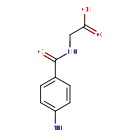
Structure for Aminohippuric acid (DB00345)

- Weight
- Average: 194.1873
Monoisotopic: 194.069142196 - Chemical Formula
- C9H10N2O3
- Synonyms
- 4-aminohippuric acid
- Aminohippurate
- Aminohippuric acid
- N-(p-Aminobenzoyl)aminoacetic acid
- N-(p-Aminobenzoyl)glycine
- N-(para-aminobenzoyl)glycine
- p-aminohippurate
- p-aminohippuric acid
- PAH
- PAHA
- para-aminohippurate
- para-aminohippuric acid
- paraaminohippuric acid

Pharmacology
- Indication
Used to measure effective renal plasma flow (ERPF) and to determine the functional capacity of the tubular excretory mechanism.
 Reduce drug development failure ratesBuild, train, & validate machine-learning modelswith evidence-based and structured datasets.Build, train, & validate predictive machine-learning models with structured datasets.
- Contraindications & Blackbox Warnings
 Prevent Adverse Drug Events TodayTap into our Clinical API for life-saving information on contraindications & blackbox warnings, population restrictions, harmful risks, & more.Avoid life-threatening adverse drug events with our Clinical API
- Pharmacodynamics
Aminohippurate (p-aminohippuric acid, PAH, PAHA) is the glycine amide of p-aminobenzoic acid. It is filtered by the glomeruli and is actively secreted by the proximal tubules. At low plasma concentrations (1.0 to 2.0 mg/100 mL), an average of 90 percent of aminohippurate is cleared by the kidneys from the renal blood stream in a single circulation. It is ideally suited for measurement of ERPF since it has a high clearance, is essentially nontoxic at the plasma concentrations reached with recommended doses, and its analytical determination is relatively simple and accurate. Aminohippurate is also used to measure the functional capacity of the renal tubular secretory mechanism or transport maximum (TmPAH). This is accomplished by elevating the plasma concentration to levels (40-60 mg/100 mL) sufficient to saturate the maximal capacity of the tubular cells to secrete aminohippurate. Inulin clearance is generally measured during TmPAH determinations since glomerular filtration rate (GFR) must be known before calculations of secretory Tm measurements can be done.
- Mechanism of action
Aminohippurate is filtered by the renal glomeruli and secreted into the urine by the proximal tubules. By measuring the amount of drug in the urine it is possible to determine functional capacity and effective renal plasma flow.
- Absorption
Not Available
- Volume of distribution
Not Available
- Protein binding
Not Available
- Metabolism
- Not Available
- Route of elimination
Not Available
- Half-life
Not Available
- Clearance
Not Available
- Adverse Effects
 Improve decision support & research outcomesWith structured adverse effects data, including: blackbox warnings, adverse reactions, warning & precautions, & incidence rates. View sample adverse effects data in our new Data Library!Improve decision support & research outcomes with our structured adverse effects data.
- Toxicity
The intravenous LD50 in female mice is 7.22 g/kg.
- Pathways
- Not Available
- Pharmacogenomic Effects/ADRs
- Not Available
Interactions
- Drug Interactions
- This information should not be interpreted without the help of a healthcare provider. If you believe you are experiencing an interaction, contact a healthcare provider immediately. The absence of an interaction does not necessarily mean no interactions exist.
Drug Interaction Integrate drug-drug
interactions in your softwareAcamprosate The excretion of Acamprosate can be decreased when combined with Aminohippuric acid. Acetazolamide The excretion of Aminohippuric acid can be decreased when combined with Acetazolamide. Acetylsalicylic acid The excretion of Aminohippuric acid can be decreased when combined with Acetylsalicylic acid. Acyclovir The excretion of Acyclovir can be decreased when combined with Aminohippuric acid. Adefovir dipivoxil The excretion of Adefovir dipivoxil can be decreased when combined with Aminohippuric acid. - Food Interactions
- Not Available
Products
 Drug product information from 10+ global regionsOur datasets provide approved product information including:dosage, form, labeller, route of administration, and marketing period.Access drug product information from over 10 global regions.
- Product Ingredients
Ingredient UNII CAS InChI Key Aminohippurate sodium SUO3KVS1O9 94-16-6 UNZMYCAEMNVPHX-UHFFFAOYSA-M - Brand Name Prescription Products
Name Dosage Strength Route Labeller Marketing Start Marketing End Region Image Aminohippurate Sodium Inj Liq 20% Liquid 20 % Intravenous Merck Frosst Canada & Cie, Merck Frosst Canada & Co. 1991-12-31 1999-11-12 Canada 
Aminohippurate Sodium Pah Injection, solution 2 g/10mL Intravenous Merck Sharp & Dohme Limited 1944-12-30 2014-11-30 US 
Categories
- ATC Codes
- V04CH30 — Aminohippuric acid
- Drug Categories
- Acids, Carbocyclic
- Amides
- Aminobenzoates
- Aminohippuric Acids
- Benzamides and benzamide derivatives
- Benzene Derivatives
- Benzoates
- Compounds used in a research, industrial, or household setting
- Diagnostic Agents
- Hippurates
- Indicators and Reagents
- Keto Acids
- Laboratory Chemicals
- OAT1/SLC22A6 inhibitors
- OAT1/SLC22A6 Substrates
- OAT3/SLC22A8 Inhibitors
- OAT3/SLC22A8 Substrates
- OATP1B1/SLCO1B1 Inhibitors
- OCT2 Inhibitors
- para-Aminobenzoates
- Tests for Renal Function and Ureteral Injuries
- Chemical TaxonomyProvided by Classyfire
- Description
- This compound belongs to the class of organic compounds known as hippuric acids. These are compounds containing hippuric acid, which consists of a of a benzoyl group linked to the N-terminal of a glycine.
- Kingdom
- Organic compounds
- Super Class
- Benzenoids
- Class
- Benzene and substituted derivatives
- Sub Class
- Benzoic acids and derivatives
- Direct Parent
- Hippuric acids
- Alternative Parents
- N-acyl-alpha amino acids / Aminobenzamides / Benzoyl derivatives / Aniline and substituted anilines / Secondary carboxylic acid amides / Amino acids / Monocarboxylic acids and derivatives / Carboxylic acids / Primary amines / Organopnictogen compounds show 3 more
- Substituents
- Alpha-amino acid or derivatives / Amine / Amino acid / Amino acid or derivatives / Aminobenzamide / Aminobenzoic acid or derivatives / Aniline or substituted anilines / Aromatic homomonocyclic compound / Benzoyl / Carbonyl group show 16 more
- Molecular Framework
- Aromatic homomonocyclic compounds
- External Descriptors
- N-acylglycine (CHEBI:104011)
- Affected organisms
- Humans and other mammals
Chemical Identifiers
- UNII
- Y79XT83BJ9
- CAS number
- 61-78-9
- InChI Key
- HSMNQINEKMPTIC-UHFFFAOYSA-N
- InChI
- InChI=1S/C9H10N2O3/c10-7-3-1-6(2-4-7)9(14)11-5-8(12)13/h1-4H,5,10H2,(H,11,14)(H,12,13)
- IUPAC Name
- 2-[(4-aminophenyl)formamido]acetic acid
- SMILES
- NC1=CC=C(C=C1)C(=O)NCC(O)=O
References
- General References
- Not Available
- External Links
- Human Metabolome Database
- HMDB0001867
- KEGG Drug
- D06890
- PubChem Compound
- 2148
- PubChem Substance
- 46507106
- ChemSpider
- 2063
- BindingDB
- 50240008
- 42837
- ChEBI
- 104011
- ChEMBL
- CHEMBL463
- ZINC
- ZINC000000119344
- PharmGKB
- PA134711723
- PDBe Ligand
- ZWD
- RxList
- RxList Drug Page
- Wikipedia
- Aminohippuric_acid
- PDB Entries
- 8sdy
- MSDS
- Download (66.1 KB)
Clinical Trials
- Clinical Trials
Phase Status Purpose Conditions Count 4 Recruiting Basic Science Heart Failure 2 4 Withdrawn Treatment Healthy Volunteers - Male and Female 1 2 Recruiting Treatment Diabetic Kidney Disease (DKD) / Type 2 Diabetes Mellitus 1 1 Active Not Recruiting Other Hypertension / Resistance, Insulin 1 1 Completed Treatment Infections, Human Immunodeficiency Virus and Tuberculosis 1
Pharmacoeconomics
- Manufacturers
- Merck and co inc
- Packagers
- Merck & Co.
- Dosage Forms
Form Route Strength Liquid Intravenous 20 % Injection, solution Intravenous 2 g/10mL - Prices
Unit description Cost Unit Aminohippurate 20% vial 0.67USD ml DrugBank does not sell nor buy drugs. Pricing information is supplied for informational purposes only.- Patents
- Not Available
Properties
- State
- Solid
- Experimental Properties
Property Value Source melting point (°C) 199-200 °C Not Available water solubility Slightly soluble Not Available logP -2.2 Not Available pKa 3.83 Not Available - Predicted Properties
Property Value Source Water Solubility 3.13 mg/mL ALOGPS logP 0 ALOGPS logP -1 Chemaxon logS -1.8 ALOGPS pKa (Strongest Acidic) 2.7 Chemaxon pKa (Strongest Basic) 4.24 Chemaxon Physiological Charge -1 Chemaxon Hydrogen Acceptor Count 4 Chemaxon Hydrogen Donor Count 3 Chemaxon Polar Surface Area 92.42 Å2 Chemaxon Rotatable Bond Count 3 Chemaxon Refractivity 50.82 m3·mol-1 Chemaxon Polarizability 19.13 Å3 Chemaxon Number of Rings 1 Chemaxon Bioavailability 1 Chemaxon Rule of Five Yes Chemaxon Ghose Filter No Chemaxon Veber's Rule No Chemaxon MDDR-like Rule No Chemaxon - Predicted ADMET Features
Property Value Probability Human Intestinal Absorption + 0.7719 Blood Brain Barrier + 0.9304 Caco-2 permeable - 0.6601 P-glycoprotein substrate Non-substrate 0.7295 P-glycoprotein inhibitor I Non-inhibitor 0.9782 P-glycoprotein inhibitor II Non-inhibitor 0.9841 Renal organic cation transporter Non-inhibitor 0.9668 CYP450 2C9 substrate Non-substrate 0.8528 CYP450 2D6 substrate Non-substrate 0.8577 CYP450 3A4 substrate Non-substrate 0.801 CYP450 1A2 substrate Non-inhibitor 0.9046 CYP450 2C9 inhibitor Non-inhibitor 0.9381 CYP450 2D6 inhibitor Non-inhibitor 0.9552 CYP450 2C19 inhibitor Non-inhibitor 0.9338 CYP450 3A4 inhibitor Non-inhibitor 0.9055 CYP450 inhibitory promiscuity Low CYP Inhibitory Promiscuity 0.9913 Ames test Non AMES toxic 0.662 Carcinogenicity Non-carcinogens 0.7482 Biodegradation Ready biodegradable 0.6101 Rat acute toxicity 1.5850 LD50, mol/kg Not applicable hERG inhibition (predictor I) Weak inhibitor 0.9944 hERG inhibition (predictor II) Non-inhibitor 0.9731
Spectra
- Mass Spec (NIST)
- Not Available
- Spectra
- Chromatographic Properties
Collision Cross Sections (CCS)
Adduct CCS Value (Å2) Source type Source [M-H]- 152.8201103 predictedDarkChem Lite v0.1.0 [M-H]- 149.456318 predictedDarkChem Standard v0.1.0 [M-H]- 152.4616103 predictedDarkChem Lite v0.1.0 [M-H]- 139.0358 predictedDeepCCS 1.0 (2019) [M+H]+ 153.5970103 predictedDarkChem Lite v0.1.0 [M+H]+ 153.3597103 predictedDarkChem Lite v0.1.0 [M+H]+ 153.8648103 predictedDarkChem Lite v0.1.0 [M+H]+ 142.31561 predictedDeepCCS 1.0 (2019) [M+Na]+ 152.7758103 predictedDarkChem Lite v0.1.0 [M+Na]+ 156.7032479 predictedDarkChem Standard v0.1.0 [M+Na]+ 151.60474 predictedDeepCCS 1.0 (2019)
Transporters
- Kind
- Protein
- Organism
- Humans
- Pharmacological action
- Unknown
- Actions
- Inhibitor
- General Function
- Quaternary ammonium group transmembrane transporter activity
- Specific Function
- Mediates tubular uptake of organic compounds from circulation. Mediates the influx of agmatine, dopamine, noradrenaline (norepinephrine), serotonin, choline, famotidine, ranitidine, histamin, creat...
- Gene Name
- SLC22A2
- Uniprot ID
- O15244
- Uniprot Name
- Solute carrier family 22 member 2
- Molecular Weight
- 62579.99 Da
References
- Arndt P, Volk C, Gorboulev V, Budiman T, Popp C, Ulzheimer-Teuber I, Akhoundova A, Koppatz S, Bamberg E, Nagel G, Koepsell H: Interaction of cations, anions, and weak base quinine with rat renal cation transporter rOCT2 compared with rOCT1. Am J Physiol Renal Physiol. 2001 Sep;281(3):F454-68. [Article]
- Kind
- Protein
- Organism
- Humans
- Pharmacological action
- Unknown
- Actions
- Inhibitor
- General Function
- Symporter activity
- Specific Function
- Sodium-ion dependent, high affinity carnitine transporter. Involved in the active cellular uptake of carnitine. Transports one sodium ion with one molecule of carnitine. Also transports organic cat...
- Gene Name
- SLC22A5
- Uniprot ID
- O76082
- Uniprot Name
- Solute carrier family 22 member 5
- Molecular Weight
- 62751.08 Da
References
- Ohashi R, Tamai I, Yabuuchi H, Nezu JI, Oku A, Sai Y, Shimane M, Tsuji A: Na(+)-dependent carnitine transport by organic cation transporter (OCTN2): its pharmacological and toxicological relevance. J Pharmacol Exp Ther. 1999 Nov;291(2):778-84. [Article]
- Ohashi R, Tamai I, Nezu Ji J, Nikaido H, Hashimoto N, Oku A, Sai Y, Shimane M, Tsuji A: Molecular and physiological evidence for multifunctionality of carnitine/organic cation transporter OCTN2. Mol Pharmacol. 2001 Feb;59(2):358-66. [Article]
- Kind
- Protein
- Organism
- Humans
- Pharmacological action
- Unknown
- Actions
- SubstrateInhibitor
- General Function
- Sodium-independent organic anion transmembrane transporter activity
- Specific Function
- Involved in the renal elimination of endogenous and exogenous organic anions. Functions as organic anion exchanger when the uptake of one molecule of organic anion is coupled with an efflux of one ...
- Gene Name
- SLC22A6
- Uniprot ID
- Q4U2R8
- Uniprot Name
- Solute carrier family 22 member 6
- Molecular Weight
- 61815.78 Da
References
- Cihlar T, Ho ES: Fluorescence-based assay for the interaction of small molecules with the human renal organic anion transporter 1. Anal Biochem. 2000 Jul 15;283(1):49-55. [Article]
- Jung KY, Takeda M, Kim DK, Tojo A, Narikawa S, Yoo BS, Hosoyamada M, Cha SH, Sekine T, Endou H: Characterization of ochratoxin A transport by human organic anion transporters. Life Sci. 2001 Sep 21;69(18):2123-35. [Article]
- Ichida K, Hosoyamada M, Kimura H, Takeda M, Utsunomiya Y, Hosoya T, Endou H: Urate transport via human PAH transporter hOAT1 and its gene structure. Kidney Int. 2003 Jan;63(1):143-55. [Article]
- Pombrio JM, Giangreco A, Li L, Wempe MF, Anders MW, Sweet DH, Pritchard JB, Ballatori N: Mercapturic acids (N-acetylcysteine S-conjugates) as endogenous substrates for the renal organic anion transporter-1. Mol Pharmacol. 2001 Nov;60(5):1091-9. [Article]
- Tsuda M, Sekine T, Takeda M, Cha SH, Kanai Y, Kimura M, Endou H: Transport of ochratoxin A by renal multispecific organic anion transporter 1. J Pharmacol Exp Ther. 1999 Jun;289(3):1301-5. [Article]
- Islinger F, Gekle M, Wright SH: Interaction of 2,3-dimercapto-1-propane sulfonate with the human organic anion transporter hOAT1. J Pharmacol Exp Ther. 2001 Nov;299(2):741-7. [Article]
- Motojima M, Hosokawa A, Yamato H, Muraki T, Yoshioka T: Uraemic toxins induce proximal tubular injury via organic anion transporter 1-mediated uptake. Br J Pharmacol. 2002 Jan;135(2):555-63. [Article]
- Groves CE, Munoz L, Bahn A, Burckhardt G, Wright SH: Interaction of cysteine conjugates with human and rabbit organic anion transporter 1. J Pharmacol Exp Ther. 2003 Feb;304(2):560-6. [Article]
- Aslamkhan A, Han YH, Walden R, Sweet DH, Pritchard JB: Stoichiometry of organic anion/dicarboxylate exchange in membrane vesicles from rat renal cortex and hOAT1-expressing cells. Am J Physiol Renal Physiol. 2003 Oct;285(4):F775-83. Epub 2003 Jul 1. [Article]
- Hosoyamada M, Sekine T, Kanai Y, Endou H: Molecular cloning and functional expression of a multispecific organic anion transporter from human kidney. Am J Physiol. 1999 Jan;276(1 Pt 2):F122-8. [Article]
- Lu R, Chan BS, Schuster VL: Cloning of the human kidney PAH transporter: narrow substrate specificity and regulation by protein kinase C. Am J Physiol. 1999 Feb;276(2 Pt 2):F295-303. [Article]
- Cihlar T, Lin DC, Pritchard JB, Fuller MD, Mendel DB, Sweet DH: The antiviral nucleotide analogs cidofovir and adefovir are novel substrates for human and rat renal organic anion transporter 1. Mol Pharmacol. 1999 Sep;56(3):570-80. [Article]
- Ho ES, Lin DC, Mendel DB, Cihlar T: Cytotoxicity of antiviral nucleotides adefovir and cidofovir is induced by the expression of human renal organic anion transporter 1. J Am Soc Nephrol. 2000 Mar;11(3):383-93. [Article]
- Kuze K, Graves P, Leahy A, Wilson P, Stuhlmann H, You G: Heterologous expression and functional characterization of a mouse renal organic anion transporter in mammalian cells. J Biol Chem. 1999 Jan 15;274(3):1519-24. [Article]
- Sekine T, Watanabe N, Hosoyamada M, Kanai Y, Endou H: Expression cloning and characterization of a novel multispecific organic anion transporter. J Biol Chem. 1997 Jul 25;272(30):18526-9. [Article]
- Sweet DH, Wolff NA, Pritchard JB: Expression cloning and characterization of ROAT1. The basolateral organic anion transporter in rat kidney. J Biol Chem. 1997 Nov 28;272(48):30088-95. [Article]
- Uwai Y, Saito H, Hashimoto Y, Inui KI: Interaction and transport of thiazide diuretics, loop diuretics, and acetazolamide via rat renal organic anion transporter rOAT1. J Pharmacol Exp Ther. 2000 Oct;295(1):261-5. [Article]
- Takeda M, Tojo A, Sekine T, Hosoyamada M, Kanai Y, Endou H: Role of organic anion transporter 1 (OAT1) in cephaloridine (CER)-induced nephrotoxicity. Kidney Int. 1999 Dec;56(6):2128-36. [Article]
- Sugiyama D, Kusuhara H, Shitara Y, Abe T, Meier PJ, Sekine T, Endou H, Suzuki H, Sugiyama Y: Characterization of the efflux transport of 17beta-estradiol-D-17beta-glucuronide from the brain across the blood-brain barrier. J Pharmacol Exp Ther. 2001 Jul;298(1):316-22. [Article]
- Li M, Anderson GD, Phillips BR, Kong W, Shen DD, Wang J: Interactions of amoxicillin and cefaclor with human renal organic anion and peptide transporters. Drug Metab Dispos. 2006 Apr;34(4):547-55. Epub 2006 Jan 24. [Article]
- Kind
- Protein
- Organism
- Humans
- Pharmacological action
- Unknown
- Actions
- SubstrateInhibitor
- General Function
- Sodium-independent organic anion transmembrane transporter activity
- Specific Function
- Plays an important role in the excretion/detoxification of endogenous and exogenous organic anions, especially from the brain and kidney. Involved in the transport basolateral of steviol, fexofenad...
- Gene Name
- SLC22A8
- Uniprot ID
- Q8TCC7
- Uniprot Name
- Solute carrier family 22 member 8
- Molecular Weight
- 59855.585 Da
References
- Jung KY, Takeda M, Kim DK, Tojo A, Narikawa S, Yoo BS, Hosoyamada M, Cha SH, Sekine T, Endou H: Characterization of ochratoxin A transport by human organic anion transporters. Life Sci. 2001 Sep 21;69(18):2123-35. [Article]
- Ohtsuki S, Kikkawa T, Mori S, Hori S, Takanaga H, Otagiri M, Terasaki T: Mouse reduced in osteosclerosis transporter functions as an organic anion transporter 3 and is localized at abluminal membrane of blood-brain barrier. J Pharmacol Exp Ther. 2004 Jun;309(3):1273-81. Epub 2004 Feb 4. [Article]
- Kobayashi Y, Ohshiro N, Tsuchiya A, Kohyama N, Ohbayashi M, Yamamoto T: Renal transport of organic compounds mediated by mouse organic anion transporter 3 (mOat3): further substrate specificity of mOat3. Drug Metab Dispos. 2004 May;32(5):479-83. [Article]
- Mori S, Takanaga H, Ohtsuki S, Deguchi T, Kang YS, Hosoya K, Terasaki T: Rat organic anion transporter 3 (rOAT3) is responsible for brain-to-blood efflux of homovanillic acid at the abluminal membrane of brain capillary endothelial cells. J Cereb Blood Flow Metab. 2003 Apr;23(4):432-40. [Article]
- Hasegawa M, Kusuhara H, Sugiyama D, Ito K, Ueda S, Endou H, Sugiyama Y: Functional involvement of rat organic anion transporter 3 (rOat3; Slc22a8) in the renal uptake of organic anions. J Pharmacol Exp Ther. 2002 Mar;300(3):746-53. [Article]
- Sugiyama D, Kusuhara H, Shitara Y, Abe T, Meier PJ, Sekine T, Endou H, Suzuki H, Sugiyama Y: Characterization of the efflux transport of 17beta-estradiol-D-17beta-glucuronide from the brain across the blood-brain barrier. J Pharmacol Exp Ther. 2001 Jul;298(1):316-22. [Article]
- Nagata Y, Kusuhara H, Endou H, Sugiyama Y: Expression and functional characterization of rat organic anion transporter 3 (rOat3) in the choroid plexus. Mol Pharmacol. 2002 May;61(5):982-8. [Article]
- Cha SH, Sekine T, Fukushima JI, Kanai Y, Kobayashi Y, Goya T, Endou H: Identification and characterization of human organic anion transporter 3 expressing predominantly in the kidney. Mol Pharmacol. 2001 May;59(5):1277-86. [Article]
- Bakhiya A, Bahn A, Burckhardt G, Wolff N: Human organic anion transporter 3 (hOAT3) can operate as an exchanger and mediate secretory urate flux. Cell Physiol Biochem. 2003;13(5):249-56. [Article]
- Race JE, Grassl SM, Williams WJ, Holtzman EJ: Molecular cloning and characterization of two novel human renal organic anion transporters (hOAT1 and hOAT3). Biochem Biophys Res Commun. 1999 Feb 16;255(2):508-14. [Article]
- Sweet DH, Miller DS, Pritchard JB, Fujiwara Y, Beier DR, Nigam SK: Impaired organic anion transport in kidney and choroid plexus of organic anion transporter 3 (Oat3 (Slc22a8)) knockout mice. J Biol Chem. 2002 Jul 26;277(30):26934-43. Epub 2002 May 13. [Article]
- Kusuhara H, Sekine T, Utsunomiya-Tate N, Tsuda M, Kojima R, Cha SH, Sugiyama Y, Kanai Y, Endou H: Molecular cloning and characterization of a new multispecific organic anion transporter from rat brain. J Biol Chem. 1999 May 7;274(19):13675-80. [Article]
- Kind
- Protein
- Organism
- Humans
- Pharmacological action
- Unknown
- Actions
- SubstrateInhibitor
- General Function
- Organic anion transmembrane transporter activity
- Specific Function
- Mediates hepatobiliary excretion of numerous organic anions. May function as a cellular cisplatin transporter.
- Gene Name
- ABCC2
- Uniprot ID
- Q92887
- Uniprot Name
- Canalicular multispecific organic anion transporter 1
- Molecular Weight
- 174205.64 Da
References
- Dahan A, Sabit H, Amidon GL: The H2 receptor antagonist nizatidine is a P-glycoprotein substrate: characterization of its intestinal epithelial cell efflux transport. AAPS J. 2009 Jun;11(2):205-13. doi: 10.1208/s12248-009-9092-5. Epub 2009 Mar 25. [Article]
- Leier I, Hummel-Eisenbeiss J, Cui Y, Keppler D: ATP-dependent para-aminohippurate transport by apical multidrug resistance protein MRP2. Kidney Int. 2000 Apr;57(4):1636-42. [Article]
- Kind
- Protein
- Organism
- Humans
- Pharmacological action
- Unknown
- Actions
- Inhibitor
- General Function
- Symporter activity
- Specific Function
- Sodium-ion dependent, low affinity carnitine transporter. Probably transports one sodium ion with one molecule of carnitine. Also transports organic cations such as tetraethylammonium (TEA) without...
- Gene Name
- SLC22A4
- Uniprot ID
- Q9H015
- Uniprot Name
- Solute carrier family 22 member 4
- Molecular Weight
- 62154.48 Da
References
- Yabuuchi H, Tamai I, Nezu J, Sakamoto K, Oku A, Shimane M, Sai Y, Tsuji A: Novel membrane transporter OCTN1 mediates multispecific, bidirectional, and pH-dependent transport of organic cations. J Pharmacol Exp Ther. 1999 May;289(2):768-73. [Article]
- Kind
- Protein
- Organism
- Humans
- Pharmacological action
- Unknown
- Actions
- SubstrateInhibitor
- General Function
- Sodium-independent organic anion transmembrane transporter activity
- Specific Function
- Mediates saturable uptake of estrone sulfate, dehydroepiandrosterone sulfate and related compounds.
- Gene Name
- SLC22A11
- Uniprot ID
- Q9NSA0
- Uniprot Name
- Solute carrier family 22 member 11
- Molecular Weight
- 59970.945 Da
References
- Babu E, Takeda M, Narikawa S, Kobayashi Y, Enomoto A, Tojo A, Cha SH, Sekine T, Sakthisekaran D, Endou H: Role of human organic anion transporter 4 in the transport of ochratoxin A. Biochim Biophys Acta. 2002 Jun 12;1590(1-3):64-75. [Article]
- Cha SH, Sekine T, Kusuhara H, Yu E, Kim JY, Kim DK, Sugiyama Y, Kanai Y, Endou H: Molecular cloning and characterization of multispecific organic anion transporter 4 expressed in the placenta. J Biol Chem. 2000 Feb 11;275(6):4507-12. [Article]
- Kind
- Protein
- Organism
- Humans
- Pharmacological action
- Unknown
- Actions
- Inhibitor
- General Function
- Sodium-independent organic anion transmembrane transporter activity
- Specific Function
- Mediates the Na(+)-independent transport of organic anions such as estrone-3-sulfate (PubMed:10873595). Mediates transport of prostaglandins (PG) E1 and E2, thyroxine (T4), deltorphin II, BQ-123 an...
- Gene Name
- SLCO3A1
- Uniprot ID
- Q9UIG8
- Uniprot Name
- Solute carrier organic anion transporter family member 3A1
- Molecular Weight
- 76552.135 Da
References
- Adachi H, Suzuki T, Abe M, Asano N, Mizutamari H, Tanemoto M, Nishio T, Onogawa T, Toyohara T, Kasai S, Satoh F, Suzuki M, Tokui T, Unno M, Shimosegawa T, Matsuno S, Ito S, Abe T: Molecular characterization of human and rat organic anion transporter OATP-D. Am J Physiol Renal Physiol. 2003 Dec;285(6):F1188-97. [Article]
- Kind
- Protein
- Organism
- Humans
- Pharmacological action
- Unknown
- Actions
- Substrate
- General Function
- Transporter activity
- Specific Function
- Mediates export of organic anions and drugs from the cytoplasm. Mediates ATP-dependent transport of glutathione and glutathione conjugates, leukotriene C4, estradiol-17-beta-o-glucuronide, methotre...
- Gene Name
- ABCC1
- Uniprot ID
- P33527
- Uniprot Name
- Multidrug resistance-associated protein 1
- Molecular Weight
- 171589.5 Da
References
- Leier I, Hummel-Eisenbeiss J, Cui Y, Keppler D: ATP-dependent para-aminohippurate transport by apical multidrug resistance protein MRP2. Kidney Int. 2000 Apr;57(4):1636-42. [Article]
- Kind
- Protein
- Organism
- Humans
- Pharmacological action
- Unknown
- Actions
- Substrate
- General Function
- Symporter activity
- Specific Function
- Proton-coupled monocarboxylate transporter. Catalyzes the rapid transport across the plasma membrane of many monocarboxylates such as lactate, pyruvate, branched-chain oxo acids derived from leucin...
- Gene Name
- SLC16A1
- Uniprot ID
- P53985
- Uniprot Name
- Monocarboxylate transporter 1
- Molecular Weight
- 53943.685 Da
References
- Tamai I, Sai Y, Ono A, Kido Y, Yabuuchi H, Takanaga H, Satoh E, Ogihara T, Amano O, Izeki S, Tsuji A: Immunohistochemical and functional characterization of pH-dependent intestinal absorption of weak organic acids by the monocarboxylic acid transporter MCT1. J Pharm Pharmacol. 1999 Oct;51(10):1113-21. [Article]
- Kind
- Protein
- Organism
- Humans
- Pharmacological action
- Unknown
- Actions
- Substrate
- General Function
- Sodium-independent organic anion transmembrane transporter activity
- Specific Function
- Mediates sodium-independent multispecific organic anion transport. Transport of prostaglandin E2, prostaglandin F2, tetracycline, bumetanide, estrone sulfate, glutarate, dehydroepiandrosterone sulf...
- Gene Name
- SLC22A7
- Uniprot ID
- Q9Y694
- Uniprot Name
- Solute carrier family 22 member 7
- Molecular Weight
- 60025.025 Da
References
- Sun W, Wu RR, van Poelje PD, Erion MD: Isolation of a family of organic anion transporters from human liver and kidney. Biochem Biophys Res Commun. 2001 May 4;283(2):417-22. [Article]
- Kobayashi Y, Ohshiro N, Shibusawa A, Sasaki T, Tokuyama S, Sekine T, Endou H, Yamamoto T: Isolation, characterization and differential gene expression of multispecific organic anion transporter 2 in mice. Mol Pharmacol. 2002 Jul;62(1):7-14. [Article]
- Sekine T, Cha SH, Tsuda M, Apiwattanakul N, Nakajima N, Kanai Y, Endou H: Identification of multispecific organic anion transporter 2 expressed predominantly in the liver. FEBS Lett. 1998 Jun 12;429(2):179-82. [Article]

Drug created at June 13, 2005 13:24 / Updated at April 09, 2024 18:25