Identification
- Summary
Trihexyphenidyl is an antispasmodic drug used as an adjunct drug in the management of parkinsonism and as a treatment for extrapyramidal symptoms caused by drugs affecting the central nervous system (CNS).
- Generic Name
- Trihexyphenidyl
- DrugBank Accession Number
- DB00376
- Background
Trihexyphenidyl is a centrally acting muscarinic antagonist used for treatment of parkinsonism and drug-induced extrapyramidal disorders.11,12 Its discovery was published in 1949 in a study looking for drugs with antispasmodic activity.9 Trihexyphenidyl is rarely used in the treatment of parkinsonism, and is not a first line treatment due to significant adverse effects.15 It has largely been replaced by drugs such as levodopa.15
Trihexyphenidyl was granted FDA approval on 13 May 1949.10
- Type
- Small Molecule
- Groups
- Approved
- Structure
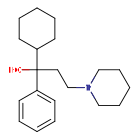
Structure for Trihexyphenidyl (DB00376)

- Weight
- Average: 301.4662
Monoisotopic: 301.240564619 - Chemical Formula
- C20H31NO
- Synonyms
- Trihexifenidilo
- Trihexyphenidyl
- Trihexyphénidyle
- Trihexyphenidylum
- External IDs
- Win 511

Pharmacology
- Indication
Tihexyphenidyl is indicated as an adjunct in the treatment of parkinsonism, an adjuvant in the treatment of parkinsonism with levodopa, and in the control of extrapyramidal disorders caused by central nervous system drugs.11,12
 Reduce drug development failure ratesBuild, train, & validate machine-learning modelswith evidence-based and structured datasets.Build, train, & validate predictive machine-learning models with structured datasets.
- Associated Conditions
Indication Type Indication Combined Product Details Approval Level Age Group Patient Characteristics Dose Form Management of Extrapyramidal symptoms caused by butyrophenones •••••••••••• ••••••• •••••• Management of Extrapyramidal symptoms caused by dibenzoxazepines •••••••••••• ••••••• •••••• Management of Extrapyramidal symptoms caused by phenothiazines •••••••••••• ••••••• •••••• Management of Extrapyramidal symptoms caused by thioxanthenes •••••••••••• ••••••• •••••• Adjunct therapy in treatment of Arteriosclerotic parkinsonism •••••••••••• ••••••• •••••• - Contraindications & Blackbox Warnings
 Prevent Adverse Drug Events TodayTap into our Clinical API for life-saving information on contraindications & blackbox warnings, population restrictions, harmful risks, & more.Avoid life-threatening adverse drug events with our Clinical API
- Pharmacodynamics
Trihexyphenidyl is an antimuscarinic indicated as an adjunct in the treatment of parkinsonism or as a treatment for drug-induced extrapyramidal symptoms.11,12 It has a long duration of action as it does not need to be given every day.13 It has a wide therapeutic window, with acute toxicity being non fatal in doses as high as 300 mg.13 Patients should have their iridocorneal angle examined before and intraocular pressure monitored during therapy.13 Patients should be counselled regarding the risk of anhidrosis and hyperthermia.13
- Mechanism of action
Trihexyphenidyl is a non-selective muscarinic acetylcholine receptor antagonist but binds with higher affinity to the M1 subtype.2 In vivo studies have shown that trihexyphenidyl demonstrates higher affinity for central muscarinic receptors located in the cerebral cortex and lower affinity for those located peripherally.2,3 Other studies suggest that trihexyphenidyl may modify nicotinic acetylcholine receptor neurotransmission, leading indirectly to enhanced dopamine release in the striatum.5 Although the anticholinergic has proven to be useful in the treatment of symptoms associated with Parkinson’s disease or other movement disorders, its mechanism of action has yet to be fully elucidated.4,1
Target Actions Organism AMuscarinic acetylcholine receptor M1 antagonistHumans UMuscarinic acetylcholine receptor M2 antagonistHumans UMuscarinic acetylcholine receptor M3 antagonistHumans UMuscarinic acetylcholine receptor M4 antagonistHumans UMuscarinic acetylcholine receptor M5 antagonistHumans - Absorption
Trihexyphenidyl is absorbed from the gastrointestinal tract. Trihexyphenidyl reaches a Cmax of 7.2 ng/mL, with a Tmax of 1.3 hours, and an AUC of 201 ng*h/mL.7,8
- Volume of distribution
Not Available
- Protein binding
Data regarding the extent of trihexyphenidyl protein binding in plasma are not readily available. Trihexyphenidyl is 36.13-41.92% bound to albumin under controlled conditions in a dialysis bag.6
- Metabolism
Data regarding the metabolism of trihexyphenidyl are not readily available.1 However, it is likely not heavily metabolized.1
- Route of elimination
Data regarding the route of elimination of trihexyphenidyl are not readily available.1 However, it is likely eliminated predominantly in the urine.1
- Half-life
The mean elimination half life of trihexyphenidyl is 3.2 ± 0.3 hours.7
- Clearance
Not Available
- Adverse Effects
 Improve decision support & research outcomesWith structured adverse effects data, including: blackbox warnings, adverse reactions, warning & precautions, & incidence rates. View sample adverse effects data in our new Data Library!Improve decision support & research outcomes with our structured adverse effects data.
- Toxicity
Symptoms of overdose include mydriasis, dryness of mucous membranes, red face, atonic states of bowels and bladder, and hyperthermia in high doses. Trihexyphenidyl causes agitation, confusion, and hallucinations due to its effects on the central nervous system. Untreated overdose may result in death, especially in children. Respiratory depression and cardiac arrest may be seen as premortal signs.
Patients experiencing an overdose of trihexyphenidyl may experience dry mouth, anhidrosis, mydriasis, nausea, vomiting, tachycardia, hyperpyrexia, reduced gastrointestinal motility, urinary hesitancy or retention, rash, hyperthermia, confusion, restlessness, agitation, poor coordination, paranoia, psychosis, delirium, hallucinations, coma, respiratory failure, circulatory failure, and death.1 Patients should be treated with symptomatic and supportive care which may include airway maintenance and the use of physostigmine.1
- Pathways
- Not Available
- Pharmacogenomic Effects/ADRs
- Not Available
Interactions
- Drug Interactions
- This information should not be interpreted without the help of a healthcare provider. If you believe you are experiencing an interaction, contact a healthcare provider immediately. The absence of an interaction does not necessarily mean no interactions exist.
Drug Interaction Integrate drug-drug
interactions in your softwareAclidinium The risk or severity of adverse effects can be increased when Trihexyphenidyl is combined with Aclidinium. Adenosine The risk or severity of Tachycardia can be increased when Trihexyphenidyl is combined with Adenosine. Albuterol The risk or severity of Tachycardia can be increased when Trihexyphenidyl is combined with Salbutamol. Alfentanil The risk or severity of adverse effects can be increased when Trihexyphenidyl is combined with Alfentanil. Alloin The therapeutic efficacy of Alloin can be decreased when used in combination with Trihexyphenidyl. - Food Interactions
- Take with or without food. Taking with food may minimize stomach upset. May take before meals to mitigate dry mouth or may take after meals to reduce excess salivation.
Products
 Drug product information from 10+ global regionsOur datasets provide approved product information including:dosage, form, labeller, route of administration, and marketing period.Access drug product information from over 10 global regions.
- Product Ingredients
Ingredient UNII CAS InChI Key Trihexyphenidyl hydrochloride AO61G82577 52-49-3 QDWJJTJNXAKQKD-UHFFFAOYSA-N - Product Images
- International/Other Brands
- ACA (Atlantic) / Acamed (Medifive) / Altant (Panbiotic) / Apo-trihex / Artane (Sanofi Aventis) / Artine (The Central) / Atan (Newai Chem) / Benzhexol (Johnson) / Benzox (Li Ta) / Bexol (Intas) / Broflex (Alliance) / Cyclodol (Grindeks) / Dyskinil (Crescent) / Ea Ten (Heng Hsin) / Hexymer (Mersifarma) / Hipokinon (Psicofarma) / Lahexy (La Pharmaceuticals) / Pacitane (Wyeth) / Pakisonal (Takata Seiyaku) / Parales (Psyco Remedies) / Parcisol (Milve) / Pargitan (Nevada Pharma) / Parkin (Micro Synapse) / Parkinane (Eisai) / Parkines (Towa Yakuhin) / Parkinidyl (CCPC) / Parkisan (Balkanpharma) / Parkitane (Sun) / Parkizol (Hikma) / Tonaril (Chile)
- Brand Name Prescription Products
Name Dosage Strength Route Labeller Marketing Start Marketing End Region Image Aparkane Tab 2mg Tablet 2 mg Oral Icn Pharmaceuticals 1973-12-31 2005-04-26 Canada 
Aparkane Tab 5mg Tablet 5 mg Oral Icn Pharmaceuticals 1973-12-31 2005-04-26 Canada Artane Elx 2mg/5ml Elixir 2 mg / 5 mL Oral Lederle Cyanamid Canada Inc. 1967-12-31 1999-08-12 Canada Artane Tab 2mg Tablet 2 mg Oral Lederle Cyanamid Canada Inc. 1951-12-31 1999-04-12 Canada Artane Tab 5mg Tablet 5 mg Oral Lederle Cyanamid Canada Inc. 1951-12-31 1997-01-14 Canada - Generic Prescription Products
Name Dosage Strength Route Labeller Marketing Start Marketing End Region Image Novo-hexidyl 2mg Tablet 2 mg Oral Novopharm Limited 1968-12-31 2005-08-10 Canada Novo-hexidyl 5mg Tablet 5 mg Oral Novopharm Limited 1967-12-31 2005-08-10 Canada Nu-trihexyphenidyl Tablet 5 mg / tab Oral Nu Pharm Inc Not applicable Not applicable Canada Nu-trihexyphenidyl Tablet 2 mg / tab Oral Nu Pharm Inc Not applicable Not applicable Canada PMS Trihexyphenidyl Tablet 5 mg Oral Pharmascience Inc 1987-12-31 Not applicable Canada


Categories
- ATC Codes
- N04AA01 — Trihexyphenidyl
- Drug Categories
- Chemical TaxonomyProvided by Classyfire
- Description
- This compound belongs to the class of organic compounds known as aralkylamines. These are alkylamines in which the alkyl group is substituted at one carbon atom by an aromatic hydrocarbyl group.
- Kingdom
- Organic compounds
- Super Class
- Organic nitrogen compounds
- Class
- Organonitrogen compounds
- Sub Class
- Amines
- Direct Parent
- Aralkylamines
- Alternative Parents
- Piperidines / Benzene and substituted derivatives / Tertiary alcohols / 1,3-aminoalcohols / Trialkylamines / Azacyclic compounds / Organopnictogen compounds / Hydrocarbon derivatives / Aromatic alcohols
- Substituents
- 1,3-aminoalcohol / Alcohol / Aralkylamine / Aromatic alcohol / Aromatic heteromonocyclic compound / Azacycle / Benzenoid / Hydrocarbon derivative / Monocyclic benzene moiety / Organic oxygen compound
- Molecular Framework
- Aromatic heteromonocyclic compounds
- External Descriptors
- amine (CHEBI:9720)
- Affected organisms
- Humans and other mammals
Chemical Identifiers
- UNII
- 6RC5V8B7PO
- CAS number
- 144-11-6
- InChI Key
- HWHLPVGTWGOCJO-UHFFFAOYSA-N
- InChI
- InChI=1S/C20H31NO/c22-20(18-10-4-1-5-11-18,19-12-6-2-7-13-19)14-17-21-15-8-3-9-16-21/h1,4-5,10-11,19,22H,2-3,6-9,12-17H2
- IUPAC Name
- 1-cyclohexyl-1-phenyl-3-(piperidin-1-yl)propan-1-ol
- SMILES
- OC(CCN1CCCCC1)(C1CCCCC1)C1=CC=CC=C1
References
- General References
- Jilani TN, Sabir S, Sharma S: Trihexyphenidyl . [Article]
- Giachetti A, Giraldo E, Ladinsky H, Montagna E: Binding and functional profiles of the selective M1 muscarinic receptor antagonists trihexyphenidyl and dicyclomine. Br J Pharmacol. 1986 Sep;89(1):83-90. [Article]
- Authors unspecified: Trihexyphenidyl . [Article]
- Authors unspecified: Parkinson Disease Agents . [Article]
- Downs AM, Fan X, Donsante C, Jinnah HA, Hess EJ: Trihexyphenidyl rescues the deficit in dopamine neurotransmission in a mouse model of DYT1 dystonia. Neurobiol Dis. 2019 May;125:115-122. doi: 10.1016/j.nbd.2019.01.012. Epub 2019 Jan 30. [Article]
- Zhao X, You T, Liu J, Sun X, Yan J, Yang X, Wang E: Drug-human serum albumin binding studied by capillary electrophoresis with electrochemiluminescence detection. Electrophoresis. 2004 Oct;25(20):3422-6. doi: 10.1002/elps.200305930. [Article]
- Burke RE, Fahn S: Pharmacokinetics of trihexyphenidyl after short-term and long-term administration to dystonic patients. Ann Neurol. 1985 Jul;18(1):35-40. doi: 10.1002/ana.410180107. [Article]
- He H, McKay G, Wirshing B, Midha KK: Development and application of a specific and sensitive radioimmunoassay for trihexyphenidyl to a pharmacokinetic study in humans. J Pharm Sci. 1995 May;84(5):561-7. doi: 10.1002/jps.2600840509. [Article]
- CUNNINGHAM RW, HARNED BK, et al.: The pharmacology of 3-(N-piperidyl)-1-phenyl-1-cyclohexyl-1-propanol hydrochloric acid (artane) and related compounds; new antispasmodic agents. J Pharmacol Exp Ther. 1949 Jun;96(2):151-65. [Article]
- FDA Approved Drug Products: Artane (Trihexyphenidyl) Oral Tablet, Capsule, and Elixir (Discontinued) [Link]
- FDA Approved Drug Products: Trihexyphenidyl Oral Elixir [Link]
- FDA Approved Drug Products: Trihexyphenidyl Oral Tablet [Link]
- FDA: Artane (Trihexyphenidyl) Review [Link]
- WHO International Pharmacopoeia - Sixth Edition, 2016: Trihexyphenidyl Hydrochloride [Link]
- Parkinson Canada Appendix 1: Canadian Guideline for Parkinson Disease, 2nd Edition [Link]
- External Links
- Human Metabolome Database
- HMDB0014520
- KEGG Drug
- D08638
- KEGG Compound
- C07171
- PubChem Compound
- 5572
- PubChem Substance
- 46507717
- ChemSpider
- 5371
- BindingDB
- 81462
- 10811
- ChEBI
- 9720
- ChEMBL
- CHEMBL1490
- Therapeutic Targets Database
- DAP001532
- PharmGKB
- PA164747026
- RxList
- RxList Drug Page
- Drugs.com
- Drugs.com Drug Page
- Wikipedia
- Trihexyphenidyl
- FDA label
- Download (197 KB)
Clinical Trials
- Clinical Trials
Phase Status Purpose Conditions Count 4 Completed Supportive Care Cerebral Palsy (CP) / Excessive crying / Pain 1 2 Completed Treatment Dystonia 1 0 Completed Treatment Extrapyramidal disorder 1 Not Available Completed Not Available DYT 1 Dystonia / Primary Cervical Dystonia 1
Pharmacoeconomics
- Manufacturers
- Lederle laboratories div american cyanamid co
- Mikart inc
- Pharmaceutical assoc inc div beach products
- Pharmaceutical ventures ltd
- Schering corp sub schering plough corp
- Nylos trading co inc
- Vangard laboratories inc div midway medical co
- Vintage pharmaceuticals inc
- Watson laboratories inc
- West ward pharmaceutical corp
- Packagers
- Advanced Pharmaceutical Services Inc.
- Amerisource Health Services Corp.
- Comprehensive Consultant Services Inc.
- Direct Dispensing Inc.
- Heartland Repack Services LLC
- Kaiser Foundation Hospital
- Mckesson Corp.
- Mikart Inc.
- Murfreesboro Pharmaceutical Nursing Supply
- Octofoil Group Inc.
- Pharmaceutical Association
- Pharmaceutical Utilization Management Program VA Inc.
- Pharmacy Service Center
- Physicians Total Care Inc.
- Prepak Systems Inc.
- Qualitest
- Remedy Repack
- Resource Optimization and Innovation LLC
- Richmond Pharmacy
- Vangard Labs Inc.
- Versapharm Inc.
- Vintage Pharmaceuticals Inc.
- Watson Pharmaceuticals
- West-Ward Pharmaceuticals
- Dosage Forms
Form Route Strength Tablet Oral 2 mg Capsule, extended release 5 MG Elixir Oral 2 mg / 5 mL Tablet Oral Tablet, film coated Oral Tablet Oral 5.000 mg Tablet Oral 2 mg / tab Tablet Oral 5 mg / tab Elixir Oral 0.4 mg / mL Tablet; tablet, film coated Oral Solution Oral 2 mg/5mL Syrup Oral 2 mg/5mL Tablet Oral 2 mg/1 Tablet Oral 5 mg/1 Tablet Oral 5 mg - Prices
Unit description Cost Unit Trihexyphenidyl HCl 5 mg tablet 0.37USD tablet Trihexyphenidyl 5 mg tablet 0.36USD tablet Trihexyphenidyl HCl 2 mg tablet 0.26USD tablet Trihexyphenidyl 2 mg tablet 0.18USD tablet Apo-Trihex 5 mg Tablet 0.07USD tablet Apo-Trihex 2 mg Tablet 0.04USD tablet DrugBank does not sell nor buy drugs. Pricing information is supplied for informational purposes only.- Patents
- Not Available
Properties
- State
- Solid
- Experimental Properties
Property Value Source melting point (°C) 115 °C WHO International Pharmacopoeia 6th Edition, 2016 logP 4.49 SANGSTER (1993) pKa 8.7 Zhao et al, 2004 - Predicted Properties
Property Value Source Water Solubility 0.00314 mg/mL ALOGPS logP 4.93 ALOGPS logP 4.23 Chemaxon logS -5 ALOGPS pKa (Strongest Acidic) 13.84 Chemaxon pKa (Strongest Basic) 9.32 Chemaxon Physiological Charge 1 Chemaxon Hydrogen Acceptor Count 2 Chemaxon Hydrogen Donor Count 1 Chemaxon Polar Surface Area 23.47 Å2 Chemaxon Rotatable Bond Count 5 Chemaxon Refractivity 93.21 m3·mol-1 Chemaxon Polarizability 36.73 Å3 Chemaxon Number of Rings 3 Chemaxon Bioavailability 1 Chemaxon Rule of Five Yes Chemaxon Ghose Filter Yes Chemaxon Veber's Rule Yes Chemaxon MDDR-like Rule No Chemaxon - Predicted ADMET Features
Property Value Probability Human Intestinal Absorption + 0.9156 Blood Brain Barrier + 0.9523 Caco-2 permeable + 0.6707 P-glycoprotein substrate Substrate 0.6943 P-glycoprotein inhibitor I Inhibitor 0.5993 P-glycoprotein inhibitor II Non-inhibitor 0.7561 Renal organic cation transporter Inhibitor 0.7563 CYP450 2C9 substrate Non-substrate 0.8256 CYP450 2D6 substrate Non-substrate 0.7655 CYP450 3A4 substrate Non-substrate 0.5746 CYP450 1A2 substrate Non-inhibitor 0.9187 CYP450 2C9 inhibitor Non-inhibitor 0.9126 CYP450 2D6 inhibitor Inhibitor 0.8966 CYP450 2C19 inhibitor Non-inhibitor 0.9248 CYP450 3A4 inhibitor Non-inhibitor 0.8506 CYP450 inhibitory promiscuity Low CYP Inhibitory Promiscuity 0.9543 Ames test Non AMES toxic 0.8434 Carcinogenicity Non-carcinogens 0.9238 Biodegradation Not ready biodegradable 0.9253 Rat acute toxicity 2.6751 LD50, mol/kg Not applicable hERG inhibition (predictor I) Strong inhibitor 0.6676 hERG inhibition (predictor II) Inhibitor 0.5713
Spectra
- Mass Spec (NIST)
- Not Available
- Spectra
- Chromatographic Properties
Collision Cross Sections (CCS)
Adduct CCS Value (Å2) Source type Source [M-H]- 182.8530855 predictedDarkChem Lite v0.1.0 [M-H]- 171.94728 predictedDeepCCS 1.0 (2019) [M+H]+ 183.1998855 predictedDarkChem Lite v0.1.0 [M+H]+ 174.30528 predictedDeepCCS 1.0 (2019) [M+Na]+ 182.7632855 predictedDarkChem Lite v0.1.0 [M+Na]+ 180.39842 predictedDeepCCS 1.0 (2019)
Targets

- Kind
- Protein
- Organism
- Humans
- Pharmacological action
- Yes
- Actions
- Antagonist
- General Function
- Phosphatidylinositol phospholipase c activity
- Specific Function
- The muscarinic acetylcholine receptor mediates various cellular responses, including inhibition of adenylate cyclase, breakdown of phosphoinositides and modulation of potassium channels through the...
- Gene Name
- CHRM1
- Uniprot ID
- P11229
- Uniprot Name
- Muscarinic acetylcholine receptor M1
- Molecular Weight
- 51420.375 Da
References
- Overington JP, Al-Lazikani B, Hopkins AL: How many drug targets are there? Nat Rev Drug Discov. 2006 Dec;5(12):993-6. [Article]
- Imming P, Sinning C, Meyer A: Drugs, their targets and the nature and number of drug targets. Nat Rev Drug Discov. 2006 Oct;5(10):821-34. [Article]
- Prus AJ, Pehrson AL, Philibin SD, Wood JT, Vunck SA, Porter JH: The role of M1 muscarinic cholinergic receptors in the discriminative stimulus properties of N-desmethylclozapine and the atypical antipsychotic drug clozapine in rats. Psychopharmacology (Berl). 2009 Apr;203(2):295-301. doi: 10.1007/s00213-008-1262-0. Epub 2008 Aug 7. [Article]
- Giachetti A, Giraldo E, Ladinsky H, Montagna E: Binding and functional profiles of the selective M1 muscarinic receptor antagonists trihexyphenidyl and dicyclomine. Br J Pharmacol. 1986 Sep;89(1):83-90. [Article]
- Tanda G, Katz JL: Muscarinic preferential M(1) receptor antagonists enhance the discriminative-stimulus effects of cocaine in rats. Pharmacol Biochem Behav. 2007 Oct;87(4):400-4. Epub 2007 Jun 2. [Article]
- Dorje F, Wess J, Lambrecht G, Tacke R, Mutschler E, Brann MR: Antagonist binding profiles of five cloned human muscarinic receptor subtypes. J Pharmacol Exp Ther. 1991 Feb;256(2):727-33. [Article]
- Freedman SB, Beer MS, Harley EA: Muscarinic M1, M2 receptor binding. Relationship with functional efficacy. Eur J Pharmacol. 1988 Oct 26;156(1):133-42. [Article]
- Chen X, Ji ZL, Chen YZ: TTD: Therapeutic Target Database. Nucleic Acids Res. 2002 Jan 1;30(1):412-5. [Article]
- Kind
- Protein
- Organism
- Humans
- Pharmacological action
- Unknown
- Actions
- Antagonist
- General Function
- G-protein coupled acetylcholine receptor activity
- Specific Function
- The muscarinic acetylcholine receptor mediates various cellular responses, including inhibition of adenylate cyclase, breakdown of phosphoinositides and modulation of potassium channels through the...
- Gene Name
- CHRM2
- Uniprot ID
- P08172
- Uniprot Name
- Muscarinic acetylcholine receptor M2
- Molecular Weight
- 51714.605 Da
References
- Bognar IT, Altes U, Beinhauer C, Kessler I, Fuder H: A muscarinic receptor different from the M1, M2, M3 and M4 subtypes mediates the contraction of the rabbit iris sphincter. Naunyn Schmiedebergs Arch Pharmacol. 1992 Jun;345(6):611-8. [Article]
- Dorje F, Wess J, Lambrecht G, Tacke R, Mutschler E, Brann MR: Antagonist binding profiles of five cloned human muscarinic receptor subtypes. J Pharmacol Exp Ther. 1991 Feb;256(2):727-33. [Article]
- Freedman SB, Beer MS, Harley EA: Muscarinic M1, M2 receptor binding. Relationship with functional efficacy. Eur J Pharmacol. 1988 Oct 26;156(1):133-42. [Article]
- Kind
- Protein
- Organism
- Humans
- Pharmacological action
- Unknown
- Actions
- Antagonist
- General Function
- Receptor activity
- Specific Function
- The muscarinic acetylcholine receptor mediates various cellular responses, including inhibition of adenylate cyclase, breakdown of phosphoinositides and modulation of potassium channels through the...
- Gene Name
- CHRM3
- Uniprot ID
- P20309
- Uniprot Name
- Muscarinic acetylcholine receptor M3
- Molecular Weight
- 66127.445 Da
References
- Bognar IT, Altes U, Beinhauer C, Kessler I, Fuder H: A muscarinic receptor different from the M1, M2, M3 and M4 subtypes mediates the contraction of the rabbit iris sphincter. Naunyn Schmiedebergs Arch Pharmacol. 1992 Jun;345(6):611-8. [Article]
- Dorje F, Wess J, Lambrecht G, Tacke R, Mutschler E, Brann MR: Antagonist binding profiles of five cloned human muscarinic receptor subtypes. J Pharmacol Exp Ther. 1991 Feb;256(2):727-33. [Article]
- Freedman SB, Beer MS, Harley EA: Muscarinic M1, M2 receptor binding. Relationship with functional efficacy. Eur J Pharmacol. 1988 Oct 26;156(1):133-42. [Article]
- Kind
- Protein
- Organism
- Humans
- Pharmacological action
- Unknown
- Actions
- Antagonist
- General Function
- Guanyl-nucleotide exchange factor activity
- Specific Function
- The muscarinic acetylcholine receptor mediates various cellular responses, including inhibition of adenylate cyclase, breakdown of phosphoinositides and modulation of potassium channels through the...
- Gene Name
- CHRM4
- Uniprot ID
- P08173
- Uniprot Name
- Muscarinic acetylcholine receptor M4
- Molecular Weight
- 53048.65 Da
References
- Bognar IT, Altes U, Beinhauer C, Kessler I, Fuder H: A muscarinic receptor different from the M1, M2, M3 and M4 subtypes mediates the contraction of the rabbit iris sphincter. Naunyn Schmiedebergs Arch Pharmacol. 1992 Jun;345(6):611-8. [Article]
- Dorje F, Wess J, Lambrecht G, Tacke R, Mutschler E, Brann MR: Antagonist binding profiles of five cloned human muscarinic receptor subtypes. J Pharmacol Exp Ther. 1991 Feb;256(2):727-33. [Article]
- Kind
- Protein
- Organism
- Humans
- Pharmacological action
- Unknown
- Actions
- Antagonist
- General Function
- Phosphatidylinositol phospholipase c activity
- Specific Function
- The muscarinic acetylcholine receptor mediates various cellular responses, including inhibition of adenylate cyclase, breakdown of phosphoinositides and modulation of potassium channels through the...
- Gene Name
- CHRM5
- Uniprot ID
- P08912
- Uniprot Name
- Muscarinic acetylcholine receptor M5
- Molecular Weight
- 60073.205 Da
References
- Bognar IT, Altes U, Beinhauer C, Kessler I, Fuder H: A muscarinic receptor different from the M1, M2, M3 and M4 subtypes mediates the contraction of the rabbit iris sphincter. Naunyn Schmiedebergs Arch Pharmacol. 1992 Jun;345(6):611-8. [Article]
- Dorje F, Wess J, Lambrecht G, Tacke R, Mutschler E, Brann MR: Antagonist binding profiles of five cloned human muscarinic receptor subtypes. J Pharmacol Exp Ther. 1991 Feb;256(2):727-33. [Article]
Carriers
- Kind
- Protein
- Organism
- Humans
- Pharmacological action
- Unknown
- Actions
- Binder
- General Function
- Toxic substance binding
- Specific Function
- Serum albumin, the main protein of plasma, has a good binding capacity for water, Ca(2+), Na(+), K(+), fatty acids, hormones, bilirubin and drugs. Its main function is the regulation of the colloid...
- Gene Name
- ALB
- Uniprot ID
- P02768
- Uniprot Name
- Serum albumin
- Molecular Weight
- 69365.94 Da
References
- Zhao X, You T, Liu J, Sun X, Yan J, Yang X, Wang E: Drug-human serum albumin binding studied by capillary electrophoresis with electrochemiluminescence detection. Electrophoresis. 2004 Oct;25(20):3422-6. doi: 10.1002/elps.200305930. [Article]

Drug created at June 13, 2005 13:24 / Updated at April 27, 2024 09:44