Identification
- Summary
Vancomycin is a glycopeptide antibiotic used to treat severe but susceptible bacterial infections such as MRSA (methicillin-resistant Staphylococcus aureus) infections.
- Brand Names
- Firvanq, Vancocin
- Generic Name
- Vancomycin
- DrugBank Accession Number
- DB00512
- Background
Antibacterial obtained from Streptomyces orientalis. It is a glycopeptide related to ristocetin that inhibits bacterial cell wall assembly and is toxic to kidneys and the inner ear.
As of January 29 2018, CutisPharma's Firvanq is the only FDA approved vancomycin oral liquid treatment option available for the the treatment of Clostridium difficile associated diarrhea and enterocolitis caused by Staphylococcus aureus, including methicillin-resistant strains [LP1196]. Such an oral liquid formulation is expected to make Clostridium difficile associated diarrhea therapy more accessible in comparison to previously available specialty compounding products [LP1196].
- Type
- Small Molecule
- Groups
- Approved
- Structure
Structure for Vancomycin (DB00512)
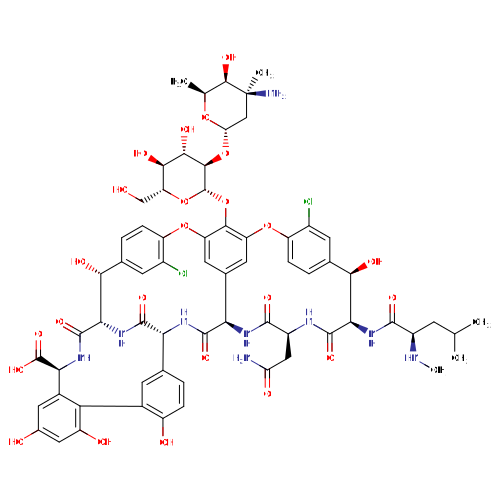
- Weight
- Average: 1449.254
Monoisotopic: 1447.430199787 - Chemical Formula
- C66H75Cl2N9O24
- Synonyms
- Vancomicina
- Vancomycin
- Vancomycine
- Vancomycinum

Pharmacology
- Indication
Administered intravenously, vancomycin is indicated in adult and pediatric patients for the treatment of septicemia, infective endocarditis, skin and skin structure infections, bone infections, and lower respiratory tract infections.10 Administered orally, vancomycin is indicated in adult and pediatric patients for the treatment of Clostridium difficile-associated diarrhea and for enterocolitis caused by Staphylococcus aureus (including methicillin-resistant strains).11
 Reduce drug development failure ratesBuild, train, & validate machine-learning modelswith evidence-based and structured datasets.Build, train, & validate predictive machine-learning models with structured datasets.
- Associated Conditions
Indication Type Indication Combined Product Details Approval Level Age Group Patient Characteristics Dose Form Treatment of Diarrhea caused by clostridium difficile •••••••••••• Treatment of Enterocolitis caused by staphylococcus aureus •••••••••••• Treatment of Infection caused by staphylococci •••••••••••• Treatment of Severe staphylococcal infections •••••••••••• - Contraindications & Blackbox Warnings
 Prevent Adverse Drug Events TodayTap into our Clinical API for life-saving information on contraindications & blackbox warnings, population restrictions, harmful risks, & more.Avoid life-threatening adverse drug events with our Clinical API
- Pharmacodynamics
Vancomycin is a branched tricyclic glycosylated nonribosomal peptide often reserved as the "drug of last resort", used only after treatment with other antibiotics has failed. Vancomycin has been shown to be active against most strains of the following microorganisms, both in vitro and in clinical infections: Listeria monocytogenes, Streptococcus pyogenes, Streptococcus pneumoniae (including penicillin-resistant strains), Streptococcus agalactiae, Actinomyces species, and Lactobacillus species. The combination of vancomycin and an aminoglycoside acts synergistically in vitro against many strains of Staphylococcus aureus, Streptococcus bovis, enterococci, and the viridans group streptococci Label.
- Mechanism of action
The bactericidal action of vancomycin results primarily from inhibition of cell-wall biosynthesis. Specifically, vancomycin prevents incorporation of N-acetylmuramic acid (NAM)- and N-acetylglucosamine (NAG)-peptide subunits from being incorporated into the peptidoglycan matrix, which forms the major structural component of Gram-positive cell walls. Vancomycin forms hydrogen bonds with the terminal D-alanyl-D-alanine moieties of the NAM/NAG-peptides, preventing the incorporation of the NAM/NAG-peptide subunits into the peptidoglycan matrix. In addition, vancomycin alters bacterial-cell-membrane permeability and RNA synthesis. There is no cross-resistance between vancomycin and other antibiotics. Vancomycin is not active in vitro against gram-negative bacilli, mycobacteria, or fungi. Label
Target Actions Organism AD-Ala-D-Ala moiety of NAM/NAG peptide subunits of peptidoglycan ligandGram-positive Bacteria - Absorption
Poorly absorbed from gastrointestinal tract, however systemic absorption (up to 60%) may occur following intraperitoneal administration Label.
- Volume of distribution
The volume of distribution, as discussed in the literature, varies between 0.4-1 L/kg 6.
- Protein binding
Approximately 50% serum protein bound 7.
- Metabolism
Since almost 75-80% of the drug is excreted unchanged in the urine after the first 24 hours following administration, there is seemingly no apparent metabolism of the drug Label,8. The concentration of vancomycin in the liver tissue and bile 24 hours after administration has also been reported at or below detection limits as well 8.
- Route of elimination
In the first 24 hours, about 75-80% of an administered dose of vancomycin is excreted in urine by glomerular filtration Label,8.
- Half-life
Half-life in normal renal patients is approximately 6 hours (range 4 to 11 hours). In anephric patients, the average half-life of elimination is 7.5 days Label.
- Clearance
The mean plasma clearance of vancomycin is about 0.058 L/kg/h Label.
- Adverse Effects
 Improve decision support & research outcomesWith structured adverse effects data, including: blackbox warnings, adverse reactions, warning & precautions, & incidence rates. View sample adverse effects data in our new Data Library!Improve decision support & research outcomes with our structured adverse effects data.
- Toxicity
The oral LD50 in mice is 5000 mg/kg. The median lethal intravenous dose is 319 mg/kg in rats and 400 mg/kg in mice. Label
Conversely, the most common adverse effects associated with vancomycin appear to be nausea, abdominal pain, and hypokalemia Label. In particular, incidences of hypokalemia, urinary tracy infection, peripheral edema, insomnia, constipation, anemia, depression, vomiting, and hypotension are higher among subjects >65 years of than in those that are 65 years old or younger Label.
Additionally, nephrotoxicity involving reports of renal failure, renal impairment, elevated blood creatinine, and others has also occurred with vancomycin therapy during studies, and can occur during or after completion of a course of therapy Label. Risk of such nephrotoxicity is increased in patients greater than 65 years of age Label.
Ototoxicity has also occurred in patients receiving vancomycin treatment, and it can be transient or permanent. This effect has been reported primarily in patients who have been given excessive intravenous doses, who have kidney dysfunction, who have an underlying hearing loss, or who are receiving concomitant therapy with another ototoxic agent like an aminoglycoside Label. Potentially related adverse effects like vertigo, dizziness, and tinnitus have also been reported Label.
Neutropenia, often beginning one week or more after onset of intravenous vancomycin therapy or after a total dose of more than 25 mg has been observed for several dozen patients as well. This neutropenia however, appears to be promptly reversible when the vancomycin treatment is discontinued. Alternatively, thrombocytopenia has also been reported Label.
Additionally, a condition has been reported that is described as being similar to IV-induced symptoms involving symptoms consistent with anaphylactoid reactions, including hypotension, wheezing, dyspnea, urticaria, pruritus, flushing of the upper body (in what is known as the so-called 'Red Man Syndrome'), pain and muscle spasm of the chest and back. Although on average such reactions usually resolve within 20 minutes, they are just as likely to persist for hours Label,4.
In a controlled clinical study, the potential ototoxic and nephrotoxic effects of vancomycin on infants were assessed when the drug was given intravenously to pregnant women for serious staphylococcal infections complicating intravenous drug abuse. The results obtained demonstrated that vancomycin was found in cord blood but that no sensorineural hearing loss or nephrotoxicity attributable to vancomycin was noted. Ultimately however, because the number of subjects treated in this study was limited and vancomycin was administered only in the second and third trimesters, it is not formally known whether vancomycin causes fetal harm. Subsequently, vancomycin should be given to a pregnant woman only if clearly needed Label.
Although it is known that vancomycin is excreted in human milk based on information obtained from the intravenous administration of the medication, it is not known if vancomycin is excreted into human milk after oral administration. However, because of the overall potential for adverse events, caution must be exercised when vancomycin is given to a nursing woman and a decision must be made whether to discontinue nursing or discontinue the drug, taking into consideration the importance of the drug to the mother Label.
The safety and effectiveness in pediatric patients have not been formally established Label.
Patients older than 65 years of age may take longer to respond to therapy compared to patients aged 65 year or younger. Vancomycin treatment in patients aged older than 65 years subsequently should not be discontinued or switched to an alternative treatment prematurely Label.
Furthermore, clinical studies have demonstrated that geriatric patients are at increased risk of developing nephrotoxicity following treatment with oral vancomycin, which can occur during or after completion of therapy. In patients aged older than 65 years, including those with normal renal function prior to treatment, renal function should be monitored during and following treatment with vancomycin to detect any potential vancomycin induced nephrotoxicity Label.
- Pathways
- Not Available
- Pharmacogenomic Effects/ADRs
- Not Available
Interactions
- Drug Interactions
- This information should not be interpreted without the help of a healthcare provider. If you believe you are experiencing an interaction, contact a healthcare provider immediately. The absence of an interaction does not necessarily mean no interactions exist.
Drug Interaction Integrate drug-drug
interactions in your softwareAbacavir Abacavir may decrease the excretion rate of Vancomycin which could result in a higher serum level. Aceclofenac Aceclofenac may decrease the excretion rate of Vancomycin which could result in a higher serum level. Acemetacin Acemetacin may decrease the excretion rate of Vancomycin which could result in a higher serum level. Acenocoumarol The risk or severity of bleeding can be increased when Vancomycin is combined with Acenocoumarol. Acetaminophen Acetaminophen may decrease the excretion rate of Vancomycin which could result in a higher serum level. - Food Interactions
- Take with or without food.
Products
 Drug product information from 10+ global regionsOur datasets provide approved product information including:dosage, form, labeller, route of administration, and marketing period.Access drug product information from over 10 global regions.
- Product Ingredients
Ingredient UNII CAS InChI Key Vancomycin hydrochloride 71WO621TJD 1404-93-9 LCTORFDMHNKUSG-XTTLPDOESA-N - Product Images


- International/Other Brands
- COVANC (Nucleus) / Vancoled
- Brand Name Prescription Products
Name Dosage Strength Route Labeller Marketing Start Marketing End Region Image Firvanq Kit; Powder, for solution 1 g/1g Oral Azurity Pharmaceuticals, Inc 2018-01-26 Not applicable US 
Firvanq Kit; Powder, for solution 1 g/1g Oral Azurity Pharmaceuticals, Inc 2018-01-26 Not applicable US Firvanq Kit; Powder, for solution 1 g/1g Oral Azurity Pharmaceuticals, Inc 2018-01-26 Not applicable US Firvanq Kit; Powder, for solution 1 g/1g Oral Azurity Pharmaceuticals, Inc 2018-01-26 Not applicable US Pmsc-vancomycin Capsule 250 mg Oral Pharmascience Inc 2015-03-18 Not applicable Canada 
- Generic Prescription Products
Name Dosage Strength Route Labeller Marketing Start Marketing End Region Image Jamp Vancomycin Capsule 250 mg Oral Jamp Pharma Corporation 2014-03-26 Not applicable Canada Jamp Vancomycin Capsule 125 mg Oral Jamp Pharma Corporation 2014-03-26 Not applicable Canada Jamp-vancomycin Powder, for solution 1 g / vial Intravenous Jamp Pharma Corporation 2014-09-22 2022-11-16 Canada Jamp-vancomycin Powder, for solution 500 mg / vial Intravenous Jamp Pharma Corporation 2014-09-22 2021-07-29 Canada PMS-vancomycin Capsule 125 mg Oral Pharmascience Inc 2021-01-25 Not applicable Canada - Mixture Products
Name Ingredients Dosage Route Labeller Marketing Start Marketing End Region Image Firvanq Vancomycin hydrochloride (1 g/1g) + Vancomycin hydrochloride (1 g/1g) Kit; Powder, for solution Oral Azurity Pharmaceuticals, Inc 2020-02-14 Not applicable US Firvanq Vancomycin hydrochloride (1 g/1g) + Vancomycin hydrochloride (1 g/1g) Kit; Powder, for solution Oral Azurity Pharmaceuticals, Inc 2020-02-14 Not applicable US Firvanq Vancomycin hydrochloride (1 g/1g) + Vancomycin hydrochloride (1 g/1g) Kit; Powder, for solution Oral Azurity Pharmaceuticals, Inc 2020-02-14 Not applicable US Firvanq Vancomycin hydrochloride (1 g/1g) + Vancomycin hydrochloride (1 g/1g) Kit; Powder, for solution Oral Azurity Pharmaceuticals, Inc 2020-02-14 Not applicable US Vancomycin Hydrochloride Vancomycin hydrochloride (1 g/1g) + Vancomycin hydrochloride (1 g/1g) Kit; Powder, for solution Oral Ascend Laboratories, LLC 2023-08-01 Not applicable US - Unapproved/Other Products
Name Ingredients Dosage Route Labeller Marketing Start Marketing End Region Image Vancomycin HCl Vancomycin hydrochloride (6 mg/1mL) Injection, solution Intravenous Cantrell Drug Company 2012-05-25 Not applicable US Vancomycin HCl Vancomycin hydrochloride (5 mg/1mL) Injection, solution Intravenous Cantrell Drug Company 2013-08-30 Not applicable US Vancomycin HCl Vancomycin hydrochloride (4.2 mg/1mL) Injection, solution Intravenous Cantrell Drug Company 2013-05-01 Not applicable US VANKOMISIN HCL DBL 1 GR FLAKON, 1 ADET Vancomycin (1 gr) Intravenous ORNA İLAÇ TEKSTİL KİMYEVİ MAD. SAN. VE DIŞ TİC. LTD. ŞTİ. 2018-02-20 Not applicable Turkey 
VANKOMISIN HCL DBL 500 MG FLAKON, 1 ADET Vancomycin (500 mg) Intravenous ORNA İLAÇ TEKSTİL KİMYEVİ MAD. SAN. VE DIŞ TİC. LTD. ŞTİ. 2018-07-31 Not applicable Turkey


Categories
- ATC Codes
- J01XA01 — Vancomycin
- J01XA — Glycopeptide antibacterials
- J01X — OTHER ANTIBACTERIALS
- J01 — ANTIBACTERIALS FOR SYSTEMIC USE
- J — ANTIINFECTIVES FOR SYSTEMIC USE
- A07AA — Antibiotics
- A07A — INTESTINAL ANTIINFECTIVES
- A07 — ANTIDIARRHEALS, INTESTINAL ANTIINFLAMMATORY/ANTIINFECTIVE AGENTS
- A — ALIMENTARY TRACT AND METABOLISM
- Drug Categories
- Agents that produce neuromuscular block (indirect)
- Alimentary Tract and Metabolism
- Amino Acids, Peptides, and Proteins
- Anti-Bacterial Agents
- Anti-Infective Agents
- Antibacterials for Systemic Use
- Antidiarrheals, Intestinal Antiinflammatory/antiinfective Agents
- Antiinfectives for Systemic Use
- Carbohydrates
- Drugs that are Mainly Renally Excreted
- Drugs that are Mainly Renally Excreted with a Narrow Therapeutic Index
- Glycoconjugates
- Glycopeptide Antibacterials
- Glycopeptides
- Intestinal Antiinfectives
- Narrow Therapeutic Index Drugs
- Nephrotoxic agents
- Ophthalmologicals
- Peptides
- Sensory Organs
- Chemical TaxonomyProvided by Classyfire
- Description
- This compound belongs to the class of organic compounds known as cyclic peptides. These are compounds containing a cyclic moiety bearing a peptide backbone.
- Kingdom
- Organic compounds
- Super Class
- Organic acids and derivatives
- Class
- Carboxylic acids and derivatives
- Sub Class
- Amino acids, peptides, and analogues
- Direct Parent
- Cyclic peptides
- Alternative Parents
- Aminoglycosides / Phenolic glycosides / Diarylethers / Disaccharides / O-glycosyl compounds / Alpha amino acids and derivatives / 1-hydroxy-2-unsubstituted benzenoids / 1-hydroxy-4-unsubstituted benzenoids / Aryl chlorides / Oxanes show 19 more
- Substituents
- 1,2-aminoalcohol / 1-hydroxy-2-unsubstituted benzenoid / 1-hydroxy-4-unsubstituted benzenoid / Acetal / Alcohol / Alpha-amino acid or derivatives / Amine / Amino acid / Amino acid or derivatives / Amino saccharide show 40 more
- Molecular Framework
- Aromatic heteropolycyclic compounds
- External Descriptors
- glycopeptide (CHEBI:28001)
- Affected organisms
- Enteric bacteria and other eubacteria
- Corynebacterium diphtheriae
- Treponema pallidum
- Streptococcus pyogenes
- Chlamydia pneumoniae
- Chlamydia trachomatis
- Mycoplasma pneumoniae
- Neisseria gonorrhoeae
- Legionella pneumophila
- Chlamydia psittaci
- Bordetella pertussis
Chemical Identifiers
- UNII
- 6Q205EH1VU
- CAS number
- 1404-90-6
- InChI Key
- MYPYJXKWCTUITO-LYRMYLQWSA-N
- InChI
- InChI=1S/C66H75Cl2N9O24/c1-23(2)12-34(71-5)58(88)76-49-51(83)26-7-10-38(32(67)14-26)97-40-16-28-17-41(55(40)101-65-56(54(86)53(85)42(22-78)99-65)100-44-21-66(4,70)57(87)24(3)96-44)98-39-11-8-27(15-33(39)68)52(84)50-63(93)75-48(64(94)95)31-18-29(79)19-37(81)45(31)30-13-25(6-9-36(30)80)46(60(90)77-50)74-61(91)47(28)73-59(89)35(20-43(69)82)72-62(49)92/h6-11,13-19,23-24,34-35,42,44,46-54,56-57,65,71,78-81,83-87H,12,20-22,70H2,1-5H3,(H2,69,82)(H,72,92)(H,73,89)(H,74,91)(H,75,93)(H,76,88)(H,77,90)(H,94,95)/t24-,34+,35-,42+,44-,46+,47+,48-,49+,50-,51+,52+,53+,54-,56+,57+,65-,66-/m0/s1
- IUPAC Name
- (1S,2R,18R,19R,22S,25R,28R,40S)-48-{[(2S,3R,4S,5S,6R)-3-{[(2S,4S,5S,6S)-4-amino-5-hydroxy-4,6-dimethyloxan-2-yl]oxy}-4,5-dihydroxy-6-(hydroxymethyl)oxan-2-yl]oxy}-22-(carbamoylmethyl)-5,47-dichloro-2,18,32,35,37-pentahydroxy-19-[(2R)-4-methyl-2-(methylamino)pentanamido]-20,23,26,42,44-pentaoxo-7,13-dioxa-21,24,27,41,43-pentaazaoctacyclo[26.14.2.2^{3,6}.2^{14,17}.1^{8,12}.1^{29,33}.0^{10,25}.0^{34,39}]pentaconta-3,5,8,10,12(48),14,16,29(45),30,32,34,36,38,46,49-pentadecaene-40-carboxylic acid
- SMILES
- CN[C@H](CC(C)C)C(=O)N[C@@H]1[C@H](O)C2=CC=C(OC3=C(O[C@@H]4O[C@H](CO)[C@@H](O)[C@H](O)[C@H]4O[C@H]4C[C@](C)(N)[C@H](O)[C@H](C)O4)C4=CC(=C3)[C@@H](NC(=O)[C@H](CC(N)=O)NC1=O)C(=O)N[C@@H]1C3=CC(=C(O)C=C3)C3=C(O)C=C(O)C=C3[C@H](NC(=O)[C@@H](NC1=O)[C@H](O)C1=CC(Cl)=C(O4)C=C1)C(O)=O)C(Cl)=C2
References
- Synthesis Reference
Boger DL. Vancomycin, teicoplanin, and ramoplanin: synthetic and mechanistic studies. Med Res Rev. 2001 Sep;21(5):356-81. Pubmed
- General References
- Levine DP: Vancomycin: a history. Clin Infect Dis. 2006 Jan 1;42 Suppl 1:S5-12. [Article]
- Small PM, Chambers HF: Vancomycin for Staphylococcus aureus endocarditis in intravenous drug users. Antimicrob Agents Chemother. 1990 Jun;34(6):1227-31. [Article]
- Gonzalez C, Rubio M, Romero-Vivas J, Gonzalez M, Picazo JJ: Bacteremic pneumonia due to Staphylococcus aureus: A comparison of disease caused by methicillin-resistant and methicillin-susceptible organisms. Clin Infect Dis. 1999 Nov;29(5):1171-7. [Article]
- Sivagnanam S, Deleu D: Red man syndrome. Crit Care. 2003 Apr;7(2):119-20. Epub 2002 Dec 23. [Article]
- Cantu TG, Yamanaka-Yuen NA, Lietman PS: Serum vancomycin concentrations: reappraisal of their clinical value. Clin Infect Dis. 1994 Apr;18(4):533-43. [Article]
- Rybak MJ: The pharmacokinetic and pharmacodynamic properties of vancomycin. Clin Infect Dis. 2006 Jan 1;42 Suppl 1:S35-9. doi: 10.1086/491712. [Article]
- Butterfield JM, Patel N, Pai MP, Rosano TG, Drusano GL, Lodise TP: Refining vancomycin protein binding estimates: identification of clinical factors that influence protein binding. Antimicrob Agents Chemother. 2011 Sep;55(9):4277-82. doi: 10.1128/AAC.01674-10. Epub 2011 Jun 13. [Article]
- Matzke GR, Zhanel GG, Guay DR: Clinical pharmacokinetics of vancomycin. Clin Pharmacokinet. 1986 Jul-Aug;11(4):257-82. doi: 10.2165/00003088-198611040-00001. [Article]
- CutisPharma Announces FDA Approval of Firvanq (vancomycin) for Treatment of Clostridium Difficile Associated Diarrhea and Staphylococcus Aureus Colitis [Link]
- FDA Approved Drug Products: Vancomycin hydrochloride for intravenous injection [Link]
- FDA Approved Drug Products: Firvanq (vancomycin hydrochloride) for oral solution [Link]
- External Links
- Human Metabolome Database
- HMDB0014653
- KEGG Drug
- D00212
- KEGG Compound
- C06689
- PubChem Compound
- 14969
- PubChem Substance
- 46505261
- ChemSpider
- 14253
- BindingDB
- 50335519
- 11124
- ChEBI
- 28001
- ChEMBL
- CHEMBL262777
- Therapeutic Targets Database
- DAP001330
- PharmGKB
- PA451850
- RxList
- RxList Drug Page
- Drugs.com
- Drugs.com Drug Page
- Wikipedia
- Vancomycin
- FDA label
- Download (57.8 KB)
- MSDS
- Download (73 KB)
Clinical Trials
- Clinical Trials
Phase Status Purpose Conditions Count 4 Active Not Recruiting Prevention Surgical Site Infections 1 4 Active Not Recruiting Treatment Vancomycin 1 4 Completed Not Available Staphylococcus Aureus 1 4 Completed Basic Science Cellulitis 1 4 Completed Basic Science Microbial Colonization 1
Pharmacoeconomics
- Manufacturers
- Viropharma inc
- Lederle parenterals inc
- Baxter healthcare corp
- Baxter healthcare corp anesthesia and critical care
- Akorn strides llc
- App pharmaceuticals llc
- Bioniche pharma usa llc
- Hospira inc
- Sandoz inc
- Pharmacia and upjohn co
- Packagers
- ACS Dobfar SPA
- Akorn Inc.
- Amerisource Health Services Corp.
- APP Pharmaceuticals
- Baxter International Inc.
- Cardinal Health
- General Injectables and Vaccines Inc.
- Generamedix Inc.
- Hospira Inc.
- Medisca Inc.
- Mustafa Nevzat Ilac Sanayii AS
- Neuman Distributors Inc.
- Norwich Pharmaceuticals Inc.
- Pharmedium
- Sandoz
- Strides Arcolab Limited
- Viropharma Inc.
- Dosage Forms
Form Route Strength Solution Intravenous 500.000 mg Injection, solution Intravenous 1000 mg Injection, solution Intravenous 500 mg Injection, powder, for solution Oral Injection Intravenous 1 g Injection Intravenous Injection Intravenous 500 mg Kit; powder, for solution Oral Kit; powder, for solution Oral 1 g/1g Injection, powder, lyophilized, for solution Intravenous 1000 mg Powder Oral 1 G Powder, for solution Oral 500 MG Solution Intravenous 1.025 g Powder, for solution Oral 1 G Solution Intravenous 500.0 mg Capsule Oral 125 mg Capsule Oral 250 mg Powder, for solution Intravenous 5 g / vial Powder, for solution Intravenous 1 g / vial Powder, for solution Intravenous 500 mg / vial Injection, powder, lyophilized, for solution Intravenous 5 g/100mL Injection, powder, lyophilized, for solution Intravenous 500 mg/10mL Injection, powder, lyophilized, for solution Intravenous 512.571 mg Solution Parenteral 512.6 mg Powder 1 GM Powder 500 mg Solution Parenteral 1 mg Powder, for solution Oral Capsule Oral 125 mg/1 Capsule Oral 250 mg/1 Injection, powder, for solution Intravenous 500 mg Solution Oral 1 g Capsule Oral Solution Oral 500 mg Powder Intravenous 1 g / vial Powder, for solution 1 G Powder, for solution Intravenous; Oral 500 mg Injection, powder, for solution Intravenous Injection, powder, lyophilized, for solution Parenteral 500 mg Injection, powder, lyophilized, for solution Intravenous 100000000 mg Injection, powder, lyophilized, for solution Intravenous 50000000 mg Injection, powder, lyophilized, for solution Intravenous; Parenteral 500 mg Powder, for solution Oral; Parenteral 1 G Powder, for solution Injection, powder, for solution Intravenous; Oral 1 g Injection, powder, for solution Intravenous; Oral 500 mg Powder, for solution Parenteral 500 MG Powder, for solution Intravenous Injection, solution Intravenous 1.25 g/250mL Injection, solution Intravenous 1.5 g/300mL Injection, solution Intravenous 1.75 g/350mL Injection, solution Intravenous 2 g/400mL Injection, solution Intravenous 5 g/100mL Solution Oral 1000 mg Injection, solution Intravenous 4.2 mg/1mL Injection, solution Intravenous 5 mg/1mL Injection, solution Intravenous 6 mg/1mL Injection, powder, for solution Parenteral 1000 mg Injection, powder, for solution Parenteral 500 mg Injection Intravenous 10 g/100mL Injection Intravenous 5 g/100mL Injection, powder, for solution Injection, powder, for solution Intravenous 1 g/1 Injection, powder, for solution Intravenous 10 g/1 Injection, powder, for solution Intravenous 5 g/1 Injection, powder, for solution Intravenous 500 mg/1 Injection, powder, for solution Intravenous; Oral 10.25 g/1g Injection, powder, for solution Intravenous; Oral 1025 mg/1mg Injection, powder, for solution Intravenous; Oral 5.13 g/1g Injection, powder, for solution Intravenous; Oral 513 mg/1mg Injection, powder, lyophilized, for solution Intravenous 1 g/10mL Injection, powder, lyophilized, for solution Intravenous 1 g/20mL Injection, powder, lyophilized, for solution Intravenous 1 g/1 Injection, powder, lyophilized, for solution Intravenous 1 g/8mL Injection, powder, lyophilized, for solution Intravenous 1 g/250mL Injection, powder, lyophilized, for solution Intravenous 1.25 g/1 Injection, powder, lyophilized, for solution Intravenous 1.25 g/25mL Injection, powder, lyophilized, for solution Intravenous 1.5 g/30mL Injection, powder, lyophilized, for solution Intravenous 1.5 g/1 Injection, powder, lyophilized, for solution Intravenous 10 g/1 Injection, powder, lyophilized, for solution Intravenous 10 g/100mL Injection, powder, lyophilized, for solution Intravenous 10 g/95mL Injection, powder, lyophilized, for solution Intravenous 100 g/1 Injection, powder, lyophilized, for solution Intravenous 100 mg/1mL Injection, powder, lyophilized, for solution Intravenous 250 mg/5mL Injection, powder, lyophilized, for solution Intravenous 5 g/1 Injection, powder, lyophilized, for solution Intravenous 500 mg/100mL Injection, powder, lyophilized, for solution Intravenous 500 mg/5mL Injection, powder, lyophilized, for solution Intravenous 500 mg/1 Injection, powder, lyophilized, for solution Intravenous 500 mg/4mL Injection, powder, lyophilized, for solution Intravenous 750 mg/1 Injection, powder, lyophilized, for solution Intravenous 750 mg/15mL Injection, solution Intravenous 1 g/1 Injection, solution Intravenous 1 g/200mL Injection, solution Intravenous 500 mg/100mL Injection, solution Intravenous 500 mg/1 Injection, solution Intravenous 750 mg/150mL Injection, solution Intravitreal 1.25 g/250mL Injection, solution Intravitreal 1.50 g/300mL Powder Not applicable 1 g/1g Powder, for solution Oral 250 mg/5mL Solution Oral 250 mg/5mL Powder, for solution Intravenous 10 g / vial Injection, powder, for solution 500 mg/1vial Injection, solution, concentrate Intravenous 500 mg/1vial Injection, powder, for solution Intravenous 50 mg/ml Injection, powder, lyophilized, for solution Intravenous 10 g/80mL Solution Intravenous 1000 mg / 200 mL Injection, powder, lyophilized, for solution Intravenous 500 mg Injection, powder, lyophilized, for solution Injection, powder, lyophilized, for solution Intravenous 1 g Injection, powder, lyophilized, for solution Intravenous 0.5 gr Injection, powder, lyophilized, for solution Intravenous 1 gr Injection, powder, for solution Oral; Parenteral 1 G Injection, powder, for solution Oral; Parenteral 500 MG Capsule, coated Oral 125 mg Capsule, coated Oral 250 mg Solution Intravenous; Oral 1 g Solution Intravenous; Oral 0.5 g Injection, powder, for solution Intravenous 1000 mg Powder, for solution Oral; Parenteral 1000 MG Powder, for solution Oral; Parenteral 500 MG Injection, powder, for solution Intravenous 500 mg/1vial Powder 500 mg/1vial - Prices
Unit description Cost Unit Vancocin HCl 20 250 mg capsule Box 1019.87USD box Vancomycin hcl powder 85.68USD g Pms-Vancomycin 1 g/vial 61.98USD vial Vancocin hcl 250 mg pulvule 40.97USD each Pms-Vancomycin 500 mg/vial 32.62USD vial Vancocin HCl 125 mg capsule 27.66USD capsule Vancocin hcl 125 mg pulvule 22.22USD each Vancomycin 1 gm vial 7.0USD vial Vancomycin hcl 750 mg vial 5.72USD vial Vancomycin 500 mg vial 3.74USD vial Vancomycin-ns 1.5 g/150 ml 0.24USD ml Vancomycin-ns 1.25 g/150 ml 0.21USD ml Vancomycin hcl 1 g/200 ml bag 0.17USD ml DrugBank does not sell nor buy drugs. Pricing information is supplied for informational purposes only.- Patents
Patent Number Pediatric Extension Approved Expires (estimated) Region US10188697 No 2019-01-29 2035-11-06 US US10039804 No 2018-08-07 2035-11-06 US US10493028 No 2019-12-03 2035-03-13 US US10688046 No 2020-06-23 2035-03-13 US US10849956 No 2020-12-01 2035-11-06 US US10959947 No 2021-03-30 2035-03-13 US US10959948 No 2021-03-30 2035-03-13 US US10959949 No 2021-03-30 2035-03-13 US US10959946 No 2021-03-30 2035-03-13 US US11000567 No 2021-05-11 2035-11-06 US US11517609 No 2015-11-06 2035-11-06 US US11628200 No 2015-11-06 2035-11-06 US US11638692 No 2015-03-13 2035-03-13 US
Properties
- State
- Solid
- Experimental Properties
Property Value Source logP -3.1 Not Available - Predicted Properties
Property Value Source Water Solubility 0.225 mg/mL ALOGPS logP 1.11 ALOGPS logP -4.4 Chemaxon logS -3.8 ALOGPS pKa (Strongest Acidic) 2.99 Chemaxon pKa (Strongest Basic) 9.89 Chemaxon Physiological Charge 1 Chemaxon Hydrogen Acceptor Count 24 Chemaxon Hydrogen Donor Count 19 Chemaxon Polar Surface Area 530.49 Å2 Chemaxon Rotatable Bond Count 13 Chemaxon Refractivity 346.61 m3·mol-1 Chemaxon Polarizability 137.84 Å3 Chemaxon Number of Rings 10 Chemaxon Bioavailability 0 Chemaxon Rule of Five No Chemaxon Ghose Filter No Chemaxon Veber's Rule No Chemaxon MDDR-like Rule Yes Chemaxon - Predicted ADMET Features
Property Value Probability Human Intestinal Absorption - 0.7876 Blood Brain Barrier - 0.991 Caco-2 permeable - 0.7094 P-glycoprotein substrate Substrate 0.8562 P-glycoprotein inhibitor I Non-inhibitor 0.8781 P-glycoprotein inhibitor II Non-inhibitor 0.9636 Renal organic cation transporter Non-inhibitor 0.9503 CYP450 2C9 substrate Non-substrate 0.8535 CYP450 2D6 substrate Non-substrate 0.8323 CYP450 3A4 substrate Substrate 0.6686 CYP450 1A2 substrate Non-inhibitor 0.9046 CYP450 2C9 inhibitor Non-inhibitor 0.9071 CYP450 2D6 inhibitor Non-inhibitor 0.9231 CYP450 2C19 inhibitor Non-inhibitor 0.9026 CYP450 3A4 inhibitor Non-inhibitor 0.8309 CYP450 inhibitory promiscuity Low CYP Inhibitory Promiscuity 0.7268 Ames test Non AMES toxic 0.5927 Carcinogenicity Non-carcinogens 0.8826 Biodegradation Not ready biodegradable 1.0 Rat acute toxicity 2.5856 LD50, mol/kg Not applicable hERG inhibition (predictor I) Weak inhibitor 0.9987 hERG inhibition (predictor II) Non-inhibitor 0.8098
Spectra
- Mass Spec (NIST)
- Not Available
- Spectra
- Chromatographic Properties
Collision Cross Sections (CCS)
Not Available
Targets

References
- Reynolds PE: Structure, biochemistry and mechanism of action of glycopeptide antibiotics. Eur J Clin Microbiol Infect Dis. 1989 Nov;8(11):943-50. [Article]
- Reynolds PE, Somner EA: Comparison of the target sites and mechanisms of action of glycopeptide and lipoglycodepsipeptide antibiotics. Drugs Exp Clin Res. 1990;16(8):385-9. [Article]
- Boger DL: Vancomycin, teicoplanin, and ramoplanin: synthetic and mechanistic studies. Med Res Rev. 2001 Sep;21(5):356-81. [Article]
Carriers
- Kind
- Protein
- Organism
- Humans
- Pharmacological action
- No
- Actions
- Substrate
- General Function
- Toxic substance binding
- Specific Function
- Serum albumin, the main protein of plasma, has a good binding capacity for water, Ca(2+), Na(+), K(+), fatty acids, hormones, bilirubin and drugs. Its main function is the regulation of the colloid...
- Gene Name
- ALB
- Uniprot ID
- P02768
- Uniprot Name
- Serum albumin
- Molecular Weight
- 69365.94 Da
References
- Baneres-Roquet F, Gualtieri M, Villain-Guillot P, Pugniere M, Leonetti JP: Use of a surface plasmon resonance method to investigate antibiotic and plasma protein interactions. Antimicrob Agents Chemother. 2009 Apr;53(4):1528-31. doi: 10.1128/AAC.00971-08. Epub 2009 Jan 21. [Article]
- Kind
- Protein group
- Organism
- Humans
- Pharmacological action
- No
- Actions
- Substrate
- General Function
- Not Available
- Specific Function
- Functions as transport protein in the blood stream. Binds various ligands in the interior of its beta-barrel domain. Also binds synthetic drugs and influences their distribution and availability in...
Components:
References
- Baneres-Roquet F, Gualtieri M, Villain-Guillot P, Pugniere M, Leonetti JP: Use of a surface plasmon resonance method to investigate antibiotic and plasma protein interactions. Antimicrob Agents Chemother. 2009 Apr;53(4):1528-31. doi: 10.1128/AAC.00971-08. Epub 2009 Jan 21. [Article]
- Kind
- Protein
- Organism
- Mouse
- Pharmacological action
- No
- Actions
- Substrate
- General Function
- In peripheral tissues, the H1 subclass of histamine receptors mediates the contraction of smooth muscles, increase in capillary permeability due to contraction of terminal venules, and catecholamine release from adrenal medulla, as well as mediating neurotransmission in the central nervous system. Involved in circadian rhythm of locomotor activity and exploratory behavior. Also involved in responsiveness to pertussis toxin through its control of susceptibility to histamine hypersensitivity and enhancement of antigen-specific delayed-type hypersensitivity responses.
- Specific Function
- Calcium ion transmembrane transporter activity
- Gene Name
- Hrh1
- Uniprot ID
- P70174
- Uniprot Name
- Histamine H1 receptor
- Molecular Weight
- 55681.225 Da
References
- Baneres-Roquet F, Gualtieri M, Villain-Guillot P, Pugniere M, Leonetti JP: Use of a surface plasmon resonance method to investigate antibiotic and plasma protein interactions. Antimicrob Agents Chemother. 2009 Apr;53(4):1528-31. doi: 10.1128/AAC.00971-08. Epub 2009 Jan 21. [Article]

Drug created at June 13, 2005 13:24 / Updated at April 27, 2024 09:44