Identification
- Summary
Cefdinir is a third generation cephalosporin used to treat susceptible Gram negative and Gram positive bacterial infections.
- Generic Name
- Cefdinir
- DrugBank Accession Number
- DB00535
- Background
Cefdinir, also known as Omnicef, is a semi-synthetic, broad-spectrum antibiotic belonging to the third generation of the cephalosporin class. It has been proven to be effective for the treatment of common bacterial infections in the ear, sinus, throat, lungs, and skin. Cefdinir was approved by the FDA in 1997 to treat a variety of mild to moderate infections and was initially marketed by Abbvie.6 Because of its chemical structure, it is effective against organisms that are resistant to first-line cephalosporin therapy due to the production of beta-lactamase enzymes.2,3
- Type
- Small Molecule
- Groups
- Approved
- Structure
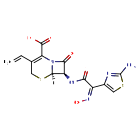
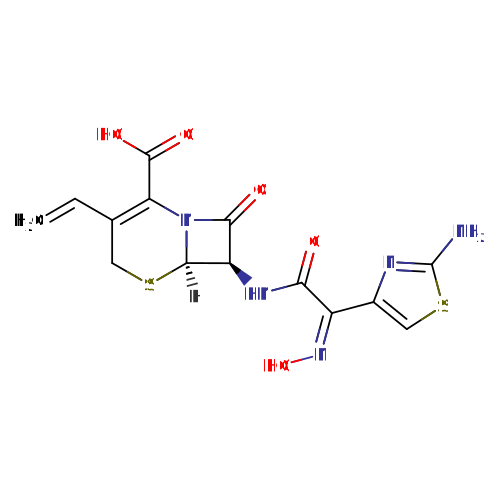
Structure for Cefdinir (DB00535)
- Weight
- Average: 395.414
Monoisotopic: 395.035809931 - Chemical Formula
- C14H13N5O5S2
- Synonyms
- (6R,7R,Z)-7-(2-(2-aminothiazol-4-yl)-2-(hydroxyimino)acetamido)-8-oxo-3-vinyl-5-thia-1-aza-bicyclo[4.2.0]oct-2-ene-2-carboxylic acid
- (6R,7R)-7-{2-(2-Amino-thiazol-4-yl)-2-[(Z)-hydroxyimino]-acetylamino}-8-oxo-3-vinyl-5-thia-1-aza-bicyclo[4.2.0]oct-2-ene-2-carboxylic acid
- Cefdinir
- Cefdinirum
- CFDN
- External IDs
- BMY-28488
- CI 983
- CI-983
- FK 482
- FK-482

Pharmacology
- Indication
Cefdinir is indicated to treat acute bacterial otitis media, acute maxillary sinusitis, community-acquired (CA) pneumonia, acute bacterial exacerbations of chronic bronchitis, pharyngitis/tonsillitis, and uncomplicated skin and skin structure infections in children and adults.14,6
The organisms susceptible to cefdinir have been listed below in addition to their associated clinical condition that may be treated with cefdinir.14 Various beta-lactamase producing organisms may be treated, as indicated in certain sections below.
Respiratory Acute bacterial exacerbations of chronic bronchitis caused by Haemophilus influenzae, Haemophilus parainfluenzae, Streptococcus pneumoniae (penicillin-susceptible only), and Moraxella catarrhalis
Community-acquired pneumonia caused by Haemophilus influenzae, Haemophilus parainfluenzae, Streptococcus pneumoniae (penicillin-susceptible only), and Moraxella catarrhalis
Ear, nose, and throat Acute bacterial otitis media caused by Haemophilus influenzae, Moraxella catarrhalis, and Streptococcus pneumoniae (penicillin-susceptible only)
Tonsillitis caused by Streptococcus pyogenes
Pharyngitis caused by Streptococcus pyogenes
Acute maxillary sinusitis caused by Haemophilus pneumoniae and Streptococcus pneumoniae (penicillin-susceptible only), and Moraxella catarrhalis
Skin and skin structure infections
Uncomplicated skin and skin structure infections caused by Staphylococcus aureus and Streptococcus pyogenes
 Reduce drug development failure ratesBuild, train, & validate machine-learning modelswith evidence-based and structured datasets.Build, train, & validate predictive machine-learning models with structured datasets.
- Associated Conditions
Indication Type Indication Combined Product Details Approval Level Age Group Patient Characteristics Dose Form Used in combination to treat Acute exacerbation of chronic bronchitis (aecb) Combination Product in combination with: Clavulanic acid (DB00766) •••••••••••• ••••••• ••••••• ••••••• ••••••• •••••••••••• Treatment of Acute exacerbation of chronic bronchitis caused by haemophilus influenza •••••••••••• ••••••••••• ••••• •••••••• •••••••••• Treatment of Acute exacerbation of chronic bronchitis caused by streptococcus pneumoniae •••••••••••• ••••••••••• ••••• •••••••• •••••••••• Treatment of Acute exacerbation of chronic bronchitis caused by haemophilus parainfluenzae •••••••••••• ••••••••••• ••••• •••••••• •••••••••• Treatment of Acute exacerbation of chronic bronchitis caused by moraxella catarrhalis •••••••••••• ••••••••••• ••••• •••••••• •••••••••• - Contraindications & Blackbox Warnings
 Prevent Adverse Drug Events TodayTap into our Clinical API for life-saving information on contraindications & blackbox warnings, population restrictions, harmful risks, & more.Avoid life-threatening adverse drug events with our Clinical API
- Pharmacodynamics
Cefdinir is a bactericidal agent that treats bacterial infections by interfering with cell wall synthesis.14 Cefdinir exerts broad-spectrum activity against a variety of gram-positive and gram-negative bacterial infections. It is effective against several beta-lactamase enzyme producing bacteria. As a result, many organisms that are resistant to other cephalosporins may be susceptible to cefdinir.3,4,17
- Mechanism of action
Five-member thiazolidine rings that make up penicillins are replaced in cephalosporins by a six-member dihydrothiazine ring, conferring greater bactericidal activity. This This 6-member ring enables cefdinir and other cephalosporins to resist inactivation by certain bacterial enzymes.12
With a mechanism similar to other beta-lactam antibiotics, the bactericidal activity of cefdinir is caused by the inhibition of cell wall synthesis via binding to penicillin-binding proteins (PBPs). Cefdinir, like other cephalosporins, penetrates the bacterial cell wall, combats inactivation by beta-lactamase enzymes, and inactivates penicillin-binding proteins.12 This interferes with the final step of transpeptidation in cell walls, eventually leading to cell lysis, which eventually leads to the death of bacteria that are susceptible to this drug.2 Cefdinir has shown affinity to penicillin protein binding proteins 2 and 3. 7,8,9 It has also been shown to inhibit transpeptidase enzymes of various bacteria, which may play a role in its bactericidal action.10,11 One in vitro study suggests that cefdinir inhibits myeloperoxidase release extracellularly.13 The impact of this potential drug target in relation to its mechanism of action is unknown.
Target Actions Organism APenicillin-binding protein 2 inhibitorNeisseria gonorrhoeae APBP3 inhibitorHaemophilus influenzae NMyeloperoxidase inhibitorHumans UPeptidoglycan transpeptidase inhibitor- Absorption
Maximal plasma cefdinir concentration can be attained between 2-4 hours after an ingested dose.14 The bioavailability of cefdinir depends on the formulation used. The estimated bioavailability of cefdinir in the capsule form is approximately 16%-21%, depending on the dose. Absolute bioavailability after the administration of a suspension of cefdinir is 25%.2. The Cmax of cefdinir is 1.60 μg/mL after a 300 mg dose with an AUC of 7.05. Cmax is 2.87 μg/mL after a 600 mg dose with an AUC of 11.14 A meal high in fat can reduce the absorption of cefdinir by up to 15%, however, this is not a cause for clinically significant changes, therefore cefdinir may be taken with or without food.14 When given with aluminum or magnesium-containing antacids or iron, cefdinir absorption may decrease. It is recommended to allow 2 hours between cefdinir administration and the administration of these agents.2
- Volume of distribution
The average volume of distribution of cefdinir in adults is about 0.35 L/kg and 0.67 L/kg in children.14,18 Another resource estimates the volume of distribution in adults at 1.56–2.09 L/kg.2 Cefdinir is found to be distributed in various tissues at clinically effective concentrations. It may be found in the epithelial lining fluid, bronchial mucosa, tonsils, sinuses, skin blister fluid, as well as the middle ear fluid.2 Third-generation cephalosporins such as cefdinir cross the blood-brain barrier and are found in high concentrations in the cerebrospinal fluid, unlike their first and second generation counterparts.12 The wide tissue distribution of cefdinir allows it to treat a variety of infections throughout the body.
- Protein binding
The plasma protein binding of cefdinir ranges from 60% to approximately 70%.2,14
- Metabolism
This drug is not significantly metabolized and its pharmacological actions are mainly attributed to the parent drug.2,14
- Route of elimination
This drug is mainly excreted by the kidneys. Dose adjustments may be required for patients with renal impairment or patients on dialysis.14 Approximately 18.4% of a 300 mg dose of cefdinir was found unchanged in the urine after a 300 mg dose was administered during a pharmacokinetic study of 21 individuals.18 A large proportion of the administered dose is excreted in the feces, although the majority is found in the urine.12
- Half-life
The average plasma elimination half-life is about 1.7 hours in adults.14 In children and healthy infants, plasma elimination half-life ranges from 1.2–1.5 hours.2
- Clearance
The renal clearance in healthy adults in a pharmacokinetic study was 2.0 (± 1.0) mL/min/kg and the clearance in patients with renal failure was lower, decreasing in proportion to the degree of renal impairment.18 Dose adjustment is required in patients with renal impairment.14
- Adverse Effects
 Improve decision support & research outcomesWith structured adverse effects data, including: blackbox warnings, adverse reactions, warning & precautions, & incidence rates. View sample adverse effects data in our new Data Library!Improve decision support & research outcomes with our structured adverse effects data.
- Toxicity
LD50 information Oral LD50 of cefdinir in the rat is >2000 mg/kg.15
There are limited data regarding cefdinir overdose in the literature. In studies of rodents, one 5600-mg/kg dose administered orally did not lead to adverse effects. Signs of toxicity and overdose caused by other beta-lactam antibiotics included nausea, vomiting, diarrhea, abdominal pain, and seizures.16
- Pathways
- Not Available
- Pharmacogenomic Effects/ADRs
- Not Available
Interactions
- Drug Interactions
- This information should not be interpreted without the help of a healthcare provider. If you believe you are experiencing an interaction, contact a healthcare provider immediately. The absence of an interaction does not necessarily mean no interactions exist.
Drug Interaction Integrate drug-drug
interactions in your softwareAbacavir Cefdinir may decrease the excretion rate of Abacavir which could result in a higher serum level. Abciximab The therapeutic efficacy of Abciximab can be decreased when used in combination with Cefdinir. Aceclofenac Aceclofenac may decrease the excretion rate of Cefdinir which could result in a higher serum level. Acemetacin Acemetacin may decrease the excretion rate of Cefdinir which could result in a higher serum level. Acenocoumarol The risk or severity of bleeding can be increased when Cefdinir is combined with Acenocoumarol. - Food Interactions
- Avoid multivalent ions. Do not take aluminum, magnesium, or iron containing products up to 2 hours before or after this medication.
- Take with or without food. The absorption is unaffected by food.
Products
 Drug product information from 10+ global regionsOur datasets provide approved product information including:dosage, form, labeller, route of administration, and marketing period.Access drug product information from over 10 global regions.
- Product Ingredients
Ingredient UNII CAS InChI Key Cefdinir monohydrate 6E7SN358SE 213978-34-8 QWUVJQSNISEEQI-KYIYMPJCSA-N - Product Images
- International/Other Brands
- Cednir (Abbott) / Cefdiel (Ranbaxy) / Cefzon (Astellas) / Duocef (Ranbaxy) / Efdinir (Incepta) / Idinir (Invision) / Kefnir (Glenmark) / Nirocef (Sel-J) / Oceph (Zuventus) / Omicef (Sel-J) / Omnicef R (Janssen) / Palacef (Renata) / Palcef (Renata) / Rtist (Lupin) / Samnir (Siam Bheasach) / Xi Fu Ni (Central Pharm) / Zefdinir (Zydus) / Zinir (FDC)
- Brand Name Prescription Products
Name Dosage Strength Route Labeller Marketing Start Marketing End Region Image Omnicef Powder, for suspension 125 mg/5mL Oral AbbVie Inc. 1997-12-04 2011-05-31 US 
Omnicef Powder, for suspension 250 mg/5mL Oral Physicians Total Care, Inc. 1997-12-04 2012-06-30 US Omnicef Capsule 300 mg/1 Oral AbbVie Inc. 1997-12-04 2011-05-31 US Omnicef Powder, for suspension 250 mg/5mL Oral AbbVie Inc. 1997-12-04 2011-05-31 US - Generic Prescription Products
Name Dosage Strength Route Labeller Marketing Start Marketing End Region Image Cefdinir Powder, for suspension 125 mg/5mL Oral Direct_Rx 2019-09-17 Not applicable US Cefdinir Capsule 300 mg/1 Oral Preferred Pharmaceuticals Inc. 2021-08-06 Not applicable US Cefdinir Powder, for suspension 250 mg/5mL Oral Aidarex Pharmaceuticals LLC 2018-08-10 Not applicable US Cefdinir Capsule 300 mg/1 Oral PD-Rx Pharmaceuticals, Inc. 2007-04-06 2019-09-24 US Cefdinir Powder, for suspension 250 mg/5mL Oral A S Medication Solutions 2010-08-06 2014-12-31 US - Mixture Products
Name Ingredients Dosage Route Labeller Marketing Start Marketing End Region Image CEFBIR PLUS 300/125 MG FILM KAPLI TABLET, 20 ADET Cefdinir (300 mg) + Clavulanate potassium (125 mg) Tablet, coated Oral TAKEDA İLAÇ SAĞLIK SAN. TİC. LTD. ŞTİ. 2015-02-24 2017-10-06 Turkey 
ELUCEF PLUS 125/62.5 MG EFERVESAN TABLET, 20 ADET Cefdinir (125 mg) + Clavulanate potassium (62.5 mg) Tablet, effervescent Oral NEUTEC İLAÇ SAN. TİC. A.Ş. 2010-11-26 Not applicable Turkey ELUCEF PLUS 125/62.5 MG SAŞE, 20 ADET Cefdinir (125 mg) + Clavulanic acid (62.5 mg) Powder Oral NEUTEC İLAÇ SAN. TİC. A.Ş. 2011-03-30 Not applicable Turkey ELUCEF PLUS 300/125 MG EFERVESAN TABLET, 20 ADET Cefdinir (300 mg) + Clavulanate potassium (125 mg) Tablet, effervescent Oral NEUTEC İLAÇ SAN. TİC. A.Ş. 2010-12-02 Not applicable Turkey ELUCEF PLUS 375/62.5 MG EFERVESAN TABLET, 20 ADET Cefdinir (375 mg) + Clavulanate potassium (62.5 mg) Tablet, effervescent Oral NEUTEC İLAÇ SAN. TİC. A.Ş. 2010-12-02 Not applicable Turkey


Categories
- ATC Codes
- J01DD15 — Cefdinir
- Drug Categories
- Anti-Bacterial Agents
- Anti-Infective Agents
- Antibacterials for Systemic Use
- Antiinfectives for Systemic Use
- Aza Compounds
- Azabicyclo Compounds
- beta Lactam Antibiotics
- beta-Lactams
- Cephalosporins
- Drugs that are Mainly Renally Excreted
- Heterocyclic Compounds, Fused-Ring
- Lactams
- OAT1/SLC22A6 Substrates
- OAT3/SLC22A8 Substrates
- Sulfur Compounds
- Thiazines
- Third-Generation Cephalosporins
- Chemical TaxonomyProvided by Classyfire
- Description
- This compound belongs to the class of organic compounds known as cephalosporins. These are compounds containing a 1,2-thiazine fused to a 2-azetidinone to for a oxo-5-thia-1-azabicyclo[4.2.0]oct-2-ene-2-carboxylic acid moiety or a derivative thereof.
- Kingdom
- Organic compounds
- Super Class
- Organoheterocyclic compounds
- Class
- Lactams
- Sub Class
- Beta lactams
- Direct Parent
- Cephalosporins
- Alternative Parents
- N-acyl-alpha amino acids and derivatives / 2,4-disubstituted thiazoles / 1,3-thiazines / 2-amino-1,3-thiazoles / Tertiary carboxylic acid amides / Ketoximes / Heteroaromatic compounds / Secondary carboxylic acid amides / Amino acids / Azetidines show 10 more
- Substituents
- 1,3-thiazol-2-amine / 2,4-disubstituted 1,3-thiazole / Alpha-amino acid or derivatives / Amine / Amino acid / Amino acid or derivatives / Aromatic heteropolycyclic compound / Azacycle / Azetidine / Azole show 24 more
- Molecular Framework
- Aromatic heteropolycyclic compounds
- External Descriptors
- cephalosporin, ketoxime (CHEBI:3485)
- Affected organisms
- Humans and other mammals
Chemical Identifiers
- UNII
- CI0FAO63WC
- CAS number
- 91832-40-5
- InChI Key
- RTXOFQZKPXMALH-GHXIOONMSA-N
- InChI
- InChI=1S/C14H13N5O5S2/c1-2-5-3-25-12-8(11(21)19(12)9(5)13(22)23)17-10(20)7(18-24)6-4-26-14(15)16-6/h2,4,8,12,24H,1,3H2,(H2,15,16)(H,17,20)(H,22,23)/b18-7-/t8-,12-/m1/s1
- IUPAC Name
- (6R,7R)-7-[(2Z)-2-(2-amino-1,3-thiazol-4-yl)-2-(N-hydroxyimino)acetamido]-3-ethenyl-8-oxo-5-thia-1-azabicyclo[4.2.0]oct-2-ene-2-carboxylic acid
- SMILES
- [H][C@]12SCC(C=C)=C(N1C(=O)[C@H]2NC(=O)C(=N/O)\C1=CSC(N)=N1)C(O)=O
References
- Synthesis Reference
Gwan Sun Lee, Young Kil Chang, Jong Pil Chun, Joon Hyung Koh, "Process for preparation of cefdinir." U.S. Patent US6093814, issued December, 1995.
US6093814- General References
- Kimura Y, Kawamura M, Owada M, Fujiwara T, Maesawa C, Hiramori K: Successful steroid therapy for cefdinir-induced acute tubulointerstitial nephritis with progressive renal failure. Intern Med. 2001 Feb;40(2):114-7. doi: 10.2169/internalmedicine.40.114. [Article]
- Perry CM, Scott LJ: Cefdinir: a review of its use in the management of mild-to-moderate bacterial infections. Drugs. 2004;64(13):1433-64. doi: 10.2165/00003495-200464130-00004. [Article]
- Guay DR: Pharmacodynamics and pharmacokinetics of cefdinir, an oral extended spectrum cephalosporin. Pediatr Infect Dis J. 2000 Dec;19(12 Suppl):S141-6. [Article]
- Paris MM, Devcich KJ: Overview of cefdinir: pharmacokinetics, safety, and efficacy in the treatment of uncomplicated skin and skin structure infections. Cutis. 2004 May;73(5 Suppl):14-8. [Article]
- Chen J, Ahmad J: Cefdinir-induced hepatotoxicity: potential hazards of inappropriate antibiotic use. J Gen Intern Med. 2008 Nov;23(11):1914-6. doi: 10.1007/s11606-008-0758-y. Epub 2008 Aug 28. [Article]
- Sader HS, Biedenbach DJ, Streit JM, Jones RN: Cefdinir activity against contemporary North American isolates from community-acquired urinary tract infections. Int J Antimicrob Agents. 2005 Jan;25(1):89-92. doi: 10.1016/j.ijantimicag.2004.07.006. [Article]
- Ochiai S, Sekiguchi S, Hayashi A, Shimadzu M, Ishiko H, Matsushima-Nishiwaki R, Kozawa O, Yasuda M, Deguchi T: Decreased affinity of mosaic-structure recombinant penicillin-binding protein 2 for oral cephalosporins in Neisseria gonorrhoeae. J Antimicrob Chemother. 2007 Jul;60(1):54-60. Epub 2007 May 31. [Article]
- Ferrer-Gonzalez E, Kaul M, Parhi AK, LaVoie EJ, Pilch DS: beta-Lactam Antibiotics with a High Affinity for PBP2 Act Synergistically with the FtsZ-Targeting Agent TXA707 against Methicillin-Resistant Staphylococcus aureus. Antimicrob Agents Chemother. 2017 Aug 24;61(9). pii: AAC.00863-17. doi: 10.1128/AAC.00863-17. Print 2017 Sep. [Article]
- Sanbongi Y, Suzuki T, Osaki Y, Senju N, Ida T, Ubukata K: Molecular evolution of beta-lactam-resistant Haemophilus influenzae: 9-year surveillance of penicillin-binding protein 3 mutations in isolates from Japan. Antimicrob Agents Chemother. 2006 Jul;50(7):2487-92. [Article]
- Kumar P, Chauhan V, Silva JRA, Lameira J, d'Andrea FB, Li SG, Ginell SL, Freundlich JS, Alves CN, Bailey S, Cohen KA, Lamichhane G: Mycobacterium abscessus l,d-Transpeptidases Are Susceptible to Inactivation by Carbapenems and Cephalosporins but Not Penicillins. Antimicrob Agents Chemother. 2017 Sep 22;61(10). pii: AAC.00866-17. doi: 10.1128/AAC.00866-17. Print 2017 Oct. [Article]
- Moore BA, Jevons S, Brammer KW: Peptidoglycan transpeptidase inhibition in Pseudomonas aeruginosa and Escherichia coli by Penicillins and Cephalosporins. Antimicrob Agents Chemother. 1979 Apr;15(4):513-7. doi: 10.1128/aac.15.4.513. [Article]
- Prober CG: Cephalosporins: an update. Pediatr Rev. 1998 Apr;19(4):118-27. doi: 10.1542/pir.19-4-118. [Article]
- Labro MT, el Benna J, Charlier N, Abdelghaffar H, Hakim J: Cefdinir (CI-983), a new oral amino-2-thiazolyl cephalosporin, inhibits human neutrophil myeloperoxidase in the extracellular medium but not the phagolysosome. J Immunol. 1994 Mar 1;152(5):2447-55. [Article]
- FDA Approved Drug Products: Omnicef (cefdinir) [Link]
- Pfizer MSDS, Cefdinir [Link]
- Omnicef [Link]
- Appropriate prescribing of beta-lactamase antibiotics [Link]
- DailyMed: Cefdinir oral capsules [Link]
- External Links
- Human Metabolome Database
- HMDB0014675
- KEGG Drug
- D00917
- KEGG Compound
- C08110
- PubChem Compound
- 6915944
- PubChem Substance
- 46505573
- ChemSpider
- 5291705
- BindingDB
- 50248190
- 25037
- ChEBI
- 3485
- ChEMBL
- CHEMBL927
- ZINC
- ZINC000003927198
- Therapeutic Targets Database
- DAP000436
- PharmGKB
- PA164768739
- RxList
- RxList Drug Page
- Drugs.com
- Drugs.com Drug Page
- PDRhealth
- PDRhealth Drug Page
- Wikipedia
- Cefdinir
- MSDS
- Download (57 KB)
Clinical Trials
- Clinical Trials
Phase Status Purpose Conditions Count 4 Completed Not Available Healthy Volunteers (HV) 3 4 Completed Treatment Acute Bacterial Sinusitis (ABS) 2 4 Completed Treatment Acute Otitis Media (AOM) 2 4 Completed Treatment Mild to Moderate Uncomplicated Skin and Skin Structure Infections 1 4 Completed Treatment Pneumonia 1
Pharmacoeconomics
- Manufacturers
- Aurobindo pharma ltd
- Lupin ltd
- Orchid healthcare
- Sandoz inc
- Teva pharmaceuticals usa
- Abbott laboratories
- Packagers
- Abbott Laboratories Ltd.
- A-S Medication Solutions LLC
- Aurobindo Pharma Ltd.
- Ceph International Corp.
- DAVA Pharmaceuticals
- Dispensing Solutions
- Diversified Healthcare Services Inc.
- Greenstone LLC
- Lupin Pharmaceuticals Inc.
- Murfreesboro Pharmaceutical Nursing Supply
- Northstar Rx LLC
- Orchid Healthcare
- PD-Rx Pharmaceuticals Inc.
- Physicians Total Care Inc.
- Redpharm Drug
- Resource Optimization and Innovation LLC
- Sandoz
- Southwood Pharmaceuticals
- Teva Pharmaceutical Industries Ltd.
- Dosage Forms
Form Route Strength Suspension Oral 250 mg/5ml Tablet, film coated 300 mg Tablet, film coated Tablet, coated Oral Powder, for suspension Oral 125 g Powder, for suspension Oral 5 g Capsule Oral 300 mg/1 Powder, for suspension Oral 125 mg/5mL Powder, for suspension Oral 250 mg/5mL Tablet, effervescent Oral 600 mg Tablet, coated 300 mg Tablet, coated Tablet, coated 600 mg Capsule Oral 300 mg Tablet, effervescent Oral Tablet, effervescent Oral 300 mg Tablet, effervescent Oral Powder Oral Powder, for solution Oral 125 mg Powder, for solution Oral 250 mg Capsule, coated Oral 500 mg Capsule, coated Oral 50000000 mg Capsule Oral Tablet, film coated 600 mg Suspension Oral 1.500 g Capsule Oral 100 mg Suspension Oral 125 mg/5ml - Prices
Unit description Cost Unit Omnicef 125 mg/5ml Suspension 100ml Bottle 101.59USD bottle Cefdinir 125 mg/5ml Suspension 60ml Bottle 53.05USD bottle Omnicef 300 mg capsule 6.31USD capsule Omnicef 300 mg omni-pac capsule 5.72USD capsule Cefdinir 300 mg capsule 5.22USD capsule DrugBank does not sell nor buy drugs. Pricing information is supplied for informational purposes only.- Patents
Patent Number Pediatric Extension Approved Expires (estimated) Region US4935507 No 1990-06-19 2011-12-04 US
Properties
- State
- Solid
- Experimental Properties
Property Value Source melting point (°C) >135 https://www.trc-canada.com/product-detail/?CatNum=C242670 boiling point (°C) 708.82 https://cymitquimica.com/products/45-1097614/213978-34-8/cefdinir/ water solubility 8.85 ± 0.87 mg/mL https://www.mdpi.com/1420-3049/22/2/280/htm logP -3.47 https://aac.asm.org/content/47/2/689 pKa 9.7 https://www.chemicalbook.com/ChemicalProductProperty_US_CB7483101.aspx - Predicted Properties
Property Value Source Water Solubility 0.0878 mg/mL ALOGPS logP 0.02 ALOGPS logP -0.89 Chemaxon logS -3.6 ALOGPS pKa (Strongest Acidic) 2.73 Chemaxon pKa (Strongest Basic) 3.61 Chemaxon Physiological Charge -1 Chemaxon Hydrogen Acceptor Count 8 Chemaxon Hydrogen Donor Count 4 Chemaxon Polar Surface Area 158.21 Å2 Chemaxon Rotatable Bond Count 5 Chemaxon Refractivity 94.34 m3·mol-1 Chemaxon Polarizability 36.14 Å3 Chemaxon Number of Rings 3 Chemaxon Bioavailability 1 Chemaxon Rule of Five Yes Chemaxon Ghose Filter No Chemaxon Veber's Rule No Chemaxon MDDR-like Rule No Chemaxon - Predicted ADMET Features
Property Value Probability Human Intestinal Absorption - 0.7692 Blood Brain Barrier - 0.9659 Caco-2 permeable - 0.7205 P-glycoprotein substrate Non-substrate 0.5185 P-glycoprotein inhibitor I Non-inhibitor 0.9298 P-glycoprotein inhibitor II Non-inhibitor 0.9165 Renal organic cation transporter Non-inhibitor 0.8919 CYP450 2C9 substrate Non-substrate 0.8676 CYP450 2D6 substrate Non-substrate 0.8203 CYP450 3A4 substrate Non-substrate 0.5821 CYP450 1A2 substrate Non-inhibitor 0.7603 CYP450 2C9 inhibitor Non-inhibitor 0.8303 CYP450 2D6 inhibitor Non-inhibitor 0.894 CYP450 2C19 inhibitor Non-inhibitor 0.8044 CYP450 3A4 inhibitor Non-inhibitor 0.8436 CYP450 inhibitory promiscuity Low CYP Inhibitory Promiscuity 0.953 Ames test Non AMES toxic 0.6686 Carcinogenicity Non-carcinogens 0.8339 Biodegradation Not ready biodegradable 0.9925 Rat acute toxicity 1.8801 LD50, mol/kg Not applicable hERG inhibition (predictor I) Weak inhibitor 0.9878 hERG inhibition (predictor II) Non-inhibitor 0.8964
Spectra
- Mass Spec (NIST)
- Not Available
- Spectra
- Chromatographic Properties
Collision Cross Sections (CCS)
Adduct CCS Value (Å2) Source type Source [M-H]- 204.5422026 predictedDarkChem Lite v0.1.0 [M-H]- 201.9678026 predictedDarkChem Lite v0.1.0 [M-H]- 184.04483 predictedDeepCCS 1.0 (2019) [M+H]+ 204.1108026 predictedDarkChem Lite v0.1.0 [M+H]+ 201.9001026 predictedDarkChem Lite v0.1.0 [M+H]+ 186.44038 predictedDeepCCS 1.0 (2019) [M+Na]+ 204.7441026 predictedDarkChem Lite v0.1.0 [M+Na]+ 192.64024 predictedDeepCCS 1.0 (2019)
Targets

- Kind
- Protein
- Organism
- Neisseria gonorrhoeae
- Pharmacological action
- Yes
- Actions
- Inhibitor
- General Function
- Penicillin binding
- Specific Function
- Synthesis of cross-linked peptidoglycan from the lipid intermediates.
- Gene Name
- penA
- Uniprot ID
- P08149
- Uniprot Name
- Penicillin-binding protein 2
- Molecular Weight
- 63649.54 Da
References
- Ochiai S, Sekiguchi S, Hayashi A, Shimadzu M, Ishiko H, Matsushima-Nishiwaki R, Kozawa O, Yasuda M, Deguchi T: Decreased affinity of mosaic-structure recombinant penicillin-binding protein 2 for oral cephalosporins in Neisseria gonorrhoeae. J Antimicrob Chemother. 2007 Jul;60(1):54-60. Epub 2007 May 31. [Article]
- Ferrer-Gonzalez E, Kaul M, Parhi AK, LaVoie EJ, Pilch DS: beta-Lactam Antibiotics with a High Affinity for PBP2 Act Synergistically with the FtsZ-Targeting Agent TXA707 against Methicillin-Resistant Staphylococcus aureus. Antimicrob Agents Chemother. 2017 Aug 24;61(9). pii: AAC.00863-17. doi: 10.1128/AAC.00863-17. Print 2017 Sep. [Article]
- Kind
- Protein
- Organism
- Haemophilus influenzae
- Pharmacological action
- Yes
- Actions
- Inhibitor
- General Function
- Penicillin binding
- Specific Function
- Not Available
- Gene Name
- pbp3
- Uniprot ID
- Q60FT7
- Uniprot Name
- PBP3
- Molecular Weight
- 67295.025 Da
References
- Sanbongi Y, Suzuki T, Osaki Y, Senju N, Ida T, Ubukata K: Molecular evolution of beta-lactam-resistant Haemophilus influenzae: 9-year surveillance of penicillin-binding protein 3 mutations in isolates from Japan. Antimicrob Agents Chemother. 2006 Jul;50(7):2487-92. [Article]
- Ferrer-Gonzalez E, Kaul M, Parhi AK, LaVoie EJ, Pilch DS: beta-Lactam Antibiotics with a High Affinity for PBP2 Act Synergistically with the FtsZ-Targeting Agent TXA707 against Methicillin-Resistant Staphylococcus aureus. Antimicrob Agents Chemother. 2017 Aug 24;61(9). pii: AAC.00863-17. doi: 10.1128/AAC.00863-17. Print 2017 Sep. [Article]
- Tristram S, Jacobs MR, Appelbaum PC: Antimicrobial resistance in Haemophilus influenzae. Clin Microbiol Rev. 2007 Apr;20(2):368-89. doi: 10.1128/CMR.00040-06. [Article]
- Kind
- Protein
- Organism
- Humans
- Pharmacological action
- No
- Actions
- Inhibitor
- General Function
- Peroxidase activity
- Specific Function
- Part of the host defense system of polymorphonuclear leukocytes. It is responsible for microbicidal activity against a wide range of organisms. In the stimulated PMN, MPO catalyzes the production o...
- Gene Name
- MPO
- Uniprot ID
- P05164
- Uniprot Name
- Myeloperoxidase
- Molecular Weight
- 83867.71 Da
References
- Labro MT, el Benna J, Charlier N, Abdelghaffar H, Hakim J: Cefdinir (CI-983), a new oral amino-2-thiazolyl cephalosporin, inhibits human neutrophil myeloperoxidase in the extracellular medium but not the phagolysosome. J Immunol. 1994 Mar 1;152(5):2447-55. [Article]
References
- Kumar P, Chauhan V, Silva JRA, Lameira J, d'Andrea FB, Li SG, Ginell SL, Freundlich JS, Alves CN, Bailey S, Cohen KA, Lamichhane G: Mycobacterium abscessus l,d-Transpeptidases Are Susceptible to Inactivation by Carbapenems and Cephalosporins but Not Penicillins. Antimicrob Agents Chemother. 2017 Sep 22;61(10). pii: AAC.00866-17. doi: 10.1128/AAC.00866-17. Print 2017 Oct. [Article]
- Moore BA, Jevons S, Brammer KW: Peptidoglycan transpeptidase inhibition in Pseudomonas aeruginosa and Escherichia coli by Penicillins and Cephalosporins. Antimicrob Agents Chemother. 1979 Apr;15(4):513-7. doi: 10.1128/aac.15.4.513. [Article]
Transporters
- Kind
- Protein
- Organism
- Humans
- Pharmacological action
- Unknown
- Actions
- Inhibitor
- General Function
- Symporter activity
- Specific Function
- Sodium-ion dependent, high affinity carnitine transporter. Involved in the active cellular uptake of carnitine. Transports one sodium ion with one molecule of carnitine. Also transports organic cat...
- Gene Name
- SLC22A5
- Uniprot ID
- O76082
- Uniprot Name
- Solute carrier family 22 member 5
- Molecular Weight
- 62751.08 Da
References
- Ganapathy ME, Huang W, Rajan DP, Carter AL, Sugawara M, Iseki K, Leibach FH, Ganapathy V: beta-lactam antibiotics as substrates for OCTN2, an organic cation/carnitine transporter. J Biol Chem. 2000 Jan 21;275(3):1699-707. [Article]
- Tein I: Carnitine transport: pathophysiology and metabolism of known molecular defects. J Inherit Metab Dis. 2003;26(2-3):147-69. [Article]
- HMDB database, Cefdinir [Link]
- Kind
- Protein
- Organism
- Humans
- Pharmacological action
- Unknown
- Actions
- SubstrateInhibitor
- General Function
- Proton-dependent oligopeptide secondary active transmembrane transporter activity
- Specific Function
- Proton-coupled intake of oligopeptides of 2 to 4 amino acids with a preference for dipeptides. May constitute a major route for the absorption of protein digestion end-products.
- Gene Name
- SLC15A1
- Uniprot ID
- P46059
- Uniprot Name
- Solute carrier family 15 member 1
- Molecular Weight
- 78805.265 Da
References
- Ganapathy ME, Prasad PD, Mackenzie B, Ganapathy V, Leibach FH: Interaction of anionic cephalosporins with the intestinal and renal peptide transporters PEPT 1 and PEPT 2. Biochim Biophys Acta. 1997 Mar 13;1324(2):296-308. [Article]
- Terada T, Saito H, Mukai M, Inui K: Recognition of beta-lactam antibiotics by rat peptide transporters, PEPT1 and PEPT2, in LLC-PK1 cells. Am J Physiol. 1997 Nov;273(5 Pt 2):F706-11. [Article]
- Tsuji A: Transporter-mediated Drug Interactions. Drug Metab Pharmacokinet. 2002;17(4):253-74. [Article]
- Kind
- Protein
- Organism
- Humans
- Pharmacological action
- Unknown
- Actions
- Inhibitor
- General Function
- Peptide:proton symporter activity
- Specific Function
- Proton-coupled intake of oligopeptides of 2 to 4 amino acids with a preference for dipeptides.
- Gene Name
- SLC15A2
- Uniprot ID
- Q16348
- Uniprot Name
- Solute carrier family 15 member 2
- Molecular Weight
- 81782.77 Da
References
- Ganapathy ME, Prasad PD, Mackenzie B, Ganapathy V, Leibach FH: Interaction of anionic cephalosporins with the intestinal and renal peptide transporters PEPT 1 and PEPT 2. Biochim Biophys Acta. 1997 Mar 13;1324(2):296-308. [Article]
- Terada T, Saito H, Mukai M, Inui K: Recognition of beta-lactam antibiotics by rat peptide transporters, PEPT1 and PEPT2, in LLC-PK1 cells. Am J Physiol. 1997 Nov;273(5 Pt 2):F706-11. [Article]
- Kind
- Protein
- Organism
- Humans
- Pharmacological action
- Unknown
- Actions
- Substrate
- Curator comments
- Data in the literature regarding this transporter action for this drug are limited.
- General Function
- Sodium-independent organic anion transmembrane transporter activity
- Specific Function
- Involved in the renal elimination of endogenous and exogenous organic anions. Functions as organic anion exchanger when the uptake of one molecule of organic anion is coupled with an efflux of one ...
- Gene Name
- SLC22A6
- Uniprot ID
- Q4U2R8
- Uniprot Name
- Solute carrier family 22 member 6
- Molecular Weight
- 61815.78 Da
References
- Kim YC, Kim IB, Noh CK, Quach HP, Yoon IS, Chow ECY, Kim M, Jin HE, Cho KH, Chung SJ, Pang KS, Maeng HJ: Effects of 1alpha,25-dihydroxyvitamin D3 , the natural vitamin D receptor ligand, on the pharmacokinetics of cefdinir and cefadroxil, organic anion transporter substrates, in rat. J Pharm Sci. 2014 Nov;103(11):3793-3805. doi: 10.1002/jps.24195. Epub 2014 Sep 29. [Article]
- Kind
- Protein
- Organism
- Humans
- Pharmacological action
- Unknown
- Actions
- Substrate
- Curator comments
- Data in the literature regarding this transporter action for this drug are limited.
- General Function
- Sodium-independent organic anion transmembrane transporter activity
- Specific Function
- Plays an important role in the excretion/detoxification of endogenous and exogenous organic anions, especially from the brain and kidney. Involved in the transport basolateral of steviol, fexofenad...
- Gene Name
- SLC22A8
- Uniprot ID
- Q8TCC7
- Uniprot Name
- Solute carrier family 22 member 8
- Molecular Weight
- 59855.585 Da
References
- Wang H, Sun P, Wang C, Meng Q, Liu Z, Huo X, Sun H, Ma X, Peng J, Liu K: Pharmacokinetic changes of cefdinir and cefditoren and its molecular mechanisms in acute kidney injury in rats. J Pharm Pharmacol. 2018 Nov;70(11):1503-1512. doi: 10.1111/jphp.12994. Epub 2018 Jul 25. [Article]
- Kim YC, Kim IB, Noh CK, Quach HP, Yoon IS, Chow ECY, Kim M, Jin HE, Cho KH, Chung SJ, Pang KS, Maeng HJ: Effects of 1alpha,25-dihydroxyvitamin D3 , the natural vitamin D receptor ligand, on the pharmacokinetics of cefdinir and cefadroxil, organic anion transporter substrates, in rat. J Pharm Sci. 2014 Nov;103(11):3793-3805. doi: 10.1002/jps.24195. Epub 2014 Sep 29. [Article]
- Ueo H, Motohashi H, Katsura T, Inui K: Human organic anion transporter hOAT3 is a potent transporter of cephalosporin antibiotics, in comparison with hOAT1. Biochem Pharmacol. 2005 Oct 1;70(7):1104-13. doi: 10.1016/j.bcp.2005.06.024. [Article]

Drug created at June 13, 2005 13:24 / Updated at March 03, 2024 02:27