Identification
- Summary
Linezolid is an oxazolidinone antibiotic used to treat infections by susceptible strains of aerobic Gram-positive bacteria.
- Brand Names
- Zyvox, Zyvoxam
- Generic Name
- Linezolid
- DrugBank Accession Number
- DB00601
- Background
Linezolid is a synthetic antibiotic which is used for the treatment of infections caused by aerobic Gram-positive bacteria. Its effects are bacteriostatic against both enterococci and staphylococci and bactericidal against most isolates of streptococci.9 Linezolid exerts its antibacterial activity by inhibiting the initiation of bacterial protein synthesis - more specifically, it binds to the 23S ribosomal RNA of the 50S subunit7,8 and, in doing so, prevents the formation of the 70S initiation complex which is essential for bacterial reproduction.
Linezolid was initially approved in 2000 and was the first member of the oxazolidinone antibiotic class.3 A second member of this class, tedizolid, was approved by the FDA in 2014 and is considered generally more effective and tolerable than its predecessor.
- Type
- Small Molecule
- Groups
- Approved, Investigational
- Structure
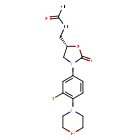
Structure for Linezolid (DB00601)

- Weight
- Average: 337.3461
Monoisotopic: 337.143784348 - Chemical Formula
- C16H20FN3O4
- Synonyms
- Linezolid
- Linezolide
- Linezolidum
- N-(((S)-3-(3-Fluoro-4-morpholinophenyl)-2-oxo-5-oxazolidinyl)methyl)acetamide
- External IDs
- INF 0026
- PNU 100766
- U 100
- U 100766
- U 766
- U-100,766
- U-100766

Pharmacology
- Indication
Linezolid is indicated in adults and children for the treatment of infections caused by susceptible Gram-positive bacteria, including nosocomial pneumonia, community-acquired pneumonia, skin and skin structure infections, and vancomycin-resistant Enterococcus faecium infections.9 Examples of susceptible bacteria include Staphylococcus aureus, Streptococcus pneumoniae, Streptococcus pyogenes, and Streptococcus agalactiae.9
Linezolid is not indicated for the treatment of Gram-negative infections, nor has it been evaluated for use longer than 28 days.9
 Reduce drug development failure ratesBuild, train, & validate machine-learning modelswith evidence-based and structured datasets.Build, train, & validate predictive machine-learning models with structured datasets.
- Associated Conditions
Indication Type Indication Combined Product Details Approval Level Age Group Patient Characteristics Dose Form Treatment of Community acquired pneumonia (cap) caused by staphylococcus aureus infections •••••••••••• Treatment of Community acquired pneumonia caused by susceptible strains of streptococcus pneumoniae •••••••••••• Treatment of Community acquired pneumonia caused by susceptible strains of streptococcus pneumoniae •••••••••••• Treatment of Complicated skin and skin structure infection caused by staphylococcus aureus infections •••••••••••• Treatment of Complicated skin and skin structure infection caused by streptococcus agalactiae infection •••••••••••• - Contraindications & Blackbox Warnings
 Prevent Adverse Drug Events TodayTap into our Clinical API for life-saving information on contraindications & blackbox warnings, population restrictions, harmful risks, & more.Avoid life-threatening adverse drug events with our Clinical API
- Pharmacodynamics
Linezolid is an oxazolidinone antibacterial agent effective against most strains of aerobic Gram-positive bacteria and mycobacteria. It appears to be bacteriostatic against both staphylococci and enterococci and bactericidal against most isolates of streptococci.9 Linezolid has shown some in vitro activity against Gram-negative and anaerobic bacteria but is not considered efficacious against these organisms.9
Linezolid is a reversible and non-selective inhibitor of monoamine oxidase (MAO) enzymes and can therefore contribute to the development of serotonin syndrome when administered alongside serotonergic agents such as selective serotonin re-uptake inhibitors (SSRIs) or tricyclic antidepressants (TCAs).9 Linezolid should not be used for the treatment of catheter-related bloodstream infections or catheter-site infections, as the risk of therapy appears to outweigh its benefits under these circumstances.9
- Mechanism of action
Linezolid exerts its antibacterial effects by interfering with bacterial protein translation.2 It binds to a site on the bacterial 23S ribosomal RNA of the 50S subunit and prevents the formation of a functional 70S initiation complex, which is essential for bacterial reproduction, thereby preventing bacteria from dividing.9
Point mutations in the bacterial 23S rRNA can lead to linezolid resistance, and the development of linezolid-resistant Enterococcus faecium and Staphylococcus aureus have been documented during its clinical use.9 As antimicrobial susceptibility patterns are geographically distinct, local antibiograms should be consulted to ensure adequate coverage of relevant pathogens prior to use.
Target Actions Organism A23S ribosomal RNA inhibitorEnteric bacteria and other eubacteria - Absorption
Linezolid is extensively absorbed following oral administration and has an absolute bioavailability of approximately 100%.9 Maximum plasma concentrations are reached within approximately 1 to 2 hours after dosing (Tmax) and range from 8.1-12.9 mcg/mL after single doses and 11.0-21.2 mcg/mL after multiple dosing.9
The absorption of orally administered linezolid is not significantly affected by co-administration with food and it may therefore be given without regard to the timing of meals.9
- Volume of distribution
At steady-state, the volume of distribution of linezolid in healthy adults is approximately 40-50 liters.9
- Protein binding
Plasma protein binding of linezolid is approximately 31% - primarily to serum albumin6 - and is concentration-dependent.9
- Metabolism
Linezolid is primarily metabolized to two inactive metabolites: an aminoethoxyacetic acid metabolite (PNU-142300) and a hydroxyethyl glycine metabolite (PNU-142586), both of which are the result of morpholine ring oxidation.9,5 The hydroxyethyl glycine metabolite - the most abundant of the two metabolites11 - is likely generated via non-enzymatic processes, though further detail has not been elucidated.9,5
While the specific enzymes responsible for the biotransformation of linezolid are unclear, it does not appear to be subject to metabolism via the CYP450 enzyme system, nor does it meaningfully inhibit or induce these enzymes.11 Linezolid is, however, a reversible and non-selective inhibitor of monoamine oxidase enzymes.9
Hover over products below to view reaction partners
- Route of elimination
Urinary excretion is the primary means by which linezolid and its metabolic products are excreted. Following the administration of a radiolabeled dose of linezolid under steady-state conditions, approximately 84% of radioactivity was recovered in the urine,5 of which approximately 30% is unchanged parent drug, 40% is the hydroxyethyl glycine metabolite, and 10% is the aminoethoxyacetic acid metabolite.9 Fecal elimination is comparatively minor, with no parent drug observed in feces and only 6% and 3% of an administered dose found in the feces as the hydroxyethyl glycine metabolite and the aminoethoxyacetic acid metabolite, respectively.9
- Half-life
The elimination half-life is estimated to be between 5 and 7 hours.11
- Clearance
Total clearance of linezolid is estimated to be 100-200 mL/min, the majority of which appears to be non-renal.11 Mean renal clearance is approximately 40 mL/min, which suggests net tubular reabsorption,9 while non-renal clearance is estimated to account for roughly 65% of total clearance,9 or 70-150 mL/min on average.11 Variability in linezolid clearance is high, particularly for non-renal clearance.11
- Adverse Effects
 Improve decision support & research outcomesWith structured adverse effects data, including: blackbox warnings, adverse reactions, warning & precautions, & incidence rates. View sample adverse effects data in our new Data Library!Improve decision support & research outcomes with our structured adverse effects data.
- Toxicity
Clinical signs of overdosage observed in rats were decreased activity and ataxia (2000 mg/kg/day) and in dogs were vomiting and tremors (3000 mg/kg/day).9 Treatment of overdose should involve symptomatic and supportive measures and may include hemodialysis if clinically necessary.
- Pathways
- Not Available
- Pharmacogenomic Effects/ADRs
- Not Available
Interactions
- Drug Interactions
- This information should not be interpreted without the help of a healthcare provider. If you believe you are experiencing an interaction, contact a healthcare provider immediately. The absence of an interaction does not necessarily mean no interactions exist.
Drug Interaction Integrate drug-drug
interactions in your softwareAbaloparatide Linezolid may increase the orthostatic hypotensive activities of Abaloparatide. Abatacept The risk or severity of adverse effects can be increased when Linezolid is combined with Abatacept. Abciximab The risk or severity of bleeding and hemorrhage can be increased when Linezolid is combined with Abciximab. Acamprosate The excretion of Acamprosate can be decreased when combined with Linezolid. Acarbose Linezolid may increase the hypoglycemic activities of Acarbose. - Food Interactions
- Avoid tyramine-containing foods and supplements. Avoid food containing high amounts of tyramine (>100mg). Tyramine-containing foods include cheese, red wine, fava beans, pickled foods, cured foods, and alcoholic beverages.
- Take with or without food. Co-administration with food does not significantly alter the pharmacokinetics of linezolid.
Products
 Drug product information from 10+ global regionsOur datasets provide approved product information including:dosage, form, labeller, route of administration, and marketing period.Access drug product information from over 10 global regions.
- Product Images
- International/Other Brands
- Antizolid (Verisfield) / Linosept (Orion) / Linozid (Orion) / Lizbid (Abbott) / Lizemox (Molekule) / Lizolid (Glenmark) / Xolid (Corona) / Zenix (Hemofarm) / Zizolid (Biofarma) / Zodlin (FDC) / Zolinid (Teva) / Zyvoxid (Pfizer)
- Brand Name Prescription Products
Name Dosage Strength Route Labeller Marketing Start Marketing End Region Image Linezolid Tablet 600 mg Oral Panda Pharmaceuticals Inc. Not applicable Not applicable Canada 
Linezolid Injection, solution 2 mg/1mL Intravenous Hospira, Inc. 2015-06-18 Not applicable US 
Linezolid Injection Solution 2 mg / mL Intravenous Eugia Pharma Inc. Not applicable Not applicable Canada Linezolid Injection Solution 2 mg / mL Intravenous Jamp Pharma Corporation 2019-12-30 Not applicable Canada Linezolid Injection Solution 2 mg / mL Intravenous Sandoz Canada Incorporated Not applicable Not applicable Canada - Generic Prescription Products
Name Dosage Strength Route Labeller Marketing Start Marketing End Region Image Apo-linezolid Tablet 600 mg Oral Apotex Corporation 2014-08-19 Not applicable Canada Jamp Linezolid Tablet 600 mg Oral Jamp Pharma Corporation 2022-10-31 Not applicable Canada Linezolid Tablet, film coated 600 mg/1 Oral Teva Pharmaceuticals USA Inc 2015-06-22 2018-07-31 US 
Linezolid Tablet 600 mg/1 Oral Lupin Pharmaceuticals,Inc. 2016-08-22 Not applicable US Linezolid Injection, solution 600 mg/300mL Intravenous Hikma Pharmaceuticals USA Inc. 2022-12-27 Not applicable US


Categories
- ATC Codes
- J01XX08 — Linezolid
- Drug Categories
- Acetamides
- Acetates
- Acids, Acyclic
- Agents that produce hypertension
- Agents that reduce seizure threshold
- Amides
- Anti-Bacterial Agents
- Anti-Infective Agents
- Antibacterials for Systemic Use
- Antidepressive Agents
- Antiinfectives for Systemic Use
- Central Nervous System Depressants
- Enzyme Inhibitors
- Immunosuppressive Agents
- Monoamine Oxidase A Inhibitors for interaction with Monoamine Oxidase A substrates
- Monoamine Oxidase Inhibitors
- Myelosuppressive Agents
- OAT1/SLC22A6 inhibitors
- OAT3/SLC22A8 Inhibitors
- Oxazolidinone Antibacterial
- Oxazolidinones
- Protein Synthesis Inhibitors
- Serotonergic Drugs Shown to Increase Risk of Serotonin Syndrome
- Serotonin Agents
- Serotonin Modulators
- Chemical TaxonomyProvided by Classyfire
- Description
- This compound belongs to the class of organic compounds known as phenylmorpholines. These are aromatic compounds containing a morpholine ring and a benzene ring linked to each other through a CC or a CN bond.
- Kingdom
- Organic compounds
- Super Class
- Organoheterocyclic compounds
- Class
- Oxazinanes
- Sub Class
- Morpholines
- Direct Parent
- Phenylmorpholines
- Alternative Parents
- Aniline and substituted anilines / Dialkylarylamines / Fluorobenzenes / Oxazolidinones / Aryl fluorides / Acetamides / Carbamate esters / Secondary carboxylic acid amides / Organic carbonic acids and derivatives / Dialkyl ethers show 7 more
- Substituents
- Acetamide / Amine / Amino acid or derivatives / Aniline or substituted anilines / Aromatic heteromonocyclic compound / Aryl fluoride / Aryl halide / Azacycle / Benzenoid / Carbamic acid ester show 26 more
- Molecular Framework
- Aromatic heteromonocyclic compounds
- External Descriptors
- organofluorine compound, acetamides, morpholines, oxazolidinone (CHEBI:63607)
- Affected organisms
- Streptococcus pyogenes
- Streptococcus pneumoniae
- Streptococcus agalactiae
- Staphylococcus aureus
- Enterococcus faecalis
- Staphylococcus epidermidis
- Enterococcus faecium
- Streptococcus viridans
- Staphylococcus haemolyticus
- Gram positive bacteria
Chemical Identifiers
- UNII
- ISQ9I6J12J
- CAS number
- 165800-03-3
- InChI Key
- TYZROVQLWOKYKF-ZDUSSCGKSA-N
- InChI
- InChI=1S/C16H20FN3O4/c1-11(21)18-9-13-10-20(16(22)24-13)12-2-3-15(14(17)8-12)19-4-6-23-7-5-19/h2-3,8,13H,4-7,9-10H2,1H3,(H,18,21)/t13-/m0/s1
- IUPAC Name
- N-{[(5S)-3-[3-fluoro-4-(morpholin-4-yl)phenyl]-2-oxo-1,3-oxazolidin-5-yl]methyl}acetamide
- SMILES
- CC(=O)NC[C@H]1CN(C(=O)O1)C1=CC(F)=C(C=C1)N1CCOCC1
References
- Synthesis Reference
Brickner SJ, Hutchinson DK, Barbachyn MR, Manninen PR, Ulanowicz DA, Garmon SA, Grega KC, Hendges SK, Toops DS, Ford CW, Zurenko GE: Synthesis and antibacterial activity of U-100592 and U-100766, two oxazolidinone antibacterial agents for the potential treatment of multidrug-resistant gram-positive bacterial infections. J Med Chem. 1996 Feb 2;39(3):673-9. doi: 10.1021/jm9509556.
US5688792- General References
- Park IN, Hong SB, Oh YM, Kim MN, Lim CM, Lee SD, Koh Y, Kim WS, Kim DS, Kim WD, Shim TS: Efficacy and tolerability of daily-half dose linezolid in patients with intractable multidrug-resistant tuberculosis. J Antimicrob Chemother. 2006 Sep;58(3):701-4. Epub 2006 Jul 19. [Article]
- Azzouz A, Preuss CV: Linezolid . [Article]
- Leach KL, Brickner SJ, Noe MC, Miller PF: Linezolid, the first oxazolidinone antibacterial agent. Ann N Y Acad Sci. 2011 Mar;1222:49-54. doi: 10.1111/j.1749-6632.2011.05962.x. [Article]
- Dryden MS: Linezolid pharmacokinetics and pharmacodynamics in clinical treatment. J Antimicrob Chemother. 2011 May;66 Suppl 4:iv7-iv15. doi: 10.1093/jac/dkr072. [Article]
- Slatter JG, Stalker DJ, Feenstra KL, Welshman IR, Bruss JB, Sams JP, Johnson MG, Sanders PE, Hauer MJ, Fagerness PE, Stryd RP, Peng GW, Shobe EM: Pharmacokinetics, metabolism, and excretion of linezolid following an oral dose of [(14)C]linezolid to healthy human subjects. Drug Metab Dispos. 2001 Aug;29(8):1136-45. [Article]
- Stalker DJ, Jungbluth GL: Clinical pharmacokinetics of linezolid, a novel oxazolidinone antibacterial. Clin Pharmacokinet. 2003;42(13):1129-40. doi: 10.2165/00003088-200342130-00004. [Article]
- Colca JR, McDonald WG, Waldon DJ, Thomasco LM, Gadwood RC, Lund ET, Cavey GS, Mathews WR, Adams LD, Cecil ET, Pearson JD, Bock JH, Mott JE, Shinabarger DL, Xiong L, Mankin AS: Cross-linking in the living cell locates the site of action of oxazolidinone antibiotics. J Biol Chem. 2003 Jun 13;278(24):21972-9. Epub 2003 Apr 10. [Article]
- Roger C, Roberts JA, Muller L: Clinical Pharmacokinetics and Pharmacodynamics of Oxazolidinones. Clin Pharmacokinet. 2018 May;57(5):559-575. doi: 10.1007/s40262-017-0601-x. [Article]
- FDA Approved Drug Products: Zyvox (linezolid) for intravenous or oral administration [Link]
- Health Canada Product Monograph: Linezolid oral tablets [Link]
- FDA Pharmacology and Biopharmaceutics Review: Linezolid [Link]
- External Links
- Human Metabolome Database
- HMDB0014739
- KEGG Drug
- D00947
- KEGG Compound
- C08146
- PubChem Compound
- 441401
- PubChem Substance
- 46504452
- ChemSpider
- 390139
- BindingDB
- 50116067
- 190376
- ChEBI
- 63607
- ChEMBL
- CHEMBL126
- ZINC
- ZINC000002008866
- Therapeutic Targets Database
- DAP000398
- PharmGKB
- PA450233
- PDBe Ligand
- ZLD
- RxList
- RxList Drug Page
- Drugs.com
- Drugs.com Drug Page
- PDRhealth
- PDRhealth Drug Page
- Wikipedia
- Linezolid
- PDB Entries
- 3cpw / 3dll / 4k7q / 4wfa / 5nz0 / 7s1g / 7s1h
- FDA label
- Download (106 KB)
- MSDS
- Download (43.7 KB)
Clinical Trials
- Clinical Trials
Phase Status Purpose Conditions Count 4 Completed Other Pneumonia 1 4 Completed Treatment Diabetes Mellitus 1 4 Completed Treatment Gram Positive Bacterial Infections / Skin and Connective Tissue Diseases 1 4 Completed Treatment Methicillin Resistant Staphylococcus Aureus (MRSA) 2 4 Completed Treatment Methicillin Resistant Staphylococcus Aureus (MRSA) / Skin/Soft Tissue Infections 1
Pharmacoeconomics
- Manufacturers
- Pharmacia and upjohn co
- Packagers
- Fresenius Kabi AB
- Lake Erie Medical and Surgical Supply
- Murfreesboro Pharmaceutical Nursing Supply
- Pfizer Inc.
- Pharmacia Inc.
- Dosage Forms
Form Route Strength Solution 2 mg/mL Solution Parenteral 0.200 g Tablet Oral 400.000 mg Tablet, film coated Oral 600.00 mg Tablet Oral Tablet, film coated Oral Injection Intravenous Solution Intravenous 200.000 mg Solution Intravenous 600 mg Injection, solution Intravenous 2 mg/1mL Injection, solution Intravenous 200 mg/100mL Injection, solution Intravenous 600 mg/300mL Powder Not applicable 1 kg/1kg Powder, for suspension Oral 100 mg/5mL Tablet Oral 600 mg/1 Solution Parenteral Injection, solution Solution Parenteral 2 mg/ml Solution Intravenous 600 mg / 300 mL Injection, solution 2 MG/ML Solution Intravenous 2 mg/ml Granule, for solution Oral Injection, solution Intravenous Injection, solution Parenteral 2 MG/ML Tablet, delayed release Oral 600 mg Solution Intravenous 200000 mg/mL Solution Intravenous 600.0 mg Tablet Oral 600.000 mg Solution Intravenous 200.00 mg Solution Parenteral 200.000 mg Tablet Oral 600.0 mg Solution Intravenous 200 mg Granule, for suspension Oral 100 mg/5mL Injection Intravenous 600 mg/300mL Injection, solution Intravenous 400 mg/200mL Suspension Oral 100 mg/5mL Tablet, film coated Oral 400 mg/1 Tablet, film coated Oral 600 mg/1 Solution 2 mg/1ml Tablet, film coated Oral 600 mg Granule Oral 20 MG/ML For solution Intravenous Granule, for suspension Oral 20 mg/ml Injection Intravenous 2 mg/ml Powder, for suspension Oral 100 mg / 5 mL Solution Intravenous 2 mg / mL Tablet Oral 600 mg Injection, solution Intravenous 2 mg/ml Tablet, film coated Oral 400 mg Granule, for suspension Oral Powder, for suspension Oral 100 mg Tablet Oral 400 mg Solution Intravenous 2 mg Granule Oral 100 MG/5ML Tablet, coated Oral 600 mg Injection, solution 2 mg/1ml - Prices
Unit description Cost Unit Zyvox 600 mg tablet 93.81USD tablet Zyvox 200 mg/100 ml iv soln 0.6USD ml DrugBank does not sell nor buy drugs. Pricing information is supplied for informational purposes only.- Patents
Patent Number Pediatric Extension Approved Expires (estimated) Region US5688792 No 1997-11-18 2014-11-18 US CA2168560 No 2001-08-14 2014-08-16 Canada US6559305 Yes 2003-05-06 2021-07-29 US US6514529 Yes 2003-02-04 2021-09-15 US
Properties
- State
- Solid
- Experimental Properties
Property Value Source melting point (°C) 154.5 https://pdf.hres.ca/dpd_pm/00045786.PDF water solubility 3 mg/mL https://www.accessdata.fda.gov/drugsatfda_docs/nda/2000/21130_Zyvox_biopharmr.pdf logP 0.9 Not Available pKa 1.8 https://www.accessdata.fda.gov/drugsatfda_docs/nda/2000/21130_Zyvox_biopharmr.pdf - Predicted Properties
Property Value Source Water Solubility 1.44 mg/mL ALOGPS logP 0.61 ALOGPS logP 0.64 Chemaxon logS -2.4 ALOGPS pKa (Strongest Acidic) 14.85 Chemaxon pKa (Strongest Basic) -1.2 Chemaxon Physiological Charge 0 Chemaxon Hydrogen Acceptor Count 5 Chemaxon Hydrogen Donor Count 1 Chemaxon Polar Surface Area 71.11 Å2 Chemaxon Rotatable Bond Count 4 Chemaxon Refractivity 84.47 m3·mol-1 Chemaxon Polarizability 34.06 Å3 Chemaxon Number of Rings 3 Chemaxon Bioavailability 1 Chemaxon Rule of Five Yes Chemaxon Ghose Filter Yes Chemaxon Veber's Rule No Chemaxon MDDR-like Rule No Chemaxon - Predicted ADMET Features
Property Value Probability Human Intestinal Absorption + 1.0 Blood Brain Barrier + 0.9363 Caco-2 permeable + 0.8866 P-glycoprotein substrate Substrate 0.5881 P-glycoprotein inhibitor I Inhibitor 0.7599 P-glycoprotein inhibitor II Non-inhibitor 0.6478 Renal organic cation transporter Non-inhibitor 0.7469 CYP450 2C9 substrate Non-substrate 0.7898 CYP450 2D6 substrate Non-substrate 0.9116 CYP450 3A4 substrate Substrate 0.5904 CYP450 1A2 substrate Non-inhibitor 0.7811 CYP450 2C9 inhibitor Non-inhibitor 0.8174 CYP450 2D6 inhibitor Non-inhibitor 0.8112 CYP450 2C19 inhibitor Non-inhibitor 0.5664 CYP450 3A4 inhibitor Non-inhibitor 0.7563 CYP450 inhibitory promiscuity High CYP Inhibitory Promiscuity 0.5544 Ames test Non AMES toxic 0.6839 Carcinogenicity Non-carcinogens 0.8916 Biodegradation Not ready biodegradable 0.9895 Rat acute toxicity 2.4938 LD50, mol/kg Not applicable hERG inhibition (predictor I) Weak inhibitor 0.7883 hERG inhibition (predictor II) Inhibitor 0.6297
Spectra
- Mass Spec (NIST)
- Not Available
- Spectra
- Chromatographic Properties
Collision Cross Sections (CCS)
Adduct CCS Value (Å2) Source type Source [M-H]- 198.4435916 predictedDarkChem Lite v0.1.0 [M-H]- 171.04094 predictedDeepCCS 1.0 (2019) [M+H]+ 199.6098916 predictedDarkChem Lite v0.1.0 [M+H]+ 173.44148 predictedDeepCCS 1.0 (2019) [M+Na]+ 198.5571916 predictedDarkChem Lite v0.1.0 [M+Na]+ 180.59407 predictedDeepCCS 1.0 (2019)
Targets

References
- Sinclair A, Arnold C, Woodford N: Rapid detection and estimation by pyrosequencing of 23S rRNA genes with a single nucleotide polymorphism conferring linezolid resistance in Enterococci. Antimicrob Agents Chemother. 2003 Nov;47(11):3620-2. [Article]
- Meka VG, Pillai SK, Sakoulas G, Wennersten C, Venkataraman L, DeGirolami PC, Eliopoulos GM, Moellering RC Jr, Gold HS: Linezolid resistance in sequential Staphylococcus aureus isolates associated with a T2500A mutation in the 23S rRNA gene and loss of a single copy of rRNA. J Infect Dis. 2004 Jul 15;190(2):311-7. Epub 2004 Jun 9. [Article]
- Zhu W, Tenover FC, Limor J, Lonsway D, Prince D, Dunne WM Jr, Patel JB: Use of pyrosequencing to identify point mutations in domain V of 23S rRNA genes of linezolid-resistant Staphylococcus aureus and Staphylococcus epidermidis. Eur J Clin Microbiol Infect Dis. 2007 Mar;26(3):161-5. [Article]
- Colca JR, McDonald WG, Waldon DJ, Thomasco LM, Gadwood RC, Lund ET, Cavey GS, Mathews WR, Adams LD, Cecil ET, Pearson JD, Bock JH, Mott JE, Shinabarger DL, Xiong L, Mankin AS: Cross-linking in the living cell locates the site of action of oxazolidinone antibiotics. J Biol Chem. 2003 Jun 13;278(24):21972-9. Epub 2003 Apr 10. [Article]
- FDA Approved Drug Products: Zyvox (linezolid) for intravenous or oral administration [Link]
- FDA Pharmacology and Biopharmaceutics Review: Linezolid [Link]
Enzymes
- Kind
- Protein
- Organism
- Humans
- Pharmacological action
- No
- Actions
- Inhibitor
- General Function
- Primary amine oxidase activity
- Specific Function
- Catalyzes the oxidative deamination of biogenic and xenobiotic amines and has important functions in the metabolism of neuroactive and vasoactive amines in the central nervous system and peripheral...
- Gene Name
- MAOB
- Uniprot ID
- P27338
- Uniprot Name
- Amine oxidase [flavin-containing] B
- Molecular Weight
- 58762.475 Da
References
- Stevens DL, Dotter B, Madaras-Kelly K: A review of linezolid: the first oxazolidinone antibiotic. Expert Rev Anti Infect Ther. 2004 Feb;2(1):51-9. [Article]
- Taylor JJ, Wilson JW, Estes LL: Linezolid and serotonergic drug interactions: a retrospective survey. Clin Infect Dis. 2006 Jul 15;43(2):180-7. Epub 2006 Jun 9. [Article]
- FDA Approved Drug Products: Zyvox (linezolid) for intravenous or oral administration [Link]
- FDA Pharmacology and Biopharmaceutics Review: Linezolid [Link]
- Kind
- Protein
- Organism
- Humans
- Pharmacological action
- No
- Actions
- Inhibitor
- General Function
- Serotonin binding
- Specific Function
- Catalyzes the oxidative deamination of biogenic and xenobiotic amines and has important functions in the metabolism of neuroactive and vasoactive amines in the central nervous system and peripheral...
- Gene Name
- MAOA
- Uniprot ID
- P21397
- Uniprot Name
- Amine oxidase [flavin-containing] A
- Molecular Weight
- 59681.27 Da
References
- Stevens DL, Dotter B, Madaras-Kelly K: A review of linezolid: the first oxazolidinone antibiotic. Expert Rev Anti Infect Ther. 2004 Feb;2(1):51-9. [Article]
- Taylor JJ, Wilson JW, Estes LL: Linezolid and serotonergic drug interactions: a retrospective survey. Clin Infect Dis. 2006 Jul 15;43(2):180-7. Epub 2006 Jun 9. [Article]
- FDA Approved Drug Products: Zyvox (linezolid) for intravenous or oral administration [Link]
- FDA Pharmacology and Biopharmaceutics Review: Linezolid [Link]
Carriers
- Kind
- Protein
- Organism
- Humans
- Pharmacological action
- No
- Actions
- Binder
- General Function
- Toxic substance binding
- Specific Function
- Serum albumin, the main protein of plasma, has a good binding capacity for water, Ca(2+), Na(+), K(+), fatty acids, hormones, bilirubin and drugs. Its main function is the regulation of the colloid...
- Gene Name
- ALB
- Uniprot ID
- P02768
- Uniprot Name
- Serum albumin
- Molecular Weight
- 69365.94 Da
References
- Stalker DJ, Jungbluth GL: Clinical pharmacokinetics of linezolid, a novel oxazolidinone antibacterial. Clin Pharmacokinet. 2003;42(13):1129-40. doi: 10.2165/00003088-200342130-00004. [Article]
Transporters
- Kind
- Protein
- Organism
- Humans
- Pharmacological action
- No
- Actions
- Inhibitor
- General Function
- Sodium-independent organic anion transmembrane transporter activity
- Specific Function
- Involved in the renal elimination of endogenous and exogenous organic anions. Functions as organic anion exchanger when the uptake of one molecule of organic anion is coupled with an efflux of one ...
- Gene Name
- SLC22A6
- Uniprot ID
- Q4U2R8
- Uniprot Name
- Solute carrier family 22 member 6
- Molecular Weight
- 61815.78 Da
References
- Parvez MM, Kaisar N, Shin HJ, Jung JA, Shin JG: Inhibitory Interaction Potential of 22 Antituberculosis Drugs on Organic Anion and Cation Transporters of the SLC22A Family. Antimicrob Agents Chemother. 2016 Oct 21;60(11):6558-6567. doi: 10.1128/AAC.01151-16. Print 2016 Nov. [Article]
- Kind
- Protein
- Organism
- Humans
- Pharmacological action
- No
- Actions
- Inhibitor
- General Function
- Sodium-independent organic anion transmembrane transporter activity
- Specific Function
- Plays an important role in the excretion/detoxification of endogenous and exogenous organic anions, especially from the brain and kidney. Involved in the transport basolateral of steviol, fexofenad...
- Gene Name
- SLC22A8
- Uniprot ID
- Q8TCC7
- Uniprot Name
- Solute carrier family 22 member 8
- Molecular Weight
- 59855.585 Da
References
- Parvez MM, Kaisar N, Shin HJ, Jung JA, Shin JG: Inhibitory Interaction Potential of 22 Antituberculosis Drugs on Organic Anion and Cation Transporters of the SLC22A Family. Antimicrob Agents Chemother. 2016 Oct 21;60(11):6558-6567. doi: 10.1128/AAC.01151-16. Print 2016 Nov. [Article]

Drug created at June 13, 2005 13:24 / Updated at April 26, 2024 00:45