Identification
- Summary
Fludrocortisone is a mineralocorticoid used to treat adrenocortical insufficiency and salt-losing adrenogenital syndrome.
- Brand Names
- Florinef
- Generic Name
- Fludrocortisone
- DrugBank Accession Number
- DB00687
- Background
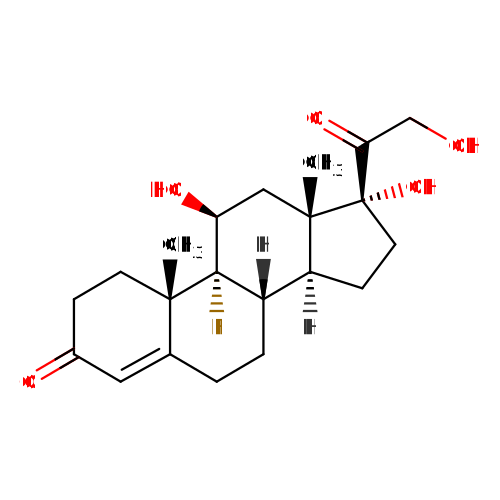
Fludrocortisone is a synthetic mineralocorticoid used in conjunction with hydrocortisone to replace missing endogenous corticosteroids in patients with adrenal insufficiency.9,11 It is functionally similar to aldosterone, the body's primary endogenous mineralocorticoid, and is structurally analogous to cortisol, differing only by a fluorine atom at the 9-position of the steroid structure - this fluorination is thought to be crucial to fludrocortisone's significant mineralocorticoid potency.7
- Type
- Small Molecule
- Groups
- Approved, Investigational
- Structure
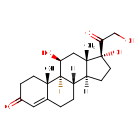
Structure for Fludrocortisone (DB00687)
- Weight
- Average: 380.4504
Monoisotopic: 380.199902243 - Chemical Formula
- C21H29FO5
- Synonyms
- 9alpha-Fluorocortisol
- Fludrocortison
- Fludrocortisona
- Fludrocortisone
- Fludrocortisonum
- Fluohydrocortisone
- External IDs
- StC 1400
- U 5963

Pharmacology
- Indication
Fludrocortisone is indicated as partial replacement therapy for primary or secondary adrenocortical insufficiency in Addison's disease. It is also indicated for the treatment of salt-losing androgenital syndrome.14
 Reduce drug development failure ratesBuild, train, & validate machine-learning modelswith evidence-based and structured datasets.Build, train, & validate predictive machine-learning models with structured datasets.
- Associated Conditions
Indication Type Indication Combined Product Details Approval Level Age Group Patient Characteristics Dose Form Used in combination to treat Otitis externa Combination Product in combination with: Polymyxin B (DB00781), Lidocaine (DB00281), Neomycin (DB00994), Furaltadone (DB16567) •••••••••••• •••••• Used in combination to treat Otitis media (om) Combination Product in combination with: Polymyxin B (DB00781), Lidocaine (DB00281), Furaltadone (DB16567), Neomycin (DB00994) •••••••••••• •••••• Management of Primary adrenocortical insufficiency •••••••••••• Management of Secondary adrenocortical insufficiency •••••••••••• Treatment of Salt-losing androgenital syndrome •••••••••••• - Contraindications & Blackbox Warnings
 Prevent Adverse Drug Events TodayTap into our Clinical API for life-saving information on contraindications & blackbox warnings, population restrictions, harmful risks, & more.Avoid life-threatening adverse drug events with our Clinical API
- Pharmacodynamics
Fludrocortisone is a synthetic mineralocorticoid used to replace endogenous aldosterone in conditions resulting in missing or inadequate endogenous synthesis.14,15 It acts on the kidneys to increase both sodium reabsorption and potassium excretion.13,11 As its effects are exerted at the transcriptional level, a single dose of fludrocortisone may work over the course of 1-2 days15 despite a relatively short plasma half-life.6,9,10 Like other systemic corticosteroids, fludrocortisone may mask signs of infection by depressing the normal immune response - infections occurring during fludrocortisone therapy should be promptly treated with appropriate antimicrobial therapy.14
- Mechanism of action
The main endogenous mineralocorticoid, aldosterone, is produced in the zona glomerulosa of the adrenal cortex - it acts on mineralocorticoid receptors in the kidneys to increase sodium reabsorption and potassium excretion, which in turn helps to regulate plasma electrolyte composition and blood pressure.13 In conditions of adrenal insufficiency, such as Addison’s disease, aldosterone is not produced (or is produced in insufficient quantities) and must be replaced by exogenous mineralocorticoids such as fludrocortisone.11
Fludrocortisone binding to mineralocorticoid receptors causes alterations to DNA transcription and translation of proteins that result in an increased density of sodium channels on the apical side of renal tubule cells and an increased density of Na+-K+-ATPase on the basolateral side.13 These increases in receptor density result in increased plasma sodium concentrations, and thus increased blood pressure, as well as a decreased plasma potassium concentration. Fludrocortisone may also exert a direct effect on plasma sodium levels via action at the Na+-H+ exchanger found in the apical membrane of renal tubule cells.13
Fludrocortisone also acts on glucocorticoid receptors, albeit with a much lower affinity - the glucocorticoid potency of fludrocortisone is approximately 5-10 times that of endogenous cortisol, whereas its mineralocorticoid potency is 200-400 times greater.7
Target Actions Organism AMineralocorticoid receptor agonistHumans UGlucocorticoid receptor agonistHumans - Absorption
Absorption of fludrocortisone following oral administration is rapid and complete.16,9,10,6 Pharmacokinetic studies have estimated the Cmax to be 0.0012 to 0.20 μg/L with a Tmax between 0.5 and 2 hours.9,10 The AUC0-∞ of fludrocortisone after oral administration has been variably estimated to be between 1.22 to 3.07 μg.h/L.9,10
- Volume of distribution
The apparent volume of distribution of fludrocortisone is 80-85 L.9,6 Distribution into CSF appears minimal - the observed ratio of CSF drug concentration versus plasma drug concentration is 1:6.16
- Protein binding
Fludrocortisone is 70-80% protein bound in plasma, mostly to albumin and corticosteroid-binding globulin.16,10
- Metabolism
There exists is a paucity of information regarding the specific metabolic pathway in vivo of fludrocortisone. The 9α-fluorination of fludrocortisone appears to greatly simplify its metabolism as compared to other corticosteroids8 - while oxidation via 11-hydroxysteroid dehydrogenases has been observed,3 this reaction is greatly impaired as the fluorine moiety appears to confer "protection" from 11β-oxidation by these enzymes. The reduction in 11β-oxidation is thought to be one of the reasons behind fludrocortisone's profound mineralocorticoid potency.7 An in vitro study generated only two metabolites following incubation in human liver microsomes and cytosol, namely 20β-dihydrofluorocortisol and 6β-hydroxyfluorocortisol, and did not explore in detail the potential enzymes responsible for this reaction.8
Given that fludrocortisone is a corticosteroid, a class of medications known to be metabolized by the CYP3A family,12 and is not recommended to be given with strong inhibitors/inducers of CYP3A,15 it is likely that the CYP3A family of enzymes contributes in some way to its metabolism (though this information does not appear to have been specifically elucidated for fludrocortisone).
Hover over products below to view reaction partners
- Route of elimination
Approximately 80% of an administered dose of fludrocortisone shows up in the urine, with the other 20% likely eliminated via fecal or biliary route.16,10
- Half-life
The plasma half-life of fludrocortisone has been variably reported to be between 1-3.5 hours,6,9,10 though prescribing information gives an approximate half-life of 18-36 hours.15
- Clearance
Population pharmacokinetics have estimated the plasma clearance of fludrocortisone to be 40.8 L/h.9
- Adverse Effects
 Improve decision support & research outcomesWith structured adverse effects data, including: blackbox warnings, adverse reactions, warning & precautions, & incidence rates. View sample adverse effects data in our new Data Library!Improve decision support & research outcomes with our structured adverse effects data.
- Toxicity
The oral LD50 of fludrocortisone in rats is >1g/kg.17 Acute overdosage of fludrocortisone is likely to result in symptoms consistent with its adverse effect profile. Patients receiving a single large dose should be treated with plenty of water by mouth and should undergo monitoring of serum electrolytes, particularly potassium and sodium, and be treated appropriately for any developing imbalances.15,16
- Pathways
- Not Available
- Pharmacogenomic Effects/ADRs
- Not Available
Interactions
- Drug Interactions
- This information should not be interpreted without the help of a healthcare provider. If you believe you are experiencing an interaction, contact a healthcare provider immediately. The absence of an interaction does not necessarily mean no interactions exist.
Drug Interaction Integrate drug-drug
interactions in your softwareAbametapir The serum concentration of Fludrocortisone can be increased when it is combined with Abametapir. Abatacept The risk or severity of adverse effects can be increased when Fludrocortisone is combined with Abatacept. Acarbose The risk or severity of hyperglycemia can be increased when Fludrocortisone is combined with Acarbose. Aceclofenac The risk or severity of gastrointestinal irritation can be increased when Fludrocortisone is combined with Aceclofenac. Acemetacin The risk or severity of gastrointestinal irritation can be increased when Fludrocortisone is combined with Acemetacin. - Food Interactions
- Limit salt intake. Excessive intake of salt can result in hypertension and edema.
Products
 Drug product information from 10+ global regionsOur datasets provide approved product information including:dosage, form, labeller, route of administration, and marketing period.Access drug product information from over 10 global regions.
- Product Ingredients
Ingredient UNII CAS InChI Key Fludrocortisone acetate V47IF0PVH4 514-36-3 SYWHXTATXSMDSB-GSLJADNHSA-N - Product Images


- International/Other Brands
- Adixone (Genopharm) / Astonin (Merck) / Cortineff (Polfa Pabianice) / Florinef Acetaat (Bristol-Myers Squibb) / Florinefe (Bristol-Myers Squibb) / Fludrocortison (Bristol-Myers Squibb) / Lonikan (Merck)
- Brand Name Prescription Products
Name Dosage Strength Route Labeller Marketing Start Marketing End Region Image Florinef Tablet 0.1 mg Oral Paladin Labs Inc 1995-12-31 Not applicable Canada 
Florinef Acetate Tablet 0.1 mg/1 Oral Physicians Total Care, Inc. 1993-11-02 2011-05-31 US 
Florinef Acetate Tablet .1 mg/1 Oral Monarch Pharmaceuticals, Inc. 1955-08-18 2007-09-20 US Florinef Acetate 0.1mg Tablet .1 mg / tab Oral Squibb Canada Inc., Division Of Bristol Myers Squibb Canada Inc. 1958-12-31 1997-08-14 Canada Truemed Group LLC Tablet 0.1 mg/0.1mg Oral Truemed Group LLC 2022-09-17 Not applicable US - Generic Prescription Products
Name Dosage Strength Route Labeller Marketing Start Marketing End Region Image Fludrocortisone Acetate Tablet 0.1 mg/1 Oral Cardinal Health 107, LLC 2008-05-09 Not applicable US Fludrocortisone Acetate Tablet 0.1 mg/1 Oral bryant ranch prepack 2003-02-14 Not applicable US Fludrocortisone Acetate Tablet 0.1 mg/1 Oral Physicians Total Care, Inc. 2005-10-06 Not applicable US 
Fludrocortisone Acetate Tablet 0.1 mg/1 Oral bryant ranch prepack 2003-02-14 Not applicable US Fludrocortisone Acetate Tablet 0.1 mg/1 Oral Amneal Pharmaceuticals NY LLC 2002-03-18 Not applicable US - Mixture Products
Name Ingredients Dosage Route Labeller Marketing Start Marketing End Region Image OTOPAIN Fludrocortisone acetate (1 mg/ml) + Lidocaine hydrochloride (40 mg/ml) + Neomycin sulfate (5 mg/ml) + Polymyxin B sulfate (10000 iU/ml) Solution / drops Auricular (otic) Interbat 2018-03-09 2027-04-05 Indonesia 
OTOZAMBON Fludrocortisone (0.1 G/100ML) + Furaltadone (0.45 G/100ML) + Lidocaine (4 G/100ML) + Neomycin (0.375 G/100ML) + Polymyxin B (1 MU/100ML) Liquid Auricular (otic) บริษัท เสริมมิตรพาณิชย์ จำกัด จำกัด 1980-01-01 2020-09-29 Thailand 
ออโตสามธง Fludrocortisone (0.1 G/100ML) + Furaltadone (0.45 G/100ML) + Lidocaine (4 G/100ML) + Neomycin (0.375 G/100ML) + Polymyxin B (1 MU/100ML) Liquid Auricular (otic) บริษัท เอส.เอ็ม.ฟาร์มาซูติคอล จำกัด จำกัด 1990-09-17 Not applicable Thailand เอส.เอ็ม. ออโต Fludrocortisone (0.1 G/100ML) + Furaltadone (0.45 G/100ML) + Lidocaine (4 G/100ML) + Neomycin (0.375 G/100ML) + Polymyxin B (1 MU/100ML) Liquid Auricular (otic) บริษัท เอส.เอ็ม.ฟาร์มาซูติคอล จำกัด 2001-02-14 Not applicable Thailand - Unapproved/Other Products
Name Ingredients Dosage Route Labeller Marketing Start Marketing End Region Image Florinef Acetate Fludrocortisone acetate (0.1 mg/1) Tablet Oral Physicians Total Care, Inc. 1993-11-02 2011-05-31 US


Categories
- ATC Codes
- S02CA07 — Fludrocortisone and antiinfectives
- S02CA — Corticosteroids and antiinfectives in combination
- S02C — CORTICOSTEROIDS AND ANTIINFECTIVES IN COMBINATION
- S02 — OTOLOGICALS
- S — SENSORY ORGANS
- S01CA — Corticosteroids and antiinfectives in combination
- S01C — ANTIINFLAMMATORY AGENTS AND ANTIINFECTIVES IN COMBINATION
- S01 — OPHTHALMOLOGICALS
- S — SENSORY ORGANS
- H02AA — Mineralocorticoids
- H02A — CORTICOSTEROIDS FOR SYSTEMIC USE, PLAIN
- H02 — CORTICOSTEROIDS FOR SYSTEMIC USE
- H — SYSTEMIC HORMONAL PREPARATIONS, EXCL. SEX HORMONES AND INSULINS
- Drug Categories
- 11-Hydroxycorticosteroids
- 17-Hydroxycorticosteroids
- Adrenal Cortex Hormones
- Adrenals
- Anti-Inflammatory Agents
- Corticosteroids
- Corticosteroids for Systemic Use
- Corticosteroids for Systemic Use, Plain
- Cytochrome P-450 CYP3A Substrates
- Cytochrome P-450 CYP3A4 Substrates
- Cytochrome P-450 Substrates
- Fused-Ring Compounds
- Hormones
- Hormones, Hormone Substitutes, and Hormone Antagonists
- Hydroxycorticosteroids
- Hyperglycemia-Associated Agents
- Immunosuppressive Agents
- Mineralocorticoids
- Pregnenes
- Steroids
- Systemic Hormonal Preparations, Excl. Sex Hormones and Insulins
- Chemical TaxonomyProvided by Classyfire
- Description
- This compound belongs to the class of organic compounds known as 21-hydroxysteroids. These are steroids carrying a hydroxyl group at the 21-position of the steroid backbone.
- Kingdom
- Organic compounds
- Super Class
- Lipids and lipid-like molecules
- Class
- Steroids and steroid derivatives
- Sub Class
- Hydroxysteroids
- Direct Parent
- 21-hydroxysteroids
- Alternative Parents
- Gluco/mineralocorticoids, progestogins and derivatives / 20-oxosteroids / 11-beta-hydroxysteroids / 17-hydroxysteroids / 3-oxo delta-4-steroids / Halogenated steroids / Delta-4-steroids / Cyclohexenones / Tertiary alcohols / Alpha-hydroxy ketones show 8 more
- Substituents
- 11-beta-hydroxysteroid / 11-hydroxysteroid / 17-hydroxysteroid / 20-oxosteroid / 21-hydroxysteroid / 3-oxo-delta-4-steroid / 3-oxosteroid / 9-halo-steroid / Alcohol / Aliphatic homopolycyclic compound show 24 more
- Molecular Framework
- Aliphatic homopolycyclic compounds
- External Descriptors
- 11beta-hydroxy steroid, 17alpha-hydroxy steroid, 3-oxo Delta(4)-steroid, 20-oxo steroid, fluorinated steroid, mineralocorticoid, 21-hydroxy steroid, C21-steroid (CHEBI:50885) / C21 steroids (gluco/mineralocorticoids, progestogens) and derivatives (C07004) / C21 steroids (gluco/mineralocorticoids, progestogins) and derivatives (LMST02030103)
- Affected organisms
- Humans and other mammals
Chemical Identifiers
- UNII
- U0476M545B
- CAS number
- 127-31-1
- InChI Key
- AAXVEMMRQDVLJB-BULBTXNYSA-N
- InChI
- InChI=1S/C21H29FO5/c1-18-7-5-13(24)9-12(18)3-4-15-14-6-8-20(27,17(26)11-23)19(14,2)10-16(25)21(15,18)22/h9,14-16,23,25,27H,3-8,10-11H2,1-2H3/t14-,15-,16-,18-,19-,20-,21-/m0/s1
- IUPAC Name
- (1R,3aS,3bS,9aS,9bR,10S,11aS)-9b-fluoro-1,10-dihydroxy-1-(2-hydroxyacetyl)-9a,11a-dimethyl-1H,2H,3H,3aH,3bH,4H,5H,7H,8H,9H,9aH,9bH,10H,11H,11aH-cyclopenta[a]phenanthren-7-one
- SMILES
- [H][C@@]12CC[C@](O)(C(=O)CO)[C@@]1(C)C[C@H](O)[C@@]1(F)[C@@]2([H])CCC2=CC(=O)CC[C@]12C
References
- Synthesis Reference
U.S. Patent 2,957,013
- General References
- Agarwal MK, Coupry F, Philippe M: Physiological activity and receptor binding of 9 alpha fluorohydrocortisone. Biochem Biophys Res Commun. 1977 Sep 23;78(2):747-53. doi: 10.1016/0006-291x(77)90242-x. [Article]
- Lan NC, Graham B, Bartter FC, Baxter JD: Binding of steroids to mineralocorticoid receptors: implications for in vivo occupancy by glucocorticoids. J Clin Endocrinol Metab. 1982 Feb;54(2):332-42. doi: 10.1210/jcem-54-2-332. [Article]
- Diederich S, Eigendorff E, Burkhardt P, Quinkler M, Bumke-Vogt C, Rochel M, Seidelmann D, Esperling P, Oelkers W, Bahr V: 11beta-hydroxysteroid dehydrogenase types 1 and 2: an important pharmacokinetic determinant for the activity of synthetic mineralo- and glucocorticoids. J Clin Endocrinol Metab. 2002 Dec;87(12):5695-701. doi: 10.1210/jc.2002-020970. [Article]
- Abboud R, Akil M, Charcosset C, Greige-Gerges H: Interaction of glucocorticoids and progesterone derivatives with human serum albumin. Chem Phys Lipids. 2017 Oct;207(Pt B):271-278. doi: 10.1016/j.chemphyslip.2017.04.007. Epub 2017 Apr 21. [Article]
- SANDBERG AA, SLAUNWHITE WR Jr, CARTER AC: Transcortin: a corticosteroid-binding protein of plasma. III. The effects of various steroids. J Clin Invest. 1960 Dec;39:1914-26. doi: 10.1172/JCI104216. [Article]
- Mitsky VP, Workman RJ, Nicholson WE, Vernikos J, Robertson RM, Robertson D: A sensitive radioimmunoassay for fludrocortisone in human plasma. Steroids. 1994 Sep;59(9):555-8. doi: 10.1016/0039-128x(94)90074-4. [Article]
- Oelkers W, Buchen S, Diederich S, Krain J, Muhme S, Schoneshofer M: Impaired renal 11 beta-oxidation of 9 alpha-fluorocortisol: an explanation for its mineralocorticoid potency. J Clin Endocrinol Metab. 1994 Apr;78(4):928-32. [Article]
- Abel SM, Back DJ, Maggs JL, Park BK: Cortisol metabolism by human liver in vitro--IV. Metabolism of 9 alpha-fluorocortisol by human liver microsomes and cytosol. J Steroid Biochem Mol Biol. 1993 Dec;46(6):833-9. doi: 10.1016/0960-0760(93)90326-r. [Article]
- Hamitouche N, Comets E, Ribot M, Alvarez JC, Bellissant E, Laviolle B: Population Pharmacokinetic-Pharmacodynamic Model of Oral Fludrocortisone and Intravenous Hydrocortisone in Healthy Volunteers. AAPS J. 2017 May;19(3):727-735. doi: 10.1208/s12248-016-0041-9. Epub 2017 Jan 12. [Article]
- Banda J, Lakshmanan R, Vvs SP, Gudla SP, Prudhivi R: A highly sensitive method for the quantification of fludrocortisone in human plasma using ultra-high-performance liquid chromatography tandem mass spectrometry and its pharmacokinetic application. Biomed Chromatogr. 2015 Aug;29(8):1213-9. doi: 10.1002/bmc.3410. Epub 2015 Jan 22. [Article]
- Charmandari E, Nicolaides NC, Chrousos GP: Adrenal insufficiency. Lancet. 2014 Jun 21;383(9935):2152-67. doi: 10.1016/S0140-6736(13)61684-0. Epub 2014 Feb 4. [Article]
- Rendic S: Summary of information on human CYP enzymes: human P450 metabolism data. Drug Metab Rev. 2002 Feb-May;34(1-2):83-448. [Article]
- 32. (2012). In Rang and Dale's Pharmacology (7th ed.). Edinburgh: Elsevier/Churchill Livingstone. [ISBN:978-0-7020-3471-8]
- DPD Approved Drugs: Florinef [Link]
- MedSafe NZ: Florinef [Link]
- UK Approved Drugs: Fludrocortisone [Link]
- CaymanChem: Fludrocortisone acetate MSDS [Link]
- External Links
- Human Metabolome Database
- HMDB0014825
- KEGG Drug
- D07967
- KEGG Compound
- C07004
- PubChem Compound
- 31378
- PubChem Substance
- 46508616
- ChemSpider
- 29111
- 4452
- ChEBI
- 50885
- ChEMBL
- CHEMBL1201388
- ZINC
- ZINC000004097304
- Therapeutic Targets Database
- DAP001105
- PharmGKB
- PA164743961
- Guide to Pharmacology
- GtP Drug Page
- PDBe Ligand
- ZK5
- RxList
- RxList Drug Page
- Drugs.com
- Drugs.com Drug Page
- Wikipedia
- Fludrocortisone
- PDB Entries
- 1gs4
Clinical Trials
- Clinical Trials
Phase Status Purpose Conditions Count 4 Active Not Recruiting Treatment Congenital Adrenal Hyperplasia (CAH) 1 4 Completed Prevention Septic Shock 1 4 Completed Treatment Syncope, Vasovagal, Neurally-Mediated 1 4 Recruiting Treatment Neurogenic Orthostatic Hypotension (nOH) 1 4 Unknown Status Diagnostic Hypertension 1
Pharmacoeconomics
- Manufacturers
- King pharmaceuticals inc
- Barr laboratories inc
- Impax laboratories inc
- Packagers
- Amerisource Health Services Corp.
- Avkare Incorporated
- Barr Pharmaceuticals
- Bristol-Myers Squibb Co.
- Cardinal Health
- E.R. Squibb and Sons LLC
- Global Pharmaceuticals
- Heartland Repack Services LLC
- Impax Laboratories Inc.
- Kaiser Foundation Hospital
- Medisca Inc.
- Physicians Total Care Inc.
- Resource Optimization and Innovation LLC
- Vangard Labs Inc.
- Dosage Forms
Form Route Strength Tablet Oral .1 mg/1 Tablet Oral .1 mg / tab Tablet Oral 0.1 mg/1 Solution / drops Auricular (otic) Liquid Auricular (otic) Tablet Oral 0.1 mg/0.1mg Tablet Oral 0.1 mg - Prices
Unit description Cost Unit Fludrocortisone acetate powder 73.14USD g Florinef acetate 0.1 mg tablet 1.49USD tablet Fludrocortisone Acetate 0.1 mg tablet 0.81USD tablet Fludrocortisone 0.1 mg tablet 0.75USD tablet Florinef 0.1 mg Tablet 0.25USD tablet DrugBank does not sell nor buy drugs. Pricing information is supplied for informational purposes only.- Patents
- Not Available
Properties
- State
- Solid
- Experimental Properties
- Not Available
- Predicted Properties
Property Value Source Water Solubility 0.224 mg/mL ALOGPS logP 1.35 ALOGPS logP 1.32 Chemaxon logS -3.2 ALOGPS pKa (Strongest Acidic) 12.55 Chemaxon pKa (Strongest Basic) -3.3 Chemaxon Physiological Charge 0 Chemaxon Hydrogen Acceptor Count 5 Chemaxon Hydrogen Donor Count 3 Chemaxon Polar Surface Area 94.83 Å2 Chemaxon Rotatable Bond Count 2 Chemaxon Refractivity 96.93 m3·mol-1 Chemaxon Polarizability 39.53 Å3 Chemaxon Number of Rings 4 Chemaxon Bioavailability 1 Chemaxon Rule of Five Yes Chemaxon Ghose Filter Yes Chemaxon Veber's Rule No Chemaxon MDDR-like Rule No Chemaxon - Predicted ADMET Features
Property Value Probability Human Intestinal Absorption + 0.9927 Blood Brain Barrier + 0.9731 Caco-2 permeable + 0.8415 P-glycoprotein substrate Substrate 0.7911 P-glycoprotein inhibitor I Non-inhibitor 0.8385 P-glycoprotein inhibitor II Non-inhibitor 0.9351 Renal organic cation transporter Non-inhibitor 0.7774 CYP450 2C9 substrate Non-substrate 0.8799 CYP450 2D6 substrate Non-substrate 0.909 CYP450 3A4 substrate Substrate 0.7138 CYP450 1A2 substrate Non-inhibitor 0.9306 CYP450 2C9 inhibitor Non-inhibitor 0.9023 CYP450 2D6 inhibitor Non-inhibitor 0.9201 CYP450 2C19 inhibitor Non-inhibitor 0.9285 CYP450 3A4 inhibitor Non-inhibitor 0.8772 CYP450 inhibitory promiscuity Low CYP Inhibitory Promiscuity 0.903 Ames test Non AMES toxic 0.8895 Carcinogenicity Non-carcinogens 0.9479 Biodegradation Not ready biodegradable 0.9964 Rat acute toxicity 2.1686 LD50, mol/kg Not applicable hERG inhibition (predictor I) Weak inhibitor 0.9591 hERG inhibition (predictor II) Inhibitor 0.5213
Spectra
- Mass Spec (NIST)
- Not Available
- Spectra
Spectrum Spectrum Type Splash Key Predicted GC-MS Spectrum - GC-MS Predicted GC-MS splash10-0c11-2923000000-2aa4b6ff5d62976e9db5 Predicted MS/MS Spectrum - 10V, Positive (Annotated) Predicted LC-MS/MS splash10-0006-0009000000-20dbead22f786ba4e1d2 Predicted MS/MS Spectrum - 10V, Negative (Annotated) Predicted LC-MS/MS splash10-002b-0009000000-d5df7f0ebcc9f21cc864 Predicted MS/MS Spectrum - 20V, Positive (Annotated) Predicted LC-MS/MS splash10-03di-0359000000-45a2f0b486160d8bdb78 Predicted MS/MS Spectrum - 20V, Negative (Annotated) Predicted LC-MS/MS splash10-0002-1009000000-2d5b34feb5786e3db7ce Predicted MS/MS Spectrum - 40V, Positive (Annotated) Predicted LC-MS/MS splash10-03gi-0292000000-45127d63a1a334cdd2a0 Predicted MS/MS Spectrum - 40V, Negative (Annotated) Predicted LC-MS/MS splash10-0v4i-0309000000-6c1d4ff96c0d4fd7bde0 Predicted 1H NMR Spectrum 1D NMR Not Applicable Predicted 13C NMR Spectrum 1D NMR Not Applicable - Chromatographic Properties
Collision Cross Sections (CCS)
Adduct CCS Value (Å2) Source type Source [M-H]- 195.0727039 predictedDarkChem Lite v0.1.0 [M-H]- 187.58272 predictedDeepCCS 1.0 (2019) [M+H]+ 198.7076039 predictedDarkChem Lite v0.1.0 [M+H]+ 189.47812 predictedDeepCCS 1.0 (2019) [M+Na]+ 196.5833039 predictedDarkChem Lite v0.1.0 [M+Na]+ 195.6023 predictedDeepCCS 1.0 (2019)
Targets

- Kind
- Protein
- Organism
- Humans
- Pharmacological action
- Yes
- Actions
- Agonist
- General Function
- Zinc ion binding
- Specific Function
- Receptor for both mineralocorticoids (MC) such as aldosterone and glucocorticoids (GC) such as corticosterone or cortisol. Binds to mineralocorticoid response elements (MRE) and transactivates targ...
- Gene Name
- NR3C2
- Uniprot ID
- P08235
- Uniprot Name
- Mineralocorticoid receptor
- Molecular Weight
- 107066.575 Da
References
- Agarwal MK, Coupry F, Philippe M: Physiological activity and receptor binding of 9 alpha fluorohydrocortisone. Biochem Biophys Res Commun. 1977 Sep 23;78(2):747-53. doi: 10.1016/0006-291x(77)90242-x. [Article]
- Lan NC, Graham B, Bartter FC, Baxter JD: Binding of steroids to mineralocorticoid receptors: implications for in vivo occupancy by glucocorticoids. J Clin Endocrinol Metab. 1982 Feb;54(2):332-42. doi: 10.1210/jcem-54-2-332. [Article]
- Kind
- Protein
- Organism
- Humans
- Pharmacological action
- Unknown
- Actions
- Agonist
- General Function
- Zinc ion binding
- Specific Function
- Receptor for glucocorticoids (GC). Has a dual mode of action: as a transcription factor that binds to glucocorticoid response elements (GRE), both for nuclear and mitochondrial DNA, and as a modula...
- Gene Name
- NR3C1
- Uniprot ID
- P04150
- Uniprot Name
- Glucocorticoid receptor
- Molecular Weight
- 85658.57 Da
References
- Agarwal MK, Coupry F, Philippe M: Physiological activity and receptor binding of 9 alpha fluorohydrocortisone. Biochem Biophys Res Commun. 1977 Sep 23;78(2):747-53. doi: 10.1016/0006-291x(77)90242-x. [Article]
- Lan NC, Graham B, Bartter FC, Baxter JD: Binding of steroids to mineralocorticoid receptors: implications for in vivo occupancy by glucocorticoids. J Clin Endocrinol Metab. 1982 Feb;54(2):332-42. doi: 10.1210/jcem-54-2-332. [Article]
Enzymes
- Kind
- Protein
- Organism
- Humans
- Pharmacological action
- Unknown
- Actions
- Substrate
- General Function
- Vitamin d3 25-hydroxylase activity
- Specific Function
- Cytochromes P450 are a group of heme-thiolate monooxygenases. In liver microsomes, this enzyme is involved in an NADPH-dependent electron transport pathway. It performs a variety of oxidation react...
- Gene Name
- CYP3A4
- Uniprot ID
- P08684
- Uniprot Name
- Cytochrome P450 3A4
- Molecular Weight
- 57342.67 Da
References
- Kind
- Protein
- Organism
- Humans
- Pharmacological action
- Unknown
- Actions
- Substrate
- General Function
- Steroid binding
- Specific Function
- Catalyzes the conversion of cortisol to the inactive metabolite cortisone. Modulates intracellular glucocorticoid levels, thus protecting the nonselective mineralocorticoid receptor from occupation...
- Gene Name
- HSD11B2
- Uniprot ID
- P80365
- Uniprot Name
- Corticosteroid 11-beta-dehydrogenase isozyme 2
- Molecular Weight
- 44126.06 Da
References
- Diederich S, Eigendorff E, Burkhardt P, Quinkler M, Bumke-Vogt C, Rochel M, Seidelmann D, Esperling P, Oelkers W, Bahr V: 11beta-hydroxysteroid dehydrogenase types 1 and 2: an important pharmacokinetic determinant for the activity of synthetic mineralo- and glucocorticoids. J Clin Endocrinol Metab. 2002 Dec;87(12):5695-701. doi: 10.1210/jc.2002-020970. [Article]
- Kind
- Protein
- Organism
- Humans
- Pharmacological action
- Unknown
- Actions
- Substrate
- General Function
- 11-beta-hydroxysteroid dehydrogenase [nad(p)] activity
- Specific Function
- Catalyzes reversibly the conversion of cortisol to the inactive metabolite cortisone. Catalyzes reversibly the conversion of 7-ketocholesterol to 7-beta-hydroxycholesterol. In intact cells, the rea...
- Gene Name
- HSD11B1
- Uniprot ID
- P28845
- Uniprot Name
- Corticosteroid 11-beta-dehydrogenase isozyme 1
- Molecular Weight
- 32400.665 Da
References
- Diederich S, Eigendorff E, Burkhardt P, Quinkler M, Bumke-Vogt C, Rochel M, Seidelmann D, Esperling P, Oelkers W, Bahr V: 11beta-hydroxysteroid dehydrogenase types 1 and 2: an important pharmacokinetic determinant for the activity of synthetic mineralo- and glucocorticoids. J Clin Endocrinol Metab. 2002 Dec;87(12):5695-701. doi: 10.1210/jc.2002-020970. [Article]
Carriers
- Kind
- Protein
- Organism
- Humans
- Pharmacological action
- Unknown
- Actions
- Substrate
- General Function
- Toxic substance binding
- Specific Function
- Serum albumin, the main protein of plasma, has a good binding capacity for water, Ca(2+), Na(+), K(+), fatty acids, hormones, bilirubin and drugs. Its main function is the regulation of the colloid...
- Gene Name
- ALB
- Uniprot ID
- P02768
- Uniprot Name
- Serum albumin
- Molecular Weight
- 69365.94 Da
References
- Abboud R, Akil M, Charcosset C, Greige-Gerges H: Interaction of glucocorticoids and progesterone derivatives with human serum albumin. Chem Phys Lipids. 2017 Oct;207(Pt B):271-278. doi: 10.1016/j.chemphyslip.2017.04.007. Epub 2017 Apr 21. [Article]
- Kind
- Protein
- Organism
- Humans
- Pharmacological action
- Unknown
- Actions
- Substrate
- General Function
- Steroid binding
- Specific Function
- Major transport protein for glucocorticoids and progestins in the blood of almost all vertebrate species.
- Gene Name
- SERPINA6
- Uniprot ID
- P08185
- Uniprot Name
- Corticosteroid-binding globulin
- Molecular Weight
- 45140.49 Da
References
- SANDBERG AA, SLAUNWHITE WR Jr, CARTER AC: Transcortin: a corticosteroid-binding protein of plasma. III. The effects of various steroids. J Clin Invest. 1960 Dec;39:1914-26. doi: 10.1172/JCI104216. [Article]

Drug created at June 13, 2005 13:24 / Updated at April 27, 2024 09:44