Identification
- Summary
Ergotamine is an alpha-1 selective adrenergic agonist vasoconstrictor used to treat migraines with or without aura and cluster headaches.
- Brand Names
- Ergomar, Migergot
- Generic Name
- Ergotamine
- DrugBank Accession Number
- DB00696
- Background
A vasoconstrictor found in ergot of Central Europe. It is an alpha-1 selective adrenergic agonist and is commonly used in the treatment of migraine disorders.
- Type
- Small Molecule
- Groups
- Approved
- Structure
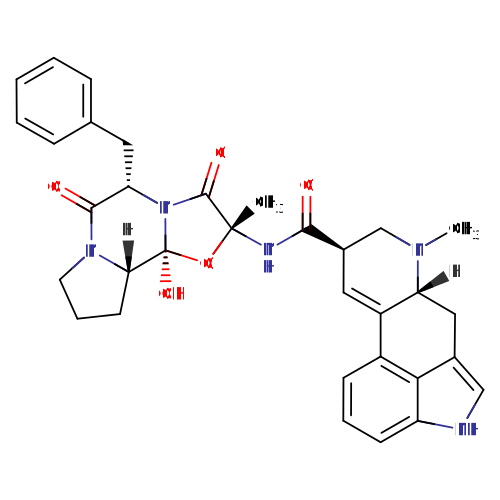
Structure for Ergotamine (DB00696)
- Weight
- Average: 581.6615
Monoisotopic: 581.263819255 - Chemical Formula
- C33H35N5O5
- Synonyms
- (5'α)-12'-hydroxy-2'-methyl-5'-(phenylmethyl)ergotoman-3',6',18-trione
- 12'-Hydroxy-2'-methyl-5'alpha-(phenylmethyl)ergotaman-3',6',18-trione
- 12'-hydroxy-2'-methyl-5'α-(phenylmethyl)ergotaman-3',6',18-trione
- Ergotamin
- Ergotamina
- Ergotamine
- Ergotaminum

Pharmacology
- Indication
For use as therapy to abort or prevent vascular headache, e.g., migraine, migraine variants, or so called "histaminic cephalalgia".
 Reduce drug development failure ratesBuild, train, & validate machine-learning modelswith evidence-based and structured datasets.Build, train, & validate predictive machine-learning models with structured datasets.
- Associated Conditions
Indication Type Indication Combined Product Details Approval Level Age Group Patient Characteristics Dose Form Treatment of Cluster headache •••••••••••• Prevention of Cluster headache •••••••••••• Prevention of Migraine •••••••••••• Treatment of Migraine •••••••••••• Used in combination to treat Uterine atony Combination Product in combination with: Ergometrine (DB01253) •••••••••••• •••••••••• ••••••• •••••• - Contraindications & Blackbox Warnings
 Prevent Adverse Drug Events TodayTap into our Clinical API for life-saving information on contraindications & blackbox warnings, population restrictions, harmful risks, & more.Avoid life-threatening adverse drug events with our Clinical API
- Pharmacodynamics
Ergotamine is a vasoconstrictor and alpha adrenoreceptor antagonist. The pharmacological properties of ergotamine are extremely complex; some of its actions are unrelated to each other, and even mutually antagonistic. The drug has partial agonist and/or antagonist activity against tryptaminergic, dopaminergic and alpha adrenergic receptors depending upon their site, and it is a highly active uterine stimulant. It causes constriction of peripheral and cranial blood vessels and produces depression of central vasomotor centers. The pain of a migraine attack is believed to be due to greatly increased amplitude of pulsations in the cranial arteries, especially the meningeal branches of the external carotid artery. Ergotamine reduces extracranial blood flow, causes a decline in the amplitude of pulsation in the cranial arteries, and decreases hyperperfusion of the territory of the basilar artery. It does not reduce cerebral hemispheric blood flow.
- Mechanism of action
Ergotamine acts on migraine by one of two proposed mechanisms: 1) activation of 5-HT1D receptors located on intracranial blood vessels, including those on arterio-venous anastomoses, leads to vasoconstriction, which correlates with the relief of migraine headache, and 2) activation of 5-HT1D receptors on sensory nerve endings of the trigeminal system results in the inhibition of pro-inflammatory neuropeptide release.
Target Actions Organism A5-hydroxytryptamine receptor 1D agonistHumans A5-hydroxytryptamine receptor 1B agonistHumans A5-hydroxytryptamine receptor 2A agonistHumans AAlpha-1A adrenergic receptor partial agonistHumans AAlpha-1B adrenergic receptor partial agonistHumans AAlpha-1D adrenergic receptor partial agonistHumans UDopamine D2 receptor agonistHumans UAlpha-2A adrenergic receptor partial agonistHumans UD(1) dopamine receptor agonistHumans U5-hydroxytryptamine receptor 1A agonistHumans U5-hydroxytryptamine receptor 1F agonistHumans U5-hydroxytryptamine receptor 2C agonistHumans U5-hydroxytryptamine receptor 2B Not Available Humans UAlpha-2C adrenergic receptor Not Available Humans - Absorption
The bioavailability of sublingually administered ergotamine has not been determined.
- Volume of distribution
Not Available
- Protein binding
Not Available
- Metabolism
Hepatic. Ergotamine is metabolized by the liver by largely undefined pathways, and 90% of the metabolites are excreted in the bile.
- Route of elimination
Not Available
- Half-life
2 hours
- Clearance
Not Available
- Adverse Effects
 Improve decision support & research outcomesWith structured adverse effects data, including: blackbox warnings, adverse reactions, warning & precautions, & incidence rates. View sample adverse effects data in our new Data Library!Improve decision support & research outcomes with our structured adverse effects data.
- Toxicity
Signs of overexposure include irritation, nausea, vomiting, headache, diarrhea, thirst, coldness of skin, pruritus, weak pulse, numbness, tingling of extremities, and confusion.
- Pathways
- Not Available
- Pharmacogenomic Effects/ADRs
- Not Available
Interactions
- Drug Interactions
- This information should not be interpreted without the help of a healthcare provider. If you believe you are experiencing an interaction, contact a healthcare provider immediately. The absence of an interaction does not necessarily mean no interactions exist.
Drug Interaction Integrate drug-drug
interactions in your software1,2-Benzodiazepine The metabolism of 1,2-Benzodiazepine can be decreased when combined with Ergotamine. Abametapir The serum concentration of Ergotamine can be increased when it is combined with Abametapir. Abatacept The metabolism of Ergotamine can be increased when combined with Abatacept. Abemaciclib The metabolism of Abemaciclib can be decreased when combined with Ergotamine. Abiraterone The metabolism of Abiraterone can be decreased when combined with Ergotamine. - Food Interactions
- Take with or without food. The absorption is unaffected by food.
Products
 Drug product information from 10+ global regionsOur datasets provide approved product information including:dosage, form, labeller, route of administration, and marketing period.Access drug product information from over 10 global regions.
- Product Ingredients
Ingredient UNII CAS InChI Key Ergotamine tartrate MRU5XH3B48 379-79-3 CJMJLDQKTOJACI-BGQAIRJTSA-N - Product Images


- International/Other Brands
- Anervan (Recip) / Antimigraine (Ta Fong) / Enxak (Cazi) / Ergam (Gedeon Richter) / Ergo-Kranit (Krewel Meuselbach) / Gynaemine (Sriprasit Dispensary) / Gynergen / Wigrettes
- Brand Name Prescription Products
Name Dosage Strength Route Labeller Marketing Start Marketing End Region Image Ergomar Slt 2mg Tablet 2 mg / slt Sublingual Aventis Pharma Ltd. 1975-12-31 2003-07-22 Canada 
Medihaler-Ergotamine Aerosol 9.0 mg/1mL Oral 3M Company 1960-01-14 2006-12-29 US 
- Generic Prescription Products
Name Dosage Strength Route Labeller Marketing Start Marketing End Region Image Ergomar Tablet, orally disintegrating 2 mg/1 Sublingual Rosedale Therapeutics 2012-08-31 Not applicable US Ergomar Sublingual Tablet 2 mg/1 Oral TerSera Therapeutics, LLC 2016-09-20 Not applicable US - Mixture Products
Name Ingredients Dosage Route Labeller Marketing Start Marketing End Region Image AVMIGRAN FİLM TABLET, 20 ADET Ergotamine tartrate (0.75 mg) + Acetaminophen (325 mg) + Caffeine (80 mg) + Mecloxamine citrate (20 mg) Tablet MENARİNİ SAĞLIK VE İLAÇ SAN. VE TİC. A.Ş. 1974-01-15 Not applicable Turkey 
Bellergal Spacetabs Ergotamine tartrate (0.6 mg) + Belladonna (0.2 mg) + Phenobarbital (40.0 mg) Tablet, extended release Oral Paladin Labs Inc 1959-01-01 2018-06-05 Canada Bellergal Tab Ergotamine tartrate (.3 mg / tab) + Belladonna (.1 mg / tab) + Phenobarbital (20 mg / tab) Tablet Oral Sandoz 1951-12-31 1997-08-12 Canada CAFERGOT Ergotamine tartrate (2 MG) + Caffeine (100 MG) Suppository Rectal Amdipharm Ltd 2014-07-08 Not applicable Italy 
Cafergot Ergotamine tartrate (2 mg/1) + Caffeine (100 mg/1) Suppository Rectal Novartis 1953-04-24 2008-08-12 US


Categories
- ATC Codes
- N02CA02 — ErgotamineN02CA52 — Ergotamine, combinations excl. psycholepticsN02CA72 — Ergotamine, combinations with psycholeptics
- Drug Categories
- Adrenergic Agents
- Adrenergic alpha-1 Receptor Antagonists
- Adrenergic alpha-Antagonists
- Adrenergic Antagonists
- Agents that produce hypertension
- Alkaloids
- Analgesics
- Analgesics, Non-Narcotic
- Antidepressive Agents
- Antimigraine Preparations
- Cardiovascular Agents
- Central Nervous System Agents
- Central Nervous System Depressants
- Cytochrome P-450 CYP3A Inhibitors
- Cytochrome P-450 CYP3A Substrates
- Cytochrome P-450 CYP3A4 Inhibitors
- Cytochrome P-450 CYP3A4 Inhibitors (strength unknown)
- Cytochrome P-450 CYP3A4 Inhibitors (strong)
- Cytochrome P-450 CYP3A4 Substrates
- Cytochrome P-450 CYP3A4 Substrates with a Narrow Therapeutic Index
- Cytochrome P-450 Enzyme Inhibitors
- Cytochrome P-450 Substrates
- Ergot Alkaloids and Derivatives
- Ergotamine Derivative
- Ergotamines
- Heterocyclic Compounds, Fused-Ring
- Narrow Therapeutic Index Drugs
- Nervous System
- Neurotransmitter Agents
- P-glycoprotein inhibitors
- Peripheral Nervous System Agents
- Reproductive Control Agents
- Sensory System Agents
- Serotonergic Drugs Shown to Increase Risk of Serotonin Syndrome
- Serotonin 5-HT1 Receptor Agonists
- Serotonin 5-HT2 Receptor Agonists
- Serotonin Agents
- Serotonin Modulators
- Serotonin Receptor Agonists
- Sympatholytic (Adrenergic Blocking) Agents
- Uterotonic agents
- Vasoconstrictor Agents
- Chemical TaxonomyProvided by Classyfire
- Description
- This compound belongs to the class of organic compounds known as ergotamines, dihydroergotamines, and derivatives. These are organic compounds containing an ergotamine moiety, which is structurally characterized by a benzyl substituent attached to the piperazine ring of the ergopeptine backbone.
- Kingdom
- Organic compounds
- Super Class
- Alkaloids and derivatives
- Class
- Ergoline and derivatives
- Sub Class
- Lysergic acids and derivatives
- Direct Parent
- Ergotamines, dihydroergotamines, and derivatives
- Alternative Parents
- Hybrid peptides / Dipeptides / Lysergamides / Indoloquinolines / Benzoquinolines / Quinoline-3-carboxamides / Pyrroloquinolines / N-acyl-alpha amino acids and derivatives / 3-alkylindoles / Isoindoles and derivatives show 19 more
- Substituents
- 1,4-diazinane / 3-alkylindole / Alkanolamine / Alpha-amino acid or derivatives / Alpha-dipeptide / Amine / Amino acid or derivatives / Aralkylamine / Aromatic heteropolycyclic compound / Azacycle show 39 more
- Molecular Framework
- Aromatic heteropolycyclic compounds
- External Descriptors
- peptide ergot alkaloid (CHEBI:64318)
- Affected organisms
- Humans and other mammals
Chemical Identifiers
- UNII
- PR834Q503T
- CAS number
- 113-15-5
- InChI Key
- XCGSFFUVFURLIX-VFGNJEKYSA-N
- InChI
- InChI=1S/C33H35N5O5/c1-32(35-29(39)21-15-23-22-10-6-11-24-28(22)20(17-34-24)16-25(23)36(2)18-21)31(41)38-26(14-19-8-4-3-5-9-19)30(40)37-13-7-12-27(37)33(38,42)43-32/h3-6,8-11,15,17,21,25-27,34,42H,7,12-14,16,18H2,1-2H3,(H,35,39)/t21-,25-,26+,27+,32-,33+/m1/s1
- IUPAC Name
- (4R,7R)-N-[(1S,2S,4R,7S)-7-benzyl-2-hydroxy-4-methyl-5,8-dioxo-3-oxa-6,9-diazatricyclo[7.3.0.0^{2,6}]dodecan-4-yl]-6-methyl-6,11-diazatetracyclo[7.6.1.0^{2,7}.0^{12,16}]hexadeca-1(16),2,9,12,14-pentaene-4-carboxamide
- SMILES
- [H][C@@]12CCCN1C(=O)[C@H](CC1=CC=CC=C1)N1C(=O)[C@](C)(NC(=O)[C@H]3CN(C)[C@]4([H])CC5=CNC6=CC=CC(=C56)C4=C3)O[C@@]21O
References
- General References
- Tfelt-Hansen P, Saxena PR, Dahlof C, Pascual J, Lainez M, Henry P, Diener H, Schoenen J, Ferrari MD, Goadsby PJ: Ergotamine in the acute treatment of migraine: a review and European consensus. Brain. 2000 Jan;123 ( Pt 1):9-18. [Article]
- Schardl CL, Panaccione DG, Tudzynski P: Ergot alkaloids--biology and molecular biology. Alkaloids Chem Biol. 2006;63:45-86. [Article]
- External Links
- Human Metabolome Database
- HMDB0014834
- KEGG Drug
- D07906
- KEGG Compound
- C07544
- PubChem Compound
- 8223
- PubChem Substance
- 46507632
- ChemSpider
- 7930
- BindingDB
- 50027065
- 4025
- ChEBI
- 64318
- ChEMBL
- CHEMBL442
- ZINC
- ZINC000052955754
- Therapeutic Targets Database
- DAP000141
- PharmGKB
- PA164747651
- PDBe Ligand
- ERM
- RxList
- RxList Drug Page
- Drugs.com
- Drugs.com Drug Page
- PDRhealth
- PDRhealth Drug Page
- Wikipedia
- Ergotamine
- PDB Entries
- 4iar / 4ib4 / 4nc3 / 5tud / 6bqg / 7c61
- MSDS
- Download (53.1 KB)
Clinical Trials
- Clinical Trials
Phase Status Purpose Conditions Count 1 Completed Not Available Autonomic Failure / Orthostatic Hypotension 1
Pharmacoeconomics
- Manufacturers
- 3m pharmaceuticals inc
- Rosedale therapeutics
- Parke davis div warner lambert co
- Organon usa inc
- Packagers
- Cypress Pharmaceutical Inc.
- G & W Labs
- Harvest Pharmaceuticals Inc.
- Kaiser Foundation Hospital
- Mikart Inc.
- Novartis AG
- Nucare Pharmaceuticals Inc.
- PD-Rx Pharmaceuticals Inc.
- Physicians Total Care Inc.
- Rosedale Therapeutics
- Sandoz
- Spectrum Pharmaceuticals
- West-Ward Pharmaceuticals
- Dosage Forms
Form Route Strength Tablet Tablet, extended release Oral Suppository Rectal Tablet Oral 100 mg Tablet, film coated Oral Tablet, coated Oral 150 mg Tablet, coated Capsule Oral Tablet, orally disintegrating Sublingual 2 mg/1 Tablet Sublingual 2 mg / slt Tablet Oral 2 mg/1 Tablet Oral Aerosol Oral 9.0 mg/1mL Tablet, coated Oral 1 mg Tablet, film coated 1 mg Tablet, sugar coated Oral Tablet, coated Oral - Prices
Unit description Cost Unit Ergotamine tartrate powder 224.35USD powder Ergomar 2 mg tablet sl 8.97USD tablet Migergot suppository 7.39USD suppository Cafergot tablet 1.89USD tablet Ergotamine-caffeine tablet 1.14USD tablet DrugBank does not sell nor buy drugs. Pricing information is supplied for informational purposes only.- Patents
- Not Available
Properties
- State
- Solid
- Experimental Properties
Property Value Source melting point (°C) 213.5 dec °C PhysProp water solubility Slight Not Available logP 2 Not Available - Predicted Properties
Property Value Source Water Solubility 0.223 mg/mL ALOGPS logP 2.95 ALOGPS logP 2.6 Chemaxon logS -3.4 ALOGPS pKa (Strongest Acidic) 9.7 Chemaxon pKa (Strongest Basic) 7.78 Chemaxon Physiological Charge 1 Chemaxon Hydrogen Acceptor Count 6 Chemaxon Hydrogen Donor Count 3 Chemaxon Polar Surface Area 118.21 Å2 Chemaxon Rotatable Bond Count 4 Chemaxon Refractivity 160.17 m3·mol-1 Chemaxon Polarizability 62.23 Å3 Chemaxon Number of Rings 8 Chemaxon Bioavailability 1 Chemaxon Rule of Five No Chemaxon Ghose Filter No Chemaxon Veber's Rule No Chemaxon MDDR-like Rule No Chemaxon - Predicted ADMET Features
Property Value Probability Human Intestinal Absorption + 0.9311 Blood Brain Barrier - 0.9644 Caco-2 permeable - 0.7317 P-glycoprotein substrate Substrate 0.8678 P-glycoprotein inhibitor I Inhibitor 0.7801 P-glycoprotein inhibitor II Inhibitor 0.6032 Renal organic cation transporter Non-inhibitor 0.8178 CYP450 2C9 substrate Non-substrate 0.8205 CYP450 2D6 substrate Non-substrate 0.9116 CYP450 3A4 substrate Substrate 0.7408 CYP450 1A2 substrate Inhibitor 0.9107 CYP450 2C9 inhibitor Non-inhibitor 0.9071 CYP450 2D6 inhibitor Non-inhibitor 0.923 CYP450 2C19 inhibitor Non-inhibitor 0.8849 CYP450 3A4 inhibitor Inhibitor 0.7959 CYP450 inhibitory promiscuity Low CYP Inhibitory Promiscuity 0.6759 Ames test Non AMES toxic 0.9133 Carcinogenicity Non-carcinogens 0.9604 Biodegradation Not ready biodegradable 0.99 Rat acute toxicity 2.9840 LD50, mol/kg Not applicable hERG inhibition (predictor I) Weak inhibitor 0.8701 hERG inhibition (predictor II) Non-inhibitor 0.6708
Spectra
- Mass Spec (NIST)
- Download (12 KB)
- Spectra
- Chromatographic Properties
Collision Cross Sections (CCS)
Adduct CCS Value (Å2) Source type Source [M-H]- 245.830042 predictedDarkChem Lite v0.1.0 [M-H]- 252.533842 predictedDarkChem Lite v0.1.0 [M-H]- 262.236342 predictedDarkChem Lite v0.1.0 [M-H]- 231.34007 predictedDeepCCS 1.0 (2019) [M+H]+ 244.265042 predictedDarkChem Lite v0.1.0 [M+H]+ 248.727842 predictedDarkChem Lite v0.1.0 [M+H]+ 263.748142 predictedDarkChem Lite v0.1.0 [M+H]+ 233.23547 predictedDeepCCS 1.0 (2019) [M+Na]+ 245.600842 predictedDarkChem Lite v0.1.0 [M+Na]+ 248.640842 predictedDarkChem Lite v0.1.0 [M+Na]+ 238.93083 predictedDeepCCS 1.0 (2019)
Targets

- Kind
- Protein
- Organism
- Humans
- Pharmacological action
- Yes
- Actions
- Agonist
- General Function
- Serotonin receptor activity
- Specific Function
- G-protein coupled receptor for 5-hydroxytryptamine (serotonin). Also functions as a receptor for ergot alkaloid derivatives, various anxiolytic and antidepressant drugs and other psychoactive subst...
- Gene Name
- HTR1D
- Uniprot ID
- P28221
- Uniprot Name
- 5-hydroxytryptamine receptor 1D
- Molecular Weight
- 41906.38 Da
References
- Silberstein SD, McCrory DC: Ergotamine and dihydroergotamine: history, pharmacology, and efficacy. Headache. 2003 Feb;43(2):144-66. [Article]
- Lovenberg TW, Erlander MG, Baron BM, Racke M, Slone AL, Siegel BW, Craft CM, Burns JE, Danielson PE, Sutcliffe JG: Molecular cloning and functional expression of 5-HT1E-like rat and human 5-hydroxytryptamine receptor genes. Proc Natl Acad Sci U S A. 1993 Mar 15;90(6):2184-8. [Article]
- Hoyer D, Lery H, Waeber C, Bruinvels AT, Nozulak J, Palacios JM: "5-HT1R" or 5-HT1D sites? Evidence for 5-HT1D binding sites in rabbit brain. Naunyn Schmiedebergs Arch Pharmacol. 1992 Sep;346(3):249-54. [Article]
- Sanchez-Lopez A, Centurion D, Vazquez E, Arulmani U, Saxena PR, Villalon CM: Pharmacological profile of the 5-HT-induced inhibition of cardioaccelerator sympathetic outflow in pithed rats: correlation with 5-HT1 and putative 5-ht5A/5B receptors. Br J Pharmacol. 2003 Oct;140(4):725-35. Epub 2003 Sep 22. [Article]
- Deliganis AV, Peroutka SJ: 5-Hydroxtryptamine1D receptor agonism predicts antimigraine efficacy. Headache. 1991 Apr;31(4):228-31. [Article]
- Kind
- Protein
- Organism
- Humans
- Pharmacological action
- Yes
- Actions
- Agonist
- General Function
- Serotonin receptor activity
- Specific Function
- G-protein coupled receptor for 5-hydroxytryptamine (serotonin). Also functions as a receptor for ergot alkaloid derivatives, various anxiolytic and antidepressant drugs and other psychoactive subst...
- Gene Name
- HTR1B
- Uniprot ID
- P28222
- Uniprot Name
- 5-hydroxytryptamine receptor 1B
- Molecular Weight
- 43567.535 Da
References
- Villalon CM, De Vries P, Rabelo G, Centurion D, Sanchez-Lopez A, Saxena P: Canine external carotid vasoconstriction to methysergide, ergotamine and dihydroergotamine: role of 5-HT1B/1D receptors and alpha2-adrenoceptors. Br J Pharmacol. 1999 Feb;126(3):585-94. [Article]
- Willems EW, Trion M, De Vries P, Heiligers JP, Villalon CM, Saxena PR: Pharmacological evidence that alpha1-and alpha2-adrenoceptors mediate vasoconstriction of carotid arteriovenous anastomoses in anaesthetized pigs. Br J Pharmacol. 1999 Jul;127(5):1263-71. [Article]
- Cohen ML, Schenck K: Contractile responses to sumatriptan and ergotamine in the rabbit saphenous vein: effect of selective 5-HT(1F) receptor agonists and PGF(2alpha). Br J Pharmacol. 2000 Oct;131(3):562-8. [Article]
- Valdivia LF, Centurion D, Arulmani U, Saxena PR, Villalon CM: 5-HT1B receptors, alpha2A/2C- and, to a lesser extent, alpha1-adrenoceptors mediate the external carotid vasoconstriction to ergotamine in vagosympathectomised dogs. Naunyn Schmiedebergs Arch Pharmacol. 2004 Jul;370(1):46-53. Epub 2004 Jun 29. [Article]
- Kind
- Protein
- Organism
- Humans
- Pharmacological action
- Yes
- Actions
- Agonist
- General Function
- Virus receptor activity
- Specific Function
- G-protein coupled receptor for 5-hydroxytryptamine (serotonin). Also functions as a receptor for various drugs and psychoactive substances, including mescaline, psilocybin, 1-(2,5-dimethoxy-4-iodop...
- Gene Name
- HTR2A
- Uniprot ID
- P28223
- Uniprot Name
- 5-hydroxytryptamine receptor 2A
- Molecular Weight
- 52602.58 Da
References
- Bom AH, Heiligers JP, Saxena PR, Verdouw PD: Reduction of cephalic arteriovenous shunting by ergotamine is not mediated by 5-HT1-like or 5-HT2 receptors. Br J Pharmacol. 1989 Jun;97(2):383-90. [Article]
- Panconesi A, Anselmi B, Curradi C, Perfetto F, Piluso A, Franchi G: Comparison between venoconstrictor effects of sumatriptan and ergotamine in migraine patients. Headache. 1994 Apr;34(4):194-7. [Article]
- Chen X, Ji ZL, Chen YZ: TTD: Therapeutic Target Database. Nucleic Acids Res. 2002 Jan 1;30(1):412-5. [Article]
- Kind
- Protein
- Organism
- Humans
- Pharmacological action
- Yes
- Actions
- Partial agonist
- General Function
- Protein heterodimerization activity
- Specific Function
- This alpha-adrenergic receptor mediates its action by association with G proteins that activate a phosphatidylinositol-calcium second messenger system. Its effect is mediated by G(q) and G(11) prot...
- Gene Name
- ADRA1A
- Uniprot ID
- P35348
- Uniprot Name
- Alpha-1A adrenergic receptor
- Molecular Weight
- 51486.005 Da
References
- Overington JP, Al-Lazikani B, Hopkins AL: How many drug targets are there? Nat Rev Drug Discov. 2006 Dec;5(12):993-6. [Article]
- Imming P, Sinning C, Meyer A: Drugs, their targets and the nature and number of drug targets. Nat Rev Drug Discov. 2006 Oct;5(10):821-34. [Article]
- Gornemann T, Jahnichen S, Schurad B, Latte KP, Horowski R, Tack J, Flieger M, Pertz HH: Pharmacological properties of a wide array of ergolines at functional alpha(1)-adrenoceptor subtypes. Naunyn Schmiedebergs Arch Pharmacol. 2008 Jan;376(5):321-30. Epub 2007 Dec 8. [Article]
- Kind
- Protein
- Organism
- Humans
- Pharmacological action
- Yes
- Actions
- Partial agonist
- General Function
- Protein heterodimerization activity
- Specific Function
- This alpha-adrenergic receptor mediates its action by association with G proteins that activate a phosphatidylinositol-calcium second messenger system. Its effect is mediated by G(q) and G(11) prot...
- Gene Name
- ADRA1B
- Uniprot ID
- P35368
- Uniprot Name
- Alpha-1B adrenergic receptor
- Molecular Weight
- 56835.375 Da
References
- Gornemann T, Jahnichen S, Schurad B, Latte KP, Horowski R, Tack J, Flieger M, Pertz HH: Pharmacological properties of a wide array of ergolines at functional alpha(1)-adrenoceptor subtypes. Naunyn Schmiedebergs Arch Pharmacol. 2008 Jan;376(5):321-30. Epub 2007 Dec 8. [Article]
- Kind
- Protein
- Organism
- Humans
- Pharmacological action
- Yes
- Actions
- Partial agonist
- General Function
- Alpha1-adrenergic receptor activity
- Specific Function
- This alpha-adrenergic receptor mediates its effect through the influx of extracellular calcium.
- Gene Name
- ADRA1D
- Uniprot ID
- P25100
- Uniprot Name
- Alpha-1D adrenergic receptor
- Molecular Weight
- 60462.205 Da
References
- Gornemann T, Jahnichen S, Schurad B, Latte KP, Horowski R, Tack J, Flieger M, Pertz HH: Pharmacological properties of a wide array of ergolines at functional alpha(1)-adrenoceptor subtypes. Naunyn Schmiedebergs Arch Pharmacol. 2008 Jan;376(5):321-30. Epub 2007 Dec 8. [Article]
- Kind
- Protein
- Organism
- Humans
- Pharmacological action
- Unknown
- Actions
- Agonist
- General Function
- Potassium channel regulator activity
- Specific Function
- Dopamine receptor whose activity is mediated by G proteins which inhibit adenylyl cyclase.
- Gene Name
- DRD2
- Uniprot ID
- P14416
- Uniprot Name
- D(2) dopamine receptor
- Molecular Weight
- 50618.91 Da
References
- Verhoeff NP, Visser WH, Ferrari MD, Saxena PR, van Royen EA: Dopamine D2-receptor imaging with 123I-iodobenzamide SPECT in migraine patients abusing ergotamine: does ergotamine cross the blood brain barrier? Cephalalgia. 1993 Oct;13(5):325-9. [Article]
- Larson BT, Samford MD, Camden JM, Piper EL, Kerley MS, Paterson JA, Turner JT: Ergovaline binding and activation of D2 dopamine receptors in GH4ZR7 cells. J Anim Sci. 1995 May;73(5):1396-400. [Article]
- Kind
- Protein
- Organism
- Humans
- Pharmacological action
- Unknown
- Actions
- Partial agonist
- General Function
- Thioesterase binding
- Specific Function
- Alpha-2 adrenergic receptors mediate the catecholamine-induced inhibition of adenylate cyclase through the action of G proteins. The rank order of potency for agonists of this receptor is oxymetazo...
- Gene Name
- ADRA2A
- Uniprot ID
- P08913
- Uniprot Name
- Alpha-2A adrenergic receptor
- Molecular Weight
- 48956.275 Da
References
- Overington JP, Al-Lazikani B, Hopkins AL: How many drug targets are there? Nat Rev Drug Discov. 2006 Dec;5(12):993-6. [Article]
- Imming P, Sinning C, Meyer A: Drugs, their targets and the nature and number of drug targets. Nat Rev Drug Discov. 2006 Oct;5(10):821-34. [Article]
- Gornemann T, Jahnichen S, Schurad B, Latte KP, Horowski R, Tack J, Flieger M, Pertz HH: Pharmacological properties of a wide array of ergolines at functional alpha(1)-adrenoceptor subtypes. Naunyn Schmiedebergs Arch Pharmacol. 2008 Jan;376(5):321-30. Epub 2007 Dec 8. [Article]
- Kind
- Protein group
- Organism
- Humans
- Pharmacological action
- Unknown
- Actions
- Agonist
- General Function
- G-protein coupled amine receptor activity
- Specific Function
- Dopamine receptor whose activity is mediated by G proteins which activate adenylyl cyclase.
Components:
References
- Bigal ME, Tepper SJ: Ergotamine and dihydroergotamine: a review. Curr Pain Headache Rep. 2003 Feb;7(1):55-62. [Article]
- Kind
- Protein
- Organism
- Humans
- Pharmacological action
- Unknown
- Actions
- Agonist
- General Function
- Serotonin receptor activity
- Specific Function
- G-protein coupled receptor for 5-hydroxytryptamine (serotonin). Also functions as a receptor for various drugs and psychoactive substances. Ligand binding causes a conformation change that triggers...
- Gene Name
- HTR1A
- Uniprot ID
- P08908
- Uniprot Name
- 5-hydroxytryptamine receptor 1A
- Molecular Weight
- 46106.335 Da
References
- Bigal ME, Tepper SJ: Ergotamine and dihydroergotamine: a review. Curr Pain Headache Rep. 2003 Feb;7(1):55-62. [Article]
- Kind
- Protein
- Organism
- Humans
- Pharmacological action
- Unknown
- Actions
- Agonist
- General Function
- Serotonin receptor activity
- Specific Function
- G-protein coupled receptor for 5-hydroxytryptamine (serotonin). Also functions as a receptor for various alkaloids and psychoactive substances. Ligand binding causes a conformation change that trig...
- Gene Name
- HTR1F
- Uniprot ID
- P30939
- Uniprot Name
- 5-hydroxytryptamine receptor 1F
- Molecular Weight
- 41708.505 Da
References
- Bigal ME, Tepper SJ: Ergotamine and dihydroergotamine: a review. Curr Pain Headache Rep. 2003 Feb;7(1):55-62. [Article]
- Kind
- Protein
- Organism
- Humans
- Pharmacological action
- Unknown
- Actions
- Agonist
- General Function
- Serotonin receptor activity
- Specific Function
- G-protein coupled receptor for 5-hydroxytryptamine (serotonin). Also functions as a receptor for various drugs and psychoactive substances, including ergot alkaloid derivatives, 1-2,5,-dimethoxy-4-...
- Gene Name
- HTR2C
- Uniprot ID
- P28335
- Uniprot Name
- 5-hydroxytryptamine receptor 2C
- Molecular Weight
- 51820.705 Da
References
- Bigal ME, Tepper SJ: Ergotamine and dihydroergotamine: a review. Curr Pain Headache Rep. 2003 Feb;7(1):55-62. [Article]
- Kind
- Protein
- Organism
- Humans
- Pharmacological action
- Unknown
- General Function
- Serotonin receptor activity
- Specific Function
- G-protein coupled receptor for 5-hydroxytryptamine (serotonin). Also functions as a receptor for various ergot alkaloid derivatives and psychoactive substances. Ligand binding causes a conformation...
- Gene Name
- HTR2B
- Uniprot ID
- P41595
- Uniprot Name
- 5-hydroxytryptamine receptor 2B
- Molecular Weight
- 54297.41 Da
References
- Rothman RB, Baumann MH, Savage JE, Rauser L, McBride A, Hufeisen SJ, Roth BL: Evidence for possible involvement of 5-HT(2B) receptors in the cardiac valvulopathy associated with fenfluramine and other serotonergic medications. Circulation. 2000 Dec 5;102(23):2836-41. [Article]
- Kind
- Protein
- Organism
- Humans
- Pharmacological action
- Unknown
- General Function
- Protein homodimerization activity
- Specific Function
- Alpha-2 adrenergic receptors mediate the catecholamine-induced inhibition of adenylate cyclase through the action of G proteins.
- Gene Name
- ADRA2C
- Uniprot ID
- P18825
- Uniprot Name
- Alpha-2C adrenergic receptor
- Molecular Weight
- 49521.585 Da
References
- Villamil-Hernandez MT, Alcantara-Vazquez O, Sanchez-Lopez A, Centurion D: Pharmacological identification of alpha1- and alpha2-adrenoceptor subtypes involved in the vasopressor responses induced by ergotamine in pithed rats. Eur J Pharmacol. 2013 Sep 5;715(1-3):262-9. doi: 10.1016/j.ejphar.2013.05.011. Epub 2013 May 22. [Article]
Enzymes
- Kind
- Protein
- Organism
- Humans
- Pharmacological action
- Unknown
- Actions
- SubstrateInhibitor
- General Function
- Vitamin d3 25-hydroxylase activity
- Specific Function
- Cytochromes P450 are a group of heme-thiolate monooxygenases. In liver microsomes, this enzyme is involved in an NADPH-dependent electron transport pathway. It performs a variety of oxidation react...
- Gene Name
- CYP3A4
- Uniprot ID
- P08684
- Uniprot Name
- Cytochrome P450 3A4
- Molecular Weight
- 57342.67 Da
References
- Ladona MG, Gonzalez ML, Rane A, Peter RM, de la Torre R: Cocaine metabolism in human fetal and adult liver microsomes is related to cytochrome P450 3A expression. Life Sci. 2000 Dec 15;68(4):431-43. [Article]
- Moubarak AS, Rosenkrans CF Jr, Johnson ZB: Modulation of cytochrome P450 metabolism by ergonovine and dihydroergotamine. Vet Hum Toxicol. 2003 Feb;45(1):6-9. [Article]
- Wooltorton E: Risk of stroke, gangrene from ergot drug interactions. CMAJ. 2003 Apr 15;168(8):1015. [Article]
- Zhou SF, Xue CC, Yu XQ, Li C, Wang G: Clinically important drug interactions potentially involving mechanism-based inhibition of cytochrome P450 3A4 and the role of therapeutic drug monitoring. Ther Drug Monit. 2007 Dec;29(6):687-710. doi: 10.1097/FTD.0b013e31815c16f5. [Article]
- Cafergot (Ergotamine tartrate and Caffeine) FDA Label [Link]
Transporters
- Kind
- Protein
- Organism
- Humans
- Pharmacological action
- Unknown
- Actions
- Inhibitor
- General Function
- Xenobiotic-transporting atpase activity
- Specific Function
- Energy-dependent efflux pump responsible for decreased drug accumulation in multidrug-resistant cells.
- Gene Name
- ABCB1
- Uniprot ID
- P08183
- Uniprot Name
- Multidrug resistance protein 1
- Molecular Weight
- 141477.255 Da
References
- Ekins S, Kim RB, Leake BF, Dantzig AH, Schuetz EG, Lan LB, Yasuda K, Shepard RL, Winter MA, Schuetz JD, Wikel JH, Wrighton SA: Three-dimensional quantitative structure-activity relationships of inhibitors of P-glycoprotein. Mol Pharmacol. 2002 May;61(5):964-73. [Article]
- Yasuda K, Lan LB, Sanglard D, Furuya K, Schuetz JD, Schuetz EG: Interaction of cytochrome P450 3A inhibitors with P-glycoprotein. J Pharmacol Exp Ther. 2002 Oct;303(1):323-32. [Article]


Drug created at June 13, 2005 13:24 / Updated at April 26, 2024 00:45