Identification
- Summary
Phenylbutazone is an NSAID used to treat backache and ankylosing spondylitis.
- Generic Name
- Phenylbutazone
- DrugBank Accession Number
- DB00812
- Background
A drug that has anti-inflammatory, antipyretic, and analgesic activities. It is especially effective in the treatment of ankylosing spondylitis. It also is useful in rheumatoid arthritis and Reiter's syndrome (investigational indication). Although phenylbutazone is effective in gouty arthritis, risk/benefit considerations indicate that this drug should not be employed for this disease. (From AMA Drug Evaluations Annual, 1994, p1822)
- Type
- Small Molecule
- Groups
- Approved, Vet approved
- Structure
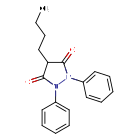
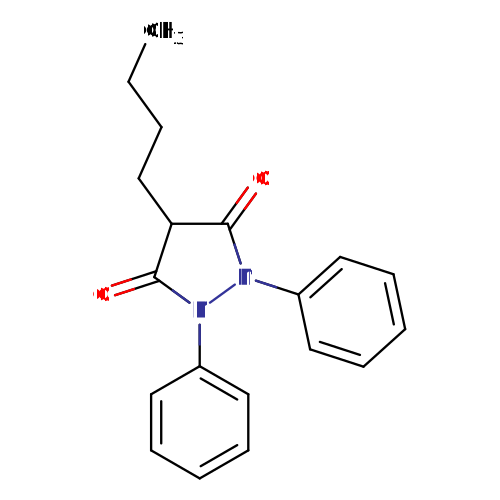
Structure for Phenylbutazone (DB00812)
- Weight
- Average: 308.3743
Monoisotopic: 308.152477894 - Chemical Formula
- C19H20N2O2
- Synonyms
- 3,5-Dioxo-1,2-diphenyl-4-n-butylpyrazolidine
- 4-butyl-1,2-diphenyl-pyrazolidine-3,5-dione
- 4-n-Butyl-1,2-diphenyl-3,5-pyrazolidinedione
- Fenilbutazona
- Phenbutazone
- Phenylbutazon
- Phenylbutazone
- Phénylbutazone
- Phenylbutazonum
- External IDs
- G-13871
- NSC-25134
- USAF Ge-15

Pharmacology
- Indication
For the treatment of backache and ankylosing spondylitis
 Reduce drug development failure ratesBuild, train, & validate machine-learning modelswith evidence-based and structured datasets.Build, train, & validate predictive machine-learning models with structured datasets.
- Associated Conditions
Indication Type Indication Combined Product Details Approval Level Age Group Patient Characteristics Dose Form Treatment of Inflammatory reaction •••••••••••• •••••• Treatment of Pain •••••••••••• •••••• Treatment of Arthritic pain •••••••••••• •••••• - Contraindications & Blackbox Warnings
 Prevent Adverse Drug Events TodayTap into our Clinical API for life-saving information on contraindications & blackbox warnings, population restrictions, harmful risks, & more.Avoid life-threatening adverse drug events with our Clinical API
- Pharmacodynamics
Phenylbutazone is a synthetic, pyrazolone derivative. It is a nonhormonal anti-inflammatory, antipyretic compound useful in the management of inflammatory conditions. The apparent analgesic effect is probably related mainly to the compound's anti-inflammatory properties and arise from its ability to reduce production of prostaglandin H and prostacyclin. Prostaglandins act on a variety of cells such as vascular smooth muscle cells causing constriction or dilation, on platelets causing aggregation or disaggregation and on spinal neurons causing pain. Prostacylcin causes vascular constriction platelet disaggregation
- Mechanism of action
Phenylbutazone binds to and inactivates prostaglandin H synthase and prostacyclin synthase through peroxide (H2O2) mediated deactivation. The reduced production of prostaglandin leads to reduced inflammation of the surrounding tissues.
Target Actions Organism AProstaglandin G/H synthase 1 inhibitorHumans AProstaglandin G/H synthase 2 inhibitorHumans AProstacyclin synthase inhibitorHumans - Absorption
Not Available
- Volume of distribution
Not Available
- Protein binding
Not Available
- Metabolism
- Not Available
- Route of elimination
Not Available
- Half-life
Not Available
- Clearance
Not Available
- Adverse Effects
 Improve decision support & research outcomesWith structured adverse effects data, including: blackbox warnings, adverse reactions, warning & precautions, & incidence rates. View sample adverse effects data in our new Data Library!Improve decision support & research outcomes with our structured adverse effects data.
- Toxicity
Oral, LD50 = 238 mg/kg (mouse); Oral, LD50 = 781 mg/kg (rabbit); Oral, LD50 = 245 mg/kg (rat); Oral, LD50 = 375 mg/kg (rat)
- Pathways
Pathway Category Phenylbutazone Action Pathway Drug action - Pharmacogenomic Effects/ADRs
- Not Available
Interactions
- Drug Interactions
- This information should not be interpreted without the help of a healthcare provider. If you believe you are experiencing an interaction, contact a healthcare provider immediately. The absence of an interaction does not necessarily mean no interactions exist.
Drug Interaction Integrate drug-drug
interactions in your softwareAbacavir Phenylbutazone may decrease the excretion rate of Abacavir which could result in a higher serum level. Abatacept The metabolism of Phenylbutazone can be increased when combined with Abatacept. Abciximab The risk or severity of bleeding and hemorrhage can be increased when Phenylbutazone is combined with Abciximab. Abemaciclib The metabolism of Abemaciclib can be increased when combined with Phenylbutazone. Abrocitinib The metabolism of Abrocitinib can be decreased when combined with Phenylbutazone. - Food Interactions
- Avoid alcohol.
- Take with food. Food reduces irritation.
Products
 Drug product information from 10+ global regionsOur datasets provide approved product information including:dosage, form, labeller, route of administration, and marketing period.Access drug product information from over 10 global regions.
- International/Other Brands
- Azolid
- Generic Prescription Products
Name Dosage Strength Route Labeller Marketing Start Marketing End Region Image Apo Phenylbutazone Tab 100mg Tablet 100 mg Oral Apotex Corporation 1976-12-31 2009-09-18 Canada 
Novo-butazone Tab 100mg Tablet 100 mg Oral Novopharm Limited 1976-12-31 2005-08-10 Canada - Mixture Products
Name Ingredients Dosage Route Labeller Marketing Start Marketing End Region Image Alka Phenyl Tab Phenylbutazone (100 mg / tab) + Aluminum hydroxide (100 mg / tab) + Magnesium trisilicate (150 mg / tab) Tablet Oral Duchesnay Inc. 1978-12-31 1997-08-11 Canada Alka Phenylbutazone Tab Phenylbutazone (100 mg / tab) + Aluminum hydroxide (100 mg / tab) + Magnesium trisilicate (150 mg / tab) Tablet Oral Pro Doc Limitee 1974-12-31 1997-08-14 Canada Phenylone Plus Tab Phenylbutazone (100 mg / tab) + Aluminum hydroxide (100 mg / tab) + Magnesium trisilicate (150 mg / tab) Tablet Oral Medic Laboratory LtÉe 1978-12-31 1996-09-09 Canada
Categories
- ATC Codes
- M01BA01 — Phenylbutazone and corticosteroids
- M01BA — Antiinflammatory/antirheumatic agents in combination with corticosteroids
- M01B — ANTIINFLAMMATORY/ANTIRHEUMATIC AGENTS IN COMBINATION
- M01 — ANTIINFLAMMATORY AND ANTIRHEUMATIC PRODUCTS
- M — MUSCULO-SKELETAL SYSTEM
- M01AA — Butylpyrazolidines
- M01A — ANTIINFLAMMATORY AND ANTIRHEUMATIC PRODUCTS, NON-STEROIDS
- M01 — ANTIINFLAMMATORY AND ANTIRHEUMATIC PRODUCTS
- M — MUSCULO-SKELETAL SYSTEM
- Drug Categories
- Agents causing hyperkalemia
- Agents that produce hypertension
- Analgesics
- Analgesics, Non-Narcotic
- Anti-Inflammatory Agents
- Anti-Inflammatory Agents, Non-Steroidal
- Anti-Inflammatory Agents, Non-Steroidal (Non-Selective)
- Antiinflammatory and Antirheumatic Products
- Antiinflammatory and Antirheumatic Products, Non-Steroids
- Antiinflammatory Preparations, Non-Steroids for Topical Use
- Antirheumatic Agents
- Butylpyrazolidines
- Cytochrome P-450 CYP2C9 Inhibitors
- Cytochrome P-450 CYP2C9 Inhibitors (strength unknown)
- Cytochrome P-450 CYP2C9 Substrates
- Cytochrome P-450 CYP3A Inducers
- Cytochrome P-450 CYP3A4 Inducers
- Cytochrome P-450 CYP3A4 Inducers (strength unknown)
- Cytochrome P-450 Enzyme Inducers
- Cytochrome P-450 Enzyme Inhibitors
- Cytochrome P-450 Substrates
- Musculo-Skeletal System
- Nephrotoxic agents
- Non COX-2 selective NSAIDS
- OAT1/SLC22A6 inhibitors
- OAT3/SLC22A8 Inhibitors
- Peripheral Nervous System Agents
- Pyrazoles
- Pyrazolones
- Sensory System Agents
- Topical Products for Joint and Muscular Pain
- Chemical TaxonomyProvided by Classyfire
- Description
- This compound belongs to the class of organic compounds known as benzene and substituted derivatives. These are aromatic compounds containing one monocyclic ring system consisting of benzene.
- Kingdom
- Organic compounds
- Super Class
- Benzenoids
- Class
- Benzene and substituted derivatives
- Sub Class
- Not Available
- Direct Parent
- Benzene and substituted derivatives
- Alternative Parents
- Pyrazolidinones / 1,3-dicarbonyl compounds / Carboxylic acid hydrazides / Azacyclic compounds / Organopnictogen compounds / Organonitrogen compounds / Organic oxides / Hydrocarbon derivatives
- Substituents
- 1,3-dicarbonyl compound / Aromatic heteromonocyclic compound / Azacycle / Carbonyl group / Carboxylic acid derivative / Carboxylic acid hydrazide / Hydrocarbon derivative / Monocyclic benzene moiety / Organic nitrogen compound / Organic oxide
- Molecular Framework
- Aromatic heteromonocyclic compounds
- External Descriptors
- pyrazolidines (CHEBI:48574)
- Affected organisms
- Humans and other mammals
Chemical Identifiers
- UNII
- GN5P7K3T8S
- CAS number
- 50-33-9
- InChI Key
- VYMDGNCVAMGZFE-UHFFFAOYSA-N
- InChI
- InChI=1S/C19H20N2O2/c1-2-3-14-17-18(22)20(15-10-6-4-7-11-15)21(19(17)23)16-12-8-5-9-13-16/h4-13,17H,2-3,14H2,1H3
- IUPAC Name
- 4-butyl-1,2-diphenylpyrazolidine-3,5-dione
- SMILES
- CCCCC1C(=O)N(N(C1=O)C1=CC=CC=C1)C1=CC=CC=C1
References
- Synthesis Reference
Dieter Rahtz, Henning Koch, Erich Gerhards, "Hydroxy phenylbutazone derivatives and their preparation." U.S. Patent US3968219, issued January, 1971.
US3968219- General References
- Not Available
- External Links
- Human Metabolome Database
- HMDB0014950
- KEGG Drug
- D00510
- KEGG Compound
- C07440
- PubChem Compound
- 4781
- PubChem Substance
- 46507038
- ChemSpider
- 4617
- 8160
- ChEBI
- 48574
- ChEMBL
- CHEMBL101
- ZINC
- ZINC000100004227
- Therapeutic Targets Database
- DAP000974
- PharmGKB
- PA450932
- PDBe Ligand
- P1Z
- Wikipedia
- Phenylbutazone
- PDB Entries
- 2bxc / 2bxp / 2bxq / 2w98 / 8hck
- MSDS
- Download (73.1 KB)
Clinical Trials
Pharmacoeconomics
- Manufacturers
- Sanofi aventis us llc
- Novartis pharmaceuticals corp
- Ivax pharmaceuticals inc
- Mutual pharmaceutical co inc
- Sandoz inc
- Watson laboratories inc
- Packagers
- C.O. Truxton Inc.
- Jaapharm Canada Inc.
- Medisca Inc.
- Dosage Forms
Form Route Strength Tablet Oral Tablet Oral 100 mg Ointment Topical 40 g Capsule, liquid filled Oral 200 mg Tablet Oral 200 mg Suppository Suppository Topical Tablet Oral Tablet, coated Oral Cream Topical 50 MG/G - Prices
Unit description Cost Unit Phenylbutazone powder 1.16USD g DrugBank does not sell nor buy drugs. Pricing information is supplied for informational purposes only.- Patents
- Not Available
Properties
- State
- Solid
- Experimental Properties
Property Value Source melting point (°C) 105 °C PhysProp water solubility 47.5 mg/L (at 30 °C) YALKOWSKY,SH & DANNENFELSER,RM (1992) logP 3.16 SANGSTER (1994) logS -3.81 ADME Research, USCD pKa 4.5 SERJEANT,EP & DEMPSEY,B (1979) - Predicted Properties
Property Value Source Water Solubility 0.144 mg/mL ALOGPS logP 2.81 ALOGPS logP 4.14 Chemaxon logS -3.3 ALOGPS pKa (Strongest Acidic) 5 Chemaxon Physiological Charge -1 Chemaxon Hydrogen Acceptor Count 2 Chemaxon Hydrogen Donor Count 0 Chemaxon Polar Surface Area 40.62 Å2 Chemaxon Rotatable Bond Count 5 Chemaxon Refractivity 88.76 m3·mol-1 Chemaxon Polarizability 34.11 Å3 Chemaxon Number of Rings 3 Chemaxon Bioavailability 1 Chemaxon Rule of Five Yes Chemaxon Ghose Filter Yes Chemaxon Veber's Rule No Chemaxon MDDR-like Rule No Chemaxon - Predicted ADMET Features
Property Value Probability Human Intestinal Absorption + 1.0 Blood Brain Barrier + 0.9931 Caco-2 permeable + 0.6185 P-glycoprotein substrate Non-substrate 0.7632 P-glycoprotein inhibitor I Non-inhibitor 0.5423 P-glycoprotein inhibitor II Inhibitor 0.5596 Renal organic cation transporter Non-inhibitor 0.866 CYP450 2C9 substrate Non-substrate 0.6378 CYP450 2D6 substrate Non-substrate 0.9116 CYP450 3A4 substrate Non-substrate 0.5439 CYP450 1A2 substrate Non-inhibitor 0.9046 CYP450 2C9 inhibitor Inhibitor 0.5752 CYP450 2D6 inhibitor Non-inhibitor 0.9231 CYP450 2C19 inhibitor Non-inhibitor 0.9026 CYP450 3A4 inhibitor Non-inhibitor 0.5968 CYP450 inhibitory promiscuity High CYP Inhibitory Promiscuity 0.5233 Ames test Non AMES toxic 0.9133 Carcinogenicity Non-carcinogens 0.7995 Biodegradation Not ready biodegradable 0.9881 Rat acute toxicity 2.7753 LD50, mol/kg Not applicable hERG inhibition (predictor I) Weak inhibitor 0.9469 hERG inhibition (predictor II) Non-inhibitor 0.892
Spectra
- Mass Spec (NIST)
- Download (9.03 KB)
- Spectra
- Chromatographic Properties
Collision Cross Sections (CCS)
Adduct CCS Value (Å2) Source type Source [M-H]- 186.7754274 predictedDarkChem Lite v0.1.0 [M-H]- 186.7720274 predictedDarkChem Lite v0.1.0 [M-H]- 180.05333 predictedDeepCCS 1.0 (2019) [M+H]+ 187.4192274 predictedDarkChem Lite v0.1.0 [M+H]+ 183.6467636 predictedDarkChem Lite v0.1.0 [M+H]+ 182.41133 predictedDeepCCS 1.0 (2019) [M+Na]+ 186.6891274 predictedDarkChem Lite v0.1.0 [M+Na]+ 192.8680402 predictedDarkChem Lite v0.1.0 [M+Na]+ 188.97641 predictedDeepCCS 1.0 (2019)
Targets

- Kind
- Protein
- Organism
- Humans
- Pharmacological action
- Yes
- Actions
- Inhibitor
- General Function
- Prostaglandin-endoperoxide synthase activity
- Specific Function
- Converts arachidonate to prostaglandin H2 (PGH2), a committed step in prostanoid synthesis. Involved in the constitutive production of prostanoids in particular in the stomach and platelets. In gas...
- Gene Name
- PTGS1
- Uniprot ID
- P23219
- Uniprot Name
- Prostaglandin G/H synthase 1
- Molecular Weight
- 68685.82 Da
References
- Zitova A, Hynes J, Kollar J, Borisov SM, Klimant I, Papkovsky DB: Analysis of activity and inhibition of oxygen-dependent enzymes by optical respirometry on the LightCycler system. Anal Biochem. 2010 Feb 15;397(2):144-51. doi: 10.1016/j.ab.2009.10.029. Epub 2009 Oct 20. [Article]
- Beretta C, Garavaglia G, Cavalli M: COX-1 and COX-2 inhibition in horse blood by phenylbutazone, flunixin, carprofen and meloxicam: an in vitro analysis. Pharmacol Res. 2005 Oct;52(4):302-6. [Article]
- Morton AJ, Campbell NB, Gayle JM, Redding WR, Blikslager AT: Preferential and non-selective cyclooxygenase inhibitors reduce inflammation during lipopolysaccharide-induced synovitis. Res Vet Sci. 2005 Apr;78(2):189-92. [Article]
- Kind
- Protein
- Organism
- Humans
- Pharmacological action
- Yes
- Actions
- Inhibitor
- General Function
- Prostaglandin-endoperoxide synthase activity
- Specific Function
- Converts arachidonate to prostaglandin H2 (PGH2), a committed step in prostanoid synthesis. Constitutively expressed in some tissues in physiological conditions, such as the endothelium, kidney and...
- Gene Name
- PTGS2
- Uniprot ID
- P35354
- Uniprot Name
- Prostaglandin G/H synthase 2
- Molecular Weight
- 68995.625 Da
References
- Arifah AK, Lees P: Pharmacodynamics and pharmacokinetics of phenylbutazone in calves. J Vet Pharmacol Ther. 2002 Aug;25(4):299-309. [Article]
- Takada Y, Bhardwaj A, Potdar P, Aggarwal BB: Nonsteroidal anti-inflammatory agents differ in their ability to suppress NF-kappaB activation, inhibition of expression of cyclooxygenase-2 and cyclin D1, and abrogation of tumor cell proliferation. Oncogene. 2004 Dec 9;23(57):9247-58. [Article]
- Beretta C, Garavaglia G, Cavalli M: COX-1 and COX-2 inhibition in horse blood by phenylbutazone, flunixin, carprofen and meloxicam: an in vitro analysis. Pharmacol Res. 2005 Oct;52(4):302-6. [Article]
- Chen X, Ji ZL, Chen YZ: TTD: Therapeutic Target Database. Nucleic Acids Res. 2002 Jan 1;30(1):412-5. [Article]
- Kind
- Protein
- Organism
- Humans
- Pharmacological action
- Yes
- Actions
- Inhibitor
- General Function
- Prostaglandin-i synthase activity
- Specific Function
- Catalyzes the isomerization of prostaglandin H2 to prostacyclin (= prostaglandin I2).
- Gene Name
- PTGIS
- Uniprot ID
- Q16647
- Uniprot Name
- Prostacyclin synthase
- Molecular Weight
- 57103.385 Da
References
- Overington JP, Al-Lazikani B, Hopkins AL: How many drug targets are there? Nat Rev Drug Discov. 2006 Dec;5(12):993-6. [Article]
- Imming P, Sinning C, Meyer A: Drugs, their targets and the nature and number of drug targets. Nat Rev Drug Discov. 2006 Oct;5(10):821-34. [Article]
- Reed GA, Griffin IO, Eling TE: Inactivation of prostaglandin H synthase and prostacyclin synthase by phenylbutazone. Requirement for peroxidative metabolism. Mol Pharmacol. 1985 Jan;27(1):109-14. [Article]
- Marnett LJ, Siedlik PH, Ochs RC, Pagels WR, Das M, Honn KV, Warnock RH, Tainer BE, Eling TE: Mechanism of the stimulation of prostaglandin H synthase and prostacyclin synthase by the antithrombotic and antimetastatic agent, nafazatrom. Mol Pharmacol. 1984 Sep;26(2):328-35. [Article]
- Tobin T, Chay S, Kamerling S, Woods WE, Weckman TJ, Blake JW, Lees P: Phenylbutazone in the horse: a review. J Vet Pharmacol Ther. 1986 Mar;9(1):1-25. [Article]
Enzymes
- Kind
- Protein
- Organism
- Humans
- Pharmacological action
- Unknown
- Actions
- Inducer
- General Function
- Vitamin d3 25-hydroxylase activity
- Specific Function
- Cytochromes P450 are a group of heme-thiolate monooxygenases. In liver microsomes, this enzyme is involved in an NADPH-dependent electron transport pathway. It performs a variety of oxidation react...
- Gene Name
- CYP3A4
- Uniprot ID
- P08684
- Uniprot Name
- Cytochrome P450 3A4
- Molecular Weight
- 57342.67 Da
References
- Ogg MS, Williams JM, Tarbit M, Goldfarb PS, Gray TJ, Gibson GG: A reporter gene assay to assess the molecular mechanisms of xenobiotic-dependent induction of the human CYP3A4 gene in vitro. Xenobiotica. 1999 Mar;29(3):269-79. [Article]
- Rendic S: Summary of information on human CYP enzymes: human P450 metabolism data. Drug Metab Rev. 2002 Feb-May;34(1-2):83-448. [Article]
- Kind
- Protein
- Organism
- Humans
- Pharmacological action
- Unknown
- Actions
- SubstrateInhibitor
- General Function
- Steroid hydroxylase activity
- Specific Function
- Cytochromes P450 are a group of heme-thiolate monooxygenases. In liver microsomes, this enzyme is involved in an NADPH-dependent electron transport pathway. It oxidizes a variety of structurally un...
- Gene Name
- CYP2C9
- Uniprot ID
- P11712
- Uniprot Name
- Cytochrome P450 2C9
- Molecular Weight
- 55627.365 Da
References
- Levy RH: Cytochrome P450 isozymes and antiepileptic drug interactions. Epilepsia. 1995;36 Suppl 5:S8-13. [Article]
- Miners JO, Birkett DJ: Cytochrome P4502C9: an enzyme of major importance in human drug metabolism. Br J Clin Pharmacol. 1998 Jun;45(6):525-38. [Article]
- Flockhart Table of Drug Interactions [Link]
Transporters
- Kind
- Protein
- Organism
- Humans
- Pharmacological action
- Unknown
- Actions
- Inhibitor
- General Function
- Sodium-independent organic anion transmembrane transporter activity
- Specific Function
- Involved in the renal elimination of endogenous and exogenous organic anions. Functions as organic anion exchanger when the uptake of one molecule of organic anion is coupled with an efflux of one ...
- Gene Name
- SLC22A6
- Uniprot ID
- Q4U2R8
- Uniprot Name
- Solute carrier family 22 member 6
- Molecular Weight
- 61815.78 Da
References
- Takeda M, Khamdang S, Narikawa S, Kimura H, Hosoyamada M, Cha SH, Sekine T, Endou H: Characterization of methotrexate transport and its drug interactions with human organic anion transporters. J Pharmacol Exp Ther. 2002 Aug;302(2):666-71. [Article]
- Uwai Y, Saito H, Inui K: Interaction between methotrexate and nonsteroidal anti-inflammatory drugs in organic anion transporter. Eur J Pharmacol. 2000 Dec 1;409(1):31-6. [Article]
- Apiwattanakul N, Sekine T, Chairoungdua A, Kanai Y, Nakajima N, Sophasan S, Endou H: Transport properties of nonsteroidal anti-inflammatory drugs by organic anion transporter 1 expressed in Xenopus laevis oocytes. Mol Pharmacol. 1999 May;55(5):847-54. [Article]
- Kind
- Protein
- Organism
- Humans
- Pharmacological action
- Unknown
- Actions
- Inhibitor
- General Function
- Sodium-independent organic anion transmembrane transporter activity
- Specific Function
- Plays an important role in the excretion/detoxification of endogenous and exogenous organic anions, especially from the brain and kidney. Involved in the transport basolateral of steviol, fexofenad...
- Gene Name
- SLC22A8
- Uniprot ID
- Q8TCC7
- Uniprot Name
- Solute carrier family 22 member 8
- Molecular Weight
- 59855.585 Da
References
- Takeda M, Khamdang S, Narikawa S, Kimura H, Hosoyamada M, Cha SH, Sekine T, Endou H: Characterization of methotrexate transport and its drug interactions with human organic anion transporters. J Pharmacol Exp Ther. 2002 Aug;302(2):666-71. [Article]
- Kind
- Protein
- Organism
- Humans
- Pharmacological action
- Unknown
- Actions
- Inhibitor
- General Function
- Sodium-independent organic anion transmembrane transporter activity
- Specific Function
- Mediates saturable uptake of estrone sulfate, dehydroepiandrosterone sulfate and related compounds.
- Gene Name
- SLC22A11
- Uniprot ID
- Q9NSA0
- Uniprot Name
- Solute carrier family 22 member 11
- Molecular Weight
- 59970.945 Da
References
- Takeda M, Khamdang S, Narikawa S, Kimura H, Hosoyamada M, Cha SH, Sekine T, Endou H: Characterization of methotrexate transport and its drug interactions with human organic anion transporters. J Pharmacol Exp Ther. 2002 Aug;302(2):666-71. [Article]


Drug created at June 13, 2005 13:24 / Updated at February 02, 2024 22:44