Identification
- Summary
Tadalafil is a phosphodiesterase 5 inhibitor used to treat erectile dysfunction, benign prostatic hyperplasia, and pulmonary arterial hypertension.
- Brand Names
- Adcirca, Alyq, Cialis, Entadfi, Tadliq
- Generic Name
- Tadalafil
- DrugBank Accession Number
- DB00820
- Background
Tadalafil is a selective phosphodiesterase-5 inhibitor that is used in the treatment of erectile dysfunction (ED), pulmonary arterial hypertension (PAH), and benign prostatic hypertrophy.8,9 It was first approved in 2003 by the FDA for use in ED and later in 2009 for PAH. In contrast to other PDE5 inhibitors like sildenafil, tadalafil has greater selectivity for PDE5 and a longer half-life which has made it a more suitable option for chronic once-daily dosing in the treatment of PAH.2
- Type
- Small Molecule
- Groups
- Approved, Investigational
- Structure

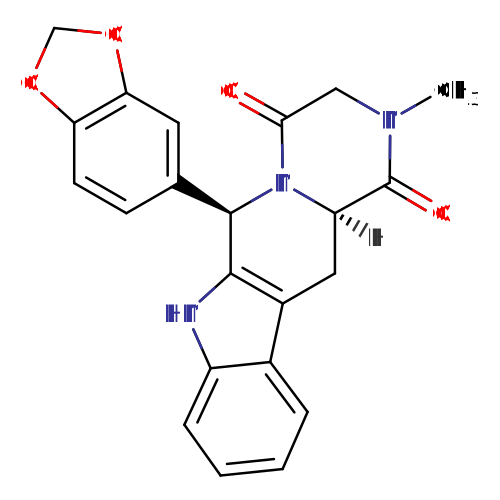
Structure for Tadalafil (DB00820)
- Weight
- Average: 389.404
Monoisotopic: 389.137556111 - Chemical Formula
- C22H19N3O4
- Synonyms
- (6R-trans)-6-(1,3-Benzodioxol-5-yl)-2,3,6,7,12,12a-hexahydro-2-methyl-pyrazino(1',2':1,6)pyrido(3,4-b)indole-1,4-dione
- (6R,12aR)-2,3,6,7,12,12a-Hexahydro-2-methyl-6-(3,4-(methylenedioxy)phenyl) pyrazino(1',2':1,6)pyrido(3,4-b)indole-1,4-dione
- Tadalafil
- Tadalafilo
- External IDs
- GF 196960
- IC-351
- IC351
- ICOS 351

Pharmacology
- Indication
Tadalafil is indicated for the treatment of erectile dysfunction (ED) and either alone or in combination with finasteride for the treatment of benign prostatic hypertrophy (BPH).7,11 It is also indicated for the treatment of pulmonary arterial hypertension (PAH) both alone and in combination with macitentan or other endothelin-1 antagonists.8,9
 Reduce drug development failure ratesBuild, train, & validate machine-learning modelswith evidence-based and structured datasets.Build, train, & validate predictive machine-learning models with structured datasets.
- Associated Conditions
Indication Type Indication Combined Product Details Approval Level Age Group Patient Characteristics Dose Form Treatment of Benign prostate hyperplasia •••••••••••• Used in combination to treat Benign prostatic hyperplasia (bph) Combination Product in combination with: Finasteride (DB01216) •••••••••••• ••••••• Management of Erectile dysfunction •••••••••••• Management of Pulmonary arterial hypertension •••••••••••• - Contraindications & Blackbox Warnings
 Prevent Adverse Drug Events TodayTap into our Clinical API for life-saving information on contraindications & blackbox warnings, population restrictions, harmful risks, & more.Avoid life-threatening adverse drug events with our Clinical API
- Pharmacodynamics
Tadalafil exerts a therapeutic effect in ED by increasing sexual stimulation-dependant smooth muscle relaxation in the penis, allowing the corpus cavernosum to fill with blood to produce an erection.2,3 Smooth muscle relaxation in the pulmonary vasculature helps to produce vasodilation in PAH which reduces blood pressure in the pulmonary arteries.3 In BPH, tadalafil may contribute to decreased smooth muscle cell proliferation which may reduce the size of the prostate and relieve the anatomical obstruction which produces urinary symptoms of BPH.4 The decreased affinity of tadalafil for PDE6 compared to other PDE5 inhibitors may explain the reduced incidence of visual side effects.8,9,2
- Mechanism of action
Tadalafil is a selective phosphodiesterase-5 (PDE5) inhibitor that produces several downstream effects with the most common therapeutic effect being smooth muscle relaxation. 7 Patients may experience ED due to a variety of causes including psychogenic, neurogenic, vasculogenic, iatrogenic, or endocrine. 6 These causes result in dysfunction of penile smooth muscle relaxation through either disrupted neuronal signaling or direct influence on smooth muscle cells. During sexual arousal, non-adrenergic non-cholinergic (NANC) neurons release nitric oxide (NO). Nitric oxide stimulates guanylate cyclase which converts guanosine triphosphate to cyclic guanosine monophosphate (cGMP).2,3 cGMP activates the cGMP-dependent kinase (PKG) in a signal cascade which activates K+ channels leading to inhibition of Ca2+ channels, inhibits platelet activation, and inhibits smooth muscle cell proliferation while inducing apoptosis. This signal cascade is attenuated by PDE5 which breaks the phosphodiester bond of cGMP, converting it to GMP. Inhibition of PDE5 by tadalafil increases signaling via the PKG cascade which supports penile smooth muscle relaxation during sexual arousal by decreasing Ca2+ entry into smooth muscle cells. This smooth muscle relaxation allows blood to fill the corpus cavernosum thereby producing an erection.
In PAH, blood pressure in the pulmonary arteries is raised due to a variety of mechanisms stemming from endothelial dysfunction.3 Decreased production of NO and prostacyclin reduce vasodilatory signaling while overproduction of endothelin-1 and thromboxane increase vasoconstriction. Inflammation, thromboses, and hypoxia later contribute to vascular remodeling which further reduces luminal size. The resultant increase in blood pressure reduces the capacity for gas exchange and increases afterload at the right ventricle, producing symptoms of dyspnea, fatigue, and dizziness as well as leading to right-sided heart failure. Tadalafil exerts its therapeutic effect in PAH through boosting NO-cGMP signaling to contribute to smooth muscle relaxation as with ED.
Lastly, tadalafil is used to treat BPH.7 BPH produces urinary dysfunction through hyperproliferation of the epithelial and smooth muscle layers of the prostate.4 The increased size of the prostate blocks urine flow through the urethra resulting in higher residual volumes due to incomplete emptying. Tadalafil does not appear to exert its benefit via smooth muscle relaxation of the prostate. It may instead exert its effect through a mix of increased oxygenation and decreased inflammation, which decreases tissue remodeling, and inhibition of cell proliferation through the cGMP cascade.
The decreased affinity for PDE6 compared to other PDE5 inhibitors may explain the decreased incidence of visual side effects as PDE6 is present in the eye and contributes to color vision.8,9,2
Target Actions Organism AcGMP-specific 3',5'-cyclic phosphodiesterase inhibitorHumans NDual 3',5'-cyclic-AMP and -GMP phosphodiesterase 11A inhibitorHumans NRetinal rod rhodopsin-sensitive cGMP 3',5'-cyclic phosphodiesterase subunit gamma inhibitorHumans - Absorption
Tadalafil has a tmax of 0.5-6h with a median of 2h in healthy adults. 1,7 The tmax in adults with PAH is reported as 2-8h with a median of 4h.8 There does not appear to be a significant effect on absorption when tadalafil is taken with food.1
- Volume of distribution
Tadalafil has a mean apparent volume of distribution of 63L in healthy adults.1,7 The mean apparent volume of distribution is reported as 77L in adults with PAH.8
- Protein binding
- Metabolism
Tadalafil undergoes hepatic metabolism via CYP3A4 to a catechol metabolite.1,5,7,8 This catechol metabolite undergoes subsequent methylation and glucuronidation with the methyl-glucuronide metabolite becoming the primary metabolite in circulation. None of the known metabolites are considered to be active.
Hover over products below to view reaction partners
- Route of elimination
Tadalafil is primarily eliminated via hepatic metabolism.1,7,8 These metabolites are mainly excreted in the feces (61%) and to a lesser extent in the urine (36%)
- Half-life
The mean half-life of elimination of tadalafil is 15-17.5h in healthy adults.1,7,8 The mean half-life of elimination in adults with PAH is reported as 35h.8
- Clearance
The mean apparent oral clearance of tadalafil is 2.5-3.4L/h in healthy adults.1,7,8 The mean apparent oral clearance in adults with PAH is reported as 3.5L/h
- Adverse Effects
 Improve decision support & research outcomesWith structured adverse effects data, including: blackbox warnings, adverse reactions, warning & precautions, & incidence rates. View sample adverse effects data in our new Data Library!Improve decision support & research outcomes with our structured adverse effects data.
- Toxicity
Symptoms of overdose are expected to be similar to typical adverse effects which may include headache, dyspepsia, back pain, myalgia, nasopharyngitis, and dizziness.7,8 Standard supportive care is recommended. Hemodialysis is not expected to contribute significantly to tadalafil clearance.
- Pathways
- Not Available
- Pharmacogenomic Effects/ADRs
- Not Available
Interactions
- Drug Interactions
- This information should not be interpreted without the help of a healthcare provider. If you believe you are experiencing an interaction, contact a healthcare provider immediately. The absence of an interaction does not necessarily mean no interactions exist.
Drug Interaction Integrate drug-drug
interactions in your softwareAbacavir Tadalafil may decrease the excretion rate of Abacavir which could result in a higher serum level. Abaloparatide Abaloparatide may increase the hypotensive activities of Tadalafil. Abametapir The serum concentration of Tadalafil can be increased when it is combined with Abametapir. Abatacept The metabolism of Tadalafil can be increased when combined with Abatacept. Acalabrutinib The metabolism of Tadalafil can be decreased when combined with Acalabrutinib. - Food Interactions
- Avoid excessive or chronic alcohol consumption. Ingesting excess amounts of alcohol (more than four drinks in a short time) may potentiate the hypotension and dizziness caused by tadalafil.
- Avoid grapefruit products. Tadalafil is metabolized by CYP3A4, and grapefruit products are CYP3A4 inhibitors; therefore, coadministration may increase serum levels of tadalafil and result in increased hypotension.
- Take with or without food.
Products
 Drug product information from 10+ global regionsOur datasets provide approved product information including:dosage, form, labeller, route of administration, and marketing period.Access drug product information from over 10 global regions.
- Product Images
- Brand Name Prescription Products
Name Dosage Strength Route Labeller Marketing Start Marketing End Region Image Act Tadalafil Tablet 2.5 mg Oral TEVA Canada Limited 2016-07-12 Not applicable Canada 
Act Tadalafil Tablet 10 mg Oral TEVA Canada Limited 2016-07-12 Not applicable Canada Act Tadalafil Tablet 5 mg Oral TEVA Canada Limited 2016-07-12 Not applicable Canada Act Tadalafil Tablet 20 mg Oral TEVA Canada Limited 2016-07-12 Not applicable Canada Adcirca Tablet 20 mg/1 Oral Aphena Pharma Solutions - Tennessee, LLC 2009-05-22 Not applicable US 
- Generic Prescription Products
Name Dosage Strength Route Labeller Marketing Start Marketing End Region Image Ach-tadalafil Tablet 20 mg Oral Accord Healthcare Inc 2023-03-30 Not applicable Canada Ach-tadalafil Tablet 2.5 mg Oral Accord Healthcare Inc Not applicable Not applicable Canada Ach-tadalafil Tablet 10 mg Oral Accord Healthcare Inc 2023-03-30 Not applicable Canada Ach-tadalafil Tablet 5 mg Oral Accord Healthcare Inc 2023-03-30 Not applicable Canada Ag-tadalafil Tablet 20 mg Oral Angita Pharma Inc. 2019-11-21 Not applicable Canada - Mixture Products
Name Ingredients Dosage Route Labeller Marketing Start Marketing End Region Image Entadfi Tadalafil (5 mg/1) + Finasteride (5 mg/1) Capsule Oral Veru Inc. 2021-12-12 Not applicable US Opsynvi Tadalafil (40 mg/1) + Macitentan (10 mg/1) Tablet, film coated Oral Actelion Pharmaceuticals US, Inc. 2024-03-22 Not applicable US Opsynvi Tadalafil (40 mg) + Macitentan (10 mg) Tablet Oral Janssen Pharmaceuticals 2021-11-25 Not applicable Canada Opsynvi Tadalafil (20 mg/1) + Macitentan (10 mg/1) Tablet, film coated Oral Actelion Pharmaceuticals US, Inc. 2024-03-22 Not applicable US TADA PLUS 30/20 MG FILM KAPLI TABLET ,4 ADET Tadalafil (20 mg) + Dapoxetine (30 mg) Tablet, coated NEUTEC İLAÇ SAN. TİC. A.Ş. 2014-09-11 Not applicable Turkey 


Categories
- ATC Codes
- G04BE08 — Tadalafil
- G04BE — Drugs used in erectile dysfunction
- G04B — UROLOGICALS
- G04 — UROLOGICALS
- G — GENITO URINARY SYSTEM AND SEX HORMONES
- C02KX — Antihypertensives for pulmonary arterial hypertension
- C02K — OTHER ANTIHYPERTENSIVES
- C02 — ANTIHYPERTENSIVES
- C — CARDIOVASCULAR SYSTEM
- G04CB — Testosterone-5-alpha reductase inhibitors
- G04C — DRUGS USED IN BENIGN PROSTATIC HYPERTROPHY
- G04 — UROLOGICALS
- G — GENITO URINARY SYSTEM AND SEX HORMONES
- G04CA — Alpha-adrenoreceptor antagonists
- G04C — DRUGS USED IN BENIGN PROSTATIC HYPERTROPHY
- G04 — UROLOGICALS
- G — GENITO URINARY SYSTEM AND SEX HORMONES
- Drug Categories
- 5-alpha Reductase Inhibitors
- Antihypertensive Agents
- Antihypertensives for Pulmonary Arterial Hypertension
- Carbolines
- Cardiovascular Agents
- Cytochrome P-450 CYP3A Substrates
- Cytochrome P-450 CYP3A4 Substrates
- Cytochrome P-450 CYP3A5 Substrates
- Cytochrome P-450 Substrates
- Drugs that are Mainly Renally Excreted
- Drugs Used in Benign Prostatic Hypertrophy
- Drugs Used in Erectile Dysfunction
- Enzyme Inhibitors
- Genito Urinary System and Sex Hormones
- Genitourinary Agents
- Heterocyclic Compounds, Fused-Ring
- Indole Alkaloids
- Indoles
- Phosphodiesterase 5 Inhibitors
- Phosphodiesterase Inhibitors
- Pyridines
- Urological Agents
- Urologicals
- Vasodilating Agents
- Chemical TaxonomyProvided by Classyfire
- Description
- This compound belongs to the class of organic compounds known as beta carbolines. These are compounds containing a 9H-pyrido[3,4-b]indole moiety.
- Kingdom
- Organic compounds
- Super Class
- Organoheterocyclic compounds
- Class
- Indoles and derivatives
- Sub Class
- Pyridoindoles
- Direct Parent
- Beta carbolines
- Alternative Parents
- 3-alkylindoles / Alpha amino acids and derivatives / Benzodioxoles / 2,5-dioxopiperazines / N-methylpiperazines / Benzenoids / Tertiary carboxylic acid amides / Pyrroles / Heteroaromatic compounds / Lactams show 8 more
- Substituents
- 1,4-diazinane / 2,5-dioxopiperazine / 3-alkylindole / Acetal / Alpha-amino acid or derivatives / Aromatic heteropolycyclic compound / Azacycle / Benzenoid / Benzodioxole / Beta-carboline show 20 more
- Molecular Framework
- Aromatic heteropolycyclic compounds
- External Descriptors
- benzodioxoles, pyrazinopyridoindole (CHEBI:71940)
- Affected organisms
- Humans and other mammals
Chemical Identifiers
- UNII
- 742SXX0ICT
- CAS number
- 171596-29-5
- InChI Key
- WOXKDUGGOYFFRN-IIBYNOLFSA-N
- InChI
- InChI=1S/C22H19N3O4/c1-24-10-19(26)25-16(22(24)27)9-14-13-4-2-3-5-15(13)23-20(14)21(25)12-6-7-17-18(8-12)29-11-28-17/h2-8,16,21,23H,9-11H2,1H3/t16-,21-/m1/s1
- IUPAC Name
- (2R,8R)-2-(2H-1,3-benzodioxol-5-yl)-6-methyl-3,6,17-triazatetracyclo[8.7.0.0^{3,8}.0^{11,16}]heptadeca-1(10),11,13,15-tetraene-4,7-dione
- SMILES
- [H][C@]12CC3=C(NC4=CC=CC=C34)[C@H](N1C(=O)CN(C)C2=O)C1=CC2=C(OCO2)C=C1
References
- Synthesis Reference
Ben-Zion Dolitzky, Dov Diller, "Preparation of tadalafil intermediates." U.S. Patent US20060276652, issued December 07, 2006.
US20060276652- General References
- Forgue ST, Patterson BE, Bedding AW, Payne CD, Phillips DL, Wrishko RE, Mitchell MI: Tadalafil pharmacokinetics in healthy subjects. Br J Clin Pharmacol. 2006 Mar;61(3):280-8. doi: 10.1111/j.1365-2125.2005.02553.x. [Article]
- Andersson KE: PDE5 inhibitors - pharmacology and clinical applications 20 years after sildenafil discovery. Br J Pharmacol. 2018 Jul;175(13):2554-2565. doi: 10.1111/bph.14205. Epub 2018 Apr 25. [Article]
- Arif SA, Poon H: Tadalafil: a long-acting phosphodiesterase-5 inhibitor for the treatment of pulmonary arterial hypertension. Clin Ther. 2011 Aug;33(8):993-1004. doi: 10.1016/j.clinthera.2011.06.008. Epub 2011 Jul 16. [Article]
- Monica FZ, De Nucci G: Tadalafil for the treatment of benign prostatic hyperplasia. Expert Opin Pharmacother. 2019 Jun;20(8):929-937. doi: 10.1080/14656566.2019.1589452. Epub 2019 Mar 22. [Article]
- Dalvie D, Obach RS, Kang P, Prakash C, Loi CM, Hurst S, Nedderman A, Goulet L, Smith E, Bu HZ, Smith DA: Assessment of three human in vitro systems in the generation of major human excretory and circulating metabolites. Chem Res Toxicol. 2009 Feb;22(2):357-68. doi: 10.1021/tx8004357. [Article]
- Yafi FA, Jenkins L, Albersen M, Corona G, Isidori AM, Goldfarb S, Maggi M, Nelson CJ, Parish S, Salonia A, Tan R, Mulhall JP, Hellstrom WJ: Erectile dysfunction. Nat Rev Dis Primers. 2016 Feb 4;2:16003. doi: 10.1038/nrdp.2016.3. [Article]
- FDA Approved Drug Products: Cialis (tadalafil) tablets [Link]
- FDA Approved Drug Products: Adcirca (tadalafil) tablets [Link]
- DPD Approved Drug Products: Opsynvi (tadalafil/macitentan) combination tablets [Link]
- Medisca: Tadalafil MSDS [Link]
- FDA Approved Drug Products: Entadfi (finasteride/tadalafil) capsules for oral use [Link]
- External Links
- Human Metabolome Database
- HMDB0014958
- KEGG Drug
- D02008
- PubChem Compound
- 110635
- PubChem Substance
- 46507646
- ChemSpider
- 99301
- BindingDB
- 14777
- 358263
- ChEBI
- 71940
- ChEMBL
- CHEMBL779
- ZINC
- ZINC000003993855
- Therapeutic Targets Database
- DAP000615
- PharmGKB
- PA10333
- PDBe Ligand
- CIA
- RxList
- RxList Drug Page
- Drugs.com
- Drugs.com Drug Page
- PDRhealth
- PDRhealth Drug Page
- Wikipedia
- Tadalafil
- PDB Entries
- 1udu / 1xoz
- FDA label
- Download (287 KB)
- MSDS
- Download (73.7 KB)
Clinical Trials
- Clinical Trials
Phase Status Purpose Conditions Count 4 Active Not Recruiting Treatment Benign Prostatic Hyperplasia (BPH) / Overactive Bladder Syndrome (OABS) 1 4 Active Not Recruiting Treatment Lower Ureteric Stones 1 4 Completed Not Available Sexual impotency 1 4 Completed Basic Science Becker's Muscular Dystrophy (BMD) 1 4 Completed Diagnostic Erectile Dysfunction / Erectile Dysfunction With Diabetes Mellitus 1
Pharmacoeconomics
- Manufacturers
- Eli lilly co
- Eli lilly and co
- Eli Lilly and Company
- Packagers
- A-S Medication Solutions LLC
- Bryant Ranch Prepack
- Diversified Healthcare Services Inc.
- Eli Lilly & Co.
- Lake Erie Medical and Surgical Supply
- Lilly Del Caribe Inc.
- Nucare Pharmaceuticals Inc.
- Physicians Total Care Inc.
- Rebel Distributors Corp.
- Redpharm Drug
- Southwood Pharmaceuticals
- United Therapeutics Corp.
- Dosage Forms
Form Route Strength Film Buccal 10.000 mg Suspension Oral 2 mg/mL Granule Oral 5.000 mg Capsule Oral 5.000 mg Gel Oral 20.000 mg Film, soluble Oral 5 mg Tablet Oral 5.000 mg Tablet Oral 10 mg Tablet Oral 2.5 mg Tablet Oral 20.000 mg Tablet Oral 5 mg Tablet, film coated Oral 10 mg/1 Tablet, film coated Oral 2.5 mg/1 Tablet, film coated Oral 20 mg/1 Tablet, film coated Oral 5 mg/1 Tablet, coated Oral 10 mg Tablet, coated Oral 5 mg Tablet, coated Oral Film, soluble Oral Tablet Oral 20.00 mg Tablet, soluble Oral 10 mg Tablet, orally disintegrating Oral Capsule Oral Tablet, orally disintegrating Oral 10 mg Tablet, chewable Oral 20 MG Tablet Oral 5.00 mg Tablet, film coated Oral Tablet Oral Tablet, film coated Oral Capsule 10 mg Capsule 20 mg Capsule 5 mg Tablet, coated Tablet, film coated Oral 10.000 mg Tablet, film coated Oral 2.500 mg Tablet, film coated Oral 20.000 mg Tablet, film coated Oral 5.000 mg Tablet Oral 10 mg/1 Tablet Oral 2.5 mg/1 Tablet Oral 20 mg/1 Tablet Oral 5 mg/1 Tablet, coated Oral 10 mg/1 Tablet, coated Oral 2.5 mg/1 Tablet, coated Oral 20 mg/1 Tablet, coated Oral 5 mg/1 Tablet Oral Tablet, film coated Oral 2.5 MG Tablet, orally disintegrating Oral 20 mg Tablet, soluble Oral 5 mg Tablet, soluble Oral 500000 mg Tablet, chewable Oral 5 mg Suspension Oral 20 mg/5mL Tablet, effervescent 10 mg Tablet, effervescent Tablet, effervescent 20 mg Film, soluble Oral 10 Mg Film, soluble Oral 20 Mg Tablet Oral 133.333 mg Tablet, film coated Oral 10 mg Tablet, film coated Oral 20 mg Tablet, film coated Oral 5 mg Tablet Oral 20 mg Tablet, orally disintegrating Oral 5 mg Tablet, coated Oral 20 mg Tablet, coated Oral 2000000 mg - Prices
Unit description Cost Unit Cialis 30 5 mg tablet Box 140.77USD box Cialis 10 mg tablet 20.92USD tablet Cialis 20 mg tablet 20.92USD tablet Cialis 2.5 mg tablet 4.76USD tablet Cialis 5 mg tablet 4.76USD tablet DrugBank does not sell nor buy drugs. Pricing information is supplied for informational purposes only.- Patents
Patent Number Pediatric Extension Approved Expires (estimated) Region CA2379948 No 2008-03-25 2020-04-26 Canada CA2181377 No 2002-05-28 2015-01-19 Canada US6140329 No 2000-10-31 2016-07-11 US US6821975 Yes 2004-11-23 2021-05-19 US US6943166 Yes 2005-09-13 2020-10-26 US US7182958 Yes 2007-02-27 2020-10-26 US US5859006 Yes 1999-01-12 2018-05-21 US US11382917 No 2018-12-24 2038-12-24 US US11666576 No 2018-12-24 2038-12-24 US
Properties
- State
- Solid
- Experimental Properties
Property Value Source melting point (°C) 301-302 °C Medisca: Tadalafil MSDS water solubility Practically insoluble in water Medisca: Tadalafil MSDS logP 2.89 Medisca: Tadalafil MSDS - Predicted Properties
Property Value Source Water Solubility 0.25 mg/mL ALOGPS logP 2.36 ALOGPS logP 1.64 Chemaxon logS -3.2 ALOGPS pKa (Strongest Acidic) 15.17 Chemaxon pKa (Strongest Basic) -4.2 Chemaxon Physiological Charge 0 Chemaxon Hydrogen Acceptor Count 4 Chemaxon Hydrogen Donor Count 1 Chemaxon Polar Surface Area 74.87 Å2 Chemaxon Rotatable Bond Count 1 Chemaxon Refractivity 104.08 m3·mol-1 Chemaxon Polarizability 40.92 Å3 Chemaxon Number of Rings 6 Chemaxon Bioavailability 1 Chemaxon Rule of Five Yes Chemaxon Ghose Filter Yes Chemaxon Veber's Rule No Chemaxon MDDR-like Rule No Chemaxon - Predicted ADMET Features
Property Value Probability Human Intestinal Absorption + 0.9933 Blood Brain Barrier + 0.7821 Caco-2 permeable + 0.5 P-glycoprotein substrate Substrate 0.6581 P-glycoprotein inhibitor I Non-inhibitor 0.59 P-glycoprotein inhibitor II Non-inhibitor 0.775 Renal organic cation transporter Non-inhibitor 0.7165 CYP450 2C9 substrate Non-substrate 0.8742 CYP450 2D6 substrate Non-substrate 0.9116 CYP450 3A4 substrate Substrate 0.7407 CYP450 1A2 substrate Non-inhibitor 0.7447 CYP450 2C9 inhibitor Inhibitor 0.5566 CYP450 2D6 inhibitor Non-inhibitor 0.6788 CYP450 2C19 inhibitor Inhibitor 0.6998 CYP450 3A4 inhibitor Non-inhibitor 0.6981 CYP450 inhibitory promiscuity High CYP Inhibitory Promiscuity 0.7235 Ames test Non AMES toxic 0.6466 Carcinogenicity Non-carcinogens 0.931 Biodegradation Not ready biodegradable 0.8906 Rat acute toxicity 2.6521 LD50, mol/kg Not applicable hERG inhibition (predictor I) Weak inhibitor 0.976 hERG inhibition (predictor II) Non-inhibitor 0.8734
Spectra
- Mass Spec (NIST)
- Not Available
- Spectra
- Chromatographic Properties
Collision Cross Sections (CCS)
Adduct CCS Value (Å2) Source type Source [M-H]- 206.8616357 predictedDarkChem Lite v0.1.0 [M-H]- 206.5738357 predictedDarkChem Lite v0.1.0 [M-H]- 189.95772 predictedDeepCCS 1.0 (2019) [M-H]- 206.8616357 predictedDarkChem Lite v0.1.0 [M-H]- 206.5738357 predictedDarkChem Lite v0.1.0 [M-H]- 189.95772 predictedDeepCCS 1.0 (2019) [M+H]+ 207.2695357 predictedDarkChem Lite v0.1.0 [M+H]+ 206.7156357 predictedDarkChem Lite v0.1.0 [M+H]+ 192.35329 predictedDeepCCS 1.0 (2019) [M+H]+ 207.2695357 predictedDarkChem Lite v0.1.0 [M+H]+ 206.7156357 predictedDarkChem Lite v0.1.0 [M+H]+ 192.35329 predictedDeepCCS 1.0 (2019) [M+Na]+ 206.6459357 predictedDarkChem Lite v0.1.0 [M+Na]+ 198.26581 predictedDeepCCS 1.0 (2019) [M+Na]+ 206.6459357 predictedDarkChem Lite v0.1.0 [M+Na]+ 198.26581 predictedDeepCCS 1.0 (2019)
Targets

- Kind
- Protein
- Organism
- Humans
- Pharmacological action
- Yes
- Actions
- Inhibitor
- General Function
- Metal ion binding
- Specific Function
- Plays a role in signal transduction by regulating the intracellular concentration of cyclic nucleotides. This phosphodiesterase catalyzes the specific hydrolysis of cGMP to 5'-GMP (PubMed:9714779, ...
- Gene Name
- PDE5A
- Uniprot ID
- O76074
- Uniprot Name
- cGMP-specific 3',5'-cyclic phosphodiesterase
- Molecular Weight
- 99984.14 Da
References
- Curran M, Keating G: Tadalafil. Drugs. 2003;63(20):2203-12; discussion 2213-4. [Article]
- Eardley I, Cartledge J: Tadalafil (Cialis) for men with erectile dysfunction. Int J Clin Pract. 2002 May;56(4):300-4. [Article]
- Montorsi F, Salonia A, Deho' F, Cestari A, Guazzoni G, Rigatti P, Stief C: Pharmacological management of erectile dysfunction. BJU Int. 2003 Mar;91(5):446-54. [Article]
- Rotella DP: Tadalafil Lilly ICOS. Curr Opin Investig Drugs. 2003 Jan;4(1):60-5. [Article]
- Zoraghi R, Francis SH, Corbin JD: Critical amino acids in phosphodiesterase-5 catalytic site that provide for high-affinity interaction with cyclic guanosine monophosphate and inhibitors. Biochemistry. 2007 Nov 27;46(47):13554-63. Epub 2007 Nov 3. [Article]
- Blount MA, Beasley A, Zoraghi R, Sekhar KR, Bessay EP, Francis SH, Corbin JD: Binding of tritiated sildenafil, tadalafil, or vardenafil to the phosphodiesterase-5 catalytic site displays potency, specificity, heterogeneity, and cGMP stimulation. Mol Pharmacol. 2004 Jul;66(1):144-52. doi: 10.1124/mol.66.1.144. [Article]
- FDA Approved Drug Products: Adcirca (tadalafil) tablets [Link]
- FDA Approved Drug Products: Cialis (tadalafil) tablets [Link]
- Kind
- Protein
- Organism
- Humans
- Pharmacological action
- No
- Actions
- Inhibitor
- General Function
- Metal ion binding
- Specific Function
- Plays a role in signal transduction by regulating the intracellular concentration of cyclic nucleotides cAMP and cGMP. Catalyzes the hydrolysis of both cAMP and cGMP to 5'-AMP and 5'-GMP, respectiv...
- Gene Name
- PDE11A
- Uniprot ID
- Q9HCR9
- Uniprot Name
- Dual 3',5'-cyclic-AMP and -GMP phosphodiesterase 11A
- Molecular Weight
- 104750.64 Da
References
- Weeks JL 2nd, Corbin JD, Francis SH: Interactions between cyclic nucleotide phosphodiesterase 11 catalytic site and substrates or tadalafil and role of a critical Gln-869 hydrogen bond. J Pharmacol Exp Ther. 2009 Oct;331(1):133-41. doi: 10.1124/jpet.109.156935. Epub 2009 Jul 29. [Article]
- Weeks JL 2nd, Zoraghi R, Francis SH, Corbin JD: N-Terminal domain of phosphodiesterase-11A4 (PDE11A4) decreases affinity of the catalytic site for substrates and tadalafil, and is involved in oligomerization. Biochemistry. 2007 Sep 11;46(36):10353-64. Epub 2007 Aug 16. [Article]
- Andersson KE: PDE5 inhibitors - pharmacology and clinical applications 20 years after sildenafil discovery. Br J Pharmacol. 2018 Jul;175(13):2554-2565. doi: 10.1111/bph.14205. Epub 2018 Apr 25. [Article]
- FDA Approved Drug Products: Adcirca (tadalafil) tablets [Link]
- FDA Approved Drug Products: Cialis (tadalafil) tablets [Link]
- Kind
- Protein
- Organism
- Humans
- Pharmacological action
- No
- Actions
- Inhibitor
- General Function
- Enzyme inhibitor activity
- Specific Function
- Participates in processes of transmission and amplification of the visual signal. cGMP-PDEs are the effector molecules in G-protein-mediated phototransduction in vertebrate rods and cones.
- Gene Name
- PDE6G
- Uniprot ID
- P18545
- Uniprot Name
- Retinal rod rhodopsin-sensitive cGMP 3',5'-cyclic phosphodiesterase subunit gamma
- Molecular Weight
- 9643.09 Da
References
- Andersson KE: PDE5 inhibitors - pharmacology and clinical applications 20 years after sildenafil discovery. Br J Pharmacol. 2018 Jul;175(13):2554-2565. doi: 10.1111/bph.14205. Epub 2018 Apr 25. [Article]
- FDA Approved Drug Products: Adcirca (tadalafil) tablets [Link]
- FDA Approved Drug Products: Cialis (tadalafil) tablets [Link]
Enzymes
- Kind
- Protein
- Organism
- Humans
- Pharmacological action
- No
- Actions
- Substrate
- General Function
- Vitamin d3 25-hydroxylase activity
- Specific Function
- Cytochromes P450 are a group of heme-thiolate monooxygenases. In liver microsomes, this enzyme is involved in an NADPH-dependent electron transport pathway. It performs a variety of oxidation react...
- Gene Name
- CYP3A4
- Uniprot ID
- P08684
- Uniprot Name
- Cytochrome P450 3A4
- Molecular Weight
- 57342.67 Da
References
- Takahiro R, Nakamura S, Kohno H, Yoshimura N, Nakamura T, Ozawa S, Hirono K, Ichida F, Taguchi M: Contribution of CYP3A isoforms to dealkylation of PDE5 inhibitors: a comparison between sildenafil N-demethylation and tadalafil demethylenation. Biol Pharm Bull. 2015;38(1):58-65. doi: 10.1248/bpb.b14-00566. [Article]
- Forgue ST, Patterson BE, Bedding AW, Payne CD, Phillips DL, Wrishko RE, Mitchell MI: Tadalafil pharmacokinetics in healthy subjects. Br J Clin Pharmacol. 2006 Mar;61(3):280-8. doi: 10.1111/j.1365-2125.2005.02553.x. [Article]
- FDA Drug Development and Drug Interactions: Table of Substrates, Inhibitors and Inducers [Link]
- FDA Approved Drug Products: Adcirca (tadalafil) tablets [Link]
- FDA Approved Drug Products: Cialis (tadalafil) tablets [Link]
- Tadalafil FDA label [File]

Drug created at June 13, 2005 13:24 / Updated at April 26, 2024 00:45