Identification
- Summary
Maprotiline is a tetracyclic antidepressant used to treat depressive illness, major depressive disorder, bipolar disorder, and anxiety associated with depression.
- Generic Name
- Maprotiline
- DrugBank Accession Number
- DB00934
- Background
Maprotiline is a tetracyclic antidepressant with similar pharmacological properties to tricyclic antidepressants (TCAs). Similar to TCAs, maprotiline inhibits neuronal norepinephrine reuptake, possesses some anticholinergic activity, and does not affect monoamine oxidase activity. It differs from TCAs in that it does not appear to block serotonin reuptake. Maprotiline may be used to treat depressive affective disorders, including dysthymic disorder (depressive neurosis) and major depressive disorder. Maprotiline is effective at reducing symptoms of anxiety associated with depression.
- Type
- Small Molecule
- Groups
- Approved, Investigational
- Structure
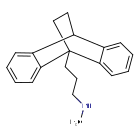
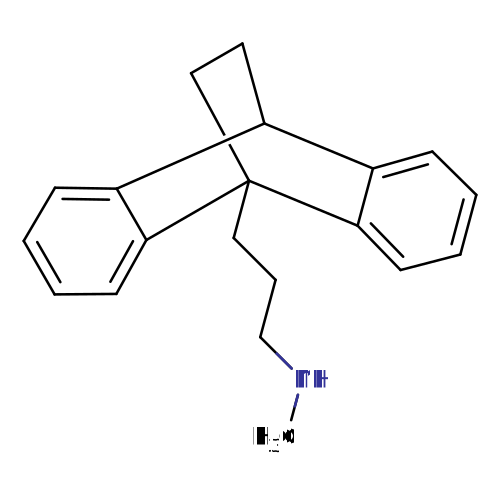
Structure for Maprotiline (DB00934)
- Weight
- Average: 277.4033
Monoisotopic: 277.183049741 - Chemical Formula
- C20H23N
- Synonyms
- Maprotilina
- Maprotiline
- Maprotilinum
- Maprotylina

Pharmacology
- Indication
For treatment of depression, including the depressed phase of bipolar depression, psychotic depression, and involutional melancholia, and may also be helpful in treating certain patients suffering severe depressive neurosis.
 Reduce drug development failure ratesBuild, train, & validate machine-learning modelswith evidence-based and structured datasets.Build, train, & validate predictive machine-learning models with structured datasets.
- Associated Conditions
Indication Type Indication Combined Product Details Approval Level Age Group Patient Characteristics Dose Form Treatment of Anxiety •••••••••••• Treatment of Depressive illness •••••••••••• Treatment of Dysthymic disorder •••••••••••• Treatment of Major depressive disorder •••••••••••• Treatment of Manic depressive illness •••••••••••• - Contraindications & Blackbox Warnings
 Prevent Adverse Drug Events TodayTap into our Clinical API for life-saving information on contraindications & blackbox warnings, population restrictions, harmful risks, & more.Avoid life-threatening adverse drug events with our Clinical API
- Pharmacodynamics
Maprotiline is a tetracyclic antidepressant. Although its main therapeutic use is in the treatment of depression, it has also been shown to exert a sedative effect on the anxiety component that often accompanies depression. In one sleep study, it was shown that maprotiline increases the duration of the REM sleep phase in depressed patients, compared to imipramine which reduced the REM sleep phase. Maprotiline is a strong inhibitor of noradrenaline reuptake in the brain and peripheral tissues, however it is worthy to note that it is a weak inhibitor of serotonergic uptake. In addition, it displays strong antihistaminic action (which may explain its sedative effects) as well as weak anticholinergic action. Maprotiline also has lower alpha adrenergic blocking activity than amitriptyline.
- Mechanism of action
Maprotiline exerts its antidepressant action by inhibition of presynaptic uptake of catecholamines, thereby increasing their concentration at the synaptic clefts of the brain. In single doses, the effect of maprotiline on the EEG revealed a rise in the alpha-wave density, a reduction of the alpha-wave frequency and an increase in the alpha-wave amplitude. However, as with other tricyclic antidepressants, maprotiline lowers the convulsive threshold. Maprotiline acts as an antagonist at central presynaptic α2-adrenergic inhibitory autoreceptors and hetero-receptors, an action that is postulated to result in an increase in central noradrenergic and serotonergic activity. Maprotiline is also a moderate peripheral α1 adrenergic antagonist, which may explain the occasional orthostatic hypotension reported in association with its use. Maprotiline also inhibits the amine transporter, delaying the reuptake of noradrenaline and norepinephrine. Lastly, maprotiline is a strong inhibitor of the histamine H1 receptor, which explains its sedative actions.
Target Actions Organism ASodium-dependent noradrenaline transporter inhibitorHumans NHistamine H1 receptor antagonistHumans NMuscarinic acetylcholine receptor M1 antagonistHumans NMuscarinic acetylcholine receptor M2 antagonistHumans NMuscarinic acetylcholine receptor M3 antagonistHumans NMuscarinic acetylcholine receptor M4 antagonistHumans NMuscarinic acetylcholine receptor M5 antagonistHumans NAlpha-1 adrenergic receptors antagonistHumans U5-hydroxytryptamine receptor 2A binderHumans U5-hydroxytryptamine receptor 2C binderHumans U5-hydroxytryptamine receptor 7 antagonistHumans UDopamine D2 receptor binderHumans UAlpha-2 adrenergic receptors antagonistHumans - Absorption
Slowly, but completely absorbed from the GI tract following oral administration.
- Volume of distribution
Maprotiline and its metabolites may be detected in the lungs, liver, brain, and kidneys; lower concentrations may be found in the adrenal glands, heart and muscle. Maprotiline is readily distributed into breast milk to similar concentrations as those in maternal blood.
- Protein binding
88%
- Metabolism
Hepatic. Maprotiline is metabolized by N-demethylation, deamination, aliphatic and aromatic hydroxylations and by formation of aromatic methoxy derivatives. It is slowly metabolized primarily to desmethylmaprotiline, a pharmacologically active metabolite. Desmethylmaprotiline may undergo further metabolism to maprotiline-N-oxide.
Hover over products below to view reaction partners
- Route of elimination
Approximately 60% of a single orally administered dose is excreted in urine as conjugated metabolites within 21 days; 30% is eliminated in feces.
- Half-life
Average ~ 51 hours (range: 27-58 hours)
- Clearance
Not Available
- Adverse Effects
 Improve decision support & research outcomesWith structured adverse effects data, including: blackbox warnings, adverse reactions, warning & precautions, & incidence rates. View sample adverse effects data in our new Data Library!Improve decision support & research outcomes with our structured adverse effects data.
- Toxicity
LD50=~900 mg/kg (Orally in rats); LD50=90 mg/kg (Orally in women); Signs of overdose include motor unrest, muscular twitching and rigidity, tremor, ataxia, convulsions, hyperpyrexia, vertigo, mydriasis, vomiting, cyanosis, hypotension, shock, tachycardia, cardiac arrhythmias, impaired cardiac conduction, respiratory depression, and disturbances of consciousness up to deep coma.
- Pathways
- Not Available
- Pharmacogenomic Effects/ADRs
- Not Available
Interactions
- Drug Interactions
- This information should not be interpreted without the help of a healthcare provider. If you believe you are experiencing an interaction, contact a healthcare provider immediately. The absence of an interaction does not necessarily mean no interactions exist.
Drug Interaction Integrate drug-drug
interactions in your software1,2-Benzodiazepine The risk or severity of CNS depression can be increased when Maprotiline is combined with 1,2-Benzodiazepine. Abacavir Maprotiline may decrease the excretion rate of Abacavir which could result in a higher serum level. Abametapir The serum concentration of Maprotiline can be increased when it is combined with Abametapir. Abatacept The metabolism of Maprotiline can be increased when combined with Abatacept. Abiraterone The serum concentration of Maprotiline can be increased when it is combined with Abiraterone. - Food Interactions
- Limit caffeine intake.
- Take with or without food.
Products
 Drug product information from 10+ global regionsOur datasets provide approved product information including:dosage, form, labeller, route of administration, and marketing period.Access drug product information from over 10 global regions.
- Product Ingredients
Ingredient UNII CAS InChI Key Maprotiline hydrochloride 7C8J54PVFI 10347-81-6 NZDMFGKECODQRY-UHFFFAOYSA-N - International/Other Brands
- Deprilept / Psymion
- Brand Name Prescription Products
Name Dosage Strength Route Labeller Marketing Start Marketing End Region Image Ludiomil Tablet 75 mg/1 Oral Novartis 1980-12-01 2008-10-30 US 
Ludiomil Tablet 50 mg/1 Oral Novartis 1980-12-01 2008-10-30 US Ludiomil Tablet 25 mg/1 Oral Novartis 1980-12-01 2008-10-30 US Ludiomil Tab 10mg Tablet 10 mg Oral Novartis 1985-12-31 2003-07-29 Canada 
Ludiomil Tab 25mg Tablet 25 mg / tab Oral Novartis 1976-12-31 2001-07-30 Canada - Generic Prescription Products
Name Dosage Strength Route Labeller Marketing Start Marketing End Region Image Maprotiline Hydrochloride Tablet, film coated 75 mg/1 Oral Mylan Pharmaceuticals Inc. 1988-10-03 Not applicable US Maprotiline Hydrochloride Tablet, film coated 50 mg/1 Oral Mylan Pharmaceuticals Inc. 1988-10-03 Not applicable US Maprotiline Hydrochloride Tablet, film coated 25 mg/1 Oral Mylan Pharmaceuticals Inc. 1988-10-03 Not applicable US Novo-maprotiline - Tab 10mg Tablet 10 mg Oral Novopharm Limited 1995-12-31 2005-08-10 Canada PMS-maprotiline Tablet 25 mg / tab Oral Pharmascience Inc Not applicable Not applicable Canada
Categories
- ATC Codes
- N06AA21 — Maprotiline
- Drug Categories
- Adrenergic Agents
- Adrenergic Uptake Inhibitors
- Agents producing tachycardia
- Agents that reduce seizure threshold
- Anthracenes
- Anticholinergic Agents
- Antidepressive Agents
- Antidepressive Agents Indicated for Depression
- Antidepressive Agents, Second-Generation
- Antidepressive Agents, Tetracyclic
- Central Nervous System Agents
- Central Nervous System Depressants
- Cytochrome P-450 CYP1A2 Substrates
- Cytochrome P-450 CYP2D6 Substrates
- Cytochrome P-450 Substrates
- Drugs that are Mainly Renally Excreted
- Histamine Antagonists
- Histamine H1 Antagonists
- Membrane Transport Modulators
- Muscarinic Antagonists
- Nervous System
- Neurotransmitter Agents
- Neurotransmitter Uptake Inhibitors
- Non-Selective Monoamine Reuptake Inhibitors
- Potential QTc-Prolonging Agents
- Psychoanaleptics
- Psychotropic Drugs
- QTc Prolonging Agents
- Serotonergic Drugs Shown to Increase Risk of Serotonin Syndrome
- Serotonin Agents
- Serotonin Modulators
- Tricyclics and Other Norepinephrine-reuptake Inhibitors
- Chemical TaxonomyProvided by Classyfire
- Description
- This compound belongs to the class of organic compounds known as anthracenes. These are organic compounds containing a system of three linearly fused benzene rings.
- Kingdom
- Organic compounds
- Super Class
- Benzenoids
- Class
- Anthracenes
- Sub Class
- Not Available
- Direct Parent
- Anthracenes
- Alternative Parents
- Tetralins / Aralkylamines / Dialkylamines / Organopnictogen compounds / Hydrocarbon derivatives
- Substituents
- Amine / Anthracene / Aralkylamine / Aromatic homopolycyclic compound / Hydrocarbon derivative / Organic nitrogen compound / Organonitrogen compound / Organopnictogen compound / Secondary aliphatic amine / Secondary amine
- Molecular Framework
- Aromatic homopolycyclic compounds
- External Descriptors
- anthracenes (CHEBI:6690)
- Affected organisms
- Humans and other mammals
Chemical Identifiers
- UNII
- 2U1W68TROF
- CAS number
- 10262-69-8
- InChI Key
- QSLMDECMDJKHMQ-UHFFFAOYSA-N
- InChI
- InChI=1S/C20H23N/c1-21-14-6-12-20-13-11-15(16-7-2-4-9-18(16)20)17-8-3-5-10-19(17)20/h2-5,7-10,15,21H,6,11-14H2,1H3
- IUPAC Name
- methyl(3-{tetracyclo[6.6.2.0^{2,7}.0^{9,14}]hexadeca-2,4,6,9,11,13-hexaen-1-yl}propyl)amine
- SMILES
- CNCCCC12CCC(C3=CC=CC=C13)C1=CC=CC=C21
References
- General References
- Not Available
- External Links
- Human Metabolome Database
- HMDB0015069
- KEGG Drug
- D02566
- KEGG Compound
- C07107
- PubChem Compound
- 4011
- PubChem Substance
- 46508358
- ChemSpider
- 3871
- BindingDB
- 35228
- 6646
- ChEBI
- 6690
- ChEMBL
- CHEMBL21731
- ZINC
- ZINC000001530688
- Therapeutic Targets Database
- DAP001150
- PharmGKB
- PA450322
- Guide to Pharmacology
- GtP Drug Page
- Drugs.com
- Drugs.com Drug Page
- Wikipedia
- Maprotiline
- MSDS
- Download (64.8 KB)
Clinical Trials
- Clinical Trials
Phase Status Purpose Conditions Count 3 Terminated Treatment Anxiety Disorders / Dementia / Depression / Psychosomatic Disorders / Schizophrenia 1 1 Withdrawn Treatment Brain Neoplasm / High Grade Glioma: Glioblastoma (GBM) 1
Pharmacoeconomics
- Manufacturers
- Novartis pharmaceuticals corp
- American therapeutics inc
- Mylan pharmaceuticals inc
- Watson laboratories inc
- Packagers
- Major Pharmaceuticals
- Murfreesboro Pharmaceutical Nursing Supply
- Mylan
- Novartis AG
- Prescript Pharmaceuticals
- Dosage Forms
Form Route Strength Injection Intravenous 25 mg Solution / drops Oral 2 % Tablet Oral 25 mg/1 Tablet Oral 50 MG Tablet Oral 50 mg/1 Tablet Oral 75 mg/1 Tablet Oral 75 MG Tablet, film coated Oral 50 MG Tablet, film coated Oral 75 MG Tablet, film coated Oral Tablet Oral Tablet Oral 25 mg / tab Tablet Oral 50 mg / tab Tablet Oral 75 mg / tab Tablet, film coated Oral 25 MG Tablet, film coated Oral 25 mg/1 Tablet, film coated Oral 50 mg/1 Tablet, film coated Oral 75 mg/1 Tablet Oral 10 mg Tablet Oral 10 mg / tab Tablet Oral 25 mg - Prices
Unit description Cost Unit Novo-Maprotiline 75 mg Tablet 1.54USD tablet Maprotiline HCl 75 mg tablet 1.25USD tablet Novo-Maprotiline 50 mg Tablet 1.13USD tablet Maprotiline 75 mg tablet 0.91USD tablet Maprotiline HCl 50 mg tablet 0.86USD tablet Maprotiline 50 mg tablet 0.79USD tablet Maprotiline HCl 25 mg tablet 0.73USD tablet Maprotiline 25 mg tablet 0.69USD tablet Novo-Maprotiline 25 mg Tablet 0.6USD tablet DrugBank does not sell nor buy drugs. Pricing information is supplied for informational purposes only.- Patents
- Not Available
Properties
- State
- Solid
- Experimental Properties
Property Value Source melting point (°C) 93 °C PhysProp water solubility Slightly soluble Not Available logP 5.1 Not Available - Predicted Properties
Property Value Source Water Solubility 0.00015 mg/mL ALOGPS logP 4.89 ALOGPS logP 4.37 Chemaxon logS -6.3 ALOGPS pKa (Strongest Basic) 10.54 Chemaxon Physiological Charge 1 Chemaxon Hydrogen Acceptor Count 1 Chemaxon Hydrogen Donor Count 1 Chemaxon Polar Surface Area 12.03 Å2 Chemaxon Rotatable Bond Count 4 Chemaxon Refractivity 99.3 m3·mol-1 Chemaxon Polarizability 33.58 Å3 Chemaxon Number of Rings 4 Chemaxon Bioavailability 1 Chemaxon Rule of Five Yes Chemaxon Ghose Filter Yes Chemaxon Veber's Rule Yes Chemaxon MDDR-like Rule No Chemaxon - Predicted ADMET Features
Property Value Probability Human Intestinal Absorption + 1.0 Blood Brain Barrier + 0.9903 Caco-2 permeable + 0.7214 P-glycoprotein substrate Substrate 0.7836 P-glycoprotein inhibitor I Inhibitor 0.7667 P-glycoprotein inhibitor II Inhibitor 0.7206 Renal organic cation transporter Inhibitor 0.6502 CYP450 2C9 substrate Non-substrate 0.7898 CYP450 2D6 substrate Substrate 0.8918 CYP450 3A4 substrate Non-substrate 0.5216 CYP450 1A2 substrate Non-inhibitor 0.9046 CYP450 2C9 inhibitor Non-inhibitor 0.9071 CYP450 2D6 inhibitor Inhibitor 0.8931 CYP450 2C19 inhibitor Non-inhibitor 0.9025 CYP450 3A4 inhibitor Inhibitor 0.796 CYP450 inhibitory promiscuity Low CYP Inhibitory Promiscuity 0.855 Ames test Non AMES toxic 0.7713 Carcinogenicity Non-carcinogens 0.9204 Biodegradation Not ready biodegradable 0.8913 Rat acute toxicity 2.5307 LD50, mol/kg Not applicable hERG inhibition (predictor I) Weak inhibitor 0.7016 hERG inhibition (predictor II) Inhibitor 0.8652
Spectra
- Mass Spec (NIST)
- Not Available
- Spectra
- Chromatographic Properties
Collision Cross Sections (CCS)
Adduct CCS Value (Å2) Source type Source [M-H]- 176.308002 predictedDarkChem Lite v0.1.0 [M-H]- 167.80067 predictedDeepCCS 1.0 (2019) [M+H]+ 176.826802 predictedDarkChem Lite v0.1.0 [M+H]+ 170.1587 predictedDeepCCS 1.0 (2019) [M+Na]+ 176.620802 predictedDarkChem Lite v0.1.0 [M+Na]+ 176.25197 predictedDeepCCS 1.0 (2019)
Targets

- Kind
- Protein
- Organism
- Humans
- Pharmacological action
- Yes
- Actions
- Inhibitor
- General Function
- Norepinephrine:sodium symporter activity
- Specific Function
- Amine transporter. Terminates the action of noradrenaline by its high affinity sodium-dependent reuptake into presynaptic terminals.
- Gene Name
- SLC6A2
- Uniprot ID
- P23975
- Uniprot Name
- Sodium-dependent noradrenaline transporter
- Molecular Weight
- 69331.42 Da
References
- Saba W, Valette H, Schollhorn-Peyronneau MA, Coulon C, Ottaviani M, Chalon S, Dolle F, Emond P, Halldin C, Helfenbein J, Madelmont JC, Deloye JB, Guilloteau D, Bottlaender M: [11C]LBT-999: a suitable radioligand for investigation of extra-striatal dopamine transporter with PET. Synapse. 2007 Jan;61(1):17-23. [Article]
- Arai S, Morita K, Kitayama S, Kumagai K, Kumagai M, Kihira K, Dohi T: Chronic inhibition of the norepinephrine transporter in the brain participates in seizure sensitization to cocaine and local anesthetics. Brain Res. 2003 Feb 21;964(1):83-90. [Article]
- Cloonan SM, Drozgowska A, Fayne D, Williams DC: The antidepressants maprotiline and fluoxetine have potent selective antiproliferative effects against Burkitt lymphoma independently of the norepinephrine and serotonin transporters. Leuk Lymphoma. 2010 Mar;51(3):523-39. doi: 10.3109/10428190903552112. [Article]
- Dronjak S, Spasojevic N, Gavrilovic L, Varagic V: Effects of noradrenaline and serotonin reuptake inhibitors on pituitary-adrenocortical and sympatho-adrenomedullar system of adult rats. Neuro Endocrinol Lett. 2007 Oct;28(5):614-20. [Article]
- Mochizucki D: Serotonin and noradrenaline reuptake inhibitors in animal models of pain. Hum Psychopharmacol. 2004 Oct;19 Suppl 1:S15-9. [Article]
- Kind
- Protein
- Organism
- Humans
- Pharmacological action
- No
- Actions
- Antagonist
- General Function
- Histamine receptor activity
- Specific Function
- In peripheral tissues, the H1 subclass of histamine receptors mediates the contraction of smooth muscles, increase in capillary permeability due to contraction of terminal venules, and catecholamin...
- Gene Name
- HRH1
- Uniprot ID
- P35367
- Uniprot Name
- Histamine H1 receptor
- Molecular Weight
- 55783.61 Da
References
- Noguchi S, Inukai T, Kuno T, Tanaka C: The suppression of olfactory bulbectomy-induced muricide by antidepressants and antihistamines via histamine H1 receptor blocking. Physiol Behav. 1992 Jun;51(6):1123-7. [Article]
- Cavero I, Lefevre-Borg F, Roach AG: Effects of mianserin, desipramine and maprotiline on blood pressure responses evoked by acetylcholine, histamine and 5-hydroxytryptamine in rats. Br J Pharmacol. 1981 Sep;74(1):143-8. [Article]
- Kanba S, Richelson E: Histamine H1 receptors in human brain labelled with [3H]doxepin. Brain Res. 1984 Jun 18;304(1):1-7. [Article]
- Kind
- Protein
- Organism
- Humans
- Pharmacological action
- No
- Actions
- Antagonist
- General Function
- Phosphatidylinositol phospholipase c activity
- Specific Function
- The muscarinic acetylcholine receptor mediates various cellular responses, including inhibition of adenylate cyclase, breakdown of phosphoinositides and modulation of potassium channels through the...
- Gene Name
- CHRM1
- Uniprot ID
- P11229
- Uniprot Name
- Muscarinic acetylcholine receptor M1
- Molecular Weight
- 51420.375 Da
References
- El-Fakahany E, Richelson E: Antagonism by antidepressants of muscarinic acetylcholine receptors of human brain. Br J Pharmacol. 1983 Jan;78(1):97-102. [Article]
- Golds PR, Przyslo FR, Strange PG: The binding of some antidepressant drugs to brain muscarinic acetylcholine receptors. Br J Pharmacol. 1980 Mar;68(3):541-9. [Article]
- Doggrell SA, Vincent L: The postsynaptic effects of antidepressant drugs in the rat anococcygeus muscle. J Pharm Pharmacol. 1981 Nov;33(11):720-4. [Article]
- Kind
- Protein
- Organism
- Humans
- Pharmacological action
- No
- Actions
- Antagonist
- General Function
- G-protein coupled acetylcholine receptor activity
- Specific Function
- The muscarinic acetylcholine receptor mediates various cellular responses, including inhibition of adenylate cyclase, breakdown of phosphoinositides and modulation of potassium channels through the...
- Gene Name
- CHRM2
- Uniprot ID
- P08172
- Uniprot Name
- Muscarinic acetylcholine receptor M2
- Molecular Weight
- 51714.605 Da
References
- El-Fakahany E, Richelson E: Antagonism by antidepressants of muscarinic acetylcholine receptors of human brain. Br J Pharmacol. 1983 Jan;78(1):97-102. [Article]
- Golds PR, Przyslo FR, Strange PG: The binding of some antidepressant drugs to brain muscarinic acetylcholine receptors. Br J Pharmacol. 1980 Mar;68(3):541-9. [Article]
- Doggrell SA, Vincent L: The postsynaptic effects of antidepressant drugs in the rat anococcygeus muscle. J Pharm Pharmacol. 1981 Nov;33(11):720-4. [Article]
- Kind
- Protein
- Organism
- Humans
- Pharmacological action
- No
- Actions
- Antagonist
- General Function
- Receptor activity
- Specific Function
- The muscarinic acetylcholine receptor mediates various cellular responses, including inhibition of adenylate cyclase, breakdown of phosphoinositides and modulation of potassium channels through the...
- Gene Name
- CHRM3
- Uniprot ID
- P20309
- Uniprot Name
- Muscarinic acetylcholine receptor M3
- Molecular Weight
- 66127.445 Da
References
- El-Fakahany E, Richelson E: Antagonism by antidepressants of muscarinic acetylcholine receptors of human brain. Br J Pharmacol. 1983 Jan;78(1):97-102. [Article]
- Golds PR, Przyslo FR, Strange PG: The binding of some antidepressant drugs to brain muscarinic acetylcholine receptors. Br J Pharmacol. 1980 Mar;68(3):541-9. [Article]
- Doggrell SA, Vincent L: The postsynaptic effects of antidepressant drugs in the rat anococcygeus muscle. J Pharm Pharmacol. 1981 Nov;33(11):720-4. [Article]
- Kind
- Protein
- Organism
- Humans
- Pharmacological action
- No
- Actions
- Antagonist
- General Function
- Guanyl-nucleotide exchange factor activity
- Specific Function
- The muscarinic acetylcholine receptor mediates various cellular responses, including inhibition of adenylate cyclase, breakdown of phosphoinositides and modulation of potassium channels through the...
- Gene Name
- CHRM4
- Uniprot ID
- P08173
- Uniprot Name
- Muscarinic acetylcholine receptor M4
- Molecular Weight
- 53048.65 Da
References
- El-Fakahany E, Richelson E: Antagonism by antidepressants of muscarinic acetylcholine receptors of human brain. Br J Pharmacol. 1983 Jan;78(1):97-102. [Article]
- Golds PR, Przyslo FR, Strange PG: The binding of some antidepressant drugs to brain muscarinic acetylcholine receptors. Br J Pharmacol. 1980 Mar;68(3):541-9. [Article]
- Doggrell SA, Vincent L: The postsynaptic effects of antidepressant drugs in the rat anococcygeus muscle. J Pharm Pharmacol. 1981 Nov;33(11):720-4. [Article]
- Kind
- Protein
- Organism
- Humans
- Pharmacological action
- No
- Actions
- Antagonist
- General Function
- Phosphatidylinositol phospholipase c activity
- Specific Function
- The muscarinic acetylcholine receptor mediates various cellular responses, including inhibition of adenylate cyclase, breakdown of phosphoinositides and modulation of potassium channels through the...
- Gene Name
- CHRM5
- Uniprot ID
- P08912
- Uniprot Name
- Muscarinic acetylcholine receptor M5
- Molecular Weight
- 60073.205 Da
References
- El-Fakahany E, Richelson E: Antagonism by antidepressants of muscarinic acetylcholine receptors of human brain. Br J Pharmacol. 1983 Jan;78(1):97-102. [Article]
- Golds PR, Przyslo FR, Strange PG: The binding of some antidepressant drugs to brain muscarinic acetylcholine receptors. Br J Pharmacol. 1980 Mar;68(3):541-9. [Article]
- Doggrell SA, Vincent L: The postsynaptic effects of antidepressant drugs in the rat anococcygeus muscle. J Pharm Pharmacol. 1981 Nov;33(11):720-4. [Article]
- Kind
- Protein group
- Organism
- Humans
- Pharmacological action
- No
- Actions
- Antagonist
- General Function
- Protein heterodimerization activity
- Specific Function
- This alpha-adrenergic receptor mediates its action by association with G proteins that activate a phosphatidylinositol-calcium second messenger system. Its effect is mediated by G(q) and G(11) prot...
Components:
| Name | UniProt ID |
|---|---|
| Alpha-1A adrenergic receptor | P35348 |
| Alpha-1B adrenergic receptor | P35368 |
| Alpha-1D adrenergic receptor | P25100 |
References
- Buckley NA, McManus PR: Can the fatal toxicity of antidepressant drugs be predicted with pharmacological and toxicological data? Drug Saf. 1998 May;18(5):369-81. [Article]
- Richelson E, Nelson A: Antagonism by antidepressants of neurotransmitter receptors of normal human brain in vitro. J Pharmacol Exp Ther. 1984 Jul;230(1):94-102. [Article]
- Kind
- Protein
- Organism
- Humans
- Pharmacological action
- Unknown
- Actions
- Binder
- General Function
- Virus receptor activity
- Specific Function
- G-protein coupled receptor for 5-hydroxytryptamine (serotonin). Also functions as a receptor for various drugs and psychoactive substances, including mescaline, psilocybin, 1-(2,5-dimethoxy-4-iodop...
- Gene Name
- HTR2A
- Uniprot ID
- P28223
- Uniprot Name
- 5-hydroxytryptamine receptor 2A
- Molecular Weight
- 52602.58 Da
References
- Peroutka SJ, Lebovitz RM, Snyder SH: Two distinct central serotonin receptors with different physiological functions. Science. 1981 May 15;212(4496):827-9. [Article]
- Kind
- Protein
- Organism
- Humans
- Pharmacological action
- Unknown
- Actions
- Binder
- General Function
- Serotonin receptor activity
- Specific Function
- G-protein coupled receptor for 5-hydroxytryptamine (serotonin). Also functions as a receptor for various drugs and psychoactive substances, including ergot alkaloid derivatives, 1-2,5,-dimethoxy-4-...
- Gene Name
- HTR2C
- Uniprot ID
- P28335
- Uniprot Name
- 5-hydroxytryptamine receptor 2C
- Molecular Weight
- 51820.705 Da
References
- Peroutka SJ, Lebovitz RM, Snyder SH: Two distinct central serotonin receptors with different physiological functions. Science. 1981 May 15;212(4496):827-9. [Article]
- Kind
- Protein
- Organism
- Humans
- Pharmacological action
- Unknown
- Actions
- Antagonist
- General Function
- Serotonin receptor activity
- Specific Function
- This is one of the several different receptors for 5-hydroxytryptamine (serotonin), a biogenic hormone that functions as a neurotransmitter, a hormone, and a mitogen. The activity of this receptor ...
- Gene Name
- HTR7
- Uniprot ID
- P34969
- Uniprot Name
- 5-hydroxytryptamine receptor 7
- Molecular Weight
- 53554.43 Da
References
- Lucchelli A, Santagostino-Barbone MG, D'Agostino G, Masoero E, Tonini M: The interaction of antidepressant drugs with enteric 5-HT7 receptors. Naunyn Schmiedebergs Arch Pharmacol. 2000 Sep;362(3):284-9. [Article]
- Kind
- Protein
- Organism
- Humans
- Pharmacological action
- Unknown
- Actions
- Binder
- General Function
- Potassium channel regulator activity
- Specific Function
- Dopamine receptor whose activity is mediated by G proteins which inhibit adenylyl cyclase.
- Gene Name
- DRD2
- Uniprot ID
- P14416
- Uniprot Name
- D(2) dopamine receptor
- Molecular Weight
- 50618.91 Da
References
- Richelson E, Nelson A: Antagonism by antidepressants of neurotransmitter receptors of normal human brain in vitro. J Pharmacol Exp Ther. 1984 Jul;230(1):94-102. [Article]
- Kind
- Protein group
- Organism
- Humans
- Pharmacological action
- Unknown
- Actions
- Antagonist
- General Function
- Thioesterase binding
- Specific Function
- Alpha-2 adrenergic receptors mediate the catecholamine-induced inhibition of adenylate cyclase through the action of G proteins. The rank order of potency for agonists of this receptor is oxymetazo...
Components:
| Name | UniProt ID |
|---|---|
| Alpha-2A adrenergic receptor | P08913 |
| Alpha-2B adrenergic receptor | P18089 |
| Alpha-2C adrenergic receptor | P18825 |
References
- Richelson E, Nelson A: Antagonism by antidepressants of neurotransmitter receptors of normal human brain in vitro. J Pharmacol Exp Ther. 1984 Jul;230(1):94-102. [Article]
Enzymes
- Kind
- Protein
- Organism
- Humans
- Pharmacological action
- Unknown
- Actions
- Substrate
- General Function
- Oxidoreductase activity, acting on paired donors, with incorporation or reduction of molecular oxygen, reduced flavin or flavoprotein as one donor, and incorporation of one atom of oxygen
- Specific Function
- Cytochromes P450 are a group of heme-thiolate monooxygenases. In liver microsomes, this enzyme is involved in an NADPH-dependent electron transport pathway. It oxidizes a variety of structurally un...
- Gene Name
- CYP1A2
- Uniprot ID
- P05177
- Uniprot Name
- Cytochrome P450 1A2
- Molecular Weight
- 58293.76 Da
References
- Kind
- Protein
- Organism
- Humans
- Pharmacological action
- Unknown
- Actions
- Substrate
- General Function
- Steroid hydroxylase activity
- Specific Function
- Responsible for the metabolism of many drugs and environmental chemicals that it oxidizes. It is involved in the metabolism of drugs such as antiarrhythmics, adrenoceptor antagonists, and tricyclic...
- Gene Name
- CYP2D6
- Uniprot ID
- P10635
- Uniprot Name
- Cytochrome P450 2D6
- Molecular Weight
- 55768.94 Da
References
- Brachtendorf L, Jetter A, Beckurts KT, Holscher AH, Fuhr U: Cytochrome P450 enzymes contributing to demethylation of maprotiline in man. Pharmacol Toxicol. 2002 Mar;90(3):144-9. [Article]
- Firkusny L, Gleiter CH: Maprotiline metabolism appears to co-segregate with the genetically-determined CYP2D6 polymorphic hydroxylation of debrisoquine. Br J Clin Pharmacol. 1994 Apr;37(4):383-8. doi: 10.1111/j.1365-2125.1994.tb04293.x. [Article]
Carriers
- Kind
- Protein
- Organism
- Humans
- Pharmacological action
- No
- General Function
- Not Available
- Specific Function
- Functions as transport protein in the blood stream. Binds various ligands in the interior of its beta-barrel domain. Also binds synthetic drugs and influences their distribution and availability in...
- Gene Name
- ORM1
- Uniprot ID
- P02763
- Uniprot Name
- Alpha-1-acid glycoprotein 1
- Molecular Weight
- 23511.38 Da
References
- Ferry DG, Caplan NB, Cubeddu LX: Interaction between antidepressants and alpha 1-adrenergic receptor antagonists on the binding to alpha 1-acid glycoprotein. J Pharm Sci. 1986 Feb;75(2):146-9. doi: 10.1002/jps.2600750208. [Article]
- Eap CB, Cuendet C, Baumann P: Selectivity in the binding of psychotropic drugs to the variants of alpha-1 acid glycoprotein. Naunyn Schmiedebergs Arch Pharmacol. 1988 Feb;337(2):220-4. [Article]
- Lynn K, Braithwaite R, Dawling S, Rosser R: Comparison of the serum protein binding of maprotiline and phenytoin in uraemic patients on haemodialysis. Eur J Clin Pharmacol. 1981 Jan;19(1):73-7. [Article]

Drug created at June 13, 2005 13:24 / Updated at April 26, 2024 00:45