Identification
- Summary
Methyldopa is a centrally-acting alpha-2 adrenergic agonist used to manage hypertension alone or in combination with hydrochlorothiazide, and to treat hypertensive crises.
- Generic Name
- Methyldopa
- DrugBank Accession Number
- DB00968
- Background
Methyldopa, or α-methyldopa, is a centrally acting sympatholytic agent and an antihypertensive agent.4 It is an analog of DOPA (3,4‐hydroxyphenylanine), and it is a prodrug, meaning that the drug requires biotransformation to an active metabolite for therapeutic effects. Methyldopa works by binding to alpha(α)-2 adrenergic receptors as an agonist, leading to the inhibition of adrenergic neuronal outflow and reduction of vasoconstrictor adrenergic signals.1 Methyldopa exists in two isomers D-α-methyldopa and L-α-methyldopa, which is the active form.7
First introduced in 1960 as an antihypertensive agent, methyldopa was considered to be useful in certain patient populations, such as pregnant women and patients with renal insufficiency. Since then, methyldopa was largely replaced by newer, better-tolerated antihypertensive agents;4 however, it is still used as monotherapy 11 or in combination with hydrochlorothiazide.12 Methyldopa is also available as intravenous injection, which is used to manage hypertension when oral therapy is unfeasible and to treat hypertensive crisis.13
- Type
- Small Molecule
- Groups
- Approved
- Structure
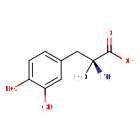
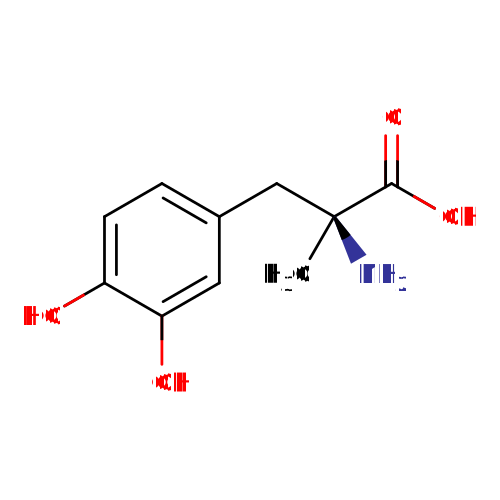
Structure for Methyldopa (DB00968)
- Weight
- Average: 211.2145
Monoisotopic: 211.084457909 - Chemical Formula
- C10H13NO4
- Synonyms
- (S)-(-)-alpha-Methyldopa
- 3-Hydroxy-alpha-methyl-L-tyrosine
- Alpha medopa
- alpha-Methyl dopa
- alpha-methyl-L-dopa
- Alphamethyldopa
- AMD
- Anhydrous methyldopa
- L-alpha-Methyldopa
- L-Methyl Dopa
- Methyl dopa
- Methyldopa
- Methyldopa anhydrous
- metildopa
- α-Methyl dopa
- α-methyl-L-dopa
- External IDs
- Bayer 1440L
- J9.247I

Pharmacology
- Indication
Methyldopa is indicated for the management of hypertension as monotherapy 11 or in combination with hydrochlorothiazide.12 Methyldopa injection is used to manage hypertensive crises.13
 Reduce drug development failure ratesBuild, train, & validate machine-learning modelswith evidence-based and structured datasets.Build, train, & validate predictive machine-learning models with structured datasets.
- Associated Conditions
Indication Type Indication Combined Product Details Approval Level Age Group Patient Characteristics Dose Form Management of High blood pressure (hypertension) •••••••••••• •••••• •••••••• •••• ••••••• •••••••••• •••••••• Used in combination to manage Hypertension Combination Product in combination with: Hydrochlorothiazide (DB00999) •••••••••••• •••••• Management of Hypertension •••••••••••• •••••• Management of Hypertensive crisis •••••••••••• •••••• •••••••• •••• ••••••• •••••••••• •••••••• - Contraindications & Blackbox Warnings
 Prevent Adverse Drug Events TodayTap into our Clinical API for life-saving information on contraindications & blackbox warnings, population restrictions, harmful risks, & more.Avoid life-threatening adverse drug events with our Clinical API
- Pharmacodynamics
Antihypertensive effects of methyldopa are mostly mediated by its pharmacologically active metabolite, alpha-methylnorepinephrine, which works as an agonist at central inhibitory alpha-adrenergic receptors.11 Stimulation of alpha-adrenergic receptors leads to decreased peripheral sympathetic tone and reduced arterial pressure.3 Methyldopa causes a net reduction in the tissue concentration of serotonin, dopamine, norepinephrine, and epinephrine. Overall, methyldopa lowers both standing blood pressure and especially supine blood pressure, with infrequent symptomatic postural hypotension. Methyldopa also reduces plasma renin activity but has negligible effects on glomerular filtration rate, renal blood flow, or filtration fraction. It also has no direct effect on cardiac function but in some patients, a slowed heart rate may occur.11
Following oral administration, blood-pressure-lowering effects are observed within 12 to 24 hours in most patients, and a maximum reduction in blood pressure occurs in 4 to 6 hours. Blood pressure returns to pre-treatment levels within 24 to 48 hours following drug discontinuation.11 Following intravenous administration, the blood-pressure-lowering effects of methyldopa last for about 10 to 16 hours.4
- Mechanism of action
The exact mechanism of methyldopa is not fully elucidated; however, the main mechanisms of methyldopa involve its actions on alpha-adrenergic receptor and the aromatic L-amino acid decarboxylase enzyme, to a lesser extent. The sympathetic outflow is regulated by alpha (α)-2 adrenergic receptors and imidazoline receptors expressed on adrenergic neurons within the rostral ventrolateral medulla.2 Methyldopa is metabolized to α‐methylnorepinephrine via dopamine beta-hydroxylase activity and, consequently, alpha-methylepinephrine via phenylethanolamine-N-methyltransferase activity.9,8,10 Mediating the therapeutic effects of methyldopa, α‐methylnorepinephrine and α-methylepinephrine active metabolites are agonists at presynaptic alpha-2 adrenergic receptors in the brainstem. Stimulating alpha-2 adrenergic receptors results in the inhibition of adrenergic neuronal outflow and attenuation of norepinephrine release in the brainstem. Consequently, the output of vasoconstrictor adrenergic signals to the peripheral sympathetic nervous system is reduced, leading to a reduction in blood pressure.1
The L-isomer of alpha-methyldopa also reduces blood pressure by inhibiting aromatic L-amino acid decarboxylase, also known as DOPA decarboxylase, which is an enzyme responsible for the syntheses of dopamine and serotonin.11 Inhibiting this enzyme leads to depletion of biogenic amines such as norepinephrine. However, inhibition of aromatic L-amino acid decarboxylase plays a minimal role in the blood-pressure‐lowering effect of methyldopa.2,3
Target Actions Organism AAromatic-L-amino-acid decarboxylase inhibitorHumans AAlpha-2A adrenergic receptor agonistHumans - Absorption
Methyldopa is incompletely absorbed from the gastrointestinal tract following oral administration.5 In healthy individuals, the inactive D-isomer is less readily absorbed than the active L-isomer.7 The mean bioavailability of methyldopa is 25%, ranging from eight to 62%.5 Following oral administration, about 50% of the dose is absorbed and Tmax is about three to six hours.6,4
- Volume of distribution
The apparent volume of distribution ranges between 0.19 and 0.32L/kg and the total volume of distribution ranges from 0.41 to 0.72L/kg. Since methyldopa is lipid-soluble 4, it crosses the placental barrier, appears in cord blood, and appears in breast milk.11
- Protein binding
Methyldopa is less than 15% bound to plasma proteins and its primary metabolite, O-sulfate metabolite, is about 50% protein bound.5 Following intravenous administration, approximately 17% of the dose in normal subjects were circulating in the plasma as free methyldopa.13
- Metabolism
Two isomers of methyldopa undergo different metabolic pathways.7 L-α-methyldopa is biotransformed to its pharmacologically active metabolite, alpha-methylnorepinephrine. Methyldopa is extensively metabolized in the liver to form the main circulating metabolite in the plasma, alpha (α)-methyldopa mono-O-sulfate. Its other metabolites also include 3-O-methyl-α-methyldopa; 3,4-dihydroxyphenylacetone; α-methyldopamine; and 3-O-methyl-α-methyldopamine. These metabolites are further conjugated in the liver to form sulfate conjugates.11 After intravenous administration, the most prominent metabolites are alpha-methyldopamine and the glucuronide of dihydroxyphenylacetone, along with other uncharacterized metabolites.5
D-α-methyldopa, which is the inactive isomer of methyldopa, is also metabolized to 3-O-methyl-α-methyldopa and 3,4-dihydroxyphenylacetone to a minimal extent; however, there are no amines (α-methyldopamine and 3-O-methyl-α-methyldopamine) formed.7
Hover over products below to view reaction partners
- Route of elimination
Approximately 70% of absorbed methyldopa is excreted in the urine as unchanged parent drug (24%) and α-methyldopa mono-O-sulfate (64%),6,11 with variability.3-O-methyl-α-methyldopa accounted for about 4% of urinary excretion products. Other metabolites like 3,4-dihydroxyphenylacetone, α-methyldopamine, and 3-O-methyl-α-methyldopamine are also excreted in urine.6
Unabsorbed drug is excreted in feces as the unchanged parent compound.4 After oral doses, excretion is essentially complete in 36 hours.12
Due to attenuated excretion in patients with renal failure, accumulation of the drug and its metabolites may occur,4 possibly leading to more profound and prolonged hypotensive effects in these patients.5
- Half-life
The plasma half-life of methyldopa is 105 minutes.11 Following intravenous injection, the plasma half-life of methyldopa ranges from 90 to 127 minutes.13
- Clearance
The renal clearance is about 130 mL/min in normal subjects and is decreased in patients with renal insufficiency.11
- Adverse Effects
 Improve decision support & research outcomesWith structured adverse effects data, including: blackbox warnings, adverse reactions, warning & precautions, & incidence rates. View sample adverse effects data in our new Data Library!Improve decision support & research outcomes with our structured adverse effects data.
- Toxicity
The lowest published toxic dose via oral route is 44 gm/kg/3Y (intermittent) in a female. Oral LD50 is 5000 mg/kg in rats and 5300 mg/kg in mice. Intraperitoneal LD50 is 300 mg/kg in rats and 150 mg/kg in mice.14
Acute overdosage is characterized by acute hypotension and other presentations attributed to the brain and gastrointestinal dysfunction, such as excessive sedation, weakness, bradycardia, dizziness, light-headedness, constipation, distention, flatus, diarrhea, nausea, and vomiting. Symptomatic and supportive measures should be initiated in the event of methyldopa overdose. Overdosage following recent oral ingestion can be managed by gastric lavage or emesis, as well as infusions to limit further drug absorption. Cardiac rate and output, blood volume, electrolyte balance, paralytic ileus, urinary function and cerebral activity should be closely monitored. The use of sympathomimetic drugs such as levarterenol, epinephrine, and metaraminol bitartrate, or dialysis may be considered.11
- Pathways
- Not Available
- Pharmacogenomic Effects/ADRs
- Not Available
Interactions
- Drug Interactions
- This information should not be interpreted without the help of a healthcare provider. If you believe you are experiencing an interaction, contact a healthcare provider immediately. The absence of an interaction does not necessarily mean no interactions exist.
Drug Interaction Integrate drug-drug
interactions in your softwareAbacavir Methyldopa may decrease the excretion rate of Abacavir which could result in a higher serum level. Abaloparatide The risk or severity of adverse effects can be increased when Methyldopa is combined with Abaloparatide. Acebutolol The therapeutic efficacy of Methyldopa can be decreased when used in combination with Acebutolol. Aceclofenac The therapeutic efficacy of Methyldopa can be decreased when used in combination with Aceclofenac. Acemetacin The therapeutic efficacy of Methyldopa can be decreased when used in combination with Acemetacin. - Food Interactions
- Take with or without food. Drug pharmacokinetics is unaffected.
Products
 Drug product information from 10+ global regionsOur datasets provide approved product information including:dosage, form, labeller, route of administration, and marketing period.Access drug product information from over 10 global regions.
- Product Ingredients
Ingredient UNII CAS InChI Key Methyldopa hydrochloride 7PX435DN5A 2508-79-4 QSRVZCCJDKYRRF-YDALLXLXSA-N Methyldopa sesquihydrate 56LH93261Y 41372-08-1 YKFCISHFRZHKHY-NGQGLHOPSA-N - Product Images
- International/Other Brands
- Aldomet / Aldometil / Aldomin / Dopamet / Hypolag / Medomet / Medopren / Novomedopa / Nu-Medopa
- Brand Name Prescription Products
Name Dosage Strength Route Labeller Marketing Start Marketing End Region Image Aldomet Ester HCl Inj Liquid 250 mg / 5 mL Intravenous Merck Frosst Canada & Cie, Merck Frosst Canada & Co. 1963-12-31 2002-07-29 Canada 
Aldomet Tab 125mg Tablet 125 mg Oral Merck Frosst Canada & Cie, Merck Frosst Canada & Co. 1971-12-31 1998-08-14 Canada Aldomet Tab 250mg Tablet 250 mg Oral Merck Frosst Canada & Cie, Merck Frosst Canada & Co. 1963-12-31 2004-11-12 Canada Aldomet Tab 500mg Tablet 500 mg Oral Merck Frosst Canada & Cie, Merck Frosst Canada & Co. 1971-12-31 1998-08-14 Canada Dopamet Tab 125mg Tablet 125 mg Oral Icn Pharmaceuticals 1976-12-31 2005-04-26 Canada - Generic Prescription Products
Name Dosage Strength Route Labeller Marketing Start Marketing End Region Image Methyldopa Tablet, film coated 250 mg/1 Oral IVAX Pharmaceuticals, Inc. 1986-02-20 2010-09-30 US 
Methyldopa Tablet, film coated 500 mg/1 Oral Avera McKennan Hospital 2016-04-18 2017-05-24 US Methyldopa Tablet, film coated 500 mg/1 Oral Physicians Total Care, Inc. 1996-07-26 Not applicable US 
Methyldopa Tablet, film coated 500 mg/1 Oral Teva Pharmaceuticals USA, Inc. 2009-04-28 2018-02-28 US 
Methyldopa Tablet 250 mg/1 Oral Mylan Institutional Inc. 1998-09-01 2020-01-31 US - Mixture Products
Name Ingredients Dosage Route Labeller Marketing Start Marketing End Region Image Aldoril Methyldopa sesquihydrate (250 mg/1) + Hydrochlorothiazide (25 mg/1) Tablet, film coated Oral Merck Sharp & Dohme Limited 1962-12-20 2006-03-31 US Aldoril Methyldopa sesquihydrate (500 mg/1) + Hydrochlorothiazide (50 mg/1) Tablet, film coated Oral Merck Sharp & Dohme Limited 1962-12-20 2006-03-31 US Aldoril Methyldopa sesquihydrate (250 mg/1) + Hydrochlorothiazide (15 mg/1) Tablet, film coated Oral Merck Sharp & Dohme Limited 1962-12-20 2006-03-31 US Aldoril Methyldopa sesquihydrate (500 mg/1) + Hydrochlorothiazide (30 mg/1) Tablet, film coated Oral Merck Sharp & Dohme Limited 1962-12-20 2006-03-31 US Aldoril 15 Tab Methyldopa (250 mg) + Hydrochlorothiazide (15 mg) Tablet Oral Merck Frosst Canada & Cie, Merck Frosst Canada & Co. 1967-12-31 1998-08-14 Canada


Categories
- ATC Codes
- C02AB01 — Methyldopa (levorotatory)
- Drug Categories
- Adrenergic Agents
- Adrenergic Agonists
- Adrenergic alpha-2 Receptor Agonists
- Adrenergic alpha-Agonists
- Agents Causing Muscle Toxicity
- Amines
- Amino Acids
- Amino Acids, Aromatic
- Amino Acids, Cyclic
- Amino Acids, Peptides, and Proteins
- Antiadrenergic Agents, Centrally Acting
- Antihypertensive Agents
- Antihypertensive Agents Indicated for Hypertension
- Aromatic L-amino Acid Decarboxylase Inhibitors
- Autonomic Agents
- Benzene Derivatives
- Bradycardia-Causing Agents
- Cardiovascular Agents
- Catecholamines
- Catechols
- Central alpha-2 Adrenergic Agonist
- Central Alpha-agonists
- COMT Substrates
- Dihydroxyphenylalanine
- Drugs that are Mainly Renally Excreted
- Enzyme Inhibitors
- Hypotensive Agents
- Neurotransmitter Agents
- Peripheral Nervous System Agents
- Phenols
- Sympatholytics
- Chemical TaxonomyProvided by Classyfire
- Description
- This compound belongs to the class of organic compounds known as phenylpropanoic acids. These are compounds with a structure containing a benzene ring conjugated to a propanoic acid.
- Kingdom
- Organic compounds
- Super Class
- Phenylpropanoids and polyketides
- Class
- Phenylpropanoic acids
- Sub Class
- Not Available
- Direct Parent
- Phenylpropanoic acids
- Alternative Parents
- D-alpha-amino acids / Amphetamines and derivatives / Phenylpropanes / Catechols / Aralkylamines / 1-hydroxy-4-unsubstituted benzenoids / 1-hydroxy-2-unsubstituted benzenoids / Amino acids / Monocarboxylic acids and derivatives / Carboxylic acids show 5 more
- Substituents
- 1-hydroxy-2-unsubstituted benzenoid / 1-hydroxy-4-unsubstituted benzenoid / 3-phenylpropanoic-acid / Alpha-amino acid / Alpha-amino acid or derivatives / Amine / Amino acid / Amino acid or derivatives / Amphetamine or derivatives / Aralkylamine show 20 more
- Molecular Framework
- Aromatic homomonocyclic compounds
- External Descriptors
- non-proteinogenic L-alpha-amino acid, L-tyrosine derivative (CHEBI:61058)
- Affected organisms
- Humans and other mammals
Chemical Identifiers
- UNII
- M4R0H12F6M
- CAS number
- 555-30-6
- InChI Key
- CJCSPKMFHVPWAR-JTQLQIEISA-N
- InChI
- InChI=1S/C10H13NO4/c1-10(11,9(14)15)5-6-2-3-7(12)8(13)4-6/h2-4,12-13H,5,11H2,1H3,(H,14,15)/t10-/m0/s1
- IUPAC Name
- (2S)-2-amino-3-(3,4-dihydroxyphenyl)-2-methylpropanoic acid
- SMILES
- C[C@](N)(CC1=CC=C(O)C(O)=C1)C(O)=O
References
- Synthesis Reference
- US2868818
- General References
- Mah GT, Tejani AM, Musini VM: Methyldopa for primary hypertension. Cochrane Database Syst Rev. 2009 Oct 7;(4):CD003893. doi: 10.1002/14651858.CD003893.pub3. [Article]
- Sica DA: Centrally acting antihypertensive agents: an update. J Clin Hypertens (Greenwich). 2007 May;9(5):399-405. [Article]
- van Zwieten PA: Pharmacology of centrally acting hypotensive drugs. Br J Clin Pharmacol. 1980;10 Suppl 1:13S-20S. [Article]
- Gupta M, Al Khalili Y: Methyldopa . [Article]
- Myhre E, Rugstad HE, Hansen T: Clinical pharmacokinetics of methyldopa. Clin Pharmacokinet. 1982 May-Jun;7(3):221-33. doi: 10.2165/00003088-198207030-00003. [Article]
- BUHS RP, BECK JL, SPETH OC, SMITH JL, TRENNER NR, CANNON PJ, LARAGH JH: THE METABOLISM OF METHYLDOPA IN HYPERTENSIVE HUMAN SUBJECTS. J Pharmacol Exp Ther. 1964 Feb;143:205-14. [Article]
- Au WY, Dring LG, Grahame-Smith DG, Isaac P, Williams RT: The metabolism of 14 C-labelled -methyldopa in normal and hypertensive human subjects. Biochem J. 1972 Aug;129(1):1-10. doi: 10.1042/bj1290001. [Article]
- Tung CS, Goldberg MR, Hollister AS, Oates JA, Robertson D: Central and peripheral cardiovascular effects of alpha-methylepinephrine. J Pharmacol Exp Ther. 1983 Nov;227(2):484-90. [Article]
- Goldberg MR, Gerkens JF, Oates JA, Robertson D: alpha-Methylepinephrine, a methyldopa metabolite that binds to alpha-receptors in rat brain. Eur J Pharmacol. 1981 Jan 5;69(1):95-9. doi: 10.1016/0014-2999(81)90606-3. [Article]
- Robertson D, Tung CS, Goldberg MR, Hollister AS, Gerkens JF, Oates JA: Antihypertensive metabolites of alpha-methyldopa. Hypertension. 1984 Sep-Oct;6(5 Pt 2):II45-50. doi: 10.1161/01.hyp.6.5_pt_2.ii45. [Article]
- DailyMed Label: METHYLDOPA oral tablet, film coated [Link]
- DailyMed Label: METHYLDOPA AND HYDROCHLOROTHIAZIDE oral tablet [Link]
- DailyMed Label: Methyldopate Intravenous Injection [Link]
- Cayman Chemical: Methyldopa Safety Data Sheet [Link]
- External Links
- Human Metabolome Database
- HMDB0011754
- KEGG Drug
- D08205
- KEGG Compound
- C07194
- PubChem Compound
- 38853
- PubChem Substance
- 46508535
- ChemSpider
- 35562
- BindingDB
- 48449
- 1545996
- ChEBI
- 61058
- ChEMBL
- CHEMBL459
- ZINC
- ZINC000000020255
- Therapeutic Targets Database
- DAP000226
- PharmGKB
- PA450453
- RxList
- RxList Drug Page
- Drugs.com
- Drugs.com Drug Page
- PDRhealth
- PDRhealth Drug Page
- Wikipedia
- Methyldopa
- FDA label
- Download (155 KB)
- MSDS
- Download (53.4 KB)
Clinical Trials
- Clinical Trials
Phase Status Purpose Conditions Count 4 Completed Treatment Hypertension in Pregnancy / Pre-Eclampsia 1 4 Completed Treatment Hypertension / Postpartum Pre-Eclampsia / Pregnancy-Induced Hypertension in Postpartum 1 4 Recruiting Prevention Gestational Hypertension / Pre-Eclampsia 1 4 Unknown Status Diagnostic Pre-Eclampsia 1 4 Unknown Status Treatment Diabetes / Hypertensive Diseases 1
Pharmacoeconomics
- Manufacturers
- Not Available
- Packagers
- Advanced Pharmaceutical Services Inc.
- American Regent
- A-S Medication Solutions LLC
- Caremark LLC
- Central Texas Community Health Centers
- Direct Dispensing Inc.
- Dispensing Solutions
- Diversified Healthcare Services Inc.
- Emcure Pharmaceuticals Ltd.
- Endo Pharmaceuticals Inc.
- H and H Laboratories
- Heartland Repack Services LLC
- Hospira Inc.
- Ivax Pharmaceuticals
- Kaiser Foundation Hospital
- Luitpold Pharmaceuticals Inc.
- Major Pharmaceuticals
- Murfreesboro Pharmaceutical Nursing Supply
- Mylan
- Nucare Pharmaceuticals Inc.
- PCA LLC
- PD-Rx Pharmaceuticals Inc.
- Pharmedix
- Physicians Total Care Inc.
- Rebel Distributors Corp.
- Remedy Repack
- Sandhills Packaging Inc.
- Southwood Pharmaceuticals
- Teva Pharmaceutical Industries Ltd.
- UDL Laboratories
- United Research Laboratories Inc.
- Watson Pharmaceuticals
- Dosage Forms
Form Route Strength Tablet Oral 500.0000 mg Tablet, coated Oral 250 MG Tablet, coated Oral 500 MG Tablet Oral 283 mg Tablet Oral 28300000 mg Liquid Intravenous 250 mg / 5 mL Tablet, film coated Oral Tablet, film coated Oral Capsule Tablet Oral 125 mg Tablet Oral 250 mg/1 Tablet Oral 250 mg Tablet Oral 500 mg/1 Tablet Oral 500 mg Tablet, film coated Oral 125 mg/1 Tablet, film coated Oral 250 mg/1 Tablet, film coated Oral 500 mg/1 Tablet Oral Injection, solution Intravenous 50 mg/1mL Tablet Oral Tablet, film coated Oral 500 mg Tablet, delayed release Oral 250 mg Tablet, film coated Oral 250 mg Tablet, film coated Oral 125 mg - Prices
Unit description Cost Unit Aldoclor 250-250 mg tablet 0.67USD tablet Methyldopa 500 mg tablet 0.67USD tablet Methyldopa 250 mg tablet 0.39USD tablet Apo-Methyldopa 500 mg Tablet 0.27USD tablet Methyldopate 250 mg/5 ml vial 0.24USD ml Apo-Methyldopa 250 mg Tablet 0.15USD tablet Apo-Methyldopa 125 mg Tablet 0.1USD tablet DrugBank does not sell nor buy drugs. Pricing information is supplied for informational purposes only.- Patents
- Not Available
Properties
- State
- Solid
- Experimental Properties
Property Value Source melting point (°C) >300 https://www.fishersci.ca/store/msds?partNumber=AAH5670403&productDescription=3-4-dihydroxy-alpha-methyl-l-phenylalanine-sesquihydrate-99&language=en&countryCode=CA water solubility 1E+004 mg/L (at 25 °C) MERCK INDEX (1996) - Predicted Properties
Property Value Source Water Solubility 2.26 mg/mL ALOGPS logP -2 ALOGPS logP -1.4 Chemaxon logS -2 ALOGPS pKa (Strongest Acidic) 1.73 Chemaxon pKa (Strongest Basic) 9.85 Chemaxon Physiological Charge 0 Chemaxon Hydrogen Acceptor Count 5 Chemaxon Hydrogen Donor Count 4 Chemaxon Polar Surface Area 103.78 Å2 Chemaxon Rotatable Bond Count 3 Chemaxon Refractivity 53.79 m3·mol-1 Chemaxon Polarizability 20.73 Å3 Chemaxon Number of Rings 1 Chemaxon Bioavailability 1 Chemaxon Rule of Five Yes Chemaxon Ghose Filter No Chemaxon Veber's Rule No Chemaxon MDDR-like Rule No Chemaxon - Predicted ADMET Features
Property Value Probability Human Intestinal Absorption + 0.9374 Blood Brain Barrier - 0.9276 Caco-2 permeable - 0.8957 P-glycoprotein substrate Substrate 0.6066 P-glycoprotein inhibitor I Non-inhibitor 0.9852 P-glycoprotein inhibitor II Non-inhibitor 0.9895 Renal organic cation transporter Non-inhibitor 0.9357 CYP450 2C9 substrate Non-substrate 0.7757 CYP450 2D6 substrate Non-substrate 0.8 CYP450 3A4 substrate Non-substrate 0.6053 CYP450 1A2 substrate Non-inhibitor 0.9045 CYP450 2C9 inhibitor Non-inhibitor 0.9369 CYP450 2D6 inhibitor Non-inhibitor 0.9491 CYP450 2C19 inhibitor Non-inhibitor 0.9233 CYP450 3A4 inhibitor Non-inhibitor 0.864 CYP450 inhibitory promiscuity Low CYP Inhibitory Promiscuity 0.9551 Ames test Non AMES toxic 0.8185 Carcinogenicity Non-carcinogens 0.8997 Biodegradation Not ready biodegradable 0.8077 Rat acute toxicity 1.6281 LD50, mol/kg Not applicable hERG inhibition (predictor I) Weak inhibitor 0.9939 hERG inhibition (predictor II) Non-inhibitor 0.9629
Spectra
- Mass Spec (NIST)
- Not Available
- Spectra
- Chromatographic Properties
Collision Cross Sections (CCS)
Adduct CCS Value (Å2) Source type Source [M-H]- 153.8856241 predictedDarkChem Lite v0.1.0 [M-H]- 143.58476 predictedDeepCCS 1.0 (2019) [M+H]+ 154.1786241 predictedDarkChem Lite v0.1.0 [M+H]+ 145.98033 predictedDeepCCS 1.0 (2019) [M+Na]+ 153.7147241 predictedDarkChem Lite v0.1.0 [M+Na]+ 151.9368 predictedDeepCCS 1.0 (2019)
Targets

- Kind
- Protein
- Organism
- Humans
- Pharmacological action
- Yes
- Actions
- Inhibitor
- General Function
- Pyridoxal phosphate binding
- Specific Function
- Catalyzes the decarboxylation of L-3,4-dihydroxyphenylalanine (DOPA) to dopamine, L-5-hydroxytryptophan to serotonin and L-tryptophan to tryptamine.
- Gene Name
- DDC
- Uniprot ID
- P20711
- Uniprot Name
- Aromatic-L-amino-acid decarboxylase
- Molecular Weight
- 53925.815 Da
References
- SOURKES TL: Inhibition of dihydroxy-phenylalanine decarboxylase by derivatives of phenylalanine. Arch Biochem Biophys. 1954 Aug;51(2):444-56. [Article]
- Campbell NR, Sundaram RS, Werness PG, Van Loon J, Weinshilboum RM: Sulfate and methyldopa metabolism: metabolite patterns and platelet phenol sulfotransferase activity. Clin Pharmacol Ther. 1985 Mar;37(3):308-15. doi: 10.1038/clpt.1985.45. [Article]
- Kind
- Protein
- Organism
- Humans
- Pharmacological action
- Yes
- Actions
- Agonist
- General Function
- Thioesterase binding
- Specific Function
- Alpha-2 adrenergic receptors mediate the catecholamine-induced inhibition of adenylate cyclase through the action of G proteins. The rank order of potency for agonists of this receptor is oxymetazo...
- Gene Name
- ADRA2A
- Uniprot ID
- P08913
- Uniprot Name
- Alpha-2A adrenergic receptor
- Molecular Weight
- 48956.275 Da
References
- Overington JP, Al-Lazikani B, Hopkins AL: How many drug targets are there? Nat Rev Drug Discov. 2006 Dec;5(12):993-6. [Article]
- Imming P, Sinning C, Meyer A: Drugs, their targets and the nature and number of drug targets. Nat Rev Drug Discov. 2006 Oct;5(10):821-34. [Article]
- Sica DA: Centrally acting antihypertensive agents: an update. J Clin Hypertens (Greenwich). 2007 May;9(5):399-405. [Article]
- Kawasaki H: [Centrally acting sympathetic inhibitors for therapy of patients with hypertension]. Nihon Rinsho. 1997 Aug;55(8):2081-5. [Article]
- Head GA: Central imidazoline- and alpha 2-receptors involved in the cardiovascular actions of centrally acting antihypertensive agents. Ann N Y Acad Sci. 1999 Jun 21;881:279-86. [Article]
- van Zwieten PA: New central mediators as targets of centrally acting antihypertensive drugs. Clin Exp Hypertens. 1996 Apr-May;18(3-4):291-303. [Article]
- van Zwieten PA: Development and trends in the drug treatment of essential hypertension. J Hypertens Suppl. 1992 Dec;10(7):S1-12. [Article]
- Velliquette RA, Ernsberger P: Contrasting metabolic effects of antihypertensive agents. J Pharmacol Exp Ther. 2003 Dec;307(3):1104-11. Epub 2003 Oct 13. [Article]
Enzymes
- Kind
- Protein
- Organism
- Humans
- Pharmacological action
- No
- Actions
- Substrate
- General Function
- O-methyltransferase activity
- Specific Function
- Catalyzes the O-methylation, and thereby the inactivation, of catecholamine neurotransmitters and catechol hormones. Also shortens the biological half-lives of certain neuroactive drugs, like L-DOP...
- Gene Name
- COMT
- Uniprot ID
- P21964
- Uniprot Name
- Catechol O-methyltransferase
- Molecular Weight
- 30036.77 Da
References
- Alazizi A, Liu MY, Williams FE, Kurogi K, Sakakibara Y, Suiko M, Liu MC: Identification, characterization, and ontogenic study of a catechol O-methyltransferase from zebrafish. Aquat Toxicol. 2011 Mar;102(1-2):18-23. doi: 10.1016/j.aquatox.2010.12.016. Epub 2010 Dec 29. [Article]
- Ameyaw MM, Syvanen AC, Ulmanen I, Ofori-Adjei D, McLeod HL: Pharmacogenetics of catechol-O-methyltransferase: frequency of low activity allele in a Ghanaian population. Hum Mutat. 2000 Nov;16(5):445-6. [Article]
- Campbell NR, Sundaram RS, Werness PG, Van Loon J, Weinshilboum RM: Sulfate and methyldopa metabolism: metabolite patterns and platelet phenol sulfotransferase activity. Clin Pharmacol Ther. 1985 Mar;37(3):308-15. doi: 10.1038/clpt.1985.45. [Article]
- Kind
- Protein
- Organism
- Humans
- Pharmacological action
- Unknown
- Actions
- Substrate
- General Function
- Pyridoxal phosphate binding
- Specific Function
- Catalyzes the decarboxylation of L-3,4-dihydroxyphenylalanine (DOPA) to dopamine, L-5-hydroxytryptophan to serotonin and L-tryptophan to tryptamine.
- Gene Name
- DDC
- Uniprot ID
- P20711
- Uniprot Name
- Aromatic-L-amino-acid decarboxylase
- Molecular Weight
- 53925.815 Da
References
- Campbell NR, Sundaram RS, Werness PG, Van Loon J, Weinshilboum RM: Sulfate and methyldopa metabolism: metabolite patterns and platelet phenol sulfotransferase activity. Clin Pharmacol Ther. 1985 Mar;37(3):308-15. doi: 10.1038/clpt.1985.45. [Article]
- Kind
- Protein group
- Organism
- Humans
- Pharmacological action
- No
- Actions
- Substrate
- General Function
- Sulfotransferase activity
- Specific Function
- Sulfotransferase that utilizes 3'-phospho-5'-adenylyl sulfate (PAPS) as sulfonate donor to catalyze the sulfonation of steroids and bile acids in the liver and adrenal glands.
Components:
References
- Campbell NR, Sundaram RS, Werness PG, Van Loon J, Weinshilboum RM: Sulfate and methyldopa metabolism: metabolite patterns and platelet phenol sulfotransferase activity. Clin Pharmacol Ther. 1985 Mar;37(3):308-15. doi: 10.1038/clpt.1985.45. [Article]
- Kind
- Protein
- Organism
- Humans
- Pharmacological action
- No
- Actions
- Substrate
- General Function
- L-ascorbic acid binding
- Specific Function
- Conversion of dopamine to noradrenaline.
- Gene Name
- DBH
- Uniprot ID
- P09172
- Uniprot Name
- Dopamine beta-hydroxylase
- Molecular Weight
- 69064.45 Da
References
- Robertson D, Tung CS, Goldberg MR, Hollister AS, Gerkens JF, Oates JA: Antihypertensive metabolites of alpha-methyldopa. Hypertension. 1984 Sep-Oct;6(5 Pt 2):II45-50. doi: 10.1161/01.hyp.6.5_pt_2.ii45. [Article]
- Kind
- Protein
- Organism
- Humans
- Pharmacological action
- No
- Actions
- Substrate
- General Function
- Phenylethanolamine n-methyltransferase activity
- Specific Function
- Converts noradrenaline to adrenaline.
- Gene Name
- PNMT
- Uniprot ID
- P11086
- Uniprot Name
- Phenylethanolamine N-methyltransferase
- Molecular Weight
- 30854.745 Da
References
- Robertson D, Tung CS, Goldberg MR, Hollister AS, Gerkens JF, Oates JA: Antihypertensive metabolites of alpha-methyldopa. Hypertension. 1984 Sep-Oct;6(5 Pt 2):II45-50. doi: 10.1161/01.hyp.6.5_pt_2.ii45. [Article]
Carriers
- Kind
- Protein
- Organism
- Humans
- Pharmacological action
- No
- Actions
- Binder
- General Function
- Toxic substance binding
- Specific Function
- Serum albumin, the main protein of plasma, has a good binding capacity for water, Ca(2+), Na(+), K(+), fatty acids, hormones, bilirubin and drugs. Its main function is the regulation of the colloid...
- Gene Name
- ALB
- Uniprot ID
- P02768
- Uniprot Name
- Serum albumin
- Molecular Weight
- 69365.94 Da
References
- Hubbard AK, Lohr CL, Hastings K, Clarke JB, Gandolfi AJ: Immunogenicity studies of a synthetic antigen of alpha methyl dopa. Immunopharmacol Immunotoxicol. 1993 Nov;15(5):621-37. doi: 10.3109/08923979309019734. [Article]
Transporters
- Kind
- Protein
- Organism
- Humans
- Pharmacological action
- Unknown
- Actions
- Inhibitor
- General Function
- Proton-dependent oligopeptide secondary active transmembrane transporter activity
- Specific Function
- Proton-coupled intake of oligopeptides of 2 to 4 amino acids with a preference for dipeptides. May constitute a major route for the absorption of protein digestion end-products.
- Gene Name
- SLC15A1
- Uniprot ID
- P46059
- Uniprot Name
- Solute carrier family 15 member 1
- Molecular Weight
- 78805.265 Da
References
- Han HK, Rhie JK, Oh DM, Saito G, Hsu CP, Stewart BH, Amidon GL: CHO/hPEPT1 cells overexpressing the human peptide transporter (hPEPT1) as an alternative in vitro model for peptidomimetic drugs. J Pharm Sci. 1999 Mar;88(3):347-50. [Article]

Drug created at June 13, 2005 13:24 / Updated at April 27, 2024 09:44