Identification
- Summary
Glycopyrronium is an anticholinergic agent used to treat hyperhidrosis, severe drooling, COPD, used with other medications to treat ulcers, and used in anesthesia.
- Brand Names
- Bevespi, Breztri, Cuvposa, Dartisla, Enurev Breezhaler, Glycate, Glyrx, Lonhala, Prevduo, Qbrexza, Robinul, Robinul Forte, Seebri Breezhaler, Sialanar, Tovanor Breezhaler, Ultibro
- Generic Name
- Glycopyrronium
- DrugBank Accession Number
- DB00986
- Background
Glycopyrronium, also known as NVA237 or glycopyrrolate, is a racemic mixture of two enantiomers.15 They are both quaternary ammonium compounds and long acting muscarinic antagonists.15 It is one of the most commonly prescribed anticholinergic medications.2,3 Early research into glycopyrronium use was for its indication as an adjunct therapy in the treatment of peptic ulcers.9,10 Later research, taking advantage of the systemic distribution of muscarinic receptors through the body, found that glycopyrronium could also be used for reducing sweat gland,12 oral,18 airway, and gastric secretions;17 as well as reducing cardiac inhibitory reflexes;17 and reducing bronchoconstriction in COPD.13 Glycopyrronium is commonly prescribed as a first line treatment for a wide variety indications and is considered to have a wider therapeutic window than tiotropium.8
Glycopyrronium was originally granted FDA approval on 11 August 1961.10
- Type
- Small Molecule
- Groups
- Approved, Investigational, Vet approved
- Structure
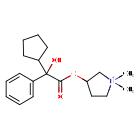
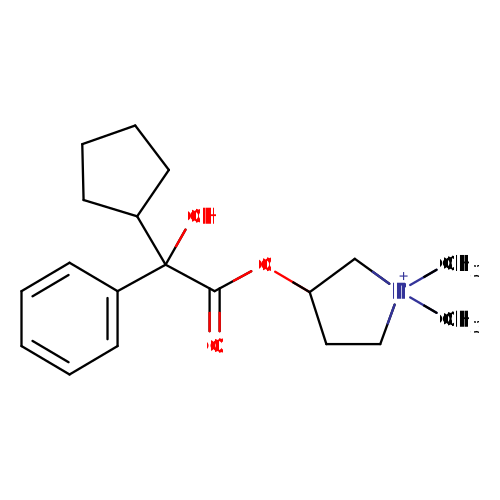
Structure for Glycopyrronium (DB00986)
- Weight
- Average: 318.4305
Monoisotopic: 318.206918767 - Chemical Formula
- C19H28NO3
- Synonyms
- Glicopirronio
- Glycopyrrolate
- Glycopyrrolate cation
- Glycopyrrolate ion
- Glycopyrronium
- Glycopyrronium cation
- Glycopyrronium ion
- External IDs
- DRM-04
- DRM04

Pharmacology
- Indication
Glycopyrronium formulated as a topical cloth is indicated to treat primary axillary hyperhidrosis in patients ≥9 years,12 and an inhalational solution is indicated for long term maintenance of airflow obstruction in COPD.13 A glycopyrronium intravenous and intramuscular injection is indicated in adults and pediatric patients to reduce the volume and acidity of gastric secretions, reduce airway secretions, and block cardiac inhibitory reflexes during the induction of anesthesia and intubation; to treat surgically-induced, drug-induced, or vagal reflex associated arrhythmias intraoperatively; and to prevent peripheral muscarinic effects of cholinergic drugs.17 The same injection is indicated in adults as an adjunct therapy in the treatment of peptic ulcers, as is an orally disintegrating tablet formulation.17,21 An oral solution is indicated to treat excessive drooling associated with neurologic conditions in patients aged 3-16 years.18 Glycopyrronium and budesonide19 can be formulated with formoterol fumarate for the maintenance of COPD.20
 Reduce drug development failure ratesBuild, train, & validate machine-learning modelswith evidence-based and structured datasets.Build, train, & validate predictive machine-learning models with structured datasets.
- Associated Conditions
Indication Type Indication Combined Product Details Approval Level Age Group Patient Characteristics Dose Form Maintenance of Airway obstruction •••••••••••• ••••••• ••••••••••• ••••••••• ••••••• ••••••• ••••••••• •••••••• Maintenance of Airway obstruction •••••••••••• ••••••• ••••••••••• ••••••••• ••••••• ••••••• ••••••• •••••••••• •••••••• Maintenance of Airway obstruction •••••••••••• ••••••• ••••••••••• ••••••••• ••••••• •••••• •••••••• Used in combination to maintain Chronic obstructive pulmonary disease (copd) Combination Product in combination with: Formoterol (DB00983) •••••••••••• ••••••• Used in combination to maintain Chronic obstructive pulmonary disease (copd) Combination Product in combination with: Budesonide (DB01222), Formoterol (DB00983) •••••••••••• ••••••• - Contraindications & Blackbox Warnings
 Prevent Adverse Drug Events TodayTap into our Clinical API for life-saving information on contraindications & blackbox warnings, population restrictions, harmful risks, & more.Avoid life-threatening adverse drug events with our Clinical API
- Pharmacodynamics
Glycopyrronium is a quaternary ammonium compound that is one of the most commonly prescribed long acting muscarinic antagonists.2,3,15 Glycopyrronium slowly dissociated from muscarinic receptors, leading to a long duration of action.1 It has a wider therapeutic index than other anticholinergic medications, such as tiotropium.8 Patients should be counselled regarding the risk of worsening urinary retention, risk of overheating, and transient blurred vision.12
- Mechanism of action
Glycopyrronium is a muscarinic antagonist with the highest affinity for M1 receptors, followed by M3, M2/M4, and M5.16
Muscarinic receptors M1 to M4 are found in the lung, although M3 is predominantly responsible for bronchoconstriction and airway secretions.1,19,16 Secretions from salivary4 and sweat5 glands, as well as gastric acid secretions,6 are also predominantly mediated by the M3 receptor. Salivary4 and gastric acid6 secretions are also partially mediated by the M1 receptor. Antagonism of these receptors decreases the volume of their respective secretions, and in the case of the gastrointestinal system, reduces the acidity of the stomach.7
In the cardiovascular system, muscarinic receptors M1 to M5 are all present, however the function of M5 has not been described in literature.7 Under normal circumstances, stimulation of the vagal nerve lowers the heart rate, potentially leading to intraoperative bradycardia.7 Studies in mice suggest that this stimulation is predominantly mediated by the M3 receptor, and mutant knockout mice are not susceptible to these effects.7
Target Actions Organism AMuscarinic acetylcholine receptor M1 antagonistHumans AMuscarinic acetylcholine receptor M3 antagonistHumans AMuscarinic acetylcholine receptor M2 antagonistHumans AMuscarinic acetylcholine receptor M4 antagonistHumans UMuscarinic acetylcholine receptor M5 antagonistHumans - Absorption
In adults, a 66 mg topical dose of glycopyrronium reaches a Cmax of 0.08 ± 0.04 ng/mL, with a Tmax of 1 hour, and an AUC0-24 of 0.88 ± 0.57 h*ng/mL.12
Inhaled glycopyrronium is approximately 40% bioavailable.15 A 25 µg inhaled solution reaches a Cmax of 34.5 pg/mL, with a Tmax of <20 minutes, and an AUC0-inf of 255 h*pg/mL.13
An 8 µg/kg intramuscular dose reaches a Cmax of 3.47 ± 1.48 µg/L, with a Tmax of 27.48 ± 6.12 minutes, and an AUC of 6.64 ± 2.33 h*g/L.17
Oral glycopyrronium has highly variable pharmacokinetics, reaching a mean Cmax of 0.318 ng/mL, a Tmax of 3.1 hours, and an AUC0-24 of 1.74 h*ng/mL.18
- Volume of distribution
The mean volume of distribution in patients aged 1-14 years old is 1.3-1.8 L/kg, with a range of 0.7-3.9 L/kg.12 The volume of distribution in adults aged 60-75 years is 0.42 ± 0.22 L/kg.12
- Protein binding
Glycopyrronium is 38-44% protein bound in plasma.15 It is bound to serum albumin, alpha-1-acid glycoprotein, as well as other plasma proteins that have not been identified in literature.16
- Metabolism
Glycopyrronium is hydrolyzed to the inactive M9 metabolite.15,16 Metabolism was mainly mediated by CYP2D6, with minor contributions from CYP1A2, CYP2B6, CYP2C9, CYP2C18, CYP2C19, and CYP3A4.15,16
Hover over products below to view reaction partners
- Route of elimination
85% of an intravenous dose was recovered in the urine, with <5% recovered in the bile.12 >80% of the recovered dose is the unchanged parent drug.12 The remainder is recovered as the inactive M9 metabolite.15,16
- Half-life
The half life after inhalation is approximately 33-53 hours.15 The mean half life of a 6 µg/kg intravenous dose is 0.83 ± 0.27 hours.17 The mean half life of oral glycopyrronium is 3.0 hours.18
- Clearance
A 6 µg/kg intravenous dose has a clearance of 0.54 ± 0.14 L/kg/h.17 An oral solution has a clearance of 5.28-38.95 L/h/kg in healthy adults and 8.07-25.65 L/h/kg in patients with cerebral palsy.18
- Adverse Effects
 Improve decision support & research outcomesWith structured adverse effects data, including: blackbox warnings, adverse reactions, warning & precautions, & incidence rates. View sample adverse effects data in our new Data Library!Improve decision support & research outcomes with our structured adverse effects data.
- Toxicity
Patients presenting with an overdose typically present with flushing, hyperthermia, tachycardia, ileus, urinary retention, loss of ocular accommodation, light sensitivity, mydriasis, nausea, vomiting, dizziness, light headedness, and obstipation.12,13 Patients should be treated with symptomatic and supportive therapy, which may include the use of catheters for urinary retention, cardiovascular support, airway maintenance, ventilation, or neostigmine.12
The oral LD50 in mice is 570 mg/kg, and in rats is 709 mg/kg.14 The intraperitoneal LD50 in mice is 90 mg/kg, and in rats is 196 mg/kg.14
- Pathways
- Not Available
- Pharmacogenomic Effects/ADRs
- Not Available
Interactions
- Drug Interactions
- This information should not be interpreted without the help of a healthcare provider. If you believe you are experiencing an interaction, contact a healthcare provider immediately. The absence of an interaction does not necessarily mean no interactions exist.
Drug Interaction Integrate drug-drug
interactions in your softwareAclidinium The risk or severity of adverse effects can be increased when Glycopyrronium is combined with Aclidinium. Adenosine The risk or severity of Tachycardia can be increased when Adenosine is combined with Glycopyrronium. Albuterol The risk or severity of Tachycardia can be increased when Glycopyrronium is combined with Salbutamol. Alfentanil The risk or severity of adverse effects can be increased when Glycopyrronium is combined with Alfentanil. Alloin The therapeutic efficacy of Alloin can be decreased when used in combination with Glycopyrronium. - Food Interactions
- Take with or without food. The absorption is unaffected by food.
Products
 Drug product information from 10+ global regionsOur datasets provide approved product information including:dosage, form, labeller, route of administration, and marketing period.Access drug product information from over 10 global regions.
- Product Ingredients
Ingredient UNII CAS InChI Key Glycopyrronium bromide V92SO9WP2I 51186-83-5 VPNYRYCIDCJBOM-UHFFFAOYSA-M Glycopyrronium tosylate 1PVF6JLU7B 1624259-25-1 UOWOLENSDISMPG-UHFFFAOYSA-M - Product Images
- International/Other Brands
- Acpan (Gray) / Nodapton / Robanul / Robinal / Tarodyl (Lundbeck)
- Brand Name Prescription Products
Name Dosage Strength Route Labeller Marketing Start Marketing End Region Image Cuvposa Solution 1 mg/5mL Oral Shionogi Pharma, Inc. 2010-07-28 2014-06-30 US 
Cuvposa Solution 1 mg / 5 mL Oral Medexus Pharmaceuticals Inc. 2018-04-03 Not applicable Canada 
Cuvposa Liquid 1 mg/5mL Oral Merz Pharmaceuticals, LLC 2013-01-01 Not applicable US Dartisla ODT Tablet, orally disintegrating 0.85 mg/1 Oral Edenbridge Pharmaceuticals LLC. 2023-10-11 Not applicable US Dartisla ODT Tablet, orally disintegrating 1.7 mg/1 Oral Edenbridge Pharmaceuticals LLC. 2022-02-01 2023-10-11 US - Generic Prescription Products
Name Dosage Strength Route Labeller Marketing Start Marketing End Region Image Glycate Tablet 1.5 mg/1 Oral Intra-Sana Laboratories 2022-04-01 Not applicable US Glycate Tablet 1.5 mg/1 Oral CarWin Pharmaceutical Associates, LLC 2018-06-10 Not applicable US Glycate Tablet 1.5 mg/1 Oral Nuro Pharma, Inc. 2012-03-12 Not applicable US Glycopyrrolate Tablet 1 mg/1 Oral Alembic Labs LLC 2012-10-19 Not applicable US Glycopyrrolate Injection 0.4 mg/2mL Intramuscular; Intravenous Sandoz Inc 2019-07-22 Not applicable US - Mixture Products
Name Ingredients Dosage Route Labeller Marketing Start Marketing End Region Image BEVESPI AEROSPHERE Glycopyrronium bromide (7.2 MCG) + Formoterol fumarate (5 MCG) Aerosol; Suspension Respiratory (inhalation) Astrazeneca Ab 2020-08-07 Not applicable Italy 
Bevespi Aerosphere Glycopyrronium bromide (9 ug/1) + Formoterol fumarate (4.8 ug/1) Aerosol, metered Respiratory (inhalation) AstraZeneca Pharmaceuticals LP 2016-10-03 Not applicable US Bevespi Aerosphere Glycopyrronium (7.2 mcg) + Formoterol fumarate (5.0 mcg) Respiratory (inhalation) Astra Zeneca Ab 2020-12-16 Not applicable EU 
BEVESPI AEROSPHERE Glycopyrronium bromide (7.2 MCG) + Formoterol fumarate (5 MCG) Aerosol; Suspension Respiratory (inhalation) Astrazeneca Ab 2019-06-08 Not applicable Italy Bevespi Aerosphere Glycopyrronium (7.2 mcg) + Formoterol fumarate (5.0 mcg) Respiratory (inhalation) Astra Zeneca Ab 2020-12-16 Not applicable EU - Unapproved/Other Products
Name Ingredients Dosage Route Labeller Marketing Start Marketing End Region Image Glycopyrrolate Glycopyrronium bromide (0.2 mg/1mL) Injection, solution Intravenous Cantrell Drug Company 2014-08-05 2017-12-06 US


Categories
- ATC Codes
- R03AL09 — Formoterol, glycopyrronium bromide and beclometasone
- R03AL — Adrenergics in combination with anticholinergics incl. triple combinations with corticosteroids
- R03A — ADRENERGICS, INHALANTS
- R03 — DRUGS FOR OBSTRUCTIVE AIRWAY DISEASES
- R — RESPIRATORY SYSTEM
- R03AL — Adrenergics in combination with anticholinergics incl. triple combinations with corticosteroids
- R03A — ADRENERGICS, INHALANTS
- R03 — DRUGS FOR OBSTRUCTIVE AIRWAY DISEASES
- R — RESPIRATORY SYSTEM
- R03BB — Anticholinergics
- R03B — OTHER DRUGS FOR OBSTRUCTIVE AIRWAY DISEASES, INHALANTS
- R03 — DRUGS FOR OBSTRUCTIVE AIRWAY DISEASES
- R — RESPIRATORY SYSTEM
- D11AA — Antihidrotics
- D11A — OTHER DERMATOLOGICAL PREPARATIONS
- D11 — OTHER DERMATOLOGICAL PREPARATIONS
- D — DERMATOLOGICALS
- A03AB — Synthetic anticholinergics, quaternary ammonium compounds
- A03A — DRUGS FOR FUNCTIONAL GASTROINTESTINAL DISORDERS
- A03 — DRUGS FOR FUNCTIONAL GASTROINTESTINAL DISORDERS
- A — ALIMENTARY TRACT AND METABOLISM
- R03AL — Adrenergics in combination with anticholinergics incl. triple combinations with corticosteroids
- R03A — ADRENERGICS, INHALANTS
- R03 — DRUGS FOR OBSTRUCTIVE AIRWAY DISEASES
- R — RESPIRATORY SYSTEM
- R03AL — Adrenergics in combination with anticholinergics incl. triple combinations with corticosteroids
- R03A — ADRENERGICS, INHALANTS
- R03 — DRUGS FOR OBSTRUCTIVE AIRWAY DISEASES
- R — RESPIRATORY SYSTEM
- A03CA — Synthetic anticholinergic agents in combination with psycholeptics
- A03C — ANTISPASMODICS IN COMBINATION WITH PSYCHOLEPTICS
- A03 — DRUGS FOR FUNCTIONAL GASTROINTESTINAL DISORDERS
- A — ALIMENTARY TRACT AND METABOLISM
- Drug Categories
- Adjuvants, Anesthesia
- Adrenergics, Inhalants
- Agents producing tachycardia
- Alimentary Tract and Metabolism
- Amines
- Ammonium Compounds
- Anticholinergic Agents
- Antihidrotics
- Antimuscarinics Antispasmodics
- Central Nervous System Agents
- Cholinergic Agents
- Cytochrome P-450 CYP1A2 Substrates
- Cytochrome P-450 CYP2B6 Substrates
- Cytochrome P-450 CYP2C18 Substrates
- Cytochrome P-450 CYP2C19 Substrates
- Cytochrome P-450 CYP2C9 Substrates
- Cytochrome P-450 CYP2D6 Substrates
- Cytochrome P-450 CYP3A Substrates
- Cytochrome P-450 CYP3A4 Substrates
- Cytochrome P-450 Substrates
- Dermatologicals
- Drugs for Functional Gastrointestinal Disorders
- Drugs for Obstructive Airway Diseases
- MATE 1 Substrates
- MATE substrates
- Muscarinic Antagonists
- Neurotransmitter Agents
- Nitrogen Compounds
- OCT2 Substrates
- Onium Compounds
- Pyrrolidines
- Quaternary Ammonium Compounds
- Synthetic Anticholinergics, Quaternary Ammonium Compounds
- Classification
- Not classified
- Affected organisms
- Humans and other mammals
Chemical Identifiers
- UNII
- A14FB57V1D
- CAS number
- 740028-90-4
- InChI Key
- ANGKOCUUWGHLCE-UHFFFAOYSA-N
- InChI
- InChI=1S/C19H28NO3/c1-20(2)13-12-17(14-20)23-18(21)19(22,16-10-6-7-11-16)15-8-4-3-5-9-15/h3-5,8-9,16-17,22H,6-7,10-14H2,1-2H3/q+1
- IUPAC Name
- 3-[(2-cyclopentyl-2-hydroxy-2-phenylacetyl)oxy]-1,1-dimethylpyrrolidin-1-ium
- SMILES
- C[N+]1(C)CCC(C1)OC(=O)C(O)(C1CCCC1)C1=CC=CC=C1
References
- Synthesis Reference
Michael Woehrmann, Lara Terstegen, Stefan Biel, Thomas Raschke, Svenja-Kathrin Cerv, Werner Zilz, Sven Untiedt, Thomas Nuebel, Uwe Schoenrock, Heiner Max, Helga Biergiesser, Yvonne Eckhard, Heike Miertsch, Heike Foelster, Cornelia Meier-Zimmerer, Bernd Traupe, Inge Kruse, "GLYCOPYRROLATE IN COSMETIC PREPARATIONS." U.S. Patent US20090208437, issued August 20, 2009.
US20090208437- General References
- Haddad EB, Patel H, Keeling JE, Yacoub MH, Barnes PJ, Belvisi MG: Pharmacological characterization of the muscarinic receptor antagonist, glycopyrrolate, in human and guinea-pig airways. Br J Pharmacol. 1999 May;127(2):413-20. [Article]
- Reid SM, Westbury C, Guzys AT, Reddihough DS: Anticholinergic medications for reducing drooling in children with developmental disability. Dev Med Child Neurol. 2020 Mar;62(3):346-353. doi: 10.1111/dmcn.14350. Epub 2019 Sep 8. [Article]
- Kirchertz R, Hilbert T: A week of slow hearts: anaesthesia for eye surgery and shortage of glycopyrrolate. Minerva Anestesiol. 2019 Sep;85(9):1033-1034. doi: 10.23736/S0375-9393.19.13607-3. Epub 2019 Apr 16. [Article]
- Yamamura Y, Nonaka M: Sialorrhea Successfully Treated by the Combined Use of Selective M1 and M3 Muscarinic Acetylcholine Receptor Antagonists. J Nippon Med Sch. 2019;86(2):117-121. doi: 10.1272/jnms.JNMS.2019_86-207. [Article]
- Schiavone A, Brambilla A: Muscarinic M3 receptors mediate secretion from sweat glands in the rat. Pharmacol Res. 1991 Apr;23(3):233-9. doi: 10.1016/s1043-6618(05)80082-9. [Article]
- Aihara T, Nakamura Y, Taketo MM, Matsui M, Okabe S: Cholinergically stimulated gastric acid secretion is mediated by M(3) and M(5) but not M(1) muscarinic acetylcholine receptors in mice. Am J Physiol Gastrointest Liver Physiol. 2005 Jun;288(6):G1199-207. doi: 10.1152/ajpgi.00514.2004. Epub 2005 Feb 3. [Article]
- Saternos HC, Almarghalani DA, Gibson HM, Meqdad MA, Antypas RB, Lingireddy A, AbouAlaiwi WA: Distribution and function of the muscarinic receptor subtypes in the cardiovascular system. Physiol Genomics. 2018 Jan 1;50(1):1-9. doi: 10.1152/physiolgenomics.00062.2017. Epub 2017 Nov 1. [Article]
- Sykes DA, Dowling MR, Leighton-Davies J, Kent TC, Fawcett L, Renard E, Trifilieff A, Charlton SJ: The Influence of receptor kinetics on the onset and duration of action and the therapeutic index of NVA237 and tiotropium. J Pharmacol Exp Ther. 2012 Nov;343(2):520-8. doi: 10.1124/jpet.112.194456. Epub 2012 Aug 1. [Article]
- ABBOTT WE, SOURIAL AS, KRIEGER H, LEVEY S: Effect of glycopyrrolate (Robanul) on basal and histamine- or insulin-induced gastric secretion. Ann N Y Acad Sci. 1962 Feb 28;99:163-73. doi: 10.1111/j.1749-6632.1962.tb45300.x. [Article]
- FDA Approved Drug Products: Robinul (Glycopyrrolate) Oral Tablet (Discontinued) [Link]
- US Patent: US2956062A [Link]
- FDA Approved Drug Products: Qbrexza (Glycopyrronium Tosylate) Topical Cloth [Link]
- FDA Approved Drug Products: Lonhala Magnair (Glycopyrronium) Inhalation Solution [Link]
- Cayman Chemical: Glycopyrrolate MSDS [Link]
- FDA Assessment Report: Seebri Neohaler (Glycopyrronium) Inhalation Powder [Link]
- EMA Assessment Report: Seebri Breezhaler (Glycopyrronium) Inhalation Powder [Link]
- FDA Approved Drug Products: Glyrx-PF (Glycopyrronium) Intravenous or Intramuscular Injection [Link]
- FDA Approved Drug Products: Cuvposa (Glycopyrronium) Oral Solution [Link]
- FDA Approved Drug Products: Breztri Aerosphere (Budesonide, Glycopyrronium, and Formoterol Fumarate) Inhalation Aerosol [Link]
- FDA Approved Drug Products: Bevespi Aerosphere (Glycopyrronium and Formoterol Fumarate) Inhalation Aerosol [Link]
- FDA Approved Drug Products: Dartisla ODT (glycopyrrolate) orally-disintegrating tablets [Link]
- External Links
- Human Metabolome Database
- HMDB0015121
- KEGG Drug
- D00540
- PubChem Compound
- 9933193
- PubChem Substance
- 46509133
- ChemSpider
- 3374
- BindingDB
- 50417445
- 1546438
- ChEBI
- 94449
- ChEMBL
- CHEMBL1201335
- Therapeutic Targets Database
- DAP001116
- PharmGKB
- PA164754882
- RxList
- RxList Drug Page
- Drugs.com
- Drugs.com Drug Page
- Wikipedia
- Glycopyrronium_bromide
- FDA label
- Download (193 KB)
- MSDS
- Download (73.7 KB)
Clinical Trials
- Clinical Trials
Phase Status Purpose Conditions Count 4 Completed Basic Science Electromyography / Respiratory Muscles 1 4 Completed Other Chronic Obstructive Pulmonary Disease (COPD) 1 4 Completed Prevention Effect of Drugs / Glycopyrrolate / Hemodynamics Instability / Postspinal Hypotension 1 4 Completed Prevention Emergence Delirium 1 4 Completed Supportive Care Bladder Cancer / Malignant Neoplasms of Urinary Tract 1
Pharmacoeconomics
- Manufacturers
- Abraxis pharmaceutical products
- Hospira inc
- Luitpold pharmaceuticals inc
- Teva parenteral medicines inc
- Watson laboratories inc
- Baxter healthcare corp anesthesia and critical care
- Ah robins co
- Shionogi pharma inc
- Corepharma llc
- Dr reddys laboratories ltd
- Par pharmaceutical inc
- Ranbaxy inc
- Vintage pharmaceuticals llc
- West ward pharmaceutical corp
- Packagers
- American Regent
- Amerisource Health Services Corp.
- Baxter International Inc.
- Cardinal Health
- Corepharma LLC
- Dispensing Solutions
- Doctor Reddys Laboratories Ltd.
- General Injectables and Vaccines Inc.
- Heartland Repack Services LLC
- Kaiser Foundation Hospital
- Kali Laboratories Inc.
- Luitpold Pharmaceuticals Inc.
- Medisca Inc.
- Mikart Inc.
- Murfreesboro Pharmaceutical Nursing Supply
- Par Pharmaceuticals
- Pharmaceutical Packaging Center
- Pharmedium
- Physicians Total Care Inc.
- Qualitest
- Ranbaxy Laboratories
- Rising Pharmaceuticals
- Sciele Pharma Inc.
- Shionogi Pharma Inc.
- Teva Pharmaceutical Industries Ltd.
- UDL Laboratories
- United Research Laboratories Inc.
- Vangard Labs Inc.
- West-Ward Pharmaceuticals
- Dosage Forms
Form Route Strength Cream Topical 2.2 mg Suspension Respiratory (inhalation) 7.2 mcg Aerosol, metered Respiratory (inhalation) Aerosol; suspension Respiratory (inhalation) Suspension Respiratory (inhalation) Liquid Oral 1 mg/5mL Solution Oral 1 mg/5mL Solution Oral 1 mg / 5 mL Tablet, orally disintegrating Oral 0.85 mg/1 Tablet, orally disintegrating Oral 1.7 mg/1 Solution Oral 160 MICROGRAMMI/ML Powder Buccal 0.050 mg Powder, metered Respiratory (inhalation) Injection, solution 200 MICROGRAMMI/ML Injection, solution Intramuscular; Intravenous 200 mcg/ml Tablet Oral 1.5 mg/1 Solution 0.2 mg/1ml Injection Intramuscular; Intravenous 0.2 mg/1mL Injection Intramuscular; Intravenous 0.4 mg/2mL Injection Intramuscular; Intravenous 1 mg/5mL Injection Intramuscular; Intravenous 4 mg/20mL Injection Intravenous 0.2 mg/1mL Injection Intravenous 0.4 mg/2mL Injection Intravenous 1 mg/5mL Injection Intravenous 4 mg/20mL Injection, solution Intramuscular; Intravenous 0.2 mg/1mL Injection, solution Intramuscular; Intravenous 0.4 mg/2mL Injection, solution Intramuscular; Intravenous 1 mg/5mL Injection, solution Intravenous 0.2 mg/1mL Injection, solution Intravenous 0.4 mg/2mL Injection, solution Intravenous 1 mg/5mL Injection, solution Intravenous 5 mg/20mL Powder Not applicable 1 g/1g Solution Intramuscular; Intravenous 0.2 mg/1mL Tablet Oral 1 mg/1 Tablet Oral 2 mg/1 Liquid Intramuscular; Intravenous 0.2 mg / mL Solution Intramuscular; Intravenous 0.2 mg / 1 mL Solution Intramuscular; Intravenous 0.2 mg / mL Solution Intramuscular; Intravenous 0.4 mg / 2 mL Solution Intramuscular; Intravenous 4 mg / 20 mL Injection, solution Parenteral 200 Mikrogramm/ml Solution Respiratory (inhalation) 25 ug/1mL Injection Intravenous Injection Intramuscular; Intravenous Cloth Topical 2.4 g/100g Injection, solution Intramuscular; Intravenous 0.2 mg/ml Liquid Intramuscular; Intravenous .2 mg / mL Tablet Oral 2 mg / tab Tablet Oral 1 mg Tablet Oral 2 mg Solution Oral 160 Mikrogramm/ml Capsule Buccal 63.000 mcg Capsule, coated Respiratory (inhalation) 50 cg Powder Respiratory (inhalation) Powder, metered Respiratory (inhalation) 44 MCG Capsule Respiratory (inhalation) 50 mcg Powder Respiratory (inhalation) 50 mcg Capsule Buccal 50 mcg Capsule Respiratory (inhalation) 15.6 ug/1 Solution Oral 320 μg/ml Solution Oral 320 MICROGRAMMI/ML Solution Oral 320 MCG/ML Solution Oral 320 ?g/ml Capsule Respiratory (inhalation) 44 micrograms Aerosol Buccal Aerosol Respiratory (inhalation) Suspension Buccal Solution Respiratory (inhalation) Drug delivery system Buccal Powder Respiratory (inhalation) Capsule Buccal Capsule, coated Respiratory (inhalation) Capsule Respiratory (inhalation) - Prices
Unit description Cost Unit Glycopyrrolate powder 278.46USD g Robinul-Forte 2 mg tablet 6.46USD tablet Robinul forte 2 mg tablet 6.21USD tablet Robinul 1 mg tablet 3.96USD tablet Glycopyrrolate 0.2 mg/ml 3.63USD ml Glycopyrrolate 1 mg/5 ml syr 2.91USD ml Glycopyrrolate 2 mg tablet 2.24USD tablet Glycopyrrolate 1 mg tablet 1.34USD tablet Robinul 0.2 mg/ml vial 1.26USD ml Glycopyrrolate 0.2 mg/ml vial 0.85USD ml DrugBank does not sell nor buy drugs. Pricing information is supplied for informational purposes only.- Patents
Patent Number Pediatric Extension Approved Expires (estimated) Region US7091236 No 2006-08-15 2024-04-24 US US6878721 No 2005-04-12 2020-10-10 US US6528678 No 2003-03-04 2018-04-24 US US8067437 No 2011-11-29 2020-06-02 US US8658673 No 2014-02-25 2020-06-02 US US8796307 No 2014-08-05 2020-06-02 US US8479730 No 2013-07-09 2028-10-11 US US7638552 No 2009-12-29 2023-08-20 US US7816396 No 2010-10-19 2023-08-20 US US7229607 No 2007-06-12 2021-04-09 US US7820694 No 2010-10-26 2020-06-02 US US8029768 No 2011-10-04 2021-04-09 US US8283362 No 2012-10-09 2020-06-02 US US7736670 No 2010-06-15 2021-06-27 US US8435567 No 2013-05-07 2021-06-27 US US8303991 No 2012-11-06 2021-06-27 US US8956661 No 2015-02-17 2021-06-27 US US8580306 No 2013-11-12 2021-06-27 US US6582678 No 2003-06-24 2018-04-24 US US8182838 No 2012-05-22 2028-10-20 US US6521260 No 2003-02-18 2016-01-31 US US8048451 No 2011-11-01 2021-06-27 US US9463161 No 2016-10-11 2030-05-28 US US9415009 No 2016-08-16 2030-05-28 US US8808713 No 2014-08-19 2030-05-28 US US8324266 No 2012-12-04 2030-05-28 US US8703806 No 2014-04-22 2030-05-28 US US8815258 No 2014-08-26 2031-03-17 US US7458372 No 2008-12-02 2024-11-18 US US9789270 No 2017-10-17 2030-10-30 US US9168556 No 2015-10-27 2032-09-01 US US9265900 No 2016-02-23 2028-12-07 US US9604018 No 2017-03-28 2033-05-16 US US7316067 No 2008-01-08 2022-09-06 US US6962151 No 2005-11-08 2020-10-27 US US7931212 No 2011-04-26 2025-11-25 US US8511581 No 2013-08-20 2023-11-08 US US9931304 No 2018-04-03 2021-06-27 US US9962338 No 2018-05-08 2021-06-27 US US10052267 No 2018-08-21 2028-10-17 US US9259414 No 2016-02-16 2033-02-28 US US9744105 No 2017-08-29 2030-07-18 US US8618160 No 2013-12-31 2029-12-10 US US6433003 No 2002-08-13 2020-04-10 US US8859610 No 2014-10-14 2033-02-28 US US10004717 No 2018-06-26 2033-02-28 US US9006462 No 2015-04-14 2033-02-28 US US10376661 No 2019-08-13 2035-09-14 US US10543192 No 2020-01-28 2033-02-28 US US10548875 No 2020-02-04 2033-02-28 US US10688518 No 2020-06-23 2036-11-12 US US10744277 No 2020-08-18 2036-12-07 US US10716753 No 2020-07-21 2030-05-28 US US10940110 No 2021-03-09 2029-02-26 US US11278683 No 2006-08-16 2026-08-16 US US11331442 No 2018-05-10 2038-05-10 US US10456354 No 2019-10-29 2038-10-25 US US11110054 No 2021-09-07 2038-10-25 US US11833292 No 2018-10-05 2038-10-05 US
Properties
- State
- Solid
- Experimental Properties
Property Value Source melting point (°C) 193-194.5 U.S. Patent 2,956,062. logP -1.52 Glyrx-PF FDA Label - Predicted Properties
Property Value Source Water Solubility 0.000944 mg/mL ALOGPS logP -1.2 ALOGPS logP -1.4 Chemaxon logS -5.6 ALOGPS pKa (Strongest Acidic) 11.53 Chemaxon pKa (Strongest Basic) -4.3 Chemaxon Physiological Charge 1 Chemaxon Hydrogen Acceptor Count 2 Chemaxon Hydrogen Donor Count 1 Chemaxon Polar Surface Area 46.53 Å2 Chemaxon Rotatable Bond Count 5 Chemaxon Refractivity 101.08 m3·mol-1 Chemaxon Polarizability 35.88 Å3 Chemaxon Number of Rings 3 Chemaxon Bioavailability 1 Chemaxon Rule of Five Yes Chemaxon Ghose Filter No Chemaxon Veber's Rule No Chemaxon MDDR-like Rule No Chemaxon - Predicted ADMET Features
Property Value Probability Human Intestinal Absorption - 0.8406 Blood Brain Barrier + 0.8436 Caco-2 permeable + 0.5778 P-glycoprotein substrate Substrate 0.7928 P-glycoprotein inhibitor I Non-inhibitor 0.894 P-glycoprotein inhibitor II Non-inhibitor 0.9731 Renal organic cation transporter Non-inhibitor 0.5299 CYP450 2C9 substrate Non-substrate 0.7812 CYP450 2D6 substrate Non-substrate 0.7136 CYP450 3A4 substrate Substrate 0.662 CYP450 1A2 substrate Non-inhibitor 0.9046 CYP450 2C9 inhibitor Non-inhibitor 0.9133 CYP450 2D6 inhibitor Non-inhibitor 0.9231 CYP450 2C19 inhibitor Non-inhibitor 0.9243 CYP450 3A4 inhibitor Non-inhibitor 0.8735 CYP450 inhibitory promiscuity Low CYP Inhibitory Promiscuity 0.978 Ames test Non AMES toxic 0.7888 Carcinogenicity Non-carcinogens 0.9257 Biodegradation Ready biodegradable 0.8627 Rat acute toxicity 2.5887 LD50, mol/kg Not applicable hERG inhibition (predictor I) Weak inhibitor 0.9345 hERG inhibition (predictor II) Non-inhibitor 0.7884
Spectra
- Mass Spec (NIST)
- Not Available
- Spectra
Spectrum Spectrum Type Splash Key Predicted GC-MS Spectrum - GC-MS Predicted GC-MS splash10-056r-8900000000-eb4d4aeb16aba5b946bb Predicted 1H NMR Spectrum 1D NMR Not Applicable Predicted 13C NMR Spectrum 1D NMR Not Applicable - Chromatographic Properties
Collision Cross Sections (CCS)
Adduct CCS Value (Å2) Source type Source [M-H]- 174.00294 predictedDeepCCS 1.0 (2019) [M+H]+ 176.36095 predictedDeepCCS 1.0 (2019) [M+Na]+ 182.9413 predictedDeepCCS 1.0 (2019)
Targets

- Kind
- Protein
- Organism
- Humans
- Pharmacological action
- Yes
- Actions
- Antagonist
- General Function
- Phosphatidylinositol phospholipase c activity
- Specific Function
- The muscarinic acetylcholine receptor mediates various cellular responses, including inhibition of adenylate cyclase, breakdown of phosphoinositides and modulation of potassium channels through the...
- Gene Name
- CHRM1
- Uniprot ID
- P11229
- Uniprot Name
- Muscarinic acetylcholine receptor M1
- Molecular Weight
- 51420.375 Da
References
- Overington JP, Al-Lazikani B, Hopkins AL: How many drug targets are there? Nat Rev Drug Discov. 2006 Dec;5(12):993-6. [Article]
- Imming P, Sinning C, Meyer A: Drugs, their targets and the nature and number of drug targets. Nat Rev Drug Discov. 2006 Oct;5(10):821-34. [Article]
- Ali-Melkkila T, Kanto J, Iisalo E: Pharmacokinetics and related pharmacodynamics of anticholinergic drugs. Acta Anaesthesiol Scand. 1993 Oct;37(7):633-42. [Article]
- Chen X, Ji ZL, Chen YZ: TTD: Therapeutic Target Database. Nucleic Acids Res. 2002 Jan 1;30(1):412-5. [Article]
- FDA Approved Drug Products: Breztri Aerosphere (Budesonide, Glycopyrronium, and Formoterol Fumarate) Inhalation Aerosol [Link]
- Kind
- Protein
- Organism
- Humans
- Pharmacological action
- Yes
- Actions
- Antagonist
- General Function
- Receptor activity
- Specific Function
- The muscarinic acetylcholine receptor mediates various cellular responses, including inhibition of adenylate cyclase, breakdown of phosphoinositides and modulation of potassium channels through the...
- Gene Name
- CHRM3
- Uniprot ID
- P20309
- Uniprot Name
- Muscarinic acetylcholine receptor M3
- Molecular Weight
- 66127.445 Da
References
- Haddad EB, Patel H, Keeling JE, Yacoub MH, Barnes PJ, Belvisi MG: Pharmacological characterization of the muscarinic receptor antagonist, glycopyrrolate, in human and guinea-pig airways. Br J Pharmacol. 1999 May;127(2):413-20. [Article]
- FDA Approved Drug Products: Breztri Aerosphere (Budesonide, Glycopyrronium, and Formoterol Fumarate) Inhalation Aerosol [Link]
- Kind
- Protein
- Organism
- Humans
- Pharmacological action
- Yes
- Actions
- Antagonist
- General Function
- G-protein coupled acetylcholine receptor activity
- Specific Function
- The muscarinic acetylcholine receptor mediates various cellular responses, including inhibition of adenylate cyclase, breakdown of phosphoinositides and modulation of potassium channels through the...
- Gene Name
- CHRM2
- Uniprot ID
- P08172
- Uniprot Name
- Muscarinic acetylcholine receptor M2
- Molecular Weight
- 51714.605 Da
References
- Haddad EB, Patel H, Keeling JE, Yacoub MH, Barnes PJ, Belvisi MG: Pharmacological characterization of the muscarinic receptor antagonist, glycopyrrolate, in human and guinea-pig airways. Br J Pharmacol. 1999 May;127(2):413-20. [Article]
- FDA Approved Drug Products: Breztri Aerosphere (Budesonide, Glycopyrronium, and Formoterol Fumarate) Inhalation Aerosol [Link]
- Kind
- Protein
- Organism
- Humans
- Pharmacological action
- Yes
- Actions
- Antagonist
- General Function
- Guanyl-nucleotide exchange factor activity
- Specific Function
- The muscarinic acetylcholine receptor mediates various cellular responses, including inhibition of adenylate cyclase, breakdown of phosphoinositides and modulation of potassium channels through the...
- Gene Name
- CHRM4
- Uniprot ID
- P08173
- Uniprot Name
- Muscarinic acetylcholine receptor M4
- Molecular Weight
- 53048.65 Da
References
- FDA Approved Drug Products: Breztri Aerosphere (Budesonide, Glycopyrronium, and Formoterol Fumarate) Inhalation Aerosol [Link]
- Kind
- Protein
- Organism
- Humans
- Pharmacological action
- Unknown
- Actions
- Antagonist
- General Function
- Phosphatidylinositol phospholipase c activity
- Specific Function
- The muscarinic acetylcholine receptor mediates various cellular responses, including inhibition of adenylate cyclase, breakdown of phosphoinositides and modulation of potassium channels through the...
- Gene Name
- CHRM5
- Uniprot ID
- P08912
- Uniprot Name
- Muscarinic acetylcholine receptor M5
- Molecular Weight
- 60073.205 Da
References
- FDA Approved Drug Products: Breztri Aerosphere (Budesonide, Glycopyrronium, and Formoterol Fumarate) Inhalation Aerosol [Link]
Enzymes
- Kind
- Protein
- Organism
- Humans
- Pharmacological action
- Unknown
- Actions
- Substrate
- General Function
- Steroid hydroxylase activity
- Specific Function
- Responsible for the metabolism of many drugs and environmental chemicals that it oxidizes. It is involved in the metabolism of drugs such as antiarrhythmics, adrenoceptor antagonists, and tricyclic...
- Gene Name
- CYP2D6
- Uniprot ID
- P10635
- Uniprot Name
- Cytochrome P450 2D6
- Molecular Weight
- 55768.94 Da
References
- FDA Assessment Report: Seebri Neohaler (Glycopyrronium) Inhalation Powder [Link]
- Kind
- Protein
- Organism
- Humans
- Pharmacological action
- Unknown
- Actions
- Substrate
- General Function
- Oxidoreductase activity, acting on paired donors, with incorporation or reduction of molecular oxygen, reduced flavin or flavoprotein as one donor, and incorporation of one atom of oxygen
- Specific Function
- Cytochromes P450 are a group of heme-thiolate monooxygenases. In liver microsomes, this enzyme is involved in an NADPH-dependent electron transport pathway. It oxidizes a variety of structurally un...
- Gene Name
- CYP1A2
- Uniprot ID
- P05177
- Uniprot Name
- Cytochrome P450 1A2
- Molecular Weight
- 58293.76 Da
References
- FDA Assessment Report: Seebri Neohaler (Glycopyrronium) Inhalation Powder [Link]
- Kind
- Protein
- Organism
- Humans
- Pharmacological action
- Unknown
- Actions
- Substrate
- General Function
- Steroid hydroxylase activity
- Specific Function
- Cytochromes P450 are a group of heme-thiolate monooxygenases. In liver microsomes, this enzyme is involved in an NADPH-dependent electron transport pathway. It oxidizes a variety of structurally un...
- Gene Name
- CYP2B6
- Uniprot ID
- P20813
- Uniprot Name
- Cytochrome P450 2B6
- Molecular Weight
- 56277.81 Da
References
- FDA Assessment Report: Seebri Neohaler (Glycopyrronium) Inhalation Powder [Link]
- Kind
- Protein
- Organism
- Humans
- Pharmacological action
- Unknown
- General Function
- Steroid hydroxylase activity
- Specific Function
- Cytochromes P450 are a group of heme-thiolate monooxygenases. In liver microsomes, this enzyme is involved in an NADPH-dependent electron transport pathway. It oxidizes a variety of structurally un...
- Gene Name
- CYP2C9
- Uniprot ID
- P11712
- Uniprot Name
- Cytochrome P450 2C9
- Molecular Weight
- 55627.365 Da
References
- FDA Assessment Report: Seebri Neohaler (Glycopyrronium) Inhalation Powder [Link]
- Kind
- Protein
- Organism
- Humans
- Pharmacological action
- Unknown
- Actions
- Substrate
- General Function
- Steroid hydroxylase activity
- Specific Function
- Cytochromes P450 are a group of heme-thiolate monooxygenases. In liver microsomes, this enzyme is involved in an NADPH-dependent electron transport pathway. It oxidizes a variety of structurally un...
- Gene Name
- CYP2C18
- Uniprot ID
- P33260
- Uniprot Name
- Cytochrome P450 2C18
- Molecular Weight
- 55710.075 Da
References
- FDA Assessment Report: Seebri Neohaler (Glycopyrronium) Inhalation Powder [Link]
- Kind
- Protein
- Organism
- Humans
- Pharmacological action
- Unknown
- Actions
- Substrate
- General Function
- Steroid hydroxylase activity
- Specific Function
- Responsible for the metabolism of a number of therapeutic agents such as the anticonvulsant drug S-mephenytoin, omeprazole, proguanil, certain barbiturates, diazepam, propranolol, citalopram and im...
- Gene Name
- CYP2C19
- Uniprot ID
- P33261
- Uniprot Name
- Cytochrome P450 2C19
- Molecular Weight
- 55930.545 Da
References
- FDA Assessment Report: Seebri Neohaler (Glycopyrronium) Inhalation Powder [Link]
- Kind
- Protein
- Organism
- Humans
- Pharmacological action
- Unknown
- Actions
- Substrate
- General Function
- Vitamin d3 25-hydroxylase activity
- Specific Function
- Cytochromes P450 are a group of heme-thiolate monooxygenases. In liver microsomes, this enzyme is involved in an NADPH-dependent electron transport pathway. It performs a variety of oxidation react...
- Gene Name
- CYP3A4
- Uniprot ID
- P08684
- Uniprot Name
- Cytochrome P450 3A4
- Molecular Weight
- 57342.67 Da
References
- FDA Assessment Report: Seebri Neohaler (Glycopyrronium) Inhalation Powder [Link]
Carriers
- Kind
- Protein
- Organism
- Humans
- Pharmacological action
- Unknown
- Actions
- Binder
- General Function
- Toxic substance binding
- Specific Function
- Serum albumin, the main protein of plasma, has a good binding capacity for water, Ca(2+), Na(+), K(+), fatty acids, hormones, bilirubin and drugs. Its main function is the regulation of the colloid...
- Gene Name
- ALB
- Uniprot ID
- P02768
- Uniprot Name
- Serum albumin
- Molecular Weight
- 69365.94 Da
References
- EMA Assessment Report: Seebri Breezhaler (Glycopyrronium) Inhalation Powder [Link]
- Kind
- Protein group
- Organism
- Humans
- Pharmacological action
- Unknown
- Actions
- Binder
- General Function
- Not Available
- Specific Function
- Functions as transport protein in the blood stream. Binds various ligands in the interior of its beta-barrel domain. Also binds synthetic drugs and influences their distribution and availability in...
Components:
References
- EMA Assessment Report: Seebri Breezhaler (Glycopyrronium) Inhalation Powder [Link]
Transporters
- Kind
- Protein
- Organism
- Humans
- Pharmacological action
- Unknown
- Actions
- Substrate
- General Function
- Quaternary ammonium group transmembrane transporter activity
- Specific Function
- Mediates tubular uptake of organic compounds from circulation. Mediates the influx of agmatine, dopamine, noradrenaline (norepinephrine), serotonin, choline, famotidine, ranitidine, histamin, creat...
- Gene Name
- SLC22A2
- Uniprot ID
- O15244
- Uniprot Name
- Solute carrier family 22 member 2
- Molecular Weight
- 62579.99 Da
References
- FDA Assessment Report: Seebri Neohaler (Glycopyrronium) Inhalation Powder [Link]
- Kind
- Protein
- Organism
- Humans
- Pharmacological action
- Unknown
- Actions
- Substrate
- General Function
- Monovalent cation:proton antiporter activity
- Specific Function
- Solute transporter for tetraethylammonium (TEA), 1-methyl-4-phenylpyridinium (MPP), cimetidine, N-methylnicotinamide (NMN), metformin, creatinine, guanidine, procainamide, topotecan, estrone sulfat...
- Gene Name
- SLC47A1
- Uniprot ID
- Q96FL8
- Uniprot Name
- Multidrug and toxin extrusion protein 1
- Molecular Weight
- 61921.585 Da
References
- FDA Assessment Report: Seebri Neohaler (Glycopyrronium) Inhalation Powder [Link]

Drug created at June 13, 2005 13:24 / Updated at April 26, 2024 00:45