Identification
- Summary
Zidovudine is a dideoxynucleoside used in the treatment of HIV infection.
- Brand Names
- Combivir, Retrovir, Trizivir
- Generic Name
- Zidovudine
- DrugBank Accession Number
- DB00495
- Background
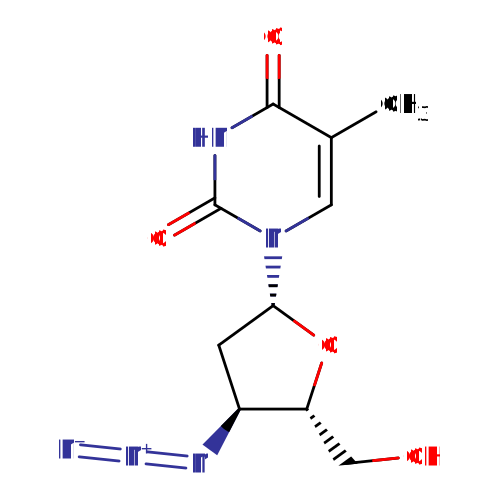
A dideoxynucleoside compound in which the 3'-hydroxy group on the sugar moiety has been replaced by an azido group. This modification prevents the formation of phosphodiester linkages which are needed for the completion of nucleic acid chains. The compound is a potent inhibitor of HIV replication, acting as a chain-terminator of viral DNA during reverse transcription. It improves immunologic function, partially reverses the HIV-induced neurological dysfunction, and improves certain other clinical abnormalities associated with AIDS. Its principal toxic effect is dose-dependent suppression of bone marrow, resulting in anemia and leukopenia. [PubChem]
- Type
- Small Molecule
- Groups
- Approved
- Structure

Structure for Zidovudine (DB00495)
- Weight
- Average: 267.2413
Monoisotopic: 267.096753929 - Chemical Formula
- C10H13N5O4
- Synonyms
- Azidothymidine
- AZT
- ZDV
- Zidovudina
- Zidovudine
- Zidovudinum
- External IDs
- BW-A-509U
- BW-A509U
- NSC-602670

Pharmacology
- Indication
Used in combination with other antiretroviral agents for the treatment of human immunovirus (HIV) infections.
 Reduce drug development failure ratesBuild, train, & validate machine-learning modelswith evidence-based and structured datasets.Build, train, & validate predictive machine-learning models with structured datasets.
- Associated Conditions
Indication Type Indication Combined Product Details Approval Level Age Group Patient Characteristics Dose Form Used in combination to manage Hiv infection Combination Product in combination with: Lamivudine (DB00709), Abacavir (DB01048) •••••••••••• Prevention of Perinatal hiv transmission •••••••••••• ••••• Prevention of Perinatal hiv transmission •••••••••••• Adjunct therapy in prevention of Post exposure hiv transmission ••• ••••• - Contraindications & Blackbox Warnings
 Prevent Adverse Drug Events TodayTap into our Clinical API for life-saving information on contraindications & blackbox warnings, population restrictions, harmful risks, & more.Avoid life-threatening adverse drug events with our Clinical API
- Pharmacodynamics
Zidovudine is a nucleoside reverse transcriptase inhibitor (NRTI) with activity against Human Immunodeficiency Virus Type 1 (HIV-1). Zidovudine is phosphorylated to active metabolites that compete for incorporation into viral DNA. They inhibit the HIV reverse transcriptase enzyme competitively and act as a chain terminator of DNA synthesis. The lack of a 3'-OH group in the incorporated nucleoside analogue prevents the formation of the 5' to 3' phosphodiester linkage essential for DNA chain elongation, and therefore, the viral DNA growth is terminated.
- Mechanism of action
Zidovudine, a structural analog of thymidine, is a prodrug that must be phosphorylated to its active 5′-triphosphate metabolite, zidovudine triphosphate (ZDV-TP). It inhibits the activity of HIV-1 reverse transcriptase (RT) via DNA chain termination after incorporation of the nucleotide analogue. It competes with the natural substrate dGTP and incorporates itself into viral DNA. It is also a weak inhibitor of cellular DNA polymerase α and γ.
Target Actions Organism AReverse transcriptase/RNaseH inhibitorHuman immunodeficiency virus 1 UTelomerase reverse transcriptase inhibitorHumans - Absorption
Rapid and nearly complete absorption from the gastrointestinal tract following oral administration; however, because of first-pass metabolism, systemic bioavailability of zidovudine capsules and solution is approximately 65% (range, 52 to 75%). Bioavailability in neonates up to 14 days of age is approximately 89%, and it decreases to approximately 61% and 65% in neonates over 14 days of age and children 3 months to 12 years, respectively. Administration with a high-fat meal may decrease the rate and extent of absorption.
- Volume of distribution
Apparent volume of distribution, HIV-infected patients, IV administration = 1.6 ± 0.6 L/kg
- Protein binding
30-38%
- Metabolism
Hepatic. Metabolized by glucuronide conjugation to major, inactive metabolite, 3′-azido-3′-deoxy-5′- O-beta-D-glucopyranuronosylthymidine (GZDV). UGT2B7 is the primary UGT isoform that is responsible for glucuronidation. Compared to zidovudine, GZDV's area under the curve is approximately 3-fold greater. The cytochrome P450 isozymes are responsible for the reduction of the azido moiety to form 3'-amino-3'- deoxythymidine (AMT).
Hover over products below to view reaction partners
- Route of elimination
As in adult patients, the major route of elimination was by metabolism to GZDV. After intravenous dosing, about 29% of the dose was excreted in the urine unchanged and about 45% of the dose was excreted as GZDV.
- Half-life
Elimination half life, HIV-infected patients, IV administration = 1.1 hours (range of 0.5 - 2.9 hours)
- Clearance
- 0.65 +/- 0.29 L/hr/kg [HIV-infected, Birth to 14 Days of Age]
- 1.14 +/- 0.24 L/hr/kg [HIV-infected, 14 Days to 3 Months of Age]
- 1.85 +/- 0.47 L/hr/kg [HIV-infected, 3 Months to 12 Years of Age]. The transporters, ABCB1, ABCC4, ABCC5, and ABCG2 are involved with the clearance of zidovudine.
- Adverse Effects
 Improve decision support & research outcomesWith structured adverse effects data, including: blackbox warnings, adverse reactions, warning & precautions, & incidence rates. View sample adverse effects data in our new Data Library!Improve decision support & research outcomes with our structured adverse effects data.
- Toxicity
Symptoms of overdose include fatigue, headache, nausea, and vomiting. LD50 is 3084 mg/kg (orally in mice).
- Pathways
Pathway Category Zidovudine Action Pathway Drug action - Pharmacogenomic Effects/ADRs
- Not Available
Interactions
- Drug Interactions
- This information should not be interpreted without the help of a healthcare provider. If you believe you are experiencing an interaction, contact a healthcare provider immediately. The absence of an interaction does not necessarily mean no interactions exist.
Drug Interaction Integrate drug-drug
interactions in your softwareAbametapir The serum concentration of Zidovudine can be increased when it is combined with Abametapir. Abatacept The metabolism of Zidovudine can be increased when combined with Abatacept. Abciximab The risk or severity of bleeding can be increased when Abciximab is combined with Zidovudine. Abemaciclib Abemaciclib may decrease the excretion rate of Zidovudine which could result in a higher serum level. Abiraterone The metabolism of Zidovudine can be decreased when combined with Abiraterone. - Food Interactions
- Take with or without food. The administration of zidovudine with food causes a 28% reduction in the Cmax but does not affect the AUC.
Products
 Drug product information from 10+ global regionsOur datasets provide approved product information including:dosage, form, labeller, route of administration, and marketing period.Access drug product information from over 10 global regions.
- Product Images
- Brand Name Prescription Products
Name Dosage Strength Route Labeller Marketing Start Marketing End Region Image Retrovir Tablet, film coated 300 mg/1 Oral ViiV Healthcare Company 2010-10-28 2010-11-01 US 

Retrovir Injection, solution 10 mg/1mL Intravenous Glaxosmithkline Inc 2000-03-19 2013-05-31 US Retrovir Capsule 100 mg/1 Oral Glaxosmithkline Inc 1987-06-22 2013-06-30 US Retrovir Solution 10 mg/1mL Oral ViiV Healthcare Company 2010-10-28 Not applicable US Retrovir Syrup 50 mg/5mL Oral Glaxosmithkline Inc 1989-10-10 2013-09-30 US - Generic Prescription Products
Name Dosage Strength Route Labeller Marketing Start Marketing End Region Image Apo-zidovudine Capsule 100 mg Oral Apotex Corporation 1992-12-31 Not applicable Canada 
Novo-azt Cap 100mg Capsule 100 mg Oral Novopharm Limited 1992-12-31 2015-10-26 Canada Zidovudine Tablet, film coated 300 mg/1 Oral Lannett Company, Inc. 2014-03-25 Not applicable US Zidovudine Capsule 100 mg/1 Oral Boca Pharmacal, Inc. 2012-08-17 2017-07-31 US Zidovudine Capsule 100 mg/1 Oral Acetris Health, Llc 2006-03-27 Not applicable US - Mixture Products
Name Ingredients Dosage Route Labeller Marketing Start Marketing End Region Image Abacavir Sulfate, Lamivudine and Zidovudine Zidovudine (300 mg/1) + Abacavir sulfate (300 mg/1) + Lamivudine (150 mg/1) Tablet Oral Lupin Pharmaceuticals 2013-12-17 Not applicable US Abacavir, Lamivudine and Zidovudine Zidovudine (300 mg/1) + Abacavir sulfate (300 mg/1) + Lamivudine (150 mg/1) Tablet Oral Lupin Pharmaceuticals, Inc. 2013-12-17 Not applicable US ABACAVIR/LAMIVUDINA/ZIDOVUDINA MYLAN Zidovudine (300 MG) + Abacavir (300 MG) + Lamivudine (150 MG) Tablet, coated Oral Mylan S.P.A. 2014-12-03 Not applicable Italy 
ABACAVIR/LAMIVUDINA/ZIDOVUDINA MYLAN Zidovudine (300 MG) + Abacavir (300 MG) + Lamivudine (150 MG) Tablet, coated Oral Mylan S.P.A. 2014-12-03 Not applicable Italy ABACAVIR/LAMIVUDINA/ZIDOVUDINA MYLAN Zidovudine (300 MG) + Abacavir (300 MG) + Lamivudine (150 MG) Tablet, coated Oral Mylan S.P.A. 2014-12-03 Not applicable Italy


Categories
- ATC Codes
- J05AR04 — Zidovudine, lamivudine and abacavir
- J05AR — Antivirals for treatment of HIV infections, combinations
- J05A — DIRECT ACTING ANTIVIRALS
- J05 — ANTIVIRALS FOR SYSTEMIC USE
- J — ANTIINFECTIVES FOR SYSTEMIC USE
- J05AF — Nucleoside and nucleotide reverse transcriptase inhibitors
- J05A — DIRECT ACTING ANTIVIRALS
- J05 — ANTIVIRALS FOR SYSTEMIC USE
- J — ANTIINFECTIVES FOR SYSTEMIC USE
- J05AR — Antivirals for treatment of HIV infections, combinations
- J05A — DIRECT ACTING ANTIVIRALS
- J05 — ANTIVIRALS FOR SYSTEMIC USE
- J — ANTIINFECTIVES FOR SYSTEMIC USE
- Drug Categories
- Agents Causing Muscle Toxicity
- Anti-HIV Agents
- Anti-Infective Agents
- Anti-Retroviral Agents
- Antiinfectives for Systemic Use
- Antimetabolites
- Antiviral Agents
- Antivirals for Systemic Use
- Antivirals used in combination for the treatment of HIV infections
- BCRP/ABCG2 Substrates
- Cytochrome P-450 CYP2A6 Substrates
- Cytochrome P-450 CYP2C8 Substrates
- Cytochrome P-450 CYP2C9 Substrates
- Cytochrome P-450 CYP3A Substrates
- Cytochrome P-450 CYP3A4 Substrates
- Cytochrome P-450 Substrates
- Deoxyribonucleosides
- Dideoxynucleosides
- Direct Acting Antivirals
- Enzyme Inhibitors
- Human Immunodeficiency Virus Nucleoside Analog Reverse Transcriptase Inhibitor
- Immunosuppressive Agents
- Myelosuppressive Agents
- Noxae
- Nucleic Acid Synthesis Inhibitors
- Nucleic Acids, Nucleotides, and Nucleosides
- Nucleoside and Nucleotide Reverse Transcriptase Inhibitors
- Nucleoside Reverse Transcriptase Inhibitors
- Nucleosides
- OAT1/SLC22A6 Substrates
- OAT3/SLC22A8 Inhibitors
- OAT3/SLC22A8 Substrates
- P-glycoprotein substrates
- Pyrimidine Nucleosides
- Pyrimidines
- Reverse Transcriptase Inhibitors
- Toxic Actions
- UGT1A1 Inducers
- UGT1A1 Substrates
- UGT2B7 substrates
- Chemical TaxonomyProvided by Classyfire
- Description
- This compound belongs to the class of organic compounds known as pyrimidine 2',3'-dideoxyribonucleosides. These are compounds consisting of a pyrimidine linked to a ribose which lacks a hydroxyl group at positions 2 and 3.
- Kingdom
- Organic compounds
- Super Class
- Nucleosides, nucleotides, and analogues
- Class
- Pyrimidine nucleosides
- Sub Class
- Pyrimidine 2',3'-dideoxyribonucleosides
- Direct Parent
- Pyrimidine 2',3'-dideoxyribonucleosides
- Alternative Parents
- Pyrimidones / Hydroxypyrimidines / Hydropyrimidines / Tetrahydrofurans / Heteroaromatic compounds / Azo imides / Azo compounds / Oxacyclic compounds / Azacyclic compounds / Primary alcohols show 4 more
- Substituents
- Alcohol / Aromatic heteromonocyclic compound / Azacycle / Azo compound / Azo imide / Heteroaromatic compound / Hydrocarbon derivative / Hydropyrimidine / Hydroxypyrimidine / Organic nitrogen compound show 13 more
- Molecular Framework
- Aromatic heteromonocyclic compounds
- External Descriptors
- azide, pyrimidine 2',3'-dideoxyribonucleoside (CHEBI:10110)
- Affected organisms
- Human Immunodeficiency Virus
Chemical Identifiers
- UNII
- 4B9XT59T7S
- CAS number
- 30516-87-1
- InChI Key
- HBOMLICNUCNMMY-XLPZGREQSA-N
- InChI
- InChI=1S/C10H13N5O4/c1-5-3-15(10(18)12-9(5)17)8-2-6(13-14-11)7(4-16)19-8/h3,6-8,16H,2,4H2,1H3,(H,12,17,18)/t6-,7+,8+/m0/s1
- IUPAC Name
- 1-[(2R,4S,5S)-4-azido-5-(hydroxymethyl)oxolan-2-yl]-5-methyl-1,2,3,4-tetrahydropyrimidine-2,4-dione
- SMILES
- CC1=CN([C@H]2C[C@H](N=[N+]=[N-])[C@@H](CO)O2)C(=O)NC1=O
References
- General References
- De Clercq E: HIV resistance to reverse transcriptase inhibitors. Biochem Pharmacol. 1994 Jan 20;47(2):155-69. [Article]
- Yarchoan R, Mitsuya H, Broder S: AIDS therapies. Sci Am. 1988 Oct;259(4):110-9. [Article]
- Connor EM, Sperling RS, Gelber R, Kiselev P, Scott G, O'Sullivan MJ, VanDyke R, Bey M, Shearer W, Jacobson RL, et al.: Reduction of maternal-infant transmission of human immunodeficiency virus type 1 with zidovudine treatment. Pediatric AIDS Clinical Trials Group Protocol 076 Study Group. N Engl J Med. 1994 Nov 3;331(18):1173-80. [Article]
- Mitsuya H, Yarchoan R, Broder S: Molecular targets for AIDS therapy. Science. 1990 Sep 28;249(4976):1533-44. [Article]
- Mitsuya H, Weinhold KJ, Furman PA, St Clair MH, Lehrman SN, Gallo RC, Bolognesi D, Barry DW, Broder S: 3'-Azido-3'-deoxythymidine (BW A509U): an antiviral agent that inhibits the infectivity and cytopathic effect of human T-lymphotropic virus type III/lymphadenopathy-associated virus in vitro. Proc Natl Acad Sci U S A. 1985 Oct;82(20):7096-100. [Article]
- Court MH, Krishnaswamy S, Hao Q, Duan SX, Patten CJ, Von Moltke LL, Greenblatt DJ: Evaluation of 3'-azido-3'-deoxythymidine, morphine, and codeine as probe substrates for UDP-glucuronosyltransferase 2B7 (UGT2B7) in human liver microsomes: specificity and influence of the UGT2B7*2 polymorphism. Drug Metab Dispos. 2003 Sep;31(9):1125-33. [Article]
- External Links
- Human Metabolome Database
- HMDB0014638
- KEGG Drug
- D00413
- KEGG Compound
- C07210
- PubChem Compound
- 35370
- PubChem Substance
- 46508240
- ChemSpider
- 32555
- BindingDB
- 50002692
- 11413
- ChEBI
- 10110
- ChEMBL
- CHEMBL129
- ZINC
- ZINC000003779042
- Therapeutic Targets Database
- DAP000701
- PharmGKB
- PA451954
- PDBe Ligand
- AZZ
- RxList
- RxList Drug Page
- Drugs.com
- Drugs.com Drug Page
- PDRhealth
- PDRhealth Drug Page
- Wikipedia
- Zidovudine
- PDB Entries
- 2jj8 / 3b9l / 3b9m / 3bcr / 4lhm
- FDA label
- Download (217 KB)
- MSDS
- Download (57.2 KB)
Clinical Trials
- Clinical Trials
Phase Status Purpose Conditions Count 4 Completed Not Available Human Immunodeficiency Virus (HIV) Infections 1 4 Completed Not Available Human Immunodeficiency Virus (HIV) Infections / Proteinuria 1 4 Completed Basic Science Abnormality of Adipose Tissue / Antiviral Drug Adverse Reaction / Body Fat Disorder / Cardiovascular Abnormalities / HIV Lipodystrophy Syndrome / Human Immunodeficiency Virus Type 1 (HIV-1) Infection / Vascular Diseases / Weight Changes 1 4 Completed Basic Science Cardiovascular Disease (CVD) / Dyslipidemia / Human Immunodeficiency Virus (HIV) Infections / Lipodystrophies / Metabolic Diseases / Metabolism Disorder, Glucose 1 4 Completed Diagnostic Cardiovascular Disease (CVD) / HIV Lipodystrophy Syndrome 1
Pharmacoeconomics
- Manufacturers
- Viiv healthcare co
- Aurobindo pharma ltd inc
- Cipla ltd
- Pharmaforce inc
- Aurobindo pharma ltd
- Hetero drugs ltd unit iii
- Matrix laboratories ltd
- Ranbaxy laboratories ltd
- Roxane laboratories inc
- Packagers
- Amerisource Health Services Corp.
- Apotheca Inc.
- A-S Medication Solutions LLC
- Aurobindo Pharma Ltd.
- Aurolife Pharma LLC
- Camber Pharmaceuticals Inc.
- Cardinal Health
- Cipla Ltd.
- DAVA Pharmaceuticals
- Direct Dispensing Inc.
- Dispensing Solutions
- Diversified Healthcare Services Inc.
- GlaxoSmithKline Inc.
- Greenstone LLC
- H.J. Harkins Co. Inc.
- Hetero Drugs Ltd.
- Lake Erie Medical and Surgical Supply
- Matrix Laboratories Ltd.
- Murfreesboro Pharmaceutical Nursing Supply
- Mylan
- Neuman Distributors Inc.
- Nucare Pharmaceuticals Inc.
- PD-Rx Pharmaceuticals Inc.
- Pharmaceutical Utilization Management Program VA Inc.
- Physicians Total Care Inc.
- Prepackage Specialists
- Prepak Systems Inc.
- Ranbaxy Laboratories
- Rebel Distributors Corp.
- Redpharm Drug
- Remedy Repack
- Roxane Labs
- Sandhills Packaging Inc.
- Southwood Pharmaceuticals
- St Mary's Medical Park Pharmacy
- Stat Rx Usa
- Tya Pharmaceuticals
- ViiV Healthcare ULC
- Dosage Forms
Form Route Strength Tablet Oral 150.000 mg Capsule, coated Oral 100 mg Tablet, coated Oral Tablet, film coated Oral Tablet Oral Capsule Oral 100 mg/1 Injection, solution Intravenous 10 mg/1mL Injection, solution, concentrate Intravenous 10 MG/ML Solution Oral 10 mg/1mL Solution Oral 100 MG/10ML Syrup Oral 50 mg/5mL Tablet Oral 200 MG Tablet, film coated Oral 300 MG Tablet, film coated Oral 300 mg/1 Solution Intravenous 10 mg / mL Syrup Oral 50 mg / 5 mL Tablet Oral 300 mg Injection, solution Intravenous 200 mg/20ml Capsule Oral Capsule, liquid filled Oral 100 mg Injection, solution Intravenous Solution Intravenous 200 mg Syrup Oral 10 mg/ml Solution Intravenous 200.000 mg Solution Oral 1.000 g Tablet Oral 100 mg Tablet, delayed release Oral 300 mg Tablet, film coated Oral Solution Oral 1000.00 mg Solution Oral 1000 mg Tablet Oral Solution Oral Capsule, coated Oral 200 mg Capsule, coated Oral 300 mg Capsule, coated Oral 250 mg Solution Oral 1 g Syrup Oral 1 g Solution Oral 50 mg/5mL Syrup Oral 10 mg/1mL Tablet Oral 300 mg/1 Solution Oral 50 mg / 5 mL Tablet, soluble Oral Capsule Oral 100 mg Capsule Oral 250 mg Tablet, coated Oral 300 mg Capsule Oral 300 mg - Prices
Unit description Cost Unit Retrovir 50 mg/5ml Syrup 240ml Bottle 74.11USD bottle Retrovir 300 mg tablet 9.1USD tablet Zidovudine 300 mg tablet 6.17USD tablet Retrovir 100 mg capsule 3.09USD capsule Retrovir iv infusion vial 1.61USD ml DrugBank does not sell nor buy drugs. Pricing information is supplied for informational purposes only.- Patents
Patent Number Pediatric Extension Approved Expires (estimated) Region CA2216634 No 2004-07-20 2016-03-28 Canada CA2105487 No 2002-09-24 2012-03-05 Canada US5905082 Yes 1999-05-18 2016-11-18 US US6294540 Yes 2001-09-25 2018-11-14 US US6417191 Yes 2002-07-09 2016-09-28 US
Properties
- State
- Solid
- Experimental Properties
Property Value Source melting point (°C) 113-115 °C PhysProp water solubility 2.01E+004 mg/L (at 25 °C) PHYSICIANS DESK REFERENCE (2003) logP 0.05 HANSCH,C ET AL. (1995) Caco2 permeability -5.16 ADME Research, USCD - Predicted Properties
Property Value Source Water Solubility 16.3 mg/mL ALOGPS logP -0.1 ALOGPS logP -0.3 Chemaxon logS -1.2 ALOGPS pKa (Strongest Acidic) 9.96 Chemaxon pKa (Strongest Basic) -3 Chemaxon Physiological Charge 0 Chemaxon Hydrogen Acceptor Count 6 Chemaxon Hydrogen Donor Count 2 Chemaxon Polar Surface Area 108.3 Å2 Chemaxon Rotatable Bond Count 3 Chemaxon Refractivity 61.7 m3·mol-1 Chemaxon Polarizability 24.77 Å3 Chemaxon Number of Rings 2 Chemaxon Bioavailability 1 Chemaxon Rule of Five Yes Chemaxon Ghose Filter Yes Chemaxon Veber's Rule No Chemaxon MDDR-like Rule No Chemaxon - Predicted ADMET Features
Property Value Probability Human Intestinal Absorption + 0.9343 Blood Brain Barrier + 0.6224 Caco-2 permeable - 0.8728 P-glycoprotein substrate Non-substrate 0.6959 P-glycoprotein inhibitor I Non-inhibitor 0.9118 P-glycoprotein inhibitor II Non-inhibitor 0.8981 Renal organic cation transporter Non-inhibitor 0.8798 CYP450 2C9 substrate Non-substrate 0.663 CYP450 2D6 substrate Non-substrate 0.8987 CYP450 3A4 substrate Substrate 0.5329 CYP450 1A2 substrate Non-inhibitor 0.9355 CYP450 2C9 inhibitor Non-inhibitor 0.9143 CYP450 2D6 inhibitor Non-inhibitor 0.9315 CYP450 2C19 inhibitor Non-inhibitor 0.9175 CYP450 3A4 inhibitor Non-inhibitor 0.848 CYP450 inhibitory promiscuity Low CYP Inhibitory Promiscuity 0.9585 Ames test AMES toxic 0.9107 Carcinogenicity Non-carcinogens 0.7484 Biodegradation Ready biodegradable 0.5673 Rat acute toxicity 2.0464 LD50, mol/kg Not applicable hERG inhibition (predictor I) Weak inhibitor 0.7124 hERG inhibition (predictor II) Non-inhibitor 0.8821
Spectra
- Mass Spec (NIST)
- Not Available
- Spectra
- Chromatographic Properties
Collision Cross Sections (CCS)
Adduct CCS Value (Å2) Source type Source [M-H]- 172.21792 predictedDarkChem Lite v0.1.0 [M-H]- 168.7114397 predictedDarkChem Lite v0.1.0 [M-H]- 159.64153 predictedDeepCCS 1.0 (2019) [M+H]+ 170.90602 predictedDarkChem Lite v0.1.0 [M+H]+ 166.6034752 predictedDarkChem Lite v0.1.0 [M+H]+ 161.99953 predictedDeepCCS 1.0 (2019) [M+Na]+ 172.10552 predictedDarkChem Lite v0.1.0 [M+Na]+ 177.2637791 predictedDarkChem Lite v0.1.0 [M+Na]+ 168.76201 predictedDeepCCS 1.0 (2019)
Targets

- Kind
- Protein
- Organism
- Human immunodeficiency virus 1
- Pharmacological action
- Yes
- Actions
- Inhibitor
- General Function
- Rna-dna hybrid ribonuclease activity
- Specific Function
- Not Available
- Gene Name
- pol
- Uniprot ID
- Q72547
- Uniprot Name
- Reverse transcriptase/RNaseH
- Molecular Weight
- 65223.615 Da
References
- Imming P, Sinning C, Meyer A: Drugs, their targets and the nature and number of drug targets. Nat Rev Drug Discov. 2006 Oct;5(10):821-34. [Article]
- Barry M, Gibbons S, Back D, Mulcahy F: Protease inhibitors in patients with HIV disease. Clinically important pharmacokinetic considerations. Clin Pharmacokinet. 1997 Mar;32(3):194-209. [Article]
- De Clercq E: Antiretroviral drugs. Curr Opin Pharmacol. 2010 Oct;10(5):507-15. doi: 10.1016/j.coph.2010.04.011. Epub 2010 May 12. [Article]
- De Clercq E: Emerging anti-HIV drugs. Expert Opin Emerg Drugs. 2005 May;10(2):241-73. [Article]
- Kind
- Protein
- Organism
- Humans
- Pharmacological action
- Unknown
- Actions
- Inhibitor
- General Function
- Trna binding
- Specific Function
- Telomerase is a ribonucleoprotein enzyme essential for the replication of chromosome termini in most eukaryotes. Active in progenitor and cancer cells. Inactive, or very low activity, in normal som...
- Gene Name
- TERT
- Uniprot ID
- O14746
- Uniprot Name
- Telomerase reverse transcriptase
- Molecular Weight
- 126995.435 Da
References
- Leeansyah E, Cameron PU, Solomon A, Tennakoon S, Velayudham P, Gouillou M, Spelman T, Hearps A, Fairley C, Smit de V, Pierce AB, Armishaw J, Crowe SM, Cooper DA, Koelsch KK, Liu JP, Chuah J, Lewin SR: Inhibition of telomerase activity by human immunodeficiency virus (HIV) nucleos(t)ide reverse transcriptase inhibitors: a potential factor contributing to HIV-associated accelerated aging. J Infect Dis. 2013 Apr;207(7):1157-65. doi: 10.1093/infdis/jit006. Epub 2013 Jan 9. [Article]
Enzymes
- Kind
- Protein
- Organism
- Humans
- Pharmacological action
- Unknown
- Actions
- Substrate
- General Function
- Steroid hydroxylase activity
- Specific Function
- Exhibits a high coumarin 7-hydroxylase activity. Can act in the hydroxylation of the anti-cancer drugs cyclophosphamide and ifosphamide. Competent in the metabolic activation of aflatoxin B1. Const...
- Gene Name
- CYP2A6
- Uniprot ID
- P11509
- Uniprot Name
- Cytochrome P450 2A6
- Molecular Weight
- 56501.005 Da
References
- Fayz S, Inaba T: Zidovudine azido-reductase in human liver microsomes: activation by ethacrynic acid, dipyridamole, and indomethacin and inhibition by human immunodeficiency virus protease inhibitors. Antimicrob Agents Chemother. 1998 Jul;42(7):1654-8. [Article]
- Kind
- Protein
- Organism
- Humans
- Pharmacological action
- Unknown
- Actions
- Substrate
- General Function
- Steroid hydroxylase activity
- Specific Function
- Cytochromes P450 are a group of heme-thiolate monooxygenases. In liver microsomes, this enzyme is involved in an NADPH-dependent electron transport pathway. It oxidizes a variety of structurally un...
- Gene Name
- CYP2C9
- Uniprot ID
- P11712
- Uniprot Name
- Cytochrome P450 2C9
- Molecular Weight
- 55627.365 Da
References
- Rendic S: Summary of information on human CYP enzymes: human P450 metabolism data. Drug Metab Rev. 2002 Feb-May;34(1-2):83-448. [Article]
- Kind
- Protein
- Organism
- Humans
- Pharmacological action
- Unknown
- Actions
- Substrate
- General Function
- Vitamin d3 25-hydroxylase activity
- Specific Function
- Cytochromes P450 are a group of heme-thiolate monooxygenases. In liver microsomes, this enzyme is involved in an NADPH-dependent electron transport pathway. It performs a variety of oxidation react...
- Gene Name
- CYP3A4
- Uniprot ID
- P08684
- Uniprot Name
- Cytochrome P450 3A4
- Molecular Weight
- 57342.67 Da
References
- Gallicano KD, Sahai J, Shukla VK, Seguin I, Pakuts A, Kwok D, Foster BC, Cameron DW: Induction of zidovudine glucuronidation and amination pathways by rifampicin in HIV-infected patients. Br J Clin Pharmacol. 1999 Aug;48(2):168-79. doi: 10.1046/j.1365-2125.1999.00987.x. [Article]
- PharmGKB: Zidovudine Pathway, Pharmacokinetics/Pharmacodynamics Overview [Link]
- Kind
- Protein
- Organism
- Humans
- Pharmacological action
- Unknown
- Actions
- Substrate
- General Function
- Zinc ion binding
- Specific Function
- Not Available
- Gene Name
- TK1
- Uniprot ID
- P04183
- Uniprot Name
- Thymidine kinase, cytosolic
- Molecular Weight
- 25468.455 Da
References
- Furman PA, Fyfe JA, St Clair MH, Weinhold K, Rideout JL, Freeman GA, Lehrman SN, Bolognesi DP, Broder S, Mitsuya H, et al.: Phosphorylation of 3'-azido-3'-deoxythymidine and selective interaction of the 5'-triphosphate with human immunodeficiency virus reverse transcriptase. Proc Natl Acad Sci U S A. 1986 Nov;83(21):8333-7. [Article]
- Kind
- Protein
- Organism
- Humans
- Pharmacological action
- Unknown
- Actions
- Substrate
- General Function
- Glucuronosyltransferase activity
- Specific Function
- UDPGT is of major importance in the conjugation and subsequent elimination of potentially toxic xenobiotics and endogenous compounds.Its unique specificity for 3,4-catechol estrogens and estriol su...
- Gene Name
- UGT2B7
- Uniprot ID
- P16662
- Uniprot Name
- UDP-glucuronosyltransferase 2B7
- Molecular Weight
- 60694.12 Da
References
- Court MH, Krishnaswamy S, Hao Q, Duan SX, Patten CJ, Von Moltke LL, Greenblatt DJ: Evaluation of 3'-azido-3'-deoxythymidine, morphine, and codeine as probe substrates for UDP-glucuronosyltransferase 2B7 (UGT2B7) in human liver microsomes: specificity and influence of the UGT2B7*2 polymorphism. Drug Metab Dispos. 2003 Sep;31(9):1125-33. [Article]
- Kind
- Protein
- Organism
- Humans
- Pharmacological action
- No
- Actions
- SubstrateInducer
- General Function
- Steroid binding
- Specific Function
- UDPGT is of major importance in the conjugation and subsequent elimination of potentially toxic xenobiotics and endogenous compounds. This isoform glucuronidates bilirubin IX-alpha to form both the...
- Gene Name
- UGT1A1
- Uniprot ID
- P22309
- Uniprot Name
- UDP-glucuronosyltransferase 1-1
- Molecular Weight
- 59590.91 Da
References
- Williams JA, Hyland R, Jones BC, Smith DA, Hurst S, Goosen TC, Peterkin V, Koup JR, Ball SE: Drug-drug interactions for UDP-glucuronosyltransferase substrates: a pharmacokinetic explanation for typically observed low exposure (AUCi/AUC) ratios. Drug Metab Dispos. 2004 Nov;32(11):1201-8. doi: 10.1124/dmd.104.000794. Epub 2004 Aug 10. [Article]
Carriers
- Kind
- Protein
- Organism
- Humans
- Pharmacological action
- No
- General Function
- Toxic substance binding
- Specific Function
- Serum albumin, the main protein of plasma, has a good binding capacity for water, Ca(2+), Na(+), K(+), fatty acids, hormones, bilirubin and drugs. Its main function is the regulation of the colloid...
- Gene Name
- ALB
- Uniprot ID
- P02768
- Uniprot Name
- Serum albumin
- Molecular Weight
- 69365.94 Da
References
- Quevedo MA, Moroni GN, Brinon MC: Human serum albumin binding of novel antiretroviral nucleoside derivatives of AZT. Biochem Biophys Res Commun. 2001 Nov 9;288(4):954-60. [Article]
Transporters
- Kind
- Protein
- Organism
- Humans
- Pharmacological action
- Unknown
- General Function
- Quaternary ammonium group transmembrane transporter activity
- Specific Function
- Mediates tubular uptake of organic compounds from circulation. Mediates the influx of agmatine, dopamine, noradrenaline (norepinephrine), serotonin, choline, famotidine, ranitidine, histamin, creat...
- Gene Name
- SLC22A2
- Uniprot ID
- O15244
- Uniprot Name
- Solute carrier family 22 member 2
- Molecular Weight
- 62579.99 Da
References
- Urakami Y, Akazawa M, Saito H, Okuda M, Inui K: cDNA cloning, functional characterization, and tissue distribution of an alternatively spliced variant of organic cation transporter hOCT2 predominantly expressed in the human kidney. J Am Soc Nephrol. 2002 Jul;13(7):1703-10. [Article]
- Kind
- Protein
- Organism
- Humans
- Pharmacological action
- Unknown
- Actions
- Substrate
- General Function
- Sodium-independent organic anion transmembrane transporter activity
- Specific Function
- Involved in the renal elimination of endogenous and exogenous organic anions. Functions as organic anion exchanger when the uptake of one molecule of organic anion is coupled with an efflux of one ...
- Gene Name
- SLC22A6
- Uniprot ID
- Q4U2R8
- Uniprot Name
- Solute carrier family 22 member 6
- Molecular Weight
- 61815.78 Da
References
- Worner P, Brossmer R: Platelet aggregation and the release induced by inophores for divalent cations. Thromb Res. 1975 Apr;6(4):295-305. [Article]
- Takeda M, Khamdang S, Narikawa S, Kimura H, Kobayashi Y, Yamamoto T, Cha SH, Sekine T, Endou H: Human organic anion transporters and human organic cation transporters mediate renal antiviral transport. J Pharmacol Exp Ther. 2002 Mar;300(3):918-24. [Article]
- VanWert AL, Gionfriddo MR, Sweet DH: Organic anion transporters: discovery, pharmacology, regulation and roles in pathophysiology. Biopharm Drug Dispos. 2010 Jan;31(1):1-71. doi: 10.1002/bdd.693. [Article]
- Kind
- Protein
- Organism
- Humans
- Pharmacological action
- Unknown
- General Function
- Sodium-independent organic anion transmembrane transporter activity
- Specific Function
- Mediates sodium-independent multispecific organic anion transport. Transport of prostaglandin E2, prostaglandin F2, tetracycline, bumetanide, estrone sulfate, glutarate, dehydroepiandrosterone sulf...
- Gene Name
- SLC22A7
- Uniprot ID
- Q9Y694
- Uniprot Name
- Solute carrier family 22 member 7
- Molecular Weight
- 60025.025 Da
References
- Takeda M, Khamdang S, Narikawa S, Kimura H, Kobayashi Y, Yamamoto T, Cha SH, Sekine T, Endou H: Human organic anion transporters and human organic cation transporters mediate renal antiviral transport. J Pharmacol Exp Ther. 2002 Mar;300(3):918-24. [Article]
- Kind
- Protein
- Organism
- Humans
- Pharmacological action
- Unknown
- Actions
- SubstrateInhibitor
- General Function
- Sodium-independent organic anion transmembrane transporter activity
- Specific Function
- Plays an important role in the excretion/detoxification of endogenous and exogenous organic anions, especially from the brain and kidney. Involved in the transport basolateral of steviol, fexofenad...
- Gene Name
- SLC22A8
- Uniprot ID
- Q8TCC7
- Uniprot Name
- Solute carrier family 22 member 8
- Molecular Weight
- 59855.585 Da
References
- Takeda M, Khamdang S, Narikawa S, Kimura H, Kobayashi Y, Yamamoto T, Cha SH, Sekine T, Endou H: Human organic anion transporters and human organic cation transporters mediate renal antiviral transport. J Pharmacol Exp Ther. 2002 Mar;300(3):918-24. [Article]
- VanWert AL, Gionfriddo MR, Sweet DH: Organic anion transporters: discovery, pharmacology, regulation and roles in pathophysiology. Biopharm Drug Dispos. 2010 Jan;31(1):1-71. doi: 10.1002/bdd.693. [Article]
- Kind
- Protein
- Organism
- Humans
- Pharmacological action
- Unknown
- General Function
- Sodium-independent organic anion transmembrane transporter activity
- Specific Function
- Mediates saturable uptake of estrone sulfate, dehydroepiandrosterone sulfate and related compounds.
- Gene Name
- SLC22A11
- Uniprot ID
- Q9NSA0
- Uniprot Name
- Solute carrier family 22 member 11
- Molecular Weight
- 59970.945 Da
References
- Takeda M, Khamdang S, Narikawa S, Kimura H, Kobayashi Y, Yamamoto T, Cha SH, Sekine T, Endou H: Human organic anion transporters and human organic cation transporters mediate renal antiviral transport. J Pharmacol Exp Ther. 2002 Mar;300(3):918-24. [Article]
- Kind
- Protein
- Organism
- Humans
- Pharmacological action
- Unknown
- General Function
- Pyrimidine- and adenine-specific:sodium symporter activity
- Specific Function
- Sodium-dependent and pyrimidine-selective. Exhibits the transport characteristics of the nucleoside transport system cit or N2 subtype (N2/cit) (selective for pyrimidine nucleosides and adenosine)....
- Gene Name
- SLC28A1
- Uniprot ID
- O00337
- Uniprot Name
- Sodium/nucleoside cotransporter 1
- Molecular Weight
- 71583.18 Da
References
- Cano-Soldado P, Lorrayoz IM, Molina-Arcas M, Casado FJ, Martinez-Picado J, Lostao MP, Pastor-Anglada M: Interaction of nucleoside inhibitors of HIV-1 reverse transcriptase with the concentrative nucleoside transporter-1 (SLC28A1). Antivir Ther. 2004 Dec;9(6):993-1002. [Article]
- Kind
- Protein
- Organism
- Humans
- Pharmacological action
- Unknown
- General Function
- Nucleoside transmembrane transporter activity
- Specific Function
- Mediates equilibrative transport of purine, pyrimidine nucleosides and the purine base hypoxanthine. Very less sensitive than SLC29A1 to inhibition by nitrobenzylthioinosine (NBMPR), dipyridamole, ...
- Gene Name
- SLC29A2
- Uniprot ID
- Q14542
- Uniprot Name
- Equilibrative nucleoside transporter 2
- Molecular Weight
- 50112.335 Da
References
- Yao SY, Ng AM, Sundaram M, Cass CE, Baldwin SA, Young JD: Transport of antiviral 3'-deoxy-nucleoside drugs by recombinant human and rat equilibrative, nitrobenzylthioinosine (NBMPR)-insensitive (ENT2) nucleoside transporter proteins produced in Xenopus oocytes. Mol Membr Biol. 2001 Apr-Jun;18(2):161-7. [Article]
- Kind
- Protein
- Organism
- Humans
- Pharmacological action
- Unknown
- Actions
- Substrate
- General Function
- Xenobiotic-transporting atpase activity
- Specific Function
- Energy-dependent efflux pump responsible for decreased drug accumulation in multidrug-resistant cells.
- Gene Name
- ABCB1
- Uniprot ID
- P08183
- Uniprot Name
- Multidrug resistance protein 1
- Molecular Weight
- 141477.255 Da
References
- Anderson PL, Lamba J, Aquilante CL, Schuetz E, Fletcher CV: Pharmacogenetic characteristics of indinavir, zidovudine, and lamivudine therapy in HIV-infected adults: a pilot study. J Acquir Immune Defic Syndr. 2006 Aug 1;42(4):441-9. [Article]
- Kind
- Protein
- Organism
- Humans
- Pharmacological action
- Unknown
- Actions
- Substrate
- General Function
- Atpase activity, coupled to transmembrane movement of substances
- Specific Function
- May be an organic anion pump relevant to cellular detoxification.
- Gene Name
- ABCC4
- Uniprot ID
- O15439
- Uniprot Name
- Multidrug resistance-associated protein 4
- Molecular Weight
- 149525.33 Da
References
- Abla N, Chinn LW, Nakamura T, Liu L, Huang CC, Johns SJ, Kawamoto M, Stryke D, Taylor TR, Ferrin TE, Giacomini KM, Kroetz DL: The human multidrug resistance protein 4 (MRP4, ABCC4): functional analysis of a highly polymorphic gene. J Pharmacol Exp Ther. 2008 Jun;325(3):859-68. doi: 10.1124/jpet.108.136523. Epub 2008 Mar 25. [Article]
- Kind
- Protein
- Organism
- Humans
- Pharmacological action
- Unknown
- Actions
- Substrate
- General Function
- Organic anion transmembrane transporter activity
- Specific Function
- Acts as a multispecific organic anion pump which can transport nucleotide analogs.
- Gene Name
- ABCC5
- Uniprot ID
- O15440
- Uniprot Name
- Multidrug resistance-associated protein 5
- Molecular Weight
- 160658.8 Da
References
- Jorajuria S, Dereuddre-Bosquet N, Becher F, Martin S, Porcheray F, Garrigues A, Mabondzo A, Benech H, Grassi J, Orlowski S, Dormont D, Clayette P: ATP binding cassette multidrug transporters limit the anti-HIV activity of zidovudine and indinavir in infected human macrophages. Antivir Ther. 2004 Aug;9(4):519-28. [Article]
- Kind
- Protein
- Organism
- Humans
- Pharmacological action
- Unknown
- Actions
- Substrate
- General Function
- Xenobiotic-transporting atpase activity
- Specific Function
- High-capacity urate exporter functioning in both renal and extrarenal urate excretion. Plays a role in porphyrin homeostasis as it is able to mediates the export of protoporhyrin IX (PPIX) both fro...
- Gene Name
- ABCG2
- Uniprot ID
- Q9UNQ0
- Uniprot Name
- ATP-binding cassette sub-family G member 2
- Molecular Weight
- 72313.47 Da
References
- Pan G, Giri N, Elmquist WF: Abcg2/Bcrp1 mediates the polarized transport of antiretroviral nucleosides abacavir and zidovudine. Drug Metab Dispos. 2007 Jul;35(7):1165-73. Epub 2007 Apr 16. [Article]

Drug created at June 13, 2005 13:24 / Updated at April 27, 2024 09:44