Identification
- Summary
Dimethyl sulfoxide is a reversible mitogen-activated extracellular signal-regulated kinase-1 (MEK1) and MEK2 inhibitor used to treat certain types of melanoma, metastatic non-small cell lung cancer, and locally advanced or metastatic anaplastic thyroid cancer.
- Brand Names
- Rimso-50
- Generic Name
- Dimethyl sulfoxide
- DrugBank Accession Number
- DB01093
- Background
A highly polar organic liquid, that is used widely as a chemical solvent. Because of its ability to penetrate biological membranes, it is used as a vehicle for topical application of pharmaceuticals. It is also used to protect tissue during cryopreservation. Dimethyl sulfoxide shows a range of pharmacological activity including analgesia and anti-inflammation.
- Type
- Small Molecule
- Groups
- Approved, Vet approved
- Structure
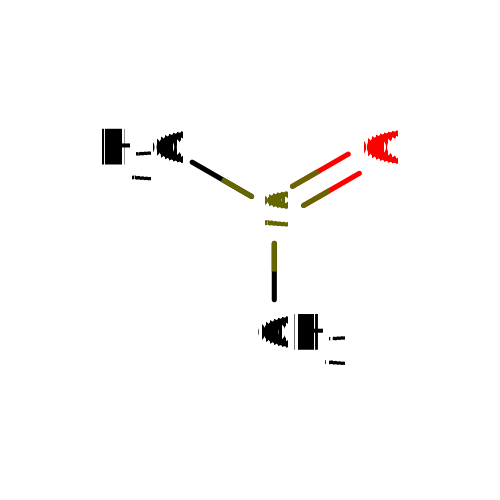
Structure for Dimethyl sulfoxide (DB01093)
- Weight
- Average: 78.133
Monoisotopic: 78.013935504 - Chemical Formula
- C2H6OS
- Synonyms
- Dimethyl sulfoxide
- Dimethyl sulfur oxide
- Dimethyl sulphoxide
- Dimethyli sulfoxidum
- Dimethylsulfoxid
- Diméthylsulfoxyde
- Dimetil sulfóxido
- DMSO
- Methylsulfinylmethane
- S(O)Me2
- Sulfinylbis(methane)
- External IDs
- NSC-763
- SQ 9453
- SQ-9453

Pharmacology
- Indication
For the symptomatic relief of patients with interstitial cystitis.
 Reduce drug development failure ratesBuild, train, & validate machine-learning modelswith evidence-based and structured datasets.Build, train, & validate predictive machine-learning models with structured datasets.
- Associated Conditions
Indication Type Indication Combined Product Details Approval Level Age Group Patient Characteristics Dose Form Symptomatic treatment of Interstitial cystitis •••••••••••• •••••••• - Associated Therapies
- Contraindications & Blackbox Warnings
 Prevent Adverse Drug Events TodayTap into our Clinical API for life-saving information on contraindications & blackbox warnings, population restrictions, harmful risks, & more.Avoid life-threatening adverse drug events with our Clinical API
- Pharmacodynamics
Dimethyl Sulfoxide may have anti-inflammatory, antioxidant and analgesic activities. Dimethyl Sulfoxide also readily penetrates cellular membranes. The membrane-penetrating ability of dimethyl sulfoxide may enhance diffusion of other substances through the skin. For this reason, mixtures of idoxuridine and dimethyl sulfoxide have been used for topical treatment of herpes zoster in the United Kingdom.
- Mechanism of action
The mechanism of dimethyl sulfoxide's actions is not well understood. Dimethyl sulfoxide has demonstrated antioxidant activity in certain biological settings. For example, the cardiovascular protective effect of dimethyl sulfoxide in copper-deficient rats is thought to occur by an antioxidant mechanism. It is also thought that dimethyl sulfoxide's possible anti-inflammatory activity is due to antioxidant action.
Target Actions Organism UInterleukin-5 receptor subunit alpha downregulatorHumans UMucin-16 downregulatorHumans UMyc proto-oncogene protein downregulatorHumans - Absorption
Readily and rapidly absorbed following administration by all routes and distributed throughout the body.
- Volume of distribution
Not Available
- Protein binding
Not Available
- Metabolism
Dimethyl sulfoxide is metabolized in man by oxidation to dimethyl sulfone or by reduction in dimethyl sulfide. Dimethyl sulfoxide and dimethyl sulfone are excreted in the urine and feces.
Hover over products below to view reaction partners
- Route of elimination
Dimethyl sulfoxide and dimethyl sulfone are excreted in the urine and feces.
- Half-life
Not Available
- Clearance
Not Available
- Adverse Effects
 Improve decision support & research outcomesWith structured adverse effects data, including: blackbox warnings, adverse reactions, warning & precautions, & incidence rates. View sample adverse effects data in our new Data Library!Improve decision support & research outcomes with our structured adverse effects data.
- Toxicity
The oral LD50 of dimethyl sulfoxide in the dog is greater than 10 gm/kg. It is improbable that this dosage level could be obtained with intravesical instillation of dimethyl sulfoxide in the patient.
- Pathways
- Not Available
- Pharmacogenomic Effects/ADRs
- Not Available
Interactions
- Drug Interactions
- This information should not be interpreted without the help of a healthcare provider. If you believe you are experiencing an interaction, contact a healthcare provider immediately. The absence of an interaction does not necessarily mean no interactions exist.
Drug Interaction Integrate drug-drug
interactions in your softwareAbacavir Abacavir may decrease the excretion rate of Dimethyl sulfoxide which could result in a higher serum level. Abemaciclib The serum concentration of Abemaciclib can be increased when it is combined with Dimethyl sulfoxide. Abrocitinib The metabolism of Abrocitinib can be decreased when combined with Dimethyl sulfoxide. Acalabrutinib The serum concentration of Acalabrutinib can be increased when it is combined with Dimethyl sulfoxide. Acebutolol The metabolism of Acebutolol can be decreased when combined with Dimethyl sulfoxide. - Food Interactions
- No interactions found.
Products
 Drug product information from 10+ global regionsOur datasets provide approved product information including:dosage, form, labeller, route of administration, and marketing period.Access drug product information from over 10 global regions.
- Brand Name Prescription Products
Name Dosage Strength Route Labeller Marketing Start Marketing End Region Image Dimethyl Sulfoxide Irrigation USP Solution 500 mg / g Intravesical Sandoz Canada Incorporated 2001-04-24 2019-08-01 Canada 
Kemsol Liquid 70% Solution 70 % Topical Axxess Pharma Inc. 1977-12-31 2011-07-22 Canada Rimso-50 Solution 500 mg / g Intravesical Mylan Pharmaceuticals 1980-12-31 Not applicable Canada Rimso-50 Irrigant 0.54 g/1mL Intravesical Mylan Institutional LLC 1978-04-04 Not applicable US 
- Mixture Products
Name Ingredients Dosage Route Labeller Marketing Start Marketing End Region Image Dolobene ratiopharm - Gel Dimethyl sulfoxide (15 g) + Dexpanthenol (2.5 g) + Heparin sodium (50000 IU) Gel Topical Teva B.V. 1997-04-22 Not applicable Austria 
VERRUMAL SOLUTION Dimethyl sulfoxide (8 g/100g) + Fluorouracil (0.5 g/100g) + Salicylic acid (10 g/100g) Solution Topical ZUELLIG PHARMA PTE. LTD. 1990-04-30 Not applicable Singapore 
เวอร์รูมาล Dimethyl sulfoxide (8 %) + Fluorouracil (0.5 %) + Salicylic acid (10 %) Solution Topical บริษัท ซิลลิค ฟาร์มา จำกัด 2017-03-14 Not applicable Thailand 
Categories
- ATC Codes
- M02AX03 — Dimethyl sulfoxide
- M02AX — Other topical products for joint and muscular pain
- M02A — TOPICAL PRODUCTS FOR JOINT AND MUSCULAR PAIN
- M02 — TOPICAL PRODUCTS FOR JOINT AND MUSCULAR PAIN
- M — MUSCULO-SKELETAL SYSTEM
- Drug Categories
- Antioxidants
- Compounds used in a research, industrial, or household setting
- Cryoprotective Agents
- Cytochrome P-450 CYP2C19 Inhibitors
- Cytochrome P-450 CYP2C19 inhibitors (strength unknown)
- Cytochrome P-450 CYP2D6 Inhibitors
- Cytochrome P-450 CYP2D6 Inhibitors (strength unknown)
- Cytochrome P-450 CYP3A Inhibitors
- Cytochrome P-450 CYP3A4 Inhibitors
- Cytochrome P-450 CYP3A4 Inhibitors (strength unknown)
- Cytochrome P-450 Enzyme Inhibitors
- Drugs that are Mainly Renally Excreted
- Free Radical Scavengers
- Genito Urinary System and Sex Hormones
- Kinase Inhibitor
- Miscellaneous Therapeutic Agents
- Musculo-Skeletal System
- Protective Agents
- Solvents
- Sulfoxides
- Sulfur Compounds
- Topical Products for Joint and Muscular Pain
- Urologicals
- Chemical TaxonomyProvided by Classyfire
- Description
- This compound belongs to the class of organic compounds known as sulfoxides. These are compounds containing a sulfoxide functional group, with the structure RS(=O)R' (R,R' not H).
- Kingdom
- Organic compounds
- Super Class
- Organosulfur compounds
- Class
- Sulfoxides
- Sub Class
- Not Available
- Direct Parent
- Sulfoxides
- Alternative Parents
- Sulfinyl compounds / Organic oxides / Hydrocarbon derivatives
- Substituents
- Aliphatic acyclic compound / Hydrocarbon derivative / Organic oxide / Organic oxygen compound / Sulfinyl compound / Sulfoxide
- Molecular Framework
- Aliphatic acyclic compounds
- External Descriptors
- sulfoxide (CHEBI:28262) / a small molecule (DMSO)
- Affected organisms
- Humans and other mammals
Chemical Identifiers
- UNII
- YOW8V9698H
- CAS number
- 67-68-5
- InChI Key
- IAZDPXIOMUYVGZ-UHFFFAOYSA-N
- InChI
- InChI=1S/C2H6OS/c1-4(2)3/h1-2H3
- IUPAC Name
- methanesulfinylmethane
- SMILES
- CS(C)=O
References
- Synthesis Reference
Zhi Guo, Indra Prakash, "Synthesis and purification of 3,3-dimethylbutyraldehyde via oxidation of 1-chloro-3,3-dimethylbutane with dimethyl sulfoxide." U.S. Patent US5905175, issued October, 1990.
US5905175- General References
- Not Available
- External Links
- Human Metabolome Database
- HMDB0002151
- KEGG Drug
- D01043
- KEGG Compound
- C11143
- PubChem Compound
- 679
- PubChem Substance
- 46505009
- ChemSpider
- 659
- BindingDB
- 50026472
- 3455
- ChEBI
- 28262
- ChEMBL
- CHEMBL504
- ZINC
- ZINC000005224188
- PharmGKB
- PA449342
- PDBe Ligand
- DMS
- RxList
- RxList Drug Page
- Drugs.com
- Drugs.com Drug Page
- PDRhealth
- PDRhealth Drug Page
- Wikipedia
- Dimethyl_sulfoxide
- PDB Entries
- 1bju / 1bjv / 1c1p / 1c1r / 1c2f / 1c2g / 1c2i / 1d7h / 1dp0 / 1fj3 … show 4420 more
- MSDS
- Download (77.2 KB)
Clinical Trials
- Clinical Trials
Phase Status Purpose Conditions Count 4 Completed Treatment Interstitial Cystitis / Painful Bladder Syndrome (PBS) 1 4 Terminated Treatment Chemotherapy-Induced Thrombocytopenia / Primary Thrombocytopenia,Unspecified / Thrombocytopenia 1 3 Terminated Treatment Detrusor Hyperreflexia / Overactive Bladder Syndrome (OABS) / Urinary Incontinence (UI) / Urinary Urge Incontinence (UUI) 1 2 Completed Prevention Breast Cancer / Radiation Dermatitis / Radiation Dermatitis Acute 1 2 Terminated Treatment Bladder Diseases / Interstitial Cystitis 1
Pharmacoeconomics
- Manufacturers
- Not Available
- Packagers
- Ben Venue Laboratories Inc.
- Bioniche Pharma
- Bryan Corp.
- Edwards Lifesciences LLC
- Medisca Inc.
- Dosage Forms
Form Route Strength Gel Topical Solution Topical 70 % Irrigant Intravesical 0.54 g/1mL Solution Intravesical 500 mg / g Solution Topical Solution Topical 8 g/100g - Prices
Unit description Cost Unit Rimso-50 50% Solution 50ml Vial 111.2USD vial Sclerosol intrapleural aero 3.98USD g Rimso-50 50 % Solution 1.25USD ml Rimso-50 solution 1.15USD ml Dimethyl Sulfoxide Irrigation 50 % Solution 1.05USD ml Dimethyl sulfoxide liquid 0.77USD ml Kemsol 70 % Solution 0.31USD ml DrugBank does not sell nor buy drugs. Pricing information is supplied for informational purposes only.- Patents
- Not Available
Properties
- State
- Liquid
- Experimental Properties
Property Value Source melting point (°C) 18.5 °C PhysProp boiling point (°C) 63 Smedslund, T.H.; U.S. Patent 2,581,050; January 1,1952; assigned to A.B. Centrallaboratorium Helsinki. Coma, J.G. and Gerttula, V.G.; U.S. Patent 3,045,051; July 17, 1962; assigned to Crown Zellerbach Corp. water solubility 1E+006 mg/L DORIGAN,J ET AL. (1976A) @2ND logP -1.35 HANSCH,C ET AL. (1995) - Predicted Properties
Property Value Source Water Solubility 65.7 mg/mL ALOGPS logP -1.1 ALOGPS logP -1.4 Chemaxon logS -0.08 ALOGPS pKa (Strongest Basic) -8 Chemaxon Physiological Charge 0 Chemaxon Hydrogen Acceptor Count 1 Chemaxon Hydrogen Donor Count 0 Chemaxon Polar Surface Area 17.07 Å2 Chemaxon Rotatable Bond Count 0 Chemaxon Refractivity 20.73 m3·mol-1 Chemaxon Polarizability 7.91 Å3 Chemaxon Number of Rings 0 Chemaxon Bioavailability 1 Chemaxon Rule of Five Yes Chemaxon Ghose Filter No Chemaxon Veber's Rule Yes Chemaxon MDDR-like Rule No Chemaxon - Predicted ADMET Features
Property Value Probability Human Intestinal Absorption + 0.9968 Blood Brain Barrier + 0.978 Caco-2 permeable + 0.5211 P-glycoprotein substrate Non-substrate 0.8417 P-glycoprotein inhibitor I Non-inhibitor 0.9231 P-glycoprotein inhibitor II Non-inhibitor 1.0 Renal organic cation transporter Non-inhibitor 0.9156 CYP450 2C9 substrate Non-substrate 0.8276 CYP450 2D6 substrate Non-substrate 0.9116 CYP450 3A4 substrate Non-substrate 0.6799 CYP450 1A2 substrate Non-inhibitor 0.7652 CYP450 2C9 inhibitor Non-inhibitor 0.8233 CYP450 2D6 inhibitor Non-inhibitor 0.9184 CYP450 2C19 inhibitor Non-inhibitor 0.7648 CYP450 3A4 inhibitor Non-inhibitor 0.9523 CYP450 inhibitory promiscuity Low CYP Inhibitory Promiscuity 0.9021 Ames test Non AMES toxic 0.9133 Carcinogenicity Carcinogens 0.7154 Biodegradation Not ready biodegradable 0.8004 Rat acute toxicity 0.7619 LD50, mol/kg Not applicable hERG inhibition (predictor I) Weak inhibitor 0.8931 hERG inhibition (predictor II) Non-inhibitor 0.9432
Spectra
- Mass Spec (NIST)
- Download (8.05 KB)
- Spectra
- Chromatographic Properties
Collision Cross Sections (CCS)
Adduct CCS Value (Å2) Source type Source [M-H]- 101.1988002 predictedDarkChem Lite v0.1.0 [M-H]- 101.3180002 predictedDarkChem Lite v0.1.0 [M-H]- 101.3116002 predictedDarkChem Lite v0.1.0 [M-H]- 118.859955 predictedDeepCCS 1.0 (2019) [M+H]+ 101.7330002 predictedDarkChem Lite v0.1.0 [M+H]+ 101.5956002 predictedDarkChem Lite v0.1.0 [M+H]+ 101.7210002 predictedDarkChem Lite v0.1.0 [M+H]+ 120.71507 predictedDeepCCS 1.0 (2019) [M+Na]+ 101.6474002 predictedDarkChem Lite v0.1.0 [M+Na]+ 101.7192002 predictedDarkChem Lite v0.1.0 [M+Na]+ 101.6326002 predictedDarkChem Lite v0.1.0 [M+Na]+ 128.24254 predictedDeepCCS 1.0 (2019)
Targets

- Kind
- Protein
- Organism
- Humans
- Pharmacological action
- Unknown
- Actions
- Downregulator
- General Function
- Interleukin-5 receptor activity
- Specific Function
- This is the receptor for interleukin-5. The alpha chain binds to IL5.
- Gene Name
- IL5RA
- Uniprot ID
- Q01344
- Uniprot Name
- Interleukin-5 receptor subunit alpha
- Molecular Weight
- 47684.225 Da
References
- Ingley E, Young IG: Characterization of a receptor for interleukin-5 on human eosinophils and the myeloid leukemia line HL-60. Blood. 1991 Jul 15;78(2):339-44. [Article]
- Kind
- Protein
- Organism
- Humans
- Pharmacological action
- Unknown
- Actions
- Downregulator
- General Function
- Not Available
- Specific Function
- Thought to provide a protective, lubricating barrier against particles and infectious agents at mucosal surfaces.
- Gene Name
- MUC16
- Uniprot ID
- Q8WXI7
- Uniprot Name
- Mucin-16
- Molecular Weight
- 1519158.08 Da
References
- Langdon SP, Hawkes MM, Hay FG, Lawrie SS, Schol DJ, Hilgers J, Leonard RC, Smyth JF: Effect of sodium butyrate and other differentiation inducers on poorly differentiated human ovarian adenocarcinoma cell lines. Cancer Res. 1988 Nov 1;48(21):6161-5. [Article]
- Kind
- Protein
- Organism
- Humans
- Pharmacological action
- Unknown
- Actions
- Downregulator
- General Function
- Transcriptional activator activity, rna polymerase ii core promoter proximal region sequence-specific binding
- Specific Function
- Transcription factor that binds DNA in a non-specific manner, yet also specifically recognizes the core sequence 5'-CAC[GA]TG-3'. Activates the transcription of growth-related genes.
- Gene Name
- MYC
- Uniprot ID
- P01106
- Uniprot Name
- Myc proto-oncogene protein
- Molecular Weight
- 48803.55 Da
References
- Tinel M, Elkahwaji J, Robin MA, Fardel N, Descatoire V, Haouzi D, Berson A, Pessayre D: Interleukin-2 overexpresses c-myc and down-regulates cytochrome P-450 in rat hepatocytes. J Pharmacol Exp Ther. 1999 May;289(2):649-55. [Article]
Enzymes
- Kind
- Protein
- Organism
- Humans
- Pharmacological action
- Unknown
- Actions
- Inhibitor
- General Function
- Steroid hydroxylase activity
- Specific Function
- Responsible for the metabolism of a number of therapeutic agents such as the anticonvulsant drug S-mephenytoin, omeprazole, proguanil, certain barbiturates, diazepam, propranolol, citalopram and im...
- Gene Name
- CYP2C19
- Uniprot ID
- P33261
- Uniprot Name
- Cytochrome P450 2C19
- Molecular Weight
- 55930.545 Da
References
- Busby WF Jr, Ackermann JM, Crespi CL: Effect of methanol, ethanol, dimethyl sulfoxide, and acetonitrile on in vitro activities of cDNA-expressed human cytochromes P-450. Drug Metab Dispos. 1999 Feb;27(2):246-9. [Article]
- Easterbrook J, Lu C, Sakai Y, Li AP: Effects of organic solvents on the activities of cytochrome P450 isoforms, UDP-dependent glucuronyl transferase, and phenol sulfotransferase in human hepatocytes. Drug Metab Dispos. 2001 Feb;29(2):141-4. [Article]
- Kind
- Protein
- Organism
- Humans
- Pharmacological action
- Unknown
- Actions
- Inhibitor
- General Function
- Steroid hydroxylase activity
- Specific Function
- Responsible for the metabolism of many drugs and environmental chemicals that it oxidizes. It is involved in the metabolism of drugs such as antiarrhythmics, adrenoceptor antagonists, and tricyclic...
- Gene Name
- CYP2D6
- Uniprot ID
- P10635
- Uniprot Name
- Cytochrome P450 2D6
- Molecular Weight
- 55768.94 Da
References
- Busby WF Jr, Ackermann JM, Crespi CL: Effect of methanol, ethanol, dimethyl sulfoxide, and acetonitrile on in vitro activities of cDNA-expressed human cytochromes P-450. Drug Metab Dispos. 1999 Feb;27(2):246-9. [Article]
- Kind
- Protein
- Organism
- Humans
- Pharmacological action
- Unknown
- Actions
- Inhibitor
- General Function
- Vitamin d3 25-hydroxylase activity
- Specific Function
- Cytochromes P450 are a group of heme-thiolate monooxygenases. In liver microsomes, this enzyme is involved in an NADPH-dependent electron transport pathway. It performs a variety of oxidation react...
- Gene Name
- CYP3A4
- Uniprot ID
- P08684
- Uniprot Name
- Cytochrome P450 3A4
- Molecular Weight
- 57342.67 Da
References
- Busby WF Jr, Ackermann JM, Crespi CL: Effect of methanol, ethanol, dimethyl sulfoxide, and acetonitrile on in vitro activities of cDNA-expressed human cytochromes P-450. Drug Metab Dispos. 1999 Feb;27(2):246-9. [Article]
Carriers
- Kind
- Protein
- Organism
- Humans
- Pharmacological action
- Unknown
- General Function
- Identical protein binding
- Specific Function
- Thyroid hormone-binding protein. Probably transports thyroxine from the bloodstream to the brain.
- Gene Name
- TTR
- Uniprot ID
- P02766
- Uniprot Name
- Transthyretin
- Molecular Weight
- 15886.88 Da
References
- Lehigh Shirey EA, Jelaso Langerveld A, Mihalko D, Ide CF: Polychlorinated biphenyl exposure delays metamorphosis and alters thyroid hormone system gene expression in developing Xenopus laevis. Environ Res. 2006 Oct;102(2):205-14. Epub 2006 May 23. [Article]


Drug created at June 13, 2005 13:24 / Updated at April 27, 2024 09:44