Identification
- Summary
Carvedilol is a non selective beta-adrenergic antagonist used to treat mild to severe chronic heart failure, hypertension, and left ventricular dysfunction following myocardial infarction in clinically stable patients.
- Brand Names
- Coreg
- Generic Name
- Carvedilol
- DrugBank Accession Number
- DB01136
- Background
Carvedilol is a racemic mixture where the S(-) enantiomer is both a beta and alpha-1 adrenoceptor blocker, and the R(+) enantiomer is an alpha-1 adrenoceptor blocker.5,6 It is currently used to treat heart failure, left ventricular dysfunction, and hypertension.5,6 The dual action of carvedilol is advantageous in combination therapies as moderate doses of 2 drugs have a decreased incidence of adverse effects compared to high dose monotherapy in the treatment of moderate hypertension.4
Carvedilol was granted FDA approval on 14 September 1995.5
- Type
- Small Molecule
- Groups
- Approved, Investigational
- Structure
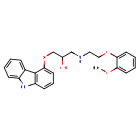
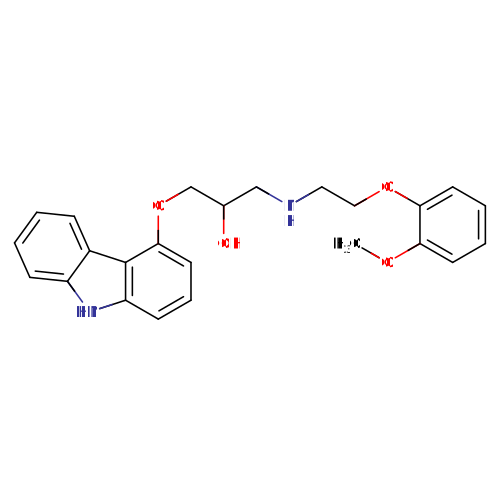
Structure for Carvedilol (DB01136)
- Weight
- Average: 406.4742
Monoisotopic: 406.18925733 - Chemical Formula
- C24H26N2O4
- Synonyms
- (+-)-1-(Carbazol-4-yloxy)-3-((2-(o-methoxyphenoxy)ethyl)amino)-2-propanol
- Carvedilol
- Carvédilol
- Carvedilolum
- External IDs
- SKF 105517

Pharmacology
- Indication
Carvedilol is indicated to treat mild to severe heart failure, left ventricular dysfunction after myocardial infarction with ventricular ejection fraction ≤40%, or hypertension.5,6
 Reduce drug development failure ratesBuild, train, & validate machine-learning modelswith evidence-based and structured datasets.Build, train, & validate predictive machine-learning models with structured datasets.
- Associated Conditions
Indication Type Indication Combined Product Details Approval Level Age Group Patient Characteristics Dose Form Management of Atrial fibrillation ••• ••••• Management of Chronic stable angina pectoris ••• ••••• Management of Hypertension •••••••••••• Management of Lvef ≤40% left ventricular dysfunction •••••••••••• Management of Mild heart failure •••••••••••• - Contraindications & Blackbox Warnings
 Prevent Adverse Drug Events TodayTap into our Clinical API for life-saving information on contraindications & blackbox warnings, population restrictions, harmful risks, & more.Avoid life-threatening adverse drug events with our Clinical API
- Pharmacodynamics
Carvedilol reduces tachycardia through beta adrenergic antagonism and lowers blood pressure through alpha-1 adrenergic antagonism.5,6 It has a long duration of action as it is generally taken once daily and has a broad therapeutic index as patients generally take 10-80mg daily.5,6 Patients taking carvedilol should not abruptly stop taking this medication as this may exacerbate coronary artery disease.5,6
- Mechanism of action
Carvedilol inhibits exercise induce tachycardia through its inhibition of beta adrenoceptors.4 Carvedilol's action on alpha-1 adrenergic receptors relaxes smooth muscle in vasculature, leading to reduced peripheral vascular resistance and an overall reduction in blood pressure.1,4 At higher doses, calcium channel blocking and antioxidant activity can also be seen.1 The antioxidant activity of carvedilol prevents oxidation of low density lipoprotein and its uptake into coronary circulation.1
Target Actions Organism ABeta-1 adrenergic receptor antagonistHumans AAlpha-1A adrenergic receptor antagonistpotentiatorHumans AAlpha-1 adrenergic receptors inhibitorHumans UNADH dehydrogenase [ubiquinone] 1 subunit C2 inhibitorHumans UBeta-2 adrenergic receptor antagonistHumans UVascular endothelial growth factor A otherHumans UNatriuretic peptides B otherHumans UGap junction alpha-1 protein otherHumans UPotassium voltage-gated channel subfamily H member 2 inhibitorHumans UVascular cell adhesion protein 1 inhibitorHumans UAlpha-1D adrenergic receptor antagonistHumans UAlpha-1B adrenergic receptor antagonistHumans UAlpha-2C adrenergic receptor antagonistHumans UAlpha-2B adrenergic receptor antagonistHumans UAlpha-2A adrenergic receptor antagonistHumans UE-selectin inhibitorHumans UHypoxia-inducible factor 1-alpha modulatorHumans UInward rectifier potassium channel 4 inhibitorHumans UInward rectifier potassium channel 2 inhibitorHumans - Absorption
Carvedilol has a bioavailability of 25-35%.4,5,6 Carvedilol has a Tmax of 1 to 2 hours.4 Taking carvedilol with a meal increases Tmax without increasing AUC.4 Carvedilol doses of 50mg lead to a Cmax of 122-262µg/L and an AUC of 717-1600µg/L*h.4 Carvedilol doses of 25mg lead to a Cmax of 24-151µg/L and an AUC of 272-947µg/L*h.4 Carvedilol doses of 12.5mg lead to a Cmax of 58-69µg/L and an AUC of 208-225µg/L*h.4
- Volume of distribution
Carvedilol has a volume of distribution of 1.5-2L/kg4 or 115L.6
- Protein binding
Carvedilol is 98% protein bound in plasma.5,6 95% of carvedilol is bound to serum albumin.4
- Metabolism
Carvedilol can be hydroxlated at the 1 position by CYP2D6, CYP1A2, or CYP1A1 to form 1-hydroxypheylcarvedilol; at the 4 position by CYP2D6, CYP2E1, CYP2C9, or CYP3A4 to form 4'-hydroxyphenylcarvedilol; at the 5 position by CYP2D6, CYP2C9, or CYP3A4 to form 5'-hydroxyphenylcarvedilol; and at the 8 position by CYP1A2, CYP3A4, and CYP1A1 to form 8-hydroxycarbazolylcarvedilol.2 Carvedilol can also be demethylated by CYP2C9, CYP2D6, CYP1A2, or CYP2E1 to form O-desmethylcarvedilol.2 Carvedilol and its metabolites may undergo further sulfate conjugation or glucuronidation before elimination.2 Carvedilol can be O-glucuronidated by UGT1A1, UGT2B4, and UGT2B7 to form carvedilol glucuronide.3
Hover over products below to view reaction partners
- Route of elimination
16% of carvedilol is excreted in the urine with <2% excreted as unmetabolized drug.4 Carvedilol is primarily excreted in the bile and feces.5,6
- Half-life
The half life of carvedilol is between 7-10 hours, though significantly shorter half lives have also been reported.4,5,6
- Clearance
The plasma clearance of carvedilol has been reported as 0.52L/kg4 or 500-700mL/min.5,6
- Adverse Effects
 Improve decision support & research outcomesWith structured adverse effects data, including: blackbox warnings, adverse reactions, warning & precautions, & incidence rates. View sample adverse effects data in our new Data Library!Improve decision support & research outcomes with our structured adverse effects data.
- Toxicity
Patients experiencing an overdose may present with hypotension, bradycardia, cardiac insufficiency, cardiogenic shock, and cardiac arrest.5,6 Patients should remain in a supine position and may be given atropine for bradycardia and glucagon followed by sympathomimetics to support cardiovascular function.5,6
- Pathways
Pathway Category Carvedilol Action Pathway Drug action - Pharmacogenomic Effects/ADRs
Interacting Gene/Enzyme Allele name Genotype(s) Defining Change(s) Type(s) Description Details Beta-1 adrenergic receptor --- (C;C) / (C;G) / (A;A) C Allele, homozygous Effect Directly Studied Patients with this genotype in ADRB1 have an increased likelihood of responding to carvedilol for the treatment of increased blood pressure. Details Cytochrome P450 2D6 CYP2D6*3 Not Available C allele Effect Inferred Poor drug metabolizer, increased dizziness. Details Cytochrome P450 2D6 CYP2D6*4 Not Available C allele Effect Inferred Poor drug metabolizer, increased dizziness. Details Cytochrome P450 2D6 CYP2D6*5 Not Available Whole-gene deletion Effect Inferred Poor drug metabolizer, increased dizziness. Details Cytochrome P450 2D6 CYP2D6*6 Not Available 1707delT Effect Inferred Poor drug metabolizer, increased dizziness. Details Cytochrome P450 2D6 CYP2D6*7 Not Available 2935A>C Effect Inferred Poor drug metabolizer, increased dizziness. Details Cytochrome P450 2D6 CYP2D6*8 Not Available 1758G>T Effect Inferred Poor drug metabolizer, increased dizziness. Details Cytochrome P450 2D6 CYP2D6*11 Not Available 883G>C Effect Inferred Poor drug metabolizer, increased dizziness. Details Cytochrome P450 2D6 CYP2D6*12 Not Available 124G>A Effect Inferred Poor drug metabolizer, increased dizziness. Details Cytochrome P450 2D6 CYP2D6*13 Not Available CYP2D7/2D6 hybrid gene structure Effect Inferred Poor drug metabolizer, increased dizziness. Details Cytochrome P450 2D6 CYP2D6*14A Not Available 1758G>A Effect Inferred Poor drug metabolizer, increased dizziness. Details Cytochrome P450 2D6 CYP2D6*15 Not Available 137insT, 137_138insT Effect Inferred Poor drug metabolizer, increased dizziness. Details Cytochrome P450 2D6 CYP2D6*19 Not Available 2539_2542delAACT Effect Inferred Poor drug metabolizer, increased dizziness. Details Cytochrome P450 2D6 CYP2D6*20 Not Available 1973_1974insG Effect Inferred Poor drug metabolizer, increased dizziness. Details Cytochrome P450 2D6 CYP2D6*21 Not Available 2573insC Effect Inferred Poor drug metabolizer, increased dizziness. Details Cytochrome P450 2D6 CYP2D6*31 Not Available -1770G>A / -1584C>G … show all Effect Inferred Poor drug metabolizer, increased dizziness. Details Cytochrome P450 2D6 CYP2D6*36 Not Available 100C>T / -1426C>T … show all Effect Inferred Poor drug metabolizer, increased dizziness. Details Cytochrome P450 2D6 CYP2D6*38 Not Available 2587_2590delGACT Effect Inferred Poor drug metabolizer, increased dizziness. Details Cytochrome P450 2D6 CYP2D6*40 Not Available 1863_1864ins(TTT CGC CCC)2 Effect Inferred Poor drug metabolizer, increased dizziness. Details Cytochrome P450 2D6 CYP2D6*42 Not Available 3259_3260insGT Effect Inferred Poor drug metabolizer, increased dizziness. Details Cytochrome P450 2D6 CYP2D6*44 Not Available 2950G>C Effect Inferred Poor drug metabolizer, increased dizziness. Details Cytochrome P450 2D6 CYP2D6*47 Not Available 100C>T / -1426C>T … show all Effect Inferred Poor drug metabolizer, increased dizziness. Details Cytochrome P450 2D6 CYP2D6*51 Not Available -1584C>G / -1235A>G … show all Effect Inferred Poor drug metabolizer, increased dizziness. Details Cytochrome P450 2D6 CYP2D6*56 Not Available 3201C>T Effect Inferred Poor drug metabolizer, increased dizziness. Details Cytochrome P450 2D6 CYP2D6*57 Not Available 100C>T / 310G>T … show all Effect Inferred Poor drug metabolizer, increased dizziness. Details Cytochrome P450 2D6 CYP2D6*62 Not Available 4044C>T Effect Inferred Poor drug metabolizer, increased dizziness. Details Cytochrome P450 2D6 CYP2D6*68A Not Available -1426C>T / -1235A>G … show all Effect Inferred Poor drug metabolizer, increased dizziness. Details Cytochrome P450 2D6 CYP2D6*68B Not Available Similar but not identical switch region compared to CYP2D6*68A. Found in tandem arrangement with CYP2D6*4. Effect Inferred Poor drug metabolizer, increased dizziness. Details Cytochrome P450 2D6 CYP2D6*69 Not Available 2988G>A / -1426C>T … show all Effect Inferred Poor drug metabolizer, increased dizziness. Details Cytochrome P450 2D6 CYP2D6*92 Not Available 1995delC Effect Inferred Poor drug metabolizer, increased dizziness. Details Cytochrome P450 2D6 CYP2D6*100 Not Available -1426C>T / -1235A>G … show all Effect Inferred Poor drug metabolizer, increased dizziness. Details Cytochrome P450 2D6 CYP2D6*101 Not Available -1426C>T / -1235A>G … show all Effect Inferred Poor drug metabolizer, increased dizziness. Details
Interactions
- Drug Interactions
- This information should not be interpreted without the help of a healthcare provider. If you believe you are experiencing an interaction, contact a healthcare provider immediately. The absence of an interaction does not necessarily mean no interactions exist.
Drug Interaction Integrate drug-drug
interactions in your softwareAbaloparatide The risk or severity of adverse effects can be increased when Carvedilol is combined with Abaloparatide. Abametapir The serum concentration of Carvedilol can be increased when it is combined with Abametapir. Abatacept The metabolism of Carvedilol can be increased when combined with Abatacept. Abemaciclib The serum concentration of Abemaciclib can be increased when it is combined with Carvedilol. Abiraterone The serum concentration of Carvedilol can be increased when it is combined with Abiraterone. - Food Interactions
- Take with food. Food slows the absorption and reduces the incidence of adverse effects.
Products
 Drug product information from 10+ global regionsOur datasets provide approved product information including:dosage, form, labeller, route of administration, and marketing period.Access drug product information from over 10 global regions.
- Product Ingredients
Ingredient UNII CAS InChI Key Carvedilol phosphate EQT531S367 610309-89-2 LHNYXTULDSJZRB-UHFFFAOYSA-N - Product Images
- International/Other Brands
- COREGCR
- Brand Name Prescription Products
Name Dosage Strength Route Labeller Marketing Start Marketing End Region Image Carvedilol Tablet 25 mg Oral Sanis Health Inc 2011-06-10 Not applicable Canada 
Carvedilol Tablet 25 mg Oral Sivem Pharmaceuticals Ulc 2004-04-06 Not applicable Canada Carvedilol Tablet, coated 6.25 mg/1 Oral Ranbaxy Inc. 2007-10-06 Not applicable US 
Carvedilol Tablet 3.125 mg Oral Sanis Health Inc 2011-06-10 Not applicable Canada Carvedilol Tablet 3.125 mg Oral Sivem Pharmaceuticals Ulc 2004-04-06 Not applicable Canada - Generic Prescription Products
Name Dosage Strength Route Labeller Marketing Start Marketing End Region Image Apo-carvedilol Tablet 12.5 mg Oral Apotex Corporation 2003-08-06 Not applicable Canada Apo-carvedilol Tablet 6.25 mg Oral Apotex Corporation 2003-08-06 Not applicable Canada Apo-carvedilol Tablet 25 mg Oral Apotex Corporation 2003-08-06 Not applicable Canada Apo-carvedilol Tablet 3.125 mg Oral Apotex Corporation 2003-08-06 Not applicable Canada Auro-carvedilol Tablet 6.25 mg Oral Auro Pharma Inc 2014-02-06 Not applicable Canada - Mixture Products
Name Ingredients Dosage Route Labeller Marketing Start Marketing End Region Image Co-Dilatrend 25 mg/12,5 mg - Filmtabletten Carvedilol (25 mg) + Hydrochlorothiazide (12.5 mg) Tablet, film coated Oral Cheplapharm Arzneimittel Gmb H 1998-06-18 Not applicable Austria 
- Unapproved/Other Products
Name Ingredients Dosage Route Labeller Marketing Start Marketing End Region Image Hypertenevide-12.5 Carvedilol (12.5 mg/1) + Arginine (60 mg/1) Kit Oral Physician Therapeutics Llc 2011-07-07 Not applicable US


Categories
- ATC Codes
- C07AG02 — Carvedilol
- C07AG — Alpha and beta blocking agents
- C07A — BETA BLOCKING AGENTS
- C07 — BETA BLOCKING AGENTS
- C — CARDIOVASCULAR SYSTEM
- Drug Categories
- Adrenergic Agents
- Adrenergic alpha-1 Receptor Antagonists
- Adrenergic alpha-Antagonists
- Adrenergic Antagonists
- Adrenergic beta-1 Receptor Antagonists
- Adrenergic beta-Antagonists
- Adrenergic beta2-Antagonists
- Agents causing hyperkalemia
- Alcohols
- Alpha and Beta Blocking Agents
- Amines
- Amino Alcohols
- Antiarrhythmic agents
- Antihypertensive Agents
- Antihypertensive Agents Indicated for Hypertension
- Antioxidants
- Biological Factors
- Bradycardia-Causing Agents
- Calcium Channel Blockers
- Calcium-Regulating Hormones and Agents
- Carbazoles
- Cardiovascular Agents
- Compounds used in a research, industrial, or household setting
- Cytochrome P-450 CYP1A2 Substrates
- Cytochrome P-450 CYP2C9 Substrates
- Cytochrome P-450 CYP2D6 Substrates
- Cytochrome P-450 CYP2E1 Substrates
- Cytochrome P-450 CYP3A Substrates
- Cytochrome P-450 CYP3A4 Substrates
- Cytochrome P-450 Substrates
- Heterocyclic Compounds, Fused-Ring
- Hypotensive Agents
- Indoles
- Membrane Transport Modulators
- Negative Inotrope
- Neurotransmitter Agents
- P-glycoprotein inhibitors
- Propanolamines
- Propanols
- Protective Agents
- UGT1A1 Substrates
- UGT2B7 substrates
- Vasodilating Agents
- Chemical TaxonomyProvided by Classyfire
- Description
- This compound belongs to the class of organic compounds known as carbazoles. These are compounds containing a three ring system containing a pyrrole ring fused on either side to a benzene ring.
- Kingdom
- Organic compounds
- Super Class
- Organoheterocyclic compounds
- Class
- Indoles and derivatives
- Sub Class
- Carbazoles
- Direct Parent
- Carbazoles
- Alternative Parents
- Indoles / Phenoxy compounds / Methoxybenzenes / Anisoles / Alkyl aryl ethers / Pyrroles / Heteroaromatic compounds / Secondary alcohols / 1,2-aminoalcohols / Dialkylamines show 3 more
- Substituents
- 1,2-aminoalcohol / Alcohol / Alkyl aryl ether / Amine / Anisole / Aromatic heteropolycyclic compound / Azacycle / Benzenoid / Carbazole / Ether show 16 more
- Molecular Framework
- Aromatic heteropolycyclic compounds
- External Descriptors
- secondary alcohol, secondary amino compound, carbazoles (CHEBI:3441)
- Affected organisms
- Humans and other mammals
Chemical Identifiers
- UNII
- 0K47UL67F2
- CAS number
- 72956-09-3
- InChI Key
- OGHNVEJMJSYVRP-UHFFFAOYSA-N
- InChI
- InChI=1S/C24H26N2O4/c1-28-21-10-4-5-11-22(21)29-14-13-25-15-17(27)16-30-23-12-6-9-20-24(23)18-7-2-3-8-19(18)26-20/h2-12,17,25-27H,13-16H2,1H3
- IUPAC Name
- 1-(9H-carbazol-4-yloxy)-3-{[2-(2-methoxyphenoxy)ethyl]amino}propan-2-ol
- SMILES
- COC1=CC=CC=C1OCCNCC(O)COC1=CC=CC2=C1C1=CC=CC=C1N2
References
- Synthesis Reference
Ilan Kor, "Crystalline solids of carvedilol and processes for their preparation." U.S. Patent US20030166702, issued September 04, 2003.
US20030166702- General References
- Vanderhoff BT, Ruppel HM, Amsterdam PB: Carvedilol: the new role of beta blockers in congestive heart failure. Am Fam Physician. 1998 Nov 1;58(7):1627-34, 1641-2. [Article]
- Oldham HG, Clarke SE: In vitro identification of the human cytochrome P450 enzymes involved in the metabolism of R(+)- and S(-)-carvedilol. Drug Metab Dispos. 1997 Aug;25(8):970-7. [Article]
- Takekuma Y, Yagisawa K, Sugawara M: Mutual inhibition between carvedilol enantiomers during racemate glucuronidation mediated by human liver and intestinal microsomes. Biol Pharm Bull. 2012;35(2):151-63. doi: 10.1248/bpb.35.151. [Article]
- Morgan T: Clinical pharmacokinetics and pharmacodynamics of carvedilol. Clin Pharmacokinet. 1994 May;26(5):335-46. doi: 10.2165/00003088-199426050-00002. [Article]
- FDA Approved Drug Products: Carvedilol Oral Tablets [Link]
- FDA Approved Drug Products: Carvedilol Oral Extended Release Capsules [Link]
- External Links
- Human Metabolome Database
- HMDB0015267
- KEGG Drug
- D00255
- KEGG Compound
- C06875
- PubChem Compound
- 2585
- PubChem Substance
- 46505146
- ChemSpider
- 2487
- BindingDB
- 25759
- 20352
- ChEBI
- 3441
- ChEMBL
- CHEMBL723
- Therapeutic Targets Database
- DAP000135
- PharmGKB
- PA448817
- Guide to Pharmacology
- GtP Drug Page
- RxList
- RxList Drug Page
- Drugs.com
- Drugs.com Drug Page
- Wikipedia
- Carvedilol
- FDA label
- Download (1.25 MB)
- MSDS
- Download (32.9 KB)
Clinical Trials
- Clinical Trials
Phase Status Purpose Conditions Count 4 Completed Basic Science Acute Coronary Syndrome (ACS) 1 4 Completed Basic Science Dilated Cardiomyopathies, Idiopathic 1 4 Completed Diagnostic Cardiomyopathy / Heart Failure 1 4 Completed Diagnostic Diabetes 1 4 Completed Other Cardiac Failure / Cardiovascular Disease (CVD) / Heart Failure / Heart Failure With Preserved Ejection Fraction (HFpEF) / Heart Failure, Diastolic 2
Pharmacoeconomics
- Manufacturers
- Not Available
- Packagers
- Actavis Group
- Advantage Dose LLC
- Amerisource Health Services Corp.
- Apotex Inc.
- A-S Medication Solutions LLC
- Atlantic Biologicals Corporation
- Aurobindo Pharma Ltd.
- Bryant Ranch Prepack
- Cadila Healthcare Ltd.
- Caraco Pharmaceutical Labs
- Cardinal Health
- Caremark LLC
- Dept Health Central Pharmacy
- DHHS Program Support Center Supply Service Center
- Dispensing Solutions
- Diversified Healthcare Services Inc.
- Doctor Reddys Laboratories Ltd.
- GlaxoSmithKline Inc.
- Glenmark Generics Ltd.
- Hikma Pharmaceuticals
- Kaiser Foundation Hospital
- Lupin Pharmaceuticals Inc.
- Major Pharmaceuticals
- Mckesson Corp.
- Murfreesboro Pharmaceutical Nursing Supply
- Mylan
- Ohm Laboratories Inc.
- Patheon Inc.
- PD-Rx Pharmaceuticals Inc.
- Physicians Total Care Inc.
- Prepak Systems Inc.
- Ranbaxy Laboratories
- Rebel Distributors Corp.
- Remedy Repack
- Resource Optimization and Innovation LLC
- Sandoz
- Shasun Chemicals & Drugs Ltd.
- Solco Healthcare US LLC
- Southwood Pharmaceuticals
- Taro Pharmaceuticals USA
- Teva Pharmaceutical Industries Ltd.
- UDL Laboratories
- Vangard Labs Inc.
- West-Ward Pharmaceuticals
- Zydus Pharmaceuticals
- Dosage Forms
Form Route Strength Tablet Oral Tablet Oral 25.000 mg Tablet Oral 1250000 mg Tablet Oral 2500000 mg Tablet, film coated Oral Tablet, film coated Oral 12.5 MG Tablet, film coated Oral 25 MG Tablet, film coated Oral 6.25 MG Tablet Oral 12.5 mg/1 Tablet Oral 25 mg/1 Tablet Oral 25.0 mg Tablet Oral 3.125 mg/1 Tablet Oral 6.25 mg/1 Tablet, coated Oral 12.5 mg/1 Tablet, coated Oral 25 mg/1 Tablet, coated Oral 3.125 mg/1 Tablet, coated Oral 6.25 mg/1 Tablet, film coated Oral 12.5 mg/1 Tablet, film coated Oral 12.5 mg/301 Tablet, film coated Oral 25 mg/1 Tablet, film coated Oral 3.125 mg/1 Tablet, film coated Oral 6.25 mg/1 Tablet Oral Tablet, film coated Oral Tablet, coated Oral 12.5 mg Tablet, coated Oral 2500000 mg Tablet, coated Oral 6.25 mg Tablet, film coated Oral 3.125 MG Tablet Oral 3125 MG Tablet, film coated Oral 3125 MG Tablet Oral 25 MG Capsule, extended release Oral 10 mg/1 Capsule, extended release Oral 20 mg/1 Capsule, extended release Oral 40 mg/1 Capsule, extended release Oral 80 mg/1 Tablet Oral 50 mg Tablet Oral 625000 mg Kit Oral Tablet Oral 3.125 mg Tablet, coated Oral 25 mg Tablet, film coated Oral 12.500 mg Tablet, film coated Oral 25.000 mg Tablet, film coated Oral 6.250 mg Tablet Oral 12.5 mg Tablet Oral 6.25 mg - Prices
Unit description Cost Unit Coreg CR 10 mg 24 Hour Capsule 4.77USD capsule Coreg CR 20 mg 24 Hour Capsule 4.77USD capsule Coreg CR 40 mg 24 Hour Capsule 4.77USD capsule Coreg CR 80 mg 24 Hour Capsule 4.77USD capsule Coreg cr 10 mg capsule 4.59USD capsule Coreg cr 20 mg capsule 4.59USD capsule Coreg cr 40 mg capsule 4.59USD capsule Coreg cr 80 mg capsule 4.59USD capsule Coreg 12.5 mg tablet 2.54USD tablet Coreg 25 mg tablet 2.54USD tablet Coreg 3.125 mg tablet 2.54USD tablet Coreg 6.25 mg tablet 2.54USD tablet Carvedilol 12.5 mg tablet 2.18USD tablet Carvedilol 25 mg tablet 2.18USD tablet Carvedilol 3.125 mg tablet 2.18USD tablet Carvedilol 6.25 mg tablet 2.18USD tablet Apo-Carvedilol 12.5 mg Tablet 0.84USD tablet Apo-Carvedilol 25 mg Tablet 0.84USD tablet Apo-Carvedilol 3.125 mg Tablet 0.84USD tablet Apo-Carvedilol 6.25 mg Tablet 0.84USD tablet Phl-Carvedilol 12.5 mg Tablet 0.79USD tablet Phl-Carvedilol 3.125 mg Tablet 0.79USD tablet Phl-Carvedilol 6.25 mg Tablet 0.79USD tablet Pms-Carvedilol 12.5 mg Tablet 0.79USD tablet Pms-Carvedilol 25 mg Tablet 0.79USD tablet Pms-Carvedilol 3.125 mg Tablet 0.79USD tablet Pms-Carvedilol 6.25 mg Tablet 0.79USD tablet Ran-Carvedilol 12.5 mg Tablet 0.79USD tablet Ran-Carvedilol 25 mg Tablet 0.79USD tablet Ran-Carvedilol 3.125 mg Tablet 0.79USD tablet Ran-Carvedilol 6.25 mg Tablet 0.79USD tablet Ratio-Carvedilol 12.5 mg Tablet 0.79USD tablet Ratio-Carvedilol 25 mg Tablet 0.79USD tablet Ratio-Carvedilol 3.125 mg Tablet 0.79USD tablet Ratio-Carvedilol 6.25 mg Tablet 0.79USD tablet DrugBank does not sell nor buy drugs. Pricing information is supplied for informational purposes only.- Patents
Patent Number Pediatric Extension Approved Expires (estimated) Region US7268156 Yes 2007-09-11 2023-12-27 US US8101209 Yes 2012-01-24 2026-03-11 US US6022562 Yes 2000-02-08 2016-04-17 US USRE40000 Yes 2008-01-08 2015-12-07 US
Properties
- State
- Solid
- Experimental Properties
Property Value Source melting point (°C) 114.5 °C http://www.chemspider.com/Chemical-Structure.2487.html water solubility 88mg/mL http://www.chemspider.com/Chemical-Structure.2487.html logP 3.8 https://www.ncbi.nlm.nih.gov/pmc/articles/PMC6361727/ - Predicted Properties
Property Value Source Water Solubility 0.00444 mg/mL ALOGPS logP 3.05 ALOGPS logP 3.42 Chemaxon logS -5 ALOGPS pKa (Strongest Acidic) 14.03 Chemaxon pKa (Strongest Basic) 8.74 Chemaxon Physiological Charge 1 Chemaxon Hydrogen Acceptor Count 5 Chemaxon Hydrogen Donor Count 3 Chemaxon Polar Surface Area 75.74 Å2 Chemaxon Rotatable Bond Count 10 Chemaxon Refractivity 115.64 m3·mol-1 Chemaxon Polarizability 45.03 Å3 Chemaxon Number of Rings 4 Chemaxon Bioavailability 1 Chemaxon Rule of Five Yes Chemaxon Ghose Filter Yes Chemaxon Veber's Rule No Chemaxon MDDR-like Rule Yes Chemaxon - Predicted ADMET Features
Property Value Probability Human Intestinal Absorption + 0.9706 Blood Brain Barrier - 0.6814 Caco-2 permeable - 0.6308 P-glycoprotein substrate Substrate 0.8552 P-glycoprotein inhibitor I Non-inhibitor 0.8729 P-glycoprotein inhibitor II Non-inhibitor 0.6521 Renal organic cation transporter Non-inhibitor 0.5405 CYP450 2C9 substrate Non-substrate 0.7517 CYP450 2D6 substrate Substrate 0.8918 CYP450 3A4 substrate Substrate 0.5408 CYP450 1A2 substrate Inhibitor 0.524 CYP450 2C9 inhibitor Non-inhibitor 0.8496 CYP450 2D6 inhibitor Non-inhibitor 0.7274 CYP450 2C19 inhibitor Non-inhibitor 0.5676 CYP450 3A4 inhibitor Non-inhibitor 0.6352 CYP450 inhibitory promiscuity Low CYP Inhibitory Promiscuity 0.6048 Ames test Non AMES toxic 0.8261 Carcinogenicity Non-carcinogens 0.9692 Biodegradation Not ready biodegradable 0.963 Rat acute toxicity 2.4566 LD50, mol/kg Not applicable hERG inhibition (predictor I) Weak inhibitor 0.5725 hERG inhibition (predictor II) Inhibitor 0.8889
Spectra
- Mass Spec (NIST)
- Not Available
- Spectra
- Chromatographic Properties
Collision Cross Sections (CCS)
Adduct CCS Value (Å2) Source type Source [M-H]- 198.3687664 predictedDarkChem Lite v0.1.0 [M-H]- 183.00732 predictedDeepCCS 1.0 (2019) [M+H]+ 198.7501664 predictedDarkChem Lite v0.1.0 [M+H]+ 185.36533 predictedDeepCCS 1.0 (2019) [M+Na]+ 198.3830664 predictedDarkChem Lite v0.1.0 [M+Na]+ 193.39514 predictedDeepCCS 1.0 (2019)
Targets

- Kind
- Protein
- Organism
- Humans
- Pharmacological action
- Yes
- Actions
- Antagonist
- General Function
- Receptor signaling protein activity
- Specific Function
- Beta-adrenergic receptors mediate the catecholamine-induced activation of adenylate cyclase through the action of G proteins. This receptor binds epinephrine and norepinephrine with approximately e...
- Gene Name
- ADRB1
- Uniprot ID
- P08588
- Uniprot Name
- Beta-1 adrenergic receptor
- Molecular Weight
- 51322.1 Da
References
- Nichols AJ, Gellai M, Ruffolo RR Jr: Studies on the mechanism of arterial vasodilation produced by the novel antihypertensive agent, carvedilol. Fundam Clin Pharmacol. 1991;5(1):25-38. [Article]
- Nichols AJ, Sulpizio AC, Ashton DJ, Hieble JP, Ruffolo RR Jr: In vitro pharmacologic profile of the novel beta-adrenoceptor antagonist and vasodilator, carvedilol. Pharmacology. 1989;39(5):327-36. [Article]
- Nichols AJ, Sulpizio AC, Ashton DJ, Hieble JP, Ruffolo RR Jr: The interaction of the enantiomers of carvedilol with alpha 1- and beta 1-adrenoceptors. Chirality. 1989;1(4):265-70. [Article]
- de Mey C, Breithaupt K, Schloos J, Neugebauer G, Palm D, Belz GG: Dose-effect and pharmacokinetic-pharmacodynamic relationships of the beta 1-adrenergic receptor blocking properties of various doses of carvedilol in healthy humans. Clin Pharmacol Ther. 1994 Mar;55(3):329-37. [Article]
- Kind
- Protein
- Organism
- Humans
- Pharmacological action
- Yes
- Actions
- AntagonistPotentiator
- Curator comments
- This drug is a non-selective alpha antagonist.
- General Function
- Protein heterodimerization activity
- Specific Function
- This alpha-adrenergic receptor mediates its action by association with G proteins that activate a phosphatidylinositol-calcium second messenger system. Its effect is mediated by G(q) and G(11) prot...
- Gene Name
- ADRA1A
- Uniprot ID
- P35348
- Uniprot Name
- Alpha-1A adrenergic receptor
- Molecular Weight
- 51486.005 Da
References
- O'Connell TD, Jensen BC, Baker AJ, Simpson PC: Cardiac alpha1-adrenergic receptors: novel aspects of expression, signaling mechanisms, physiologic function, and clinical importance. Pharmacol Rev. 2013 Dec 24;66(1):308-33. doi: 10.1124/pr.112.007203. Print 2014. [Article]
- Jensen BC, Swigart PM, De Marco T, Hoopes C, Simpson PC: {alpha}1-Adrenergic receptor subtypes in nonfailing and failing human myocardium. Circ Heart Fail. 2009 Nov;2(6):654-63. doi: 10.1161/CIRCHEARTFAILURE.108.846212. Epub 2009 Aug 6. [Article]
- Kind
- Protein group
- Organism
- Humans
- Pharmacological action
- Yes
- Actions
- Inhibitor
- General Function
- Protein heterodimerization activity
- Specific Function
- This alpha-adrenergic receptor mediates its action by association with G proteins that activate a phosphatidylinositol-calcium second messenger system. Its effect is mediated by G(q) and G(11) prot...
Components:
| Name | UniProt ID |
|---|---|
| Alpha-1A adrenergic receptor | P35348 |
| Alpha-1B adrenergic receptor | P35368 |
| Alpha-1D adrenergic receptor | P25100 |
References
- O'Connell TD, Jensen BC, Baker AJ, Simpson PC: Cardiac alpha1-adrenergic receptors: novel aspects of expression, signaling mechanisms, physiologic function, and clinical importance. Pharmacol Rev. 2013 Dec 24;66(1):308-33. doi: 10.1124/pr.112.007203. Print 2014. [Article]
- Kind
- Protein
- Organism
- Humans
- Pharmacological action
- Unknown
- Actions
- Inhibitor
- General Function
- Nadh dehydrogenase (ubiquinone) activity
- Specific Function
- Accessory subunit of the mitochondrial membrane respiratory chain NADH dehydrogenase (Complex I), that is believed not to be involved in catalysis. Complex I functions in the transfer of electrons ...
- Gene Name
- NDUFC2
- Uniprot ID
- O95298
- Uniprot Name
- NADH dehydrogenase [ubiquinone] 1 subunit C2
- Molecular Weight
- 14187.33 Da
References
- Oliveira PJ, Santos DJ, Moreno AJ: Carvedilol inhibits the exogenous NADH dehydrogenase in rat heart mitochondria. Arch Biochem Biophys. 2000 Feb 15;374(2):279-85. [Article]
- Kind
- Protein
- Organism
- Humans
- Pharmacological action
- Unknown
- Actions
- Antagonist
- General Function
- Protein homodimerization activity
- Specific Function
- Beta-adrenergic receptors mediate the catecholamine-induced activation of adenylate cyclase through the action of G proteins. The beta-2-adrenergic receptor binds epinephrine with an approximately ...
- Gene Name
- ADRB2
- Uniprot ID
- P07550
- Uniprot Name
- Beta-2 adrenergic receptor
- Molecular Weight
- 46458.32 Da
References
- Irodova NL, Krasnikova TL, Masenko VP, Kochetov AG, Chazova IE: [Carvedilol in treating primary pulmonary hypertension patients: effect on severity of cardiac failure, degree of pulmonary hypertension, concentration of catecholamines in blood plasma and dependence of cyclic AMP synthesis in lymphocytes on beta-adrenergic receptors]. Ter Arkh. 2002;74(8):30-4. [Article]
- Maebara C, Ohtani H, Sugahara H, Mine K, Kubo C, Sawada Y: Nightmares and panic disorder associated with carvedilol overdose. Ann Pharmacother. 2002 Nov;36(11):1736-40. [Article]
- Okajima K, Harada N, Uchiba M, Isobe H: Activation of capsaicin-sensitive sensory neurons by carvedilol, a nonselective beta-blocker, in spontaneous hypertensive rats. J Pharmacol Exp Ther. 2004 May;309(2):684-91. Epub 2004 Feb 5. [Article]
- Nichols AJ, Gellai M, Ruffolo RR Jr: Studies on the mechanism of arterial vasodilation produced by the novel antihypertensive agent, carvedilol. Fundam Clin Pharmacol. 1991;5(1):25-38. [Article]
- Kind
- Protein
- Organism
- Humans
- Pharmacological action
- Unknown
- Actions
- Other
- General Function
- Vascular endothelial growth factor receptor binding
- Specific Function
- Growth factor active in angiogenesis, vasculogenesis and endothelial cell growth. Induces endothelial cell proliferation, promotes cell migration, inhibits apoptosis and induces permeabilization of...
- Gene Name
- VEGFA
- Uniprot ID
- P15692
- Uniprot Name
- Vascular endothelial growth factor A
- Molecular Weight
- 27042.205 Da
References
- de Boer RA, Siebelink HJ, Tio RA, Boomsma F, van Veldhuisen DJ: Carvedilol increases plasma vascular endothelial growth factor (VEGF) in patients with chronic heart failure. Eur J Heart Fail. 2001 Jun;3(3):331-3. [Article]
- Saijonmaa O, Nyman T, Fyhrquist F: Carvedilol inhibits basal and stimulated ACE production in human endothelial cells. J Cardiovasc Pharmacol. 2004 May;43(5):616-21. [Article]
- Shyu KG, Lu MJ, Chang H, Sun HY, Wang BW, Kuan P: Carvedilol modulates the expression of hypoxia-inducible factor-1alpha and vascular endothelial growth factor in a rat model of volume-overload heart failure. J Card Fail. 2005 Mar;11(2):152-9. [Article]
- Shyu KG, Liou JY, Wang BW, Fang WJ, Chang H: Carvedilol prevents cardiac hypertrophy and overexpression of hypoxia-inducible factor-1alpha and vascular endothelial growth factor in pressure-overloaded rat heart. J Biomed Sci. 2005;12(2):409-20. [Article]
- Kind
- Protein
- Organism
- Humans
- Pharmacological action
- Unknown
- Actions
- Other
- General Function
- Receptor binding
- Specific Function
- Cardiac hormone which may function as a paracrine antifibrotic factor in the heart. Also plays a key role in cardiovascular homeostasis through natriuresis, diuresis, vasorelaxation, and inhibition...
- Gene Name
- NPPB
- Uniprot ID
- P16860
- Uniprot Name
- Natriuretic peptides B
- Molecular Weight
- 14725.825 Da
References
- Ohta Y, Watanabe K, Nakazawa M, Yamamoto T, Ma M, Fuse K, Ito M, Hirono S, Tanabe T, Hanawa H, Kato K, Kodama M, Aizawa Y: Carvedilol enhances atrial and brain natriuretic peptide mRNA expression and release in rat heart. J Cardiovasc Pharmacol. 2000;36 Suppl 2:S19-23. [Article]
- Richards AM, Doughty R, Nicholls MG, MacMahon S, Sharpe N, Murphy J, Espiner EA, Frampton C, Yandle TG: Plasma N-terminal pro-brain natriuretic peptide and adrenomedullin: prognostic utility and prediction of benefit from carvedilol in chronic ischemic left ventricular dysfunction. Australia-New Zealand Heart Failure Group. J Am Coll Cardiol. 2001 Jun 1;37(7):1781-7. [Article]
- Konishi H, Nishio S, Tsutamoto T, Minouchi T, Yamaji A: Serum carvedilol concentration and its relation to change in plasma brain natriuretic peptide level in the treatment of heart failure: a preliminary study. Int J Clin Pharmacol Ther. 2003 Dec;41(12):578-86. [Article]
- Takeda Y, Fukutomi T, Suzuki S, Yamamoto K, Ogata M, Kondo H, Sugiura M, Shigeyama J, Itoh M: Effects of carvedilol on plasma B-type natriuretic peptide concentration and symptoms in patients with heart failure and preserved ejection fraction. Am J Cardiol. 2004 Aug 15;94(4):448-53. [Article]
- Frantz RP, Olson LJ, Grill D, Moualla SK, Nelson SM, Nobrega TP, Hanna RD, Backes RJ, Mookadam F, Heublein D, Bailey KR, Burnett JC: Carvedilol therapy is associated with a sustained decline in brain natriuretic peptide levels in patients with congestive heart failure. Am Heart J. 2005 Mar;149(3):541-7. [Article]
- Kind
- Protein
- Organism
- Humans
- Pharmacological action
- Unknown
- Actions
- Other
- General Function
- Signal transducer activity
- Specific Function
- Gap junction protein that acts as a regulator of bladder capacity. A gap junction consists of a cluster of closely packed pairs of transmembrane channels, the connexons, through which materials of ...
- Gene Name
- GJA1
- Uniprot ID
- P17302
- Uniprot Name
- Gap junction alpha-1 protein
- Molecular Weight
- 43008.005 Da
References
- Yeh HI, Lee PY, Su CH, Tian TY, Ko YS, Tsai CH: Reduced expression of endothelial connexins 43 and 37 in hypertensive rats is rectified after 7-day carvedilol treatment. Am J Hypertens. 2006 Feb;19(2):129-35. [Article]
- Fan SY, Ke YN, Zeng YJ, Wang Y, Cheng WL, Yang JR: [Effects and the mechanism of carvedilol on gap junctional intercellular communication in rat myocardium]. Zhonghua Xin Xue Guan Bing Za Zhi. 2005 Dec;33(12):1141-5. [Article]
- Kind
- Protein
- Organism
- Humans
- Pharmacological action
- Unknown
- Actions
- Inhibitor
- General Function
- Voltage-gated potassium channel activity involved in ventricular cardiac muscle cell action potential repolarization
- Specific Function
- Pore-forming (alpha) subunit of voltage-gated inwardly rectifying potassium channel. Channel properties are modulated by cAMP and subunit assembly. Mediates the rapidly activating component of the ...
- Gene Name
- KCNH2
- Uniprot ID
- Q12809
- Uniprot Name
- Potassium voltage-gated channel subfamily H member 2
- Molecular Weight
- 126653.52 Da
References
- Karle CA, Kreye VA, Thomas D, Rockl K, Kathofer S, Zhang W, Kiehn J: Antiarrhythmic drug carvedilol inhibits HERG potassium channels. Cardiovasc Res. 2001 Feb 1;49(2):361-70. [Article]
- Kawakami K, Nagatomo T, Abe H, Kikuchi K, Takemasa H, Anson BD, Delisle BP, January CT, Nakashima Y: Comparison of HERG channel blocking effects of various beta-blockers-- implication for clinical strategy. Br J Pharmacol. 2006 Mar;147(6):642-52. [Article]
- Kind
- Protein
- Organism
- Humans
- Pharmacological action
- Unknown
- Actions
- Inhibitor
- General Function
- Primary amine oxidase activity
- Specific Function
- Important in cell-cell recognition. Appears to function in leukocyte-endothelial cell adhesion. Interacts with integrin alpha-4/beta-1 (ITGA4/ITGB1) on leukocytes, and mediates both adhesion and si...
- Gene Name
- VCAM1
- Uniprot ID
- P19320
- Uniprot Name
- Vascular cell adhesion protein 1
- Molecular Weight
- 81275.43 Da
References
- Overington JP, Al-Lazikani B, Hopkins AL: How many drug targets are there? Nat Rev Drug Discov. 2006 Dec;5(12):993-6. [Article]
- Imming P, Sinning C, Meyer A: Drugs, their targets and the nature and number of drug targets. Nat Rev Drug Discov. 2006 Oct;5(10):821-34. [Article]
- Chen JW, Lin FY, Chen YH, Wu TC, Chen YL, Lin SJ: Carvedilol inhibits tumor necrosis factor-alpha-induced endothelial transcription factor activation, adhesion molecule expression, and adhesiveness to human mononuclear cells. Arterioscler Thromb Vasc Biol. 2004 Nov;24(11):2075-81. Epub 2004 Sep 16. [Article]
- Kind
- Protein
- Organism
- Humans
- Pharmacological action
- Unknown
- Actions
- Antagonist
- General Function
- Alpha1-adrenergic receptor activity
- Specific Function
- This alpha-adrenergic receptor mediates its effect through the influx of extracellular calcium.
- Gene Name
- ADRA1D
- Uniprot ID
- P25100
- Uniprot Name
- Alpha-1D adrenergic receptor
- Molecular Weight
- 60462.205 Da
References
- Koshimizu TA, Tsujimoto G, Hirasawa A, Kitagawa Y, Tanoue A: Carvedilol selectively inhibits oscillatory intracellular calcium changes evoked by human alpha1D- and alpha1B-adrenergic receptors. Cardiovasc Res. 2004 Sep 1;63(4):662-72. [Article]
- Van Tassell BW, Rondina MT, Huggins F, Gilbert EM, Munger MA: Carvedilol increases blood pressure response to phenylephrine infusion in heart failure subjects with systolic dysfunction: evidence of improved vascular alpha1-adrenoreceptor signal transduction. Am Heart J. 2008 Aug;156(2):315-21. doi: 10.1016/j.ahj.2008.04.004. Epub 2008 Jun 20. [Article]
- Kind
- Protein
- Organism
- Humans
- Pharmacological action
- Unknown
- Actions
- Antagonist
- General Function
- Protein heterodimerization activity
- Specific Function
- This alpha-adrenergic receptor mediates its action by association with G proteins that activate a phosphatidylinositol-calcium second messenger system. Its effect is mediated by G(q) and G(11) prot...
- Gene Name
- ADRA1B
- Uniprot ID
- P35368
- Uniprot Name
- Alpha-1B adrenergic receptor
- Molecular Weight
- 56835.375 Da
References
- Koshimizu TA, Tsujimoto G, Hirasawa A, Kitagawa Y, Tanoue A: Carvedilol selectively inhibits oscillatory intracellular calcium changes evoked by human alpha1D- and alpha1B-adrenergic receptors. Cardiovasc Res. 2004 Sep 1;63(4):662-72. [Article]
- Kind
- Protein
- Organism
- Humans
- Pharmacological action
- Unknown
- Actions
- Antagonist
- General Function
- Protein homodimerization activity
- Specific Function
- Alpha-2 adrenergic receptors mediate the catecholamine-induced inhibition of adenylate cyclase through the action of G proteins.
- Gene Name
- ADRA2C
- Uniprot ID
- P18825
- Uniprot Name
- Alpha-2C adrenergic receptor
- Molecular Weight
- 49521.585 Da
References
- Koshimizu TA, Tsujimoto G, Hirasawa A, Kitagawa Y, Tanoue A: Carvedilol selectively inhibits oscillatory intracellular calcium changes evoked by human alpha1D- and alpha1B-adrenergic receptors. Cardiovasc Res. 2004 Sep 1;63(4):662-72. [Article]
- Kind
- Protein
- Organism
- Humans
- Pharmacological action
- Unknown
- Actions
- Antagonist
- General Function
- Epinephrine binding
- Specific Function
- Alpha-2 adrenergic receptors mediate the catecholamine-induced inhibition of adenylate cyclase through the action of G proteins. The rank order of potency for agonists of this receptor is clonidine...
- Gene Name
- ADRA2B
- Uniprot ID
- P18089
- Uniprot Name
- Alpha-2B adrenergic receptor
- Molecular Weight
- 49565.8 Da
References
- Koshimizu TA, Tsujimoto G, Hirasawa A, Kitagawa Y, Tanoue A: Carvedilol selectively inhibits oscillatory intracellular calcium changes evoked by human alpha1D- and alpha1B-adrenergic receptors. Cardiovasc Res. 2004 Sep 1;63(4):662-72. [Article]
- Kind
- Protein
- Organism
- Humans
- Pharmacological action
- Unknown
- Actions
- Antagonist
- General Function
- Thioesterase binding
- Specific Function
- Alpha-2 adrenergic receptors mediate the catecholamine-induced inhibition of adenylate cyclase through the action of G proteins. The rank order of potency for agonists of this receptor is oxymetazo...
- Gene Name
- ADRA2A
- Uniprot ID
- P08913
- Uniprot Name
- Alpha-2A adrenergic receptor
- Molecular Weight
- 48956.275 Da
References
- Koshimizu TA, Tsujimoto G, Hirasawa A, Kitagawa Y, Tanoue A: Carvedilol selectively inhibits oscillatory intracellular calcium changes evoked by human alpha1D- and alpha1B-adrenergic receptors. Cardiovasc Res. 2004 Sep 1;63(4):662-72. [Article]
- Kind
- Protein
- Organism
- Humans
- Pharmacological action
- Unknown
- Actions
- Inhibitor
- General Function
- Transmembrane signaling receptor activity
- Specific Function
- Cell-surface glycoprotein having a role in immunoadhesion. Mediates in the adhesion of blood neutrophils in cytokine-activated endothelium through interaction with PSGL1/SELPLG. May have a role in ...
- Gene Name
- SELE
- Uniprot ID
- P16581
- Uniprot Name
- E-selectin
- Molecular Weight
- 66654.575 Da
References
- Chen JW, Lin FY, Chen YH, Wu TC, Chen YL, Lin SJ: Carvedilol inhibits tumor necrosis factor-alpha-induced endothelial transcription factor activation, adhesion molecule expression, and adhesiveness to human mononuclear cells. Arterioscler Thromb Vasc Biol. 2004 Nov;24(11):2075-81. Epub 2004 Sep 16. [Article]
- Kind
- Protein
- Organism
- Humans
- Pharmacological action
- Unknown
- Actions
- Modulator
- General Function
- Ubiquitin protein ligase binding
- Specific Function
- Functions as a master transcriptional regulator of the adaptive response to hypoxia. Under hypoxic conditions, activates the transcription of over 40 genes, including erythropoietin, glucose transp...
- Gene Name
- HIF1A
- Uniprot ID
- Q16665
- Uniprot Name
- Hypoxia-inducible factor 1-alpha
- Molecular Weight
- 92669.595 Da
References
- Shyu KG, Lu MJ, Chang H, Sun HY, Wang BW, Kuan P: Carvedilol modulates the expression of hypoxia-inducible factor-1alpha and vascular endothelial growth factor in a rat model of volume-overload heart failure. J Card Fail. 2005 Mar;11(2):152-9. [Article]
- Kind
- Protein
- Organism
- Humans
- Pharmacological action
- Unknown
- Actions
- Inhibitor
- General Function
- Pdz domain binding
- Specific Function
- Inward rectifier potassium channels are characterized by a greater tendency to allow potassium to flow into the cell rather than out of it. Their voltage dependence is regulated by the concentratio...
- Gene Name
- KCNJ4
- Uniprot ID
- P48050
- Uniprot Name
- Inward rectifier potassium channel 4
- Molecular Weight
- 49499.61 Da
References
- Ferrer T, Ponce-Balbuena D, Lopez-Izquierdo A, Arechiga-Figueroa IA, de Boer TP, van der Heyden MA, Sanchez-Chapula JA: Carvedilol inhibits Kir2.3 channels by interference with PIP(2)-channel interaction. Eur J Pharmacol. 2011 Oct 1;668(1-2):72-7. doi: 10.1016/j.ejphar.2011.05.067. Epub 2011 Jun 6. [Article]
- Kind
- Protein
- Organism
- Humans
- Pharmacological action
- Unknown
- Actions
- Inhibitor
- General Function
- Probably participates in establishing action potential waveform and excitability of neuronal and muscle tissues. Inward rectifier potassium channels are characterized by a greater tendency to allow potassium to flow into the cell rather than out of it. Their voltage dependence is regulated by the concentration of extracellular potassium; as external potassium is raised, the voltage range of the channel opening shifts to more positive voltages. The inward rectification is mainly due to the blockage of outward current by internal magnesium. Can be blocked by extracellular barium or cesium.
- Specific Function
- Identical protein binding
- Gene Name
- KCNJ2
- Uniprot ID
- P63252
- Uniprot Name
- Inward rectifier potassium channel 2
- Molecular Weight
- 48287.82 Da
References
- Ferrer T, Ponce-Balbuena D, Lopez-Izquierdo A, Arechiga-Figueroa IA, de Boer TP, van der Heyden MA, Sanchez-Chapula JA: Carvedilol inhibits Kir2.3 channels by interference with PIP(2)-channel interaction. Eur J Pharmacol. 2011 Oct 1;668(1-2):72-7. doi: 10.1016/j.ejphar.2011.05.067. Epub 2011 Jun 6. [Article]
Enzymes
- Kind
- Protein
- Organism
- Humans
- Pharmacological action
- Unknown
- Actions
- Substrate
- General Function
- Oxidoreductase activity, acting on paired donors, with incorporation or reduction of molecular oxygen, reduced flavin or flavoprotein as one donor, and incorporation of one atom of oxygen
- Specific Function
- Cytochromes P450 are a group of heme-thiolate monooxygenases. In liver microsomes, this enzyme is involved in an NADPH-dependent electron transport pathway. It oxidizes a variety of structurally un...
- Gene Name
- CYP1A2
- Uniprot ID
- P05177
- Uniprot Name
- Cytochrome P450 1A2
- Molecular Weight
- 58293.76 Da
References
- Oldham HG, Clarke SE: In vitro identification of the human cytochrome P450 enzymes involved in the metabolism of R(+)- and S(-)-carvedilol. Drug Metab Dispos. 1997 Aug;25(8):970-7. [Article]
- Parker BM, Rogers SL, Lymperopoulos A: Clinical pharmacogenomics of carvedilol: the stereo-selective metabolism angle. Pharmacogenomics. 2018 Sep 1;19(14):1089-1093. doi: 10.2217/pgs-2018-0115. Epub 2018 Aug 8. [Article]
- Abrudan MB, Popa DS, Muntean DM, Gheldiu AM, Vlase L: Pharmacokinetic interactions study between carvedilol and some antidepressants in rat liver microsomes - a comparative study. Med Pharm Rep. 2019 Apr;92(2):158-164. doi: 10.15386/mpr-1225. Epub 2019 Apr 25. [Article]
- FDA label, Carvedilol [File]
- Kind
- Protein
- Organism
- Humans
- Pharmacological action
- Unknown
- Actions
- Substrate
- General Function
- Vitamin d3 25-hydroxylase activity
- Specific Function
- Cytochromes P450 are a group of heme-thiolate monooxygenases. In liver microsomes, this enzyme is involved in an NADPH-dependent electron transport pathway. It performs a variety of oxidation react...
- Gene Name
- CYP3A4
- Uniprot ID
- P08684
- Uniprot Name
- Cytochrome P450 3A4
- Molecular Weight
- 57342.67 Da
References
- Wang Z, Wang L, Xu RA, Zhan YY, Huang CK, Dai DP, Cai JP, Hu GX: Role of cytochrome P450 2D6 genetic polymorphism in carvedilol hydroxylation in vitro. Drug Des Devel Ther. 2016 Jun 8;10:1909-16. doi: 10.2147/DDDT.S106175. eCollection 2016. [Article]
- Oldham HG, Clarke SE: In vitro identification of the human cytochrome P450 enzymes involved in the metabolism of R(+)- and S(-)-carvedilol. Drug Metab Dispos. 1997 Aug;25(8):970-7. [Article]
- Carvedilol Therapy and CYP2D6 Genotype [Link]
- Kind
- Protein
- Organism
- Humans
- Pharmacological action
- Unknown
- Actions
- Substrate
- General Function
- Vitamin d 24-hydroxylase activity
- Specific Function
- Cytochromes P450 are a group of heme-thiolate monooxygenases. In liver microsomes, this enzyme is involved in an NADPH-dependent electron transport pathway. It oxidizes a variety of structurally un...
- Gene Name
- CYP1A1
- Uniprot ID
- P04798
- Uniprot Name
- Cytochrome P450 1A1
- Molecular Weight
- 58164.815 Da
References
- Zhou SF, Zhou ZW, Yang LP, Cai JP: Substrates, inducers, inhibitors and structure-activity relationships of human Cytochrome P450 2C9 and implications in drug development. Curr Med Chem. 2009;16(27):3480-675. Epub 2009 Sep 1. [Article]
- Kind
- Protein
- Organism
- Humans
- Pharmacological action
- Unknown
- Actions
- Substrate
- General Function
- Steroid hydroxylase activity
- Specific Function
- Metabolizes several precarcinogens, drugs, and solvents to reactive metabolites. Inactivates a number of drugs and xenobiotics and also bioactivates many xenobiotic substrates to their hepatotoxic ...
- Gene Name
- CYP2E1
- Uniprot ID
- P05181
- Uniprot Name
- Cytochrome P450 2E1
- Molecular Weight
- 56848.42 Da
References
- Kind
- Protein
- Organism
- Humans
- Pharmacological action
- No
- Actions
- Substrate
- General Function
- Steroid binding
- Specific Function
- UDPGT is of major importance in the conjugation and subsequent elimination of potentially toxic xenobiotics and endogenous compounds. This isoform glucuronidates bilirubin IX-alpha to form both the...
- Gene Name
- UGT1A1
- Uniprot ID
- P22309
- Uniprot Name
- UDP-glucuronosyltransferase 1-1
- Molecular Weight
- 59590.91 Da
References
- Williams JA, Hyland R, Jones BC, Smith DA, Hurst S, Goosen TC, Peterkin V, Koup JR, Ball SE: Drug-drug interactions for UDP-glucuronosyltransferase substrates: a pharmacokinetic explanation for typically observed low exposure (AUCi/AUC) ratios. Drug Metab Dispos. 2004 Nov;32(11):1201-8. doi: 10.1124/dmd.104.000794. Epub 2004 Aug 10. [Article]
- Kind
- Protein
- Organism
- Humans
- Pharmacological action
- Unknown
- Actions
- Substrate
- General Function
- Glucuronosyltransferase activity
- Specific Function
- UDPGTs are of major importance in the conjugation and subsequent elimination of potentially toxic xenobiotics and endogenous compounds. This isozyme is active on polyhydroxylated estrogens (such as...
- Gene Name
- UGT2B4
- Uniprot ID
- P06133
- Uniprot Name
- UDP-glucuronosyltransferase 2B4
- Molecular Weight
- 60512.035 Da
References
- Williams JA, Hyland R, Jones BC, Smith DA, Hurst S, Goosen TC, Peterkin V, Koup JR, Ball SE: Drug-drug interactions for UDP-glucuronosyltransferase substrates: a pharmacokinetic explanation for typically observed low exposure (AUCi/AUC) ratios. Drug Metab Dispos. 2004 Nov;32(11):1201-8. doi: 10.1124/dmd.104.000794. Epub 2004 Aug 10. [Article]
- Kind
- Protein
- Organism
- Humans
- Pharmacological action
- Unknown
- Actions
- Substrate
- General Function
- Glucuronosyltransferase activity
- Specific Function
- UDPGT is of major importance in the conjugation and subsequent elimination of potentially toxic xenobiotics and endogenous compounds.Its unique specificity for 3,4-catechol estrogens and estriol su...
- Gene Name
- UGT2B7
- Uniprot ID
- P16662
- Uniprot Name
- UDP-glucuronosyltransferase 2B7
- Molecular Weight
- 60694.12 Da
References
- Williams JA, Hyland R, Jones BC, Smith DA, Hurst S, Goosen TC, Peterkin V, Koup JR, Ball SE: Drug-drug interactions for UDP-glucuronosyltransferase substrates: a pharmacokinetic explanation for typically observed low exposure (AUCi/AUC) ratios. Drug Metab Dispos. 2004 Nov;32(11):1201-8. doi: 10.1124/dmd.104.000794. Epub 2004 Aug 10. [Article]
- Kind
- Protein
- Organism
- Humans
- Pharmacological action
- Unknown
- Actions
- Substrate
- General Function
- Steroid hydroxylase activity
- Specific Function
- Cytochromes P450 are a group of heme-thiolate monooxygenases. In liver microsomes, this enzyme is involved in an NADPH-dependent electron transport pathway. It oxidizes a variety of structurally un...
- Gene Name
- CYP2C9
- Uniprot ID
- P11712
- Uniprot Name
- Cytochrome P450 2C9
- Molecular Weight
- 55627.365 Da
References
- Pan PP, Weng QH, Zhou CJ, Wei YL, Wang L, Dai DP, Cai JP, Hu GX: The role of CYP2C9 genetic polymorphism in carvedilol O-desmethylation in vitro. Eur J Drug Metab Pharmacokinet. 2016 Feb;41(1):79-86. doi: 10.1007/s13318-014-0245-2. Epub 2014 Dec 5. [Article]
- Laura Dean, MD (2012). Medical Genetics Summaries : Carvedilol Therapy and CYP2D6 Genotype. National Center for Biotechnology Information (US).
- Carvedilol Therapy and CYP2D6 Genotype [Link]
- Carvedilol FDA [File]
- Kind
- Protein
- Organism
- Humans
- Pharmacological action
- Unknown
- Actions
- Substrate
- General Function
- Steroid hydroxylase activity
- Specific Function
- Responsible for the metabolism of many drugs and environmental chemicals that it oxidizes. It is involved in the metabolism of drugs such as antiarrhythmics, adrenoceptor antagonists, and tricyclic...
- Gene Name
- CYP2D6
- Uniprot ID
- P10635
- Uniprot Name
- Cytochrome P450 2D6
- Molecular Weight
- 55768.94 Da
References
- Zhou SF, Zhou ZW, Yang LP, Cai JP: Substrates, inducers, inhibitors and structure-activity relationships of human Cytochrome P450 2C9 and implications in drug development. Curr Med Chem. 2009;16(27):3480-675. Epub 2009 Sep 1. [Article]
- Flockhart Table of Drug Interactions [Link]
- Carvedilol Therapy and CYP2D6 Genotype [Link]
- Kind
- Protein
- Organism
- Humans
- Pharmacological action
- Unknown
- Actions
- Inhibitor
- General Function
- Xanthine oxidase activity
- Specific Function
- Key enzyme in purine degradation. Catalyzes the oxidation of hypoxanthine to xanthine. Catalyzes the oxidation of xanthine to uric acid. Contributes to the generation of reactive oxygen species. Ha...
- Gene Name
- XDH
- Uniprot ID
- P47989
- Uniprot Name
- Xanthine dehydrogenase/oxidase
- Molecular Weight
- 146422.99 Da
References
- Yue TL, McKenna PJ, Gu JL, Cheng HY, Ruffolo RE Jr, Feuerstein GZ: Carvedilol, a new vasodilating beta adrenoceptor blocker antihypertensive drug, protects endothelial cells from damage initiated by xanthine-xanthine oxidase and neutrophils. Cardiovasc Res. 1994 Mar;28(3):400-6. [Article]
Carriers
- Kind
- Protein
- Organism
- Humans
- Pharmacological action
- Unknown
- Actions
- Binder
- General Function
- Toxic substance binding
- Specific Function
- Serum albumin, the main protein of plasma, has a good binding capacity for water, Ca(2+), Na(+), K(+), fatty acids, hormones, bilirubin and drugs. Its main function is the regulation of the colloid...
- Gene Name
- ALB
- Uniprot ID
- P02768
- Uniprot Name
- Serum albumin
- Molecular Weight
- 69365.94 Da
References
Transporters
- Kind
- Protein
- Organism
- Humans
- Pharmacological action
- Unknown
- Actions
- Inhibitor
- General Function
- Xenobiotic-transporting atpase activity
- Specific Function
- Energy-dependent efflux pump responsible for decreased drug accumulation in multidrug-resistant cells.
- Gene Name
- ABCB1
- Uniprot ID
- P08183
- Uniprot Name
- Multidrug resistance protein 1
- Molecular Weight
- 141477.255 Da
References
- Wang EJ, Casciano CN, Clement RP, Johnson WW: Active transport of fluorescent P-glycoprotein substrates: evaluation as markers and interaction with inhibitors. Biochem Biophys Res Commun. 2001 Nov 30;289(2):580-5. [Article]
- Takara K, Kakumoto M, Tanigawara Y, Funakoshi J, Sakaeda T, Okumura K: Interaction of digoxin with antihypertensive drugs via MDR1. Life Sci. 2002 Feb 15;70(13):1491-500. [Article]
- Jonsson O, Behnam-Motlagh P, Persson M, Henriksson R, Grankvist K: Increase in doxorubicin cytotoxicity by carvedilol inhibition of P-glycoprotein activity. Biochem Pharmacol. 1999 Dec 1;58(11):1801-6. [Article]
- Neuhoff S, Langguth P, Dressler C, Andersson TB, Regardh CG, Spahn-Langguth H: Affinities at the verapamil binding site of MDR1-encoded P-glycoprotein: drugs and analogs, stereoisomers and metabolites. Int J Clin Pharmacol Ther. 2000 Apr;38(4):168-79. [Article]
- Hokama N, Hobara N, Sakai M, Kameya H, Ohshiro S, Sakanashi M: Influence of nicardipine and nifedipine on plasma carvedilol disposition after oral administration in rats. J Pharm Pharmacol. 2002 Jun;54(6):821-5. [Article]
- Kakumoto M, Sakaeda T, Takara K, Nakamura T, Kita T, Yagami T, Kobayashi H, Okamura N, Okumura K: Effects of carvedilol on MDR1-mediated multidrug resistance: comparison with verapamil. Cancer Sci. 2003 Jan;94(1):81-6. [Article]
- Brodde OE, Kroemer HK: Drug-drug interactions of beta-adrenoceptor blockers. Arzneimittelforschung. 2003;53(12):814-22. [Article]
- FDA Drug Development and Drug Interactions: Table of Substrates, Inhibitors and Inducers [Link]

Drug created at June 13, 2005 13:24 / Updated at April 26, 2024 00:45