Identification
- Summary
Arginine is an amino acid commonly found as a component of total parenteral nutrition.
- Brand Names
- Aminosyn II 7 %, Sulfite-free, Aminosyn-PF 7%, Clinimix 2.75/5, Clinimix E 2.75/5, Clinisol 15, Freamine 6.9, Freamine III 10, Hepatamine 8, Olimel, Periolimel, Plenamine, Premasol, Primene, Procalamine 3, Prosol, R-gene, Travasol 10, Trophamine 10 %
- Generic Name
- Arginine
- DrugBank Accession Number
- DB00125
- Background
An essential amino acid that is physiologically active in the L-form.
- Type
- Small Molecule
- Groups
- Investigational, Nutraceutical
- Structure
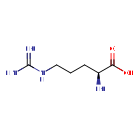
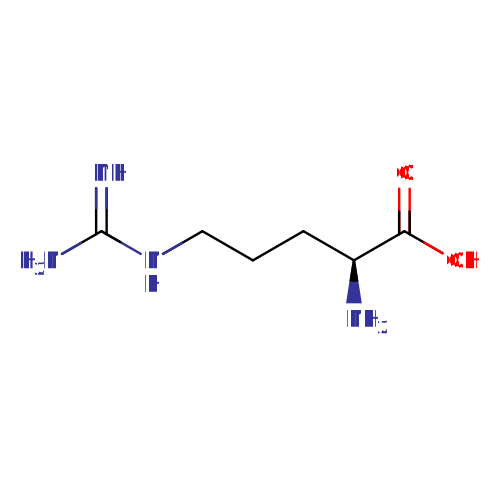
Structure for Arginine (DB00125)
- Weight
- Average: 174.201
Monoisotopic: 174.111675712 - Chemical Formula
- C6H14N4O2
- Synonyms
- (2S)-2-amino-5-(carbamimidamido)pentanoic acid
- (2S)-2-amino-5-guanidinopentanoic acid
- (S)-2-amino-5-guanidinopentanoic acid
- (S)-2-Amino-5-guanidinovaleric acid
- Arg
- Arginina
- Arginine
- L-(+)-Arginine
- L-Arg
- L-Arginin
- L-arginine
- R
- External IDs
- NSC-206269

Pharmacology
- Indication
Used for nutritional supplementation, also for treating dietary shortage or imbalance.
 Reduce drug development failure ratesBuild, train, & validate machine-learning modelswith evidence-based and structured datasets.Build, train, & validate predictive machine-learning models with structured datasets.
- Associated Conditions
Indication Type Indication Combined Product Details Approval Level Age Group Patient Characteristics Dose Form Diagnostic agent Acromegaly •••••••••••• Diagnostic agent Gigantism •••••••••••• Treatment of Hyperammonemia ••• ••••• Diagnostic agent Hypophysectomy •••••••••••• Used in combination to prevent Kidney damage Combination Product in combination with: Lysine (DB00123) •••••••••••• •••••••••• •••••••• - Associated Therapies
- Contraindications & Blackbox Warnings
 Prevent Adverse Drug Events TodayTap into our Clinical API for life-saving information on contraindications & blackbox warnings, population restrictions, harmful risks, & more.Avoid life-threatening adverse drug events with our Clinical API
- Pharmacodynamics
Studies have shown that is has improved immune responses to bacteria, viruses and tumor cells; promotes wound healing and regeneration of the liver; causes the release of growth hormones; considered crucial for optimal muscle growth and tissue repair.
- Mechanism of action
Many of supplemental L-arginine's activities, including its possible anti-atherogenic actions, may be accounted for by its role as the precursor to nitric oxide or NO. NO is produced by all tissues of the body and plays very important roles in the cardiovascular system, immune system and nervous system. NO is formed from L-arginine via the enzyme nitric oxide synthase or synthetase (NOS), and the effects of NO are mainly mediated by 3,'5' -cyclic guanylate or cyclic GMP. NO activates the enzyme guanylate cyclase, which catalyzes the synthesis of cyclic GMP from guanosine triphosphate or GTP. Cyclic GMP is converted to guanylic acid via the enzyme cyclic GMP phosphodiesterase. NOS is a heme-containing enzyme with some sequences similar to cytochrome P-450 reductase. Several isoforms of NOS exist, two of which are constitutive and one of which is inducible by immunological stimuli. The constitutive NOS found in the vascular endothelium is designated eNOS and that present in the brain, spinal cord and peripheral nervous system is designated nNOS. The form of NOS induced by immunological or inflammatory stimuli is known as iNOS. iNOS may be expressed constitutively in select tissues such as lung epithelium. All the nitric oxide synthases use NADPH (reduced nicotinamide adenine dinucleotide phosphate) and oxygen (O2) as cosubstrates, as well as the cofactors FAD (flavin adenine dinucleotide), FMN (flavin mononucleotide), tetrahydrobiopterin and heme. Interestingly, ascorbic acid appears to enhance NOS activity by increasing intracellular tetrahydrobiopterin. eNOS and nNOS synthesize NO in response to an increased concentration of calcium ions or in some cases in response to calcium-independent stimuli, such as shear stress. In vitro studies of NOS indicate that the Km of the enzyme for L-arginine is in the micromolar range. The concentration of L-arginine in endothelial cells, as well as in other cells, and in plasma is in the millimolar range. What this means is that, under physiological conditions, NOS is saturated with its L-arginine substrate. In other words, L-arginine would not be expected to be rate-limiting for the enzyme, and it would not appear that supraphysiological levels of L-arginine which could occur with oral supplementation of the amino acid^would make any difference with regard to NO production. The reaction would appear to have reached its maximum level. However, in vivo studies have demonstrated that, under certain conditions, e.g. hypercholesterolemia, supplemental L-arginine could enhance endothelial-dependent vasodilation and NO production.
Target Actions Organism UCationic amino acid transporter 3 Not Available Humans UArginine decarboxylase Not Available Humans UArgininosuccinate lyase Not Available Humans UNitric oxide synthase, inducible Not Available Humans UHigh affinity cationic amino acid transporter 1 Not Available Humans UArginase-2, mitochondrial Not Available Humans UCationic amino acid transporter 4 Not Available Humans UArgininosuccinate synthase Not Available Humans UNitric oxide synthase, endothelial Not Available Humans - Absorption
Absorbed from the lumen of the small intestine into the enterocytes. Absorption is efficient and occurs by an active transport mechanism.
- Volume of distribution
Not Available
- Protein binding
Not Available
- Metabolism
Some metabolism of L-arginine takes place in the enterocytes. L-arginine not metabolized in the enterocytes enters the portal circulation from whence it is transported to the liver, where again some portion of the amino acid is metabolized.
- Route of elimination
Not Available
- Half-life
Not Available
- Clearance
Not Available
- Adverse Effects
 Improve decision support & research outcomesWith structured adverse effects data, including: blackbox warnings, adverse reactions, warning & precautions, & incidence rates. View sample adverse effects data in our new Data Library!Improve decision support & research outcomes with our structured adverse effects data.
- Toxicity
Oral supplementation with L-arginine at doses up to 15 grams daily are generally well tolerated. The most common adverse reactions of higher doses from 15 to 30 grams daily are nausea, abdominal cramps and diarrhea. Some may experience these symptoms at lower doses.
- Pathways
- Pharmacogenomic Effects/ADRs
- Not Available
Interactions
- Drug Interactions
- This information should not be interpreted without the help of a healthcare provider. If you believe you are experiencing an interaction, contact a healthcare provider immediately. The absence of an interaction does not necessarily mean no interactions exist.No interactions found.
- Food Interactions
- Not Available
Products
 Drug product information from 10+ global regionsOur datasets provide approved product information including:dosage, form, labeller, route of administration, and marketing period.Access drug product information from over 10 global regions.
- Product Ingredients
Ingredient UNII CAS InChI Key Arginine butyrate IK8S1P79MU 80407-72-3 Not applicable Arginine hydrochloride F7LTH1E20Y 1119-34-2 KWTQSFXGGICVPE-WCCKRBBISA-N - International/Other Brands
- R-Gene 10 (Pharmacia Corp.)
- Brand Name Prescription Products
Name Dosage Strength Route Labeller Marketing Start Marketing End Region Image L-arginine Hydrochloride Injection Liquid 250 mg / mL Intravenous Sandoz Canada Incorporated 1973-12-31 Not applicable Canada 
R-Gene Injection, solution 10 g/100mL Intravenous Pharmacia & Upjohn Company LLC 1976-06-15 Not applicable US 
- Mixture Products
Name Ingredients Dosage Route Labeller Marketing Start Marketing End Region Image 2.5% Travasol Amino Acid Injection With Electrolytes In 10% Dextrose Arginine (290 mg / 100 mL) + Alanine (520 mg / 100 mL) + Dextrose, unspecified form (10 g / 100 mL) + Dipotassium phosphate (130.5 mg / 100 mL) + Glycine (260 mg / 100 mL) + Histidine (120 mg / 100 mL) + Isoleucine (150 mg / 100 mL) + Leucine (182.5 mg / 100 mL) + Lysine hydrochloride (145 mg / 100 mL) + Magnesium chloride (25.5 mg / 100 mL) + Methionine (100 mg / 100 mL) + Phenylalanine (140 mg / 100 mL) + Proline (170 mg / 100 mL) + Serine (125 mg / 100 mL) + Sodium acetate (170 mg / 100 mL) + Sodium chloride (29.3 mg / 100 mL) + Threonine (105 mg / 100 mL) + Tryptophan (45 mg / 100 mL) + Tyrosine (10 mg / 100 mL) + Valine (145 mg / 100 mL) Solution Intravenous Baxter Corporation Clintec Nutrition Division 1996-12-31 2015-08-05 Canada 2.5% Travasol Amino Acid Injection With Electrolytes In 10% Dextrose Clinimix Arginine (260 mg / 100 mL) + Alanine (520 mg / 100 mL) + Dextrose, unspecified form (10 g / 100 mL) + Dipotassium phosphate (130.5 mg / 100 mL) + Glycine (520 mg / 100 mL) + Histidine (110 mg / 100 mL) + Isoleucine (120 mg / 100 mL) + L-Leucine hydrochloride (155 mg / 100 mL) + Lysine hydrochloride (145 mg / 100 mL) + Magnesium chloride (25.5 mg / 100 mL) + Methionine (145 mg / 100 mL) + Phenylalanine hydrochloride (155 mg / 100 mL) + Proline (105 mg / 100 mL) + Sodium acetate (170 mg / 100 mL) + Sodium chloride (29.3 mg / 100 mL) + Threonine (105 mg / 100 mL) + Tryptophan (45 mg / 100 mL) + Tyrosine (10 mg / 100 mL) + Valine (115 mg / 100 mL) Solution Intravenous Baxter Corporation Clintec Nutrition Division 1993-12-31 2015-08-05 Canada 2.5% Travasol Amino Acid Injection Without Electrolytes In 10% Dextrose Quickmix Arginine (260 mg / 100 mL) + Alanine (520 mg / 100 mL) + Dextrose, unspecified form (10 g / 100 mL) + Glycine (520 mg / 100 mL) + Histidine (110 mg / 100 mL) + Isoleucine (120 mg / 100 mL) + L-Leucine hydrochloride (155 mg / 100 mL) + Lysine hydrochloride (195 mg / 100 mL) + Methionine (195 mg / 100 mL) + Phenylalanine hydrochloride (155 mg / 100 mL) + Proline (105 mg / 100 mL) + Threonine (105 mg / 100 mL) + Tryptophan (45 mg / 100 mL) + Tyrosine (10 mg / 100 mL) + Valine (115 mg / 100 mL) Solution Intravenous Baxter Corporation Clintec Nutrition Division 1995-12-31 2007-08-02 Canada 2.5%travasol Amino Acid InJ.W.eleC.W.25%dex Arginine (290 mg / 100 mL) + Alanine (520 mg / 100 mL) + Dextrose, unspecified form (25 g / 100 mL) + Dipotassium phosphate (130.5 mg / 100 mL) + Glycine (260 mg / 100 mL) + Histidine (120 mg / 100 mL) + Isoleucine (150 mg / 100 mL) + Leucine (182.5 mg / 100 mL) + Lysine hydrochloride (145 mg / 100 mL) + Magnesium chloride (25.5 mg / 100 mL) + Methionine (100 mg / 100 mL) + Phenylalanine (140 mg / 100 mL) + Proline (170 mg / 100 mL) + Serine (125 mg / 100 mL) + Sodium acetate (170 mg / 100 mL) + Sodium chloride (29.3 mg / 100 mL) + Threonine (105 mg / 100 mL) + Tryptophan (45 mg / 100 mL) + Tyrosine (10 mg / 100 mL) + Valine (145 mg / 100 mL) Liquid Intravenous Clintec Nutrition Company 1996-07-30 1998-08-13 Canada 2.75% Travas. Amino Acid InJ.W.elecw.25%dex Arginine (316 mg / 100 mL) + Alanine (570 mg / 100 mL) + Dextrose, unspecified form (25 g / 100 mL) + Dipotassium phosphate (261 mg / 100 mL) + Glycine (283 mg / 100 mL) + Histidine (132 mg / 100 mL) + Isoleucine (165 mg / 100 mL) + Leucine (201 mg / 100 mL) + Lysine hydrochloride (159.5 mg / 100 mL) + Magnesium chloride (51 mg / 100 mL) + Methionine (110 mg / 100 mL) + Phenylalanine (154 mg / 100 mL) + Proline (187 mg / 100 mL) + Serine (137.5 mg / 100 mL) + Sodium acetate (215.5 mg / 100 mL) + Sodium chloride (112 mg / 100 mL) + Threonine (115.5 mg / 100 mL) + Tryptophan (49.5 mg / 100 mL) + Tyrosine (11 mg / 100 mL) + Valine (159.5 mg / 100 mL) Liquid Intravenous Clintec Nutrition Company 1996-07-30 1998-08-13 Canada - Unapproved/Other Products
Name Ingredients Dosage Route Labeller Marketing Start Marketing End Region Image ABOUND PORTAKAL AROMALI TOZ 24 GR 30 POSET Arginine (7 g/1) + L-Glutamine (7 g/1) Powder Oral ABBOTT LABORATUARLARI İTHALAT İHRACAT VE TİC. LTD. ŞTİ. 2013-01-29 2024-01-23 Turkey 
Clinimix Arginine (9.78 g/2L) + Alanine (17.60 g/2L) + Calcium chloride dihydrate (0.66 g/2L) + D-glucose monohydrate (300.00 g/2L) + Dipotassium phosphate (5.22 g/2L) + Glycine (8.76 g/2L) + Histidine (4.08 g/2L) + Isoleucine (5.10 g/2L) + Leucine (6.20 g/2L) + Lysine (4.93 g/2L) + Magnesium chloride hexahydrate (1.02 g/2L) + Methionine (3.40 g/2L) + Phenylalanine (4.76 g/2L) + Proline (5.78 g/2L) + Serine (4.25 g/2L) + Sodium acetate trihydrate (5.94 g/2L) + Sodium chloride (1.54 g/2L) + Threonine (3.57 g/2L) + Tryptophan (1.53 g/2L) + Tyrosine (0.34 g/2L) + Valine (4.93 g/2L) Solution Intravenous Baxter Healthcare Corporation 2017-10-25 2019-11-30 US Clinimix Arginine (3.17 g/1L) + Alanine (5.70 g/1L) + Calcium chloride dihydrate (0.33 g/1L) + D-glucose monohydrate (75.00 g/1L) + Dipotassium phosphate (2.61 g/1L) + Glycine (2.84 g/1L) + Histidine (1.32 g/1L) + Isoleucine (1.65 g/1L) + Leucine (2.01 g/1L) + Lysine (2.00 g/1L) + Magnesium chloride hexahydrate (0.51 g/1L) + Methionine (1.10 g/1L) + Phenylalanine (1.54 g/1L) + Proline (1.87 g/1L) + Serine (1.38 g/1L) + Sodium acetate trihydrate (2.16 g/1L) + Sodium chloride (1.12 g/1L) + Threonine (1.16 g/1L) + Tryptophan (0.50 g/1L) + Tyrosine (0.11 g/1L) + Valine (1.60 g/1L) Solution Intravenous Baxter Healthcare Corporation 2017-10-25 2019-11-30 US Clinimix Arginine (3.17 g/1L) + Alanine (5.70 g/1L) + Calcium chloride dihydrate (0.33 g/1L) + D-glucose monohydrate (100.00 g/1L) + Dipotassium phosphate (2.61 g/1L) + Glycine (2.84 g/1L) + Histidine (1.32 g/1L) + Isoleucine (1.65 g/1L) + Leucine (2.01 g/1L) + Lysine (2.00 g/1L) + Magnesium chloride hexahydrate (0.51 g/1L) + Methionine (1.10 g/1L) + Phenylalanine (1.54 g/1L) + Proline (1.87 g/1L) + Serine (1.38 g/1L) + Sodium acetate trihydrate (2.16 g/1L) + Sodium chloride (1.12 g/1L) + Threonine (1.16 g/1L) + Tryptophan (0.50 g/1L) + Tyrosine (0.11 g/1L) + Valine (1.60 g/1L) Solution Intravenous Baxter Healthcare Corporation 2017-10-25 2019-11-30 US FREAMINE III %10 1000 ML(SETLI) Arginine (0.95 %) + Alanine (0.71 %) + Cysteine (0.016 %) + Glycine (1.4 %) + Histidine (0.28 %) + Isoleucine (0.69 %) + Leucine (0.91 %) + Lysine (0.73 %) + Methionine (0.53 %) + Phenylalanine (0.56 %) + Proline (1.12 %) + Serine (0.59 %) + Threonine (0.4 %) + Tryptophan (0.15 %) + Valine (0.66 %) Solution Intravenous ECZACIBAŞI-BAXTER HASTANE ÜRÜNLERİ SAN.VE TİC. A.Ş. 2013-01-29 2024-01-23 Turkey
Categories
- ATC Codes
- V03AF11 — Arginine and lysine
- V03AF — Detoxifying agents for antineoplastic treatment
- V03A — ALL OTHER THERAPEUTIC PRODUCTS
- V03 — ALL OTHER THERAPEUTIC PRODUCTS
- V — VARIOUS
- Drug Categories
- Acids, Acyclic
- Amino Acids
- Amino Acids, Basic
- Amino Acids, Diamino
- Amino Acids, Peptides, and Proteins
- Arginine
- Blood and Blood Forming Organs
- Blood Substitutes and Perfusion Solutions
- Detoxifying Agents for Antineoplastic Treatment
- Dietary Supplements
- Fatty Acids
- Fatty Acids, Volatile
- I.V. Solution Additives
- Lipids
- Pituitary Function
- Proteinogenic Amino Acids
- Supplements
- Chemical TaxonomyProvided by Classyfire
- Description
- This compound belongs to the class of organic compounds known as l-alpha-amino acids. These are alpha amino acids which have the L-configuration of the alpha-carbon atom.
- Kingdom
- Organic compounds
- Super Class
- Organic acids and derivatives
- Class
- Carboxylic acids and derivatives
- Sub Class
- Amino acids, peptides, and analogues
- Direct Parent
- L-alpha-amino acids
- Alternative Parents
- Fatty acids and conjugates / Guanidines / Amino acids / Propargyl-type 1,3-dipolar organic compounds / Monocarboxylic acids and derivatives / Carboxylic acids / Carboximidamides / Organopnictogen compounds / Organic oxides / Monoalkylamines show 2 more
- Substituents
- Aliphatic acyclic compound / Amine / Amino acid / Carbonyl group / Carboximidamide / Carboxylic acid / Fatty acid / Guanidine / Hydrocarbon derivative / L-alpha-amino acid show 11 more
- Molecular Framework
- Aliphatic acyclic compounds
- External Descriptors
- proteinogenic amino acid, L-alpha-amino acid, arginine, glutamine family amino acid (CHEBI:16467) / Common amino acids (C00062)
- Affected organisms
- Humans and other mammals
Chemical Identifiers
- UNII
- 94ZLA3W45F
- CAS number
- 74-79-3
- InChI Key
- ODKSFYDXXFIFQN-BYPYZUCNSA-N
- InChI
- InChI=1S/C6H14N4O2/c7-4(5(11)12)2-1-3-10-6(8)9/h4H,1-3,7H2,(H,11,12)(H4,8,9,10)/t4-/m0/s1
- IUPAC Name
- (2S)-2-amino-5-carbamimidamidopentanoic acid
- SMILES
- N[C@@H](CCCNC(N)=N)C(O)=O
References
- Synthesis Reference
Kiyoshi Nakayama, Kazumi Araki, Hajime Yoshida, "Process for the production of L-arginine by fermentation." U.S. Patent US4086137, issued May, 1973.
US4086137- General References
- Morris SM Jr: Enzymes of arginine metabolism. J Nutr. 2004 Oct;134(10 Suppl):2743S-2747S; discussion 2765S-2767S. [Article]
- Schulman SP, Becker LC, Kass DA, Champion HC, Terrin ML, Forman S, Ernst KV, Kelemen MD, Townsend SN, Capriotti A, Hare JM, Gerstenblith G: L-arginine therapy in acute myocardial infarction: the Vascular Interaction With Age in Myocardial Infarction (VINTAGE MI) randomized clinical trial. JAMA. 2006 Jan 4;295(1):58-64. [Article]
- Alba-Roth J, Muller OA, Schopohl J, von Werder K: Arginine stimulates growth hormone secretion by suppressing endogenous somatostatin secretion. J Clin Endocrinol Metab. 1988 Dec;67(6):1186-9. [Article]
- External Links
- Human Metabolome Database
- HMDB0000517
- KEGG Drug
- D02982
- KEGG Compound
- C00062
- PubChem Compound
- 6322
- PubChem Substance
- 46507180
- ChemSpider
- 6082
- BindingDB
- 181132
- 1091
- ChEBI
- 16467
- ChEMBL
- CHEMBL1485
- ZINC
- ZINC000001532525
- PharmGKB
- PA448478
- Guide to Pharmacology
- GtP Drug Page
- PDBe Ligand
- ARG
- Drugs.com
- Drugs.com Drug Page
- PDRhealth
- PDRhealth Drug Page
- Wikipedia
- Arginine
- MSDS
- Download (72.8 KB)
Clinical Trials
- Clinical Trials
Phase Status Purpose Conditions Count 4 Active Not Recruiting Treatment Critically Ill Patients / Starvation 1 4 Completed Basic Science General Anesthesia / Major Abdominal Surgeries / Mechanical Ventilation / Vasopressin Infusion 1 4 Completed Other Gastroenteropancreatic Neuroendocrine Tumors 1 4 Completed Prevention Mitochondrial Dysfunction / Severe Lower Limb Ischemia / Skeletal Muscle Ischemia 1 4 Completed Treatment Critically Ill Patients 1
Pharmacoeconomics
- Manufacturers
- Pharmacia and upjohn co
- Packagers
- 21st Century Healthcare Inc.
- Amend
- Hospira Inc.
- Key Co.
- Major Pharmaceuticals
- Pharmacia Inc.
- Professional Co.
- Dosage Forms
Form Route Strength Capsule Oral Solution Parenteral Powder Oral Solution Intravenous 10.50 g/1000ml Injection Intravenous 0.5 g/l Injection Intravenous 0.25 g/1000ml Solution, concentrate Intravenous Injection Intravenous 0.52 g/l Injection, solution Intravenous Injection Intravenous 11.000 g/1000ml Injection Intravenous 5.5 g/1000ml Powder Not applicable 1 kg/1kg Granule Oral Tablet, coated Oral Injection, emulsion Intravenous Cream Cutaneous Capsule Oral 434.25 MG Emulsion Intravenous 0.468 g Injection Intravenous 16 g/1000ml Capsule Oral 1000 mg Capsule Oral Emulsion Parenteral 20.000 g Injection Intravenous 1.6 g/l Tablet Oral Liquid Intravenous 250 mg / mL Kit Oral Injection Intravenous 0.37 g/l Injection, solution, concentrate Intravenous Injection, emulsion Parenteral Emulsion Intravenous 0.466 g Injection, emulsion; injection, solution Intravenous Emulsion Parenteral Emulsion Intravenous Injection, emulsion Intravenous 4.656 g/1000ml Injection, emulsion Intravenous 6.792 g/1000ml Solution Intraperitoneal Injection, solution Intraperitoneal Liquid Hemodialysis Solution Intraperitoneal 0.184 g/l Solution Oral Emulsion Intravenous 176 g/l Emulsion Intravenous 4 g Emulsion Intravenous 3 g Solution Intravenous Injection Intravenous 4 g/l Injection Intravenous 0.21 g/100ml Liquid Intravenous Injection, solution Intravenous 10 g/100mL Capsule Vaginal Emulsion Intravenous 13.000 g Emulsion Parenteral 42.00 g Injection, emulsion Intravenous 14 g/1000ml Injection Intravenous 10.30 g/l Tablet Oral Injection Intravenous Solution - Prices
Unit description Cost Unit Arginine 100% crystals 0.51USD g L-arginine mhc powder 0.39USD g Arginine-500 mg tablet 0.12USD tablet Arginine 500 mg tablet 0.09USD tablet L-arginine 1000 mg tablet 0.07USD tablet R-gene 10 vial 0.04USD ml DrugBank does not sell nor buy drugs. Pricing information is supplied for informational purposes only.- Patents
- Not Available
Properties
- State
- Solid
- Experimental Properties
Property Value Source melting point (°C) 244 dec °C PhysProp water solubility 1.82E+005 mg/L (at 25 °C) YALKOWSKY,SH & DANNENFELSER,RM (1992) logP -4.20 HANSCH,C ET AL. (1995) pKa 2.24 (at 0 °C) KORTUM,G ET AL (1961) - Predicted Properties
Property Value Source Water Solubility 2.28 mg/mL ALOGPS logP -3.5 ALOGPS logP -3.2 Chemaxon logS -1.9 ALOGPS pKa (Strongest Acidic) 2.41 Chemaxon pKa (Strongest Basic) 12.41 Chemaxon Physiological Charge 1 Chemaxon Hydrogen Acceptor Count 6 Chemaxon Hydrogen Donor Count 5 Chemaxon Polar Surface Area 125.22 Å2 Chemaxon Rotatable Bond Count 5 Chemaxon Refractivity 53.92 m3·mol-1 Chemaxon Polarizability 17.8 Å3 Chemaxon Number of Rings 0 Chemaxon Bioavailability 1 Chemaxon Rule of Five Yes Chemaxon Ghose Filter No Chemaxon Veber's Rule No Chemaxon MDDR-like Rule No Chemaxon - Predicted ADMET Features
Property Value Probability Human Intestinal Absorption + 0.8289 Blood Brain Barrier + 0.6882 Caco-2 permeable - 0.7316 P-glycoprotein substrate Non-substrate 0.5564 P-glycoprotein inhibitor I Non-inhibitor 0.9814 P-glycoprotein inhibitor II Non-inhibitor 0.8803 Renal organic cation transporter Non-inhibitor 0.7475 CYP450 2C9 substrate Non-substrate 0.7822 CYP450 2D6 substrate Non-substrate 0.6787 CYP450 3A4 substrate Non-substrate 0.8105 CYP450 1A2 substrate Non-inhibitor 0.8555 CYP450 2C9 inhibitor Non-inhibitor 0.9071 CYP450 2D6 inhibitor Non-inhibitor 0.9231 CYP450 2C19 inhibitor Non-inhibitor 0.7705 CYP450 3A4 inhibitor Non-inhibitor 0.8925 CYP450 inhibitory promiscuity Low CYP Inhibitory Promiscuity 0.9945 Ames test AMES toxic 0.7182 Carcinogenicity Non-carcinogens 0.9229 Biodegradation Ready biodegradable 0.8394 Rat acute toxicity 1.4851 LD50, mol/kg Not applicable hERG inhibition (predictor I) Weak inhibitor 0.9533 hERG inhibition (predictor II) Non-inhibitor 0.9683
Spectra
- Mass Spec (NIST)
- Download (2.96 KB)
- Spectra
- Chromatographic Properties
Collision Cross Sections (CCS)
Adduct CCS Value (Å2) Source type Source [M-H]- 145.7606786 predictedDarkChem Lite v0.1.0 [M-H]- 136.6401136 predictedDarkChem Standard v0.1.0 [M-H]- 145.9838786 predictedDarkChem Lite v0.1.0 [M-H]- 132.66614 predictedDeepCCS 1.0 (2019) [M-H]- 145.7606786 predictedDarkChem Lite v0.1.0 [M-H]- 136.6401136 predictedDarkChem Standard v0.1.0 [M-H]- 145.9838786 predictedDarkChem Lite v0.1.0 [M-H]- 132.66614 predictedDeepCCS 1.0 (2019) [M+H]+ 147.1198786 predictedDarkChem Lite v0.1.0 [M+H]+ 136.5889893 predictedDarkChem Standard v0.1.0 [M+H]+ 147.0957786 predictedDarkChem Lite v0.1.0 [M+H]+ 136.49348 predictedDeepCCS 1.0 (2019) [M+H]+ 147.1198786 predictedDarkChem Lite v0.1.0 [M+H]+ 136.5889893 predictedDarkChem Standard v0.1.0 [M+H]+ 147.0957786 predictedDarkChem Lite v0.1.0 [M+H]+ 136.49348 predictedDeepCCS 1.0 (2019) [M+Na]+ 146.5321786 predictedDarkChem Lite v0.1.0 [M+Na]+ 146.4709786 predictedDarkChem Lite v0.1.0 [M+Na]+ 146.6673786 predictedDarkChem Lite v0.1.0 [M+Na]+ 145.81657 predictedDeepCCS 1.0 (2019) [M+Na]+ 146.5321786 predictedDarkChem Lite v0.1.0 [M+Na]+ 146.4709786 predictedDarkChem Lite v0.1.0 [M+Na]+ 146.6673786 predictedDarkChem Lite v0.1.0 [M+Na]+ 145.81657 predictedDeepCCS 1.0 (2019)
Targets

- Kind
- Protein
- Organism
- Humans
- Pharmacological action
- Unknown
- General Function
- L-ornithine transmembrane transporter activity
- Specific Function
- Mediates the uptake of the cationic amino acids arginine, lysine and ornithine in a sodium-independent manner.
- Gene Name
- SLC7A3
- Uniprot ID
- Q8WY07
- Uniprot Name
- Cationic amino acid transporter 3
- Molecular Weight
- 67168.31 Da
References
- Rotmann A, Simon A, Martine U, Habermeier A, Closs EI: Activation of classical protein kinase C decreases transport via systems y+ and y+L. Am J Physiol Cell Physiol. 2007 Jun;292(6):C2259-68. Epub 2007 Feb 28. [Article]
- Huang Y, Kang BN, Tian J, Liu Y, Luo HR, Hester L, Snyder SH: The cationic amino acid transporters CAT1 and CAT3 mediate NMDA receptor activation-dependent changes in elaboration of neuronal processes via the mammalian target of rapamycin mTOR pathway. J Neurosci. 2007 Jan 17;27(3):449-58. [Article]
- Kind
- Protein
- Organism
- Humans
- Pharmacological action
- Unknown
- General Function
- Putrescine transmembrane transporter activity
- Specific Function
- Antizyme inhibitor protein that positively regulates ornithine decarboxylase (ODC) activity and polyamine uptake by counteracting the negative effect of antizymes OAZ1, OAZ2 and OAZ3 on ODC1 activi...
- Gene Name
- AZIN2
- Uniprot ID
- Q96A70
- Uniprot Name
- Antizyme inhibitor 2
- Molecular Weight
- 49979.185 Da
References
- Kotil K, Kuscuoglu U, Kirali M, Uzun H, Akcetin M, Bilge T: Investigation of the dose-dependent neuroprotective effects of agmatine in experimental spinal cord injury: a prospective randomized and placebo-control trial. J Neurosurg Spine. 2006 May;4(5):392-9. [Article]
- Regunathan S: Agmatine: biological role and therapeutic potentials in morphine analgesia and dependence. AAPS J. 2006 Jul 21;8(3):E479-84. [Article]
- Yang HQ, Gao HJ: [Physiological function of arginine and its metabolites in plants]. Zhi Wu Sheng Li Yu Fen Zi Sheng Wu Xue Xue Bao. 2007 Feb;33(1):1-8. [Article]
- Wu N, Su RB, Li J: Agmatine and imidazoline receptors: their role in opioid analgesia, tolerance and dependence. Cell Mol Neurobiol. 2008 Aug;28(5):629-41. Epub 2007 Jul 25. [Article]
- Kind
- Protein
- Organism
- Humans
- Pharmacological action
- Unknown
- General Function
- Argininosuccinate lyase activity
- Specific Function
- Not Available
- Gene Name
- ASL
- Uniprot ID
- P04424
- Uniprot Name
- Argininosuccinate lyase
- Molecular Weight
- 51657.505 Da
References
- Moradi H, Kwok V, Vaziri ND: Effect of chronic renal failure on arginase and argininosuccinate synthetase expression. Am J Nephrol. 2006;26(3):310-8. Epub 2006 Jun 29. [Article]
- Bizzoco E, Vannucchi MG, Faussone-Pellegrini MS: Transient ischemia increases neuronal nitric oxide synthase, argininosuccinate synthetase and argininosuccinate lyase co-expression in rat striatal neurons. Exp Neurol. 2007 Mar;204(1):252-9. Epub 2007 Jan 2. [Article]
- Mages W, Heinrich O, Treuner G, Vlcek D, Daubnerova I, Slaninova M: Complementation of the Chlamydomonas reinhardtii arg7-8 (arg2) point mutation by recombination with a truncated nonfunctional ARG7 gene. Protist. 2007 Oct;158(4):435-46. Epub 2007 Jul 3. [Article]
- Tischner R, Galli M, Heimer YM, Bielefeld S, Okamoto M, Mack A, Crawford NM: Interference with the citrulline-based nitric oxide synthase assay by argininosuccinate lyase activity in Arabidopsis extracts. FEBS J. 2007 Aug;274(16):4238-45. Epub 2007 Jul 25. [Article]
- Mori M: Regulation of nitric oxide synthesis and apoptosis by arginase and arginine recycling. J Nutr. 2007 Jun;137(6 Suppl 2):1616S-1620S. [Article]
- Kind
- Protein
- Organism
- Humans
- Pharmacological action
- Unknown
- General Function
- Tetrahydrobiopterin binding
- Specific Function
- Produces nitric oxide (NO) which is a messenger molecule with diverse functions throughout the body. In macrophages, NO mediates tumoricidal and bactericidal actions. Also has nitrosylase activity ...
- Gene Name
- NOS2
- Uniprot ID
- P35228
- Uniprot Name
- Nitric oxide synthase, inducible
- Molecular Weight
- 131116.3 Da
References
- Cui YY, Tang CS, Geng B: [Restraint stress down-regulates L-Arg/NOS/NO pathway of platelet and aortic intima in rats]. Beijing Da Xue Xue Bao. 2006 Jun 18;38(3):231-5. [Article]
- Devan BD, Pistell PJ, Daffin LW Jr, Nelson CM, Duffy KB, Bowker JL, Bharati IS, Sierra-Mercado D, Spangler EL, Ingram DK: Sildenafil citrate attenuates a complex maze impairment induced by intracerebroventricular infusion of the NOS inhibitor Nomega-nitro-L-arginine methyl ester. Eur J Pharmacol. 2007 Jun 1;563(1-3):134-40. Epub 2007 Feb 17. [Article]
- Rotoli BM, Dall'asta V, Barilli A, D'Ippolito R, Tipa A, Olivieri D, Gazzola GC, Bussolati O: Alveolar macrophages from normal subjects lack the NOS-related system y+ for arginine transport. Am J Respir Cell Mol Biol. 2007 Jul;37(1):105-12. Epub 2007 Mar 15. [Article]
- Kagemann G, Sies H, Schnorr O: Limited availability of L-arginine increases DNA-binding activity of NF-kappaB and contributes to regulation of iNOS expression. J Mol Med (Berl). 2007 Jul;85(7):723-32. Epub 2007 Mar 6. [Article]
- Popovic PJ, Zeh HJ 3rd, Ochoa JB: Arginine and immunity. J Nutr. 2007 Jun;137(6 Suppl 2):1681S-1686S. [Article]
- Kind
- Protein
- Organism
- Humans
- Pharmacological action
- Unknown
- General Function
- L-ornithine transmembrane transporter activity
- Specific Function
- High-affinity, low capacity permease involved in the transport of the cationic amino acids (arginine, lysine and ornithine) in non-hepatic tissues. May also function as an ecotropic retroviral leuk...
- Gene Name
- SLC7A1
- Uniprot ID
- P30825
- Uniprot Name
- High affinity cationic amino acid transporter 1
- Molecular Weight
- 67637.62 Da
References
- Yang Z, Venardos K, Jones E, Morris BJ, Chin-Dusting J, Kaye DM: Identification of a novel polymorphism in the 3'UTR of the L-arginine transporter gene SLC7A1: contribution to hypertension and endothelial dysfunction. Circulation. 2007 Mar 13;115(10):1269-74. Epub 2007 Feb 26. [Article]
- Rotmann A, Simon A, Martine U, Habermeier A, Closs EI: Activation of classical protein kinase C decreases transport via systems y+ and y+L. Am J Physiol Cell Physiol. 2007 Jun;292(6):C2259-68. Epub 2007 Feb 28. [Article]
- Vasquez R, Farias M, Vega JL, Martin RS, Vecchiola A, Casanello P, Sobrevia L: D-glucose stimulation of L-arginine transport and nitric oxide synthesis results from activation of mitogen-activated protein kinases p42/44 and Smad2 requiring functional type II TGF-beta receptors in human umbilical vein endothelium. J Cell Physiol. 2007 Sep;212(3):626-32. [Article]
- Cerec V, Piquet-Pellorce C, Aly HA, Touzalin AM, Jegou B, Bauche F: Multiple pathways for cationic amino acid transport in rat seminiferous tubule cells. Biol Reprod. 2007 Feb;76(2):241-9. Epub 2006 Oct 25. [Article]
- Rotoli BM, Dall'asta V, Barilli A, D'Ippolito R, Tipa A, Olivieri D, Gazzola GC, Bussolati O: Alveolar macrophages from normal subjects lack the NOS-related system y+ for arginine transport. Am J Respir Cell Mol Biol. 2007 Jul;37(1):105-12. Epub 2007 Mar 15. [Article]
- Kind
- Protein
- Organism
- Humans
- Pharmacological action
- Unknown
- General Function
- Metal ion binding
- Specific Function
- May play a role in the regulation of extra-urea cycle arginine metabolism and also in down-regulation of nitric oxide synthesis. Extrahepatic arginase functions to regulate L-arginine bioavailabili...
- Gene Name
- ARG2
- Uniprot ID
- P78540
- Uniprot Name
- Arginase-2, mitochondrial
- Molecular Weight
- 38577.515 Da
References
- Topal G, Brunet A, Walch L, Boucher JL, David-Dufilho M: Mitochondrial arginase II modulates nitric-oxide synthesis through nonfreely exchangeable L-arginine pools in human endothelial cells. J Pharmacol Exp Ther. 2006 Sep;318(3):1368-74. Epub 2006 Jun 26. [Article]
- Hood HM, Spevak CC, Sachs MS: Evolutionary changes in the fungal carbamoyl-phosphate synthetase small subunit gene and its associated upstream open reading frame. Fungal Genet Biol. 2007 Feb;44(2):93-104. Epub 2006 Sep 18. [Article]
- Kind
- Protein
- Organism
- Humans
- Pharmacological action
- Unknown
- General Function
- L-ornithine transmembrane transporter activity
- Specific Function
- Involved in the transport of the cationic amino acids (arginine, lysine and ornithine).
- Gene Name
- SLC7A4
- Uniprot ID
- O43246
- Uniprot Name
- Cationic amino acid transporter 4
- Molecular Weight
- 68267.17 Da
References
- Rotmann A, Simon A, Martine U, Habermeier A, Closs EI: Activation of classical protein kinase C decreases transport via systems y+ and y+L. Am J Physiol Cell Physiol. 2007 Jun;292(6):C2259-68. Epub 2007 Feb 28. [Article]
- Kind
- Protein
- Organism
- Humans
- Pharmacological action
- Unknown
- General Function
- Toxic substance binding
- Specific Function
- Is indirectly involved in the control of blood pressure.
- Gene Name
- ASS1
- Uniprot ID
- P00966
- Uniprot Name
- Argininosuccinate synthase
- Molecular Weight
- 46530.055 Da
References
- Feun L, Savaraj N: Pegylated arginine deiminase: a novel anticancer enzyme agent. Expert Opin Investig Drugs. 2006 Jul;15(7):815-22. [Article]
- Moradi H, Kwok V, Vaziri ND: Effect of chronic renal failure on arginase and argininosuccinate synthetase expression. Am J Nephrol. 2006;26(3):310-8. Epub 2006 Jun 29. [Article]
- Cheng PN, Lam TL, Lam WM, Tsui SM, Cheng AW, Lo WH, Leung YC: Pegylated recombinant human arginase (rhArg-peg5,000mw) inhibits the in vitro and in vivo proliferation of human hepatocellular carcinoma through arginine depletion. Cancer Res. 2007 Jan 1;67(1):309-17. [Article]
- Szlosarek PW, Grimshaw MJ, Wilbanks GD, Hagemann T, Wilson JL, Burke F, Stamp G, Balkwill FR: Aberrant regulation of argininosuccinate synthetase by TNF-alpha in human epithelial ovarian cancer. Int J Cancer. 2007 Jul 1;121(1):6-11. [Article]
- Kind
- Protein
- Organism
- Humans
- Pharmacological action
- Unknown
- General Function
- Tetrahydrobiopterin binding
- Specific Function
- Produces nitric oxide (NO) which is implicated in vascular smooth muscle relaxation through a cGMP-mediated signal transduction pathway. NO mediates vascular endothelial growth factor (VEGF)-induce...
- Gene Name
- NOS3
- Uniprot ID
- P29474
- Uniprot Name
- Nitric oxide synthase, endothelial
- Molecular Weight
- 133287.62 Da
References
- Akamine EH, Kawamoto EM, Scavone C, Nigro D, Carvalho MH, de Cassia A Tostes R, Britto LR, Fortes ZB: Correction of endothelial dysfunction in diabetic female rats by tetrahydrobiopterin and chronic insulin. J Vasc Res. 2006;43(4):309-20. Epub 2006 May 8. [Article]
- Gautier C, Mikula I, Nioche P, Martasek P, Raman CS, Slama-Schwok A: Dynamics of NO rebinding to the heme domain of NO synthase-like proteins from bacterial pathogens. Nitric Oxide. 2006 Dec;15(4):312-27. Epub 2006 Apr 5. [Article]
- Yang J, Ji R, Cheng Y, Sun JZ, Jennings LK, Zhang C: L-arginine chlorination results in the formation of a nonselective nitric-oxide synthase inhibitor. J Pharmacol Exp Ther. 2006 Sep;318(3):1044-9. Epub 2006 May 22. [Article]
- Ishikawa T, Harada T, Koi H, Kubota T, Azuma H, Aso T: Identification of arginase in human placental villi. Placenta. 2007 Feb-Mar;28(2-3):133-8. Epub 2006 May 23. [Article]
- Haruna Y, Morita Y, Komai N, Yada T, Sakuta T, Tomita N, Fox DA, Kashihara N: Endothelial dysfunction in rat adjuvant-induced arthritis: vascular superoxide production by NAD(P)H oxidase and uncoupled endothelial nitric oxide synthase. Arthritis Rheum. 2006 Jun;54(6):1847-55. [Article]
Transporters
- Kind
- Protein
- Organism
- Humans
- Pharmacological action
- Unknown
- Actions
- Inhibitor
- General Function
- Symporter activity
- Specific Function
- Sodium-ion dependent, high affinity carnitine transporter. Involved in the active cellular uptake of carnitine. Transports one sodium ion with one molecule of carnitine. Also transports organic cat...
- Gene Name
- SLC22A5
- Uniprot ID
- O76082
- Uniprot Name
- Solute carrier family 22 member 5
- Molecular Weight
- 62751.08 Da
References
- Ohashi R, Tamai I, Yabuuchi H, Nezu JI, Oku A, Sai Y, Shimane M, Tsuji A: Na(+)-dependent carnitine transport by organic cation transporter (OCTN2): its pharmacological and toxicological relevance. J Pharmacol Exp Ther. 1999 Nov;291(2):778-84. [Article]
- Kind
- Protein
- Organism
- Humans
- Pharmacological action
- Unknown
- Actions
- Inhibitor
- General Function
- Transporter activity
- Specific Function
- Sodium-independent transporter that mediates the update of aromatic acid. Can function as a net efflux pathway for aromatic amino acids in the basosolateral epithelial cells (By similarity).
- Gene Name
- SLC16A10
- Uniprot ID
- Q8TF71
- Uniprot Name
- Monocarboxylate transporter 10
- Molecular Weight
- 55492.07 Da
References
- Kim DK, Kanai Y, Chairoungdua A, Matsuo H, Cha SH, Endou H: Expression cloning of a Na+-independent aromatic amino acid transporter with structural similarity to H+/monocarboxylate transporters. J Biol Chem. 2001 May 18;276(20):17221-8. Epub 2001 Feb 20. [Article]
- Kind
- Protein
- Organism
- Humans
- Pharmacological action
- Unknown
- Actions
- Inhibitor
- General Function
- Symporter activity
- Specific Function
- Sodium-ion dependent, low affinity carnitine transporter. Probably transports one sodium ion with one molecule of carnitine. Also transports organic cations such as tetraethylammonium (TEA) without...
- Gene Name
- SLC22A4
- Uniprot ID
- Q9H015
- Uniprot Name
- Solute carrier family 22 member 4
- Molecular Weight
- 62154.48 Da
References
- Yabuuchi H, Tamai I, Nezu J, Sakamoto K, Oku A, Shimane M, Sai Y, Tsuji A: Novel membrane transporter OCTN1 mediates multispecific, bidirectional, and pH-dependent transport of organic cations. J Pharmacol Exp Ther. 1999 May;289(2):768-73. [Article]


Drug created at June 13, 2005 13:24 / Updated at April 27, 2024 09:44